
Dress Manufacturer for Launch Calendar Managers
Calendar-driven dress development and production for fashion teams managing fixed campaign, warehouse, retail and ecommerce launch dates.
- 10-30 styles can be grouped by launch priority, fabric readiness, pattern complexity and sample purpose.
- Representative brand programs commonly contain 20,000-80,000 total pieces across colors, sizes and delivery waves.
- Ordinary dress first samples generally require about 10-15 days; corset, mesh, lace, sequin and strapless styles often require 15-25 days.
- 100,000+ pieces of coordinated monthly womenswear capacity support seasonal collections, repeat orders and phased delivery plans.
- Planning starts from the required warehouse date, then moves backward through shipment, packing, final inspection, bulk production, PP approval and sampling.
Built for Calendar-Driven Fashion Teams
Launch Calendar Managers
Own the dates connecting campaign production, ecommerce setup, retail delivery and warehouse receiving. Jinfeng converts those dates into a garment plan covering sample priority, PP lock, material arrival, line allocation, QC, packing and shipment readiness.
- Track high-risk styles separately from routine styles.
- Protect hero products and first-drop quantities.
- Escalate decisions before delays reach the shipping window.
Merchandising and Production
Balance style count, quantity, price, color depth and delivery waves. Jinfeng groups programs by fabric family, construction difficulty and required completion date, allowing core volume styles and complex image-led styles to move through suitable production paths.
- Coordinate 10-30 style seasonal programs.
- Maintain clear PP and production status by style.
- Plan full shipment or split delivery according to priority.
Development and Sourcing
- Separate visual ideas from production-ready specifications.
- Identify long-lead materials before first sample approval.
- Lock BOM, size chart and workmanship before bulk cutting.
Manufacturing Facts Behind Reliable Launch Planning
Since 2008
Six Owned Factories
Ten Plus Partners
Dedicated Sample Support
Project and QC Teams
Coordinated Capacity
Is Jinfeng the Right Production Fit?
Strong Program Fit
- Custom OEM, ODM and private-label programs.
- Multi-style orders with coordinated sample and bulk milestones.
- Long-term seasonal development, repeat production and phased delivery.
Required Foundations
Calendar control depends on disciplined decisions from both sides. The brand should identify launch date, warehouse deadline, sample purpose, product priorities, intended quantity and final decision makers. Late fabric changes, unclosed measurements, delayed PP approval or unfinished barcode data can compress production and freight windows even when factory capacity is available.
- A named approver for fit, color and PP decisions.
- Confirmed packaging and logistics instructions before bulk completion.
- Realistic allowance for complex fabrics, custom trims and revision rounds.
We Plan Backward From Your Launch Date
Every project receives a calendar built from the required warehouse date rather than an isolated factory completion date. The sample below shows a planning framework for a multi-style collection; final timing follows fabric readiness, construction, order size and transport route.
| Planning Stage | Recommended Allowance | Decision to Lock | Launch Risk if Late |
|---|---|---|---|
| Launch and warehouse targets | Set before development begins | Launch date, campaign date, warehouse receipt and channel priority | No reliable backward plan can be built |
| Style and quantity plan | About 18-24 weeks before warehouse receipt | Style count, color depth, size range, target units and hero styles | Sample and capacity priorities remain unclear |
| Fabric and trim direction | About 16-22 weeks before warehouse receipt | Stock or custom material path, lining, closures, labels and special trims | Long-lead items can delay every later stage |
| First sample development | About 14-20 weeks before warehouse receipt | Pattern direction, construction, fit baseline and material suitability | Photo and PP approvals begin too late |
| Revisions and photo samples | About 12-18 weeks before warehouse receipt | Fit comments, styling details, campaign sample priority and final changes | Marketing dates and bulk preparation compete for time |
| PP sample lock | About 10-14 weeks before warehouse receipt | Final fabric, color, measurements, trims, labels, workmanship and packing direction | Bulk production starts with an unstable standard |
| Bulk material commitment | About 9-13 weeks before warehouse receipt | Bulk fabric, trims, color batches, packaging quantities and supplier dates | Production waits for missing components |
| Bulk production window | About 5-10 weeks before warehouse receipt | Cutting release, sewing sequence, inline checkpoints and completion priorities | QC and packing buffers disappear |
| Final QC and packing | About 3-5 weeks before warehouse receipt | Inspection plan, barcode file, carton assortment, shipment split and documents | Finished goods cannot move cleanly into freight |
| Freight and receiving buffer | Confirmed by route and destination | Forwarder booking, cut-off, customs documents, delivery appointment and contingency | Factory completion does not translate into launch readiness |
What We Need to Build Your Timeline
Launch and Warehouse Dates
Style Files
Quantity Plan
Color and Size Range
Fabric Direction
Trim and Construction
Branding and Packing
Delivery Instructions
Sample Approvals That Protect the Calendar

First Sample
- Review silhouette and construction before cosmetic details.
- Confirm whether the chosen fabric can deliver the intended drape and support.
- Record all comments by measurement point and garment area.

Fit Sample
- Separate pattern issues from fabric behavior.
- Confirm ease, stretch and recovery on fitted dresses.
- Update the pattern and size chart together.

Revised Sample
- Avoid adding unrelated design changes during fit correction.
- Reconfirm cost and timing when material or construction changes.
- Decide whether another fit round is required before PP.

Photo-Ready Sample
- Identify the photography deadline at project start.
- Mark whether fabric and trims match planned bulk components.
- Schedule hero styles before secondary styles.

PP Sample
- Major changes after PP approval require new cost and timing review.
- Bulk cutting begins only after written approval and production files are aligned.
- The approved sample becomes the basis for factory and QC instructions.

Golden Sample
- Keep one controlled reference for production and inspection.
- Use approved details for repeat orders and dispute review.
- Recheck new fabric lots and colors even when the pattern is unchanged.
Dress Programs With Fixed Selling Windows

Graduation Collections
- Prioritize white hero styles for early sample review.
- Confirm safety length and bust support during fit approval.
- Plan air options only after PP and material readiness are secured.
Prom and Homecoming
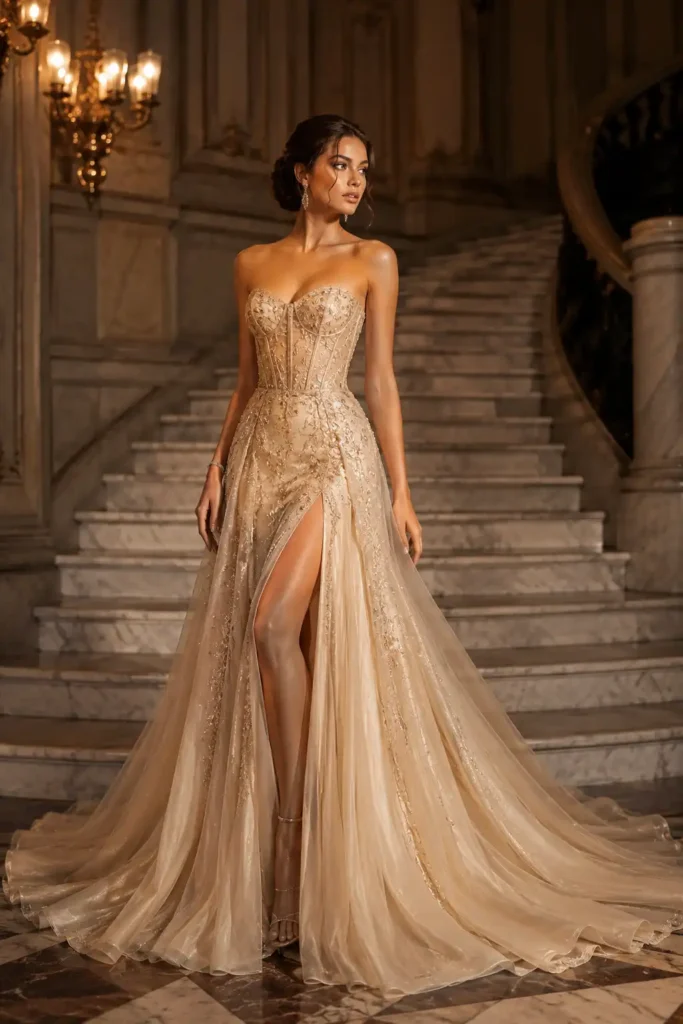
- Separate complex gowns from simpler volume dresses.
- Book special colors and trims before the final approval window.
- Protect enough time for pressing, final appearance and packaging.
Wedding Guest Dresses
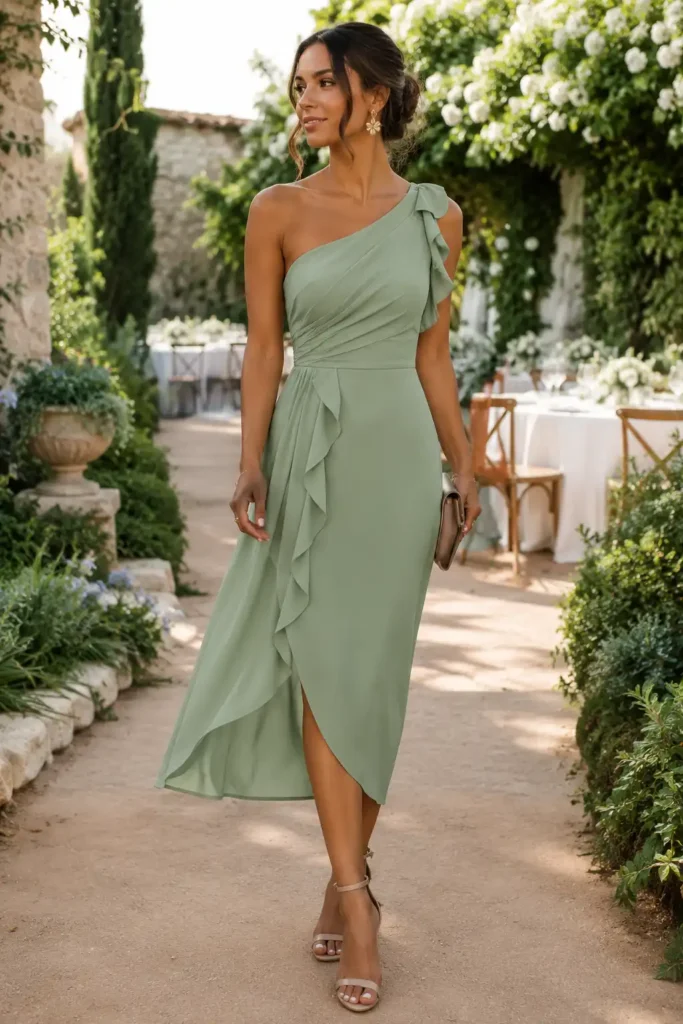
- Group styles by fabric family and color batch.
- Use controlled pressing and hanger or fold standards.
- Schedule first deliveries before peak event demand.

Resort and Vacation
- Confirm repeat placement for printed styles.
- Evaluate lining and opacity under daylight.
- Allow enough time for print strike-off or custom color approval.

Holiday Party Drops
- Lock decoration method before PP approval.
- Plan final inspection around loose embellishment and surface damage.
- Use split shipment only when SKU separation remains controlled.

Monthly Ecommerce Drops
- Use hero, volume and experimental style categories.
- Archive approved patterns, trims and packaging instructions.
- Review sales performance before assigning repeat-order priority.
Material Decisions That Change the Schedule
Fabric and trims are part of the critical path, not a separate purchasing task. Jinfeng evaluates bulk availability, color route, construction behavior, quality risk and replacement options before the calendar is treated as stable.

Satin and Chiffon Need Early Surface Control
Satin can create strong commercial imagery, yet the same surface makes snagging, shade variation, seam marking and pressing damage highly visible.
The sample review should confirm face direction, sheen, weight, drape, lining color, zipper compatibility and whether the fabric shows needle or seam impressions. Bulk lots need batch identification and color comparison before cutting. Chiffon introduces a different set of risks: transparency, edge fraying, puckered seams, uneven hems and inconsistent layer length. A launch calendar should reserve time for fabric approval, lining choice, hem testing and pressing review rather than relying on a single attractive swatch. When the original material carries a long lead time, Jinfeng can compare alternative fabrics by composition, weight, hand feel, sheen, opacity, drape, cost, MOQ and availability. Any substitution must be sampled again when it changes pattern behavior or visual effect.
- Control satin face direction and lot shade before cutting.
- Confirm chiffon layer length and opacity under natural light.
- Do not approve an alternative only from a digital photo.

Mesh and Lace Affect Fit, Coverage and Cutting
Mesh is judged by stretch direction, recovery, transparency, hole size, surface stability and color consistency. A bodycon mesh dress may fit correctly in one sample but grow in bulk if fabric recovery changes. Lining and power mesh must work together without restricting movement or exposing unintended areas. Lace adds placement and yield questions. Border lace, motif alignment and mirrored panels can increase consumption and cutting time, while damaged edges or inconsistent motif position become visible immediately on dresses with clean silhouettes. Jinfeng reviews placement before bulk cutting and confirms whether lace should be engineered, centered, mirrored or used as an overlay. The production calendar should include time for marker planning and first-cut verification when motif position matters. Final garment inspection then checks holes, skipped stitches, seam visibility, edge finish and lining coverage rather than relying on general appearance alone.
- Confirm mesh stretch percentage and recovery with the selected lining.
- Approve lace placement using full garment panels, not a small swatch.
- Protect extra time for motif matching and first-cut review.

Sequin and Corset Trims Need Bulk Availability
Sequin fabrics, rhinestones, decorative chains and corset components can make a collection commercially distinctive, but sample-only trims may not be available in bulk. Before PP approval, Jinfeng checks the intended sequin base, attachment stability, color, edge treatment, skin-contact areas and production quantity. Corset dresses also require confirmation of boning type, cup shape, under-bust position, grip tape, lining support, closure strength and seam allowance around rigid components.
A visual sample can look correct while remaining unsuitable for repeated sewing or extended wear. Bulk readiness therefore includes a trim card, construction instruction and clear replacement rule. If a nominated component becomes unavailable, the alternative needs approval before production.
Waiting until the sewing line begins can force a rushed change, new sample work or loss of the intended launch window.
- Check bulk trim quantity before treating the PP sample as final.
- Confirm comfort at armholes, necklines and under-bust contact points.
- Plan packaging protection for sequins, stones and delicate surfaces.

Custom Colors, Prints and Certified Materials Add Gates
Stock colors can support a shorter planning route, while custom dyeing, printing and certified material programs require supplier commitments before garment production. Custom color approval may involve lab dips, bulk color review and separate lining, zipper and thread matching. Printed dresses may require artwork preparation, strike-off, repeat scale approval, placement rules and shrinkage checks. Certified fabric sourcing also depends on the supplier, certificate scope, available color, order quantity and lead time; it cannot be assumed for every material. Jinfeng records which gate belongs to the fabric supplier and which belongs to garment approval, allowing the launch manager to see where external timing may affect the critical path. A backup material or secondary color should be evaluated early when the selling window is fixed. Substitutions remain controlled through fabric approval and, where necessary, a revised or PP sample.
- Set a firm approval deadline for lab dips and print strike-offs.
- Match lining, zipper and sewing thread after bulk color approval.
- Confirm certificate scope and material availability before quotation is finalized.
Planning Multi-Style and Multi-Color Launches
Hero Styles First
- Identify 4-8 priority styles at kickoff.
- Reserve photo-ready sample dates before secondary revisions.
- Consider a controlled first shipment for approved hero quantities.
Volume Styles Next
Volume styles carry larger unit counts and often use repeatable pattern blocks, standard trims or shared fabrics.
Their commercial value depends on stable fit, efficient production and complete size-color availability rather than complex hand-finishing.
- Lock size grading before bulk cutting.
- Group shared fabric and trim purchases.
- Schedule enough QC capacity for higher piece counts.
Complex Styles Separately
Corset, sequin, lace, mesh, cut-out and multi-layer dresses need different sample and sewing allowances. Isolating them from routine styles prevents one high-risk construction from obscuring the status of the full collection.
- Use dedicated risk notes and material checkpoints.
- Confirm production suitability before final PP approval.
- Avoid promising the same completion date for every construction.
Fabric Families Together
- Track fabric by quality, color and dye lot.
- Separate face-direction and stretch-direction requirements.
- Retain approved swatches for repeat production.
Color Depth by Demand
- Confirm MOQ from 200 pieces per style/color.
- Align zipper, lining and thread with each bulk shade.
- Use color-level status rather than style-level status alone.
Size Plans by Fit Risk
- Confirm the base size used for fit approval.
- Measure critical points during inline and final QC.
- Review extended sizes when construction changes proportionally.
Factory Allocation Around Product Complexity
Routine Woven and Knit
Straightforward mini, midi, maxi, jersey and woven dresses can follow efficient production sequences when fabric, pattern and trims are stable.
Volume styles are grouped by construction and material family to support controlled cutting, sewing and inspection.
- Suitable for larger unit counts and repeatable operations.
- Size and color tracking remains separate by SKU.
- Production speed is never allowed to replace PP and material approval.
Complex Occasion Styles
Corset, strapless, lace, mesh, sequin and multi-layer dresses require stronger pattern, workmanship and finishing control.
Jinfeng reviews sample findings before assigning production so the factory receives clear construction and QC instructions.
- Match product difficulty to suitable sewing capability.
- Set checkpoints for internal support, lining and decoration.
- Reserve finishing and appearance inspection time.
Peak and Parallel Programs
- Confirm factory allocation before the bulk calendar is issued.
- Keep style ownership and reporting responsibility clear.
- Use phased completion when one date for all styles creates unnecessary risk.
From PP Approval to Bulk Completion
Bulk production is released only after the garment standard and production files agree. Jinfeng manages the transfer from approved sample to fabric, cutting, sewing, finishing and packing through documented checkpoints rather than verbal instructions.

Lock the Production Standard Before Cutting
The approved PP sample works together with the final BOM, measurement chart, grade rule, fabric approval, trim card, sewing instruction, label layout, packing instruction and QC checklist. Jinfeng checks for conflicts before issuing bulk production information. A common risk occurs when the sample carries one trim, the BOM lists another and the artwork file changes after approval. Version control closes those gaps. Style number, color, size range, quantity, critical measurements, fabric face, lining, closures, internal support, decoration and labels are reviewed as one production package. Major design, color, construction or material changes after PP approval trigger a new assessment of cost, sample need and calendar impact. Bulk cutting should never become a test of an unresolved design decision.
- Final PP approval recorded by style and color.
- Production documents carry controlled revision dates.
- Open issues are closed before fabric is released to cutting.

Inspect Fabric and Control Cutting Direction
Incoming fabric inspection checks color, width, weight, hand feel, stretch, recovery, transparency, surface defects and visible lot variation according to the material and project requirements. Fabric relaxing is arranged where needed before cutting so measurements are not distorted by tension. Marker planning considers size ratio, print direction, lace motifs, satin face, velvet nap and stretch direction. The first cut pieces can be compared with pattern and placement requirements before the full lay proceeds. Cutting bundles remain identified by style, color and size to reduce mixing. Problems discovered after sewing has begun are more expensive and more damaging to the calendar, so material and cutting gates are scheduled before the sewing line is expected to reach full output.
- Separate dye lots and sensitive surface directions.
- Check first-cut pieces for pattern, placement and notches.
- Maintain bundle identification through sewing and QC.

Use Inline Checks to Protect Fit and Workmanship
Production begins with a pre-production meeting or instruction review covering approved construction, critical measurements and known sample risks. Inline checks focus on issues that become difficult to correct after finishing: neckline shape, strap position, bust and waist balance, zipper flatness, lining exposure, ruching symmetry, slit height, seam tension, decoration attachment and label placement. Measurements are reviewed during production rather than saved for final inspection. When a problem is found, affected work is isolated, corrected and rechecked before continuing. The goal is not to pretend defects never occur; the goal is to detect variation while corrective action remains possible. Jinfeng records recurring issues so the same failure is not repeated across colors, sizes or later production batches.
- Check critical measurements by style, size and fit risk.
- Separate repairable workmanship issues from pattern or material issues.
- Verify corrections before production returns to normal flow.

Finish, Inspect and Pack Against One Standard
Pressing and finishing are part of garment quality, especially for satin, chiffon, pleats, corset seams and occasion silhouettes. Final inspection covers appearance, measurements, workmanship, stains, loose threads, zipper operation, lining, decoration, labels and order assortment. AQL inspection or a third-party pre-shipment inspection can be arranged according to the agreed quality plan; AQL is a sampling method and does not replace process control. Packing begins only when barcode, SKU, folding, polybag, carton ratio and carton mark instructions are confirmed. Carton quantities, gross and net weight, dimensions and packing-list data are checked before forwarder coordination. Each stage protects the warehouse date because a completed dress that cannot pass inspection or enter the correct carton is not ready to ship.
- Control pressing temperature and surface protection by fabric.
- Match garments, labels, barcodes and packaging by SKU.
- Release shipment information only after carton data is verified.
Weekly Production Status You Can Act On
Progress reporting should reveal decisions and risk, not repeat “in production.” Jinfeng can structure weekly updates around approved milestones, current status, next action, responsible party and effect on the required delivery date.
| Milestone | Status Evidence | Next Action | Risk Signal | Owner |
|---|---|---|---|---|
| Fabric and color | Bulk lot, shade, quantity and inspection status | Approve, replace or release to cutting | Late lot, shade mismatch or short quantity | Material / Brand |
| Trims and labels | Bulk availability, color match and artwork approval | Close missing components | Sample-only trim or unfinished label file | Material / Brand |
| First and revised samples | Sample version, measurements and comment closure | Issue consolidated review | New comments outside agreed scope | Development / Brand |
| PP sample | Final material, fit, workmanship and written approval | Release production pack | Unresolved measurement or packing detail | Development / Brand |
| Cutting | Fabric released, marker checked and units cut | Start scheduled sewing groups | Fabric shortage, placement or lot issue | Production |
| Sewing | Input, output, inline findings and completion forecast | Correct issues and update finish date | Low output or repeated defect | Production / QC |
| Final inspection | Finished quantity, measurement and workmanship result | Repair, recheck or approve packing | High repair rate or late completion | QC |
| Packing | SKU, barcode, polybag, carton ratio and carton count | Close cartons and issue cargo data | Missing artwork or assortment mismatch | Packing / Brand |
| Shipment | Booking, cut-off, documents and pickup status | Handover to appointed forwarder | Missed cut-off or incomplete consignee data | Logistics / Brand |
Early Risk Alerts Before Dates Slip
Material Risk
- Possible actions: approve an equivalent stock fabric, reduce delayed colors, replace a trim or move a style into a later wave.
- Any substitution receives fabric or component approval before production.
- Critical long-lead items are tracked separately from routine materials.
Approval Risk
- Possible actions: prioritize hero styles, hold secondary colors, schedule a focused video review or separate photo and PP requirements.
- Major changes receive a revised cost and timeline review.
- Written approval is required before bulk release.
Production Risk
Production risk includes lower-than-planned output, repeated workmanship defects, factory allocation conflicts, late finishing or packing data that prevents carton closure. Jinfeng updates the expected completion date and reviews whether sequencing, repair resources or delivery waves can protect the launch.
- Possible actions: move approved routine styles ahead, isolate affected styles, increase inspection, split shipment or revise warehouse priorities.
- Quality gates remain in place during recovery.
- A rush decision is accepted only when material, PP and capacity conditions support it.
Quality Gates Built Into the Timeline
Incoming Material QC
- Check bulk lots against approved references.
- Record shade or surface differences before cutting.
- Confirm special trims in production quantity.
Cutting Control
Relaxing, marker direction, size ratio, motif placement and bundle identification are checked according to the style. Satin face, velvet nap, print direction, lace borders and mesh stretch require specific cutting instructions.
- Verify first-cut pieces.
- Separate dye lots and sensitive materials.
- Keep bundles identified by style, color and size.
Inline Sewing Check
- Identify repeated defects early.
- Recheck repaired work before release.
- Update production notes for every color and size affected.
Measurement Control
- Use the correct pattern and grade version.
- Review fitted and extended sizes carefully.
- Separate measurement errors from fabric stretch behavior.
Final Garment Inspection
- Do not treat AQL as a replacement for inline control.
- Repair and re-inspect nonconforming garments.
- Keep results linked to the style and production batch.
Packing Verification
Packing QC confirms the correct garment, size, color, label, barcode, folding, polybag, carton ratio and carton mark. Cargo data is checked before documents and forwarder booking are finalized.
- Match barcode and SKU data to the garment.
- Check carton quantity and assortment.
- Protect delicate surfaces during folding and transport.
Private-Label Packing Before the Shipping Window
Packing is a production milestone with its own approvals, materials and failure risks. Jinfeng coordinates garment labels, retail information, individual packing and export cartons so finished stock can move into the brand’s warehouse without rework.

Lock Garment Labels With the PP Standard
Main labels, size labels, care labels and composition information should be confirmed before bulk completion. The label position, sewing method, content, language and size-color relationship are checked against the PP sample and production file. For styles with delicate mesh, lace, satin or lining, label placement must avoid visible distortion and discomfort. Label artwork changes after production has begun can create rework across completed garments, so final files need a clear approval date inside the calendar. Jinfeng keeps label specifications linked to the style number and packing instructions rather than treating labels as generic accessories.
- Confirm label artwork, size set and care content before bulk sewing reaches completion.
- Approve placement on the garment, not only on a digital file.
- Keep each style and color linked to the correct label version.
Prepare Hangtags, Barcodes and SKU Data Early
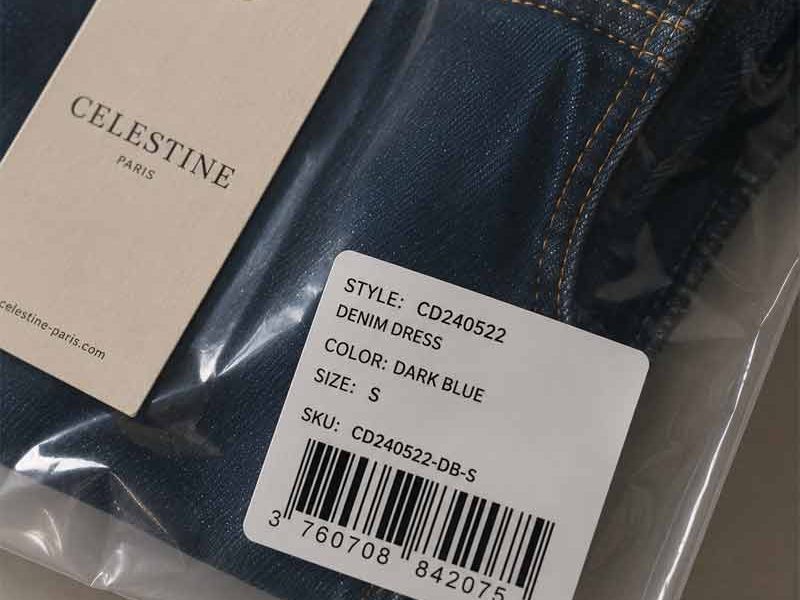
Hangtags, price tickets, barcode labels and SKU stickers connect the garment to ecommerce, retail and warehouse systems. Missing or incorrect data can leave finished dresses waiting in the packing area. Jinfeng requires the final barcode file, SKU logic, tag position and attachment method before the relevant packing window. The brand should identify whether barcodes belong on the hangtag, polybag, garment label or more than one location. Random checks compare the physical code with the packing list and style-color-size information. Programs with many colors and sizes need disciplined file naming because a single style can create dozens of SKU combinations.
- Provide final barcode and SKU data with revision control.
- Check scan readability before full packing.
- Keep style, color and size codes consistent across garment, polybag and carton records.

Set Folding, Polybag and Carton Rules by Product
Different dresses need different protection. Satin may require tissue or surface protection; sequin and rhinestone styles need anti-scratch folding; corset dresses must avoid crushing cups and boning; maxi dresses need controlled folding to limit hard creases.
Polybag size, warning text, ventilation holes, sealing and sticker position should match destination requirements. Export cartons need an approved size-color assortment, quantity per carton, carton marks and strength suited to the garment and route. Jinfeng checks the first packed units before the full order is closed so presentation and SKU logic can be corrected without reopening every carton.
- Use a product-specific fold and protection method.
- Approve the first packed unit and first completed carton.
- Record carton dimensions, gross weight, net weight and quantity accurately.

Control Late Changes Before They Reach Freight
Packaging changes can affect cost, supplier MOQ and lead time. Custom paper boxes commonly require a longer development route than standard polybags and export cartons; complex branded structures should be planned early. When artwork, barcode or carton-assortment changes arrive late, Jinfeng evaluates whether the order can still meet the booking cut-off without compromising accuracy. The brand receives a clear choice: keep the approved packing standard, accept a revised ship date, or use an approved temporary solution for a defined delivery wave. Finished goods should not be released with ambiguous retail data merely to preserve an artificial factory completion date.
- Assess cost and calendar impact before accepting artwork changes.
- Separate temporary packing solutions by shipment wave.
- Confirm warehouse requirements before booking freight.
Delivery Plans Matched to Launch Priorities
Transport strategy is selected according to commercial urgency, order volume, product value, warehouse rules and total landed cost. Jinfeng coordinates cargo information, documents and forwarder communication after production and packing milestones are aligned.
Express Courier for Samples and Urgent Approvals
First samples, fit samples, revised samples, photo samples, PP samples, fabric swatches and trim references normally move by express courier. The brand can use its own DHL, FedEx or UPS account, or Jinfeng can assist with shipment according to destination. Complete consignee name, company, telephone, email, address, postal code and courier-account instructions help prevent dispatch delays. Tracking is supplied after shipment. Sample freight is managed separately from sample development cost because destination, weight and account terms differ. For launch-critical samples, the calendar includes internal inspection, photo confirmation, packing and courier pickup rather than treating “sample finished” as the delivery milestone.
Air Freight for High-Value Time-Sensitive Quantities
Air freight suits urgent bulk quantities, launch-date deliveries, eventwear, graduation programs and replenishment where timing has greater value than the lowest freight cost. It cannot repair unresolved PP, missing materials or incomplete packaging data. Before booking, Jinfeng confirms carton count, dimensions, gross and net weight, destination, consignee, customs documents and warehouse delivery instructions with the appointed or recommended forwarder. Air planning is most effective when a defined group of approved SKUs is genuinely ready, allowing the launch team to protect campaign and first-sale needs without moving the entire program at premium freight cost.
Sea Freight for Planned Bulk and Repeat Orders
Sea freight is suited to larger seasonal orders, stable replenishment and cost-controlled dress programs. Its value depends on earlier planning because production completion, carton data, booking, cut-off, port handling, customs and warehouse receipt all sit between the factory and launch date. Jinfeng supports commercial invoice, packing list, carton marks, cargo dimensions, weight data and bill-of-lading coordination according to the trade term. Programs tied to graduation, wedding, resort or holiday windows should set the sea-freight route while development is still active, leaving enough room for production and receiving buffers rather than deciding after final inspection.
Air and Sea Split for Launch Sequencing
A split shipment can protect the first launch wave while controlling the freight cost of the remaining volume. Hero styles, key colors, priority sizes or an initial ecommerce allocation may move by air, while the main quantity follows by sea. Jinfeng separates cartons, packing lists and cargo data by shipment group so the warehouse can receive each wave accurately. The split decision should be made before packing because SKU allocation, carton marks and documentation need separate control. A split route is a sales-timing tool, not a substitute for late product decisions. It works best when the brand has already ranked commercial priorities and approved the relevant styles.
Balancing Speed, Cost and Launch Risk
Standard Production Plan
Best for seasonal collections with time to complete normal fabric, sample, PP, production, QC and sea-freight milestones.
Standard planning supports broader material choice, orderly approvals and balanced manufacturing cost.
- Use full development and fit review where required.
- Book bulk materials after approved direction is stable.
- Protect receiving buffer before the selling date.
Priority Launch Plan
Used when selected hero styles or initial quantities need an earlier delivery than the full collection.
Jinfeng prioritizes sample and production paths, then separates packing and shipment by approved commercial priority.
- Choose the exact SKUs and units requiring priority.
- Keep the remaining program on a controlled normal route.
- Compare air cost with the value of earlier availability.
Rush Order Review
- Do not skip PP approval or material inspection.
- Recalculate cost and delivery impact before confirmation.
- Use split delivery only when SKU and packing control remain clear.
What Launch Managers Should Verify in a Manufacturer
Supplier qualification should measure the ability to convert a launch calendar into controlled garment milestones. Factory size alone does not prove sample discipline, product suitability, progress visibility or delivery readiness.
Dress Category Fit
- Review real product and process evidence.
- Confirm fit, lining and finishing capability.
- Match production allocation to product difficulty.
Sample System
- Request a sample timeline and comment format.
- Confirm who controls pattern revisions.
- Check how sample standards transfer into bulk.
Critical Path Control
- Request a milestone schedule by style group.
- Identify the latest approval dates.
- Confirm the escalation method for delay risk.
Capacity Allocation
- Review style-specific allocation.
- Ask how peak-season conflicts are managed.
- Require approval before external production changes.
QC and Status Evidence
- Request a weekly WIP format.
- Confirm critical measurements and tolerances.
- Review AQL or third-party inspection support.
Packing, NDA and Repeatability
- Confirm NDA and confidential file handling.
- Review barcode and carton verification.
- Ask how repeat-order standards are archived.
A Multi-Style Launch Calendar in Practice
The following anonymized representative program shows how a launch-sensitive collection can be structured. Figures reflect the normal order scale requested for planning discussions and illustrate the control logic used before any final commitment.
Program Snapshot: 22 Styles and 52,400 Pieces
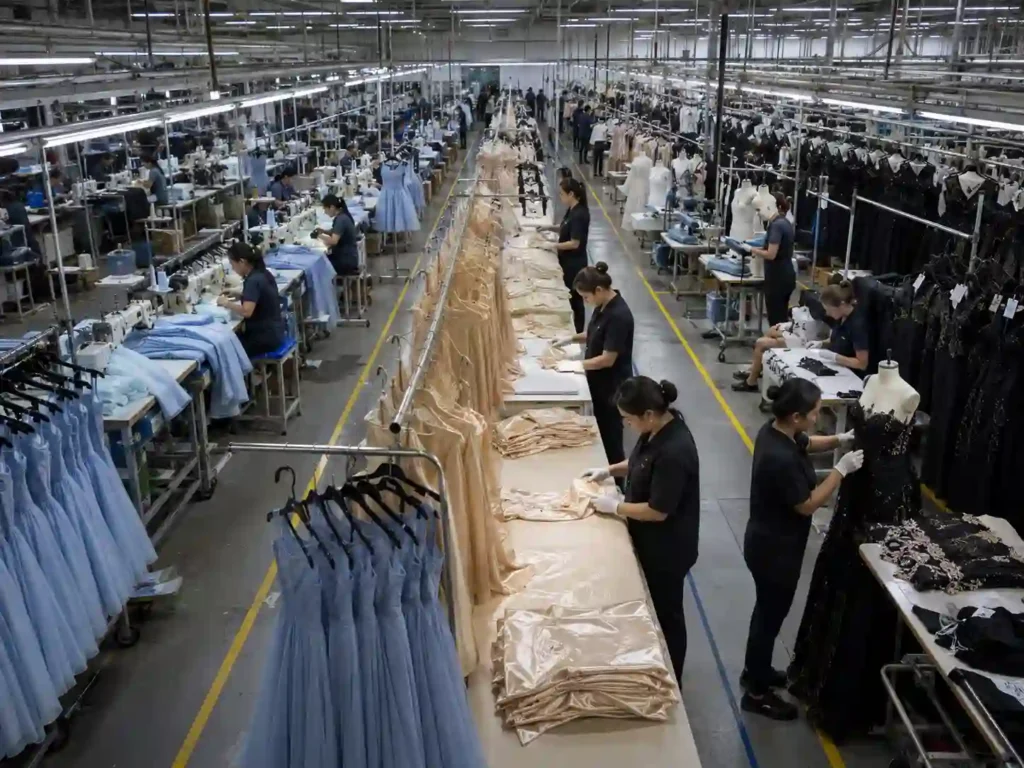
A US fashion brand planned a seasonal dress release containing 22 styles and 52,400 total pieces. The range included 7 satin styles, 5 mesh or lined-mesh styles, 4 corset or strapless styles, 3 lace styles and 3 jersey volume styles. The commercial size range ran from XS to XXL, with selected fitted styles receiving an additional extended-size review. Color depth ranged from two to five colors per style. Six hero styles were required for campaign photography before the complete collection, while the warehouse needed an initial sellable quantity ahead of the main sea shipment. The program was organized by product risk rather than handled as one completion date.
- 22 styles across five fabric and construction families.
- 52,400 total pieces with style-color quantities above the confirmed production MOQ.
- Six campaign hero styles, nine volume styles and seven complex supporting styles.
- Private-label garments with size labels, care labels, hangtags, barcodes, individual polybags and export cartons.

Development Sequence Prioritized Commercial Dates
The six hero styles entered pattern and material review first. Ordinary satin and jersey first samples followed the 10-15 day working range after complete confirmation, while corset, mesh, lace and strapless styles used a 15-25 day range according to construction and trim readiness. Photo-ready samples were separated from PP approval so marketing could review visual presentation without confusing the photography sample with the production standard. Fit comments were consolidated by style version, and the brand assigned one approval owner for measurements and one for color and styling. Styles sharing fabric were grouped for bulk quality and color planning, while special lace and corset trims remained on independent trackers. PP approvals were released in controlled batches instead of waiting for all 22 styles to close on one day.
- Batch 1: six hero styles for campaign and first delivery.
- Batch 2: nine volume styles using stable material and repeatable construction.
- Batch 3: seven complex styles requiring additional fit or workmanship verification.
Bulk Production Followed Three Risk Paths
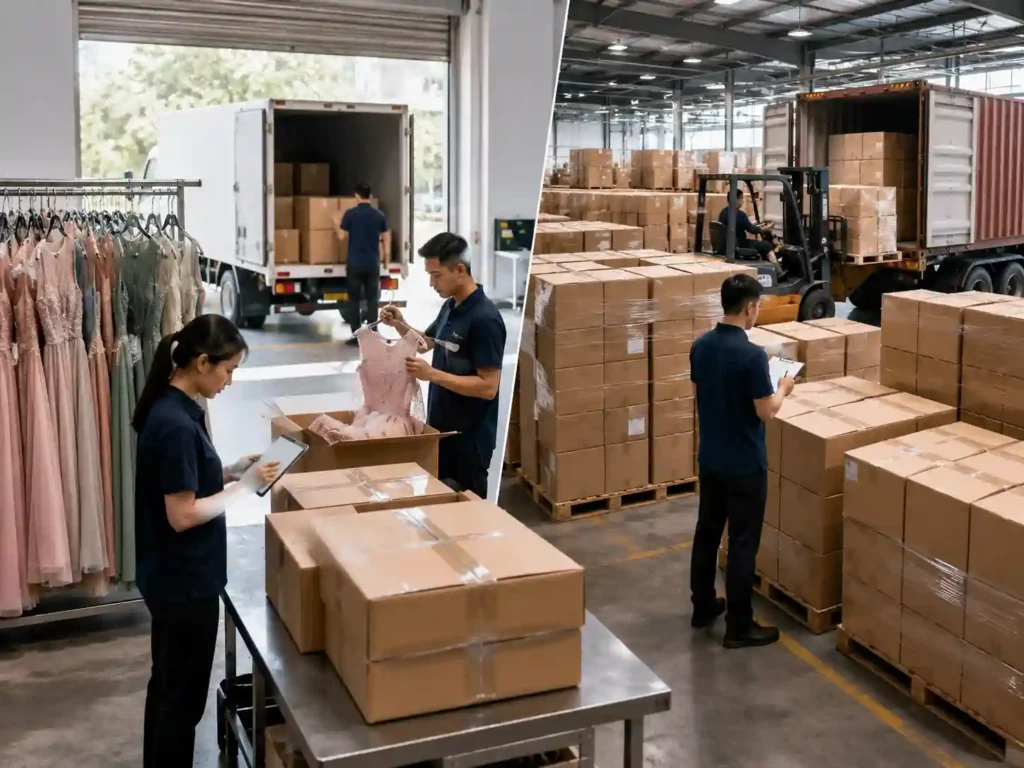
Production allocation separated routine volume dresses from complex occasion styles. Each style moved with an approved PP sample, BOM, size chart, fabric and trim references, sewing instructions, label files and packing requirements. Satin lots were checked for shade and surface direction; mesh was reviewed for stretch, recovery and coverage; corset styles received checkpoints for cup, boning, grip tape and zipper stability; lace styles received placement review before full cutting. Weekly status updates showed material, cutting, sewing, QC and packing progress by style group. When one lace color arrived later than the remaining bulk materials, the affected units were moved into the second completion wave rather than allowing the delay to hide the progress of the approved collection.
- Process QC covered material, cutting, inline workmanship, measurements, final appearance and packing.
- Finished quantities remained separated by style, color and size through carton closure.
- Late material was isolated as a style-color risk, not reported as a vague delay to the full order.
A Split Delivery Protected Launch and Freight Cost
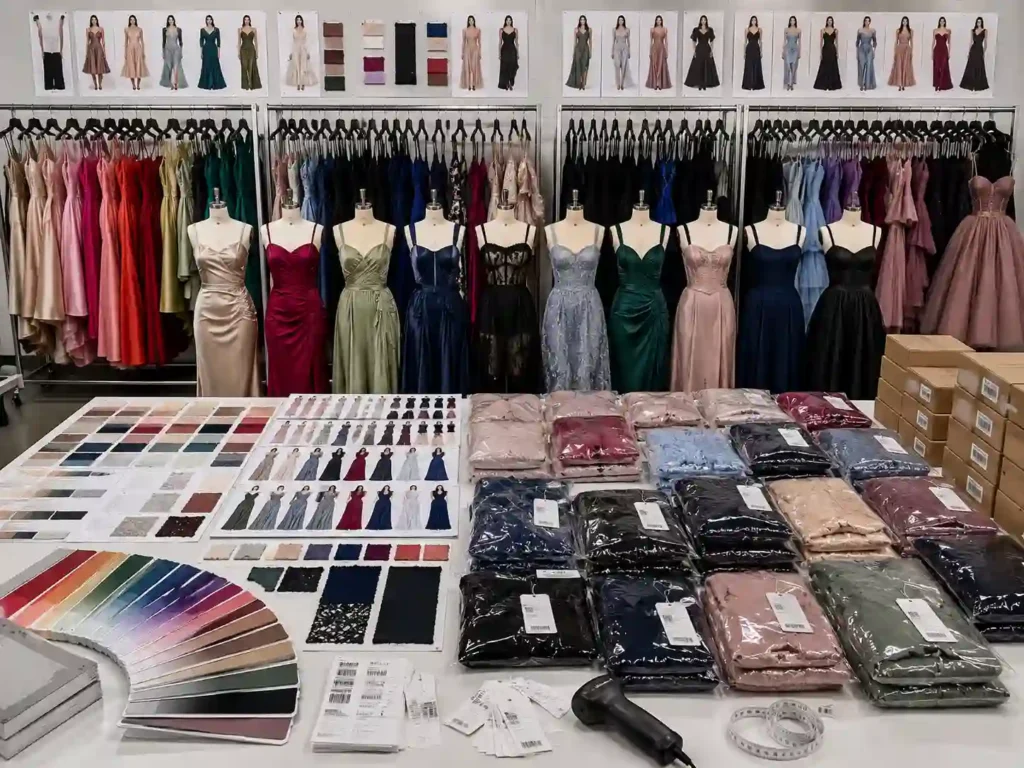
The first delivery contained 4,800 pieces from approved hero styles, priority colors and core sizes. Those cartons were prepared as an independent air-freight group with separate packing-list data and carton marks.
The remaining 47,600 pieces followed the main sea-freight plan after final inspection and packing verification. The split was decided before carton packing, allowing SKU allocation and documents to remain accurate. The approach protected campaign and initial selling needs without moving the entire order by air. The main lesson was not “ship faster at any cost.” The useful result came from early style ranking, controlled PP batches, clear material risk, production status by group and a delivery decision made before the warehouse window became urgent.
- 4,800 pieces allocated to the first launch wave.
- 47,600 pieces retained on the cost-controlled main route.
- No production stage was skipped to create the first delivery.
- Program data is representative and should be replaced with authorized internal records before publication as a client case.
Frequently Asked Questions About Launch Scheduling
For a multi-style collection, begin as early as the product and commercial calendar allows. A working framework often starts 18-24 weeks before the required warehouse date, while complex materials, extensive revisions or sea freight may require more time. Jinfeng confirms the final plan after reviewing style count, materials, quantities, approval dates, packing and destination.
A simple first sample may require about 7-10 days. An ordinary dress normally requires about 10-15 days. Corset, strapless, lace, mesh, sequin and other complex styles often require about 15-25 days. Custom fabric, special trims or certification requirements can extend the schedule.
Yes. Photo-ready samples can be prioritized for campaigns, ecommerce and showrooms. They should be identified separately because a visually finished photography sample may not contain final bulk fabric, trims, labels or packing. A PP sample still needs approval before bulk production.
Jinfeng updates the affected milestone and explains the effect on material commitment, production, QC, packing or freight. Hero styles, colors or delivery waves can be prioritized when appropriate, but a delayed decision cannot always be recovered without added cost or a revised warehouse date.
Yes. Multi-style programs are grouped by launch priority, fabric family, pattern complexity, sample purpose and production route. Each style and color maintains its own material, approval, production and packing status so one delayed item does not obscure the rest of the collection.
Jinfeng’s MOQ starts from 200 pieces per style/color. Final MOQ depends on fabric availability, custom dyeing, printing, special trims, construction, packaging and production schedule. A large total order does not automatically remove the MOQ required for each individual style and color.
Rush projects are reviewed against fabric stock, trim availability, sample or PP status, construction difficulty, available capacity, QC requirements, packing readiness and transport route. Jinfeng will not skip PP approval, material inspection or required quality checks simply to promise an unrealistic date.
Yes, when the brand identifies priority styles, colors, sizes or quantities early enough for separate packing and documents. An initial air shipment can support launch needs while the remaining bulk moves by sea. The split should be planned before carton packing.
Jinfeng uses the approved PP sample, golden sample, fabric and trim approvals, BOM, size chart, sewing instruction, production order, QC checklist and packing instruction as aligned references. Major changes after PP approval receive a new cost, sample and calendar review.
Yes. Jinfeng supports NDA-based cooperation and protects tech packs, original samples, patterns, line sheets, trims, labels, packaging files, order quantities, launch dates and unpublished designs. Public images or cases require authorization or appropriate anonymization.

Build Your Dress Launch Timeline With Jinfeng
Send the commercial dates and product files behind the collection, and Jinfeng will review whether the sample, material, bulk-production, QC, packing and delivery milestones can support the planned warehouse and launch windows. A useful first review does not require a perfect tech pack, but the information should be specific enough to identify product structure, quantity, approvals and timing. Kelly coordinates the initial project assessment and routes the files to the appropriate development and production teams.
- Launch date, campaign or photo date, required warehouse receipt date and destination.
- Tech packs, line sheets, reference images, sketches or original-sample information.
- Style count, quantity by style/color, size range and priority hero styles.
- Fabric direction, colors, trims, lining, construction and special workmanship.
- Label artwork, hangtags, barcode/SKU data, polybag and carton requirements.
- Preferred trade term, appointed forwarder and any proposed air, sea or split delivery plan.


