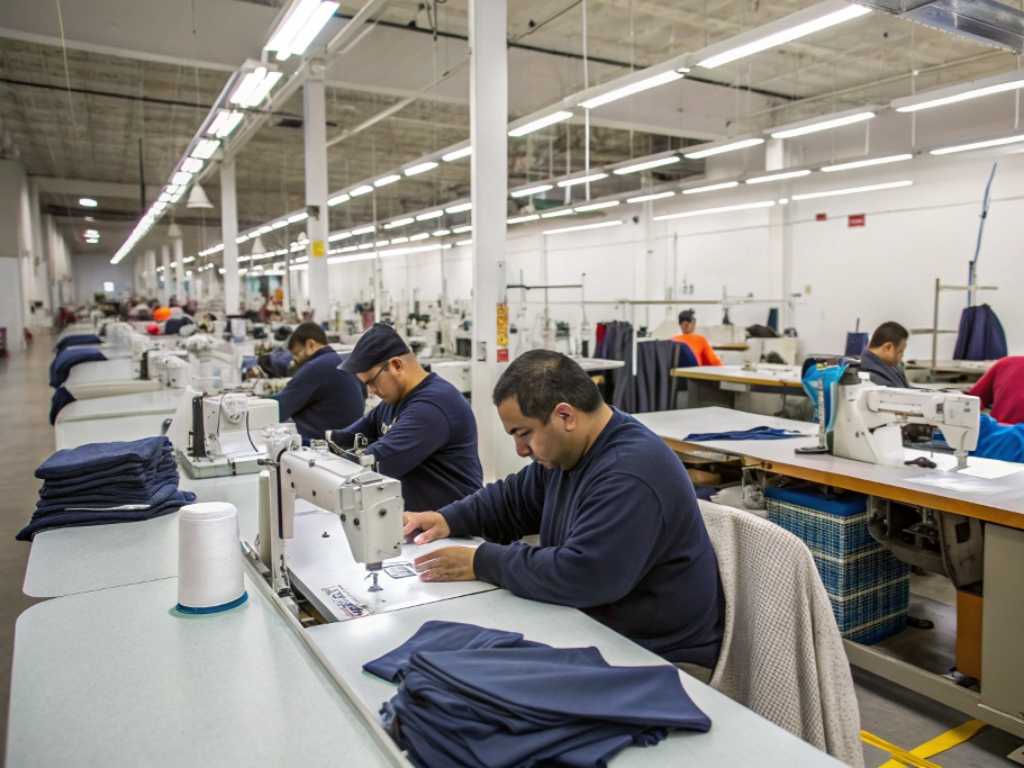
Dress Manufacturer for Global Sourcing Offices
Structured dress development, transparent production coordination, and controlled delivery for sourcing teams managing complex womenswear programs across markets.
- 6 owned women’s fashion factories and 10+ long-term production partners support product-based factory allocation.
- 2 sample rooms, 7+ senior pattern makers, and 20+ sample machinists support parallel development across multiple styles.
- 12+ merchandisers and 15+ QC inspectors coordinate sample status, material readiness, bulk checkpoints, inspection, and shipment preparation.
- 100,000+ pieces of regular monthly capacity, 18+ sewing lines, and 6+ flexible lines support planned multi-style programs.
Jinfeng Apparel develops and manufactures dresses, skirts, jumpsuits, matching sets, and private-label womenswear from tech pack review and fabric sourcing to pattern making, sampling, bulk production, quality control, packing, and export coordination. The operating model is designed for sourcing offices that need clear responsibilities, documented approval gates, product-specific factory matching, and reliable follow-through across 10-30 styles in one program.
Manufacturing Capacity Built for Managed Sourcing Programs
Six Owned Factories
Long-Term Production Network
Two Sample Rooms
Pattern and Sample Team
Merchandising Coordination
Quality and Packing Support
Built for Professional Apparel Sourcing Organizations
Global Sourcing Offices
Global sourcing offices need a manufacturing partner that can work within existing vendor-management disciplines. Jinfeng supports tech pack and BOM review, quotation clarification, material alternatives, sample version control, PP approval, factory allocation, production updates, inspection coordination, retail packing, and export documentation. Communication can be organized by program, style, color, quantity, market, and delivery window, helping sourcing teams compare suppliers and report internally. The relationship is built around accountable execution rather than isolated quotations or unstructured production promises.
Buying Houses
Brand Group Teams

Common Risks in Multi-Vendor Dress Production
Unclear Factory Allocation
Uncontrolled Sample Versions
Incomplete Cost Scope
Sample-to-Bulk Variation
Limited Production Visibility
Packing and Document Errors
A Manufacturing Partner Your Sourcing Team Can Manage
Professional sourcing depends on clear ownership, transparent production arrangements, and approvals that can be traced later. Jinfeng Apparel combines direct manufacturing resources with coordinated development, production, QC, packing, and logistics responsibilities under one operating structure.
Direct Manufacturing Structure with Controlled Allocation
Jinfeng operates six owned women’s fashion factories and works with more than 10 long-term satellite production partners.
The structure provides both a stable manufacturing base and access to product-specific capacity. Sourcing offices do not benefit from scale when factory assignment is hidden, temporary, or unrelated to product needs.
Allocation therefore begins with a technical and commercial review.
Product category is the first filter. Woven mini dresses, stretch bodycon dresses, structured corset dresses, embellished partywear, lightweight resort dresses, jumpsuits, and matching sets require different line experience. Fabric behavior is the second filter. Satin can snag and show pressing marks; power mesh needs stretch-direction control; lace requires placement and edge management; sequins affect sewing sequence, abrasion, and packing. Order quantity, color count, size breakdown, delivery window, testing, and packing complexity are then considered.
An assigned production unit follows the approved sample and project documents. Jinfeng remains responsible for merchandising coordination, production follow-up, QC alignment, packing verification, and shipment preparation. When a sourcing office needs a facility profile, audit review, factory visit, or third-party inspection, the requirement should be connected to the actual assigned production location. The operating principle is controlled allocation with visible responsibility, not uncontrolled subcontracting.
Defined Ownership from Development Through Shipment
Large programs fail when everyone is involved but no one owns the next action. Jinfeng uses role-based coordination across inquiry handling, product development, fabric and trim sourcing, pattern making, sample sewing, merchandising, production management, QC, finishing, packing, and export logistics. Kelly acts as the initial business contact and coordinates the collection of tech packs, line sheets, quantity plans, target dates, and packaging requirements before the project is distributed internally.
Product developers and pattern makers handle feasibility, structure, fit, and technical questions. Fabric and trim sourcing teams manage options, availability, color, supplier MOQ, and lead time. Sample rooms produce and revise garments according to recorded comments. Merchandisers follow approvals, material readiness, production milestones, and file status. QC inspectors check agreed risk points during material, cutting, sewing, garment, and packing stages. Finishing and packing teams follow approved labels, barcodes, folding, polybags, size ratios, and carton marks. Logistics support prepares or coordinates commercial invoices, packing lists, carton information, and nominated-forwarder communication.
Clear ownership makes escalation faster. A fit issue returns to pattern and sample development; a fabric delay returns to sourcing and merchandising; an in-line workmanship issue returns to production and QC; a barcode conflict returns to packing-file review. The sourcing office receives a defined action rather than a chain of forwarded messages.
Approval Gates That Protect Bulk Standards
Approval gates create a common production language between a sourcing office and a factory. Jinfeng does not treat a reference image, first sample, photo sample, and PP sample as interchangeable. Each serves a different purpose. A first sample tests structure and feasibility. A fit sample focuses on body balance and measurement. A revised sample confirms comment execution. A photo-ready sample may prioritize appearance for content creation. The PP sample is the final pre-production standard, and a Golden sample may be retained as the reference for bulk, QC, repeat orders, or dispute review.
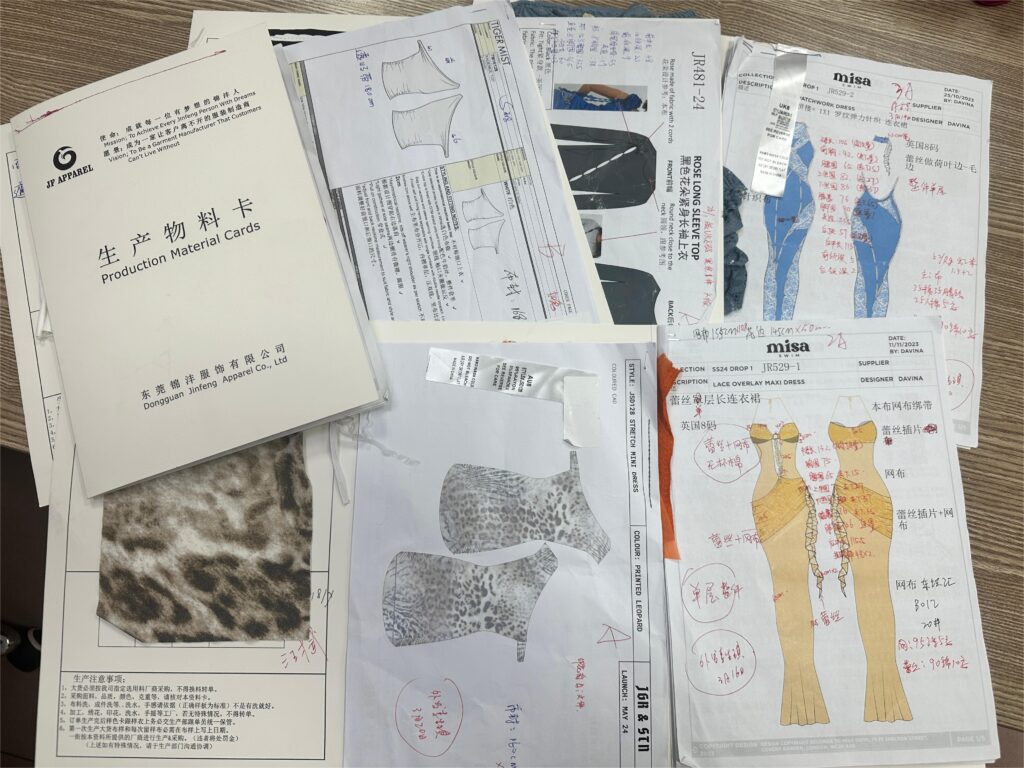
Before bulk production, the approved standard should include fabric and color, trims, measurement chart, construction, lining, bra cups or boning where applicable, labels, packaging, and delivery instructions. Production documents translate the approved garment into repeatable operations. The production order records style, color, size, quantity, materials, packing, and schedule. The sewing instruction records seams, seam allowances, zipper application, lining, ruching, lace, sequins, hems, pressing, and QC points.
Approval discipline reduces ambiguity without slowing the project unnecessarily. Open questions are identified early, decision dates are set, and later changes are evaluated for cost and timing impact. Sourcing teams gain a record of what entered production and why, which is essential when several offices, brands, or departments share responsibility.

Dress Categories for Multi-Brand Sourcing Programs

Party and Occasion Dresses

Mini and Bodycon Dresses

Satin and Slip Dresses
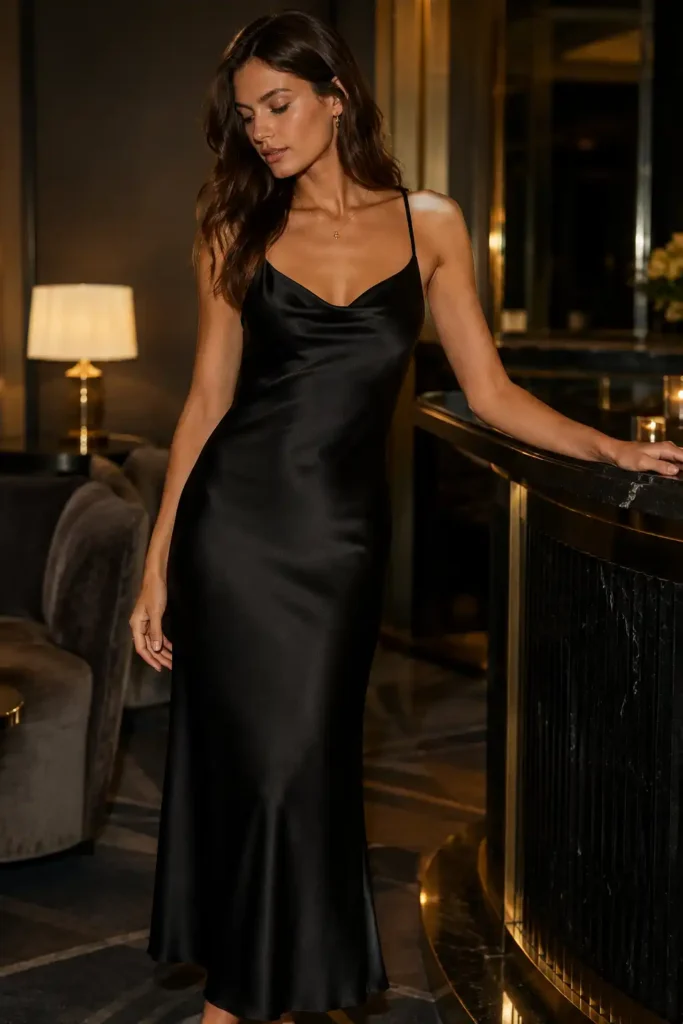
Satin and slip dresses expose every weakness in cutting, sewing, pressing, and handling. Fabric direction changes the light reflection; bias or semi-bias construction changes drape and growth; thin qualities can reveal seam allowances and lining edges. Development checks neckline shape, strap length, bust coverage, lining depth, side-seam balance, zipper or pull-on construction, hem level, and movement. Bulk inspection covers shade variation, snagging, needle marks, seam puckering, pressing shine, water marks, and folding. Packing must limit hard creases and contact with rough trims.
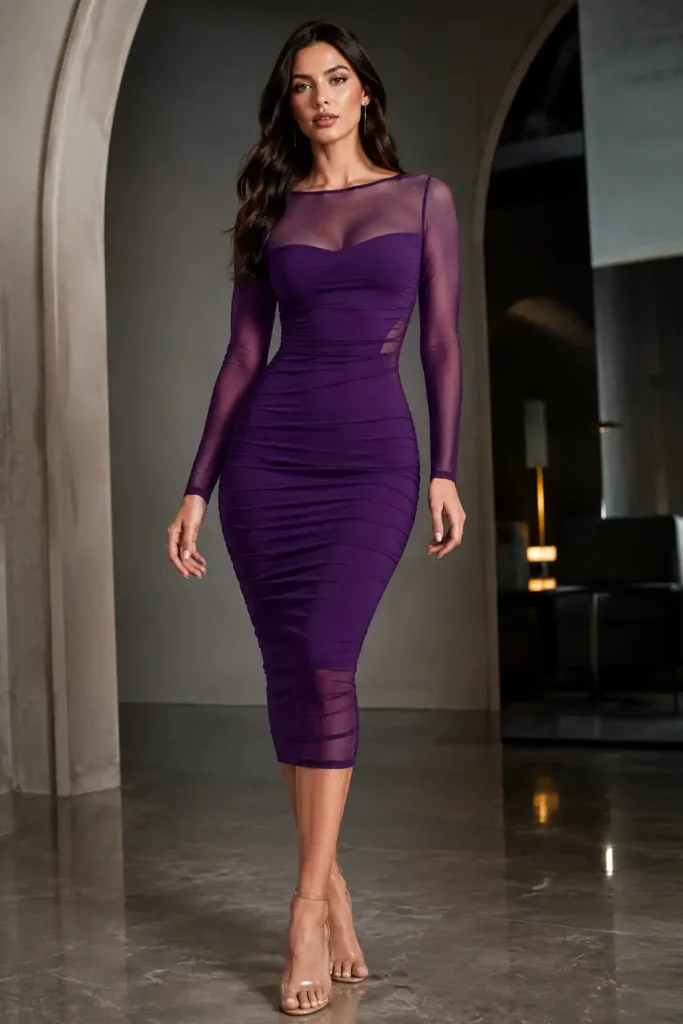
Mesh and Lace Dresses

Resort and Printed Dresses

Jumpsuits and Matching Sets
Production Allocation Based on Product Complexity
A multi-style program performs better when factory assignment follows product and material requirements. Jinfeng uses owned factories, long-term production partners, specialist teams, 18+ sewing lines, and 6+ flexible lines to create an allocation plan before bulk work begins.
Product Structure Determines the Production Unit
Factory allocation starts with the garment, not with whichever line becomes available first. A clean satin slip dress needs controlled fabric handling, fine seam execution, pressing discipline, and careful packing. A corset dress requires experience with cup shape, boning channels, lining, zipper support, symmetry, and fit. A stretch bodycon dress depends on recovery, seam elasticity, pattern reduction, and measurement stability. A sequin dress needs attachment control, abrasion management, lining, and protective packing. A jumpsuit needs strong understanding of torso length, rise, movement, and opening construction.
Jinfeng reviews reference images, tech packs, BOMs, original samples, and target quantities to identify the key production risks. The review considers woven or knit construction, fabric stretch, transparency, layer count, internal support, decoration, seam density, pressing sensitivity, and packing requirements. Styles are grouped only when their production logic is compatible. Similar visual appearance does not always mean similar manufacturing needs.
The allocation decision is documented with the assigned production unit, development reference, quantity, color plan, delivery window, and QC focus. Sourcing offices can request additional facility information or an audit review when required. The objective is repeatable workmanship and accountable control rather than moving styles between facilities without notice.
Capacity Planning Balances Volume and Style Count
A program containing 24 styles and 50,000 pieces creates a different production problem from one style at the same total quantity. Multi-style programs require more material records, sample approvals, cutting markers, size breakdowns, line changes, in-line inspections, label files, barcode lists, and carton plans. Capacity planning must therefore consider style count, units per style and color, material arrival, sample approval timing, production sequence, and shipment priority.
Jinfeng’s 18+ sewing lines and 6+ flexible production lines provide options for planned distribution. Flexible lines support multiple commercial styles, fabrics, colors, and sizes, but flexibility does not remove the need for material readiness or realistic scheduling. Complex corset, lace, sequin, and special-packing programs require earlier preparation than straightforward woven styles. Styles with shared fabric or trims may be grouped to improve material control and reduce line change. High-priority photo or launch styles may be sequenced ahead of later replenishment items when the sourcing plan requires it.
A capacity plan should identify production start windows, expected line loading, inspection windows, packing preparation, and shipment grouping. When timing becomes tight, the discussion should focus on style priority, material alternatives, color consolidation, split shipment, or revised launch sequence rather than a blanket promise that every style can finish at the same time.
Unified Standards Across Assigned Production Units
Multiple production units only help when standards remain unified. Jinfeng transfers each approved style through the PP sample, Golden sample when required, measurement chart, BOM, sewing instruction, label file, packing requirement, and QC checklist. Merchandising and QC teams coordinate the same approval language across the assigned factories and long-term partners.
The first bulk output receives particular attention because it reveals whether sample construction has transferred correctly to repeated production. Inspectors review measurements, seam appearance, lining, zippers, boning, cups, ruching, lace, sequins, hems, pressing, labels, and packing according to product risk. Deviations are isolated, corrected, and rechecked before release. Factory allocation does not change the approved commercial standard.
For repeat orders, historical pattern, fabric, trim, workmanship, packing, and QC references can be retained. Material batches and new colors still require confirmation, but the production team begins with a defined reference instead of recreating the program from memory. Sourcing offices gain the capacity benefits of a structured network without losing visibility over product standards.
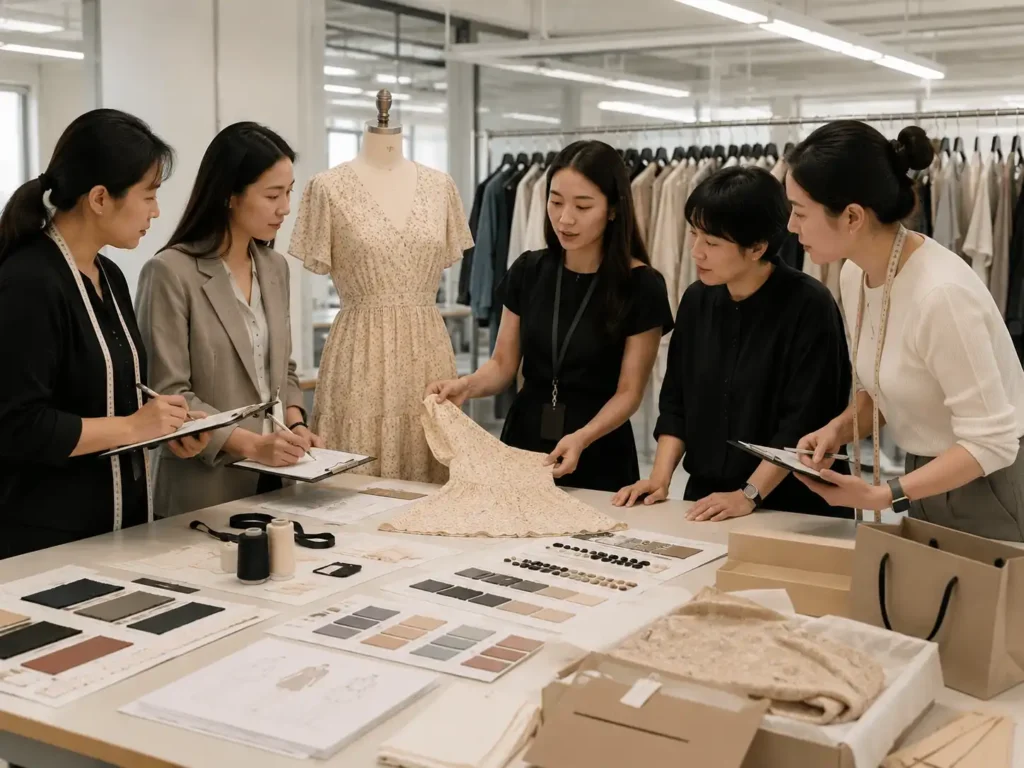
Project Visibility Across Development and Bulk Production
Clear reporting should show what has been completed, what remains open, who owns the next action, and whether timing is still protected. Jinfeng organizes multi-style programs around measurable stages rather than broad progress descriptions.
| Program Stage | Information Controlled | Sourcing Office Receives | Main Decision |
|---|---|---|---|
| Initial Review | Style files, quantity, market, delivery target, testing, packing | Feasibility notes and missing-information list | Proceed, revise, or clarify |
| Material Direction | Fabric, lining, trims, color, availability, supplier MOQ | Options, lead-time notes, cost impact | Select material route |
| Pattern and Sampling | Sample type, version, measurements, fit comments, open issues | Photos, measurements, comment response, sample status | Approve or revise |
| PP Approval | Final fabric, construction, size chart, labels, packing, workmanship | PP record and locked bulk standard | Release bulk production |
| Bulk Production | Material receipt, cutting, sewing, in-line checks, finishing | Milestone update and risk notice | Maintain or adjust schedule |
| Final Inspection | Measurements, appearance, labels, packing, AQL or nominated inspection | Inspection result and corrective action when needed | Release packing or recheck |
| Shipment Preparation | Final quantity, carton data, invoice, packing list, marks, forwarder details | Shipment file and booking coordination | Approve dispatch |
Tech Pack and BOM Review Before Quotation
Accurate development begins with a disciplined review of the available files. Jinfeng reads the garment as a connected system of fabric, fit, construction, trims, workmanship, packing, testing, quantity, and delivery rather than pricing isolated line items without context.
File Review Identifies Missing and Conflicting Information
A complete review may include the tech pack, flat sketch, measurement chart, BOM, construction callouts, colorways, artwork, original sample, fit comments, label files, packing instructions, quantity plan, destination market, testing requirement, and target delivery date. Many projects arrive with useful information but still contain conflicts. A sketch may show a concealed zipper while the BOM lists a pull-on construction. A lined bodice may be drawn while the fabric consumption assumes one layer. A size chart may not state whether measurements are garment or body dimensions. A colorway may use a custom shade without a reference standard.
Jinfeng separates confirmed information from open questions. Product developers and pattern makers review silhouette, seams, support, lining, openings, stretch, and wearability. Fabric and trim teams review material availability, color route, supplier MOQ, and lead time. Merchandisers consolidate the technical questions so sourcing offices can answer them efficiently. The aim is not to delay quotation; the aim is to prevent a price based on assumptions that later change the product, cost, or schedule.
When only a reference image or original sample is available, an initial feasibility assessment can still be prepared. A more accurate development and quotation plan follows after key specifications are defined.
Technical Risk Review Protects Fit and Production Feasibility
A dress may look commercially strong in a sketch yet remain difficult to produce at scale. The technical review examines how the design will sit on the body, how the material behaves, and whether the construction can be repeated across sizes. Key checks include bust-waist-hip proportion, neckline depth, strap length, armhole exposure, skirt length, slit height, zipper support, lining coverage, seam placement, stretch direction, print direction, and internal structure.
For fitted garments, fabric stretch and recovery must match the intended pattern reduction. For corset styles, cup shape, boning placement, waist support, lining, and zipper strength must work together. For lightweight satin, seam tension, bias behavior, pressing, and snag risk need consideration. For mesh and lace, transparency, motif direction, edge finishing, and label placement can affect wearability. For jumpsuits, torso length, rise, hip ease, and opening method must allow movement.
The review also considers grading. A design that works in one sample size may require different strap, neckline, cup, or length logic across the full size range. Technical questions raised before pattern making save more time than corrections made after several sample rounds or after bulk cutting begins.
BOM-Based Quotation Clarifies Cost Boundaries
A useful quotation explains what creates the garment cost. Jinfeng reviews shell fabric, lining, interlining, elastic, zippers, cups, boning, lace, sequins, printing, embroidery, labels, hangtags, barcodes, polybags, cartons, testing, and delivery terms where applicable. Sewing time is affected by layer count, seam count, construction sequence, ruching, draping, pleating, corsetry, hand placement, and finishing. Fabric consumption changes with width, print repeat, nap, direction, size range, and marker efficiency.
Open commercial items are listed rather than hidden inside an estimated price. A quotation may state whether custom dyeing, custom print, special hardware, testing, freight, or nominated packaging is included. When a target cost requires adjustment, Jinfeng can discuss fabric alternatives, lining changes, trim replacement, simplified internal construction, optimized panel layout, color consolidation, or revised packing. Cost reduction should preserve the intended retail appearance, fit, and use rather than remove important structure without explanation.
MOQ is calculated by style and color. The standard starting point is 200 pieces per style/color, subject to fabric, trims, color development, construction, packing, and production scheduling. Material suppliers may have separate minimums, especially for custom dyeing, printing, lace, sequins, hardware, or certified fabric programs.

Fabric and Trim Sourcing for Dress Programs
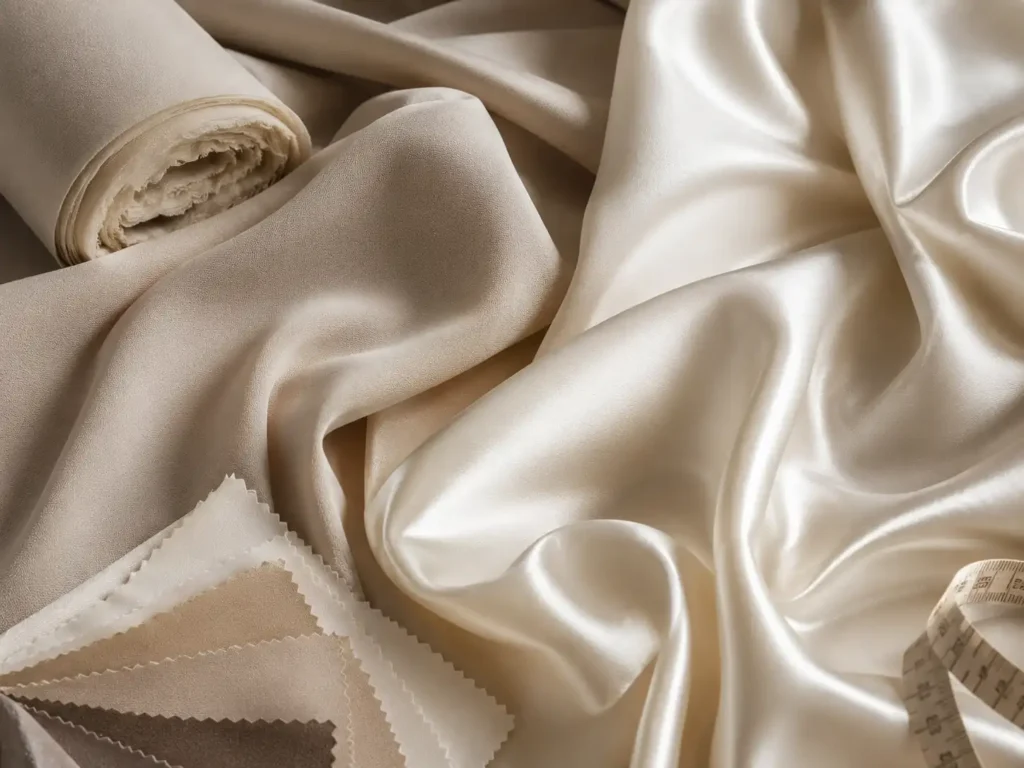
Satin and Crepe
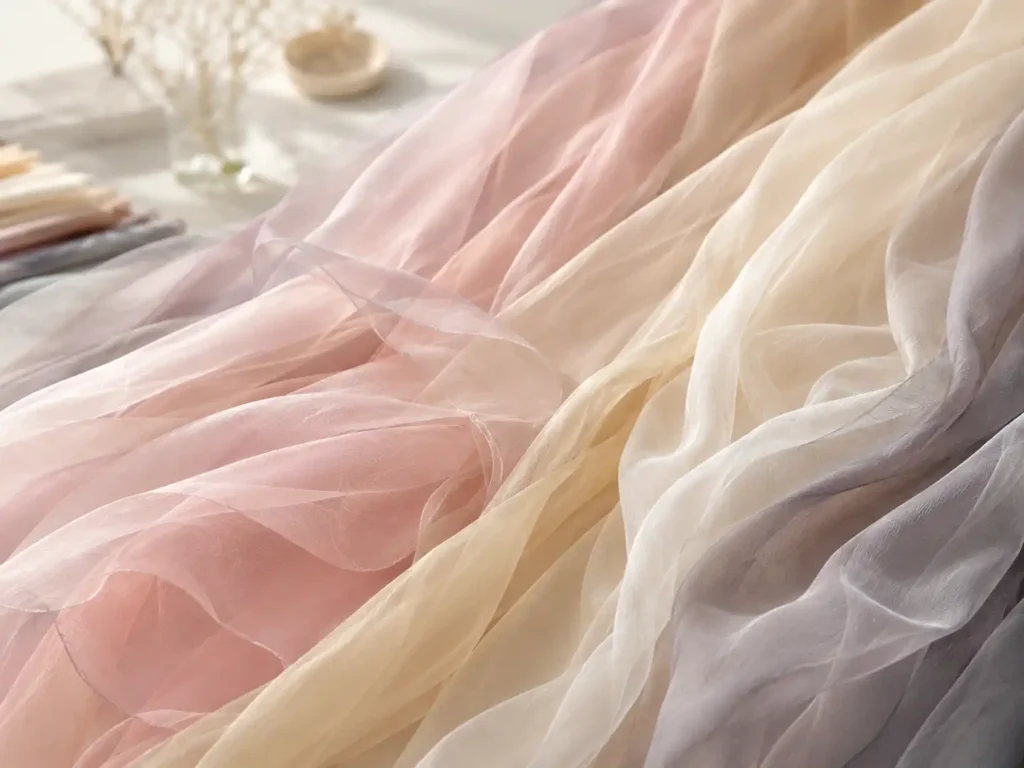
Chiffon and Lightweight Wovens
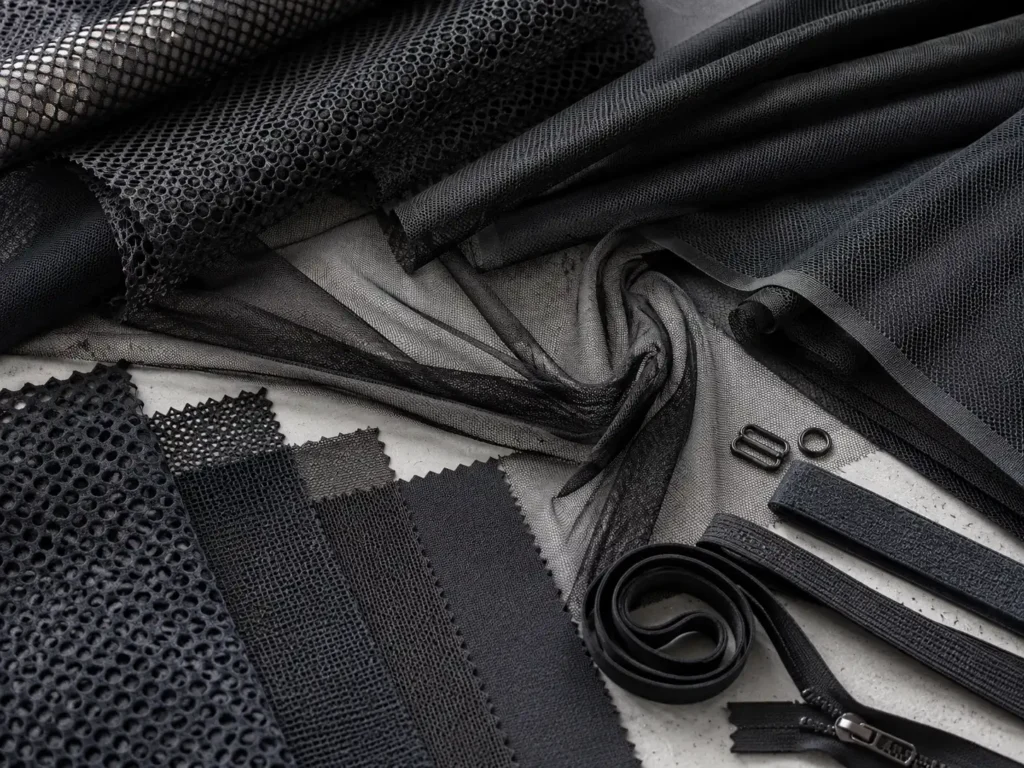
Mesh and Stretch Mesh
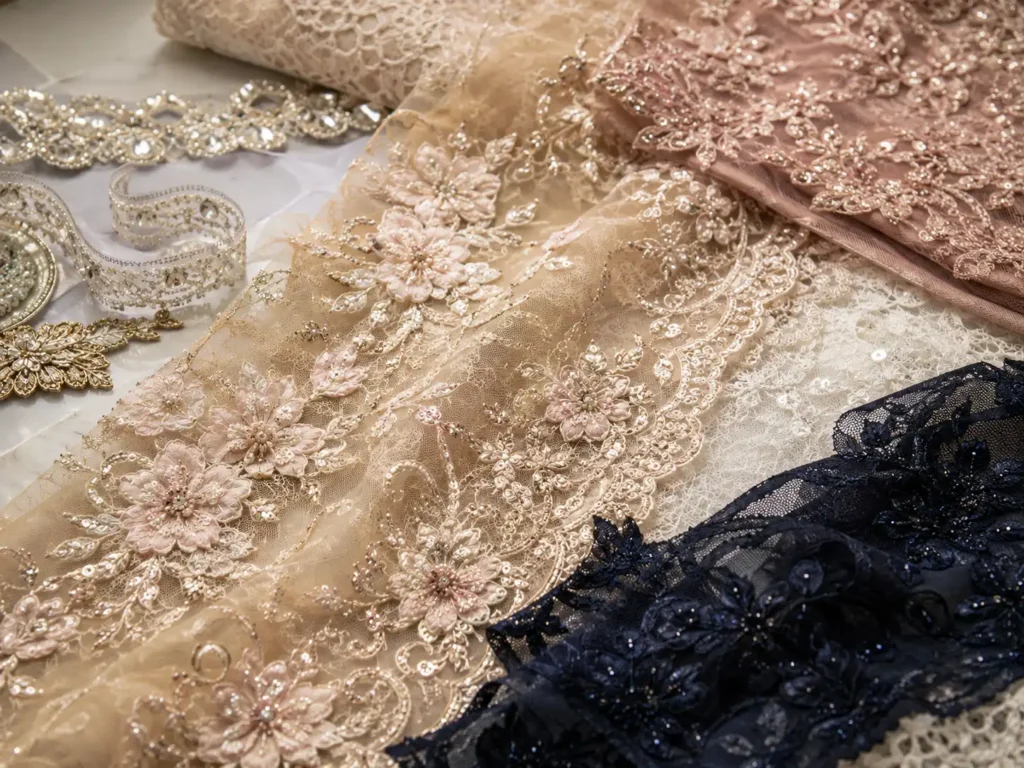
Lace and Embellished Fabrics
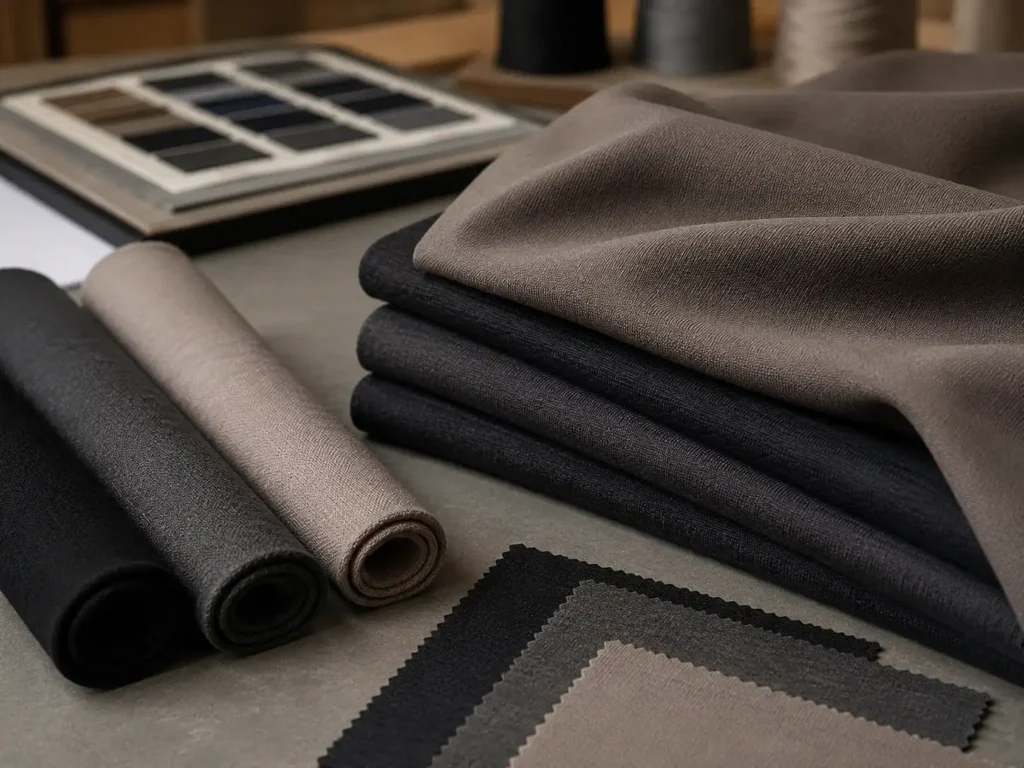
Jersey and Ponte
Jersey, rib, stretch knit, and ponte qualities are selected by weight, composition, stretch direction, recovery, opacity, surface, shrinkage, and pilling performance. Light jersey can drape well but may show body lines or lose shape. Ponte offers more structure for fitted dresses, skirts, and office-to-evening products, but different weights produce different compression and seam behavior. Pattern reduction, seam type, elastic, zipper use, and lining are matched to the fabric. Testing or wash review may be required to confirm dimensional stability and recovery before bulk production.
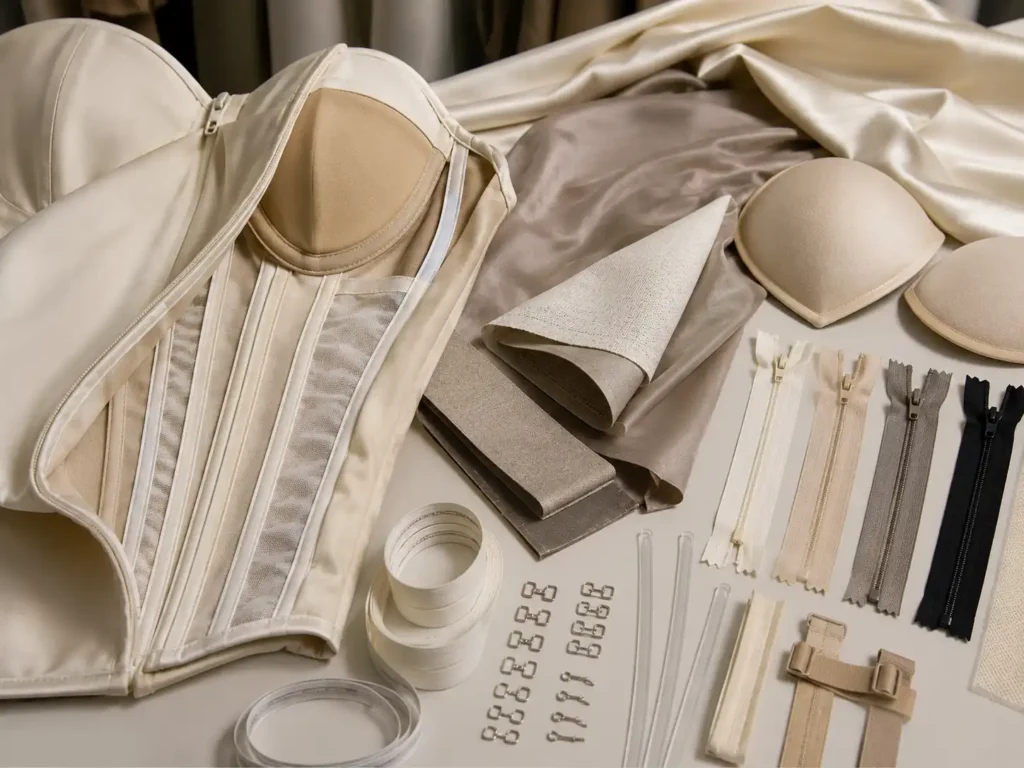
Linings, Zippers and Structure
Sample Development with Clear Approval Gates

First Sample

Fit Sample

Revised Sample

Photo-Ready Sample

PP Sample
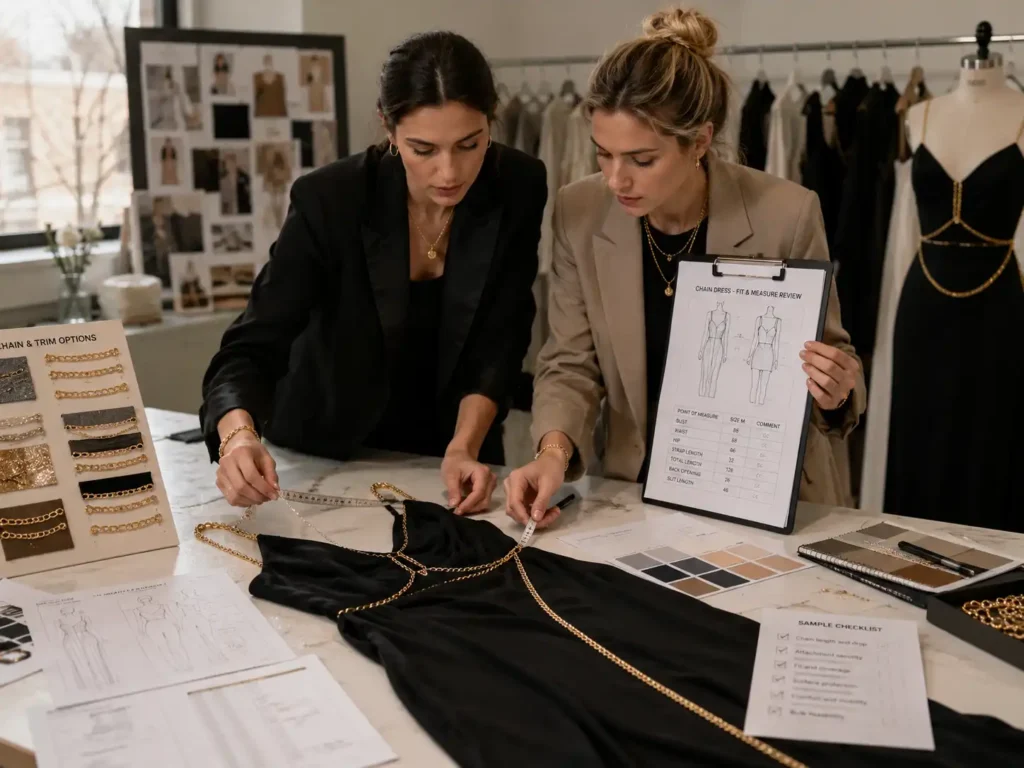
Golden Sample
Bulk Production Controlled Against Approved Standards
Bulk production begins after the product, materials, measurements, construction, labels, packing, and schedule are sufficiently defined. Jinfeng carries the approved standard from PP confirmation into material control, cutting, sewing, finishing, inspection, and shipment preparation.
Pre-Production Release Connects Development to the Factory
A successful bulk release is more than a verbal instruction to copy the sample. Before production, Jinfeng reviews the approved PP sample, fabric, color, lining, trims, size chart, quantity breakdown, label files, packing method, production order, and sewing instruction. The production order records style, color, size, quantity, materials, packing, delivery, and special requirements. The sewing instruction records seam construction, seam allowances, zippers, lining, cups, boning, ruching, lace, sequins, hems, pressing, and inspection points.
Material readiness is confirmed before cutting. Fabric review may include color, hand feel, weight, width, shade, holes, snagging, stretch, print, lace, sequins, and visible defects according to the material. Knit and stretch materials may require relaxation before cutting. Directional fabrics, prints, nap, shine, and stretch direction must match the marker and approved design. Cut panels are checked for version, direction, shade grouping, quantity, and visible damage.
A pre-production meeting or internal review aligns merchandising, production, and QC around the same references. Any difference between the sample and the written file is resolved before repeated work begins. Clear release standards reduce interpretation on the sewing line.
Sewing Control Focuses on Repeatability, Not Only Speed
The approved sample must be converted into stable operations that can be repeated across sizes and colors. Sewing-line setup considers operation sequence, seam type, thread, needle suitability, tension, zipper application, lining order, cups, boning, ruching, pleating, lace, sequins, and hems. Product-specific risks are introduced to the line before volume builds.
In-line inspection checks whether the garment remains within the agreed construction and measurement direction. Early output is important because repeated errors become expensive after hundreds of pieces are completed. A bodycon dress may be checked for seam stretch, side-seam balance, and measurement. A satin dress may be checked for puckering, needle marks, snags, and pressing sensitivity. A lace dress may be checked for placement, joining, and edge finish. A corset dress may be checked for cup symmetry, boning channels, waist shape, and zipper support.
When a problem appears, affected work is identified, the cause is reviewed, corrective action is communicated, and reworked pieces are checked again. Production progress should reflect usable output rather than only pieces that have passed through a sewing operation.
Finishing, Inspection and Packing Complete the Product
After sewing, garments move through trimming, pressing, finishing, measurement, visual inspection, label review, and packing. Pressing is matched to the fabric. Satin, velvet, sequins, lace, mesh, prints, and structured bodices require different handling. Garments are checked for loose threads, stains, holes, snags, seam appearance, symmetry, closures, lining, decoration, measurements, labels, and general presentation according to the agreed inspection plan.
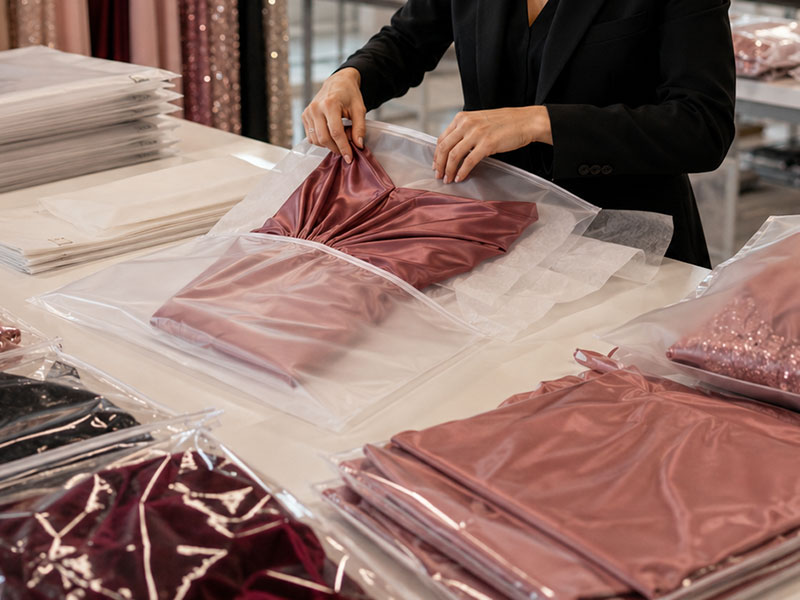
Packing follows approved files. Woven labels, size labels, care labels, hangtags, barcodes, SKU labels, polybags, stickers, folding, size ratios, carton quantities, and carton marks are checked before release. Final carton data supports the packing list, commercial invoice, booking, and warehouse intake. When a nominated inspection or AQL check is required, products and documents are prepared for the agreed inspection window.
Bulk control ends only when the garments, packing, quantities, and shipment documents agree. A clean sewing result without correct labels or carton information is not a complete commercial delivery.

Audit and Compliance Documentation Support
Assigned Factory Records
Material and Testing Scope
Inspection and Document Readiness
MOQ and Costing for Multi-Style Programs
Jinfeng’s standard MOQ starts from 200 pieces per style/color. The final production structure depends on fabric, colors, trims, construction, size range, packing, testing, and schedule. A clear quantity matrix and BOM allow a more reliable cost and capacity review.
| Cost Variable | Main Inputs | Commercial Effect |
|---|---|---|
| Shell Fabric | Composition, weight, width, finish, stretch, print, color route | Material price, consumption, cutting loss, lead time |
| Lining and Structure | Lining, interlining, cups, boning, elastic, support panels | Fit, labor, comfort, unit cost, sample complexity |
| Construction | Layers, seams, ruching, pleats, draping, corsetry, slits | Sewing time, pattern work, risk, inspection time |
| Decoration | Lace placement, sequins, beading, embroidery, printing | Material minimums, labor, loss allowance, QC |
| Color and Quantity | Units per style/color, custom dye, color count | MOQ, material booking, line changes, cost |
| Size Range | Standard, extended, petite, plus, ratio | Grading, marker efficiency, measurement control |
| Private Label Packing | Labels, hangtags, barcodes, polybags, cards, cartons | Supplier MOQ, artwork approval, packing labor |
| Testing and Delivery | Market tests, inspection, air/sea, split shipment, Incoterm | External fees, schedule, logistics cost |
Private-Label Packing for Retail and Ecommerce

Main Brand Labels

Size and Care Labels
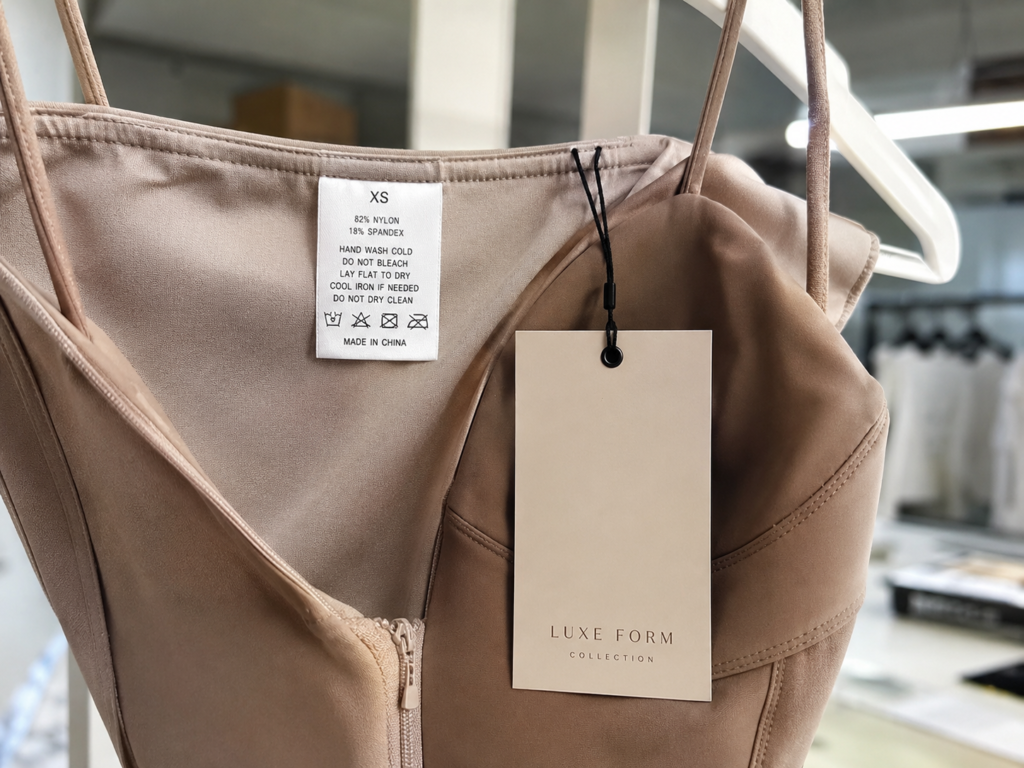
Hangtags and Brand Cards
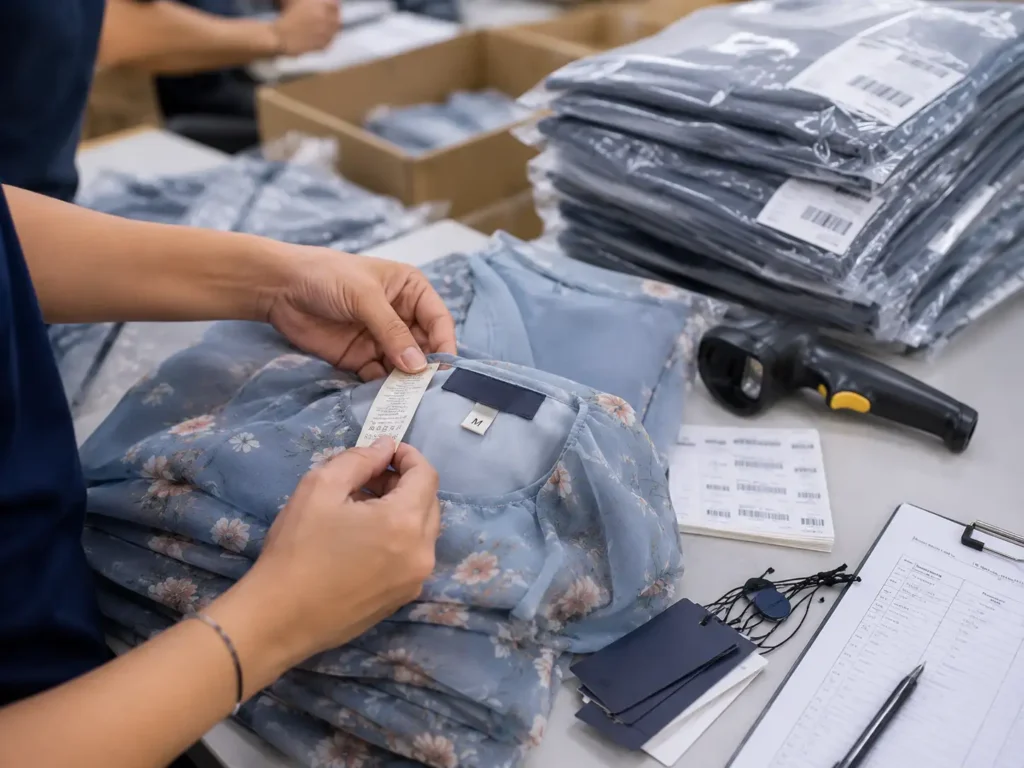
Barcodes and SKU Labels
Polybags and Folding

Cartons and Packing Ratios
Export Documents and Forwarder Coordination
Commercial Shipping Files
Nominated Forwarder Handover
Delivery Planning
Protection for Tech Packs and Unreleased Styles
Tech Pack Protection

Pattern and Sample Protection
Unreleased Collection Control
Global Sourcing Office Dress Manufacturing Case Studies
Global sourcing teams require more than production capacity. They need transparent development, controlled approvals, product-specific factory allocation, quality management and reliable delivery across multiple markets. Jinfeng Apparel supports sourcing offices with structured manufacturing systems from tech pack review to export shipment.
Case Study 1: US Global Sourcing Office Managing a Multi-Market Dress Program
Client Background
A US-based global sourcing office managed womenswear programs for several fashion brands across North America and Europe.
The sourcing team was responsible for:
- Supplier coordination
- Product development
- Cost review
- Quality management
- Shipment planning
The program included:
- 26 dress styles
- 72,000 pieces total
- 5 destination markets
- XS-XL size range
- Multiple private-label requirements
Product categories included:
- Satin occasion dresses
- Mesh party dresses
- Jersey bodycon dresses
- Resort maxi dresses
- Matching sets
Development Challenge
The sourcing office needed one manufacturing partner capable of handling different product categories while maintaining consistent reporting.
Main challenges:
Multiple Product Requirements
Different styles required different manufacturing approaches:
- Satin required pressing and surface control
- Mesh required transparency and stretch control
- Jersey required recovery and measurement stability
- Resort fabrics required shrinkage and print control
Global Delivery Coordination
The project required:
- Different packing requirements
- Multiple shipment batches
- Destination-specific documents
- Separate SKU management
Jinfeng Solution
Jinfeng created a structured production management system.
Result
The program achieved:
- 26 styles completed
- 72,000 pieces delivered
- Multiple market shipments coordinated
- Separate product standards maintained
The sourcing office continued using the same manufacturing structure for following seasonal collections.
Case Study 2: European Sourcing Team Developing Seasonal Womenswear Collections
Client Background
A European sourcing company supported several fashion retailers with seasonal womenswear collections.
The team needed a manufacturing partner that could support:
- Trend development
- Fast sampling
- Commercial pricing
- Stable production
The collection included:
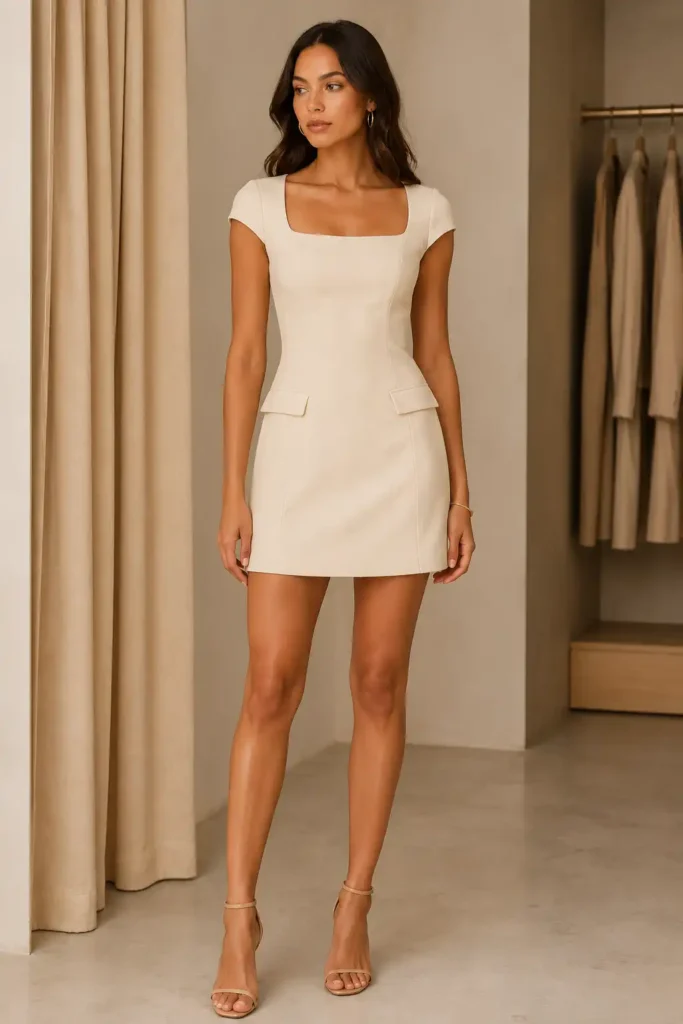
- Party dresses
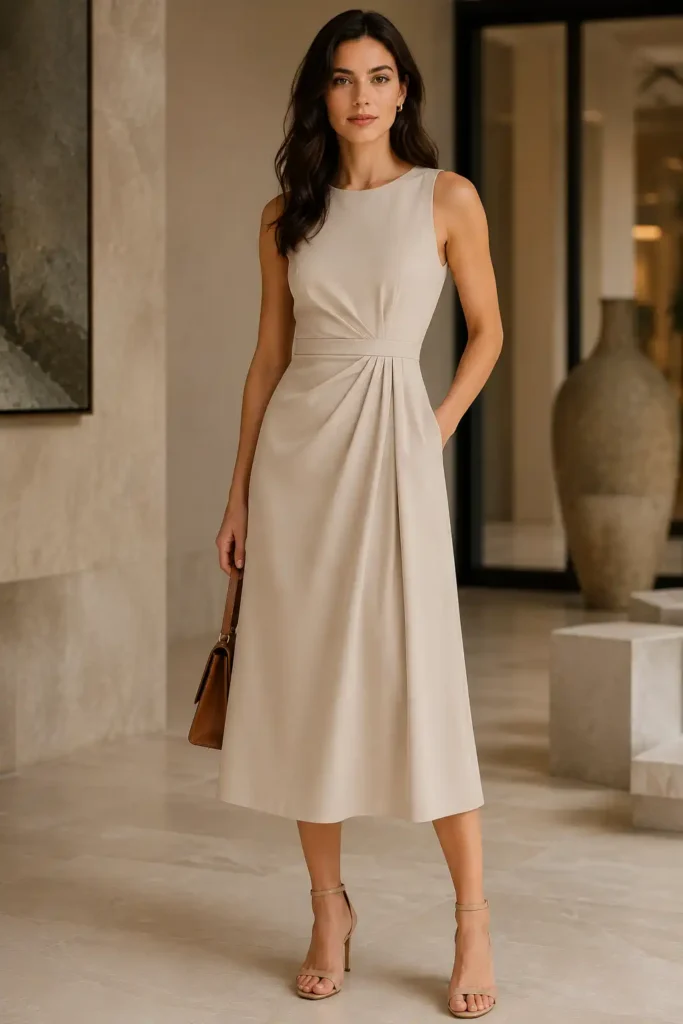
- Midi dresses
- Jumpsuits
- Matching sets
Development Challenge
The sourcing team often received different levels of product information from their retail clients.
Some projects started from:
- Line sheets
- Trend images
- Sketches
- Existing garments
The main challenges were:
- Converting creative ideas into production files
- Selecting suitable materials
- Controlling target prices
- Reducing development delays
Jinfeng Solution
Jinfeng supported the sourcing team through the complete development process.
Technical Review
Reviewed:
- Construction feasibility
- Fabric options
- Production risks
- Cost impact
Sampling Management
Controlled:
- First samples
- Fit revisions
- Material confirmation
- PP samples
Result
The sourcing team improved:
- Quotation accuracy
- Sample approval efficiency
- Client communication
- Seasonal production planning
The cooperation developed into continuous seasonal collection support.
Case Study 3: Long-Term Sourcing Partnership for Repeat Fashion Programs
Client Background
A global sourcing organization wanted to establish a stable manufacturing partner for ongoing womenswear programs.
The goal was not only production capacity but a reliable system for:
- Repeat orders
- New colors
- Seasonal extensions
- Bestseller replenishment
Development Challenge
Before cooperation, the sourcing team experienced:
- Different suppliers using different standards
- Repeated sample development
- Missing production records
- Inconsistent repeat quality
Each new order required rebuilding previous information.
Jinfeng Solution
Jinfeng established a repeat-production management system.
Product Records
Maintained:
- Approved patterns
- Measurement files
- Fabric references
- Trim details
- Sewing instructions
- QC records
Repeat Order Control
Reviewed:
- Current fabric availability
- New dye lots
- Size ratios
- Production capacity
- Delivery schedule
Seasonal Extension Support
Supported:
- New colors
- New fabrics
- Related silhouettes
- Collection expansion
Result
The sourcing organization achieved:
- Faster repeat development
- More stable quality
- Reduced technical communication time
- Stronger seasonal planning capability
The relationship expanded from individual production orders into a long-term manufacturing partnership.
From First Program to Seasonal Repeat Orders
Long-term sourcing becomes more efficient when approved product knowledge is preserved. Jinfeng supports seasonal collections, repeat orders, replenishment, new colors, fabric updates, and multi-batch delivery through controlled records and current-project confirmation.
Records Reduce Repeated Development Work
Patterns, measurement charts, BOMs, fabric references, color information, trim details, sewing instructions, PP samples, Golden samples, QC points, label files, packing methods, and carton requirements can be retained for future programs. Historical records help the team understand what was approved, what required correction, and which variables created risk. Sourcing offices spend less time reconstructing old decisions from email threads.
Records remain linked to the style and version. A change of fabric, stretch, lining, zipper, cup, boning, print, or packaging may require a new sample or approval. Pattern history is useful only when the current material and commercial plan are compared with the previous version. The aim is controlled reuse, not automatic replication without review.
For brand groups, separate records can support different labels, size systems, packaging, and markets while keeping confidential information isolated. Repeat work becomes faster because the known standard is clear and the changed variables are visible.
Replenishment Requires Material and Capacity Confirmation
A bestseller repeat may use the same style and color, a new color, a different fabric, or an adjusted size ratio. Each route has a different level of risk. Same-style repeats still require confirmation of fabric lot, shade, shrinkage, stretch, trims, labels, barcodes, quantities, and delivery. New colors require color approval. A different fabric may change fit, drape, sewing, pressing, and consumption. An extended size range may require further grading and fit review.
Capacity is also checked against the current production calendar. Historical production does not guarantee an immediate line opening. Jinfeng reviews material lead time, assigned production unit, quantity, color split, inspection, packing, and shipment priority.
When replenishment timing is urgent, the team can evaluate material availability, partial delivery, air and sea split, or style sequencing.
A repeat order is most reliable when commercial urgency and technical control are discussed together
Seasonal Collections Build on a Stable Manufacturing Base
Seasonal development may include 10-30 styles across dresses, skirts, jumpsuits, sets, and tops. Jinfeng can organize the program by category, material family, development priority, photo requirement, launch date, production unit, and delivery group. Carryover fits and known constructions provide a stable base, while new silhouettes and materials receive more development attention.
The process can start with a line sheet and quantity direction, followed by style risk review, fabric route, sample plan, cost review, and calendar planning. Shared fabrics, linings, zippers, labels, and packing materials can be consolidated where appropriate. Consolidation should never force unrelated styles into an unsuitable material or construction.
Long-term cooperation also supports consistent communication, confidential file handling, inspection alignment, and warehouse packing standards. Each season remains a new commercial program, but the manufacturing relationship begins with accumulated product knowledge rather than zero context.

Frequently Asked Questions for Global Sourcing Offices

Submit Your Dress Sourcing Program
Send the information available for an initial manufacturing review. A complete submission helps Jinfeng evaluate product structure, fabric direction, pattern and sample workload, factory allocation, MOQ, costing, production timing, quality requirements, private-label packing, inspection, and delivery coordination.
Tech packs are preferred, although line sheets, original samples, sketches, or clear reference images can also support an initial assessment. Please include the expected number of styles, quantity per style and color, target size range, destination market, required launch or warehouse date, and any nominated audit, testing, inspection, packing, or freight-forwarder requirements. Complex programs can be reviewed under NDA before commercial files are shared more widely.
Please prepare
- Company and sourcing-office profile
- Tech pack, line sheet, sketch, or reference sample
- Style count and quantity per style/color
- Fabric, lining, trim, and color direction
- Size range and measurement standard
- Brand labels, barcodes, and packing requirements
- Required audit, testing, or inspection method
- Target PP approval, shipment, and warehouse dates
- Destination market and nominated forwarder details