Skip to content
Dress Manufacturer for Garment Fit Specialists
Fit-led dress development built around approved measurements, pattern revisions, size grading and repeatable production standards for global fashion teams.
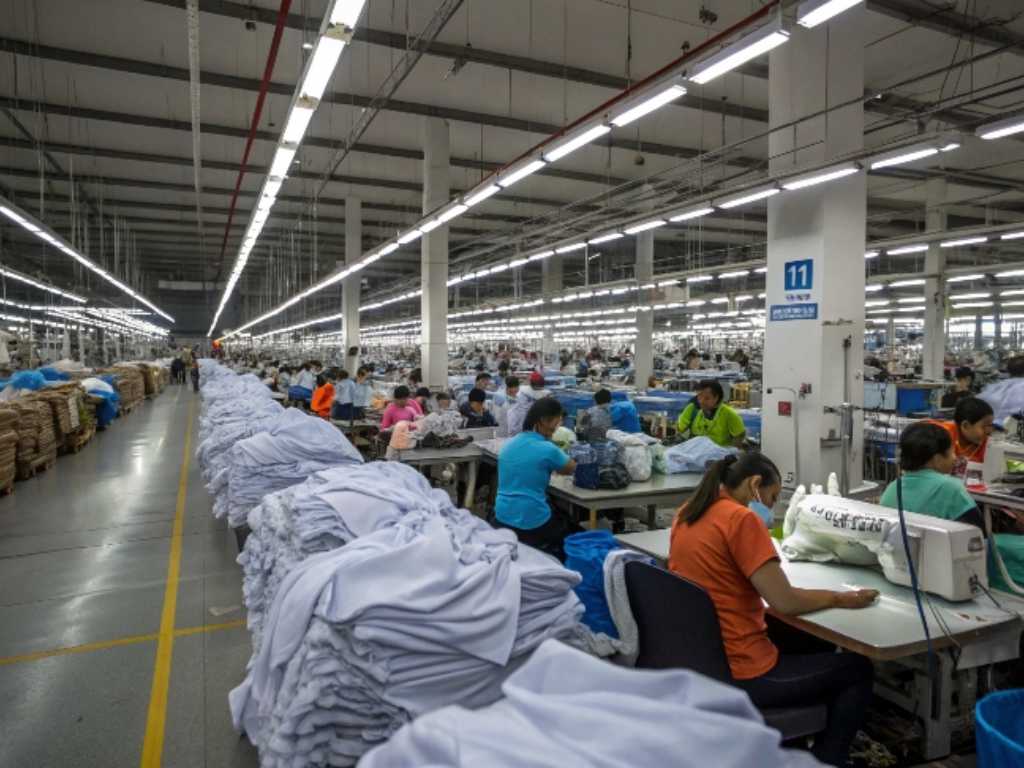
Jinfeng Apparel works with garment fit specialists, technical designers and product development teams that need more than a visually acceptable sample. Fit comments are reviewed against the pattern, measurement chart, fabric behavior and construction method before a revised sample moves toward PP approval and bulk production.
- 7+ senior pattern makers: support dress pattern development, correction and grade-rule review across fit-sensitive silhouettes.
- 2 sample rooms and 20+ sample machinists: produce first, fit, revised, photo-ready, PP and Golden samples for structured womenswear development.
- 15+ QC inspectors: check fabric, cutting, sewing, measurements, finishing and packing against the approved production standard.
- 6 owned factories and 100,000+ pcs monthly capacity: support multi-style dress programs after pattern, material and production allocation are confirmed.
Fit Development Capacity Built Around Measurable Control
Pattern Interpretation
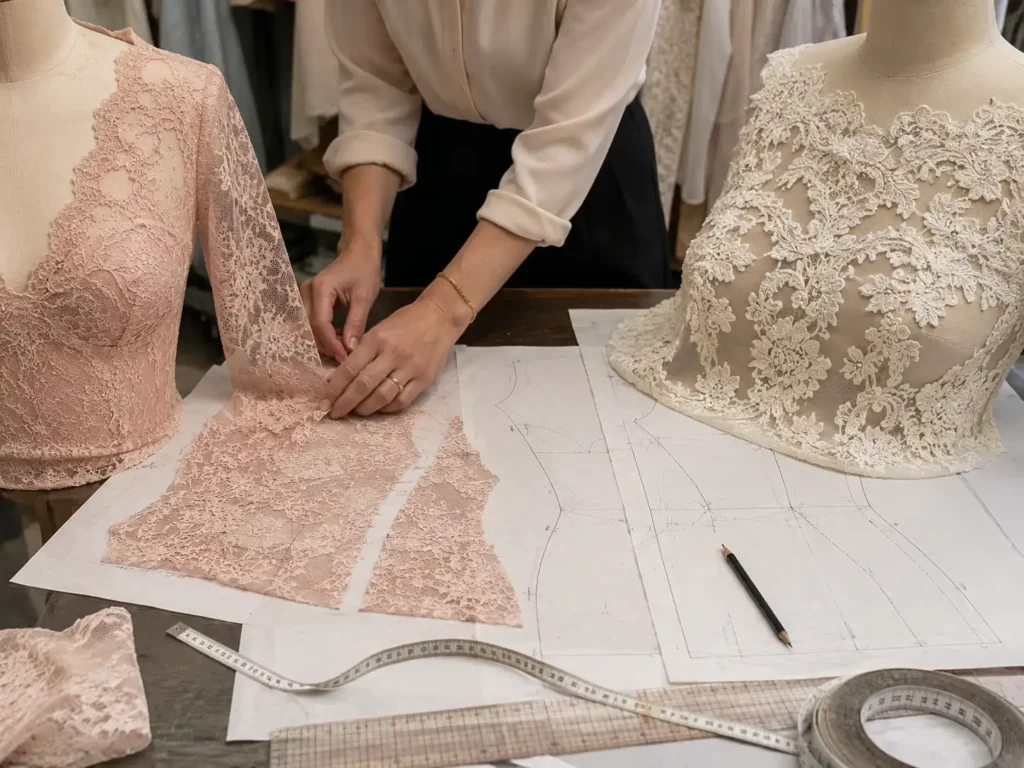
Seven or more senior womenswear pattern makers review the relationship between design intent, body measurements, fabric behavior and construction. Work can begin from a tech pack, original sample, reference image, existing block or pattern file. The review focuses on measurable points rather than visual guesswork.
- Control points: bust, upper bust, under bust, waist, hip, front and back length, shoulder, strap, armhole, neckline, slit, lining and jumpsuit rise.
- Development output: first pattern, revised pattern, measurement update, grade-rule note and production pattern when approved.
Sample Execution
- Sample stages: first sample, fit sample, revised sample, photo-ready sample, PP sample and Golden sample.
- Internal review: measurements, body or mannequin check, seam balance, support, coverage, workmanship and material response.
Bulk Measurement Control
- Production references: final pattern, approved size chart, grade rules, PP sample, Golden sample, BOM, sewing instruction and QC checklist.
- Control stages: fabric receipt, cutting, inline sewing, finishing, final measurements and packing verification.
Built for Teams Responsible for Garment Fit
Garment Fit Specialists
- Useful inputs: fit-session notes, front-side-back images, target body measurements, pinned alteration amounts and priority comments.
- Expected response: diagnosis, proposed correction, measurement impact, sample requirement and updated approval status.
Technical Designers
- File control: tech pack, size chart, BOM, construction page, pattern version and sample comment tracker.
- Risk control: conflicting measurements, undefined tolerance, missing lining dimensions, incompatible trim placement and unrecorded late changes.
Development and QA Teams
- Development focus: fabric approval, pattern correction, sample sequence, cost impact and launch timing.
- Quality focus: measurement method, inspection stage, reference sample, defect classification and corrective action before shipment.
Where Dress Fit Breaks Between Sample and Bulk
Comments Lose Meaning
- Typical warning: a sample is altered by sewing only, but the pattern file remains unchanged.
- Jinfeng control: fit comment, diagnosis, pattern action, measurement impact and revised sample are linked in one revision record.
Pattern Versions Drift
- Typical warning: approved neckline and waist changes appear in the sample but not in the bulk cutting file.
- Jinfeng control: first, revised, PP and bulk patterns are labeled and released by approval stage.
Grade Rules Distort Shape
- Typical warning: all POMs grow by one uniform increment without considering body proportion or design geometry.
- Jinfeng control: critical POM increments are reviewed and size-set samples are used where risk justifies additional validation.
Send the Files Needed for a Reliable Fit Review
A clear technical package reduces assumptions and shortens the path to an actionable sample. Partial information can still be reviewed, but the initial response will identify missing decisions before a reliable quotation or sample plan is issued.
| Project Input | What It Allows the Team to Review | Preferred Detail |
| Tech pack | Construction, seam method, trims, labels, measurements and finishing requirements. | Current revision date and style code. |
| Size chart and POM | Base measurements, measurement definitions and tolerance expectations. | Diagram or written method for each critical POM. |
| Fit comments | Required corrections, comment priority and unresolved issues. | Numbered comments linked to photos or sample locations. |
| Fit photos or video | Balance, drag lines, gaping, tightness, coverage and movement. | Front, side, back and movement views on the intended fit model. |
| Pattern or brand block | Existing fit foundation, seam locations and proportion rules. | File format, base size and revision status. |
| Fabric information | Stretch, recovery, drape, transparency, weight, shrinkage and lining needs. | Approved swatch or supplier specification when available. |
| Grade rules | Size progression for critical measurements and design points. | Target size range and exceptions by POM. |
| Quantity plan | MOQ alignment, size ratio, color split and factory allocation. | Pieces per style, color and size. |
| Launch and delivery plan | Sample priority, PP deadline, bulk schedule, packing window and shipping route. | Required warehouse or campaign date. |
Fit-Sensitive Dress Categories We Develop and Produce

Bodycon Dresses
- Sample focus: recovery after fitting, waist definition, hip mobility, hem ride-up and seam waviness.
- Bulk focus: fabric lot stretch, relaxation time, cutting direction, sewing tension and post-press measurements.

Corset and Strapless
- Sample focus: cup position, boning line, bust coverage, underarm height, anti-slip placement and waist shaping.
- Bulk focus: symmetry, cup consistency, boning length, closure strength and top-edge stability.

Slip and Halter
- Sample focus: strap range, neckline position, bust contour, back level, side seam and hanging balance.
- Bulk focus: fabric direction, stabilized edges, strap attachment, adjuster position and final length after resting.

Midi and Maxi
- Sample focus: waist-to-hem proportion, high-point-shoulder length, train or hem sweep, slit safety and lining coverage.
- Bulk focus: panel matching, grain direction, hanging allowance, pressing and hem consistency across sizes.

Mesh and Cut-Out
- Sample focus: opening position, edge tension, bust coverage, transparency, adhesive or tape use and movement security.
- Bulk focus: mesh lot recovery, panel symmetry, lining color, edge finish and seam strength.

Jumpsuits and Sets
- Sample focus: torso length, rise comfort, waist position, hip mobility, closure access and sitting movement.
- Bulk focus: inseam, rise, waist seam matching, top-to-bottom color and coordinated size ratios.
Fabric Behavior Must Be Read Before Pattern Approval
Fit cannot be separated from material behavior. Composition alone is not enough; stretch direction, recovery, drape, weight, transparency, shrinkage and surface stability determine how a pattern behaves during fitting and production.

Stretch and Recovery Change Ease
Stretch percentage shows how far a material can extend, while recovery shows whether it returns after wear and sewing. Two fabrics with similar compositions may produce different bodycon or corset results because knit structure, elastane content, finishing and weight affect compression. Jinfeng Apparel compares the proposed bulk fabric with the approved sample reference before the final pattern is released. When recovery changes, the team reassesses bust-waist-hip ease, seam tension, zipper stress and hem ride-up rather than assuming the original pattern remains valid.
- Fit review: crosswise and lengthwise stretch, recovery after repeated extension, surface whitening, edge curl and seam growth.
- Pattern impact: negative ease, panel width, lining choice, reinforcement and closure allowance.
- Bulk impact: relaxation, cutting direction, bundle control, sewing tension and measurement timing.

Drape, Bias and Length Need Time
Satin, crepe, viscose, chiffon and other fluid fabrics may lengthen or shift after cutting, hanging and pressing. Bias-cut panels can move differently from straight-grain lining, creating twisting, rippling or uneven hems. A sample approved immediately after sewing may not represent the final settled length. Pattern and sample review therefore considers grain direction, seam position, lining relationship, hem method and resting behavior. For midi and maxi dresses, front, side and back balance are checked as a connected silhouette rather than relying only on one total length measurement.
- Fit review: side-seam verticality, bust drape, waist placement, panel drop and hem balance.
- Construction impact: stabilization, stay stitching, seam type, lining attachment and hem sequence.
- Production impact: panel identification, controlled handling, pressing temperature and final hanging review.

Transparency and Support Must Work Together
Mesh, lace, chiffon, tulle and light satin require decisions about coverage before the pattern can be considered final. Adding lining is not neutral: lining stretch, length and attachment can restrict movement or change how the outer layer falls. Power mesh may improve support but also alter compression around the bust, waist and hip. Corset cups, boning, elastic, anti-slip tape and underwire must be tested as a structure rather than selected independently. Jinfeng Apparel records approved lining coverage, support components and attachment points with the final pattern and sample standard.
- Coverage review: bust line, underarm, cut-out edge, slit, mini length and movement exposure.
- Support review: cup shape, boning, underwire, elastic tension, anti-slip tape and closure load.
- Bulk review: lining color, transparency under light, component position and left-right symmetry.
Bulk Lots Need a Fit Check
Approved sample fabric and bulk fabric can differ by dye lot, finishing batch, weight or recovery.
A change may be visually minor yet materially important to fit. Incoming review checks approved reference, hand feel, stretch, recovery, width, color and known shrinkage risk before bulk cutting.
Where the difference can affect measurements or silhouette, the project team confirms whether a revised sample, size check or pattern adjustment is required. The purpose is not to delay production; the purpose is to prevent a material change from silently invalidating an approved fit.
- Record kept: supplier, composition, weight, width, stretch, hand feel, drape, color, dye lot and approval reference.
- Decision path: accept, conditionally accept with control, request replacement or revalidate through sample.
- Production link: fabric status is released together with the final cutting and QC standard.
Control the Fit Points That Shape the Whole Dress
Critical fit points interact. A neckline correction can affect shoulder and bust balance; a waist correction can shift hip ease and skirt hang. Review is organized around connected fit zones rather than isolated measurements.
Bust, Neckline and Upper-Body Balance
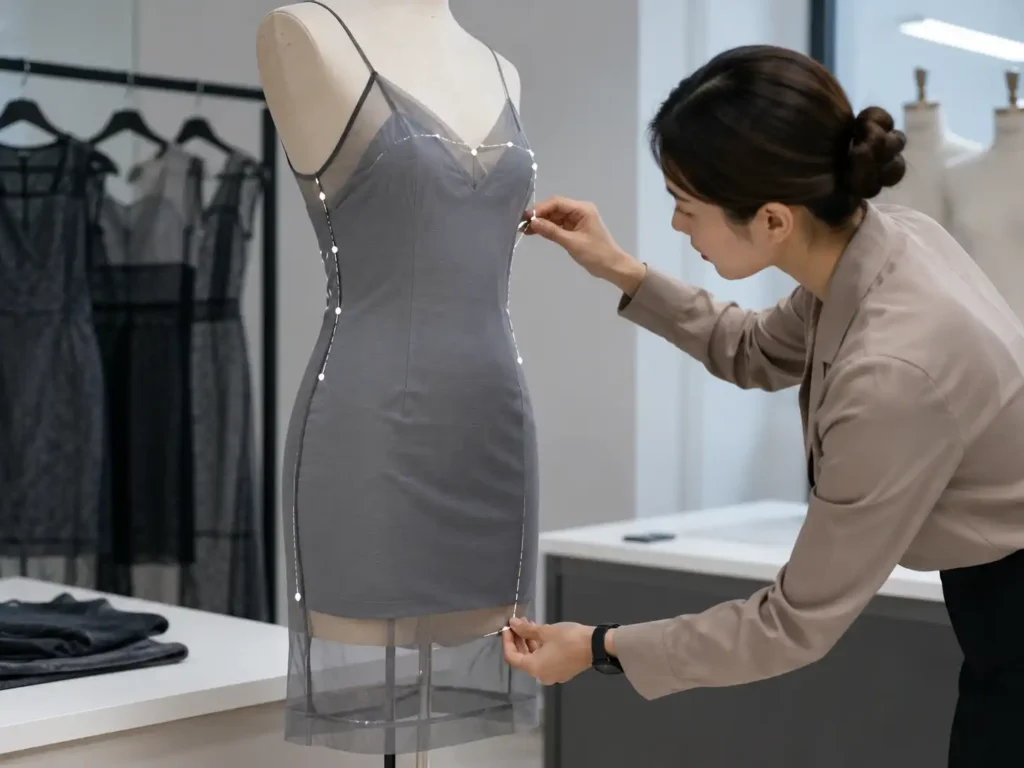
Upper-body fit determines whether a dress looks secure, intentional and comfortable. The review starts with bust, upper bust, under bust, shoulder width, strap length, armhole and neckline depth. Drag lines from the armhole may come from insufficient bust shaping, while neckline gaping may come from shoulder angle, strap position, cup shape or fabric stretch. For corset, strapless and deep-V styles, support elements are checked alongside the paper pattern. Cup position, boning, underwire, anti-slip tape and closure placement must hold the intended shape without forcing the garment into an unnatural line.
- Common corrections: bust volume redistribution, dart or seam reshaping, shoulder-angle change, strap shortening, neckline reshaping and armhole refinement.
- Movement check: raising arms, sitting, turning and checking whether neckline or underarm exposure increases.
- Production control: component placement templates, symmetry checks and approved measurement methods for upper-body POMs.
Waist, Hip and Side-Seam Direction
Waist and hip measurements do not fully describe silhouette. Waist height, front-back balance, high-hip shaping and side-seam direction influence whether a dress appears clean on body. A side seam that swings forward can indicate front-back width imbalance, fabric torque or incorrect dart distribution. Bodycon dresses require controlled compression without horizontal pulling or constant ride-up. A-line and corset dresses require enough hip and seat allowance for movement while preserving the intended waist definition. Pattern corrections are confirmed against both measurements and visual balance.
- Common corrections: raise or lower waist, redistribute waist suppression, increase high-hip or seat ease, adjust panel shaping and correct side-seam position.
- Movement check: walking, sitting and bending without excessive stress, opening or hem lift.
- Production control: fabric relaxation, grain direction, matched panel notches and inline waist-hip measurements.
Length, Coverage and Functional Movement
Dress length must be assessed by style, body proportion and movement. Mini dresses require safe front and back coverage; midi dresses require the right relationship among waist, calf and slit; maxi dresses require level hems and controlled train or sweep. Lining length, slit height and cut-out placement should remain visually consistent across sizes without becoming restrictive. Jumpsuits add torso and crotch measurements that must allow sitting and walking. A fit approval therefore includes static appearance, movement, coverage and functional access to zippers or closures.
- Common corrections: front-back length balance, slit reduction, lining extension, hem sweep adjustment, rise correction and closure repositioning.
- Movement check: walking stride, stair movement, sitting, entry through the garment and return of stretch fabrics after movement.
- Production control: length POM definitions, pressing allowance, hanging review and final measurement after finishing.

A Fit Workflow From Technical Input to Production

Input Review
- Output: review notes, open questions, sample plan, material action and preliminary schedule.
- Decision: proceed, request clarification or test material before pattern release.
Pattern Risk Map
- Output: initial pattern or pattern correction plan.
- Decision: retain brand block, modify existing pattern or build a new product pattern.

First Fit Sample
- Output: sample measurements, internal review and fit-feedback package.
- Decision: approve selected points, revise pattern or test another fabric or support method.

Measured Revision
- Output: revised pattern, updated files and revised sample where required.
- Decision: continue revision or advance toward PP approval.

PP and Golden Lock
- Output: approved production package and sealed reference sample.
- Decision: release bulk cutting or hold until all critical approvals are complete.
Bulk Verification
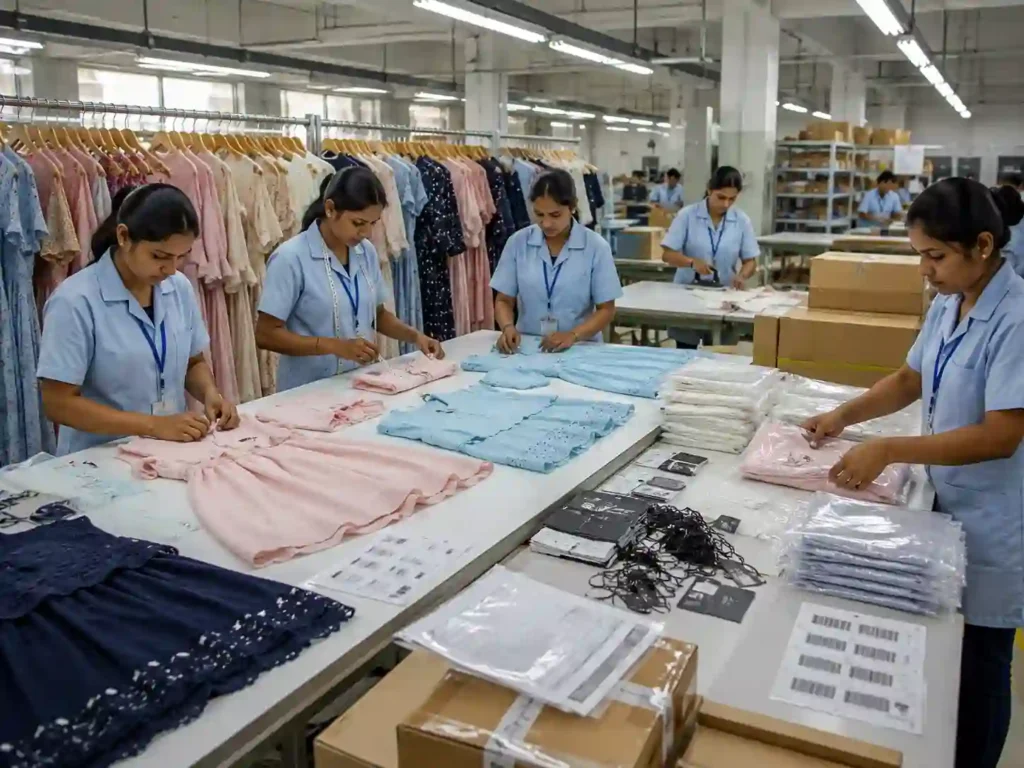
- Output: inspection records, corrective actions, final QC and packing confirmation.
- Decision: continue, correct, recheck or hold affected units before shipment.
Turn Fit Comments Into Controlled Pattern Revisions
A fit comment is valuable only when it changes the correct technical source. Sewing a sample differently without updating the pattern, measurement chart or instruction leaves the same risk inside the production package.
Diagnose Before Altering
Visible symptoms often have more than one cause. A low armhole may come from armhole depth, shoulder slope, bust width or fabric stretch. A twisting skirt may come from front-back imbalance, grain direction, panel asymmetry or fabric torque. The pattern maker compares the fit comment with measured deviations, drag lines, garment balance and construction before proposing a correction. When a brand team pins or marks a sample, the pinned amount is recorded as evidence but is not copied blindly; the underlying shape and seam relationship still need review.
- Evidence reviewed: fit photos, movement video, pinned sample, POM variance, fabric behavior and current pattern pieces.
- Issue category: fit, measurement, construction, material, trim or workmanship.
- Decision recorded: pattern change, measurement change, construction change, material test or no change with reason.
Correct the Source Files
Pattern revisions are applied to all affected pieces. Raising a neckline may require changes to shell, lining, facing, cup position, strap length and trim placement. Moving a waist seam may affect bodice length, skirt length, zipper location, boning and grading. Jinfeng Apparel updates the relevant pattern, measurement chart, BOM or sewing instruction before the revised sample is cut. The revision note identifies the sample stage and style code so old files are not mixed with approved files. A physical correction becomes useful only after the production source is current.
- Pattern records: first pattern, revised pattern, PP pattern, bulk pattern, lining pattern and graded nest.
- Associated records: measurement chart, grade rules, trim placement, boning or cup position, slit position and sewing notes.
- Release rule: only the approved version moves to bulk cutting and QC setup.
Close Comments With Evidence
Comment closure should show more than “done.” A clear response identifies the original issue, correction made, resulting measurement, revised sample reference and approval status.
Photos can show neckline level, side-seam direction, hem balance or support placement; measurement sheets show whether the agreed POM changed as planned. Unresolved comments remain visible until the fit specialist approves them or accepts a documented limitation.
The approach creates a usable audit trail across multiple styles and fitting rounds, especially when a collection includes ten to thirty styles in parallel development.
- Closed: correction verified in file and sample.
- Pending: requires fitting, material arrival or client decision.
- Not adopted: reason and trade-off documented before approval.

Build Fit Feedback Pattern Makers Can Act On
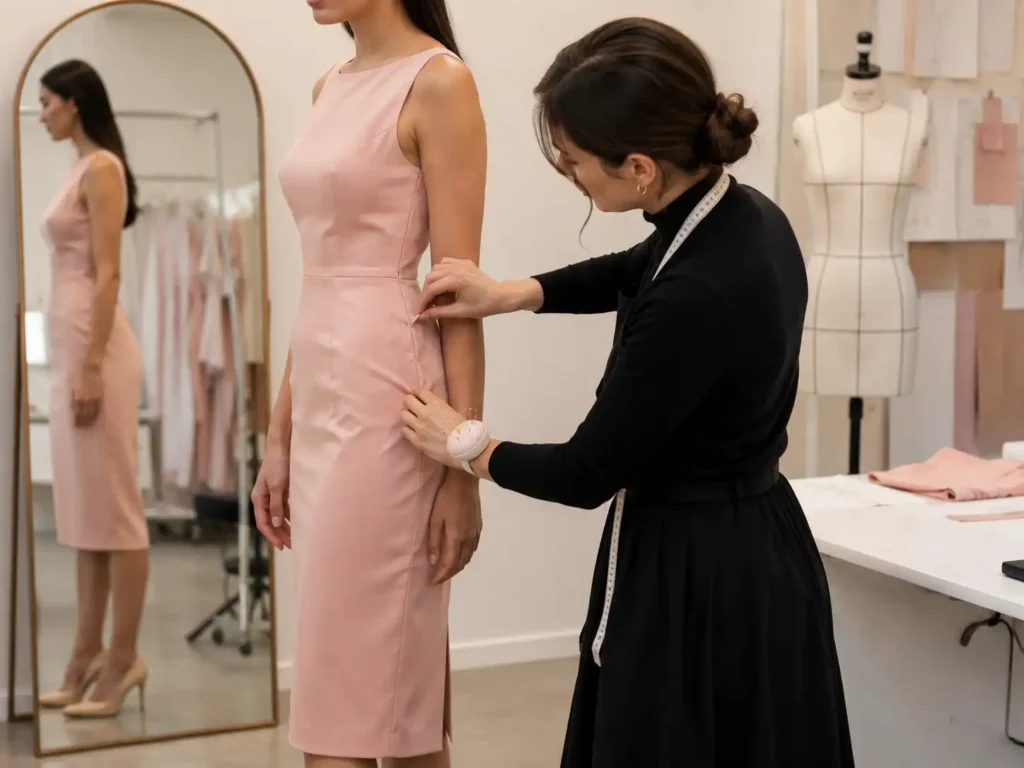
Front and Side Views
- Capture: full front, full side, close detail and one image with comment numbers.
- Include: model size, sample size, footwear height when relevant and any pins or temporary alterations.
- Avoid: cropped hems, crossed legs, raised shoulders and filters that hide drag lines.
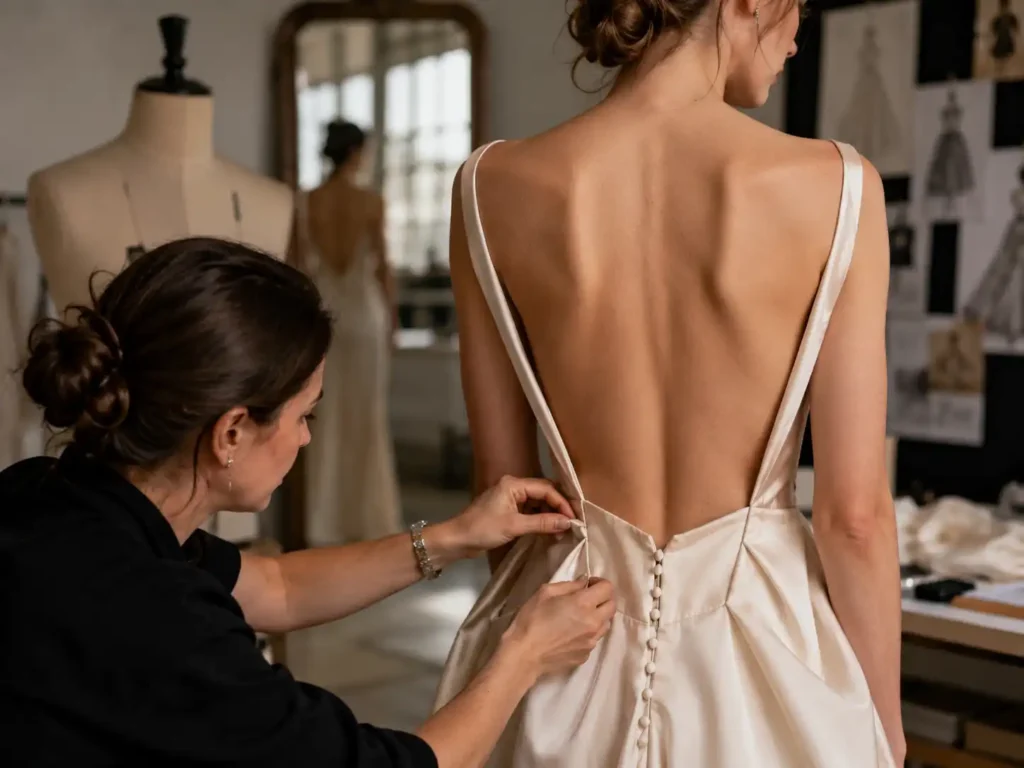
Back and Balance Views
Back views reveal shoulder, upper-back, zipper, waist, seat and hem balance. Strapless and backless styles need close images of top-edge stability and closure position. Maxi and bias styles should be photographed after hanging long enough to reveal uneven drop.
- Capture: full back, three-quarter back and close views of zipper, straps or support.
- Include: whether the zipper is fully closed and whether the garment was pinned.
- Avoid: hair covering the neckline, hands pulling the garment or twisting the torso.

Movement and Detail Video
- Capture: 10-20 second clips for each movement and close video of any unstable area.
- Include: spoken or written comment number and whether discomfort is felt.
- Result: pattern makers can connect movement failure with the relevant pattern and construction zone.
Measure Fit Samples With One Agreed Method
Measurement disputes often come from different methods rather than different garments. Each critical POM needs one definition, one garment position and one approved tolerance source before sample or bulk inspection begins.
| Critical POM | Measurement Method | Common Fit Risk | Review Action |
| Bust | Measure at the defined level across the garment, respecting darts, cups or panel shape. | Compression, gaping, drag lines or zipper stress. | Compare body result, pattern shape and fabric stretch before changing circumference. |
| Upper bust | Measure above full bust at the specified reference line. | Strapless gaping or poor top-edge grip. | Review cup, side panel, top edge and anti-slip structure. |
| Under bust | Measure at the under-bust line defined in the tech pack. | Corset lifting, cup displacement or weak support. | Check cup position, boning and waist relationship. |
| Waist | Measure at the specified seam or natural-waist location. | Waistline too high, low, loose or restrictive. | Confirm waist position before adjusting circumference. |
| Hip | Measure at the POM depth stated from waist or HPS. | Tight seat, side-seam swing or ride-up. | Review high hip, full hip, front-back distribution and fabric recovery. |
| Front and back length | Measure from approved shoulder or center reference to hem. | Uneven hem, incorrect waist balance or exposure. | Separate front-back balance from total garment length. |
| Strap length | Measure along the finished strap between defined attachment points. | Low neckline, slipping or uneven shoulder level. | Check adjuster range, attachment position and neckline impact. |
| Armhole | Measure along the specified seam line or straight depth method. | Underarm exposure, restriction or bust drag. | Review shoulder, bust width, armhole shape and seam method. |
| Neckline depth | Measure from the stated HPS or center reference to neckline edge. | Exposure, gaping or inconsistent visual height. | Confirm strap, shoulder, cup and fabric stabilization together. |
| Slit height | Measure from finished hem to slit opening along the stated seam. | Movement restriction or excessive exposure. | Review lining, walking movement and grade rule by size. |
| Lining length | Measure using the same reference as outer length. | Lining visible, restrictive or too short for coverage. | Check attachment, stretch and outer-fabric transparency. |
| Jumpsuit rise | Measure front and back rise using the brand method. | Sitting discomfort, pulling or dropped waist. | Review torso length, crotch curve, hip ease and closure access. |
Grade the Approved Shape Across the Full Size Range
Base-size approval proves one size, not the whole range. Grade rules must preserve support, coverage, proportion and movement without turning a deliberate silhouette into a mechanically enlarged copy.
Base Size Is Only the Starting Point
A fit model represents one body within the range. Smaller and larger sizes can respond differently at bust, upper bust, waist, hip, strap, neckline, armhole and length. A corset cup cannot simply move outward by the same amount as the waist. A mini dress cannot gain length without considering where the waist and hip sit. Jinfeng Apparel reviews which measurements can follow a regular increment and which require product-specific rules. Brand blocks and established grade rules are retained when technically compatible; gaps or conflicts are raised before size production.
- Review basis: brand block, approved base pattern, target size range, target market and garment silhouette.
- Critical result: visual proportion and functional coverage remain intentional across sizes.
- Risk trigger: structured bust, cut-out, strapless, deep neckline, mini length, bodycon compression or jumpsuit rise.
Grade Rules Need Point-by-Point Decisions
Grade rules define how each POM changes from size to size. Circumference, vertical position and design geometry do not always progress at the same rate. Neckline depth, slit height, strap length, cup position, boning, cut-out position and lining coverage may need controlled increments or fixed relationships. Pattern grading also includes notches, seam matching, trim placement and lining pieces. A size chart that lists only bust, waist and hip leaves too much room for interpretation on fit-sensitive dresses. The team records grade rules with the final pattern and uses them to create size-set samples or bulk measurement standards.
- Horizontal rules: bust, waist, hip, sweep and panel width.
- Vertical rules: bodice length, waist level, skirt length, rise, slit and strap.
- Position rules: cup, boning, cut-out, pocket, label, trim and closure placement.
Size-Set Review Confirms the Rule
Size-set sampling is used when the risk of grading error is higher than the cost of additional validation. The fit team can select lower, middle and upper sizes to check proportion, coverage and movement. Measurements are compared with the approved chart, while on-body or mannequin review checks whether the visual line remains consistent. Any correction updates the graded pattern and measurement file before bulk cutting. Size-set review is especially valuable for corset, strapless, bodycon, cut-out, mini, occasion and jumpsuit programs with broad size ranges.
- Review points: upper-bust security, waist level, hip ease, strap range, neckline, armhole, length, slit and rise.
- Approval output: graded pattern release, size chart confirmation and bulk measurement plan.
- Commercial value: fewer size-related returns, alterations and late production corrections.

Keep Every Sample Revision Traceable and Current
Multi-style development becomes unreliable when decisions live in scattered messages. A revision record connects comments, files, samples and approvals so the latest standard can be identified without relying on memory.
One Revision Log Per Style
Each style should have a revision log that records the sample stage, date, comment source, issue, proposed action, affected file, resulting sample and approval status. Fit changes are separated from fabric, trim, workmanship, label and packing changes. The separation prevents a pattern maker from being assigned a zipper-quality issue or a production team from treating an unresolved fit comment as a final standard. For collections with ten to thirty styles, the tracker also shows priority styles, open decisions and PP readiness.
- Core fields: style code, sample stage, comment number, action owner, deadline, file version and status.
- Status examples: open, under review, revised, sample pending, approved or not adopted with reason.
- Collection view: hero styles, fabric group, pattern complexity and target PP date.
Version Control Covers Dependent Files
A fit correction can affect more than one document. Pattern, lining pattern, size chart, grade rules, BOM, sewing instruction, trim placement and QC checklist may all need updates. Jinfeng Apparel labels first, revised, PP and bulk versions and releases approved files to the relevant team. Superseded files remain archived for traceability but are not used for cutting or inspection. When a physical sample is corrected after sewing, the same correction must be reflected in the source file before approval.
- Release package: approved pattern, graded pattern, measurement chart, BOM, sewing notes and sample reference.
- Control point: production cannot rely on email wording that conflicts with the released file.
- Archive value: repeat orders can identify what changed and why without rebuilding the history.
Approval Gates Prevent Premature Bulk
A style moves forward only when the requirements for its stage are met. First and fit samples can carry open comments. Revised samples confirm major corrections. PP samples lock bulk material, color, trims, measurements, construction, labels and packing direction. Golden samples become physical standards. The gate avoids two common failures: cutting bulk while fit is still under discussion, and treating a visually approved photo sample as a complete production approval. Any late change is evaluated for pattern, material, cost and timeline impact before implementation.
- Before PP: critical fit and construction issues resolved.
- Before cutting: production files, material status and reference sample released.
- After approval: late changes require written impact review and controlled reapproval.

Lock Four Standards Before Bulk Cutting Begins
Final Pattern
- Lock: style code, base size, pattern revision and graded nest.
- Check: all dependent pieces reflect approved fit changes.
- Use: cutting, sewing setup and repeat-order reference.
Size Chart and Grade
- Lock: base measurements, size range, grade increments and method.
- Check: no conflict between pattern dimensions and specification.
- Use: size-set review, production measurement and final QC.
Fabric and Trims
- Lock: supplier or reference, color, material specification and placement.
- Check: stretch, recovery, drape, transparency, support and closure behavior.
- Use: incoming inspection, sewing setup and component QC.
PP and Golden Sample
- Lock: approved sample identity and date.
- Check: alignment with final files and material status.
- Use: line briefing, appearance comparison, final QC and repeat orders.
Transfer Approved Fit Without Losing Technical Detail
Fit approval is not complete until the production team receives the same standard. A controlled handover converts development knowledge into cutting, sewing, measurement and inspection instructions.
Build a Complete Production Package
The production package brings together the approved pattern, graded pattern, size chart, POM method, grade rules, fabric and trim references, BOM, sewing instruction, label placement, packing instruction, PP sample and Golden sample. Each file carries the style code and current revision. Fit-critical areas are highlighted for line briefing and QC. For a corset style, the package may include cup, boning, anti-slip and closure positions; for a mesh bodycon style, it may include stretch direction, lining coverage and seam-tension notes. The package is designed for execution, not simply for record keeping.
- Pattern standard: shell, lining, facing, support pieces, seam allowance, grain and notches.
- Measurement standard: POM definitions, size chart, grade rules, tolerances and checkpoints.
- Construction standard: seam method, support, closure, trim, label and finishing details.
Brief the Selected Production Team
Jinfeng Apparel allocates styles according to product structure, fabric type, complexity and production schedule across six owned womenswear factories and long-term production partners. The selected team receives a style briefing before bulk activity. Pattern, sample and merchandising staff explain risk points, approved appearance and measurement priorities. Complex dresses may require a pilot or first-output review before full production continues. The briefing prevents operators and line supervisors from interpreting a fit-sensitive style as a routine dress.
- Briefing focus: critical seams, support structure, stretch handling, symmetry, measurement and pressing.
- Early verification: first-cut or first-output comparison with the approved standard.
- Escalation: fit or construction deviation is returned to the responsible technical team before expansion.
Control Changes After Approval
Material shortages, trim changes or late design requests can occur after PP approval. No substitution should enter bulk production without reviewing its effect on fit, construction, cost and schedule.
A new fabric with lower recovery may require a pattern adjustment; a heavier zipper may distort a fluid dress; a lining change may restrict movement. The project record identifies the requested change, technical assessment, sample or test requirement and approval. The same rule protects the brand team from silent factory substitutions and protects production from undocumented late instructions.
- Minor change: documented and verified without affecting approved fit.
- Fit-relevant change: requires pattern or sample revalidation.
- Major change: requires revised PP approval and schedule update before bulk continuation.

Protect Fit Through Fabric, Cutting, Sewing and Finishing

Fabric Receipt
- Risk: approved pattern used with a fabric that behaves differently.
- Control: reference comparison, lot record and technical release decision.
- Evidence: swatch, inspection note and approval status.

Relaxing and Cutting
- Risk: size change after cutting, reversed panels or inconsistent grain.
- Control: relaxation rule, cutting direction, bundle identity and first-cut review.
- Evidence: cutting record and pattern revision confirmation.

Sewing Balance
- Risk: pattern is correct but sewing changes the garment shape.
- Control: seam method, tension setup, reinforcement, symmetry and first-output check.
- Evidence: inline findings and corrective-action record.

Inline Measurement
- Risk: systematic variance discovered after the lot is complete.
- Control: defined method, frequency, sample size and escalation rule.
- Evidence: inline measurement record and recheck result.

Finishing and Pressing
- Risk: pre-press measurements pass but finished garments change.
- Control: pressing method, garment resting, appearance review and post-finish measurement.
- Evidence: finished comparison with Golden sample.
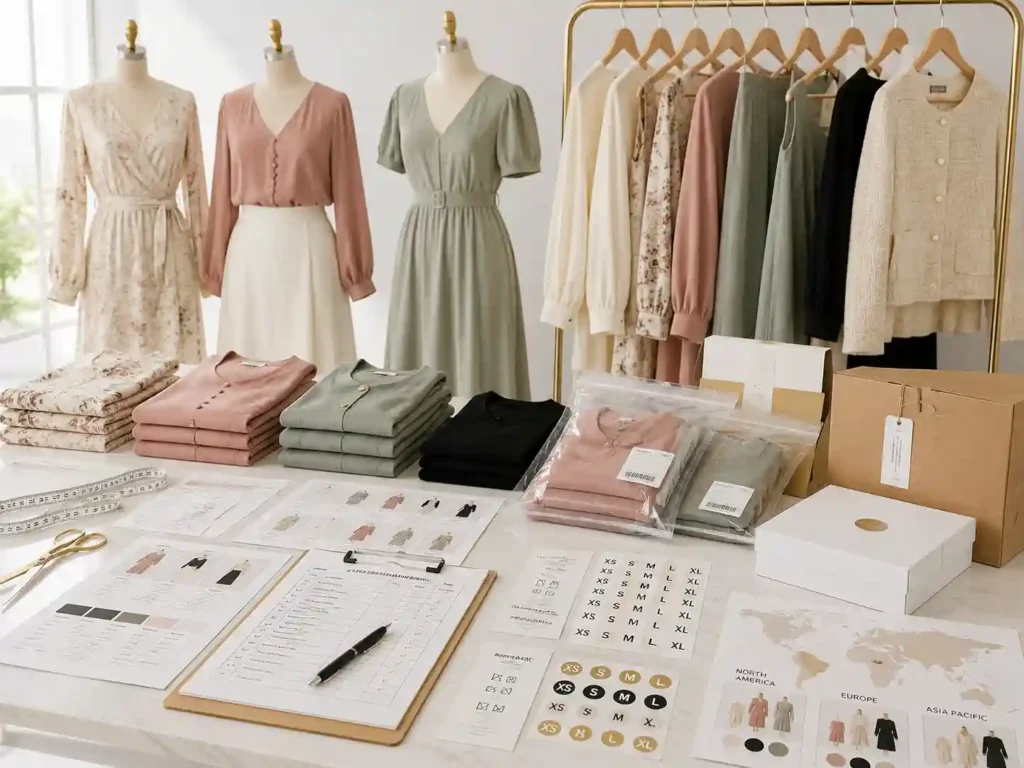
Final and Packing
- Risk: fit passes but support, label, zipper or packing creates a saleability problem.
- Control: final garment review, Golden sample comparison, packing and carton verification.
- Evidence: final inspection and packing confirmation.
One Fit Standard Shared Across Six Working Teams
Pattern Team
- Owns: pattern diagnosis, correction, grade support and pattern release.
- Receives: tech pack, fit evidence, measurement record and fabric information.
- Hands over: approved pattern set and revision notes.
Sample Team
- Owns: sample sewing, construction testing, revised samples and PP samples.
- Receives: current pattern, BOM, material and revision note.
- Hands over: physical sample, measurement result and workmanship feedback.
Merchandising Team
- Owns: timeline, tracker, approval record and cross-team communication.
- Receives: technical decisions, material status and launch requirements.
- Hands over: released production package and progress updates.
Production Team
- Owns: execution of approved pattern and construction.
- Receives: production package, PP and Golden samples.
- Hands over: first-output evidence, inline status and completed garments.
Quality Team
- Owns: inspection records, issue escalation, recheck and final status.
- Receives: approved measurements, method, tolerance and Golden sample.
- Hands over: corrective-action evidence and shipment inspection result.
Finishing Team
- Owns: finished appearance, packing accuracy and carton preparation.
- Receives: packing file, label placement and approved presentation standard.
- Hands over: packed goods aligned with the shipment plan.
Garment Fit Specialist Dress Manufacturing Case Studies
Fit-focused dress development requires more than producing a sample that looks correct. Jinfeng Apparel helps technical teams connect fit comments, pattern revisions, fabric behavior, size grading, PP approval and bulk measurement control into one repeatable production system.

Case Study 1: Correcting Bodycon Dress Fit Before Bulk Production
A premium ecommerce fashion brand developed a bodycon dress collection and required support from a manufacturing partner to correct fit issues before large-scale production.
The collection included:
- Rib bodycon dresses
- Stretch jersey dresses
- Power mesh dresses
- Ponte fitted midi dresses
Program scope:
- 16 styles
- 38,000 pieces
- XS-XL size range
- Multiple colorways
Fit Challenge
The first samples looked acceptable visually, but fitting sessions identified several problems.
Body Balance Issues
Including:
- Bust pulling
- Waist placement inconsistency
- Hip tightness
- Side seam twisting
Fabric Behavior Problems
The brand found that:
- Stretch recovery changed after production fabric selection
- Hem areas moved upward after walking
- Different colors created different fitting results
Jinfeng Solution
Jinfeng converted fitting feedback into technical actions.
Fit Diagnosis
Reviewed:
- Fit photos
- Measurement deviations
- Pattern shape
- Fabric stretch
- Seam tension
The team separated:
- Pattern problems
- Fabric problems
- Construction problems
- Sewing problems
Pattern Correction
Updated:
- Bust distribution
- Waist shaping
- Hip ease
- Negative ease
- Seam position
- Grade direction
Result
The brand achieved:
- Stable bodycon silhouette
- Improved size consistency
- Reduced fit complaints
- Repeat-order-ready fit standards
The approved pattern became the foundation for future color extensions.

Case Study 2: Engineering Corset Dress Structure for Reliable Production
A premium occasionwear brand wanted to expand its corset dress category but required stronger technical control.
Products included:
- Corset mini dresses
- Strapless evening dresses
- Structured cocktail dresses
- Bustier occasion styles
Program scope:
- 14 styles
- 29,000 pieces
- XS-XL size range
Fit Challenge
Corset dresses created several technical risks.
Support Structure Problems
Previous samples showed:
- Uneven cup position
- Incorrect boning placement
- Neckline instability
- Waist pressure
Bulk Repeatability Risk
The brand needed to ensure that:
- Sample-room craftsmanship
- Pattern structure
- Production sewing
could achieve the same result.
Jinfeng Solution
Jinfeng treated the dress as a complete structural system.
Pattern Engineering
Reviewed:
- Cup shape
- Under-bust position
- Waist suppression
- Panel balance
- Boning channels
Construction Control
Defined:
- Cup attachment
- Boning length
- Reinforcement areas
- Closure method
- Lining structure
Sample Validation
Completed:
- First sample
- Fit sample
- Revised sample
- PP sample
- Golden sample
Result
The brand achieved:
- Stable corset support
- Improved wearing comfort
- Consistent structure across sizes
- Production-ready technical standards
The corset category became a repeatable commercial product line.

Case Study 3: Building a Multi-Size Grading System for Seasonal Dress Collections
A growing fashion brand expanded from small collections into larger seasonal programs.
The collection included:
- Mini dresses
- Midi dresses
- Maxi dresses
- Jumpsuits
Program scope:
- 24 styles
- 56,000 pieces
- XXS-3XL size range
Fit Challenge
As the brand expanded sizes, several issues appeared:
Grade Problems
Including:
- Neckline changes between sizes
- Strap length imbalance
- Waist position shift
- Uneven hem proportion
Supplier Differences
Previous suppliers used:
- Different grading methods
- Different measurement definitions
- Different tolerance standards
Jinfeng Solution
Jinfeng created a controlled grading system.
Base Size Review
Confirmed:
- Base size
- Target market
- Fit intention
- Critical measurements
Grade Rule Development
Reviewed:
- Bust grading
- Waist grading
- Hip grading
- Length adjustment
- Strap change
- Armhole proportion
Size Validation
Used:
- Size-set samples
- Measurement comparison
- Fit review
before bulk production.
Result
The brand achieved:
- Consistent fit across XXS-3XL
- Unified size standards
- Reduced size-related returns
- Reliable seasonal production
The grading system became the foundation for future collections.
Commercial Boundaries That Protect Fit and Production
Production Planning
- Example: one style in black at 200 pieces can be evaluated as one production unit.
- Color split: black 100 pieces plus white 100 pieces does not normally equal 200 pieces per color.
- Material boundary: custom weaving, dyeing, printing, lace, sequins, hardware or packaging may carry separate minimums and lead times.
NDA and Pattern Protection
- Protected assets: brand blocks, fit ratios, pattern history, grade rules and unreleased style details.
- Case use: brand names, designs and commercial details are not published without authorization.
- Repeat orders: approved records can support future production but are not reused for another brand.
Frequently Asked Questions About Dress Fit Production

Send Your Fit Files for Technical Review
A useful project review starts with enough information to identify fit risk, pattern responsibility, material readiness and the correct sample stage. Send the current tech pack, size chart, fit comments, photos or video, pattern or original sample information, fabric direction, size range, quantity by style and color, and the required launch or warehouse date.
Kelly will organize the files for initial review with the relevant development team. The reply will clarify missing information, pattern or material concerns, sample requirements, MOQ alignment and the next technical step. For collections with multiple styles, mark hero SKUs, campaign samples and priority PP dates so the sample rooms can build a realistic sequence.
- Company and role: brand name, market and whether the contact is responsible for fit, technical design, development, sourcing or quality.
- Product scope: dress types, number of styles, size range and quantity per style and color.
- Technical files: tech pack, size chart, POM, grade rules, pattern, fit comments, photos, videos or original sample details.
- Material scope: fabric, lining, stretch, trims, cups, boning, zipper, labels and private-label packing.
- Schedule scope: sample priority, PP target, bulk window, packing deadline and destination.