Dress Manufacturer for Fit-Focused Fashion Brands
Fit-led dress development for brands that treat silhouette, proportion, comfort, and size consistency as measurable product standards.
- 7+ senior pattern makers support pattern development, correction, and graded size execution for fitted and structured dresses.
- 2 sample rooms and 20+ sample machinists support first samples, fit samples, revised samples, PP samples, and golden samples.
- 15+ QC inspectors connect approved measurements with cutting, sewing, finishing, packing, and repeat-order control.
- 100,000+ pieces of monthly capacity support multi-style collections after pattern, material, and production standards are approved.
Fit Capability Built on Measurable Development Resources
Since 2008
Two Sample Rooms
Seven Pattern Makers
Twenty Sample Machinists
Fifteen QC Inspectors
Scalable Production System
Built for Teams Managing Fit as Product Value
Product Development Teams
- Inputs may include brand blocks, measurement charts, original garments, fit comments, or line sheets.
- Review points include bust, waist, hip, neckline, shoulder, armhole, strap, slit, lining, and length balance.
- Approved changes are transferred into pattern files, measurements, construction instructions, and later production controls.
Sourcing and Vendor Teams
- Six owned factories and 10+ satellite partners provide category-based production options.
- 12+ merchandisers coordinate information between development, materials, factories, QC, packing, and logistics.
- NDA-based cooperation protects tech packs, patterns, samples, private-label details, and unpublished designs.
Technical and QA Teams
Technical and QA teams require fit to be documented, not described with general claims. Jinfeng Apparel works from approved points of measurement, grade rules, garment tolerances, construction details, and sealed samples. Measurement plans are adapted to product type because a stretch bodycon dress, woven corset dress, satin slip dress, and fitted jumpsuit cannot share identical checking methods.
- Risk is reviewed before cutting, during sewing, after pressing, and before packing.
- Critical points can include bust, under-bust, waist, high hip, low hip, armhole, strap length, front length, back length, slit height, and garment balance.
- Repeat orders use retained pattern, material, trim, measurement, packing, and QC records, with new variables reviewed before release.
Where Dress Fit Usually Breaks Down

Bust Fit

Neckline Control
Waistline Position

Hip Proportion
Strap and Armhole

Back Fit

Slit and Coverage
Hem Balance
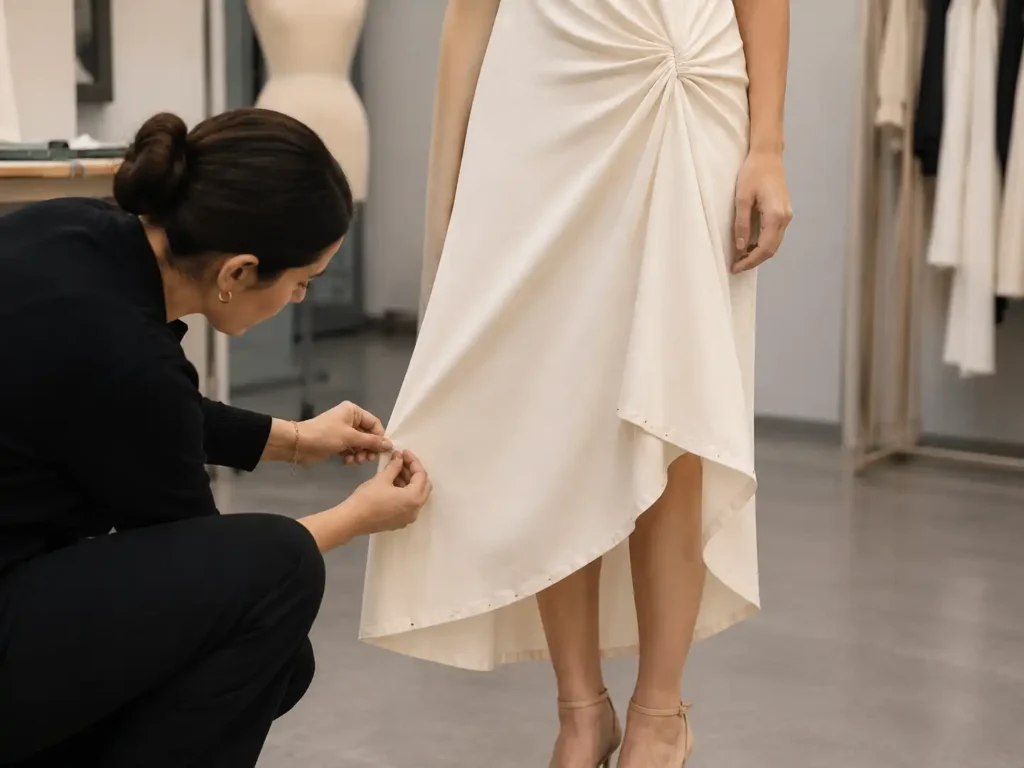
An uneven hem may be caused by pattern imbalance, fabric growth, bias direction, body distribution, seam twisting, lining tension, or incorrect pressing. Maxi and floor-length dresses magnify small errors because longer panels create more opportunity for stretch and distortion. Satin, chiffon, rayon, viscose, mesh layers, and bias-cut fabrics may need hanging or settling before final hem review. Control continues through cutting direction, sewing sequence, pressing, finished measurement, and packing so the approved silhouette does not leave the factory with a distorted hem.
Dress Silhouettes Need Different Fit Engineering
Bodycon Dresses

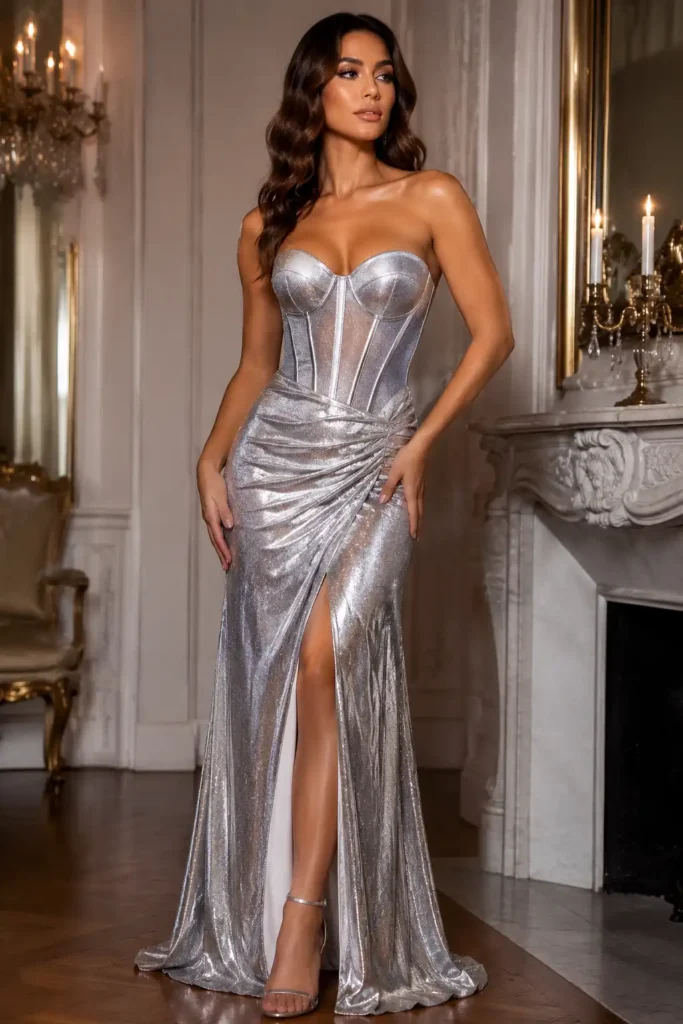
Corset Dresses

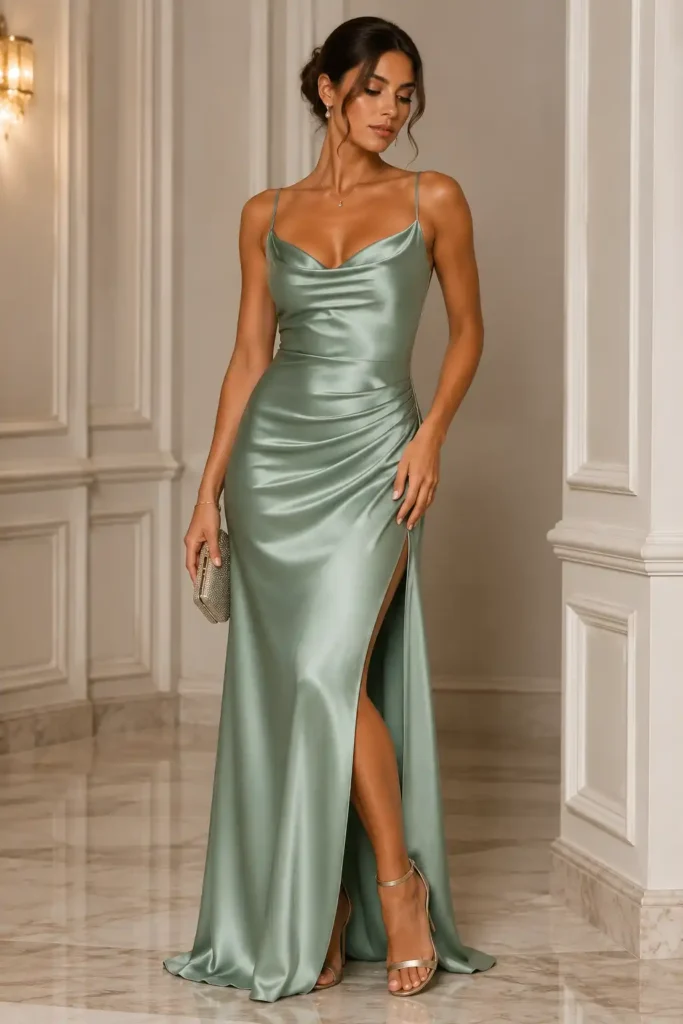
Slip Dresses
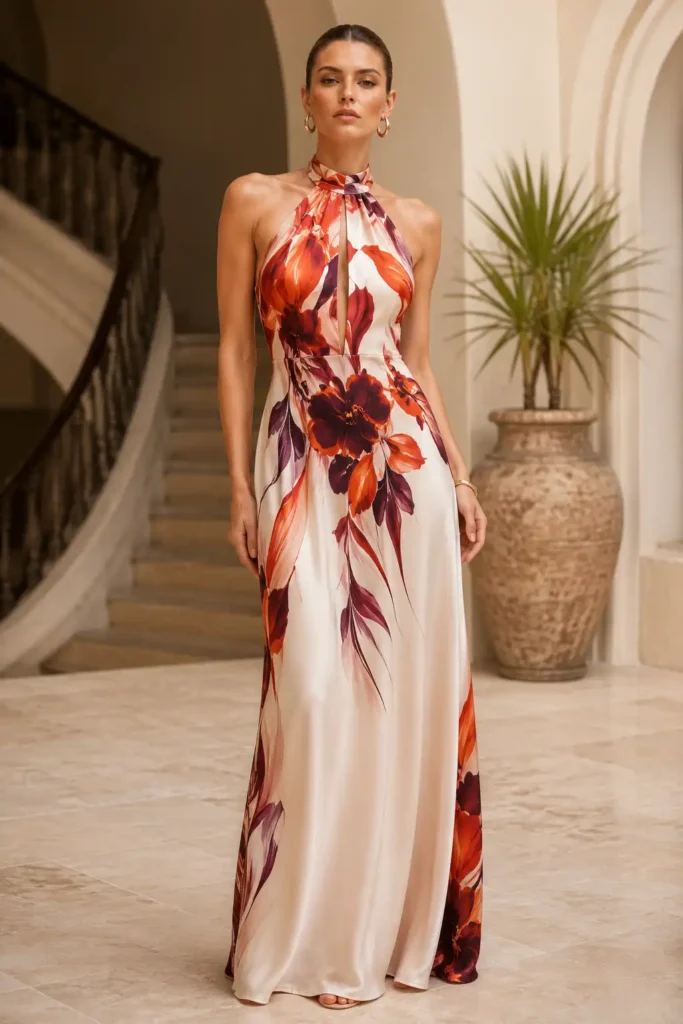
Halter Dresses

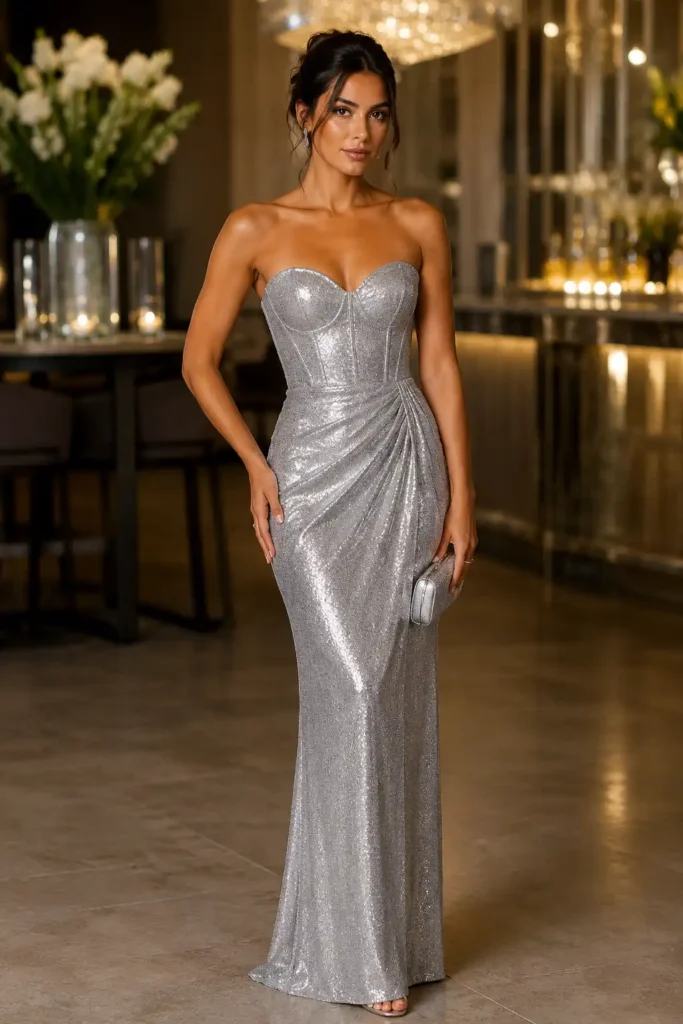
Strapless Dresses

Backless Dresses

Cut-Out Dresses

Fitted Jumpsuits
Fit Changes When Fabric Behavior Changes
Pattern accuracy cannot be separated from fabric behavior. Drape, stretch, recovery, weight, transparency, shrinkage, grain direction, surface sensitivity, and lining can change how the same pattern sits, moves, and measures on the body.
Stretch Jersey, Rib, and Ponte
Stretch fabrics require measured decisions about negative ease rather than a generic reduction from body measurements. Jersey may drape closely but show pressure lines; rib can expand significantly yet recover differently by quality; ponte provides more structure but may feel restrictive if thickness and stretch direction are ignored. Development reviews stretch percentage, recovery, weight, opacity, surface appearance, washing requirement, and the relationship between shell and lining. Pattern adjustments may affect bust, waist, hip, neckline, armhole, sleeve, and hem. Sewing tests also consider seam stretch, waviness, skipped stitches, and side-seam twisting. Bulk control compares fabric lots, cutting direction, elastic components, measurements, and recovery-sensitive areas before packing.
Satin and Bias-Cut Materials
Satin highlights every imbalance through shine, drag lines, zipper distortion, seam pressure, and pressing marks. Bias-cut styles can grow in length and width after hanging, so hem and strap decisions should not be locked before the fabric settles. Pattern development considers grain direction, bust and hip ease, neckline coverage, seam placement, lining, zipper support, and expected drape. Matte satin, stretch satin, heavy satin, and lightweight satin do not respond identically. Bulk control includes shade grouping, snag prevention, cutting direction, seam handling, pressing protection, surface inspection, and packing methods that reduce deep creases or pressure damage.
Mesh, Power Mesh, and Lace
Mesh and lace require coordination between fit, transparency, stretch, motif placement, lining, and skin comfort. Soft mesh may distort at a deep neckline; power mesh can support the body but create pressure if negative ease is excessive; lace can change stretch and balance depending on motif and border direction. Development reviews opening placement, seam support, neckline and armhole stability, lining coverage, elastic edges, appliqué or motif layout, and size grading. Bulk control checks transparency consistency, holes or damage, lace placement, seam security, lining alignment, edge flatness, and the relationship between stretch panels and non-stretch components.
Chiffon, Crepe, and Structured Wovens
Non-stretch woven dresses depend on correctly planned ease, seam shaping, lining, and movement allowance. Chiffon needs controlled layer relationships, transparency management, and hem balance; crepe can offer cleaner structure but varies in weight and stretch; suiting or structured woven fabrics require careful shaping around bust, waist, hip, and armhole. Pattern development reviews body movement, closure access, darts or panels, skirt volume, sleeve mobility, and lining. Bulk production controls relaxation where relevant, grain direction, panel matching, seam allowance, pressing, finished measurements, and hanger or folded packing according to garment structure.
From Brand Brief to Production-Ready Pattern
A reliable pattern process connects brand fit standards with fabric behavior, construction, sample comments, and production requirements. Each stage creates information used by the next stage, reducing the chance that an attractive sample becomes an unstable bulk order.
Fit Brief and Reference Review
Development begins by clarifying what the brand already controls and what still needs to be built. Useful inputs include a tech pack, brand block, measurement chart, original garment, line sheet, fit comments, reference images, fabric swatches, target size range, sales market, and intended wearing occasion. A reference image alone can communicate proportion and styling, but it does not define hidden construction, measurements, fabric performance, or grade rules. Jinfeng Apparel reviews available information before confirming the development route, missing details, material direction, sample purpose, MOQ fit, and possible risks. Clear priorities are especially important for collections of 10-30 styles because every style cannot be treated as equal-risk or equal-urgency.
Structure and Body-Balance Analysis
Before the first pattern is developed or corrected, the garment is separated into functional areas: neckline, shoulder, armhole, bust, under-bust, waist, high hip, full hip, back, straps, cut-outs, slits, lining, closures, support pieces, and hem. The team considers how each area affects the next. For example, changing strap position may alter neckline stability and armhole coverage; changing waist height may affect bust length and skirt proportion; increasing hip ease may change side-seam and slit behavior. Complex dresses are reviewed for cups, boning, interfacing, elastic, mesh support, lace placement, or multiple layers before the sample sewing sequence is fixed.
Fabric-Pattern Planning
Material selection is reviewed before fit decisions are treated as final. Key questions include whether the fabric stretches in one or two directions, how quickly it recovers, whether it grows on the bias, how much it shrinks, whether it is transparent, whether it needs lining, how it responds to pressing, and whether bulk lots can remain consistent. A pattern developed in high-recovery ponte may not work in soft jersey; a satin sample cannot be transferred to chiffon without reviewing ease, lining, seam structure, and hem. Material substitutions are presented as similar options rather than identical replacements and require swatch and sample approval.
First Pattern and Sample Construction
The first pattern converts the approved brief into a physical garment that can reveal proportion, construction, and material behavior. Sample machinists follow the intended sewing method as closely as available development materials allow, while recording any temporary substitutions. Internal checks review measurements, symmetry, balance, seam quality, closure function, lining, support, surface condition, and obvious wearing risks before photos, video, or shipment. A first sample is not automatically the final production standard. Its purpose is to make design and fit decisions visible, measurable, and discussable before additional time and material are committed.
Consolidated Correction and Pattern Update
Fit comments are most effective when they are consolidated, measurable, and connected to photos or marked references. Pattern makers review each comment against the garment, measurements, fabric, and surrounding structure before changing the pattern. The updated file should record what changed, why it changed, which measurement was affected, and whether construction or material also changed. Revised samples verify the combined result rather than isolated alterations. After fit, workmanship, fabric, trims, labels, and packaging are approved, the production pattern and associated documents are prepared for PP and bulk control.

Every Sample Must Answer a Different Question
A sample sequence works best when each version has a defined decision purpose. Common planning windows below begin only after the required material, trims, measurements, and comments are ready; complex structures, custom materials, size sets, or repeated changes can extend the schedule.
Prototype Sample
First Sample
Fit Sample
Revised Sample
PP Sample
Golden Sample
From Fit Comment to Pattern Correction
Professional comments describe a visible problem, while pattern correction identifies its likely cause and verifies the result after alteration. The actions below are common review directions, not automatic formulas; fabric, construction, body reference, and surrounding pattern areas must be assessed together.
Fit Comment | Likely Areas to Review | Possible Pattern or Construction Action | Recheck After Revision |
Neckline gapes | Neckline length, shoulder balance, fabric stretch, lining tension | Reshape neckline, adjust shoulder or strap, stabilize edge, rebalance lining | Standing, arm movement, front and side views |
Bust feels compressed | Bust volume, dart or panel shape, cup position, fabric stretch | Add controlled bust volume, reshape princess seam or cup, review under-bust | Bust line, neckline, side seam, comfort |
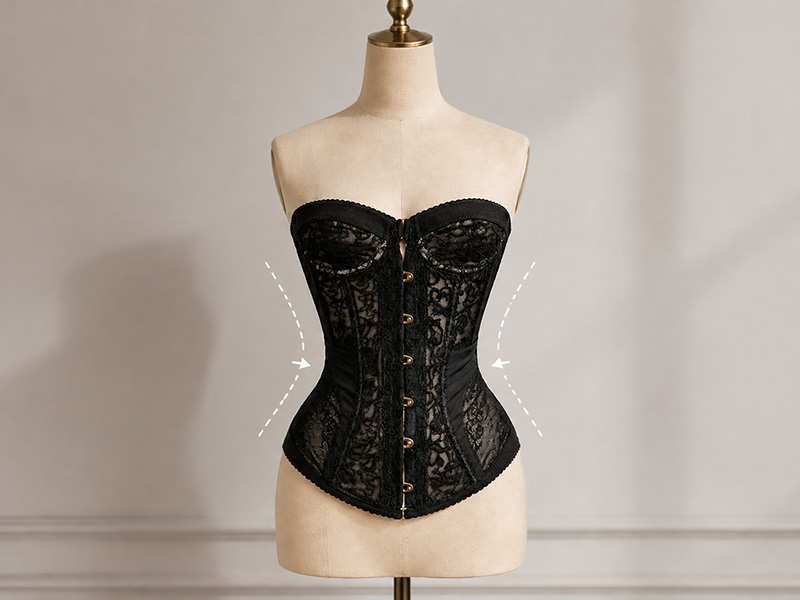
Waistline sits low | Front and back bodice length, side balance, seam position | Shorten torso area, reposition waist seam, rebalance front and back | Natural waist, bust proportion, skirt hang |
Side seam twists | Pattern balance, grain direction, hip distribution, sewing tension | Rebalance panels, correct grain, revise hip shaping, control sewing | Full side view, hem, movement |
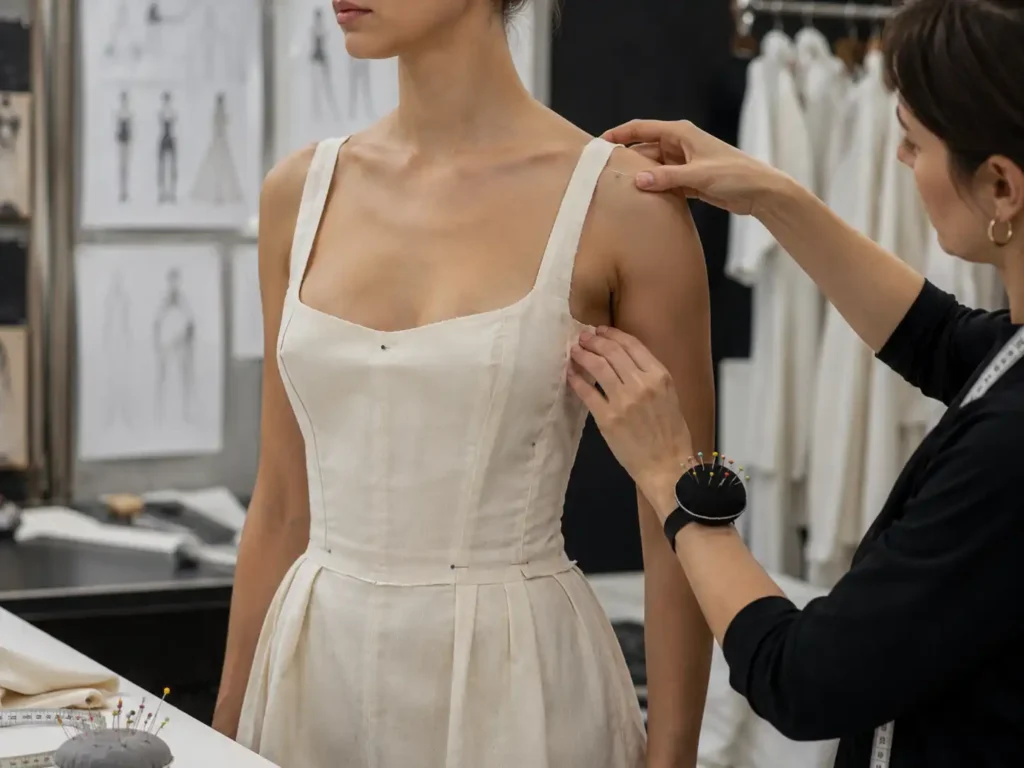
Armhole cuts in | Armhole shape, shoulder width, side-seam height, sleeve relationship | Reshape armhole, adjust shoulder or side seam, revise sleeve if used | Forward reach, arm lift, underarm coverage |
Back neckline lifts | Back length, shoulder slope, width, zipper or lining tension | Adjust back length or shoulder, reshape neckline, rebalance closure and lining | Back view, neckline contact, waist position |
Slit opens too high | Slit height, hip ease, overlap, lining, seam tension | Lower slit, add ease or overlap, revise reinforcement and lining | Walking, sitting, front and side coverage |
Hem is uneven | Pattern balance, bias growth, fabric settling, lining tension, pressing | Rebalance length, allow settling, correct lining, review pressing | Full circumference after hanging and pressing |
Grading Must Preserve Shape Across the Size Range
Adding circumference is not enough. Grade rules must preserve neckline, shoulder, cup, waist, hip, slit, cut-out, strap, and length relationships while respecting how body proportions change across the intended market and silhouette.
Define the Base Size Clearly
A stable grade begins with a base size that reflects the brand’s target wearer and intended silhouette. Inputs can include an established brand block, size chart, fit model measurements, original bestselling garment, or newly approved base sample. The base size should specify the measuring method and wearing intention rather than relying only on letter labels such as S or M. A fitted occasion dress and relaxed resort dress may use the same nominal size while requiring different ease, structure, and movement. Jinfeng Apparel can work from brand standards or help convert approved sample measurements into a controlled production chart.
Build Product-Specific Grade Rules
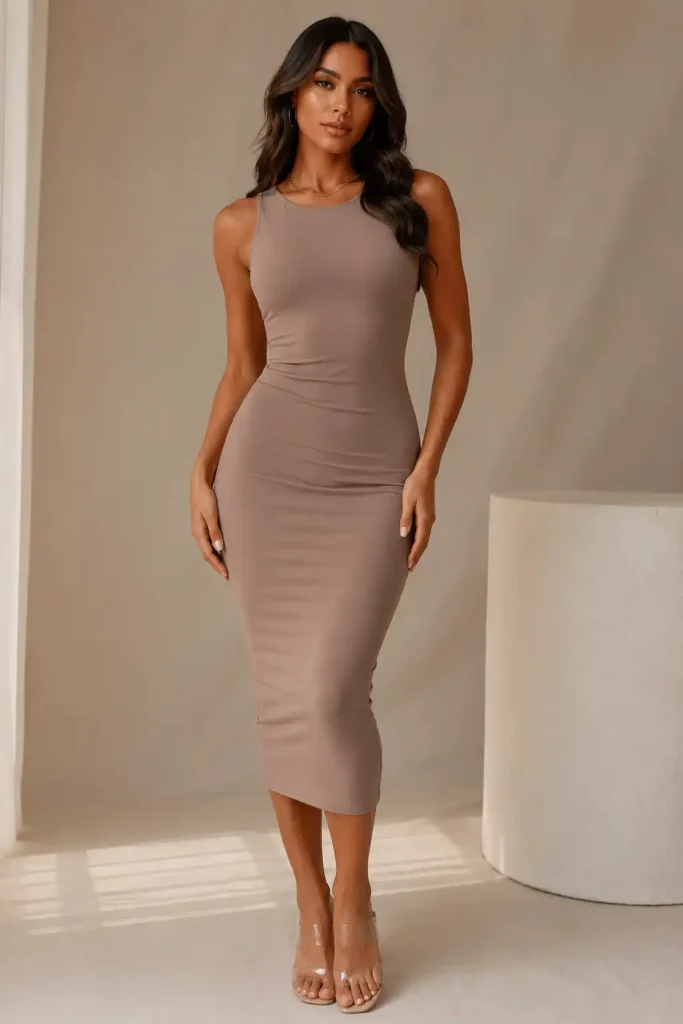
Grade increments are planned by point, not copied blindly across the whole garment. Bust, under-bust, waist, high hip, full hip, shoulder, armhole, strap position, neckline depth, slit height, front length, back length, and rise may need different treatment. Bodycon dresses must retain controlled negative ease; corset dresses must preserve cup, boning, and support relationships; cut-out designs must keep opening proportions; strapless styles must maintain upper-bust security; fitted jumpsuits must protect torso length and rise. Grade rules are therefore connected to both design and fabric behavior.
Review Key Sizes, Not Numbers Alone
A complete size chart can still produce poor garments if visual proportion and movement are not reviewed. Key-size or size-set sampling may be recommended when the range extends significantly beyond the base size, when the silhouette is highly fitted, or when cups, cut-outs, boning, asymmetric elements, or short coverage create added risk. For example, an XS-XL core range may be reviewed differently from an XS-3XL program. Extended ranges may require separate pattern decisions rather than one uninterrupted linear grade. The review approach is confirmed according to the brand’s chart, market, fit reference, and product risk.
Protect Design Details Through Grading
Design details can shift when grade rules are not controlled. A slit may become too high relative to length, a cut-out may grow too wide, a waist seam may lose its intended position, or a strap may move away from the correct support point. Graphic placement, lace motifs, panel seams, cups, boning, ruching zones, and asymmetric features also require grade-aware positioning. Jinfeng Apparel reviews these relationships in the pattern, sample, and production documents so the full size range keeps a coherent silhouette rather than looking like unrelated garments.
Fit Must Work Beyond a Static Mannequin

Walking Comfort
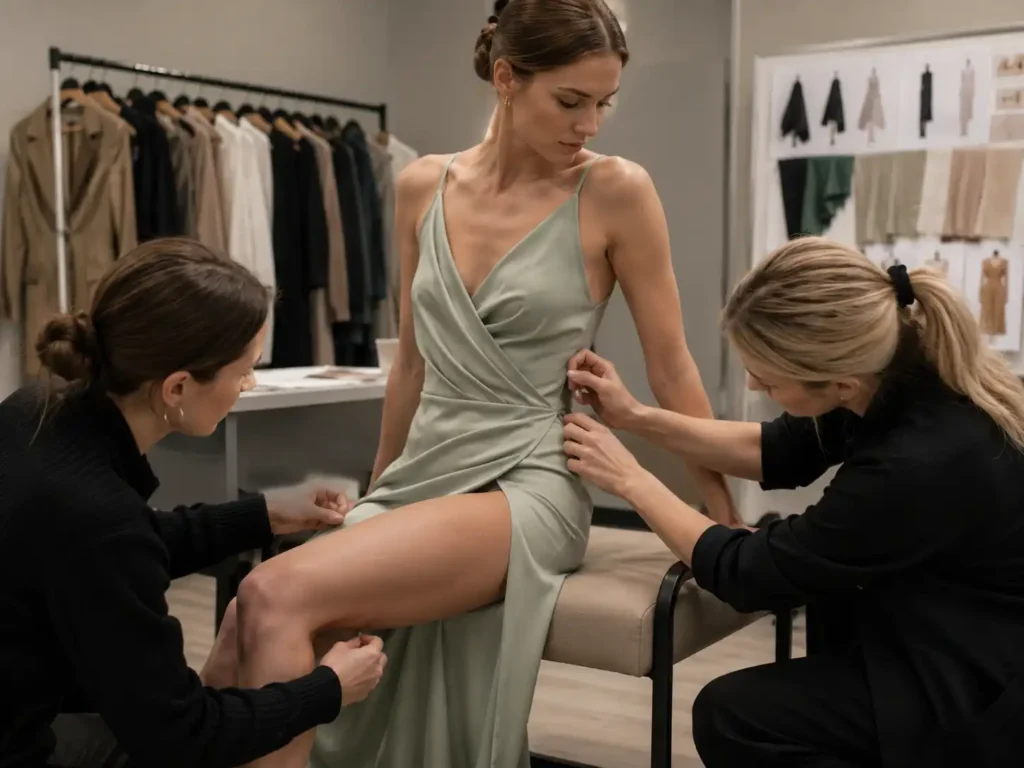
Sitting Coverage

Arm Movement
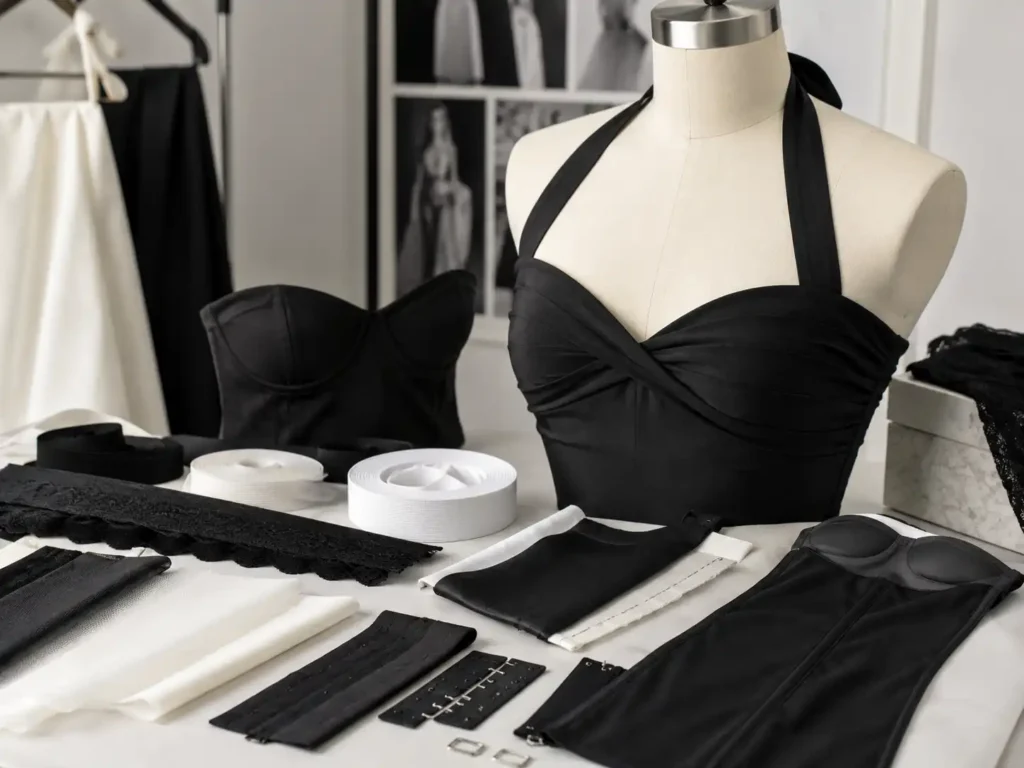
Strap Stability
Neckline Security

Slit and Cut-Out Control
Approved Fit Becomes a Production Standard
PP Sample Approval
Golden Sample Control
Controlled Change Management
Keep Approved Measurements Stable in Bulk Production
Bulk consistency depends on material control, pattern discipline, cutting accuracy, sewing checkpoints, measurement plans, pressing, and packing. Inspection begins before the garment is assembled and continues through the final shipment preparation.
Before Cutting Begins
Production preparation confirms the approved pattern version, size breakdown, marker plan, grain direction, fabric width, shade grouping, print or motif direction, shrinkage or stretch considerations, and required relaxation where applicable. Fabric and trims are checked against approved references before mass cutting. Stretch knits may require lot comparison and direction control; satin needs surface and shade attention; lace requires placement planning; printed fabrics need directional alignment; rayon or viscose may need shrinkage review. Cutting instructions identify critical panels and pieces that must remain paired or matched. Incorrect preparation at this stage cannot be repaired reliably through sewing alone.
During Sewing and Assembly
Inline control focuses on operations that affect fit and measurements: seam allowance, dart or princess-seam shape, waist joining, cup and boning placement, zipper application, strap length, elastic length, side-seam balance, lining relationship, slit reinforcement, neckline stabilization, and panel symmetry. Supervisors and QC compare work with the approved sample and production documents. Measurement spot checks are scheduled before a large quantity passes the same operation. Problems are corrected at the source instead of being left for final inspection, where repair may be slower, more visible, or no longer possible without damaging the garment.
Finished Measurement Control
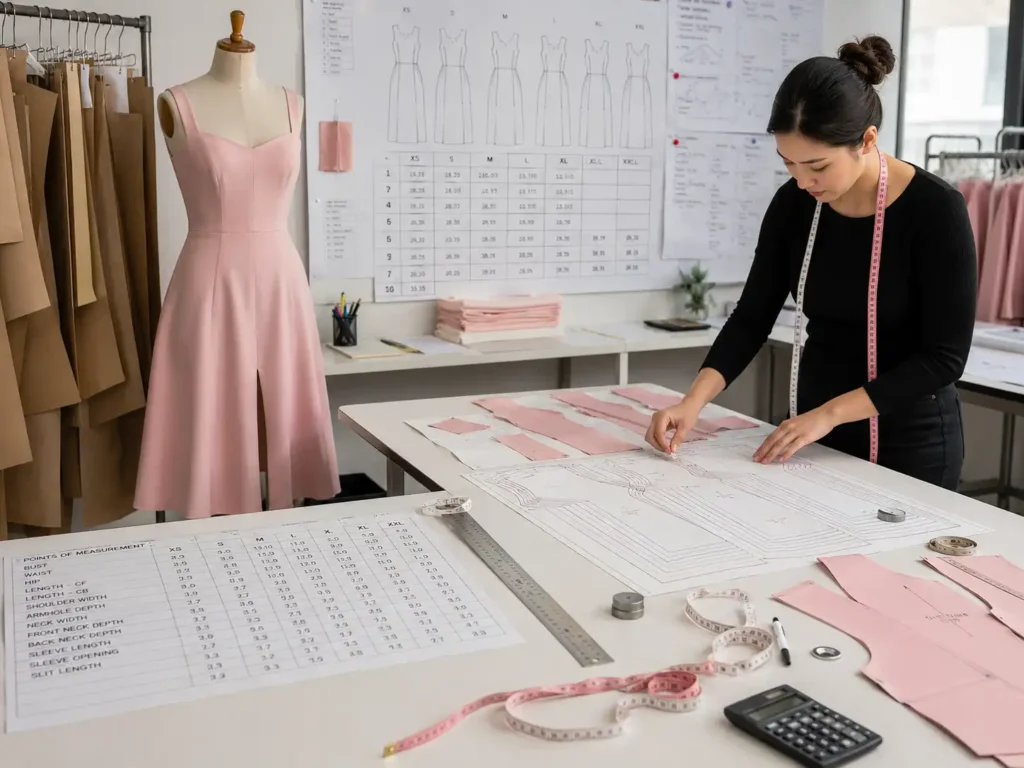
Measurement plans are adapted to product risk. Common points include bust, under-bust, waist, high hip, full hip, front length, back length, shoulder, armhole, strap length, sleeve, slit height, inseam, rise, and garment opening. Tolerances are agreed according to fabric, construction, measuring method, and brand standard; zero variation is not a realistic production promise. Stretch garments should be measured consistently without unintended tension, while bias-cut or fluid fabrics may need settling before final reading. Results are used with visual inspection because a garment can meet a flat measurement while still showing twisting, imbalance, or poor surface appearance.
Pressing, Packing, and Final Release
Pressing can change measurements, stretch edges, flatten texture, create shine, or leave marks on satin, velvet, mesh, and structured pieces. Finished garments are reviewed for balance, zipper flatness, neckline shape, hem, surface condition, lining, trims, labels, and pressing quality. Packing must protect the fit and appearance: corset cups should not be crushed, satin should avoid sharp pressure, long dresses need controlled folding, and embellishments need abrasion protection. Final inspection, AQL sampling, client or third-party inspection where arranged, carton verification, and shipping-document preparation complete the release process.
Fit Control Changes by Dress Construction
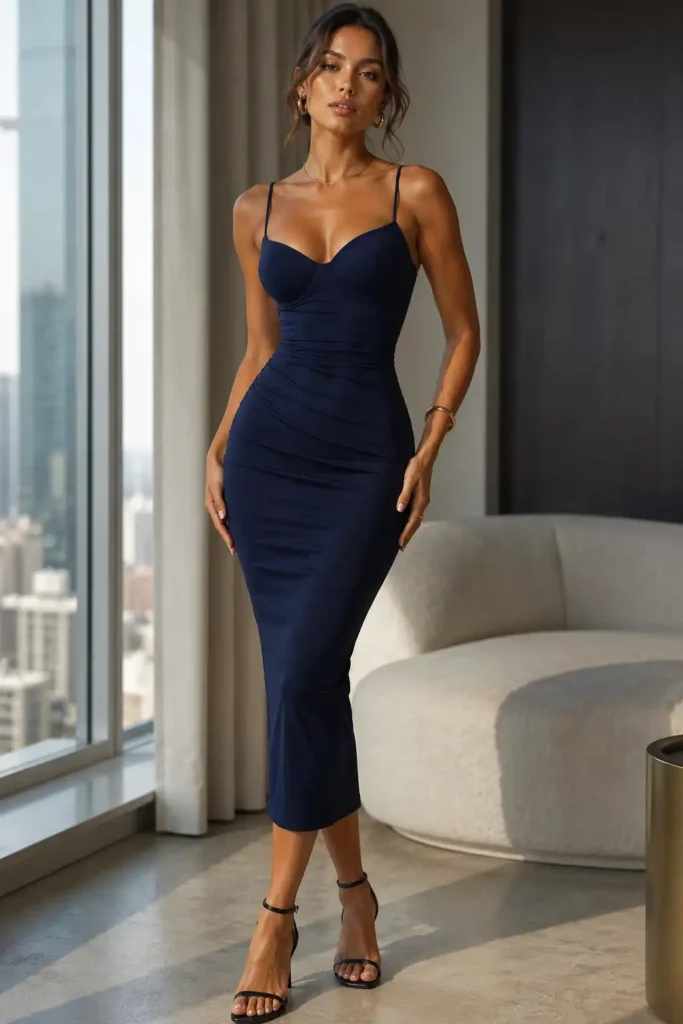
Bodycon Dresses
Corset Dresses
Strapless Dresses
Satin Slip Dresses

Mesh Cut-Out Dresses

Fitted Jumpsuits
Scale Production Without Losing Approved Fit
Large multi-style programs fail when development information is diluted during factory allocation. Jinfeng Apparel links sample approval, production files, merchandising follow-up, factory assignment, QC, packing, and delivery through one project structure.
Category-Based Factory Allocation
Six owned women’s fashion factories and more than 10 long-term satellite partners provide different strengths across woven dresses, stretch styles, occasionwear, fashion skirts, jumpsuits, sets, and private-label women’s collections. Styles are allocated according to fabric, structure, workmanship, order volume, production rhythm, and delivery needs. A complex corset dress should not be assigned solely because a line is available; the selected unit must understand the approved support structure, sample standard, sewing sequence, and inspection points. Multi-factory projects use shared approved documents and samples, while each production unit remains accountable for its allocated style group.
Multi-Style Collection Management
Fashion collections commonly include 10-30 styles rather than one repeated garment. Jinfeng Apparel groups styles by fabric, silhouette, fit risk, sample priority, factory type, and packaging requirements. High-risk styles such as corset, cut-out, satin bias, complex lace, and fitted jumpsuits can be prioritized for earlier sample review, while related styles may share approved materials or fit references where technically appropriate. Line sheets, style codes, color plans, size ratios, and launch priorities are used to prevent information from being mixed across SKUs. The aim is not merely to produce many styles, but to keep each style traceable.
Project Team Coordination
More than 12 merchandisers coordinate information among Kelly, product development, fabric and trim sourcing, pattern makers, sample rooms, production managers, QC, finishing, packing, and logistics. More than 15 QC inspectors and 30+ finishing and packing workers support later-stage control. Project communication records approvals, open questions, material changes, pattern revisions, packing files, and shipment needs. Brands with large seasonal programs can define priority styles, approval deadlines, inspection requirements, and receiving plans so production decisions are aligned with the commercial calendar rather than managed through isolated messages.
Capacity With Controlled Boundaries
Monthly production capacity exceeds 100,000 pieces across the manufacturing network, supported by 18+ sewing lines and 6+ flexible lines. Capacity figures do not replace project review. Actual allocation depends on style complexity, order quantity, fabric readiness, trim development, size and color breakdown, QC requirements, peak-season demand, packing, and delivery method. Complex lace, sequin, corset, custom-dyed, printed, or special-package programs require earlier booking. Clear boundaries create a more dependable schedule than accepting every request before materials and technical requirements are understood.
See Fit Control Across the Manufacturing Process

Pattern Review

Sample Making

Sample Measurement

Pattern Correction
Inline Measurement

Final Garment Check
Fit-Focused Dress Manufacturing Case Studies
Fit-focused brands need a manufacturing partner that can translate body proportion, fabric behavior, construction details and size standards into repeatable production. Jinfeng Apparel supports brands through pattern correction, sample refinement, grading control, bulk measurement and long-term fit consistency.

Case Study 1: Correcting Bodycon Dress Fit for a Premium Ecommerce Brand
A premium ecommerce womenswear brand developed a strong-selling bodycon dress collection but experienced inconsistent fit between samples and bulk production.
The collection included:
- Rib knit bodycon dresses
- Stretch jersey dresses
- Ponte fitted midi dresses
- Cut-out styles
Program scope:
- 16 styles
- 38,000 pieces
- XS-XL size range
- Multiple colors
- Private-label delivery
Fit Challenge
The brand identified several customer complaints:
Inconsistent Body Shape
Issues included:
- Waist position changing between batches
- Hip area becoming too loose
- Bust compression
- Side seam twisting
Fabric Behavior Differences
Previous production showed:
- Different stretch recovery
- Uneven fabric tension
- Hem movement after wear
- Measurement drift
Jinfeng Solution
Jinfeng started with a fit diagnosis.
Pattern Review
Analyzed:
- Bust
- Waist
- Hip
- Negative ease
- Side seam balance
- Hem proportion
Fabric Assessment
Reviewed:
- Stretch percentage
- Recovery
- Fabric weight
- Opacity
- Seam behavior
Result
The brand achieved:
- More consistent bodycon silhouette
- Improved size stability
- Reduced fit variation between batches
- Production-ready fit standards
The approved pattern system supported future color extensions and replenishment.

Case Study 2: Developing Structured Corset Dresses With Stable Support
A premium occasionwear brand wanted to expand its corset dress category but previous suppliers struggled with internal structure and comfort.
The collection included:
- Corset mini dresses
- Structured evening dresses
- Strapless occasion dresses
- Lace corset styles
Development Challenge
The previous production process created issues:
Internal Structure Problems
Including:
- Incorrect cup position
- Uneven boning
- Weak waist shaping
- Unstable neckline
Wearability Issues
Customers experienced:
- Excessive pressure
- Limited movement
- Poor sitting comfort
- Uneven support
Jinfeng Solution
Jinfeng treated the dress as a complete engineering system.
Structural Review
Controlled:
- Cup placement
- Under-bust position
- Boning length
- Waist suppression
- Closure stability
Pattern Development
Adjusted:
- Bust shaping
- Panel balance
- Front and back proportion
- Size grading
Production Standard
Created:
- Construction instructions
- Internal support requirements
- Measurement checkpoints
- Golden Sample
Result
The brand achieved:
- Stable corset structure
- Improved wearing comfort
- Consistent support across sizes
- Reliable bulk production
The corset category became a repeatable commercial product line.

Case Study 3: Building a Consistent Size System Across a Growing Dress Collection
A growing womenswear brand expanded from small collections into larger seasonal programs.
The brand needed consistent sizing across:
- Mini dresses
- Midi dresses
- Maxi dresses
- Jumpsuits
Program scope:
- 25 styles
- 55,000 pieces
- XS-3XL size range
Fit Challenge
As collections expanded, the brand faced:
Different Supplier Standards
Problems included:
- Different measurement methods
- Uneven grading
- Inconsistent proportions
Extended Size Issues
Challenges included:
- Bust coverage differences
- Waist position changes
- Length imbalance
- Hip proportion problems
Jinfeng Solution
Jinfeng established a collection fit system.
Base Size Review
Defined:
- Core size standard
- Measurement points
- Fit priorities
Grading Control
Reviewed:
- Bust grading
- Waist grading
- Hip development
- Length adjustment
- Neckline proportion
Bulk Measurement System
Controlled:
- Size charts
- Tolerances
- Inline measurement
- Final inspection
Result
The brand achieved:
- Unified size standards
- Better fit consistency across categories
- Reduced supplier differences
- Stronger seasonal development capability
The fit library became the foundation for future collections.
Preserve Fit Standards for Reorders and New Seasons
Pattern and Grade Records
Material and Construction Records
Packing and QC Records
Is Jinfeng the Right Manufacturing Fit
Best Fit For
- MOQ begins at 200 pieces per style and color.
- Multi-style programs are planned by style group, material group, fit risk, sample priority, and factory allocation.
- Special dyeing, printing, lace, sequin fabrics, trims, hardware, or packaging may carry separate supplier minimums.
- NDA-based cooperation is available for unpublished designs, patterns, samples, and brand files.
Project Boundaries
The manufacturing model is not built around ready-stock purchasing, one-piece fulfillment, or very small test quantities. Accurate quotation is not possible from a single image without reviewing material, construction, size, quantity, trims, labels, packaging, and schedule. Projects that require advanced structure, custom materials, extended-size development, or complex packing need adequate development and production time. Clear requirements allow Jinfeng Apparel to propose a more reliable route, while incomplete information may only support a preliminary range review rather than a final price and delivery commitment.
- Multiple styles totaling 200 pieces do not meet the standard MOQ.
- One style in two colors generally requires the MOQ for each color.
- Major changes after sample or PP approval can affect cost and timing.
- Rush requests are reviewed against material readiness, line capacity, QC time, packing, and transport.
Frequently Asked Questions About Fit-Led Dress Manufacturing
Yes. Jinfeng Apparel can review an existing brand block, measurement chart, original garment, fit sample, or approved pattern. The team first confirms the base size, measuring method, target market, fabric, and intended silhouette. Existing blocks are not applied blindly to every dress because corset, bodycon, satin slip, cut-out, woven occasion, and fitted jumpsuit styles may require product-specific adjustments.
Yes, when usable patterns, samples, measurements, or clear fit comments are available. Review covers the visible problem, likely pattern cause, fabric behavior, construction, and surrounding areas affected by the change. Corrections are verified through a revised sample rather than assumed from digital edits alone. Ownership and permission for supplied patterns remain the responsibility of the brand.
Helpful information includes a tech pack, reference image, original sample, brand size chart, base-size measurements, target size range, fabric direction, fit comments, wearing occasion, construction details, trims, and launch timing. A complete package is not mandatory for the first review, but missing information must be developed or confirmed before accurate sampling, grading, quotation, and production planning.
A fit sample focuses on body proportion, measurements, balance, movement, and correction. A PP sample represents the approved production standard, including final-intent fabric, trims, construction, labels, measurements, workmanship, and packing details wherever possible. A photo-ready sample may be visually suitable for a campaign but should not automatically replace PP approval.
Consolidated comments are reviewed against the sample, measurements, fabric, construction, and existing pattern. Relevant changes are recorded by style and approval status. Revised samples confirm the combined result. Frequent partial comments, changing materials, or new design directions can create additional rounds, so brands are encouraged to consolidate feedback through one authorized development contact.
Jinfeng Apparel can support grading according to the supplied brand size chart and approved fit direction. Extended ranges may require additional pattern decisions or selected size samples, particularly for cups, corset structure, cut-outs, strapless support, short coverage, bodycon negative ease, or jumpsuit rise. A universal linear grade is not presented as suitable for every body range.
Often, yes. A fabric change can alter stretch, recovery, drape, shrinkage, transparency, lining, seam behavior, surface appearance, cost, MOQ, and timing. Some substitutions may need only a focused review, while major changes require a revised sample or new PP sample. Similar appearance does not mean identical performance.
Control starts with approved patterns, measurement charts, tolerances, grade rules, and golden samples. Checks can cover material, cutting, sewing operations, inline measurements, finished measurements, pressing, and packing. Critical points are selected according to the product. AQL sampling and client or third-party inspection can be coordinated where required by the order.
Yes. Pattern files, measurement charts, grade rules, fabric references, trim records, construction notes, golden samples, packaging details, and QC notes can be retained for future production. Reorders still require confirmation of fabric availability, color, price, quantity, schedule, and any changed requirement before production begins.
MOQ begins at 200 pieces per style and color. It is calculated by style and color, not by combining unrelated styles. Custom dyeing, printing, lace, sequin fabric, hardware, trims, labels, or packaging may have separate supplier minimums. The final workable quantity is confirmed after reviewing the style, material, color plan, size breakdown, construction, and schedule.

Start Your Fit-Focused Dress Project
Send Kelly the information already available for the collection: tech packs, reference images, original-sample photos, brand size chart, target size range, fit comments, preferred fabric, order quantity by style and color, private-label requirements, and launch date. Jinfeng Apparel will first review silhouette, structure, material behavior, pattern status, sample needs, grading risk, MOQ, and production feasibility.
When information is incomplete, the first response will identify the missing decisions rather than provide an unreliable fixed quotation. NDA-based cooperation is available for confidential product files and unpublished designs. Established brands and large apparel programs can also submit a line sheet with style priorities so high-risk or launch-critical samples are scheduled in a controlled sequence.