...

Dress Manufacturer for Fashion Range Planning Teams

Turn an approved seasonal dress range into coordinated samples, costed styles, controlled production, and delivery-ready SKUs.

Jinfeng Apparel supports fashion range planning, merchandising, product development, sourcing, and quality teams that need a dress program to move cleanly from line sheet to bulk production. The manufacturing workflow is organized around style roles, fabric groups, sample priorities, cost tiers, size architecture, production allocation, private-label packing, and launch dates.

  • 10-30 styles per range: projects can be grouped by fabric, construction, sample priority, and production route instead of being managed as isolated garments.
  • From 200 pcs per style/color: MOQ is assessed against fabric availability, color development, trims, construction, packing, and the intended order structure.
  • 6 owned factories plus 10+ long-term production partners: resources can be matched to woven, knit, structured, embellished, or fit-sensitive dress programs.
  • 2 sample rooms, 7+ senior pattern makers, and 20+ sample machinists: multi-style development can be sequenced through first samples, fit revisions, photo samples, PP samples, and Golden samples.

Capacity Built for Multi-Style Dress Range Development

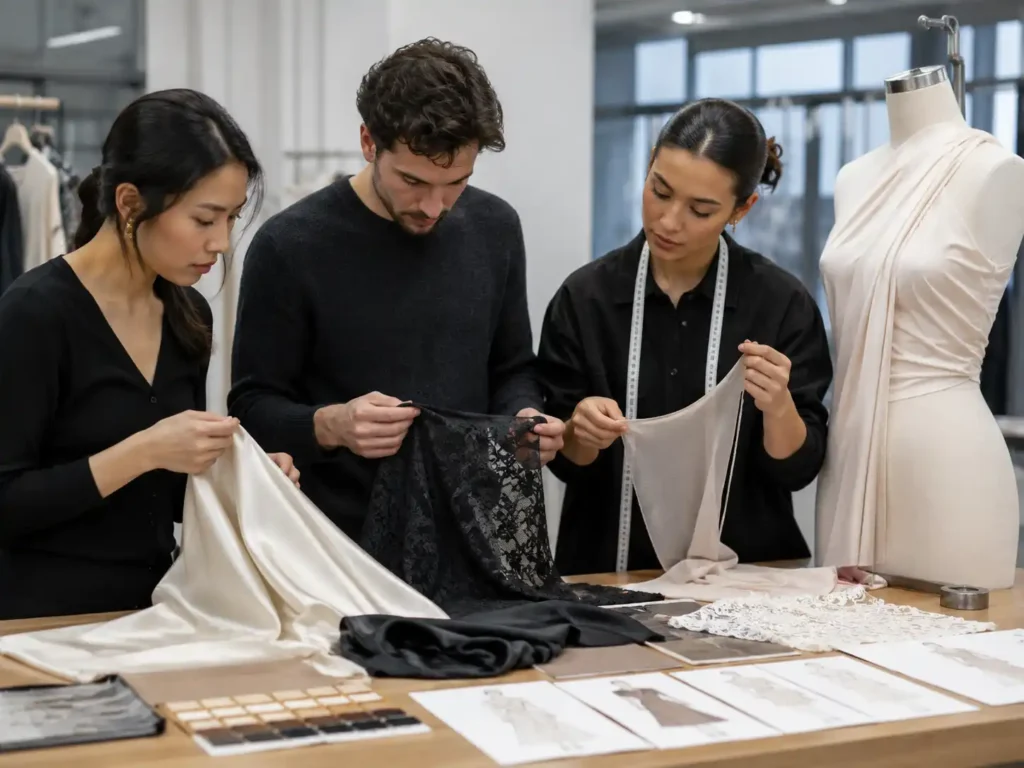
Range planning works best when product development, pattern work, sampling, factory allocation, QC, and packing capacity can move together. Jinfeng Apparel combines long-term womenswear experience with a factory network and dedicated development teams for seasonal dress programs.

Since 2008

Jinfeng Apparel has focused on custom women’s fashion manufacturing since 2008. Long-term experience matters in range development because a seasonal collection rarely fails from a single issue. Fit, fabric, construction, cost, sample timing, labeling, and production sequencing influence one another. The team reviews those connections before a range moves into bulk production.

6 Owned Factories

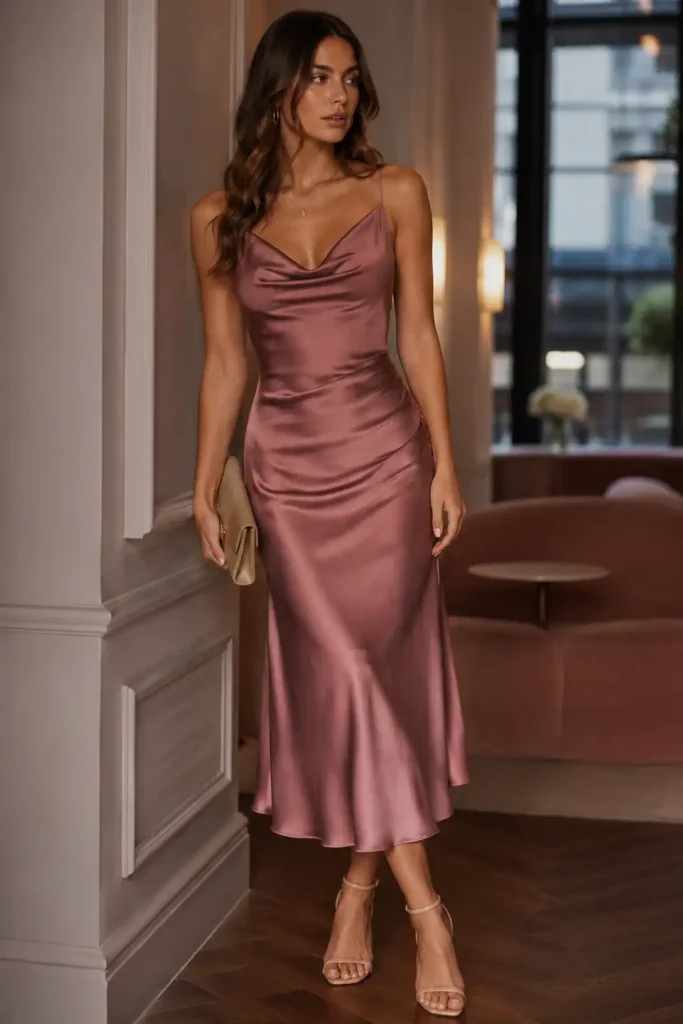
Six owned women’s fashion factories provide a controlled base for dress development and bulk production. Factory assignment is made by product structure, fabric handling, order quantity, workmanship level, approved sample standard, and delivery sequence. A satin slip dress, a corset mini, and an embellished occasion style should not be routed through identical production conditions.

10+ Production Partners

More than ten long-term satellite production partners extend capacity for multi-style and multi-batch programs. Partner resources are used selectively rather than as an uncontrolled outsourcing pool. Assigned factories follow project files, approved samples, workmanship notes, QC requirements, label instructions, packing rules, and shipment plans managed through the Jinfeng Apparel project team.

2 Sample Rooms

Two sample rooms support first samples, fit samples, revised samples, photo-ready garments, salesman samples, PP samples, and Golden samples. Separate sample capacity is valuable when a range includes several launch priorities, fabric groups, and fit-sensitive designs. Sample work is organized by approval sequence instead of simply following the order in which style files arrive.

7+ Pattern Makers

More than seven senior womenswear pattern makers work across mini, midi, maxi, bodycon, corset, slip, halter, strapless, backless, jumpsuit, skirt, and matching-set structures. Pattern review focuses on bust, under-bust, waist, hip, length, neckline, strap, armhole, slit, lining, and movement so approved silhouettes can be graded and reproduced in bulk.

15+ QC Inspectors

More than fifteen QC inspectors support incoming material checks, cutting review, sewing checks, in-line inspection, garment inspection, pressing review, packing QC, AQL inspection, and client-appointed inspection. Range-level quality control also tracks recurring issues across styles, including shade variation, zipper shape, lining exposure, measurement drift, label accuracy, and carton breakdown.

Built for Teams Planning Commercial Dress Ranges

A dress range reaches production through several internal functions. Each group sees different risks, so manufacturing communication needs to translate commercial plans into development files, approved standards, quantities, and controlled deadlines.

Range Planning

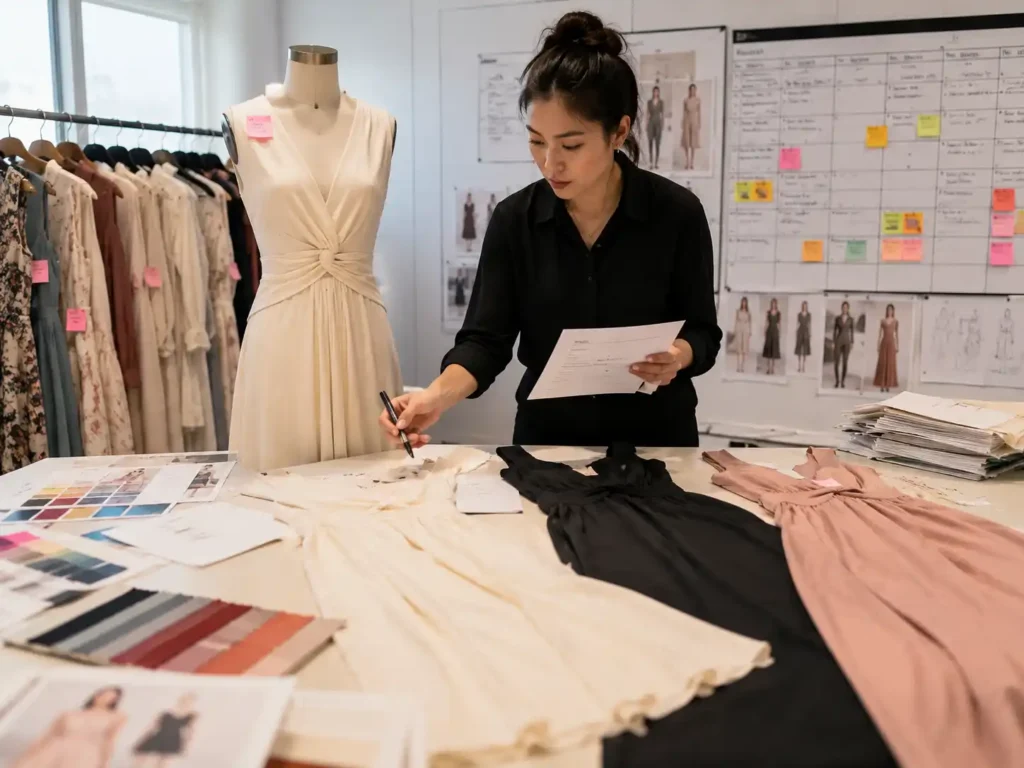
Range planning teams define product architecture, style count, length mix, color direction, price tiers, and launch timing. Jinfeng Apparel supports the manufacturing side by identifying fabric dependencies, construction risk, sample priority, MOQ pressure, and production feasibility. The result is a clearer view of which styles can move together and which styles need separate development paths.
  • Useful inputs: line sheet, style role, target quantity, color count, intended launch window.
  • Manufacturing output: feasibility notes, sample sequence, fabric grouping, MOQ impact, production route.

Merchandise Planning

Merchandise planning teams need cost visibility without stripping the range of its visual identity. Each dress can be reviewed against fabric cost, trims, lining, construction time, finishing, QC, packing, and quantity. Entry-price, core, premium, and statement styles can then carry different construction strategies while remaining connected through color, fabrication, or silhouette.
  • Useful inputs: target retail position, target FOB range, margin limits, priority styles.
  • Manufacturing output: cost drivers, value-engineering options, quantity breaks, material alternatives.

Product Development

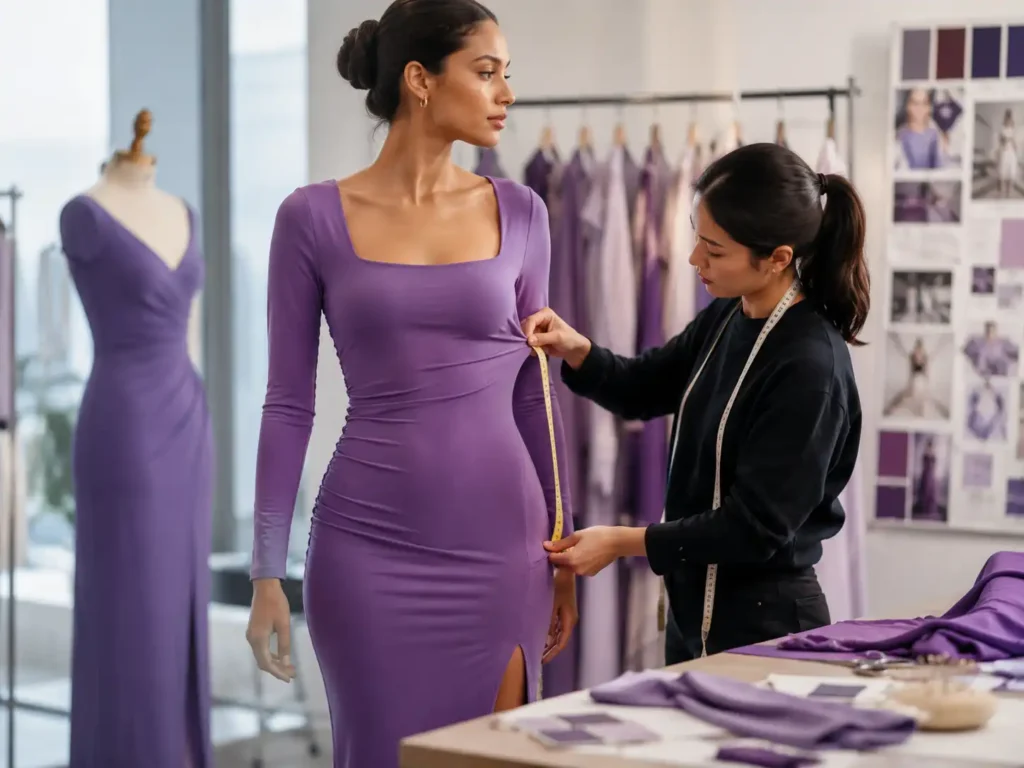
Product development teams work closest to fabric, fit, structure, and sample approval. Jinfeng Apparel can begin from tech packs, sketches, reference images, original samples, or line sheets. Pattern makers and sample machinists review neckline, bust support, waist placement, hip ease, skirt balance, lining, closure, and repeatable workmanship before bulk standards are locked.
  • Useful inputs: tech pack, base measurements, reference sample, construction notes, fit comments.
  • Manufacturing output: pattern, first sample, revision record, PP sample, Golden sample.

Sourcing Teams

Sourcing teams evaluate factory fit, cost boundaries, material availability, compliance support, capacity, and delivery risk. Jinfeng Apparel provides project-specific information rather than a generic promise. Assigned factory, material route, MOQ, sample plan, QC structure, label and packing requirements, trade terms, and shipment coordination are confirmed against the actual dress program.
  • Useful inputs: quantity by style/color, target market, compliance file list, incoterm, delivery window.
  • Manufacturing output: factory match, commercial quotation, material plan, timeline, shipping preparation.

Quality Teams

Quality teams need one approved standard to remain visible across every style and production batch. Measurement tolerances, workmanship points, fabric appearance, trim placement, pressing, labeling, and packing are recorded through sampling and PP approval. In-line findings can then be corrected before final inspection rather than discovered after the entire range has been completed.
  • Useful inputs: measurement specification, workmanship standard, AQL level, inspection checklist.
  • Manufacturing output: QC checkpoints, measurement records, defect actions, final and packing review.

Supply Chain Teams

Supply chain teams focus on material arrival, production sequencing, warehouse requirements, shipping documents, and delivery priority. Jinfeng Apparel coordinates packing lists, carton marks, carton measurements, gross and net weight, commercial invoices, forwarder communication, and split-shipment planning. Priority colors or hero styles can be separated when the launch plan requires staged delivery.

  • Useful inputs: warehouse guide, forwarder details, cut-off date, carton rules, shipment split.
  • Manufacturing output: packing plan, cargo data, document coordination, shipment status, delivery batches.

Where Range Planning Connects With Dress Manufacturing

Strong cooperation begins with a clear division of responsibility. Brand teams retain control of market strategy and commercial decisions, while Jinfeng Apparel converts approved range direction into manufacturable garments, controlled specifications, and production-ready files.

Brand-Led Range Decisions

Fashion range planning remains a brand-led function. Market demand, channel strategy, target consumer, retail price, sales forecast, buy depth, markdown policy, assortment breadth, and inventory exposure belong with the brand’s planning and merchandising teams. Jinfeng Apparel does not replace those commercial decisions. The manufacturing role begins when product architecture needs to be tested against material availability, garment construction, fit, MOQ, costing, and delivery reality.

A useful range brief identifies which styles are intended as hero products, core commercial lines, entry-price options, visual campaign pieces, carryover products, or likely replenishment candidates. That information changes the manufacturing plan. Hero styles may require earlier sampling and more complex materials. Core products may need a stronger focus on repeatability and cost control. Carryover products benefit from stable fabric records, patterns, BOM files, QC history, and Golden samples.

Clear brand decisions also reduce unnecessary development. When style role, target price, color count, size range, and launch date are known, fabric and construction proposals can be judged against a real commercial purpose. Without those boundaries, a sample can look attractive yet fail the intended margin, production quantity, or launch calendar.

Manufacturing-Led Execution Decisions

Jinfeng Apparel supports product feasibility, fabric and trim direction, pattern development, sample sequencing, cost structure, MOQ interpretation, production allocation, QC planning, private-label packing, and export coordination. Each approved concept is reviewed as part of the wider range rather than as an isolated style. Shared fabrics, colors, linings, zippers, labels, and packaging can be identified where technically suitable, while fit-sensitive or complex styles receive separate control points.

Manufacturing review also identifies risks that may not be visible in a range board. Satin can magnify seam waviness and shade differences. Power mesh requires controlled stretch direction and recovery. Lace placement changes cutting yield and visual balance. Corset structures need stable support, cup position, boning, and closure design. Multi-layer chiffon affects opacity, hem balance, and labor time. Those factors influence price, sampling, bulk consistency, and the sequence in which styles should be approved.

The handover becomes complete when the range has confirmed fabrics, approved measurements, final construction, PP samples, quantities, labels, packing files, inspection requirements, and delivery instructions. At that point, the planning concept has become a controlled manufacturing program.

Production Risks That Can Disrupt a Strong Range Plan

A strong assortment can lose margin, launch timing, or visual consistency when development and production are managed style by style. Range-level controls make dependencies visible before small issues spread across multiple SKUs.

Fragmented Style Development

When every style is sampled, costed, revised, and approved independently, the range can lose visual and operational connection. Similar necklines may use different internal finishes, related colors may come from different dye lots, and repeated trims may be sourced at inconsistent grades. Jinfeng Apparel groups styles by fabric, construction, fit, and commercial priority so common decisions are aligned before bulk production.

Fabric MOQ Conflicts

A range may appear commercially balanced while its material plan remains unworkable. Custom-dyed satin, exclusive lace, placement print, sequin embroidery, and custom trims can carry independent supplier minimums. Jinfeng Apparel checks fabric route, color minimum, trim minimum, yield, and lead-time impact early, then suggests consolidation or suitable alternatives before the range is locked.

Cost Tier Imbalance

Too many labor-heavy or material-heavy styles can push an entire range above its planned cost architecture. Corsetry, double layers, hand-applied trims, placement lace, ruching, draping, and complex linings should be distributed intentionally. Cost review separates statement construction from commercial construction, allowing visual impact to remain concentrated where the assortment can support it.

Sample Calendar Congestion

Ten to thirty styles can quickly produce overlapping first samples, revisions, photo samples, fit comments, and PP approvals. Without a defined priority, sample rooms spend time switching between urgent requests while production-critical styles remain unresolved. Jinfeng Apparel uses grouped development waves, consolidated feedback, version records, and approval gates to protect the calendar.

Factory Allocation Mismatch

Available capacity is not the same as suitable capacity. A line experienced with simple woven dresses may not be the right choice for corset structures, slippery satin, stretch mesh, sequins, or multi-layer occasionwear. Style allocation is reviewed against workmanship, fabric handling, quantity, approved standard, and launch priority before production is released.

Launch Date Slippage

Delivery pressure often begins earlier than bulk sewing. Delayed fabric approval, late label artwork, repeated design changes, missing PP confirmation, or incomplete packing files can compress the production and QC window. A backward plan from launch date to shipment, packing, final inspection, production, PP approval, sample review, and material confirmation keeps the critical path visible.

What Range Planning Teams Need From a Manufacturer

A useful manufacturing partner contributes more than a unit price. Range teams need technical judgment, consistent data, clear approval points, and enough production control to connect commercial architecture with finished garments.

Category Understanding

Dress categories behave differently in development and production. Mini lengths need coverage and movement control. Maxi hems require balance and handling. Bodycon products depend on stretch, recovery, and measurement discipline. Corset dresses require structural support. Occasionwear may combine delicate fabrics, linings, embellishment, and photo-ready finishing. Category understanding reduces avoidable revisions.

Multi-Style Development

A multi-style range requires visible priorities and shared decisions. The manufacturer should be able to group fabrics, identify repeated trims, sequence pattern work, manage sample waves, record revisions, and protect PP approval. Jinfeng Apparel organizes each style within the wider range so one delayed component does not silently affect several related products.

Fabric Platform Planning

Common fabric platforms can improve color consistency, purchasing efficiency, and visual connection when the structures are compatible. One satin family may support slips, draped midis, and bias maxis. One stretch mesh may support ruched and paneled silhouettes. Each use still needs testing for weight, opacity, stretch direction, seam behavior, lining, and recovery.

Transparent Costing

Cost should be traceable to fabric, trims, pattern work, sampling, cutting, sewing time, pressing, QC, packing, wastage, testing, logistics coordination, and factory margin. Transparent cost drivers allow planning teams to decide where complexity creates value and where construction can be simplified without weakening the intended appearance.

Calendar Management

A seasonal program needs a calendar built around dependencies rather than optimistic dates. Material confirmation, first sample, fit review, photo sample, PP approval, bulk production, inspection, packing, and shipment should each have an owner and an approval point. Consolidated comments and fixed response dates protect sample-room and production capacity.

What We Review Before Developing Your Dress Range

A complete brief produces faster and more accurate manufacturing decisions. Jinfeng Apparel can start with partial files, but clarity around product role, quantity, material, fit, and launch timing allows feasibility, costing, sampling, and capacity planning to begin on firmer ground.

Line Sheet

A line sheet shows the full range at a glance. Style code, image, category, length, fabric direction, color, size range, target price, quantity, and launch phase help the team identify repeated materials, shared trims, development priorities, and products that require separate technical attention.

Tech Pack

A tech pack should include measurements, construction, fabric, trims, stitching, labels, and packing requirements. Missing information does not automatically stop review, but every unresolved point must be listed before an accurate quotation or production standard can be established.

Style Role

Hero, core, entry-price, carryover, campaign, and replenishment styles require different development priorities. Style role helps determine where to invest in fabric, structure, sample rounds, photo quality, and repeatability. It also supports decisions about which styles should enter development first.

Quantity Plan

Quantity should be provided by style and color, with intended size ratios where available. Total range volume alone cannot confirm material minimums, cutting efficiency, price breaks, or production routing. Quantity structure also affects label purchasing, packing preparation, and split-delivery planning.

Fabric Direction

Fabric references should describe composition, weight, handfeel, shine, stretch, opacity, drape, and preferred source status when known. A physical swatch is more reliable than a screen image. Jinfeng Apparel reviews stock, custom-dye, custom-weave, print, and special-fabric routes against MOQ, cost, and timing.

Color Plan

Color information should include Pantone references, physical standards, intended fabric, lining relationship, and color priority. Satin shine, mesh transparency, lace texture, and print technique can alter perceived color, so lab dips or fabric swatches may be required before bulk approval.

Size Architecture

US, UK, EU, AU, alpha sizing, extended sizing, plus sizing, petite, and tall adjustments can be developed against the brand’s measurement logic. Base size, grading rules, fit preference, and target market should be confirmed before samples are used to approve a full size range.

Launch Requirements

Launch date, campaign shoot, sales sample requirement, warehouse guide, label artwork, packing format, inspection method, and shipping route all affect the project plan. Early visibility allows the development and bulk calendar to be built backward from the real commercial deadline.

Dress Categories for a Balanced Seasonal Range

A strong range combines clear product roles with manufacturing logic. Each category below requires different fabric, pattern, support, finishing, and bulk-control decisions, even when several styles share a color story or launch theme.

Mini Dresses

Mini dresses often carry strong trend and content value, yet commercial success depends on controlled length, seat coverage, lining, hem stability, and movement. Body-skimming minis need hip ease and recovery; flared minis need waist placement and hem balance. Strapless, halter, and low-back versions also require secure upper-body fit. Bulk inspection should check finished length, lining exposure, zipper shape, and symmetry across sizes.

Midi Dresses

Midi dresses can serve office, occasion, resort, and core commercial roles. Proportion is critical because waist position, skirt break, slit height, and calf length affect the silhouette. Bias satin, fitted jersey, woven A-line, and draped mesh midis each need different handling. Range planners often use midi styles as stable volume products, so repeatable fit, fabric availability, and packing presentation deserve early attention.

Maxi Dresses

Maxi dresses create visual impact through length, drape, print, and movement. Manufacturing control covers front and back length, hem level, lining length, seam stretch, print placement, and carton folding. Chiffon and mesh may require layered opacity; satin and bias cuts need careful grain and pressing. Tall, standard, and petite length logic should be defined before grading to avoid a single length solution across all markets.

Bodycon Dresses

Bodycon dresses rely on fabric stretch, recovery, compression, opacity, and stable measurements. Bust, waist, hip, armhole, neckline, and hem must work together without excessive tension or rolling. Power mesh panels, ruching, double layers, and contour seams can improve shape but add labor and measurement risk. Fit samples should be assessed on body, while bulk QC should monitor stretch direction, seam growth, and size consistency.

Corset Dresses

Corset dresses need coordinated control of cup position, under-bust, boning, support level, closure, neckline security, and waist shaping. The outer fabric, interlining, lining, bra cups, anti-slip tape, and zipper must perform as one system. Development should verify comfort as well as appearance. Production instructions need precise boning lengths, seam allowance, top-edge finish, and symmetry so the structured result remains consistent across the order.

Party Dresses

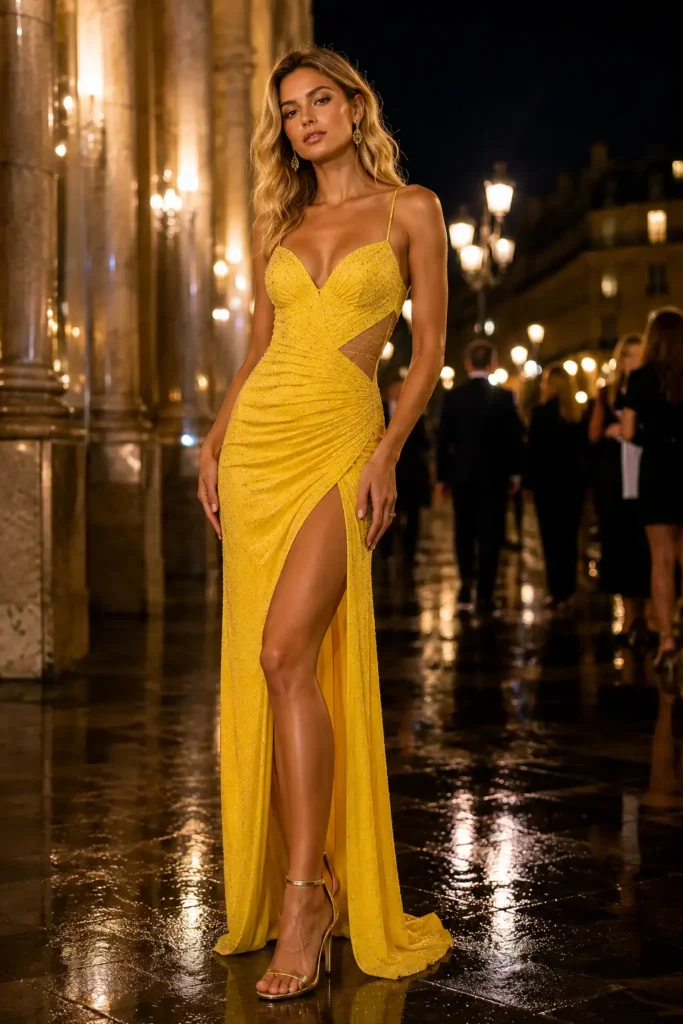
Party dresses may combine cut-outs, mesh, sequins, rhinestones, draping, shine, and close fit. Visual impact cannot come at the cost of scratchy surfaces, unstable closures, weak support, or exposed lining. Sample review should include movement, lighting, photo appearance, and skin contact. Bulk workmanship checks should focus on embellishment security, seam balance, zipper function, trim placement, and pressing without damaging decorative surfaces.

Occasion Dresses

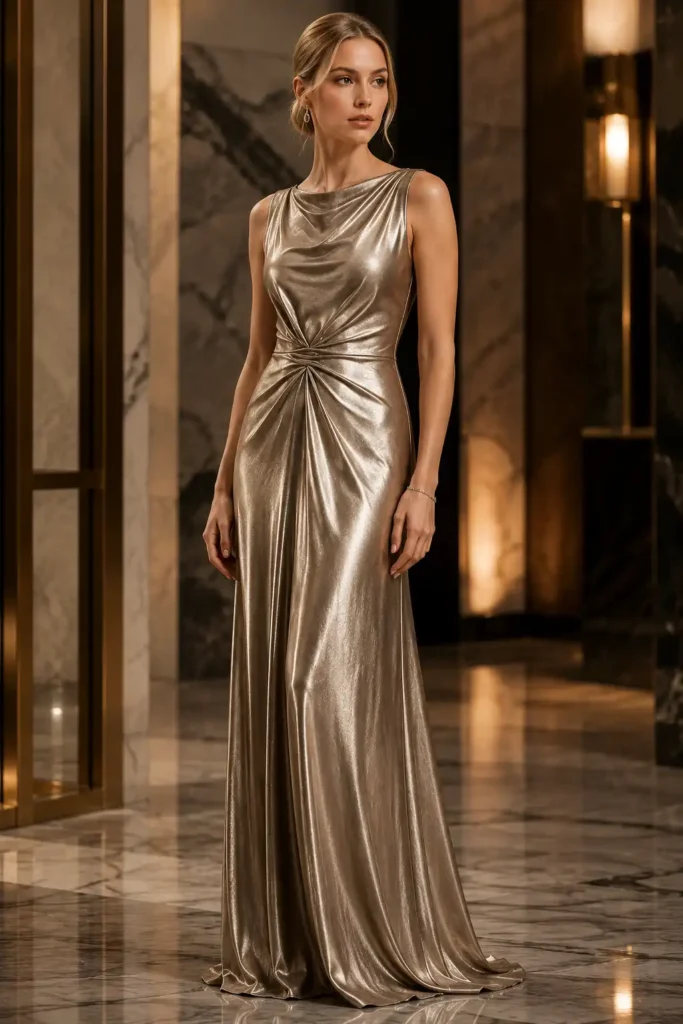
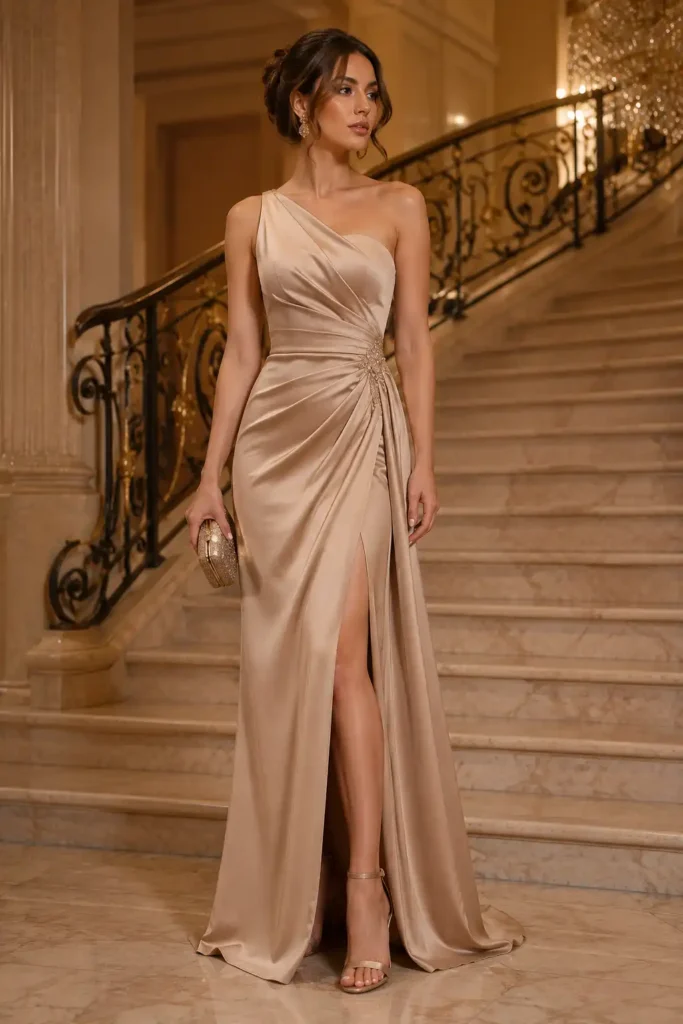
Occasion dresses require a polished balance of fabric handfeel, drape, fit, lining, color, and finishing. Satin, chiffon, lace, tulle, and embellishment can appear premium only when cutting, seam handling, pressing, and internal construction are controlled. Range planning often includes several price tiers, so premium visual cues should be concentrated in fabric quality, fit, neckline treatment, and finishing rather than unnecessary construction everywhere.

Resort Dresses

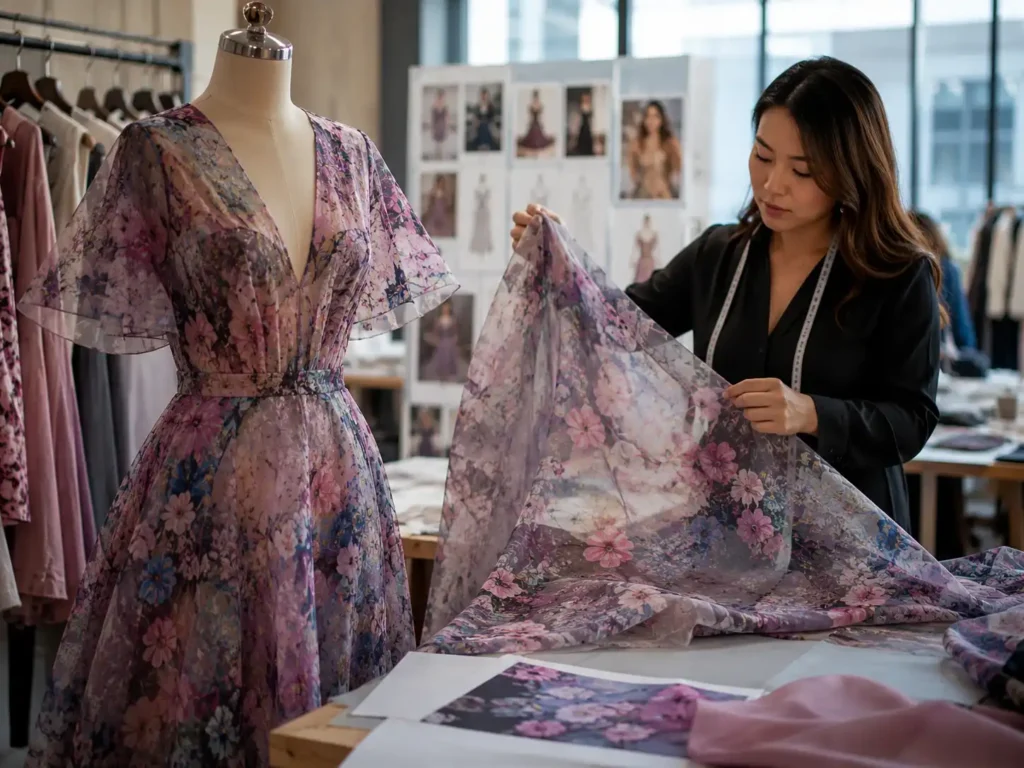
Resort dresses benefit from breathable or fluid fabrics, print direction, travel-friendly packing, movement, and coordinated color stories. Halter, backless, wrap, maxi, and matching-set extensions may share fabrics, yet each needs separate fit and closure control. Print scale and placement should be reviewed before cutting. Wrinkle behavior, opacity, seam slippage, and hanging presentation also influence whether a style arrives ready for ecommerce photography or retail display.

Jumpsuits and Sets

Jumpsuits and matching sets extend a dress range without breaking its visual identity. Jumpsuits need careful control of waistline, rise, torso length, hip ease, leg balance, and closure access. Two-piece sets need coordinated color, fabric batch, top-to-bottom proportion, size pairing, and packing. Shared materials can improve range coherence, while separate SKU logic allows pieces to be sold together or independently.

Build a Range With Distinct Product Roles

Product roles guide development priority, cost allocation, sample effort, and production strategy. A range becomes easier to manage when every style has a commercial purpose instead of competing for the same fabric, price point, and launch attention.

Hero Styles

Hero styles carry the clearest visual statement for campaigns, social content, press, or window presentation. They may justify special fabric, draping, corsetry, embellishment, or stronger sample refinement. Hero styles should enter development early because material risk and photo-sample deadlines can affect the wider launch plan.

Core Commercial

Core commercial styles need broad wearability, repeatable fit, controlled cost, and reliable material supply. Midi, bodycon, slip, and simple occasion silhouettes often play this role. Construction should be robust enough for bulk consistency while retaining the brand’s visual signature through proportion, color, and selected details.

Entry Price

Entry-price products support range accessibility without looking disconnected. Cost control may come from simpler construction, fewer layers, standard trims, efficient cutting, or a commercially available fabric. Visual identity can remain strong through shape, neckline, color, and styling rather than expensive internal complexity.

Occasion Focus

Occasion-led styles support wedding guest, party, graduation, event, and evening demand. Fabric finish, color, support, lining, and photo appearance carry more weight than basic utility. Development should consider seasonal event dates, campaign timing, fit confidence, and packaging that protects polished surfaces.

Content Drivers

Content-driven styles are designed to photograph, move, and communicate a clear visual feature. Cut-outs, draping, shine, mesh, print, or statement sleeves may lead the concept. Photo-ready samples need focused workmanship and pressing because digital presentation can magnify small asymmetries or fabric handling problems.

Carryover Styles

Carryover styles provide continuity across seasons and reduce development risk. Stable patterns, measurements, fabrics, trims, labels, packing files, QC records, and Golden samples make repeat production more efficient. New colors or related fabrics can refresh the product while preserving an already proven fit.

Seasonal Statements

Seasonal statement products express a trend, material, color, or event moment. They may use limited fabrics or special workmanship, so quantity and timing should be planned carefully. Early feasibility review helps avoid committing the range to a visual direction that cannot meet material minimums or the launch window.

Replenishment Styles

Replenishment candidates need stable fabric supply, repeatable workmanship, clear size logic, and organized production records. The first order should establish a Golden sample, approved measurements, BOM, color standard, label files, packing method, and QC focus so a repeat order can start with less interpretation.

Range Completers

Range-completion styles fill gaps in length, color, price, or wearing occasion. They should support the assortment rather than add unnecessary complexity. A compatible fabric, standard closure, proven pattern block, or shared label and packing system can make these products commercially useful without creating a separate supply chain.

Plan Fabric Platforms Across Multiple Dress Styles
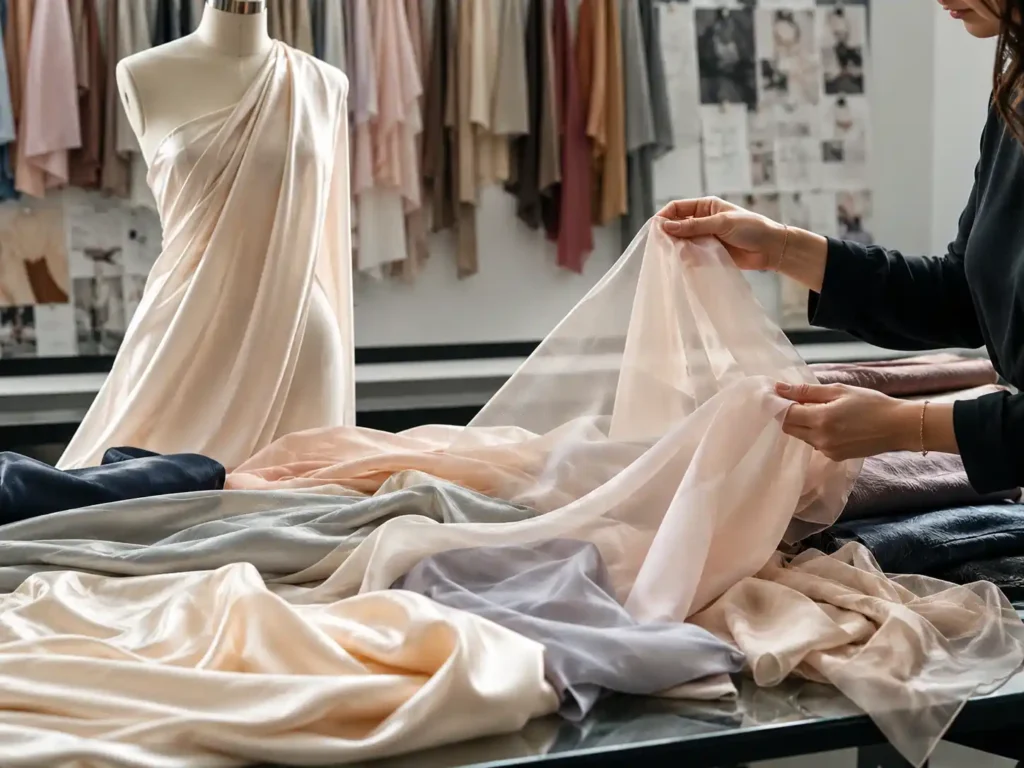
Fabric platforms can connect a range visually and commercially, but shared material only works when weight, stretch, opacity, drape, surface behavior, and construction remain compatible. Jinfeng Apparel reviews each platform at style level before approving range-wide use.

Satin and Charmeuse

Satin and charmeuse can support slip dresses, draped midis, bias maxis, corset combinations, and occasion silhouettes. Range planning should define shine level, weight, drape, color depth, lining, and whether the material will be stock, custom dyed, or specially developed. Light satin can show seam tension, needle marks, snagging, and press damage. Bias styles may grow differently from straight-grain styles, so pattern and hanging behavior require separate checks. Color approval should consider natural light, indoor light, surface direction, and the relationship between shell and lining.

Chiffon and Georgette

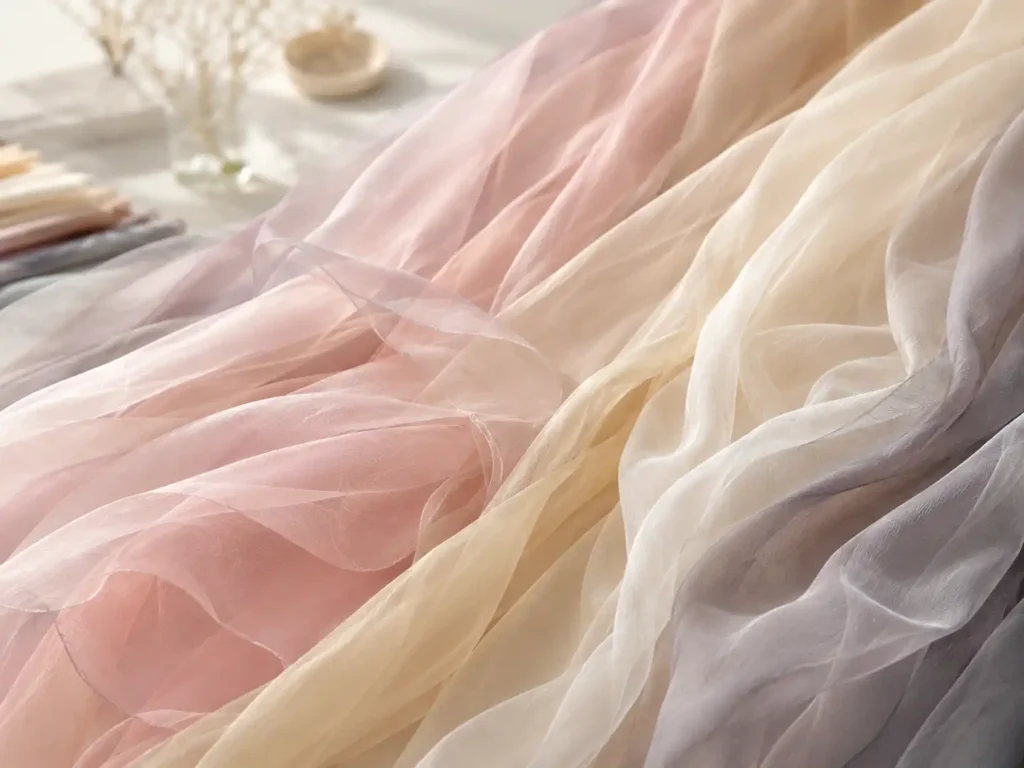
Chiffon and georgette create movement for layered maxis, gathered midis, sleeves, overlays, and occasion pieces. Weight, transparency, grain stability, print scale, and lining determine the final quality. Multiple styles can share a base quality, yet layer count and fullness change consumption and cost. Cutting needs stable markers and careful handling to reduce distortion. Hem technique, seam finish, gathering density, and pressing should be agreed during sampling. The range plan should also account for opacity across light and dark colors, because identical construction may not provide equal coverage.

Mesh and Power Mesh

Mesh and power mesh suit bodycon dresses, ruched styles, lined sheer panels, sleeve details, and corset combinations. Stretch percentage, recovery, direction, transparency, handfeel, and color matching must be evaluated. A mesh that works as a sleeve may not provide enough support for a fitted body. Layering, seam type, lining, elastic, and edge finish influence comfort and durability. Bulk cutting should maintain consistent stretch direction. Range use becomes more efficient when a stable mesh quality supports several silhouettes, but each style still needs fit testing on body.

Lace and Tulle

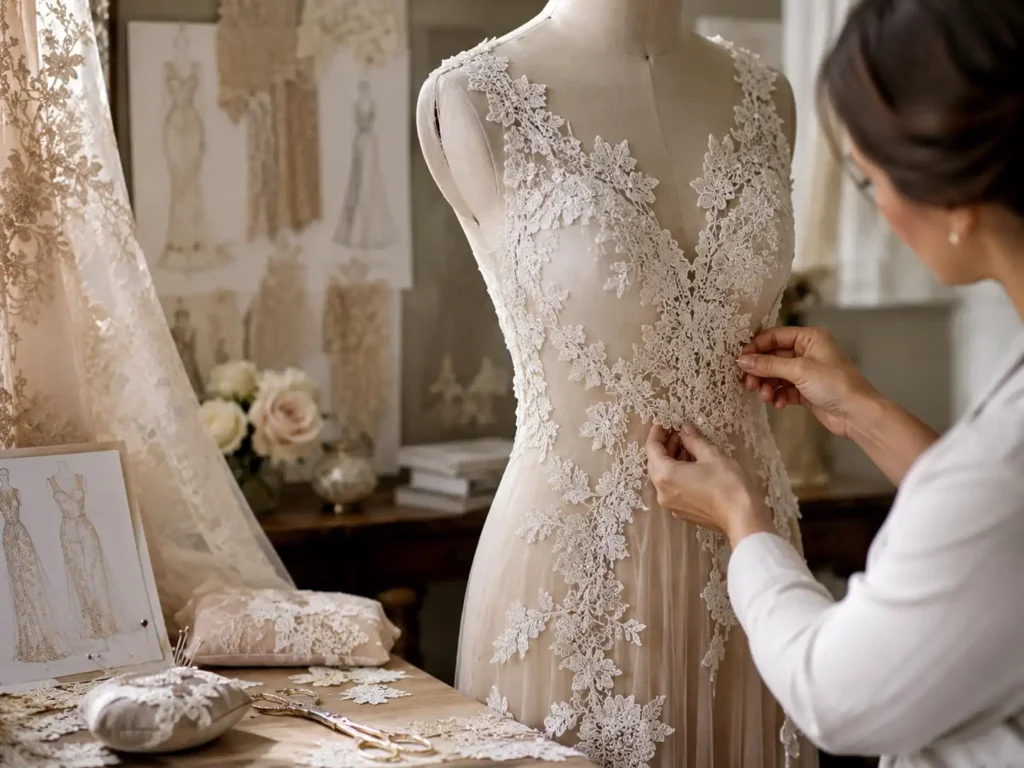
Lace and tulle support occasionwear, corset dresses, overlays, sleeves, panels, and decorative placement. The commercial effect depends on motif scale, softness, transparency, edge use, repeat size, and color consistency. Placement lace can increase cutting time and fabric consumption because motifs must align across seams or key body areas. Tulle may require several layers for volume or opacity. Range planners should decide which styles need premium placement and which can use continuous cutting. Lining color and skin-tone relationships should be approved physically rather than from screen images.

Jersey and Ponte

Jersey and ponte provide stretch, recovery, comfort, and commercial repeatability for bodycon, ruched, fitted midi, casual, and structured knit dresses. Fabric weight, compression, pilling resistance, opacity, shrinkage, and dimensional stability affect fit. A lower-cost jersey may look acceptable on a hanger yet lose shape after wear or washing. Ponte can provide cleaner seams and structure but changes drape and cost. Range planning can use one knit platform across several styles when the pattern blocks are developed for the actual stretch and recovery rather than transferred from woven products.

Sequins and Embellishment

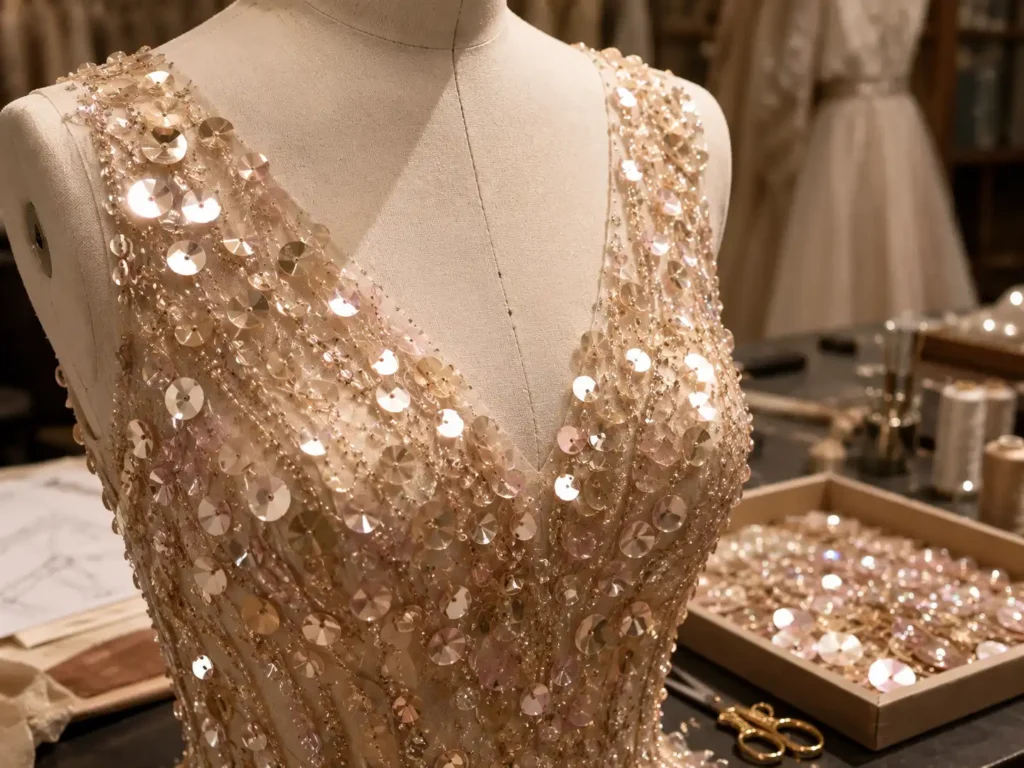
Sequin fabrics, beading, rhinestones, and decorative chains create statement value but require controlled skin contact, trimming, seam construction, reinforcement, repair, and packing. Sequin direction, backing, weight, fall-off risk, and cutting waste affect price and production time. Embellished areas should avoid closures, seam allowances, or pressure points unless the construction has been tested. Linings may need added coverage to prevent scratching. Protective packing can reduce surface damage during transport. Range planners often reserve these materials for hero or occasion styles where visual impact supports the additional cost.

Control Color, Size and SKU Complexity

Range complexity grows through the combination of style, color, size, market, label, and delivery batch. Clear rules at development stage reduce fabric fragmentation, grading errors, mixed labels, and warehouse mismatches later.

Core Color Allocation

Core colors should be assessed across fabric families rather than assumed to match automatically. Black satin, black mesh, black lace, and black lining can read differently under light. Physical standards, lab dips, swatches, dye-lot records, and approved combinations create a more reliable color system for styles intended to merchandise together.

Fashion Color Allocation

Fashion colors create seasonal impact but may carry higher minimums or longer development. Range planning should identify which styles genuinely need every fashion color. Consolidating one color across compatible styles can improve material efficiency, while limiting special colors to hero products can protect cost and timing.

Fabric Color Minimums

Stock colors, custom-dyed colors, custom prints, lace, sequins, and special trims often have different supplier minimums. A quantity plan by style and color allows Jinfeng Apparel to calculate whether the intended split can support the selected material. Alternative qualities or grouped use can be reviewed when minimums conflict.

Size Architecture

Pattern development can follow US, UK, EU, AU, alpha sizes from XS to XL, extended sizing, plus sizing, petite, or tall requirements according to the brand’s own standard. Base size, grading increments, ease, length logic, and fit preference should be confirmed. Extended sizes may require more than mathematical grading, especially around bust support, armhole, waist, hip, lining, and garment balance.

SKU Label Control

Every SKU may carry a combination of style code, color code, size, barcode, price, warehouse label, and carton rule. Label files should be approved against the final order matrix before bulk packing. Packing QC checks woven labels, size labels, care labels, hangtags, barcode stickers, color stickers, SKU labels, polybags, carton marks, and packing-list consistency.

Reorder Data Retention

Repeat production becomes faster when patterns, measurements, BOM, fabric references, dye-lot notes, trims, sewing instructions, labels, packing methods, QC findings, and Golden samples are retained. Reorder review still confirms material availability and color batch, but the established record reduces repeated interpretation and protects the approved brand fit.

Cost a Dress Range Without Flattening Its Identity

Range costing should show where money creates visible value and where complexity can be reduced. Jinfeng Apparel builds quotations from the actual fabric, trims, pattern work, sampling, construction, finishing, QC, packing, testing, logistics coordination, and quantity structure of each style.

Range-Level Cost Visibility

A dress quotation is not a single sewing number. Fabric cost depends on composition, weight, width, yield, color development, print method, cutting loss, and supplier minimum. Trim cost may include zippers, hooks, cups, boning, anti-slip tape, elastic, lining, lace trim, rhinestones, labels, and packaging. Construction cost changes with layer count, ruching, draping, corsetry, cut-outs, placement motifs, embellishment, handwork, pressing difficulty, and measurement control. Sampling and pattern development also vary by complexity and number of revisions.

Range-level costing makes these drivers comparable. A satin slip may use expensive material but efficient construction. A corset mini may use less shell fabric but require more internal components and labor. A sequin style can create high visual impact while carrying cutting waste, repair, skin-contact, and packing costs. A layered chiffon maxi may look light but consume several times the visible surface area. Separating those drivers prevents one average target from distorting every product.

Commercial quotations become more accurate after fabric, trims, construction, size range, colors, quantities, packing, and delivery terms are confirmed. Early figures can guide range decisions, while final bulk prices should be tied to approved specifications and material routes.

Product Tier Balance

Entry, core, premium, and hero products should not be forced into identical cost logic.

Entry products can use commercially available fabrics, proven closures, efficient silhouettes, and fewer internal layers.

Core products should protect fit, repeatability, material continuity, and broad wearability. Premium products can invest in fabric handfeel, lining, support, refined finishing, and selected details.

Hero products may carry the most complex visual treatment because they support campaign and brand impact.

The objective is not to make every style cheaper. The objective is to keep the range inside its planned architecture while preserving the reason each product exists. Removing support from a strapless dress, reducing lining where opacity is essential, or using unstable fabric in a bodycon style may lower the initial quotation yet increase fit failure, returns, repair, or markdown exposure.

Better cost decisions remove invisible waste while protecting visible and functional value.

Value Engineering Without Visual Loss

Jinfeng Apparel can review fabric substitution, trim replacement, lining strategy, construction simplification, pattern efficiency, color consolidation, size-ratio planning, MOQ grouping, and shipment splitting. A similar fabric may offer more stable supply or better yield.

A standard zipper can replace a decorative closure where the closure is not a visual focus. Internal construction can sometimes be simplified after fit and support are tested. Shared lining, labels, or packing materials can reduce fragmentation across the range.

Every value-engineering proposal should be judged against drape, opacity, stretch, recovery, support, comfort, durability, photo appearance, and approved brand quality. Cost control is most effective before samples are locked, when material and construction alternatives can still be compared without disrupting the bulk calendar.
How MOQ Works Across a Multi-Style Range

Jinfeng Apparel starts from 200 pieces per style/color, subject to fabric availability, color development, trims, construction, packing, and production schedule. Range volume can improve purchasing and line efficiency, but one total figure does not automatically remove material or color minimums attached to individual styles.

Material or RequirementMOQ EffectRange Planning ResponseControl Point
Stock fabricStandard style/color MOQ may be possibleGroup technically compatible styles where usefulConfirm stock quantity, dye lot, replacement availability
Custom-dyed fabricDye-house minimum applies by quality and colorConsolidate color across compatible silhouettesApprove lab dip, bulk shade, shell-lining relationship
Custom printPrinting minimum and setup cost applyUse one print across several suitable productsConfirm artwork scale, repeat, placement, strike-off
Special lace or tulleSupplier stock and motif repeat influence minimumReserve premium placement for selected stylesApprove motif, softness, color, lining, cutting route
Sequin or embellished fabricBatch, color, backing, and repair needs affect minimumPrioritize hero or occasion productsCheck scratch risk, loss, seam areas, protective packing
Custom trimsSeparate minimum may apply to zippers, hardware, cups, or brandingStandardize hidden components across styles where suitableConfirm specification, color, durability, comfort, lead time
Private-label packingLabels, hangtags, barcodes, and special bags may have independent minimumsCoordinate artwork and common packaging before production releaseApprove SKU matrix, label files, carton marks, warehouse rules

Manage Multi-Style Sampling Without Losing Control

Sample types serve different approval purposes. Clear naming, version records, consolidated comments, and fixed release points prevent photo samples, fit samples, and PP samples from being treated as interchangeable garments.

First Sample

The first sample converts pattern, fabric, trims, and construction notes into the first physical garment. Its purpose is to reveal structure, proportion, sewing logic, material behavior, and missing information. A first sample is not automatically the bulk standard. Comments should identify fit, design, construction, fabric, trim, and measurement issues separately so the next action is clear.

Fit Sample

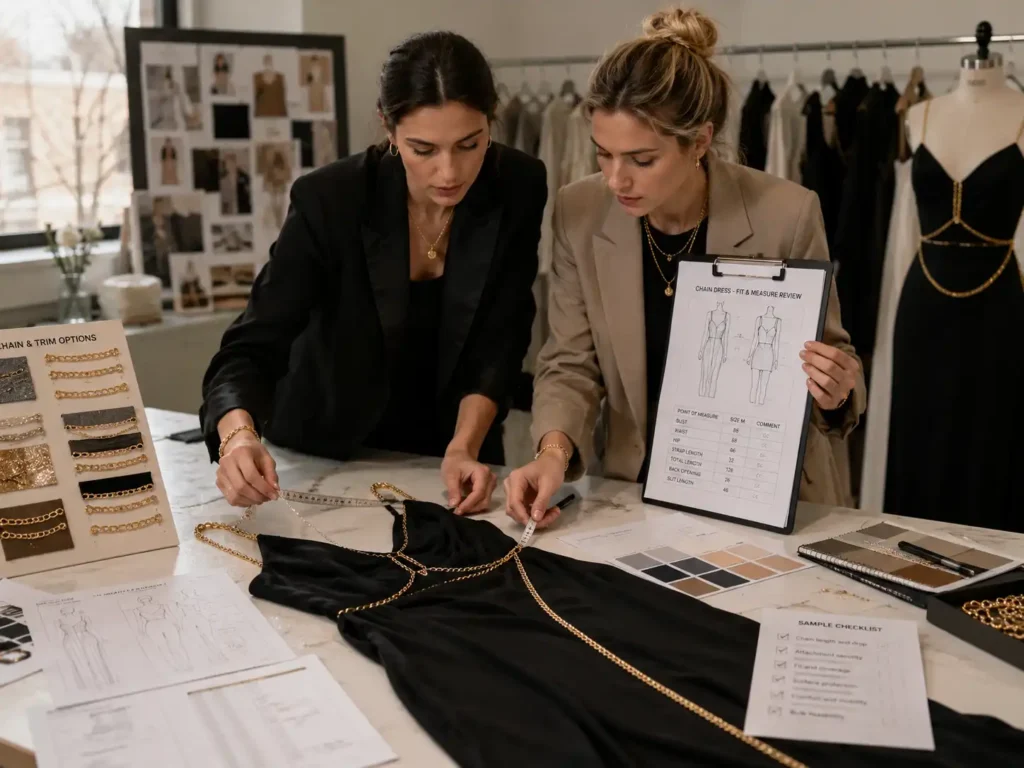
A fit sample tests the garment on a body or approved form against the brand’s intended silhouette. Review covers bust, under-bust, waist, hip, shoulder, armhole, neckline, strap, length, slit, lining, movement, and support. Photos and measurements should accompany comments. Fit approval should be based on the target market and brand standard, not a generic mannequin alone.

Revised Sample

A revised sample confirms whether agreed changes have been transferred correctly. Pattern changes, trim changes, fabric changes, and construction changes should be tracked rather than blended into one informal message. When several styles share a construction solution, the approved correction can be applied consistently, subject to style-specific fit and fabric behavior.

Photo Sample

A photo-ready sample is prepared for campaign, ecommerce, or content use. Visual proportion, surface finish, pressing, color, symmetry, and camera-facing details carry greater importance. Photo samples may be prepared before every bulk detail is fixed, so the project record must state whether the garment is approved only for photography or also for production reference.

Salesman Sample

Salesman samples support wholesale, internal review, market presentation, or pre-selling activity. Quantity, color, labels, and timing can differ from standard development samples. Because these samples may circulate among teams, each garment should carry a clear style and version reference. Feedback collected from the sales process should be consolidated before it creates uncontrolled revisions.

PP Sample

The pre-production sample should reflect approved fabric, color, trims, construction, measurements, labels, and workmanship as closely as possible before bulk release. Remaining differences must be recorded and accepted. Production should not rely on verbal approval alone. A signed or documented PP standard gives pattern, production, QC, and packing teams a shared reference.

Golden Sample

A Golden sample is retained as the final visual and construction reference for bulk inspection and repeat orders. It supports workmanship comparison, measurement review, trim placement, label position, pressing, and packaging decisions. Future production can start more efficiently when the Golden sample is stored with the pattern, BOM, size chart, color record, sewing notes, and QC history.

Sample Control Record

A multi-style range needs one sample control record showing style code, sample type, version, date sent, comments received, action owner, next sample, approval status, and production relevance. Consolidated feedback protects development time. Conflicting comments from design, planning, merchandising, and quality teams should be resolved before the next sample is started.

Build Sampling Around Your Launch Calendar

The timeline below provides a planning reference after required inputs are available. Fabric development, complex construction, repeated revisions, compliance testing, holiday capacity, and delayed approvals can extend the schedule. A backward plan from the launch window remains more reliable than a single promised delivery date.

StageBrand InputJinfeng OutputPlanning WindowApproval Point
Range reviewLine sheet, style roles, quantity, target cost, launch dateFeasibility notes, risk list, information gaps2-4 working daysStyle shortlist and development priority
Fabric directionFabric reference, color plan, performance needSwatches, source route, MOQ and timing notes5-12 working days for available optionsFabric direction approval
First sampleTech pack or confirmed reference, base measurementsFirst construction and fit sample7-15 working days after materials are readyInitial fit and construction comments
Fit revisionConsolidated comments, photos, measurementsRevised pattern and sample5-10 working days per revisionFit and construction approval
Photo or sales sampleShoot or sales requirement, priority color and sizePresentation-ready sample7-12 working days after approved directionRelease for intended use
PP sampleFinal fabric, trims, labels, measurements, packing detailsPre-production reference5-10 working days after all components are readyDocumented PP approval
Bulk productionPO, approved PP, material and packing confirmationCutting, sewing, finishing, in-line QC30-45 working days for standard planned programsIn-line and pre-final review
Final QC and packingInspection level, warehouse guide, shipping instructionFinal inspection, packing, cargo documents5-10 working days depending on order scaleShipment release

Allocate Each Style to the Right Production Resource

Six owned factories and more than ten long-term production partners create flexibility only when every style is routed through a controlled decision. Jinfeng Apparel matches resources to fabric, structure, workmanship, volume, approval status, QC risk, and delivery priority.

Product and Fabric Matching

Factory allocation begins with product structure. Simple woven dresses, structured corset styles, stretch bodycon products, slippery satin, delicate lace, sheer mesh, sequins, and jumpsuits require different production experience. Fabric handling affects cutting, needle choice, seam stability, pressing, repair, and final appearance. The selected resource should have demonstrated control over the relevant material and construction rather than only available line space.

Styles can be grouped when they share compatible fabric, internal construction, workmanship, and delivery timing. Grouping may improve material control and communication, yet technical differences still need separate files. A satin slip and satin corset dress may share shell material but require different pattern, lining, support, seam, and pressing standards.

Approval and Line Readiness

Production allocation should follow approved or near-final technical direction. Releasing a style before fit, fabric, trims, PP sample, or packing details are stable creates rework and capacity disruption. The project team checks the approved sample, BOM, measurement chart, sewing notes, labels, packing method, and QC focus before bulk release. Critical details are transferred into production instructions so the line is not expected to interpret a design from images alone.

Pilot or early-line checks can confirm seam appearance, measurement, closure function, trim position, and pressing before volume builds. Any correction is recorded and communicated to production and QC. A range with several factories still uses common project records and approval standards rather than separate informal instructions.

Capacity and Delivery Sequencing

Quantity, launch priority, material arrival, and production complexity influence line planning. Hero products, priority colors, or photo-sensitive styles may be released earlier. High-volume core products may need longer continuous line time. Special-fabric styles may wait for confirmed material batches. Split production can protect delivery only when color, workmanship, measurement, labeling, and packing remain controlled across resources.

Jinfeng Apparel coordinates production status through material, cutting, sewing, QC, pressing, packing, and shipment stages. A delayed component is reported against its effect on the wider range, allowing the brand team to evaluate priority changes or split-delivery options before the launch is at risk.

Keep Every Style Visible Through Bulk Production

Large ranges stay controllable when every style has an owner, approved version, material status, production route, QC focus, packing rule, and next action. Jinfeng Apparel uses project records to connect the sample room, merchandising, production, QC, packing, and logistics teams.

Project Launch

Project launch confirms style list, files received, missing information, target quantity, colors, sizes, target cost, sample priority, launch date, and communication contacts. Each style receives a code and status. Decisions made during kickoff are recorded so later teams do not rely on fragmented email or messaging history.

Material Tracking

Fabric and trims are tracked through sourcing, swatch review, lab dip, approval, purchasing, supplier production, arrival, and incoming inspection. The range record identifies which styles depend on the same material. A delay or shade issue can then be assessed against all affected products instead of being discovered style by style.

Version Control

Tech packs, measurements, patterns, sample comments, BOM, labels, and packing files need clear version control. Approved changes should replace outdated instructions in the production record. Verbal comments are summarized in writing, and PP approval defines the bulk reference. Version discipline is especially important when several internal teams comment on the same style.

Production Updates

Updates can cover material status, cutting, sewing, in-line QC, finishing, packing, inspection, and shipment preparation. Useful updates explain progress, risk, corrective action, and the next milestone rather than only reporting a percentage. Range-level summaries show whether a delayed style affects one SKU or a wider launch group.

Exception Handling

Issues such as shade difference, zipper bulging, lining exposure, measurement drift, trim mismatch, label error, or packing mismatch are classified, corrected, and rechecked. Corrective action is recorded so the same issue is not repeated across related styles or future orders. Mature production control values early detection over hiding problems until final inspection.

Packing Release

Packing begins from approved label, barcode, SKU, polybag, sticker, carton mark, and carton-ratio files. The final matrix is checked against the order and shipment split. A style is released only after garment quality and packing details are ready, reducing the risk of correct garments reaching the wrong SKU or warehouse channel.

Protect Quality, Compliance and Unreleased Range Information

Range programs carry product, commercial, and brand risk at the same time. Jinfeng Apparel combines process-based QC, project-specific compliance coordination, and NDA-supported information protection from development through delivery.

Range-Level Quality Control

Quality control begins with incoming materials and continues through cutting, sewing, in-line inspection, finished-garment review, pressing, packing, AQL inspection, and client-appointed inspection. The QC focus changes by product. Satin programs monitor shade, snagging, seam waviness, and press marks. Mesh programs monitor stretch direction, transparency, recovery, and seam growth. Lace and sequin programs monitor placement, loss, scratching, and repair. Fit-sensitive products monitor measurements, support, closure function, and lining coverage. Range-level records help identify recurring issues across related styles before final inspection.

Compliance Coordination

Compliance requirements are reviewed against the assigned factory, material supplier, product, market, color, batch, and available documentation. Jinfeng Apparel can support Sedex-related documentation and client audit review subject to the selected production resource. OEKO-TEX-related fabric resources can be sourced through the material network, while certification scope, validity, color, batch, MOQ, and lead time must be confirmed. Testing may cover fabric or garment requirements according to the program. No certification claim should be treated as universal across every factory, material, or order without document review.

NDA and Range Protection

NDA-based cooperation can cover tech packs, line sheets, sketches, reference images, original samples, patterns, size charts, BOM files, fabric and trim information, labels, hangtags, barcodes, packaging artwork, quantities, target prices, launch dates, and unpublished styles. Project files are used for review, pattern work, sampling, bulk production, QC, packing, and shipment coordination. Brand names, unreleased samples, design files, order information, and private-label materials are not published or shared for marketing without authorization. Historical patterns and files remain available for repeat orders but are not reused for unrelated brands.

How Dress Ranges Move From Plan to Production
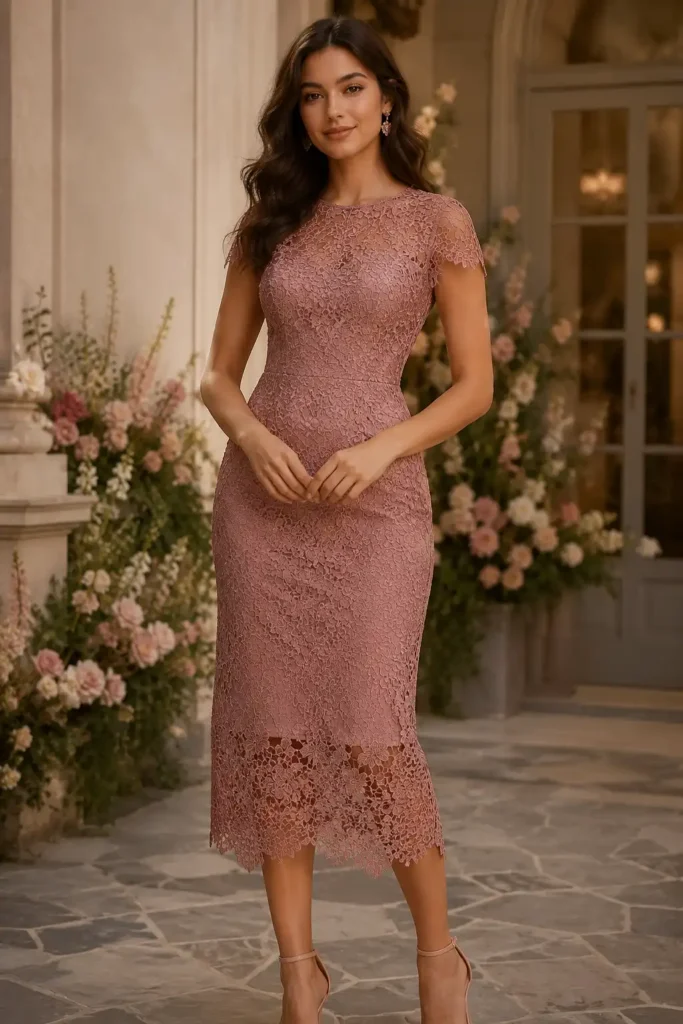
The following anonymized programs illustrate how style count, fabric grouping, sample priority, cost control, QC, packing, and delivery can be organized for established fashion ranges. Brand names, design files, prices, and unpublished product images remain protected.

US Occasionwear Range

Project profile: 24 dress styles, 62,400 pieces, 12 colors, and size architecture from XS to XL with selected extended-size development. The line combined satin, power mesh, lace, and stretch woven fabrics across mini, midi, maxi, corset, and bodycon silhouettes. Four sample waves were created: campaign priorities first, core commercial products second, high-risk structured styles third, and final range-completion styles fourth. The main risk came from fabric fragmentation. Several early concepts used visually similar but technically different satin and mesh qualities, creating color, MOQ, and bulk-consistency pressure. Jinfeng Apparel reorganized the program into three fabric platforms, reduced duplicated lining and zipper specifications, and separated high-risk lace placement and corsetry from the broader production route. Cost review retained premium fabric and support in hero styles while simplifying hidden construction in selected commercial styles after fit testing. Bulk production was divided by style group and approved PP status. QC focused on satin shade and seam appearance, mesh stretch direction, corset symmetry, zipper shape, lining exposure, measurement stability, labels, and carton breakdown. A staged delivery released campaign and priority occasion styles first, followed by the main sea shipment. The complete program moved from range review to first bulk release in approximately 16 weeks, subject to consolidated approvals and confirmed materials.

European Resort Program

Project profile: 18 styles, 42,600 pieces, 9 colors, five principal fabrics, and sizes aligned to the brand’s EU grading standard. The range included printed maxis, halter midis, lightweight minis, draped satin dresses, and coordinated crop-top and skirt sets. Three sample rounds were planned for most styles, with extra fit work allocated to low-back and wrap constructions.
The planning challenge involved print minimums, color stories, and delivery timing for a fixed summer launch. Jinfeng Apparel grouped the range around one printed base, one lightweight woven, one chiffon family, one satin quality, and one lining platform. Print scale and placement were approved through strike-offs and sample cutting. Similar hardware and labels were standardized where visible design was not affected. Petite length adjustments were developed for selected maxi products rather than shortening every style by one fixed amount.
Production followed fabric readiness and sales priority. Core printed and solid-color styles entered bulk first, while special-color satin products followed after shade approval. QC reviewed print placement, seam slippage, transparency, lining length, halter security, hem balance, size labels, barcodes, and mixed-size cartons. The 14-week planned manufacturing program used two delivery batches, allowing priority ecommerce styles to reach the warehouse before the full seasonal assortment.

North American Reorder Range

Project profile: 12 proven styles, 46,800 pieces across an initial production batch and a replenishment release. The range included bodycon midis, mesh minis, corset dresses, satin slips, and two matching sets. Historical patterns, approved measurements, BOM files, fabric references, color records, labels, packing methods, QC notes, and Golden samples were used as the starting point rather than rebuilding the program from images. The main requirement was to protect fit consistency while adding two new colors and extending selected styles beyond the original alpha-size range. New color lab dips were reviewed against shell, lining, mesh, and trim combinations. Extended sizes received targeted pattern adjustment around bust support, armhole, waist, hip, length, and lining instead of simple proportional grading. Repeat materials were checked for current availability and batch variation before the purchase order was released. Production records allowed the core range to move through approval with fewer repeated questions. In-line QC compared workmanship and measurements against the Golden samples, while packaging checks focused on new barcodes, updated size labels, and warehouse allocation. The first batch of 28,800 pieces supported the main release, followed by 18,000 pieces for replenishment. Retained records shortened setup and helped the repeat order remain close to the established brand fit and packing standard.

Frequently Asked Questions for Range Planning Teams

Yes. Jinfeng Apparel supports multi-style ranges by grouping fabrics, structures, sample priorities, and production routes. A clear line sheet, style count, quantity plan, color direction, and launch calendar help allocate pattern and sample capacity. Complex or campaign-critical styles may enter development earlier than commercially straightforward products.
Useful information includes style code, image or tech pack, product role, target quantity by style/color, fabric direction, colors, size range, target cost, sample priority, labels, packing requirements, and launch date. Partial files can be reviewed, but unresolved information will be listed before final costing or production release.
MOQ starts from 200 pieces per style/color and depends on material availability, color development, trims, construction, packing, and production schedule. Total range volume can improve efficiency, but custom-dyed fabric, print, lace, sequins, hardware, or packaging may have separate supplier minimums.
Yes, when fabric weight, drape, stretch, opacity, surface behavior, and construction are suitable for each silhouette. Shared platforms can improve coherence and purchasing efficiency. Every style still requires separate review because a fabric that works for a slip dress may not provide enough support for a corset or bodycon product.
Priorities can be set by campaign need, product risk, material lead time, commercial importance, and production dependency. Hero styles, photo samples, complex structures, and special fabrics often start earlier. Consolidated comments and fixed approval dates help the sample rooms protect the wider range calendar.
Yes. Quotations can be reviewed against entry, core, premium, and hero product roles. Cost drivers are separated across fabric, trims, construction, labor, finishing, QC, packing, testing, and quantity. Alternatives can be proposed where cost can be reduced without weakening fit, appearance, comfort, or durability.
The documented PP sample normally becomes the pre-production reference, supported by the final tech pack, measurements, BOM, sewing notes, labels, and packing files. A Golden sample may be retained for bulk inspection and repeat orders. First, fit, photo, and salesman samples should not be treated as bulk standards unless explicitly approved for that purpose.
Yes. NDA-based cooperation can protect tech packs, line sheets, sketches, patterns, samples, size charts, fabric and trim information, labels, barcodes, packaging artwork, quantities, prices, launch dates, and unpublished products. Materials are used only for the assigned development, production, QC, packing, and delivery work unless further use is authorized.
Yes. Jinfeng Apparel can coordinate client-appointed and third-party inspections, including access to relevant production and packing stages according to the project plan. Inspection level, AQL requirement, checklist, booking date, reinspection rule, and document needs should be confirmed before the order reaches final packing.
Yes. Patterns, measurements, BOM, fabric references, colors, trims, sewing instructions, packing details, QC records, and Golden samples can be retained for repeat production. Delivery may be split by style, color, market, warehouse, or air-and-sea plan when carton identification, packing lists, and booking instructions are clearly separated.

Send Your Dress Range for Manufacturing Review

Share the information already available, even when several styles are still under development. Kelly and the project team will review range structure, product risk, fabric route, sample priority, MOQ, costing inputs, size architecture, private-label requirements, production allocation, and delivery timing before recommending the next step.

Early review is especially useful when the range contains 10-30 styles, several fabric families, special colors, fit-sensitive products, or a fixed campaign and launch calendar.

  • Range files: line sheet, tech packs, reference images, original samples, sketches, or construction notes.
  • Commercial structure: quantity per style/color, target cost, product role, intended market, and launch date.
  • Material direction: fabric references, color standards, lining, trims, surface details, and performance needs.
  • Fit and size: base measurements, target sizing system, size range, grading preference, petite, tall, or extended-size requirements.
  • Brand delivery: main labels, care labels, hangtags, barcodes, polybags, carton marks, warehouse guide, inspection, and shipping instructions.
  • Confidentiality: an NDA can be signed before unpublished line sheets, tech packs, samples, labels, or launch information are shared.
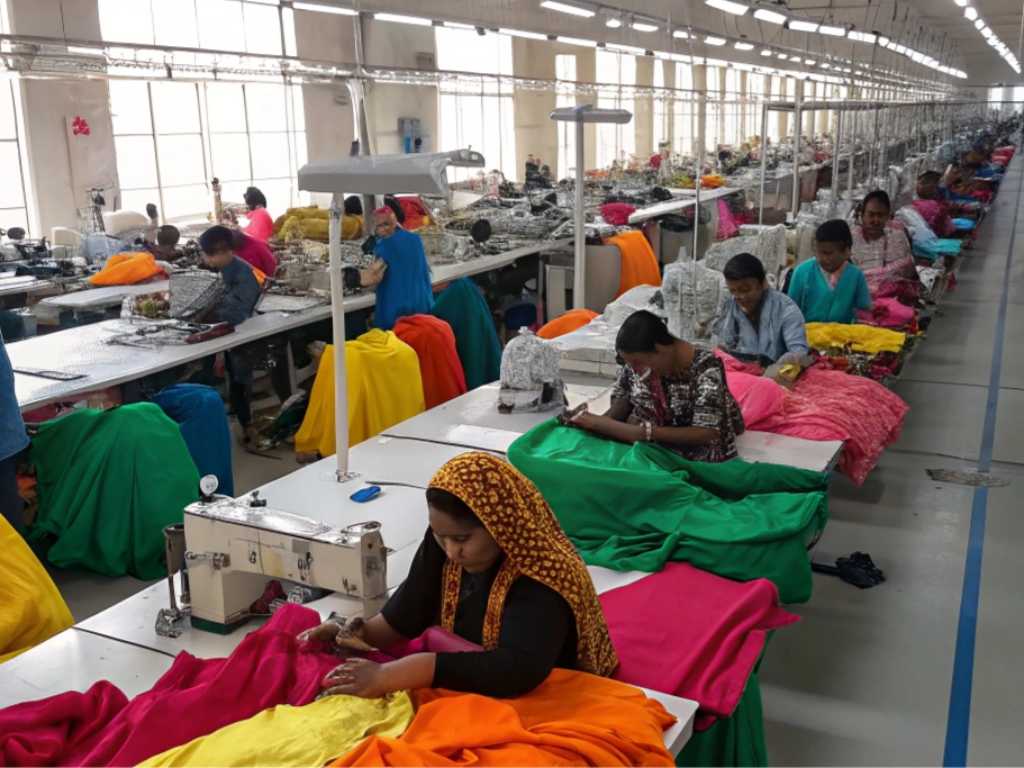
Female garment workers sewing colorful fabrics at large factory tables.

Tell Us About Your Dress Project

Share your product details, estimated quantity and development requirements. Our team will review your project and provide practical OEM/ODM production feedback.

Premium Women’s Apparel Production for Fashion Brands

From dress sample development to bulk production, JF Apparel supports fashion brands with confidential OEM/ODM manufacturing, reliable quality control and scalable production support.

START YOUR DRESS PROJECT

Ready to Develop Your Next Dress Collection?

Share your design concept, product requirements or sourcing plans with our team. We’ll review your project and provide practical feedback on development, materials, MOQ and production.

7-10 Days

Sample Development

200 PCS

Starting MOQ

Fast Response

Professional Follow-Up