
Dress Manufacturer for Fashion Production Managers
Structured dress development and bulk production for teams responsible for fit, timing, quality, cost and final delivery.
Jinfeng Apparel supports fashion production managers who need more than a sewing supplier. Projects are managed from technical review and fabric direction through pattern development, sample revision, PP approval, bulk production, quality control, private-label packing and export coordination.
- Programs commonly involve 10-30 dress styles developed under one seasonal calendar.
- Brand orders may reach 20,000-80,000 total pieces across approved styles, colors and sizes.
- 2 sample rooms, 7+ senior pattern makers and 20+ sample machinists support development work.
- 12+ merchandisers and 15+ QC inspectors help maintain schedule visibility and production control.
Production Resources Built Around Managed Dress Programs
Since 2008
6 Owned Factories
10+ Production Partners
2 Sample Rooms
12+ Merchandisers
15+ QC Inspectors
Production Risks That Demand Earlier Control
Sample Drift
Fabric Delay
Approval Gaps
Bulk Inconsistency
Late Visibility
Packing Errors
How Production Managers Can Qualify a Dress Manufacturer
Supplier qualification should test whether approved product information can survive every handoff from development to delivery. The matrix below focuses on evidence rather than promotional claims. It can also serve as the basis for an RFI, factory review or trial-order assessment.
| Qualification Area | Evidence to Request | Jinfeng Apparel Approach |
|---|---|---|
| Product specialization | Recent dress categories, fabric types and construction examples | Dress-focused development across party, occasion, bodycon, corset, satin, mesh, lace, sequin, resort and private-label collections |
| Development team | Sample-room structure, pattern roles and revision process | 2 sample rooms, 7+ senior pattern makers, 20+ sample machinists and documented revisions |
| Project ownership | Named contact, milestone tracking and escalation route | Kelly, merchandising coordination, project files, status updates and issue escalation by impact |
| PP control | Approval checklist, sealed sample and production instructions | Fit, fabric, color, trims, construction, labels, packing, cost and delivery reviewed before PP release |
| Capacity allocation | Factory plan by style, quantity and complexity | 6 owned factories plus 10+ long-term production partners matched by product and workload |
| Quality control | Inspection stages, measurement rules and defect handling | Material, cutting, inline, measurement, garment, packing and pre-shipment checks |
| Packing accuracy | Label, barcode, SKU, carton and document verification | Private-label packing linked to artwork, packing instructions, order breakdown and shipment files |
| Brand protection | NDA terms and handling of unpublished designs | NDA-based cooperation with controlled use of tech packs, samples, patterns, labels and order data |
Dress Categories Matched to the Right Production Unit

Party Dresses

Occasion Dresses

Satin Dresses

Mesh And Lace Dresses

Bodycon And Corset Dresses
Bodycon and corset shapes depend on bust-waist-hip balance, stretch recovery, cup position, boning placement, zipper behavior and wearer movement. A garment can match flat measurements yet fail on body. Fit review examines front, side and back views, pressure points, neckline security and the relationship between outer fabric, lining and internal support.

Resort Dresses

Jumpsuits And Sets

Jersey And Ponte Dresses
Project Review Before Pattern Work Begins
Project Inputs
Feasibility Review
Development Map
Critical Path From Technical Review to Final Delivery
Production timing becomes controllable when every milestone has an entry condition, a required approval and a visible output. The schedule below is adapted to multi-style dress programs. Exact dates are confirmed after style complexity, materials, quantities, packaging and shipment method are reviewed.
| Stage | Control Point | Required Output Before Moving Forward |
|---|---|---|
| Project review | Style list, tech pack, quantities, colors, sizes and delivery target | Risk notes, missing-information list and development route |
| Material direction | Fabric, lining, trims, color and supplier availability | Approved swatches, material references and lead-time confirmation |
| Pattern development | Silhouette, measurements, seam placement and internal structure | First pattern and sample construction plan |
| First sample | Design proportion, fit, fabric behavior and workmanship | Consolidated comments with clear revision ownership |
| Revised sample | Corrected fit, construction, material or styling details | Updated pattern, size chart, BOM and revision record |
| PP approval | Final fit, fabric, trims, sewing, labels, packing, cost and timing | Approved PP sample and Golden sample reference |
| Material booking | Bulk quantity, color breakdown, wastage and supplier batch | Material-ready date and shortage-risk review |
| Bulk production | Factory allocation, cutting, sewing and inline quality | Progress status, issue log and corrective-action closure |
| Final inspection | Measurements, workmanship, appearance, packing and quantity | Internal release or third-party inspection result |
| Shipment | Cartons, documents, freight mode and warehouse requirements | Packing list, commercial invoice, marks and shipment handover |
Sample Approval and Revision Without Lost Information
Sample control is not measured only by how quickly one garment is sewn. A stable process shows how fit comments, material changes and workmanship decisions become the standards used for quotation, PP approval and bulk production.
First Sample, Fit Review and Revised Sample
The first sample is used to test design interpretation, pattern balance, material behavior and construction feasibility. A fit issue is first classified before the pattern is changed. Bust, waist and hip proportions are reviewed together with shoulder position, neckline depth, armhole shape, strap length, hem balance, slit height and movement. For jumpsuits, torso and crotch length are added to the review.
Material concerns are handled separately from pattern concerns. A satin dress may fit correctly but show excessive seam puckering. A mesh style may need more lining coverage without changing the outer silhouette. A bodycon dress may need a different stretch recovery rather than a smaller pattern. Separating causes prevents unnecessary revisions and protects the original design direction.
Comments are consolidated into an updated revision record. Changes affecting bulk production are reflected in the pattern, size chart, BOM, fabric reference, trim approval, sewing instruction and QC checklist. When a major fabric, fit or construction change is required, a revised sample is made rather than relying on written assumptions.
PP Sample and Golden Sample Control
PP approval begins only after fit, measurements, fabric, color, trims, lining, construction, embellishment, labels, packing, cost, order quantity and delivery plan are sufficiently stable. The PP sample is not treated as another open design round. Its role is to confirm the final production standard and expose remaining differences before bulk cutting begins.
The approved PP sample is connected to the production files used by the factory. A Golden sample reference may be sealed for production, QC and repeat-order comparison. Critical details include zipper length and position, cup and boning placement, ruching direction, label location, seam allowance, thread color, lining method, hem finish, trim security and packing presentation.
Production managers can provide their own sample approval form, measurement tolerance, defect list or quality manual. Jinfeng’s team reviews the format and converts relevant requirements into the project checklist so approval language remains consistent across development, production and inspection.
Fit and Construction Standards for Commercial Dresses
A dress may look correct on a hanger and still fail during fitting, photography, wear testing or size grading. Jinfeng Apparel treats fit and construction as connected engineering decisions that must remain stable across materials, colors and size ranges.
Silhouette, Proportion and Size Grading
Fit review begins with the intended silhouette rather than isolated measurements. Bodycon dresses need controlled negative ease and recovery. Slip dresses require balanced drape without uncontrolled neckline or armhole opening. Corset styles need bust containment, waist shaping and internal support. A-line and maxi dresses need hem balance, sweep and movement. Jumpsuits add torso length and crotch depth to the fit equation.
Measurements are reviewed at points that influence appearance and comfort: bust, underbust, waist, high hip, full hip, shoulder, across back, armhole, strap length, neckline drop, center-front length, center-back length, slit height and total garment length. The base size is corrected before grading. A grading rule is then checked for silhouette continuity, because adding equal increments to every point can distort neckline, cup, strap or waist position in larger sizes.
Photo-ready fit can differ from daily-wear fit. Production managers should define whether the priority is editorial appearance, event wear, retail comfort, shapewear support or broad movement. Jinfeng uses the brief, reference sample and fitting feedback to align the pattern with the commercial use of the garment.
Internal Structure, Sewing and Wear Security
Construction decisions must support the outer design without becoming visible. Corset and strapless styles may use cups, boning, underwire, elastic, stay tape or grip tape depending on the intended level of support. Mesh and lace panels may require invisible reinforcement at high-stress seams. Low necklines and cut-outs need enough stability to prevent opening during movement.
Workmanship control covers seam type, seam allowance, stitch density, thread, zipper insertion, lining attachment, edge finish, hem method, ruching control, pleat direction and trim placement. Satin needs smooth handling and pressing. Chiffon and lightweight viscose require seam-slippage awareness. Sequin materials need protected seam areas and secure finishing where sequins are removed for stitching.
Wear security is checked through movement, fastening operation, symmetry and comfort. Straps should not slide or twist, cups should remain aligned, zippers should close without waves, boning should not expose sharp ends, and slits should maintain intended coverage.
Bulk inspection uses the approved construction rather than accepting variations that merely appear similar from a distance.
Fabric Controls Linked to Dress Performance
Fabric selection affects fit, sewing, cost, appearance, packing and delivery at the same time. Jinfeng Apparel reviews composition, weight, width, stretch, hand feel, drape, transparency, color, shrinkage, wrinkle behavior, supplier batch, MOQ and lead time before a fabric becomes part of the approved style standard.
Satin, Chiffon and Fluid Wovens

Satin is evaluated for face direction, shine level, snagging, seam puckering, pressure marking, shade variation and pressing response. Cutting direction must remain consistent because reversed panels may reflect light differently even when the color is technically the same. Lightweight satin may need lining or carefully selected seam construction, while heavier satin changes drape, cost and pattern behavior.
Chiffon, georgette, rayon and viscose require attention to transparency, seam slippage, shrinkage, distortion and hem balance. Bias-cut styles need additional control because panels can grow after hanging. Printed fluid fabrics add placement and color-registration concerns. Fabric testing and sample review determine whether the intended design can maintain a clean silhouette during bulk handling and final pressing.
Mesh, Lace and Transparent Structures

Mesh is checked for stretch direction, recovery, transparency, hole size, surface damage and color consistency with the lining. Power mesh may provide support, while soft mesh may provide only visual layering. Using the wrong construction can change both comfort and appearance. Pattern pieces are oriented according to the approved stretch direction rather than the most convenient cutting yield.
Lace adds motif, edge and placement decisions. Production teams need to know whether motifs must mirror, match at seams or follow a particular neckline. Damaged areas, color difference and uneven scallops should be identified before sewing. Lining coverage, seam reinforcement and trim finishing are confirmed so the garment remains visually light without becoming fragile.
Jersey, Rib and Ponte

Knitted fabrics are controlled through weight, stretch percentage, recovery, shrinkage, spirality and surface stability. Jersey dresses can lengthen or twist if the fabric is not relaxed and handled correctly. Rib structures may stretch differently across the width, changing body fit. Ponte provides more structure but still requires compatible seam and pressing methods.
The pattern is built around the approved fabric rather than a generic stretch assumption. A substitute material is compared for composition, weight, stretch, recovery, hand feel, drape, transparency, cost and lead time. A meaningful fabric change can require a revised sample because the original pattern may no longer create the same silhouette.
Sequins, Velvet and Surface-Sensitive Fabrics

Sequin fabrics require direction control, cutting protection, safe seam preparation and secure attachment near edges. Missing, damaged or reversed sequins are highly visible under event lighting. Hand beading or rhinestone details introduce attachment strength, placement accuracy and labor consistency into the QC plan.
Velvet has pile direction, pressure marking, shade and pressing risks. Panels cut in different directions may appear as different colors.
Organza and tulle can crease or tear during handling. Surface-sensitive garments often need tissue, protective wrapping, hanger support or individual packing methods selected before final costing.
Clear Ownership Across Every Production Function
Kelly and Inquiry Review
Merchandising Coordination
Pattern and Sample Team
Production Management
Quality Control
Packing and Logistics
Multi-Style Capacity Without Losing Product Control
Production managers rarely need only one dress. Seasonal programs often include different silhouettes, fabrics, trims, price levels and launch priorities. Jinfeng Apparel uses factory matching and style grouping to control variation across 10-30 style programs and larger total order quantities.
Factory Allocation by Product Risk
Factory assignment begins with garment type and risk. Stretch bodycon dresses require teams familiar with knit recovery and measurement control. Satin, chiffon and viscose styles require careful cutting and pressing. Corset, lace, mesh and sequin dresses need stronger pattern, trim and workmanship control. Stable repeat styles may be assigned differently from first-season developments.
The six owned factories form the controlled production base, while more than ten long-term production partners provide specialized or seasonal support. Allocation is confirmed only after sampling, construction, material and production requirements are understood. The merchandising and QC teams maintain the project standards across all approved production units.
Production managers receive a style-level view rather than only a total monthly capacity statement. The useful questions are which factory handles each style, when materials arrive, when cutting begins, which QC risks apply and whether the line can protect the approved delivery window.
Capacity Planning for 20,000-80,000 Pieces
A brand order of 20,000-80,000 pieces may include several fabrics, colors and size ratios. Capacity planning separates the total quantity into workable groups. Shared materials may be consolidated for purchasing, while complex styles receive longer preparation and inspection windows. Photo samples, launch priorities and wholesale delivery dates can influence sequencing.
Risk is lower when material booking, PP approval, factory allocation and packing details are completed before the sewing window becomes critical. Late color additions, major fit changes, custom packaging or unapproved substitutes can affect several styles at once. Jinfeng’s team identifies connected dependencies so a delay in one component does not automatically remain invisible until final packing.
Phased production and multi-batch delivery can be evaluated when launch needs differ across styles. Such decisions depend on order value, freight cost, material availability, inspection readiness and warehouse requirements. No split plan is treated as automatically beneficial; the commercial and operational impact is reviewed before approval.
Production Visibility Designed for Faster Decisions
Material Status
Sample Status
PP Approval Status
Production Status
Quality Issue Status
Shipment Readiness
Converting the Approved PP Sample Into Bulk Standards
The most important production handoff occurs after approval. A strong PP sample has limited value if the factory line receives incomplete instructions or if different teams interpret the sample independently.
Production Files Built From Approval
Jinfeng Apparel connects the approved sample to the final pattern, graded nest, size chart, BOM, fabric reference, trim approvals, sewing instruction, QC checklist and packing instruction. Each file has a clear production purpose. The pattern controls shape; the size chart controls measurements; the BOM controls materials; the sewing instruction controls construction; the QC checklist controls acceptance.
Construction details are written where visual comparison alone is insufficient. Examples include seam allowance, stitch type, stitch density, zipper position, cup and boning placement, lining attachment, ruching direction, pleat depth, trim spacing, label position and hem method. Material directions, such as satin face or velvet pile, are marked before cutting.
A production meeting or line briefing can be used for complicated styles. The factory team reviews the approved garment, critical operations and known risks before quantity builds. Production managers may submit their own technical handover forms or quality manuals for integration.
Inline Control and Feedback Closure
Cutting checks confirm fabric face, direction, defects, shade, size bundles, print or motif placement and cut quantity. Inline sewing inspection begins early enough to stop repeated errors.
Checkpoints are selected by style: neckline and straps for slip dresses, cups and boning for corsets, stretch seams for bodycon styles, lace matching for occasionwear and trim security for embellished garments.
When an issue is found, the team identifies the cause, informs the responsible production group, separates affected work, corrects the process, reinspects the result and records closure. Corrections are not left as verbal advice. A systemic issue may trigger a broader review of already completed units and remaining work.
Bulk consistency is judged against approved standards, not only against acceptable general workmanship. The objective is to reproduce the intended fit, material appearance, construction, labels and packing across colors, sizes and production batches.
Quality Control From Fabric Receipt to Shipment
Quality control is strongest when defects are prevented or contained before the full quantity is completed. Jinfeng Apparel links inspection stages to the specific risks of each dress category and to the brand’s approved standard.
Material and Cutting Control
Fabric inspection reviews color, shade, surface defects, holes, stains, stretch direction, width, hand feel and visible variation against the approved reference. Special materials receive additional attention: satin face direction, velvet pile, lace damage, mesh holes, sequin direction and printed placement. Linings and trims are checked for color coordination and functional compatibility.
Cutting inspection confirms front and back orientation, grain or stretch direction, size bundles, cut quantity, pair accuracy and motif alignment. Discovering reversed panels or damaged lace after assembly creates expensive rework. Early separation of defects protects sewing efficiency and reduces the risk of mixing unacceptable parts into good production.
Inline Sewing and Measurement Control
Inline inspection checks operations while the line is producing, allowing correction before a defect repeats across hundreds of garments. Style-specific points may include neckline shape, strap length, zipper wave, waist position, ruching distribution, slit height, lining exposure, cup symmetry, boning ends, lace placement and seam appearance.
Measurements are checked against the approved size chart and brand tolerance. Priority points are selected according to fit risk. A fitted mini dress may require close control of bust, waist, hip and length, while a maxi dress may place more emphasis on shoulder-to-hem balance, sweep and side-seam alignment. Grading consistency is reviewed across the size range rather than checking only the base size.
Final Garment and Packing Inspection
Final inspection covers measurements, workmanship, appearance, symmetry, pressing, trims, closures, labels and cleanliness. Garments are checked under conditions suitable for the material; surface-sensitive satin, velvet, sequins and rhinestones require close visual review. Functional checks may include zipper operation, fastening security, strap adjustment and movement at stress points.
Packing inspection confirms woven labels, care labels, size labels, hangtags, barcodes, SKU information, polybags, stickers, folding, ratio packs, carton quantities and carton marks. Pre-shipment review connects the physical goods to the order breakdown and shipping documents. Jinfeng can follow a brand’s internal inspection standard, specified AQL requirement or third-party inspection arrangement when agreed for the project.

Cost Control Based on Product Decisions
Material and Yield
Construction and Labor
Order Structure and Timing
Retail-Ready Packing and Shipment Coordination

Brand Labels
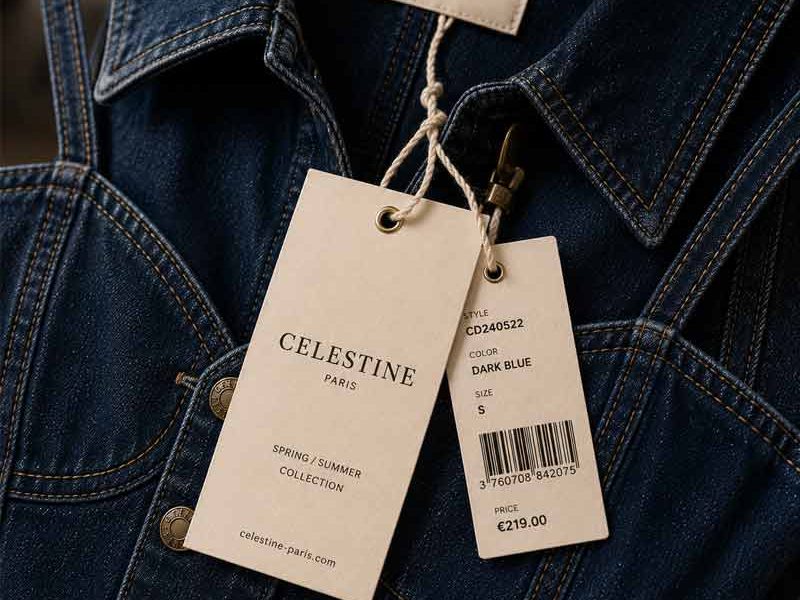
Hangtags and Barcodes
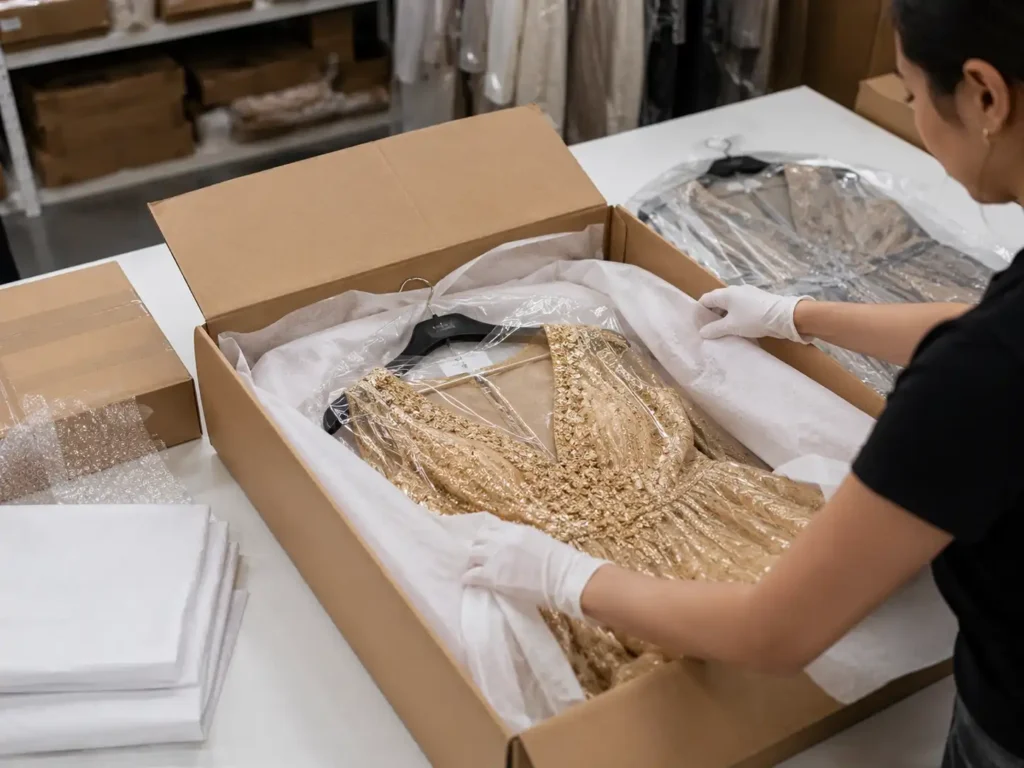
Individual Packing
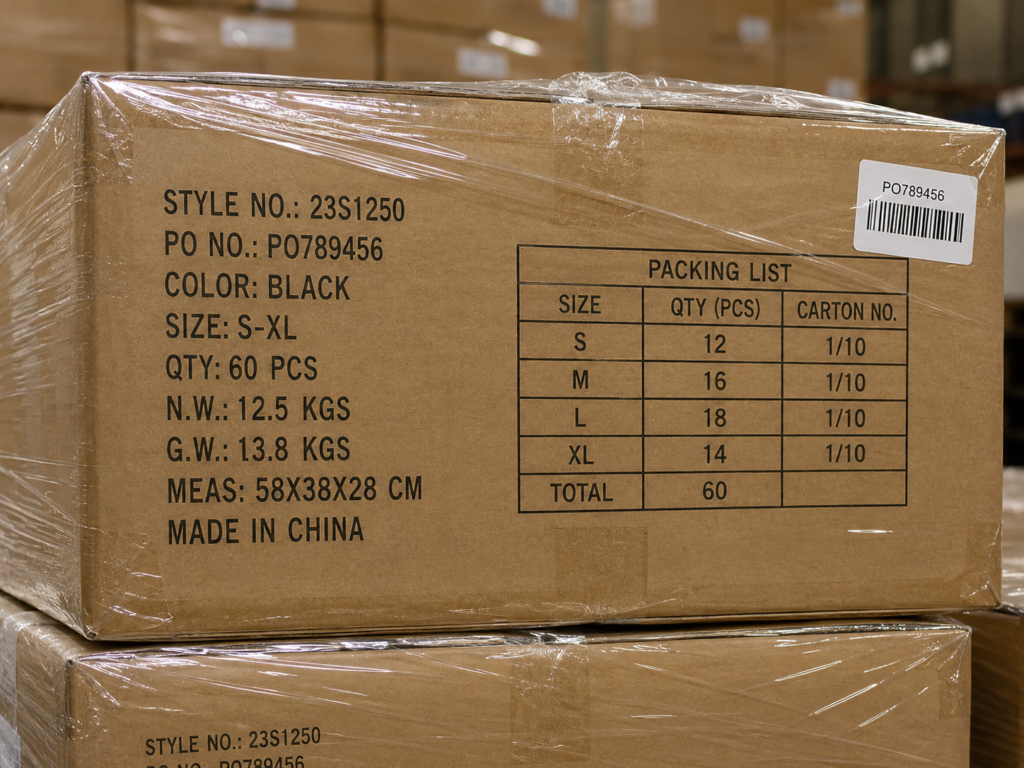
Ratio and Carton Packing

Carton Marks

Freight Coordination
A Managed 24-Style Occasionwear Production Program
The following anonymous example reflects the scale and coordination requirements commonly seen in an established fashion-brand order. Brand identity, artwork, prices and unpublished design information remain protected under NDA.

Program Scope and Development Risk
A United States occasionwear brand planned a 24-style launch covering satin slip dresses, mesh bodycon dresses, lace midi dresses, corset minis, sequin party dresses and two coordinating sets. The approved order reached 48,600 pieces across multiple colors and a graded size range. Several styles shared linings, zippers and labels, while surface fabrics came from different suppliers.
The main risks were connected. Satin shade and face direction affected four styles. Mesh stretch and lining coverage affected five fitted styles. Corset cups and boning required consistent placement across sizes. Sequin damage and packing pressure affected the most visually important party styles. A late decision on hangtag and barcode data could also delay final packing across the entire order.
Jinfeng organized the program into material and construction groups instead of treating all 24 styles as one undifferentiated order. Styles with stable stock materials entered first-sample development earlier, while custom colors and special lace remained behind material approvals. Shared components were tracked centrally to reduce inconsistent versions.

Approval, Production and Quality Controls
Pattern and sample teams created first and revised samples according to the style risk. Fit comments were consolidated into updated patterns, size charts and revision logs. Corset and bodycon styles received closer review of bust, waist, hip, cup position, boning and stretch recovery. Satin styles received cutting and pressing instructions, while mesh and lace styles received lining and motif guidance.
After PP approval, each factory received the relevant Golden sample, production files and QC checklist. The order was allocated by product capability and sewing difficulty. Cutting checks focused on satin direction, lace damage, mesh holes and sequin orientation. Inline inspection reviewed necklines, straps, zippers, ruching, waist position, lining coverage and trim attachment. Measurement priorities changed by silhouette instead of using one generic checklist for every style.
Production updates identified material readiness, cutting, sewing, inline findings, correction status, packing readiness and expected release by style group. Packing data was not applied until hangtags, barcodes, size stickers and carton marks were matched to the approved SKU file.

Delivery Outcome and Repeat-Order Readiness
The program moved through multi-batch production so completed style groups could enter final inspection and packing without waiting for every highly complex style. Shipment planning considered warehouse intake, launch priority and freight cost. Final release depended on garment inspection, measurement review, packing checks and document consistency rather than sewing completion alone.
After delivery, Jinfeng archived approved patterns, grading, measurement records, fabric references, trim details, sewing instructions, QC findings, labels, packing method and carton information.
Repeat-order planning could therefore begin from the confirmed technical history while still rechecking fabric batch, color, availability and any requested style changes.
The main result was not simply producing 48,600 garments. The production manager had a style-level control structure for 24 different products, connected approvals and material dependencies, reducing the risk of late surprises during packing and shipment.
Repeat Orders Built From Controlled Product Records
Technical Records
Material and Trim Records
Quality and Packing Records
Compliance, Inspection and Brand Protection Support
Audit and Document Review
Material and Product Testing
NDA and Design Protection
Frequently Asked Questions for Production Managers
Share Your Dress Production Plan With Kelly
A useful quotation and production assessment begins with enough information to understand the garment, program scale and delivery responsibilities. Send Kelly your style list, tech packs, reference images or original-sample notes together with the expected quantities and launch calendar. Jinfeng Apparel will organize the materials for technical, fabric, sampling, factory, quality and packing review before proposing the next step.
Please include where available:
- Style list and reference images
- Tech packs, measurements or original samples
- Quantity by style, color and size
- Preferred fabrics, linings and trims
- Target market and required size range
- Woven labels, care labels and hangtag needs
- Barcode, SKU, packing and warehouse instructions
- Quality manual, AQL or inspection requirement
- Target PP approval and delivery window
- Preferred shipment terms or nominated forwarder


