
Dress Manufacturer for Fashion Logistics Teams
Custom dress manufacturing aligned with cargo-ready dates, packing standards, warehouse data, export files and forwarder handover.
Jinfeng Apparel coordinates premium dress production from approved sample and production planning through quality control, private-label packing, carton reconciliation and shipment handover. Logistics teams receive usable order data instead of vague completion updates, while fabric-specific packing protects satin, mesh, lace, sequin, corset and layered dresses before goods enter the freight network.
- 6 owned women’s fashion factories supported by more than 10 long-term production partners in the Guangdong apparel supply region.
- 100,000+ pieces of monthly capacity for multi-style, multi-color, multi-size and multi-batch womenswear programs.
- Current brand programs commonly involve 10-30 styles and total order volumes of 20,000-80,000 pieces.
- 15+ QC inspectors support material, sewing, measurement, finished garment, packing and shipment-release checks.
- MOQ starts from 200 pieces per style and color; special fabrics, trims, printing and packaging may carry separate supplier requirements.
Production Capacity Built for Reliable Dress Delivery
Since 2008
Six Owned Factories
Ten-Plus Partners
100,000+ Monthly Capacity
15+ QC Inspectors
MOQ by Style Color
Built for Fashion Logistics and Supply Chain Teams
Logistics Managers
Supply Chain Managers
Import Coordinators
Operations Teams
Warehouse and 3PL

Delivery Risks a Dress Manufacturer Must Control
Missed Cargo Dates
- Launch-critical styles may be prioritized first.
- Revised timing is tied to a verified production cause.
- Transport changes are considered only after quantities are confirmed.
Incorrect Carton Data
- Actual packed quantity must match the packing list.
- Carton sequence must remain traceable.
- Repacked cartons require record updates.
Barcode and SKU Errors
- Artwork approval before bulk printing.
- SKU matrix linked to style and color.
- Scanning checks where required.
Late Shipping Documents
- Document owner and deadline confirmed.
- Version control for revised files.
- Forwarder comments closed before pickup.
Packing Damage
- Protection layer matched to fabric.
- Fold positions agreed for long garments.
- Carton pressure controlled by pieces per carton.
Weak Risk Communication
- Affected SKU identified.
- Corrective action assigned.
- Next update point defined.
Dress Categories With Different Packing Requirements

Mini and Midi Dresses

Maxi Dresses

Party Occasion Dresses

Bodycon Dresses

Corset Dresses

Satin Dresses
Satin reflects pressure and abrasion more visibly than many matte fabrics. Fabric face direction, luster, dye-lot color, snagging, zipper waves and pressing marks are monitored during production. Packing uses clean surfaces, tissue where needed, smooth folding and suitable carton loading. Dark and light colors are separated when transfer risk exists. Garments are allowed to cool after pressing before bagging so trapped heat does not set unwanted creases.

Mesh Lace Dresses

Sequin Dresses
From Approved Sample to Cargo-Ready Shipment
PP Sample Approval
Material Confirmation
Production Scheduling
Cutting and Sewing
In-Line Inspection
Final Garment Review
Private-Label Packing
Document Carton Check
Forwarder Handover
Plan Production Backward From Your Launch Date
A realistic delivery plan begins with the required warehouse date and works backward through freight, packing, inspection, production and approval. Production cannot be scheduled responsibly from a launch date alone without route, destination and product details.
Start With the Required Delivery Date
The first timing reference should be the date goods must be available at the warehouse, 3PL or retail distribution point.
A campaign shoot, site launch or store drop may occur later, but the inventory must arrive early enough for receiving, counting, quality spot-checks, system intake and allocation. The logistics brief should include destination country, warehouse address, delivery window, transport preference, appointed forwarder, booking cut-off and whether any styles require earlier release.
A 10-30 style collection rarely needs every style on the same day. Hero styles, campaign products, core colors and essential sizes can receive first priority. Lower-priority fashion colors or replenishment quantities can follow in a later batch. Separating priorities early creates more options than asking for an emergency split after all cartons are packed.
Build Real Production Buffers
Backward planning reserves time for PP approval, fabric and trim arrival, cutting, sewing, finishing, in-line correction, final inspection, repair, pressing, packing, document closure and pickup. A representative program may allocate four to six weeks for bulk production and finishing after PP approval and material readiness, followed by a dedicated release window for inspection, correction, carton reconciliation and documents. Complex sequin, corset, lace or multi-layer styles may need more time than simple knit or woven dresses.
Sample timing is also planned by style group. First samples, fit samples, revised samples, photo samples and PP samples serve different purposes. Multi-style programs are commonly reviewed in waves so the most important products advance first. A five-week sample and approval sequence can be workable for a prepared collection, while major pattern, fabric or structural changes may extend the process. Formal timing is confirmed only after files and materials are reviewed.
Escalate Risks Before Booking Is Affected
A useful exception notice states the cause, affected style, affected quantity, corrective action and likely cargo impact. Material delays, failed shade approval, repeated sewing defects, late label artwork, packaging changes and failed inspection do not carry the same recovery path. Some problems can be isolated to one SKU; others affect an entire fabric group.
When timing pressure remains after corrective action, the next decision may involve style prioritization, partial release, air and sea separation, destination reallocation or a revised booking. Freight cost should not be used to hide unresolved quality or inaccurate quantity. Only inspected and reconciled goods should enter the shipment plan.

Packing Methods That Protect Dress Construction
Packing is specified as part of product engineering, not treated as a generic final step. Surface sensitivity, fold memory, structure, embellishment, garment length, transit mode and warehouse presentation all affect the selected method. The matrix below provides a working framework; final instructions follow the approved style and logistics brief.
| Dress Type | Key Packing Control | Recommended Setup | Primary Risk Prevented | Planning Note |
|---|---|---|---|---|
| Satin / Slip | Limit friction and hard pressure | Smooth fold, clean tissue where required, cooled after pressing, moderate carton load | Snags, shine marks, hard creases, color transfer | Confirm fold position before PP approval when retail presentation is critical. |
| Sequin / Embellished | Separate decorated surfaces | Protective inner layer, controlled fold, reduced pieces per carton, secure loose accessories | Abrasion, missing sequins, scratching, excessive carton weight | Check sequin direction and underarm comfort before packing. |
| Corset / Structured | Protect cups, boning and molded areas | Shaped tissue or internal support, limited compression, closure protection | Collapsed cups, bent boning, zipper distortion | Carton depth and stack pressure matter as much as polybag size. |
| Mesh / Lace | Keep away from sharp edges | Smooth inner bag, hangtag pins isolated, tissue between snag-sensitive areas | Snags, tears, pulled lace, visible contamination | Light linings and skin-tone layers need clean handling. |
| Maxi / Layered | Control long fold lines and skirt volume | Agreed fold points, tissue between layers, wider bag or hanger packing where approved | Permanent creases, crushed ruffles, uneven presentation | Transit mode and warehouse handling influence fold choice. |
| Bodycon / Knit | Avoid twisting and over-compression | Fold along balanced seams, size-color separation, breathable recovery time before final check | Distortion, temporary pressure marks, mixed sizes | Stretch and recovery should be checked after fabric relaxation. |
| Pleated / Ruched | Preserve engineered folds and gathering | Support shaped areas, avoid flattening decorative volume, align fold direction | Lost pleat definition, crushed ruching, uneven silhouette | Packing sample approval is valuable for highly visible styling. |
| Light Colors | Prevent transfer and contamination | Clean workstation, color separation, suitable inner protection, sealed individual bag | Dye transfer, dust, handling marks | Dark trims, tissue print and carton ink should also be considered. |
Private Label, SKU and Barcode Accuracy
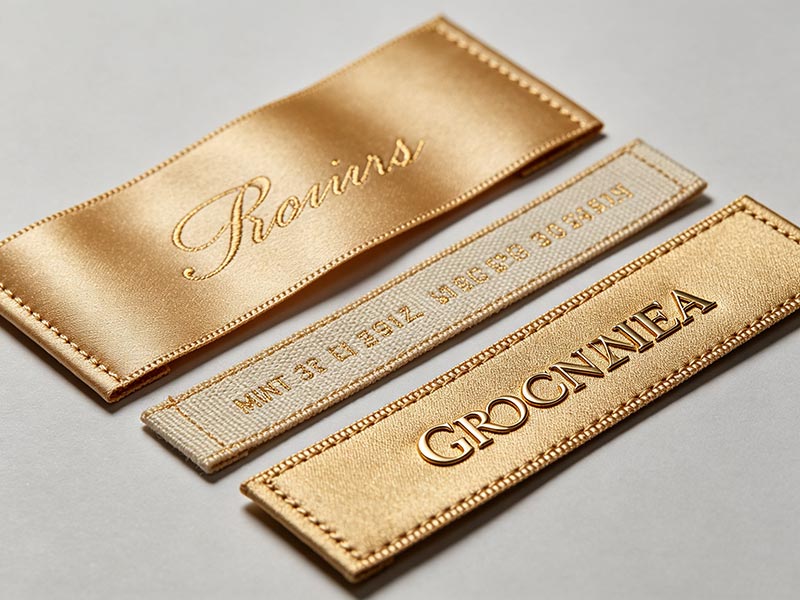
Main Labels

Size Labels

Care Labels
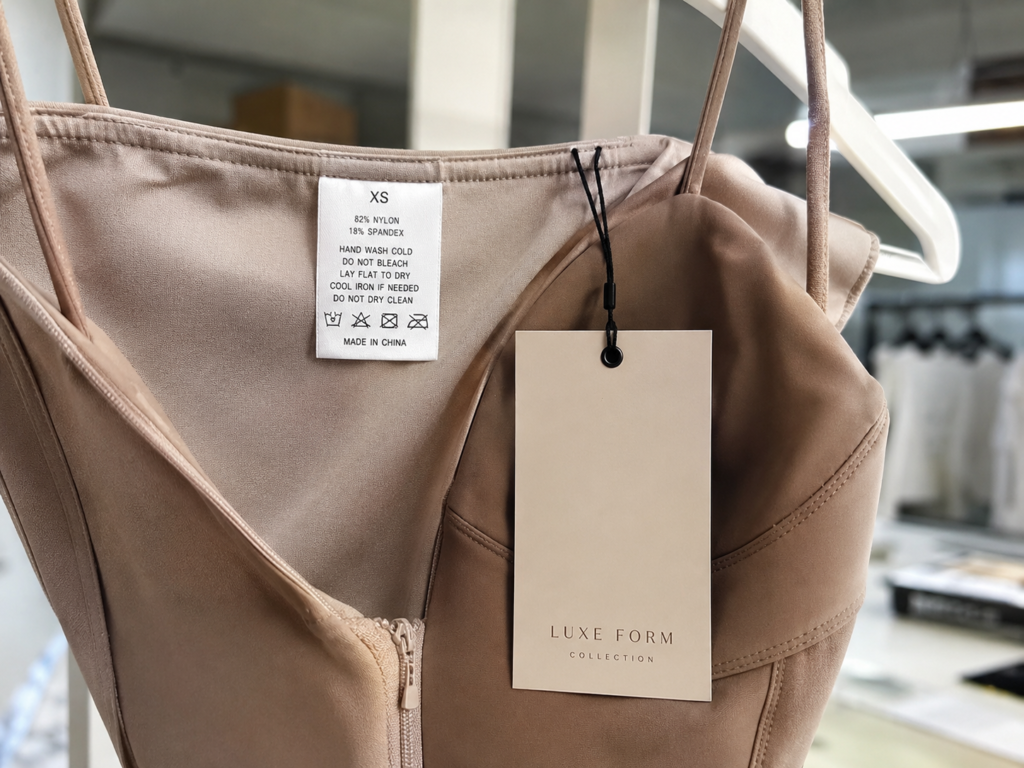
Hangtags
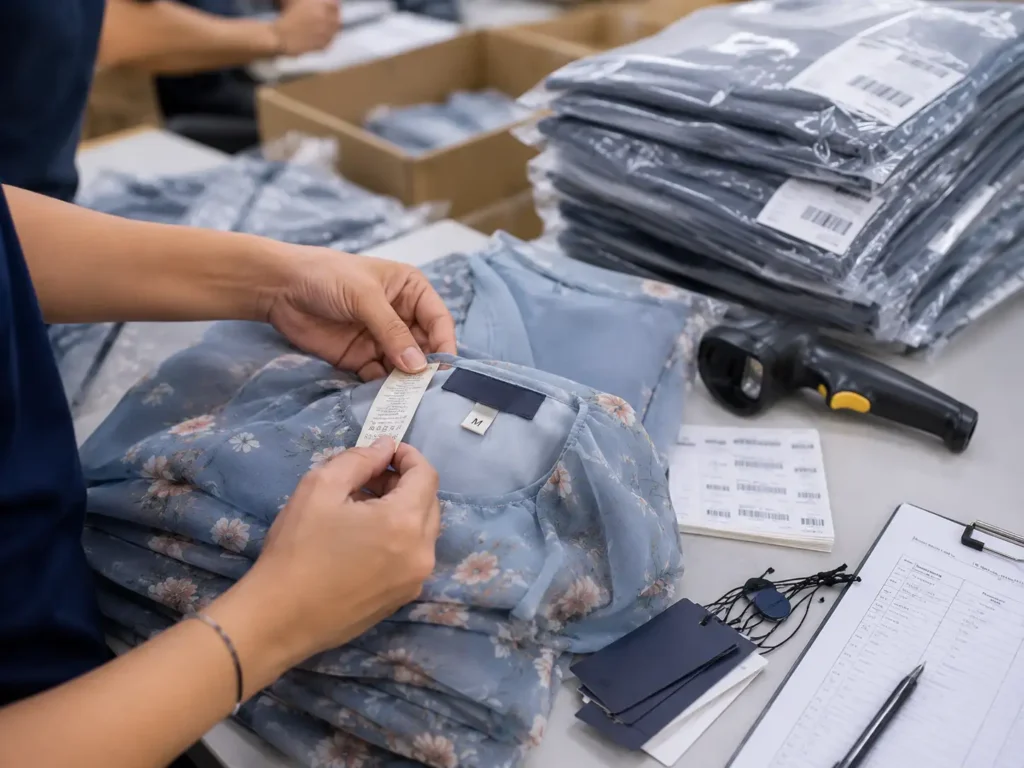
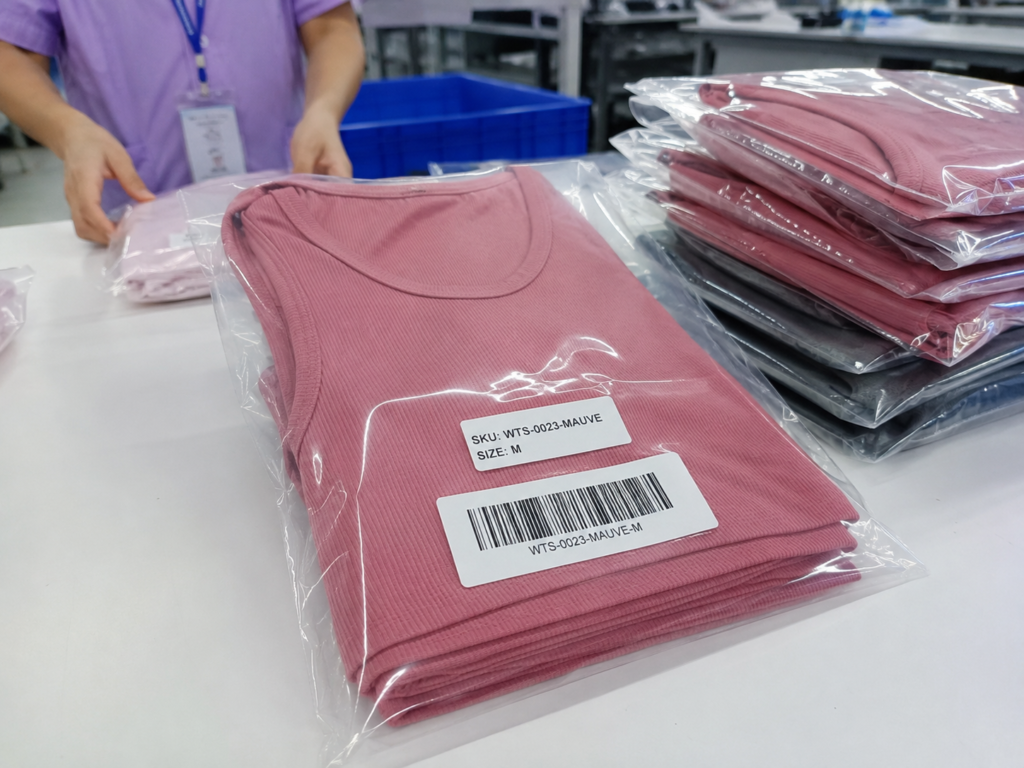
Barcode Stickers
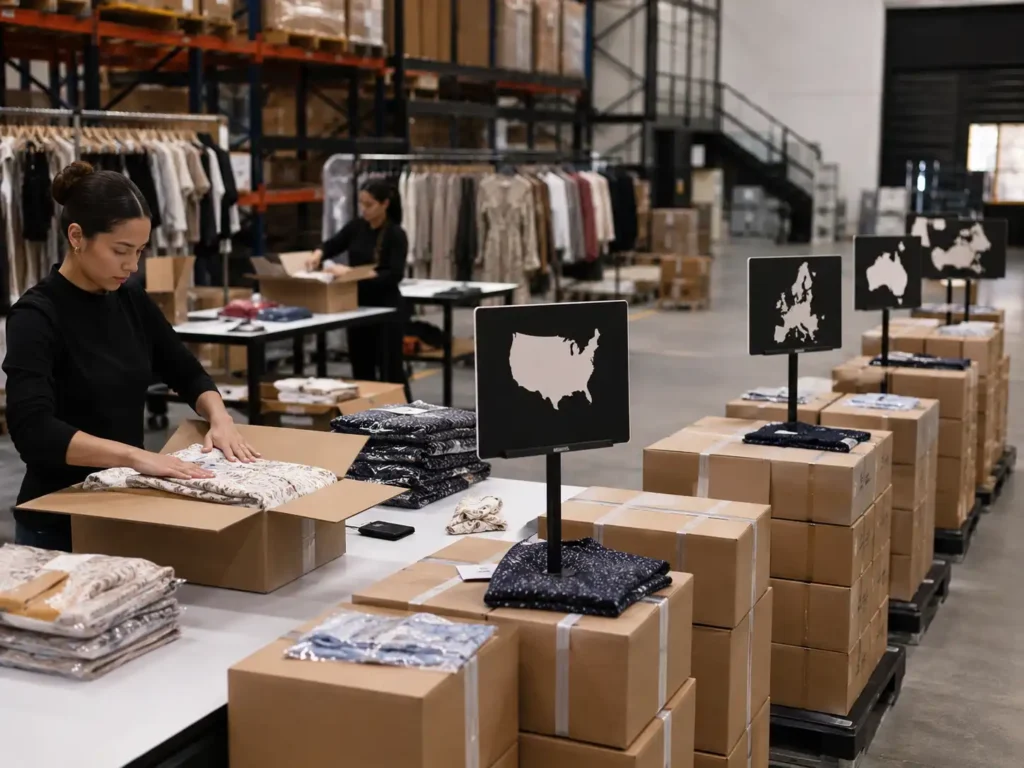
Warehouse Labels
Carton Data Your Logistics Team Can Use
Freight planning needs more than a total piece count. Carton information must remain traceable to style, color, size and destination, then reconcile with physical goods, the packing list and the commercial invoice.
SKU and Carton Mapping
Each carton is assigned a sequence and an assortment record. The record identifies style, color, size range, quantity per size, pieces per carton, destination and PO or shipment reference. Solid-size, ratio-pack and mixed-size cartons can all be managed, but the selected method must match the warehouse receiving rule. Mixed styles are avoided unless expressly approved because they complicate scanning, counting and allocation.
When one order ships to several warehouses, numbering should remain unique within each destination. Air and sea batches also require separate carton series. A carton moved from one batch to another must be relabeled and reflected in the revised packing list rather than being changed only in a chat message.
Measurement and Weight Records
Final cargo data includes total cartons, outer carton dimensions, gross weight, net weight and total volume. Preliminary figures can support an early freight estimate, but final booking data should use packed-carton measurements. Bulky ruffles, structured bodices, hangers, retail boxes and protective tissue can materially change volume even when garment quantity remains unchanged.
Illustrative carton record: Style D-2406, black, sizes XS-XL, 32 pieces per carton, 56 x 38 x 32 cm, 14.8 kg gross, 13.6 kg net, 62 cartons and 1,984 pieces. A record at this level allows the forwarder to calculate volume, compare air and sea options and prepare loading plans. Figures shown are examples, not a fixed standard for all dresses.
Reconciliation Before Release
Carton records are reconciled against packed quantity, finished-goods release, packing list totals and invoice quantity. Rework, replacement, shortage, overage or repacking must be reflected before final documents are issued. A closed reconciliation also confirms that carton marks, warehouse labels and destination allocations match the final shipment plan.
Shipment photos can document closed cartons, sequence labels, carton marks, pallet arrangement where applicable and loading condition. Sensitive order identifiers are protected in any externally used images. Internal records retain the complete data set for claim review, repeat orders and future packing comparisons.
Export Documents Prepared for Smoother Handover
Commercial Invoice
Packing List
Carton Marks
Cargo Details
Transport Documents
Product HS Support
We Coordinate With Your Forwarder and 3PL
Established brands often maintain fixed freight, customs and warehouse partners. Jinfeng Apparel can enter that operating structure without forcing a separate logistics channel, provided instructions and contacts are supplied before the relevant cut-offs.
Customer-Appointed Forwarder
An appointed forwarder can receive cargo details, factory pickup address, contact information, estimated and final carton data, commercial invoice, packing list, carton marks and shipment photos. Jinfeng Apparel coordinates availability, pickup access and document comments from the manufacturing side. Booking instructions should identify the forwarder contact, booking number, route, cut-off, required document format and whether cargo moves as loose cartons, pallets or a factory-loaded container.
When several suppliers consolidate freight, carton numbering and destination references must remain clear. Jinfeng Apparel can follow the forwarder’s consolidation instructions and delivery window, while final consolidation, loading sequence and transport responsibility remain with the logistics provider.
Warehouse and 3PL Requirements
Warehouse requirements can cover barcode format, carton label position, PO reference, routing code, carton sequence, maximum carton weight, carton strength, pallet specification, polybag warnings, garment presentation and delivery appointment. These rules need review before packing materials are ordered. A last-minute label or carton change may affect cost, available materials and cargo volume.
For direct-to-3PL programs, the shipment record can separate styles by destination, delivery wave, launch priority or replenishment group. Each batch receives an independent quantity and packing list. Jinfeng Apparel can also prepare packing photos or label proofs for approval when the warehouse manual requires evidence before dispatch.
Pickup and Cut-Off Coordination
Pickup planning links quality release, packing completion, final carton data and document deadlines. A booking date should not be treated as a factory completion date. Inspection, correction and reconciliation must finish first. The logistics team should provide cut-off time, pickup window, driver or truck requirements, loading method, warehouse reference and document submission deadline.
If one style is delayed, the affected quantity is isolated before a partial pickup is agreed. Revised carton lists and documents are prepared for each released batch. The goal is a controlled handover, not a rushed truck departure with unresolved quantity or quality.

Choose Shipping Modes Around Commercial Priorities
Transport method should reflect launch timing, order value, product volume, replenishment urgency and destination. The ranges below are planning references only; route, season, carrier capacity, customs and local delivery can change actual transit.
| Shipping Mode | Best Fit | Indicative Transit | Required Preparation | Commercial Use |
|---|---|---|---|---|
| Express Courier | Samples, documents, very small urgent releases | Commonly 3-7 business days | Accurate address, contact, invoice, parcel dimensions and sample description | Fit samples, photo samples, approval sets and urgent replacements |
| Air Freight | Priority launch quantities and higher-value fashion goods | Commonly 5-12 days airport-to-airport | Final cartons, weights, dimensions, documents, booking and destination clearance plan | Hero styles, campaign stock, priority colors and essential sizes |
| Sea Freight | Regular bulk orders with sufficient planning time | Commonly 20-45 days port-to-port | Booking lead time, carton data, invoice, packing list, marks and loading instructions | Main collection volume, replenishment and cost-controlled bulk delivery |
| Air + Sea Split | Large orders with a near launch date | Air batch first; sea batch follows route schedule | Separate SKU allocation, cartons, numbering, documents and warehouse plan | Launch stock by air, remaining volume by sea |
| Appointed Forwarder | Brands with contracted freight and consolidation programs | Depends on agreed route and service | Forwarder contact, booking instruction, cut-off, warehouse rules and document format | Multi-supplier consolidation, contracted rates and standardized receiving |
Multi-Batch Delivery for Launches and Replenishment
Launch Priority
Market Region
Warehouse Address
Style Group
Color and Size
Replenishment Batch
Production Visibility Before Shipment Becomes Urgent
Useful production reporting allows logistics teams to act before an exception reaches the booking window. Jinfeng Apparel organizes updates around physical milestones, approved quantities and identified risks rather than general reassurance.
Milestone Updates
A multi-style order can be tracked across fabric arrival, trim arrival, PP approval, cutting, sewing, in-line QC, finishing, final inspection, packing and cargo readiness. Weekly progress is suitable for longer programs, while urgent exceptions are escalated once impact is verified. Reports can show status by style, color, quantity and factory allocation so a delay in one group does not obscure progress elsewhere.
Sample-stage visibility can include first sample, fit sample, revised sample, photo sample and PP sample status. Key styles are prioritized by launch date, hero SKU importance, fabric readiness and construction complexity. Revision comments are moved into updated patterns, size charts, BOMs, sewing instructions, label files and packing instructions before approval.
Actionable Production Status
A useful status line states ordered quantity, cut quantity, sewn quantity, finished quantity, inspected quantity, packed quantity and released quantity. For example: Style D-2814, ordered 3,600 pieces; 3,600 cut; 3,120 sewn; 2,240 finished; 1,600 inspected; packing not started; expected final inspection in four days. Numbers at that level help operations teams compare completed stock with a planned air or sea allocation.
Status records also identify open decisions. Pending label artwork, unapproved lining, revised size comments or missing warehouse instructions can block production or packing even when garment sewing is moving. The report therefore lists the action owner and required approval instead of treating every delay as a factory production problem.
Early Exception Escalation
An exception notice should answer five questions: What happened? Which styles and quantities are affected? What corrective action is underway? What date is at risk? What decision is required from the brand or logistics team? Dye-lot rejection, trim shortage, pattern revision, failed final inspection and late warehouse labels require different responses.
Possible recovery measures include isolating one style, resequencing production, adding a revised sample, repairing a controlled quantity, approving an alternative trim, splitting a shipment or changing transport. Recovery is accepted only when product quality, order data and document control remain intact.

Quality Control Before the Logistics Handover
Once goods enter freight, repair becomes slow and expensive. Quality control therefore closes material, construction, measurement, appearance, label and packing risks before cartons are released to the logistics network.
Material and Cutting Control
Incoming review covers fabric shade, hand feel, weight, width, surface defects, stretch, recovery, transparency, lining match, shrinkage risk and dye-lot separation according to the product. Trims are checked for color, function, size and approval status. Cutting control then verifies fabric direction, nap, print placement, lace matching, sequin direction, marker accuracy and size identification.
Fabric-specific control matters because the same visual defect carries different consequences. Satin direction can create an apparent shade change; mesh stretch direction affects fit; lace placement changes symmetry; velvet nap changes color appearance; sequin direction affects comfort and surface reflection; jersey relaxation affects measurements.
Sewing and Workmanship Control
In-line inspection reviews seam construction, stitch quality, zipper installation, lining attachment, cups, boning, straps, ruching, pleats, hems, slits and embellishment security. Repeated issues are traced to the relevant operation and corrected before a large finished quantity accumulates. Workmanship standards remain connected to the approved PP or golden sample and updated production file.
Product priorities differ. Corset dresses require cup position, boning channels, neckline support and zipper stability. Bodycon dresses require balanced side seams, stretch recovery and consistent bust-waist-hip measurements. Maxi dresses require hem balance and length control. Mesh and lace require snag, transparency and lining checks. Sequin dresses require attachment, comfort and abrasion review.
Measurement and Size Control
Size control begins with the approved base size, size range, grade rule and measurement tolerance. Key points can include bust, upper bust, under bust, waist, hip, front and back length, strap length, armhole, neckline depth, slit height, lining length and jumpsuit crotch length. An XXS-XXL or US 0-16 program is managed from the approved brand chart rather than a generic size assumption.
Measurement checks occur during production and on finished garments. Tolerance is confirmed by product type, fabric behavior and the brand standard; elastic knit and non-stretch woven garments cannot be judged by one identical rule. Out-of-tolerance goods are segregated, reviewed and corrected where feasible before packing.
Final, Packing and Inspection Release
Final review covers appearance, stains, damage, loose threads, pressing, measurements, labels, barcode, accessories and presentation. Packing QC verifies style-color-size assortment, polybag, warning text, fold method, tissue, hangtag, carton quantity, carton mark and warehouse label. AQL sampling or client-appointed third-party inspection can be arranged under the approved inspection plan, while specific 100% checks may be applied to critical visible or label elements.
Inspection evidence can include measurement records, issue photos, repair records, barcode checks, label checks, carton mark checks and shipment-release confirmation. External images are anonymized to protect brand names, unreleased styles, SKU codes, barcodes and warehouse data.
Protecting Brand, Order and Logistics Data
Tech Packs
Unreleased Styles
Private Labels
SKU and Barcodes
Warehouse Instructions
Shipment Data
Dress Delivery Programs With Measurable Controls

US Ecommerce Launch Program
- Order profile: 18 dress styles, 42,600 pieces, five color groups, sizes XXS-XL
- Product mix: Bodycon jersey, satin slip, mesh mini, corset midi and occasion maxi dresses
- Development: Five-week sample and approval sequence with key photo styles prioritized first
- Bulk window: Forty-four days from PP and material readiness through final packing release
- Logistics structure: 8,400 priority pieces by air and 34,200 pieces by sea
- Packing output: 1,184 cartons separated by air and sea carton series
- Receiving plan: One US 3PL with SKU barcode, polybag warning and carton routing rules

Occasionwear Seasonal Collection
- Order profile: 26 styles, 71,280 pieces, eight colors, sizes XS-XXL
- Product mix: Satin, mesh, lace, sequin and structured party dresses
- Development: Six-week staged approval with two formal revision rounds for complex styles
- Bulk window: Fifty-one days across production, finishing, inspection and packing
- Logistics structure: Two destination warehouses and three delivery waves
- Packing output: 2,160 cartons with lower carton counts for embellished products
- Inspection plan: In-line checks, finished-garment review, packing QC and appointed final inspection

Regional Multi-Warehouse Program
- Order profile: 12 styles, 24,960 pieces, four colors, sizes XS-XL
- Product mix: Mini dresses, midi dresses, matching sets and selected maxi styles
- Development: Four-week approval cycle for prepared tech packs and available fabrics
- Bulk window: Thirty-eight days through packing release
- Logistics structure: Three warehouse destinations under one appointed forwarder
- Packing output: 780 cartons with destination-specific routing labels
- Document plan: Three packing lists, one consolidated commercial file set and separate carton ranges
Frequently Asked Questions for Logistics Teams
Yes. Jinfeng Apparel can coordinate cargo details, pickup address, packing list, commercial invoice, carton marks, final carton measurements, gross and net weight, pickup timing and shipment photos with an appointed forwarder. Please provide the contact, booking instruction, cut-off, required documents and loading rules before the shipment-release stage.
Factory-side support can include commercial invoice information, packing lists, carton marks, cargo details, product descriptions, composition information and coordination for carrier documents. Bills of lading and air waybills are issued by the carrier or forwarder. Final customs declarations and destination requirements remain subject to the importer and appointed clearance specialists.
Yes, subject to review before packaging materials are ordered. Please provide barcode format, carton label rules, PO references, routing codes, carton limits, pallet requirements, polybag warnings, garment presentation and receiving instructions. Custom labels, printed bags, retail boxes or unusual carton specifications may affect cost, timing and supplier quantity requirements.
Barcode control links the encoded value and printed text to style, color, size and SKU. Artwork, dimensions and placement are approved before bulk printing. Sample scanning can be arranged where required. Packing checks verify garment identity, barcode, hangtag and polybag label before cartons are closed.
Yes. Quantity is allocated by style, color and size before packing. Each destination receives a separate carton sequence, routing label, packing list and delivery reference. Air and sea batches can also be separated. Warehouse addresses, contacts and receiving rules must be confirmed early enough for labels and packing plans.
Yes. Priority styles, colors or sizes can move by air while the remaining inspected quantity moves by sea. Each batch requires an independent SKU allocation, carton range, packing list and invoice reconciliation. The split should be planned before final packing rather than added after cartons are closed.
Preliminary carton estimates can support early freight planning. Final carton quantity, dimensions, gross weight, net weight and volume are confirmed after goods are packed and reconciled. Timing is coordinated with the booking cut-off so the logistics team receives usable data without presenting estimates as final figures.
Yes. Client-appointed inspection can be arranged according to the production calendar and approved inspection plan. Jinfeng Apparel can support in-line checks, finished-garment review, packing QC and AQL sampling. Inspection scope, booking, standards, reinspection rules and release authority should be agreed before the final stage.
Standard MOQ starts from 200 pieces per style and color. Quantity is calculated by each style and color, not by combining unrelated styles into one total. Custom-dyed fabrics, prints, special lace, sequins, trims, labels or packaging may carry separate supplier requirements. Final MOQ is confirmed after the product and material brief is reviewed.
Yes. NDA-based cooperation can protect tech packs, unreleased styles, patterns, labels, SKU tables, barcodes, order quantities, warehouse instructions, forwarder contacts, shipment allocations and launch timing. Public case materials remain anonymous unless written authorization allows identifiable disclosure.

Send Your Production and Delivery Requirements
A useful project review connects the dress specification with the required delivery structure. Send available product files and logistics instructions to Kelly at Jinfeng Apparel.
The team will review style complexity, fabric and trim direction, order architecture, sampling needs, production allocation, QC scope, packing requirements, document responsibilities and the proposed handover plan before confirming quotation and timing.
For the clearest review, include:
- Tech pack, reference images, original sample or line sheet.
- Style list, color plan, size range and quantity by style and color.
- Target warehouse date, launch date and destination country.
- Warehouse or 3PL address, routing guide and receiving manual.
- Main label, care label, hangtag, barcode and SKU files.
- Packing method, polybag, tissue, hanger, retail box and carton requirements.
- Appointed forwarder contact, booking process, cut-off and trade term.
- Inspection standard, testing needs and document checklist.
- Air, sea or split-shipment preference and destination allocation.


