Dress Manufacturer for Detail-Oriented Dress Brands
Custom dress development built around fit accuracy, fabric behavior, trim control, refined workmanship, and repeatable bulk standards.
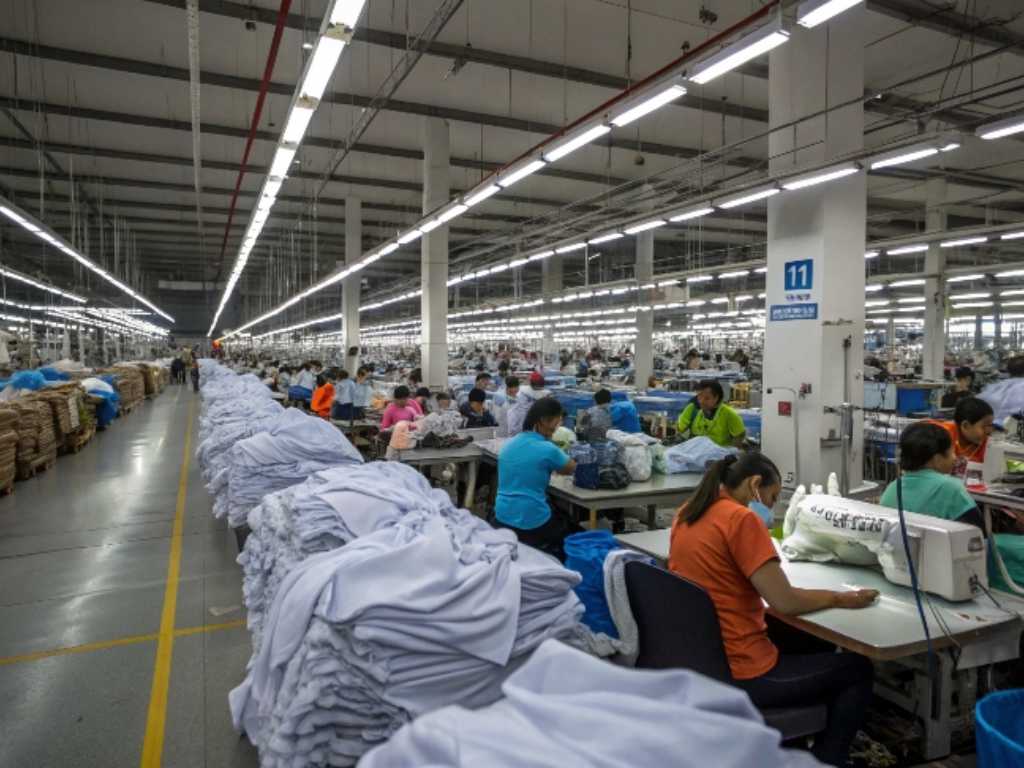
Jinfeng Apparel supports established fashion brands from design reference and technical review through approved samples, bulk production, private-label packing, and export delivery. Development is supported by 2 sample rooms, 7+ senior pattern makers, 20+ sample machinists, and 15+ QC inspectors, giving detailed dresses a controlled route from first pattern to repeat order.
- Review neckline, bust shape, waist position, hip balance, strap angle, slit height, lining coverage, and hem proportion before bulk.
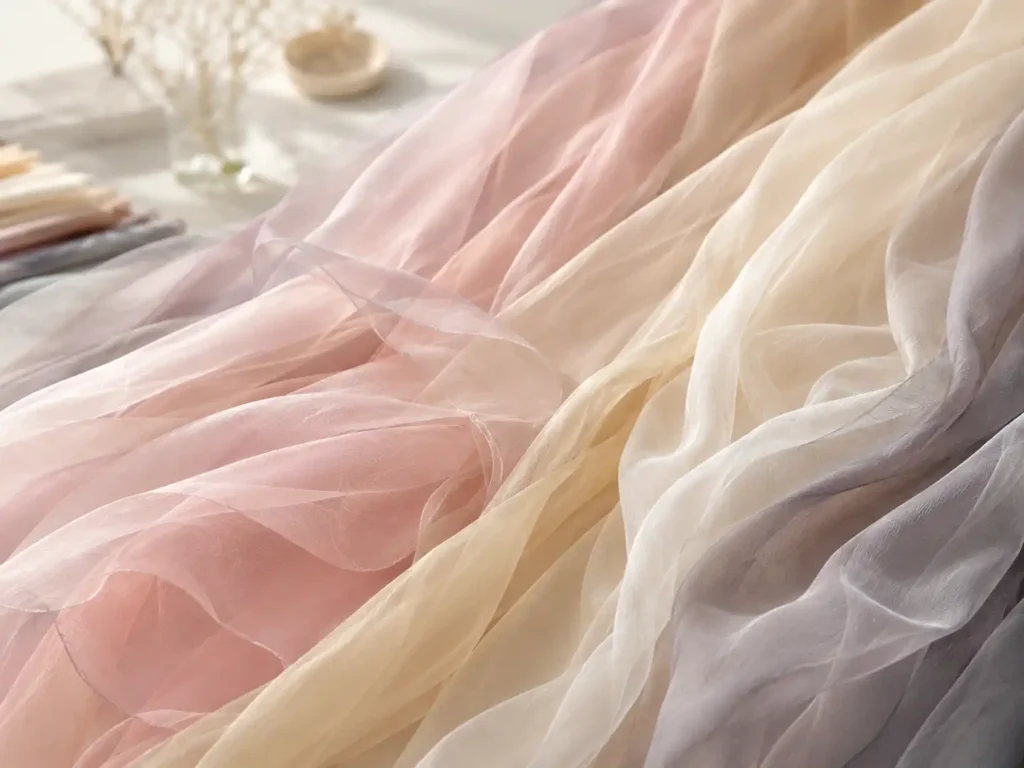
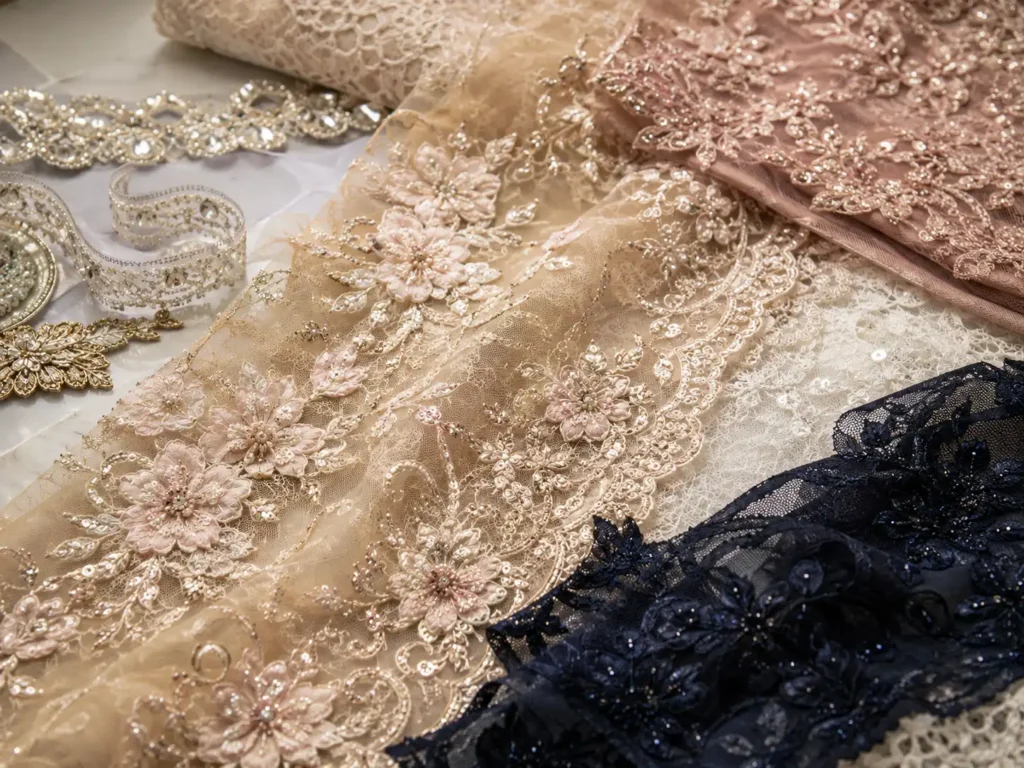
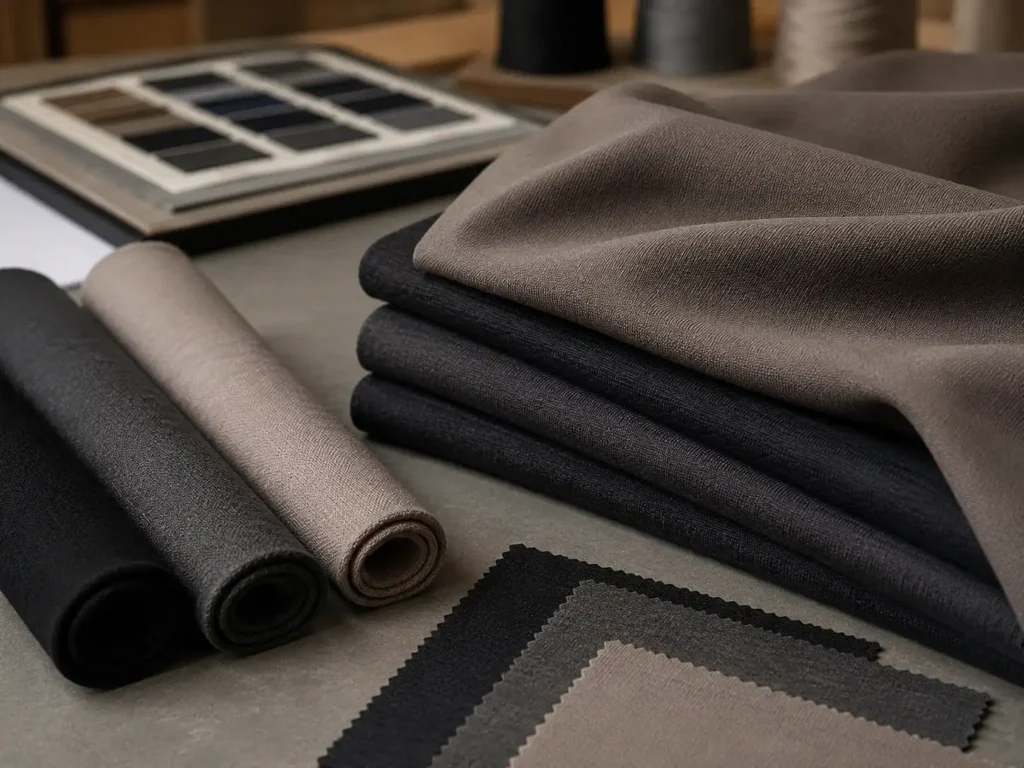
- Match satin, mesh, lace, chiffon, jersey, ponte, velvet, and sequin fabrics to the intended silhouette and construction.
- Lock approved standards through updated patterns, size charts, BOMs, PP samples, Golden samples, QC checklists, and packing instructions.
- Coordinate multi-style collections through 6 owned women’s fashion factories and more than 10 long-term production partners.
Development Resources Behind Accurate Dress Execution
Since 2008
2 Sample Rooms
7+ Pattern Makers
20+ Sample Machinists
15+ QC Inspectors
6+10 Factory Network
Built for Brands That Inspect Beyond First Impressions
Established Dress Programs
Product-Led Teams

Six Detail Failures That Weaken a Dress Collection
Interpretation Drift
Fabric Mismatch
Fit Imbalance
Trim Mismatch
Workmanship Variation
Sample-to-Bulk Drift
A Six-Stage System for Controlling Dress Details
Structure Review
Material Mapping
Pattern Development
Sample Correction
PP Standard Lock
Bulk Replication
Dress Categories Where Details Define the Product

Bodycon Dresses

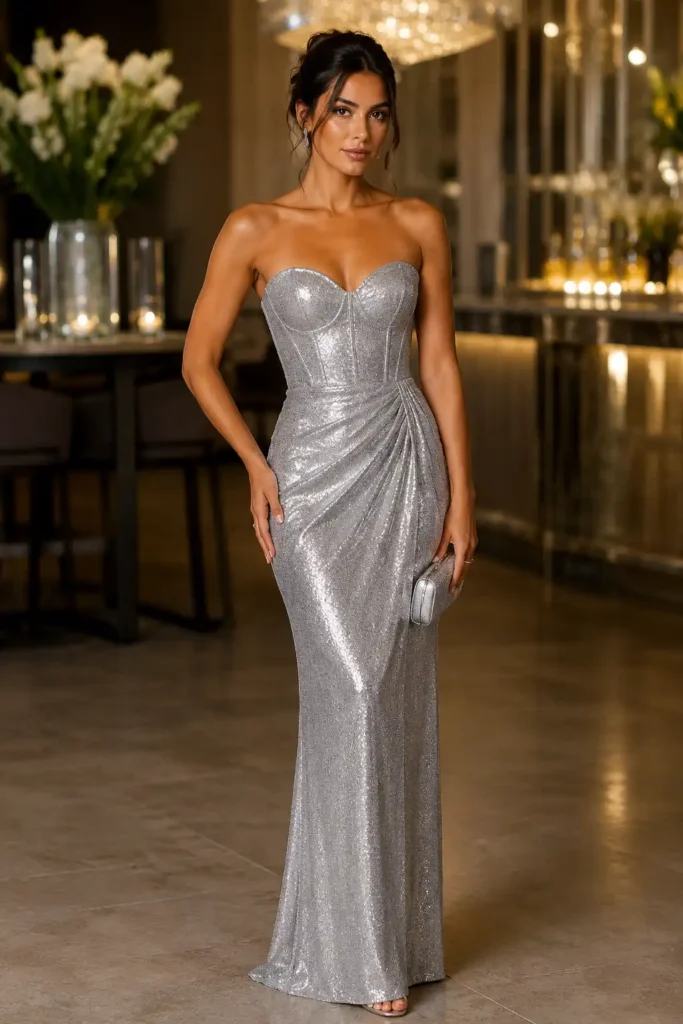
Corset Dresses
Strapless Dresses

Satin Slip Dresses

Mesh and Lace

Ruched Dresses

Sequin Dresses
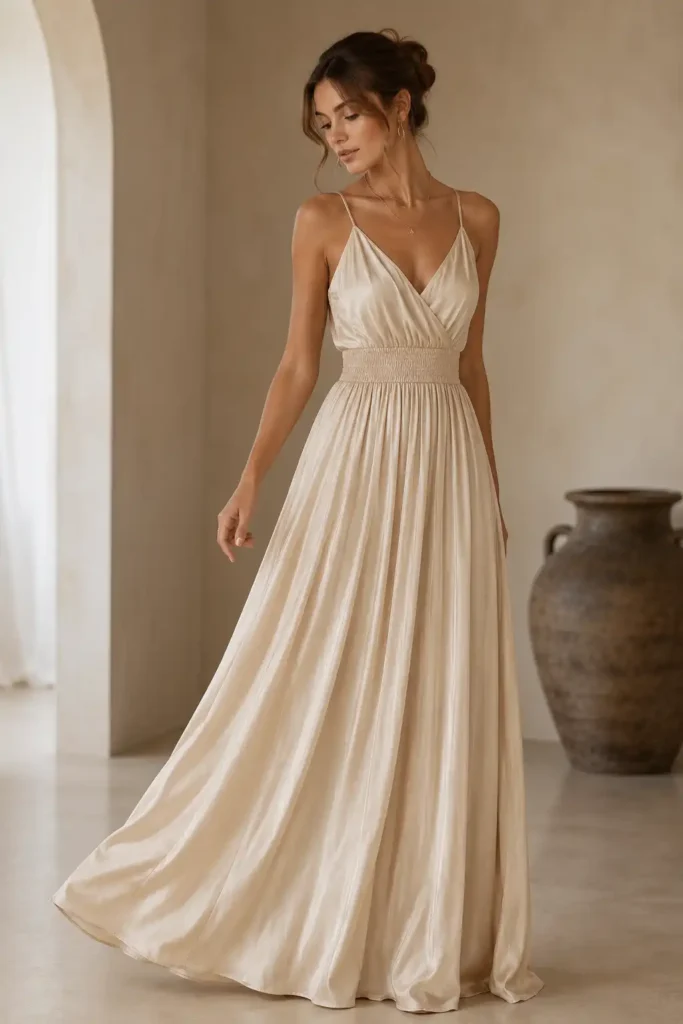
Occasion Maxis
Design Details Reviewed Before Pattern Cutting Begins
A detailed garment becomes easier to manufacture when the intended visual result is translated into named control points. Jinfeng Apparel reviews front, back, side, internal, and movement-related details before sampling so pattern and construction decisions follow one coherent direction.

Upper-Body Structure
Neckline depth, neckline width, bust coverage, cup profile, upper-bust tension, under-bust position, armhole exposure, strap width, strap angle, strap attachment, and back height define how a dress frames the body. Changes in one area often affect another. Raising the armhole may improve coverage but also restrict movement; shortening straps can lift the bust line but pull the back neckline upward.
- Confirm front and side coverage with measurements, not front-view appearance alone.
- Define cup position, cup shape, boning path, and lining support for corset or strapless designs.
- Review bra compatibility, anti-slip requirements, and opening stability where relevant.
- Check strap and neckline symmetry against the body, not only the flat garment.

Waist, Hip, and Cut-Outs
Waist position controls the overall proportion of a dress. High waist, natural waist, dropped waist, and corset waistlines require different shaping and grading.
Hip ease must match fabric stretch and desired fit. Cut-outs need stable edges, comfortable tension, secure joins, and controlled placement so the opening retains its shape during movement and across sizes.
- Record waist seam position from a defined reference point.
- Check side-seam balance and whether the hip pulls the seam forward or backward.
- Measure cut-out width, height, angle, and distance from adjacent seams.
- Assess whether lining, elastic, tape, or reinforcement is needed to prevent distortion.

Skirt, Slit, and Hem
Skirt volume, pleat direction, flare, panel balance, slit height, overlap, lining length, and hem finish determine movement and wearability. A slit that looks acceptable on a hanger may open too far when walking. A lining that is only slightly short can become visible through mesh or satin. Long hems need balance checks after the garment hangs and settles.
- Review front, back, and side length before approving the hem.
- Define slit opening, overlap, reinforcement, and movement safety.
- Confirm pleat count, depth, direction, and finished position.
- Allow fabric relaxation before final long-dress length approval where required.

Finish and Presentation
Pressing, thread color, seam visibility, edge finish, label placement, hanger loops, folding, tissue, and polybag size influence the product’s final presentation.
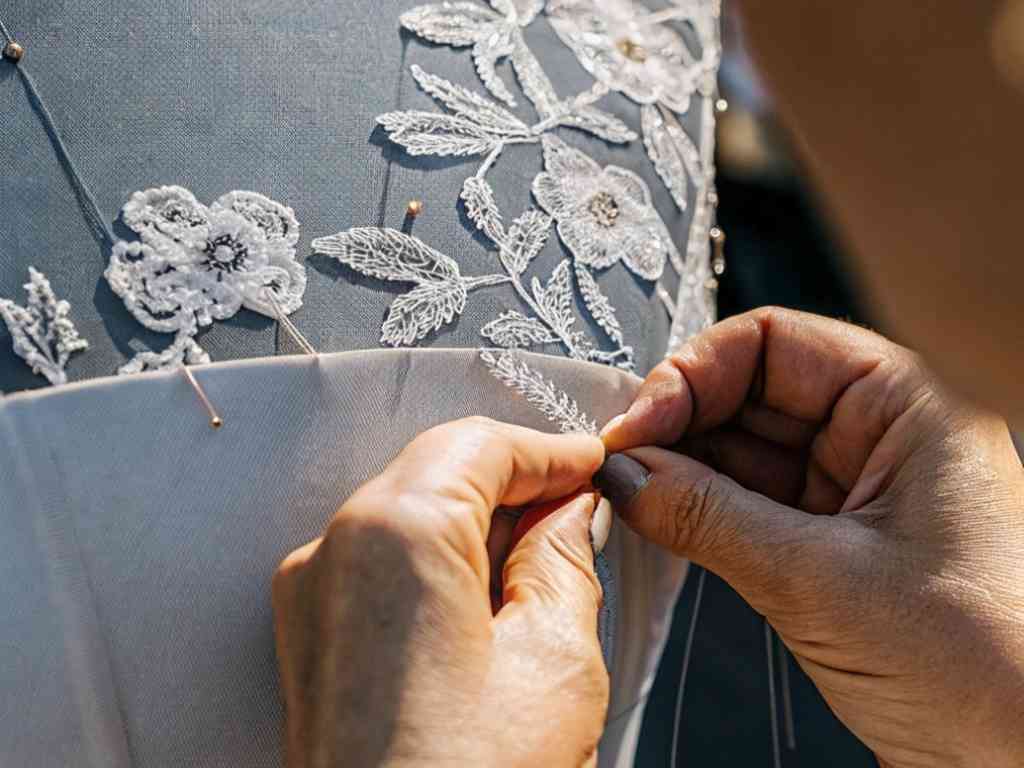
Satin, velvet, sequin, lace, and structured dresses need material-specific finishing and packing.
A technically correct garment can still arrive looking weak when pressing or packing is treated as an afterthought.
Fabric Engineering for Shape, Movement, and Finish
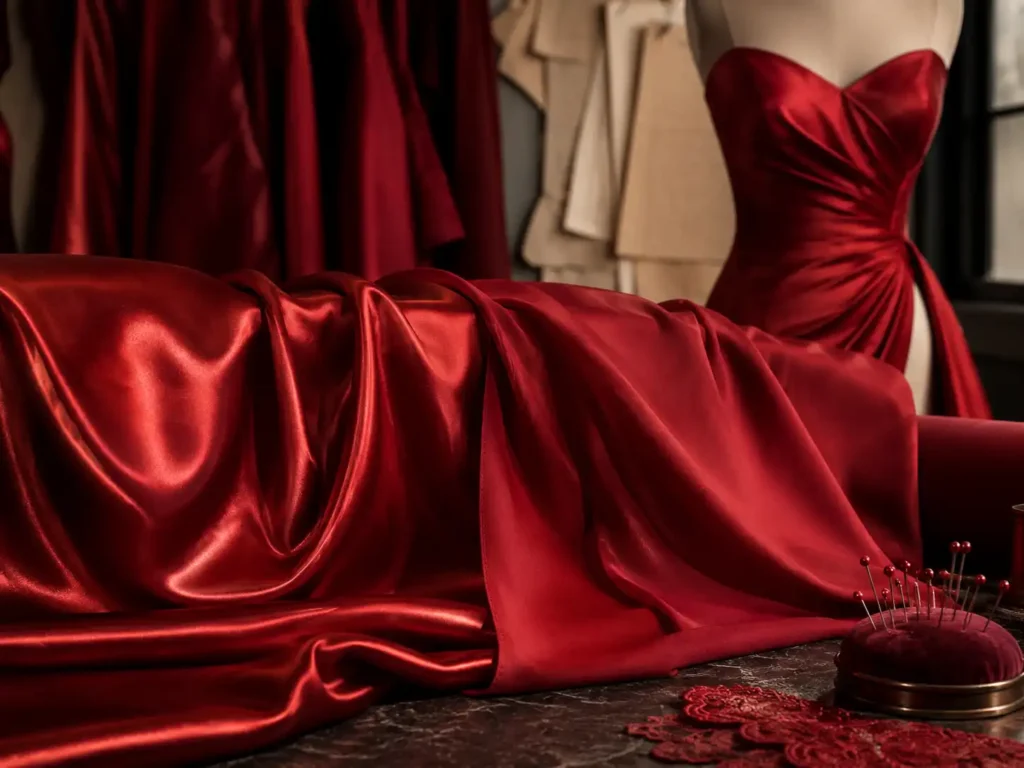
Satin and Stretch Satin
Chiffon and Light Wovens

Mesh and Power Mesh
Lace and Decorative Fabrics
Jersey and Ponte

Sequin, Velvet, and Structure
Trims and Components Managed as Product Architecture

Zippers and Closures

Bra Cups and Underwire

Boning and Support

Straps and Hardware
Lace and Embellishment

Lining and Interfacing
Sampling Timelines Built Around Garment Complexity
Sampling is a decision process, not a decorative prototype exercise. The route and timing depend on structure, material availability, trim development, fitting requirements, and the number of corrections needed before production standards can be locked.
First Sample Timing
A simple dress first sample may take about 7-10 days. A standard dress commonly requires around 10-15 days. Corset, strapless, lace, mesh, sequin, evening, and other complex constructions commonly need around 15-25 days, subject to the actual structure. Custom fabric, special trims, or certified materials can extend development.
Revision Planning
Straightforward styles may reach the intended result after one revised sample. Complex bust structures, fitted silhouettes, delicate materials, or layered embellishment may need one to two revisions or more. A revision is only useful when comments are specific, prioritized, and transferred into updated pattern, measurement, BOM, and sewing files.
Photo-Ready Versus PP
A photo-ready sample may place extra emphasis on pressing, styling appearance, and campaign presentation. It does not automatically replace the PP sample. Final bulk fabric, trims, construction, labels, packing, measurements, and QC standards still require production approval before manufacturing begins.
PP Sample Approval
The PP sample confirms the final pattern, fabric, color, trims, measurements, lining, construction, labels, packing, and QC requirements. Major changes after approval can affect cost, material purchasing, production scheduling, and delivery, so the PP stage is used to lock standards rather than continue broad redesign.
Golden Sample Control
A Golden sample records the final approved state and becomes a physical reference for bulk production, inspection, repeat orders, and issue review. Any later change to material, color, trim, measurement, structure, or packing should be evaluated and re-approved rather than silently replacing the original standard.

Visible and Hidden Workmanship Worth Inspecting

Ruching and Pleats

Zipper Flatness

Neckline Finishing

Lining Coverage

Lace and Sequins

Pressing and Packing
Production Capacity Matched to Dress Complexity
Capacity is useful only when the assigned production unit understands the garment. Jinfeng Apparel coordinates 6 owned women’s fashion factories and more than 10 long-term production partners, selecting production routes by fabric, structure, workmanship level, order size, schedule, and QC requirement.
Factory Allocation
Soft woven dresses, stretch bodycon styles, corset structures, mesh and lace combinations, sequin garments, occasionwear, jumpsuits, and matching sets require different operator skills and production controls. Allocation is based on product fit rather than treating every sewing line as interchangeable.
Collection-Level Planning
Orders containing 10-30 styles are separated by style, color, size, fabric, trim, sample version, BOM, production order, QC checklist, packing instruction, and shipment plan. Shared materials and common construction methods can be coordinated, while high-risk styles receive separate sampling and inspection attention.
Production Handover
The development handover can include final patterns, size charts, grade rules, fabric references, trim cards, approved PP samples, Golden samples, sewing instructions, label placement, packing instructions, and QC checkpoints. Production should not begin from a sample alone when written standards are required for repeatability.
Schedule Management
A bulk schedule is issued after PP approval, material confirmation, order quantity, size and color breakdown, packing requirements, inspection plan, and logistics route are confirmed. Custom dyeing, special trims, complex embellishment, broad size ranges, and split shipments are planned as separate timeline factors.
Quality Control from Material Receipt to Carton Close
Quality control follows the approved product standard rather than a generic final check. Material, cutting, sewing, measurements, finishing, labels, packing, and shipment preparation each have different risks and evidence requirements.
| Control Stage | Main Checks | Recommended Evidence |
|---|---|---|
| Fabric and Trim Receipt | Fabric face, color, batch, defects, hand feel, stretch, weight, shrinkage reference, lining match, zipper and trim specifications. | Approved swatch or card, batch record, incoming inspection notes, color and trim references. |
| Cutting Control | Grain or stretch direction, nap or sequin direction, panel symmetry, lace placement, layer accuracy, shade grouping, cutting quantity. | Marker and cutting photos, bundle identification, placement reference, shade grouping record. |
| Inline Sewing | Seam construction, ruching, pleats, zipper flatness, neckline stability, lining attachment, trim placement, workmanship consistency. | Inline inspection photos, defect examples, correction notes, signed production checkpoints. |
| Measurement Review | Bust, waist, hip, length, strap, neckline, armhole, slit, lining, hem, and garment-specific measurements against tolerances. | Size chart, measurement report, sample comparison, recheck record for corrected pieces. |
| Final Appearance | Silhouette, symmetry, stains, damage, loose threads, pressing, lace and sequin condition, hardware function, label placement. | Final inspection checklist, approved sample comparison, appearance photos. |
| Packing and Shipment | SKU, barcode, size label, care label, hangtag, polybag, folding, assortment, carton quantity, carton mark, documentation. | Packing checklist, carton audit, packing photos, shipment and inspection records. |
Private Labels and Packing Treated as Product Details

Woven Brand Labels
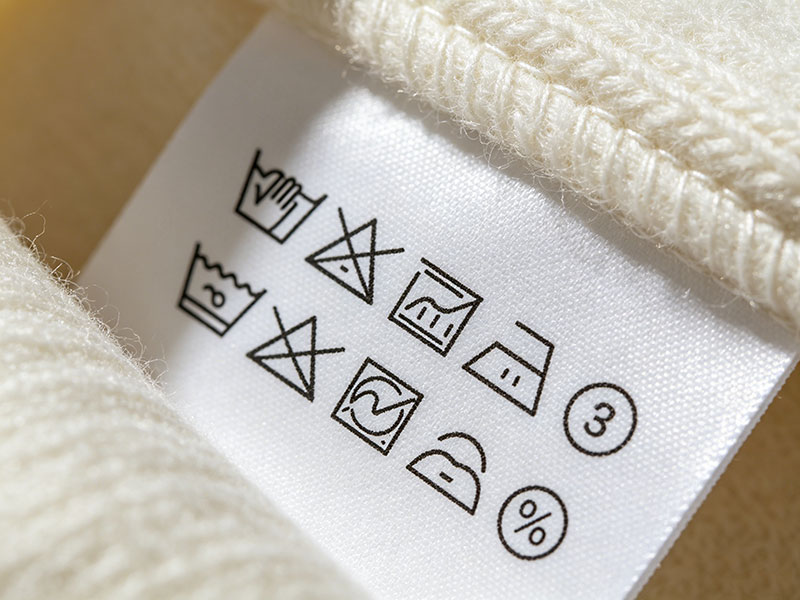
Size and Care Labels
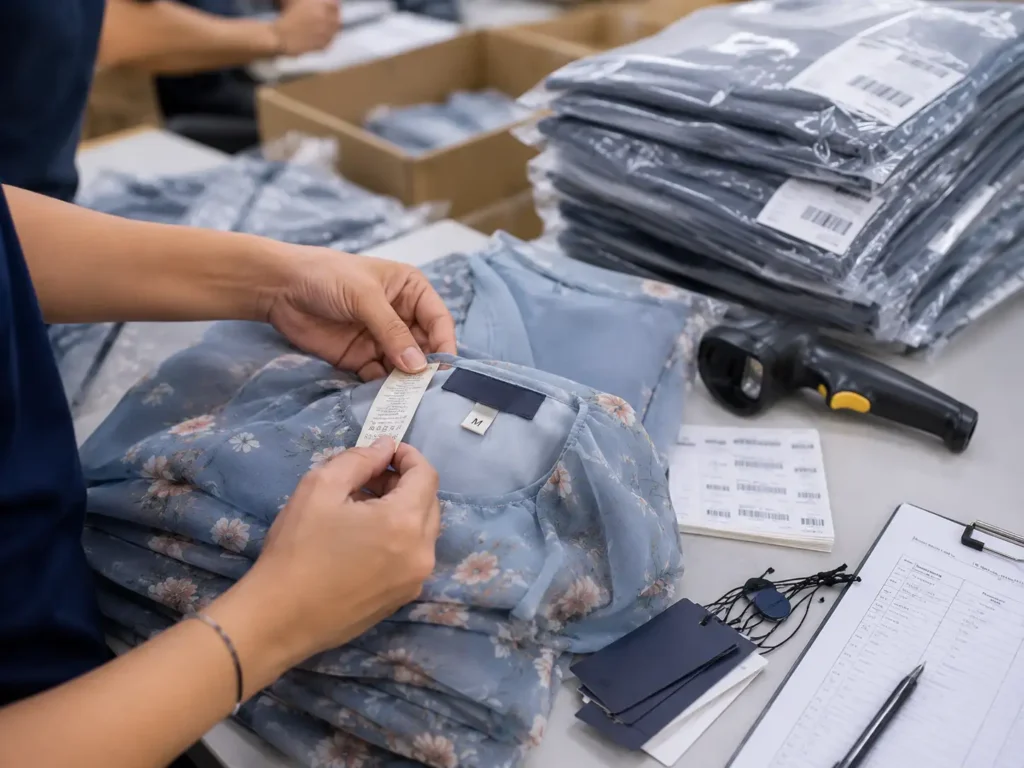
Hangtags and Barcodes
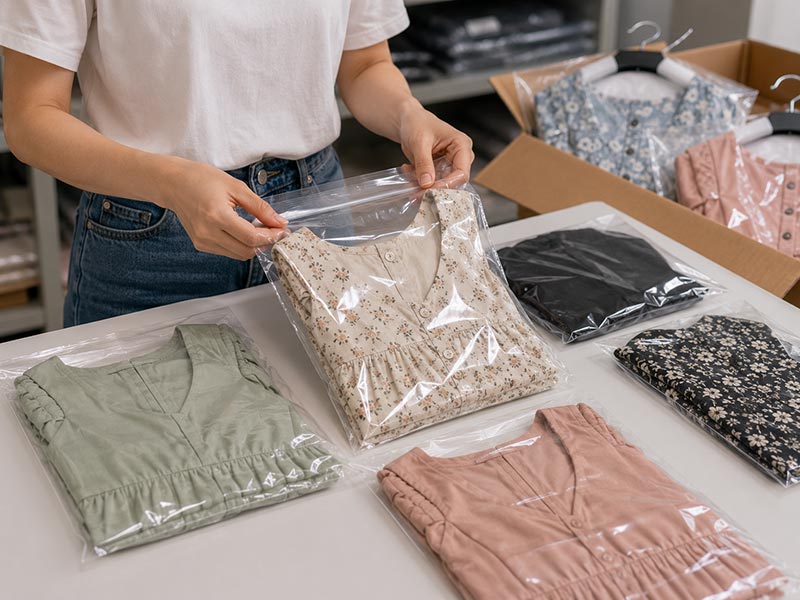
Polybags and Protection

Carton Assortment
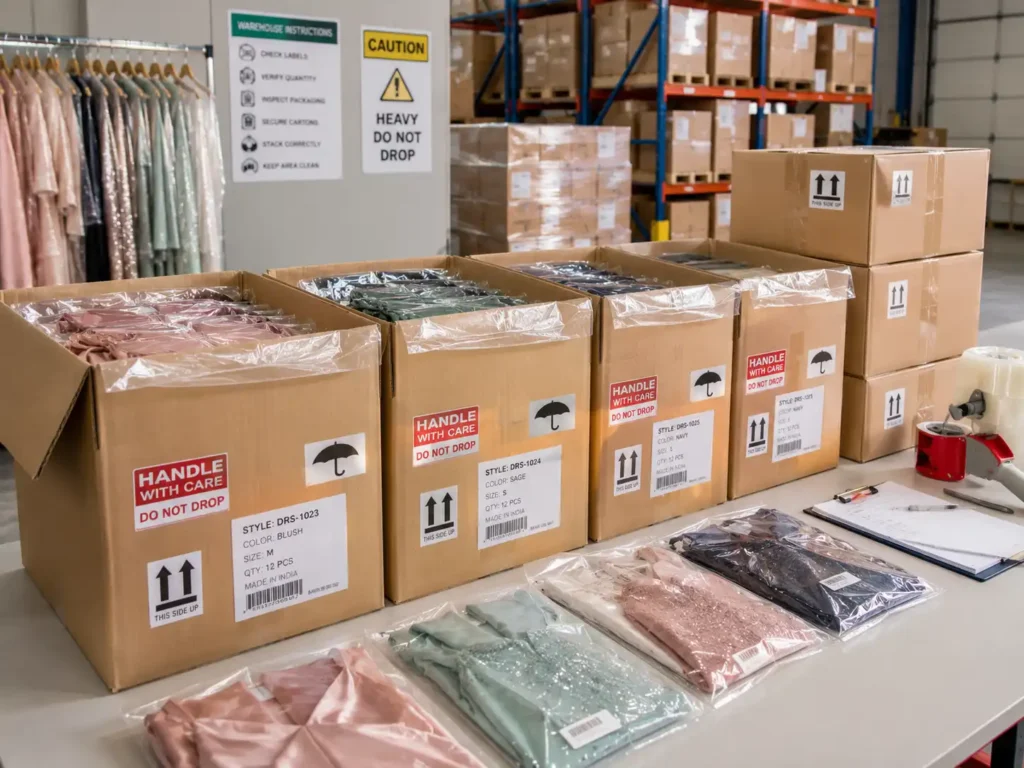
Warehouse Requirements
Warehouse labels, carton labels, ASN-related information, routing instructions, pallet rules, and receiving windows can be reviewed as part of export preparation. Requirements vary by retailer, marketplace, fulfillment center, and country, so final instructions should be provided early enough for costing and production planning.
How Detail Complexity Changes MOQ, Cost, and Schedule
Dress quotations are built from material, construction, labor, size and color structure, packing, quality requirements, and delivery planning. Clear inputs make commercial decisions more accurate and help preserve the visual result without adding unnecessary operations.
| Project Variable | MOQ Effect | Cost Effect | Schedule Effect | Review Focus |
|---|---|---|---|---|
| Stock fabric and regular color | Lower | Lower to medium | Shorter | Confirm available batch, weight, shade, and bulk quantity. |
| Custom dyeing or printing | Higher | Medium to high | Longer | Lab dip, strike-off, color approval, fabric supplier minimums. |
| Corset or strapless structure | Usually neutral | High | Longer | Cups, boning, lining, fit revisions, sewing control. |
| Lace, sequin, or placement detail | May increase | High | Longer | Material yield, placement, handling, inspection, packing. |
| Custom zippers, hardware, or trims | May increase | Medium to high | Longer | Mould, finish, color, development lead time, spare quantity. |
| Broad size range or special grading | Usually neutral | Medium | Medium | Base size, grade rules, fit validation, labeling and ratio. |
| Private-label retail packing | May increase | Medium | Medium | Artwork, barcodes, labels, polybags, cartons, warehouse rules. |
| Split or priority shipment | Neutral | Medium to high | Project-specific | SKU priority, QC sequence, packing, air and sea allocation. |
Detail-Oriented Dress Manufacturing Case Studies
Detail-driven fashion brands require a manufacturing partner that can translate design details into measurable production standards. Jinfeng Apparel supports complex dress development through structure review, fabric matching, trim control, sample refinement, bulk quality management and repeat-order documentation.

Case Study 1: Complex Detail Dress Development for a Premium Fashion Brand
A premium womenswear brand wanted to develop a collection focused on strong visual details and elevated silhouettes.
The collection included:
- Corset dresses
- Cut-out dresses
- Ruched bodycon styles
- Strapless occasion dresses
- Mesh layered designs
Program scope:
- 15 styles
- 34,000 pieces
- Multiple fabrics
- XS-XL size range
- Private-label production
Development Challenge
The brand designs relied on multiple connected details:
Structural Details
Including:
- Bust shaping
- Corset panels
- Internal support
- Neckline stability
- Waist definition
Visual Details
Including:
- Cut-out placement
- Ruching symmetry
- Mesh transparency
- Layer positioning
Small errors could change the entire silhouette.
Jinfeng Solution
Jinfeng created a detail-control development process.
Structure Review
Analyzed:
- Neckline
- Bust shape
- Waist position
- Hip balance
- Internal construction
Pattern Engineering
Controlled:
- Panel shape
- Seam placement
- Cup position
- Grade rules
- Size consistency
Result
The brand achieved:
- Accurate detail execution
- Stable silhouette across sizes
- Production-ready technical standards
- Repeat-order capability
The collection became a foundation for future detailed designs.

Case Study 2: Refining Luxury Occasionwear With Advanced Finishing Control
A luxury occasionwear brand needed a manufacturing partner for premium dresses where finishing quality was the main selling point.
The collection included:
- Satin evening gowns
- Lace dresses
- Sequin party dresses
- Structured cocktail dresses
Development Challenge
Luxury fabrics exposed every production weakness.
Main issues:
Surface Appearance
Including:
- Satin pressing marks
- Sequin damage
- Lace misalignment
- Uneven shine
Construction Precision
Including:
- Zipper flatness
- Seam symmetry
- Lining visibility
- Hem balance
Jinfeng Solution
Jinfeng developed product-specific workmanship standards.
Fabric Handling
Controlled:
- Cutting direction
- Surface protection
- Pressing temperature
- Packing method
Trim Management
Reviewed:
- Zippers
- Cups
- Boning
- Lace trims
- Decorative elements
Quality Control
Checked:
- Seam appearance
- Symmetry
- Finishing
- Surface condition
- Final presentation
Result
The brand achieved:
- Premium finishing consistency
- Improved garment presentation
- Reduced production variation
- Stable luxury dress production
The manufacturing standard supported future occasionwear collections.

Case Study 3: Managing a Multi-Style Detail Collection With Consistent Standards
A growing fashion brand expanded into a larger seasonal collection containing different dress categories.
The collection included:
- Satin slip dresses
- Lace midi dresses
- Mesh party dresses
- Ruched mini dresses
- Occasion maxis
Program scope:
- 22 styles
- 46,800 pieces
- Multiple fabric groups
- Multiple colorways
Development Challenge
The brand needed different construction methods while maintaining one collection identity.
Main risks:
Different Fabric Requirements
Including:
- Satin surface control
- Lace placement
- Mesh transparency
- Sequin protection
Different Construction Methods
Including:
- Ruching
- Lining
- Zippers
- Support structures
Jinfeng Solution
Jinfeng managed the collection through separated control systems.
Style Classification
Grouped by:
- Fabric family
- Construction method
- Risk level
- Production requirement
Production Files
Controlled:
- Patterns
- BOM
- Size charts
- Sewing instructions
- QC standards
Result
The brand achieved:
- 22 coordinated styles delivered
- Consistent quality across categories
- Controlled multi-fabric production
- Complete repeat-order records
The collection could expand into future seasonal drops.
Design Protection and Repeat-Order Record Control
NDA Protection
Pattern Ownership
Repeat-Order Records
Frequently Asked Questions About Detailed Dress Manufacturing
The manufacturing process links design review, fabric and trim selection, pattern development, sample correction, PP approval, Golden sample control, bulk production, QC, private-label packing, and export delivery. Detailed points such as neckline depth, bust shape, waist position, strap angle, lining coverage, zipper flatness, ruching symmetry, and measurement tolerance are converted into documented standards rather than left as verbal preferences.
Yes. Reference images or sketches can begin a development review, but missing information must be clarified before accurate sampling. Structure, fabric, lining, closure, measurements, fit preference, support requirements, trims, target quantity, market, and desired finish are assessed first. A reference image is treated as a visual direction, not as a complete production specification.
An original sample can be measured, structurally reviewed, converted into patterns, and developed with matching or alternative materials. The brand must hold the legal right or authorization to develop the design. Material availability, construction differences, fit corrections, label requirements, and market standards are reviewed before sampling and quotation.
Simple dresses may take about 7-10 days, standard dresses commonly need around 10-15 days, and corset, strapless, lace, mesh, sequin, evening, or similarly complex styles commonly require around 15-25 days. Custom fabric, special trims, certified materials, extensive embellishment, or incomplete development information can extend the schedule.
Straightforward designs may reach approval after one revised sample. Fitted, structured, embellished, or material-sensitive dresses may need one to two revisions or more. Revision count depends on the quality of initial specifications, fitting feedback, material changes, and whether the silhouette or construction is altered during development.
Fit control uses a confirmed base size, size chart, grade rules, garment-specific measurements, approved tolerances, fitting feedback, pattern version control, cutting checks, inline measurement, final measurement, and Golden sample comparison. Necklines, cups, straps, armholes, waist seams, cut-outs, and slits may need separate grade rules rather than simple proportional enlargement.
The approved standard is transferred through final patterns, fabric approvals, trim approvals, BOMs, size charts, sewing instructions, PP samples, Golden samples, QC checklists, label placement, and packing instructions. Material receipt, cutting, inline sewing, measurements, final appearance, and packing are checked against those references.
MOQ starts from 200 pieces per style and color. Fabric supplier minimums, custom dyeing, custom printing, special lace, sequin materials, custom zippers, hardware, labels, packaging, broad color splits, and complex construction may create separate or higher minimums. The confirmed project structure determines the final production minimum.
Yes. Brand inspection manuals, measurement tolerances, defect classifications, AQL requirements, packing standards, and reporting formats can be reviewed before production. Internal inspection, brand inspection, or third-party pre-shipment inspection can be coordinated according to the order and the assigned factory.
Yes. Woven labels, size labels, care labels, hangtags, hang strings, barcode stickers, SKU labels, polybags, stickers, thank-you cards, cartons, carton marks, and warehouse labels can be managed. Artwork, legal wording, barcode data, placement, packing ratio, and destination requirements should be approved before bulk purchasing and packing.
Yes. NDA-based cooperation can cover tech packs, sketches, original samples, patterns, measurements, materials, trims, labels, packing files, pricing, quantities, launch plans, and unpublished designs. Anonymous public cases do not identify a brand or disclose proprietary files without permission.
Previous patterns, size charts, BOMs, fabric references, trim records, sewing notes, packing instructions, QC records, and Golden samples can support repeat production. New material batches, colors, trims, measurements, or packing formats still need confirmation because availability and physical performance can change.

Send Your Dress Collection for a Structured Review
A useful project review begins with enough information to evaluate structure, materials, fit, quantity, commercial requirements, and schedule.
Kelly coordinates the initial review with the relevant development, merchandising, pattern, production, and quality teams so the reply can address the real manufacturing path rather than offer a generic quotation.
- Reference image, sketch, tech pack, line sheet, or original sample
- Target quantity for each style and color
- Fabric direction, hand feel, weight, stretch, or approved swatch
- Size range, base size, grade rules, and measurement tolerances
- Construction details, lining, cups, boning, zippers, lace, or embellishment
- Brand labels, barcodes, SKU files, polybag, carton, and warehouse requirements
- Target market, launch date, inspection standard, and preferred delivery route