
Dress Manufacturer for Department Store Fashion Programs
Multi-style dress development, controlled production, retail-ready packing, and repeat-order support for established fashion programs.
- Program structures commonly covering 10-30 styles and 20,000-80,000 total garments per brand order.
- 6 owned women’s fashion factories, 10+ long-term production partners, and 100,000+ pcs monthly capacity.
- MOQ starts from 200 pcs per style/color, with quantity planning based on fabric, trims, construction, and color breakdown.
- Development support from line sheet, tech pack, original sample, or reference image through PP approval, bulk QC, packing, and delivery coordination.
Built for Department Store Fashion Programs
Private Label Retail Lines
Established Fashion Brands
Sourcing and Merchandising Teams
Program Scale Without Losing Style-Level Control
6 Owned Factories
10+ Production Partners
100,000+ Monthly Capacity
18+ Sewing Lines
2 Sample Rooms
Program Management Team
What Department Store Dress Programs Must Control
Assortment Coherence
Calendar Discipline
Retail Execution
Dress Categories for Commercial Retail Assortments

Day and Work Dresses
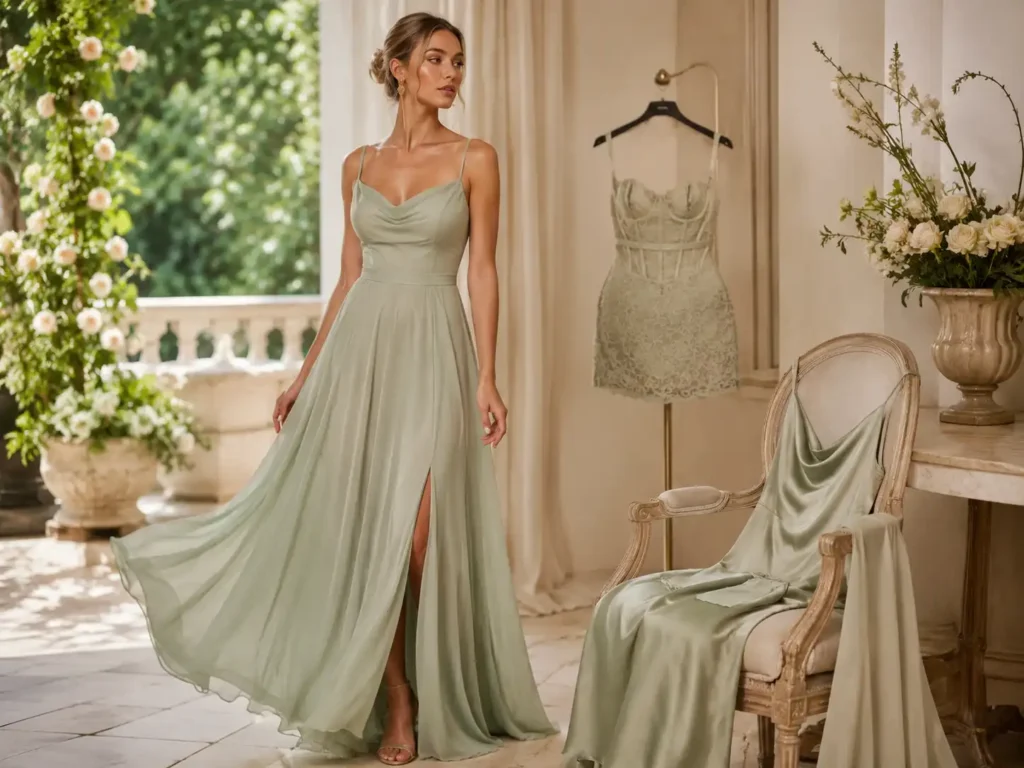
Occasion and Event Dresses

Party and Cocktail Styles

Resort and Seasonal Dresses
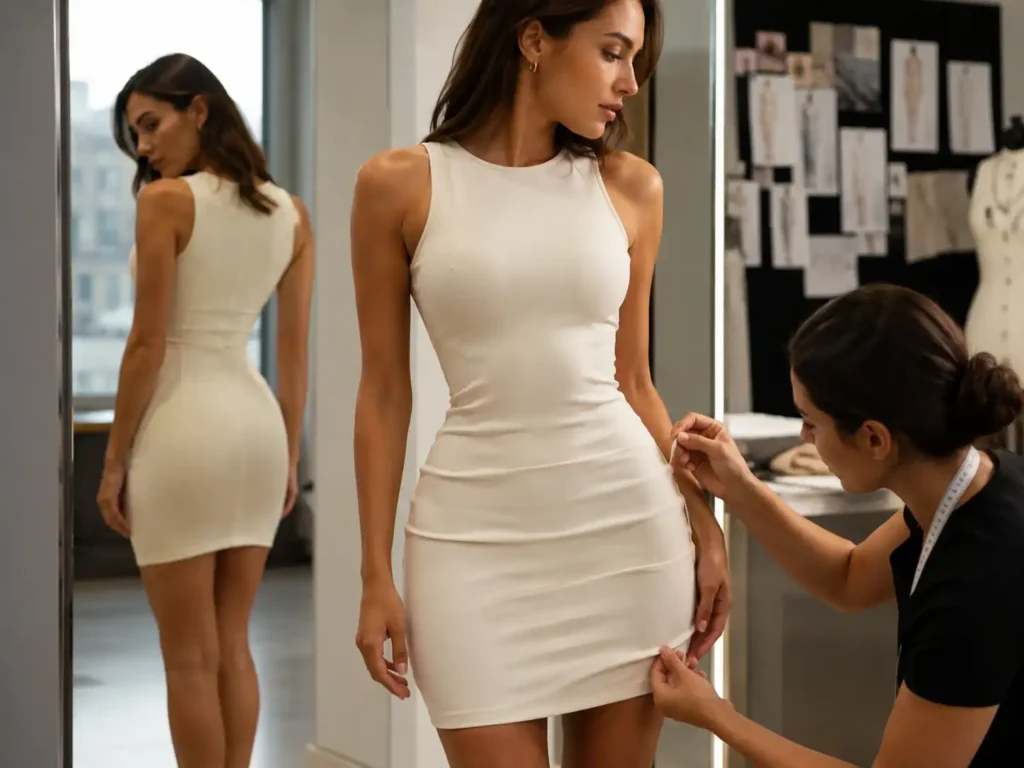
Bodycon and Corset Dresses

Jumpsuits and Coordinated Sets
Fabric Direction for Price, Fit, and Retail Performance
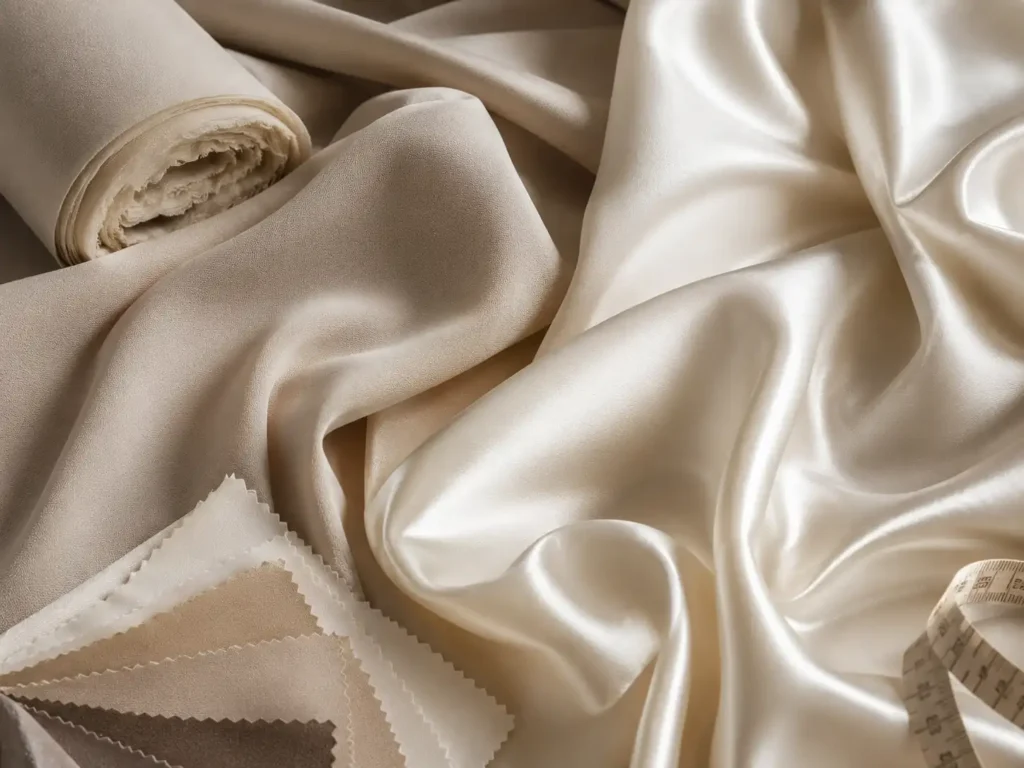
Satin and Crepe

Chiffon and Georgette
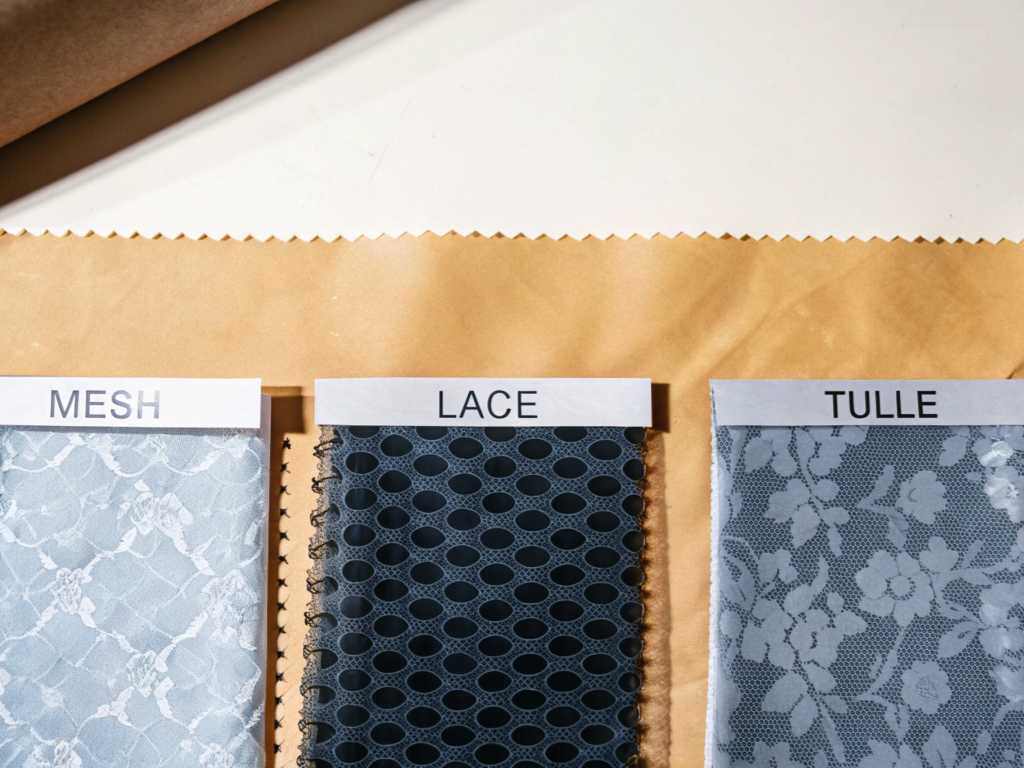
Mesh, Lace, and Tulle
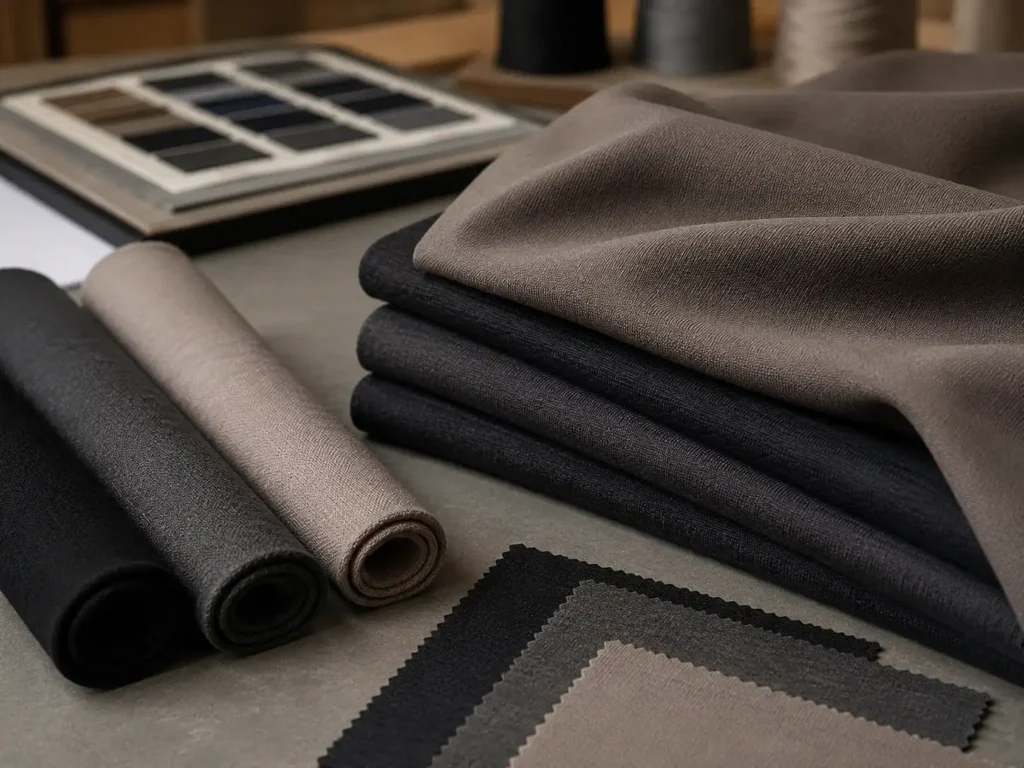
Jersey and Ponte

Suiting and Wovens
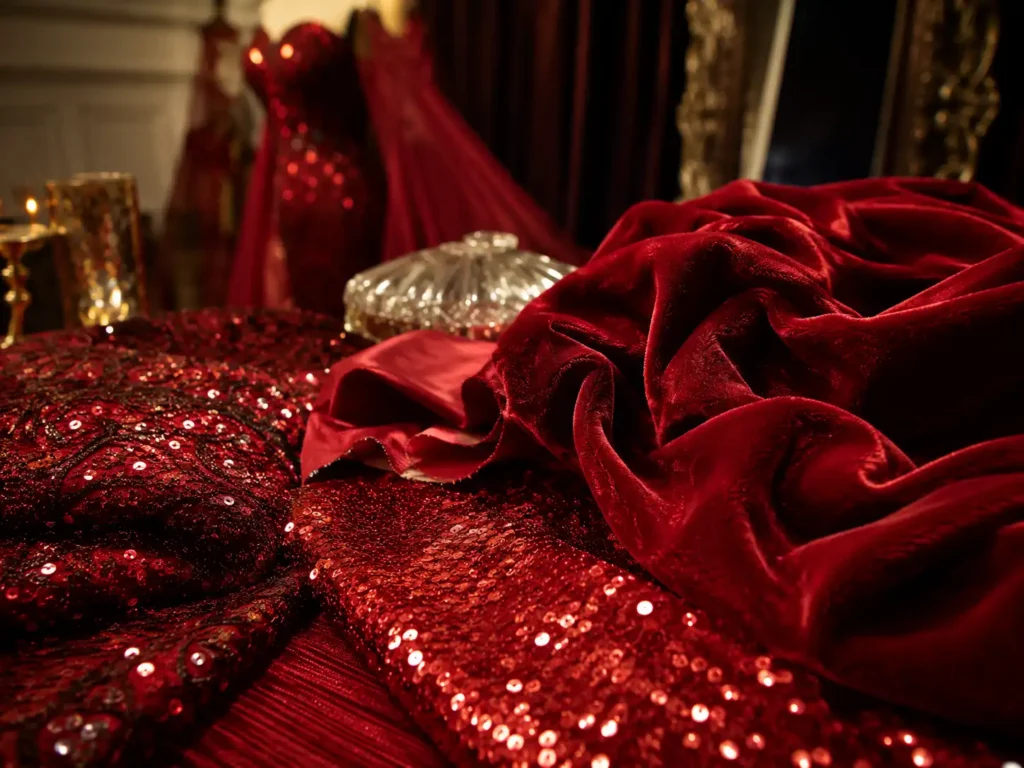
Sequins and Velvet
Fit, Grading, and Size Range Control
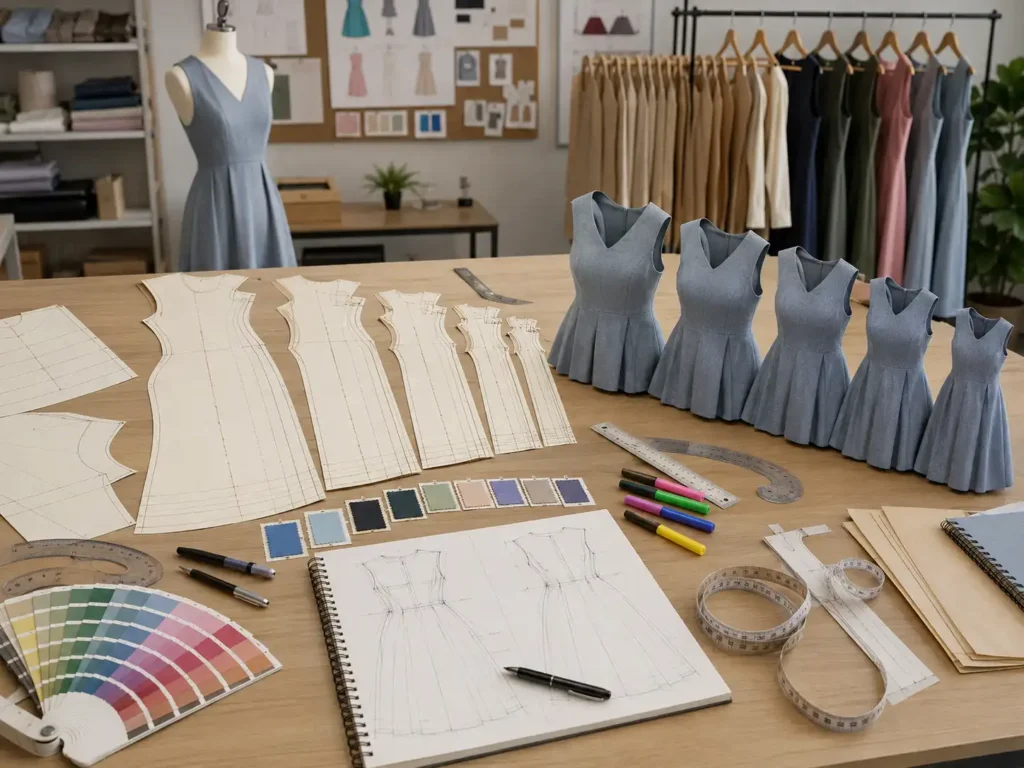
Fit is managed as a commercial standard, not a single approved sample. Jinfeng links pattern development, size charts, fit comments, grading, size-set review, and measurement inspection so the range performs consistently.
Core Size Range and Fit Block
A common alpha range is XS-XL, while numeric US, UK, EU, AU, and other market standards can be developed from the brand’s approved specification. The base size is selected according to the target market and dress category. Fit review considers the intended silhouette, fabric stretch, wearing ease, support level, lining, and target consumer profile.
Related styles can share an approved fit block when the construction and material behavior allow it. A stable block reduces unnecessary variation across the assortment, but each neckline, sleeve, skirt shape, and fabric combination still requires a style-level review.
- Typical base measurements include bust, waist, hip, shoulder, armhole, torso length, garment length, sleeve, strap, slit, and opening dimensions.
Critical fit points are identified by category: bust support for corset styles, recovery for bodycon dresses, rise for jumpsuits, and coverage for cut-out or strapless designs.
Extended Sizes and Responsible Grading
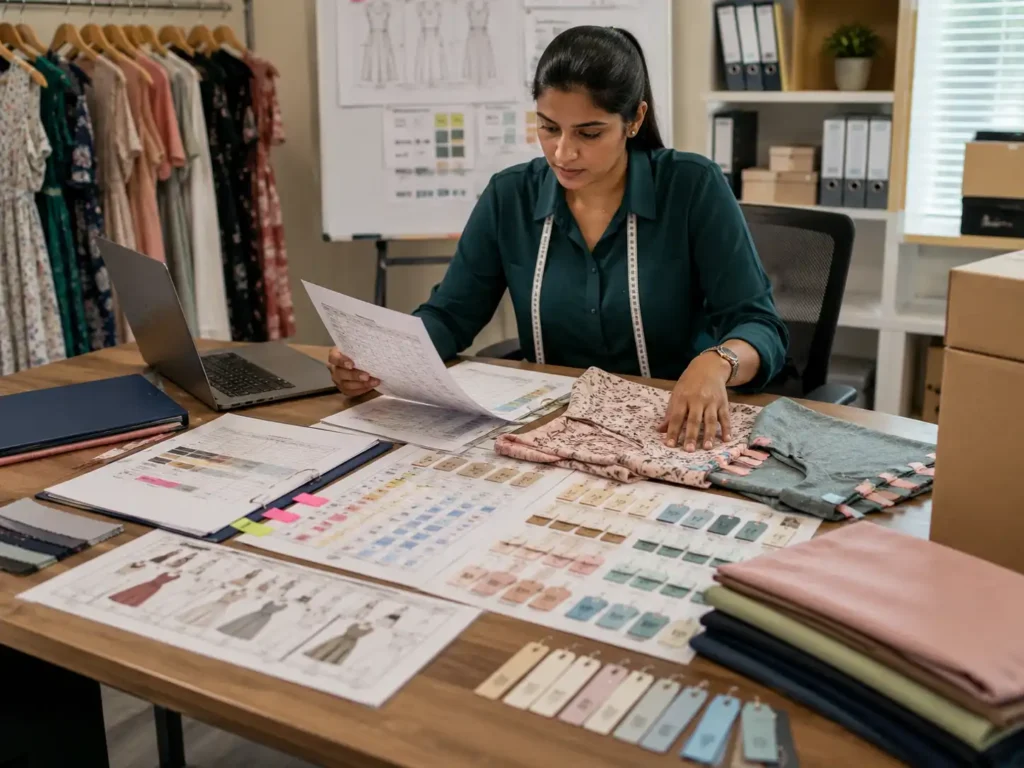
Extended-size and plus-size ranges can be developed from a clear brand standard, target market, fit feedback, and approved tolerance plan. Proportional enlargement alone is not sufficient.
Bust support, shoulder width, armhole depth, waist-to-hip balance, torso length, sleeve width, neckline coverage, strap placement, and garment length may need separate adjustments.
Fabric consumption, trim length, elastic strength, support components, and construction stability are reviewed as the size range expands. Selected styles may require a dedicated extended-size sample or size-set approval before bulk release.
- Available route: XS-XL as a regular reference range, with extended sizes confirmed by style and specification.
Color count, size count, pack ratio, labels, and carton planning are reviewed together because deeper size ranges affect production and packing complexity.

Size Set and Measurement Release
A size-set review checks more than numerical grading. Proportion, balance, strap position, neckline shape, pocket placement, slit height, hem sweep, and decorative placement must remain visually correct across sizes. Fabric stretch and recovery are evaluated alongside the measurement chart.
Bulk measurement inspection follows the approved specification and client-defined tolerances. Critical points are marked for closer control. Findings are recorded by style and size so correction can occur during production rather than after the complete program reaches final inspection.
- Approval records may include graded nest, size chart, size-set comments, revised pattern version, approved sample, and critical measurement list.
Measurement control is combined with garment appearance; a dress can fall within numbers and still show poor balance, twisting, or uneven length.
Sample Calendar for Seasonal Line Reviews
Sample timing depends on style complexity, material availability, trim development, pattern work, and approval speed. The ranges below are planning references counted after usable files and required materials are available.
| Sample Route | Typical Purpose | Planning Time | Main Approval Focus | Production Record |
|---|---|---|---|---|
| Simple first sample | Straightforward silhouette using available materials | 7-10 days | Shape, basic fit, length, workmanship | Initial pattern and comments |
| Standard dress sample | Typical woven or knit dress with normal construction | 10-15 days | Fit, fabric behavior, lining, closures, finish | Updated spec and BOM |
| Complex fashion sample | Corset, strapless, lace, mesh, sequin, evening, or layered style | 15-25 days | Support, placement, symmetry, comfort, surface quality | Detailed construction notes |
| Special material route | Custom fabric, specialty trims, certified materials, or supplier-developed components | 20-35 days or supplier schedule | Material approval before final sample accuracy | Supplier and batch references |
| Revised sample | Pattern, measurement, fabric, trim, or construction correction | Usually 7-15 days | Closure of recorded fit and construction comments | Revision version and approval log |
| PP sample | Final production-standard approval | Usually 7-15 days | Final materials, fit, workmanship, labels, packing direction | Production release package |
Workmanship Standards for Retail-Ready Dresses

Seams and Stitch Balance

Linings and Clean Interiors

Closures and Internal Support

Pressing and Surface Protection
Special Construction and Decorative Techniques
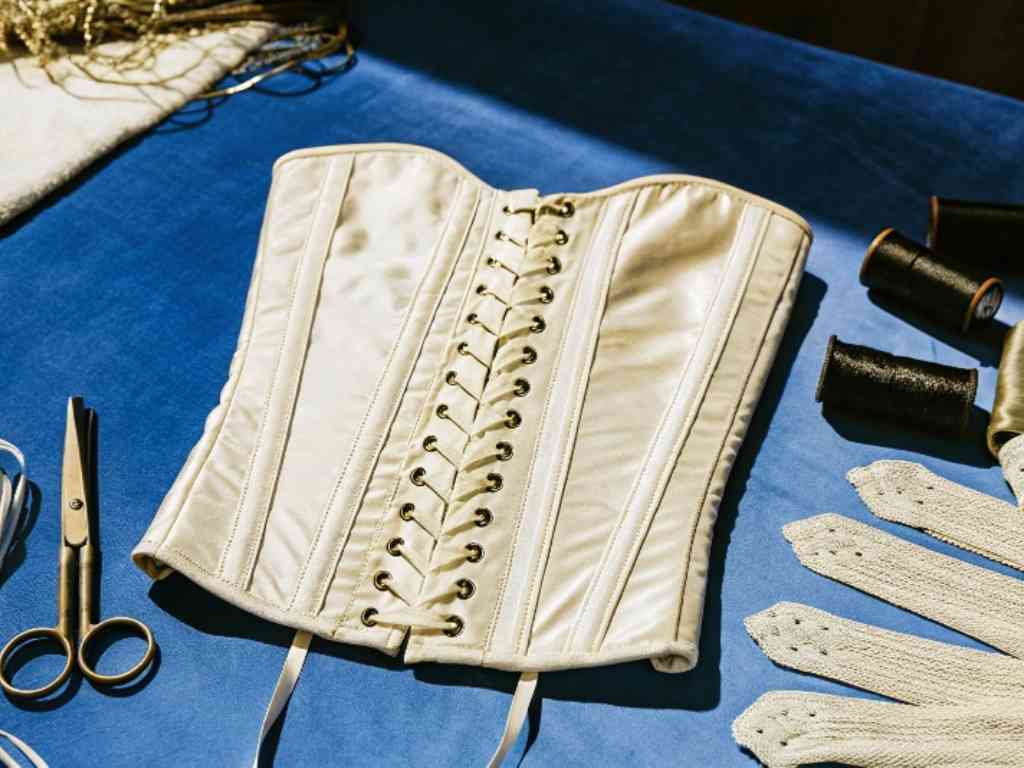
Corsetry and Support

Ruching and Draping
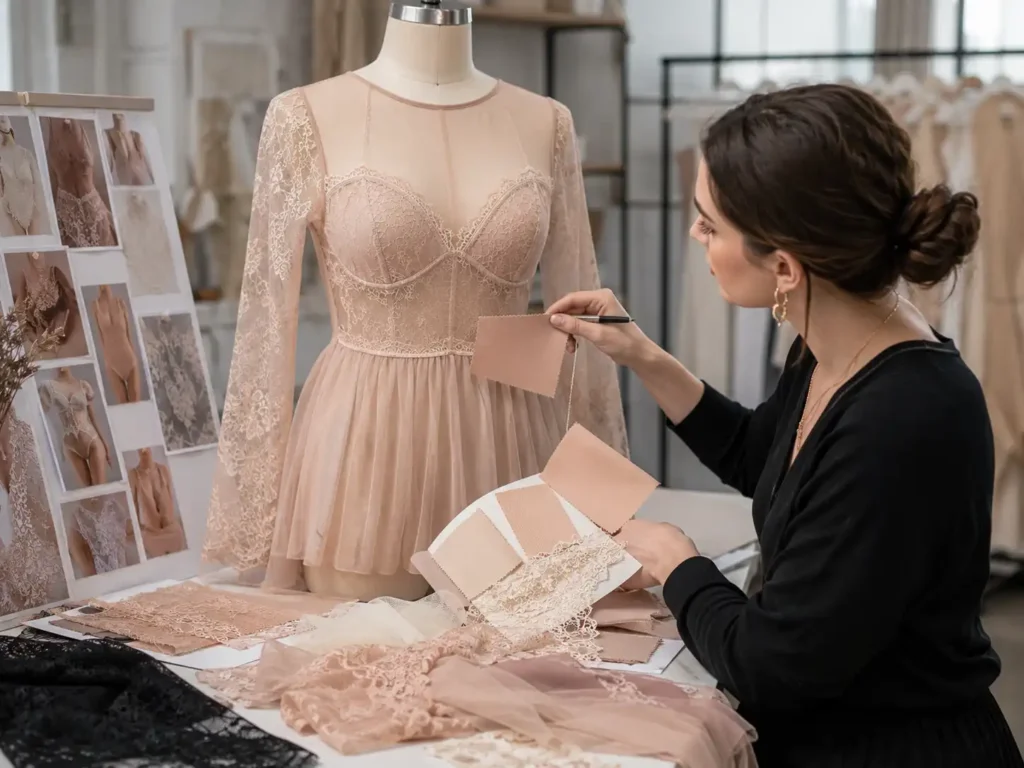
Lace and Mesh Placement

Sequins and Embellishment
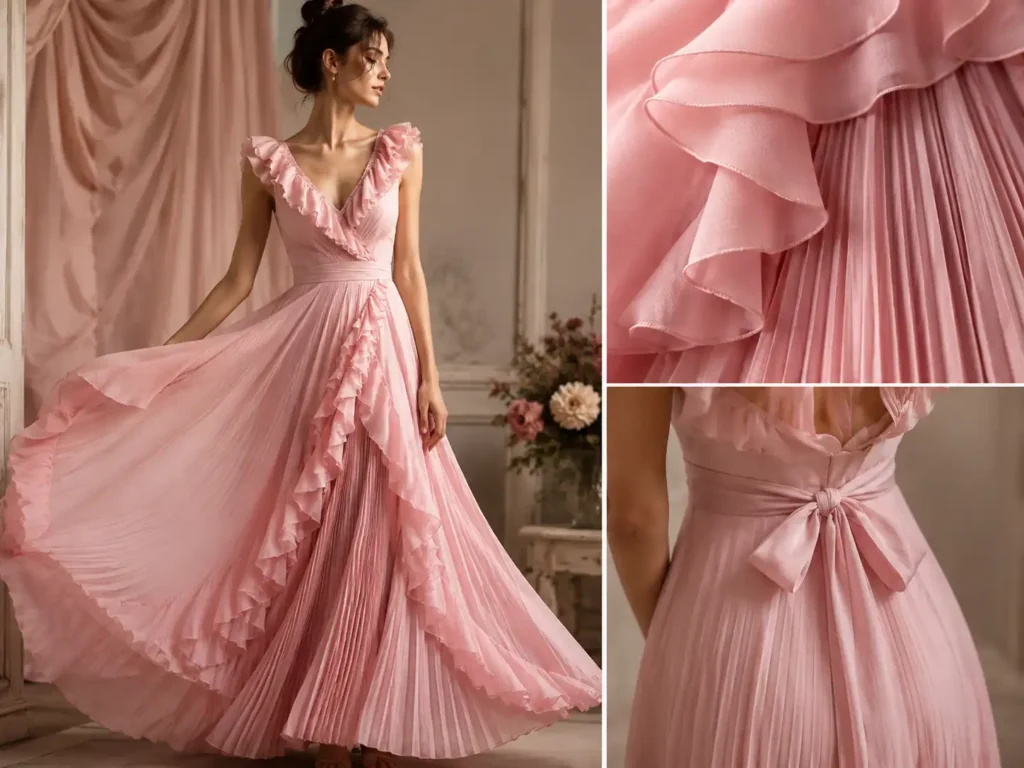
Pleats, Flounces, and Volume
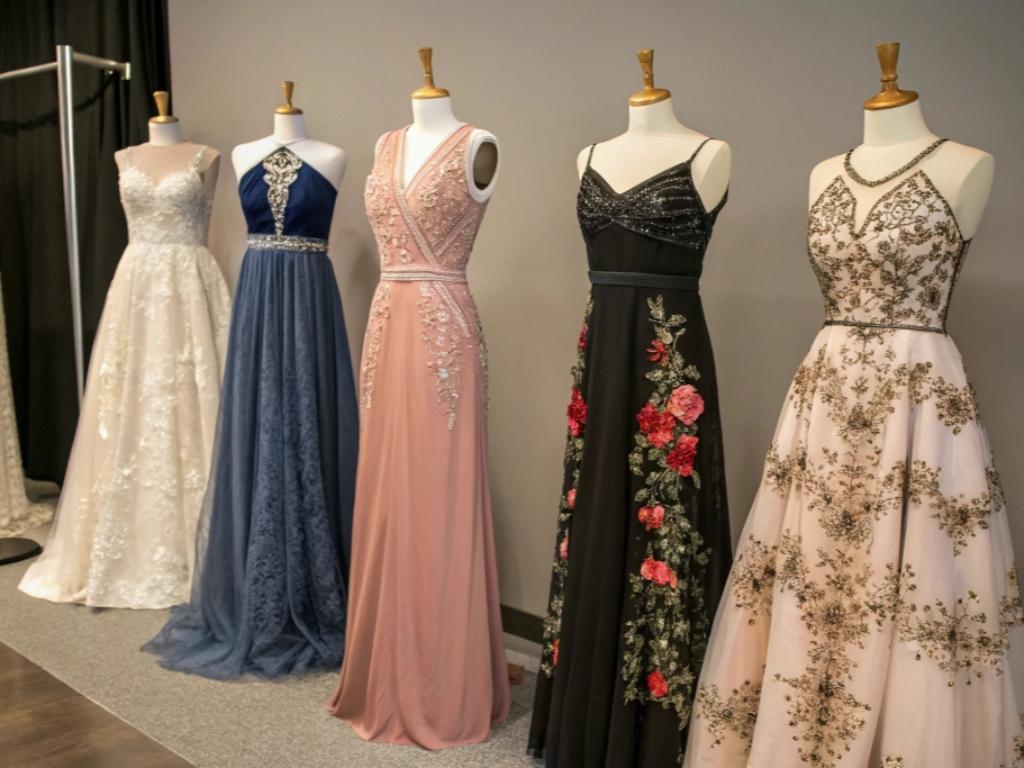
Print and Embroidery Placement
Bulk Production Control Across 10-30 Styles
A department store program is managed as a collection of separate production risks. Jinfeng allocates styles, materials, approvals, and delivery waves according to construction and commercial priority.
Factory and Line Allocation by Style
Orders commonly spanning 10-30 styles and 20,000-80,000 total units are divided by fabric family, construction type, quantity, finishing needs, and delivery priority. A satin evening dress, stretch bodycon style, printed resort dress, and lined work dress may require different production units even when they belong to one collection.
High-volume commercial styles can receive dedicated line planning, while fashion-led styles with heavier sampling or decoration follow a more specialized route. Allocation is completed before production release so capacity assumptions are linked to confirmed materials and approved construction.
- Planning inputs: quantity by style/color, size breakdown, material route, operation complexity, target delivery wave, packing method, and QC level.
Capacity is reviewed at program level rather than promised from the monthly total alone.
Pre-Production Readiness Before Cutting
Bulk cutting begins only after the required approval package is ready. The package normally includes approved fabric and trims, final measurement chart, PP sample or approved production sample, pattern version, BOM, workmanship notes, label files, packaging instructions, and color-size quantity breakdown.
Material receipt, shade grouping, shrinkage or performance checks where required, trim counts, label accuracy, and cutting information are reviewed before line release. Early verification prevents a program-wide error from entering several styles or colors at the same time.
- Readiness gates: material approval, PP approval, pattern release, label approval, pack instruction approval, and production schedule confirmation.
Unresolved design changes are separated from released production styles to protect the approved program.
Version Control, Progress, and Corrections
Every important change is assigned to a defined file or sample version. Merchandising updates the relevant pattern, measurement, material, construction, label, or packing record before production proceeds. Weekly progress can cover materials, samples, approvals, cutting, sewing, QC, finishing, packing, and shipment preparation.
Inline findings are handled while work is still in progress. Where a defect affects fit, appearance, measurement, or retail presentation, the responsible style is isolated, the cause is reviewed, and corrective instructions are issued before the same condition spreads across the program.
- Program visibility: style tracker, material tracker, sample tracker, approval log, production status, QC findings, packing status, and shipment plan.
Escalation focuses on decisions and deadlines rather than sending large volumes of unstructured updates.

Quality Control from Fabric Receipt to Carton Release
Fifteen or more QC inspectors cover material, inline, final, and packing checks. Inspection points are selected around the risks of each style, fabric, size range, and retail requirement.
| Control Stage | Core Checks | Risk Reduced | Records or Evidence |
|---|---|---|---|
| Fabric receipt | Color, handfeel, width, visible defects, direction, shade grouping, stretch or shrinkage checks when required | Color mismatch, cutting loss, poor recovery, surface defects | Fabric inspection and batch reference |
| Trims and labels | Specification, color, quantity, function, artwork, size coding, care content, barcode or ticket data | Wrong branding, closure failure, size-ticket errors | Approved reference and incoming check |
| Cutting | Pattern version, grain, print direction, lace placement, shade control, cut accuracy, bundling | Twisting, asymmetry, shade mixing, placement errors | Cutting inspection and bundle control |
| First piece and inline | Construction sequence, seam quality, measurements, support, symmetry, decoration, operator consistency | Program-wide sewing defects and late rework | Inline findings and corrective action |
| Measurement | Approved points of measure, critical dimensions, size progression, garment balance | Fit inconsistency, grading problems, high return risk | Measurement report by style and size |
| Appearance and finishing | Stains, shine, puckering, loose threads, pressing, hem balance, surface damage, garment presentation | Poor floor appearance and avoidable claims | Final appearance review |
| Packing | Labels, tickets, hangers if required, folding, polybag, size-color ratio, carton quantity, carton mark | Mis-packs, retail ticket errors, warehouse receiving problems | Packing check and carton record |
| Final release | Client inspection standard, internal final review, AQL sampling or third-party inspection when requested | Shipment of unresolved defects | Final report and release status |
Retail Labels, Tickets, and Packing Accuracy
Brand Label Set
UPC and Size Ticketing
Assortment Packing
Cartons and Shipping Data
Delivery Planning for Launch Windows and Replenishment
Backward Calendar Planning
Multi-Wave Delivery
Repeat and Replenishment
Department Store Dress Manufacturing Case Studies
Department store programs require a manufacturing partner that can manage complete assortments rather than individual styles. Jinfeng Apparel supports seasonal collections through structured development, fit control, retail labeling, packing management, bulk production and replenishment planning.

Case Study 1: Seasonal Dress Collection Program for a Department Store Brand
A North American fashion brand supplied department stores with seasonal womenswear collections.
The brand needed a manufacturing partner capable of managing:
- Multiple dress categories
- Different price positions
- Seasonal launch deadlines
- Retail packaging requirements
Program scope:
- 28 dress styles
- 72,000 pieces
- 6 color groups
- XS-XXL size range
- Multiple retail delivery windows
Product categories included:
- Day dresses
- Occasion dresses
- Party dresses
- Resort styles
- Coordinated sets
Program Challenge
The collection needed to balance commercial volume with fashion variety.
Assortment Management
The program included:
- Core commercial styles
- Seasonal fashion styles
- Higher-value occasion pieces
Each category required different:
- Fabric selection
- Construction methods
- QC standards
- Production allocation
Retail Calendar Pressure
The brand needed to coordinate:
- Line review samples
- Buyer approvals
- Photography samples
- PP approval
- Store delivery dates
Jinfeng Solution
Jinfeng created a collection-level production system.
Style Classification
Styles were divided into:
Core Volume Styles
For:
- Main department store inventory
- Stable repeat demand
Fashion Statement Styles
For:
- Seasonal differentiation
- Visual merchandising
Result
The brand achieved:
- 28 coordinated styles delivered
- Retail-ready packaging
- Multiple delivery windows completed
- Stable quality across categories
The collection system supported future seasonal programs.

Case Study 2: Private Label Dress Collection Development for Retail Distribution
A private-label fashion company developed exclusive dress collections for regional department stores.
The company required:
- Unique product identity
- Controlled pricing
- Reliable production
- Retail compliance
Collection included:
- Midi dresses
- Cocktail dresses
- Satin occasion styles
- Resort dresses
Program scope:
- 20 styles
- 45,000 pieces
- Multiple store allocations
- Private-label packaging
Program Challenge
The company needed to convert design ideas into retail-ready products.
Main challenges:
Product Development
Initial inputs included:
- Line sheets
- Reference images
- Sketches
The team needed support with:
- Fabric selection
- Pattern development
- Construction decisions
Retail Requirements
Each product required:
- Brand labels
- Care labels
- Size tickets
- UPC information
- Carton allocation
Jinfeng Solution
Jinfeng supported the complete private-label process.
Development Stage
Managed:
- Fabric sourcing
- Pattern engineering
- Sample correction
- Fit approval
Retail Standard Control
Prepared:
- Label artwork
- Packing instructions
- Barcode files
- SKU mapping
Result
The company achieved:
- Retail-ready dress collections
- Consistent private-label execution
- Accurate SKU management
- Stable seasonal production
The program expanded into additional retail seasons.
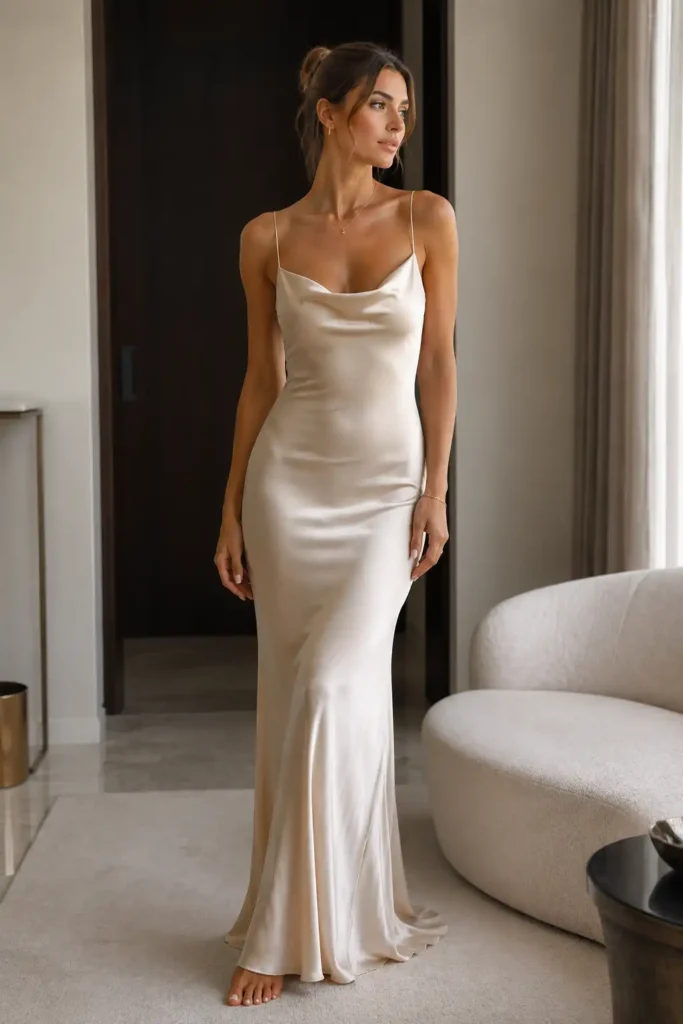
Case Study 3: Core Dress Replenishment and Seasonal Extension Program
A mature retail fashion brand had several proven dress styles selling through department stores and wanted to build a stronger replenishment system.
Core products included:
- Jersey midi dresses
- Satin slip dresses
- Occasion dresses
- Resort silhouettes
Program scope:
- 12 repeat styles
- 36,000 pieces
- New seasonal colors
- Multiple replenishment batches
Program Challenge
The brand wanted faster repeat production while maintaining the original product identity.
Main risks:
Product Consistency
Repeat orders needed to maintain:
- Original fit
- Fabric appearance
- Construction details
- Retail presentation
Seasonal Expansion
The brand also wanted:
- New colors
- Updated fabrics
- Related silhouettes
Jinfeng Solution
Jinfeng used historical production records.
Product Records
Maintained:
- Patterns
- Size charts
- BOM
- Fabric references
- Trim details
- QC records
Repeat Order Control
Reviewed:
- Current fabric availability
- Color batches
- Label updates
- Packing changes
Seasonal Extensions
Supported:
- New colors
- Length changes
- Related styles
- Collection expansion
Result
The brand achieved:
- Faster replenishment
- Stable repeat quality
- Controlled seasonal updates
- Reduced redevelopment time
Successful styles became long-term retail products.
Program Coordination Across Every Style
Style Tracker
Sample Tracker
Material Tracker
Weekly Progress
Risk Escalation
Shipment File Check
Compliance Documents and Testing Support
Factory Documentation
Material Certification
Third-Party Testing
Frequently Asked Questions for Department Store Programs
Yes. Styles are grouped by fabric, construction, sample route, quantity, production unit, and delivery priority. Separate trackers are used for materials, samples, approvals, bulk production, QC, packing, and shipment preparation.
MOQ starts from 200 pcs per style/color. Final requirements depend on fabric availability, custom colors, trims, construction, size breakdown, packaging, certification, and the material supplier’s own minimums.
Simple styles may take 7-10 days, standard dresses around 10-15 days, and complex corset, lace, mesh, sequin, strapless, or evening styles around 15-25 days. Special materials may follow supplier lead time.
XS-XL is a common reference range. US, UK, EU, AU, numeric, extended, and plus-size ranges can be developed from the brand’s approved standards, target market, fit feedback, and tolerance plan.
Capabilities cover mini, midi, maxi, day, work, party, cocktail, evening, wedding guest, graduation, resort, bodycon, corset, satin, mesh, lace, sequin, chiffon, knit, and related fashion categories.
Bulk release follows approved patterns, measurements, materials, trims, PP sample, workmanship notes, labels, and packing instructions. Inline inspection and measurement checks identify deviations while production is still in progress.
Yes, confirmed production and packing requirements can be translated into label, ticket, packing, carton, and document checkpoints. Requirements outside manufacturing, such as direct EDI transmission, are clarified during program review.
UPC stickers, price tickets, size strips, SKU labels, hangtags, and other identifiers can be applied from approved files. Data is checked against style, color, size, and pack information before use.
Yes. Launch, follow-up, and replenishment waves can be planned according to style priority, material readiness, order quantity, inspection status, logistics route, and required warehouse date.
Yes. Jinfeng supports NDA-based cooperation and retains approved patterns, measurements, fabric references, trim details, workmanship notes, labels, packing rules, and previous feedback for future orders.

Plan Your Department Store Dress Program
Send the information already available for the collection. A complete tech pack is helpful but not required for the first review. Kelly and the development team can assess the program from a line sheet, original sample, sketches, reference images, size chart, or material direction.
The first response will focus on product fit, development route, material feasibility, MOQ, sample timing, production planning, retail labeling, packing, and the information still needed for an accurate quotation. Clear inputs allow Jinfeng to evaluate the full assortment instead of quoting one style without understanding the collection.
- Line sheet, tech packs, sketches, reference images, or original sample photos.
- Target quantity by style and color, including the expected total program volume.
- Required size range, fit standard, base size, size chart, and pack ratio.
- Fabric direction, target price position, color plan, trims, and special construction.
- Required sample types, line review date, PP approval target, and delivery window.
- Brand labels, care labels, UPC or ticket files, packaging, carton, and vendor manual requirements.
- Testing, audit, certification, inspection, freight, and warehouse requirements.


