 Skip to content
Dress Manufacturer for Commercial Womenswear Teams
Commercial dress development built around sourcing, merchandising, product, technical, quality and production teams managing seasonal womenswear programs.
- Multi-Style Programs: Structured support for 10-30 styles and commercial order plans ranging from 20,000 to 80,000 garments across coordinated color and size ratios.
- Development Resources: 2 sample rooms, 7+ senior pattern makers and 20+ sample machinists support pattern development, fit correction, sample revisions and PP approval.
- Production Network: 6 owned women’s fashion factories, 10+ long-term production partners and 100,000+ pieces of regular monthly capacity support planned seasonal production.
- Project Control: 12+ merchandisers and 15+ QC inspectors connect fabric status, sample approvals, production milestones, packing requirements and shipment preparation.
Manufacturing Capacity for Commercial Dress Programs
Since 2008
6 Owned Factories
10+ Production Partners
2 Sample Rooms
7+ Pattern Makers
100,000+ Monthly Capacity
Built Around Your Commercial Womenswear Team
Sourcing Teams
Key outputs: factory fit review, quantity feasibility, quotation basis, capacity planning and NDA support.
Product Development
Key outputs: fabric direction, first pattern, sample status, revision record and PP approval path.
Merchandising Teams
Key outputs: style priority, target-cost discussion, color planning, launch schedule and order split.
Technical Teams
Key outputs: measurement chart, pattern correction, fit notes, grade rules and QC measurement points.
QA Teams
Key outputs: QC checklist, defect classification, measurement controls, inspection feedback and corrective action.
Operations Teams
Key outputs: production status, packing list, carton data, shipment booking support and multi-batch coordination.
A Manufacturing Fit for Established Womenswear Programs
Strong Project Fit
- Project signals: clear style direction, quantity by style and color, sample budget, target market, size range and launch window.
- Program scope: seasonal collections, repeated colorways, multiple styles, retail packing and long-term supplier development.
Operating Boundaries
- MOQ basis: from 200 pcs per style/color, subject to material, trim, construction, packing and schedule.
- Assessment rule: complex materials, custom colors, printing, special trims and certified resources may have separate supplier requirements.

Where Commercial Dress Programs Lose Control
Sample-Bulk Gap
Unstable Materials
Fit Across Sizes
Late Cost Changes
Missed Launch Dates
Packing Errors
What Commercial-Ready Dress Manufacturing Requires
Product Feasibility
Controlled points: transparency, stretch, drape, bust support, seam loading, hem behavior, trim availability and production tolerance.
Commercial Discipline
Planning points: MOQ, color consolidation, size ratios, shared fabrics, production complexity and split shipment options.
Repeatable Execution
Control files: PP sample, golden sample, BOM, sewing instructions, QC checklist, packing specification and revision history.
Dress Categories for Commercial Womenswear Assortments

Mini Dresses

Midi Dresses

Maxi Dresses

Party Dresses
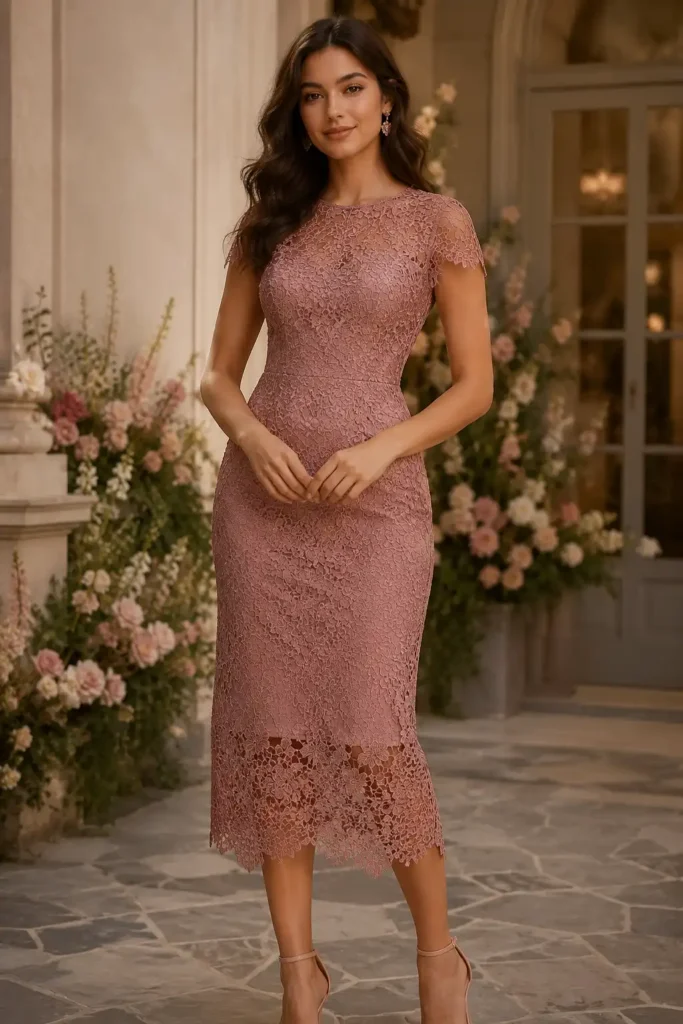
Occasion Dresses

Bodycon Dresses

Corset Dresses

Fabric-Led Dresses
Building a Balanced Commercial Dress Collection
Hero Styles
Core Volume
Color Extensions
Supporting Categories
Fabric Decisions That Protect Product and Margin
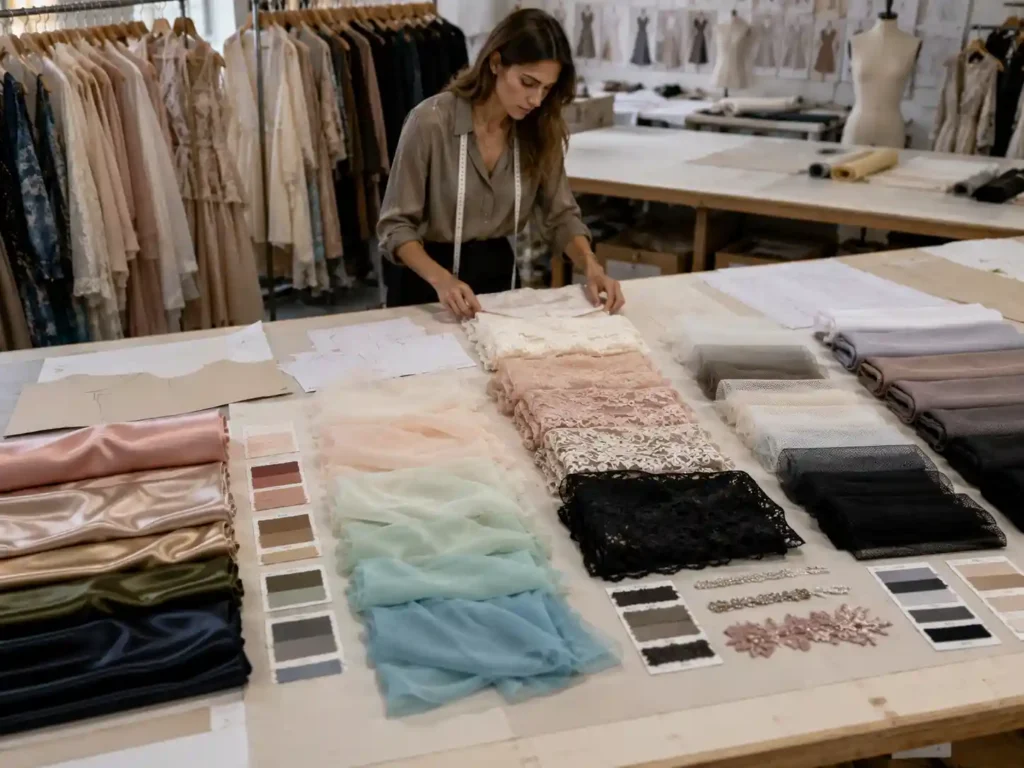
Fabric direction controls appearance, fit, cost, MOQ, sample timing and bulk consistency. Selection begins with composition, weight, width, stretch, drape, transparency, surface behavior, color availability and required testing rather than a fabric name alone.
| Fabric Group | Commercial Use | Selection Data | Main Risks | Production Controls |
|---|---|---|---|---|
| Polyester woven and blends | Volume dresses, printed styles, structured day dresses | Weight, width, drape, opacity, pilling, color availability | Flat handfeel, shine mismatch, pilling, heat marks | Swatch approval, lining review, pressing test, bulk shade check |
| Satin and charmeuse | Slip, party, cocktail and occasion dresses | Surface shine, weight, drape, snag resistance, bias behavior | Snags, shade shift, seam impression, puckering, press marks | Direction control, needle choice, seam method, surface protection |
| Chiffon and georgette | Maxi, resort, bridesmaid and layered occasion styles | Transparency, weight, slip, print direction, lining need | Panel movement, uneven hem, snagging, visible seams | Layer control, cutting stability, hem leveling, careful pressing |
| Jersey, ponte and stretch knit | Bodycon, fitted day dresses and coordinated sets | Stretch percentage, recovery, weight, shrinkage, handfeel | Measurement drift, side seam twist, neckline distortion | Relaxation, stretch-direction control, recovery check, measurement QC |
| Mesh and lace | Statement, occasion, corset and layered dresses | Hole size, softness, stretch, motif, placement and edge quality | Holes, mismatch, scratchiness, seam distortion | Panel inspection, placement map, reinforcement, lining coverage |
| Sequin and velvet | Holiday, evening, party and high-visual capsules | Surface direction, decoration security, pile, thickness, backing | Sequin loss, skin irritation, needle breakage, pile shading | Directional cutting, seam cleaning, comfort check, protective packing |
| Certified material resources | Programs with specified safety or sustainability requirements | Supplier, batch, certificate scope, color, MOQ and lead time | Certificate mismatch, limited stock, higher MOQ, longer timing | Document review by fabric, supplier, batch and actual project scope |
Fit and Structure Across Commercial Dress Silhouettes
Dress fit must be translated into measurable pattern decisions. Our pattern and sample teams control critical points according to silhouette, material behavior, target market and intended size range rather than using one general fitting rule.

Bodycon and Stretch Fit
Bodycon dresses depend on controlled negative ease and fabric recovery. Pattern dimensions are reviewed against stretch percentage, direction, weight, lining and intended compression. An approved base size is measured through bust, waist, high hip, full hip, length, neckline and armhole before grade rules are applied. When a program covers XS-3XL, curve progression and length growth require review so the smallest and largest sizes remain visually balanced rather than simply scaled.
- Fit risk: Excessive reduction creates seam strain, neckline distortion and riding; insufficient reduction creates loose areas and poor recovery.
- Sample proof: Fit photos, garment measurements and stretch notes are recorded with the revised pattern.
Bulk control: Fabric relaxation, cutting direction and measurement checkpoints remain linked to the approved sample.

Corset and Strapless Support
Corset and strapless dresses are developed around support, comfort and movement. Cup size, under-bust placement, boning length, panel shape, zipper position, top-edge tension, lining and anti-slip details must work together. A visually attractive front panel may still fail when the back neckline sits away from the body or boning ends create pressure. Sample review therefore includes upright posture, seated movement, arm movement and closure stability.
- Support system: Bra cups, boning, interfacing, lining, elastic or anti-slip components are selected as one structure.
- Symmetry control: Panel seams, cups, neckline and waist points are checked from front, side and back.
Production standard: Boning and cup positions are marked in the pattern and workmanship instructions for bulk consistency.
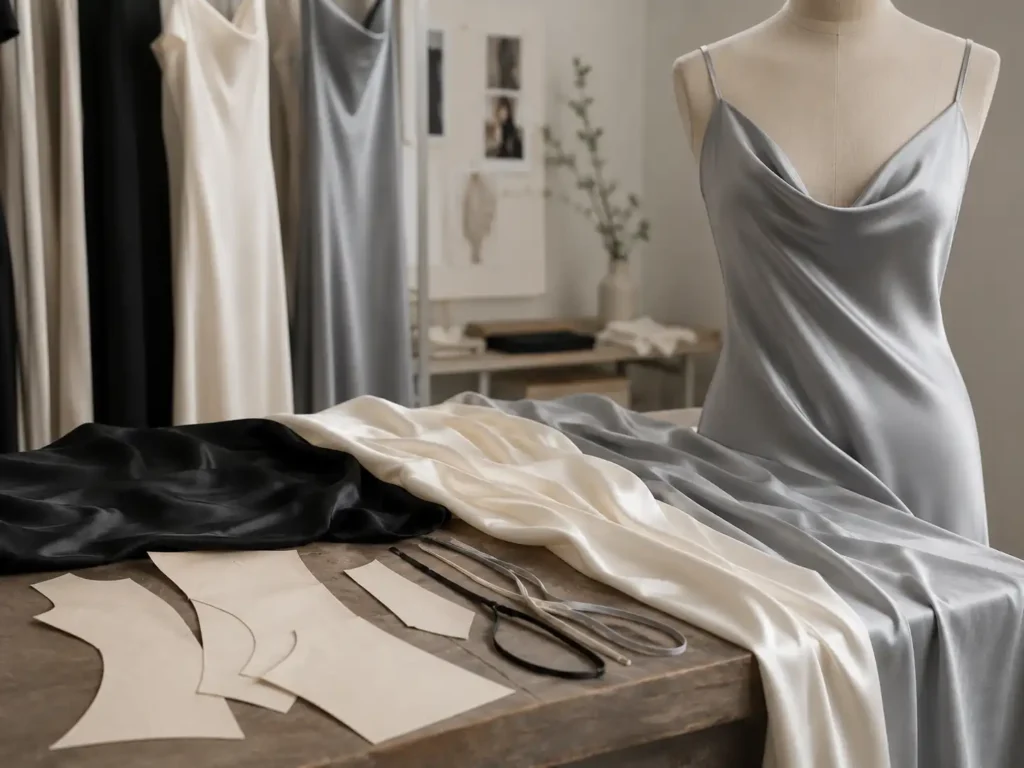
Slip and Bias-Cut Balance
Slip dresses appear simple because construction is exposed rather than hidden. Satin shine, bias movement, neckline depth, strap length, bust coverage, lining and hem balance require precise control. Bias-cut panels may lengthen after hanging, while a lightweight satin can show seam puckering or pressing marks. Samples are rested, measured and reviewed before hem length is locked, especially for midi and maxi silhouettes.
- Design control: Neckline, strap placement and back depth are balanced for the intended styling and coverage.
- Fabric control: Bias behavior, seam method and lining compatibility are tested with the selected material.
Finishing control: Pressing temperature, hanger or folded packing and surface protection are confirmed before bulk.

Maxi and Jumpsuit Proportion
Long silhouettes magnify length and balance errors. Maxi dresses require front-back hem control, sweep, slit position, lining length and floor clearance. Jumpsuits add waist placement, torso length, rise, inseam and movement through sitting and walking. The same overall length can fit very differently across body proportions, so final measurements must specify each functional point rather than only total garment length.
- Measurement points: Front length, back length, waist position, slit height, hem width, rise and inseam are controlled separately.
- Grade review: Length growth and body rise are reviewed across the intended size range.
Bulk check: Hems, waistlines and side seams are compared against approved reference garments during production.
Workmanship Built for Visible Fashion Details
Fashion dresses reveal construction errors quickly. Stitching, seam allowance, lining, closures, ruching, lace placement, decoration and pressing are specified according to the approved sample so visual details remain consistent across production.
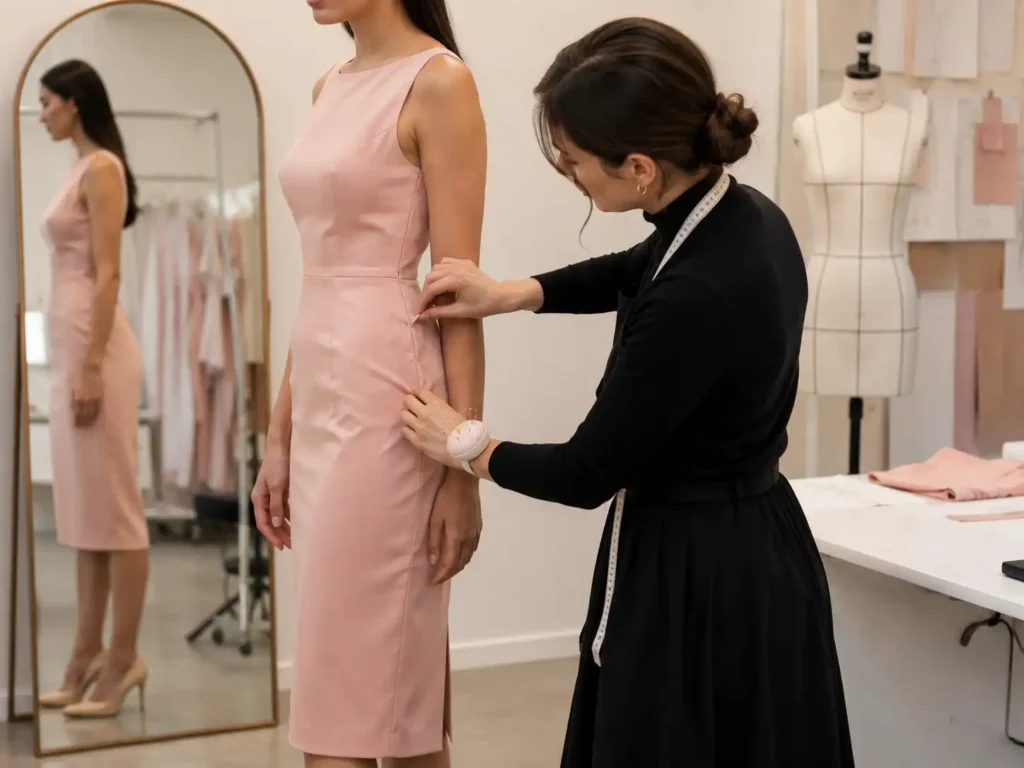
Seams, Stitching and Edge Finish
Workmanship begins with seam choice, stitch type, stitch density, seam allowance and edge treatment appropriate to the material. Satin needs clean feeding and reduced puckering; chiffon needs stable handling without heavy seam buildup; stretch knits need elasticity without broken stitches; mesh and lace need reinforcement without visible bulk. First-piece review checks whether the approved construction can be repeated efficiently before production volume increases.
- Production file: Thread color, stitch type, seam allowance, edge finish, needle requirement and sensitive areas are recorded.
- Visual result: Side seams, neckline edges, hems and closures are assessed under natural and production lighting.
Risk control: Problems found during first-piece review are corrected before they spread across the sewing line.
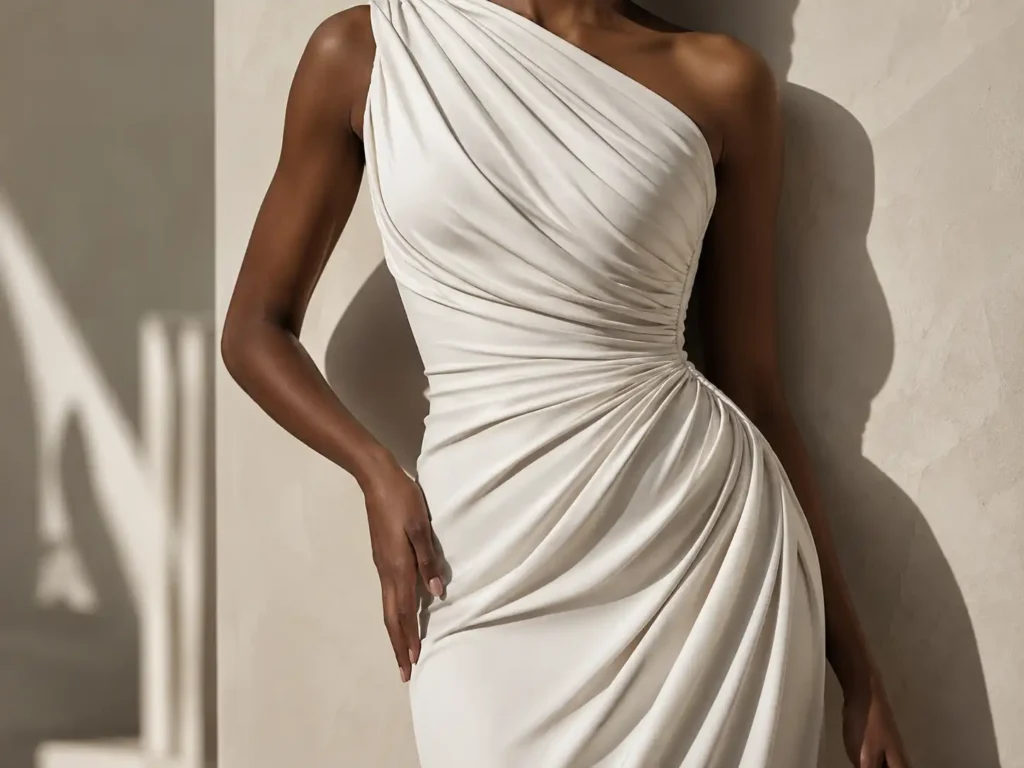
Ruching, Draping and Symmetry
Ruching and draping can create strong commercial value, but inconsistent gathering changes garment length, waist placement and left-right balance. Pattern notches, gathering ratios, elastic length, panel reference points and finished measurements are defined. For asymmetrical styles, the approved drape is compared through front, side and back views instead of relying only on a flat garment image.
- Controlled data: Gathering length, elastic length, seam endpoints, drape direction and finished dimensions.
- Inspection focus: Left-right balance, twist, fullness distribution, waistline and hem.
Bulk comparison: Inline samples are compared with the golden sample before the full quantity is completed.

Lace, Mesh and Decoration Placement
Lace motifs, mesh panels, sequins, stones and trims often create the strongest visual identity in a collection. Placement must be engineered for body coverage, symmetry, seam matching, wearing comfort and cutting yield. Decorative materials are checked before cutting for damaged areas, direction and usable width. Placement maps or reference marks help production repeat the approved sample without random variation.
- Placement control: Motif center, neckline, bust, waist, cut-out edge, side seam and hem alignment.
- Comfort control: Scratchy edges, exposed sequins, bulky seams and transparent areas are checked on body.
Packing control: Surface protection prevents abrasion, snagging and decoration transfer during transport.

Pressing and Final Appearance
Pressing is a manufacturing operation, not cosmetic cleanup. Temperature, steam, pressure and support must suit satin, velvet, chiffon, lace, mesh, ponte and decorated fabrics. Incorrect pressing can change shine, flatten pile, stretch seams, mark panels or distort hems. Final appearance is checked after pressing and again after packing because folding can create new creases or disturb structured areas.
- Material-specific setup: Heat and steam are tested on the actual fabric and decoration.
- Appearance standard: Seam smoothness, drape, neckline, hem, zipper area and surface condition are reviewed.
Packing link: Fold, hanger, tissue or protective layer is selected according to the garment structure.
Multi-Style Sampling Without Version Confusion
Commercial teams often develop 10-30 styles at the same time. Samples are organized by fabric group, silhouette, complexity, priority and approval status so important launch products move first and every revision remains traceable.

Project Inputs and Sample Waves
Development can begin from a tech pack, line sheet, original sample, sketch or reference image. Each style is reviewed for construction, material direction, trim requirements, MOQ fit and development risk. Styles are then grouped into waves. Hero styles, photo-sample deadlines, shared fabrics and complex constructions receive earlier attention, while lower-risk extensions can follow once the core fit or fabric direction is approved.
- Required inputs: Style reference, quantity by style/color, size range, fabric direction, target market, private-label needs and target delivery.
- Wave planning: Priority is based on launch role, fabric readiness, pattern complexity and approval dependency.
Communication: A status list separates pattern, first sample, fitting, revision, PP and approved stages.

Sample Types and Their Purpose
A first sample tests structure, fabric direction, proportion and workmanship feasibility; it is not automatically the final bulk standard. A fit sample focuses on measurement and body balance. Revised samples confirm corrections. Photo-ready or salesman samples may support imagery or sales activity. The PP sample locks production details, while the golden sample provides a visual and technical reference for bulk control.
- Timing guidance: When standard materials are ready, first-sample planning commonly falls around 7-15 business days; complex fabrics or multiple style waves are scheduled separately.
- Revision guidance: A revised sample commonly requires 5-10 business days after complete comments and material availability.
PP guidance: PP timing is confirmed after final fabric, trims, measurements, labels and packing requirements are available.

Measurement and Revision Records
Each review should create an actionable record. Garment measurements are checked against the approved size chart, and comments are linked to pattern, fabric, trim or workmanship changes. A statement such as “make it fit better” is translated into specific actions: reduce neckline depth, raise armhole, shift waistline, adjust hip ease, change strap length or rebalance the hem. Approval status is recorded for every change.
- Measured points: Bust, waist, hip, length, strap, armhole, neckline, slit, hem and jumpsuit rise when applicable.
- Revision record: Original condition, requested change, pattern action, material impact, cost impact and approval status.
Bulk transfer: Final pattern, PP measurements, workmanship and QC points are issued together.

From PP Approval to Production
Bulk production begins only after the required approvals are complete. Final fabric, color, trims, size chart, labels, packing method, PP sample and production instructions must align. Late changes are reviewed for material, pattern, price and delivery impact instead of being inserted informally. This protects the brand from developing one product and manufacturing another.
- Locked standards: Final pattern, PP sample, golden sample, BOM, sewing instruction, trim positions and packing file.
- Change control: Any change after approval is assessed before material or production commitments are altered.
Handover: Merchandising, production and QC teams work from the same confirmed records.
One Workflow Across Internal Teams
Project Review
Material Direction
Pattern Development
Sample Approval
Bulk Preparation
Production and QC
Commercial MOQ, Costing and Timing Boundaries
MOQ Structure
Costing Basis
Timing Basis
Production Planning for Multi-Style Dress Orders
Bulk orders are allocated according to product structure, material, workmanship, quantity and delivery sequence. A 20-style program cannot be managed as one generic production block, especially when satin, stretch, lace, mesh, sequin and corset products require different skills and QC priorities.
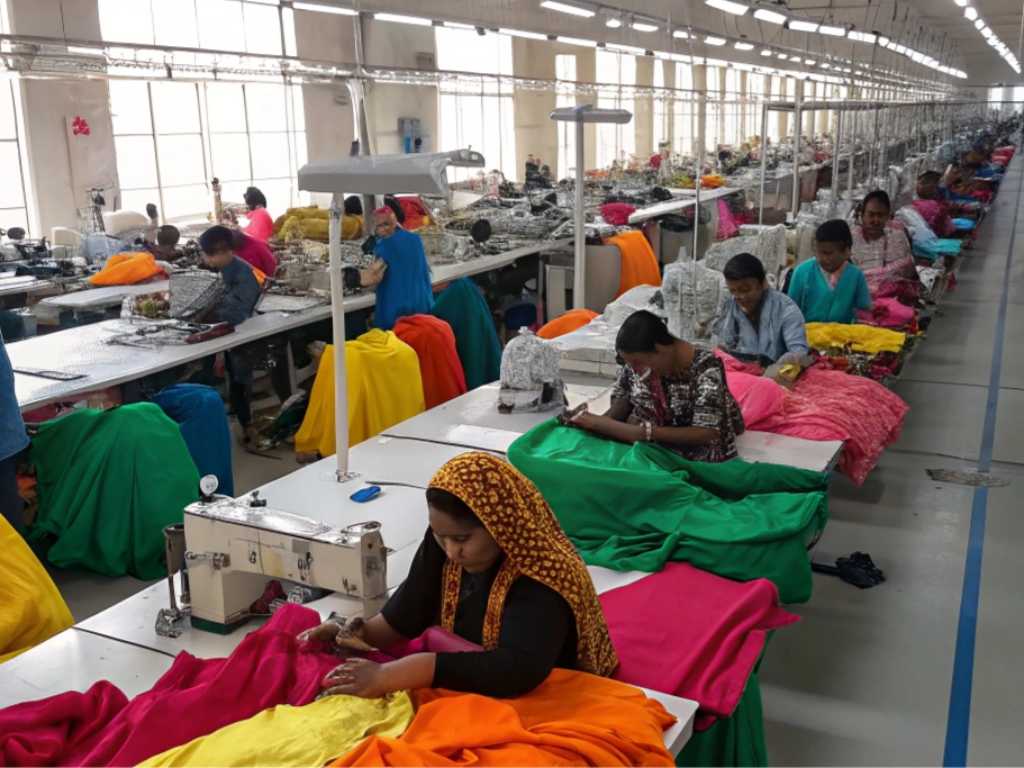
Factory Allocation by Product Risk
Jinfeng Apparel operates 6 owned women’s fashion factories and works with 10+ long-term production partners. Allocation is based on fabric handling, construction difficulty, workmanship, quantity, production window and quality requirements. Regular woven dresses, stretch bodycon styles, delicate occasion products and decorated party pieces are not assigned under one universal rule. Complex products may be concentrated in a suitable line while commercial volume styles use separate capacity.
- Allocation data: Style category, material, unit quantity, sewing complexity, finishing requirement and delivery priority.
- Capacity rule: The 100,000+ regular monthly capacity represents the coordinated system, not an identical output promise for every complex dress.
Risk protection: Factory fit is confirmed before final production timing is committed.
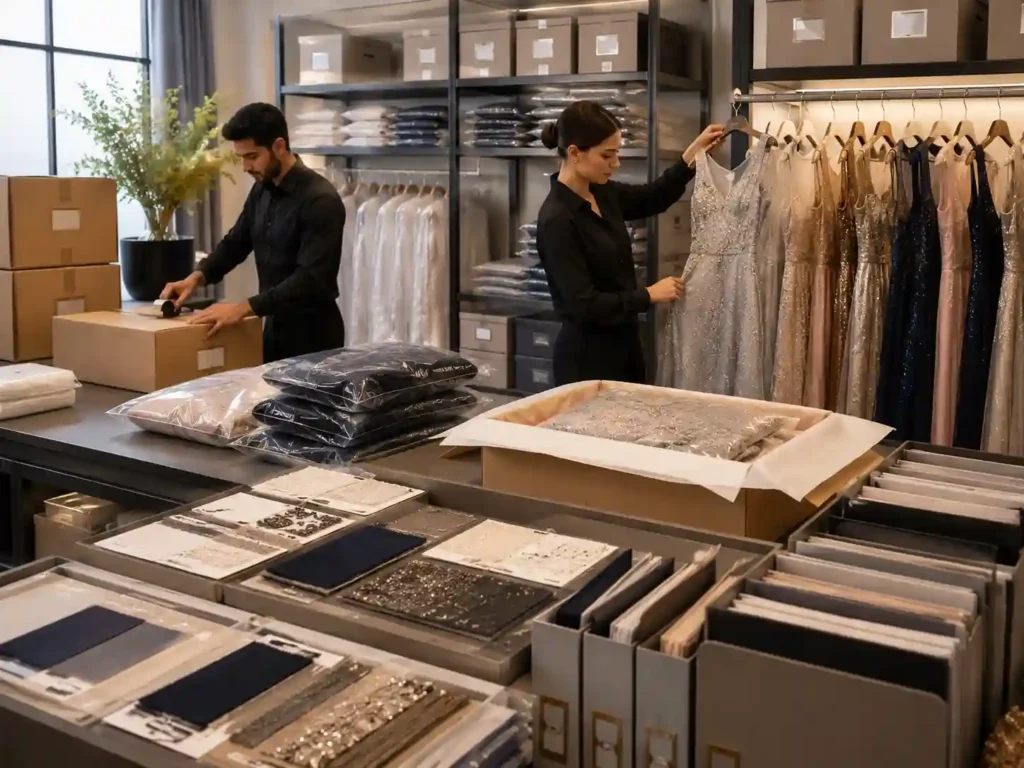
Pre-Production Control
Production begins after PP approval and a pre-production review. The team confirms final patterns, bulk fabric, dye lot, trims, thread, labels, packaging, measurements, sewing instructions, tolerance, inspection requirements and delivery schedule. These records reduce errors caused by outdated samples or informal changes. For multi-style programs, a style-level readiness list prevents one missing trim or unapproved color from blocking all other products.
- Required records: PP sample, golden sample, final pattern, BOM, size chart, packing specification and QC checklist.
- Readiness status: Approved, pending material, pending comment, pending label or ready for production.
Escalation: Any conflict affecting cost, appearance or timing is raised before cutting.
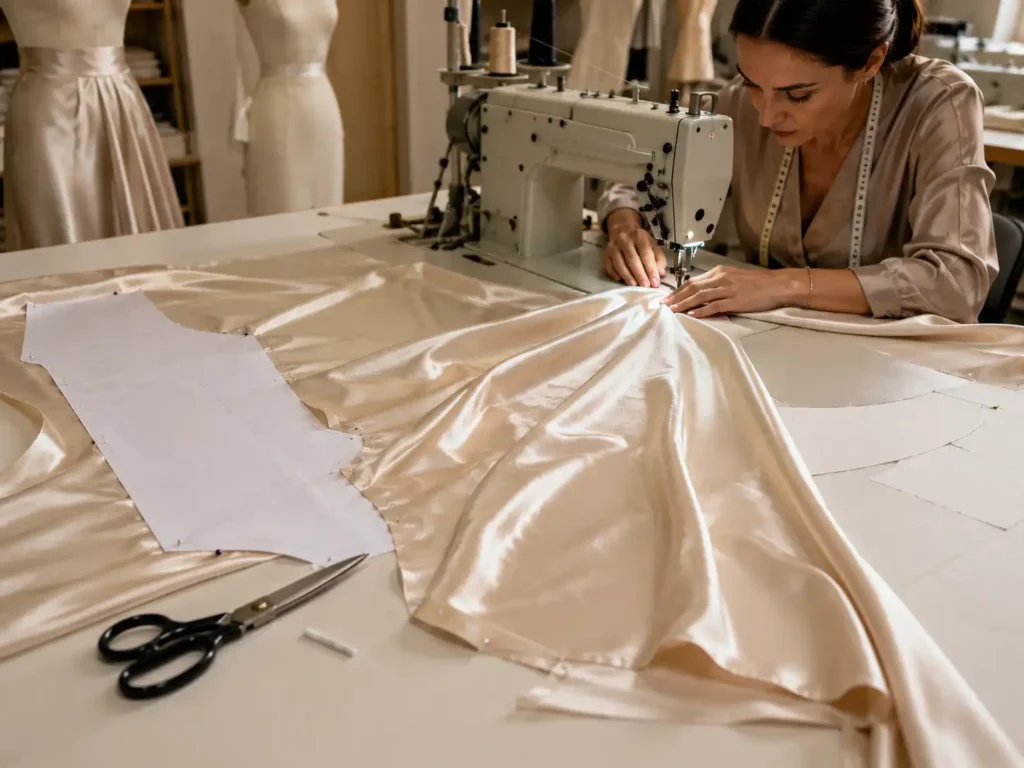
Cutting, Sewing and Inline Control
Bulk production follows material inspection, fabric relaxation when required, marker confirmation, cutting, cut-panel checks, sewing and inline inspection. Cut panels are controlled for direction, size, quantity, print or motif placement and damage. Inline checks focus on neckline, straps, waistline, zipper, ruching, lining, slit, symmetry, stitch quality and sensitive fabric areas. Corrective action is made while the style is still in production rather than waiting for final inspection.
- Cutting control: Front-back side, grain direction, shade grouping, motif placement, size bundles and damaged panels.
- Sewing control: First piece, stitch method, seam allowance, trim position and approved visual standard.
Inline response: Defects are recorded, corrected and rechecked before the same issue expands.
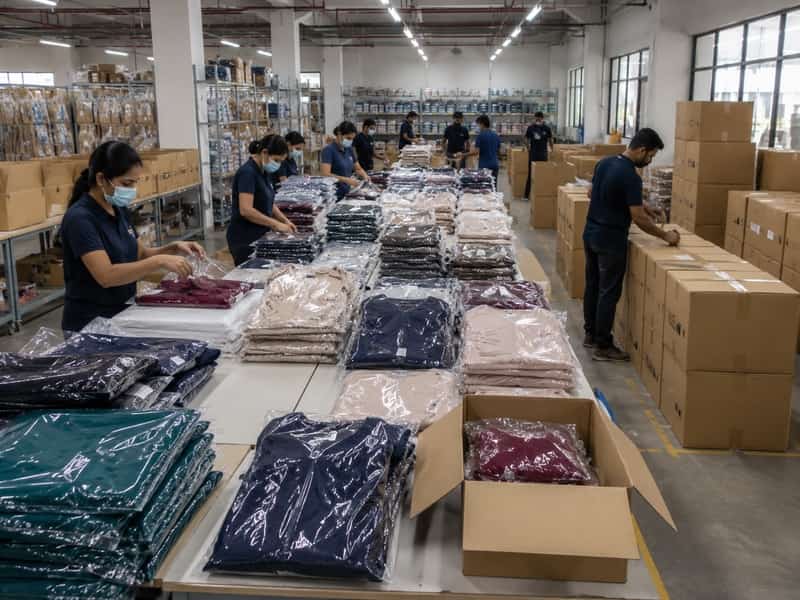
Finishing, Packing and Delivery Readiness
After sewing, garments move through thread cleaning, pressing, appearance inspection, measurement checks, label verification, folding or hanging, polybagging and carton packing. Production is not complete until style-color-size quantities, SKU labels, barcodes, carton marks and documents match the order. Split shipments can be reviewed when priority styles or sales dates require an earlier first batch, while remaining quantities move under the planned freight method.
- Finishing check: Surface condition, drape, symmetry, zipper, lining, hem, pressing and decoration security.
- Packing check: Label, size, SKU, barcode, polybag, ratio, carton mark, carton quantity and warehouse instruction.
Delivery records: Commercial invoice, packing list, carton dimensions, gross/net weight and forwarder coordination.
Quality Control Based on Dress-Specific Risks
Quality control changes according to product construction and material. A satin dress, mesh dress and stretch bodycon style cannot be judged by one generic checklist. Inspection points are established from the approved sample and known category risks.
| Dress Category | Primary Risk | Process Control | Final Inspection Focus |
|---|---|---|---|
| Satin and slip dresses | Snags, shade, seam puckering, pressing marks, bias distortion | Fabric surface review, direction control, seam trial, protected handling | Surface condition, seam smoothness, neckline, strap, hem and pressing |
| Chiffon and maxi dresses | Panel slipping, transparency, uneven hem, snagging, lining mismatch | Layer control, stable cutting, panel inspection, hem resting | Hem balance, transparency, lining length, pleats and surface damage |
| Mesh and lace dresses | Holes, motif mismatch, seam distortion, scratchy edges | Incoming panel check, placement map, reinforcement, protected sewing | Placement, coverage, symmetry, seam security and comfort |
| Sequin and decorated dresses | Sequin loss, sharp edges, needle breakage, bulky seams, transit damage | Decoration check, seam cleaning, edge protection, inline comfort review | Decoration security, skin contact, symmetry and protective packing |
| Bodycon and knit dresses | Measurement drift, poor recovery, twisting, neckline deformation | Fabric relaxation, stretch-direction control, measurement checks | Bust-waist-hip, recovery, side seams, neckline and hem |
| Corset and structured dresses | Cup mismatch, weak support, boning discomfort, zipper distortion | Panel symmetry, cup and boning placement, first-piece review | Support, neckline stability, closure, comfort, symmetry and fit |
| Private-label orders | Incorrect label, barcode, SKU, size sticker or carton data | Packing instruction, barcode test, SKU list and ratio check | Garment-to-label match, scan result, carton mark and quantity breakdown |
Private Label Dresses Ready for Retail Operations
Labels and Hangtags

SKU and Barcode
Packaging Standards

Export Coordination
Compliance Support and Confidential Product Development

Factory Review Support
- client audit coordination
- document review
- production-process explanation
- third-party inspection cooperation
Material Documentation
NDA and Brand Protection
Evidence From Multi-Style Dress Programs
The following anonymized program examples reflect commercial order structures currently handled across 10-30 styles and 20,000-80,000 garments. Names, logos, proprietary patterns, labels and unpublished products remain protected.

US Occasionwear Collection - 18 Styles / 36,800 Pieces
A US occasionwear brand developed an 18-style collection covering satin midi dresses, corset mini dresses, mesh-panel styles and lace occasion products. The program included 11 colors and an XS-3XL size range. The main risk was keeping corset support, satin surface quality and lace placement consistent while several styles shared launch and photography deadlines. Styles were divided into three sample waves based on complexity and campaign priority. Approved core fits were used across related silhouettes, while corset and mesh products received separate pattern and comfort reviews.
- Development record: 3 sample rounds for complex styles; 2 rounds for lower-risk commercial styles.
- Production control: PP samples, material batch approval, placement references, inline checks and style-specific QC points.
- Delivery result: 36,800 pieces completed in staged production, with priority campaign styles released in the first shipment and the remaining assortment following under the agreed schedule.
Commercial outcome: A repeat program added new satin colors and two related silhouettes using retained pattern and packing records.

European Resort Program - 24 Styles / 58,400 Pieces
A European womenswear group planned 24 resort and vacation styles using printed woven, chiffon, rayon blends, light satin and coordinated matching pieces. The range covered 14 colors and prints across XS-XXL. Material availability and print direction created the largest schedule risk. Fabric groups were booked and approved in sequence, with hero maxi dresses prioritized for campaign photography. Shared fabrics were used across selected dresses, skirts and tops, while each style retained its own fit and workmanship standards.
- Development record: 24 styles organized into four waves by fabric group, print readiness and silhouette.
- Production control: Print direction, transparency, lining, hem leveling, packing folds and barcode/SKU accuracy.
- Delivery result: 58,400 garments produced through coordinated factory allocation and a planned air-plus-sea shipment split.
Commercial outcome: Core printed shapes were retained for the following season, with new colorways reviewed under the per-color M

Private-Label Ecommerce Drop - 14 Styles / 27,600 Pieces
A multi-channel ecommerce label launched 14 fitted, party and date-night styles across bodycon jersey, mesh, satin and sequin constructions. Quantities were concentrated in proven black, red and neutral colors, with XS-3XL grading and detailed warehouse SKU requirements. The central issue was reducing return risk from fit inconsistency while protecting decoration and ensuring every barcode matched the style-color-size file.
- Development record: Fit samples were measured across core blocks; selected extended sizes received additional review before grading was locked.
- Production control: Fabric recovery, neckline and armhole balance, sequin comfort, inline measurements, barcode scans and carton ratio verification.
- Delivery result: 27,600 pieces completed within the approved production window and delivered with style-color-size packing records for warehouse receiving.
Commercial outcome: Two strongest styles moved into a repeat-order review using the approved fit, fabric and packaging records.
Frequently Asked Questions for Commercial Dress Teams
MOQ starts from 200 pcs per style/color. Quantity is calculated by individual style and color, not by combining several styles into one total. Custom-dyed, printed, certified or special fabrics, trims and packaging may carry separate supplier MOQ requirements.
Yes. Multi-style programs are organized by fabric group, silhouette, complexity, launch priority, material readiness and approval status. A style-level tracker separates pattern, sample, PP, production, QC and packing status so one delayed style does not hide the progress of the remaining assortment.
Send a tech pack, line sheet, original sample photos, sketches or reference images together with quantity per style/color, size range, fabric direction, label and packing requirements, target market and delivery window. Complete information produces a more accurate feasibility and costing review.
Timing depends on material readiness, construction and sample type. Standard first-sample planning commonly falls around 7-15 business days after direction is confirmed. Revised samples commonly require around 5-10 business days after complete comments. Complex corset, lace, mesh, sequin or multi-style programs are scheduled in waves.
A photo-ready sample supports campaign or ecommerce imagery and may be prepared before every production detail is locked. A PP sample confirms final fabric, color, trims, measurements, workmanship, labels and packing requirements for bulk production. Photo approval does not replace PP approval.
Bulk timing begins after PP approval, material readiness and final production files. Standard commercial programs are often planned around 35-55 days, while complex materials, custom colors, decorations, peak-season capacity and special packing require separate scheduling. Freight time is added according to destination and shipping method.
Production uses the final pattern, size chart, PP sample, golden sample, BOM, sewing instructions, trim positions, QC checklist and packing specification. Materials are checked before cutting, first pieces are reviewed, inline production is inspected and finished garments are compared against the approved standard.
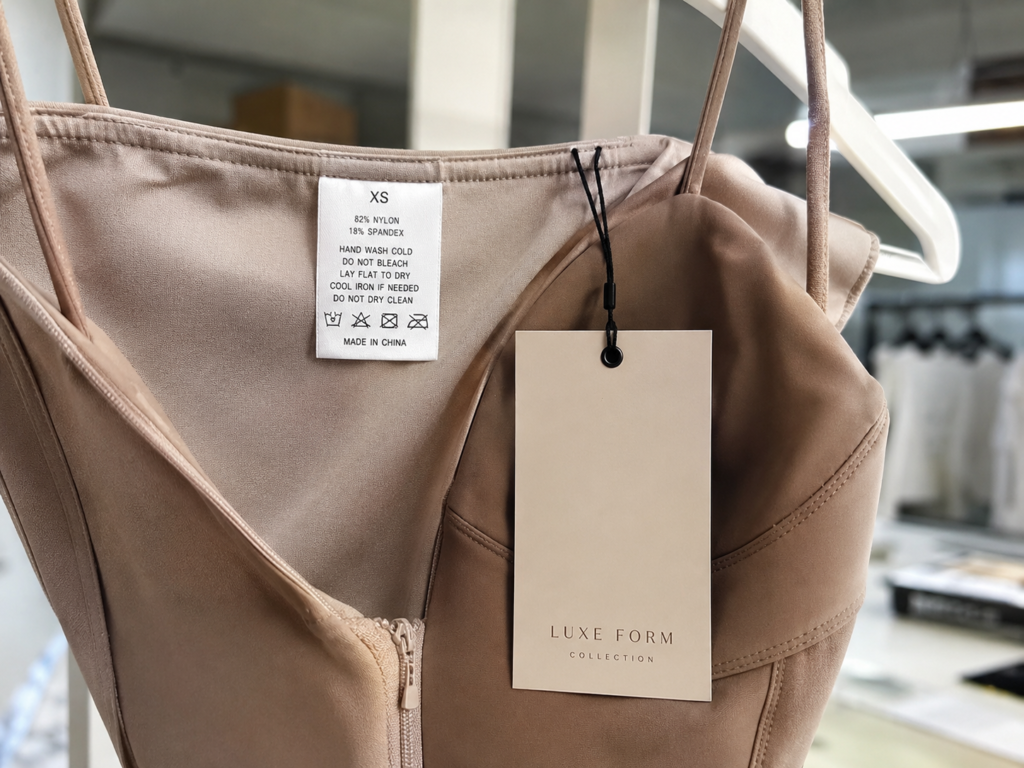
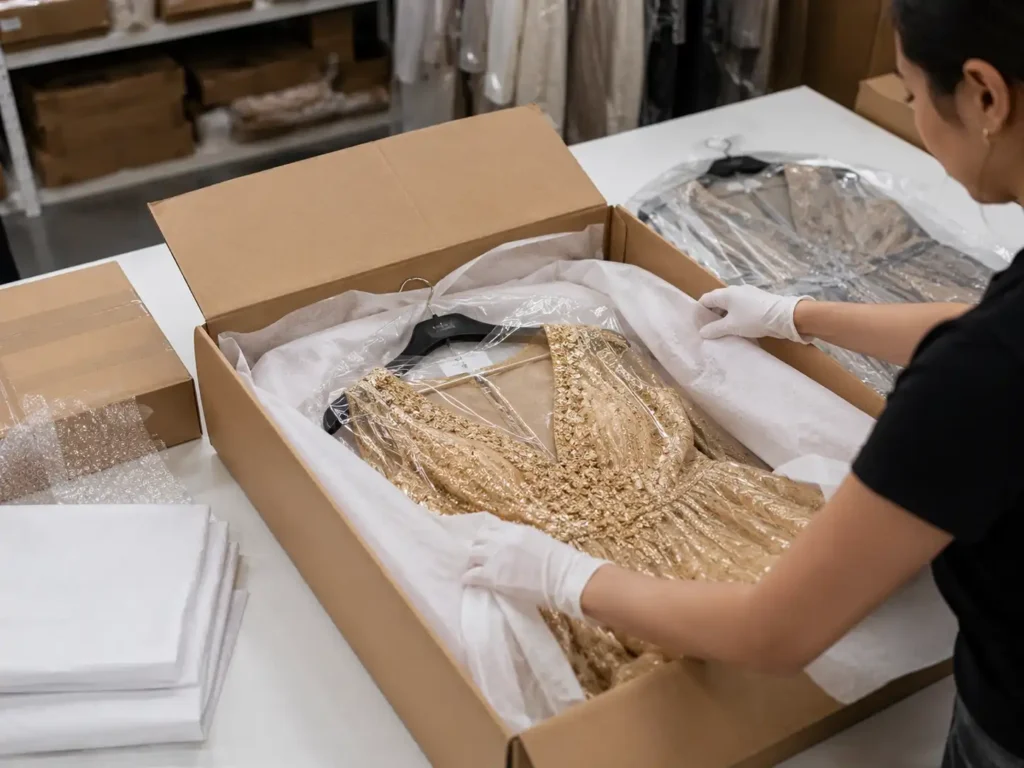
Yes. Support can include main labels, size labels, care labels, hangtags, barcodes, SKU stickers, polybags, inserts, cartons, carton marks and warehouse labels. Artwork, placement, scanability, style-color-size matching and carton breakdown are verified against the packing file.
Audit-related documents, third-party inspection, material testing and certified fabric resources can be reviewed by project. Availability and claims depend on the selected factory, fabric supplier, color, batch, certificate scope, MOQ, market requirement and current validity. Blanket certification claims are not used.
Yes. NDA-based cooperation can protect tech packs, original samples, patterns, size charts, fabric and trim plans, labels, packaging, prices, quantities and unpublished products. Proprietary brand information is not published or used in public case studies without authorization.

Send Your Commercial Dress Program for Review
Share the information your team already has, whether it is a complete tech pack package, a seasonal line sheet, reference samples or an early commercial assortment. Kelly will organize the materials for an initial project review covering product structure, fabric direction, sample needs, MOQ, production fit, private-label requirements and timing.
A useful review begins with quantities by style and color rather than one combined order total. If the project includes special fabrics, broad size ranges, multiple warehouses, certified material requirements or a fixed launch date, include those details from the beginning so development and production risks can be assessed before samples or commitments are made.
- Company name and primary contact
- Tech pack, line sheet, reference image or sample photos
- Quantity per style and color
- Planned colors and size range
- Fabric and trim direction
- Target market and retail channel
- Private-label, barcode and packaging requirements
- Required warehouse or launch date
- Preferred freight arrangement or appointed forwarder


