Skip to content
Dress Manufacturer for Commercial Designer Labels
Designer-led dress development built for repeatable commercial production, stable fit, brand consistency, and scheduled collection launches.
- Collection programs commonly involve 10-30 stylesand total order plans of 20,000-80,000 garments.
- Jinfeng Apparel coordinates 6 owned women’s fashion factoriesand 10+ long-term production partners around fabric, construction, quantity, and delivery requirements.
- Standard dress first samples generally require 10-15 days; corset, lace, mesh, sequin, strapless, and other complex styles generally require 15-25 days.
- 100,000+ pieces of regular monthly capacitysupports seasonal drops, core-volume styles, repeat orders, and multi-batch delivery.
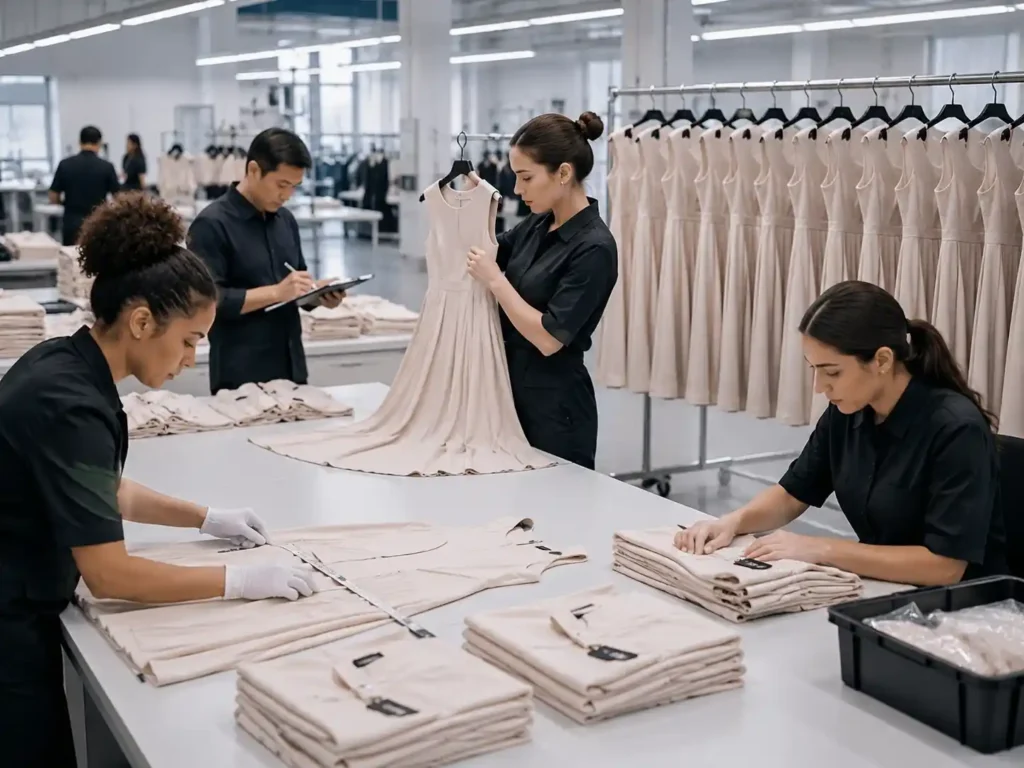
Jinfeng Apparel works with established designer labels that need more than sewing capacity. Each dress is reviewed for silhouette, fabric behavior, fit, construction, cost structure, bulk repeatability, private-label execution, and launch timing. Original sketches, reference garments, line sheets, or technical packages move through pattern development, sampling, revisions, PP approval, production control, quality inspection, packing, and export coordination.
Commercial Dress Production Supported by Measurable Manufacturing Capacity
Since 2008
Six Owned Factories
Ten Plus Partners
Monthly Capacity
Sample Development
Quality Inspection
Built for Established Designer Labels with Commercial Production Plans
Best Fit For
The strongest fit is a designer-led fashion business that already understands its market position and needs a manufacturing partner to turn creative direction into repeatable merchandise. Typical programs include seasonal dress collections, occasionwear capsules, premium ecommerce ranges, retail-ready private-label lines, multi-style launches, and replenishment orders.
- Established womenswear labels with original silhouettes and recurring launches
- Commercial designer brands balancing appearance, margin, and production reliability
- Product development teams managing tech packs, samples, fittings, and PP approval
- Sourcing teams building dependable dress capacity across several fabric groups
- Brand groups requiring private labels, barcodes, SKU control, and warehouse-ready packing
- Fashion businesses planning meaningful bulk orders and long-term supplier continuity
Not Designed For
Jinfeng does not operate as a ready-stock wholesaler, dropshipping fulfiller, or one-piece dispatch service.
The development process includes material review, pattern work, sampling, corrections, production preparation, inspection, and branded delivery, so projects need a credible path from concept to bulk manufacturing.
- Ready-made inventory purchasing or public wholesale styles
- One-piece fulfillment and direct-to-consumer parcel dispatch
- Personal dresses or isolated event garments
- Orders without a defined product direction, quantity plan, or commercial use
- Projects driven only by the lowest possible unit price
- Requests that bypass fabric approval, sample review, PP approval, or production documentation
Manufacturing Risks Designer Labels Cannot Leave Until Final Inspection
Design Details Lost
- Construction is reviewed before pattern development.
- Critical visual areas are marked in the sample comments.
- Hidden support, lining, seam placement, and finishing are documented.
- Approved details are transferred into production and QC files.
Incorrect Fabric Behavior
- Composition, weight, width, stretch, opacity, and handfeel are reviewed.
- Lining and reinforcement are assessed with the main fabric.
- Material MOQ and lead time are checked before approval.
- A fabric change triggers pattern and costing review when needed.
Unstable Fit Grading
- Base size and size range are confirmed before grading.
- Grade rules follow the brand’s measurement system.
- Critical measurements receive tolerances and inspection points.
- Extended sizing, petite, tall, or plus-size requirements are reviewed separately.
Sample-to-Bulk Gaps
- Final fabric and trims are approved before production.
- PP and Golden samples establish the physical standard.
- Updated BOM, size chart, sewing instructions, and QC checklist follow the approved version.
- Bulk deviations are recorded, corrected, and rechecked during production.
Unworkable Product Costs
- Fabric yield and cutting loss are reviewed by style.
- Labor-intensive operations are separated from essential design details.
- Stock, near-match, or alternative materials may be evaluated.
- Quantity, color count, and shared collection materials are considered together.
Missed Launch Windows
- Launch dates are translated into approval deadlines.
- Long-lead materials are identified early.
- Priority styles can be separated from later-volume styles.
- Weekly updates can cover samples, materials, production, QC, packing, and shipment status.
Dress Categories Developed for Commercial Designer Collections
Jinfeng organizes dress development by silhouette, occasion, fabric behavior, construction risk, fit priority, sales channel, and repeat-order potential. Product planning can cover a focused capsule or a broader collection without treating every style as the same sewing problem.
Commercial Mini, Midi, and Maxi Dress Programs
Core commercial collections often need a planned balance of mini, midi, and maxi lengths rather than unrelated styles. Each length carries different pattern, fabric, visual, and fulfillment considerations.
Mini dresses: Bodycon, corset, halter, strapless, backless, ruched, cut-out, and party minis depend on accurate bust-waist-hip relationships and controlled hem behavior. Stretch recovery, lining tension, zipper placement, neckline security, and sitting movement deserve early testing. A mini that photographs well but rides up, gapes, twists, or exposes the lining creates returns and damages brand trust.
Midi dresses: Slip, bias, wrap, fitted, A-line, pleated, draped, and occasion midi dresses often sit at the center of a commercial range because they can serve several markets and seasons. Key controls include waist placement, skirt balance, slit height, lining length, side-seam stability, zipper flatness, and hem level. Satin and bias constructions require particular attention to grain, hanging time, seam stretch, and pressing.
Maxi dresses: Resort, evening, wedding guest, printed, chiffon, and formal maxis need stable length, controlled skirt weight, clean movement, and consistent hems across sizes. Layered fabrics, sheer shells, long linings, gathered waists, and high slits increase handling and measurement risk. Packaging also matters because long garments can arrive heavily creased when folding and carton pressure are not planned.
A commercial assortment can share fabrics, colors, linings, or trim families across lengths, improving material use and visual consistency. Jinfeng reviews which elements can be consolidated without making the collection repetitive.
Occasionwear, Partywear, and Statement Dress Development
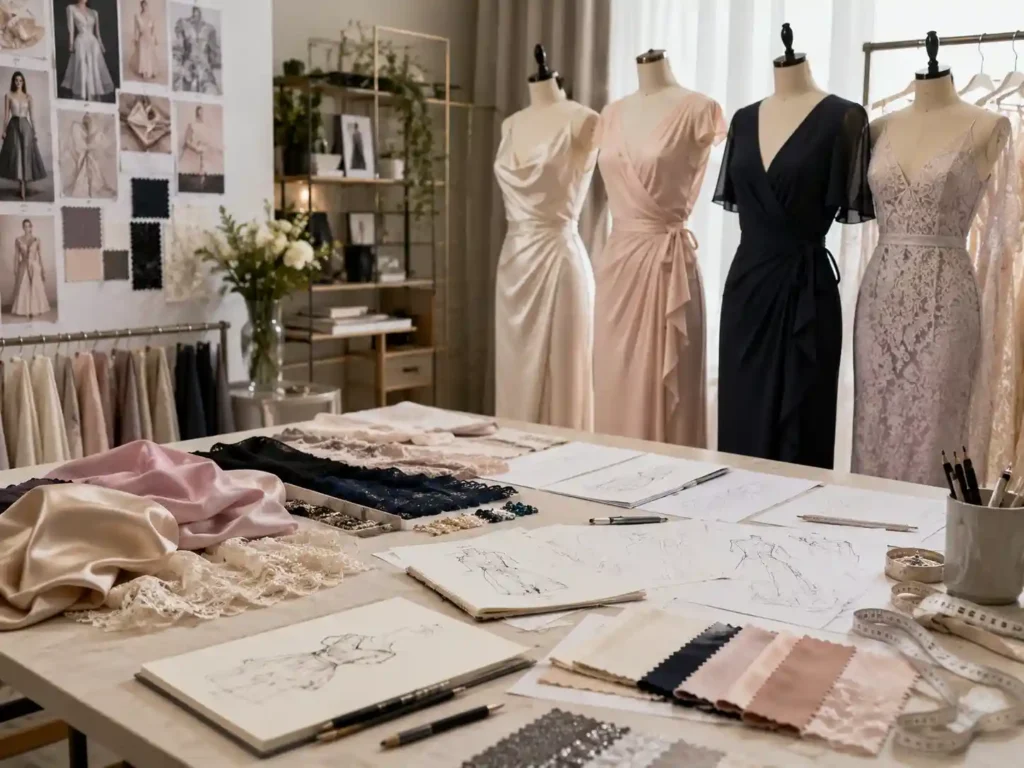
Occasion and party categories carry high visual expectations and a greater concentration of production risk. Satin, mesh, lace, sequins, corsetry, ruching, asymmetry, cut-outs, draped panels, and internal support can produce strong retail value only when construction remains stable in bulk.
Structured bodices: Corset and strapless silhouettes need controlled cup position, upper-bust tension, under-bust shaping, boning channels, closure support, anti-slip options, lining, and seam symmetry. Fit cannot rely on a single sample size. The structure must be reviewed against the planned grade rules and intended support level.
Sheer and layered construction: Mesh and lace dresses require a defined transparency plan. Lining boundaries, seam visibility, edge finishing, applique placement, reinforcement, and skin contact are assessed together. Lace motifs may need placement control at necklines, center fronts, cups, waist seams, and hems. Mesh recovery and seam stretch are tested before bulk cutting.
Decorated surfaces: Sequin fabrics, rhinestones, beads, and metallic details add weight, abrasion, snagging, and packing concerns. Sewing methods, seam allowances, trim clearing, edge protection, skin comfort, pressing limits, and polybag protection need to be decided during sampling. Decorative impact is preserved while reducing avoidable breakage and operator inconsistency.
Commercial presentation: Photo-ready samples may receive added finishing attention for campaigns or showroom meetings, but bulk production still requires a final PP standard using approved materials. Campaign appearance and repeatable production are connected through documented finishing and inspection points.
Collection Extensions Beyond Dresses
Designer labels often build a stronger merchandise story when dresses connect with coordinated separates. Jinfeng can develop skirts, fashion tops, jumpsuits, rompers, and matching sets using shared fabrics, color stories, trims, and size logic.
Jumpsuits and rompers: Waist position, rise, torso length, hip ease, shoulder-to-crotch balance, closure length, and movement need focused review. A jumpsuit can look correct on a hanger while pulling through the body or restricting movement. Fit comments must identify whether the issue belongs to the bodice, waist, rise, hip, or leg.
Matching sets: Coordinated tops and skirts or tops and trousers require consistent color, fabric lot, trim, branding, and size communication. The pieces may have different construction methods but need to arrive as one coherent retail offer. Packing instructions can define whether sets are packed together, linked by SKU, or handled as separate units.
Skirts and tops: A dress collection can extend into corset tops, draped tops, satin skirts, mesh layers, or coordinated occasion separates. Shared materials may improve purchasing efficiency, yet material allocation must account for different yields and production sequences. Jinfeng reviews the range as an assortment rather than quoting each item without considering collection-wide opportunities.
From Designer Concept to Production-Ready Dress Development
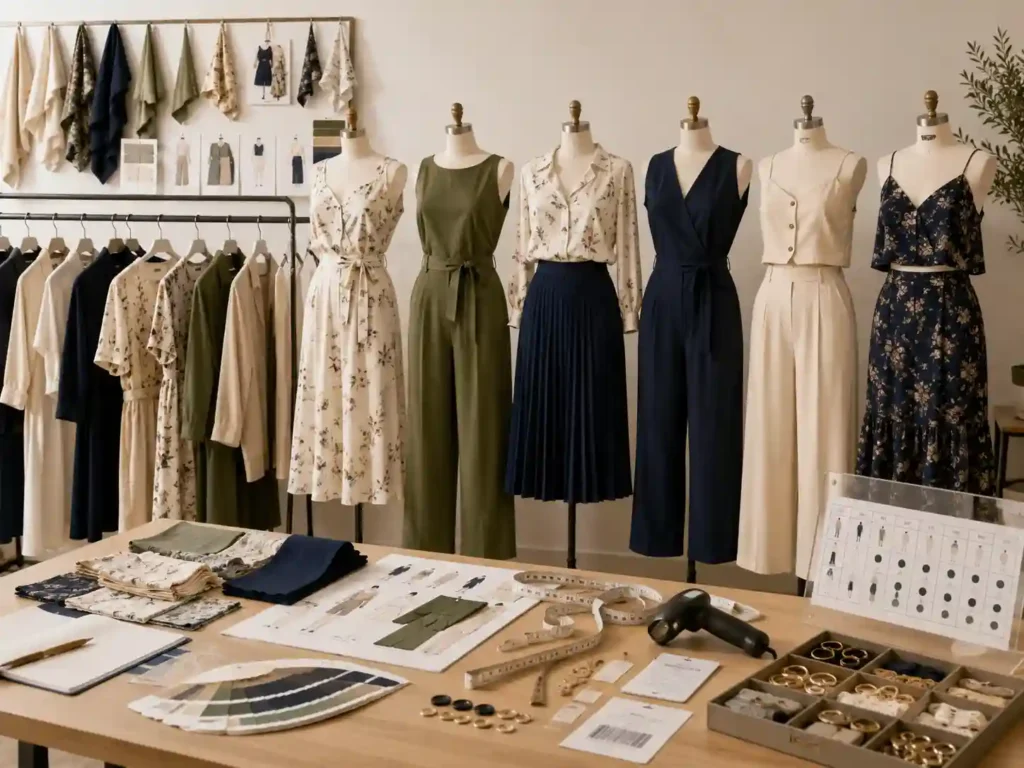
Original concepts can enter development through sketches, line sheets, technical packages, reference garments, annotated photographs, fabric swatches, or a combination of files. Jinfeng turns the available information into a controlled product-development path before bulk costing and production commitments are finalized.
Reviewing Design Inputs Before Pattern Development Starts
The first review determines what is known, what remains uncertain, and what must be confirmed before a reliable sample can be made.
A strong sketch may communicate proportion and styling but omit lining, closure, support, seam placement, finish, target fit, or size range.
A technical package may contain measurements but leave fabric behavior or construction conflicts unresolved.
Style structure: The product team identifies silhouette, neckline, waistline, closure, lining, support, seam layout, gathering, drape, pleats, ruching, cut-outs, slits, hem treatment, and decorative elements.
Areas with limited visual information are marked for confirmation rather than guessed silently.
Fit direction: Base size, target size range, fit preference, market, model measurements, intended ease, and critical measurements are reviewed. A commercial bodycon fit, relaxed resort fit, shaped occasion fit, and corset-support fit require different pattern assumptions.
Material direction: Main fabric, lining, interfacing, elastic, boning, cups, zippers, hooks, buttons, trims, labels, and packaging are identified. Where the exact material is unavailable, the review defines the required performance: weight, stretch, recovery, drape, opacity, shine, surface, handfeel, and target cost.
Commercial information: Planned quantity per style and color, color count, size ratio, target price, launch date, testing requirement, packing scope, and delivery destination influence the development route. Early commercial information prevents a sample from being built around materials or methods that cannot support the intended order.
Building Patterns, Samples, and Measurable Revision Records
Pattern development converts design intent into pieces that can be cut, sewn, fitted, graded, and repeated. Jinfeng’s seven or more senior pattern makers work with two sample rooms and more than twenty sample machinists to evaluate both appearance and production behavior.
Pattern preparation: The first pattern establishes construction lines, balance, shaping, seam allowances, support areas, lining, closures, and measurement points. Fabric properties affect the pattern from the beginning. Stretch percentage changes negative ease; bias satin changes stability; mesh requires reinforcement; layered chiffon affects hem behavior; corset construction changes internal seam and cup placement.
Internal review: Sample garments are measured and checked before being sent. Depending on the style, the team reviews bust, upper bust, under bust, waist, hip, front and back length, strap length, armhole, neckline depth, slit height, lining length, hem level, and jumpsuit rise. Photographs or video can show front, back, side, movement, and close details.
Revision records: Comments are classified by pattern, measurement, fabric, trim, sewing, finishing, or packing. Each accepted change updates the relevant file. A neckline correction should update the pattern and measurement chart; a fabric replacement may change the pattern, lining, cost, MOQ, and timing; a trim change should update the BOM and approval reference.
Approval logic: A first sample proves the initial direction. A fit or revised sample verifies corrections. A photo-ready sample supports campaign presentation when requested. A PP sample confirms final materials, construction, labels, and packing before bulk production. A Golden sample becomes the physical reference for production, QC, repeat orders, and dispute review.
Converting Approval into Bulk-Production Instructions
Commercial production cannot depend on a verbal statement that the sample is approved. Every confirmed element needs a place in the production file so fabric suppliers, pattern teams, cutting teams, sewing lines, QC staff, finishing teams, and packing teams work from the same version.
Production file: The final package can include approved pattern version, size chart, grade rule, measurement tolerance, BOM, fabric approval, trim approval, sewing instruction, construction notes, label placement, barcode table, packing instruction, carton ratio, and QC checklist. Style number, color, size, and version names must remain consistent across files.
Risk marking: High-risk areas are identified before the production meeting. Examples include satin shade and snagging, mesh stretch, lace placement, sequin abrasion, zipper waviness, neckline symmetry, strap length, lining exposure, slit height, hem balance, and decorated surfaces. These risks become inspection priorities rather than generic reminders.
Release conditions: Bulk production begins after PP approval, final material confirmation, quantity and size breakdown, production documents, packaging requirements, timing, and commercial terms are confirmed. Major changes after PP approval require a new review of cost, material availability, schedule, pattern, and production risk.
Version control: Updated files replace earlier versions in the production record. Changes are not kept only in email or messaging history. Clear version control is especially important in 10-30-style collections where similar silhouettes, colors, trims, and labels can be confused.

Pattern and Fit Engineering for Designer-Led Dress Silhouettes
Fit determines whether a strong design becomes a wearable commercial product. Jinfeng develops and corrects patterns around body proportion, fabric response, intended support, movement, size grading, and repeatable bulk measurements across US, UK, EU, AU, alpha, extended, petite, tall, or plus-size systems.
Controlling Bust, Neckline, and Upper-Body Security
The upper body is the highest-risk area for strapless, corset, halter, deep-V, slip, one-shoulder, off-shoulder, and low-back dresses. Appearance must be balanced with support, coverage, comfort, and movement.
Bust shaping: Upper bust, full bust, under bust, cup position, dart or panel shaping, center-front length, and side coverage are reviewed together. A change in cup or lining can alter the outer silhouette. Structured styles may need cups, boning, interfacing, elastic, or support tape; soft styles may rely on controlled bias, seam shaping, and strap placement.
Neckline control: Neck depth, width, edge tension, symmetry, gaping, and skin exposure are checked during fitting. Deep-V and asymmetric shapes may require stabilization or hidden support. Mesh inserts and linings must follow the intended transparency line without becoming visible beyond the design.
Straps and shoulders: Strap length, angle, attachment strength, adjustability, armhole shape, and shoulder balance affect both comfort and neckline position. Thin straps, halters, and one-shoulder styles receive reinforcement at load points. Adjustable hardware is checked for size, finish, durability, and compatibility with the fabric.
Bulk measurement: Critical upper-body measurements are identified in the size chart and tolerance plan. QC checks focus on the points most likely to change the silhouette or create exposure, not only on general garment width.
Managing Waist, Hip, Length, Slit, and Movement
Commercial fit needs to work while standing, walking, sitting, and moving. Waist and hip relationships determine proportion, while length, slit, lining, and hem affect wearability and visual balance.
Waist position: Natural, high, empire, dropped, and corset waistlines create different visual proportions. Front and back waist placement can shift when bust shaping, torso length, fabric stretch, or skirt weight changes. Waist seams, elastic, internal stay tape, and closures are reviewed together.
Hip and seat: Bodycon and fitted dresses require enough control for shape without excessive tension, seam distortion, transparency, or riding. Hip ease is linked to fabric stretch and recovery. Non-stretch woven styles need movement allowance, zipper access, slit placement, or panel shaping appropriate to the silhouette.
Length and hem: Mini, midi, and maxi lengths are checked from defined measurement points. Maxi hems require level balance, shoe assumptions, skirt weight, and lining length review. Bias and fluid fabrics may need settling time before final hemming. Ruffles, pleats, circular panels, and high-low shapes require additional balance checks.
Slits and openings: Slit height, overlap, reinforcement, lining, and movement are tested. A slit can appear correct when standing and become too open while walking or sitting. The approved height should be measurable and repeatable across sizes.
Grading Commercial Size Ranges Without Losing the Original Shape
Grading is not a mechanical percentage increase. Design features change differently across sizes, and the brand’s intended proportion must remain recognizable.
Grade-rule review: Bust, waist, hip, length, shoulder, strap, armhole, neckline, cup position, slit, and hem can require different increments. The grade rule is aligned with the brand’s established size system or developed for the target market. Size allocation within the order is planned separately from the per-style and per-color MOQ.
Fabric relationship: Stretch and recovery influence how much pattern growth is required. The same bodycon pattern cannot be applied across different jersey qualities without review. Structured or non-stretch dresses may need different ease, support, and closure adjustments as sizes increase.
Extended sizing: Plus-size, petite, tall, or extended ranges may require additional fit verification rather than relying only on digital grading. Bust support, torso length, armhole, waist placement, slit height, and skirt volume often need targeted review. Material consumption and construction can also change.
Production control: Approved patterns are versioned by style and size. Cutting markers, bundle identification, sewing checks, and finished-garment measurements maintain separation across the size range. Critical points receive tolerances according to their effect on fit and appearance.

Structured Sampling Before Commercial Dress Production Begins
Sample timing depends on style complexity, material availability, pattern work, trim development, and the speed of approval comments. Each stage has a separate purpose, preventing photo appearance, fit approval, final production standards, and repeat-order references from being confused.
| Sample Stage | Typical Timing | Main Review Focus | Production Output |
|---|---|---|---|
| First sample – simple style | 7-10 days | Basic silhouette, construction, fabric direction | Initial pattern and garment review |
| First sample – standard dress | 10-15 days | Proportion, fit, details, sewing method | Development comments and pattern correction |
| First sample – complex dress | 15-25 days | Corset, strapless, lace, mesh, sequin, evening structures | Detailed risk and construction review |
| Revised sample | Usually 7-15 days | Confirmed fit, fabric, trim, or construction changes | Updated pattern, size chart, BOM, and notes |
| PP sample | Usually 7-15 days | Final fabric, color, trims, labels, workmanship, packing | Bulk-production approval standard |
| Golden sample | After final approval | Physical comparison standard | Production, QC, repeat-order, and dispute reference |
Balancing Designer Detail with Commercially Workable Production Costs
Cost engineering is not a race to remove visible quality. Jinfeng separates the design features that create retail value from hidden complexity that adds material, labor, risk, or delay without strengthening the final garment. Quotations become more reliable after fabric, construction, quantity, color, size, labels, packing, and timing are understood.
Protecting Visible Value While Reducing Hidden Complexity
A designer dress may include dramatic ruching, shaped panels, asymmetry, internal support, decorative trims, layered transparency, and custom finishing. The development review identifies which features define the product and which methods can be adjusted behind the surface.
Panel and seam logic: Extra panels can improve shaping or create a distinctive line, but unnecessary internal seams add cutting, matching, sewing, pressing, and measurement time. Hidden construction can sometimes be simplified while keeping the outer seam design unchanged.
Ruching and drape: Fullness ratio, fabric consumption, elastic length, drawcord, seam distribution, and operator method affect cost and consistency. Ruching can be concentrated in the most visible areas rather than applied uniformly where it adds little visual value.
Internal structure: Lining, interfacing, cups, boning, grip tape, elastic, and reinforcement should serve a clear fit or quality purpose. Over-structuring adds weight, seam bulk, cost, and pressing difficulty. Under-structuring creates support and return problems. Sampling determines the required level.
Finishing: Hand operations, edge treatments, concealed closures, trim application, and pressing standards are evaluated by their visual contribution. A designer finish is retained where shoppers see and feel it; less visible areas can use stable commercial methods when the appearance remains unchanged.
Controlling Material Cost Through Collection-Wide Planning
Material cost depends on more than price per meter. Width, yield, shrinkage, cutting loss, motif placement, shade separation, color MOQ, lining, support materials, and damaged-surface allowance all affect the garment.
Fabric consolidation: Several styles can sometimes share a satin quality, jersey base, mesh, lining, zipper family, or core color. Consolidation may improve material MOQ, color consistency, replenishment, and purchasing efficiency. Shared material should still suit the silhouette and fit requirements of each style.
Color planning: Every color can create separate dye, cutting, thread, label, packing, and record requirements. A commercial launch may concentrate quantity in proven colors while treating directional colors as controlled extensions. Custom dye or print is reviewed against supplier MOQ and approval timing.
Fabric alternatives: A near-match material is assessed by composition, weight, width, stretch, recovery, drape, opacity, surface, handfeel, color, and sewing behavior. A cheaper fabric is not accepted when it creates extra lining, instability, poor fit, high defects, or a weaker retail impression.
Yield and loss: Pattern shape, skirt volume, bias cutting, one-way shine, print repeat, lace motif, sequin direction, and size range change material use.
Jinfeng considers marker efficiency and realistic wastage when building the quotation.
Building a Quote Around Real Order Structure
A meaningful quote requires quantity per style and color, not only a collection total. Jinfeng’s standard MOQ starts from 200 pieces per style and color, while custom fabric, special trim, certified material, custom packaging, or complex construction may carry separate supplier requirements.
Quantity concentration: Larger quantities in one style and color improve material purchasing, marker planning, line efficiency, inspection planning, and cost allocation. Splitting the same total across many colors or very small size groups increases handling and management.
Size ratio: Multiple sizes can be produced within the confirmed style-color quantity. Size range and ratio affect grading, marker yield, cutting, labels, packing, and measurement inspection. Extended sizes can use more fabric or require additional fit review.
Private label scope: Woven labels, care labels, hangtags, barcode stickers, printed polybags, inserts, and special cartons may have independent MOQ and setup cost. Packaging is reviewed as part of the garment program rather than added at the end.
Timing: Rush material purchasing, production rescheduling, overtime, compressed inspection, and air freight can raise cost and reduce correction time. A launch plan with early approvals gives more room to protect cost and quality.

Managing Multi-Style Collections Without Losing Brand Consistency
Style Architecture
- Identify core, image, seasonal, and replenishment styles
- Separate standard, medium-risk, and high-risk construction
- Assign sample priority by launch and photography schedule
- Confirm which styles can share production methods
Fabric Grouping
Material planning reviews which styles can use the same base fabric, color, lining, zipper, elastic, or support material.
Shared fabric can improve MOQ and color control, but only when stretch, drape, weight, opacity, and sewing behavior suit every participating style.
- Build fabric families across the line sheet
- Record supplier, color, lot, width, and performance
- Separate one-way shine, print, lace, and sequin requirements
- Track material approval by style and color
Color Planning
Commercial color stories need enough concentration to meet material and production requirements.
Lab dips, stock colors, custom dye, lining matches, thread, zipper, labels, and packing records are coordinated so visually similar colors are not confused.
- Confirm hero colors and supporting colors
- Consolidate colors where brand direction allows
- Track approval codes and dye lots
- Maintain color-specific cutting and packing records
Size Range Control
- Use shared blocks where suitable
- Document style-specific departures from the block
- Confirm size ratio by style and color
- Separate extended-size material and fit effects
Sample Priority
- Start long-lead fabric and trim styles first
- Prioritize campaign and sales samples
- Complete high-volume core fits early
- Lock PP samples before final production release
Launch Calendar
The project timeline connects sample comments, material approval, PP approval, production, QC, packing, inspection, and shipment booking. Delays are recorded with their impact instead of hidden until the planned launch is threatened.
- Set approval deadlines for each style group
- Issue weekly status for active multi-style projects
- Identify decisions affecting production release
- Plan priority and balance delivery where required
Production Capacity Allocated by Dress Structure and Order Requirements
Jinfeng uses six owned women’s fashion factories and more than ten long-term production partners as a coordinated manufacturing system. Allocation follows fabric behavior, sewing complexity, volume, skill requirements, inspection load, seasonality, and delivery sequence rather than treating every line as interchangeable.
Matching Dress Construction with the Right Production Unit
Commercial designer collections usually combine several manufacturing profiles. A stable jersey bodycon dress, a bias satin slip, a structured corset mini, a lace occasion midi, and a layered mesh maxi need different operator experience, cutting control, pressing, and QC priorities.
Woven commercial dresses: Printed viscose, cotton blends, satin, chiffon, suiting, and non-stretch woven styles are matched with teams experienced in fabric direction, clean closures, lining, pressing, and hem balance. Fluid and one-way fabrics require controlled cutting and bundle handling.
Stretch and fitted styles: Jersey, ponte, and stretch woven dresses are allocated according to stretch performance, seam method, fit tolerance, and recovery requirements. Production standards identify stitch, stabilization, measurement method, and handling so the silhouette remains consistent.
Structured occasionwear: Corset, strapless, mesh, lace, sequin, and decorated styles need teams familiar with internal support, sensitive surfaces, controlled trim application, reinforcement, and hand-finishing. Capacity is reviewed with the expected inspection and rework load, not only sewing quantity.
Collection coordination: Similar styles can be grouped for material and operational efficiency, while high-risk pieces can be isolated for closer control. A shared project file keeps color, labels, size system, packing, and launch requirements aligned across production units.
Releasing Bulk Production Only After Standards Are Ready
Production readiness is more than an approved appearance sample. Jinfeng confirms final material, trim, pattern version, size chart, grade rule, BOM, construction, labels, packing, quantity, and timing before the order is released.
Pre-production review: The production meeting covers style structure, approved sample, critical operations, measurement points, fabric risks, trim placement, pressing, finishing, label location, packing, and QC checkpoints. Problems discovered during sampling are highlighted so they are not repeated at scale.
Material readiness: Fabric and trims are checked against approved specifications. Shade, defects, width, stretch, handfeel, surface, and quantity are reviewed according to the material type. Sensitive or shade-variable fabrics can be separated by lot or roll where required.
Cutting control: Pattern version, marker, direction, nap, shine, print placement, lace motif, sequin orientation, size, bundle number, and quantity are managed before sewing.
Cutting errors multiply quickly, so early checks protect the entire order.
Line release: Initial output is reviewed for workmanship, measurements, construction, and appearance. Corrections are made before full line volume builds. Inline inspection then follows the risk points identified from the sample and technical file.
Managing Commercial Volume, Priority Styles, and Repeat Orders
Order programs of 20,000-80,000 garments may include different launch priorities, material lead times, and replenishment expectations. Capacity planning separates development risk from production volume and protects the most important delivery commitments.
Priority styles: Campaign, retail-launch, or high-revenue styles can be scheduled around earlier approvals and material readiness. Priority does not remove QC; it changes the sequence in which standards are completed and capacity is reserved.
Core-volume styles: Stable products with clear materials, patterns, and repeatable construction can use planned production blocks. Jinfeng tracks output, inspection, finishing, packing, and carton completion against the delivery plan.
Multi-batch delivery: Orders can be separated by launch priority, style group, color, market, warehouse, or freight method when the project supports it. Each batch needs its own packing data, carton marks, documents, and status records.
Repeat orders: Retained pattern, fabric, trim, measurement, construction, label, and packing records help reduce restart time. Material availability and shade still require reconfirmation, especially when the repeat order occurs in a different season or supplier batch.
Controlling Bulk Consistency Against the Approved Dress Standard
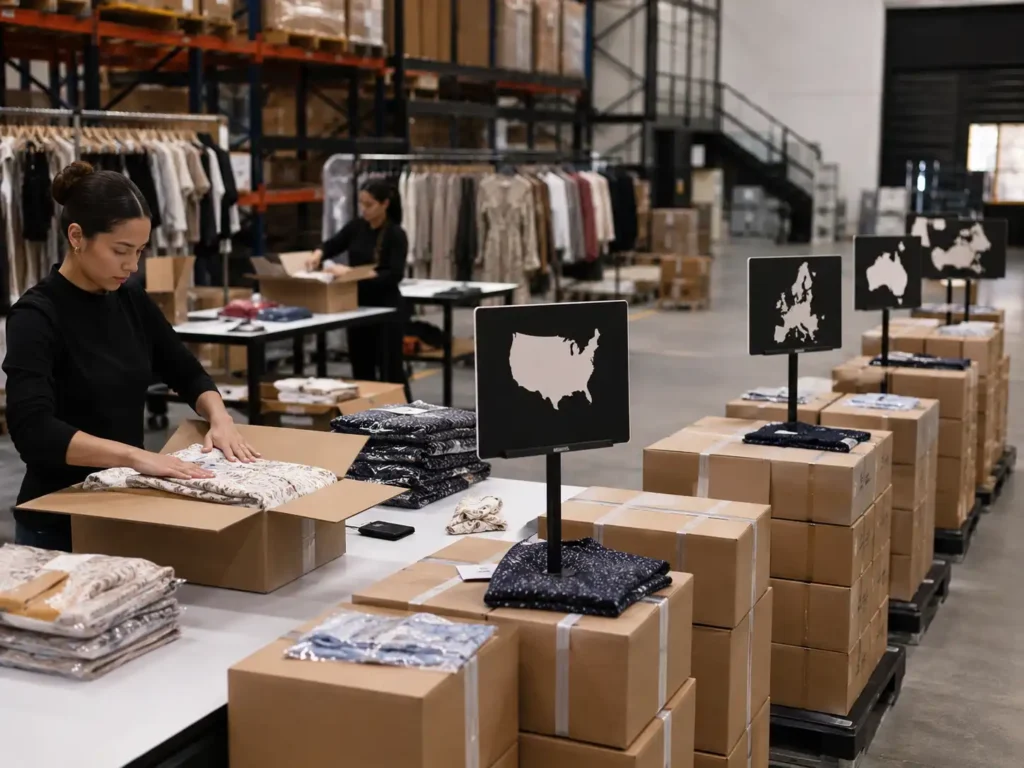
Quality control follows the approved garment from incoming fabric through cutting, sewing, measurements, finishing, branding, packing, and shipment records. Jinfeng’s fifteen or more QC inspectors work with production and merchandising teams so issues are found while correction remains possible.
Fabric, Cutting, and Bundle Controls Before Sewing
Many bulk defects begin before the first seam is sewn. Material condition, shade, direction, pattern version, cutting accuracy, and bundle identification determine whether the finished garment can match the approved sample.
Incoming fabric: Review can cover color, shade, surface, holes, pulls, stains, width, weight, stretch, recovery, handfeel, drape, opacity, print, motif, and supplier documentation according to the material. Satin, mesh, lace, sequin, and stretch fabrics receive risk-specific attention.
Shade and lot management: Rolls or dye lots are recorded where shade variation may affect garment appearance. Main fabric, lining, thread, zipper, and trim colors are compared. Cutting and bundle controls reduce shade mixing within the same garment or shipment group.
Pattern and marker: The approved pattern version and grade are confirmed. Grain, nap, shine, print direction, lace motif, sequin orientation, pair pieces, and size markers are reviewed. One-way materials and placement requirements are considered in cutting yield and inspection.
Bundle control: Style, color, size, quantity, and bundle identity stay traceable through sewing. Clear separation is essential when a collection uses similar silhouettes, dark colors, shared linings, or repeated trims.
Sewing, Measurement, and Workmanship Checks During Production
Inline inspection focuses on the areas most likely to change fit, appearance, comfort, or durability. A generic checklist is not enough for a designer-led dress program.
Construction checks: Seam type, stitch density, reinforcement, zipper insertion, lining attachment, cups, boning, elastic, grip tape, straps, hooks, trim, ruching, pleats, gathers, cut-outs, and decorative applications are checked against the approved instructions.
Fit measurements: Bust, upper bust, under bust, waist, hip, length, strap, armhole, neckline, slit, lining, hem, and jumpsuit rise are measured according to the style’s critical points. Measurement findings are linked to pattern, sewing, or handling causes so correction addresses the source.
Visual balance: Neckline symmetry, waist level, panel alignment, zipper flatness, seam puckering, lining exposure, skirt balance, slit placement, motif position, sequin direction, and hem level are reviewed. Garments are compared with the Golden sample and approved photos.
Issue closure: Findings are photographed or recorded, classified, corrected, and rechecked. Rework is not considered complete until the correction is verified. Repeated issues trigger production adjustment and preventive notes.
Final Appearance, Branding, Packing, and Shipment Verification
A garment can pass sewing inspection and still fail at retail through poor pressing, wrong labels, barcode mismatch, incorrect size ratio, packing errors, or damaged presentation. Final control connects product quality with branded delivery.
Finishing: Loose threads, stains, surface marks, snagging, trim security, pressing, shape, hanger presentation where required, and fold method are reviewed. Satin, sequins, long hems, structured bodices, and embellished surfaces need handling suited to the material.
Branding: Main label, size label, care label, hangtag, barcode, SKU sticker, and placement are checked against approved artwork and records. Label information remains subject to the brand’s final confirmation and market compliance requirements.
Packing: Polybag, tissue, insert, folding, size sticker, style-color-size identification, assortment ratio, carton mark, carton quantity, and carton condition are verified. Protective methods are adjusted for long dresses, structured bodices, delicate surfaces, or decorated garments.
Shipment records: Packing list, commercial invoice, carton data, weights, quantities, marks, and freight instructions are coordinated with the confirmed order. Pre-shipment findings and required corrections can be shared before release.
Private Label Details Prepared for Commercial Retail Delivery
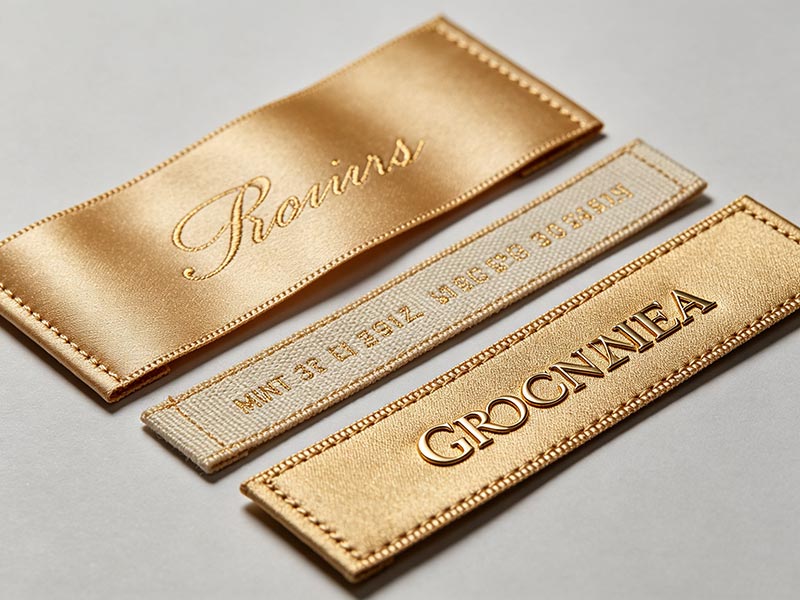
Main Brand Labels
- Artwork and dimensions approved
- Fold and edge finish confirmed
- Placement measured from a defined point
- Color and attachment checked on the PP sample
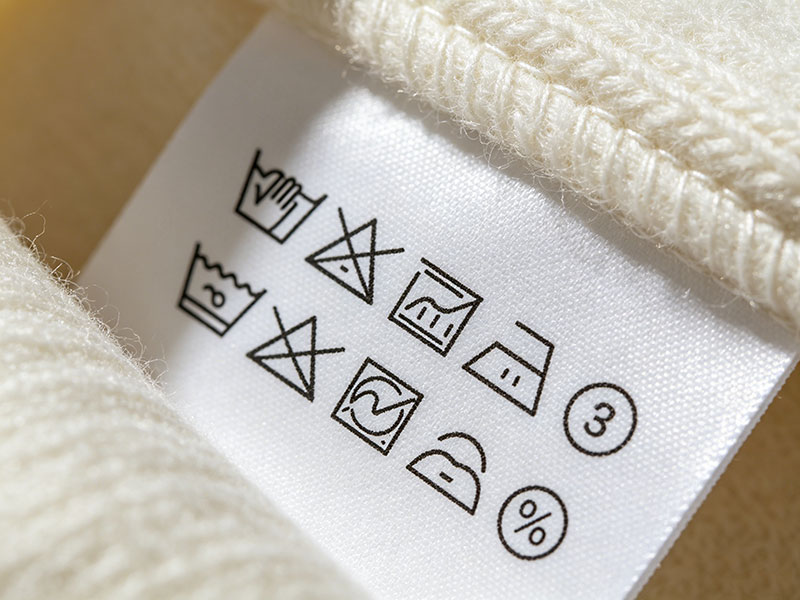
Care and Size Labels
- Content supplied or approved by the brand
- Size system aligned with garment and order files
- Position and orientation confirmed
- Material selected for comfort and durability

Hangtags and Inserts
- Style-specific and universal components separated
- String, pin, loop, or attachment location approved
- Printed content and barcode checked
- Extra pieces and wastage quantity planned
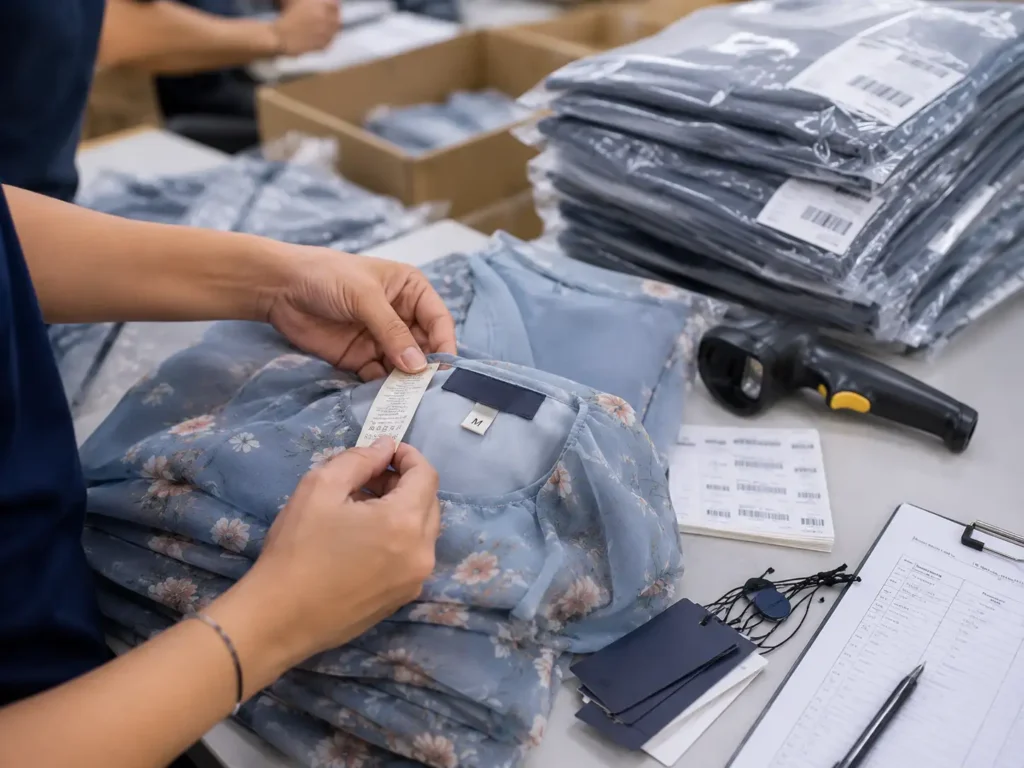
Barcode and SKU Control
- One record per style-color-size combination
- Barcode proof reviewed before bulk printing
- Scan or visual checks arranged as required
- Carton and packing data linked to the same SKU table
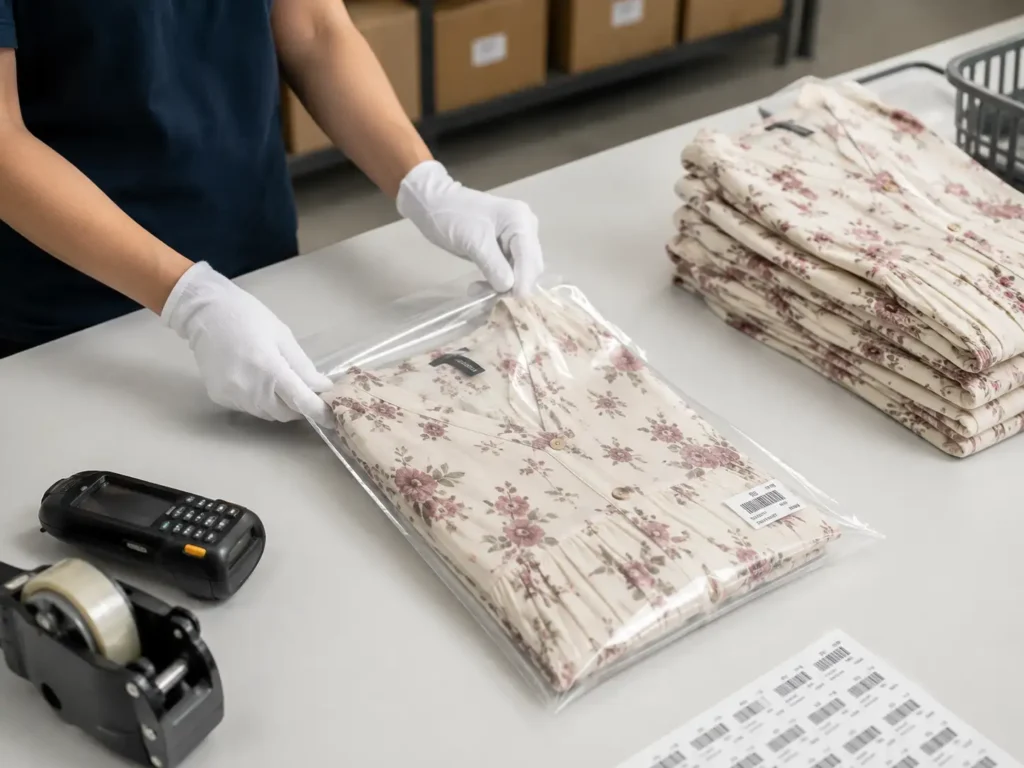
Polybags and Presentation
- Bag dimensions matched to folded garment
- Protective layers added for sensitive surfaces
- Size and barcode stickers positioned consistently
- Printed wording approved before production
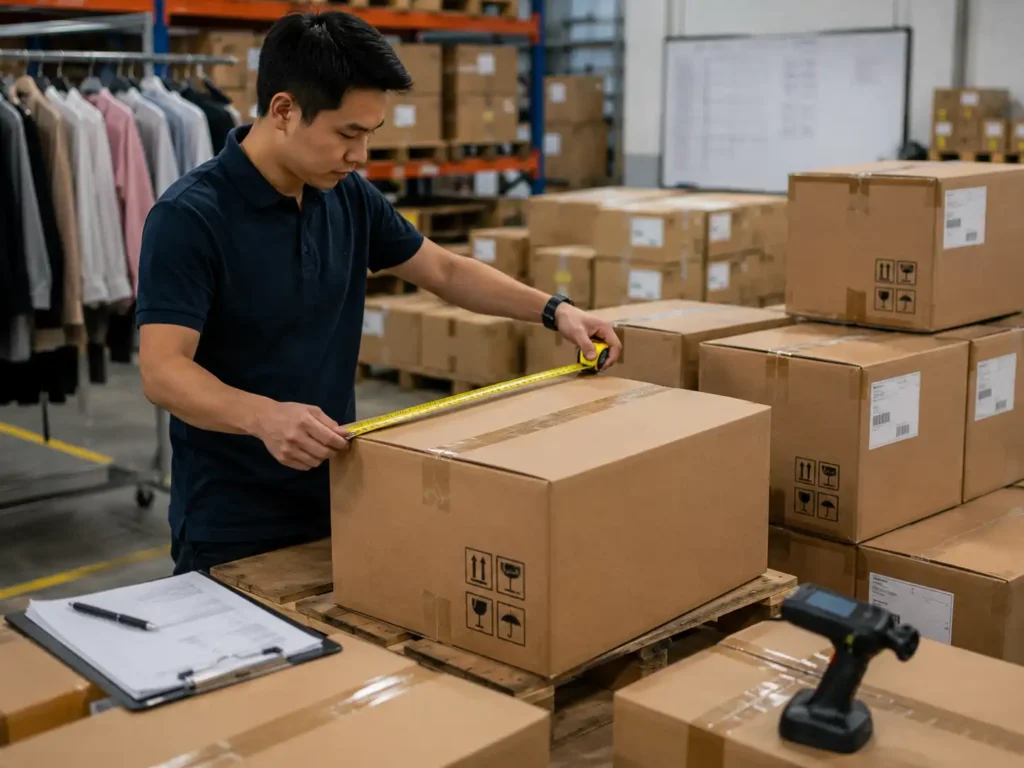
Cartons and Warehouse Rules
- Packing ratio confirmed by style, color, and size
- Carton marks follow the approved template
- Warehouse routing information verified
- Final quantities reconciled with packing records
Production and Export Planning Around the US Launch Calendar
Development Calendar
- Set deadlines for tech pack and reference-file review
- Confirm fabric and trim decisions before sampling where possible
- Return fit comments with clear measurements and annotations
- Separate photo-sample and PP-sample requirements
Production Window
Bulk timing is issued after PP approval, final material confirmation, quantity, color, size ratio, labels, packing, and production allocation are known. Custom dye, print, certified fabric, special trims, many colors, complex construction, and late changes can extend the schedule.
- Confirm material booking and production release conditions
- Reserve capacity by style group and launch priority
- Plan inline QC and correction time
- Avoid major structural changes after PP approval
Delivery Planning
- Confirm freight method and forwarder responsibility
- Prepare packing list, invoice, carton data, and marks
- Separate air and sea quantities in packing records
- Track shipment references after release
Built for Seasonal Collections, Reorders, and Brand Continuity
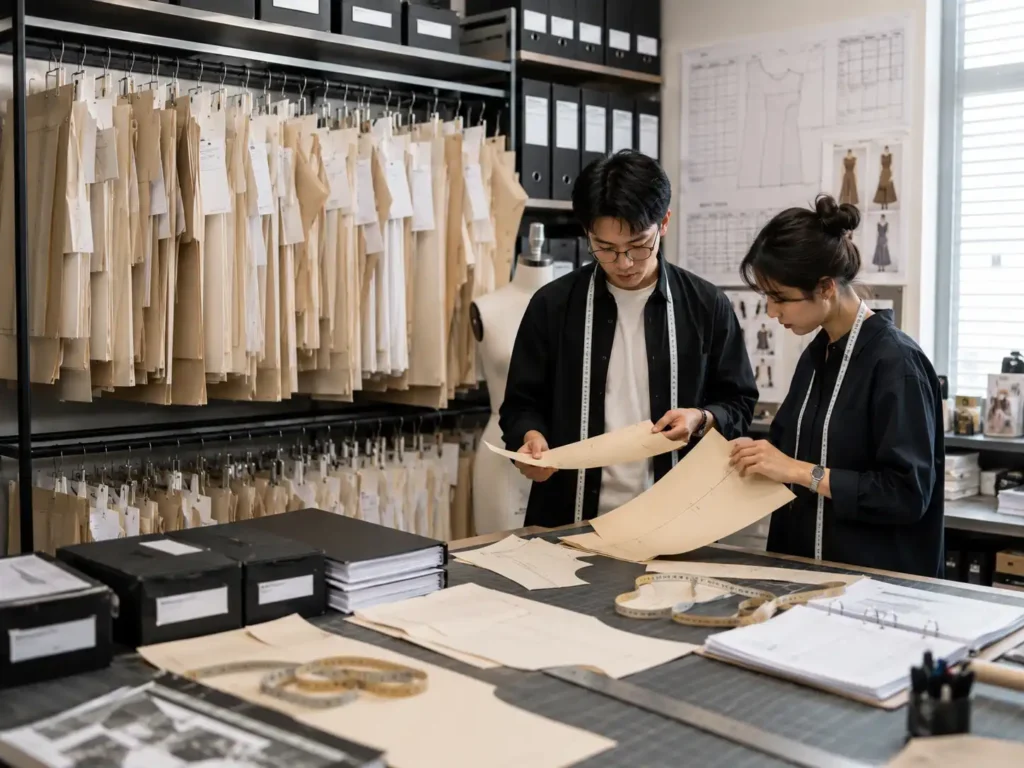
Pattern Records
- Base-size and graded pattern references
- Critical measurement points
- Approved corrections and fit notes
- Style-specific block information

Fabric References
- Main fabric and lining references
- Approved color or lab-dip codes
- Stretch, opacity, and drape notes
- Replacement-material review history

Trim and Construction Files
- Trim specification and supplier reference
- Placement and attachment method
- Approved seam and finishing details
- Known risk and QC focus
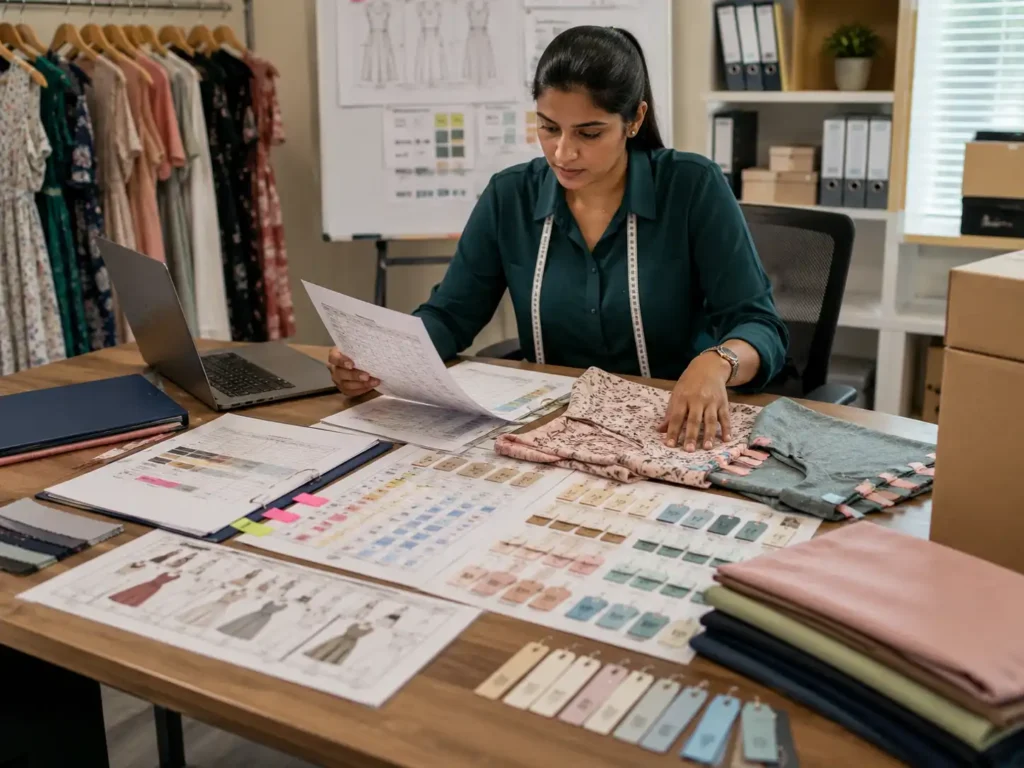
Size and Fit History
- Market and size-system record
- Fit block or related-style reference
- Extended-size comments
- Measurement issue history
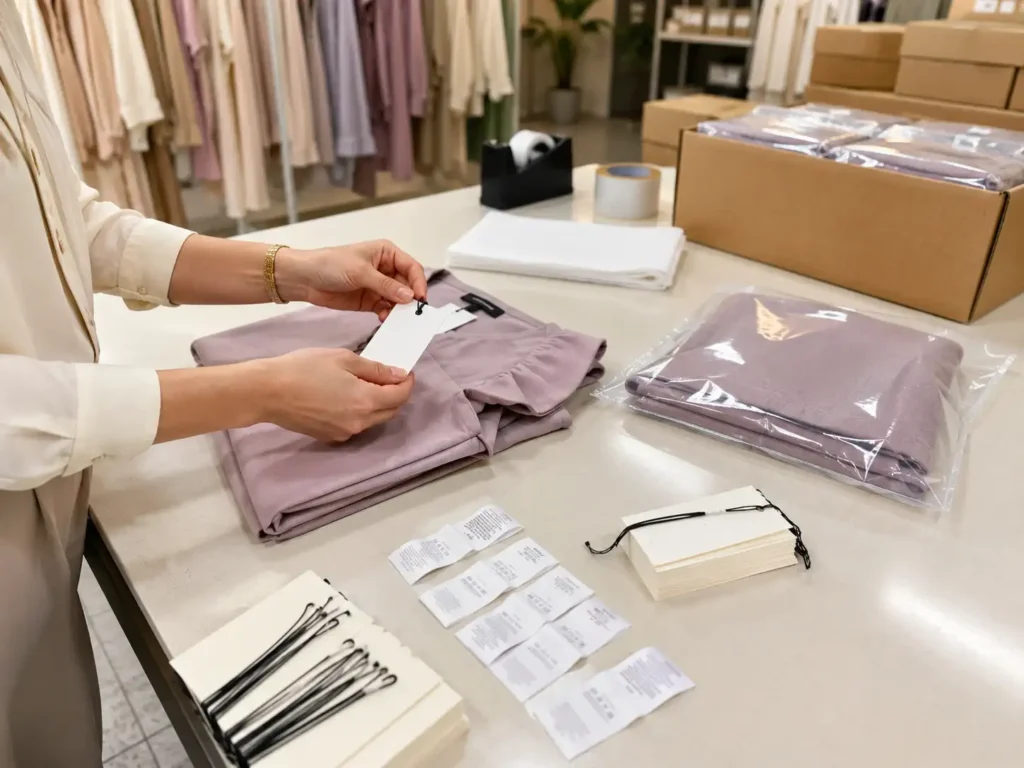
Packing Standards
- Brand-label and care-label versions
- SKU and barcode file structure
- Polybag and presentation method
- Carton and shipment documentation
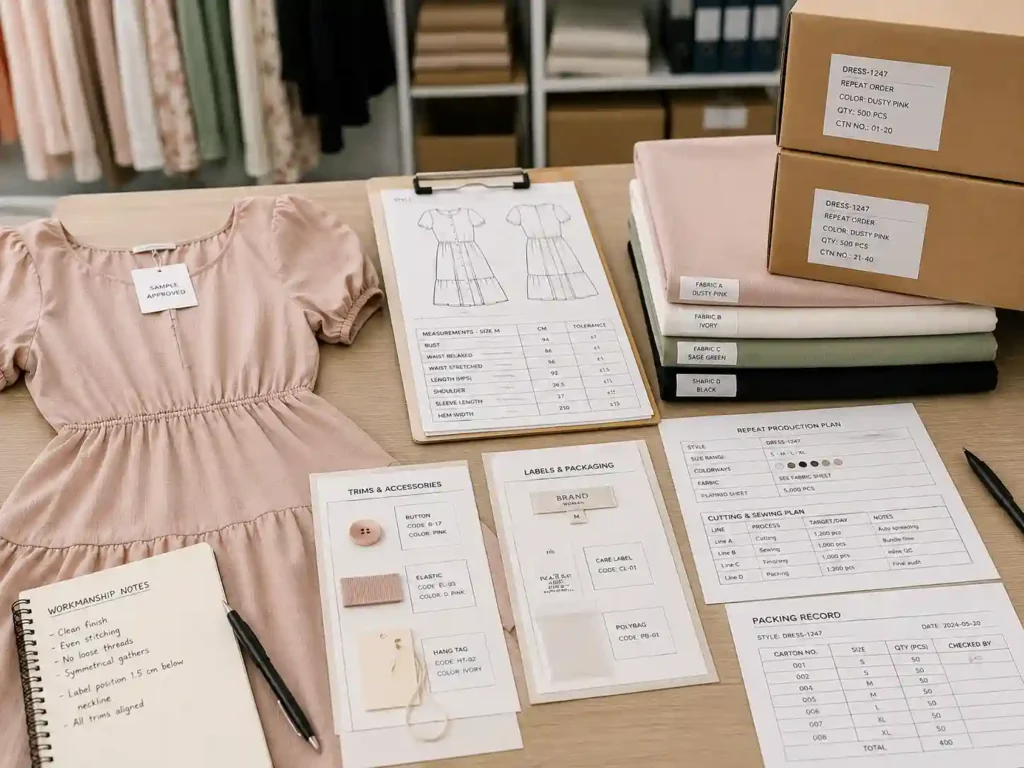
Reorder Planning
- Bestseller replenishment
- New color extensions
- Seasonal fabric updates
- Multi-batch or split-freight planning
How to Qualify a Dress Manufacturer for Designer Labels
Dress Development Evidence
- Review comparable dress categories
- Examine sample and production detail images
- Ask how fit and fabric risks are identified
- Confirm who develops patterns and samples
Sample Control System
- Confirm sample timing by complexity
- Review revision-record method
- Verify PP approval conditions
- Ask how Golden samples are retained
Production Structure
- Identify proposed production unit
- Review monthly available capacity
- Confirm long-lead material planning
- Understand peak-season allocation
Quality Evidence
Quality systems should identify checkpoints before final inspection. Ask how incoming fabric, cutting, sewing, measurements, finishing, labels, packing, and shipment records are controlled.
- Review style-specific QC checklist
- Confirm measurement and tolerance method
- Ask how issues are closed and rechecked
- Request available inspection records
Brand and Data Protection
- Confirm NDA process
- Limit file access to relevant teams
- Prohibit unauthorized portfolio use
- Use anonymized evidence for public case studies
Repeat-Order Readiness
- Review record-retention method
- Confirm version naming
- Ask how color and material changes are handled
- Verify replenishment and multi-batch capability
Commercial Designer Collection Managed at Meaningful Scale
A representative commercial-label program shows how development, material planning, fit, production allocation, quality control, private-label packing, and delivery sequencing work together. The project profile below reflects the order structures Jinfeng commonly supports without identifying any brand or unreleased design.
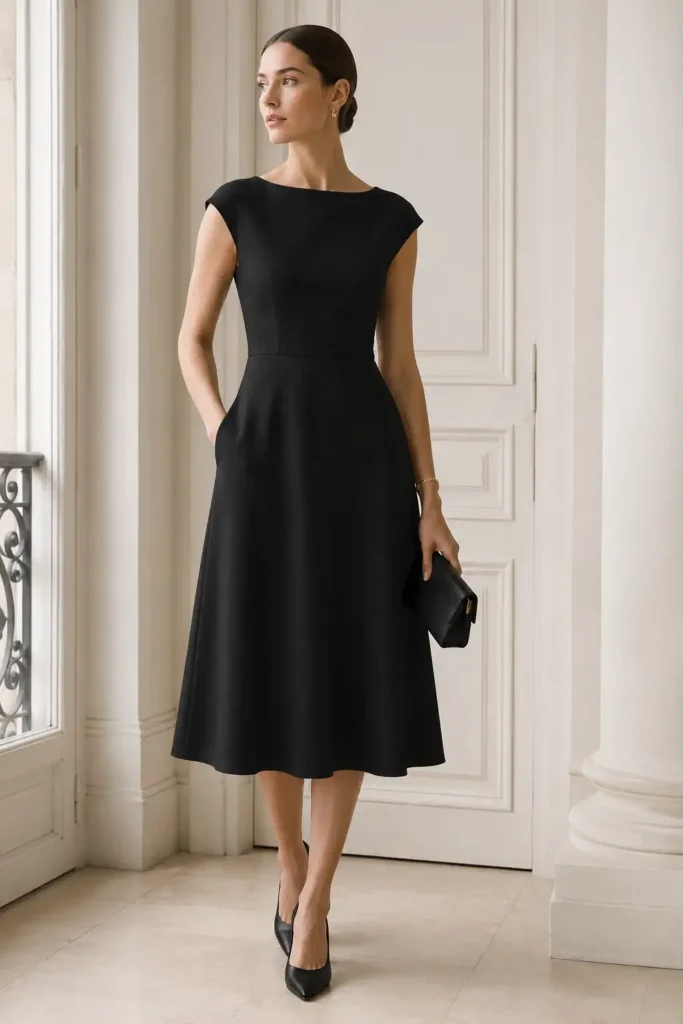
Collection Profile and Commercial Requirements
The anonymized US program contained 22 dress styles and a total planned order of 58,400 garments. The range included eight satin and mesh occasion dresses, six fitted jersey and ponte styles, five woven midi and maxi dresses, and three structured corset or strapless styles. Most styles used two or three colors, while hero styles carried four colors. The size range covered US 2-14, with selected styles extending further after fit review.
Order quantities were concentrated by style and color instead of being divided evenly. Strong commercial styles carried larger volume; visually important campaign pieces carried lower but still meaningful production quantities. The collection used shared lining, zipper, label, and packaging families where construction allowed, reducing unnecessary fragmentation without forcing every style into one material standard.
Project data snapshot:
- Market: United States
- Style count: 22 dresses
- Total quantity: 58,400 pieces
- Color count: 2-4 colors per style
- Size range: US 2-14, with selected extended sizing
- Fabric groups: satin, mesh, lace, stretch jersey, ponte, and printed viscose
- Sample plan: standard styles 10-15 days; complex styles 15-25 days
- Revision structure: two coordinated comment waves before PP approval
- Packing: private labels, care labels, hangtags, barcode stickers, polybags, and carton marks
- Delivery: launch-priority and balance quantities planned as separate releases
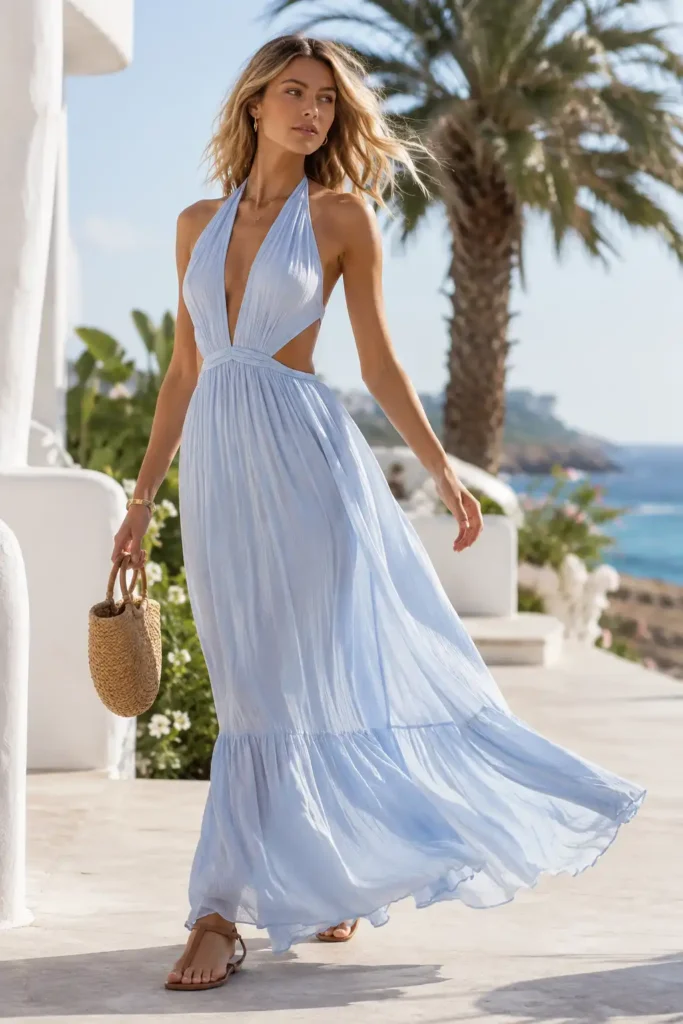
Development Decisions That Protected Design and Margin
The initial line sheet contained several strong visual ideas, but not every construction method was ready for commercial production. Satin ruching ratios varied between styles, two mesh dresses needed clearer lining boundaries, one corset style placed excessive tension at the center front, and several decorative trims carried supplier minimums that did not fit the color plan.
Fabric consolidation: Satin styles were grouped into two performance levels: a fluid quality for slips and draped midis, and a more stable quality for shaped occasion dresses. Shared colors were coordinated across several styles, improving purchasing concentration while preserving different silhouettes.
Fit control: The pattern team separated upper-body risk styles from standard fit styles. Corset, strapless, and deep-neckline products received additional review of cup position, upper-bust tension, neckline security, waist placement, and lining. Jersey styles used fabric-specific ease and recovery rather than copying measurements from woven dresses.
Construction optimization: Hidden internal operations were simplified where the external appearance remained unchanged. High-value visible details, including neckline shape, ruching placement, slit proportion, mesh transparency, and decorative zones, remained protected. Trim application was revised to reduce skin abrasion and improve repeatability.
Collection records: Approved changes were updated in pattern files, size charts, BOM records, sewing instructions, and QC checklists. Shared labels and packaging were controlled through one SKU and artwork structure while each style-color-size combination remained identifiable.
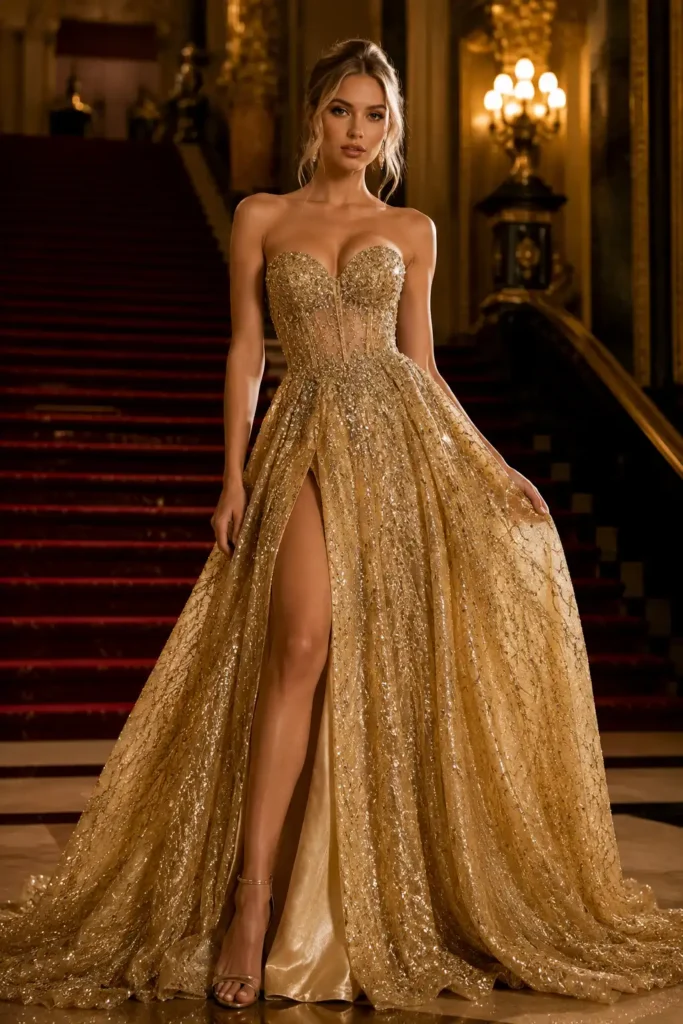
Production, Quality, and Delivery Control Across 22 Styles
Production was allocated by construction and material rather than by style number alone. Stable woven and stretch styles moved through volume-oriented teams; satin, mesh, lace, and corset styles were assigned to teams with relevant handling experience. Launch-priority styles were approved and released first, while later styles continued through PP confirmation.
Pre-production control: Each style had an approved sample, final fabric and trim references, pattern version, measurement chart, construction notes, label placement, packing requirements, and identified QC risks. Similar styles were not allowed to share files without a clear style-level distinction.
Inline inspection: QC focused on satin shade and snagging, mesh stretch and transparency, lace placement, sequin or trim security, zipper flatness, neckline symmetry, strap length, bust-waist-hip measurements, slit height, lining exposure, and hem level. Issues were recorded and rechecked after correction.
Packing control: Barcode and SKU files were reconciled with size labels, polybag stickers, carton contents, and packing lists. Structured and decorated dresses received protective folding or surface separation. Release quantities were divided according to the agreed launch sequence, with independent carton records for each batch.
Commercial outcome: The collection moved from mixed design inputs into a documented production system covering 22 styles, several fabric families, multiple colors, a broad size range, private labels, quality checkpoints, and staged delivery. Technical records were retained to support repeat orders and seasonal extensions.
Brand Protection and Compliance Support for Commercial Programs
NDA and Design Protection
- Files are shared with relevant project teams
- Unreleased designs are not used for public promotion without permission
- Public case evidence remains anonymized
- Brand names and order data are not disclosed without authorization
Factory and Audit Support
- Review proposed production location
- Confirm available audit records and validity
- Coordinate client or third-party audit requests
- Align required documents before order placement
Material and Testing Coordination
- Define required market and test scope
- Match certificate scope to material and batch
- Confirm supplier MOQ and timing
- Keep final compliance wording under brand approval
Frequently Asked Questions for Designer Label Dress Production

Send Your Designer Dress Collection for Manufacturing Review
Share the files that explain the commercial structure of your collection, not only the visual idea. A line sheet or technical package, quantity per style and color, fabric direction, color plan, size range, target fit, labels, packaging, delivery destination, and launch window allow Kelly and the development team to review manufacturing fit with greater accuracy. Original samples, fabric swatches, trim cards, BOM files, barcode tables, fit comments, and warehouse guides can be added when available.
After receiving the information, Jinfeng Apparel will review style structure, fabric and trim requirements, pattern and sample difficulty, size-development needs, MOQ alignment, cost drivers, production allocation, quality risks, packing scope, and scheduling conditions. Early feedback will identify missing information and explain whether the next step should be material sourcing, sample development, quotation, factory allocation, or a project meeting.
Please include:
- Company name and primary contact
- Line sheet, tech pack, sketch, reference image, or authorized original sample
- Quantity per style and color
- Planned size range and size ratio
- Fabric, lining, trim, and construction direction
- Private labels, barcode, packing, and warehouse requirements
- Target launch, required delivery date, destination, and freight preference
- Testing, audit, certification, or NDA requirements