
Dress Manufacturer for Campaign Collection Brands
Multi-style dress development, photo-ready samples, controlled bulk production, and launch-timed delivery for established fashion brands worldwide.
- Built for campaign programs of 10-30 coordinated styles and approximately 20,000-80,000 total garments.
- Supported by 2 sample rooms, 7+ senior pattern makers, and 20+ sample machinists for parallel development.
- Produced through 6 owned women’s fashion factories and 10+ long-term production partners with 100,000+ pieces of monthly capacity.
- NDA-supported cooperation covers unreleased designs, line sheets, tech packs, samples, labels, packaging files, and launch schedules.
Capacity Built Around Multi-Style Campaign Programs
Since 2008
10-30 Styles
20K-80K Pieces
Two Sample Rooms
Pattern Team
QC Structure
What Campaign Collection Manufacturing Really Includes
A campaign collection is not a set of garments made only for photographs. Strong execution connects campaign samples, approved commercial specifications, bulk production standards, retail packing, and launch delivery within one controlled development system.
Campaign Samples Must Represent Sellable Product
A photo sample carries more responsibility than looking attractive under studio lighting. The silhouette, neckline, transparency, movement, color, surface finish, and key design details shown in campaign content create a product promise. If the photographed dress uses a different fabric weight, altered lining, temporary handwork, or a fit that cannot be repeated in bulk, the campaign image and the delivered garment move apart.
Jinfeng Apparel reviews whether a proposed photo sample can become a stable commercial garment before the sample is treated as a campaign reference. Fabric availability, color continuity, trim sourcing, seam construction, lining coverage, pressing behavior, size grading, and repeatability are considered alongside visual impact. Hero styles may receive an earlier photo-sample path, but critical production information still moves into the BOM, measurement file, pattern version, sewing notes, and approval records.
The goal is a photograph-ready garment that remains connected to production reality. A campaign sample may be made in the model size and finished to a high presentation standard, while the technical foundation must still support approved size ranges, planned colorways, and the intended order quantity.
Sales Collections Need Clear SKU Roles
A campaign often mixes strong visual pieces with more commercial styles. Treating every garment as a hero style can create excessive cost, long sampling queues, and an assortment that photographs well but lacks depth for actual sales. Jinfeng Apparel helps separate hero dresses, commercial volume styles, supporting silhouettes, and repeatable continuity products so development effort follows the commercial role of each SKU.
Hero styles usually receive priority for silhouette, embellishment, distinctive fabric, color story, and photo-sample timing. Commercial styles need stronger attention to fit repeatability, wearable coverage, cost balance, size grading, and bulk efficiency. Supporting styles extend lengths, colors, sleeve options, necklines, or coordinated separates. Repeatable styles are developed with material continuity, stable workmanship, and record retention in mind.
A structured assortment also improves decision-making when time becomes tight. Instead of delaying the complete program, the brand can approve high-priority styles first, hold styles awaiting special trims, simplify low-priority constructions, or divide shipping into launch and follow-up batches.
Bulk Standards Begin Before Production
Bulk consistency is created during development, not inspected into garments after sewing is complete. Before PP approval, Jinfeng Apparel confirms the production fabric, color, lining, zipper, thread, elastic, boning, cups, decorative trims, label specifications, measurement chart, grading rules, workmanship notes, and packing instructions. Changes that remain open at PP stage are identified because a PP sample is intended to establish the final production reference rather than restart design development.
The Golden sample, approved pattern version, BOM, size chart, sewing instruction, QC checklist, and packing file become connected references. Production teams can then compare material receipt, cutting bundles, sewing output, finished measurements, pressing, and packing against the same approved standard.
For multi-style campaign programs, each style has its own record set. One approved satin mini dress cannot serve as the technical standard for a mesh bodycon, lace midi, or corset style. Separate records protect the distinctive construction of every SKU while the collection-level tracker keeps approval, production, packing, and shipping aligned.

Built for Brands That Sell Through Campaigns
Fashion Campaign Brands
Occasionwear Labels
Premium Ecommerce Brands
Social-First Dress Brands
Seasonal Collection Teams
Private-Label Programs
Where Campaign Collections Commonly Lose Control
Concept Without Structure
Hero Sample Delays
Broken Collection Language
Camera-Only Fabrics
Sample-Bulk Gaps

Six Controls Behind a Coherent Campaign Collection
Creative Direction
SKU Hierarchy
Fabric Families
Sample Priority
Production Readiness
Delivery Sequence
Give Every Dress a Clear Commercial Role
A strong collection balances campaign impact with sales depth, production stability, and repeat potential. Defining each SKU role early helps allocate design effort, sample time, cost, capacity, and delivery priority where they create the greatest value.
| SKU Role | Primary Purpose | Development Focus | Production Control | Typical Campaign Use |
|---|---|---|---|---|
| Hero Style | Create the main visual statement | Distinct silhouette, fabric, color, surface detail, model fit | Photo-sample priority, trim confirmation, detail replication | Homepage, paid media, editorial images, campaign video |
| Commercial Volume Style | Convert campaign interest into scalable sales | Wearability, fit consistency, target cost, size range | Stable materials, efficient construction, measurement control | Core product grid, paid conversion, retail volume |
| Supporting Style | Complete the assortment and widen wearing occasions | Length, sleeve, neckline, color, coordinated separates | Shared fabric groups, controlled variation, SKU clarity | Lookbook depth, cross-selling, coordinated styling |
| Continuity Style | Support repeat orders and future color extensions | Repeatable pattern, stable fabric, controlled workmanship | Record retention, material references, Golden sample | Replenishment, carryover, future campaign refresh |
| Image-Only Concept | Test a strong visual idea before commercial approval | Feasibility, wearability, costing, construction alternatives | Do not release to bulk until commercial standard is approved | Creative exploration, pre-campaign testing |
Dress Categories With Strong Campaign Value
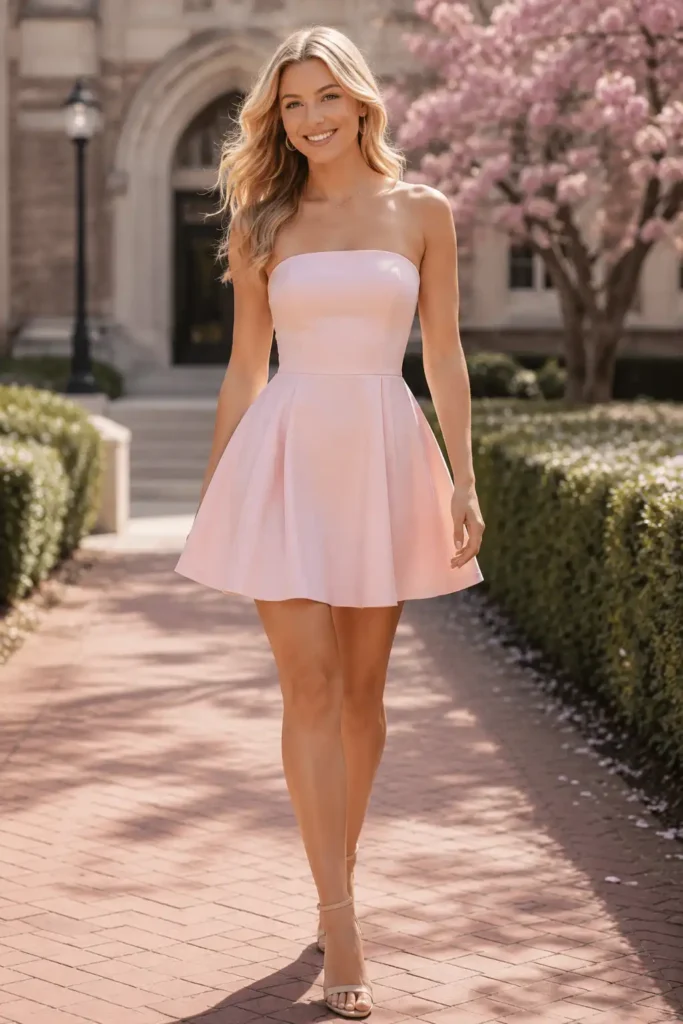
Mini Dresses
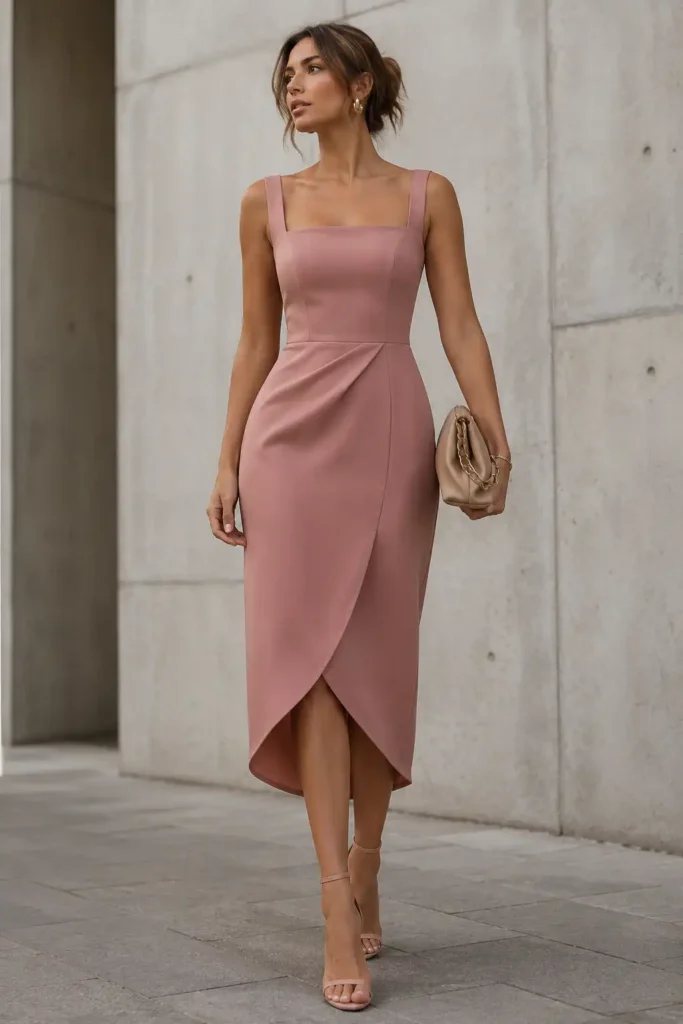
Midi Dresses
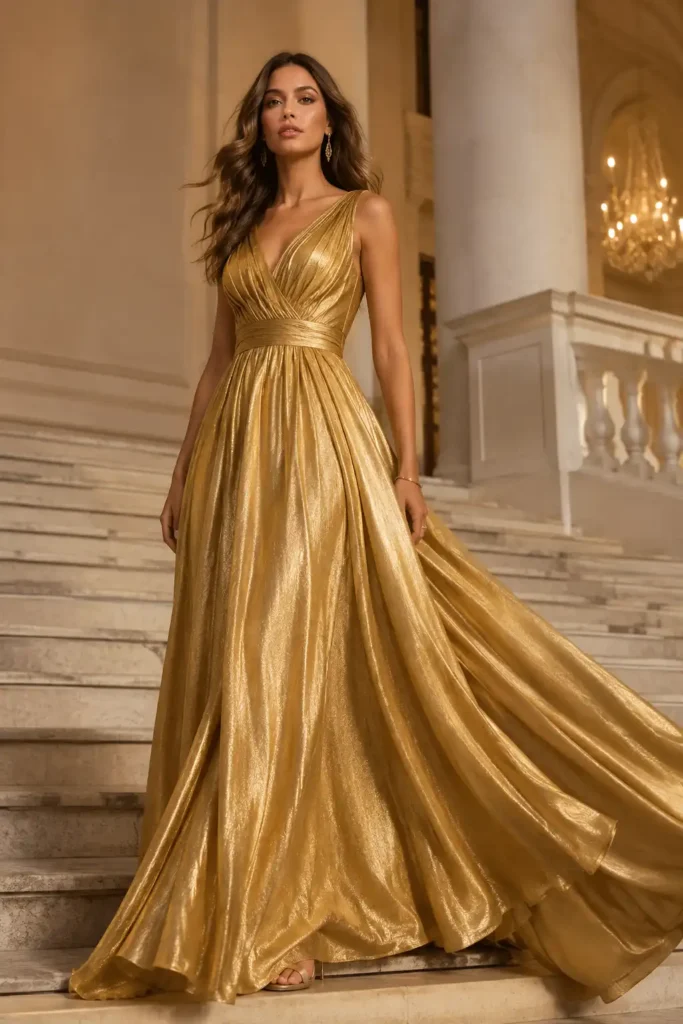
Maxi Dresses

Party Dresses

Occasion Dresses

Bodycon Dresses

Corset Dresses
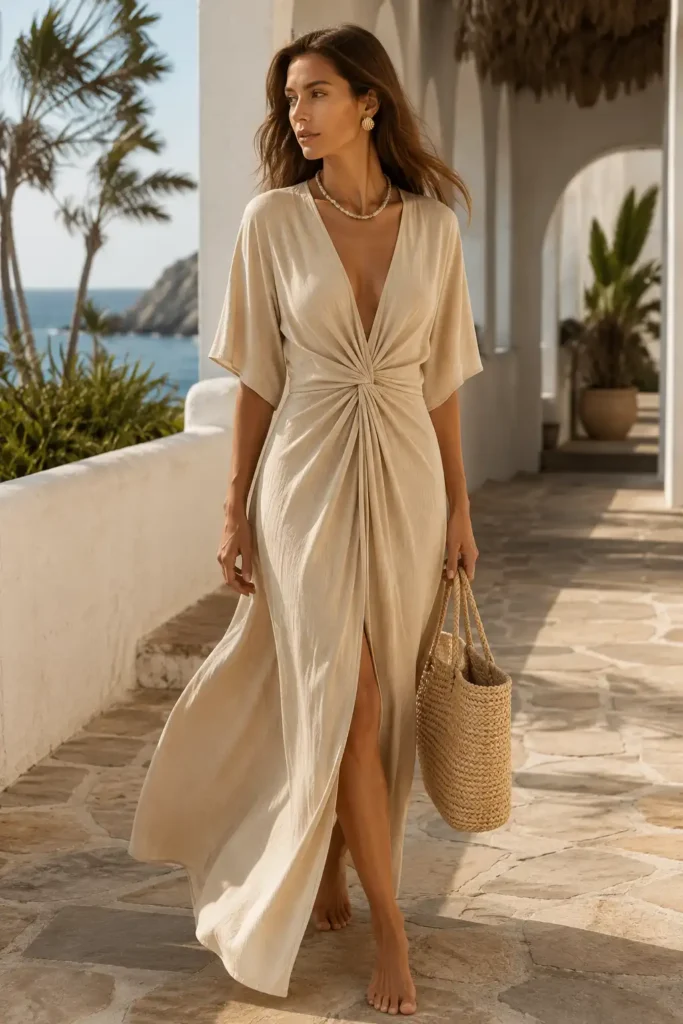
Resort Dresses
Fabrics Must Work on Camera and in Bulk
Campaign fabrics carry color, shine, texture, movement, and perceived value. Selection cannot stop at appearance. Sewing behavior, fit influence, bulk variation, pressing, packing, wearability, and repeat sourcing need equal attention.

Satin - Shine Direction, Snagging, and Pressing Control
Satin creates a high-impact surface for party, cocktail, occasion, corset, slip, and evening campaigns. Its visual strength also exposes production weakness. Light direction can emphasize grain variation, seam puckering, zipper bulging, pressing marks, needle damage, and shade differences that remain less visible on matte fabric. Fabric weight and stretch level influence whether the dress drapes, skims, or supports the body.
Development begins by matching satin type to silhouette. Lightweight satin can suit fluid slips and bias-inspired styles but may show seam tension and lining edges. Stretch satin commonly ranges around 120-250 gsm and is better suited to fitted mini, bodycon, corset, and cocktail styles when controlled recovery and support are required. Structured satin may improve corset and strapless shapes but needs appropriate needle, seam, and pressing methods.
Bulk controls include fabric-direction marking, shade grouping, clean cutting surfaces, snag prevention, seam smoothness, zipper color and flatness, lining compatibility, low-risk pressing temperature, and protected packing. Campaign samples and bulk garments are reviewed under consistent light because color and surface defects can change dramatically between factory lighting, studio lighting, and ecommerce photography.

Mesh - Transparency, Recovery, and Layer Placement
Mesh supports bodycon, cut-out, ruched, party, club, and layered occasion styles.
The same mesh can appear subtle in normal light and far more transparent under flash or strong studio lighting. Stretch direction, recovery, hole size, GSM, color, and lining placement determine whether a style looks refined or unstable.
Power mesh offers more support, while softer stretch mesh can provide fluidity but may require reinforcement or additional lining.
Pattern decisions must account for negative ease, neckline tension, armhole return, cut-out stability, bust coverage, and seam stretch. Lining length and color are treated as visible design elements rather than hidden components. A nude lining may photograph differently across skin tones; a tonal lining can improve color saturation but change the intended transparency.
Bulk control focuses on fabric relaxation, cutting direction, edge damage, seam stretch, binding quality, broken mesh, recovery after handling, and consistent lining placement. Jinfeng Apparel may compare mesh options during sampling, adjust coverage and binding, and use on-body video feedback before PP approval. Packing avoids hooks, rough labels, sequins, or hardware that can catch and tear the surface.
Lace - Motif Placement, Joining, and Lining Color
Lace brings recognizable texture to occasion, wedding guest, cocktail, corset, and romantic campaign collections. Visual quality depends on motif scale, placement, symmetry, scallop use, seam location, lining color, and how lace transitions around bust, waist, sleeves, and hems. A lace selected from a small swatch may behave very differently across a complete garment, especially when the motif is large or directional.
Development reviews whether pattern pieces should follow motif placement, whether seams can be hidden within the design, and whether scalloped edges should be preserved. Fine lace may need reinforcement at zipper, strap, neckline, and stress points. Stretch lace needs recovery testing and coordinated lining stretch. Non-stretch lace may require more ease, darts, panels, or structural support.
Bulk risks include damaged motifs, mismatched joining, inconsistent left-right placement, visible seam allowances, exposed lining, broken edges, and shade differences between lace, lining, zipper, and thread. QC compares motif placement in critical areas, seam cleanliness, neckline and armhole finishing, lining coverage, and packing protection so lace arrives without crushing, catching, or distortion.

Sequins - Attachment, Skin Contact, and Seam Thickness
Sequins deliver strong holiday, party, birthday, club, and evening imagery, yet they add material, sewing, comfort, and packaging risks. Sequin size, base fabric, direction, density, attachment method, and backing influence drape, stretch, weight, skin contact, and stitch performance. A visually dramatic fabric may be too heavy for a thin strap, too abrasive at the armhole, or too bulky around a concealed zipper.
Development checks where sequins should be removed from seam allowance, how cut edges are secured, whether lining is needed, and how neckline and underarm areas are protected. Needle selection and seam construction are adjusted to reduce breakage and skipped stitches. Zippers, darts, ruching, and narrow hems require special attention because dense sequin layers create thickness and distortion.
Bulk inspection covers sequin stability, missing areas, directional consistency, scratches, lining coverage, closure function, seam thickness, and loose fragments inside the garment. Individual packing and protective layers may be required to stop sequins from abrading neighboring pieces. Pressing methods are limited because heat and pressure can damage the surface.
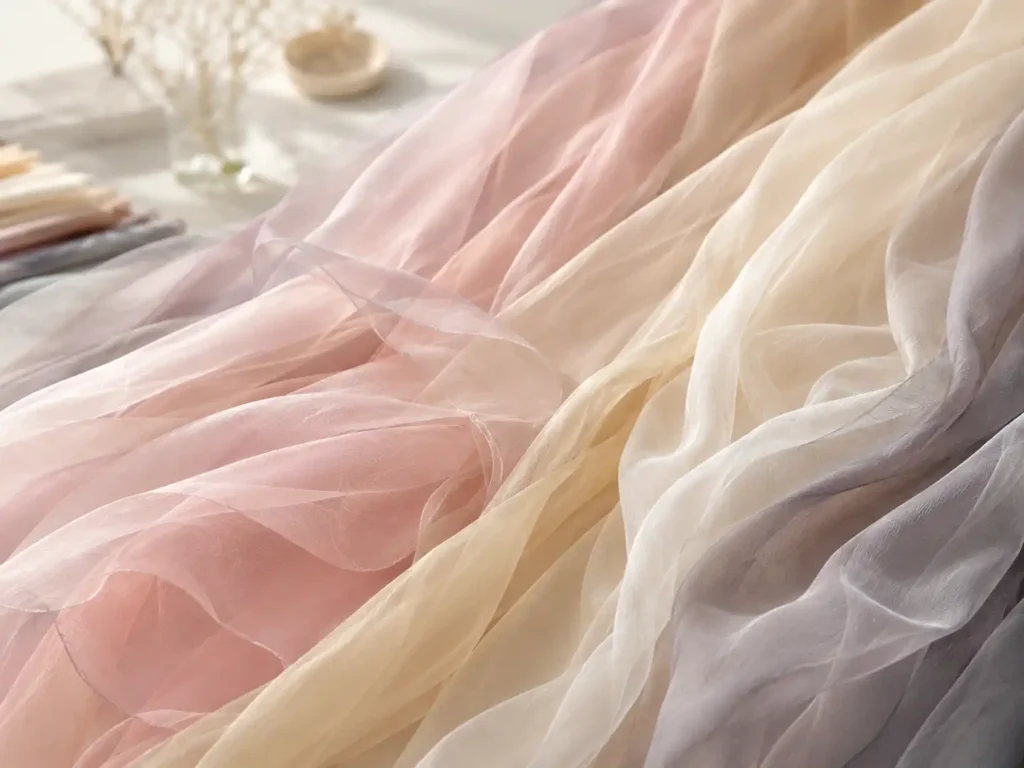
Chiffon - Transparency, Drape, and Hem Balance
Chiffon supports resort, graduation, occasion, bridesmaid-adjacent, maxi, and layered campaign collections. It offers light movement but can expose grain distortion, seam puckering, uneven hems, static, transparency, and lining problems. Fabric width, weight, fiber content, print, and finish affect cutting, shrinkage, drape, and sewing control.
Sampling evaluates whether the style needs full lining, partial lining, double layers, self-fabric panels, or a more opaque base. Bias or flowing sections need time to settle before the final hem is established. Printed chiffon requires direction and placement review, especially around center front, back seams, skirts, and sleeves. Light colors need stronger transparency checks under direct light.
Bulk control includes fabric relaxation, careful spreading, cutting accuracy, fine-needle sewing, seam tension, controlled gathering, lining length, hem leveling, thread cleaning, and protected pressing. Long chiffon dresses are packed to reduce deep fold lines and hem distortion. A campaign sample may be reviewed in motion because drape and transparency are not fully visible on a hanger.
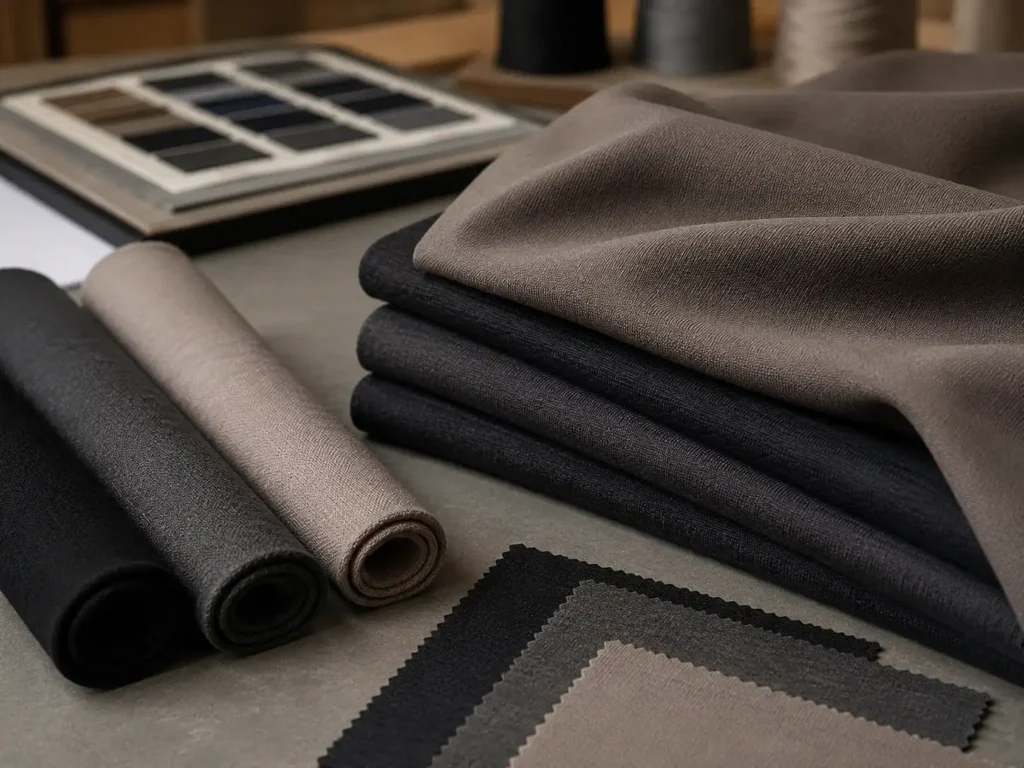
Jersey and Stretch Knits - Recovery, Opacity, and Size Stability
Jersey, ponte, rib, and other stretch knits support bodycon, ruched, cut-out, casual occasion, and social-first campaign styles. Their value comes from fit and movement, but stretch alone does not guarantee comfort or stability. GSM, composition, knit structure, stretch percentage, recovery, opacity, surface, and wash behavior influence pattern reduction, seam type, lining, support, and final measurements.
Development checks bust-waist-hip proportions, neckline return, armhole recovery, strap stability, side-seam balance, ruching distribution, hem stretch, and riding-up risk. Fabric with weak recovery can look fitted in the first sample and become loose after wear. Stronger fabric may need more movement allowance or revised pattern reduction. Light colors can require opacity testing and lining.
Bulk control connects fabric relaxing, roll and lot records, cutting direction, sewing tension, differential feed, seam elasticity, measurement tolerance, recovery checks, and finishing. Pattern versions and grading rules remain linked to the approved fabric because changing stretch quality can change the fit even when the garment measurements appear similar.
Build a Consistent Fit Language Across Styles
Campaign collections can include very different silhouettes while still feeling like one brand. Consistency comes from controlled proportions, repeatable measurement logic, fabric-aware patterns, and disciplined transfer from fit comments into production files.
Control Bust, Waist, and Hip Proportions
Fit is not a list of isolated measurements. Bust, under-bust, waist, high hip, full hip, and garment length work together to create the intended silhouette.
A bodycon dress may need controlled negative ease, while a satin slip relies more on drape and balance. A corset style requires support at the bust and waist without forcing the skirt or zipper out of alignment.
Jinfeng Apparel reviews proportions against the reference image, tech pack, target size chart, fabric behavior, and wearing occasion. Fit comments are translated into pattern changes rather than left as conversational notes.
A request to “make the waist tighter” may affect darts, panel seams, zipper curve, lining, boning, and hip transition. A request for more bust coverage may require neckline, cup, strap, armhole, or upper-bust changes.
The approved relationship between key measurements becomes part of the pattern and size specification. Bulk measurement does not only check whether each number is inside tolerance; inspectors also watch for distorted side seams, uneven waistlines, neckline stretch, and balance problems that can occur even when individual measurements appear acceptable.
Standardize Lengths, Necklines, Straps, and Slits
Collection coherence often comes from repeated proportion rules. Mini lengths should sit within the brand’s intended level of coverage, midi lengths should align with styling and footwear, and maxi lengths should support movement without inconsistent dragging. Neckline depth, strap width and position, armhole shape, back drop, and slit height need a recognizable visual language across styles.
Key measurement points can include bust, waist, hip, dress length, strap length, armhole, neckline depth, back drop, slit height, hem width, and inseam or crotch length for jumpsuits. Measurement methods are defined so sample-room, production, QC, and brand teams measure from the same points. A strap measured from the wrong attachment point or a slit measured from the floor rather than the seam opening can create avoidable disputes.
For multi-style campaigns, Jinfeng Apparel compares related proportions across the line sheet. A family of mini dresses can share a target length logic while allowing pattern-specific variation. Similar control can be used for neckline depth or slit placement, helping the campaign remain consistent without forcing every garment into one block.
Connect Fabric Behavior to Pattern Decisions
The same pattern cannot be transferred blindly between satin, mesh, jersey, lace, chiffon, and structured woven fabric. Stretch, recovery, drape, thickness, shrinkage, transparency, grain, and surface friction change how a garment sits on the body. A fitted pattern developed in strong ponte may become loose in low-recovery jersey or restrictive in non-stretch satin.
Fabric review therefore precedes final fit approval. Mesh may need stronger neckline control; satin may require seam and zipper balance; lace may need motif-aware panel placement; chiffon may need more drape allowance; sequins may add weight and stiffness; corset structures may require separate lining and support patterns. When fabric changes during sampling, Jinfeng Apparel reassesses pattern, lining, trims, cost, MOQ, sewing method, and whether another fit sample is necessary.
Pattern and material records remain connected through fabric approvals, BOMs, and sample comments. Bulk production uses the approved fabric direction, not a generic description such as “stretch fabric” or “satin,” because small differences in weight and recovery can change fit substantially.
Move Fit Comments Into Grading and Bulk QC
An approved sample in one size is only the start of commercial fit control. The pattern must be graded across the planned size range using brand rules, product structure, fabric behavior, and intended fit. Corset cups, strapless necklines, bodycon reduction, slit positions, and mini lengths may not scale effectively through simple proportional enlargement.
Jinfeng Apparel records pattern changes, measurement updates, fabric replacements, trim adjustments, sewing-method decisions, and approval status before PP. The size chart, grade rules, measurement tolerance, Golden sample, and QC checklist then guide bulk measurement. Production checks focus on points that affect fit and visual balance rather than treating every measurement as equally critical.
The brand’s requested size range should be included in the project brief. Wider ranges can require additional fit review, graded nest checking, or size-set samples depending on style complexity. The purpose is not to force every body into the same proportion but to preserve the approved design and wearing function across the commercial range.
Prioritize Photo Samples Without Losing Production Control
Campaign schedules often require key samples before the complete collection is ready. Jinfeng Apparel uses style priority, material readiness, fit risk, and approval dependency to move hero samples first while protecting the technical records needed for bulk.
Create a Priority Queue Before Sampling Starts
A 10-30 style program should not enter the sample room as one undifferentiated list. Jinfeng Apparel reviews the line sheet and marks hero styles, campaign-shoot deadlines, fabric readiness, pattern complexity, trim lead times, model-size requirements, and planned bulk timing. Styles are then grouped into priority waves.
Wave one usually contains hero dresses and styles using available materials that can establish the campaign direction. Wave two may contain commercial extensions using related fabrics or blocks. Styles waiting for custom color, special lace, cups, boning, hardware, print, or embellishment are tracked separately so their material delay does not hide the progress of ready styles.
A planning window of roughly 7-15 working days is often used for a first fashion-dress sample once materials and technical requirements are ready, while highly structured, embellished, custom-dyed, or special-trim styles may require a longer project-specific schedule. Timing is confirmed after review rather than promised from a reference image alone.
Separate Photo Approval From PP Approval
A photo sample is prepared for campaign presentation and may focus on the model size, visual finish, movement, color, and camera appearance. A PP sample establishes the final bulk standard for production material, construction, measurements, trims, labels, workmanship, and packing. The two approvals are related but cannot be treated as interchangeable.
When a photo sample is required early, any temporary component, hand adjustment, model-specific fit change, or unresolved bulk material must be recorded. Commercial approval then confirms whether the photographed result can be repeated across sizes and quantities. If the campaign sample uses a temporary shade or substitute trim, the brand receives a clear note before images are released.
The approach protects both speed and accuracy. The brand can meet a shoot date without allowing an early presentation sample to become an undocumented production standard. Revised samples, PP samples, and the Golden sample close the remaining technical decisions before bulk starts.
Track Every Sample Version and Approval
Multi-style sampling becomes difficult when comments remain in separate emails, chats, PDFs, and calls. Jinfeng Apparel can organize each style by fabric group, pattern version, sample type, revision round, fit comments, material status, approval status, and next action. Updated files replace informal memory.
A revision record may include measurement changes, neckline or strap changes, pattern balance, fabric replacement, lining adjustment, trim updates, zipper or closure changes, workmanship decisions, label requirements, and the effect on cost or timing. Approved comments then move into the pattern, size chart, BOM, sewing instruction, QC checklist, and packing instruction.
Visible tracking helps collection teams understand which styles are ready for photography, which are awaiting fit review, which need material confirmation, and which can enter PP. It also prevents an old sample or outdated pattern from being used when several revisions exist.

Prevent Sample Failure Before Cutting Fabric
Fabric Match
Construction Clarity
Measurement Completeness
Trim Feasibility
Price Alignment
Bulk Repeatability
From Campaign Brief to Golden Sample Approval
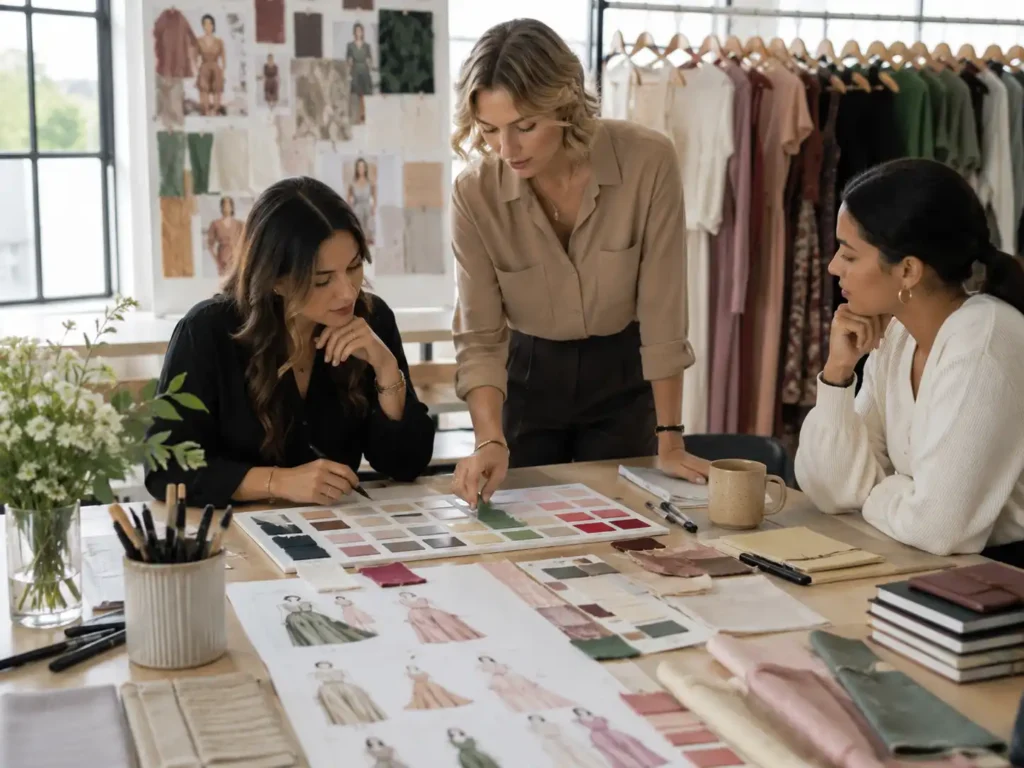
Brief Review

Style Breakdown

Fabric Direction

Pattern Development
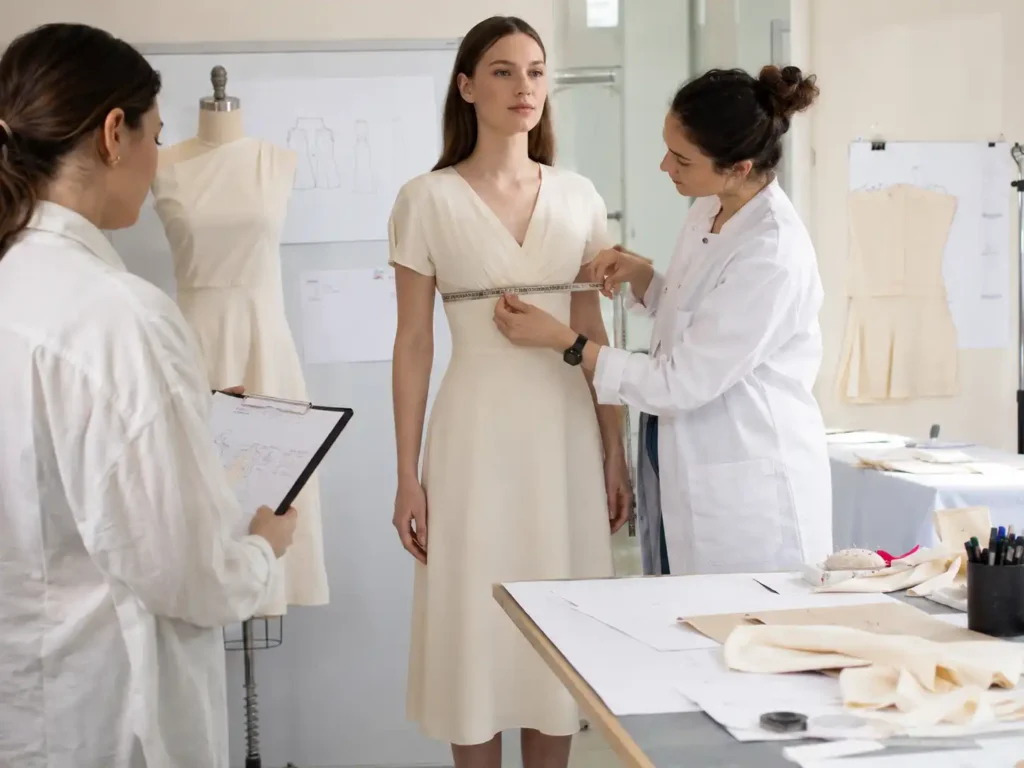
First Sample

Revision Stage

Photo and PP

Golden Sample
Multi-Style Production Requires Deliberate Factory Allocation
Producing many styles at once does not mean placing every garment on one line. Fabric, structure, workmanship, quantity, launch priority, and QC risk determine how the program is grouped and allocated across Jinfeng Apparel’s production system.
Group Styles by Material and Sewing Logic
Satin slips, mesh bodycon dresses, lace occasion styles, sequin minis, corset dresses, and printed maxis require different handling. Styles are first grouped by fabric family, structure, trims, sewing method, pressing needs, and QC focus.
A satin group benefits from shared snag prevention, needle control, pressing standards, and zipper checks. A mesh group needs stretch handling, binding, transparency, and recovery control.
Grouping also improves material traceability. Fabric lots, colors, lining, zippers, thread, elastic, cups, boning, lace, and decorative trims can be linked to the correct SKU set.
Cutting and sewing teams receive style-specific production orders and technical records rather than one collection-wide instruction that hides differences.
Shared logic does not remove style-level control. Every style retains its own approved pattern, measurement file, BOM, PP or Golden sample, sewing notes, QC checklist, label file, and packing instruction. Collection grouping supports efficiency while style records preserve accuracy.
Match Complexity to the Right Production Resource
Jinfeng Apparel operates six owned women’s fashion factories and works with more than ten long-term production partners. Allocation is based on product structure, fabric type, workmanship complexity, order rhythm, capacity, and required delivery sequence. Satellite partners are part of a long-term production network rather than treated as uncontrolled temporary outsourcing.
Structured corset and occasion styles need teams familiar with cups, boning, lining, support, and fitting. Sequin or embellished styles need stronger surface handling and anti-scratch control. Jersey bodycon styles require stretch-sewing and measurement stability. Flowing chiffon or rayon maxis need cutting, grain, shrinkage, hem, and packing discipline.
The purpose of allocation is not to claim every factory can make every dress. The purpose is to place each style with a resource suited to its material and construction while keeping project, QC, packing, and shipment requirements under a coordinated management system.
Schedule Production Around Launch Priority
A campaign order may include 20,000-80,000 garments across many styles, colors, and sizes.
Production sequence is therefore linked to hero status, launch date, material arrival, PP approval, quantity, factory capacity, and shipping plan.
Priority styles can begin after their own approvals without waiting for unrelated styles whose trims or fabrics remain open.
Material arrival, cutting, sewing, inline QC, finishing, packing, carton marks, and shipment preparation can be tracked at key milestones. For complex or strategic programs, progress updates may include photos, videos, quantity status, issue notes, and next actions. Problems affecting delivery are handled during production rather than hidden until final inspection.
Phased production also supports split shipments. Hero styles, priority colors, or core sizes can be packed and shipped first when documents, carton separation, and warehouse instructions are prepared accordingly.
Keep Collection-Level and Style-Level Control Together
Collection-level management controls total style count, quantity, launch date, packaging standards, brand labels, warehouse requirements, shipment sequence, and reporting. Style-level management controls pattern, measurements, materials, trims, workmanship, sample version, QC focus, and packing breakdown. Both levels are necessary.
A collection tracker shows where each style sits: fabric confirmation, sample revision, PP approval, material receipt, cutting, sewing, QC, packing, or shipment. Separate files protect the technical integrity of each SKU. Together, the two levels reduce confusion when the same color name appears in different fabrics, when one style uses multiple linings, or when a shared hangtag must be paired with different barcodes and size labels.
The result is a program that can move at different speeds without losing overall control. Fast styles do not disappear inside the collection, and delayed styles do not obscure the status of approved production.
Keep Campaign Images and Delivered Garments Aligned
Campaign content sets expectations for color, fit, length, movement, fabric, transparency, trim, and finish. Alignment depends on approved references, version control, material traceability, and production inspection rather than a promise that samples and bulk will always be identical.
Lock the Production Material Standard
The fabric used for photography should be connected to an approved production direction. Jinfeng Apparel records fabric composition, supplier, article, color, weight, width, stretch, recovery, hand feel, drape, opacity, surface, and relevant test or shrinkage information according to project needs. Lining, zipper, thread, elastic, cups, boning, and decorative trims are matched to the approved style.
If a photo sample uses temporary fabric or color because the bulk material is not yet available, the difference is identified before campaign content is finalized. Bulk color approval, lab dip or swatch confirmation, shade grouping, and incoming inspection help reduce color surprises. Satin, lace, mesh, sequins, and prints receive material-specific checks.
Material control is especially important for repeat orders. Fabric references and color records are retained, but future availability and dye-lot variation still require confirmation. A repeat order begins from the approved record and Golden sample rather than relying on a generic fabric name.
Control Pattern and Sample Versions
A campaign program may create first samples, fit samples, revised samples, photo samples, salesman samples, PP samples, and Golden samples. Without version control, an old pattern or model-specific adjustment can enter bulk. Jinfeng Apparel records the approved pattern version, measurement file, revision comments, fabric and trim status, and sample purpose.
Photo-specific changes are distinguished from commercial fit decisions. Temporary pinning, hand adjustment, or model-only alteration is not automatically transferred into the graded production pattern. Approved fit comments move into updated pattern files and size charts before PP.
The Golden sample is supported by technical records rather than used alone. Production teams need the physical reference, BOM, sewing notes, measurements, tolerances, label information, and packing instruction. QC teams compare bulk garments with the same connected set, reducing interpretation differences between sampling, production, and inspection.
Translate Visual Details Into Workmanship Standards
A campaign image can make small construction details highly visible: zipper flatness, seam smoothness, cup symmetry, neckline shape, strap position, ruching distribution, lace placement, sequin direction, slit height, lining coverage, and hem balance. Visual approval is converted into clear workmanship notes and inspection points.
For satin, standards may include grain direction, snag prevention, seam puckering, zipper bulging, pressing marks, and lining show-through. For mesh, standards may include binding width, stretch recovery, transparency, lining position, and cut-out shape. Corset dresses need cup, boning, anti-slip, top-edge, and closure checks. Sequins need attachment, missing areas, anti-scratch handling, and packing protection.
The details are prioritized according to visual and wearing risk. An invisible internal difference may be acceptable if comfort and durability remain correct; a visible difference at the neckline or hero embellishment may not be acceptable even when the garment passes basic measurement.

Quality Control Follows the Risk of Each Style
Campaign collections need one quality system with different inspection priorities for each product. Jinfeng Apparel connects material, construction, fit, finish, packing, and documentation checks to the approved style standard.
| Control Stage | Core Checks | Campaign Collection Focus | Typical Records |
|---|---|---|---|
| Fabric and Trim Receipt | Color, shade, defects, weight, width, stretch, recovery, trim specification | Camera-visible surface, transparency, color story, special trim readiness | Fabric approval, shade record, trim approval, incoming QC feedback |
| Pre-Production | PP sample, Golden sample, pattern, BOM, size chart, sewing and packing instructions | Confirm photographed details can move into commercial production | PP approval, pattern version, production order, QC checklist |
| Cutting | Fabric direction, lot separation, panel accuracy, bundle identity, print or motif direction | Protect satin grain, print placement, lace motif, mesh direction, color grouping | Cutting record, bundle ticket, issue photos |
| Inline Sewing | Seam quality, construction, closure, symmetry, support, stretch handling | Zipper flatness, cup and boning, neckline return, sequin loss, lace joining | Inline QC report, defect notes, repair status |
| Measurement | Bust, waist, hip, length, strap, neckline, armhole, slit, hem and style-specific points | Preserve approved silhouette and size progression | Measurement sheet, tolerance check, size-set review |
| Finishing | Thread cleaning, pressing, surface condition, shape, lining, closures, embellishment | Avoid shine marks, snagging, crushing, exposed lining, uneven hems | Finishing check, appearance photos |
| Final Inspection | Appearance, workmanship, measurements, function, quantity, labels, packing readiness | Compare critical visual details with Golden sample and campaign expectation | Final QC checklist, AQL report when arranged, inspection feedback |
| Packing and Cartons | Barcode, SKU, size and color stickers, polybags, carton marks, ratios, quantities | Ensure campaign assortment remains identifiable through warehouse receipt | Packing list, carton data, shipment photos, warehouse labels |
Plan Production Backward From the Launch Date

Brief Lock

Material Review

Sample Waves
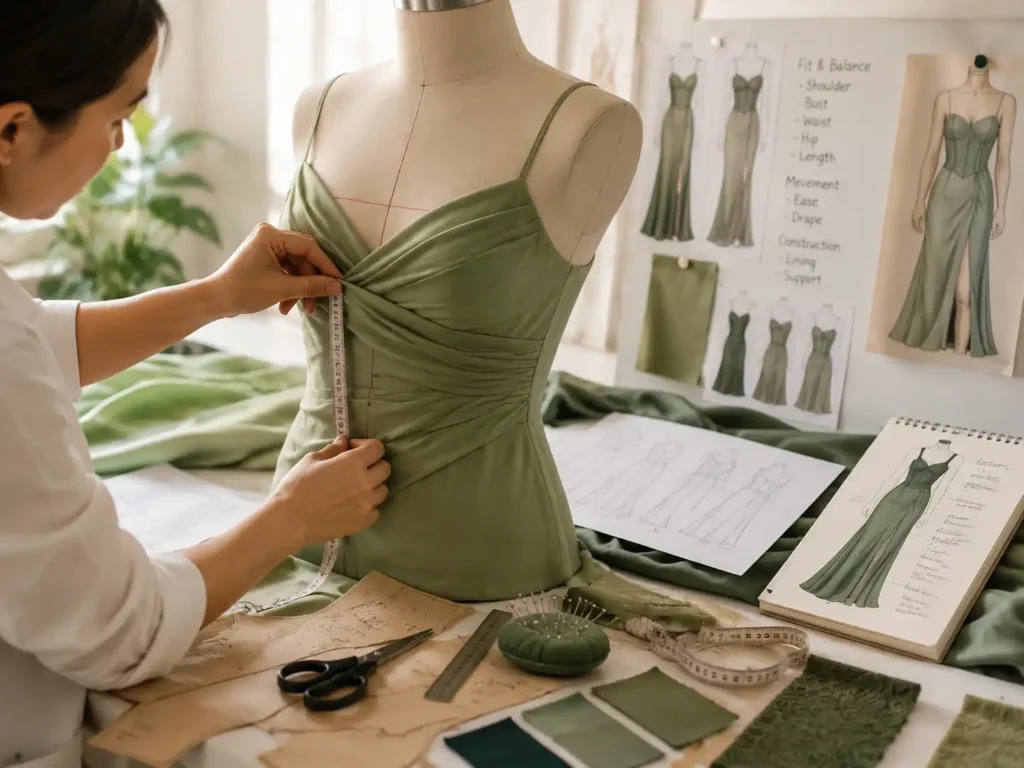
Fit Revisions
PP Approval
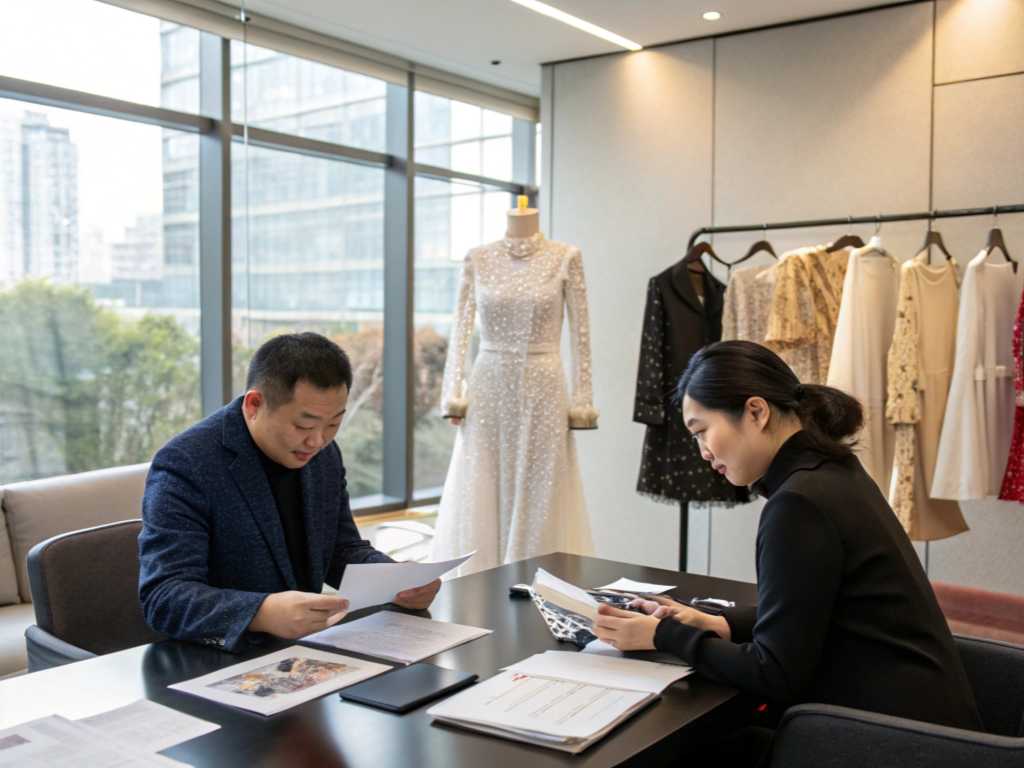
Bulk Window

QC and Packing

Freight Buffer
Deliver Every SKU Ready for Brand and Warehouse Use
Brand Labels
Hangtags and Strings
Barcode and SKU
Individual Packing
Carton Breakdown
Shipment Documents
Campaign Collection Dress Manufacturing Case Studies
Campaign collections require more than attractive samples. Brands need a manufacturing partner that can connect creative direction, photo-ready development, bulk consistency, launch timing, and future repeat production. Jinfeng Apparel supports campaign-driven dress programs through structured sampling, production control, quality management, and delivery planning.
Case Study 1: Global Fashion Brand Launching a Multi-Style Campaign Collection
A global womenswear brand planned a seasonal campaign focused on creating a strong visual story across ecommerce, social media, and paid advertising channels.
The campaign required:
- High-impact hero dresses
- Commercial supporting styles
- Consistent collection identity
- Launch-ready inventory
Program scope:
- 22 dress styles
- 58,000 pieces
- 7 seasonal colors
- XS-XL size range
- Multiple campaign images
Product categories:
- Satin occasion dresses
- Mesh party dresses
- Corset mini dresses
- Bodycon midi dresses
- Resort maxi dresses
Campaign Challenge
The brand needed the entire collection to appear unified in photography while managing very different production requirements.
Visual Consistency
The collection required consistency in:
- Color direction
- Fabric appearance
- Fit proportion
- Brand details
- Finishing level
Launch Timing
The campaign schedule required:
- Photo samples
- Final product approval
- Bulk production
- Warehouse arrival
before the planned launch date.
Jinfeng Solution
Jinfeng organized the collection around commercial priority.
Style Classification
Separated:
Hero Styles
Focused on:
- Campaign images
- Homepage promotion
- Social advertising
Result
The brand achieved:
- 22 coordinated campaign styles
- Consistent visual presentation
- Controlled bulk production
- Planned launch delivery
The collection became a repeatable seasonal campaign framework.
Case Study 2: Developing a Hero Dress for a High-Impact Marketing Campaign
A premium ecommerce fashion brand wanted to create one signature dress to become the visual focus of a major campaign.
The product was designed for:
- Homepage feature
- Influencer content
- Paid advertising
- Social media launch
Original concept:
- Structured corset mini dress
- Satin fabric
- Sculpted silhouette
- Statement neckline
Product Challenge
The brand needed the final garment to match the campaign image while remaining commercially producible.
Main risks:
Visual-to-Production Gap
Potential issues included:
- Temporary sample adjustments
- Incorrect fabric behavior
- Unstable neckline
- Poor size grading
- Difficult repeat production
Customer Expectation Risk
The campaign image created expectations for:
- Fit
- Shape
- Shine
- Structure
- Overall appearance
Jinfeng Solution
Jinfeng treated the hero product as both a marketing asset and commercial product.
Design Engineering
Reviewed:
- Bust structure
- Cup position
- Waist shaping
- Boning system
- Closure method
- Lining construction
Fabric Validation
Controlled:
- Satin weight
- Surface shine
- Color consistency
- Pressing method
- Bulk availability
Result
The brand achieved:
- Campaign-ready hero dress
- Stable production standard
- Consistent fit across sizes
- Repeat-order capability
The hero product became a long-term commercial style.

Case Study 3: Replenishing Bestselling Campaign Styles After Market Response
A fashion brand launched a seasonal campaign and identified several styles generating strong customer demand.
Successful products included:
- Satin midi dress
- Jersey bodycon dress
- Mesh party dress
The brand needed rapid replenishment while maintaining the original campaign quality.
Program scope:
- 10 repeat styles
- 32,000 pieces
- New seasonal colors
- Two delivery batches
Replenishment Challenge
The brand needed to maintain:
Original Campaign Appearance
Including:
- Fabric surface
- Color tone
- Silhouette
- Product details
Fast Market Response
The brand needed:
- Quick production restart
- New color options
- Inventory availability
Jinfeng Solution
Jinfeng used retained production records.
Product History Review
Checked:
- Approved patterns
- Size charts
- BOM
- Fabric references
- Trim details
- QC records
New Color Development
Controlled:
- Lab dips
- Shade approval
- Lining matching
- Trim coordination
Repeat Production Planning
Managed:
- Material availability
- Factory capacity
- Priority SKUs
- Shipment batches
Result
The brand achieved:
- Faster replenishment
- Stable campaign product quality
- New seasonal color expansion
- Reduced redevelopment time
Successful campaign products became repeat commercial assets.
Frequently Asked Questions About Campaign Collections
A campaign collection dress manufacturer develops and produces coordinated dress assortments created around a brand campaign, seasonal story, launch, or visual concept. The work can include line-sheet review, fabric and trim direction, pattern making, multi-style sampling, photo samples, fit revisions, PP approval, bulk production, QC, private-label packing, and launch-timed shipment. The manufacturer must connect photographed samples with commercially repeatable garments rather than treating campaign pieces and sales inventory as unrelated work.
Yes. Multi-style programs are managed by fabric group, fit family, pattern complexity, trim group, hero priority, sample version, approval status, factory allocation, QC focus, packaging, and shipment sequence. Each style retains separate technical and production records while a collection tracker provides the overall status. Quantity, complexity, material readiness, photo dates, and launch dates are reviewed before the final sample and production schedule is confirmed.
Yes. Hero styles can be prioritized according to campaign shoot date, visual importance, fabric readiness, trim lead time, pattern complexity, and bulk dependency. Photo samples are distinguished from PP samples. Any temporary fabric, trim, model-specific adjustment, or unresolved production item is recorded so an early campaign sample does not become an undocumented bulk standard.
A strong project brief includes a line sheet, tech packs or reference images, style count, hero list, target quantity per style and color, fabric direction, color plan, size range, target market, photo date, launch date, private-label requirements, packaging guide, and target delivery window. More complete information allows Jinfeng Apparel to assess fabric, construction, MOQ, sample path, cost factors, capacity, QC risk, and logistics with greater accuracy.
The standard MOQ starts from 200 pieces per style and color. MOQ is calculated by style and color, not by adding unrelated styles together. Special fabrics, custom dyeing, custom printing, lace, sequins, trims, hardware, or printed packaging may carry separate supplier MOQs. A multi-style collection can be reviewed as one program, but every SKU still needs a commercially workable quantity and material plan.
Timing depends on fabric and trim availability, pattern complexity, structure, embellishment, color development, and the number of styles in each sample wave. Many standard fashion-dress first samples can be planned within roughly 7-15 working days after materials and technical requirements are ready. Corset structures, custom colors, special trims, prints, beading, or heavily embellished garments may require a longer schedule. Final timing is confirmed after review.
Jinfeng Apparel uses approved fabric and trim references, pattern version control, updated size charts, BOMs, sewing instructions, PP samples, Golden samples, QC checklists, and packing instructions. Fabric receipt, cutting, inline sewing, measurements, finishing, final inspection, labels, barcodes, and packing are checked against the approved records. The goal is controlled tolerance and faithful reproduction of critical visual and fit details, not an unrealistic claim that every garment is mathematically identical.
Yes. Jinfeng Apparel supports multi-color and multi-size production. The project must define quantity by style, color, and size; size range; grade rules; color approvals; fabric lots; lining and trim colors; barcodes; SKU labels; packing ratios; and carton breakdown. Wider size ranges or complex fit-sensitive styles may need additional graded review or size-set samples. Color quantity and custom dyeing can also affect MOQ and timing.
Yes, split shipment can be arranged by project. Hero styles, priority colors, core sizes, or an initial launch quantity may move first, with the remaining bulk following by sea or another agreed route. The plan requires clear SKU separation, carton identification, packing lists, forwarder instructions, warehouse requirements, document consistency, and agreement on which styles or quantities belong in each shipment.
Yes. Jinfeng Apparel supports NDA-based cooperation and protects tech packs, line sheets, sketches, reference samples, patterns, measurements, fabrics, trims, photo samples, labels, packaging, barcodes, order information, and launch dates. Files are used for the corresponding project and are not published or reused without authorization. Case studies remain anonymous unless the brand approves disclosure.
Plan Your Next Campaign Collection With Jinfeng
Send enough information for a meaningful manufacturing review rather than a generic estimate.
Kelly and the development team will assess the collection structure, materials, sample priorities, MOQ fit, production risks, packaging, and delivery path before recommending the next step.
- Campaign mood board, line sheet, tech packs, sketches, reference images, or original samples
- Hero styles and required photo-sample date
- Target quantity for each style and color, plus the planned size range
- Fabric, lining, trim, print, color, embellishment, and fit direction
- Private-label artwork, barcode or SKU requirements, packing guide, and warehouse instructions
- Target market, launch date, requested delivery window, and preferred freight arrangement


