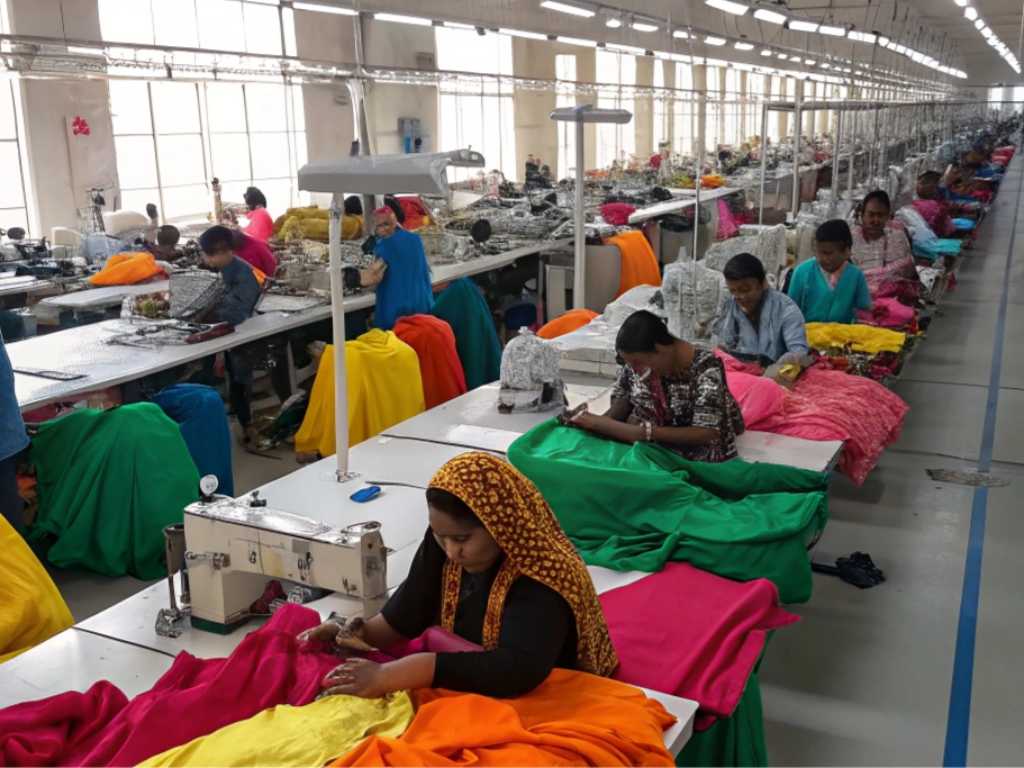
Dress Manufacturer for Brands Moving from Sampling to Bulk
A production partner for established fashion brands ready to convert approved dress samples into repeatable, retail-ready bulk orders.
Jinfeng Apparel reviews the approved garment, final pattern, measurement file, fabric references, trim records, fit comments, labeling, packaging, quantity plan, and delivery window before releasing a dress program into production. The operating structure connects sample development with bulk execution rather than treating them as separate jobs:
- 2 sample rooms and 7+ senior pattern makers review sample-to-pattern alignment and unresolved fit risks.
- 18+ sewing lines and 6+ flexible production lines support multi-style dress programs after PP standards are locked.
- 15+ QC inspectors cover incoming materials, cutting, sewing, finished garments, pressing, packing, and shipment preparation.
- 100,000+ pieces of regular monthly capacity are coordinated through 6 owned womenswear factories and 10+ long-term production partners.
Built for Brands at a Defined Production Stage
Approved Sample Ready
Independent Sample Studio
Supplier Transfer Project
Tech Pack Near Approval
Seasonal Multi-Style Program
PP Sample Preparation
Development and Bulk Capacity Under One System
Since 2008
6 Owned Factories
10+ Production Partners
12+ Merchandisers
30+ Finishing Staff
200 Pcs Per Style/Color
Where Sample-to-Bulk Dress Programs Commonly Fail
No Final Pattern
- Compare approved garment and pattern
- Confirm final base size
- Record every approved correction
Fit Changes Unrecorded
- Close outdated comments
- Mark accepted changes
- Update measurement and QC points
Sample Fabric Unrepeatable
- Identify commercial source
- Approve replacement when needed
- Recheck pattern after material change
Trim Records Incomplete
Zippers, cups, boning, elastic, lining, hooks, sliders, buttons, lace edging, and decorative components are often visible on the sample but absent from the BOM. A similar-looking substitute can change support, comfort, appearance, or sewing method. Jinfeng creates or corrects the trim record, placement, color, finish, dimensions, supplier reference, and approved sample before purchasing.
- Seal physical references
- Record placement and quantity
- Check component MOQ
Sample Room Line Gap
- Convert craft into instructions
- Train line before volume
- Inspect early output
Packing Decisions Too Late
Labels and packaging are often treated as a final task, although missing artwork, barcode mapping, SKU rules, polybag warnings, folding methods, carton ratios, and marks can hold finished goods after production. Jinfeng brings private-label and warehouse requirements into the PP lock so garment completion and shipment preparation follow the same release calendar.
- Confirm label pack
- Map style-color-size SKU
- Approve carton data before shipment
Production-Readiness Review Before Bulk Commitment
Every transferred sample is placed into one of three working states. The classification gives the brand a clear next step and prevents production dates, costs, or material bookings from being built on incomplete information.

Ready for PP Approval
A project enters the PP route when the approved sample, pattern, measurement chart, construction details, fabric, trims, labels, and packing direction are materially aligned. Jinfeng verifies the exact sample version, base size, measurement method, tolerance points, seam and support structure, fabric reference, trim specifications, and artwork status. The remaining work is production confirmation rather than open-ended product development.
- Pattern and approved garment produce the same silhouette, balance, neckline, waist position, hem level, and key design proportions.
- Commercial fabric and trims are available in the required quantity, color method, quality, and order schedule.
- Fit comments are closed or clearly marked for PP verification, with no conflicting instructions across files.
- Size grading, label placement, packing rules, and quality checkpoints are defined well enough for production planning.
A PP sample is then made or confirmed using production-intended materials and methods. The approved PP garment, updated files, trim references, and packing instructions become the release standard for bulk manufacturing. Production does not start from a first sample or a photo sample when commercial details remain open.

Ready With Conditions
Many mature projects sit between development and production. The appearance is approved, yet one or more commercial conditions still need closure. Common examples include a sample fabric that cannot be reordered, a missing graded nest, an uncertain zipper source, incomplete wash-care wording, or a target delivery date that conflicts with dyeing and trim lead times. Jinfeng records each open item with an owner, required evidence, decision deadline, and production impact.
- Keep the approved silhouette while replacing a non-commercial sample fabric with a controlled alternative.
- Rebuild or verify missing pattern pieces, seam allowances, notches, drill marks, and graded sizes.
- Confirm colors through swatches, lab dips, strike-offs, or production references before booking the full quantity.
- Separate design approval from compliance, label, packaging, and warehouse approval so each record has a clear status.
Conditional readiness does not mean the program is rejected. It means bulk dates and final costing are released only after the named conditions are closed. Mature brands benefit from a visible risk list because schedule pressure is concentrated on the items that can genuinely delay production.

Requires Controlled Redevelopment
A project returns to controlled redevelopment when the approved-looking sample cannot be reproduced reliably or safely in the intended bulk structure. Warning signs include an unknown pattern source, extensive hand correction, incompatible fabric substitution, unstable fit, hidden construction that cannot be repeated, missing support in corset or strapless styles, and major differences between the sample and Tech Pack. Jinfeng first preserves the visual goal, then rebuilds the production logic beneath it.
- Measure and document the original garment before opening seams or rebuilding pattern pieces.
- Identify which visual elements are essential and which construction choices can be improved for repeatability.
- Test revised fabric, support, lining, stretch, or seam methods where material behavior changes the fit.
- Produce a revised sample, update all controlled files, and move to PP only after the new standard is approved.
Redevelopment is more disciplined than copying. The aim is not to redesign an approved style; the aim is to create a reproducible base that gives cutting, sewing, QC, finishing, and repeat-order teams the same instructions.
What to Transfer With an Approved Dress Sample
A complete handover package shortens review time and exposes conflicts before production. Missing files do not always stop a project, but every missing item creates a decision that must be resolved and recorded.
| Brand File or Item | What Jinfeng Verifies | Risk When Missing |
|---|---|---|
| Approved physical sample | Construction, fit, proportions, finishing, support, and visual benchmark | Production teams interpret appearance differently |
| Final Tech Pack | Design details, measurements, construction notes, artwork, and version status | Instructions stay scattered across messages |
| Final size chart | Measurement points, base size, grade rules, and tolerances | Bulk sizes drift or scale unevenly |
| Pattern files or paper pattern | Version, grainline, seam allowance, notches, and sample alignment | Old pattern creates a different garment |
| Fit comments and revision log | Which changes were approved, rejected, or still open | Earlier errors return during PP or bulk |
| Fabric swatch or supplier reference | Weight, width, handfeel, drape, stretch, recovery, color, and availability | Bulk fabric changes fit and appearance |
| BOM and trim card | Component type, color, size, finish, placement, and quantity | Unapproved substitute changes function or look |
| Color and size ratio | Material booking, cutting plan, line loading, packing, and warehouse data | MOQ and capacity are planned incorrectly |
| Label and packaging pack | Artwork, placement, SKU, barcode, polybag, folding, and carton rules | Finished goods wait for late approvals |
| Launch and delivery plan | PP deadline, production release, QC window, shipment method, and warehouse date | Production timing does not match the sales calendar |
Aligning the Sample, Pattern, and Size Chart
Sample-to-Pattern Comparison
Fit Comment Consolidation
Grading and Tolerance Review
Making Sample Fabrics Repeatable in Bulk
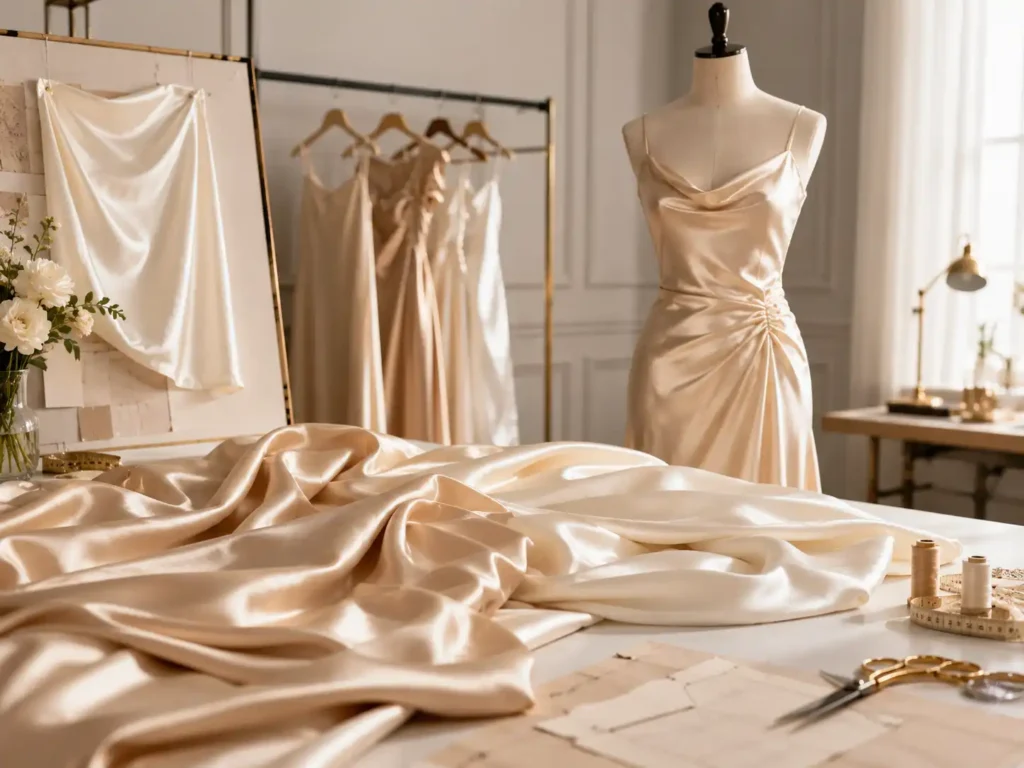
Satin and Stretch Satin
- Lock face and grain direction
- Compare lab dip under agreed light
- Test zipper and seam appearance
- Define folding and tissue protection

Mesh and Lace
- Measure stretch in both directions
- Approve motif and placement rules
- Check skin contact and seam bulk
- Match lining and thread color

Jersey and Stretch Knits
- Relax fabric before cutting
- Test recovery at key body zones
- Control side-seam twisting
- Recheck length after pressing

Sequin and Embellishment
- Seal decoration reference
- Clear seam allowance safely
- Inspect loose or sharp elements
- Protect surfaces in packing

Lining and Interfacing
- Approve lining coverage
- Match stretch with shell
- Test fusing and heat response
- Check show-through at openings

Zippers, Cups, and Boning
- Confirm functional dimensions
- Seal color and finish
- Test support before PP approval
- Record supplier and replacement rule
Dress Structures Requiring Different Bulk Controls
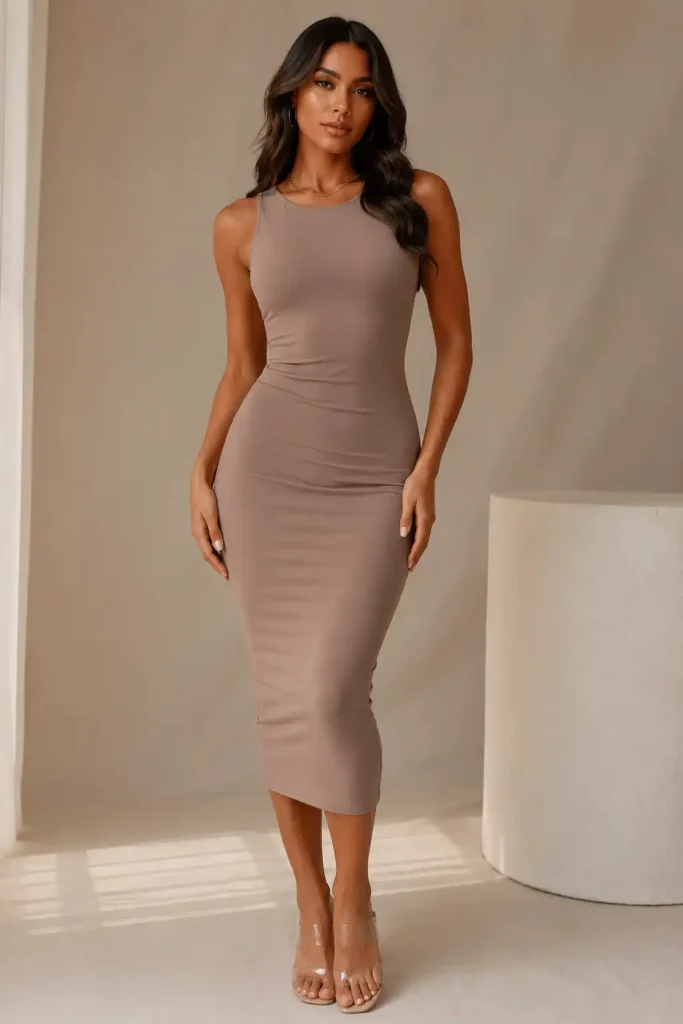
Bodycon Dresses
- Sample risk: good fit in one fabric but unstable fit in bulk.
- PP focus: commercial fabric, key body measurements, seam behavior.
- Bulk control: early size-set review, inline measurement, recovery checks.
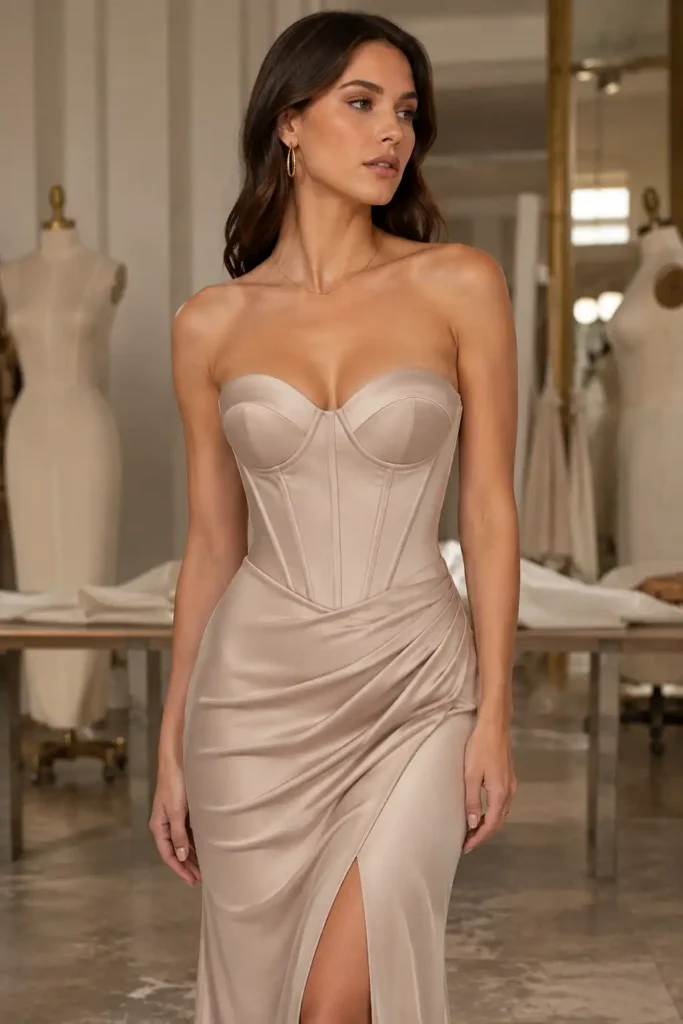
Corset Dresses
- Sample risk: asymmetry, empty cup, pressure points, top-edge gaping.
- PP focus: support materials and exact construction sequence.
- Bulk control: symmetry templates, boning and cup checks, fit-critical measurements.

Satin Slip Dresses
- Sample risk: sample-room handling hides unstable grain or seam behavior.
- PP focus: production fabric, hanging time, pressing method, strap and neckline stability.
- Bulk control: shade grouping, grain checks, clean work surfaces, protective packing.

Mesh Lace Dresses
- Sample risk: inconsistent motif, exposed lining edge, different transparency across colors.
- PP focus: approved placement map, lining boundary, stitch and edge methods.
- Bulk control: cutting markers, panel matching, color checks, garment-by-garment visual inspection.

Sequin Party Dresses
- Sample risk: one skilled machinist creates a result the line cannot repeat.
- PP focus: construction order and protected seam handling.
- Bulk control: dedicated work surfaces, inline decoration checks, final hand inspection, separated packing.

Jumpsuits and Sets
- Sample risk: attractive standing fit but restricted movement or incorrect proportion.
- PP focus: seated and movement fit, component matching, packing logic.
- Bulk control: critical rise measurements, paired inspection, complete-set packing checks.
How Approved Samples Enter Controlled Production
Sample approval becomes meaningful only when every approved element is released to sourcing, pattern, production, QC, finishing, and packing teams in a usable format. Jinfeng manages the handover as a controlled manufacturing event.
Approval Record and Version Freeze
The handover begins by identifying the exact garment, pattern, Tech Pack, size chart, BOM, artwork, fabric reference, trim card, and comment log that belong together. Version control matters because a single collection may contain first samples, fit samples, photo samples, revised samples, PP samples, and marked garments in circulation at the same time. Jinfeng names the approved version, closes outdated records, and lists any remaining PP conditions.
- Record sample type, style number, color, base size, approval date, and approving contact.
- Link every approved garment to one pattern version and one measurement file.
- Identify whether the sample used production fabric, substitute fabric, or non-commercial trims.
- Separate approved design details from open compliance, label, or packing decisions.
A version freeze prevents a factory from cutting against an older pattern while a merchandising team references a newer sample. Later changes follow change control rather than silent replacement.
Pattern, Measurement, and Construction Release
Pattern makers translate the approved shape into production-ready pattern pieces with grainlines, seam allowances, notches, drill marks, balance points, and size information. The measurement chart is checked against the pattern and physical garment. Sewing instructions describe how the silhouette is built, including seam type, stitch, support, elastic application, gathering, topstitch, lining attachment, zipper insertion, hem method, pressing sequence, and special handling.
- Critical fit points receive explicit tolerances and inspection methods.
- Complex or hidden support is shown through diagrams, marked samples, or sealed components.
- Construction details that relied on sample-maker judgment are converted into repeatable steps.
- A pre-production meeting reviews difficult operations before line loading.
The goal is not to create more paperwork. The goal is to give pattern, cutting, sewing, and QC teams one consistent source of truth.
Fabric, Trim, and Color Sealing
Commercial materials are approved through named references.
Depending on the program, evidence may include a fabric swatch, lab dip, strike-off, bulk lot cutting, zipper card, cup sample, boning sample, lace placement reference, sequin panel, thread card, label proof, or packaging mock-up.
Jinfeng records supplier, quality, color, dimensions, finish, composition, usable width, stretch, and any project-specific limitation.
- Bulk color is compared using the agreed lighting condition and reference.
- Shell, lining, thread, zipper, elastic, and label colors are reviewed as one set.
- Material changes after PP approval trigger fit, cost, MOQ, and schedule review.
- Batch-sensitive fabrics are planned for shade grouping and cutting control.
Sealed references give purchasing and incoming QC a measurable standard before material enters cutting.
Production, QC, and Packing Handover
Before bulk begins, the production file is reviewed with merchandising, factory management, line supervisors, QC, finishing, and packing teams. The meeting covers material status, pattern release, construction risks, size-color ratio, line sequence, early-output inspection, measurement points, workmanship criteria, labeling, folding, polybagging, carton ratio, carton marks, inspection arrangements, and delivery priorities.
- The Golden sample remains available as the visual and construction reference.
- QC checklists identify product-specific risks rather than using only a generic garment form.
- First output is checked before the same error spreads through the full quantity.
- Packing teams receive style-color-size mapping and approved label placement before final production.
Handover closes the gap between a carefully made sample and a repeatable production order. Every team sees the same approved standard and knows how an issue is escalated.
What Must Be Locked at PP Approval
PP approval releases a dress program for bulk manufacturing. Every locked item needs visible evidence, because changes after approval can affect cost, material availability, grading, production sequence, packing, and delivery.
| PP Lock Item | Approval Evidence | Change Impact |
| Shell and lining fabric | Approved swatch, bulk reference, or named supplier quality | Fit, drape, opacity, cost, MOQ, and lead time |
| Color | Lab dip, strike-off, swatch, or approved production reference | Shell, lining, thread, zipper, trim, and label matching |
| Measurements and grade | Final size chart, grade rule, and tolerance list | Pattern, cutting, fit, and inspection decisions |
| Construction | Approved PP sample and sewing instructions | Labor, machinery setup, workmanship, and appearance |
| Trims and components | Final BOM and sealed trim card | Purchasing, function, support, and production timing |
| Labels and artwork | Approved files, proofs, wording, and placement | Compliance review, sewing, SKU, and packing |
| Packaging | Packing instruction and approved mock-up | Folding, garment protection, cost, and warehouse acceptance |
| Carton marks and ratios | Final shipping data and carton plan | Logistics, regional allocation, and inventory receiving |
| QC standard | Product-specific checklist and tolerance criteria | Inline, final, AQL, and client inspection decisions |
| Golden sample | Sealed production reference | Visual comparison, training, disputes, and repeat-order records |
Factory Allocation Based on Product Risk
Construction Complexity
Fabric Behavior
Order Structure
Launch Priority
QC Workload

Bulk Production From Material Booking to Packing
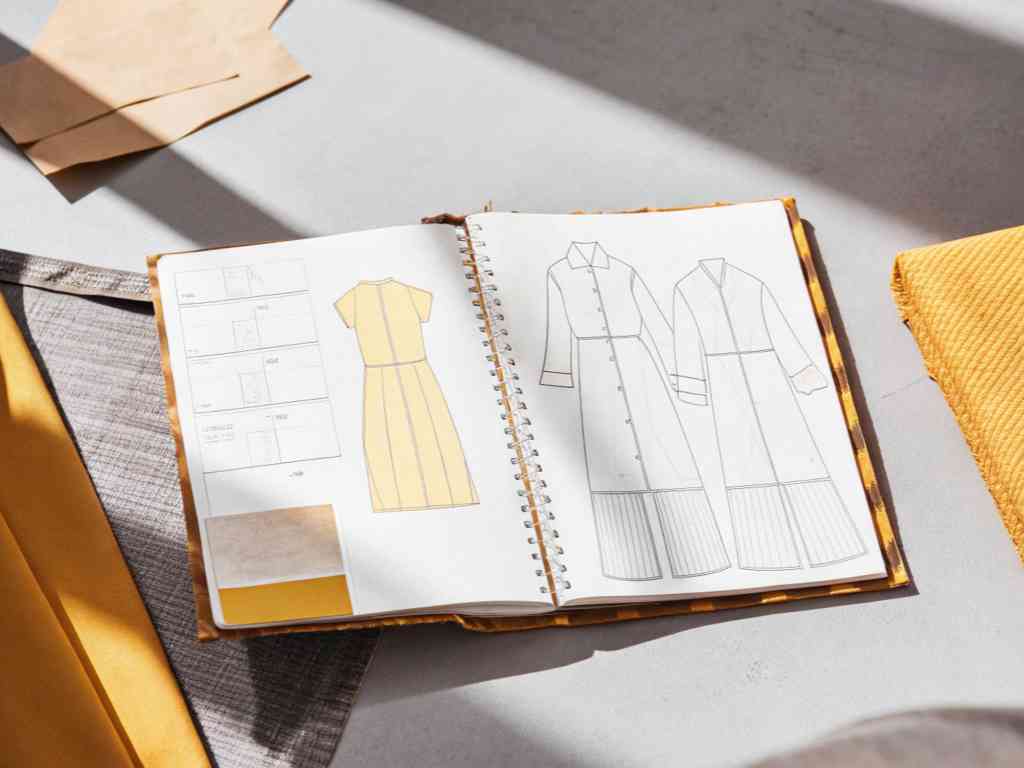
Material Booking
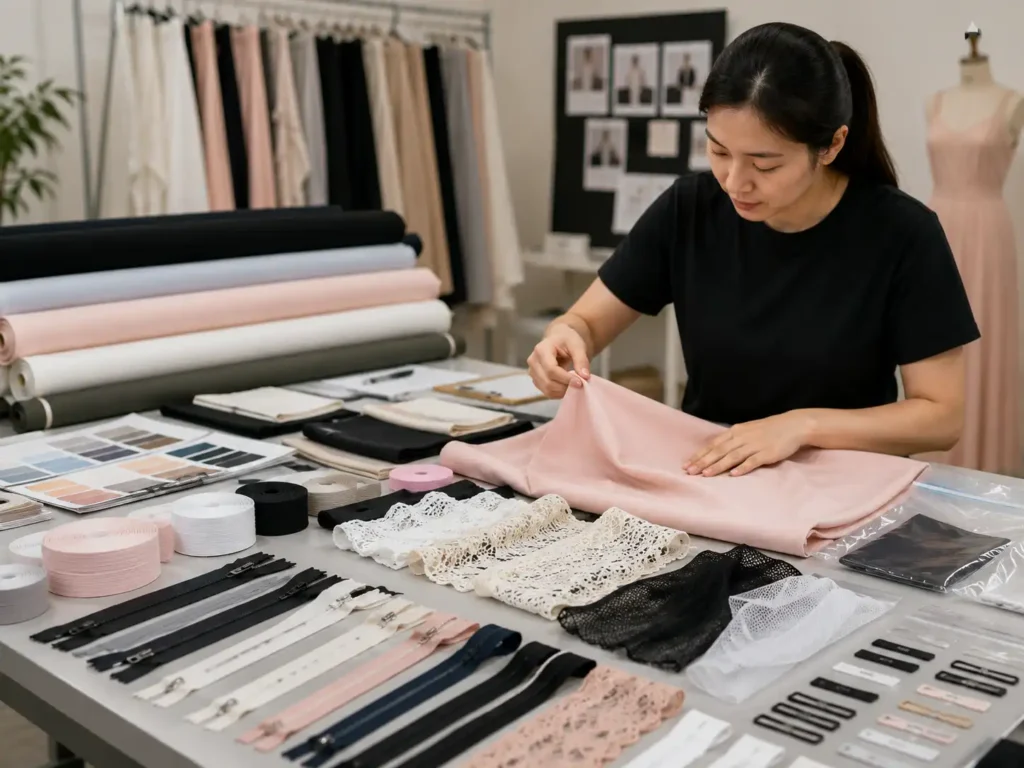
Incoming Inspection

Pattern and Marker

Cutting and Bundling
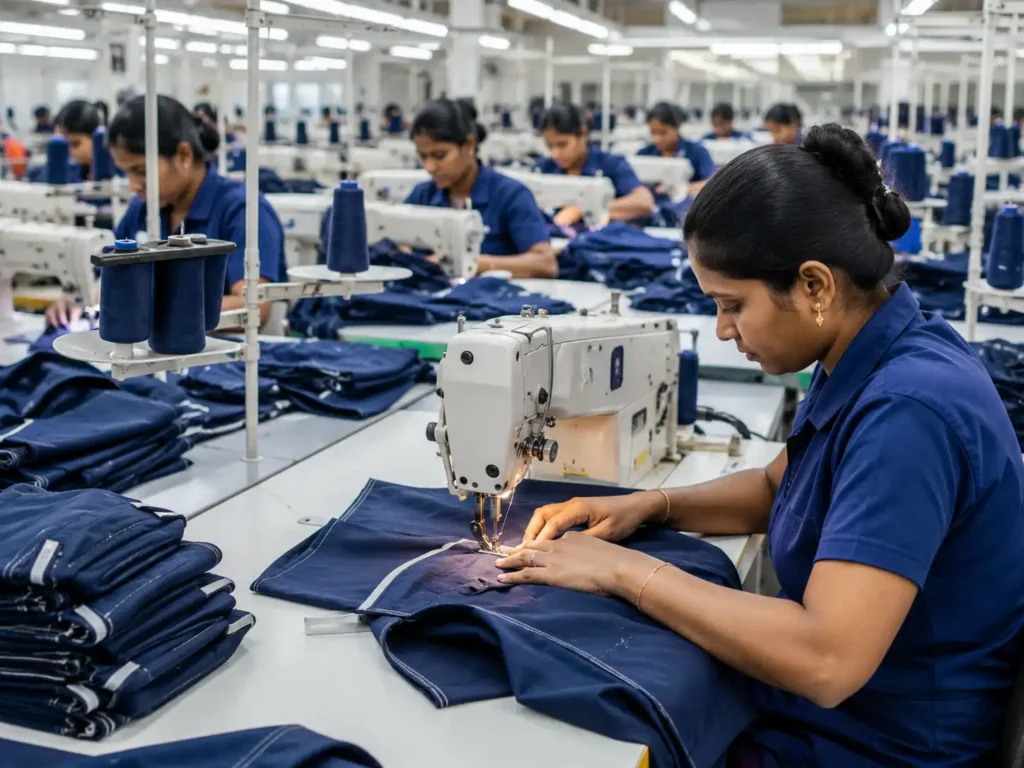
Sewing and Inline QC

Finishing and Pressing

Final Inspection

Packing and Release
Bulk Consistency Controlled at Every Stage
Quality control begins with approved materials and ends with correctly packed goods. Product-specific checkpoints make sample-to-bulk consistency measurable instead of relying on broad claims about workmanship.

Incoming Material Control
Incoming inspection protects the approved garment before production begins. Fabric rolls are compared with the sealed reference for color, surface, handfeel, weight, width, usable width, stretch, recovery, opacity, shrinkage, print or motif, shade, and visible defects. Trims are checked for dimensions, finish, function, color, artwork, and quantity. Labels and packaging are checked before they can create a finished-goods delay.
- Batch-sensitive colors are grouped and recorded before cutting.
- Stretch and recovery are checked in the directions used by the pattern.
- Lining, thread, zipper, elastic, and decorative colors are compared as one garment set.
- Unapproved substitutions are held for written review rather than introduced on the line.
Material QC cannot eliminate every natural variation, but it establishes whether the delivered lot remains within the approved commercial standard and how shade or defect areas should be handled.
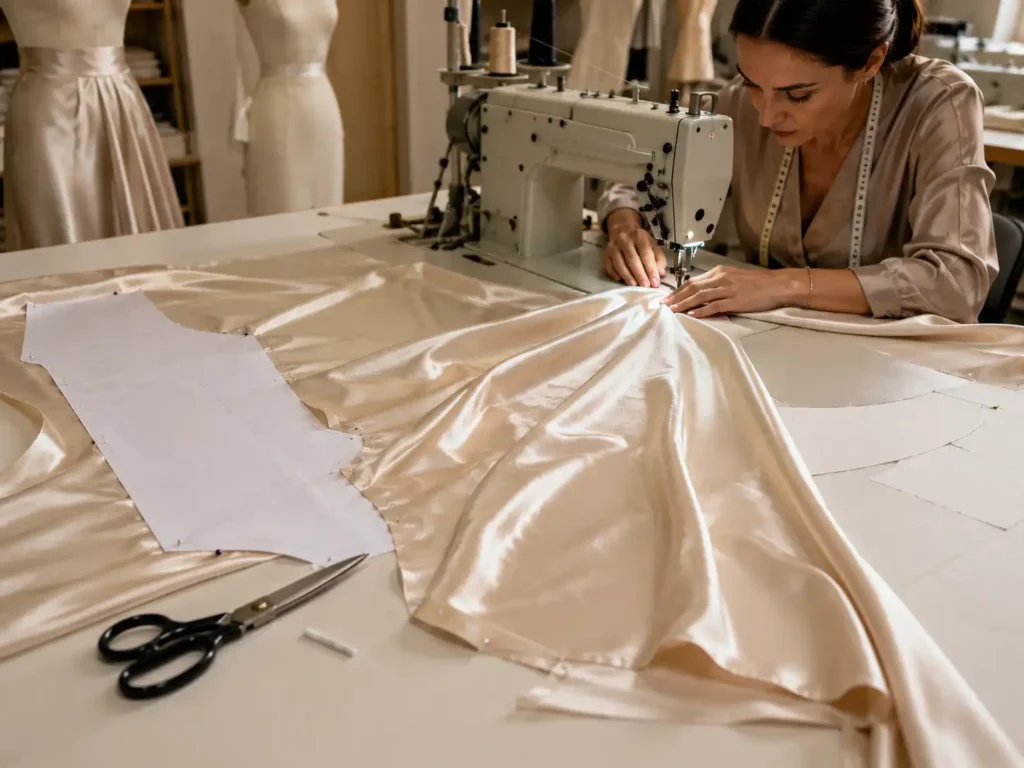
Cutting and Sewing Control
Cutting QC verifies pattern version, marker direction, shade groups, nap or face direction, stretch direction, motif placement, bundle identity, size quantity, notches, and cut-piece condition. Sewing QC then focuses on the operations most likely to change fit or appearance: cup and boning placement, strap length, neckline stability, side-seam balance, zipper insertion, gathering, lace matching, elastic tension, seam allowance, stitch density, lining attachment, and hem method.
- First output is checked before the same operation continues across the order.
- Critical dimensions are measured during assembly, not only after the garment is complete.
- Complex details use approved samples, templates, or marked references at the workstation.
- Repeated problems are escalated to line management, corrected, and rechecked before release.
Early inspection reduces repair volume because the cause can be addressed while pieces are still in process.

Garment and Measurement Control
Finished-garment inspection compares bulk output with the Golden sample, final size chart, workmanship criteria, and appearance standard. Inspection includes key measurements, silhouette, symmetry, seam quality, zipper and closure function, support, lining coverage, surface condition, color, stains, holes, loose threads, decoration security, labels, pressing, and overall balance. Different dress structures receive different measurement and visual priorities.
- Bodycon garments emphasize bust-waist-hip, recovery, side seams, and length behavior.
- Corset garments emphasize cup position, support, top-edge stability, symmetry, and comfort points.
- Satin garments emphasize shade, grain, seam puckering, snagging, pressing, and folding marks.
- Lace, mesh, and sequin garments emphasize placement, transparency, edge finish, loose decoration, and skin contact.
Inspection records create a traceable reference for repairs, final release, and future repeat orders.
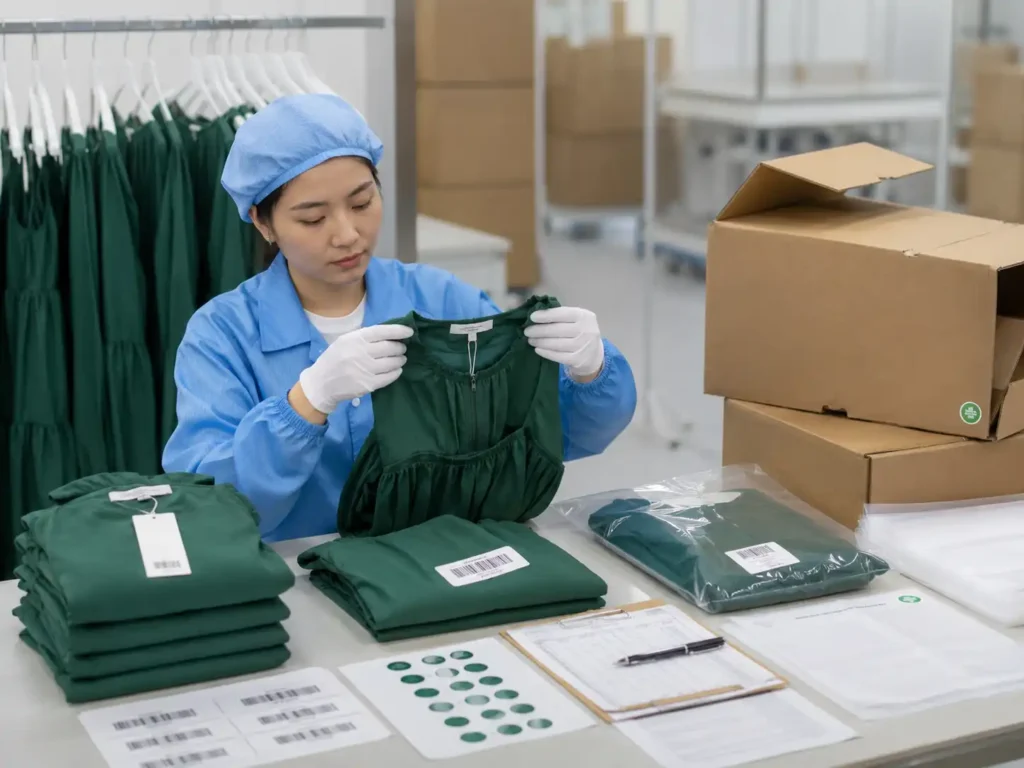
Packing and Shipment Control
Packing QC verifies the connection between the garment and the brand’s inventory system. Main labels, size labels, care labels, hangtags, barcode stickers, SKU labels, color names, size names, folding, tissue, polybags, warnings, hanger direction, carton ratios, carton marks, quantities, and destination data must agree. The packing team works from approved instructions and style-color-size mapping rather than memory.
- Random packed cartons are opened and compared with the packing list and carton plan.
- Carton measurements, gross weight, net weight, and quantity breakdown are prepared for logistics planning.
- Client-appointed inspectors can review garments and packing according to agreed project requirements.
- Shipment photos and documents can be organized without exposing protected designs or brand information publicly.
Correct packing protects the garment and prevents warehouse, SKU, and allocation errors after manufacturing is complete.
The Team Managing Your Production Handover
Project Contact
Product Development
Pattern and Sample
Sourcing and Merchandising
Production and QC
Finishing and Logistics
Private-Label and Warehouse-Ready Delivery

Main Brand Labels
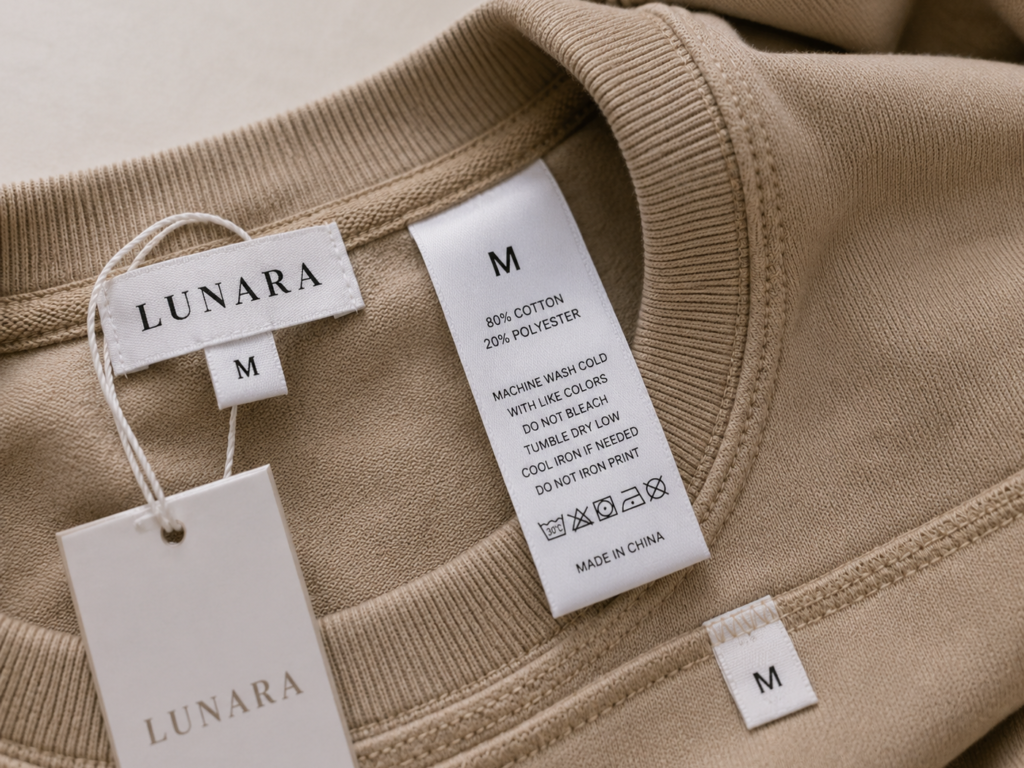
Size and Care Labels
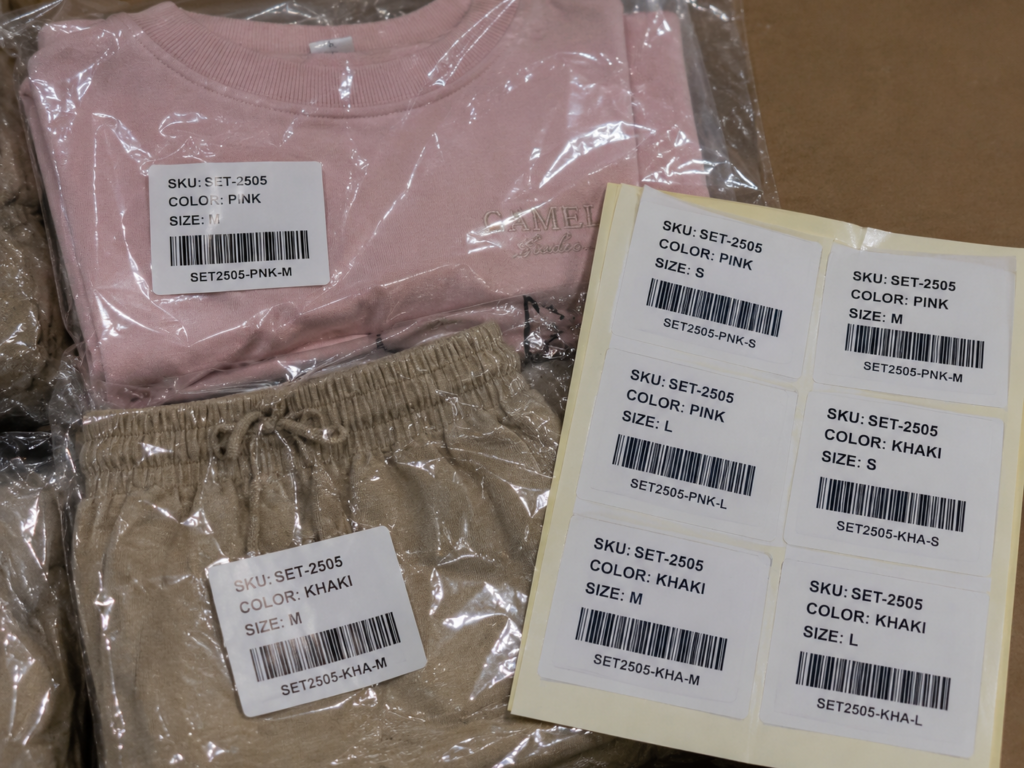
Hangtags and Strings
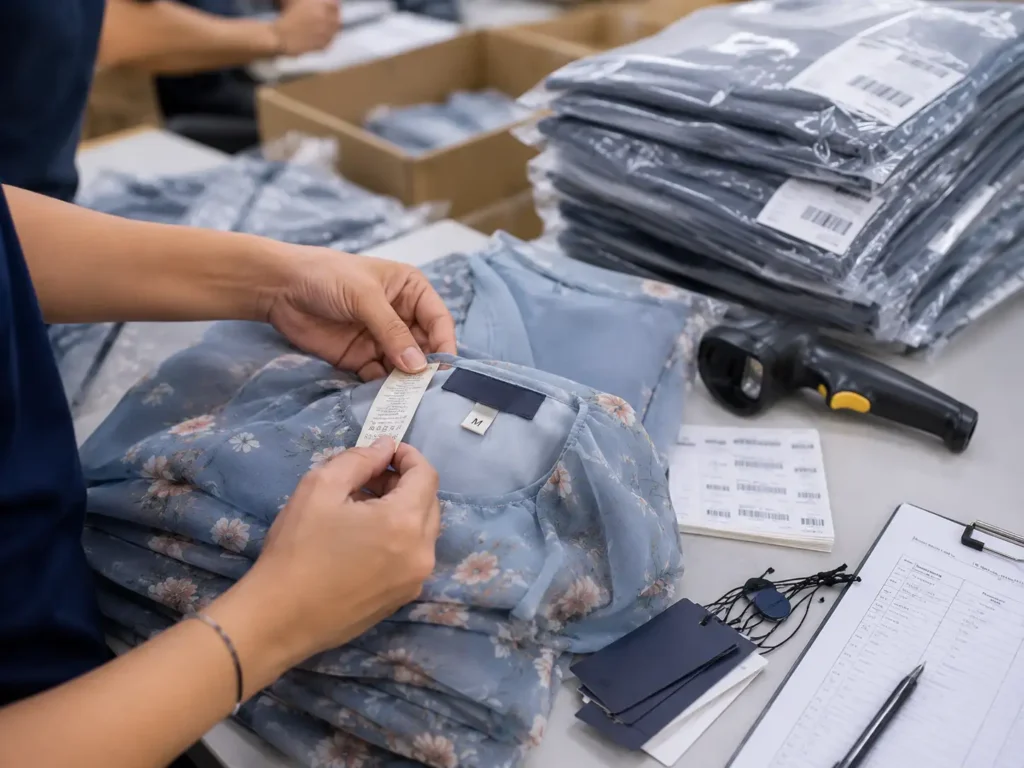
Barcode and SKU Labels
Individual Garment Packing
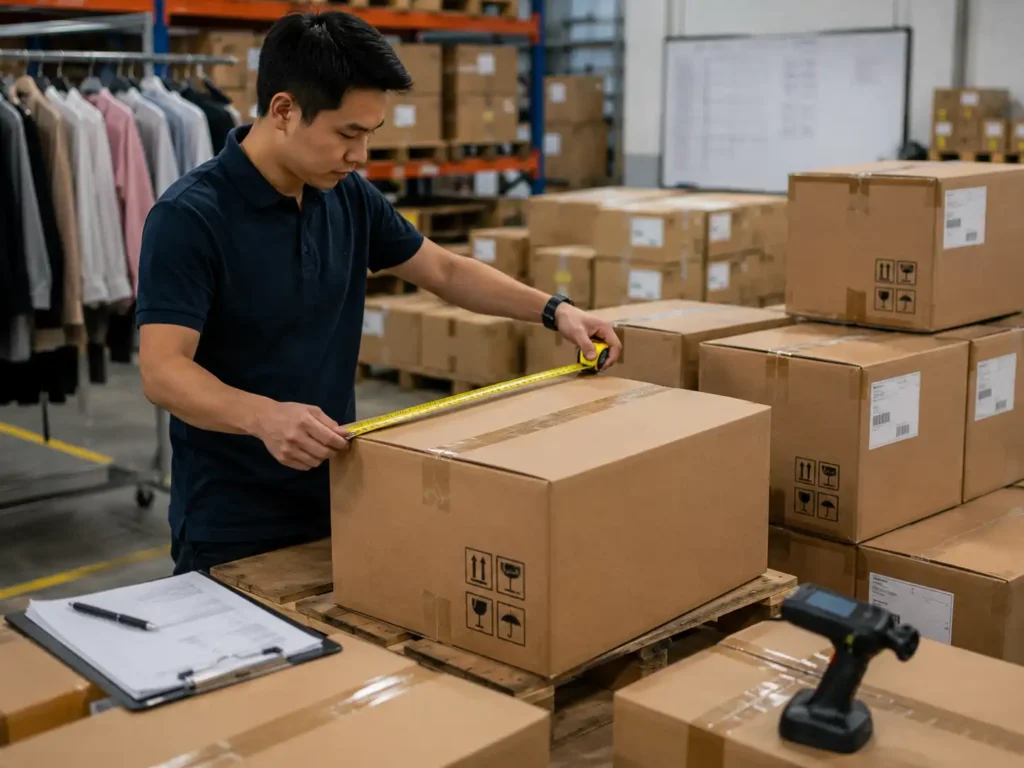
Cartons and Allocation
MOQ, Costing, Timing, and Repeat Orders
MOQ Planning
Cost and Timeline
Repeat-Order Continuity
NDA, Inspection, and Compliance Coordination
NDA and Design Protection
Client Inspection Support
Materials and Testing
Sample-to-Bulk Dress Manufacturing Case Studies
Moving from sampling to bulk production requires more than approving a beautiful garment. Jinfeng Apparel helps brands convert approved samples into repeatable production standards through pattern alignment, material confirmation, PP approval, factory allocation, quality control, and delivery planning.

Case Study 1: Converting Approved Dress Samples Into Stable Bulk Production
A premium womenswear brand had completed product development with approved dress samples and needed a manufacturing partner to move into commercial production.
The collection included:
- Satin occasion dresses
- Bodycon dresses
- Corset dresses
- Party dresses
Program scope:
- 16 dress styles
- 38,500 pieces
- XS-XL size range
- Multiple seasonal colors
- Private-label packaging
Production Challenge
The samples were visually approved, but several production questions remained.
Pattern Accuracy
The brand needed confirmation that:
- Sample shape matched the pattern
- Waist position was correct
- Bust proportion was stable
- Length grading was suitable
Material Continuity
The sample fabrics needed verification for:
- Bulk availability
- Color consistency
- Drape behavior
- Stretch recovery
- Surface appearance
Jinfeng Solution
Jinfeng started with a production-readiness review.
Sample and Pattern Alignment
Compared:
- Approved garment
- Pattern files
- Measurement chart
- Fit comments
Corrected:
- Pattern version
- Measurement points
- Construction details
- Grade direction
PP Standard Development
Created:
- Final PP sample
- BOM
- Fabric reference
- Trim card
- Sewing instructions
- QC checklist
Bulk Preparation
Released production only after:
- Material approval
- Pattern confirmation
- PP approval
- Factory allocation
Result
The brand achieved:
- 16 styles successfully transferred into bulk
- Stable fit consistency
- Controlled production quality
- Repeat-order-ready product files
The approved samples became reliable commercial products.
Case Study 2: Independent Sample Studio Transferring Designs Into Factory Production
A fashion brand developed its collection through an external design studio and sample room.
The brand had:
- Original samples
- Creative direction
- Reference garments
but needed a production partner capable of rebuilding the manufacturing system.
Collection included:
- Lace dresses
- Mesh dresses
- Satin slips
- Structured occasionwear
Program scope:
- 20 styles
- 45,000 pieces
- Multiple fabric groups
Production Challenge
The sample room created attractive garments, but production information was incomplete.
Missing details included:
Technical Information
Including:
- Final patterns
- Seam allowance
- Grading rules
- BOM details
Construction Details
Including:
- Lining method
- Support structure
- Trim placement
- Sewing sequence
Jinfeng Solution
Jinfeng rebuilt the production package.
Product Analysis
Reviewed:
- Original sample
- Construction method
- Fabric behavior
- Internal structure
Technical Reconstruction
Created:
- Production pattern
- Size chart
- BOM
- Trim specification
- Sewing instructions
Sample Validation
Developed:
- Correction sample
- Fit sample
- PP sample
- Golden sample
Result
The brand successfully moved from creative development into factory production.
Achieved:
- Complete manufacturing files
- Production-ready samples
- Stable bulk standards
- Clear repeat-order foundation
The design studio’s creative output was successfully converted into commercial production.

Case Study 3: Seasonal Collection Moving Through PP Approval Into Bulk Release
A fashion brand prepared a seasonal collection with a fixed launch calendar.
The collection required:
- Campaign samples
- Multiple styles
- Different fabrics
- Coordinated delivery
Program scope:
- 24 styles
- 62,000 pieces
- 6 fabric families
- 3 delivery waves
Products included:
- Satin dresses
- Mesh party dresses
- Resort dresses
- Corset styles
- Matching sets
Production Challenge
The brand needed multiple styles to enter production together while each style had different technical requirements.
Main risks:
Different Approval Status
Some styles had:
- Final fit approval
- Pending fabric confirmation
- Pending trim approval
- Pending packaging files
Different Production Complexity
Including:
- Simple jersey styles
- Delicate mesh
- Structured corsets
- Embellished dresses
Jinfeng Solution
Jinfeng organized the collection through production readiness levels.
Style Classification
Divided into:
Ready for PP
Including:
- Approved fit
- Confirmed materials
- Locked construction
Conditional Release
Including:
- Minor open points
- Material confirmation
- Packaging updates
Controlled Redevelopment
Including:
- Pattern adjustment
- Material replacement
- Additional sample review
Result
The brand achieved:
- 24-style seasonal production
- Controlled PP release
- On-time staged delivery
- Complete production documentation
The collection moved from development into scalable manufacturing.
Frequently Asked Questions About Sample-to-Bulk Production

Send Your Sample-to-Bulk Production Package
Send the approved sample photos or courier details together with the latest production files. Jinfeng will review whether the garment is ready for PP approval, ready with named conditions, or needs controlled redevelopment before bulk.
A useful package includes the Tech Pack, final size chart, pattern files when available, fit comments, fabric and trim references, color plan, quantity by style and color, size ratio, label and packing files, inspection requirements, and target delivery window. The initial review can identify missing files, pattern or fit conflicts, material availability risks, trim and packaging gaps, MOQ fit, PP sample requirements, factory-allocation factors, and the information needed for project costing and scheduling.
- Company and brand information
- Approved sample, photos, or courier reference
- Tech Pack, size chart, patterns, and fit comments
- Fabric, trim, label, barcode, and packing files
- Quantity per style/color and size ratio
- Target PP approval, production, inspection, and delivery dates