
Dress Manufacturer for Brands Expanding Dress Categories
Build new dress categories without losing fit standards, brand identity, bulk consistency, or launch control.
Jinfeng Apparel supports established fashion brands expanding from a narrow dress range into broader occasion, silhouette, fabric, and price-positioning categories. Development starts with a line sheet, tech packs, original samples, or reference images, followed by fabric direction, pattern planning, multi-style sampling, PP approval, factory allocation, category-specific QC, private-label packing, and export coordination.
- Structured for dress programs containing 10-30 styles, rather than isolated one-style development.
- Production programs commonly fall within 20,000-80,000 total pieces, depending on style count, color plan, size ratio, fabric supply, and launch schedule.
- Supported by 6 owned womenswear factories, 10+ long-term production partners, and 100,000+ pieces of regular monthly capacity.
- Development resources include 2 sample rooms, 7+ senior pattern makers, 20+ sample machinists, and 15+ QC inspectors.
Manufacturing Capacity Built for Category Expansion
Since 2008
Six Owned Factories
Ten Plus Partners
Two Sample Rooms
Seven Pattern Makers
Fifteen QC Inspectors
A Strong Fit for Established Fashion Programs
Best Fit For
- Established fashion labels adding new dress categories.
- Merchandising teams planning seasonal or monthly collections.
- Product developers managing 10-30 styles in parallel.
- Sourcing teams consolidating several dress types with fewer manufacturing partners.
- Ecommerce and retail programs requiring labels, barcodes, SKU control, and warehouse-ready packing.
- Brands expecting repeat orders, color extensions, or category growth across several seasons.
Project Requirements
Reliable category expansion depends on disciplined inputs and approvals. A reference image alone may start an initial review, but accurate development requires additional information as the program progresses.
- Current dress range and intended new categories.
- Tech packs, original samples, sketches, or construction references.
- Fabric preference, target hand feel, and retail price direction.
- Size range, measurement charts, fit-model information, and grading rules.
- Quantity by style, color, and size.
- Label, barcode, polybag, carton, and warehouse requirements.
- Sample purpose, including fit, photography, salesman, PP, or golden sample.
- Required launch and delivery windows.
What an Expansion Manufacturer Must Prove
Category Knowledge
- Product-specific fabric direction.
- Structure and lining decisions.
- Fit risks by silhouette.
- Workmanship and pressing requirements.
- Packing protection for delicate surfaces.
Development Depth
- Pattern and construction analysis.
- Fabric and trim alternatives.
- Cost-impact review.
- Sample purpose and priority.
- Production-feasibility advice.
Multi-Style Sampling
A 10-30 style program becomes difficult when fabrics, trims, comments, and approvals are mixed across email threads.
Each style needs a status, priority, fabric record, pattern version, comment history, and approval stage. Hero styles and photo samples should move first when launch timing demands it.
Fit Control
Scalable Production
Repeat Continuity
Four Ways to Expand a Dress Assortment

Expand by Occasion

Expand by Silhouette

Expand by Fabric

Expand by Positioning
Dress Category Expansion Decision Matrix
Each category shift introduces a different technical gap. The matrix below connects common expansion routes with the capability, development risk, and validation step needed before bulk release.
| Current Range | Logical Next Category | New Capability Required | Main Development Risk | Recommended Validation |
|---|---|---|---|---|
| Casual dresses | Resort dresses | Lightweight sourcing, print control, lining judgment | Transparency, wrinkling, uneven long hems | Fabric swatch, photo sample, movement review |
| Basic knit dresses | Bodycon dresses | Stretch direction, recovery, contour grading | Side-seam twisting, ride-up, unstable measurements | Fit sample, stretch test, measurement review |
| Bodycon dresses | Corset dresses | Bust structure, cups, boning, top-edge control | Poor support, pressure points, slipping | Fit sample, wear test, PP structure lock |
| Basic party dresses | Sequin dresses | Embellished-fabric handling, lining, protected packing | Missing sequins, scratching, needle damage | Sewing trial, wear review, packing test |
| Satin slips | Wedding guest dresses | Color management, broader sizing, refined finishing | Shade variation, neckline instability, hem imbalance | Lab dip, size-set review, PP sample |
| Mini dresses | Midi and maxi dresses | Length balance, drape, slit safety, hem control | Dragging, uneven hem, poor walking movement | Full-length fit review, hanging check |
| Woven occasionwear | Mesh and lace dresses | Layering, motif placement, seam reinforcement | Exposure, holes, mismatched motifs | Layer test, placement approval, seam review |
| Club dresses | Premium occasionwear | Cleaner internal construction and controlled shaping | Bulk appearance below price position | Salesman sample, PP sample, finishing standard |
Dress Categories Built for Commercial Growth

Party and Club

Occasion and Evening

Wedding Guest

Resort and Vacation

Bodycon Dresses

Corset Dresses

Satin Mesh Lace

Sequin Statements
Different Categories Need Different Production Logic
A broad assortment cannot be produced through one generic dress standard. Fabric behavior, structure, fit, workmanship, pressing, and packing must be defined category by category.
Stretch and Structured Dresses
Bodycon and corset categories may sit beside each other in a collection, but the technical logic differs sharply. Bodycon garments rely on fabric stretch, recovery, contour balance, seam elasticity, and graded negative ease. Corset garments rely on structural layers, cups, boning, shaped seams, closures, and controlled compression.
Bodycon controls:
- Stretch direction is marked before cutting, especially when fabric has different crosswise and lengthwise recovery.
- Bust, waist, high hip, full hip, and finished length are reviewed together; correcting only one point can move side seams or raise the hem.
- Seam type and thread tension must recover with the fabric instead of cracking or rippling.
- Lining, mesh panels, cutouts, and ruching need compatible stretch so one layer does not pull against another.
- Pressing temperature and handling should not flatten rib texture, create shine, or distort elastic recovery.
Corset controls:
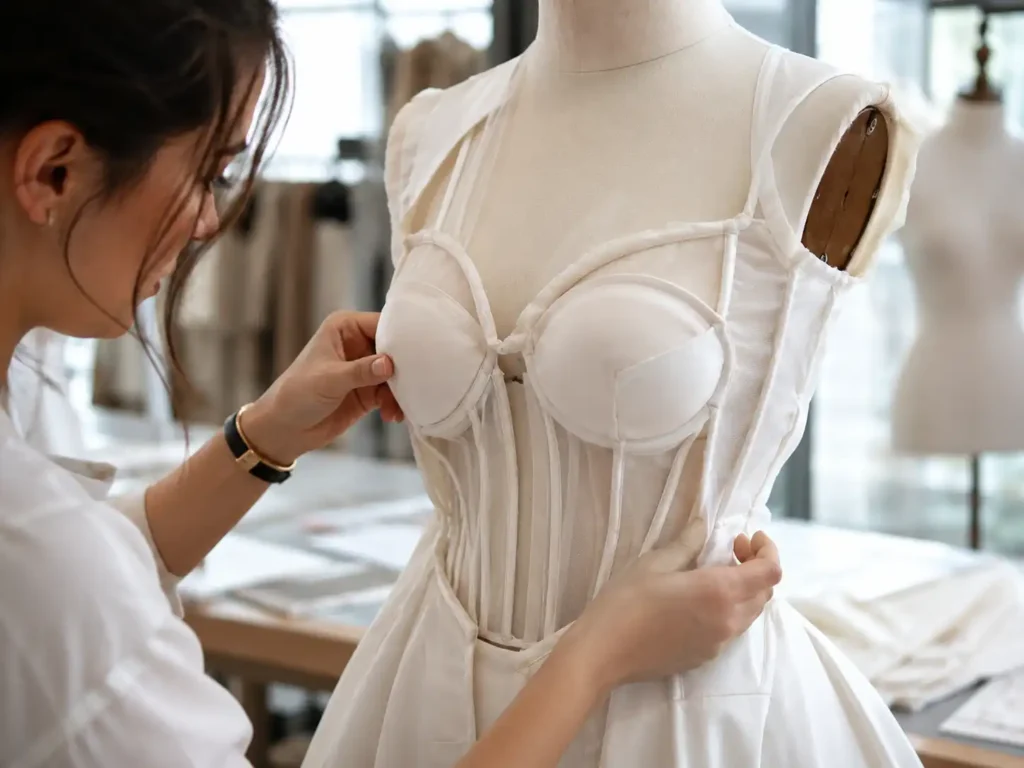
- Cup shape, underbust position, boning length, seam shaping, and top-edge grip are confirmed on the body.
- Boning channels require even width and stable placement; shifted channels alter support and visual symmetry.
- Fabric, fusible, lining, cups, and closures must create the intended structure without excessive stiffness.
- Back zippers, hook-and-eye tape, lace-up panels, or metal closures are selected according to stress and appearance.
- PP lock records cup, boning, lining, seam allowance, closure, label position, and pressing method before bulk release.
Fluid and Delicate Dresses
Satin, chiffon, and fluid crepe dresses depend on grain, drape, surface condition, and balanced hanging.
A garment may measure correctly on a flat table and still hang unevenly when grain direction, bias behavior, seam weight, or lining is wrong.
Satin controls:
- Cutting direction must respect surface shine so panels do not reflect light differently.
- Work surfaces, bundles, and transport bins should reduce snagging and abrasion.
- Needle size, thread tension, seam allowance, zipper installation, and pressing are adjusted to avoid puckering and ridges.
- Lining weight should support opacity without making the outer shell look heavy.
- Finished packing should limit sharp folds and pressure marks.
Chiffon controls:
- Fabric layers must remain aligned during spreading and cutting.
- Narrow hems, rolled hems, French seams, binding, or lining choices are set according to design and price position.
- Transparency is reviewed under natural and indoor light, not only on a cutting table.
- Long skirts are hung before final hem inspection when fabric relaxation can affect balance.
- Print direction, panel matching, and lining color are approved before bulk cutting.
Layered and Embellished Dresses
Mesh, lace, and sequin dresses combine multiple layers and surface treatments, creating thickness changes, placement challenges, and comfort risks. Production instructions must identify where each layer begins, ends, overlaps, or requires reinforcement.
Mesh controls:
- Stretch direction, recovery, edge stability, hole risk, and transparency are evaluated before pattern approval.
- Necklines, armholes, zippers, side seams, and heavy decoration areas may require tape, binding, lining, or localized reinforcement.
- Power mesh and soft fashion mesh should not be substituted without reviewing support and fit.
Lace controls:
- Motif scale and direction influence pattern placement and material consumption.
- Center fronts, cups, sleeves, waist seams, and scalloped edges may require matching or symmetrical placement.
- Lining color affects the final visual tone and must be approved with the lace.
Sequin controls:
- Sequins may need clearing from seam allowances before sewing.
- Exposed edges and internal seams are reviewed for scratching.
- Missing decoration, loose threads, broken sequins, and protective packing are checked before shipment.
Long and Event Dresses
Midi, maxi, evening, bridesmaid, and wedding guest dresses require more than a longer pattern. Length changes the garment’s center of gravity, movement, fabric consumption, pressing, hanging, and carton packing.
- Front length, back length, side length, slit height, train length, and heel allowance are reviewed separately.
- Full skirts need enough movement without excessive weight or uncontrolled volume.
- Bias or fluid panels may require hanging time before final hemming.
- Size grading should preserve neckline, waist, hip, and slit proportions rather than adding equal amounts everywhere.
- Long garments need hanger loops, careful pressing, suitable polybags, and carton dimensions designed to limit crushing.
- Event calendars should be planned backward from launch, allowing sample approval, material booking, bulk production, QC, packing, and transport.
Fabric Strategy Across New Dress Categories
A well-planned fabric system reduces unnecessary MOQ, color, sourcing, and production complexity while keeping each category visually distinct. Fabric choices should support silhouette, selling price, fit, care, and repeat-order stability.
Build Fabric Families
A 20-style collection does not need 20 unrelated fabric supply chains. Grouping compatible materials can improve color coordination, sample speed, trim consistency, and bulk control. A program may use four families: stretch jersey and ponte for body-fit styles; satin and stretch satin for party and occasion dresses; mesh, lace, and lining for layered designs; chiffon, rayon, crepe, and linen blends for resort or flowing silhouettes.
Grouping does not mean forcing one material into unsuitable products. Each family should define weight, stretch, recovery, hand feel, drape, opacity, shrinkage, surface sensitivity, and target cost. Shared colors can reduce visual fragmentation, while approved suppliers and repeatable constructions make future reorders easier. Fabric references should include composition, width, weight, color standard, batch information, and approved hand feel rather than only a supplier name.
Stock Versus Custom
Stock fabric often gives a cleaner route for first-season category development because color, hand feel, width, and availability can be reviewed before a large commitment. Standard stock chiffon, satin, jersey, ponte, mesh, and crepe may support the base production threshold when sufficient inventory exists. Stock status still requires confirmation by color, batch, quantity, width, and quality level.
Custom dyeing, custom printing, certified materials, special lace, dense sequin fabric, exclusive trims, and specially developed weights can raise MOQ and extend development. Lab dips, print strike-offs, dye lots, color standards, mill minimums, wastage, and lead-time impact should be reviewed before sample approval. A new category may be better launched with a controlled stock option, then upgraded to exclusive material after sales volume becomes predictable.
Match Fabric to Structure
Fabric selection should begin with garment function. Bodycon dresses need stretch and recovery; corset dresses need stable outer fabric, lining, and structural support; slips need controlled drape and neckline stability; maxis need fluid movement and reliable hem behavior; mesh dresses need layer compatibility and reinforcement; sequin dresses need backing strength and comfortable lining.
Changing fabric weight, stretch, or surface can require a new pattern or sample. A heavier satin may improve coverage but increase seam bulk. A softer jersey may improve comfort but weaken shape retention. A less transparent mesh may reduce lining needs but change stretch. A lower-cost replacement may create more waste or sewing difficulty. Fabric approval should record whether pattern, lining, seam type, pressing, cost, or delivery needs adjustment.
Control Color and Batch Risk
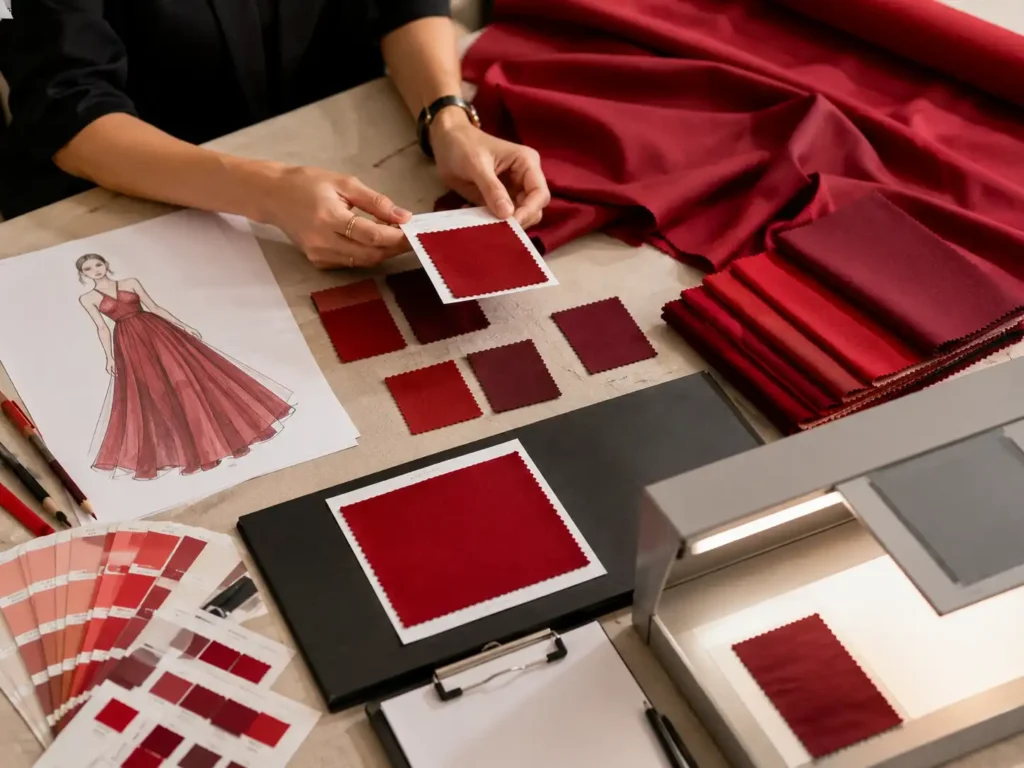
Color becomes more difficult when a collection combines satin shine, matte lining, mesh transparency, lace texture, printed fabric, and hardware. The same Pantone reference may appear different across surfaces. Physical swatches, lab dips, print samples, lining combinations, and natural-light photographs support better approval.
Bulk planning should identify which styles share one dye lot and which materials come from separate suppliers. Repeat orders may require a new color comparison because dye lots change. Satin panels should be cut in one approved direction, and lining should be checked beneath outer fabric rather than approved alone. Color records should include the approved standard, supplier, batch, dye lot, surface direction, lining match, and photo record.
Fit Blocks and Size Consistency Across Categories
Brand fit should feel familiar across a wider assortment, but each silhouette needs its own ease, support, and grading logic. Pattern development links brand identity with the physical demands of each new category.
Preserve Brand Proportions
A brand may already have preferred bust coverage, waist placement, hip shape, torso length, skirt proportion, and neckline depth. Those standards should be identified before new patterns are built. Existing best-selling samples, measurement charts, return comments, and fit-model notes provide useful references.
Preserving brand proportions does not mean copying one block into every dress. A relaxed resort maxi and a corset mini may share a waist level and target body profile, yet their ease and construction differ. Pattern makers translate the brand’s visual identity into category-specific blocks, then confirm critical points through samples and measurements. Approval records should distinguish design intent from fit corrections so later style extensions remain consistent.
Grade by Category
A six-size range from XS through XXL creates six separate measurement sets. Twenty styles across six sizes produce 120 style-size combinations before colors are added. Three colors raise the assortment to 360 SKU combinations, making clear grade rules essential.
Woven dresses need enough ease for movement and closure function. Stretch dresses may use controlled negative ease. Corset styles require careful cup, underbust, waist, and back grading. Strapless styles must preserve top-edge grip across sizes. Maxi dresses need proportional length and slit placement. Jumpsuits require torso and rise control. Grade rules should define which measurements increase, which remain visually stable, and where proportions change by size.
Measure Critical Points
Fit review should focus on points linked to appearance, comfort, and returns. Common controls include bust, upper bust, underbust, waist, high waist, low waist, high hip, full hip, front length, back length, skirt length, shoulder width, strap length, armhole, neckline depth, back coverage, slit height, lining length, and crotch length for jumpsuits.
Measurements are checked against the approved chart, sample, and fit comments. Photos help explain visual issues, but written numbers and pattern updates create a repeatable standard. Revised measurements should be reflected in the pattern, size chart, sample comments, and eventual QC checklist rather than remaining in separate messages.
Lock Fit Before Bulk
A first sample is a development checkpoint, not an automatic bulk standard. Fit comments may lead to pattern correction, fabric adjustment, trim changes, or a revised sample. Photo samples may prioritize appearance for content creation, while PP samples must reflect approved materials, measurements, construction, labels, and packing direction.
Bulk release follows PP approval and final document lock. The final pattern, grade rules, size chart, fabric reference, trim card, sewing instructions, label placement, packing instructions, golden sample, and QC measurements should tell the same story. Late changes after PP lock require a clear review of cost, material, schedule, and production impact.
From Line Sheet to Category Plan
A line sheet becomes actionable only after styles are grouped by category, material, pattern complexity, commercial priority, quantity, and launch timing. Jinfeng Apparel converts brand inputs into a staged development and production plan.
Review the Existing Range
The first review identifies what already works: best-selling silhouettes, accepted fit blocks, proven fabrics, strong price points, successful size ratios, and repeatable details. Existing strengths provide a base for expansion rather than starting every style from zero. Poor-performing constructions or materials should not be carried into a new category simply because they are familiar.
Useful inputs include sales-led hero styles, approved samples, fit notes, return reasons, fabric references, grade rules, packaging standards, and historical order structure. The goal is to separate brand identity from old technical limitations.
Define the New Categories
Each proposed category is defined by wearing occasion, target retail price, silhouette, material direction, size range, quantity, color plan, sample purpose, and launch date. A broad term such as occasion dress is divided into workable groups: structured satin, fluid chiffon, lace or mesh layers, embellished statements, and stretch fitted styles.
Grouping reveals shared fabrics and trims while exposing categories requiring separate development. It also clarifies whether one range should launch together or in phases.
Set Development Priority
Not every style should enter sampling at the same moment. Priority is set by launch date, hero-SKU value, fabric readiness, pattern complexity, photography needs, wholesale presentation, and bulk lead time. A 24-style program may begin with six hero styles, followed by ten commercial core styles and eight supporting styles.
Priority planning protects the launch calendar. Fast approvals on low-value styles do not compensate for a delayed campaign dress or unapproved core silhouette.
Build the Production Route
After category and sample review, the project plan connects style groups with fabric sourcing, pattern teams, sample rooms, production units, QC requirements, packing rules, and delivery waves. Quantities, color-size ratios, material minimums, and factory capacity are reviewed together.
The output is not a vague promise. It is a working route covering sample order, expected review blocks, PP lock, material booking, bulk windows, inspection points, packing, and shipment planning. Final dates remain subject to approved materials, sample comments, production complexity, and logistics route.
Multi-Style Sampling Without Losing Control

Group the Styles

Confirm Materials

Set Sample Purpose

Use Planning Blocks

Track Every Revision

Release by Approval

Lock Every Detail Before Bulk Production
Sample approval becomes useful only when patterns, materials, construction, labels, packing, and QC requirements transfer into one controlled production standard.
- Final Pattern and Grade
Fit comments are converted into final patterns and grade rules. Pattern versions are identified clearly so an earlier sample pattern cannot re-enter production. Size charts should match the approved pattern, and critical measurements become inspection points. For category expansion, each silhouette keeps its own grading logic rather than relying on one generic rule.
- Material and Trim Lock
Fabric name, composition, weight, width, stretch, color, batch direction, lining, zipper, cups, boning, hardware, lace, sequin, thread, labels, hangtags, and packaging materials are confirmed. Approved swatches and trim cards provide physical references where needed. A supplier substitution after approval requires review for fit, cost, appearance, MOQ, and schedule impact.
- Sewing and Finishing Standard
Construction details move from the sample room into production instructions: seam type, stitch condition, seam allowance, reinforcement, gathering ratio, ruching placement, motif matching, lining method, zipper installation, cup and boning position, hem finish, pressing method, hanger use, and folding method. Photos and approved sample references help prevent interpretation gaps.
- PP Lock and Change Control
PP lock confirms fabric, color, measurements, construction, trims, labels, hangtags, polybags, carton marks, packing method, and inspection references. Changes after lock may affect material orders, unit cost, sample approval, line scheduling, and delivery. A formal change review protects both the brand and production team from undocumented last-minute decisions.
Factory Allocation by Dress Category
Jinfeng Apparel uses a multi-factory womenswear system rather than forcing every product through one line. Allocation considers fabric, silhouette, construction, quantity, workmanship, timing, and repeat-order history.
Woven Fashion Dresses
Woven mini, midi, maxi, slip, shirt, resort, and occasion dresses are routed to production units experienced with grain control, zippers, linings, hems, drape, and pressing. Satin and chiffon styles require surface protection and controlled handling, while crepe, suiting, rayon, and linen blends have different relaxation and finishing needs.
Stretch and Knit Dresses
Bodycon, jersey, ponte, rib-knit, and stretch-mesh styles are matched with teams familiar with stretch direction, elastic seams, recovery, contour measurements, and twist control. Production preparation includes fabric relaxation where needed, marker direction, seam testing, and measurement standards designed for elastic materials.
Structured Occasionwear
Corset, bustier, formal, cocktail, and supportive evening styles are assigned according to structural experience. Cups, boning, fusibles, lining, closures, shaped seams, hand-finishing, and pressing require closer technical control than a basic dress. PP standards and inline checkpoints are reviewed before quantity production begins.
Delicate and Embellished Styles
Lace, mesh, sequin, rhinestone, fringe, organza, tulle, and mixed-material styles need careful cutting, surface protection, attachment checks, lining, and packing. Allocation considers skill level, handling requirements, decoration density, inspection time, and expected loss. Sensitive styles are not placed solely according to open capacity.
Collection Coordination
One collection may use several production units, but brand standards remain centralized through merchandising, production management, QC, and packing coordination. Jinfeng Apparel uses 12+ merchandisers, 15+ QC inspectors, and 30+ finishing and packing workers to coordinate specifications, progress, inspection, labeling, carton data, and delivery across style groups.
Capacity and Timing
The production system includes 18+ sewing lines and 6+ flexible production lines, supported by owned factories and long-term partners. Capacity is reviewed against material arrival, PP approval, style complexity, QC window, packing time, and shipment plan. Peak-season expansion remains possible, but complex lace, sequin, corset, custom-dyed, or retail-packing projects should be booked earlier.
Workmanship Controls for High-Impact Dress Details

Necklines and Straps
- Confirm bra compatibility and coverage.
- Reinforce load-bearing strap joins.
- Match elastic and binding recovery.
- Measure neckline and strap points by size.

Ruching and Draping
- Record gathering ratio and finished length.
- Control left-right symmetry.
- Stabilize hidden anchor points.
- Check drape after pressing and hanging.

Slits and Cutouts
- Measure slit and cutout placement.
- Reinforce stress corners.
- Prevent lining exposure.
- Confirm coverage across sizes.
Cups and Boning
- Match cup volume to size grading.
- Control boning length and direction.
- Protect ends from discomfort.
- Verify closure strength and alignment.

Lace and Sequins
- Approve motif placement before cutting.
- Clear dense sequins from seam allowances.
- Reinforce heavy decoration.
- Use protective packing where surfaces rub.
Hems and Pressing
- Confirm hem method by fabric.
- Check length at front, side, and back.
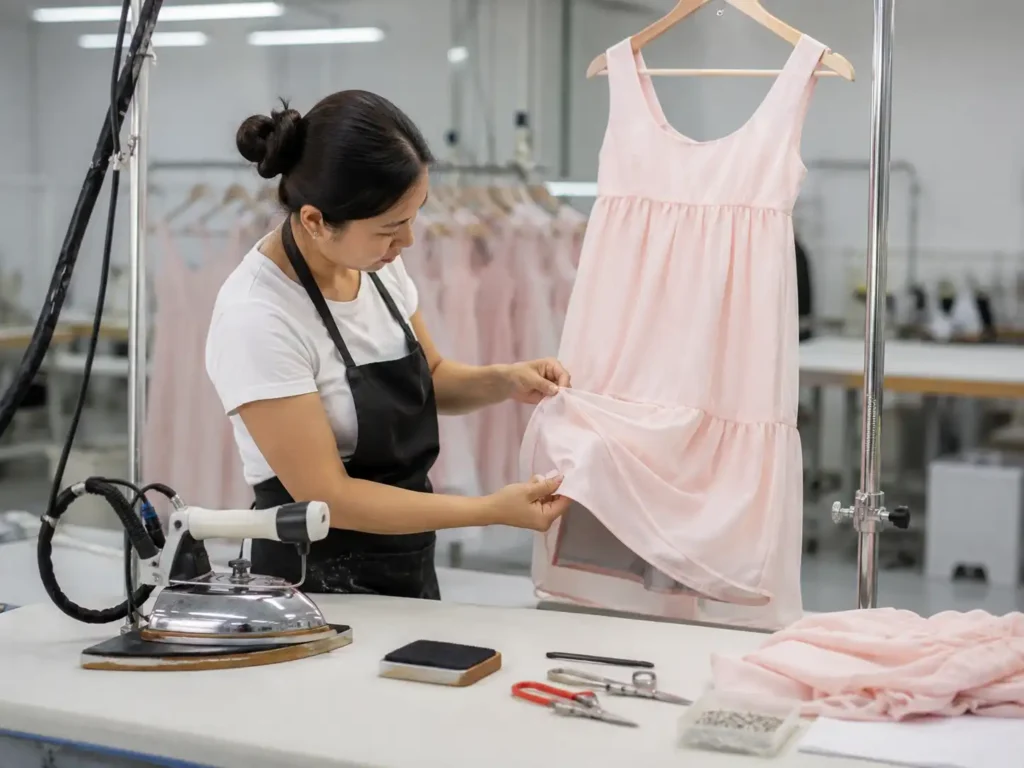
- Set pressing temperature and tools.
- Inspect hanging balance before packing.
Category-Specific Bulk Quality Control
Quality control follows the risks of each dress category. Incoming material, cutting, sewing, measurements, finishing, pressing, labels, packing, and shipment records are connected to the approved PP standard.
| Dress Category | Main Bulk Risk | In-Line Control | Final Inspection Focus |
|---|---|---|---|
| Bodycon | Weak recovery, twisted seams, ride-up | Stretch direction, seam recovery, bust-waist-hip measurements | Shape retention, symmetry, finished length |
| Corset | Cup and boning inconsistency | Cup position, channel width, boning length, closure alignment | Support, comfort, top-edge stability |
| Satin | Snags, shade direction, puckering, pressing marks | Surface protection, grain direction, zipper and seam tension | Shine consistency, pressing, fold marks |
| Chiffon and maxi | Distorted panels, transparency, uneven hem | Layer alignment, seam handling, lining, hanging review | Hem balance, opacity, movement, packing |
| Mesh | Holes, edge stretch, lining exposure | Reinforcement, layer placement, seam and zipper checks | Coverage, neckline shape, damaged areas |
| Lace | Mismatched motifs, broken edges, lining mismatch | Placement, symmetry, seam integration, scallop control | Motif balance, joins, edge finish, color harmony |
| Sequin | Missing pieces, scratching, seam bulk | Seam clearing, attachment, lining, needle-damage review | Shedding, sharp points, surface protection |
| Wedding guest range | Shade and size inconsistency across many SKUs | Dye-lot control, graded measurements, color-size separation | Color grouping, size labels, carton accuracy |
Build Production Around the Launch Calendar

Hero Styles First
Sampling and PP Windows

Bulk and Packing Windows

Delivery Waves
MOQ and Cost Planning Across Categories
Quantity Structure
A style in black at 200 pieces forms one standard evaluation unit. The same style in black and ivory normally requires 200 pieces per color, producing 400 pieces total.
Ten styles at 200 pieces each create a 2,000-piece program before additional colors are added. Several styles totaling 200 pieces do not meet the standard structure.
Color-size ratios should reflect real sales expectations. A six-size range does not require equal units per size, but every style-color quantity must support cutting, sewing, QC, and packing efficiency.
Material Minimums
Regular stock chiffon, satin, jersey, ponte, mesh, and crepe can often support the base MOQ when sufficient stock exists. Lace may begin around 200-300 pieces per style/color, while regular sequin fabric or special satin may begin around 300 pieces, depending on inventory, width, loss, and construction.
Custom-dyed, custom-printed, certified, or specially developed fabrics follow mill requirements. Special zippers, hardware, buttons, woven labels, care labels, hangtags, and printed packaging may also have minimums. Custom labels and packaging commonly begin around 500-1,000 pieces, depending on material, process, dimensions, and supplier.
Cost Architecture
Private Label and SKU Control for Expansion

Brand Labels
Hangtags and Inserts
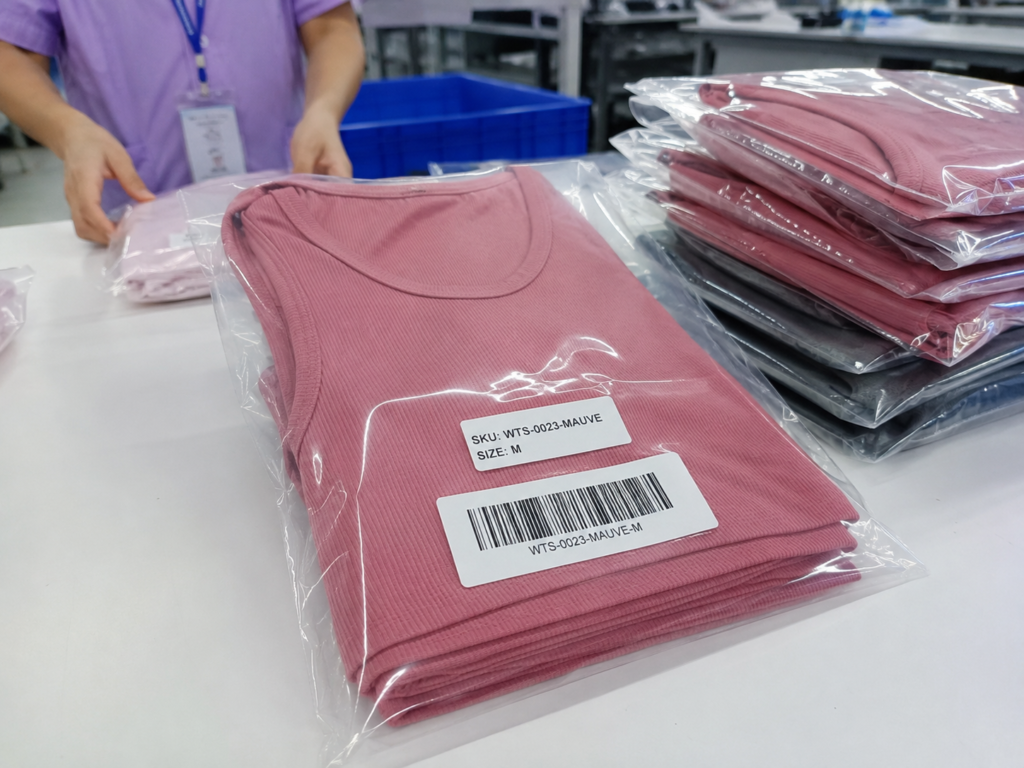
Barcode and SKU

Polybags and Folding
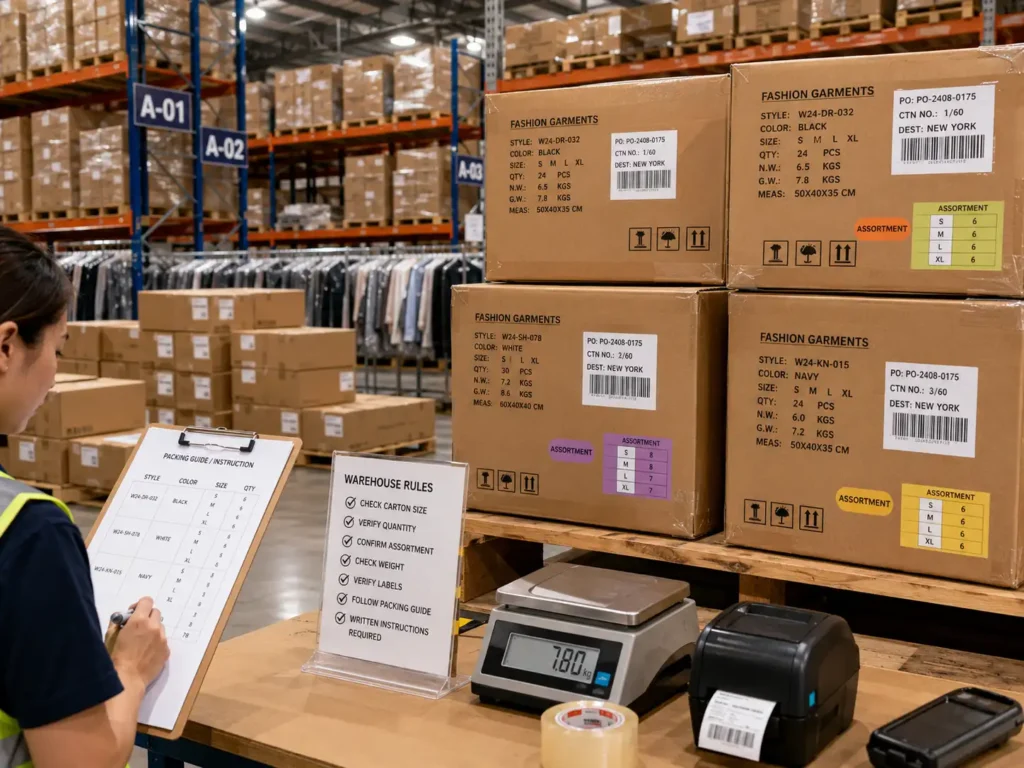
Carton Ratios
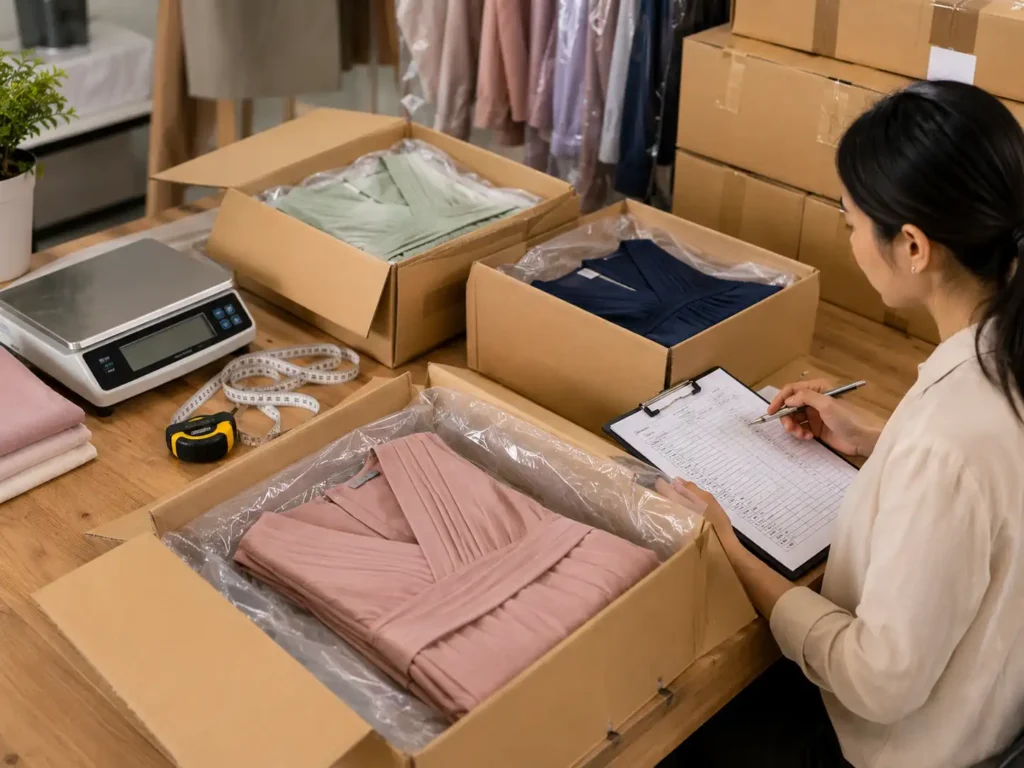
Final Packing QC
A 52,800-Piece Multi-Category Dress Program
An anonymized seasonal program shows how a broad dress expansion can be organized without treating every style as an unrelated order. The structure below reflects the scale commonly handled for established fashion labels.

Program Scope
The brand planned 24 styles, 52,800 total pieces, 4 category groups, 3 main color stories, and a core size range of XS-XXL. The assortment included bodycon and ruched dresses, satin occasion styles, mesh and lace dresses, resort maxis, and a smaller corset capsule. Average quantity was 2,200 pieces per style, but allocation varied by expected demand, color count, and construction risk.
The launch required campaign samples before the complete assortment was ready, followed by two bulk delivery waves. Packaging included woven labels, care labels, hangtags, barcodes, individual polybags, and warehouse carton marks.
Development Structure
Styles were divided into five working groups: stretch fitted, satin and crepe, mesh and lace, flowing resort, and structured corset. Six hero styles entered pattern and material review first. Ten commercial core styles followed, while eight supporting styles moved after shared fabric and trim decisions were confirmed.
Sampling used first, fit, revised, photo-ready, and PP stages according to style purpose. The program avoided creating photo samples for every color and instead focused photography resources on hero colors. Revision records separated fit changes, material changes, design changes, and packaging updates.

Production Allocation
Approved styles were assigned according to fabric and construction. Stretch styles moved to knit-focused production units; woven satin and resort dresses moved to woven-dress units; corset and detailed lace styles entered teams experienced with structure and delicate surfaces. One central merchandising plan connected material arrival, PP lock, line schedule, QC, finishing, packing, and delivery.
The first delivery wave prioritized campaign styles, top colors, and core sizes. The second wave carried the remaining assortment and broader size-color mix. Cartons were separated by warehouse instruction, with style, color, size, quantity, and barcode data checked against the master packing list.
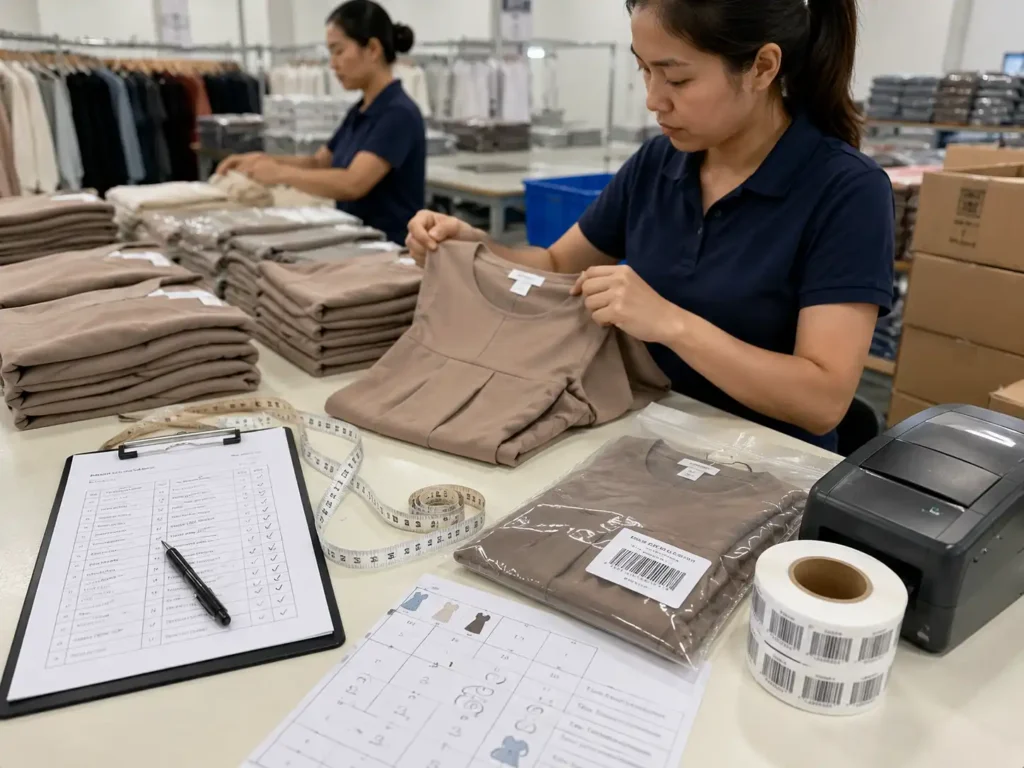
Control Lessons
Four decisions kept the program manageable. First, fabric families reduced unnecessary supplier fragmentation. Second, hero styles received priority without stopping supporting development. Third, PP lock prevented late material and construction changes from entering bulk. Fourth, QC checkpoints followed category risk rather than one generic checklist.
Records retained after shipment included final patterns, grade rules, fabric references, trim cards, approved color information, sewing instructions, packing files, golden samples, and QC notes. The retained structure supported future color extensions, repeat orders, and new silhouettes built from approved category blocks.
Frequently Asked Questions for Category Expansion

Start Your Dress Category Expansion Program
Send your current line sheet and the categories planned for the next collection. Kelly and the Jinfeng Apparel team will review style grouping, fabric direction, pattern complexity, sample priorities, quantity structure, MOQ fit, private-label requirements, production allocation, QC needs, and launch timing before proposing a development route. For a more accurate first review, include:
- Company, website, target market, current categories, and planned new categories.
- Style list, line sheet, tech packs, sketches, or reference samples.
- Quantity by style/color, color plan, and size range.
- Fabric preferences, approved swatches, target retail, or cost direction.
- Sample purpose and required fit, photo, salesman, or PP stages.
- Label, barcode, packing, warehouse, campaign, launch, and delivery requirements.


