
Dress Manufacturer for Brands Building Core Dress Lines
Develop signature dresses, commercial volume styles, and repeatable seasonal extensions through one controlled manufacturing program.
Jinfeng Apparel supports established fashion brands building long-term dress categories rather than isolated one-off styles. Development starts with line planning, fabric direction, pattern work, fit review, sample approval, and clear production standards. Approved styles move into bulk manufacturing, private-label packing, quality control, replenishment, and future color or fabric extensions without losing the fit and product identity already established.
- 10-30 styles can be organized into grouped development and approval tracks for large collection programs.
- 200 pcs per style/color is the standard production starting point, subject to fabric, trims, construction, and packing requirements.
- 6 owned womenswear factories and 10+ long-term production partners support multi-style allocation and repeat production.
- 2 sample rooms, 7+ senior pattern makers, and 20+ sample machinists support fit-sensitive dress development.
A Manufacturing Structure Built Around Core Dress Programs
Since 2008
6 Owned Factories
10+ Production Partners
100,000+ Monthly Capacity
2 Sample Rooms
15+ QC Inspectors
What Makes a Core Dress Line Commercially Sustainable?
A core line is a controlled group of dresses designed for recurring sales, stable replenishment, and measured seasonal extension. Product identity comes from repeatable fit, approved fabrics, disciplined construction, and accurate production records.
A Core Line Is More Than Several Dresses
A group of attractive styles does not automatically become a core line. A commercially sustainable line has a clear role for every silhouette: one or two signature dresses establish the visual identity, commercial styles carry volume, occasion-led dresses support key selling moments, and proven blocks create seasonal extensions. Each style needs a reason to exist within the range, a target wearing occasion, an approved fit standard, a workable fabric direction, and a quantity plan that supports production economics. Jinfeng Apparel reviews the range from a manufacturing perspective, identifying shared blocks, common trims, compatible fabric groups, and construction levels before development begins. Shared elements reduce unnecessary variation while preserving enough design distinction for each SKU. A corset mini, satin slip, mesh bodycon, and occasion midi may sit in one line, but they should not be managed as four unrelated samples. Common measurement rules, label systems, color coding, and approval records create one usable product program rather than a collection of isolated files.
Core Styles Need Repeatable Production Standards
A dress only becomes a dependable core SKU when approved appearance can be reproduced across sizes, colors, batches, and production dates.
Paper patterns, graded measurements, fabric specifications, trim references, sewing details, pressing methods, packing rules, and approval samples must agree. A change in stretch, weight, lining, zipper, boning, or finishing can alter the fit even when the sketch remains unchanged. Jinfeng Apparel treats the PP sample and approved technical files as production control points. The team keeps pattern versions, measurement records, material references, trim details, packing instructions, and quality notes for repeat-order use.
When a reorder starts months later, the previous order is reviewed before material booking. Fabric availability, shade, hand feel, stretch, shrinkage, and trim continuity are checked again. The objective is not blind duplication; the objective is controlled reproduction based on the latest approved standard.
Seasonal Growth Should Build on Proven Blocks
Strong core lines grow by extending what already works. A proven midi block can move into a new satin weight, a printed rayon, or a lace overlay, but each fabric changes drape, stretch, opacity, seam behavior, pressing, and measurement stability.
A bodycon block may support new necklines or sleeve options, yet the chest, waist, hip, dress length, and recovery requirements still need review. Jinfeng Apparel helps brands separate genuine carryover styles from modified developments. Carryover production can use retained records when materials and construction remain aligned. Modified styles return to fit and sample review where needed.
Product growth becomes faster because the team is not rebuilding every garment from zero, while approval discipline prevents new materials or details from quietly changing the original fit. Core-line development therefore becomes a structured cycle: establish, approve, produce, evaluate, replenish, and extend.

Built for Teams Managing Long-Term Dress Categories
Fashion Brand Teams
- Defined product direction
- Seasonal or continuous line plan
- Private-label and delivery requirements
Product Development Teams
For teams balancing creative intent with fit, construction, material availability, price, and launch timing.
Pattern makers and sample machinists work through bust, waist, hip, length, neckline, strap, lining, slit, support, and movement issues before bulk approval.
- Multi-style sample management
- Revision tracking
- PP and golden sample control
Sourcing and QA Teams
For teams evaluating whether a supplier can hold approved standards across materials, factories, production batches, labels, packing, and shipment records.
Jinfeng provides a defined manufacturing chain covering development, production management, QC, packing, and logistics coordination.
- MOQ by style/color
- Factory allocation
- Repeat-order records
Where Core Dress Lines Commonly Lose Consistency
Disconnected Style Direction
- Group by silhouette and fabric
- Define hero and volume styles
- Control unnecessary variation
Fit Standard Drift
- Measure approved samples
- Track pattern revisions
- Review grading rules
Fabric Discontinuity
- Record fabric specification
- Reapprove replacement material
- Check garment response
Sample-to-Bulk Change
- Use PP sample standards
- Issue clear workmanship notes
- Run in-line checks
Reorder Version Confusion
- Keep latest approved files
- Review previous QC notes
- Confirm material status
SKU and Packing Errors
- Control style-color-size data
- Match packing list to cartons
- Verify barcode versions
Build a Balanced Portfolio of Core Dress Roles

Signature Hero Dresses
- Brand-defining silhouette
- Higher technical attention
- Strong visual identity

Volume-Driving Styles
- Repeatable block
- Color extension potential
- Controlled production cost

Occasion Anchors
- Event-led demand
- Photo-ready appearance
- Seasonal delivery window

Seasonal Extensions
- Build from approved blocks
- Limit unnecessary redevelopment
- Protect product identity
Dress Silhouettes Developed for Repeat Production
Silhouette selection affects fit risk, fabric choice, size grading, construction time, packing, and repeat-order control. The following matrix shows where development attention usually belongs.
| Silhouette | Core-Line Role | Development Focus | Bulk Control Point |
|---|---|---|---|
| Bodycon | High-repeat fitted style | Stretch ratio, recovery, bust-waist-hip balance, hem grip | Measurement stability, side seam torque, ride-up |
| A-Line | Broad commercial coverage | Waist position, skirt volume, hem balance, lining ease | Grading, hem circumference, pressing |
| Slip | Brand visual staple | Drape, bias behavior, neckline, strap length, lining | Seam growth, strap symmetry, puckering |
| Corset | Signature structured style | Cup shape, boning, support, closure, symmetry | Boning position, top edge security, fit consistency |
| Mini | Young commercial style | Dress length, movement, coverage, slit or opening safety | Length tolerance across sizes, lining control |
| Midi | Day-to-evening core style | Body proportion, waist placement, slit height, hem weight | Finished length, slit balance, zipper flatness |
| Maxi | Resort and occasion anchor | Drape, hem level, weight, walking ease, lining | Uneven hem, packing creases, length consistency |
| Occasion | Higher-value seasonal anchor | Fabric combination, decoration, structure, presentation | Workmanship variation, pressing, surface protection |
Fabric Continuity for Long-Selling Dress Styles
Fabric continuity is a commercial control issue, not only a sourcing task. Weight, stretch, drape, shade, opacity, surface stability, shrinkage, and finishing determine whether a repeat order still looks and fits like the approved style.
Build an Approved Fabric Standard
Every core style should have a material record detailed enough to guide future sourcing. Composition alone is not enough. A 95% polyester, 5% elastane jersey can vary widely in weight, stretch direction, recovery, surface sheen, hand feel, and compression. Satin can vary in luster, thickness, snag resistance, crease behavior, and color appearance under different light. Mesh can vary in openness, recovery, transparency, and edge stability. Lace changes through motif scale, ground structure, stiffness, placement, and skin feel. Jinfeng records the approved fabric direction together with garment requirements: target weight or feel, stretch and recovery, drape, transparency, shrinkage risk, color reference, lining compatibility, seam behavior, pressing response, and expected finish. Material decisions are linked to the approved sample, not stored as a supplier swatch with no garment context. When the style returns for replenishment, the new lot is checked against the retained reference and the current product requirement.
Control Batch, Shade, and Surface Variation
Color and surface variation become highly visible when the same core style is sold over several seasons.Satin, velvet, rayon, lace, mesh, jersey, and sequined fabrics can change appearance between dye lots or production batches. Bulk cutting should not begin until the material lot has been reviewed for shade, hand feel, width, defects, and garment suitability.
Where several rolls are used, roll-level shade grouping may be required to avoid visible panel differences within one dress. Printed styles also need direction control, placement review, and repeat alignment. Glossy materials require attention to nap or face direction because reversed panels reflect light differently. Jinfeng links incoming material inspection with cutting instructions, so material variation is managed before panels enter sewing. Reorders are treated as a fresh material confirmation, even when the supplier name and fabric code remain unchanged.
Prepare Controlled Backup Materials
Long-running styles face a predictable risk: the original fabric may become unavailable, move to a higher MOQ, change mill, or no longer meet target cost. Backup planning should begin before an emergency. Jinfeng can source and compare alternatives based on composition, weight, stretch, recovery, drape, opacity, texture, shade behavior, and finishing. A visually similar fabric may still require pattern adjustment, a different lining, new seam settings, or revised pressing. Replacement materials therefore return to garment-level review. Fitted dresses are checked at bust, waist, hip, length, and recovery; slip and bias styles are checked for growth and drape; corset dresses are checked for support and top-edge security; mesh and lace styles are checked for transparency and skin comfort. Approval is based on how the fabric performs in the garment, not only on a hanger swatch.
Match Fabric Strategy to Product Role
Not every style requires the same continuity strategy. A high-volume carryover dress may justify advance fabric booking, repeated mill supply, or tighter shade standards. A seasonal extension may use an available fashion fabric with a shorter life cycle.
A signature satin or lace dress may need more conservative material changes because surface appearance defines the product. A commercial jersey dress may allow a technically equivalent backup when stretch and recovery remain controlled. Jinfeng groups fabrics across the line to identify where common sourcing can improve consistency and cost, while keeping material choices aligned with each style’s role.
The result is a dress range built around known product behavior rather than a collection of unconnected swatches.
Lock Fit, Grading, and Construction Before Scaling
Core dresses must remain recognizable on different bodies, in different sizes, and across repeat batches. Fit control starts with pattern structure and continues through sample measurement, grading, workmanship, and final garment inspection.
Control the Measurements That Define the Dress
Jinfeng’s pattern and sample teams focus on the measurement points that determine appearance and wearability: bust, upper bust, under bust, waist, high or low waist position, hip, front and back length, shoulder width, strap length, armhole, neckline depth, slit height, hem width, lining length, and crotch length for jumpsuits. A small change can create a large visual difference. A neckline may expose too much when graded upward; a mini may become too short in larger sizes; a strapless dress may slide when the top edge, grip tape, cup, and body tension are not balanced; a bodycon style may ride up when stretch recovery and hem tension are wrong. Measurements are reviewed together with posture, movement, fabric response, and intended wearing occasion. Approved sample measurements are converted into controlled pattern and size files rather than left as informal comments.
Turn Fit Comments Into Pattern Revisions
Fit comments are only useful when they become measurable pattern actions. Notes such as “tight at hip” or “neckline too open” require clarification: how much change, where the change begins, whether the adjustment applies to all sizes, and whether seam shape, dart position, lining, or support must also change. Jinfeng records pattern changes, measurement changes, fabric replacements, trim adjustments, sewing method changes, and approval status through sample development. Each revision should have a clear version relationship with the sample reviewed. Photo comments, measurement sheets, and physical sample notes are reconciled before the next sample is made. The latest approved version becomes the reference for PP sample preparation and bulk production. Older versions remain identifiable so teams do not accidentally return to a rejected fit.
Grade the Product, Not Only the Numbers
Grading is not a simple mathematical enlargement. Different silhouettes require different rules. A fitted bodycon dress must preserve negative ease and recovery without becoming restrictive. A corset dress must keep support and cup placement balanced across sizes. A slip dress needs stable neckline and strap placement while allowing enough body ease. A maxi dress must maintain proportion and finished length without producing an uneven hem or excessive volume.
Jinfeng reviews grade rules against style structure, fabric stretch, support components, and target market sizing. Key points are checked in sample or pre-production review where the size range or construction presents higher risk. The goal is a coherent product across the full size range, not a base size that looks correct while outer sizes lose the original silhouette.
Protect Construction Details in Bulk
Design details often carry the brand identity: corset seam lines, boning channels, ruched placement, cut-out geometry, lace position, mesh panels, shoulder strap width, zipper finish, slit height, lining edge, topstitching, and hem treatment. Bulk production can soften or distort these details unless workmanship instructions are clear and in-line checks begin early. Jinfeng connects approved patterns, PP samples, sewing notes, trim references, and measurement tolerances before production. Early output is checked for shape, symmetry, seam smoothness, closure behavior, support, and finish. Corrections are made before the production volume advances. Construction control is especially important for satin, mesh, lace, sequin, bodycon, corset, and occasion styles where small workmanship differences remain visible in photography and retail presentation.
Coordinate 10-30 Styles Without Development Confusion
Style Grouping
- Mini, midi, maxi families
- Bodycon and corset groups
- Carryover versus new development
Fabric Grouping
- Shared fabric references
- Color and shade planning
- Backup material review
Complexity Review
- Technical difficulty
- Trim lead time
- Construction risk
Sample Priority
- Launch date
- Photo sample need
- Bulk booking impact
Revision Tracking
- Version control
- Open comment list
- Approval owner
Approval Status
- Stage definition
- Approval date
- Production release status
Use Sample Gates to Protect the Launch Calendar
Sampling speed is controlled by material readiness, construction complexity, decision quality, and revision discipline. Jinfeng sets a project calendar after technical review rather than applying one fixed promise to every dress.
Set the Calendar From the Launch Date Backward
A useful calendar begins with the target launch, campaign shoot, warehouse intake, or retail delivery date. The team then works backward through freight planning, packing, final inspection, bulk production, PP approval, sample revisions, first sample, pattern work, and material confirmation. For a 10-30 style program, one blanket date is rarely credible. Styles are divided into development waves. Hero products and campaign samples are prioritized first; styles using confirmed fabrics may move ahead of items waiting for custom color, lace, print, special trims, or structured components. Jinfeng issues milestones based on the actual file set and material status. The schedule becomes more reliable when the brand provides tech packs or line sheets, target quantities by style/color, size range, fabric direction, private-label requirements, and launch priorities at the start.
Use the Right Sample for the Right Decision
Sample names should describe a decision, not create extra rounds without purpose. A first sample checks design interpretation and basic construction. A fit sample focuses on balance, proportion, measurement, support, and movement. A revised sample confirms specific changes. A photo-ready or salesman sample may support campaign, showroom, or selling needs but does not automatically release bulk production. A PP sample brings together approved fabric, trims, workmanship, labels, and packing direction as the production standard. A golden sample may be retained for factory and QC reference. Some styles can combine stages when risk is low and materials are ready; others need separate rounds because fabric, support, embellishment, or fit complexity remains high. The approval path is chosen by product risk, not by a desire to create more samples.
Keep Decisions From Stalling the Schedule
Development delays often come from fragmented comments, unapproved fabric changes, unclear ownership, or late packaging files.Jinfeng keeps an open issue list for each style, covering measurements, fit, fabric, trims, workmanship, label artwork, barcode data, and approval status.
Consolidated comments reduce contradictory revisions. Fabric substitutions are reviewed before the next sample because a new material may change pattern, lining, seam method, cost, MOQ, and timing. PP approval is treated as a release gate: major changes after PP approval can affect price, materials, production booking, and delivery. A disciplined decision process gives the line more speed than an unrealistic fixed sample promise.

Plan Quantities Around Style, Color, and Commercial Role
Core-line costing depends on more than total order volume. Fabric, trims, construction, color count, size ratio, packaging, quality requirements, and delivery sequence all affect the production plan.
Use 200 Pieces per Style and Color as the Starting Point
Jinfeng Apparel’s MOQ starts from 200 pieces per style/color. The figure applies to a defined style and color, not to the total quantity across an entire collection. A 20,000-piece program spread across 20 styles and several colors may create a very different production structure from a 20,000-piece program concentrated in five core styles. Fabric suppliers may also set separate minimums for custom dyeing, printing, lace, sequins, special knits, trims, hardware, labels, or packaging. Quantity planning should therefore begin with a style-color-size breakdown. Core carryover styles often support deeper quantities because sales history is known; new silhouettes or extensions may begin at a more measured level while still meeting material and production requirements.
Allocate Volume by Product Role
A balanced order does not divide quantity equally across every style. Signature hero dresses may carry lower volume but higher development and workmanship requirements. Commercial volume styles may carry deeper quantities and more colors. Occasion anchors may concentrate around a selling season. New extensions may use controlled opening quantities until sales performance is visible.
Jinfeng reviews quantity together with fabric availability, construction time, cutting efficiency, line allocation, private-label packing, and planned replenishment. A clear allocation helps the team quote accurately, reserve suitable production capacity, and reduce late changes caused by unrealistic color or size splits.
Control Cost Without Weakening Product Identity
Cost optimization begins with the garment structure. Fabric consumption, lining, trims, pattern work, sewing time, pressing, quality inspection, packaging, wastage, and logistics all influence the quotation. Savings should come from controlled decisions: choosing an equivalent material with the right hand feel and performance, simplifying a hidden construction detail, sharing a trim across several styles, improving marker efficiency, grouping colors, or adjusting packaging without lowering the visible finish. Cutting the wrong component can damage fit, opacity, support, durability, or retail presentation.
Jinfeng builds quotations from confirmed style information and can compare options where several material or construction routes are possible. Final pricing is locked only after fabric, trims, workmanship, quantity, size range, packing, and delivery requirements are sufficiently clear.

Convert Approved Dresses Into Production-Ready Standards
Bulk consistency depends on how well approved development information reaches the factory floor. Jinfeng builds a technical handoff around the latest pattern, measurement, material, workmanship, label, packing, and inspection requirements.
Lock the Approved Pattern and Measurement File
Production starts from the latest approved pattern version and graded measurement specification. Style number, revision date, base size, grade rule, and critical measurement points must agree with the PP sample. Bust, waist, hip, length, neckline, strap, armhole, slit, hem, lining, and support measurements are linked to the style’s fit risk. Tolerances are defined where appropriate, and high-visibility points receive closer control. Old patterns and rejected measurement files remain identifiable but are not used for production release. The production team receives one clear standard rather than a mixture of emails, photos, and samples with conflicting changes.
Confirm the Material and Trim Bill
The bill of materials connects every visible and hidden component to an approved reference: shell fabric, lining, interfacing, mesh, lace, elastic, cups, underwire, boning, anti-slip tape, zippers, hooks, buttons, sliders, labels, hangtags, polybags, and cartons. Color, specification, placement, size, finish, and supplier reference are checked. Substitutions are not treated as silent factory decisions. A different zipper tape, lining stretch, elastic strength, boning width, or cup shape can change fit and appearance. Material changes are reviewed with the product team before use and may require sample confirmation depending on risk.
Issue Workmanship and Construction Instructions
Sewing instructions explain how the approved garment is built, especially where appearance cannot be controlled by measurements alone. Seam type, seam allowance, stitch density, topstitch position, zipper insertion, lining attachment, boning channels, cup placement, ruching distribution, lace alignment, mesh joining, slit finish, hem method, pressing, and decoration security are documented according to the style. Factory teams use the PP or golden sample together with written instructions. Early production output is reviewed so workmanship can be corrected before volume advances. The handoff is designed to protect the approved silhouette, not only to list operations.
Align Labels, Packing, and Inspection Before Cutting
Private-label files and QC standards should not wait until garments are finished. Main labels, size labels, care labels, hangtags, barcode lists, polybag warnings, folding methods, carton marks, warehouse labels, and size ratios are checked before bulk packing.
Inspection requirements are also defined early: measurement points, appearance standards, functional checks, decoration security, pressing quality, barcode scan, packing method, and AQL or client inspection needs. Early alignment prevents a technically correct dress from becoming a delivery problem because labels, SKU data, or packing instructions were incomplete.
Match Each Dress Group With the Right Production Route
Woven Dress Lines
Stretch Dress Lines
Structured Styles
Surface-Sensitive Styles
Multi-Factory Programs
Phased Production
Control Quality From Incoming Fabric to Packed Cartons
Final inspection cannot repair a poor material lot, incorrect cutting, unstable fit, or inconsistent sewing. Jinfeng uses staged quality control so problems are found close to the operation that created them.
Incoming Material and Cutting Control
Incoming inspection reviews shell fabrics, linings, trims, labels, and packaging materials against approved requirements. Fabric width, shade, surface defects, hand feel, stretch, recovery, transparency, and obvious shrinkage risks are considered according to the style. Roll variation and print direction are addressed before cutting. Cutting control checks marker direction, size identification, panel accuracy, bundle separation, notches, and critical matching points. Satin, velvet, printed fabrics, lace, mesh, and sequined materials require special direction or placement attention. A cutting error multiplies through the entire production quantity, so early control protects both fit and material yield.
Sewing and In-Line Inspection
In-line inspection begins while production is still adjustable. Inspectors check measurements, seam shape, stitch quality, zipper insertion, lining behavior, strap placement, cup and boning position, ruching, lace alignment, mesh joining, slit height, hem balance, closure function, and visible symmetry. Early output from each line is compared with the PP or golden sample and workmanship instructions. Corrective feedback is given before the same issue spreads across hundreds or thousands of pieces. Fitted and glossy styles receive close attention because tension, puckering, twisting, and pressing marks remain visible in wear and photography.
Finished Garment Measurement and Appearance
Finished garments are checked for critical measurements, silhouette, balance, surface quality, cleanliness, pressing, closure function, lining coverage, support, decoration security, and overall presentation. Measurement checks focus on the points most likely to alter fit: bust, waist, hip, length, neckline, strap, armhole, slit, hem, and jumpsuit rise where relevant. Appearance review considers seam smoothness, symmetry, color consistency, stains, shine, snags, loose threads, and damage. Garments that do not meet the approved standard are separated for correction or disposition rather than mixed into packing.
Packing, SKU, and AQL Control
Packing QC verifies label version, size label, care label, hangtag, barcode, folding, polybag, warning text, quantity, carton assortment, carton marks, and warehouse requirements. The packing list must match the actual style-color-size breakdown and carton numbers. Barcode scanning can be included where required. AQL inspection and client-appointed inspection are supported according to the order plan. Inspection findings are recorded and reviewed before shipment release. Quality therefore includes the product and the operational accuracy needed for retail, ecommerce, warehouse, and replenishment systems.
Repeat-Order Quality Review
Repeat orders are compared with retained references and previous production records. The review looks for material changes, shade differences, measurement drift, construction variation, pressing differences, label updates, packaging revisions, and previous inspection findings.
The goal is to carry forward the latest approved standard while correcting any known weakness from earlier production. Repeat-order control turns QC history into a manufacturing advantage rather than treating each order as a fresh start.
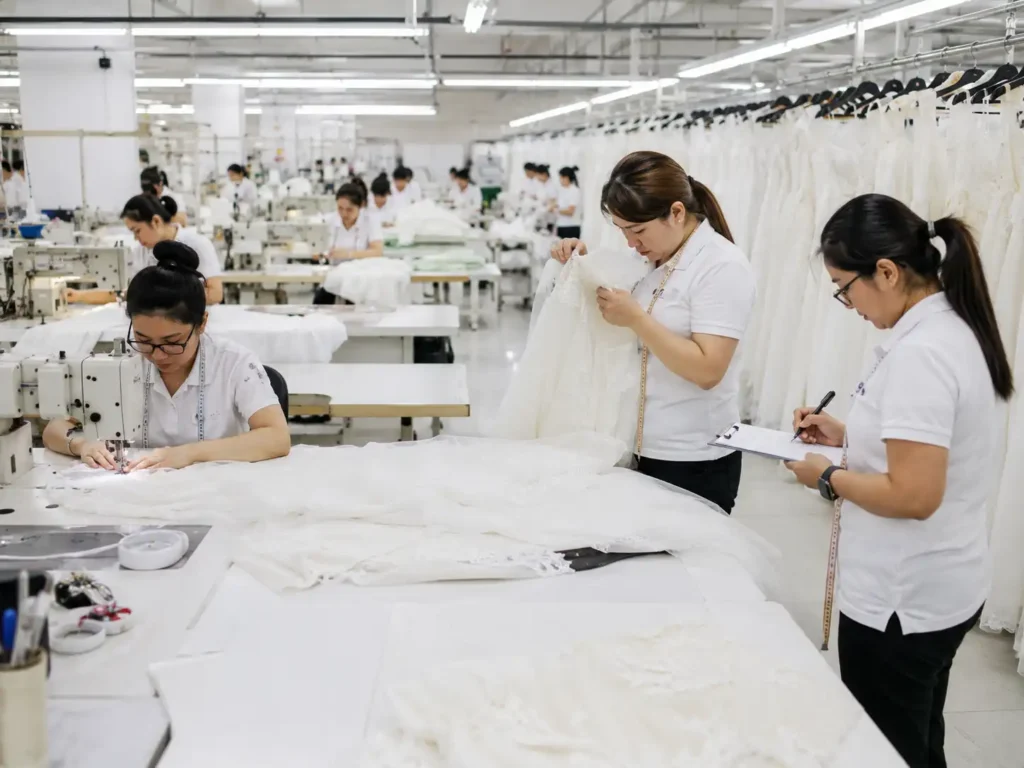
Reorder Core Styles Without Losing Product Identity
A repeat order should begin with a record review, not with an assumption that every material and instruction remains unchanged. Jinfeng checks the previous standard, current supply conditions, and new order requirements before production release.
Retain the Records That Make Reorders Faster
Jinfeng keeps pattern versions, graded measurements, BOM references, fabric and color records, trim specifications, workmanship notes, PP or golden sample references, label and packing instructions, carton requirements, and quality records for future production. Retained data reduces the need to rebuild a style from memory. It also gives the team a basis for identifying what has changed. A new color may require a fresh shade standard; a new fabric may require fit review; an updated care label or barcode file may affect packing; a revised size range may require new grading. Faster reorders come from clear records and controlled differences, not from skipping approvals.
Review Material Continuity Before Booking
Fabric and trims are checked again before a reorder is booked. The original mill or supplier may have changed the quality, color, finish, width, MOQ, or availability. Jinfeng compares the proposed lot with the retained reference and the approved garment performance. High-risk materials may require garment-level confirmation.
A replacement lining, zipper, elastic, boning, cup, or lace can alter comfort, fit, appearance, or production method. Material continuity is therefore a formal reorder step rather than an informal purchasing assumption.
Use Sales Information to Shape the Reorder
Core lines become stronger when replenishment reflects real performance. Brands may deepen top colors, adjust size ratios, reduce slower combinations, add a proven color, or extend a successful block into another fabric or length. Jinfeng uses the updated style-color-size plan to review fabric needs, line capacity, packing, and delivery sequence. Carryover styles remain linked to the approved standard; modified extensions return to sample or PP review when needed. Replenishment can therefore support growth without allowing the product to drift away from the original fit and appearance.
Coordinate Multi-Batch Production and Delivery
Large core programs may move in several batches by launch priority, style group, color group, warehouse, region, or freight method. Each batch needs its own quantity breakdown, packing list, carton marks, invoice, and tracking reference while remaining connected to the same PO and product standard.
Production and shipping sequences are planned together so urgent styles are not packed behind later items. Multi-batch delivery becomes a controlled commercial tool rather than a last-minute response to delay.
Protect Brand Details Across Every Production Batch
Design Protection
- NDA support
- Controlled project use
- Anonymized case presentation
Private Label Execution
Main labels, size labels, care labels, hangtags, barcode stickers, polybags, warning text, and carton marks are connected to the correct style, color, and size. Artwork versions are checked before bulk use.
- Label file control
- Placement confirmation
- Packing consistency
SKU Record Continuity
Style-color-size data, carton assortment, warehouse labels, and barcode lists are reviewed against the packing plan. Reorders use the latest approved SKU and packaging records rather than outdated files.
- Version accuracy
- Carton traceability
- Warehouse readiness
Plan Delivery Around Launch Priorities and Freight Cost
Express and Air Freight
- Sample dispatch tracking
- Urgent SKU planning
- Client or factory forwarder
Sea and Split Shipment
Regular bulk orders and larger dress programs can move by sea freight. For launch-sensitive programs, selected quantities may move by air while the remaining bulk moves by sea. Jinfeng can support a 10-30% priority split when the commercial plan and freight arrangement make it appropriate.
- Balance speed and cost
- Separate carton records
- Coordinate phased arrival
Documents and Warehouses
- SKU-level packing list
- Warehouse label support
- Client-appointed forwarder
How an 18-Style Dress Program Moved Into Bulk
An anonymous US private-label fashion program involved 18 womenswear styles and approximately 28,000 pieces across satin, mesh, jersey, lace, and crepe dresses. The project required coordinated development, private-label control, client inspection support, and phased shipment.
The Program Scope

The range combined several product roles rather than one repeated silhouette. Satin dresses required color and surface control; mesh styles required transparency, lining, stretch, and seam review; jersey dresses needed recovery and measurement stability; lace styles required placement and edge control; crepe dresses needed drape and pressing consistency. Eighteen styles created a large number of style-color-size combinations, packaging files, barcodes, and production decisions. The order size of approximately 28,000 pieces required the development team to work with bulk capacity from the beginning. Samples could not be approved as isolated garments because material availability, style quantities, factory allocation, private-label packing, client inspection, and shipment sequence all affected the final execution.
The Main Operating Risks

The largest risks were not limited to sewing quality. Several fabric groups had different lead times and bulk behavior. Sample versions needed clear control so approved fit comments did not become mixed with older files. Hangtags, care labels, barcodes, polybags, and carton marks had to remain consistent across all styles.
Client inspection required finished quantities and documents to be ready in the correct sequence. Shipment planning also needed enough flexibility for phased release.
Without a central tracker, one late trim, one outdated barcode list, or one unresolved measurement could delay an entire group of styles.
The Control Method

Jinfeng organized the program by style group, fabric group, sample status, and production readiness. Fabric and trim information was tracked by style. Sample rounds and open comments were recorded so the latest approved version remained clear. Pattern, measurement, workmanship, and PP standards were transferred into production files. Private-label requirements were consolidated into a controlled list covering hangtags, barcodes, polybags, carton marks, and shipment documentation. Production and QC teams followed the same style references, while client inspection support and phased shipment were planned around actual readiness rather than one undifferentiated completion date.
The Commercial Result

The 18-style program moved through bulk production with coordinated material tracking, sample version control, private-label packing, client inspection support, and phased shipment. The case demonstrates the operating level required for core-line manufacturing: several fabrics, many SKUs, multiple approval points, and a meaningful production quantity must still behave as one controlled program.
Brand names, original designs, order numbers, and confidential files remain protected. The value lies in the method – organizing complex dress development and bulk execution without losing style-level accountability.
What Brands Should Verify Before Selecting a Manufacturer
A core-line supplier should be evaluated on repeatability, not on sample appearance alone. The strongest evidence links dress development, materials, fit, production, QC, packing, and reorders into one operating system.
| Evaluation Area | What to Verify | Jinfeng Evidence |
| Dress specialization | Relevant silhouettes, fabrics, fit risks, and workmanship experience | Dress-focused product range and structured pattern development |
| Collection management | Ability to coordinate 10-30 styles without version confusion | Fabric/style grouping, sample priorities, revision and approval tracking |
| Pattern and grading | Control of critical measurements and size consistency | 7+ senior pattern makers, 2 sample rooms, 20+ sample machinists |
| Fabric continuity | Batch, shade, stretch, drape, and replacement review | Fabric records, incoming inspection, garment-level replacement review |
| Bulk capacity | Factory allocation, production planning, and multi-style output | 6 owned factories, 10+ long-term partners, 100,000+ monthly capacity |
| Quality control | Incoming, cutting, sewing, finished garment, packing, and inspection support | 15+ QC inspectors and staged quality process |
| Repeat orders | Retention of technical, material, packing, and QC records | Patterns, BOM, colors, trims, packing, golden samples, and QC history |
| Private label | Accuracy across labels, barcodes, polybags, cartons, and warehouse files | Private-label file control and SKU-level packing records |
| Delivery planning | Freight options, split shipment, documents, and forwarder coordination | Express, air, sea, client forwarder, phased shipment, export documents |
| Brand protection | NDA, confidential file handling, and approved case usage | NDA support and anonymized case policy |
Frequently Asked Questions About Core Dress Line Manufacturing

Start Your Core Dress Line Review
Send the information already available, whether the program is at line-sheet stage, sample stage, or supplier-transfer stage. Kelly will organize the files for an initial review covering style complexity, fabric direction, pattern and fit risks, sample priorities, MOQ by style/color, private-label requirements, production allocation, quality needs, and delivery planning. A complete tech pack is helpful, but an established program can also begin with original samples, style images, measurement files, repeat-order history, or a draft range plan. Clear information allows the team to provide a useful development and quotation path instead of a generic response. Confidential files are used only for project evaluation, sample development, bulk production, quality control, packing, and delivery coordination.
- Style list or line sheet, including hero styles, volume styles, and carryover products
- Tech packs, reference images, original sample photos, or current measurement files
- Planned quantity per style/color and intended size range
- Fabric direction, approved materials, color plan, and known continuity concerns
- Target launch, campaign, warehouse, or delivery window
- Main labels, care labels, hangtags, barcode, polybag, carton, and warehouse requirements
- Current sample status, previous fit issues, repeat-order history, or supplier-transfer notes


