 Skip to content
Dress Manufacturer for Australian Resortwear Labels
Resort dress development built around lightweight fabrics, controlled fit, seasonal launch timing and repeatable private-label production.
- Resort collections can be planned across 10-30 coordinated styles, grouped by fabric, print method, silhouette and launch priority.
- MOQ starts from 200 pieces per style and color; custom prints, custom dyeing, special trims and packaging are assessed separately.
- Two sample rooms, 7+ senior pattern makers and 20+ sample machinists support fit, revision, photo and PP sample development.
- Six owned women’s fashion factories and 10+ long-term production partners support multi-style bulk programs, phased delivery and repeat orders.
Production Strength Behind Resortwear Collections
Development Resources
Production Network
Program Scale
Is Jinfeng the Right Manufacturing Fit?
Best Fit For
Project Boundaries
What Australian Resortwear Labels Need Most
Products That Travel
Seasonal Launch Control
Repeatable Brand Quality
Designed for Modern Resortwear Selling Moments
Beach to Dinner
Destination Holiday
Summer Launch
Resort Capsule
Resort Dresses Developed for Fashion Labels
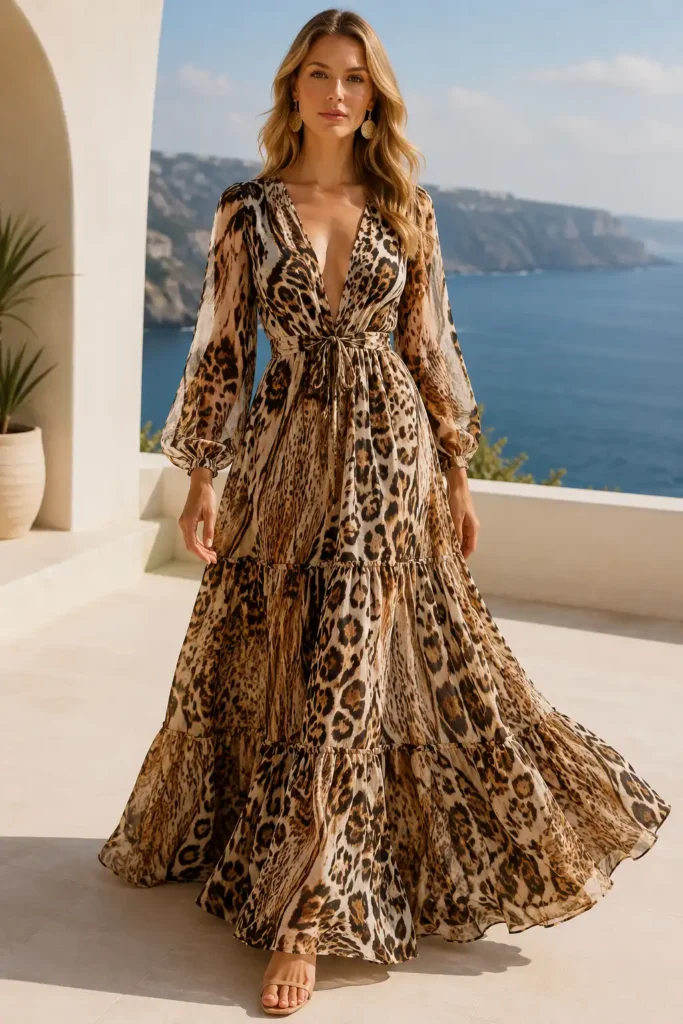
Printed Maxi Dress

Linen Midi Dress
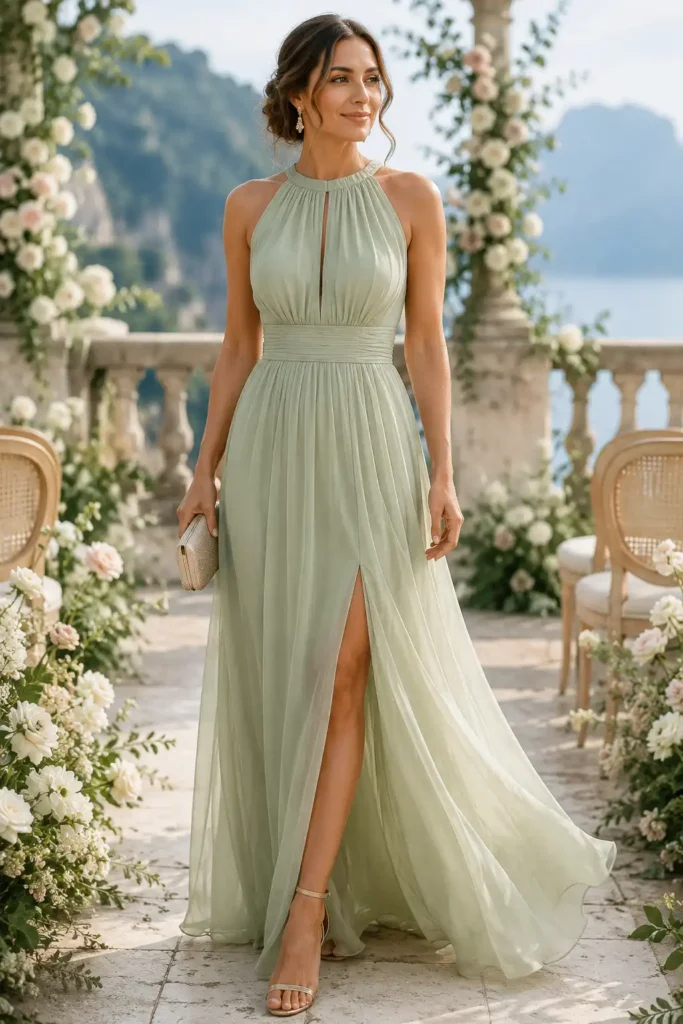
Chiffon Halter Dress
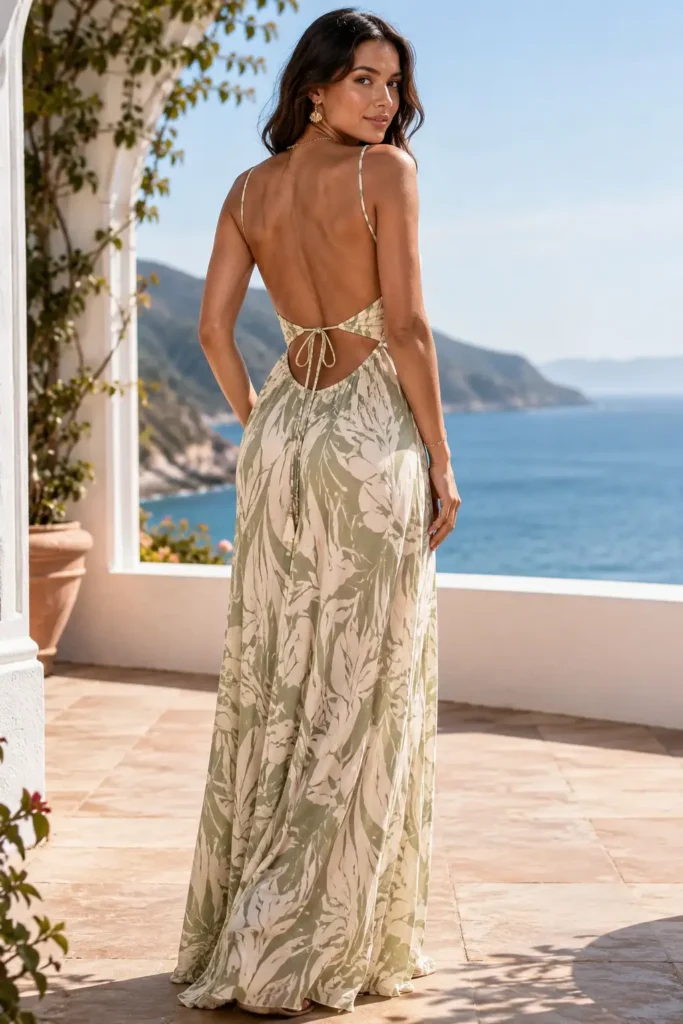
Backless Resort Dress

Wrap Resort Dress
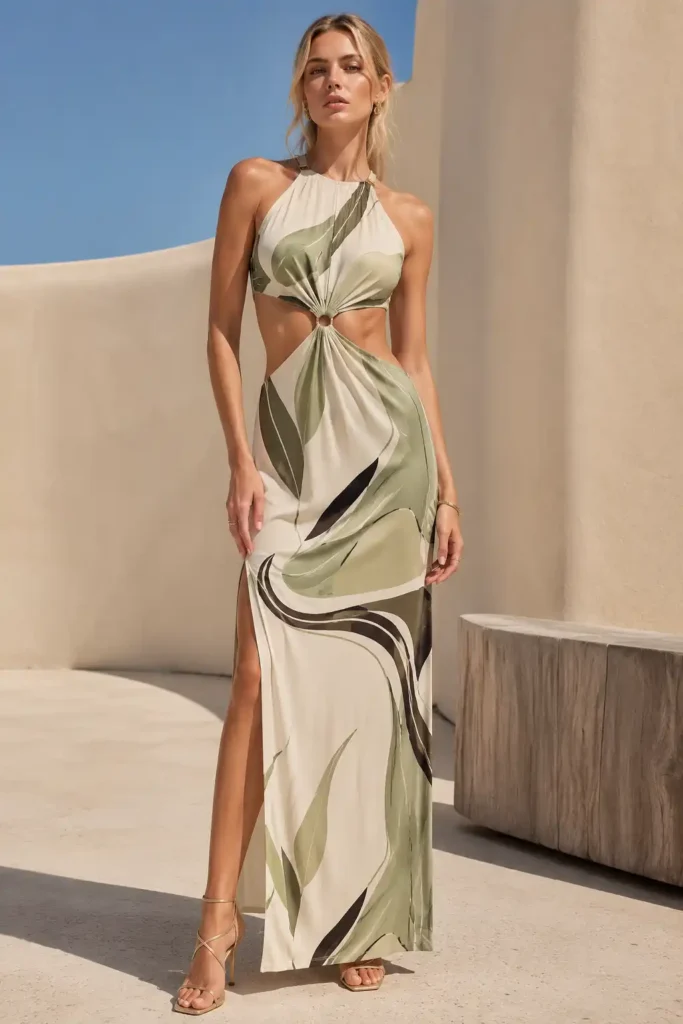
Cut-Out Resort Dress
Fabric and Print Direction for Resort Dresses
Fabric decisions control movement, coverage, shrinkage, print quality and final cost. Resortwear development begins by connecting the visual idea with measurable material behaviour and the realities of bulk sourcing.

Lightweight Woven Fabrics
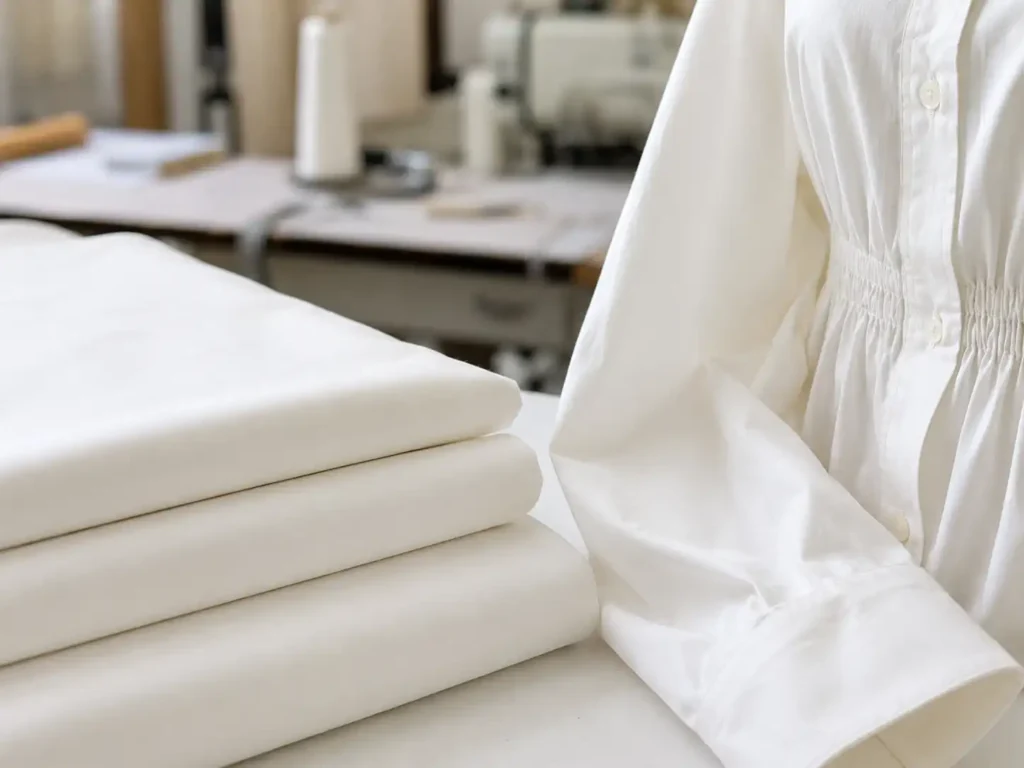
Chiffon, rayon, viscose, lightweight crepe and printed woven fabrics are frequently used for flowing resort silhouettes, but the names alone do not define performance.
Fabric weight, yarn structure, width, finish and color can change transparency, drape and sewing behaviour. A pale chiffon may need a fuller lining than a dark print.
A soft rayon can produce excellent movement while requiring shrinkage testing and careful handling before cutting. Viscose may feel fluid at sample stage but change after washing if the finishing process is unstable.
Material review therefore covers hand feel, width, weight, visible transparency, surface defects, shrinkage risk, color fastness needs, print suitability and expected fabric consumption.
The chosen fabric is compared with the silhouette: a very light cloth may not support a sharp wrap front, while a heavier crepe may reduce the airy movement expected from a full maxi skirt. Lining is selected for color compatibility, static behaviour and drape, not only opacity.
Bulk sourcing is confirmed by actual supplier availability. Stock colors can support the standard MOQ more easily, while custom dyeing may require a separate dye-lot minimum. Approved sample fabric is recorded through swatches, supplier references and project files so production teams can verify shell, lining and trim combinations before material release.
Linen and Cotton Directions
Linen, linen blends, cotton voile, cotton gauze and cotton-viscose fabrics support a natural Australian resortwear direction, yet each material creates a different balance between texture, structure and care performance.
Pure linen can provide a premium dry hand and visible slub character, but wrinkling and shrinkage must be accepted or managed as part of the design. Linen blends may offer improved drape or reduced crease intensity, though the fibre ratio and finishing process need confirmation.
Cotton voile can produce lightweight day dresses, layered skirts and soft sleeves. Light colors may require lining or double layers, while seam construction must protect against fraying and visible allowance shadows.
Cotton gauze creates an informal tactile surface but may stretch during sewing or change dimensions after washing.
Cotton-viscose blends can add fluidity while retaining a natural appearance.
Before final approval, the development team considers garment wash requirements, shrinkage allowance, seam selection, zipper or button support, pressing limits and care-label information supplied by the brand.
A fabric with strong visual appeal can still become unsuitable when the target silhouette requires sharper structure, a precise neckline or an extremely smooth printed surface.

Custom Prints and Colorways
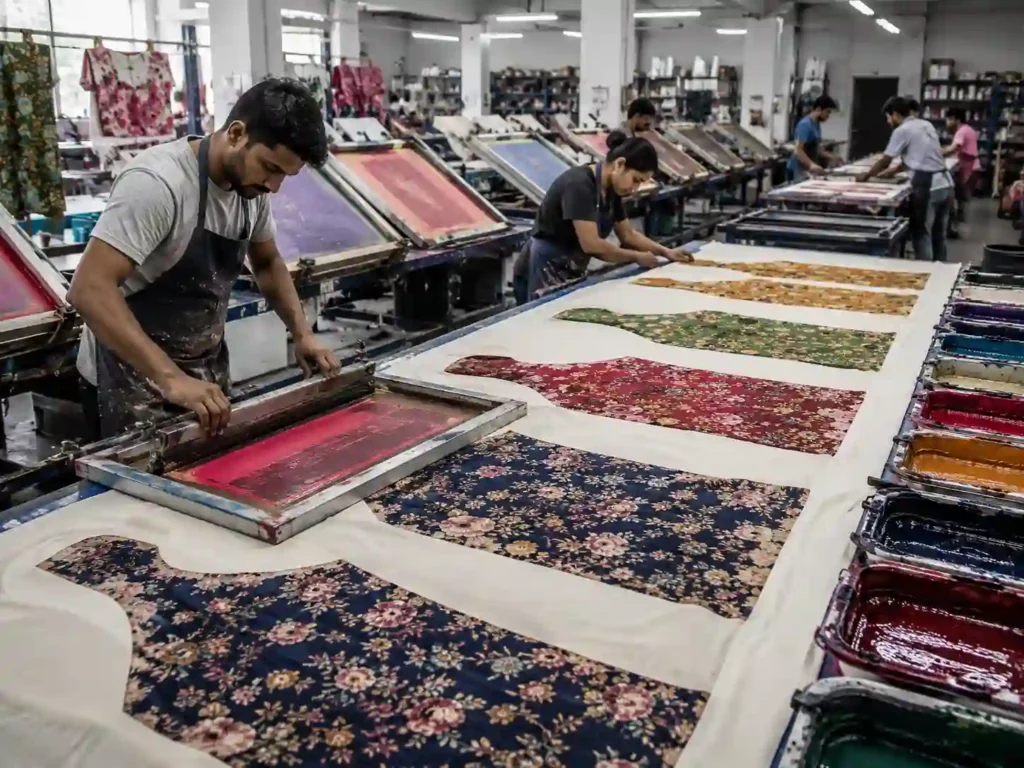
Original prints can define a resortwear collection, but the production route must be chosen before artwork is treated as final. Jinfeng Apparel reviews base-fabric composition, print repeat, motif scale, direction, color count, placement requirements and intended garment panels. Rotary, screen, digital or placement printing may have different minimums, color behaviour and artwork preparation needs. Strike-offs or lab submissions are used to review color and scale before bulk fabric is released.
Directional artwork affects marker efficiency and fabric consumption. Border prints, large florals, engineered placements and one-way motifs may require additional allowance to keep visual balance across fronts, backs, sleeves and skirts. Colorways are planned with the fabric supplier because each color or artwork version may carry its own print minimum. A program with several styles using one approved print can often be organized more efficiently than many unrelated prints with small quantities.
Print approval should cover more than a screen image. The team reviews the physical strike-off under suitable light, compares key colors against approved references, checks hand feel, tests the appearance on gathers or curved seams and confirms whether lining changes the visible depth of pale areas. Where third-party testing is required, color fastness, fibre composition or restricted-substance testing can be arranged according to the product and target market.
Fit Engineering for Flowing Resort Silhouettes
Relaxed styling still depends on accurate pattern work. Maxi length, open necklines, wraps, cut-outs and lightweight layers need measurable control so the approved sample can be repeated across sizes and bulk production.

Maxi and Midi Balance
Long silhouettes magnify small pattern and material errors. Jinfeng Apparel reviews high-point shoulder length, waist position, front and back balance, skirt sweep, slit height, lining length and finished hem before a maxi or midi dress is approved. A fabric with high drape may drop differently after hanging, while rayon and viscose can change length after moisture or washing. Sample review may therefore include hanging observation, wash testing or revised hem confirmation depending on the fabric.
Hem sweep is linked to both appearance and production. A larger sweep creates stronger movement but increases fabric consumption, marker complexity and packing volume. Narrow hems must remain smooth around curved areas. When the design includes tiers, godets or gathered panels, seam placement and distribution are checked so the garment hangs evenly without twisting.
Size grading is not limited to adding width. Length, waist position, slit level and visual proportion need rules that preserve the design across the intended range. Measurements are recorded in the size chart and inspected during bulk according to agreed tolerances. For extended size ranges, selected sizes may require additional fit review before final grading is released.
Halter and Backless Stability
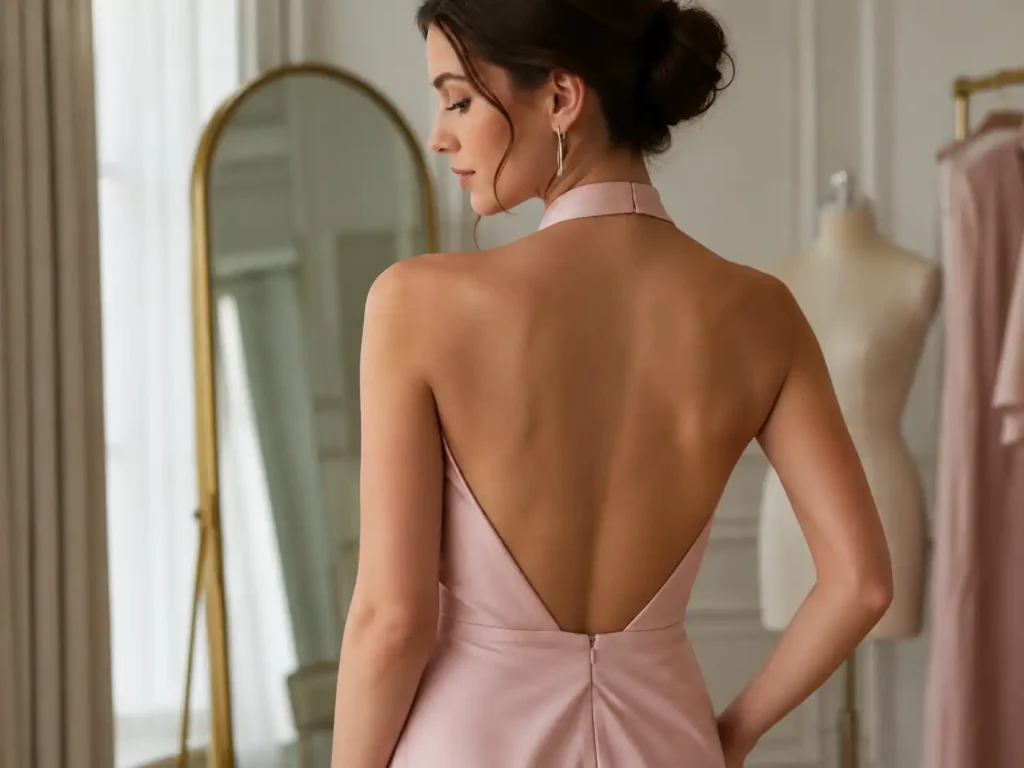
Halter and backless dresses combine strong visual openness with concentrated load at the neck, shoulders, bust and waist.
Pattern review covers upper bust, neckline depth, armhole shape, side seam height, back width, strap length, tie length and waist anchoring.
The goal is not to remove the open character; it is to make the opening deliberate and stable.
Straps are evaluated according to garment weight and fabric strength. A narrow chiffon tie requires different reinforcement from a wider linen halter band.
Stitch density, seam allowance, interfacing, elastic or internal tape may be used where needed. Bust coverage is reviewed on-body because flat measurements cannot show movement, gaping or side exposure.
For backless styles, the front pattern must remain stable without relying on a conventional back bodice. Internal construction may include elastic, facing, lining, waist seams or hidden fastening. Grading rules protect the relationship between neckline, side seam and back opening. Bulk QC records finished strap and opening measurements, while visual inspection checks symmetry, neckline smoothness and seam security.

Wrap and Cut-Out Control
Wrap fronts and cut-outs appear simple in sketches but require exact control during movement. Wrap development measures front overlap, neckline crossing, internal tie position, waist tie placement and skirt opening at sitting and walking positions. The fabric’s friction and drape affect how securely the wrap remains closed. Slippery satin or very fluid viscose may need different fastening or overlap from cotton or linen blends.
Cut-outs are mapped against body landmarks rather than enlarged mechanically from a drawing. Bust, waist and hip position influence the opening, while seam tension and edge finish determine whether it lies flat. Binding, facing, lining, elastic or concealed support can be tested during sampling. The final measurement chart may include cut-out width, height, distance from side seam and relationship to waist or bust points.
Across sizes, visual proportion must remain close to the approved base-size intent. Enlarging every opening equally can create excessive exposure, while keeping one fixed opening can make larger sizes look visually unrelated. Selected sizes may be reviewed before the full grading set is released. During production, templates, measurement points and inline checks help keep openings symmetrical and consistent.
How We Control Resortwear Production Risks

Transparency Control

Shrinkage Review
Print Direction

Travel Packing
Build a Coordinated Resortwear Dress Collection
Style Grouping
Fabric Grouping
Delivery Phases
From Resortwear Concept to Approved PP Sample
Sample development converts visual direction into a controlled production standard. Each version has a defined purpose, and final bulk production begins only after fabric, fit, construction, labels and packing are locked.
Project and Fabric Review
Development can begin from a tech pack, original sample, line sheet, sketch or reference image. The first review identifies missing information and separates visual direction from production requirements. Important fields include neckline, dress length, shell and lining, closure, seam details, print direction, target size range, quantity per style and color, label requirements and launch timing.
The team then assesses construction risk, fabric direction, trim availability, expected material consumption and whether the standard MOQ is suitable. A reference image can support an initial feasibility discussion, but it does not provide enough information for a final bulk quotation when measurements, fabric, lining or internal construction remain undefined.
For multi-style programs, samples are grouped by priority, fabric and complexity. Hero styles, photo-shoot deadlines and high-risk materials are scheduled first. Initial planning windows are confirmed after files and materials are ready. A common planning reference is 10-15 working days for a first sample, 7-12 working days for a revised sample and 7-12 working days for a PP sample; complex prints, new fabrics, handwork or incomplete files may require longer.
Fit and Revision Development
A first sample verifies basic structure, fabric direction and production feasibility. It is not automatically a bulk standard. Fit review examines bust, waist, hip, neckline, armhole, strap, back opening, slit, dress length, lining and movement according to the silhouette. Feedback is most effective when it includes measurement comments, on-body photos or video, clear issue locations and the intended result.
Revisions are documented through updated patterns, size charts, measurement records, BOM files, fabric or trim approvals and sewing instructions. Important changes should not remain only in chat messages. Each revision record identifies the issue, action, pattern impact, cost impact, lead-time impact and required approval. Factory execution errors are corrected internally; design changes, new materials or added details are assessed as new development work.
Photo samples can be developed for campaign use, but a photo-ready sample does not automatically replace a PP sample. A garment altered for photography may not contain the final bulk fabric, label, construction or packing. The production path therefore keeps photo approval and bulk approval clearly separated.
PP and Bulk Standard
The PP sample confirms the final shell fabric, lining, color, print, measurements, construction, trims, labels, hangtags and packing method. After approval, the final pattern, size chart, fabric reference, trim card, sewing instruction, label placement, packing instruction and QC checklist are transferred into the production file. A Golden sample may be retained as the highest-priority visual and construction reference for bulk inspection and repeat orders.
PP lock protects material purchasing and production consistency. Changes after approval can affect cost, lead time, material availability, cutting and finished appearance. When a change is essential, the impact is reviewed before it enters production. The change is not treated as a casual message.
Bulk planning starts from approved standards and material readiness. A common planning reference for suitable woven resort dresses is 30-45 days after PP approval and bulk material readiness. Complex multi-style programs, custom prints, special trims, extended size ranges or phased inspections may require 45-60 days. Final dates are confirmed through a project timeline rather than a universal delivery promise.

A Controlled Path from Design to Delivery
Project Review
Fabric and Pattern
Sample Development
PP Approval
Bulk Production
QC and Delivery
Quality Control for Lightweight Resort Dresses
Quality is managed through material, cutting, sewing, measurement, finishing and packing checkpoints. Lightweight fabrics and long silhouettes receive product-specific checks rather than a generic final inspection alone.
Fabric and Cutting Checks
Incoming material review covers fabric batch, shade, print, hand feel, width, visible defects and project-specific testing requirements.
Chiffon and fine woven fabrics are checked for snags, holes and surface damage. Rayon, viscose, linen and cotton-based fabrics may require shrinkage or dimensional review.
Printed fabrics are assessed for direction, repeat, strike-off match and color appearance.
Before cutting, the team confirms shell and lining combinations, approved color, marker direction, size ratio and panel requirements. Cutting inspection checks grain direction, one-way print orientation, panel count, notches, visible defects and long-dress panel alignment. Large floral or border prints may need additional control to keep the visual balance across fronts, backs and seams.
Errors discovered before sewing are less costly and easier to isolate. Cutting records therefore protect both quality and material consumption. Panels that do not meet approved direction or appearance standards are separated before they enter the line.
Inline Fit and Sewing Checks
Inline inspection focuses on features that can drift during bulk sewing: bust, waist, hip, neckline depth, strap length, side seam, slit height, lining position, zipper flatness, hem balance and seam quality. AQL or final inspection cannot efficiently correct a repeated neckline, lining or strap problem after the entire order is finished. Early checks allow the line to adjust methods, templates or operator guidance before the issue spreads.
Sewing instructions define seam type, seam allowance, stitch requirement, zipper location, tie or strap attachment, lining connection, label placement and special handling for lightweight fabrics. Halter and backless dresses are checked for reinforcement at load points. Wrap and cut-out styles are checked for overlap, symmetry and opening dimensions. Long hems are reviewed for smoothness, twisting and front-back balance.
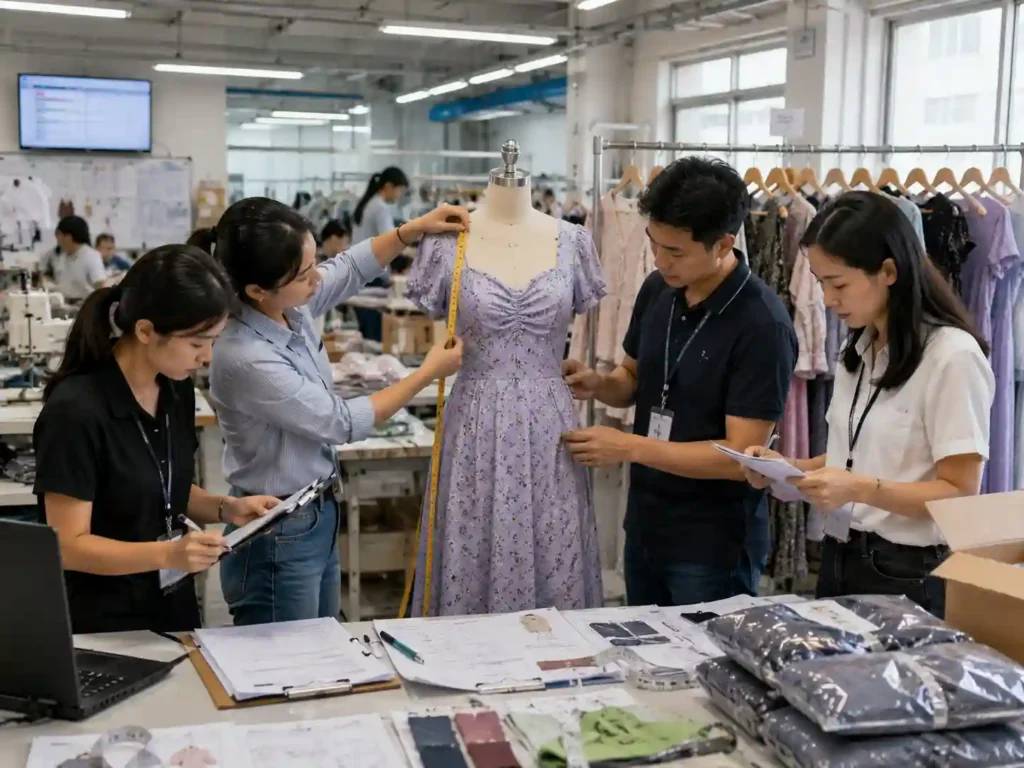
Measurement inspection follows the approved size chart and tolerance standard. The inspection plan can include base size and graded sizes according to the order. Extended size ranges, petite or tall variations and complex grading may require additional measurement points and fit confirmation before bulk release.
Final and Packing Checks
Finished garment inspection covers shade, stains, holes, snags, wrinkles, loose threads, asymmetry, seam distortion, zipper buckling, exposed lining, print placement and uneven maxi hems. Pressing is adjusted to fabric sensitivity so the final finish improves presentation without creating shine, flattening texture or damaging delicate surfaces.
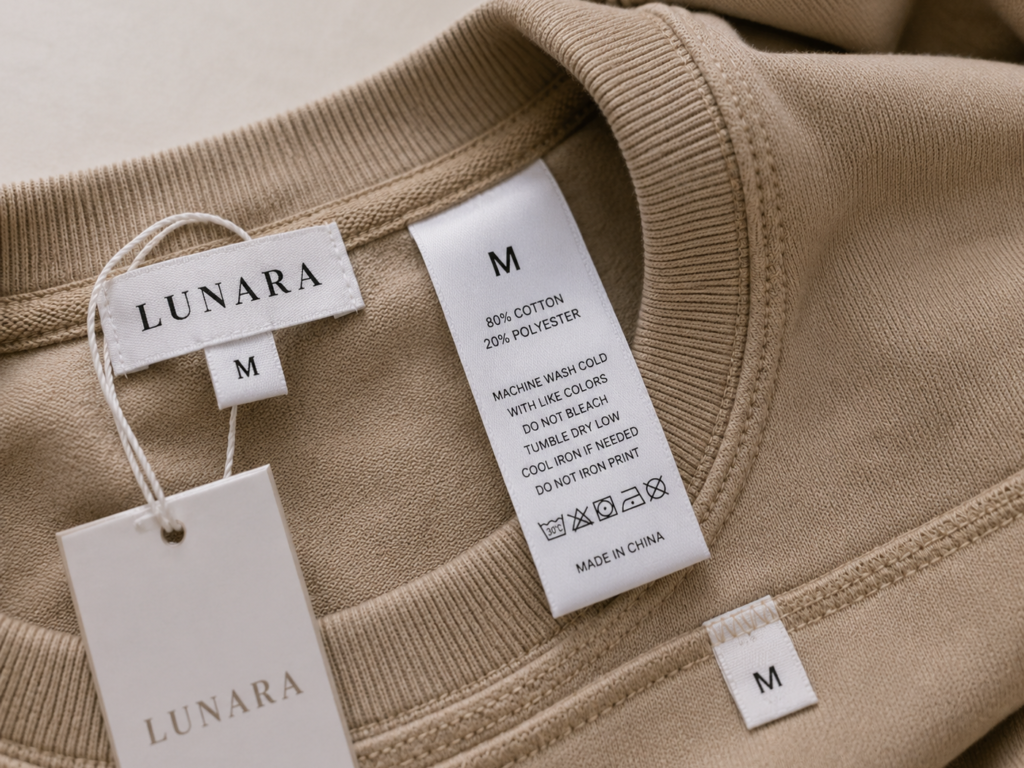
Private-label checks cover woven labels, size labels, care labels, hangtags, barcode stickers, SKU labels, polybags, size-color stickers, folding, carton quantity, carton marks and size ratios. More than 30 finishing and packing workers support trimming, pressing, labeling, barcode application, folding and carton preparation across suitable projects.
Pre-shipment inspection can follow an agreed internal standard, client-appointed inspection or AQL sampling. Jinfeng Apparel can work with SGS, Intertek, BV, ITS or another appointed company for fabric tests, garment tests, AQL inspection and pre-shipment checks. The selected standard, test items and responsibility are confirmed by project rather than represented as a universal certificate for every fabric or order.
Private-Label Delivery for Australian Fashion Programs

Brand Labels
Care Labels

Hangtags and Barcodes

Size and Color Control

Packing Standards

Shipment Documents
MOQ and Cost Planning for Resort Collections
The standard MOQ starts from 200 pieces per style and color. Material, print, trim, size and packaging decisions can create separate minimums, so an accurate quantity plan is reviewed before a final quotation is issued.
| Project Direction | Planning Basis | Main MOQ or Cost Factors |
|---|---|---|
| Stock-fabric dress | From 200 pcs per style/color | Available color, stock quantity, fabric width, lining and construction |
| Custom print | Project-specific material MOQ | Base fabric, print method, artwork repeat, colorways and strike-off |
| Custom-dyed fabric | Separate dye-lot minimum | Lab dip, color approval, minimum dye quantity and shade risk |
| Linen or rayon style | Fabric availability review | Shrinkage, batch consistency, lining, consumption and wastage |
| Multi-color style | Normally 200 pcs per color | Separate fabric, cutting, labels, SKU and QC for each color |
| Extended size range | Size ratio planned within style/color MOQ | Grading, consumption, measurement points, labels and carton ratios |
| Special trims | Supplier minimum may apply | Custom hardware, buckles, embroidery, ties, elastic and branded components |
| Custom packaging | Packaging supplier MOQ | Printed polybag, hangtag, box, tissue, stickers and carton marks |
| Complex maxi dress | Costed by construction | Fabric consumption, lining, sweep, tiers, slit, narrow hem and sewing time |
Plan Sampling and Delivery Around Your Launch
Australian resortwear launches are easier to protect when the timeline is built backwards from campaign photography, warehouse receiving and public release. Dates below are planning references, not automatic promises, and are confirmed after style files, materials and approvals are reviewed.
| Milestone | Planning Reference | Key Dependency |
|---|---|---|
| Project file review | 2-4 working days | Complete tech packs, quantities, fabrics, size range and launch date |
| First sample | 10-15 working days | Pattern complexity, material availability, print or trim development |
| Revised sample | 7-12 working days | Clear consolidated comments and approved replacement materials |
| PP sample | 7-12 working days | Final fabric, color, trims, measurements, labels and packing |
| Bulk material preparation | Project-specific | Stock fabric, custom print, dyeing, supplier MOQ and testing |
| Bulk production | 30-45 days for suitable programs | PP approval, material readiness, line allocation and order scale |
| Complex multi-style production | 45-60 days may be required | Custom prints, special trims, extended sizes, phased QC or handwork |
| Final QC and packing | 5-10 working days within final schedule | Inspection standard, garment quantity, barcode and packing matrix |
| Freight to Australia | Quoted by route | Express, air, sea, port, destination, season and forwarder capacity |
Frequently Asked Questions for Resortwear Labels
Jinfeng Apparel develops maxi, midi, mini, halter, wrap, backless, cut-out, slip, A-line, printed, chiffon, rayon, linen-blend and other fashion resort dresses. Coordinated skirts, tops, matching sets and lightweight jumpsuits can also extend a dress-led collection. Each style is reviewed for fabric suitability, fit, construction, sample requirements and bulk risk before production.
The standard MOQ starts from 200 pieces per style and color. One style in two colors normally requires each color to meet the relevant MOQ. Custom printing, custom dyeing, certified materials, special trims and custom packaging may have separate supplier minimums. Multi-style collections are evaluated through a line sheet and quantity breakdown rather than one combined total.
Yes. Jinfeng Apparel can source chiffon, rayon, viscose, linen, linen blends, cotton blends, lightweight crepe and printed woven fabrics according to the style and target quality. Availability, color, width, weight, shrinkage, lining need and supplier MOQ are reviewed before final approval. Material claims and certificates are confirmed by actual supplier, batch and project.
Yes. Print development can cover artwork review, repeat scale, colorway planning, strike-off approval, print direction and garment placement. The suitable route depends on base fabric, print method, artwork complexity, color count and quantity. Custom prints often have an independent material MOQ, so the print plan should be submitted together with the style and quantity breakdown.
Transparency is reviewed by shell color, fabric weight, lighting and garment area. The team evaluates lining color, lining length, double layers, seam shadows and coverage around bust, hip and upper thigh. Pale colorways may require a different lining solution from dark prints using the same fabric. Final approval is confirmed through the sample and PP process.
Yes. Pattern review can cover upper bust, neckline depth, armhole, side seam height, back opening, strap length, tie length and waist anchoring. On-body photos or video help identify gaping, exposure and movement issues. Revisions are transferred into the pattern, size chart, sewing instruction and PP comments before bulk production.
The sample path may include a first sample, fit sample, revised sample, photo sample, salesman sample, PP sample and Golden sample. Not every project needs every type. Bulk production follows the approved PP standard, supported by final pattern, measurements, fabric and trim references, sewing instructions, label placement, packing requirements and QC checklist.
Yes. Support can include woven labels, size labels, care labels, hangtags, hang strings, barcode stickers, SKU labels, polybags, tissue, stickers, cartons, carton marks and warehouse labels. Files, positions, assortment ratios and packing instructions must be approved before bulk packing. Packaging suppliers may apply separate minimum quantities.
Yes. Jinfeng Apparel can coordinate with a nominated forwarder or provide express, air, sea, FOB, DDP-by-project and split-shipment options for comparison. Support can include invoice, packing list, carton data, carton marks, booking coordination and shipment photos. Final route, cost, transit time and import requirements are confirmed for the specific destination and order.
Yes. Jinfeng Apparel supports multi-style seasonal programs, phased production, repeat orders and replenishment. Final patterns, measurement files, fabric references, trim details, sewing instructions, packing requirements and Golden sample records can be retained for later production. Repeat orders still require material, color, capacity and timing confirmation before release.

Start Your Australian Resortwear Dress Project
Send enough project information for a focused review of style structure, fabric direction, MOQ, sampling, bulk timing and private-label delivery. A complete brief allows the development team to identify risks before material purchasing and provides a stronger basis for quotation. Useful files include a tech pack, line sheet, original sample or clear reference images.
Please also include the planned quantity per style and color, preferred fabrics or print artwork, size range, labels, barcode or packaging requirements, campaign date and required receiving location in Australia. Jinfeng Apparel will review the information, identify missing details and propose the next development or quotation step. NDA-based cooperation is available for tech packs, unpublished styles, labels, packaging files and order information.
- Reference image, tech pack, original sample or line sheet
- Quantity per style and color, including planned size ratio
- Fabric preference, print artwork, color direction and lining needs
- Target size range and any petite, tall or extended-size requirements
- Brand labels, care labels, hangtags, barcodes and packing instructions
- Photo-shoot date, launch date and required Australian delivery location


