
Dress Manufacturer for Australian Partywear Brands
Custom partywear development built around strong silhouettes, controlled fabrics, production-ready samples and reliable bulk execution for established Australian fashion labels.
- 18+ sewing lines: woven, stretch and detail-led partywear programs can be allocated by fabric, structure and launch priority.
- 2 sample rooms: first samples, revised samples and PP approvals are managed before bulk standards are released.
- 100,000+ pcs monthly capacity: multi-style collections and repeat programs can be planned across owned and long-term production resources.
- MOQ from 200 pcs per style/color: final quantity depends on fabric availability, color development, trims, construction and packing requirements.
Jinfeng Apparel supports satin minis, mesh bodycon dresses, corset silhouettes, ruched styles, sequined event dresses, cocktail midis and private-label partywear. The process covers fabric direction, pattern development, fit correction, sample revision, PP approval, bulk production, in-line inspection, retail packing and export coordination to Australia.
Manufacturing Scale Behind Partywear Programs
Since 2008
Six Owned Factories
Ten-Plus Partners
Two Sample Rooms
Fifteen-Plus QC
100,000+ Monthly
Is Jinfeng the Right Manufacturing Fit?
Best Fit For
- Seasonal collections containing 10-30 styles
- Multi-color and multi-size partywear programs
- Satin, mesh, lace, sequin, velvet and structured dresses
- Private-label packing, SKU control and warehouse preparation
- Long-term development, repeats and new-color extensions
Not Designed For
The production model is not built around ready stock, one-piece fulfillment, personal made-to-measure garments or projects without a batch-production plan. A clear boundary allows sample rooms, pattern teams, production lines and QC resources to remain focused on brand-level development and repeatable bulk standards.
- Ready-stock dress purchasing
- Dropshipping or single-item fulfillment
- No-MOQ requests
- One-off personal customization
- Projects driven only by the lowest quoted price
Where Partywear Production Usually Loses Control
Sample-Bulk Gap
Unstable Body Fit
Fabric Performance
Construction Drift
Launch Pressure
Packing Errors
Partywear Dresses Built for Commercial Impact

Satin Mini Dress
- Best for: cocktail, birthday and evening drops
- Key control: satin weight, lining and zipper behavior
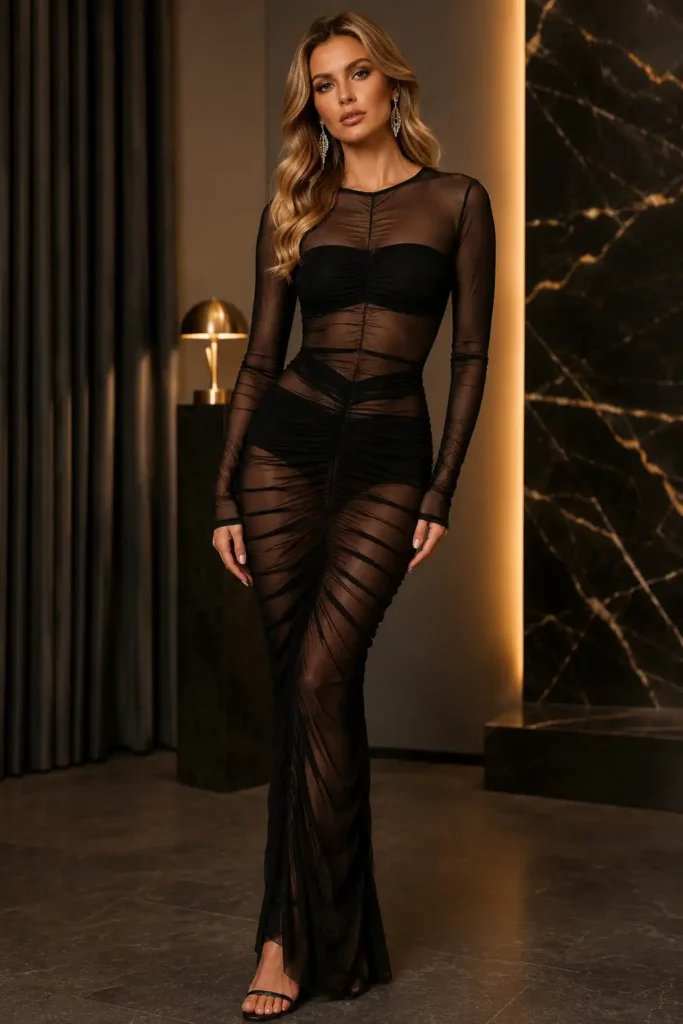
Mesh Bodycon Dress
- Best for: club, birthday and statement partywear
- Key control: opacity, recovery and side-seam balance

Sequin Party Dress
- Best for: festive and holiday collections
- Key control: attachment, comfort and surface protection
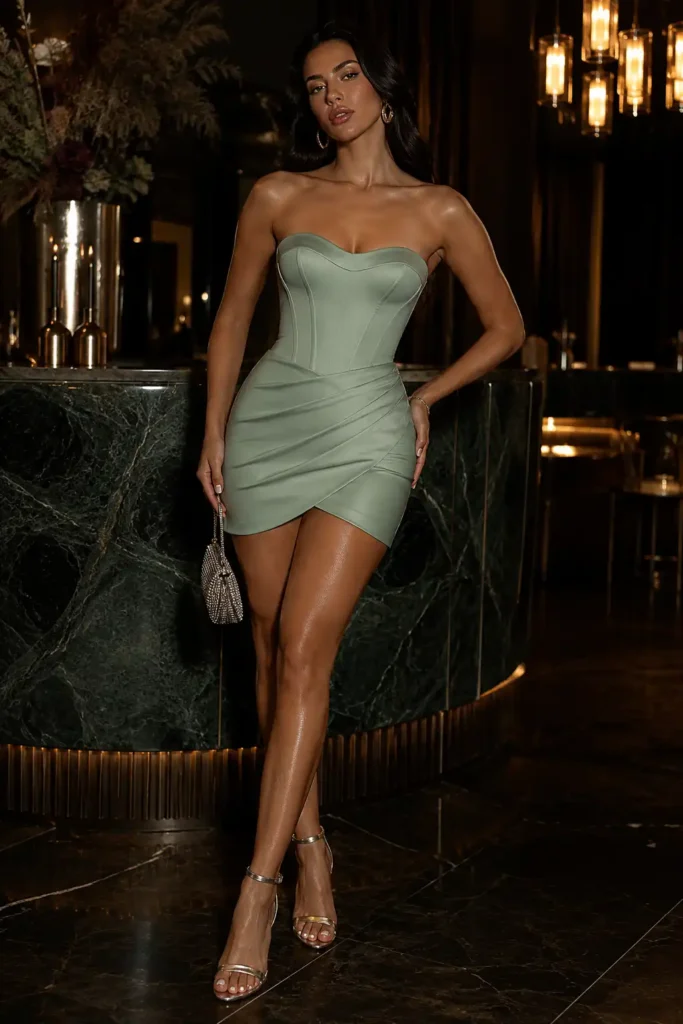
Corset Mini Dress
- Best for: structured party and eventwear
- Key control: cup position, boning and neckline security

Ruched Mini Dress
- Best for: bodycon and social-event capsules
- Key control: gathering ratio and finished length

Cut-Out Dress
- Best for: statement mini and midi styles
- Key control: edge stability and coverage

Halter Party Dress
- Best for: summer party and event dressing
- Key control: front support and strap comfort

Strapless Dress
- Best for: cocktail and elevated partywear
- Key control: grip, support and top-edge balance

Cocktail Midi Dress
- Best for: eventwear and premium ecommerce
- Key control: proportion, drape and finishing

Lace Party Dress
- Best for: cocktail, romantic and occasion ranges
- Key control: motif placement and lining relationship
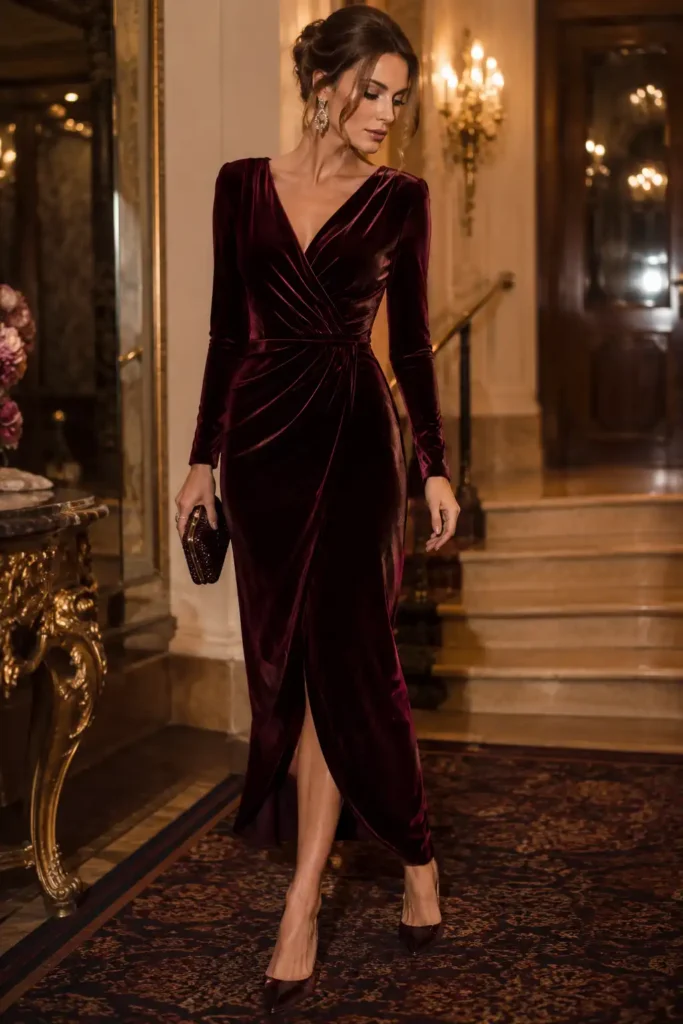
Velvet Evening Mini
- Best for: winter party and holiday programs
- Key control: nap direction and pressure protection

Party Jumpsuit
- Best for: eventwear alternatives and capsule programs
- Key control: torso balance and rise comfort
Plan Production Around Australian Launch Dates
A reliable schedule starts from the warehouse or launch date and works backward through dispatch, packing, bulk completion, QC, PP approval, revisions and material booking. The planning ranges below are used as a working framework and are confirmed after style review.
| Planning Stage | Typical Working Allowance | What Must Be Locked | Main Partywear Risk |
|---|---|---|---|
| Project review | 2-5 working days | Style files, quantity plan, size range, target date | Incomplete construction or material direction |
| Fabric and trim review | 5-20 working days by material | Fabric quality, color, lining, trims, MOQ | Special color, lace, sequin or custom trim delay |
| First sample | 10-20 working days after materials | Base pattern, construction, initial fit | Complex corset, sequin or special finish may require longer |
| Revision sample | 7-15 working days | Fit comments, measurement changes, corrected details | Late or conflicting feedback |
| PP approval | 3-7 working days after final checks | Final sample, BOM, measurements, label and packing | Production release before all details are approved |
| Bulk production | 35-55 days after PP and material readiness | Material booking, line plan, QC checkpoints | Peak season, embellishment or multi-color complexity |
| Packing and dispatch | 3-7 working days | SKU list, barcode, polybag, carton marks, forwarder booking | Mixed sizes, wrong labels or missed cut-off |
Fabrics Chosen for Impact and Bulk Stability

Satin
- Use for: cocktail, slip, ruched and statement dresses
- Approve: weight, sheen direction, lining and color standard
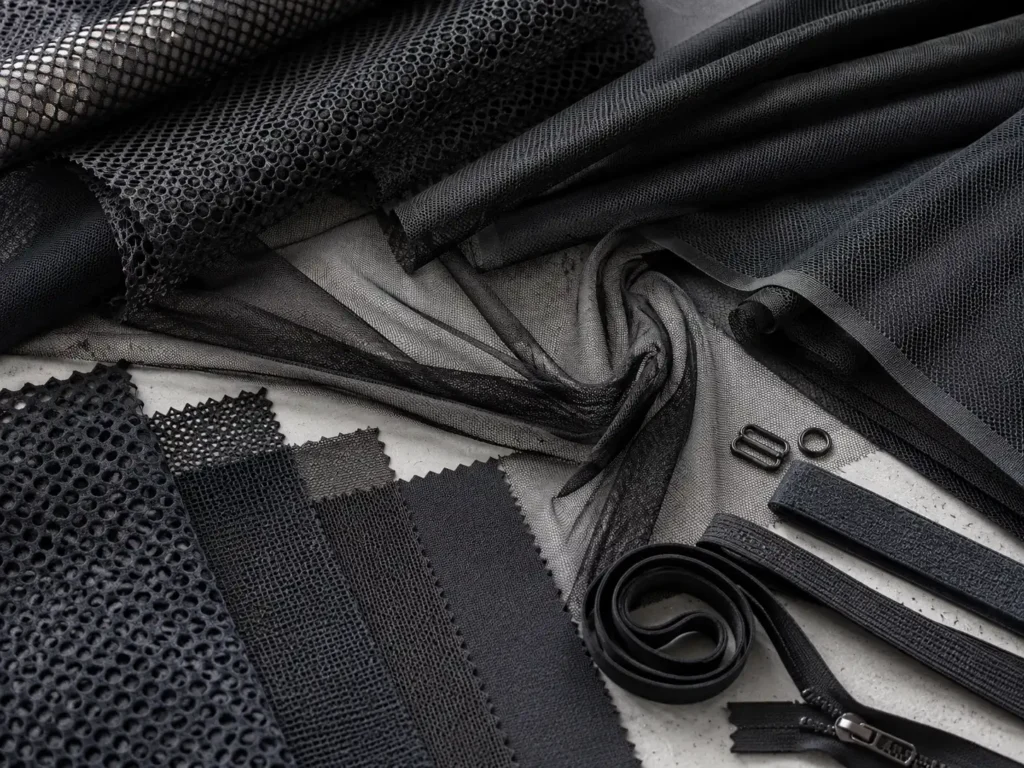
Stretch Mesh
- Use for: bodycon, cut-out and layered partywear
- Approve: opacity, stretch direction and lining length
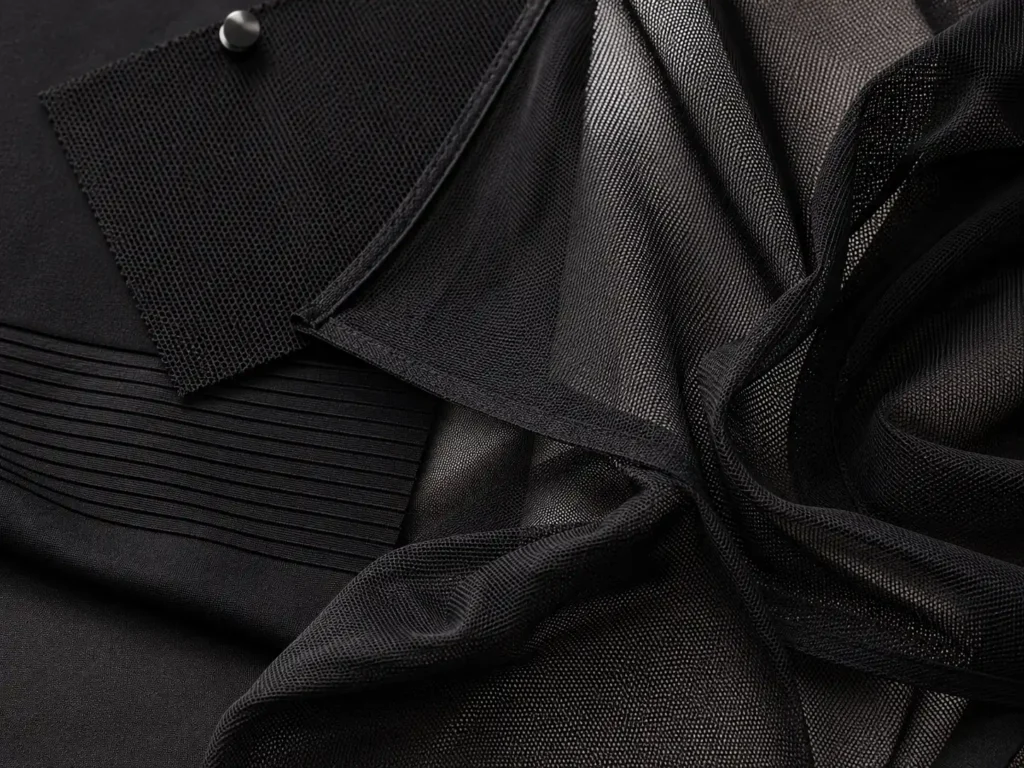
Power Mesh
- Use for: corset, shaping and support panels
- Approve: compression feel, recovery and seam placement
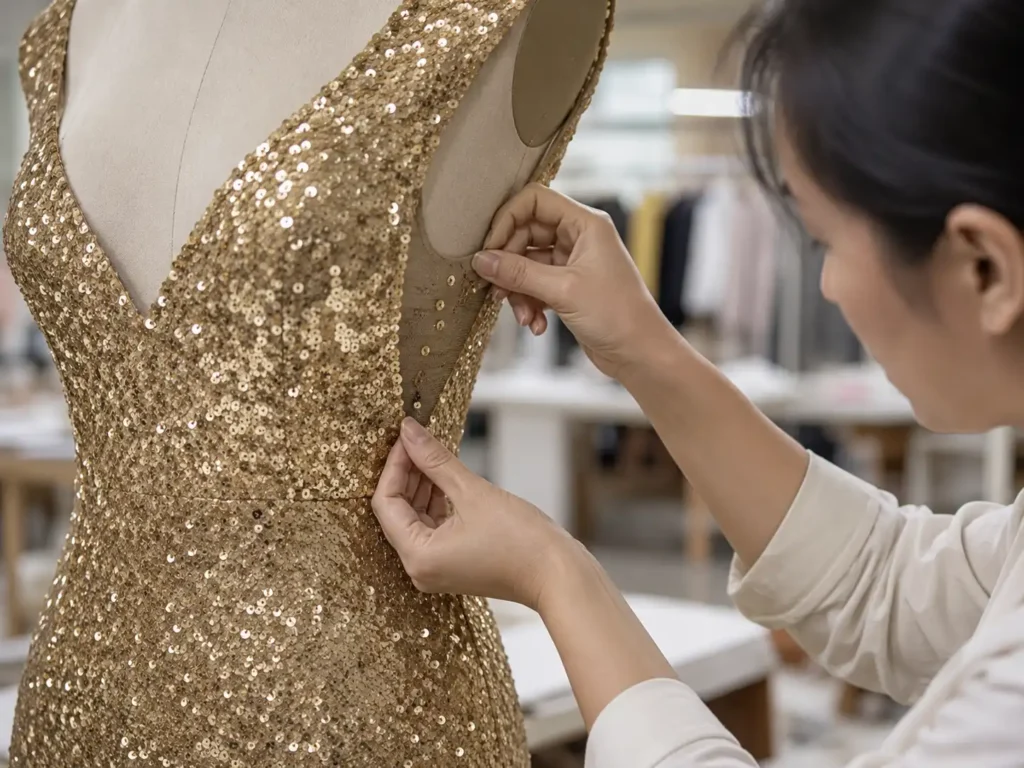
Sequin Fabric
- Use for: festive, holiday and high-impact styles
- Approve: sequin direction, backing, comfort and protection

Lace
- Use for: cocktail, feminine and lingerie-inspired styles
- Approve: motif, width, lining color and placement

Velvet
- Use for: winter party and evening collections
- Approve: nap, shade, stretch and packing method

Chiffon
- Use for: draped, layered and occasion styles
- Approve: transparency, lining, layer balance and hem finish
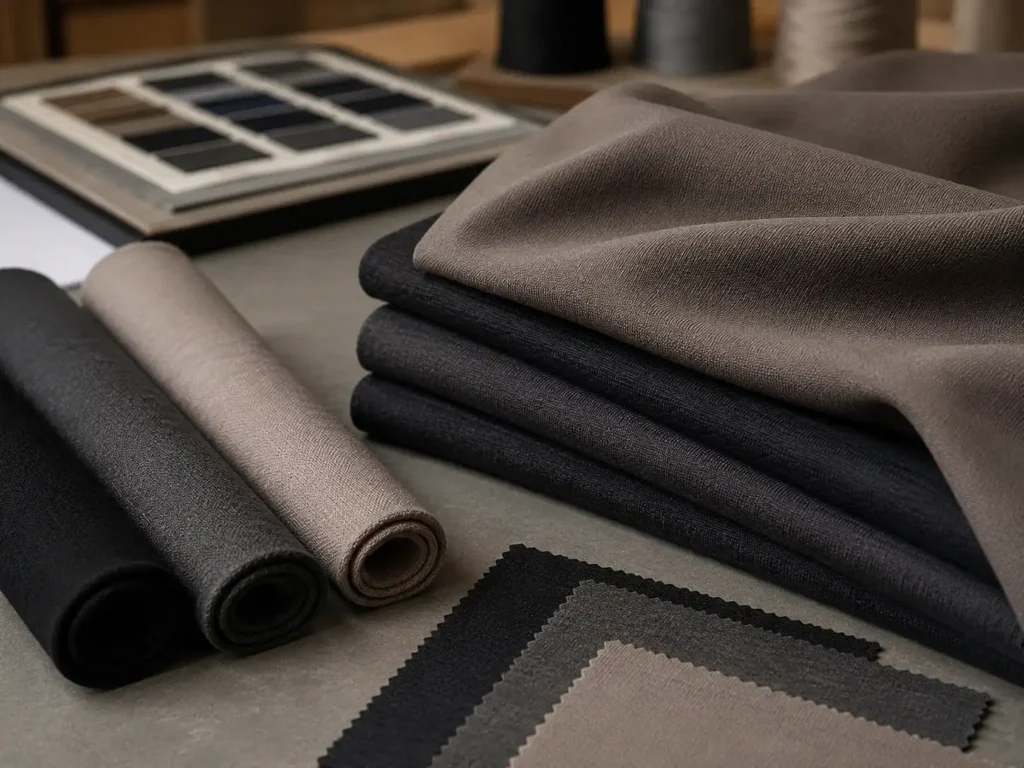
Jersey and Ponte
- Use for: bodycon, ruched and structured knit dresses
- Approve: weight, recovery, opacity and measurement behavior
Fit Engineering for High-Impact Partywear Silhouettes

Bodycon Fit
- Measure: bust, waist, hip, length and sweep
- Validate: stretch recovery and movement

Corset Fit
- Measure: upper bust, under bust, cup and waist
- Validate: support, comfort and neckline security

Strapless Fit
- Measure: upper bust, full bust and bodice length
- Validate: grip, movement and top-edge balance

Halter Fit
- Measure: neck strap, upper bust and armhole
- Validate: tension, coverage and comfort
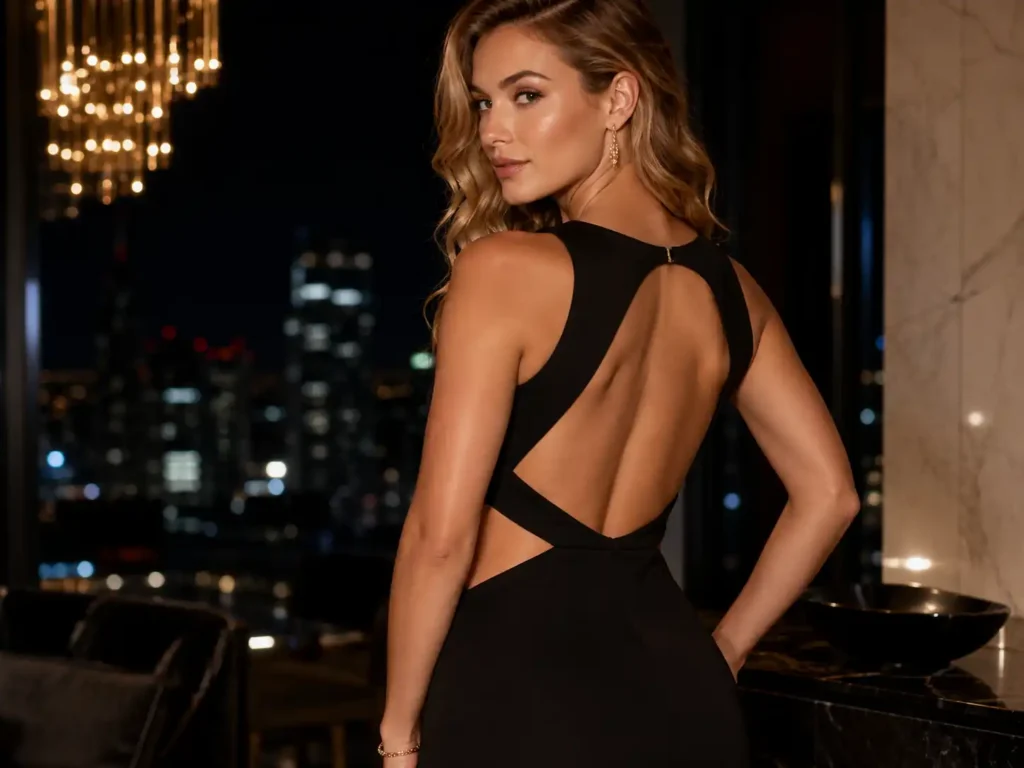
Backless Fit
- Measure: side depth, back drop and torso length
- Validate: front support and side stability
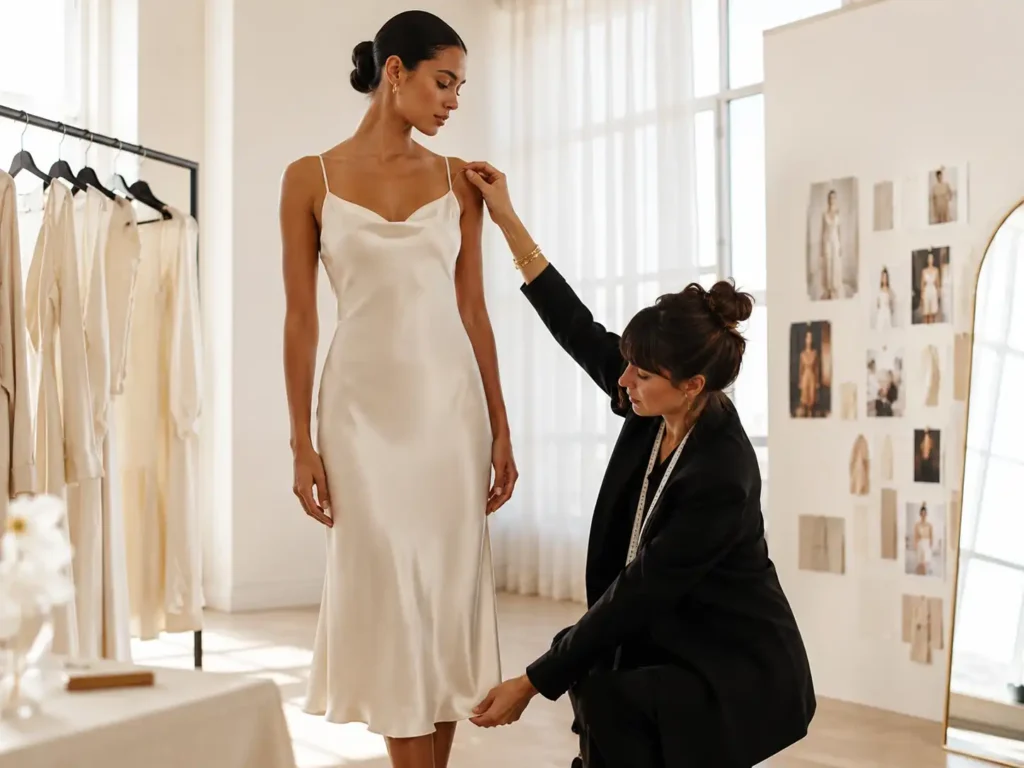
Slip Fit
- Measure: bust, strap, waist, hip and length
- Validate: drape, neckline and hanging balance

Ruched Fit
- Measure: base length, gathered length and hip
- Validate: symmetry and finished proportion

Midi Fit
- Measure: waist, hip, front/back length and slit
- Validate: walking comfort and balanced hem
Construction Details That Protect Fit and Finish
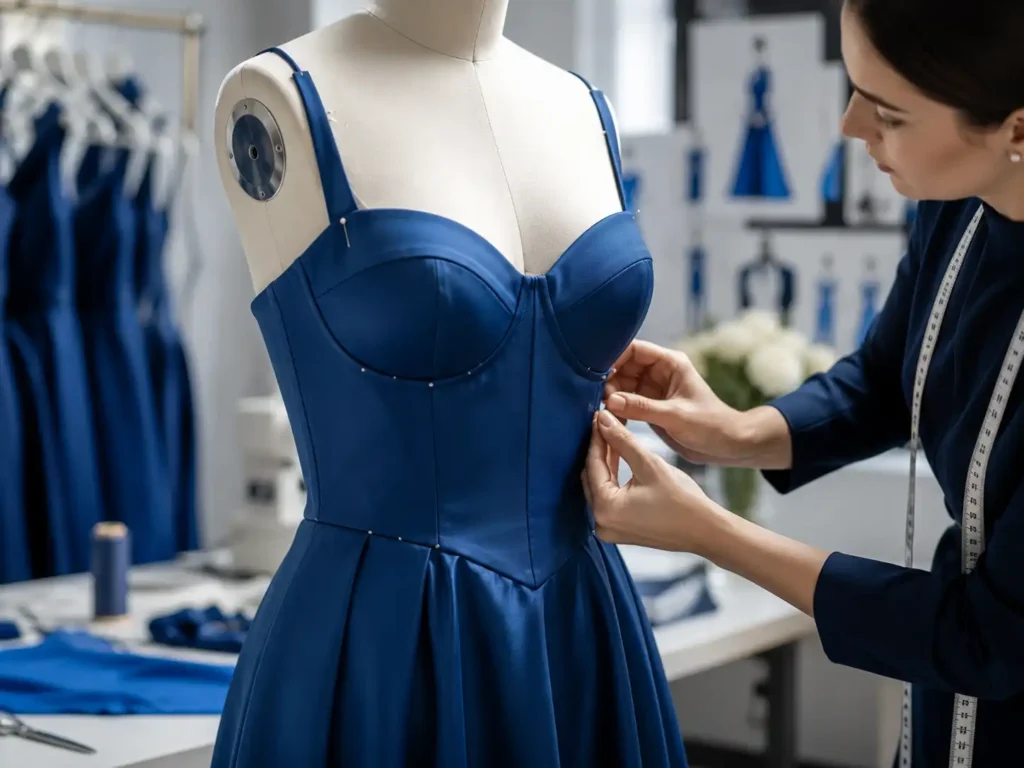
Bust Support
- Control: cup size, position, attachment and lining
- Risk: weak support, visible edges or uneven shape

Boning Structure
- Control: material, length, channel and end finish
- Risk: poking, twisting or uneven bodice shape

Straps and Sliders
- Control: width, adjustment range and attachment
- Risk: slipping, twisting or uneven neckline
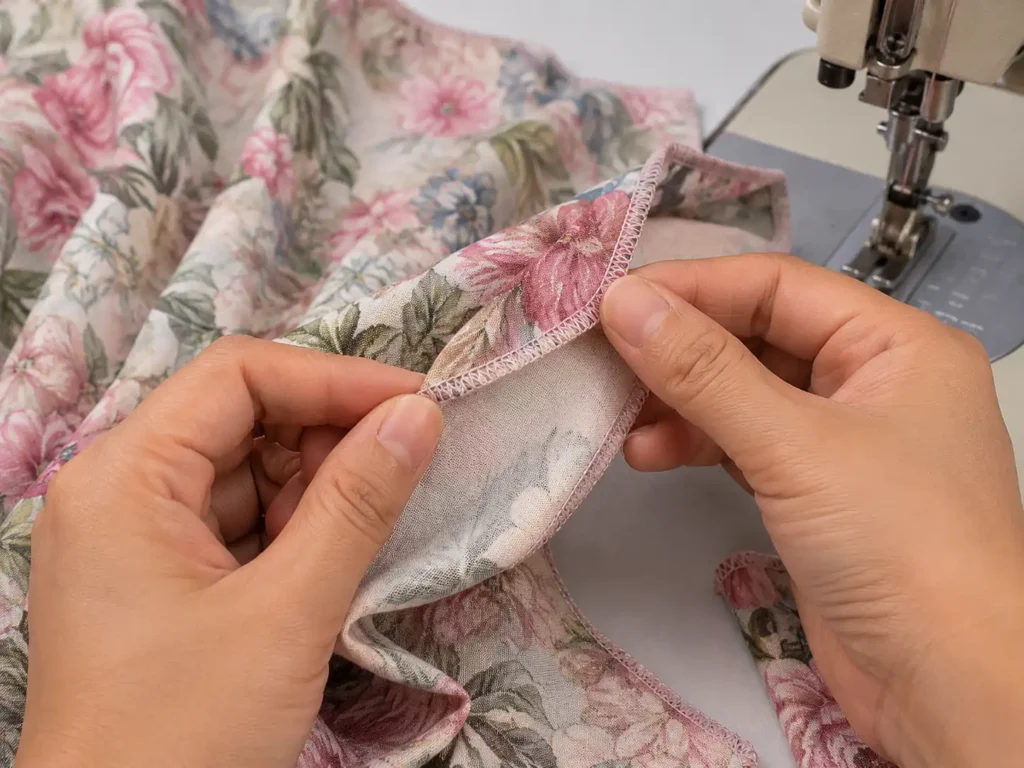
Cut-Out Edges
- Control: edge method, reinforcement and opening size
- Risk: stretching, rolling or excessive exposure

Ruching and Slits
- Control: gathering ratio, symmetry and slit height
- Risk: uneven length, twisting or weak seam strength

Zippers and Trims
- Control: specification, color, position and durability
- Risk: zipper waves, loose trims or skin irritation
Sampling Built Around Production Readiness
A partywear sample is a technical decision tool, not only a presentation garment. Structure, fabric, fit, cost and repeatability are reviewed in stages so unresolved risks do not move directly into bulk.

Project and Style Review
Development can begin from a tech pack, reference image, original sample, sketch or line sheet. The review covers construction, fabric direction, lining, trims, target quantity, color plan, size range and required launch date.
When details are incomplete, Jinfeng identifies the missing decisions before confirming sample cost and schedule.
Complex areas such as corset support, mesh transparency, sequin handling and cut-out stability are flagged at the beginning rather than after the first sample is finished.
- Input review: style files, measurements, materials, quantities and packing requirements.
- Risk review: fit, transparency, support, stretch, surface damage and production feasibility.
- Planning output: sample path, material actions, clarification list and provisional working schedule.

First Sample and Fit Correction
The first sample validates silhouette, fabric response, key construction and initial measurements. It is not treated as automatic approval. The brand can return a measurement sheet, fit photos, on-body video and written comments. Jinfeng’s pattern team reviews whether a problem comes from the pattern, fabric, sewing method, trim choice or wearing expectation. Corrected points are entered into a revision record so feedback is not lost between sample rounds.
- Simple party styles: a first sample commonly requires about 10-15 working days after approved materials are available.
- Complex styles: corset, heavy sequin, placement lace or special-dyed programs may require about 15-25 working days.
- Revision stage: a corrected sample commonly requires about 7-15 working days after clear consolidated comments are received.

PP Approval and Golden Standard
The PP sample is reviewed against the final pattern, measurement chart, approved fabric, lining, trims, construction, labels and packing details.
A Golden sample may be sealed for complex or long-running programs. Production is released only when open issues are closed or formally recorded.
The approved sample becomes a working comparison for first-piece review, in-line inspection, finishing and final garment assessment.
- Locked files: final pattern, graded measurements, BOM, trim card and sewing instructions.
- Locked appearance: fabric, color, lining, placement, finishing and pressing standard.
- Locked brand details: labels, hangtags, barcode position, folding and polybag method.
Managing Multi-Style Partywear Collections
Fabric Groups
Fit Families
Complexity Levels
Hero Priorities
Approval Tracking
Production Allocation
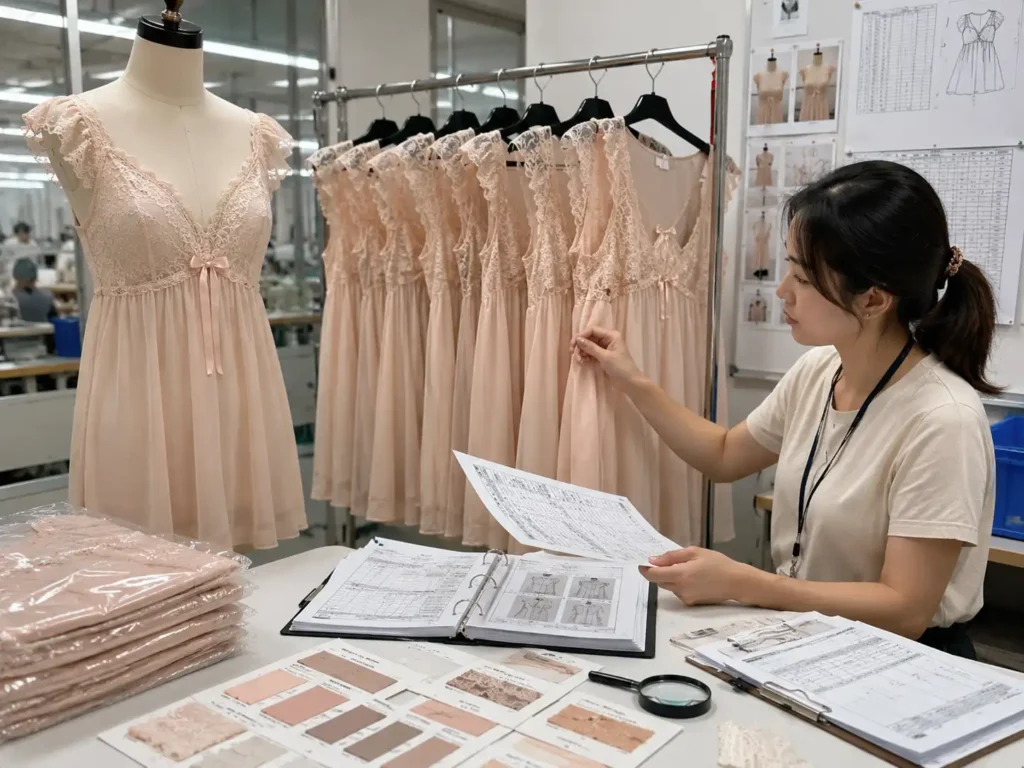
From Approved Sample to Repeatable Bulk Standards
The most important transition happens after sample approval. Development knowledge must move into production files, line instructions, QC measurements and packing standards so the bulk team is not required to reinterpret the design.
- Development Files Are Finalized
Pattern corrections, size chart, grade rules, BOM, fabric reference, trim specifications and construction notes are reviewed as one production package. Any approved exception is recorded. A style is not released only because the appearance is acceptable; the information needed to reproduce the garment must also be complete. For stretch and bodycon products, the final measurements are connected to the approved fabric performance. For satin, lace and sequin products, handling and placement instructions are added to the file. - Instructions Move to Production
The assigned production team receives the approved sample, technical files, sewing sequence, critical measurements, label positions and packing instructions. A first-piece review checks whether the production interpretation matches the development standard. Open points are corrected before the full line continues. The handover also identifies areas requiring stronger inspection, such as neckline stability, zipper flatness, ruching symmetry, cut-out dimensions, lining coverage or sequin protection. - Bulk Standards Remain Traceable
PP or Golden samples, fabric references, trim cards and QC records remain available through production. When a repeat order begins, Jinfeng reviews current fabric batch, color, trims, measurements and packaging rather than assuming every input is unchanged. Pattern and order records support repeatability, while a new material, new color or expanded size range is assessed for its effect on fit and construction before production resumes.
Capacity Planned by Complexity and Launch Priority
Factory Allocation
Line Planning
Sample Resources
Project Follow-Up
Quality Resources
Packing Support
Workmanship Controls for Complex Partywear Materials
Complex materials need dedicated cutting, sewing, finishing and packing controls. The aim is not decorative language about craftsmanship, but a clear explanation of how common failure points are prevented or identified during production.
Satin Cutting, Sewing and Pressing
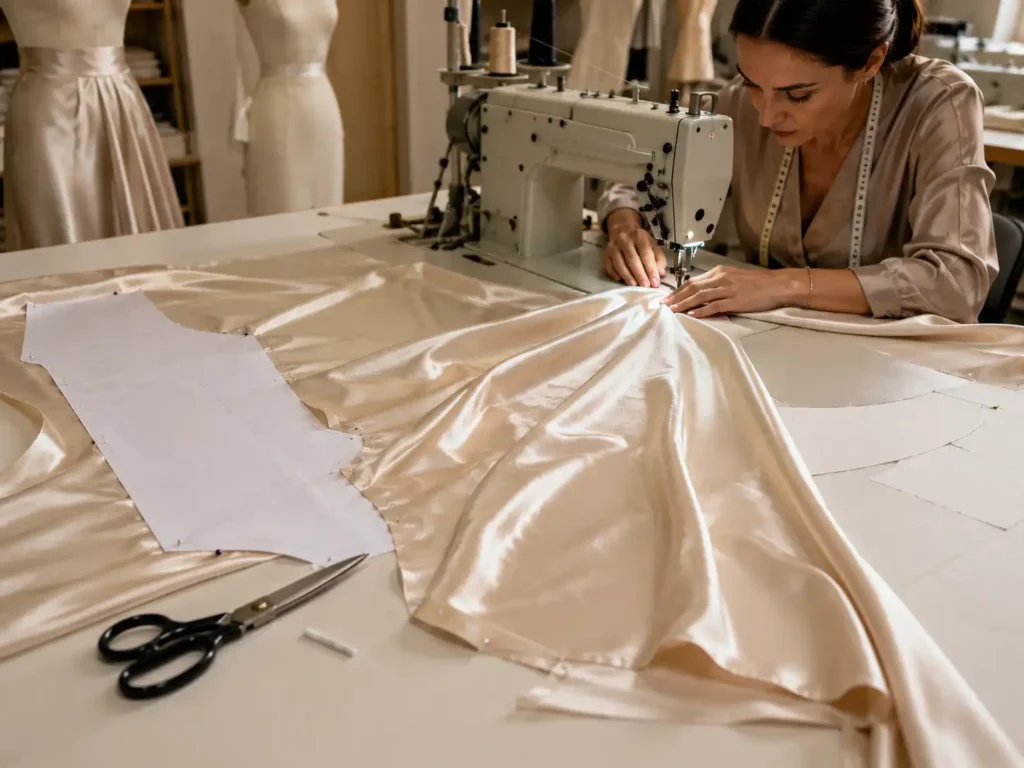
Satin is laid and cut with attention to grain and surface direction because a reversed panel can look like a different color under light. Cut pieces are protected from rough surfaces and sharp contact. Sewing tension, needle selection, seam allowance and handling are adjusted to reduce puckering and pulled threads. Invisible zipper areas are stabilized so the zipper lies flat rather than arching away from the body. Pressing uses controlled heat and pressure to avoid glazing, seam impressions or water marks. Finished garments are checked under consistent lighting for shade, surface damage and unwanted shine before folding.
- Critical approval: satin weight, sheen direction, lining color, zipper and pressing standard.
- In-line focus: seam puckering, zipper waves, snagging, handling marks and hem balance.
- Packing focus: fold lines, surface contact, hardware protection and carton pressure.

Mesh and Lace Construction
Stretch mesh is checked for direction, recovery and hole risk before cutting. Double-layer areas are aligned to prevent twisting, while neckline binding and elastic edges are controlled against the approved stretch. Lining patterns are reviewed separately because a few centimeters can change the intended coverage. Lace requires attention to width, motif direction, placement and edge behavior. Important bodice panels may need mapped motifs, while seam allowances and lining color are chosen to keep internal construction visually clean. Production inspection looks for holes, pulled yarns, stretched edges, fraying and misaligned placement.
- Critical approval: opacity, lining coverage, motif position, edge method and recovery.
- In-line focus: neckline stretching, holes, layer twisting, fraying and uneven lace placement.
- Finishing focus: loose threads, pressing temperature and smooth layer alignment.
Sequin and Embellishment Control
Sequin fabric is assessed for backing, direction, density, weight and flexibility. Where sequins enter seam allowances, selected areas may require controlled removal or careful seam planning to reduce bulk and needle breakage. Lining and internal finishing prevent rough contact against skin. Rhinestones, chains, beads or decorative elements are checked for position and attachment method, while spare materials may be retained for production repair. Garments are cleaned carefully because loose threads and missing sequins are more visible under event lighting. Packing separates abrasive surfaces and protects structured areas from crushing.
- Critical approval: decoration map, lining, seam method, zipper area and skin-contact finish.
- In-line focus: missing pieces, loose attachments, seam thickness, broken backing and symmetry.
- Packing focus: surface-to-surface abrasion, snagging and compression damage.
Corset and Structured Styles
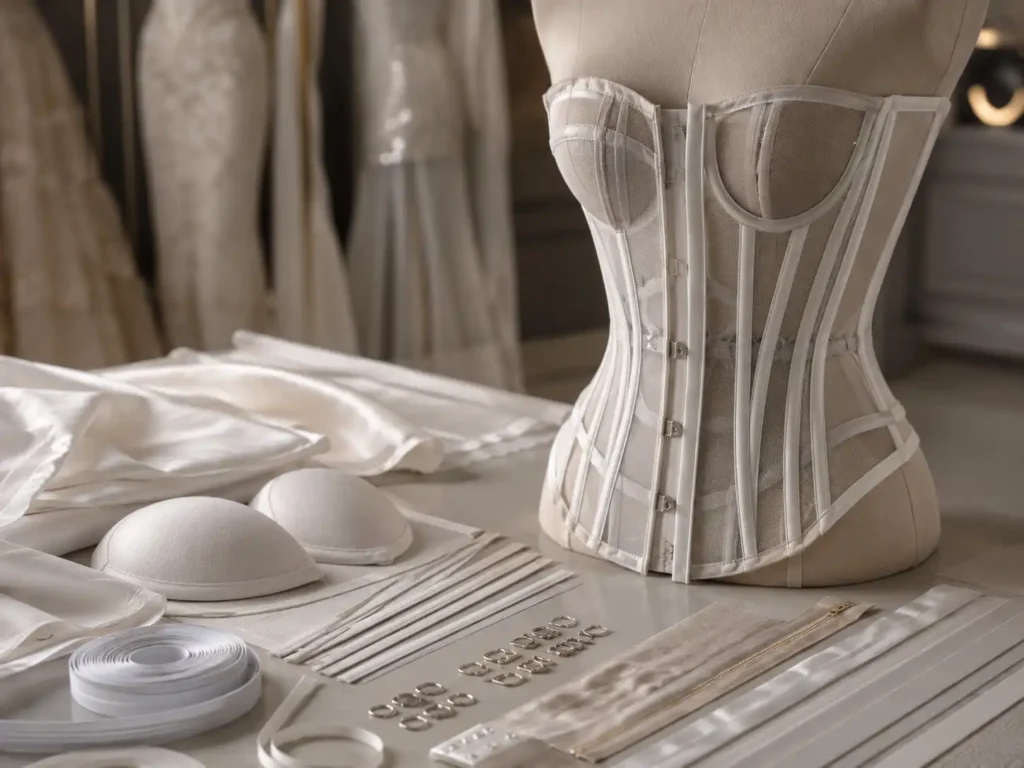
Structured partywear combines fabric, lining, cups, boning, underwire, anti-slip tape and closure systems. The internal construction is assembled in a defined order so the bodice remains balanced. Boning channels are positioned against seam lines and pressure points, while ends are protected. Cup placement, neckline height and waist shaping are reviewed on body. During bulk, first-piece and in-line checks compare left-right symmetry, cup height, boning direction, zipper or hook closure and internal cleanliness. Pressing is controlled to avoid flattening cups or creating visible marks through the outer fabric.
- Critical approval: cup, boning, waist, lining, neckline and closure standard.
- In-line focus: symmetry, support, twisting, pressure points and closure alignment.
- Final focus: shape retention, comfort, clean interior and protected packing.
Quality Control from Material to Final Packing
Partywear QC follows the risk profile of each style. Measurement, appearance, stretch, surface protection, labels and packing are checked through defined stages rather than left to one final inspection.
| QC Stage | Core Check | Partywear Risk | Working Evidence |
|---|---|---|---|
| Incoming material | Weight, shade, stretch, recovery, surface defects, lining and trim match | Shade variation, weak recovery, snagging, holes or wrong accessory | Material inspection and approval reference |
| Cutting review | Grain, nap, layer direction, motif placement, quantity and panel accuracy | Reversed satin/velvet panels, uneven mesh layers or lace mismatch | Cutting check and approved marker direction |
| First-piece approval | Construction order, measurements, ruching, neckline, zipper, lining and trims | Wrong interpretation repeated through the full line | Approved first piece and correction record |
| In-line inspection | Seams, tension, symmetry, stretch edges, embellishment and workmanship | Repeated puckering, loose sequins, stretched neckline or weak support | In-line report and corrective action |
| Measurement check | Bust, waist, hip, length, straps, armhole, slit and style-specific points | Size inconsistency or poor grading across the range | Measurement sheet and tolerance standard |
| Finishing review | Thread cleaning, stain check, pressing, shape and surface condition | Glazing, pressure marks, uneven hem or remaining damage | Finishing checklist and visual reference |
| Final garment review | PP/Golden sample comparison, appearance, construction and quantity | Bulk drift from approved style or missed defects | Final inspection record or client-appointed inspection |
| Packing audit | Label, size, SKU, barcode, polybag, assortment and carton marks | Wrong warehouse data, mixed sizes or damaged surface | Packing list, barcode check and carton audit |
Private-Label Details Prepared for Retail Delivery

Brand Labels
Care and Size
Hangtags

SKU and Barcode
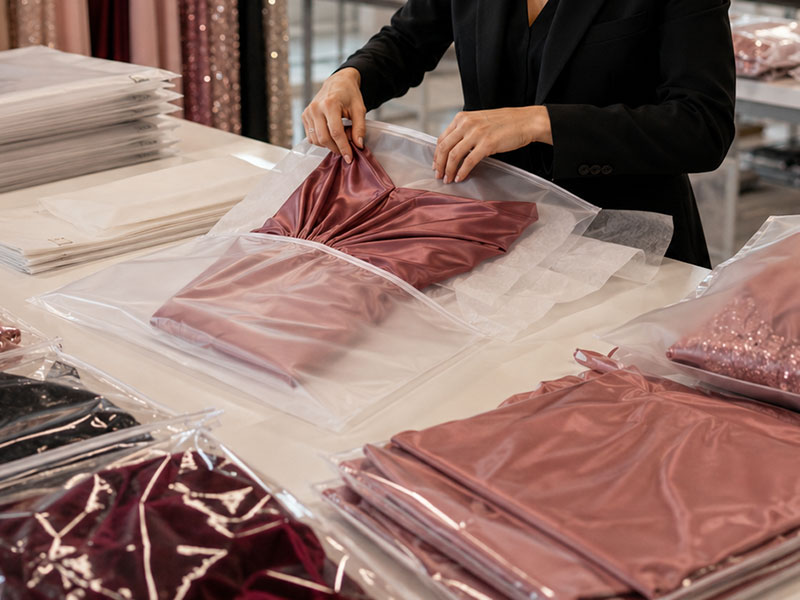
Polybags
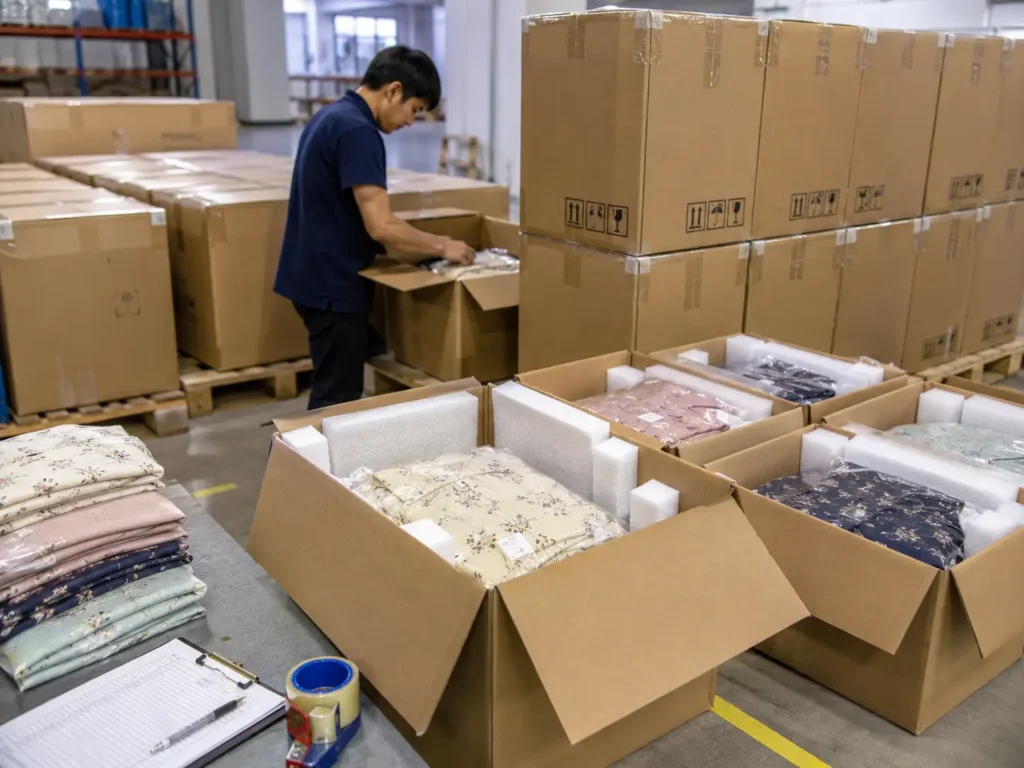
Carton Marks
Australia-Ready Labels and Testing Support
Fabric and Garment Testing
Label Information Preparation
Supplier Review and NDA
Production Evidence Across the Partywear Workflow

Fabric Approval

Pattern Review
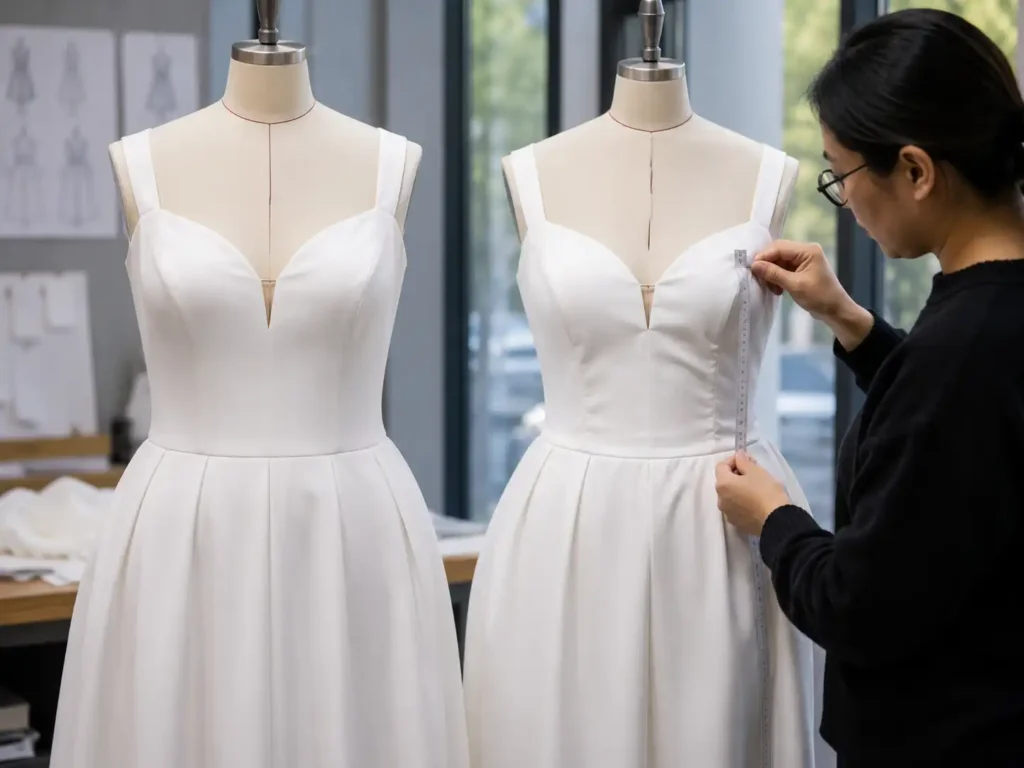
Sample Revision

Bulk Production

Quality Inspection

Packing and Dispatch
Frequently Asked Questions for Australian Partywear Brands
Jinfeng Apparel is based in Guangdong, China, within a major women’s fashion supply region. The team supports Australian labels through direct product review, sampling, bulk manufacturing, private-label packing and export coordination. Jinfeng should not be described as an Australian-made manufacturer or as having an Australian office.
Yes. Core capabilities cover party, cocktail, evening, birthday, club and occasion dresses, including satin minis, mesh bodycon styles, corset dresses, ruched silhouettes, cut-out products, lace, velvet and sequin garments. Each style is reviewed for fabric, fit, construction and bulk risk.
MOQ starts from 200 pieces per style/color. The final minimum depends on fabric stock, color development, trims, construction, special embellishment, private-label materials and production scheduling. Certified fabrics, custom dyeing, special lace, sequin bases or custom packaging may carry separate supplier minimums.
A simple party style commonly needs about 10-15 working days after approved materials are ready. Complex corset, heavy sequin, placement lace or special-dyed styles may require about 15-25 working days. Revisions commonly need about 7-15 working days after clear consolidated comments are received. A confirmed schedule follows style and material review.
Yes. Development can begin from reference images, sketches, original samples, line sheets or tech packs. Better results come from additional information covering fabric direction, measurements, size range, construction, quantity, colors, label needs and target date. Jinfeng reviews feasibility before confirming the sample plan.
Yes. Jinfeng works from the brand’s approved size chart and base size, then develops grade rules for the requested range, such as AU 6-16 or another defined chart. Critical points may include bust, waist, hip, length, straps, armhole, neckline and slit height according to the style.
Control stages include incoming material review, cutting checks, first-piece approval, in-line inspection, measurement, finishing, final garment review and packing audit. Partywear-specific checks may cover mesh transparency, stretch recovery, satin snagging, sequin attachment, neckline stability, zipper flatness, lining exposure and ruching symmetry.
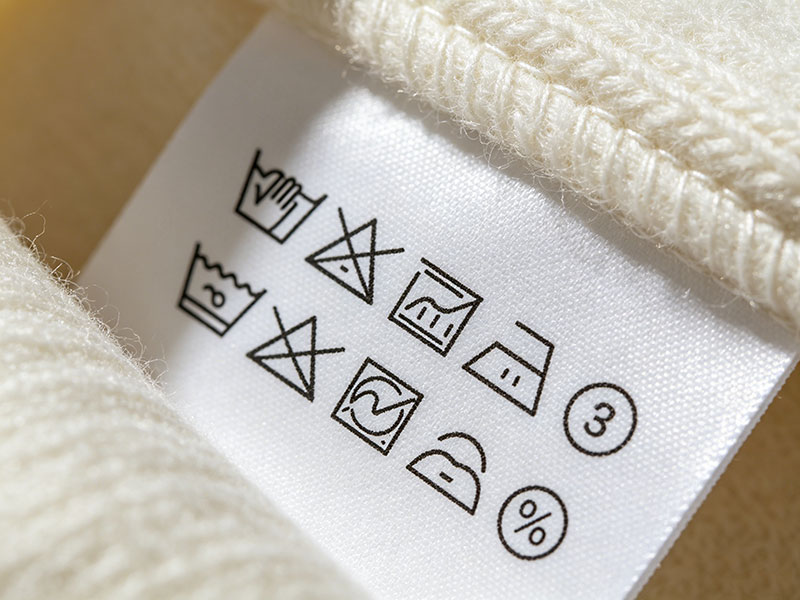
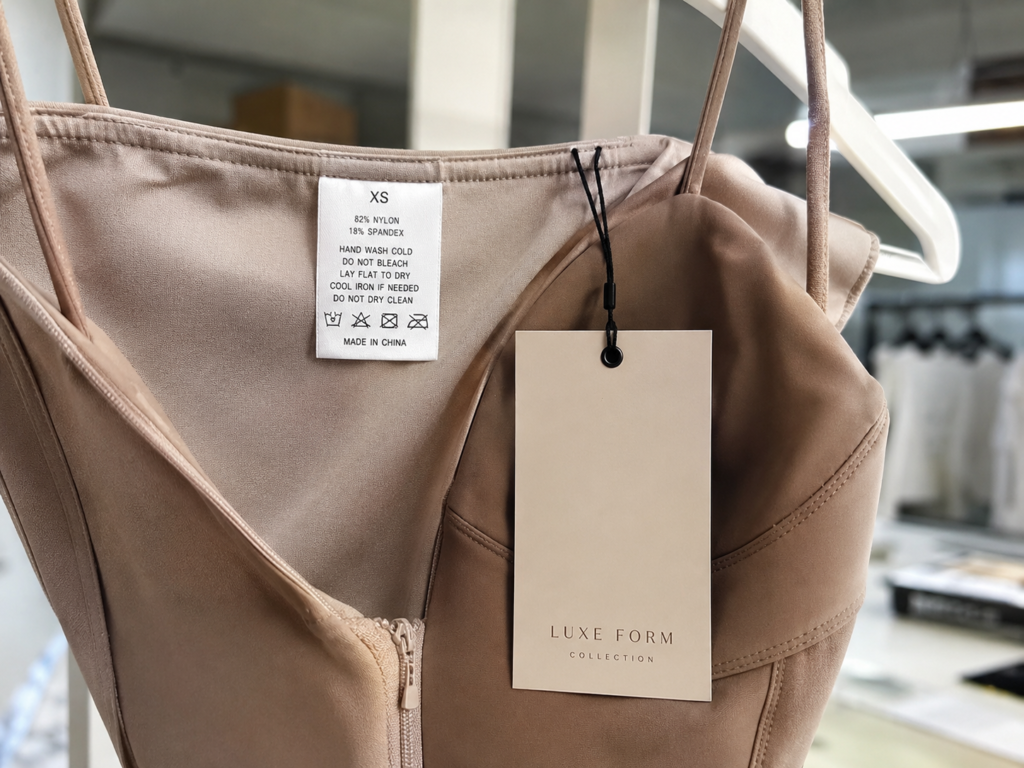
Jinfeng can produce woven labels, size labels, care labels, hangtags, SKU labels, barcode stickers, polybags and carton marks from approved artwork and content. Fiber composition, care wording, country-of-origin wording and final legal requirements should be confirmed by the brand or an Australian compliance professional.
Yes. Jinfeng can coordinate with a nominated forwarder and prepare cargo details, packing lists, commercial invoices, carton measurements, weights, carton marks and pickup information. Air, sea and split-shipment arrangements are reviewed by project against launch timing, volume, cost and warehouse instructions.
Yes. NDA-based cooperation can protect tech packs, samples, patterns, trims, labels, packaging, unpublished designs, quantities and order information. Pattern, size, BOM, fabric, color, trim, QC and packing records can support replenishment, new-color extensions and seasonal collection development, subject to current material confirmation.

Build Your Next Australian Partywear Collection
Send Kelly a line sheet, tech pack, reference image or original sample information together with the planned quantity per style/color. Include fabric direction, color count, size range, target launch date, label artwork, barcode requirements, packing instructions and any warehouse guide already in use.
Jinfeng will review style complexity, material availability, construction risks, sampling path, MOQ fit, production allocation and the information needed for a meaningful quotation. Final price and timing are confirmed after fabric, trims, workmanship, size split, packaging and approval requirements are clear. Files are used only for project evaluation, sample development, production, QC, packing and delivery coordination under the agreed confidentiality arrangement.
- Reference images, tech packs, sketches or line sheet
- Target quantity per style and color
- Preferred fabrics, linings, trims and finishes
- Color plan and AU size range
- Campaign, launch or warehouse delivery date
- Woven labels, care labels, hangtags and barcode files
- Packing instructions and nominated forwarder details


