Skip to content
Dress Manufacturer for Australian Eventwear Brands
Custom eventwear development and scalable dress production for Australian labels managing seasonal launches, complex fits and retail-ready delivery.
Jinfeng Apparel turns eventwear concepts, tech packs and original samples into production-ready dresses with controlled fabric direction, fit correction, sample approval, bulk manufacturing, inspection and private-label packing. Programs are planned around event calendars, photography dates, PP approval and Australian warehouse requirements rather than a generic clothing schedule.
- 10-30 styles can be coordinated within one seasonal program, with style-level sample, fabric, trim and approval tracking.
- MOQ starts from 200 pcs per style/color; fabric, colour, embellishment and packaging minimums are reviewed before development begins.
- 6 owned factories, 2 sample rooms, 7+ senior pattern makers, 20+ sample machinists and 100,000+ pcs monthly capacity support development and scale.
- Eventwear controls cover satin shade and snagging, mesh transparency, corset support, sequin security, measurement stability and retail presentation.
Eventwear Development Backed by Real Manufacturing Capacity
Since 2008
6 Owned Factories
100,000+ Monthly
2 Sample Rooms
7+ Pattern Makers
15+ QC Inspectors
Built for Established Australian Eventwear Businesses
Eventwear Labels
Premium Ecommerce Brands

Where Eventwear Collections Commonly Lose Control
Unstable Bust Fit
Fabric Looks Wrong
Bulk Drifts From Sample
Style Tracking Breaks
Launch Timing Slips
Packing Damages Finish
Eventwear Dresses Developed for Australian Brand Collections

Party Dresses

Cocktail Dresses
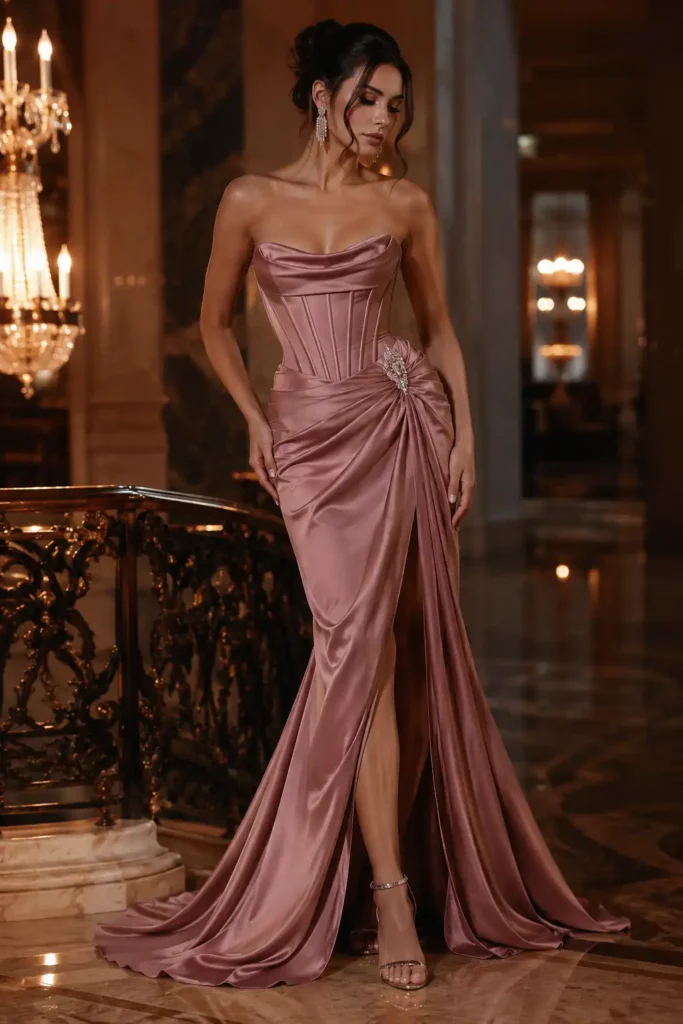
Evening Dresses
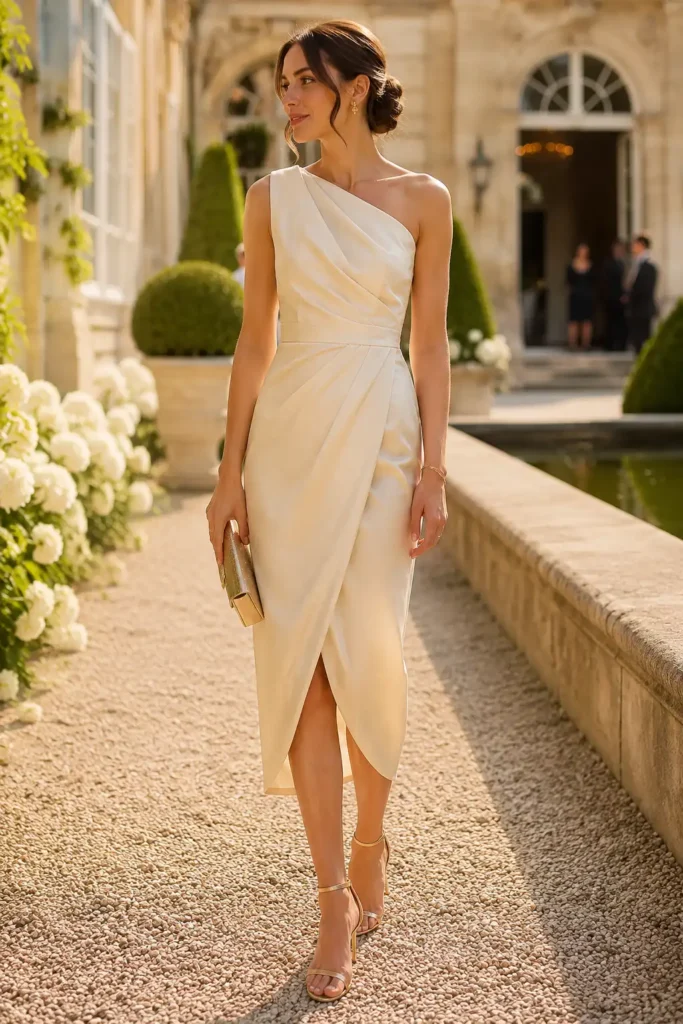
Wedding Guest Dresses
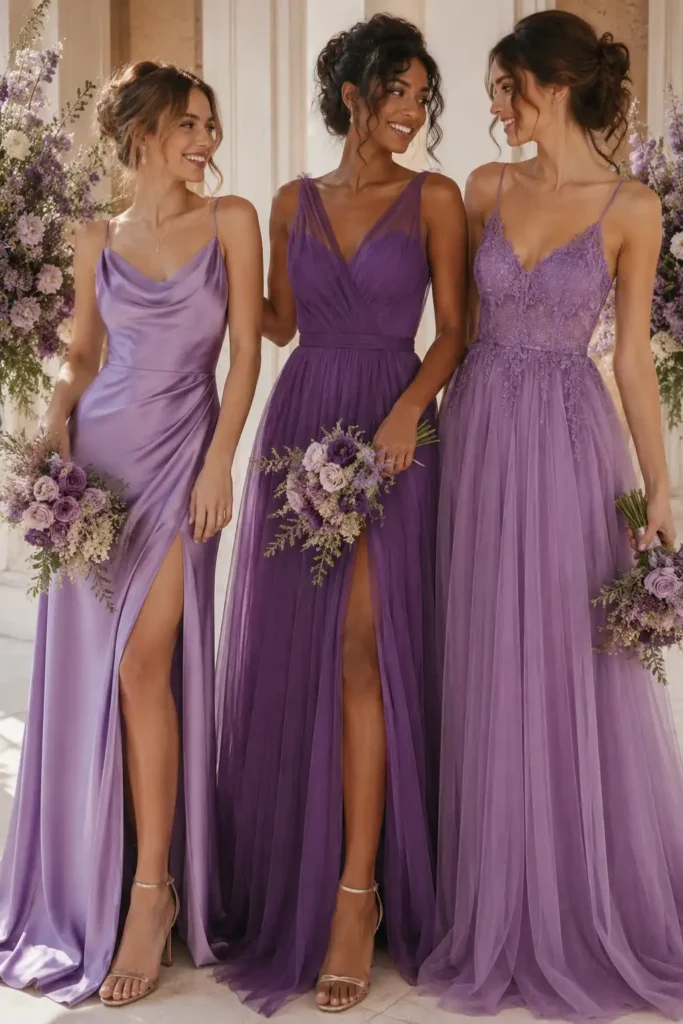
Bridesmaid Dresses
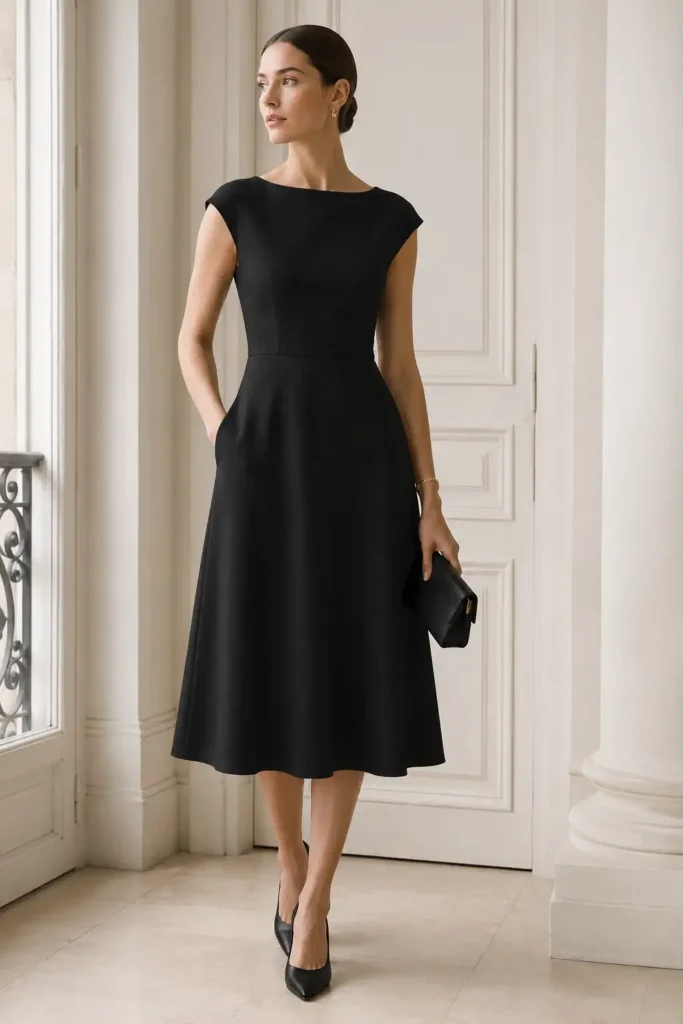
Race Day Dresses

Graduation Formals

Eventwear Separates
Build a Commercially Balanced Eventwear Collection
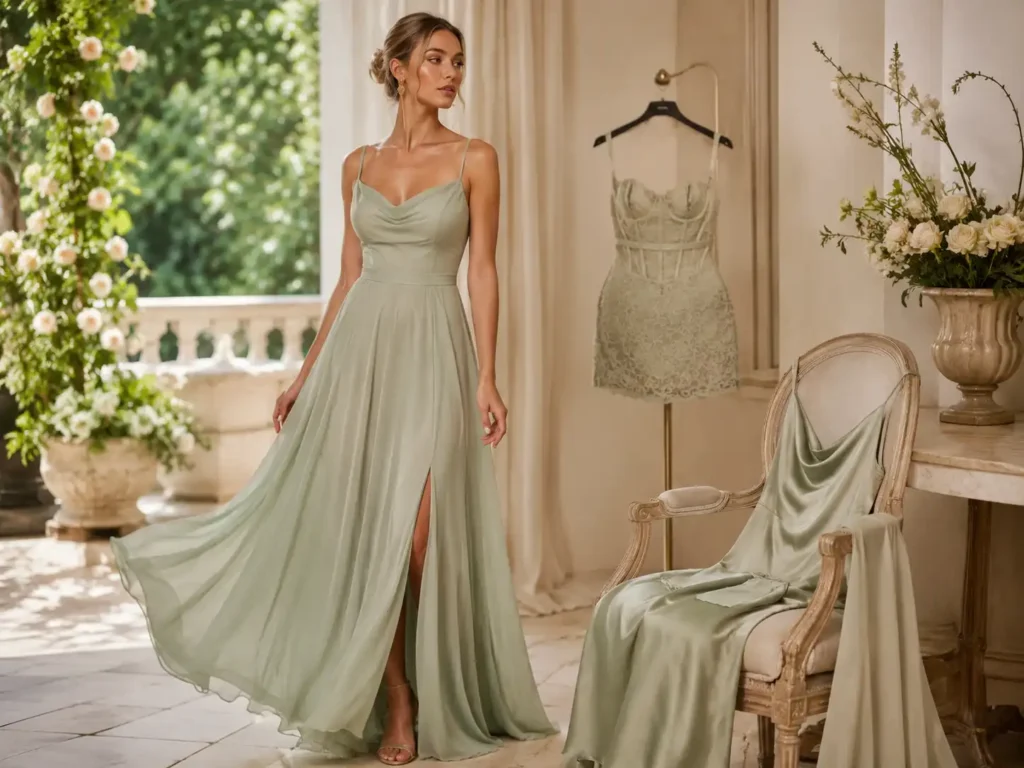
Core Occasion Styles

Statement Launch Styles
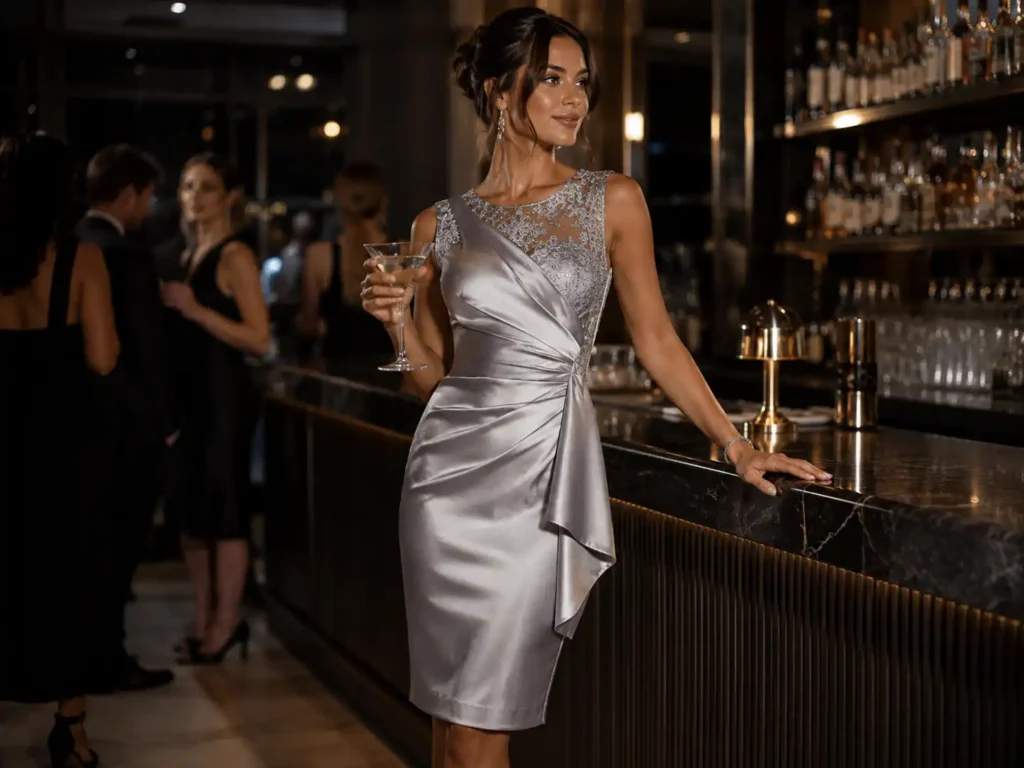
Event Calendar Styles
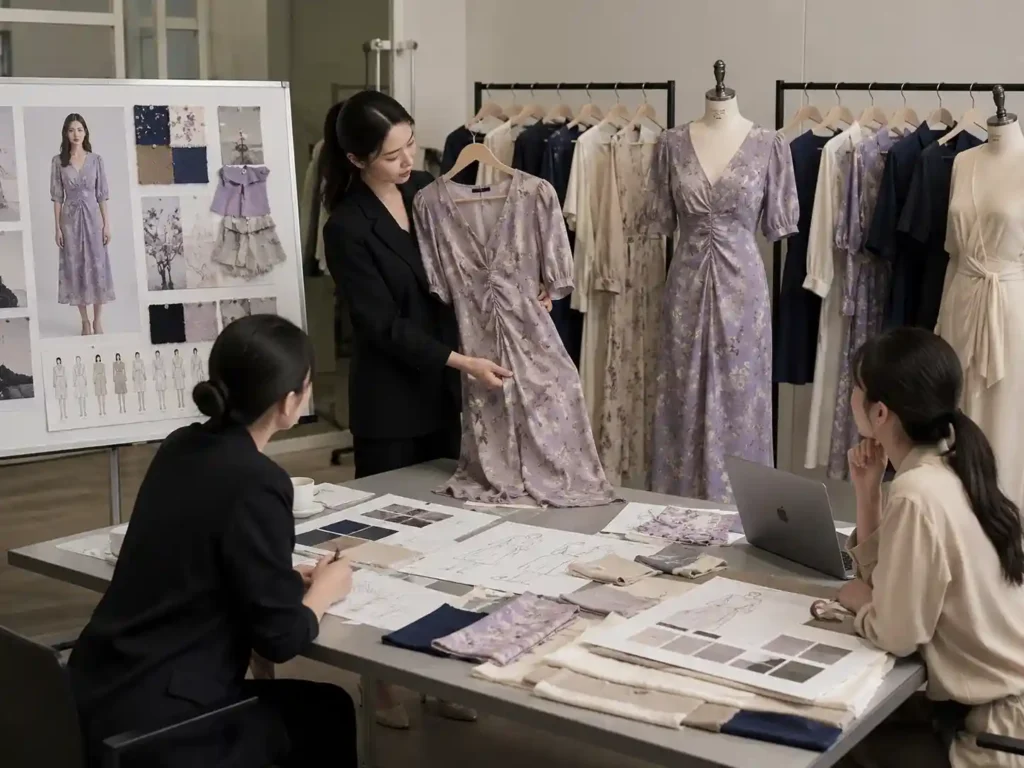
Repeatable Hero Styles
Plan Production Around the Australian Event Calendar
A reliable schedule starts from the warehouse receiving date and works backwards through freight, packing, inspection, bulk production, PP approval and sampling. Early material and trim decisions create more usable production time.
| Stage | Typical Timing | Required Output | Main Control Point |
|---|---|---|---|
| Style and line review | Before formal sampling | Prioritised style list, quantity plan, colour plan and target launch date | Identify hero SKUs, difficult materials and styles needing early development |
| Standard dress sample | Usually 10-15 days | First or fit sample for construction, fabric and proportion review | Timing starts after usable files, material direction and sample requirements are confirmed |
| Complex eventwear sample | Usually 15-25 days | Corset, lace, sequin, mesh, cut-out or structured sample | Boning, cups, transparency, embellishment and support need additional validation |
| Revision and photo sample | Confirmed by feedback scope | Corrected fit, campaign-ready appearance or salesman sample | Consolidated comments reduce repeated changes and conflicting instructions |
| PP sample and production lock | Before bulk release | Final fabric, colour, measurements, construction, labels and packing | Changes after PP approval can affect cost, material booking and delivery |
| Bulk production and QC | Project-based after PP approval | Approved goods, inspection records and packing status | Material arrival, order size, complexity, line allocation and finishing load determine the schedule |
| Australian delivery | Air, sea or split shipment | Commercial invoice, packing list, carton data and freight handover | Warehouse date, freight budget and urgent SKU priority determine the shipping plan |
Fabrics Selected for Appearance, Fit and Bulk Stability
Eventwear fabric is assessed as part of the garment structure. Shine, drape, stretch, transparency, lining, colour and packing response influence both the sample result and the stability of a 20,000-piece program.

Satin and Stretch Satin Control
Satin can create a premium surface with very little added decoration, yet the fabric exposes production faults quickly. Jinfeng Apparel reviews matte, high-shine, heavy and stretch satin according to silhouette, target price and body fit. Stretch satin commonly falls within approximately 120-250 gsm, but weight alone does not determine suitability; recovery, yarn direction, surface friction and backing also matter. A fitted corset mini may need more structure and recovery, while a draped midi needs fluid fall without excessive cling.
- Shine direction: all panels must follow the approved cutting direction or appear as different colours under light.
- Shade and batch: shell, lining and replacement panels are checked against approved colour references before cutting.
- Snagging and marks: handling, sewing, pressing and packing are reviewed to reduce pulls, water marks and hard fold lines.
- Zipper flatness: seam allowance, stabilisation, zipper type and pressing method are adjusted to reduce rippling or bulging.
- Light-colour coverage: lining opacity, seam show-through and undergarment visibility are checked on the sample before PP approval.
Chiffon and Crepe Drape
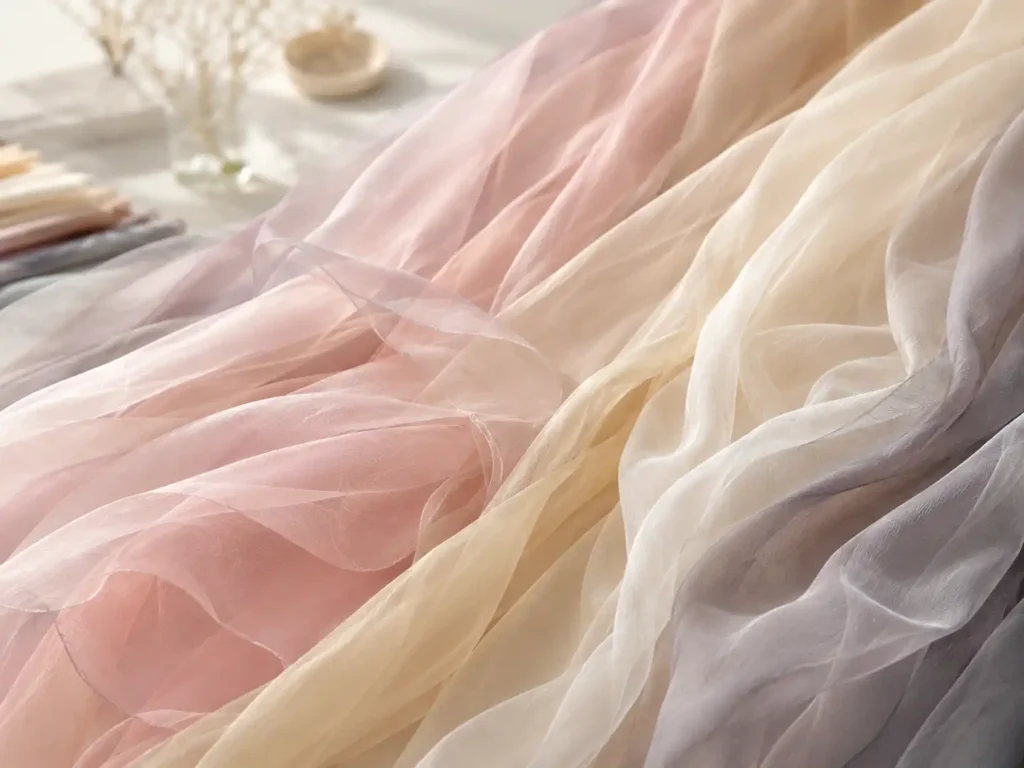
Chiffon and crepe serve different eventwear needs. Chiffon gives light movement for wedding guest, bridesmaid and long evening styles, while crepe provides a cleaner, more controlled surface for cocktail and formal silhouettes. Chiffon is usually transparent and requires lining, layered construction or planned sheer zones. The main production concerns are panel distortion, rolled hems, seam puckering, print direction and uneven maxi hems. Crepe varies from fluid to structured; the selected type must support the intended waist, sleeve, drape and slit without looking heavy.
- Layer planning: shell and lining lengths are confirmed separately so the lining does not hang below or restrict movement.
- Maxi balance: front, side and back lengths are checked after hanging and pressing because light fabrics can settle unevenly.
- Print control: directional prints, florals and border layouts require marker planning before cutting.
- Shrinkage review: rayon, viscose and some crepe constructions may require testing or allowance before bulk cutting.
- Edge finish: narrow hems, rolled hems and bound edges are selected according to fabric density and final visual effect.
Mesh and Power Mesh
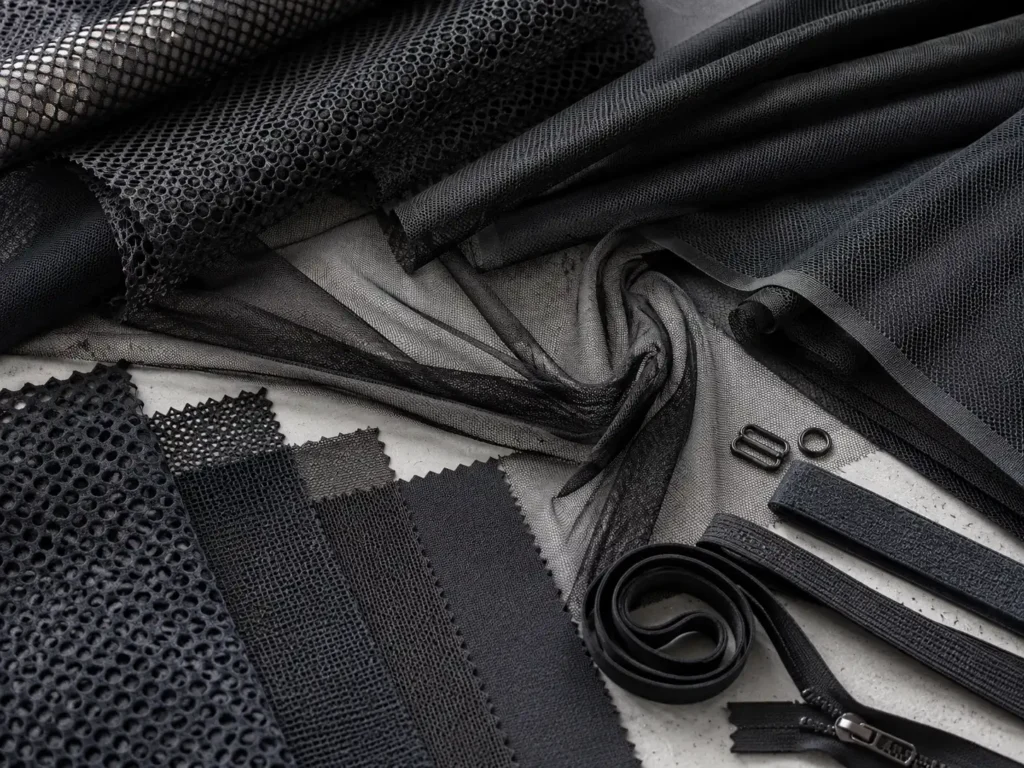
Mesh gives eventwear visual depth, body contour and controlled transparency. Standard mesh commonly ranges around 40-120 gsm, while power mesh offers stronger recovery and support. Selection depends on whether the fabric acts as a decorative layer, a stretch body panel, an internal support layer or a sheer design feature. Jinfeng Apparel checks stretch direction, recovery, colour, transparency under light, seam strength and compatibility with lining or binding. The same mesh can look acceptable on one sample and become too transparent or unstable when stretched across a different size.
- Transparency map: bust, waist, hip and cut-out areas are reviewed with the approved lining coverage.
- Recovery: bodycon and ruched styles need fabric that returns after wear rather than remaining stretched.
- Edge stability: necklines, armholes and cut-outs may need elastic, binding, facing or clean-finish construction.
- Hole prevention: needle choice, seam method, handling and QC reduce punctures and runs.
- Colour under stretch: dark and bright mesh can appear lighter when stretched, so approval should be made on-garment.
Lace, Tulle and Organza
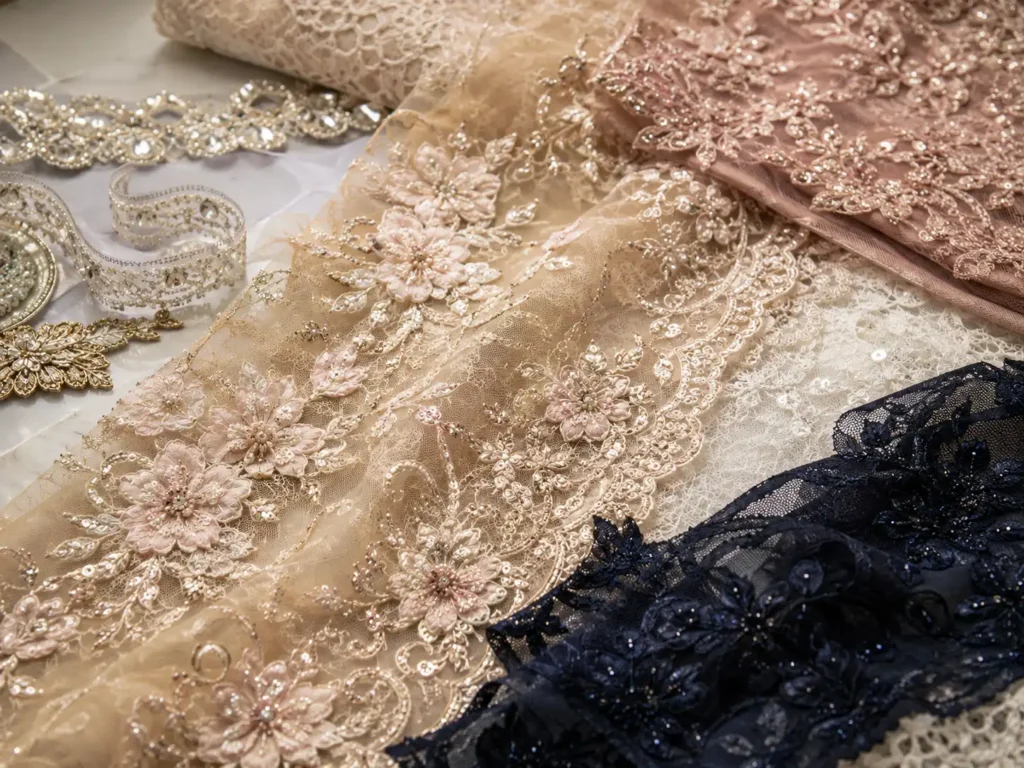
Lace, tulle and organza create surface interest and shape, but each material needs a different approach. Lace commonly ranges from about 60-250 gsm and may be rigid, soft or stretch. The pattern motif, edge, seam position and lining colour can change the perceived value of the dress. Tulle provides volume or transparent layering, while organza adds crisp shape to sleeves, skirts and sculptural details. Jinfeng Apparel separates lace fabric from lace trim in the BOM because the two materials have different placement, yield and quality risks.
- Motif placement: large floral patterns are positioned at necklines, seams and centre fronts before the marker is finalised.
- Lining colour: tonal, contrast and skin-tone linings are reviewed under the actual lace rather than selected independently.
- Damage risk: holes, fraying, snagging and broken motifs are checked during incoming inspection and sewing.
- Volume control: tulle layer count and organza stiffness are confirmed on the sample to avoid excess bulk.
- Edge finish: scallops, raw motifs, binding and clean hems are chosen according to the design and fabric structure.

Sequins and Metallic Surfaces
Sequin and metallic dresses carry strong campaign value but add weight, abrasion and sewing risk. Before sampling, the team reviews the base cloth, sequin density, direction, repeat, stretch, surface sharpness and expected dress weight. Areas touching the skin may need soft lining, facing or protected seam allowances. Sequins near zippers, darts, cups and side seams often require trimming or controlled placement so closures remain flat and stitching remains secure. Bulk inspection focuses on missing decoration, loose threads, scratching, colour difference and surface damage from folding.
- Sequin direction: panels must follow the approved nap or visual flow to avoid patchy light reflection.
- Needle and seam planning: dense areas are prepared so sewing does not cause broken needles, cracked sequins or bulky seams.
- Skin comfort: armholes, necklines, side seams and hems receive additional checking for sharp edges.
- Repair standard: replacement sequins, thread colour and acceptable repair areas are agreed before bulk finishing.
- Packing protection: tissue, garment orientation and carton pressure are reviewed to reduce scratching and crushing.
Velvet and Structured Wovens
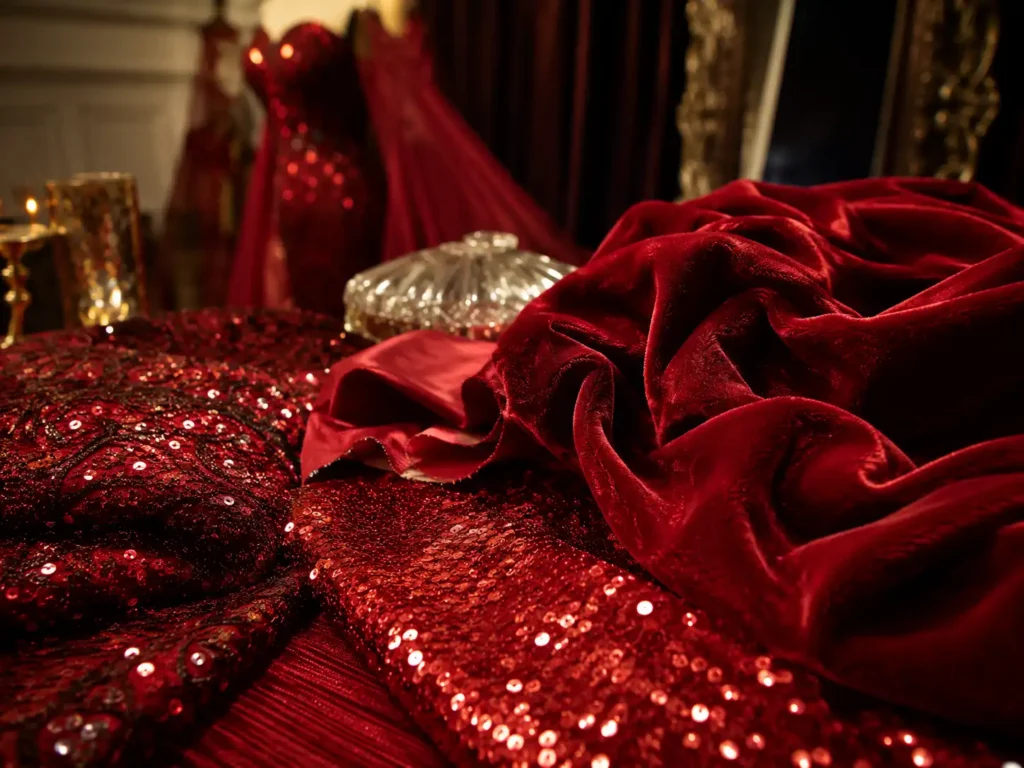
Velvet and structured woven fabrics support winter eventwear, corset shapes, sculpted minis and formal dresses. Velvet has a directional pile that changes colour under light, making cutting direction and panel consistency essential. Pressing must avoid pile crushing and shine marks. Structured woven fabrics can hold clean necklines, pleats and corset shapes, but stiffness must be balanced with movement, lining comfort and seam bulk. Jinfeng Apparel uses the sample stage to decide whether fusing, stay tape, lining, cups, boning or seam support is needed.
- Pile direction: all velvet panels follow the approved orientation, including facings and visible trims.
- Pressing method: temperature, pressure and protective layers are tested before bulk finishing.
- Seam bulk: darts, princess seams, waist joins and zipper areas are reviewed to keep the silhouette clean.
- Support balance: structure is added only where needed so the garment remains wearable rather than rigid.
- Packing shape: structured bodices and sleeves may require extra internal support or revised folding.
Construction Details That Protect the Final Look
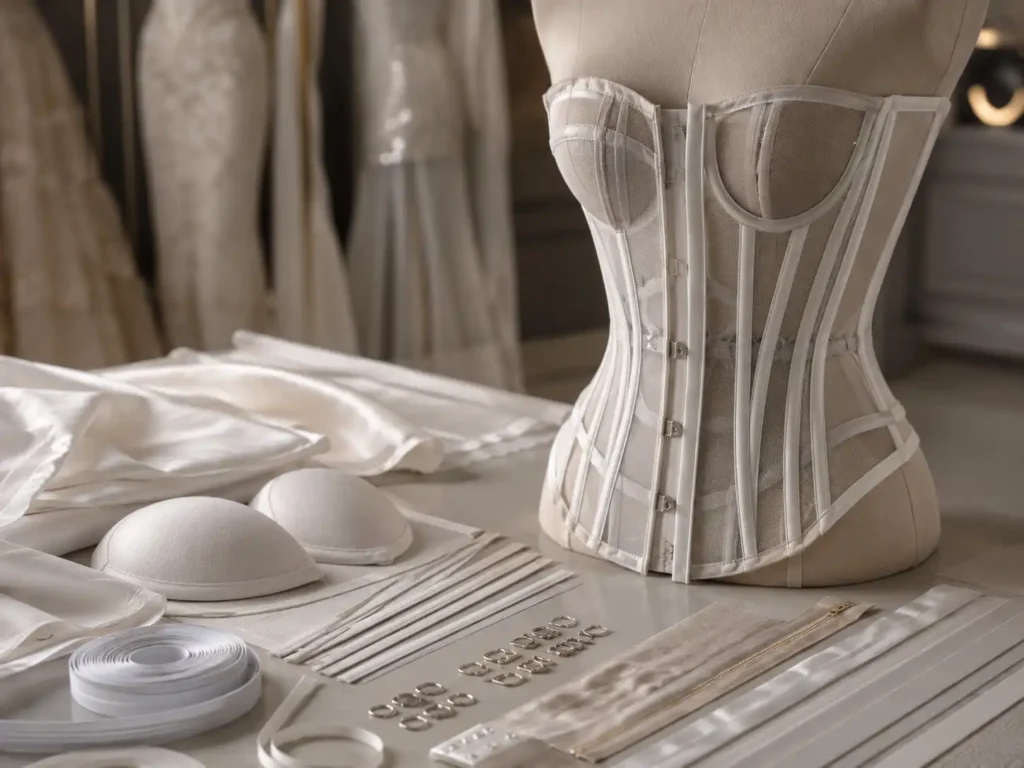
Corset Support

Clean Closures

Controlled Ruching

Lace Mesh Placement
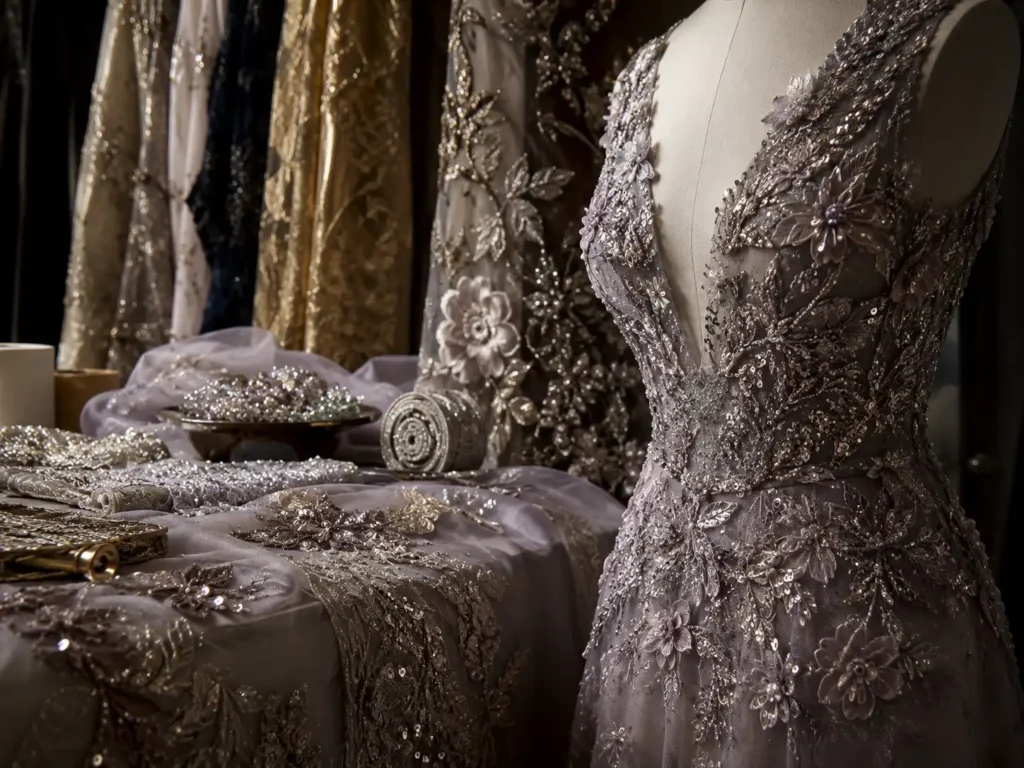
Embellishment Security

Hems and Pressing
From Design Reference to Production-Ready Sample
Sampling is a sequence of decisions, not one garment made for approval. Each stage has a separate role in testing design, fit, appearance and production readiness.

Project Review and Sample Input
Development can start from a tech pack, original sample, sketch, reference image or line sheet. More complete information produces a more accurate first sample. The initial review covers product structure, fabric direction, trims, size range, colour plan, target quantity, private-label requirements and launch date. Jinfeng Apparel identifies high-risk areas before material is prepared, including corset support, mesh transparency, lace placement, sequin protection, cut-out stability and long-dress balance. Sample fees are quoted according to complexity and cover pattern work, material preparation, sewing, checking and project communication.
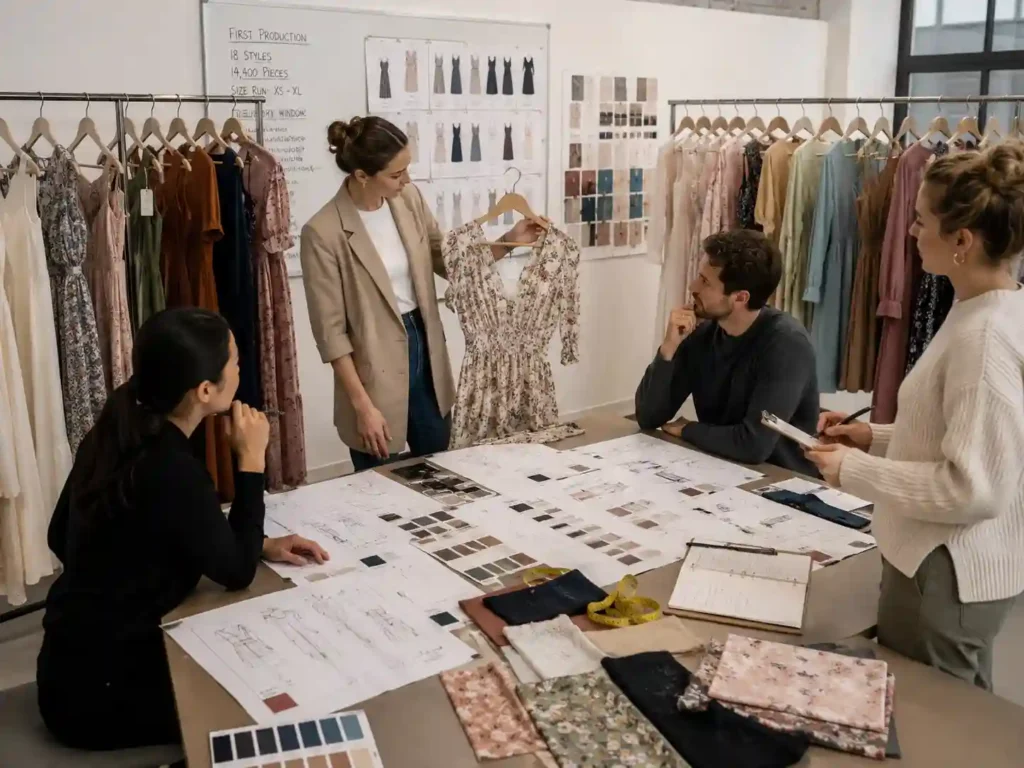
First and Fit Sample
A first sample tests whether the design can become a wearable, producible garment. Standard dress samples usually require 10-15 days after usable files and material direction are confirmed. Complex corset, sequin, lace, mesh or structured styles usually require 15-25 days or a project-specific schedule. The first sample is reviewed for silhouette, proportion, fabric behaviour, support, construction and initial cost logic. A fit sample then focuses on measurements, balance, movement and the comments needed for pattern correction. One sample should not be treated as the final bulk standard when unresolved issues remain.

Revised and Photo Sample
Fit comments, photos and measurements are consolidated into a revision list before the pattern is changed. A revised sample verifies whether the corrections solved the original issue without creating new problems. Photo samples may need stronger attention to drape, pressing, lining, colour, surface condition and styling details because they appear in campaign content before bulk goods arrive. A photo sample does not automatically replace the PP sample; visual presentation and bulk production standard serve different purposes and should be identified clearly in the approval record.
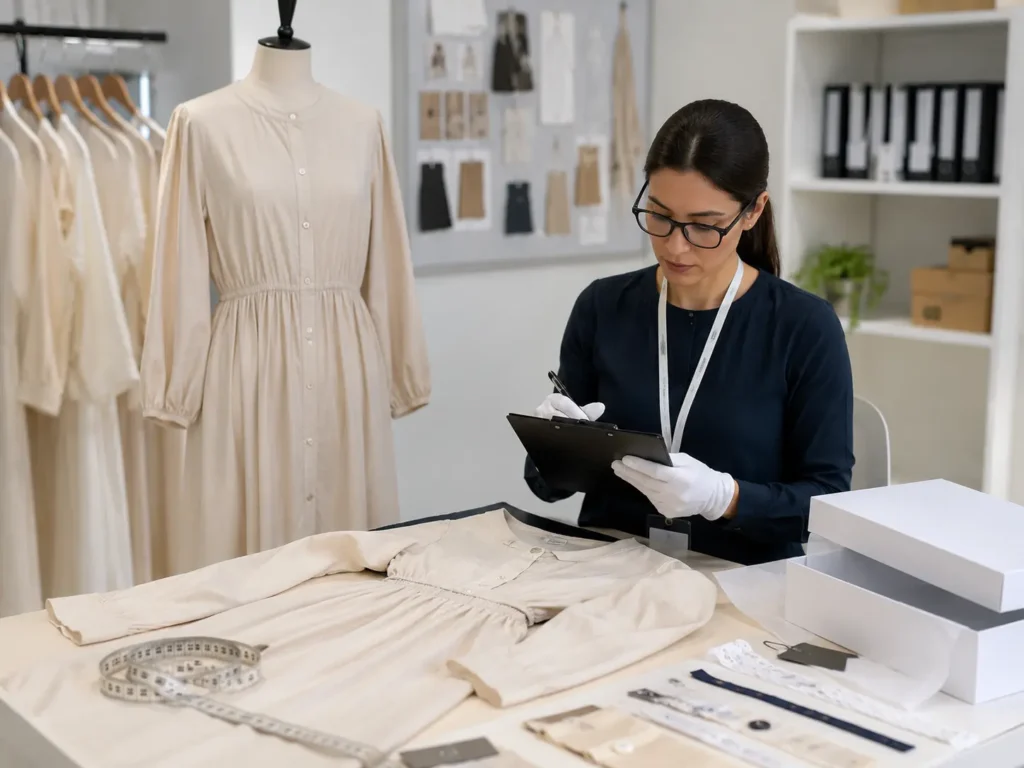
PP and Golden Sample Lock
The PP sample locks the final pattern, measurements, fabric, colour, trims, construction, labels and packing direction before bulk release. Jinfeng Apparel transfers the approved sample into a production file containing the final pattern, size chart, grade rule, BOM, fabric reference, trim card, sewing instructions, label placement, packing instructions and QC points. A sealed golden sample can remain available for production and final inspection comparison. Changes after PP approval are assessed for cost, material, pattern and schedule impact before being accepted.
Manage Multi-Style Development Without Sample Confusion
Style Project Map
Sample Priority
Version Approval
MOQ Planning for Multi-Style Eventwear Collections
Jinfeng Apparel calculates standard MOQ by style and colour, not by the combined quantity of an entire range. Material and packaging suppliers may apply separate minimums that influence the final production plan.
| Order Structure | Standard Fit | Planning Note |
|---|---|---|
| 1 style x 1 colour x 200 pcs | Meets the starting production structure | Final feasibility still depends on fabric, trims, construction, size split and schedule |
| 1 style x 2 colours x 200 pcs each | Meets the starting structure at 400 pcs total | Each colour is treated as a separate production quantity |
| 1 style x 2 colours x 100 pcs each | Usually below standard MOQ | Two colours totaling 200 pcs do not equal 200 pcs per colour |
| 4 styles x 50 pcs each | Does not meet standard MOQ | A mixed total of 200 pcs cannot replace style-level production requirements |
| Special lace, sequin or custom colour | Project review required | Fabric mill, dyeing, printing, trim or embellishment suppliers may require higher minimums |
| Custom labels and printed polybags | Separate packaging MOQ may apply | Common custom packaging materials may begin around 500-1,000 pcs depending on specification |
Production Capacity Matched to Eventwear Complexity
Jinfeng Apparel allocates production by fabric, construction, order scale and risk. Complex first-time eventwear and repeatable commercial styles do not need the same production route.
Factory Allocation by Product Structure
Six owned women’s fashion factories and more than 10 long-term satellite production partners support woven dresses, stretch styles, occasionwear, sets, jumpsuits and repeat orders. Factory selection considers fabric handling, corset structure, embellishment, sewing difficulty, quantity, finishing and requested delivery. High-risk first productions are directed to teams with the most relevant product experience. Long-term satellite partners are used for planned capacity expansion, repeat orders and selected program batches under Jinfeng production and QC requirements, rather than uncontrolled temporary outsourcing.
PP Handover Into Production
Bulk production does not begin from a sample alone. The production handover includes PP sample approval, final pattern, grade rule, size chart, measurement tolerance, BOM, fabric reference, trim card, construction instructions, labels, packing and QC checkpoints. A pre-production review aligns the merchandising, production and quality teams before material cutting. Fabric colour, lining, trims and packaging are confirmed against the correct style and colour. Any change after the handover is documented and reviewed for pattern, cost, material and timing impact.
Lines for Multi-Style Programs
The manufacturing network includes 18+ sewing lines and 6+ flexible production lines. Flexible production refers to organising multiple styles, fabrics, colours, sizes and batches within a controlled program; it does not change the MOQ of 200 pcs per style/color. Styles can be grouped by satin, mesh, lace, jersey or structured woven construction so teams work with compatible materials and methods. Production status is tracked through material arrival, cutting, sewing, in-line QC, finishing, packing, AQL and shipment preparation.
Peak Season and Batch Delivery
Eventwear calendars can create concentrated demand around weddings, graduation, race-day edits and holiday parties. Available capacity is reserved after PP approval, material confirmation and order details are complete. Complex lace, sequin, corset, custom-dyed and heavily branded programs need earlier booking than repeatable core styles. Multi-batch delivery can be arranged when a collection has different launch priorities or warehouse dates. The 100,000+ pcs regular monthly capacity provides scale, while actual allocation remains project-based to protect quality and delivery control.
Quality Control Built Around Eventwear Failure Points
Quality is checked from material arrival through packing, not only before shipment. Inspection points are adjusted for the fabric, silhouette, support structure, embellishment and client quality manual.

Fabric Inspection
Shell, lining and key materials are checked for colour, surface defects, shade variation, width, stretch, transparency, print direction and visible damage before cutting. Satin, lace, mesh, velvet and sequin fabrics receive material-specific checks.

Cutting Control
Fabric direction, marker placement, lace motif, print orientation, velvet pile, panel quantity and cut accuracy are reviewed. Cut panels can be checked before sewing when material movement or visual placement creates a higher risk.

Sewing Control
Seam construction, stitch quality, zipper flatness, lining, cups, boning, straps, closures, ruching and embellishment attachment are reviewed during production. Problems are corrected before large quantities reach finishing.

Measurement Control
Bust, waist, hip, length, strap, armhole, neckline, slit and lining measurements are checked against the approved size chart. Tolerances follow the product type, fabric behaviour and client standard rather than a claim of zero variation.

Fit Appearance
Inspectors review symmetry, body balance, neckline stability, side-bust coverage, hem level, drape, ruching distribution and the pressed appearance. Eventwear must look correct on the body and under light, not only pass a flat measurement.
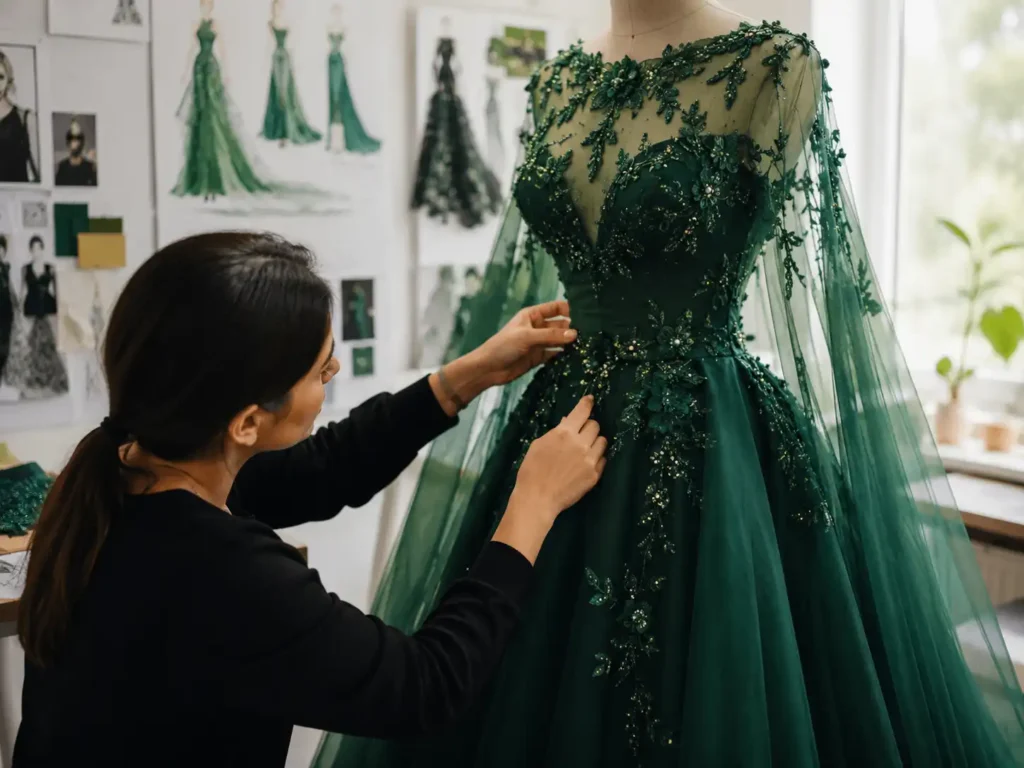
Embellishment Check
Sequins, beads, rhinestones, chains and lace details are checked for placement, attachment, sharp edges, missing pieces, loose threads and surface damage. Repair methods and acceptable appearance follow the approved standard.
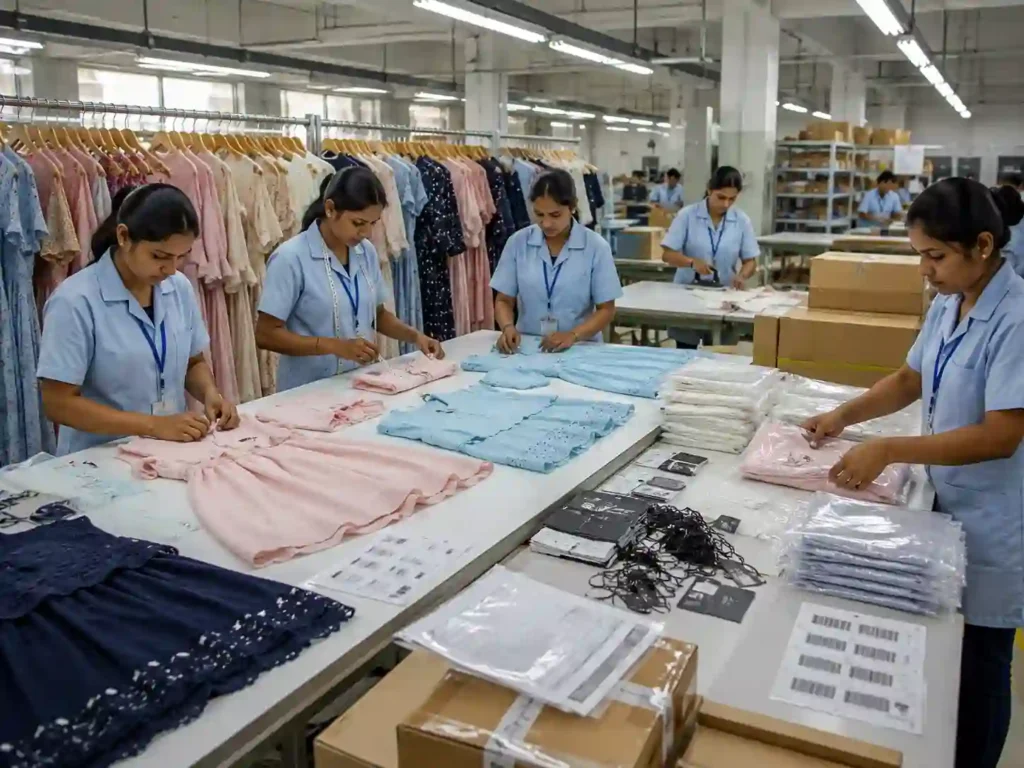
Packing Check
Main labels, size labels, care labels, hangtags, barcodes, SKU stickers, polybags, folding and carton assortment are verified. Satin, sequin, long and structured dresses receive additional appearance protection.
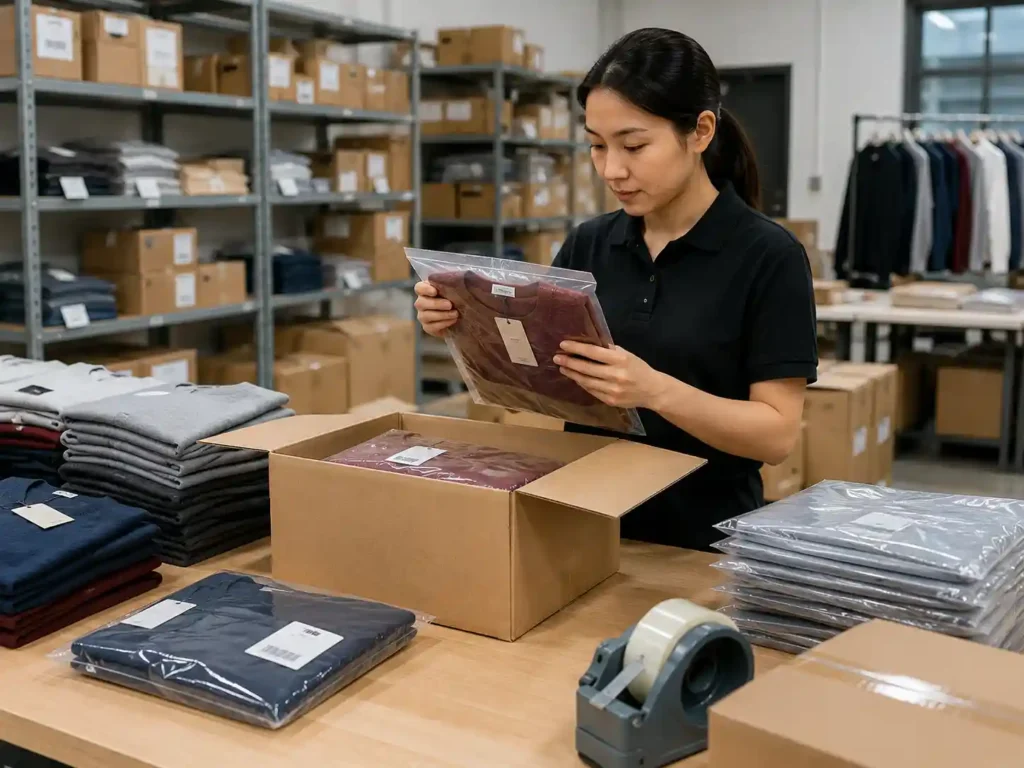
Final and AQL
Final inspection and AQL sampling can be completed before shipment, with client or third-party inspection support by project. Defect classification, measurement tolerance, packing standard and inspection level can be aligned with the client quality manual.
Quality Control Built Around Eventwear Failure Points
Fabric Inspection
Cutting Control
Sewing Control
Measurement Control
Fit Appearance
Embellishment Check
Packing Check
Final and AQL
Private-Label Delivery for Australian Retail and Ecommerce
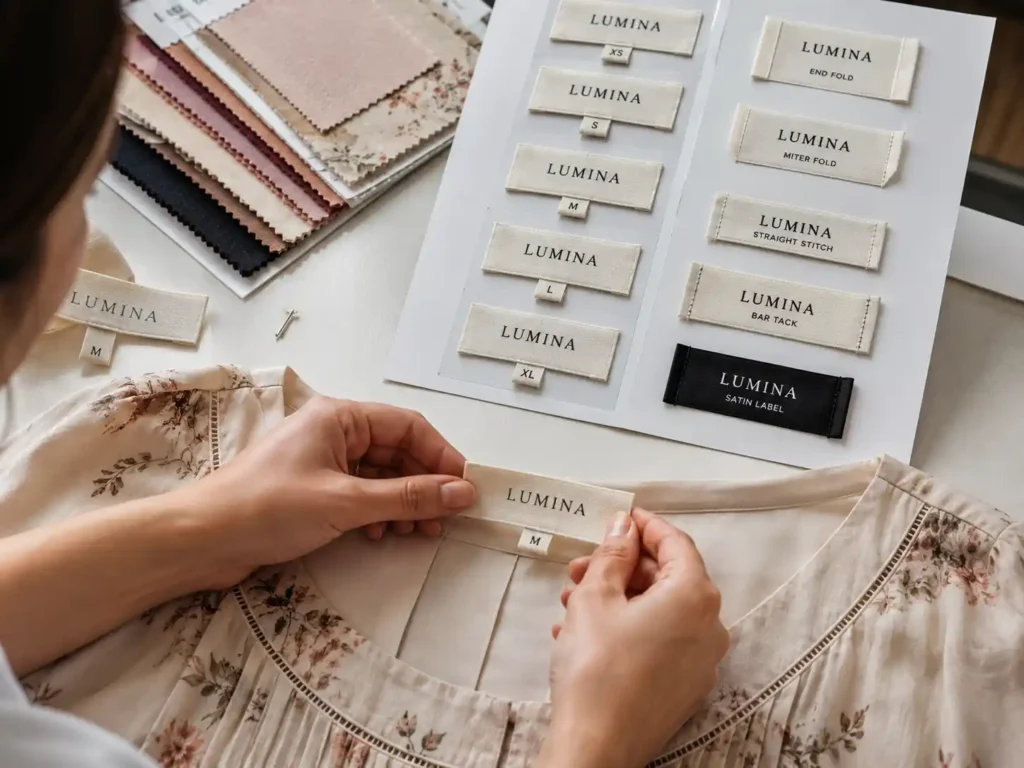
Main Size Labels
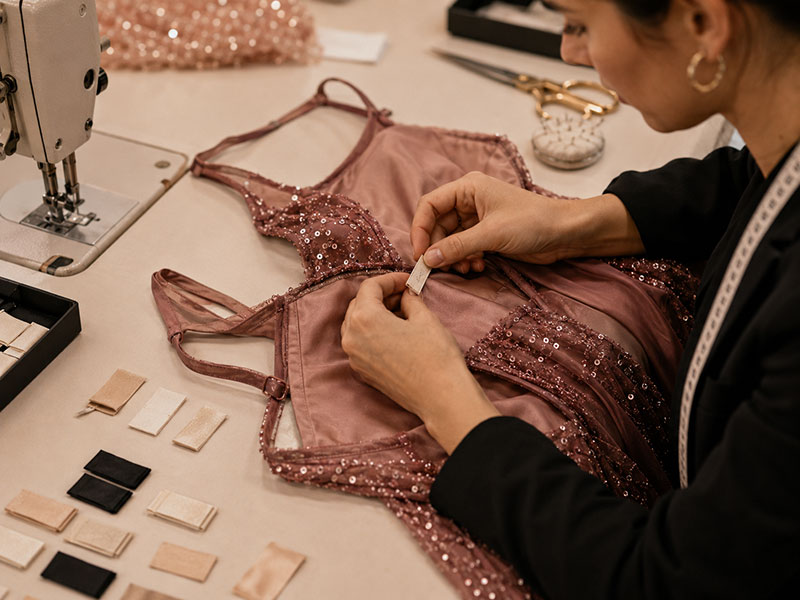
Care Composition

Hangtags
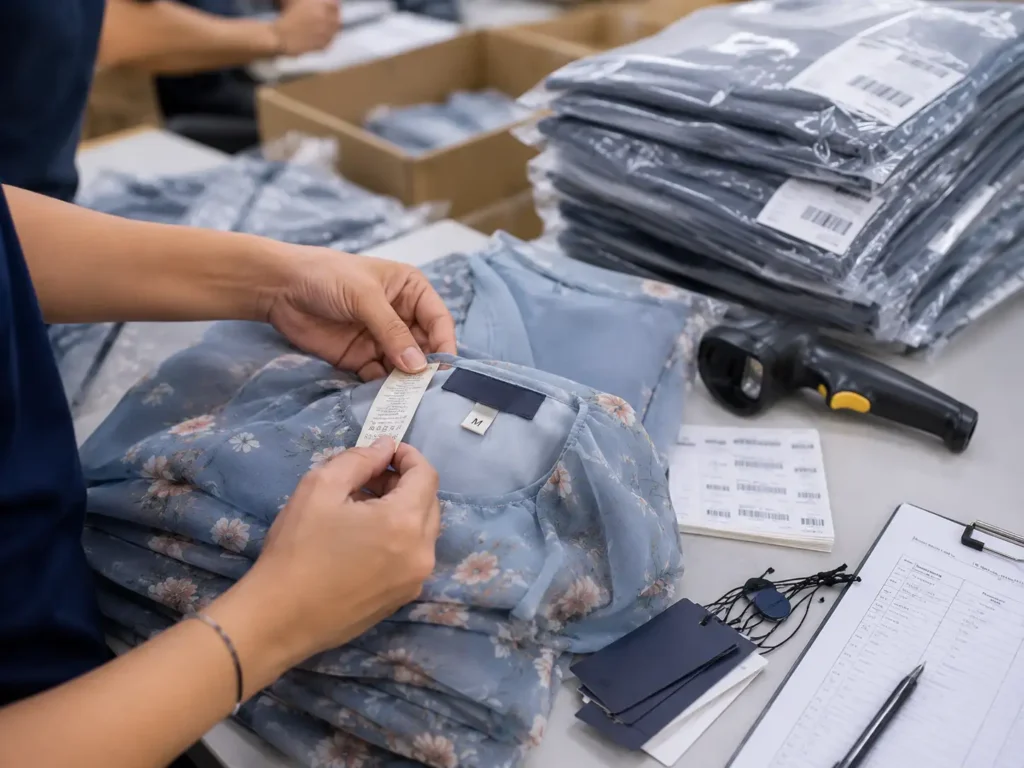
Barcode SKU Control

Individual Polybags
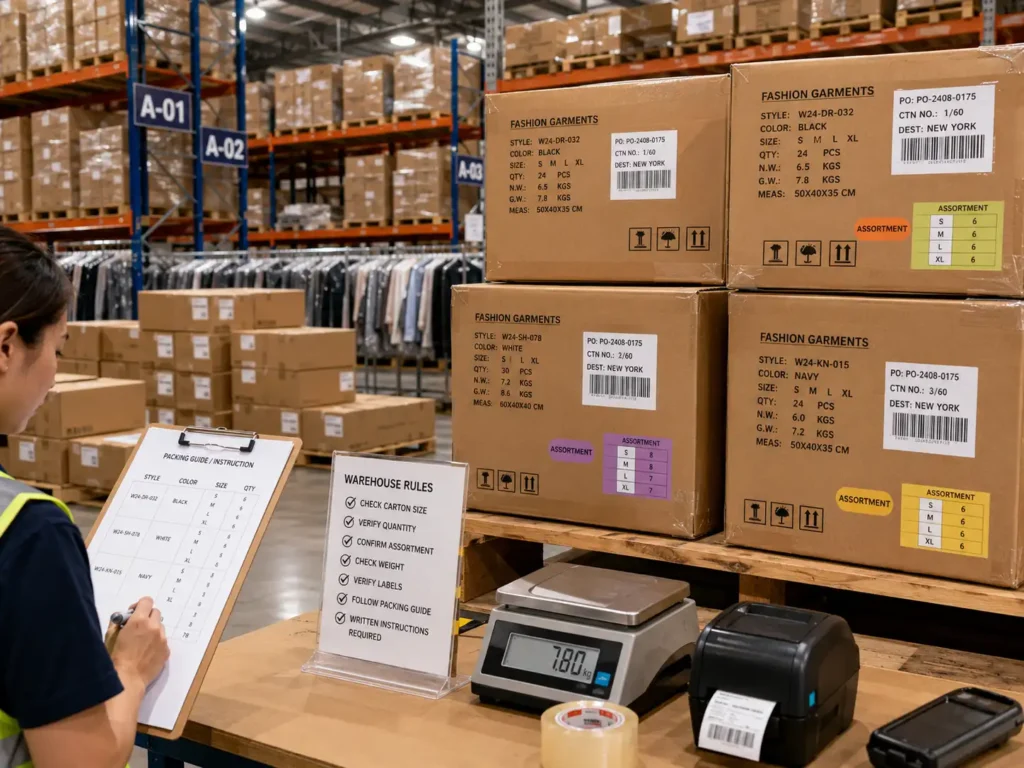
Carton Requirements
Eventwear Programs Managed From Sample to Delivery

Australian Eventwear Launch

Satin Occasion Program

Multi-Market Eventwear Range
Protect Designs and Build Repeatable Eventwear Programs
Design Protection
Repeat Order Records
Controlled Style Extension
How to Evaluate an Eventwear Dress Manufacturer
Eventwear Evidence
Sample Capability
Fabric Fit Knowledge
Production Capacity
QC and Packing
NDA and Delivery
Frequently Asked Questions for Australian Eventwear Brands
Jinfeng Apparel develops party, cocktail, evening, formal, wedding guest, bridesmaid, graduation, race-day and occasion dresses, plus eventwear jumpsuits, matching sets, corset tops and skirts. Core materials include satin, stretch satin, chiffon, crepe, lace, mesh, power mesh, velvet, sequin fabric, organza and tulle.
MOQ starts from 200 pcs per style/color. One style in two colours normally requires 200 pcs in each colour. Multiple styles adding up to 200 pcs do not meet the standard production structure. Special fabric, dyeing, printing, embellishment, trims and custom packaging may carry separate supplier minimums.
Yes. Reference images, sketches, line sheets, original samples or tech packs can be reviewed. More complete information improves accuracy. Please include target quantity, fabric preference, size range, colour plan, private-label needs and launch date so the team can assess structure, sample route, MOQ and production risk.
Standard dress samples usually require 10-15 days after usable files and material direction are confirmed. Complex corset, sequin, lace, mesh, cut-out or structured styles usually require 15-25 days or a project-specific schedule. Revisions and PP timing depend on feedback scope, material and approval speed.
Bulk lead time is confirmed after PP approval, fabric and trim status, quantity, style complexity, production allocation, QC, packing and shipment requirements are clear. Jinfeng Apparel avoids one blanket promise because a repeat satin dress and a first-time embellished corset program require different production plans.
Yes. Production follows the brand-approved base size, size chart, grade rule and measurement tolerance. Bust, waist, hip, length, strap, armhole, neckline, slit and lining measurements can be included. Jinfeng does not replace the brand specification with a general factory size chart.
Yes. Support includes main labels, size labels, care labels, hangtags, barcodes, SKU stickers, polybags, carton marks and warehouse packing requirements. The brand supplies or approves legal label content, while Jinfeng manages artwork review, placement, production and packing execution.
Yes. Sample courier, air freight, sea freight, split shipment, client-appointed forwarders and factory-coordinated forwarders can be supported. FOB, EXW, CIF, DAP and DDP may be reviewed by project. Commercial invoices, packing lists, carton information and freight handover documents can be coordinated.
Client or third-party inspection can be coordinated according to the project. Please share AQL level, defect classification, measurement tolerance, packing standard and inspection requirements before production. Jinfeng can align incoming, in-line, final, packing and AQL checks with the approved quality plan.
Yes. NDA-based cooperation is supported. Tech packs, samples, patterns, measurements, fabric plans, labels, packaging, prices, quantities and unreleased designs are protected throughout development and production. Anonymous evidence may be used only without exposing brand identity, artwork or confidential product information.

Start Your Australian Eventwear Production Review
Send your line sheet, tech pack, reference images or original sample photos for an initial manufacturing review.
Kelly and the development team will assess garment structure, fabric direction, fit risk, trims, MOQ, sampling route, production allocation, private-label requirements and the target Australian delivery window. A useful brief does not need to be perfect, but it should show what the brand plans to produce and the quantity expected per style and colour. Files are used only for project evaluation, development, production, quality control, packing and delivery.
NDA review is available before confidential designs are released.
- Style list or line sheet with priority SKUs
- Tech pack, reference image or original sample photos
- Target quantity per style/color and size range
- Fabric, colour and trim direction
- Main label, care label, hangtag and barcode needs
- Australian launch date, warehouse date and freight preference
- Quality manual, AQL or packing guide when available