
Dress Manufacturer for Amazon FBA Fashion Brands
Custom dress development, scalable bulk production, private-label execution and replenishment support for established Amazon fashion operations.
- Programs structured for 10-30 dress styles and approximately 20,000-80,000 total units per brand order.
- MOQ starts from 200 pieces per style/color, subject to fabric, trims, construction, packaging and production scheduling.
- Six owned women’s fashion factories, 10+ long-term satellite production partners and 100,000+ pieces of regular monthly capacity.
- Fit, fabric, SKU, barcode, packing and carton instructions controlled from sample approval through shipment release.
Built for Scalable Amazon Dress Programs
Development Capacity
Production Network
QC and Packing
Structured for Established Amazon Fashion Operations
Product-Led Teams
- Tech pack, sample or reference-image development
- Fabric and trim alternatives by target position
- Fit sample and revision records
- PP approval before bulk production
Multi-SKU Programs
- Multi-color and multi-size production
- SKU-level packing instructions
- Variation-family quantity planning
- Carton-level quantity reconciliation

Where Amazon Dress Programs Lose Margin
Fit-Driven Returns
Sample-to-Bulk Gaps
Fabric Experience Mismatch
SKU Mapping Errors
Packing Rework
Replenishment Delays
One System From Development to Replenishment
Product Review
Pattern and Fit
Fabric and Trims
Bulk Production
Ecommerce Packing
Repeat Orders
Custom Dress Categories for Amazon Fashion Portfolios

Bodycon Dresses

Party Dresses
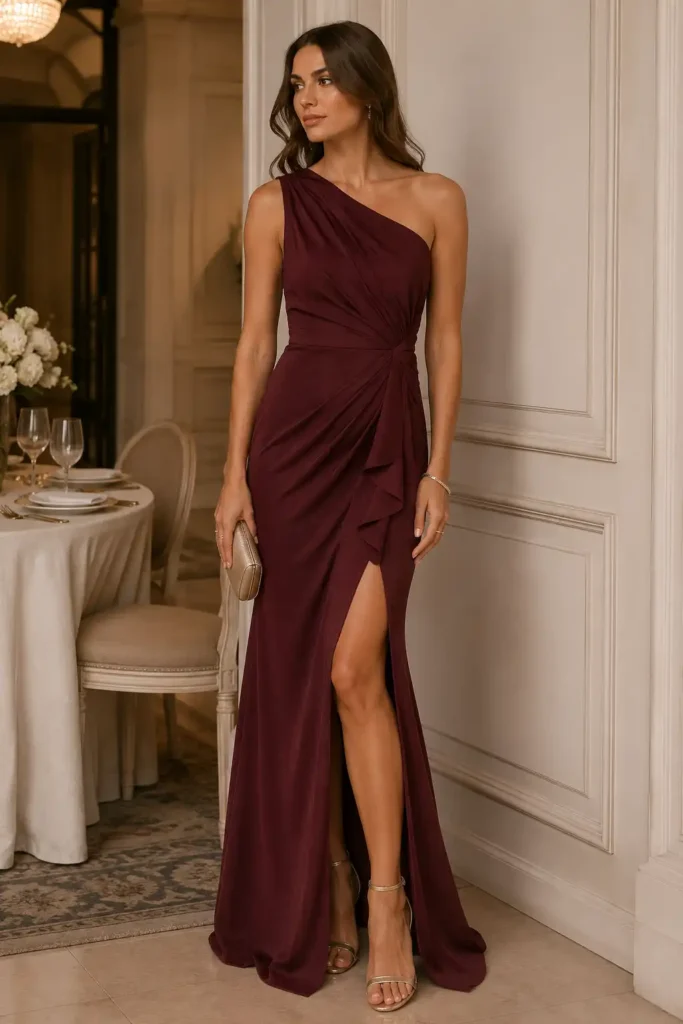
Occasion Dresses

Satin Slip Dresses

Mesh and Lace

Corset Dresses

Mini Midi Maxi

Resort Printed Dresses
Fit and Size Control That Protects Reviews
Online dress performance depends on measurable fit, not visual similarity alone. Pattern development, grading and bulk measurement are connected before production begins.
Build the Base Pattern Around Market Fit
The base pattern begins with the intended wearer and selling market. A reference garment may look correct but carry a size balance unsuitable for the final range. Jinfeng compares the design with the brand’s size chart, fit model information, target silhouette and fabric behavior before establishing the first pattern. A bodycon dress may need controlled negative ease; a woven satin dress needs wearing ease and closure access; a corset style needs support without excessive pressure.
Core pattern decisions include bust circumference, upper-bust contour, underbust level, waist position, hip ease, back width, neckline depth, armhole shape, strap length, skirt sweep and finished length. Seam placement is reviewed for visual proportion and for production stability. A waist seam positioned only one centimeter too high may change the entire appearance, while an unstable neckline can create fit complaints even when circumference measurements pass.
Pattern revisions are recorded by version. Measurement changes, construction changes and fit comments move into the next sample together, preventing old instructions from reappearing later. Once the base size is approved, the team has a reliable foundation for grading rather than scaling an unresolved sample.
Control Fit-Sensitive Areas Before Grading
Different dress families fail in different places, so measurement priorities change by silhouette. Strapless and corset dresses are checked around upper bust, underbust, cup shape, side seam, waist grip and anti-slip support. Bodycon styles require chest, waist and hip balance plus fabric recovery. Deep-V and cut-out designs need secure coverage, neckline control and seam reinforcement. Maxi dresses add hem balance, slit height and movement requirements.
Fit review includes visual balance, wearing comfort and repeatable measurement. A garment can match the chart while pulling at the hip, opening at the armhole or shifting on the body. Jinfeng reviews tension lines, drag lines, seam position, closure behavior, lining movement and recovery after wear. Comments are converted into specific pattern or construction actions rather than broad requests such as “make it fit better.”
Size-critical points commonly include bust, waist, hip, shoulder or strap length, armhole, neckline depth, dress length, slit height, hem width and inseam for jumpsuits. Approved priorities become part of the measurement specification used for sample review and bulk inspection.
Lock Size Rules for Bulk Measurement
Grading begins after the approved base size is stable. Grade rules define how each point changes across the range, but not every measurement increases by the same amount. Bust, waist, hip, neckline, armhole, strap placement, cup position, slit height and garment length may need separate rules to preserve shape. Stretch fabric ranges also require fabric recovery and tolerance to be considered together.
Bulk control uses the final size chart, pattern version, grade rule and measurement tolerance. Fabric is relaxed when required, cut panels are checked, sewing lines monitor high-risk operations, and finished garments are measured against the approved standard. Measurement records can be organized by style, color, size and production batch.
When an out-of-tolerance result appears, correction depends on the cause. Pattern, cutting, sewing, pressing or fabric variation may produce similar measurements for different reasons. Identifying the source prevents random alteration and protects consistency across later batches. The objective is a repeatable fit system that can support reviews, returns analysis and future replenishment.

Fabric Decisions Made Before Bulk Cutting

Satin and Slip

Mesh and Lace

Sequin Fabrics

Jersey and Ponte

Chiffon and Viscose

Printed and Linen
Sampling That Creates Production-Ready Dresses
Sampling is a controlled development stage for fit, fabric, construction, cost and production feasibility. Each sample should move the program closer to a stable bulk standard.
Review Inputs Before Pattern Development
Development starts by organizing the information available: tech pack, design sketch, reference image, original sample, size chart, fabric preference, trim details, target quantity, packaging requirement and launch date. Missing information is identified before pattern work begins. A clear review prevents the sample room from making silent assumptions around neckline depth, lining, stretch, closure, dress length or finishing.
Material feasibility is checked at the same time. A requested fabric may be unavailable, carry a high supplier MOQ, require long dyeing time or behave poorly in the selected silhouette. Alternative options are compared by composition, GSM, stretch, drape, opacity, hand feel, cost and lead time. Construction is also reviewed for operations that influence fit, stability or cost.
Sample timing follows complexity and material readiness. Internal reference windows are 7-10 days for simple first samples, 10-15 days for standard dresses, 12-18 days for medium-complexity dresses, sets or jumpsuits, and 15-25 days for corset, strapless, lace, mesh or sequin styles. Custom materials or special trims may require 20-35 days or the supplier’s confirmed cycle.
Record Revisions by Cause and Version
A sample comment should identify the problem, cause and required action. “Waist too loose” may require a pattern change, a different seam allowance or altered elastic tension. “Skirt does not drape” may come from fabric weight rather than pattern shape. Jinfeng records pattern changes, measurement changes, fabric replacements, trim adjustments, sewing methods, client comments and approval status in the revision path.
Revised samples commonly require 7-15 days, with complex revisions confirmed separately. Fabric changes may trigger a new fit review because stretch, drape, shrinkage or thickness can alter the approved pattern. Added boning, lining, padding, embellishment or packaging details may also change cost and timing.
Version control matters when several styles move at once. Style number, sample version, fabric reference, measurement file and comments must remain connected. Clear records reduce the chance of an old neckline, outdated color, previous zipper or unapproved label placement returning in a later sample or bulk file.
Approve PP Standards Before Bulk Release
The PP sample represents the final production standard. Approval covers the actual or approved bulk-equivalent fabric, color, measurements, trims, sewing, lining, support components, label placement, finishing and packing requirements. PP samples commonly require 7-15 days after final materials and instructions are ready.
A golden sample or sealed standard can be created from the approved PP direction for production and QC reference. Supporting files include the final BOM, size chart, grade rules, production order, sewing instruction, material approvals, QC checklist, label artwork and packing instruction. Bulk production does not begin from visual approval alone.
Changes requested after PP approval are assessed for pattern, material, cost, timing and production risk. A new fabric, color, size rule, trim, structure or packaging file may require renewed approval. Controlled change management protects both the launch schedule and the integrity of the final inventory.

Plan MOQ, Colors, Sizes and SKU Depth
Assortment planning connects manufacturing economics with inventory structure. MOQ starts from 200 pieces per style/color, while fabric, trims, packaging and color development may create separate requirements.
| Planning Variable | Information to Confirm | Manufacturing Impact |
|---|---|---|
| Style Count | Number of dress styles and construction groups | Determines pattern, sample, BOM, QC and line-planning workload. |
| Color Count | Colors per style and whether shades use shared base fabric | Affects fabric MOQ, dye lots, cutting separation, labels and carton mapping. |
| Size Range | Size chart, grade rules and unit ratio by size | Controls pattern grading, marker planning, SKU count and measurement workload. |
| Fabric Type | Stock, dyed, printed, certified or specially developed material | Changes material MOQ, approval steps, cost and production timing. |
| Trims and Labels | Brand labels, size labels, care labels, zippers and support parts | May carry independent supplier MOQ and artwork approval requirements. |
| Unit Packaging | Polybag, hangtag, stickers, barcode file and warning text | Creates packing development, scan checks and per-SKU material requirements. |
| Replenishment Plan | Base inventory, priority sizes, repeat timing and split delivery | Influences material reservation, production allocation and shipping sequence. |
Bulk Production for Multi-Style Amazon Programs
Bulk execution begins after PP approval, material confirmation and file release. Production units, QC points and delivery stages are planned around the actual risk of each style.
Assign Production by Fabric and Construction
A multi-style order should not be divided only by available line space. Jinfeng reviews fabric type, silhouette, operations, embellishment, volume, color count, size range and delivery priority before allocating work. A fitted jersey program needs stable stretch handling; satin slips need controlled cutting and pressing; mesh and lace require delicate sewing; corset dresses need structural experience; embellished party dresses require surface protection and finishing discipline.
The production network includes six owned women’s fashion factories, 10+ long-term satellite partners, 18+ sewing lines and 6+ flexible lines. Allocation remains project-based. Complex styles, material constraints and QC requirements can reduce effective output, so capacity is confirmed against the active production calendar rather than presented as unlimited.
Each production unit receives an approved file set. Style number, color, size range, quantity, BOM, size chart, sewing instruction, material reference, label file, packing requirement and QC checklist are connected before line release. Approved subcontracting boundaries and production locations can be confirmed for programs requiring factory transparency.
Control Materials, Cutting and Sewing
Bulk material arrival begins a new verification stage. Fabric is checked for identity, color, hand feel, width, GSM, stretch, surface condition and visible defects according to the product. Dye lots and print batches are recorded where relevant. Relaxation, shrinkage review or panel direction control is added when required.
Cutting uses the approved pattern and marker direction. High-risk panels may be checked for symmetry, print placement, motif direction, stretch orientation or surface protection. Cut-panel inspection identifies obvious errors before sewing consumes more labor and material.
Production lines follow operation sequences suited to the garment. In-line QC concentrates on fit-sensitive and failure-sensitive points: neckline stretch, zipper insertion, cup and boning placement, ruching distribution, seam tension, lining alignment, slit reinforcement, strap security and decorative attachment. Problems are corrected close to the operation rather than carried into final inspection.
Finish, Inspect and Release by Shipment
After sewing, garments move through thread trimming, pressing, finishing and measurement review. Pressing standards vary by fabric: satin needs surface protection, mesh and lace require careful temperature control, jersey must avoid shine and stretch, and embellished products need shape without crushing decoration.
Final inspection checks workmanship, measurements, appearance, closures, trims, labels, cleanliness and approved packing details. Packing teams then match style, color, size, SKU and barcode files. Carton quantities and marks are reconciled with the packing list before release.
Large programs can be organized by delivery window. Priority styles, photography quantities, base inventory and replenishment batches may follow separate shipment instructions. Production timing is issued after PP approval, bulk materials, quantity split, QC requirements and packaging files are confirmed. The schedule includes material arrival, cutting, sewing, in-line QC, finishing, inspection, packing and shipment milestones rather than one unsupported “fast delivery” promise.

Quality Control Designed to Reduce Returns
Incoming Fabric QC
Cutting Inspection
Sewing and In-Line
Measurement Control
Final Garment QC
Packing and Scan
Private-Label Details Managed at Garment Level

Brand Labels
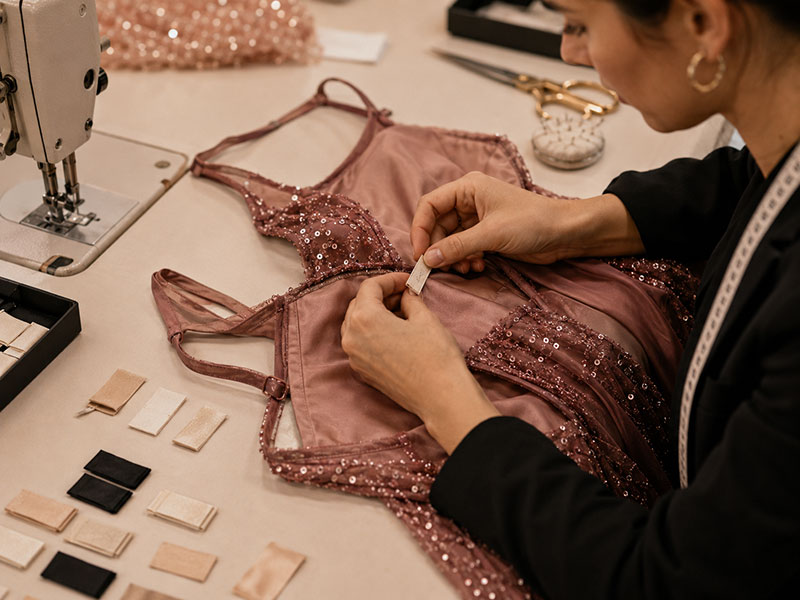
Size Labels

Care Labels

Hangtags

Placement Approval

Artwork Control
Ecommerce-Ready Packaging From Approved Instructions
Packaging protects the garment, identifies the SKU and supports warehouse handling. Jinfeng executes from the current instruction set supplied for each sales and shipment program.
Approve the Unit Pack Before Full Packing
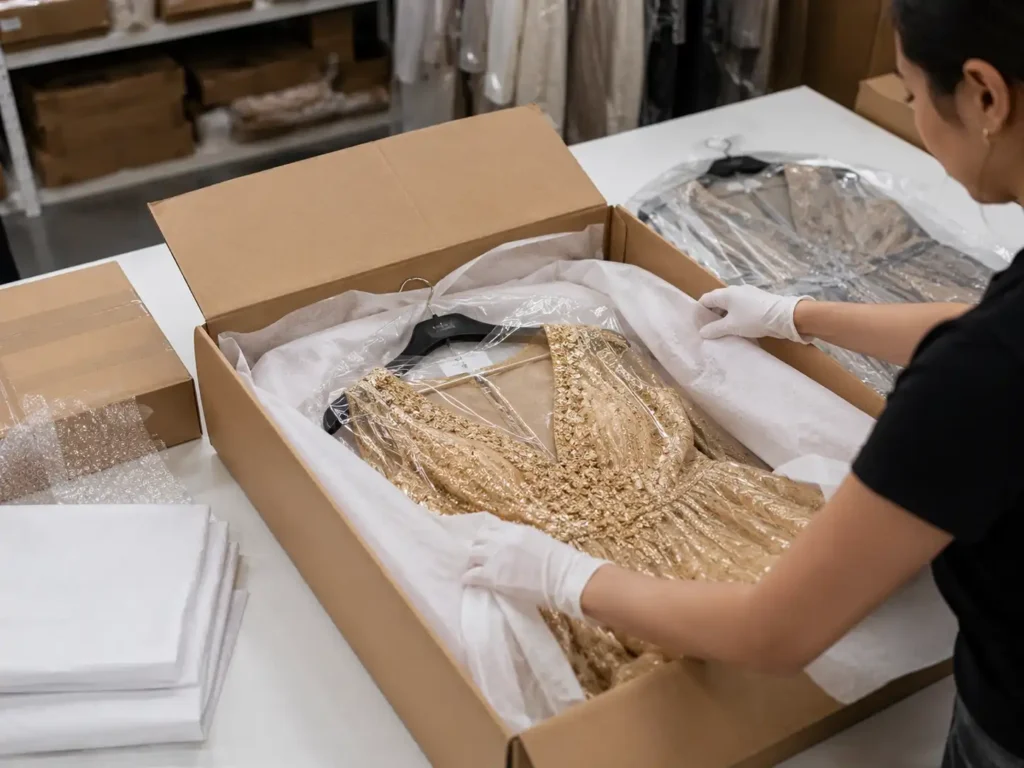
Unit packing begins with a physical packing sample or clearly approved reference. The instruction covers folding direction, tissue or insert when required, hangtag position, size and color sticker, barcode file, polybag type, sealing method and applicable warning text. Garment shape and fabric determine the folding method. Structured bodices, sequins, delicate lace and satin surfaces may require added protection or reduced compression.
The pack must preserve presentation while keeping required identification visible. A barcode hidden by a fold, curved over an edge or covered by another sticker may create scanning difficulty even when the code itself is correct. Placement is reviewed on the actual packed unit.
Amazon requirements and warehouse instructions may change. Jinfeng follows the brand’s current Seller Central shipment plan, prep-center guide or nominated warehouse file rather than relying on a permanently fixed rule set. The brand remains responsible for account settings, barcode strategy and final marketplace compliance decisions.
Connect Garment Identity With Pack Identity
The pack-out sequence checks garment style, color and size before labels or barcodes are applied. Internal labels, external stickers and barcode files must describe the same unit. Where FNSKU files are used, the supplied code is mapped to the correct sellable SKU. Where manufacturer barcodes or another approved barcode method are used, the current instruction controls the process.
Packing files should contain a clear naming rule. Style number, color code, size, SKU, barcode file name and quantity need one consistent relationship. Jinfeng can work from a master SKU table and packing instruction, then separate physical materials by style and production batch.
Scan review is performed on representative packed units according to the approved workflow. The objective is not only a readable barcode, but correct identity. A perfectly scanned code on the wrong size remains a packing failure.
Release Cartons With Controlled Pack-Out Records
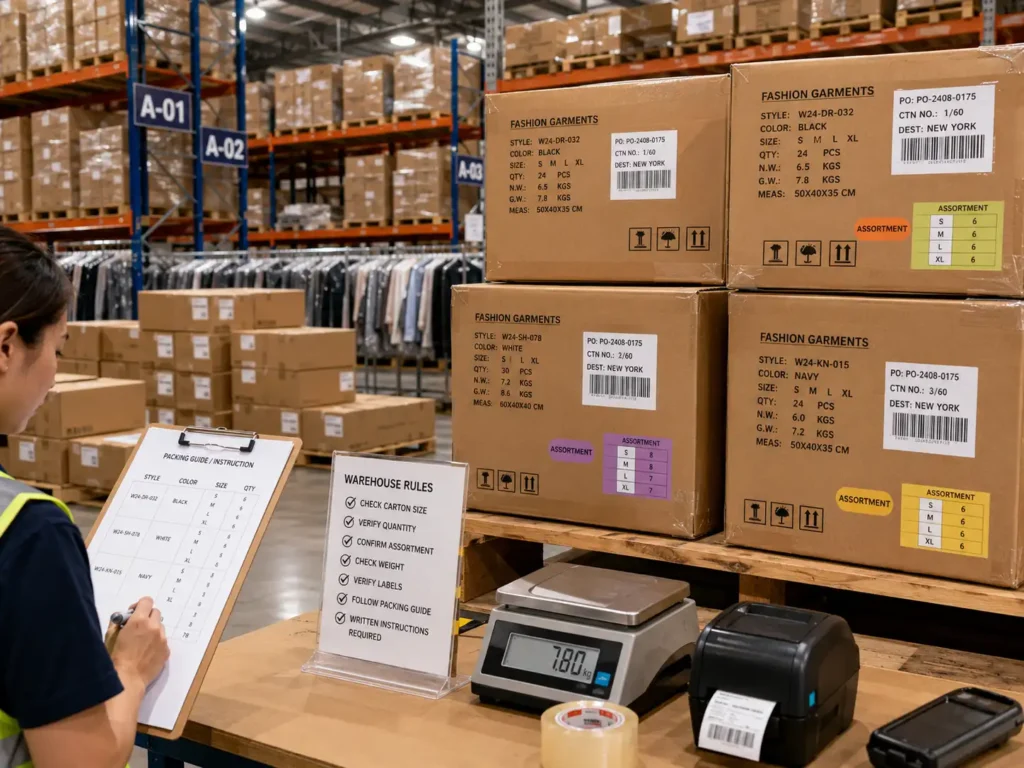
Carton instructions define units per carton, size ratio, color grouping, carton number, dimensions, weight, carton marks and shipment destination. Mixed-SKU cartons require especially clear internal records. Packing teams count and reconcile physical units before sealing.
Carton labels and marks are checked against the packing list. When an order is divided across air, sea, prep-center or warehouse routes, each carton group receives the correct destination and document reference. Late changes are controlled before labels are printed or cartons are sealed.
Pack-out records support final quantity reconciliation and later investigation. If a warehouse reports a discrepancy, style, SKU, carton and packing data provide a traceable starting point. Controlled records also make repeat orders easier because the approved unit pack and carton method can be reviewed rather than recreated.
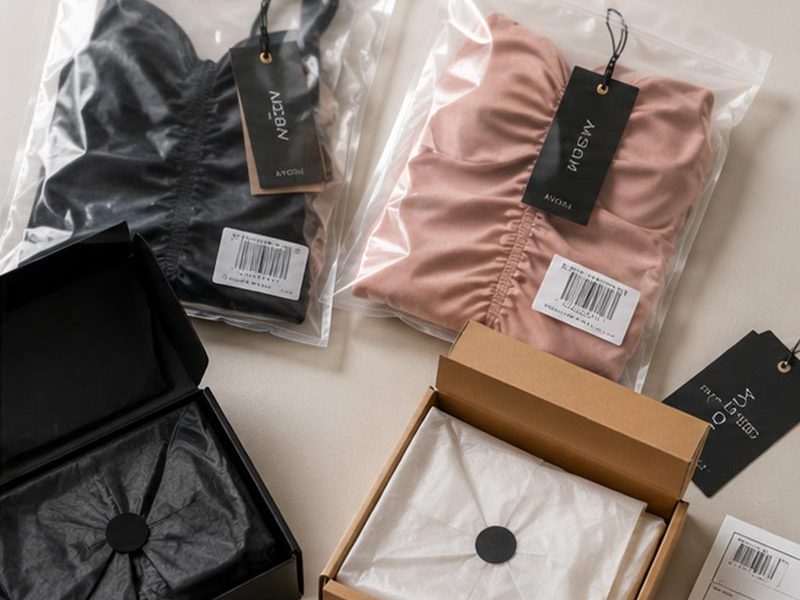
Bulk Production for Multi-Style Amazon Programs
Bulk execution begins after PP approval, material confirmation and file release. Production units, QC points and delivery stages are planned around the actual risk of each style.
Assign Production by Fabric and Construction
A multi-style order should not be divided only by available line space. Jinfeng reviews fabric type, silhouette, operations, embellishment, volume, color count, size range and delivery priority before allocating work. A fitted jersey program needs stable stretch handling; satin slips need controlled cutting and pressing; mesh and lace require delicate sewing; corset dresses need structural experience; embellished party dresses require surface protection and finishing discipline.
The production network includes six owned women’s fashion factories, 10+ long-term satellite partners, 18+ sewing lines and 6+ flexible lines. Allocation remains project-based. Complex styles, material constraints and QC requirements can reduce effective output, so capacity is confirmed against the active production calendar rather than presented as unlimited.
Each production unit receives an approved file set. Style number, color, size range, quantity, BOM, size chart, sewing instruction, material reference, label file, packing requirement and QC checklist are connected before line release. Approved subcontracting boundaries and production locations can be confirmed for programs requiring factory transparency.
Control Materials, Cutting and Sewing
Bulk material arrival begins a new verification stage.
Fabric is checked for identity, color, hand feel, width, GSM, stretch, surface condition and visible defects according to the product. Dye lots and print batches are recorded where relevant.
Relaxation, shrinkage review or panel direction control is added when required.
Cutting uses the approved pattern and marker direction. High-risk panels may be checked for symmetry, print placement, motif direction, stretch orientation or surface protection.
Cut-panel inspection identifies obvious errors before sewing consumes more labor and material.
Production lines follow operation sequences suited to the garment. In-line QC concentrates on fit-sensitive and failure-sensitive points: neckline stretch, zipper insertion, cup and boning placement, ruching distribution, seam tension, lining alignment, slit reinforcement, strap security and decorative attachment.
Problems are corrected close to the operation rather than carried into final inspection.
Finish, Inspect and Release by Shipment
After sewing, garments move through thread trimming, pressing, finishing and measurement review. Pressing standards vary by fabric: satin needs surface protection, mesh and lace require careful temperature control, jersey must avoid shine and stretch, and embellished products need shape without crushing decoration.
Final inspection checks workmanship, measurements, appearance, closures, trims, labels, cleanliness and approved packing details. Packing teams then match style, color, size, SKU and barcode files. Carton quantities and marks are reconciled with the packing list before release.
Large programs can be organized by delivery window. Priority styles, photography quantities, base inventory and replenishment batches may follow separate shipment instructions. Production timing is issued after PP approval, bulk materials, quantity split, QC requirements and packaging files are confirmed. The schedule includes material arrival, cutting, sewing, in-line QC, finishing, inspection, packing and shipment milestones rather than one unsupported “fast delivery” promise.
SKU, Barcode and Carton Accuracy Before Shipment
Four connected control levels keep garment identity, unit-pack data, carton information and shipment documents aligned before inventory leaves the factory.
| Control Level | Information Checked | Release Record |
|---|---|---|
| Garment | Style number, color, size, internal labels and visible workmanship | Garment inspection and label matching record |
| Unit Pack | SKU, barcode or FNSKU when applicable, size/color sticker and pack instruction | Approved packing sample and representative scan review |
| Carton | Units per carton, size ratio, color grouping, carton number and carton mark | Carton packing record and quantity reconciliation |
| Shipment | Total quantity, carton count, destination split, dimensions and weight | Packing list, commercial invoice and shipment handoff data |
Delivery to Forwarders and Approved Warehouses
Nominated Forwarder
Jinfeng can hand over cargo to the brand’s appointed forwarder and coordinate factory pickup or local delivery as agreed. Packing list, commercial invoice, carton dimensions, weights, carton marks and shipment breakdown are prepared from final pack-out data. Booking dates and warehouse receiving requirements are connected to the production release schedule.
- FOB and nominated-forwarder coordination
- Carton and document preparation
- Pickup or local warehouse handoff
- Shipment split by approved instruction
Multi-Route Shipment
A single program may use express, air and sea routes for different inventory priorities. Photo samples, launch quantities, urgent sizes or proven fast-moving SKUs can be separated from base inventory when commercial planning supports the added freight cost. Route timing is quoted by project because destination, season, customs and service level all change delivery estimates.
- Priority launch inventory
- Base inventory by sea
- Air and sea split planning
- Multi-batch production release
Warehouse Handoff
- Prep-center receiving files
- Third-party warehouse requirements
- Carton label coordination
- Final document reconciliation
Repeat-Order Support for Bestselling Dress SKUs
Replenishment becomes faster and safer when approved development, production and packing information remains available. Every reorder begins with a controlled availability and change review.
Retain the Approved Product Record
Repeat-order readiness starts before the first shipment. Jinfeng retains the approved pattern version, grade rules, size chart, fabric reference, color information, trim specification, BOM, sewing instruction, QC checklist, label artwork, unit-pack method and carton instruction. The record reflects the production standard rather than only the photo sample.
Material references are valuable but do not guarantee permanent availability. Fabric suppliers may change batches, colors, minimums or lead times. A repeat begins by confirming the original source and reviewing a replacement when needed. Color, stretch, GSM, drape, opacity and shrinkage are compared before substitution.
Archived files also protect brand consistency across team changes. New merchandisers, factories or production batches can work from a controlled record instead of reconstructing decisions from previous email threads.
Plan Replenishment by Inventory Priority
A reorder does not always need the original assortment ratio. Fast-moving sizes, strong colors or proven styles may require separate quantities. Jinfeng reviews replenishment needs by style, color, size, quantity, fabric availability, packaging materials, line capacity and requested delivery window.
Production can be organized as same-style repeat, new-color repeat, partial-size replenishment, same pattern with a new fabric, or a related style built from an approved block. Each route receives a risk review. A new color may affect dyeing and trim matching; a new fabric may require fit confirmation; a new length may change grading and marker use.
Priority units can be planned for an earlier route while base inventory follows a lower-cost route, subject to production and freight feasibility. The goal is controlled replenishment, not an unsupported promise that every repeat can be produced immediately.
Control Changes Before the Repeat Enters Production
Repeat orders often include small requests with large production impact: a lower neckline, tighter waist, new lining, longer strap, revised care label, different polybag or updated barcode. Every change is linked to the affected files and reviewed for cost, timing, fit and inventory compatibility.
Where a change affects the garment standard, an approval sample or revised PP reference may be required. Packaging-only changes still need artwork and pack-sample confirmation. Old and new inventory should not share confusing labels or SKU files.
A controlled repeat path protects review consistency and supports future line extensions. Proven patterns can become a reliable foundation for new colors, materials and related silhouettes while the original approved fit remains traceable.
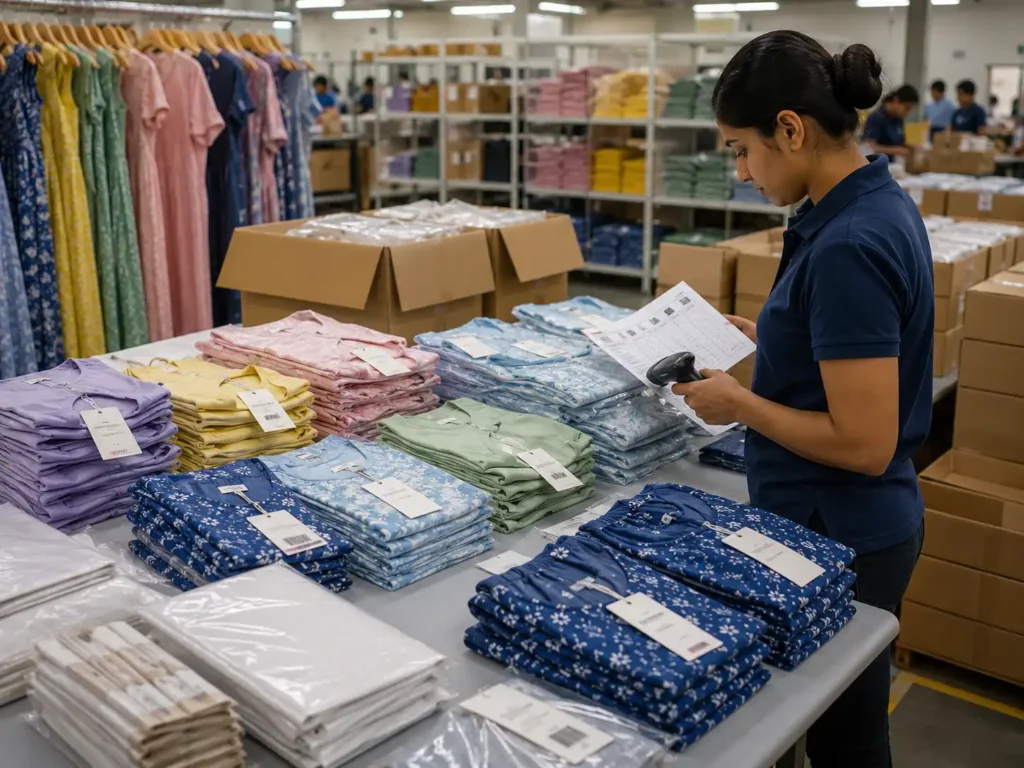
Representative Amazon FBA Dress Program
The anonymized program below reflects the scale and structure commonly managed for established fashion brands. Quantities and timing remain illustrative until each project is technically reviewed.
Program Scope: 18 Styles and 46,800 Units
The assortment included 18 dress styles across bodycon, satin slip, mesh, party and resort categories. Each style carried two to four colors and an XS-XXL size range. After color and size consolidation, the plan contained 276 sellable SKU combinations. Total volume reached 46,800 units, with style/color quantities built above the 200-piece production threshold.
The assortment was grouped by construction rather than merchandising name.
Stretch bodycon styles formed one production group, woven satin styles another, delicate mesh and lace styles a third, and printed resort dresses a fourth. Grouping made pattern review, fabric approval, line allocation and QC planning more precise.
Commercial planning identified launch-priority styles, base inventory and replenishment candidates before bulk production.
The approach prevented all 18 styles from competing for the same material, sample and line milestones.
Development and Approval Across Multiple Styles
Sampling began with style ranking. Core launch styles moved first, followed by supporting colors and lower-priority designs. Standard dresses were planned around 10-15 day first-sample windows; medium-complexity styles around 12-18 days; corset, mesh, lace and sequin constructions around 15-25 days, subject to material readiness. Revised samples and PP samples were scheduled after comments and final material confirmation.
Fit comments were consolidated by pattern block. Similar bodycon styles shared relevant bust-waist-hip learning, while satin slips shared strap, neckline and hem controls. Shared learning reduced repeated errors without forcing every style into one pattern.
Each approved style received a PP standard, BOM, size chart, grade rule, material reference, sewing instruction, QC checklist and pack file. Color, label and barcode versions remained linked to the corresponding SKU structure.
Bulk Packing and Three Delivery Windows
Bulk production was allocated by fabric and construction group, then released into three delivery windows. The first window covered launch-priority units and photography replacements. The second carried the main inventory allocation. The third retained selected sizes and colors for replenishment and final quantity balance. Exact transport routes were decided against inventory urgency and landed-cost targets.
Packing used a master SKU file connecting style, color, size, label set, barcode file, unit-pack instruction and carton plan. Representative pack samples were approved before full pack-out. Carton records supported quantity reconciliation across the three delivery windows.
After shipment release, patterns, fabric references, grade rules, QC points and packaging files remained archived. The program was positioned for same-style repeats, new-color extensions and size-specific replenishment without rebuilding the development record.

Factory, Team and Project-Control Evidence

Sample Rooms

Production Network

Quality Records

Packing Control

Audit Support
NDA Protection
Download the Amazon Dress Program Toolkit

Manufacturing Readiness Checklist
SKU and Carton Template
Amazon FBA Dress Manufacturing Frequently Asked Questions

Send Your Amazon Dress Program
Share the information already available, even when the range is still moving through internal approval. Kelly will organize the files, identify missing technical decisions and coordinate an initial review with the development and production teams. A useful submission normally includes style references or tech packs, target quantity by style/color, size range, preferred fabrics, quality expectations, private-label requirements, SKU or barcode information, unit-pack instructions, carton requirements and the target launch or warehouse date. For programs containing 10-30 styles, a line sheet or assortment table helps separate priority styles, photography needs, base inventory and replenishment candidates. After review, Jinfeng can respond with development questions, sample planning, material direction, MOQ considerations, quotation requirements and a project timeline framework. Final prices and timing are confirmed after construction, materials, quantity split, labels, packaging and production conditions are clear.
- Reference images, tech packs, original samples or line sheets
- Target quantity by style and color
- Size chart, grade rules or target size range
- Fabric, trim and workmanship expectations
- Brand labels, care labels and hangtag artwork
- SKU, barcode and unit-pack files when available
- Carton, warehouse and shipment instructions
- Target launch, delivery or replenishment window


