 Skip to content
Dress Fabric Development
From fabric direction and swatch evaluation to dress sampling, pattern adjustment and bulk-ready material control for fashion collections.
Jinfeng Apparel develops dress fabric solutions around the final garment rather than treating material selection as a separate purchasing step. Fabric direction is reviewed against silhouette, fit, drape, stretch, opacity, color, construction, target cost and production requirements before moving into sampling and bulk approval.
- 22 core dress fabric directionscovering satin, chiffon, mesh, lace, jersey, ponte, crepe, rayon, viscose, velvet, sequin, organza, tulle and related blends.
- 7–10 daysreference sampling for simple styles, 10–15 days for regular dresses and 15–25 days for complex styles, depending on material and project requirements.
- Garment MOQ starts from 200 pcs per style/color; custom dyeing, printing, certified fabrics and special materials may have separate supplier MOQs.
- Development support includes 2 sample rooms, 7+ senior pattern makers and 20+ sample machinistsfor pattern, material and fit coordination.
Fabric Development Capacity Built Around Dress Production
22 Fabric Directions
2 Sample Rooms
7+ Pattern Makers
20+ Sample Machinists
15+ QC Inspectors
100,000+ Monthly Capacity
Common Problems During Dress Fabric Development
Wrong Drape
Poor Stretch Recovery
Excess Transparency
Color Variation
Unworkable Fabric MOQ
Sample-Bulk Difference
What Dress Fabric Development Covers
Dress fabric development can involve sourcing an existing commercial fabric, modifying an available base material, developing color or print, identifying a substitute, or validating a selected material through an actual garment. Jinfeng selects the route according to the dress rather than forcing every project into custom textile production.
Source, Match, or Modify
Many successful dress programs do not require a completely new textile construction. A brand may already have a reference garment, swatch, photograph or target hand feel. Development can begin by finding an existing commercial material that matches the visual and performance target closely enough for sampling.
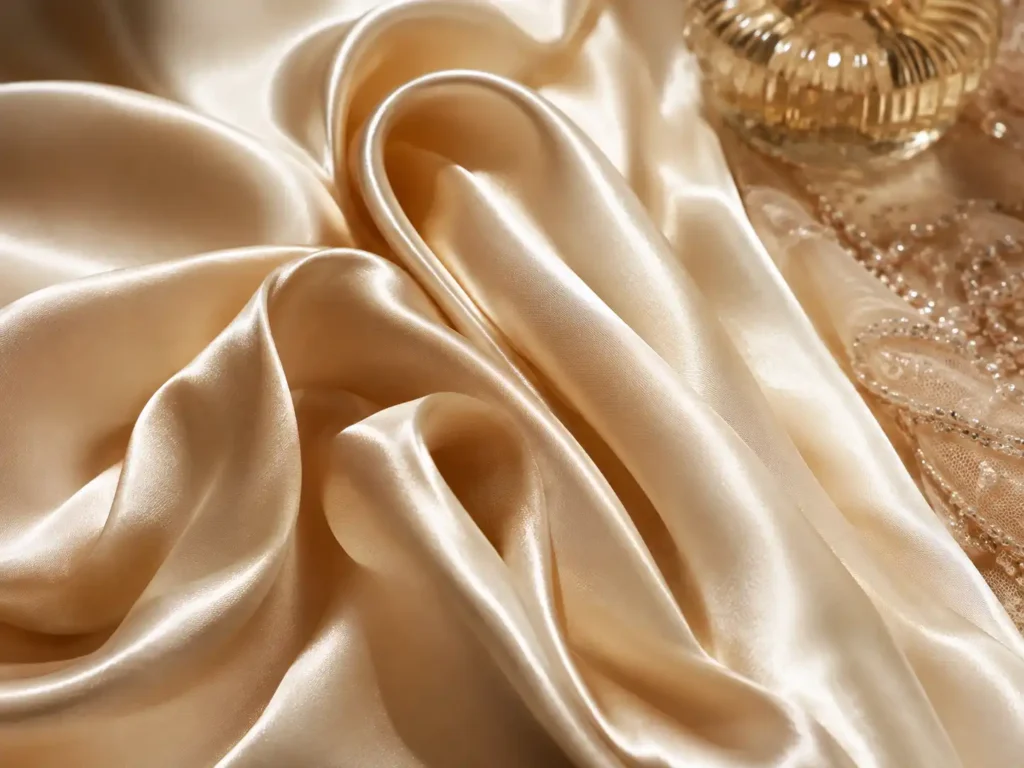
Material comparison looks at composition, weight, hand feel, drape, stretch, recovery, transparency, surface, color, shrinkage risk, MOQ, cost and availability. A satin that looks similar online may have a different back construction, thickness or shine direction. Two meshes with the same composition may produce very different neckline stability. Two viscose fabrics can share a similar hand feel but behave differently after washing.
When an existing option is close but not complete, development may shift toward custom color, print, finish or a better-performing substitute. The goal is not to create complexity for its own sake. Material choices should preserve the intended garment appearance while remaining commercially realistic for the planned order quantity and launch schedule.
Validate Against the Dress
Material approval becomes more reliable after the fabric is cut, sewn and fitted into the intended style. Fabric weight influences how a skirt falls. Stretch affects negative ease and body measurements. Transparency changes lining construction. Surface friction changes gathering and draping. Shrinkage can influence finished garment measurements.
Jinfeng therefore connects fabric evaluation with the actual style. A slip dress needs enough fluidity to fall cleanly without exposing every seam underneath. A bodycon dress needs controlled stretch and recovery rather than maximum elasticity. A structured mini may need enough body to hold shape without becoming rigid. A mesh dress requires transparency, stretch and neckline stability to work together.
The garment sample reveals interactions that a swatch cannot show. Fit comments may lead to a pattern correction, lining adjustment or new fabric direction. The final material choice is therefore judged by how well it supports the approved garment rather than by how attractive the fabric appears alone.
Lock a Bulk Standard
Development is not complete when one approved sample looks good. The selected material must also be commercially repeatable.
Before bulk cutting, relevant material details can be recorded around fabric name, composition, weight, stretch, hand feel, drape, transparency, color, MOQ, cost impact and lead-time impact. A material replacement also triggers a review of whether the pattern, lining or garment sample needs to change.
Once bulk material arrives, incoming checks help confirm whether production fabric remains aligned with the development decision. Fabric batch, color, weight, stretch and visible defects receive attention according to the material type and project requirements.
Choose the Right Fabric Development Partner
Different supplier models solve different material problems. A textile mill may be ideal when a proprietary fiber or fabric construction is required, while a garment-integrated development partner becomes more valuable when material behavior must be validated directly against fit, pattern, sewing and finished dress performance.
| Supplier Model | Main Strength | Typical Limitation | Best Fit |
| Textile R&D Mill | Fiber, yarn, knitting, weaving, finishing | Garment fit and construction usually handled elsewhere | Proprietary or technically new fabric |
| Fabric Sourcing Platform | Broad swatch access and fast discovery | Limited control over final garment engineering | Rapid material comparison |
| Fabric Trader | Existing fabric availability and straightforward sourcing | Less control over deep customization or garment validation | Standard commercial fabrics |
| Garment-Integrated Development Partner | Fabric sourcing, pattern, sampling, garment validation and bulk control | Not intended for raw-fiber invention | Production-ready dress collections |
Build a Clear Fabric Development Brief
Style References
Material Target
Performance Needs
Color Direction
Commercial Target
Launch Window
Match Fabric Performance to Dress Silhouette
Dress fabric selection becomes more accurate when material properties are linked directly to silhouette and construction. The matrix below shows common development directions rather than rigid fabric rules; final selection still depends on design, target hand feel, price, color, lining and sample performance.
| Dress Style | Common Fabric Direction | Key Performance Need | Main Development Control |
|---|---|---|---|
| Slip Dress | Satin, stretch satin, crepe | Fluid drape, controlled shine | Bias behavior, zipper, seam visibility |
| Bodycon Dress | Jersey, ponte, power mesh | Stretch and recovery | Bust-waist-hip fit, side seam stability |
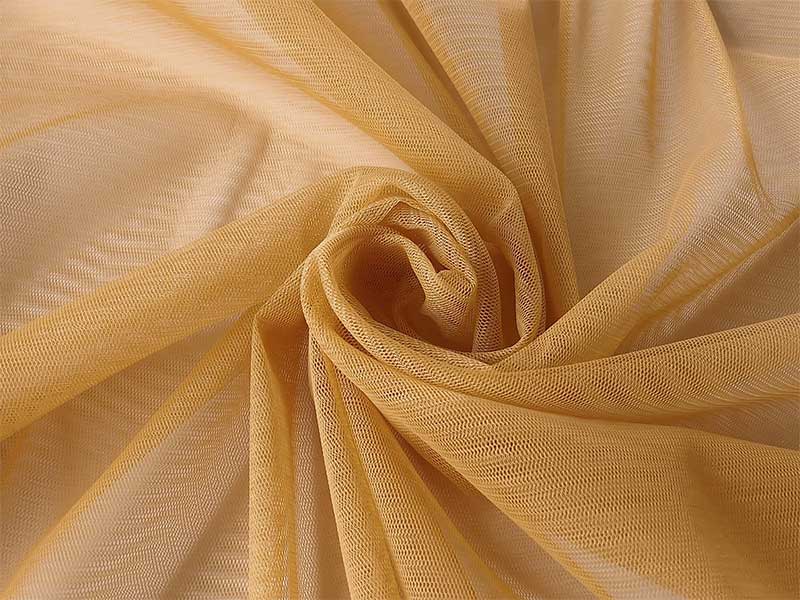
| Mesh Dress | Mesh, power mesh | Stretch, transparency | Lining, neckline stability, hole risk |
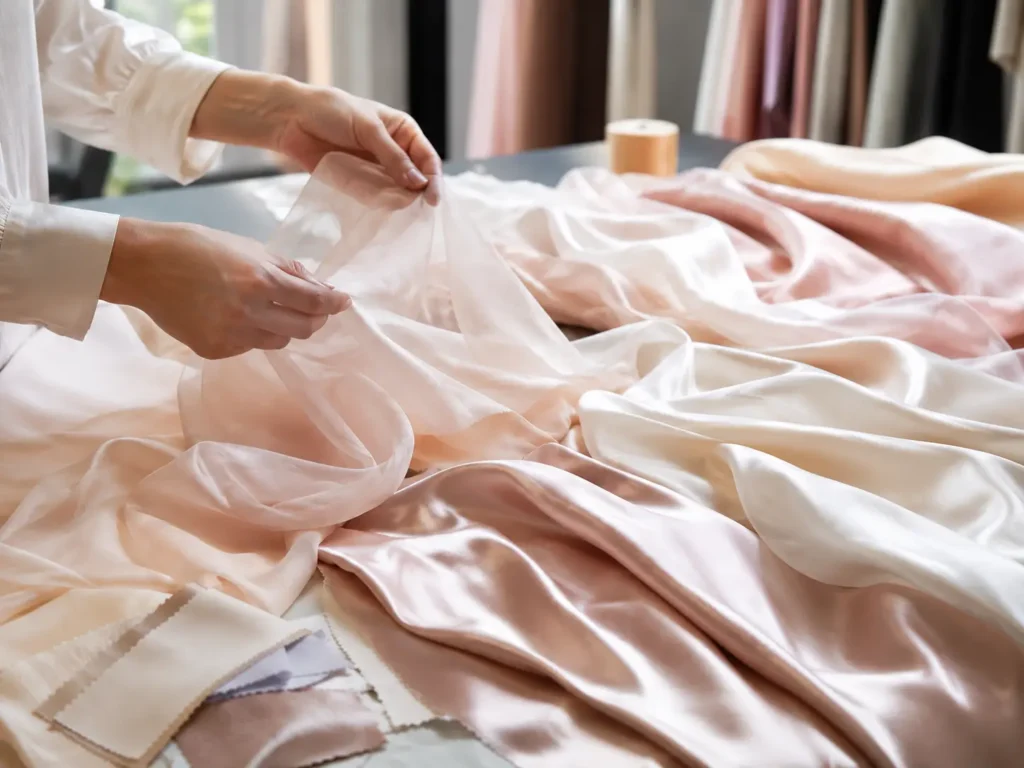
| Chiffon Maxi | Chiffon | Light movement, soft fall | Transparency, lining, hem balance |
| Resort Dress | Rayon, viscose, linen blend | Breathability and movement | Shrinkage, wrinkle, print behavior |
| Corset Dress | Satin, structured woven | Shape and support | Cup, boning, lining, zipper interaction |
| Lace Dress | Lace with lining | Motif and surface detail | Matching, joining, edge finish |
| Sequin Dress | Sequin fabric | Visual impact, controlled weight | Sequin loss, abrasion, lining |
| Occasion Midi | Satin, crepe, velvet | Surface quality and shape | Pressing, drape, color consistency |
| Structured Mini | Ponte, suiting, structured woven | Shape retention | Thickness, seam bulk, fit balance |
| Printed Summer Dress | Rayon, viscose, chiffon | Flow and print clarity | Shrinkage, print scale, color fastness |
| Sheer Layered Dress | Organza, tulle, mesh | Transparency and volume | Layer count, edge handling, structure |
Core Fabric Families for Dress Development
Satin

Stretch Satin
Chiffon

Mesh
Power Mesh

Lace
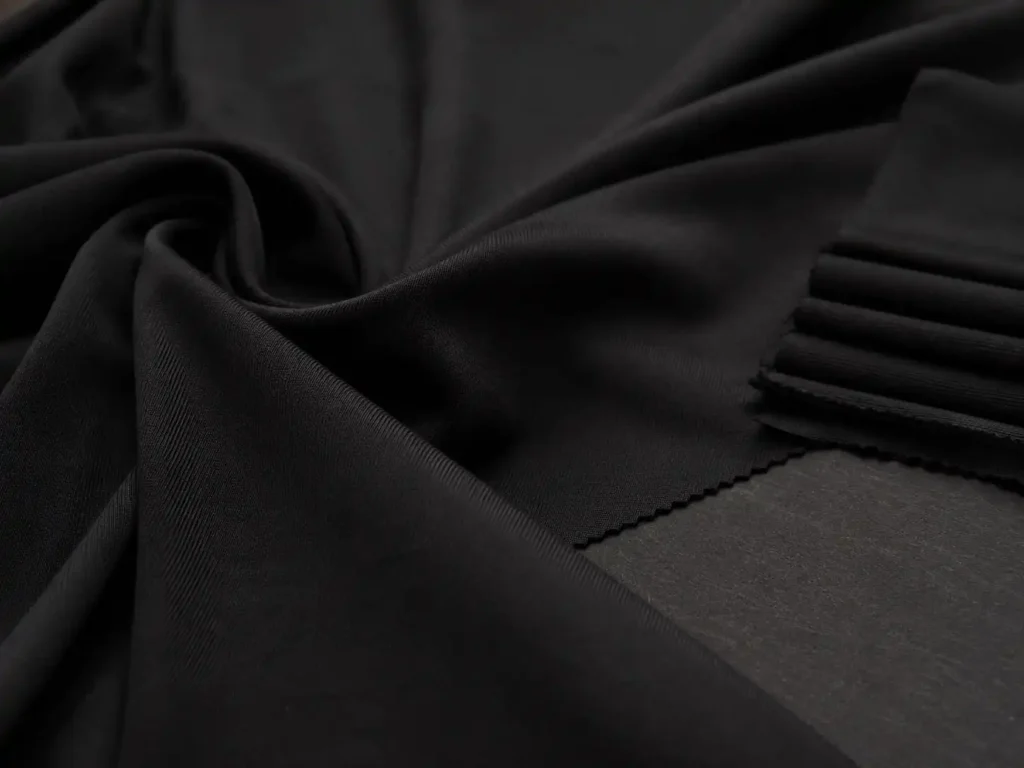
Jersey
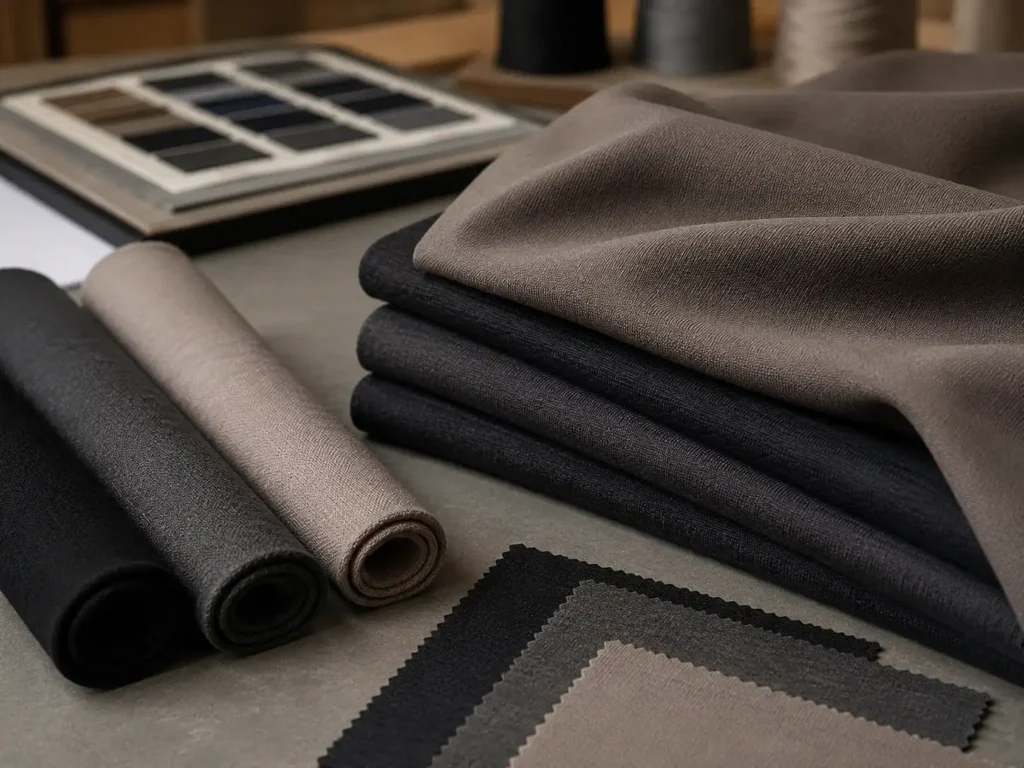
Ponte

Crepe

Rayon and Viscose

Sequin Fabric

Organza and Tulle
Fabric Sourcing and Swatch Review Before Sampling
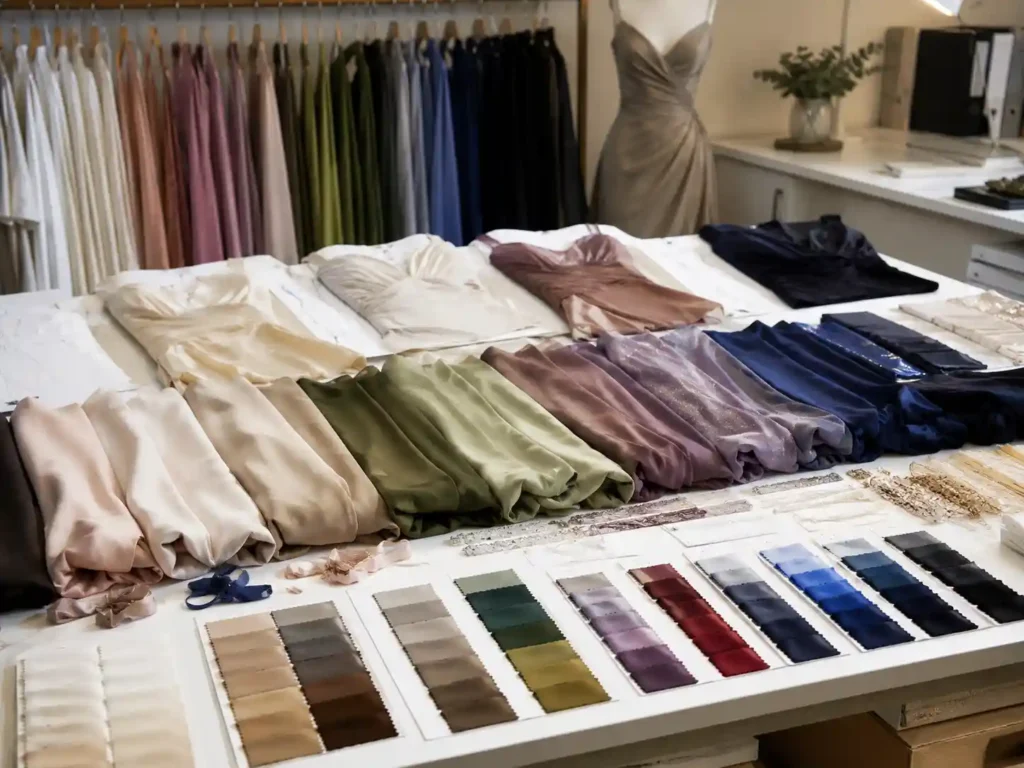
The fastest fabric search is not always the best development route. Jinfeng narrows material options according to the intended dress so swatches can be compared using garment-relevant criteria rather than sending a large group of visually similar fabrics without a clear selection framework.
Start From the Garment
Fabric search begins with the result the garment needs to achieve. A fluid slip dress, structured corset mini, sheer mesh bodycon and printed resort maxi cannot share the same evaluation priorities.
For a slip dress, the team may prioritize drape, surface shine, bias behavior and seam visibility. A bodycon style shifts attention toward stretch, recovery and dimensional stability. Chiffon and mesh projects require a closer look at transparency and lining. Decorative fabrics introduce abrasion, cutting and packing considerations.
Reference images are useful, but photographs cannot communicate every material property. Lighting can exaggerate satin shine. Image editing can hide transparency. A garment hanging on a model does not show shrinkage, stretch recovery or sewing behavior. When an existing swatch or original sample is available, it gives the sourcing team a more reliable physical benchmark.
The aim is to reduce the development range to materials that can realistically support the design, order quantity, cost position and production schedule.
Review More Than Color
Swatch approval should not be reduced to “color approved.”Jinfeng reviews relevant factors including composition, weight, hand feel, drape, stretch, recovery, transparency, surface appearance, shrinkage risk, MOQ, cost and availability.
A brand team may prefer the softest option while the pattern maker sees insufficient stability.
A sourcing team may prefer the lowest-cost fabric while the sample room identifies poor recovery or difficult sewing behavior.
Development works best when material decisions are made across design, fit and commercial requirements together.
Alternative swatches can also be useful when the original material presents a clear commercial problem.
A visually close option may reduce excessive MOQ, shorten material lead time or improve dimensional stability while preserving the intended appearance.
Approve Before Pattern Commitment
Fabric direction should be reasonably stable before pattern development advances too far. Pattern dimensions are influenced by stretch, weight, thickness, drape and shrinkage. Changing those characteristics later can require new pattern work and another sample.
For a new style, the team can move from swatch review into the first sample using the approved or most representative material. Fit results then provide a second layer of material evidence. If the garment hangs incorrectly, feels too rigid, becomes too transparent or loses shape, fabric selection can be reconsidered before the PP stage.
Material approval therefore acts as a development checkpoint rather than a purchasing formality.

Develop Custom Color, Print and Material Directions

Custom-Dyed Fabric

Custom Printed Fabric

Certified Fabric Resources
Review Fabric Risks Before Dress Sampling
Strong material development does not hide fabric limitations. The goal is to identify where the material could create appearance, fit, comfort, production or bulk consistency problems, then decide whether the risk can be controlled or whether a different material is more appropriate.
Appearance and Wear Risks
Surface behavior has a direct impact on the perceived quality of a dress. Satin can show snagging, wrinkles and directional shine. Lace may reveal motif mismatch or rough joining. Mesh can expose lining inconsistencies. Sequin fabrics can lose decorative elements or scratch the skin. Rayon and viscose can show wrinkles more easily than expected.
Risk evaluation should connect material behavior with the design location. A delicate satin used across a clean front panel has different visual requirements from the same fabric under heavy ruching. A lace with a large motif can work on a simple bodice while becoming difficult across multiple curved seams.
Wear conditions matter as well. A dress designed for movement, travel, extended sitting or event use may need a different balance of surface appearance and durability than a photo-driven editorial piece.
Fit and Dimensional Risks
Fabric is part of the sizing system. Stretch, recovery, weight, thickness and shrinkage influence finished dimensions and how a garment sits on the body.
Weak recovery can make a fitted dress loosen through the waist or hip. A heavier material may pull a neckline downward. Switching from a woven fabric into a stretch fabric can change ease requirements. Different shrinkage between outer fabric and lining can cause the lining to show below the hem or distort the garment after pressing or care.
Jinfeng therefore reviews fabric risk together with pattern and measurement control. Material replacement can trigger pattern changes, lining changes and revised sampling rather than being treated as an isolated purchasing decision.
Bulk Production Risks
Commercial volume introduces risks that may not appear in sample yardage.
Different dye lots can create shade variation. Fabric weight or stretch can shift between batches.
Special surfaces may develop cutting or handling damage. Print delays can disrupt production timing. Certified or custom-developed materials may have longer replacement cycles if defects are found after arrival.
Bulk risk is reduced by confirming the main material and alternatives early, checking supplier MOQ and lead time, reviewing bulk color where needed and inspecting material after arrival.
A substitution made late in production is more expensive because pattern, costing, lining, trims and schedule may all need to be rechecked.

Fabric Changes Can Require Pattern Changes
A dress pattern is developed around the physical behavior of its material. Replacing the fabric without reviewing stretch, weight, drape, thickness and shrinkage can change fit even when every pattern measurement remains identical.
Same Pattern, New Fabric
Fashion collections often extend a successful style by changing material:
Satin slip dress → Crepe slip dress
Mesh bodycon dress → Jersey bodycon dress
Chiffon maxi dress → Rayon maxi dress
Ponte office dress → Suiting dress
The commercial logic is attractive because the silhouette is already proven, but the pattern cannot always be reused unchanged. Jinfeng’s development system specifically requires a new comparison of stretch, GSM, drape, opacity, shrinkage, thickness, recovery, lining and seam treatment when material changes.
A crepe may hang farther from the body than satin. Jersey can stretch differently from mesh. Rayon can extend under the weight of a long skirt. Suiting can add structure and seam thickness that were absent in ponte.
The original pattern remains a useful starting point, not an automatic production standard.
Fit Must Follow Material
Material behavior affects critical measurements differently across silhouettes.
For fitted dresses, recovery influences bust, waist and hip stability. For halter or strap styles, fabric weight can affect neckline position and strap tension. Bias-cut garments respond strongly to drape and hanging extension.
Layered chiffon or mesh can alter hem balance. Structured woven fabrics can expose small pattern inaccuracies that softer fabrics hide.
Pattern review therefore focuses on how the selected material changes the body relationship of the garment.
Adjustments can include waist position, bust coverage, hip ease, neckline depth, strap length, armhole shape, slit position and dress length.
When changes are meaningful, an updated pattern and revised sample are safer than trying to correct the problem during bulk sewing.
Update the Production Standard
Any approved material-driven change should move into controlled production documentation. Relevant updates may affect pattern version, size chart, BOM, sewing instructions, lining specification, QC points and packing requirements.
Keeping those changes only in informal messages increases the chance of using an outdated pattern or wrong material during production. Jinfeng records pattern and fabric changes so the PP sample and Golden sample can become clear references for bulk work and future repeat orders.
That record also becomes useful when a brand later launches a new color or another fabric version of the same silhouette.
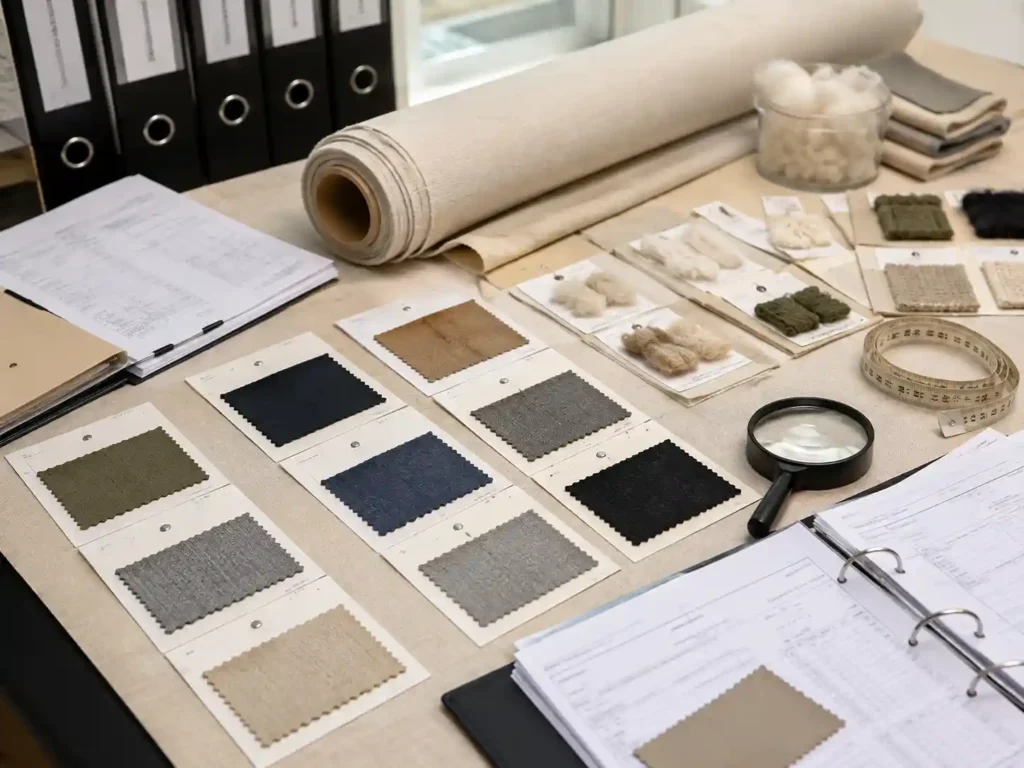
Validate Fabric Through a Real Dress Sample
Fabric approval becomes much stronger after the material is turned into the intended garment. Sampling exposes drape, fit, lining, zipper interaction, seam appearance, surface behavior and movement under conditions that a hand swatch cannot reproduce.
First Sample Evaluation
A first sample connects the material direction with the pattern for the first time. Evaluation can include overall silhouette, bust coverage, waist position, hip fit, neckline, armhole, strap position, length, slit, drape, transparency and movement.
Material issues often become easier to identify at this stage. A satin may feel premium but look too rigid across the skirt. A mesh may have the right transparency but lack enough recovery around the neckline. A chiffon may produce beautiful movement but require a different lining or hem construction. A jersey may feel soft while growing too much during wear.
When the result is not aligned with the intended style, development can move toward a fabric alternative, pattern correction or both.
Revised Sample Control
Revised sampling should capture more than visual comments. Fabric replacement, pattern changes, measurement changes, lining revisions and sewing adjustments need to be tracked together.
If a lighter fabric is selected, hem balance or lining construction may change. If stretch increases, body measurements may need to be reduced. If a fabric becomes thicker, seam bulk, zipper behavior and edge finishing may require another construction decision.
Sample timing depends on complexity and material readiness. Jinfeng’s reference development windows are 7–10 days for simple styles, 10–15 days for regular dresses and 15–25 days for complex styles, with special materials and trims subject to their own sourcing timelines.
PP and Golden Standards
The PP sample is the final pre-production confirmation before bulk manufacturing. Material, fit, measurements, trims, sewing and relevant packing details should be stable enough to form a production reference.
A Golden sample can then support bulk comparison, QC and future repeat orders. Fabric information such as composition, weight, stretch, hand feel, drape, color, supplier and batch can be retained alongside pattern, BOM, sewing and packing records.
For a mature dress program, sample approval is not the finish line. It is the bridge between creative development and repeatable production.

Manage Fabric Changes During Sampling
Recheck Performance
Recheck Commercial Impact
Recheck the Sample
When fabric behavior changes enough to affect fit, lining, sewing or appearance, Jinfeng reviews whether the pattern needs adjustment and whether another sample should be made. Sample-stage changes are recorded before moving toward PP approval so the bulk team works from the newest material and pattern standard.
Fabric Testing and Compliance Support
Fiber Composition
Shrinkage Review
Color Fastness
Pilling and Strength
Chemical Testing

Balance Fabric MOQ, Cost and Development Time
Stock Fabric Route
Available commercial fabrics usually provide the simplest route when the selected quality, color and quantity are already in stock. Satin, mesh, chiffon, jersey, ponte, lace and crepe directions may have available options depending on the supplier and season.
Stock fabric can shorten the path into sampling and may work more easily with Jinfeng’s regular garment MOQ starting from 200 pcs per style/color, but availability must still be checked by color, batch, width, quantity and hand feel. Stock status can change, so a swatch seen during development should not be assumed to remain available indefinitely.
A backup material can be useful where launch timing is tight or where future replenishment is likely.
Custom Development Route
Custom dyeing, custom printing, exclusive lace, special sequin fabrics and certified materials can carry separate supplier minimums. Those minimums may exceed the garment factory’s regular MOQ and can vary by material, color and supplier.
Pantone dyeing introduces lab dips and dye-lot control. Prints require artwork, base-fabric confirmation, scale and sampling. Special lace and sequin fabrics depend on motif, width, decorative density and production availability. Certified materials may also require an eligible supplier and certificate scope.
The commercial decision should therefore be made after material MOQ and usable yield are known, not after the collection has already been priced around an unrealistic assumption.
Cost and Timeline Tradeoffs
A more expensive fabric is not automatically better, and a cheaper fabric is not automatically commercially stronger. The right option should preserve the design language, fit and brand price position while reducing unnecessary material risk.
Cost review considers fabric price together with yield, wastage, lining, construction, sewing time, testing and the effect of the material on production. Timeline planning considers fabric availability, custom development, sample revisions, PP approval, bulk material production and incoming inspection.
Jinfeng does not use one fixed bulk delivery promise because complexity, materials, quantity, colors, QC requirements, packing and logistics all influence the final project schedule.
Control Bulk Fabric Before Cutting Begins
An approved sample establishes the direction, but bulk fabric still needs confirmation. Production material can differ from development yardage in shade, weight, stretch or surface behavior, so material control continues after the purchase order is placed.
Track Bulk Fabric Progress
Jinfeng manages fabric progress as part of the production timeline. Relevant stages can include fabric searching, swatch confirmation, quotation, supplier MOQ review, color confirmation, lab dip where required, print artwork, print sample, bulk material order, fabric production, fabric arrival and incoming inspection.
Tracking matters because fabric is often one of the earliest dependencies in a dress production schedule. A delayed custom color or print can affect cutting dates and every downstream production step.
When material risk is known early, the team can consider alternative stock directions, revised color plans or other development adjustments before the sewing schedule is affected.
Review Color and Batch
Bulk color is especially important for satin, chiffon, lace, mesh and repeated color programs. Jinfeng can review Pantone or approved swatch references, lab dips where used, fabric batches, dye lots, lining colors and surface shine.
Materials with directional shine may require consistent cutting direction because the same fabric can appear lighter or darker when panels are reversed. Repeat orders also require renewed color checking because a later dye lot may not visually match the first production batch even when the same color name is used.
Approved development records provide a benchmark for comparison, but every new bulk lot still needs current verification.
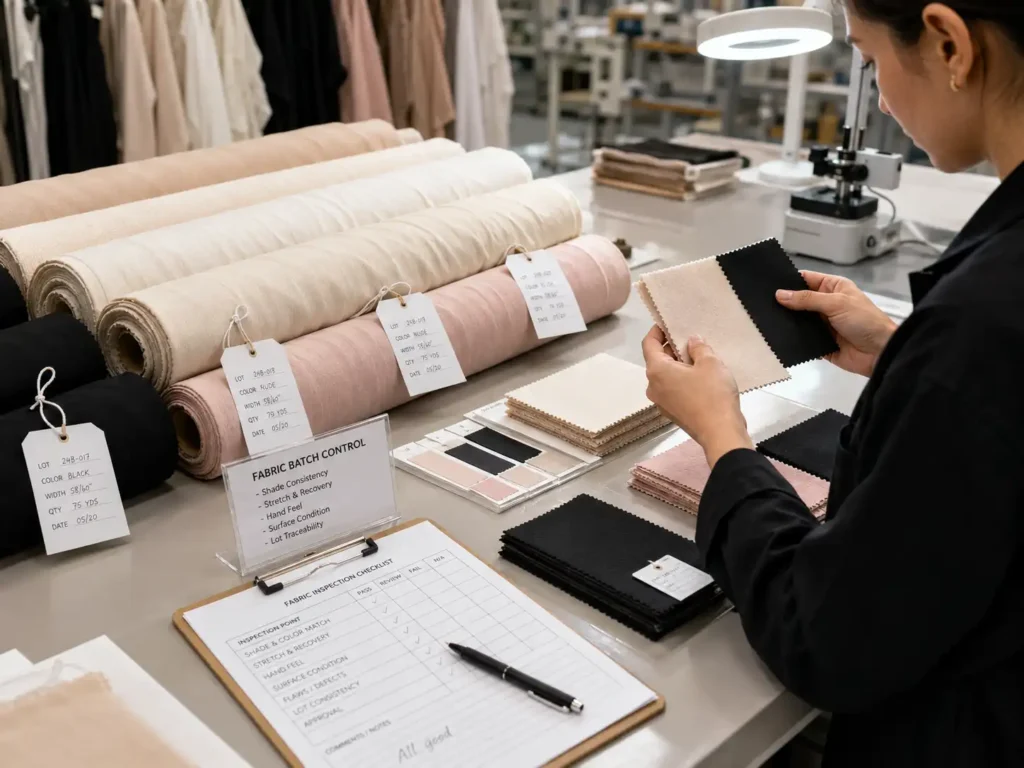
Incoming Material QC
Fabric arrival is a control point before cutting. Material problems discovered after garments have already been sewn are far more expensive to correct.
Incoming review can focus on visible defects, color, batch, weight, stretch and other project-specific properties. Any substitution or meaningful deviation needs to be assessed for its impact on pattern, lining, cost and schedule before production continues.
The aim is straightforward: bulk cutting should begin from a material condition that remains aligned with the approved garment standard.
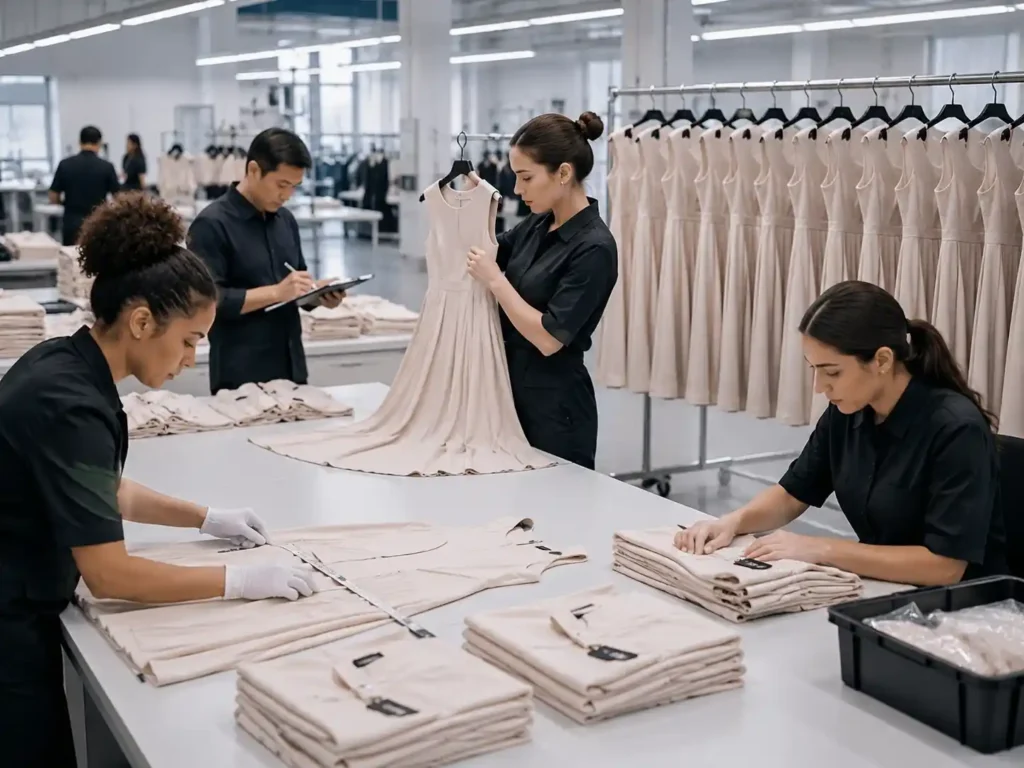
Move From Fabric Direction to Bulk Dresses
Define the Direction
Review Swatches
Develop the Sample
Approve PP Standard
Receive Bulk Fabric
Produce and Inspect
Dress Fabric Development Case for a US Collection
A US occasionwear brand approached Jinfeng with an established design direction and a seasonal collection requiring stronger control over satin hand feel, mesh recovery and bulk color consistency. The commercial program covered 18 dress styles, 34 style/color combinations and 46,800 garments, with multiple materials needing to move through development on one coordinated calendar.
The Development Challenge
The collection combined slip-inspired satin dresses, fitted mesh styles, occasion midis and lace-detail pieces. The initial references communicated the visual direction clearly, but several nominated fabrics did not translate well into the intended garments.
One satin direction had enough shine but felt too rigid once developed into a fitted midi. A softer option produced better drape but made the center-back zipper more visible. A mesh used for fitted styles delivered the right transparency but did not recover strongly enough around the neckline and waist. Lace color also needed to sit correctly against the selected lining rather than being approved as a standalone swatch.
The issue was not a shortage of available fabrics. The real challenge was finding materials that could satisfy design, fit, cost, production and bulk consistency at the same time.
The Development Response
Material options were reorganized by garment requirement instead of by fabric name. Satin directions were compared for weight, shine, drape and seam behavior. Mesh options were reviewed for stretch, recovery and transparency. Lace was assessed together with lining color and motif behavior.
Selected materials moved into actual dress samples. Fit and drape reviews identified where fabric changes affected pattern balance, lining and zipper appearance. Pattern and material decisions were revised together rather than asking the sample room to compensate for an unsuitable fabric through sewing alone.
Color approval also remained connected with bulk planning. The team reviewed material availability and supplier MOQ before finalizing color allocations so the confirmed assortment could be produced without discovering late-stage material minimums.
From Approval to Production
Approved material directions were carried into PP samples and production documentation. Bulk fabrics were ordered against the confirmed style/color plan and checked after arrival before cutting.
Production then moved through cutting, sewing, in-line measurement, finishing and garment inspection against the approved samples and specifications. Satin direction, lining combination, mesh tension and key garment measurements received additional attention on the fabric-sensitive styles.
The program reached commercial production without treating material development as a separate sourcing exercise. Fabric, pattern and garment decisions remained connected from development through the 46,800-piece order, creating a clearer base for later color extensions and repeat orders.
Build Repeatable Fabrics for Seasonal Collections
Repeat Approved Styles
Add New Colors
Change the Fabric
Group Collection Fabrics
Support Replenishment
Plan Annual Development
Dress Fabric Development Frequently Asked Questions
Dress fabric development is the process of selecting, matching, modifying or sourcing a material according to the finished garment requirement. It can include composition, weight, hand feel, drape, stretch, transparency, color, print, lining, MOQ and cost, followed by validation through dress sampling and bulk fabric approval.
Yes. An existing swatch can be used as a physical reference for composition, weight, hand feel, drape, stretch, surface and color. Exact availability depends on the original material and supplier, so Jinfeng may present the closest commercial direction or a suitable alternative when an exact match is unavailable.
Yes. A reference garment or clear design images can be used to identify the required material direction. Physical reference garments are particularly useful because drape, weight, stretch, transparency and construction can be evaluated more accurately than from photographs alone.
It can. Changes in stretch, recovery, weight, drape, thickness, shrinkage and transparency may affect measurements, ease, lining and seam construction. Jinfeng reviews the new material against the existing pattern and may recommend a revised sample before bulk production.
Custom color sourcing can be supported depending on the fabric and supplier. The process may involve a Pantone or physical color reference, lab dip approval and bulk shade confirmation. Custom dyeing can also introduce fabric-specific MOQ and additional development time.
Custom printing can be supported according to the base fabric, artwork, print scale, repeat, color and selected printing method. Digital, screen, placement and border-print directions may have different MOQ and development requirements. Artwork and final garment dimensions should be reviewed together where print placement matters.
Jinfeng’s regular garment MOQ starts from 200 pcs per style/color. Fabric minimums are separate. Stock fabric may work within the garment MOQ more easily, while custom dyeing, custom printing, certified materials, special lace or sequin fabrics can require higher supplier minimums.
Reference sampling times are around 7–10 days for simple styles, 10–15 days for regular dresses and 15–25 days for complex styles. Material availability, custom colors, prints, special trims and revision rounds can extend the timeline.
Yes, where required by the project. Testing may include composition, shrinkage, color fastness, pH, formaldehyde, azo, pilling or strength. Third-party testing can be coordinated with recognized laboratories or a nominated testing provider according to the agreed requirements.
Bulk material can be tracked from order and color approval through arrival and incoming inspection. Relevant checks may include batch, color, weight, stretch and visible material condition. Any meaningful deviation is reviewed before cutting because fabric changes can affect pattern, lining, cost and finished garment quality.

Start Your Dress Fabric Development Project
A strong fabric brief allows Jinfeng Apparel to evaluate the garment from both material and production perspectives. Send the information already available, even if the fabric specification is not fully defined.
A tech pack, original sample, fabric cutting or clear reference images can provide the starting point for material direction, while quantity, color and launch information help determine whether stock sourcing, custom color, printing or another development route is commercially appropriate.
For the most useful first review, include:
- Reference images, sketches or tech pack
- Existing fabric swatch or original garment, if available
- Target fabric hand feel, drape or surface
- Preferred composition or weight, if already defined
- Stretch, opacity or lining requirements
- Pantone colors or print artwork
- Quantity per style and color
- Size range
- Target price position
- Required sample or launch window
- Private-label and packing requirements where relevant

