 Skip to content
Dress Elastic Development
Jinfeng Apparel develops elastic applications as part of the garment structure—not as a trim added at the sewing stage. Our pattern, sample and production teams coordinate elastic type, width, firmness, working stretch, cut length, attachment method, fabric response and finished measurements before bulk production.
- 7+ senior pattern makers and 20+ sample machinists support fit, tension and construction development.
- 7 sample stages are available from first sample through PP and Golden sample approval.
- Standard dress samples typically take 10–15 days; complex structures commonly require 15–25 days, subject to fabric and trim sourcing.
- Elastic specifications can be developed for waistlines, necklines, sleeves, shirring, ruched areas, straps, back panels and internal support structures.
Development Resources Behind Every Elasticated Dress
2 Sample Rooms
7+ Pattern Makers
20+ Sample Machinists
15+ QC Inspectors
18+ Sewing Lines
100,000+ Monthly Capacity
Elastic Development Goes Beyond Choosing a Trim
Material Performance
Garment Engineering
Production Standard

Built for Established Womenswear Development Programs
Global Fashion Brands
Multi-Style Collections
Product Development Teams
Technical Design Teams
Buying and Sourcing Offices
Private Label Programs
Elastic Problems We Resolve Before Bulk Production
Waist Feels Too Tight
Neckline Becomes Loose
Elastic Rolls or Twists
Gathering Looks Uneven
Bulk Fit Changes
Large Sizes Lose Support
Fabric Puckers Around Elastic
Shirring Loses Consistency
Elastic Applications Across Fashion Dress Categories

Elastic Waist Dresses

Bodycon Dresses

Mesh Dresses

Satin Dresses

Ruched Dresses

Puff Sleeve Dresses

Off-Shoulder Dresses

Smocked Dresses
Elastic Options Selected by Garment Function

Knitted Elastic

Woven Elastic

Braided Elastic

Clear Elastic

Elastic Cord

Fold-Over Elastic

Elastic Thread

Covered Waist Elastic
Matching Elastic Behavior to Dress Fabrics
Elastic works through another material, so fabric response is inseparable from elastic development. Jinfeng Apparel reviews composition, weight, stretch, recovery, drape, transparency and surface behavior before deciding how an elasticated area should be constructed.
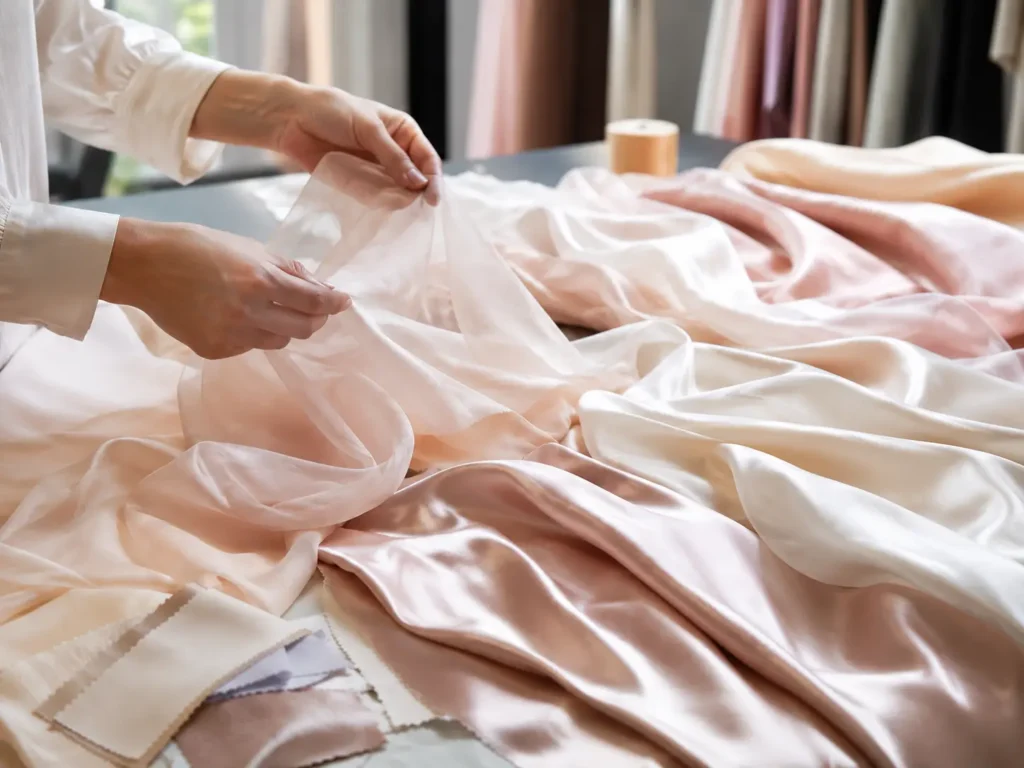
Satin and Lightweight Woven Fabrics
Satin makes tension errors visible. A small amount of excess pulling can create rippling around a waist seam, neckline or sleeve opening, while uneven gathering becomes easy to see under directional light. Development begins by deciding whether the elastic should be concealed in a casing, stitched directly, used internally for stabilization or combined with a separate facing or lining.
Fabric weight and drape affect the decision. A light satin can collapse around a firm elastic, while a heavier satin may require greater holding power to control the intended shape. Stitch density and seam allowance also need to avoid creating a rigid edge beside a fluid body panel.
For elasticated satin waists, the team reviews waist measurement, skirt fullness, gathering distribution and seam appearance together. For strapless or low-back structures, elastic may be only one element within a broader support solution rather than the main holding mechanism.
Sample review focuses on surface smoothness, comfort, symmetry, gathering distribution and whether the elastic remains hidden as intended. A fabric change during development triggers a new review because different weight, stretch or drape can alter the previously approved pattern and elastic balance.

Mesh, Jersey and Stretch Fabrics
Mesh and jersey already contain mechanical stretch, creating a different engineering problem.
Elastic does not simply add stretch; it may need to limit stretch, restore shape or stabilize an opening where the base fabric has insufficient recovery.
For mesh necklines and sleeve edges, the elastic needs enough control to prevent opening without overpowering a lightweight transparent structure.
Lining coverage, seam width and visibility matter because a heavy elastic edge can become more noticeable than the original design intended.
Jersey and bodycon constructions require coordination between fabric stretch and elastic recovery.
An elastic that is too firm may create a visible ring around the body, while a very soft material may fail to stabilize the waist, upper edge or cut-out opening. Finished measurements are reviewed on the garment, not calculated from the elastic strip alone.
When fabric is replaced, Jinfeng Apparel rechecks composition, weight, hand feel, stretch, recovery, drape, transparency, cost, MOQ and lead-time implications.
Pattern or sample work is updated when the material change affects fit or construction.
Chiffon, Lace and Embellished Fabrics
Light chiffon requires a gentle construction because elastic stiffness can overpower the fabric.
Narrow elastic channels, lightweight facings or carefully distributed gathers may be preferable depending on the design.
Excessive feeding can pull the seam out of shape, especially around curved sleeve or neckline areas.
Lace adds another consideration: the elastic may cross open motifs or decorative edges. Placement should protect the intended visual pattern while maintaining support.
If lace is combined with lining or mesh, the layers need to move together without one layer becoming tighter than another.
Sequins and embellished surfaces add seam bulk and abrasion. Elastic should not be forced through heavily embellished areas without considering comfort, needle access and seam finish. In some constructions, the embellishment needs to be cleared from the seam allowance before elastic attachment.
Material approval therefore comes before final elastic approval. A trim specification that works with the original fabric is not treated as automatically valid when the fabric is changed.
Developing Stretch, Recovery and Wearing Tension
Elastic development becomes meaningful only after material behavior is translated into garment performance. Jinfeng Apparel uses fitting, measurements, sample comparison and construction review to establish a workable relationship between elastic length, fabric dimensions and the intended silhouette.
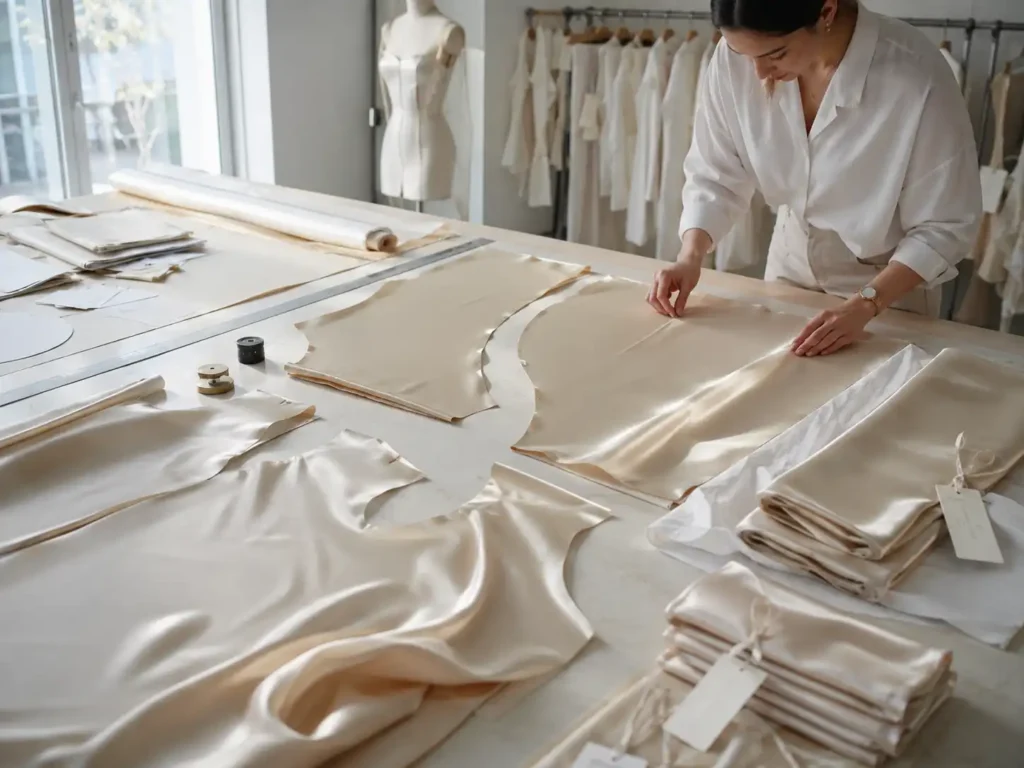
Cut Length Is Developed, Not Guessed
A universal instruction such as “use 80% of the opening measurement” is too crude for professional dress development. Two elastics can have the same width and nominal stretch yet create different wearing pressure because firmness, recovery and construction differ. Fabric weight and the location on the body also change the result.
Development starts with the body and garment requirement. A gathered resort-dress waist may prioritize comfort and soft visual fullness. An upper edge on a strapless design needs more secure stabilization. A puff-sleeve opening has to hold volume without leaving excessive pressure on the arm.
Trial cut lengths can be tested during sample development. The garment is then measured and fitted to evaluate pressure, gathering, movement and visual balance. Changes are recorded as measurable revisions rather than informal sample-room adjustments.
Once the cut length is confirmed, joining allowance and construction are included in the production instruction. Operators therefore receive a defined length and attachment method instead of stretching elastic until the garment “looks right.”

Recovery Matters After Extension
Stretch percentage alone does not describe performance. A dress needs elastic to return toward its original dimension after dressing, movement and handling.
Weak recovery can cause necklines to open, waists to relax or shirring to lose its intended shape.
Recovery is considered alongside fabric behavior. A highly stretchable jersey with poor recovery may need stabilization even though the fabric extends easily.
A stable woven fabric may use elastic primarily to create adjustable fit and gathering rather than to control fabric recovery.
Sample evaluation can include repeated stretching and visual comparison before and after fitting.
Areas such as necklines, sleeve openings and bodycon upper edges receive particular attention because small recovery losses can alter the appearance quickly.
A material change during production preparation should not be approved only by matching width and color. Construction, firmness and recovery need comparison against the approved option before substitution.

Tension Must Balance Fit and Comfort
The strongest elastic is rarely the best elastic.
Tension needs to hold the garment in the intended position while respecting comfort, fabric appearance and body movement.
Too much tension can create deep gathering, seam distortion, visible pressure marks or upward garment movement. Too little can produce slipping, loose openings, weak support or inconsistent styling during wear. The correct balance depends on the design rather than a universal pressure target.
Fit samples allow the team to compare garment measurements with real wearing behavior. Waist, bust, neckline, sleeve and back sections can be checked separately.
Comments are then converted into revised measurements, pattern corrections or elastic changes.
For styles offered across several sizes, tension decisions also feed into the grade rule. Each size needs a controlled relationship between opening measurement, elastic length and intended fit instead of simply adding the same number of centimeters to every component.
Construction Methods for Elasticated Dress Details
Elastic can be hidden, exposed, sewn directly, enclosed in a channel or used to create controlled gathering. Construction choice affects appearance, comfort, sewing time and consistency, so the method is developed alongside the material.

Elastic Casing

Direct Stitch-On

Fold-Over Finish

Shirring Rows

Gathered Elastic Seam

Hidden Stabilization

Elasticated Straps

Internal Support Areas
From Design Reference to Approved Elastic Standard
Requirement Review
Fabric Direction
Elastic Selection
Pattern Development
First Sample
Fit and Revision
PP Sample
Golden Sample
Bulk Control
Sampling Elasticated Dresses Before Production
Sampling is where elastic theory becomes garment evidence. Jinfeng Apparel uses different sample stages to verify structure, fit, fabric response and production feasibility before approved specifications are transferred into bulk files.
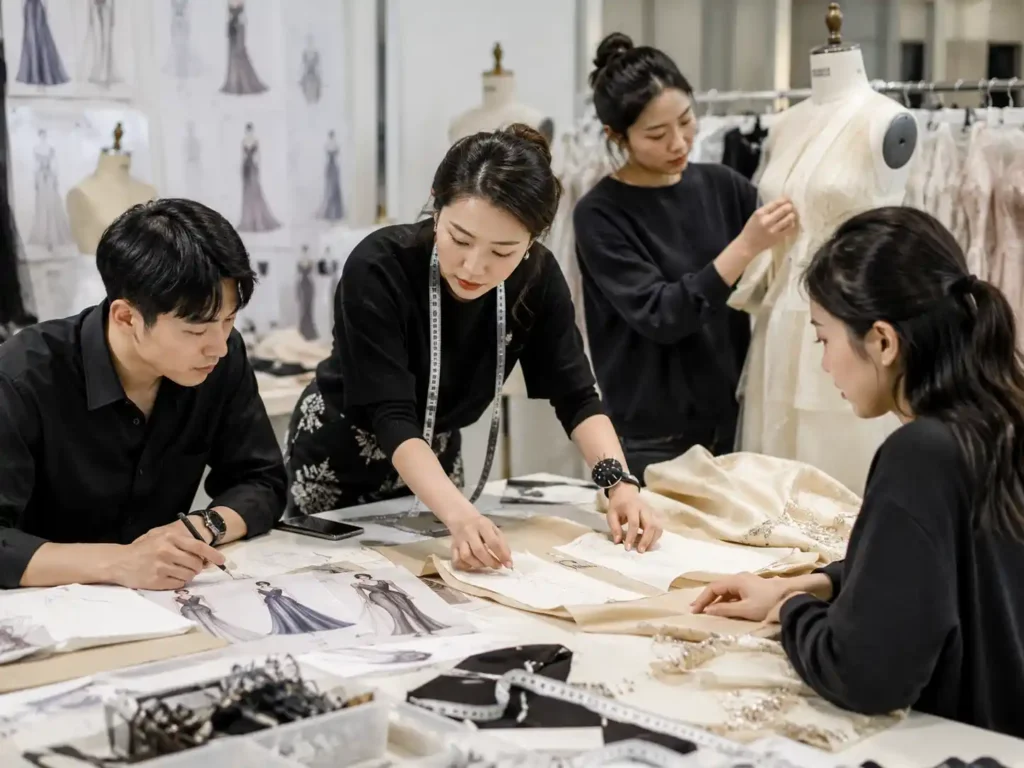
Sample Stages Have Different Jobs
A first sample checks whether the proposed design, fabric, pattern and elastic construction work together.
A fit sample focuses more closely on body measurements and wearing behavior. Revised samples incorporate comments. Photo-ready or salesman samples may serve launch and sales activity, while the PP sample has a very different role: confirming the final bulk standard.
Jinfeng Apparel supports seven recognized sample stages: First Sample, Fit Sample, Revised Sample, Photo-Ready Sample, Salesman Sample, PP Sample and Golden Sample. They are not treated as interchangeable.
For ordinary dresses, sample development commonly runs around 10–15 days. More complex corset, sequin, lace, mesh or multi-component styles commonly require 15–25 days. Special fabrics or trims can extend the schedule according to supplier availability.
The goal is not to rush an attractive prototype through the sample room. Development is complete only when relevant comments have been converted into production-ready records.

Elastic Options Can Be Compared
Where performance is uncertain, two elastic options can be evaluated rather than choosing solely from a trim card.
Comparison may focus on:
- Width and thickness
- Firmness
- Stretch range
- Recovery
- Surface feel
- Finished wearing pressure
- Gathering appearance
- Compatibility with fabric
- Attachment stability
- Supplier availability for bulk
A firmer elastic may hold an off-shoulder neckline more securely yet create an uncomfortable edge. A softer option may feel better but fail to recover after movement. The garment sample reveals the tradeoff more clearly than isolated material inspection.
After fitting, the selected option is recorded along with any revised cut length, pattern measurement or attachment method.

Fit Comments Become Production Records
Sample feedback is useful only when the approved changes reach bulk production.
Jinfeng Apparel records comments involving measurements, fabric, trims, construction, cost or lead-time impact.
Relevant updates move into the tech pack, pattern, size chart, BOM, sewing instruction and QC checklist.
For elasticated styles, records can include opening measurement, elastic cut length, placement, joining details, casing dimensions, stitching method, visual distribution and tolerance checkpoints as applicable to the design.
The PP sample confirms the final combination.
The Golden sample then provides the physical reference for production and inspection.
A sample-room adjustment that exists only in a machinist’s memory is not treated as an adequate production standard.
Size Grading for Elasticated Dress Fit
Jinfeng Apparel supports US, UK, EU and AU sizing, standard alpha sizing from XS–XL, plus extended, plus-size, petite or tall development according to the supplied size standard. Elastic length needs a controlled grade relationship with the finished garment rather than one fixed increment across every size.
| Development Area | Smaller Sizes | Mid Sizes | Larger / Extended Sizes | What We Check |
|---|---|---|---|---|
| Waist Elastic | Avoid excessive compression | Maintain target fit | Preserve support without over-tightening | Body measure, garment measure, elastic length, gathering |
| Neckline Elastic | Prevent edge digging | Hold neckline position | Maintain recovery over larger opening | Neckline circumference, stretch, recovery, curve |
| Sleeve Opening | Balance comfort and volume | Maintain design shape | Recheck arm opening pressure | Opening measure, sleeve fullness, elastic firmness |
| Smocked Panel | Control contraction | Preserve visual density | Maintain usable stretch range | Panel width, row spacing, finished width |
| Bodycon Edge | Avoid visible indentation | Stabilize opening | Maintain support over greater circumference | Fabric stretch, edge recovery, elastic pressure |
| Back Elastic Panel | Maintain proportion | Balance front/back fit | Recheck extension and support | Back panel width, extension, garment balance |
Sewing Control Where Elastic Performance Is Created
Elastic performance can be lost on the sewing line even when the material and pattern are correct. Feeding, joining, stitching and distribution determine whether the approved sample can be reproduced consistently across a production order.
Distribution Must Be Controlled
A defined elastic length still needs to be distributed evenly across the garment section. Without reference points, an operator can use the correct total length while creating concentrated gathers in one area and flat fabric in another.
Waistlines, puff sleeves, ruched seams and off-shoulder necklines can use placement marks or sectional reference points according to the construction. Left-right symmetry is checked where the visual effect should match.
Elastic is not stretched by eye until the seam reaches the end. The production method follows the approved sample and sewing instruction so the relationship between fabric and elastic remains repeatable.
For shirring, distribution becomes even more important because many rows contribute to the finished contraction. Row spacing and start-stop positions influence the appearance across the whole panel.
Stitching Must Move With the Elastic
A flexible component requires a seam capable of handling the intended extension. Stitch choice, thread behavior and sewing method therefore need to match the application.
Directly attached elastic can fail if the seam restricts stretch or if stitch density creates a rigid perforated edge.
Conversely, a loose or unstable seam can reduce control and produce inconsistent gathering.
Seam allowance is also considered. A heavy seam beside a narrow elastic can create a hard ridge or visible bulge, especially on satin, mesh and close-fitting dresses.
Joining points deserve specific attention.
Overlap, seam bulk and reinforcement are checked so the join does not create a noticeable hard spot around the waist or other body-contact area.
Casing and Edge Construction Need Accuracy
Elastic casings need enough clearance for insertion and movement without allowing uncontrolled twisting. The pattern defines the channel dimensions, while sewing accuracy maintains them through production.
Curved necklines and sleeve openings present another risk. If a channel varies in width, the elastic may bind in one section and move freely in another. Finished appearance can then change even when the elastic itself meets specification.
For exposed or fold-over constructions, visual stitching becomes part of the design. Edge alignment, elastic position and tension need to remain consistent because any deviation is immediately visible.
In-line inspection focuses on the product-specific risks rather than only checking the dress after all sewing is complete. Early correction prevents the same elastic defect from being repeated across a large batch.
Keeping Approved Elastic Fit Through Bulk Production
Moving from one approved sample to tens of thousands of garments requires more than a reference photo. Elastic material, measurement and construction details need to remain traceable from PP approval through sewing and final inspection.

Material and Specification Lock
Before bulk production, final fabric, elastic, trims, measurements, colors, construction and relevant packing requirements are confirmed.
The PP sample represents the final pre-production combination rather than an early development version.
Elastic details are locked according to the garment requirement. Relevant records may include supplier or approved trim reference, width, construction, color, cut length, placement, attachment and finished measurement.
A substitute elastic is not evaluated by color and width alone.
Differences in firmness or recovery can alter fit even when appearance is similar.
Material changes therefore require review before entering bulk production.
The Golden sample provides a physical reference once development is sealed. Pattern, BOM, size chart, sewing instruction and QC requirements support the physical sample with written standards.
Production-Line Transfer
Production preparation communicates the approved method before full sewing volume builds.
For elasticated garments, attention may include:
- Correct elastic issue to the line
- Cut-length control where applicable
- Placement and distribution marks
- Joining method
- Casing dimensions
- Stitching instructions
- Finished elasticated measurements
- Symmetry requirements
- Visual gathering standard
- Reference PP or Golden sample
The aim is to prevent the sample-room result from depending on individual operator judgment.
A production line needs a repeatable instruction that can be checked by supervisors and QC staff.
Large multi-style programs require additional organization because several elastic specifications may run at the same time.
Style-level BOMs and production records help prevent similar trims from being mixed.
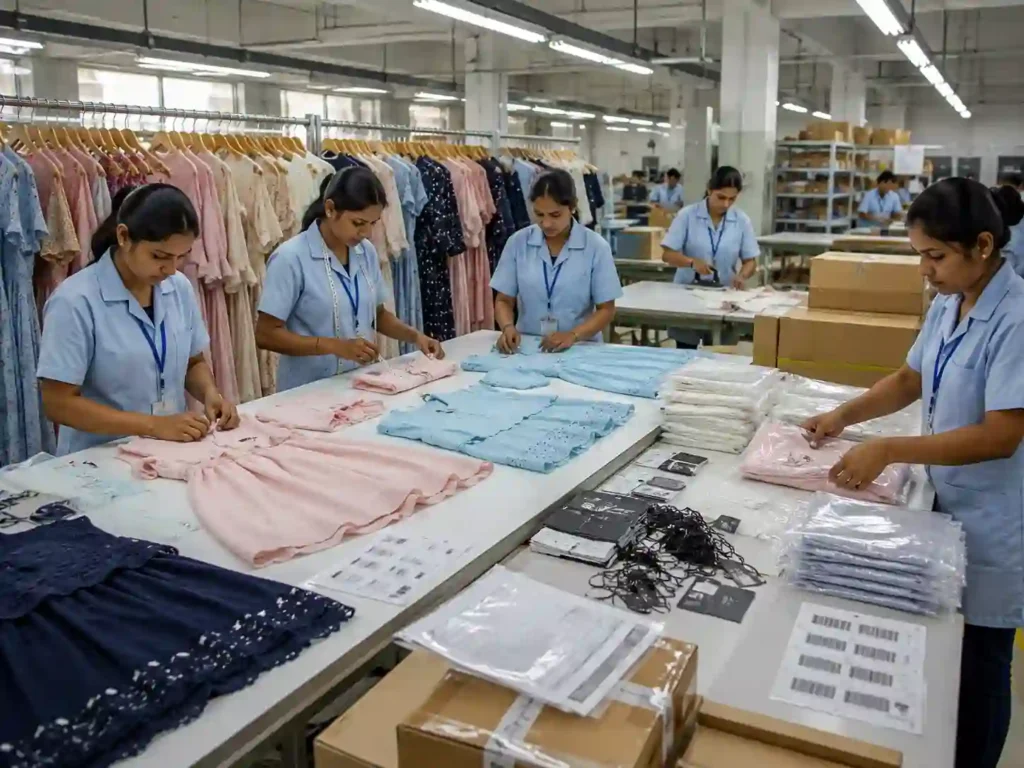
QC at More Than One Stage
Jinfeng Apparel’s QC system can cover incoming materials, cutting, sewing, in-line checks, finished garments, pressing, packing, AQL inspection and client inspection support according to the project.
Elastic-related inspection points are placed where problems can still be corrected efficiently. An in-line check may catch uneven waist gathering or a loose neckline before hundreds of units are completed. Finished-garment inspection then reviews appearance, measurement and construction against the approved standard.
If a defect appears, the workflow is not limited to removing one garment. The issue is classified, communicated to the line, corrected, reinspected and recorded so the same cause can be addressed in continuing production.
Bulk lead time is confirmed by project after PP approval, fabric and trim readiness, order quantity, style complexity, color-size breakdown, packing requirements and launch calendar are known. Shipment timing is likewise planned according to destination and selected express, air or sea solution rather than presented as one fixed promise.
Common Elastic Failures and Corrective Actions
Elastic defects often reveal a mismatch between material, pattern, sewing or grading rather than a single bad component. Development and production teams use the defect pattern to identify where the specification needs correction.
| Garment Problem | Likely Development Cause | Corrective Direction |
|---|---|---|
| Waist feels too tight | Excessive firmness or short cut length | Recheck intended fit, elastic option and cut length through fitting |
| Neckline opens after wear | Weak recovery or insufficient stabilization | Compare recovery, attachment and neckline pattern |
| Elastic rolls in casing | Casing clearance or stiffness mismatch | Review elastic width, casing dimension and seam bulk |
| Gathering is uneven | Inconsistent feeding or poor distribution control | Add placement marks and define sewing distribution |
| Satin puckers near elastic | Excess tension or rigid construction | Reduce distortion through material and sewing adjustment |
| Mesh edge looks heavy | Elastic too firm or visually bulky | Review narrower/softer option and edge construction |
| Shirring varies between units | Row spacing or sewing control varies | Define panel measure, row spacing and finished contraction |
| Larger sizes feel loose | Elastic grade does not match garment grade | Rework grade relationship by size and intended fit |
Multi-Style Elastic Dress Development for a US Brand
An anonymized collection example shows how elastic development fits inside a larger fashion program. The focus is not one isolated trim decision, but keeping several silhouettes, fabrics and elastic functions aligned through sampling and production.

Program Scope
A US womenswear program was planned around 18 dress styles and approximately 42,000 total pieces, with quantities distributed across several colorways and sizes.
Nine styles contained meaningful elastic applications, including ruched bodycon dresses, mesh dresses, puff-sleeve styles, elastic-waist resort dresses and off-shoulder silhouettes.
The collection used several fabrics rather than one common base: stretch jersey, mesh, satin, lightweight woven and lined constructions.
Applying one elastic specification across the nine elasticated styles would have created inconsistent fit and surface appearance.
Development therefore separated the trim decisions by garment function. Waist applications prioritized comfort and stable gathering. Necklines required recovery and position control. Sleeve openings needed enough tension to hold volume without excessive pressure. Mesh styles required lower visual bulk and careful edge stabilization.

Sample Development
The first development stage compared design references, size requirements, fabric behavior and intended fit. Selected styles required more than one elastic option before the preferred combination was confirmed.
For a fitted neckline, a firmer option improved holding power but created visible edge pressure during fitting. A softer alternative produced a cleaner appearance but required adjustment to cut length and attachment tension to maintain recovery. The revised version was carried forward rather than accepting either original trial unchanged.
Ruched styles required separate work on elastic length and distribution marks. Adjusting elastic alone changed the visual density of the ruching, so side-panel dimensions and placement references were corrected together.
Sample comments were converted into updated pattern information, size measurements, trim references, sewing instructions and review points. Approved styles then moved through PP confirmation before final production standards were locked.

Bulk Control and Result
Production was divided by style requirements rather than treating all elasticated dresses as one construction category. Elastic issue, style references and sewing details were checked before the affected lines entered normal volume.
In-line QC paid particular attention to waist measurement, neckline stability, gathering symmetry, shirring appearance and elasticated sleeve openings. Production pieces were compared against approved measurements and sample appearance rather than relying on trim width as the only control.
When the same collection format moved into subsequent color and style development, retained pattern, trim, measurement and Golden-sample records reduced the need to rebuild approved construction logic from the beginning. New fabrics or changed elastic requirements were still reviewed where they could affect fit.
The case illustrates the main purpose of elastic development: turning a design-dependent adjustment into a documented manufacturing standard that can survive multiple styles, sizes and production quantities.
Send the Right Information for Faster Development
Style Reference
Fabric Direction
Existing Elastic Details
Fit Comments
Size Requirements
Production Plan
Frequently Asked Questions About Dress Elastic Development

Develop an Elasticated Dress Ready for Production
A strong elasticated dress starts with a clear relationship between fabric, pattern, elastic performance and finished fit.
Jinfeng Apparel can review your design before sampling, compare appropriate trim directions, develop the pattern and elastic relationship, test the construction through sample stages and convert approved details into production files for controlled bulk manufacturing.
For a faster project review, send:
- Tech pack, sketch, line sheet, design image or original sample
- Fabric specification or preferred fabric direction
- Elastic location and any available trim reference
- Fit comments or problems from an existing sample
- Size chart and target market
- Style quantity, colors and size breakdown
- Private-label and packing requirements where relevant
- Target launch date or required production window


