 Skip to content
Dress Development Manufacturer
Custom dress development from design reference, fabric direction and pattern work to sampling, bulk production and private-label delivery.
Jinfeng Apparel helps fashion brands, sourcing teams and product development teams turn dress concepts, tech packs, reference photos, original samples and line sheets into production-ready womenswear. From Guangdong’s apparel supply chain, our team supports custom dresses, skirts, jumpsuits, matching sets and private-label collections with fabric sourcing, trim selection, pattern development, sample revisions, PP approval, bulk production control, QC, packing and export delivery.
- 2 sample rooms— first samples, fit samples, revised samples, photo-ready samples, PP samples and Golden samples.
- 7+ senior pattern makers— bust, waist, hip, neckline, length, lining, slit, strap and grading control.
- 20+ sample machinists— sample sewing support for dresses, sets, jumpsuits, tops and private-label womenswear.
- 15+ QC inspectors— material, cutting, sewing, measurement, appearance, pressing and packing checks.
- Anonymous development case range: 15–22 styles / 38,000–62,000 pcs— dress programs across US, UK and Australian markets.
Development Capacity For Fashion Programs
Since 2008
- Custom women’s fashion manufacturing since 2008.
- Dress, skirt, jumpsuit, set and private-label womenswear support.
- Development records help future orders and seasonal extensions.
6 Owned Factories
Jinfeng Apparel operates 6 owned women’s fashion factories. Factory matching is based on style structure, fabric type, construction difficulty, order quantity, color split and delivery schedule. Simple woven dresses, lined satin styles, corset dresses, mesh designs, lace programs and multi-style collections need different production planning.
- Owned factory support for core womenswear production.
- Factory matching by garment structure and fabric behavior.
- Stronger control for complex styles and repeat programs.
10+ Partner Factories
- Capacity support for seasonal programs.
- Production allocation by fabric and construction difficulty.
- Unified project records for QC and packing follow-up.
2 Sample Rooms
- First sample, fit sample and revised sample support.
- Photo-ready and PP sample preparation.
- Sample comments converted into production records.
7+ Pattern Makers
Senior pattern makers review bust, waist, hip, length, neckline, armhole, back coverage, strap position, slit height, lining, stretch and support. For dress development, pattern accuracy affects visual proportion, comfort, size grading, sample approval and repeat-order consistency.
- Bust, waist, hip and length control.
- Neckline, strap, armhole and slit review.
- Pattern records support future production.
15+ QC Inspectors
- Material, cutting and sewing checks.
- Measurement, appearance and pressing review.
- Label, polybag and carton inspection before delivery.
Dress Development Partner For Brand Teams
Development Manufacturer

- Tech pack, reference photo, sample and sketch review.
- Fabric, trim, pattern and construction direction.
- Sample-to-bulk production route under one project flow.
Brand Production Partner

Brand teams need consistent files, not only verbal promises. Jinfeng Apparel keeps pattern records, size charts, BOM notes, fabric approvals, trim details, sample comments, QC points and packing instructions for future production. Long-term cooperation can support seasonal collections, repeat orders, bestseller replenishment, new color development, same-pattern new fabric programs and multi-batch delivery.
- Development files retained for future orders.
- Pattern, fabric and trim notes linked with approved samples.
- Private-label packing records support repeat programs.
Built For Serious Womenswear Programs
Fashion Brands
Best for:
- Dress collections.
- Partywear ranges.
- Occasionwear programs.
- Resort and vacation edits.
- Repeat-order styles.
Sourcing Teams
Best for:
- Multi-style vendor review.
- Factory capability checks.
- Bulk order planning.
- Cost and material comparison.
- Export coordination.
Product Developers
Best for:
- Fit sample review.
- Pattern correction.
- Fabric replacement.
- Construction adjustment.
- PP sample preparation.
Private-Label Programs
Best for:
- Woven label planning.
- Care label files.
- Barcode packing.
- Retail-ready cartons.
- Warehouse label support.
Ecommerce Fashion Teams
Best for:
- Photo sample planning.
- Monthly drops.
- Hero style production.
- Reorder support.
- SKU packing control.
Brand Groups
Best for:
- 20,000–80,000 pcs programs.
- Multi-style collection orders.
- Multi-color planning.
- Multi-batch delivery.
- Long-term vendor management.
Problems Development Teams Want Solved
Weak Tech Packs
- Missing measurements.
- Unclear seams.
- Fabric gaps.
- Trim uncertainty.
- Packing details.
Poor Fabric Match
A reference photo may look soft, glossy or structured, while the wrong bulk fabric can feel flat, stiff, sheer or unstable. Jinfeng compares weight, handfeel, drape, stretch, recovery, transparency, shine, shrinkage risk, wrinkle behavior, color and MOQ before sample work moves forward. Control focus:
- Drape.
- Handfeel.
- Shine.
- Stretch.
- Color batch.
Fit Failure
Dresses fail when bust, waist, hip, length, strap, armhole, neckline, back coverage or slit position does not match the target body shape. Jinfeng’s pattern team reviews fit comments and measurement data before revising paper patterns, size charts and sample instructions. Control focus:
- Bust coverage.
- Waistline height.
- Hip curve.
- Strap length.
- Slit safety.
Sample Confusion
A first sample, photo sample, fit sample, PP sample and Golden sample are not the same. Jinfeng separates sample purpose to reduce approval confusion.
A photo-ready sample may support campaign shooting, while a PP sample confirms final bulk production standards. Control focus:
- Version naming.
- Sample comments.
- Approval status.
- Revision action.
- Bulk standard.
Bulk Inconsistency
Sample-to-bulk inconsistency can come from fabric batch changes, trim substitution, measurement drift, sewing method changes, pressing differences or packing errors.
Jinfeng uses PP sample, Golden sample, BOM, sewing instruction, QC checklist and packing notes to guide bulk work. Control focus:
- Fabric batch.
- Trim match.
- Measurement.
- Sewing method.
- Final packing.
Launch Delay
Late fabric approval, repeated fit changes, unconfirmed packaging, unclear size ratio and late shipping decisions can delay launch plans. Jinfeng supports project timeline planning from development files through fabric tracking, sample tracking, revision records, bulk updates, QC feedback, packing confirmation and shipment arrangement. Control focus:
- Approval schedule.
- Fabric tracking.
- Sample priority.
- Packing confirmation.
- Shipment planning.
Dress Products Developed For Collections

Mini Dress
- Length safety and waistline review.
- Lining, zipper and hem control.
- Size ratio and color split planned before bulk.

Midi Dress
- Length, slit and waist placement review.
- Drape, lining and hem control.
- Fabric-specific construction decisions before sampling.

Maxi Dress
- Long-length balance and hem sweep.
- Transparency, lining and wrinkle review.
- PP sample standard before bulk cutting.

Party Dress
- Inner support and skin comfort.
- Stretch, zipper and lining checks.
- Decoration and packing protection.

Cocktail Dress
- Neckline and waist shaping.
- Seam smoothness and final pressing.
- Photo sample and PP sample review.

Evening Dress
- Long panel and hem balance.
- Lining, zipper and waist support.
- Formal finish protected through PP approval.

Bodycon Dress
- Stretch direction and recovery.
- Bust coverage and hip curve.
- Measurement QC across sizes.

Corset Dress
- Boning, cups and lining review.
- Waist tension and zipper support.
- Sample validation before PP approval.

Satin Dress
- Shine, drape and wrinkle review.
- Seam puckering and snagging control.
- Cutting and pressing method by style.

Mesh Dress
- Transparency and lining placement.
- Mesh type selected by garment use.
- Printed mesh placement and grading review.

Lace Dress
Lace dress development depends on pattern placement, scallop edge use, lining color, seam allowance, fabric width and handfeel. Jinfeng reviews whether lace should be used as full body, overlay, panel, sleeve, trim or applique. Bulk production requires cut direction and placement control to keep visual consistency.
- Lace motif and scallop edge.
- Lining shade and seam planning.
- Cut direction and placement discipline.

Sequin Dress
- Sequin direction and density.
- Lining comfort and seam thickness.
- Packing protection before shipment.
Fabric Choices Built Around Dress Use
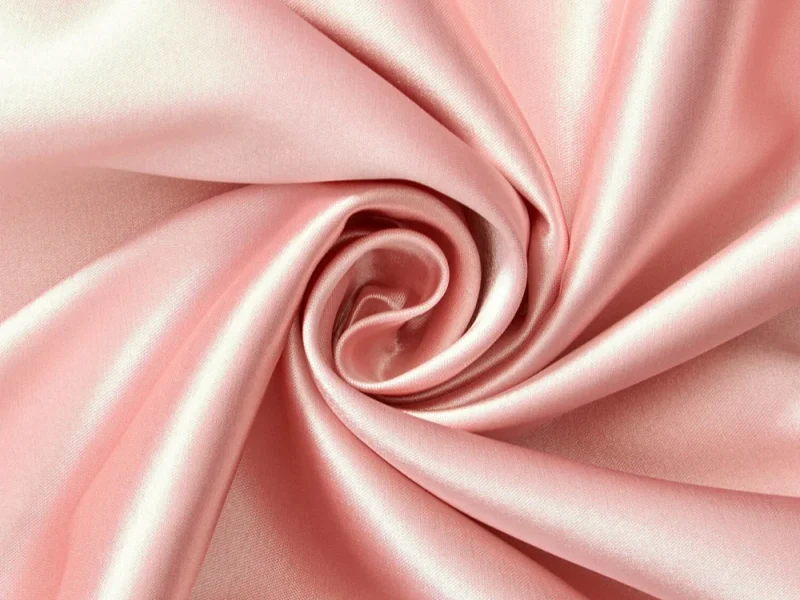
Satin
- Shine level.
- Wrinkle behavior.
- Seam puckering.
- Lining need.
- Color batch.
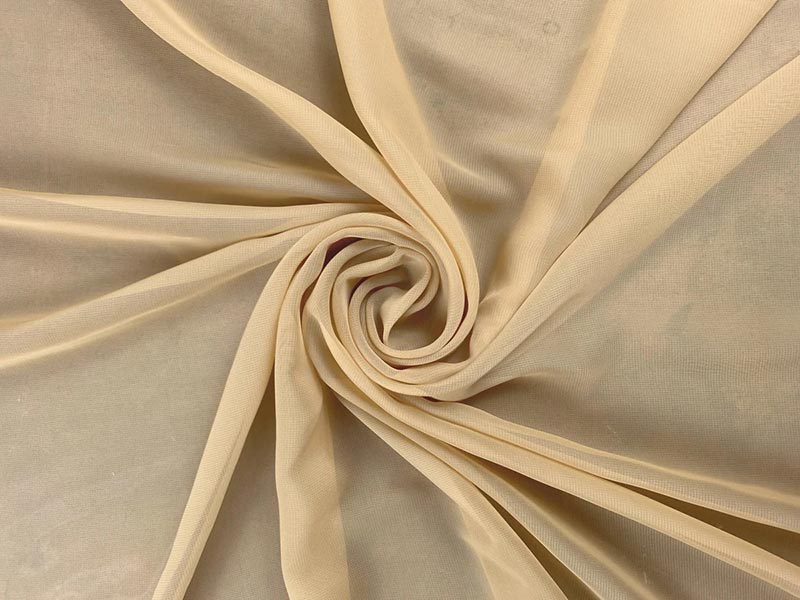
Chiffon
- Transparency.
- Layer balance.
- Fabric slipping.
- Hem line.
- Pressing method.
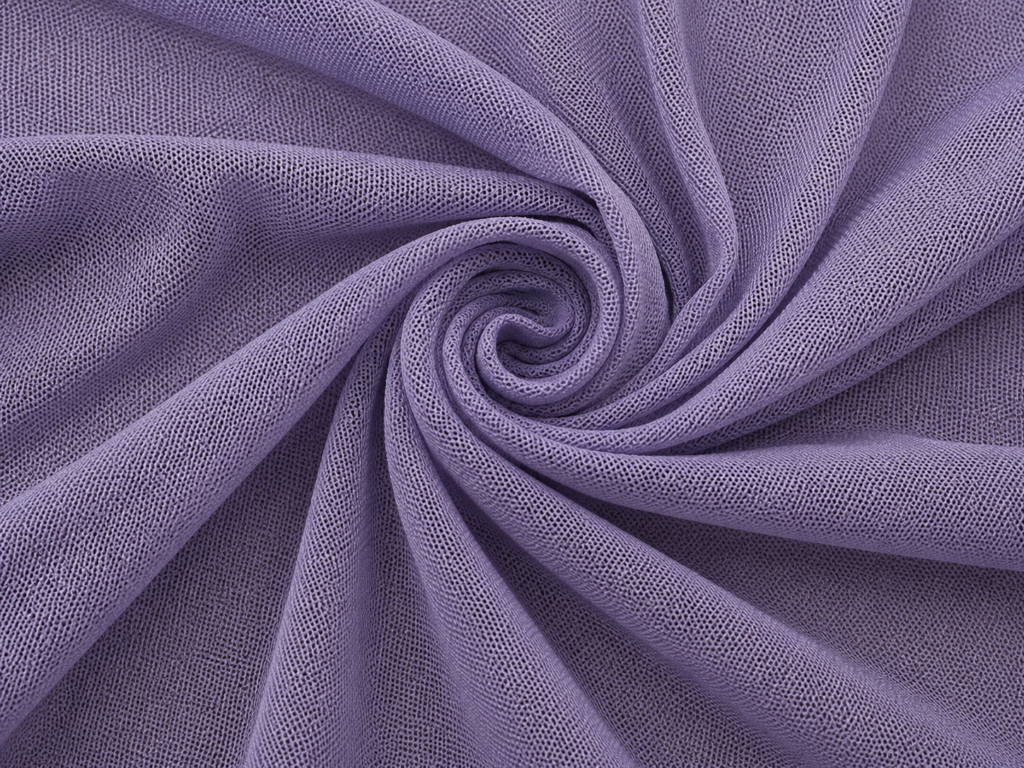
Mesh
- Stretch direction.
- Lining color.
- Neckline stability.
- Hole inspection.
- Print placement.

Lace
- Flower placement.
- Scallop edge.
- Lining shade.
- Seam allowance.
- Fabric width.

Sequin
- Direction.
- Edge protection.
- Seam thickness.
- Skin comfort.
- Packing method.

Jersey / Ponte
- Stretch recovery.
- Weight.
- Side seam.
- Neckline shape.
- Wash stability.

Crepe / Suiting
- Drape.
- Opacity.
- Pressing.
- Dart control.
- Waist shaping.

Rayon / Viscose
- Shrinkage.
- Drape.
- Print clarity.
- Colorfastness.
- Care label.
Match Fabric To Dress Structure
Lorem ipsum dolor sit amet, consectetur adipiscing elit. Ut elit tellus, luctus nec ullamcorper mattis, pulvinar dapibus leo.
| Style Type | Recommended Fabrics | Use Carefully | Manufacturing Control Points |
|---|---|---|---|
| Bodycon Dress | Jersey, ponte, roma, stretch satin | Non-stretch woven | Stretch recovery, side seam, bust coverage, size grading |
| Satin Slip Dress | Matte satin, stretch satin, medium satin | Very thin satin | Snagging, wrinkles, strap length, neckline height, lining |
| Mesh Dress | Stretch mesh, power mesh, printed mesh | Loose mesh | Transparency, lining shade, neckline support, hole inspection |
| Lace Dress | Soft lace, stretch lace, lace overlay | Stiff lace | Flower placement, lining color, seam allowance, edge finish |
| Sequin Dress | Backed sequin, small sequin, stretch sequin | Heavy sequin | Skin comfort, seam thickness, edge protection, packing |
| Maxi Dress | Chiffon, rayon, satin, crepe | Stiff fabric | Drape, hem sweep, lining length, fabric width |
| Corset Dress | Structured satin, woven base, lining | Soft unstable fabric | Boning, cups, waist tension, zipper, anti-slip support |
| Resort Dress | Rayon, viscose, chiffon, printed woven | Heavy lining | Breathability, shrinkage, print position, packing wrinkle |
| Cocktail Dress | Crepe, satin, ponte, suiting | Too thin fabric | Waist shape, seam smoothness, lining, pressing |
| Matching Set | Satin, crepe, knit, resort woven | Mixed fabric lots | Color batch, size pairing, top-bottom proportion |
Fit Control From Pattern To Sample

Bust Control
Bust control affects neckline height, coverage, cup position, strap tension, armhole comfort and wearing security. Jinfeng reviews whether a style needs bra cups, lining, boning, anti-slip tape, darts, princess seams, stretch fabric or stronger inner support. For strapless, halter, corset and deep V dresses, bust fit must be checked through sample review instead of flat measurements alone.
Key checks:
- Coverage.
- Cup position.
- Neckline depth.
- Strap tension.
- Armhole comfort.
Waistline Control
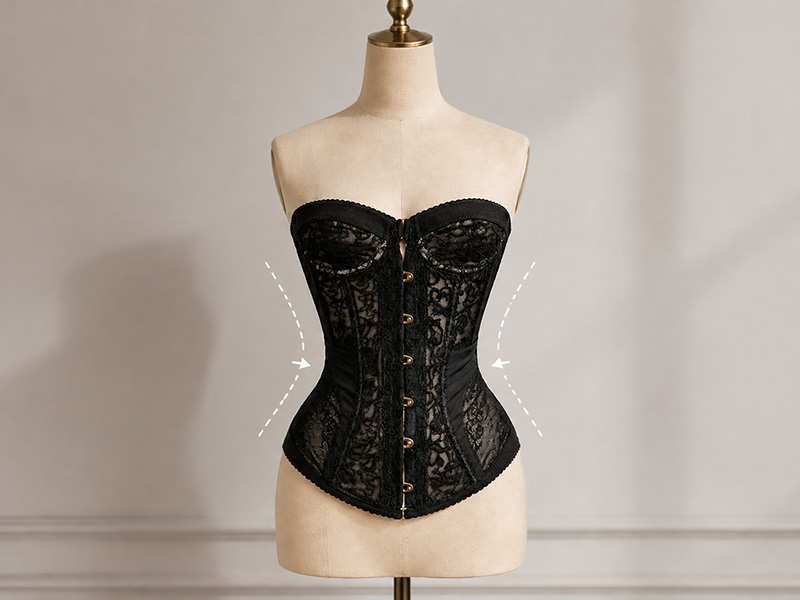
Waistline position changes the entire dress proportion. Jinfeng reviews natural waist, high waist, low waist, cut-out waist, ruched waist and corset waist structures by style purpose. A wrong waistline can shorten the body, affect hip curve or change the intended silhouette. Pattern corrections should be recorded before revised sample work begins.
Key checks:
- Waist height.
- Panel shape.
- Ruching balance.
- Cut-out location.
- Seam smoothness.

Hip And Curve
Hip fit decides how bodycon, midi, maxi, skirt and jumpsuit styles sit on the body. Jinfeng reviews hip width, side seam, stretch direction, fabric recovery, zipper position and movement allowance. For fitted dresses, pattern reduction must match fabric stretch; for woven styles, movement room and seam placement become more important.
Key checks:
- Hip curve.
- Side seam.
- Stretch recovery.
- Movement room.
- Size grading.

Length And Hem
Dress length is not only a number. Mini length affects safety, midi length affects proportion, maxi length affects movement and shipping wrinkles. Jinfeng reviews hem sweep, lining length, slit height, fabric weight and pressing method. For chiffon, satin and long dresses, hem balance must be checked carefully before bulk cutting.
Key checks:
- Mini safety.
- Midi proportion.
- Maxi movement.
- Lining length.
- Hem balance.

Neckline And Strap
Neckline and strap details affect both style and fit. Jinfeng reviews halter, cami, strapless, one-shoulder, off-shoulder, deep V and backless structures by support need. Adjustable sliders, strap width, inner elastic, anti-slip tape and lining can change wearing comfort and visual security.
Key checks:
- Strap width.
- Slider position.
- Neckline stability.
- Back coverage.
- Shoulder tension.

Slit And Cut-Out
Slits and cut-outs create visual impact but also increase fit risk. Jinfeng reviews slit height, opening position, seam reinforcement, lining, movement allowance and body coverage. Cut-outs need clear pattern control because small placement errors can change comfort, support and final product appearance.
Key checks:
- Slit height.
- Opening position.
- Reinforcement.
- Coverage.
- Movement test.
Design Details Developed For Production

Ruching
- Direction.
- Symmetry.
- Elastic tension.
- Stitch spacing.
- Size grading.
Cut-Outs
- Placement.
- Reinforcement.
- Coverage.
- Edge finish.
- Stretch control.

Backless Structures
- Strap routing.
- Side height.
- Waist hold.
- Anti-slip support.
- Inner finishing.

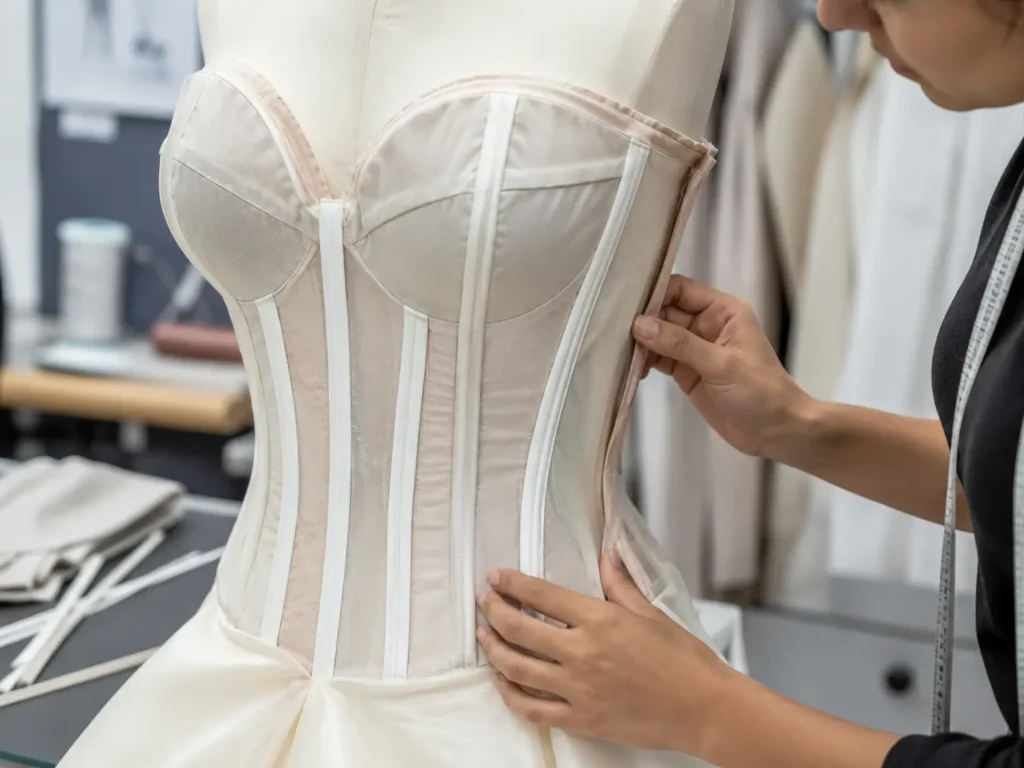
Corset Lines
- Boning channel.
- Cup position.
- Waist tension.
- Lining.
- Zipper support.

Pleating
- Pleat depth.
- Pressing.
- Waist attachment.
- Fabric memory.
- Bulk stability.

Slits
- Height.
- Reinforcement.
- Lining split.
- Seam allowance.
- Walking comfort.

Lace Placement
- Motif direction.
- Symmetry.
- Scallop edge.
- Lining shade.
- Cutting layout.
Sequin Direction
- Shine direction.
- Seam thickness.
- Needle risk.
- Lining comfort.
- Packing protection.
Trims That Affect Fit And Finish
Zippers
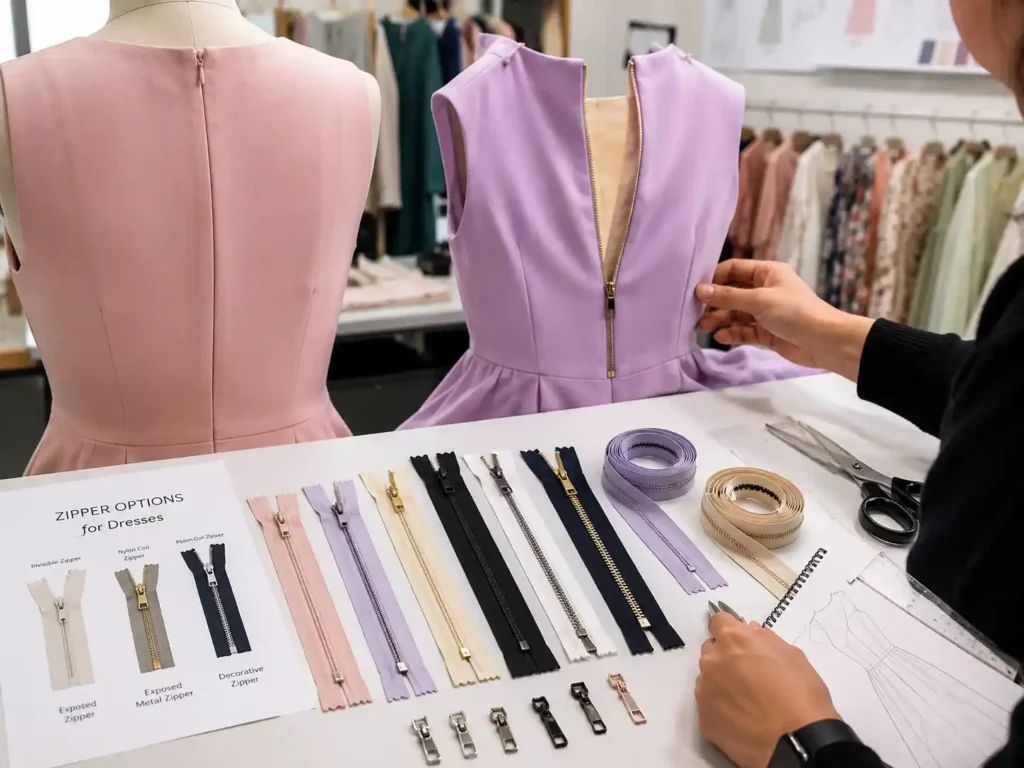
- Zipper type and length.
- Tape color and teeth size.
- Seam position and closing smoothness.

Bra Cups
- Cup shape and thickness.
- Fixed or removable method.
- Cup position and lining pocket.
Boning
- Boning material and channel width.
- Placement and comfort review.
- Lining cover and waist tension.

Strap Sliders
- Slider material and strap width.
- Adjustment range and color matching.
- Skin feel and strap tension.

Elastic Bands
- Elastic width and recovery.
- Softness and stitch method.
- Fabric weight and garment function match.

Private Labels
- Label artwork and placement.
- Barcode, SKU and color coding.
- Warehouse and packing requirements.
Sample Versions With Clear Purpose
First Sample
- Structure check.
- Fabric reaction.
- Initial fit.
- Construction route.
- Risk finding.
Fit Sample
- Body proportion.
- Measurement review.
- Fit comments.
- Pattern action.
- Size risk.
Revised Sample
- Comment execution.
- Pattern update.
- Fabric update.
- Construction update.
- Approval clarity.
Photo-Ready Sample
- Visual review.
- Campaign use.
- Presentation.
- Pressing.
- Photo effect.
Salesman Sample
- Sales review.
- Range presentation.
- Material confirmation.
- Internal approval.
- Program planning.
PP Sample
PP sample confirms final production standard before bulk. It should not be treated as a free-change stage. Before PP approval, fit, measurements, fabric, color, trims, construction, lining, decoration, labels, packing, cost, MOQ and lead time should be confirmed. Main purpose:
- Bulk standard.
- Final approval.
- Production reference.
- QC reference.
- Packing reference.
Golden Sample
Golden sample supports bulk comparison, inspection and repeat-order records. Jinfeng uses approved sample standards with production files, BOM, measurement data, QC checklist and packing instructions. Golden sample records help future reorders stay closer to the approved garment. Main purpose:
- Bulk comparison.
- QC benchmark.
- Reorder support.
- File record.
- Standard keeping.
Project Review Sample
- Original analysis.
- Style risk.
- Fabric direction.
- Cost review.
- Development route.

Revision Records Before Bulk Approval
Sample revision is where many dress projects lose control. A comment such as “make waist better,” “fabric looks flat” or “neckline feels low” cannot stay as a message only. Jinfeng Apparel converts key comments into working records before revised sample or PP sample planning.
From Comments To Production Files
The team checks whether a comment affects paper pattern, measurement chart, fabric approval, trim approval, sewing method, lining, label files, packing or QC points.
Important revision areas include:
- Fit comments: bust, waistline, hip, length, strap, armhole, neckline, back coverage, slit and crotch length for jumpsuits.
- Fabric comments: weight, handfeel, drape, stretch, recovery, transparency, shine, shrinkage, wrinkle behavior, color, MOQ and lead time.
- Construction comments: seam type, lining exposure, zipper flatness, ruching balance, boning support, cup position, cut-out stability and hem balance.
- Approval records: sample version, issue category, original comment, Jinfeng analysis, revision action, pattern impact, cost impact, timeline impact, approval need and next step.
A revised sample is recommended when fabric changes, stretch changes, corset structure changes, neckline or back coverage changes heavily, cut-out placement changes or the team needs a photo-ready or PP sample. Minor label placement, simple hem correction or packaging position changes may be confirmed locally when structure is not affected.
Fabric Change Is A Development Decision
Changing dress fabric during sampling is not a simple color or texture swap. A new fabric can change drape, stretch, transparency, lining need, pattern reduction, seam behavior, pressing, MOQ, cost and lead time. Jinfeng Apparel treats fabric dissatisfaction as a technical review instead of a quick replacement.
What Changes When Fabric Changes
When a brand does not approve a fabric, Jinfeng compares:
- Composition: polyester, viscose, rayon, cotton blend, nylon, spandex content or other fiber direction.
- Weight and handfeel: whether the fabric feels too thin, too heavy, too stiff, too soft or not premium enough.
- Drape and recovery: whether the dress hangs correctly, stretches correctly and returns after wearing.
- Transparency and lining: whether inner coverage, lining color, lining length or double layers are needed.
- Surface effect: shine level, matte effect, wrinkle behavior, snagging risk, color difference and print result.
- MOQ and bulk timing: whether the replacement is available, needs dyeing, has supplier minimums or changes delivery planning.
Jinfeng can look for thicker, lighter, softer, more structured, higher-shine, matte, stretch, lower-transparency, closer-target-price or more production-ready fabric options. After replacement, fabric approval should include name, composition, weight, stretch, handfeel, drape, transparency, color, MOQ, price effect and lead time effect.

Sewing Details Visible In Dress Quality

Seam Smoothness
Control focus:
- Stitch tension.
- Seam allowance.
- Fabric slipping.
- Pressing.
- Side seam shape.

Zipper Flatness
Control focus:
- Zipper length.
- Tape color.
- Seam support.
- Back curve.
- Smooth closing.

Lining Control
Control focus:
- Lining shade.
- Length.
- Stretch match.
- Seam attachment.
- Coverage.
Ruching Balance
Control focus:
- Symmetry.
- Tension.
- Stitch spacing.
- Direction.
- Size consistency.

Hem Finishing
Control focus:
- Hem depth.
- Balance.
- Pressing.
- Lining length.
- Movement.

Pressing Review
Control focus:
- Heat response.
- Seam shape.
- Satin shine.
- Pleat memory.
- Packing wrinkle.
Bulk Production Built Around Approved Standards
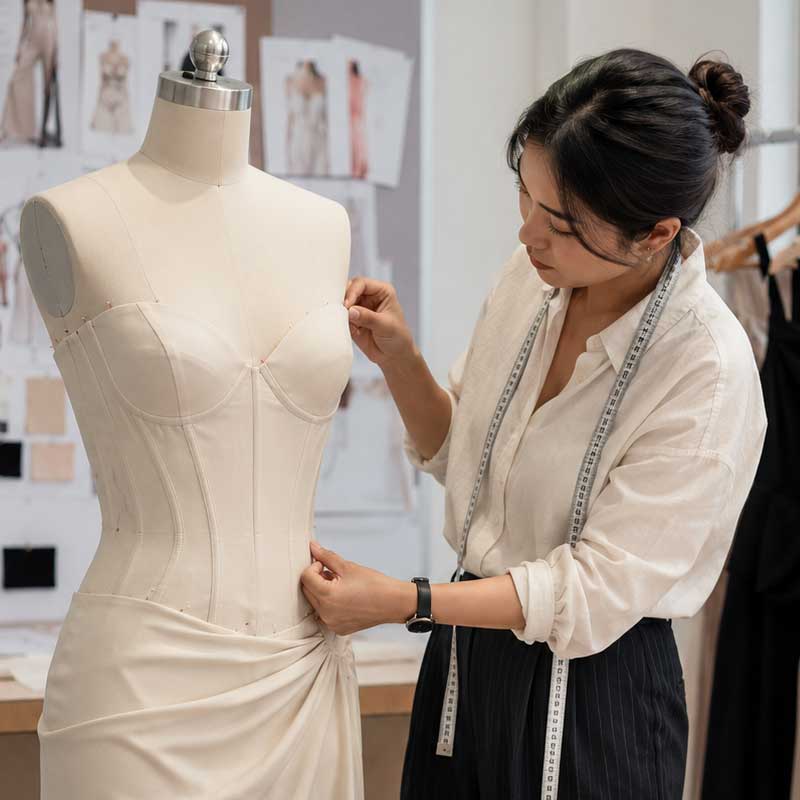
Bulk production should start after PP sample approval, fabric confirmation, trim confirmation, size chart lock, label artwork approval, packing method confirmation and QC focus points. Jinfeng Apparel does not recommend entering bulk production when major fit, fabric, construction or label details are still open.
How Jinfeng Moves From Sample To Bulk
The control route includes:
- PP sample standard: final garment appearance, fit, fabric, trims, construction, measurement and packing direction are confirmed before bulk.
- Golden sample record: approved sample is used as a comparison reference for production, QC and repeat orders.
- Fabric and trim confirmation: fabric batch, color, weight, stretch, lining, zipper, labels, trims and packaging are checked against approved files.
- Cutting control: style, color, size ratio, fabric direction, print placement, lace placement, nap direction or sequin direction are reviewed before mass cutting.
- Sewing control: line teams follow sewing instruction, seam method, trim placement, pressing notes and critical details.
- QC control: incoming material review, cutting check, sewing check, measurement check, garment inspection and packing check support final release.
For multi-style orders, production can be arranged by style group, fabric group, approval status, complexity and shipment priority. A 10–30 style collection needs clear files and project ownership, not scattered chat approvals.
QC Focused On Dress Risk Points
Material QC
- Fabric type, color and handfeel.
- Stretch, transparency and defects.
- Lining and trim matching.
Cutting QC
- Pattern pieces and bundle marks.
- Print, lace, nap or sequin direction.
- Style-color-size cutting control.
Sewing QC
- Seams, zippers and linings.
- Ruching, boning and cups.
- Neckline, straps and decoration attachment.
Measurement QC
- Bust, waist and hip.
- Length, straps and armhole.
- Slit, sleeve and hem width.
Appearance QC
- Stains, loose threads and fabric pulls.
- Lace damage, sequin loss and mesh holes.
- Pressing marks and decoration defects.
Packing QC
- Labels, barcodes and SKU stickers.
- Polybags, color stickers and carton marks.
- Packing ratio and carton information.
Private-Label Details For Finished Programs

Woven Labels
- Artwork size and fold type.
- Color, placement and stitching method.
- Supplier MOQ and order quantity review.
Care Labels
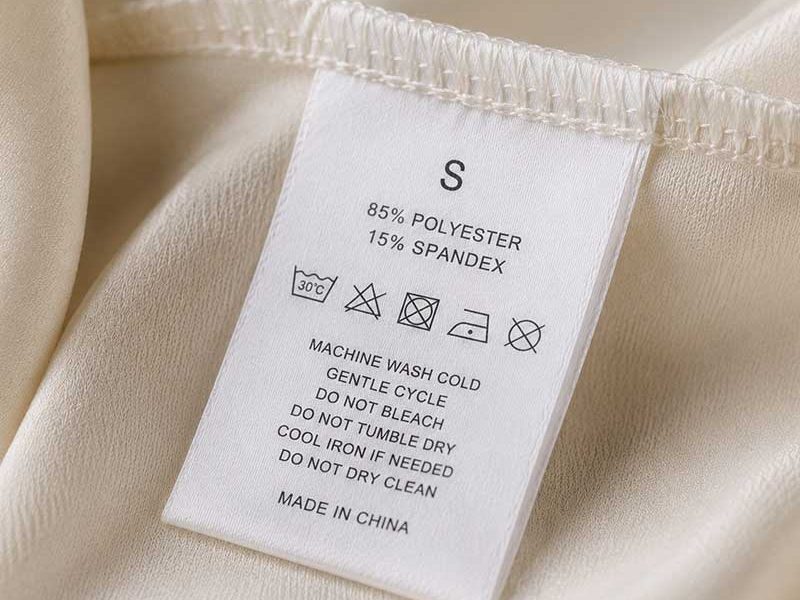
- Fiber content and care wording.
- Size information and origin text.
- Placement by garment structure.
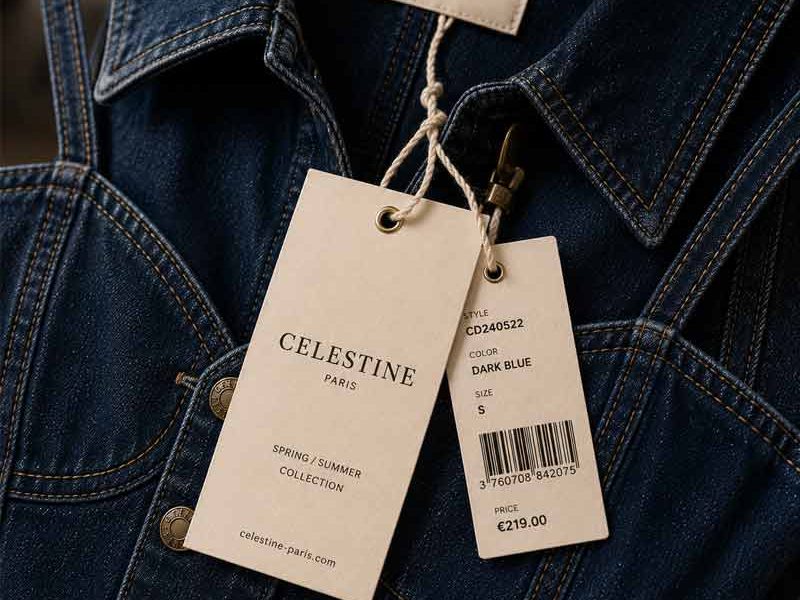
Hangtags
- Tag size and paper stock.
- Hole position and string type.
- Barcode and placement review.
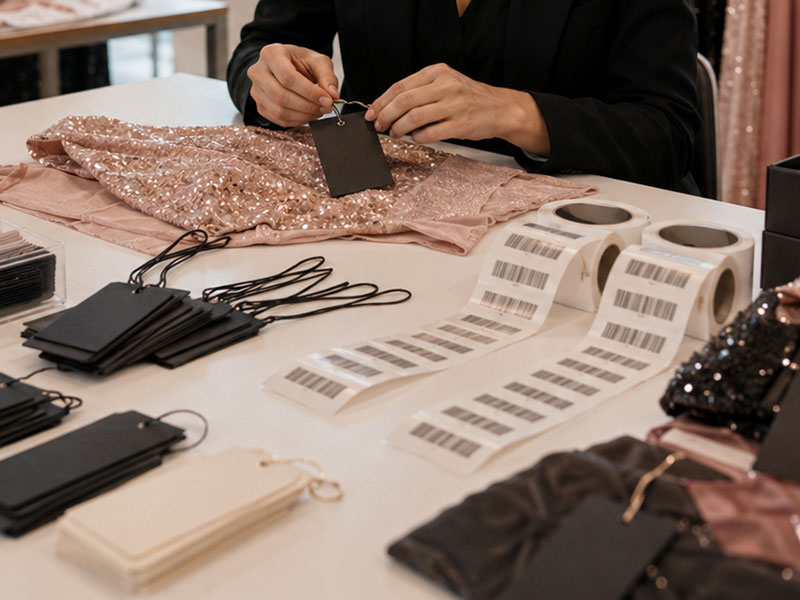
Barcode Stickers
- Barcode and SKU sticker position.
- Size and color sticker matching.
- Polybag and carton association.

Polybags
- Fold method and bag size.
- Warning text and closure.
- Sticker placement and fabric protection.
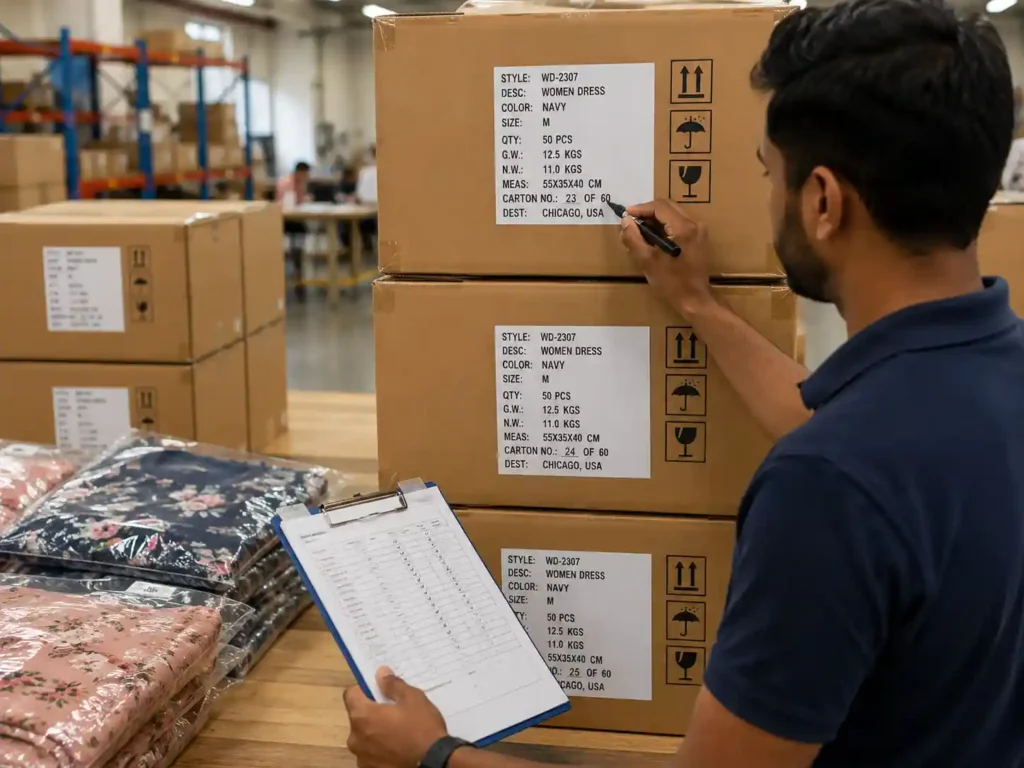
Carton Marks
- PO, style, color and size.
- Carton measurement and weight.
- Packing list and shipment photo support.
Protecting Unreleased Dress Designs
File Protection
- Tech pack.
- Original sample.
- Pattern files.
- Size chart.
- Fabric direction.
- Trim card.
- Label artwork.
- Packing files.
- Launch schedule.
Anonymous Cases
Jinfeng Apparel does not disclose client names, logos, tech packs, sample photos, patterns, label files, packaging files, unpublished designs, order quantities or pricing without permission. Case descriptions can be shared anonymously by region, product type, difficulty, project solution and delivery result. Brand identity can stay protected while development capability remains visible. Anonymous case format may include:
- Market region.
- Product category.
- Project quantity.
- Development challenge.
- Manufacturing solution.
- Delivery result.
- Repeat-order value.
What Affects Development And Bulk Cost
| Cost Factor | What Jinfeng Reviews | Why It Matters |
|---|---|---|
| Fabric Type | Weight, width, stretch, shine, transparency, shrinkage, supplier MOQ | Fabric decides drape, handfeel, lining, price and lead time |
| Trims | Zipper, cups, boning, sliders, elastic, lace trim, rhinestones, labels | Trims affect fit, comfort, brand finish and supplier minimums |
| Construction | Lining, double layers, ruching, corset structure, cut-outs, pleats | Complex construction needs more pattern work and sewing time |
| Sampling | First, fit, revised, photo, salesman, PP and Golden sample needs | Sample version planning affects development cost and approval schedule |
| Pattern Work | Bust, waist, hip, length, neckline, strap, slit, size grading | Pattern accuracy reduces fit revisions and bulk measurement risk |
| Decoration | Sequin, lace placement, hand beading, rhinestones, chain, embroidery | Decoration adds handling risk, QC time and packing protection needs |
| Size Range | XS–XL, plus, petite, tall, special size ratio | More sizes need grading, measurement checks, labels and carton breakdown |
| Color Plan | One color, seasonal colors, custom dye, print placement | Color affects fabric MOQ, lab dip, batch control and delivery timing |
| Private Label | Woven labels, care labels, hangtags, barcode stickers, polybags | Packing items may have separate supplier MOQ and lead time |
| Shipment Plan | Express, air, sea, FOB, DDP by project, split shipment | Freight planning affects launch timing, carton data and landed cost |
MOQ Rules For Development Orders
Best Fit Programs
- Tech pack or reference image.
- Target quantity by style/color.
- Fabric direction.
- Size range.
- Label and packing plan.
- Launch date.
- Repeat-order potential.
Not Designed For
Jinfeng Apparel is not positioned as a stock wholesaler, single-piece fulfillment source or lowest-price garment vendor. The production model is custom development, sampling, approval, bulk production and brand delivery. When a project has no clear product direction, no sample budget, no bulk plan or only personal tailoring needs, the fit is usually weak. Unfit requests:
- Single-item fulfillment.
- Stock purchasing.
- Personal tailor order.
- Undefined design idea.
- No sampling budget.
- Lowest-price-only sourcing.
- No brand production plan.

Managing 10–30 Styles Per Development Round
Many fashion brands do not develop one dress at a time. A seasonal drop may include satin minis, mesh bodycon dresses, chiffon maxis, lace occasion styles, jumpsuits, matching sets and top-skirt combinations. Jinfeng Apparel helps organize multi-style development by grouping styles through fabric, construction difficulty, sample priority, approval status and production route.
Collection Planning With Clear Priorities
A 10–30 style development round should be reviewed through:
- Style group: dress, skirt, jumpsuit, matching set, top or occasionwear category.
- Fabric group: satin, mesh, lace, chiffon, jersey, crepe, sequin, rayon or mixed materials.
- Complexity group: simple lined style, bodycon stretch style, corset structure, cut-out style, lace placement, sequin work or multi-layer construction.
- Sample priority: hero styles, campaign styles, retail launch styles, replenishment styles and lower-priority range fillers.
- Approval status: file review, fabric approved, first sample, revised sample, PP sample, bulk ready.
- Production split: style/color/size breakdown, packing method, shipping batch and warehouse destination.
For total program quantities from 20,000 to 80,000 pcs, clear file management becomes more important than speed claims. Jinfeng’s merchandisers, pattern makers, sample team, production team, QC and packing team work around approved records so multi-style projects can move toward bulk with fewer avoidable errors.
Clear Communication From Inquiry To Reorder
Project Launch
- Style files and references reviewed.
- Quantity, size and color plans checked.
- Label and delivery needs clarified early.
Requirement Confirmation
- Missing details marked before sampling.
- Fabric, trims and fit risks discussed.
- Quote logic based on clearer project information.
Timeline Planning
- Sample stages linked with approval schedule.
- Fabric and trim timing reviewed.
- Bulk and shipment schedule planned after PP approval.
Sample Tracking
- Sample purpose defined by stage.
- Comments converted into revision actions.
- PP sample used as production reference.
Bulk Updates
- Material and cutting updates.
- Sewing, QC and packing progress.
- Style-level communication for multi-style programs.
After-Shipment Records
- Pattern, fabric and trim records retained.
- Packing and QC notes saved.
- Reorder planning supported by project history.
Delivery Support For International Programs
Client-Nominated Forwarder
Many mature brands, sourcing offices and importers already work with their own China forwarders. Jinfeng can coordinate with client-nominated forwarders by providing cargo details, commercial invoice, packing list, carton marks, carton measurements, gross and net weight, warehouse delivery support, pickup coordination and shipment photos when arranged. Coordination items:
- Forwarder contact.
- Booking instruction.
- Cargo data.
- Packing list.
- Carton marks.
- Pickup timing.
Factory Freight Options
When a brand does not have a fixed forwarder, Jinfeng can help compare express, air freight, sea freight, FOB delivery, DDP by project and split shipment planning. Freight suggestions depend on destination, product type, shipment value, HS code, label information, warehouse address, compliance needs and route capability. Large seasonal orders may use air for priority styles and sea for the main bulk to balance launch timing and freight cost. Coordination items:
- Express sample.
- Air shipment.
- Sea shipment.
- FOB warehouse.
- DDP review.
- Split shipment.
Carton And Document Data
Carton data is part of delivery planning, not an afterthought. Jinfeng can prepare carton quantity, carton measurement, gross weight, net weight, quantity breakdown, style/color/size breakdown, packing list, commercial invoice and carton mark information for shipment coordination. Accurate carton data supports freight comparison, warehouse receiving and multi-style shipment management. Coordination items:
- Carton count.
- Carton size.
- Gross weight.
- Net weight.
- Size breakdown.
- Shipping marks.
Project Examples From Development To Bulk

United States Premium Ecommerce Party Dress Line
A United States premium ecommerce brand developed a party dress line with satin minis, mesh bodycon dresses and sequin party styles. The brand had strong reference images but weak fabric direction. Early samples from a previous vendor showed satin wrinkles, unstable mesh transparency, zipper bulging and inconsistent bodycon fit.
- 18 styles / 46,000 pcs / 3 fabric groups — project data: satin minis, mesh bodycon dresses and sequin party styles; technical difficulty: satin wrinkles, mesh transparency and sequin handling required different development controls; solution: Jinfeng grouped styles by satin, mesh and sequin risk before sampling.
- 4 fit and construction risks — project data: zipper route, ruching, bust coverage and size ratio needed review; technical difficulty: bodycon styles and party silhouettes exposed small fit errors in photos; solution: pattern and measurement checkpoints were added before PP approval.
- 3 sample purposes — project data: first samples, photo-ready samples and PP samples were separated; technical difficulty: campaign samples could not replace bulk production standards; solution: sample version records were used to lock fabric, trim and construction rules.
- Private-label packing records — project data: labels, SKU files, polybags and carton marks were prepared; technical difficulty: multi-style ecommerce packing carried receiving risk; solution: packing instructions were aligned with style-color-size data before shipment.

Australia Resort And Vacation Dress Collection
An Australian resortwear brand developed a seasonal vacation dress collection across chiffon maxis, printed resort dresses, matching sets and soft vacation styles. The brand needed lightweight garments for seasonal launch, but print placement, chiffon transparency, rayon shrinkage, lining length and packing wrinkle risk created concern before sampling.
- 22 styles / 62,000 pcs / 4 product groups — project data: chiffon maxis, printed resort dresses, matching sets and soft vacation styles; technical difficulty: lightweight fabrics created transparency, shrinkage and wrinkle concerns; solution: Jinfeng separated chiffon, rayon and resort woven styles by cutting and sewing risk.
- 5 material controls — project data: drape, transparency, print direction, lining color and hem balance were reviewed; technical difficulty: soft fabrics could twist, shrink or lose visual flow; solution: fabric notes and lining instructions were confirmed before bulk.
- Photo-ready and PP sample split — project data: key launch styles needed campaign samples; technical difficulty: visual samples still needed production confirmation; solution: photo-ready samples supported launch planning while PP samples locked bulk standards.
- Shipment planning by urgency — project data: priority styles required faster delivery; technical difficulty: full sea shipment could delay launch timing; solution: air shipment was reviewed for priority styles, while main bulk planning focused on carton efficiency and wrinkle control.

United Kingdom Occasionwear And Wedding Guest Edit
A United Kingdom occasionwear brand developed an elevated edit across lace midi dresses, satin cocktail dresses, crepe occasion styles and structured corset dresses. The brand needed premium appearance without losing production stability. Risks included lace placement, lining shade, corset support, satin shade difference, slit height and final pressing.
- 15 styles / 38,000 pcs / 4 product groups — project data: lace midi dresses, satin cocktail dresses, crepe occasion styles and structured corset dresses; technical difficulty: each product group carried different appearance and construction risks; solution: Jinfeng built a style-by-style control list before sample approval.
- 3 fabric-specific controls — project data: lace, satin and crepe required different checks; technical difficulty: lace needed placement, satin needed shade and wrinkle control, crepe needed shape and pressing review; solution: fabric, lining and trim records were locked before production.
- Corset and slit review — project data: corset styles and occasion silhouettes needed support and movement control; technical difficulty: boning, cups, waist tension, zipper and slit height could affect wearability; solution: PP samples and Golden sample records guided bulk inspection.
- Repeat-order value — project data: approved records supported new color development; technical difficulty: future orders could lose original garment standards; solution: pattern, measurement, fabric, label and packing records were retained for reorder planning.
Frequently Asked Questions
[CTA Button: Ask Kelly]
[CTA Button: Send Files]
Develop Your Next Dress Program
Jinfeng Apparel helps fashion teams move from concept, tech pack, reference photo, original sample or line sheet to custom dress sampling, PP approval, bulk production, QC, private-label packing and export delivery. Send your style files, target quantity by style/color, fabric direction, size range, color plan, label requirements, packing needs and launch schedule.
Kelly will review whether the project fits our development model, what fabric or trim risks need attention, what sample version should come first and what information is needed for a more accurate quotation. For multi-style programs, include the full line sheet and mark priority styles, campaign samples, launch dates and expected delivery windows.
Please include:
- Tech pack, reference image, sketch or original sample photos.
- Target quantity by style/color.
- Fabric direction or swatch photos.
- Size range and measurement chart.
- Color plan and style breakdown.
- Label, hangtag, barcode and packing files.
- Target market and launch date.
- Shipping or warehouse requirements.

