 Skip to content
Draped Dress Pattern Development
Production-ready pattern development for draped dresses where fabric flow, fit, fold placement and bulk repeatability must work together.
Jinfeng Apparel supports established fashion brands with draped dress pattern development from reference review and fabric direction through pattern correction, sample approval and controlled bulk production.
- 7+ senior pattern makerssupporting structure and fit development
- 20+ sample machinistsacross 2 sample rooms
- Development for satin, chiffon, crepe, mesh, jersey and other drape-sensitive fabrics
- First sample, fit sample, revised sample, photo sample, PP sample and Golden sample control
- MOQ starts from 200 pcs per style/color, subject to fabric, construction and trim requirements
- Production system backed by 6 owned womenswear factoriesand long-term satellite production partners
Development Capacity Behind Every Pattern
Pattern Development Team
Sample Development Team
Two sample rooms and 20+ sample machinists support first samples, fit samples, revisions, photo-ready samples and pre-production samples.
Sample sewing is used to test whether the pattern creates the intended appearance in the selected fabric instead of assuming a two-dimensional pattern will behave identically in every material.
Production Follow-Through
Approved patterns do not remain isolated in the sample room.
Pattern information, measurement charts, approved fabrics, trims, sewing instructions and quality checkpoints are transferred into the production process so the approved look can be repeated across commercial quantities.

Draped Dress Pattern Development
Draped dress pattern development is the process of translating a design with controlled folds, soft volume, gathered sections, asymmetric falls or body-following fabric movement into a pattern that can be sampled, fitted, corrected, graded and reproduced in bulk production.
A draped effect may appear simple in a photograph, but the final shape depends on several variables working together. Pattern geometry determines where fabric enters and leaves a fold. Grain direction influences how the fabric hangs. Weight changes the depth of the fall. Stretch changes how much of the drape is created by the pattern versus the body. Lining, seam placement and closures can either support or distort the intended shape.
A successful production pattern therefore needs to preserve the visual character of the design while establishing technical control.
- Visual Shape: The design must first be interpreted as a sequence of controlled volumes rather than as decoration. Pattern development identifies where each fold begins, where excess fabric is required and which areas must remain fitted.
- Pattern Logic: Fold direction, seam position, grain, panel shape, waist relationship, neckline balance and closure placement are translated into repeatable pattern information.
- Production Logic: The approved appearance must remain achievable after cutting, sewing, pressing, grading and packing. A pattern that works only on one handmade sample is not yet a production-ready pattern.
When Draped Designs Become Difficult to Produce
Fold Placement Shifts
Necklines Collapse
Excess Bulk Builds Up
Hemlines Become Uneven
Sample Looks Right but Bulk Does Not
Fabric Changes the Design
Draped Dress Structures We Evaluate
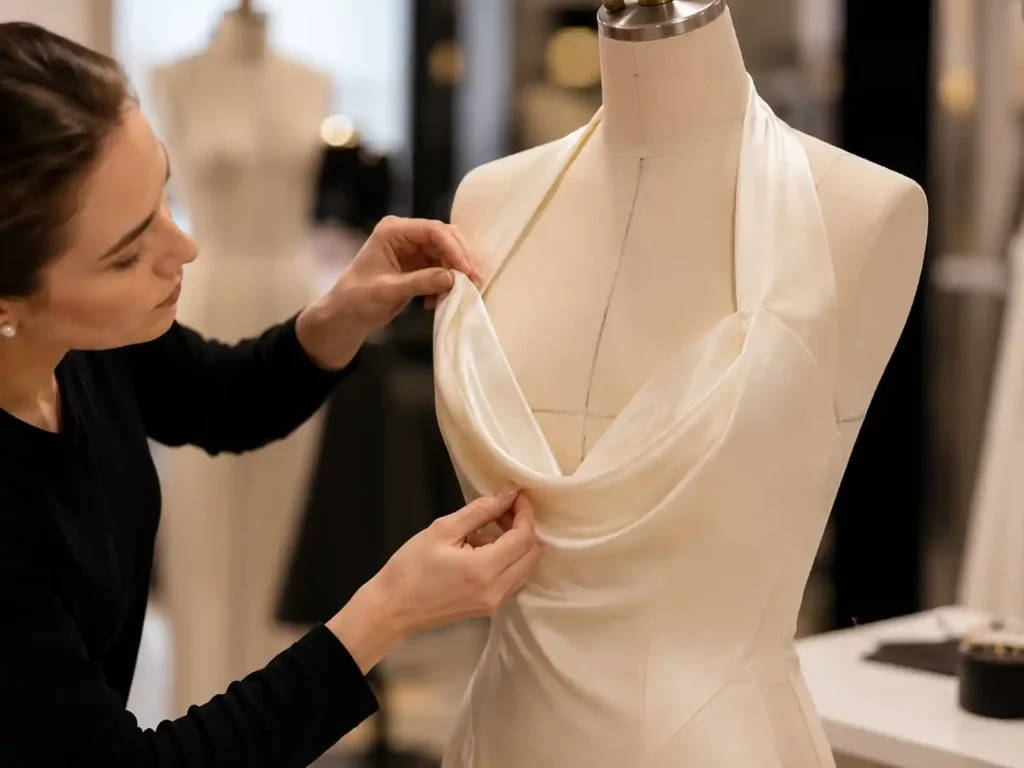
Draped Necklines

Side Waist Drapes

Asymmetric Drapes

Gathered Drapes

Ruched Drapes
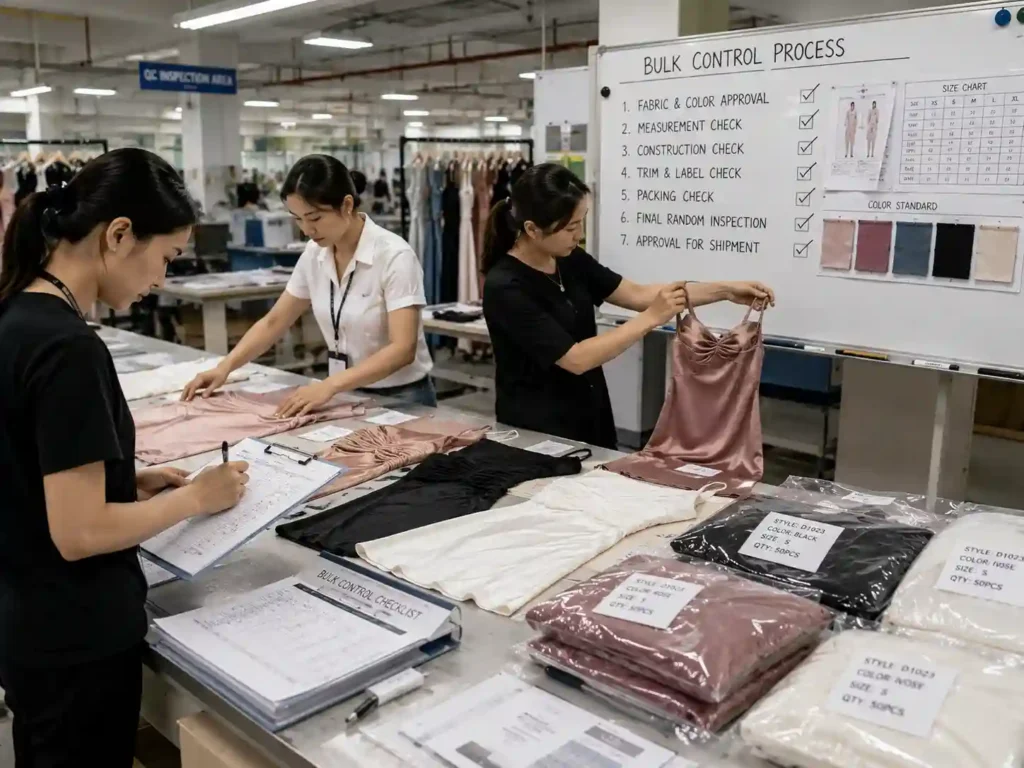
Cross-Body Drapes

Soft Skirt Drapes

Bias-Influenced Drapes
Fabric Behavior Comes Before Pattern Decisions
Draped dress development cannot be separated from fabric selection. Two fabrics cut from the same pattern can create noticeably different silhouettes because weight, surface friction, stretch, recovery and gravity change how folds form and where volume settles.

Weight Controls Fold Depth
Light chiffon can create soft, mobile folds but may require lining or controlled layering to avoid excessive transparency. Heavier satin or crepe forms deeper, more defined folds but can build bulk where several layers meet.
Pattern fullness should therefore be reviewed together with fabric weight rather than copied mechanically from a reference garment.
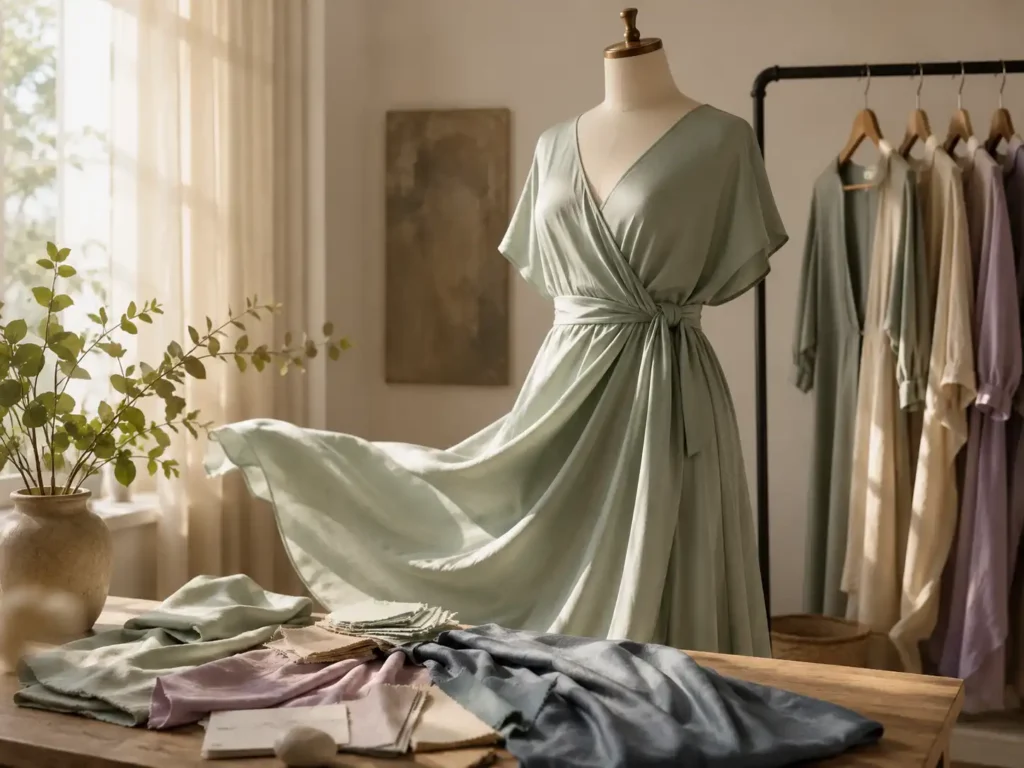
Drape Controls Visual Flow
A fluid fabric follows body contours and gravity more easily.
A firmer fabric holds more structure and may create sharper folds.
When a design reference uses one material and the commercial program requires another, the pattern may need to change to preserve a similar visual balance.
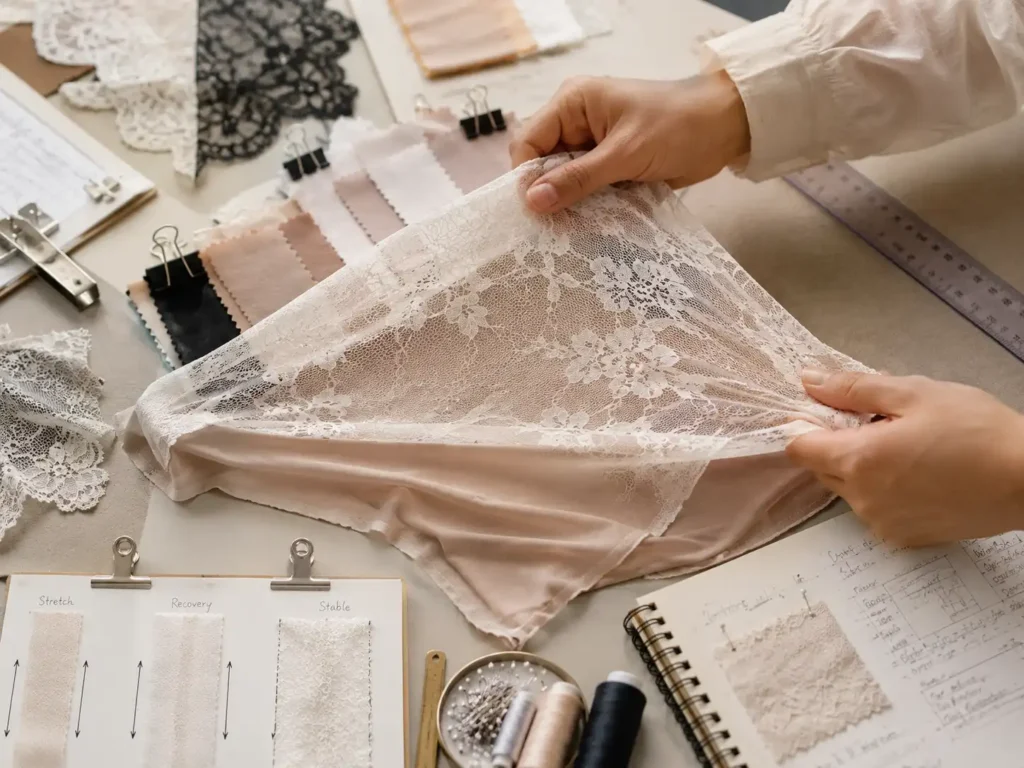
Stretch Changes Fit Pressure
Stretch satin, jersey and power mesh interact with the body differently from non-stretch woven fabrics.
Part of the visual drape may come from pattern volume, while another part comes from tension against the body.
Negative ease, recovery and lining strategy must therefore be considered before finalizing the pattern.

Surface Finish Changes Handling
Satin and other smooth fabrics can shift during cutting and sewing. Visible surfaces can also show needle marks, pressing damage or seam impressions more easily. Fold placement must remain clean without relying on excessive handling.
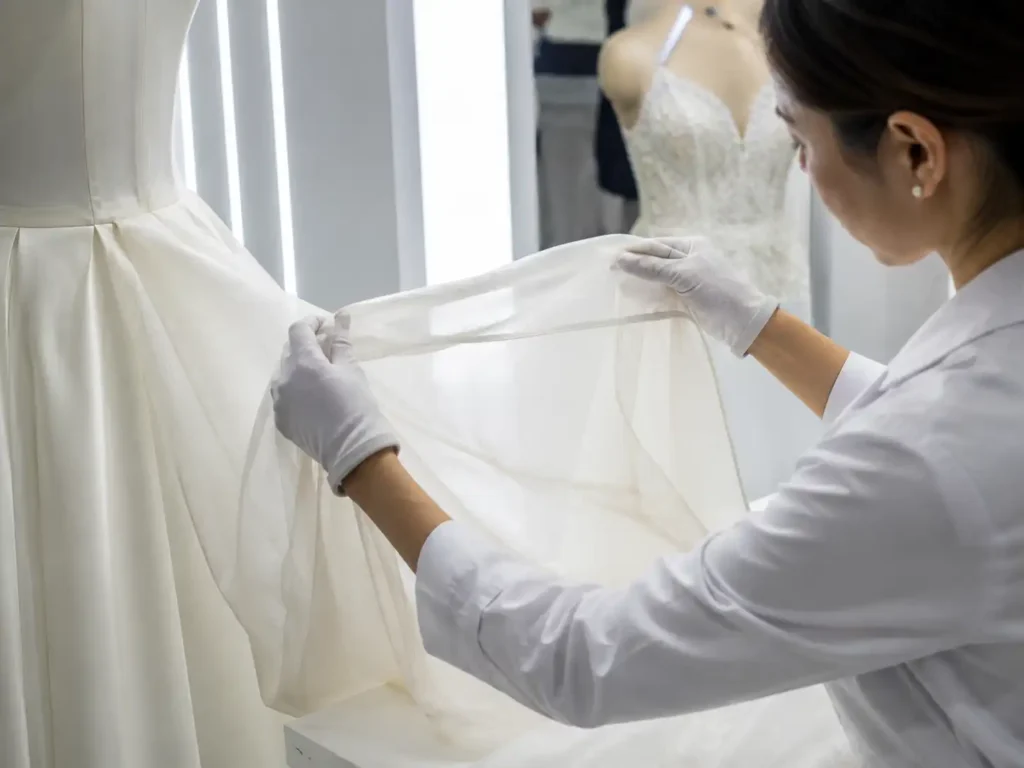
Transparency Changes Construction
Chiffon and mesh may need strategically placed lining, double layers or controlled seam finishes. Lining cannot simply be added after the outer pattern is approved because it may change weight, tension and fall.
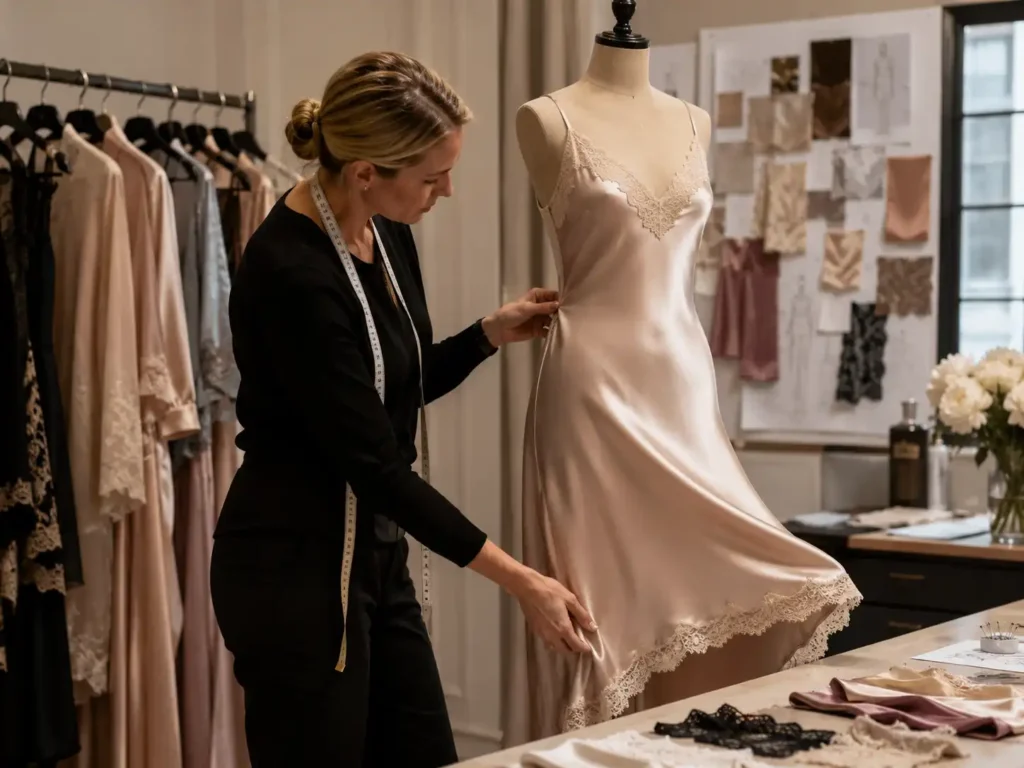
Bias Behavior Affects Length
Sections cut partly or fully on the bias may lengthen after hanging. For floor-length or asymmetric styles, hem review should take place after the sample has settled rather than relying only on the initial flat measurement.
Critical Pattern Control Points
Draped dresses contain several variables that should be controlled before the pattern becomes a bulk-production standard. The exact priorities depend on silhouette, fabric and construction.
Control Point | What Can Go Wrong | Development Focus |
Grain direction | Fold hangs in the wrong direction | Align grain with intended fabric flow |
Fold origin | Drape shifts during wear | Lock start point into stable pattern structure |
Fold depth | Too flat or too bulky | Adjust controlled fullness |
Bust balance | Pulling or excess volume | Review bust shaping and drape release |
Waistline | Drape sits too high or low | Control waist seam and tension |
Hip balance | Side drape adds unwanted bulk | Redistribute fullness across panels |
Neckline | Collapse, gaping or overexposure | Adjust neckline length and stabilization |
Side seam | Garment twists | Rebalance front and back tension |
Lining | Outer drape loses movement | Match lining ease and attachment points |
Closure | Zipper distorts folds | Position closure away from unstable drape zones |
Hem | Uneven after hanging | Review settling, bias behavior and final balance |
Seam placement | Construction interrupts flow | Move seams into lower-risk visual zones |

Balancing Drape, Fit and Wearability
A draped dress still has to fit a moving body. Commercial development therefore needs to control the underlying fit even when the outer appearance looks soft and unstructured.
- Bust Control: A diagonal drape across the bust can visually disguise fit problems until the garment moves. Excess fabric may hide gaping when standing but expose the neckline during walking or sitting. Development reviews bust circumference, cup area, neckline tension, armhole position and the location where the drape crosses the body.
- Waist Definition: Many draped dresses depend on a stable waist to give surrounding folds direction. When the waistline moves, the whole drape can appear uneven. Internal seams, gathers, elastic sections or lining attachments may be used to stabilize the waist depending on the style.
- Hip Movement: Side drapes and asymmetric skirts often add fabric directly over the hip. The pattern must preserve visual volume without reducing movement or making the garment rotate.
- Neckline Security: Soft necklines require deliberate coverage control. Development considers standing position, movement, bending and the effect of fabric weight.
- Strap and Shoulder Balance: Straps or one-shoulder constructions carry part of the garment weight. When a draped panel pulls diagonally across the body, strap position and shoulder tension can change.
- Lining Relationship: The lining should support comfort and coverage without restricting outer movement. A lining that is too short, too tight or attached at the wrong points can pull the draped layer out of shape.
Fit development therefore looks beyond static measurements and evaluates how the garment behaves when worn.
Sample Development for Draped Dresses
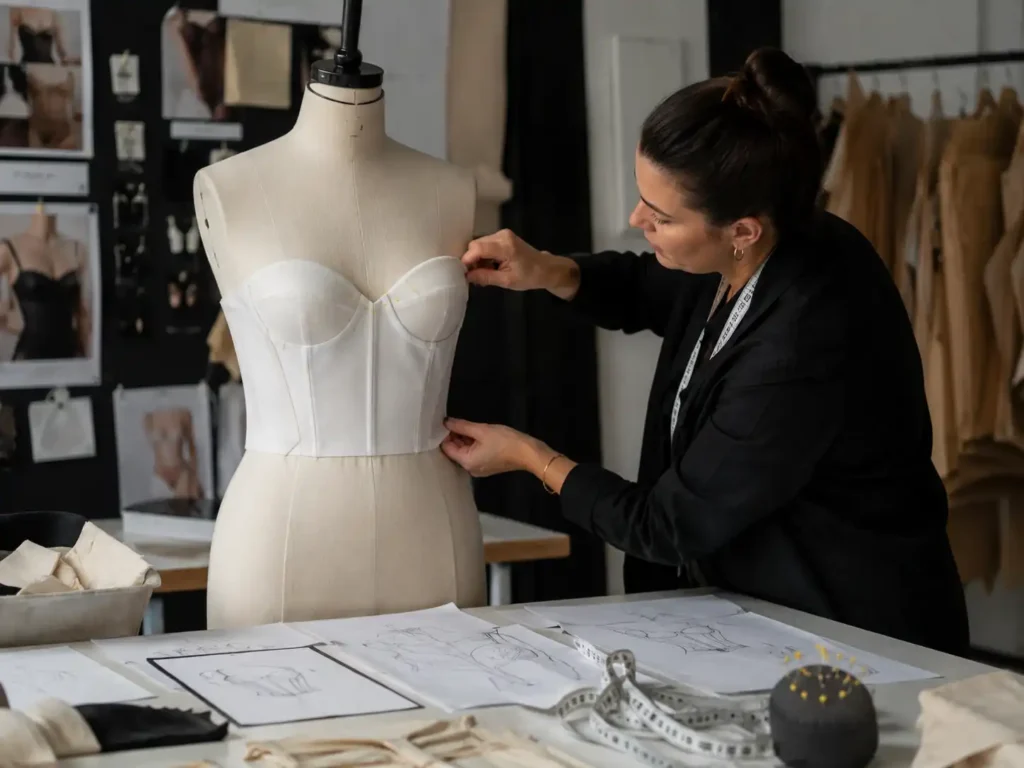
First Sample
The first sample checks whether the design interpretation works physically. Primary review points include:
- Overall silhouette
- Fold direction
- Fabric volume
- Bust-waist-hip balance
- Neckline level
- Side seam position
- Length
- Lining relationship
Large structural problems should be corrected at this stage rather than carried into later approvals.

Fit Sample
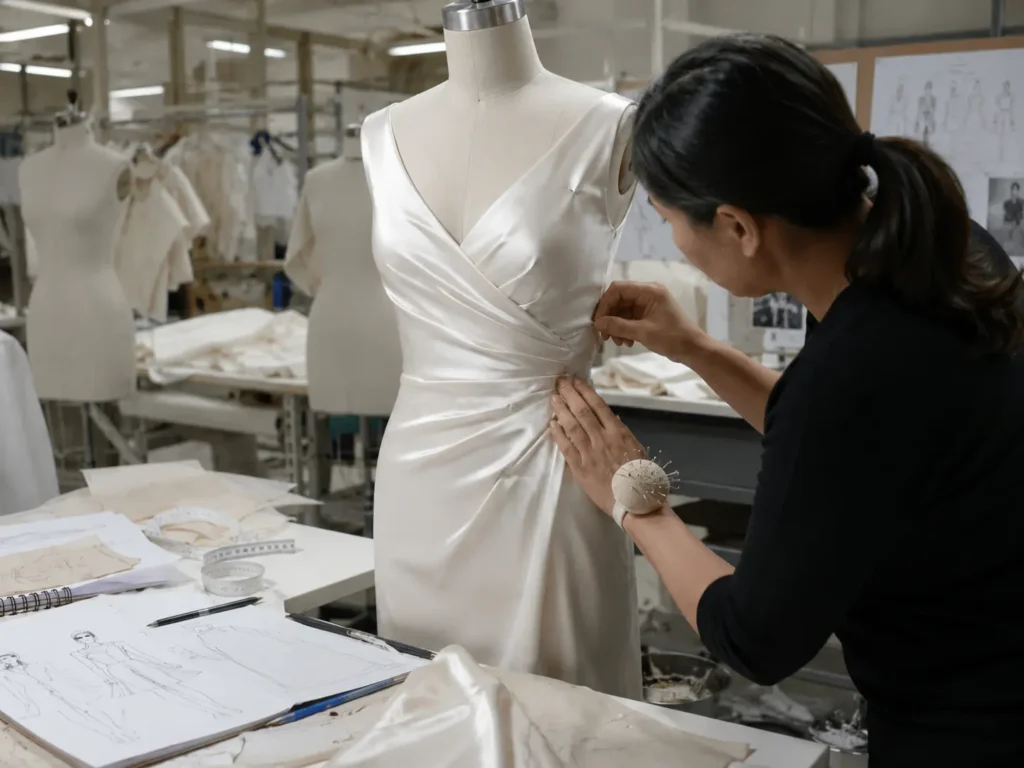
Revised Sample

Photo-Ready Sample

PP Sample
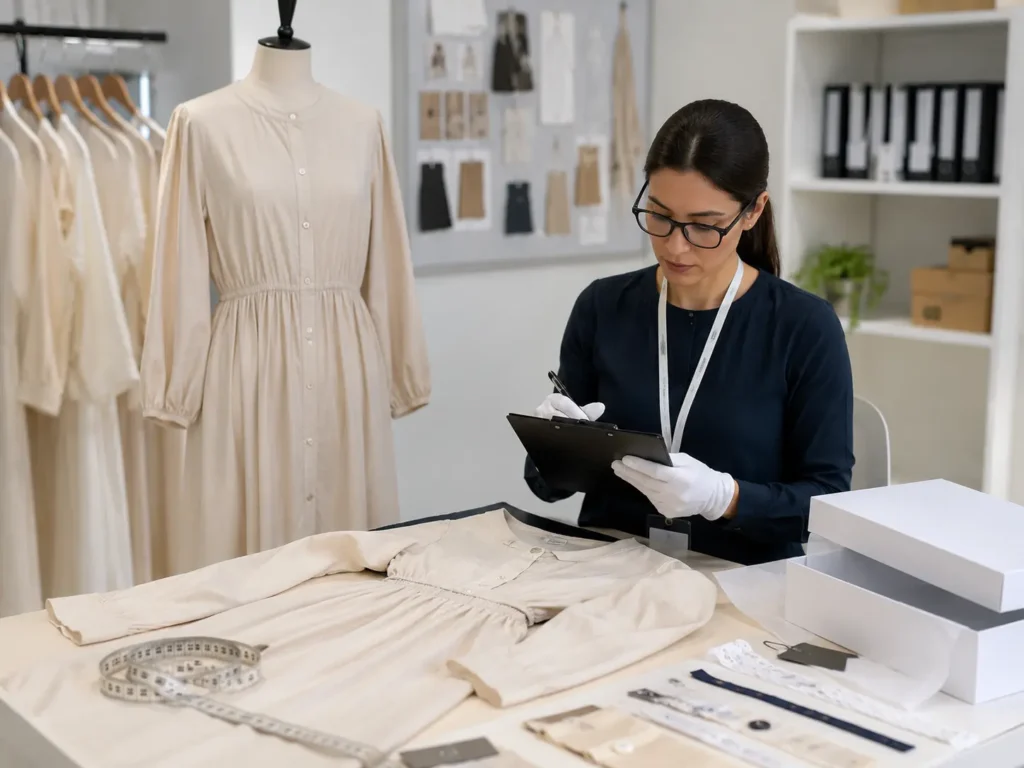
Golden Sample
How We Correct a Failed Drape Sample
A failed sample does not always mean the design itself is unworkable. The first task is to identify whether the problem comes from the pattern, fabric, fit, sewing method or the relationship between several variables.
Fold Collapse
Common cause: insufficient controlled fullness, fabric too soft, wrong grain direction or incorrect attachment point.
Correction direction: review pattern volume, reposition fold origin, compare fabric weight and test whether the fold should be supported by construction rather than hand placement.
Too Much Waist Bulk
Common cause: fullness has been concentrated at one seam or gathered over too short a distance.
Correction direction: redistribute excess across the pattern, adjust seam position or reduce volume while maintaining the intended visual effect.
Gaping Draped Neckline
Common cause: excessive neckline length, heavy fabric, insufficient shoulder control or stretch recovery problems.
Correction direction: revise neckline length and balance, review grain, stabilize hidden areas where necessary and retest movement.
Twisted Garment
Common cause: unequal tension between front and back, asymmetric fabric weight, side seam imbalance or bias distortion.
Correction direction: rebalance the pattern rather than forcing the side seam into position during sewing.
Lining Shows Through
Common cause: lining length, shape or attachment points do not match the outer layer.
Correction direction: rework lining dimensions and connection points so the lining protects coverage without controlling the outer drape.
Reference Image Cannot Be Repeated
Some reference images rely on styling clips, temporary pinning, unusual fabric behavior or hand-arranged folds that are difficult to reproduce consistently in commercial production.
In these cases, development focuses on preserving the key visual effect while converting the design into a repeatable construction.
Turning Approved Samples Into Production Standards
The greatest difference between a development sample and a production-ready garment is repeatability. A sample machinist can make subtle adjustments by hand, but bulk production needs documented standards that different operators can follow consistently.

Pattern Lock
After major fit and appearance comments are approved, the pattern is updated to reflect the accepted dimensions, fold distribution, seam position and construction.

Measurement Record
Critical measurements are connected to the approved pattern. Draped garments may also require visual checkpoints because fold placement cannot always be controlled by one flat measurement alone.
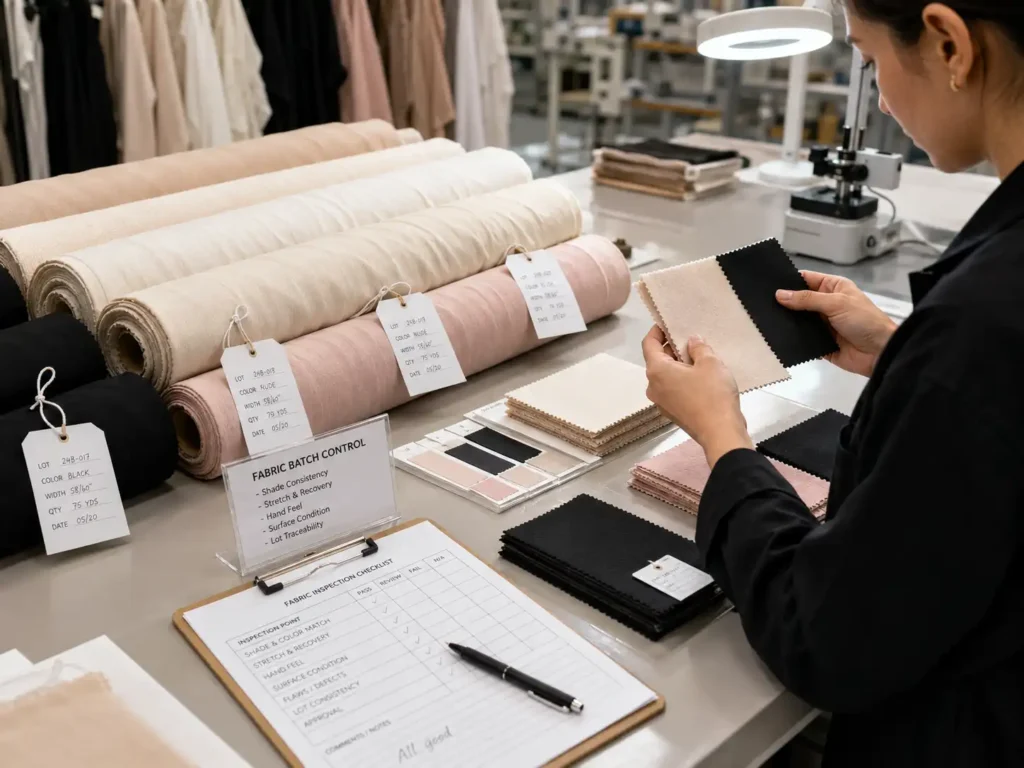
Fabric Approval
Fabric reference information is confirmed before production. Significant changes in weight, stretch, shine or drape may require sample re-evaluation even when the color appears correct.
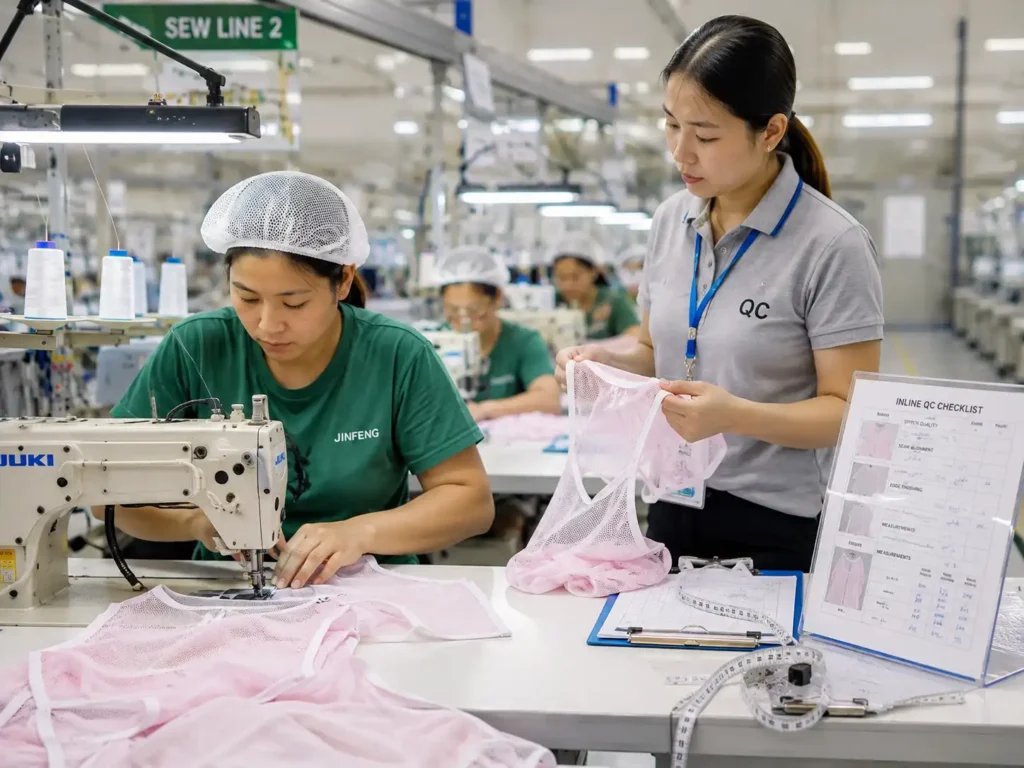
Sewing Instructions
Construction points that affect the final look should be documented, including seam sequence, gather control, lining attachment, zipper position, stitch method and fold-related assembly.

PP Approval
The PP sample connects design approval with commercial production. It should reflect the final direction for fabric, pattern, construction and finishing.
Golden Sample Control
The approved reference is used during production review together with measurement charts, BOM, QC instructions and packing requirements.
Pattern Consistency Across Sizes
Preserve the Design Anchor
Grade Fit and Drape Separately
Recheck Length Relationships
Review Neckline Coverage
Validate Key Sizes


Bulk Production Risks in Draped Dresses
A correct sample is only the first production milestone. Draped dresses are sensitive to material variation, cutting direction, sewing sequence, pressing and handling, so bulk control must protect both dimensions and visual appearance.
- Fabric Lot Variation
Shade, hand feel, stretch and drape can change between material lots. A visible difference in fabric behavior may change how the same pattern falls on the body.
Incoming material review therefore matters before bulk cutting begins. - Cutting Direction
Incorrect grain orientation can alter fold behavior and create twisting. Pieces that rely on directional shine, bias influence or asymmetric flow need clear cutting information. - Sewing Sequence
Some draped constructions need folds or gathers to be secured before major seams are closed. Changing the sequence can redistribute fabric and change the final shape. - Operator Interpretation
A sample can look correct because one machinist knows how to arrange the fabric. Production should not depend on personal interpretation.
Key fold locations, gathering methods, seam relationships and inspection points should be communicated in the production file. - Pressing Risk
Over-pressing can flatten soft volume or leave visible impressions on satin. Under-pressing may leave seams and folds uncontrolled. Pressing standards should match the fabric and intended appearance. - Packing Creases
Highly visible satin, crepe and soft draped styles can develop strong fold lines during packing. Folding method and carton pressure may affect presentation after arrival. - Repeat Orders
A repeat order should still recheck new fabric lots, color, trims and production timing. Historical patterns, measurement files and Golden sample references improve efficiency but do not remove the need for new-batch verification.
QC for Draped Dress Production
Quality control for draped garments needs to check both measurable construction and visual balance. A garment can pass basic measurements while still showing misplaced folds, twisting or uneven drape.
| QC Stage | Key Checks | Draped Dress Risk Controlled |
|---|---|---|
| Incoming fabric | Shade, defects, hand feel, stretch, drape | Different lots change fold behavior |
| Cutting | Grain, panel direction, notches, symmetry | Twisting and incorrect flow |
| Sewing start-up | Fold origin, gathers, seam order | Wrong structure repeated in bulk |
| Inline inspection | Neckline, waist, side seam, zipper, lining | Batch errors spreading |
| Measurement | Bust, waist, hip, length, key placement | Fit drifting from approved sample |
| Appearance review | Fold balance, symmetry, front/back balance | Garment technically correct but visually wrong |
| Pressing | Shine, seam impressions, fold volume | Flattened or damaged drape |
| Final garment | Construction, measurement, fabric surface | Combined workmanship risk |
| Packing | Folding, labels, SKU, carton information | Creasing and shipment errors |
A Draped Dress Development Case

Initial Development Challenge
The design references showed clean diagonal drapes with strong waist definition, but the first development direction presented three commercial risks:
- Heavy satin created excessive bulk over the side hip
- The cross-body fold moved when bust and waist measurements changed
- The lining restricted the outer layer and pulled the hem upward on one side
The collection also required several colors and a commercial size range, so the solution needed to work beyond one presentation sample.

Pattern and Sample Correction
The development team redistributed excess fabric away from the side seam and adjusted the fold release area so the drape maintained its visual direction without creating a thick waist section.
The lining pattern was separated from the outer drape logic and adjusted to provide coverage without holding the outer layer too tightly.
Sample review focused on:
- Waistline position
- Fold start and release
- Bust-to-waist balance
- Side seam stability
- Lining length
- Hem balance
- Zipper position
- Fabric behavior under movement
Revised samples were reviewed before progressing into PP confirmation.

Production Control
Once the approved appearance was established, the project was translated into production information covering updated patterns, measurement charts, fabric references, construction instructions and QC checkpoints.
Bulk inspection paid particular attention to fold placement, side seam balance, satin surface condition, lining exposure, zipper flatness and packing creases.
The program moved from development into multi-style production with the approved samples serving as visual and technical references rather than relying on informal sample-room handling.
Is Your Draped Dress Project a Fit?
Best Fit Projects
- Clear product direction or a developed collection concept
- Reference images, sketches, tech packs or original samples
- Commercial production plans
- Defined target fabrics or fabric direction
- Planned size and color structure
- Sample development budget
- Launch schedule
- Need for repeatable bulk production
Commercial Production Planning
MOQ starts from 200 pcs per style/color for suitable projects. Actual requirements depend on fabric availability, custom colors, trims, printing, construction complexity and packaging.
Complex draped programs often benefit from planning several styles around related fabrics or color groups so material development and production can be coordinated efficiently.
Established Brand Cooperation
The production model is designed for fashion brands, sourcing teams, occasionwear labels, designer collections, premium ecommerce businesses and retail programs requiring sampling, bulk production and repeat-order support.
It is not positioned around ready-stock purchasing or dropshipping fulfillment.
Draped Dress Frequently Asked Questions
No. Draping describes creating or evaluating three-dimensional fabric shape, while production pattern development converts design intent into controlled pattern pieces, measurements and construction information that can be sampled, corrected, graded and reproduced.
Yes. Jinfeng Apparel can review reference images, sketches, tech packs and original samples. A reference image may not reveal hidden construction, so fabric, fit, seams, lining and closures need technical interpretation before sampling.
Common options include satin, stretch satin, chiffon, crepe, jersey, mesh and other fabrics with suitable drape. Selection depends on weight, stretch, transparency, surface finish, structure and the intended visual effect.
Jinfeng Apparel supports custom dress pattern development involving asymmetric and complex fashion structures. Feasibility depends on the design, fabric and required production method, so project files should be reviewed before sampling.
Available stages include first sample, fit sample, revised sample, photo sample, PP sample and Golden sample. Not every project requires every stage; complexity and approval requirements determine the development path.
Comments are classified by fit, fabric, measurements, construction and appearance. The relevant pattern, fabric direction, trims or sewing method are reviewed before a revised sample is produced.
Pattern grading should preserve both fit progression and important visual anchors. Fold depth, neckline position, waist relationship and asymmetric balance may require additional review instead of simple proportional enlargement.
MOQ starts from 200 pcs per style/color. Custom fabrics, colors, specialty trims, complex construction or packaging may carry different requirements.
Yes. NDA-based cooperation can protect tech packs, patterns, samples, trims, private-label information and unpublished designs throughout development and production.
Useful project information includes a tech pack or reference image, target quantity, fabric direction, color plan, size range, label and packaging requirements, target delivery timing and any existing sample or pattern files.

Start Your Pattern Development Project
A draped dress should be evaluated as a complete development project rather than quoted from appearance alone. Pattern structure, fabric behavior, fit, construction complexity and commercial quantity all influence the most suitable development route.
Send the information already available to your team. Jinfeng Apparel can review the project direction before sampling and identify the main areas that need confirmation. For a more useful project review, include:
- Reference image, sketch, tech pack or original sample
- Target fabric or fabric reference
- Approximate quantity per style/color
- Planned color range
- Size range
- Key fit requirements
- Private-label or packaging requirements
- Target launch or delivery window
- Existing pattern or measurement files, when available
- Notes describing any problem with a previous sample

