
Draped Dress Manufacturer
Custom draped dresses engineered for controlled fall, reliable fit, and repeatable bulk production.
Jinfeng Apparel develops premium draped dresses for global fashion brands, occasionwear labels, sourcing teams, and established ecommerce programs. Development covers fabric direction, industrial pattern engineering, sample revision, PP approval, bulk production, quality control, private-label packing, and export coordination.
- 7+ senior womenswear pattern makers control cowl depth, drape volume, anchor points, grainline, side-seam balance, and cross-size placement.
- 2 sample rooms and 20+ sample machinists support cowl-neck, ruched, twisted, asymmetric, bias-cut, overlay, and side-drape constructions.
- MOQ starts from 200 pcs per style/color, subject to fabric, trim, color, structure, size breakdown, and production planning.
- 6 owned women’s fashion factories and 10+ long-term production partners support multi-style collections and repeat-order programs.
Draped Dress Development Backed by Measurable Resources
Since 2008
7+ Pattern Makers
2 Sample Rooms
20+ Sample Machinists
15+ QC Inspectors
100,000+ Capacity
Built for Fashion Teams Managing Fit and Launch Risk
Occasionwear Brands
Premium Ecommerce Brands
Partywear Labels
Resortwear Programs
Sourcing Teams
Product Developers
Six Failures That Distort a Draped Dress
Drape Falls Differently
Fabric Feels Too Stiff
Bulk Folds Lose Shape
Side Seams Twist
Sizes Lose Proportion
Lining Changes the Fall
A Manufacturing Model for Established Fashion Programs
Best Fit for Jinfeng
Strong project alignment begins with a defined product direction and a realistic production path.
- Reference images, tech packs, original garments, sketches, or line sheets are available for review.
- Planned quantity starts from 200 pcs per style/color, with a workable color and size ratio.
- Sample development, fit review, PP approval, quality standards, labels, and packing are treated as project requirements.
- The collection has a launch plan, sales channel, repeat-order potential, or seasonal development cycle.
- Fit, fabric, finishing, and bulk consistency matter alongside commercial cost.
Not Designed for
Some sourcing models do not match a custom development and bulk production system.
- One-piece fulfillment or dropshipping.
- Ready-stock purchasing or public wholesale inventory.
- Projects without a defined style direction or production plan.
- Orders built only around the lowest possible unit price.
- Requests that skip sample development, PP approval, or essential quality controls.
Eight Inputs for an Accurate Draped Dress Review
Reference Image
Tech Pack
Target Quantity
Fabric Direction
Size Range
Color Plan
Launch Window
Private Label Files
Core Draped Dress Silhouettes We Develop

Cowl Neck Dress

Side Draped Dress

Ruched Dress

Asymmetric Draped Dress

Twist Front Dress

One-Shoulder Drape
Lengths and Occasion Formats for Commercial Collections

Draped Mini Dress

Draped Midi Dress

Draped Maxi Dress

Draped Evening Gown

Wrap Draped Dress

Draped Overlay Dress
Draped Dresses Designed Around Selling Occasions
Party and Going-Out
Cocktail and Occasion
Wedding Guest
Evening and Formal
Resort and Vacation
Office to Evening
Fabric Engineering Matrix for Draped Dress Development
| Fabric Direction | Best-Fit Draped Styles | Key Engineering Checks | Bulk Risks to Control |
|---|---|---|---|
| Satin / Stretch Satin | Cowl neck, side drape, twist front, slip-inspired midi, evening styles | GSM, face/back orientation, shine direction, snagging, stretch, recovery, seam slippage, lining | Shade variation, press marks, puckering, scratches, grain reversal, zipper waves |
| Jersey / Viscose Jersey | Ruched mini, side-drape midi, cowl dress, body-skimming maxi | Stretch direction, recovery, torque, weight, opacity, relaxation, finished gathered length | Side-seam twist, length growth, loose recovery, seam waves, size instability |
| Viscose / Rayon Woven | Resort maxi, wrap drape, soft midi, asymmetric skirt | Drape, shrinkage, width, colorfastness, seam slippage, hanging change, lining need | Shrinkage, hem drop, wrinkling, color shift, inconsistent hand feel |
| Chiffon | Layered cowl, waterfall overlay, formal maxi, soft sleeve drape | Transparency, edge finish, seam strength, static, lining, weight, grain, narrow hem | Pulled seams, uneven hem, visible lining, edge distortion, snagging |
| Crepe | Cocktail midi, waist drape, wrap dress, office-to-evening | Surface texture, weight, stretch, recovery, crease behavior, seam pressability | Puckering, shade mismatch, panel distortion, poor fold definition |
| Mesh / Power Mesh | Sheer overlays, ruched bodycon, asymmetric panels, lined mini | Transparency, stretch/recovery, hole resistance, lining coverage, seam method, edge stability | Runs, holes, uneven gathering, exposed seams, inconsistent opacity |
| Lightweight Knit | Cowl, soft twist, fitted drape, long-sleeve midi | Gauge, stretch, recovery, pilling, torque, opacity, hem method, body retention | Growth, bagging, side twist, hem rippling, measurement drift |
| Velvet / Stretch Velvet | Evening drape, winter maxi, ruched party dress | Pile direction, crushing, stretch, seam creep, pressing, color depth, cutting direction | Pile mismatch, pressure marks, seam movement, crushed folds, shade appearance |
How Fabric Behavior Is Evaluated Before Pattern Lock
A selected material must create the desired visual fall while surviving cutting, sewing, pressing, wearing, packing, and repeat production. Evaluation goes beyond a small color swatch.
Weight, Width, and Fall
Fabric weight affects the radius and speed of a fold. A very light fabric may collapse or float rather than form a controlled cowl. A heavy fabric may pull the neckline forward, overload a one-shoulder seam, or create bulky gathers at the waist. Usable width also affects pattern placement, cutting consumption, and whether a large asymmetric panel can be cut without extra seams. Jinfeng reviews the intended silhouette together with fabric weight, width, finish, and required volume before final costing and pattern lock.
- A reference garment made from a different weight cannot be copied accurately by dimensions alone.
- Large cowls and waterfall panels need enough width and correct grain placement.
- Gathered areas require a ratio suited to fabric thickness; thick fabric needs less volume than fine jersey or chiffon.
- Fabric consumption is recalculated after drape volume and marker placement are confirmed.
Bias Stretch, Recovery, and Relaxation
Bias-cut and stretch materials can change length after cutting, sewing, hanging, steaming, or wearing. The development team distinguishes mechanical stretch, elastane stretch, bias give, and permanent growth. Jersey panels may need fabric relaxation before cutting. Bias-cut woven panels may need hanging time before hem correction. A cowl that looks balanced immediately after sewing can deepen after the garment hangs, especially when a long skirt adds weight.
- Stretch percentage is reviewed in the direction used by the pattern, not only across the roll.
- Recovery is checked because two fabrics with the same stretch can return very differently.
- Long panels are measured after relaxation to identify growth before final hem finishing.
- Shell and lining growth must be compatible so one layer does not pull the other.
Transparency, Lining, and Color Interaction
Opacity changes with color, stretch, body contact, lighting, and lining. A mesh or chiffon dress may appear acceptable on a table yet become transparent on the body.
A pale satin can show seam allowances, cups, boning, or lining edges. A lining can improve coverage but also alter drape, heat, stretch, and cost. Development therefore reviews the complete layer system, not the shell alone.
- Lining color is checked under the shell in natural and strong light.
- Coverage is reviewed at bust, hip, slit, armhole, and high-stretch zones.
- Lining length and ease are set so the outer layer can move independently.
- Labels, zipper tapes, cups, and support components are selected to avoid visible contrast.
Surface Risk and Pressing Response
Satin, velvet, fine crepe, and delicate mesh can reveal every handling mark. Incorrect pressing may flatten intentional folds, create shine, leave seam impressions, or crush velvet pile. A draped dress often requires controlled steaming and hand shaping rather than hard pressing. Packing must preserve the finished line without forcing sharp creases into curved folds.
- Press temperature and pressure are tested on the approved material.
- Face surfaces are protected during sewing, finishing, and packing.
- Garment folding follows the drape direction and avoids heavy compression at anchor points.
- Final appearance is checked after the garment cools and recovers, not only immediately after steaming.
Pattern Engineering for Controlled Drape and Stable Fit
A draped design becomes scalable only when decorative volume, body fit, movement, and seam balance are separated and then linked through a recorded pattern system.
Drape Volume Is Calculated, Not Guessed
Decorative volume is added to a fitted or semi-fitted base through spreading, pivoting, slashing, extension, bias orientation, or separate overlays. The required amount depends on fabric thickness, fold count, finished length, and the body zone. Too little volume creates tension lines and a flat appearance. Too much volume adds bulk, hides the silhouette, or changes measurements. Jinfeng’s pattern team compares the visual reference with fabric behavior and fit targets before fixing added volume.
- Gather ratios are recorded as cut length versus finished length where suitable.
- Cowl extensions are reviewed for width, depth, shoulder connection, and neckline recovery.
- Twist components are checked for seam bulk and usable opening size.
- Overlay panels are balanced so their weight does not rotate the base garment.
Grainline Controls Fall and Growth
Straight grain, cross grain, and bias grain create different drape and stretch. A panel cut slightly off grain may rotate after sewing. Satin can show directional shine when panels are reversed. Jersey can torque when cutting direction conflicts with knit behavior. Bias-cut skirts can lengthen unevenly. Grainline arrows, nap direction, face direction, and bundle control therefore become production requirements, not optional pattern notes.
- Directional materials are planned on the marker to preserve consistent appearance.
- Bias panels are stabilized at key seams without making the drape rigid.
- Long bias hems are corrected after controlled hanging when required.
- Cutting QC checks grain, direction, shade lot, and panel pairing before bundling.
Anchor Points Hold the Visual Design
Every cowl, side drape, ruched section, twist, or waterfall needs defined anchor points. An anchor may be a seam, notch, bartack, hidden tape, elastic, internal button, waist stay, lining connection, or reinforced point. The location must relate to body measurements so the drape lands consistently across sizes. Weak anchors allow folds to migrate during wearing or washing; overly rigid anchors create strain and puckering.
- Anchor points are mapped relative to neckline, bust, waist, hip, or side seam.
- Reinforcement is selected according to fabric strength and stress direction.
- Visible tacking is avoided unless it forms part of the design.
- QC compares anchor placement with the approved sample and pattern marks.
Seam Placement Protects the Silhouette
Seams should support the drape without interrupting the intended visual line. Moving a seam for easier production can change fold direction, create bulk, or expose stitching. A side seam carrying heavy ruching may need stabilization. An invisible zipper placed beside gathers may wave. An overlay joined at the waist may require reduced seam allowance or graded layers. The sewing sequence is developed together with the pattern so construction remains clean.
- Seam allowances are adjusted according to fabric thickness and finish method.
- Zipper areas may use stay tape, lining support, or alternate placement.
- Layered seams are graded and pressed without flattening surrounding folds.
- Internal finishes are reviewed because ecommerce returns often reveal poor inside construction.
Asymmetry Still Requires Balance
An asymmetric dress can look intentionally uneven while remaining mechanically balanced. Shoulder load, hem weight, overlay direction, slit placement, and internal support affect how the garment sits. The pattern team checks center-front and center-back references, side-seam position, shoulder pitch, and hem hang. A dress that appears correct on a mannequin may rotate on a moving body if weight is not balanced.
- One-shoulder styles are checked for underarm security and unsupported-side stability.
- Long overlays are reviewed for drag and interaction with the base skirt.
- Side drapes are measured against side-seam movement and hip fit.
- Fit tests include walking, sitting, raising arms, and garment recovery.
Production Tolerance Includes Visual Placement
Garment tolerance usually covers bust, waist, hip, length, and opening measurements. Draped dresses also need appearance controls for fold placement, gather distribution, cowl depth, slit position, overlay length, and hem balance. Not every soft fold can be measured to a single millimeter, but acceptable zones and comparison standards can be defined. The approved sample, pattern marks, measurement chart, and QC photos work together.
- Critical dimensions are measured on a defined garment position and method.
- Appearance points are checked against the Golden sample or approved reference photographs.
- Out-of-range folds are corrected before final pressing and packing.
- Repeat orders use retained pattern, material, sewing, and QC records as the starting standard.
Nine Draping Constructions and Their Control Logic
Cowl
Ruching
Gathering
Pleating
Twisting
Overlay
Wrap
Bias Cut
Side Drape
Body-Zone Control for Fit, Coverage, and Movement
CTA 1: Review Fit Zones | CTA 2: Check Coverage Risk
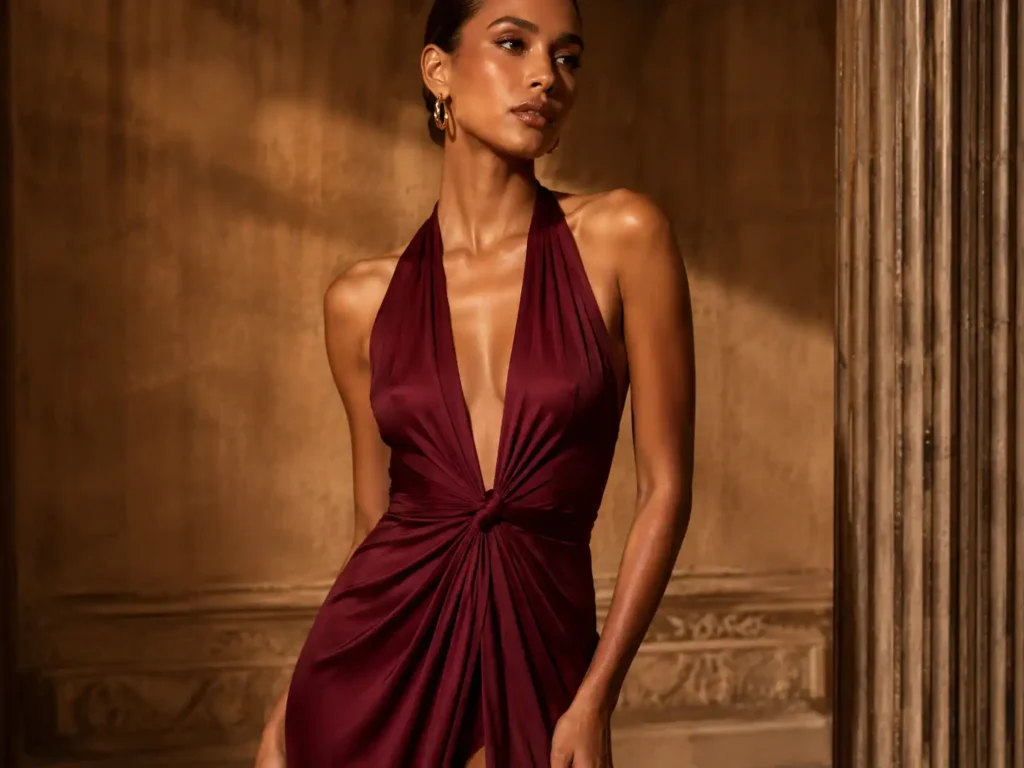
Neckline

Bust

Underbust

Waist

Hip

Side Seam

Slit

Hem
Size Grading That Preserves Drape Across the Range
Draped styles cannot be graded by enlarging every line equally. Body measurements, visual placement, fold volume, opening security, and garment length need separate rules.
Grade the Body Base and Decorative Volume Separately
The underlying fitted block grows according to the brand’s measurement chart and grade rule. Decorative volume may need a different progression. Adding the same percentage of ruching to every size can overload larger sizes, while keeping a cowl unchanged can make smaller sizes too deep or larger sizes too tight. Jinfeng reviews the base garment, anchor locations, and drape amount as separate but connected components.
- Bust, waist, hip, shoulder, armhole, length, and opening measurements follow approved brand rules.
- Cowl depth and cowl width may use different increments.
- Side-drape anchors move with the intended waist or hip level rather than a fixed distance from the pattern edge.
- Gathered volume is adjusted according to fabric thickness and visual target, not only body size.
Use Key Sizes to Test the Grade
A base-size sample alone cannot prove range stability. Key sizes are selected according to the brand range, fabric stretch, and fit risk.
A program covering XS-XL may review the base size plus at least one smaller and one larger boundary size. Expanded, petite, tall, or plus-size programs require a separate review plan. The goal is not to create unnecessary samples; the goal is to verify the grade where proportion changes become visible.
- Key-size garments are measured using the same defined method as the base sample.
- Cowl depth, neckline opening, drape anchor, slit height, and finished length are reviewed visually and numerically.
- Stretch garments are allowed to recover before measurement.
- Comments are converted into updated grade rules and pattern versions before bulk cutting.
Control Size Ratio and Production Measurement
A 200-piece style can be divided across sizes, but the ratio must remain workable for cutting, bundling, sewing, measurement, labeling, and packing. Extreme fragmentation increases handling and inspection risk. A clear size breakdown allows marker planning and QC sampling to focus on meaningful quantities. Bulk measurement checks include critical body points and drape-related dimensions.
- Brands submit size ratio by style and color before material and cutting plans are finalized.
- Size labels, barcodes, polybags, cartons, and packing lists follow the same approved ratio.
- In-line measurement catches grade or sewing drift before final inspection.
- Repeat orders compare current measurements with retained PP and bulk records.
Treat New Fabric as a New Fit Variable
Using an approved pattern in a different fabric does not guarantee the same fit. Stretch, recovery, shrinkage, weight, friction, and drape can change neckline depth, body cling, seam position, and length.
A same-pattern, new-fabric program is reviewed before direct bulk reuse. A fabric or fit sample may be required when the change is meaningful.
- Stretch satin can require different ease from non-stretch satin.
- Viscose jersey may grow more than polyester-spandex jersey.
- Chiffon overlays may need revised attachment when the base lining changes.
- Heavier fabric can reduce fold volume or increase anchor stress.
Twelve Design Variables Available for Custom Development
Neckline
Sleeve
Strap
Back Design
Length
Slit
Drape Position
Color
Lining
Closure
Embellishment
Private Label
How Development Files Are Reviewed Before Sampling
Files from the Brand
The strongest starting package connects design, fit, commercial quantity, and delivery requirements.
- Front, back, side, and detail views or a physical reference garment.
- Tech pack with construction callouts, measurements, tolerances, grade rule, labels, and artwork.
- Fabric composition, weight, stretch, hand feel, color reference, and acceptable substitutes.
- Style list, quantity by color, size ratio, target launch, and delivery destination.
Private-label, barcode, SKU, polybag, carton, and warehouse requirements.
Review by Jinfeng
Development teams convert the input package into a production path and identify open decisions.
- Drape method, grain direction, anchor position, seam placement, lining, closure, support, and edge finish.
- Measurement conflicts, missing construction, fit exposure, movement risk, and grading difficulty.
- Material availability, fabric MOQ, color route, trim route, consumption, and replacement options.
- Sample type, revision plan, PP requirement, bulk handover files, QC checkpoints, and packing controls.
Eight Controlled Steps from Concept to PP Approval
Project Review
Fabric Direction
Pattern Development
First Sample
Internal Fit Review
Client Comments
Revised Sample
PP Approval
Workmanship Controls for Clean Draped Dress Construction

Grainline Cutting

Stay Stitching

Drape Anchoring

Gathering Ratio

Seam Stabilization

Invisible Zipper

Stretch Stitching

Narrow Hemming

Controlled Pressing
Lining, Support, and Closure Systems Behind the Drape
Full Lining
Partial Lining
Bra Cups
Boning
Elastic Support
Anti-Slip Tape
Invisible Zipper
Hook and Eye
Draped Dress Defect Map and Control Checkpoints
| Quality Risk | Likely Cause | Primary Checkpoint | Control Method |
|---|---|---|---|
| Uneven drape placement | Anchor position, pattern marks, gather distribution, operator variation | Pattern / Sewing / In-line | Notches, templates, approved reference, first-off approval, in-line appearance checks |
| Twisted side seam | Off-grain cutting, uneven gathering, fabric torque, bias growth | Cutting / In-line | Grain control, fabric relaxation, bundle pairing, seam-position measurement |
| Cowl too deep or uneven | Pattern depth, stretch growth, shoulder position, facing tension | Sample / Measurement / Final | Cowl width-depth review, neckline measurement, recovery check, Golden comparison |
| Wavy invisible zipper | Bias or stretch movement, weak stabilization, feed tension | Sewing / In-line | Stay tape or support, controlled application, seam allowance and tension review |
| Uneven hem | Bias growth, overlay drag, incorrect hanging, cutting error | Sample / Finishing / Final | Relax or hang when required, re-measure, balance, approved hem method |
| Lining exposure | Incorrect length/ease, slit interaction, shell transparency | Sample / Sewing / Final | Layer test, lining pattern correction, movement review, slit and hem inspection |
| Missing or loose gathers | Incorrect ratio, thread break, elastic tension, poor securing | Sewing / In-line | Finished-length standard, anchor checks, elastic verification, operator instruction |
| Press marks or crushed folds | Excess heat, pressure, poor protection, compression | Finishing / Packing | Material-specific pressing test, protective cloth, hand shaping, cooling review |
| Measurement drift | Pattern version, fabric stretch, seam allowance, line variation | Cutting / In-line / Final | Version control, fabric relaxation, defined measurement method, tolerance tracking |
| Snags or surface damage | Handling, machine contact, rough trims, packing friction | Incoming / Sewing / Final | Surface inspection, protected tables, needle control, packing separators when needed |
| Shade or shine mismatch | Mixed dye lots, reversed satin face or nap direction | Incoming / Cutting / Final | Lot separation, face/nap marking, panel pairing, shade-band control |
| Incorrect labels or SKU | Packing data mismatch, manual sorting error | Packing QC | Approved label files, scan or visual verification, style/color/size/carton reconciliation |
Capacity Planning for Multi-Style Draped Dress Programs
6 Owned Factories
10+ Production Partners
18+ Sewing Lines
6+ Flexible Lines
12+ Merchandisers
15+ QC Inspectors
MOQ, Cost, Sample Timing, and Delivery Planning
Commercial Baseline
- Jinfeng Apparel starts from 200 pcs per style/color for custom womenswear production, subject to the complete production route.
- Stock fabric, established colors, standard trims, concentrated size ratios, and standard packing are easier to plan.
- Custom dyeing, exclusive print, special lace, sequins, custom hardware, complex support, or fragmented colors can raise material or production minimums.
- Cost is built from shell, lining, trims, pattern work, sampling, cutting, sewing time, pressing, QC, packing, wastage, testing when required, logistics, and reasonable factory margin.
- Size and color breakdown are reviewed independently; a total quantity cannot always be divided into many very small color groups.
- Quotations are confirmed against the approved construction and production assumptions.
Timeline and Delivery Logic
- Sample and bulk dates are issued after required inputs are confirmed rather than promised from a photograph alone.
- First-sample timing depends on file clarity, fabric availability, pattern complexity, lining/support, trims, and sample-room scheduling.
- Revised-sample timing depends on the number and type of comments plus material changes.
- Bulk planning begins after PP approval, material confirmation, label/packing approval, and production-slot review.
- Launch plans should include sample review, PP lock, material arrival, production, QC, packing, freight, customs, and warehouse receiving buffers.
- Express, air, sea, or air-sea split shipment can be evaluated according to volume, urgency, destination, and freight cost.
Private Label and Packing for Draped Dress Collections

Woven Labels

Care Labels
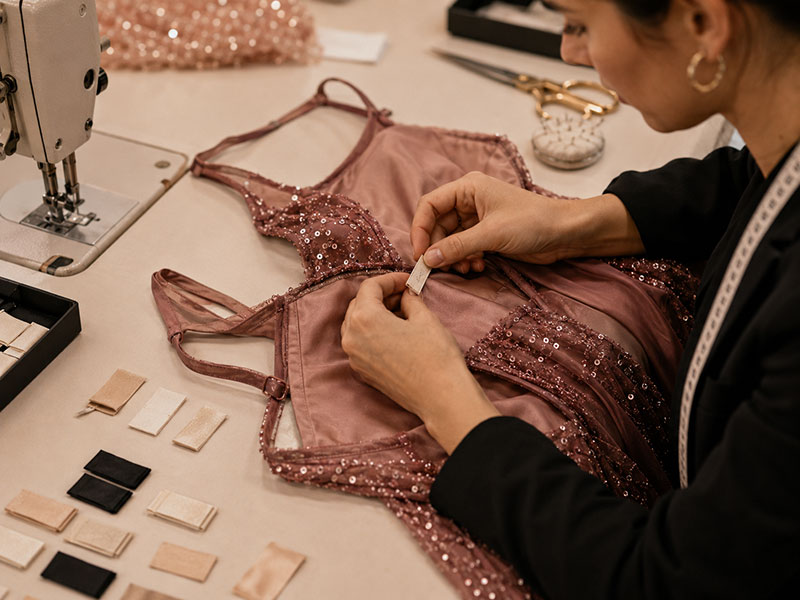
Size Labels

Hangtags
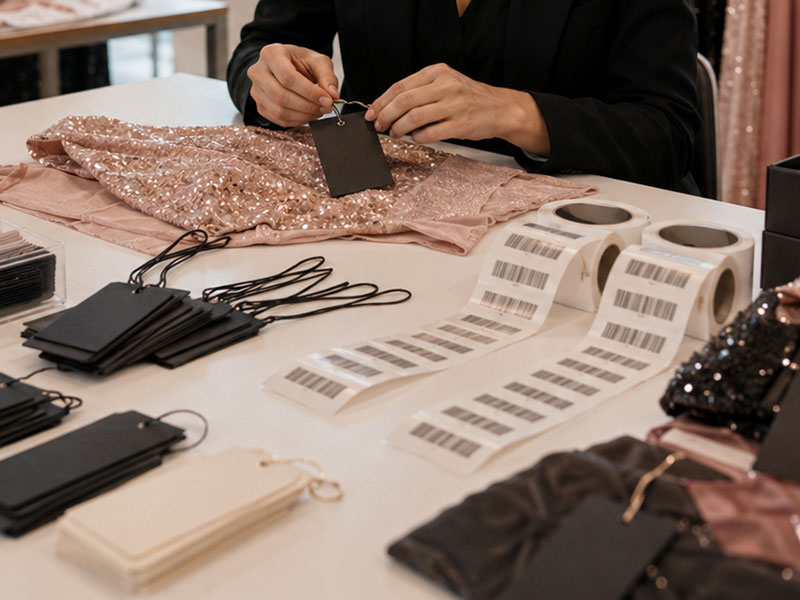
Barcodes

Polybags

Carton Marks
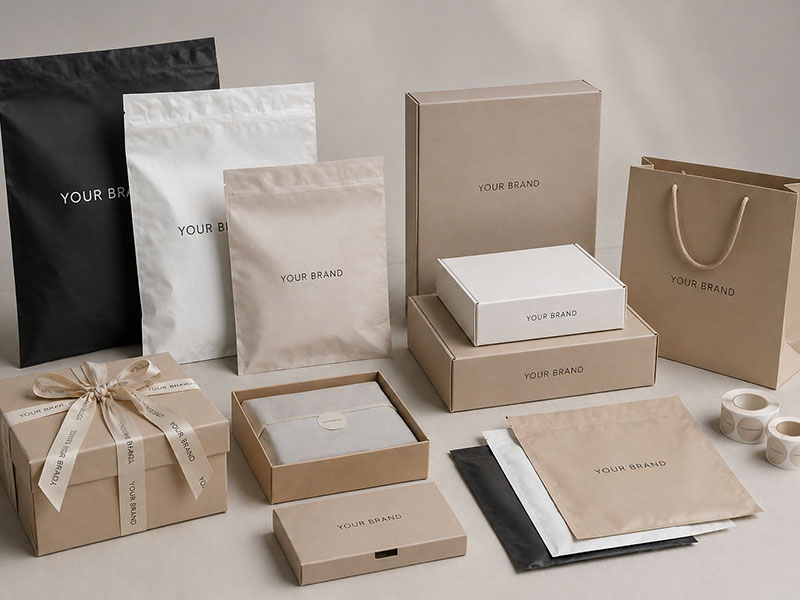
Drape Protection
Production Evidence Worth Reviewing Before Supplier Approval

Pattern Review

Sample Construction

Fabric Inspection

Cutting Control

In-Line Inspection
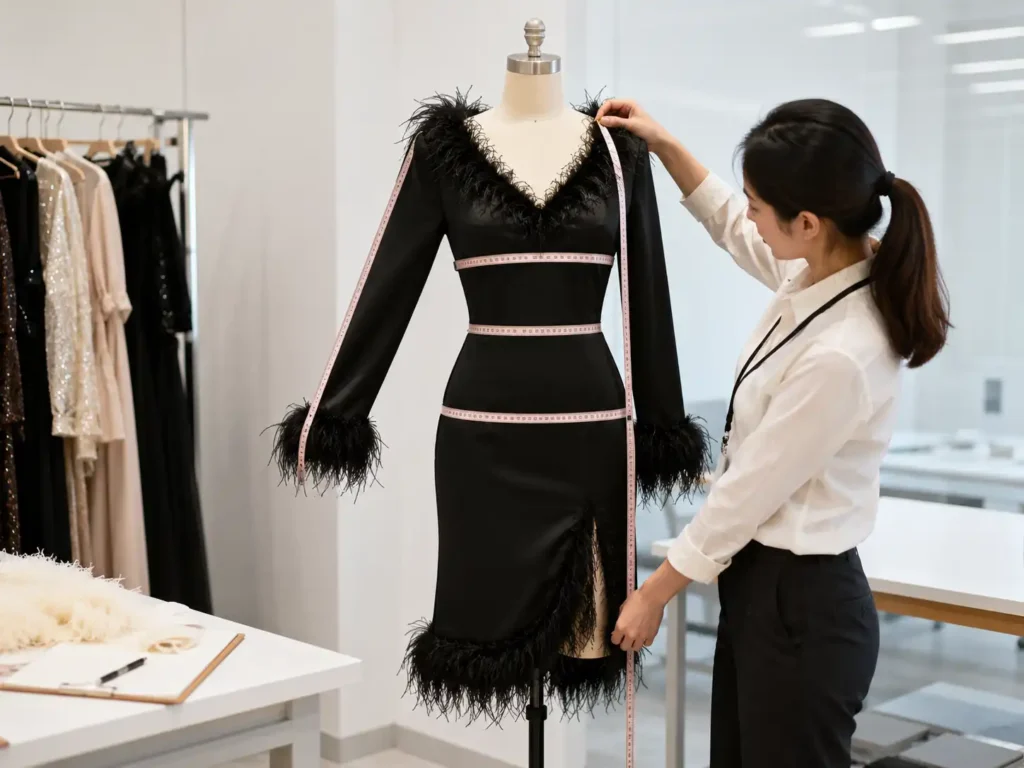
Garment Measurement

Finishing Review

Label and Packing QC

Shipment Preparation
Three Draped Dress Programs Solved Through Controlled Development
The following anonymized project profiles reflect established fashion programs with multi-style orders. Brand names, original artwork, unpublished designs, and commercial pricing remain confidential.

US Premium Ecommerce Program
A US-based premium ecommerce label developed 18 draped styles across mini and midi lengths, including side ruching, cowl necks, twist fronts, asymmetric overlays, and one-shoulder silhouettes. The confirmed program totaled 42,000 garments across two core drops. Style quantities ranged from 1,600 to 3,200 units, with XS-XL size coverage and concentrated color plans.
- Challenge: early satin samples showed zipper waves and inconsistent waist folds; jersey versions grew in length after hanging and side seams rotated forward.
- Development: satin routes were separated by stretch level and weight; zipper seams received stabilization; gather zones were defined by cut and finished length; jersey panels were relaxed and measured after recovery.
- Size control: base-size approval was followed by selected boundary-size checks for cowl depth, waist anchor position, finished length, and hip drape.
- Bulk transfer: final patterns, grain direction, material references, fold placement, first-off checks, and pressing standards were included in production files.
- Result: the program moved into two bulk drops with consistent visual placement and retained pattern/material records for color extension and repeat production.

UK Occasionwear Program
A UK occasionwear label planned 24 styles and 58,400 total garments covering cowl-neck midi dresses, asymmetric one-shoulder styles, draped maxis, and waist-overlay designs.
The range extended from XS to XXL, making visual grading a major approval issue rather than a base-size exercise.
- Challenge: early grading placed the cowl too low in larger sizes and shifted side-drape anchors away from the intended waist level. Long asymmetric skirts also showed uneven hanging.
- Development: cowl width and depth received separate grade rules; anchors moved relative to body landmarks; key sizes were reviewed; long bias and asymmetric panels were checked after hanging before hem lock.
- Construction: one-shoulder styles added internal support and underarm-security checks; overlay attachment points were reinforced without creating visible tension.
- QC: in-line teams checked cowl measurement, anchor position, side-seam balance, hem, lining exposure, and garment measurements against the approved references.
- Result: the brand approved the size range and released the collection with production files retained for seasonal reorder and new-color review.

Australian Resort Program
An Australian resortwear label developed 12 draped maxi and midi styles totaling 26,400 garments.
The collection used viscose, soft crepe, chiffon overlays, wrap constructions, side drapes, and waterfall skirts.
Delivery was aligned with a seasonal launch and warehouse intake plan.
- Challenge: viscose styles showed length growth and shrinkage risk; chiffon overlays exposed lining edges and arrived creased when packed too tightly.
- Development: fabric routes were reviewed for weight, drape, shrinkage, opacity, and width; lining patterns were adjusted; long panels were balanced after controlled hanging; wrap overlap and slit movement were tested.
- Packing: long dresses followed an approved folding sequence; delicate overlays were protected; SKU, barcode, size, polybag, and carton data were reconciled before dispatch.
- Delivery: priority launch quantities representing 20% of the program were prepared for air shipment, while the remaining 80% moved by sea under separate packing and document sets.
- Result: the launch allocation arrived first, followed by the main inventory, while retained patterns and fabric records supported planned color additions.
Why Fashion Brands Use Jinfeng for Long-Term Development
Draped Dress Development
Fabric and Pattern Review
Sample Revision Discipline
Bulk Consistency Control
NDA and Design Protection
Repeat-Order Records
Frequently Asked Questions About Draped Dress Manufacturing
Yes. Jinfeng Apparel can begin from reference images, sketches, original garments, line sheets, or tech packs. Development accuracy improves when front, back, side, detail views, target fabric, measurements, quantity, size range, and launch requirements are provided. The team reviews drape method, pattern risk, construction, lining, trims, MOQ, and sample path before formal development.
Suitable fabrics depend on the silhouette. Satin creates polished folds; jersey supports stretch ruching and cowls; viscose and rayon provide fluid movement; chiffon supports layered or formal draping; crepe offers controlled fall; mesh creates sheer fitted effects; velvet adds weight and depth. Weight, width, stretch, recovery, opacity, surface, lining, and bulk consistency are reviewed before approval.
Yes. Pattern development can cover cowl necklines, cowl backs, side draping, asymmetric waists, one-shoulder structures, twist fronts, waterfall overlays, wrap drapes, and bias panels. The pattern team controls volume, grainline, anchor points, seam balance, support, lining, and grading rather than copying a surface fold without production logic.
Approved patterns include notches, marks, gather zones, anchor positions, grain direction, and sewing instructions where required. Bulk transfer also uses fabric references, PP or Golden samples, first-off approval, operator guidance, in-line checks, measurement control, and final appearance comparison. Templates can be used for suitable operations when they improve repeatability.
Yes. Jinfeng reviews the underlying body pattern and decorative drape separately. Cowl depth, anchor position, gathered volume, slit height, neckline opening, and hem behavior may need specific grade rules. Key-size samples or measurements can be selected according to range, fabric, stretch, and fit risk. Expanded, petite, tall, or plus-size programs are evaluated by project.
MOQ starts from 200 pcs per style/color. Final feasibility depends on fabric availability, custom dyeing, print, lace, sequins, trims, construction complexity, size ratio, color count, packaging, and production planning. Material suppliers can have separate minimums, so a total quantity may not always be divided across many small color groups.
Yes. Sample comments are reviewed by category, including fit, fabric, workmanship, measurements, color, trims, construction, labels, packing, and cost alignment. Approved corrections are transferred into updated patterns, charts, material records, sewing instructions, and revised-sample requirements. PP approval occurs after the production standard is clear.
Yes. Private-label support can include woven labels, care labels, size labels, hangtags, barcodes, SKU stickers, polybags, carton marks, packing lists, and warehouse labels. Artwork, language, composition, care, barcode data, placement, MOQ, and target-market requirements must be reviewed before production.
Control begins with fabric behavior, grain direction, relaxation, cutting, panel pairing, gathering, and seam stability. Bias and long panels may require hanging or recovery before final hem correction. In-line checks monitor side-seam position and measurements. Final pressing and packing follow the approved method so the garment is not distorted after sewing.
Yes. Jinfeng Apparel supports NDA-based cooperation and protects tech packs, original samples, patterns, measurement charts, fabric and trim plans, labels, packaging, barcodes, quantities, pricing, and unpublished styles. Public case material remains anonymized or requires permission before brand identity or protected assets are shown.

Send Your Draped Dress Program for Technical Review
Send available files for a structured review of material direction, drape construction, fit risk, sampling, MOQ, bulk controls, labels, packing, and delivery planning. Missing information can be identified before formal development begins.
Please include the following information where available:
- Reference images, sketches, original sample photographs, or tech packs with front, back, side, and detail views.
- Style count, quantity per style/color, size range, size ratio, target fabric, preferred colors, and required drape construction.
- Launch date, sample deadline, warehouse destination, freight preference, and any split-shipment requirement.
- Woven label, care label, size label, hangtag, barcode, polybag, carton mark, and warehouse packing files.
- Target price or commercial range when available, allowing material and construction options to be reviewed responsibly.


