Skip to content
Draped Dress Fit Solutions
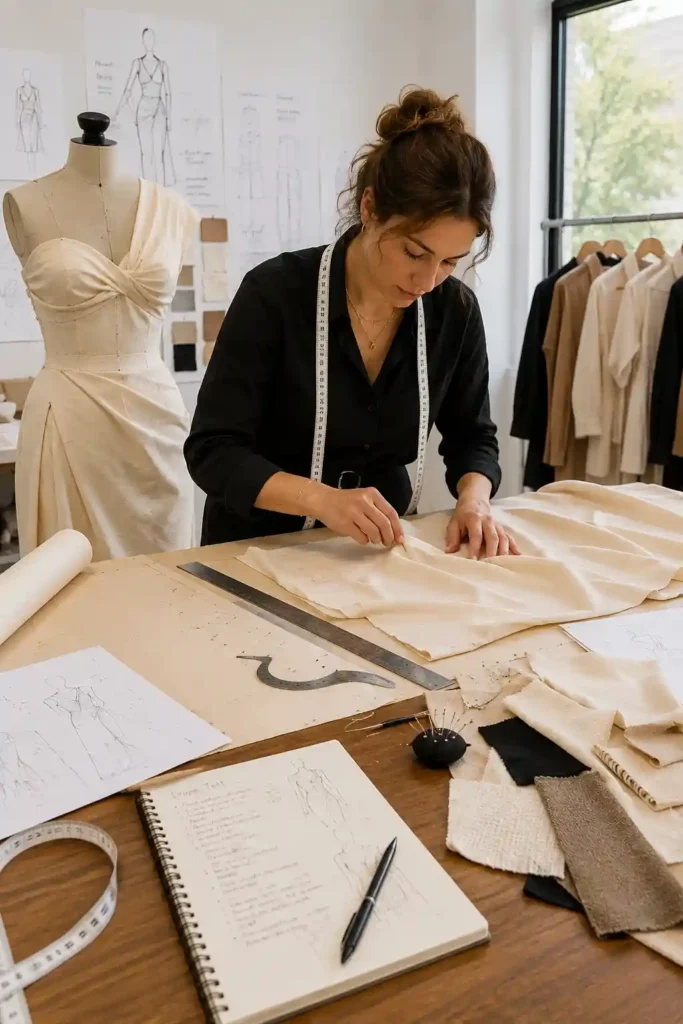
Draped dresses can lose their intended silhouette when fabric behavior, pattern balance, grain direction, fold volume or anchoring points are not developed together. Jinfeng Apparel helps fashion teams diagnose drape-related fit issues, correct samples and convert approved shapes into repeatable production standards.
- 7+ senior pattern makers supporting fit and pattern correction
- 2 dedicated sample rooms for dress development and revision
- 20+ sample machinists handling first, revised, PP and Golden samples
- Fit control across neckline, bust, waist, hip, side seam, drape position and hem
- Sample development typically varies by construction complexity and fabric readiness
- MOQ starts from 200 pcs per style/color for standard production conditions
Development Capacity Behind Better Draped Dress Fit
Established Experience
Since 2008 Jinfeng Apparel has focused on custom women’s fashion development and production since 2008, supporting dresses and fashion womenswear from design references and technical files through sampling, fit correction, bulk production, QC, private-label packing and export coordination.
Professional Pattern Team
7+ Pattern Makers Senior pattern makers review neckline balance, bust shaping, waist position, hip ease, drape volume, grain direction, side-seam balance and length before an approved pattern becomes a production standard.
Dedicated Sample Support
2 Sample Rooms Dedicated sample rooms support first samples, fit samples, revised samples, photo-ready samples, PP samples and Golden sample management for dress development programs.
Skilled Sample Machinists
20+ Sample Machinists Sample machinists work with satin, chiffon, mesh, jersey, lace and other fashion fabrics while testing seam construction, gathering, lining, closures, drape anchoring and finishing details.
Strict Quality Control
15+ QC Inspectors Quality teams check materials, cutting, sewing, measurements, drape positioning, finished appearance, pressing and packing according to the approved production requirements.
Structured Bulk Capacity
Jinfeng operates 6 owned women’s fashion factories with 10+ long-term satellite production partners, supporting multi-style development and coordinated bulk production after fit standards are approved.
What Causes Draped Dress Fit Problems?
Fabric Behavior
Pattern Balance
Drape Volume
Grain Direction
Anchor Position
Body Proportion
Built for Fashion Development and Sourcing Teams
Product Development Teams
Technical Design Teams
Sourcing Teams
Occasionwear Brands
Premium Ecommerce Brands
Designer-Led Collections
Common Draped Dress Fit Failures We Review

Drape Falls Too Low

Excess Fabric Bulk

Cowl Neck Collapses

Bust Pulling
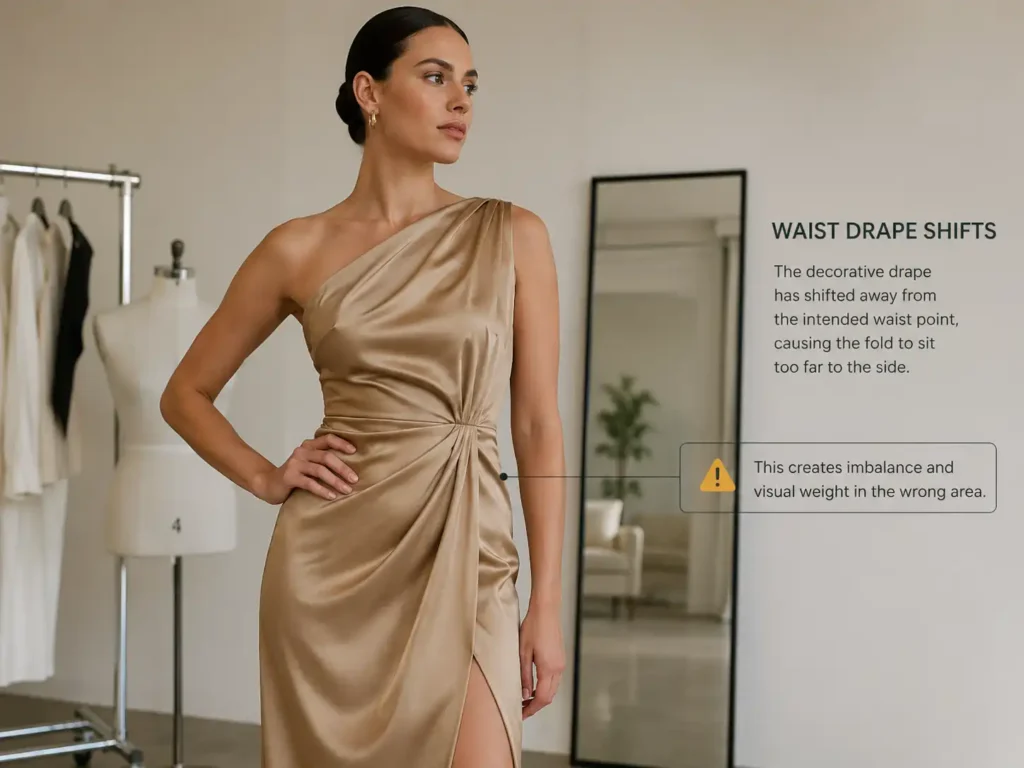
Waist Drape Shifts

Side Seam Twists

Hem Becomes Uneven

Drape Loses Shape
Draped Dress Structures We Develop

Cowl Neck Draping

Side Waist Draping

Asymmetric Draping

Ruched Draping

Bias Draping

Twist-Front Draping
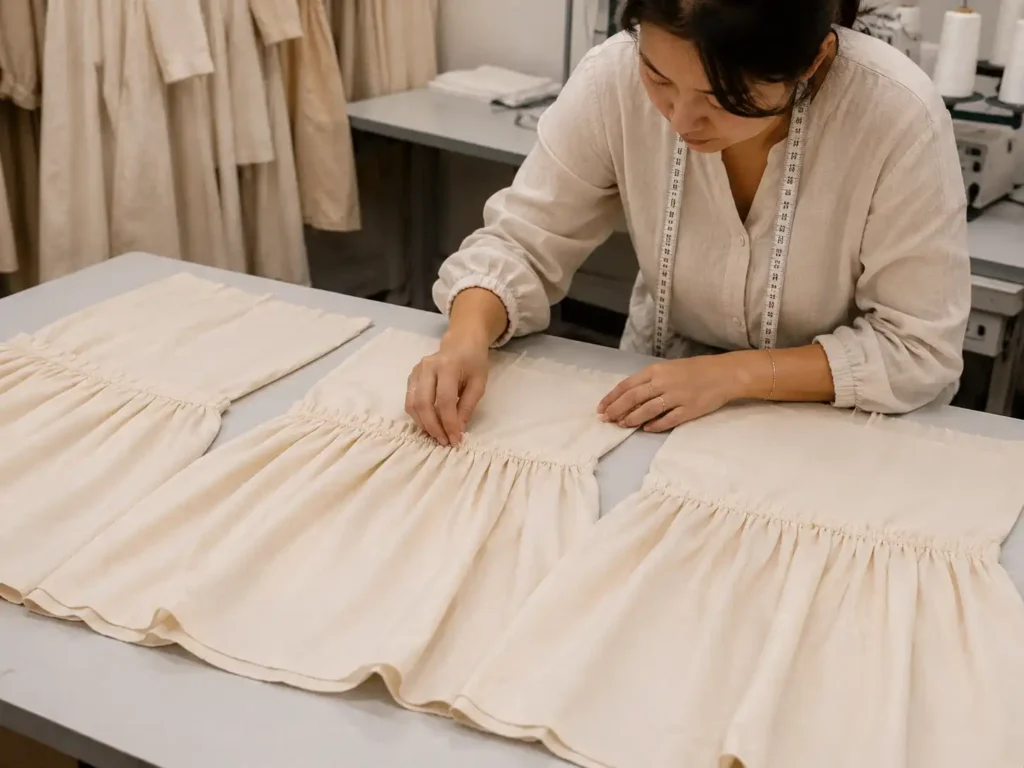
Gathered Draping

Wrap Draping
Fabric Behavior Changes Every Drape
Fabric selection is part of fit engineering. Changing weight, stretch, weave or surface can alter fold depth, movement, neckline behavior and how added volume settles around the body, even when the pattern remains unchanged.
| Fabric | Typical Drape Character | Main Fit Risk | Development Focus |
|---|---|---|---|
| Satin | Fluid, smooth, reflective | Pull lines, visible fold distortion, bias growth | Grain direction, bust balance, pressing and fold placement |
| Chiffon | Light, floating | Shifting layers, transparency, uneven hems | Lining, seam stability and hem balance |
| Jersey | Stretching, body-responsive | Sagging, recovery loss, excessive cling | Stretch percentage, recovery and ease |
| Mesh | Stretching, transparent | Distortion and lining mismatch | Tension, support layers and seam stability |
| Crepe | Controlled, soft | Excess bulk when too heavy | Weight selection and added drape volume |
| Rayon | Fluid and soft | Growth and shape movement | Stabilization, hanging and pattern balance |
| Velvet | Weighted and directional | Drag, pile direction and seam bulk | Grain direction, nap, pressing and support |
| Lace-Layered Drape | Textured and structured | Stiff folds and placement mismatch | Base fabric, lining and motif placement |
Pattern Engineering Behind Controlled Draping
Draped silhouettes become repeatable only when the folds are supported by a stable pattern system. Jinfeng reviews how the garment balances around the body before deciding whether a visible problem comes from measurements, fabric, volume or construction.

Grainline and Bias Direction
Grain direction controls how the fabric reacts to gravity and body movement. A straight-grain panel usually holds length more predictably, while a bias area can stretch and fall more softly. Draped necklines, diagonal waist treatments and fluid skirt sections often rely on controlled bias behavior.
During development, the pattern team reviews whether each panel should remain stable or provide movement. Cutting direction is then recorded for production rather than left to operator interpretation.
Key control points include:
- Panel grain direction
- Bias angle
- Fabric stretch along each direction
- Seam stabilization requirements
- Hanging or relaxation behavior
- Hem growth after sewing
A change in fabric may require a second grain and pattern assessment before bulk approval.

Pattern Balance and Body Proportion
A draped dress should remain balanced before decorative folds are added. Front length, back length, bust shaping, waist position and hip distribution create the foundation on which the drape sits.
For example, a side drape may appear too low even when its anchor measurement matches the tech pack. If the front torso is too long or the waistline tilts during wear, the fold system will visually shift with it.
Fit review can therefore include:
- Bust point position
- Front and back torso length
- Waistline level
- Hip ease
- Side seam verticality
- Shoulder balance
- Neckline relationship
- Hem balance
Pattern corrections are recorded before moving into PP approval.
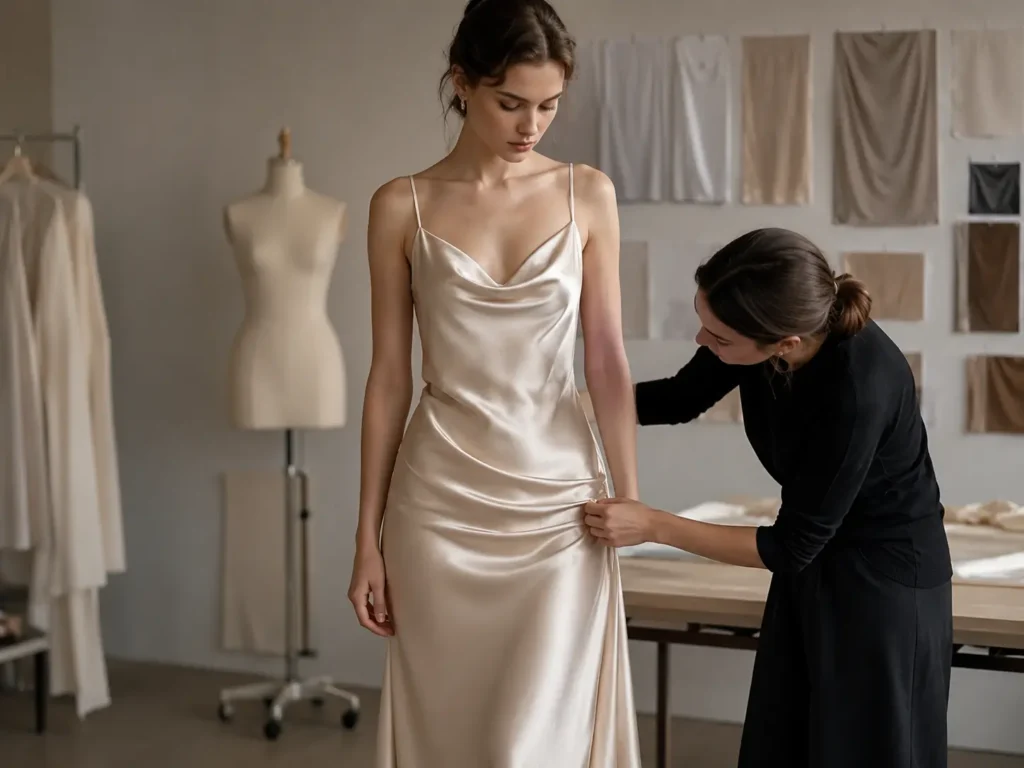
Drape Volume and Fold Depth
Added fabric volume creates the visual language of the drape. Pattern development determines how much volume is introduced and where it is released.
Slash-and-spread sections, extended panels, gathers and pleats can all increase drape. Excessive added volume may create heavy folds, while insufficient volume can flatten the design.
Development reviews:
- Spread amount
- Gather ratio
- Pleat depth
- Fold direction
- Fold release point
- Seam entry point
- Visual density
- Fabric weight
The goal is not maximum fabric movement. The goal is controlled movement that can be reproduced in production.
Critical Fit Zones in Draped Dresses
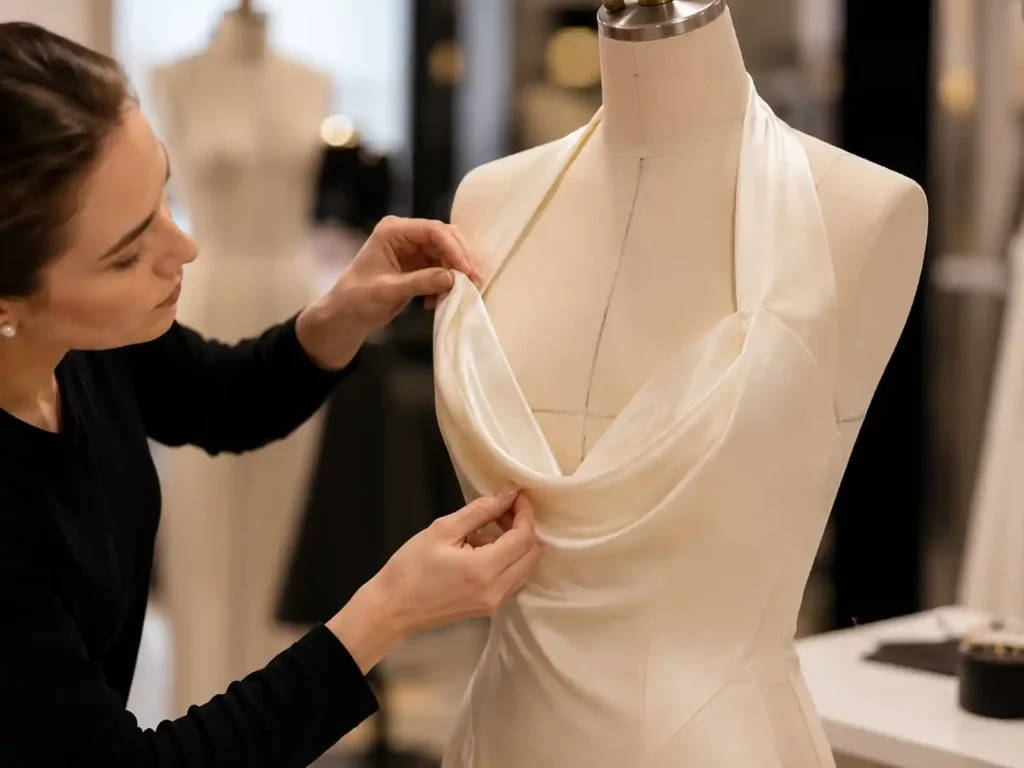
Neckline Control

Bust Balance

Waist Position

High-Hip Balance

Full-Hip Ease

Side Seam Alignment
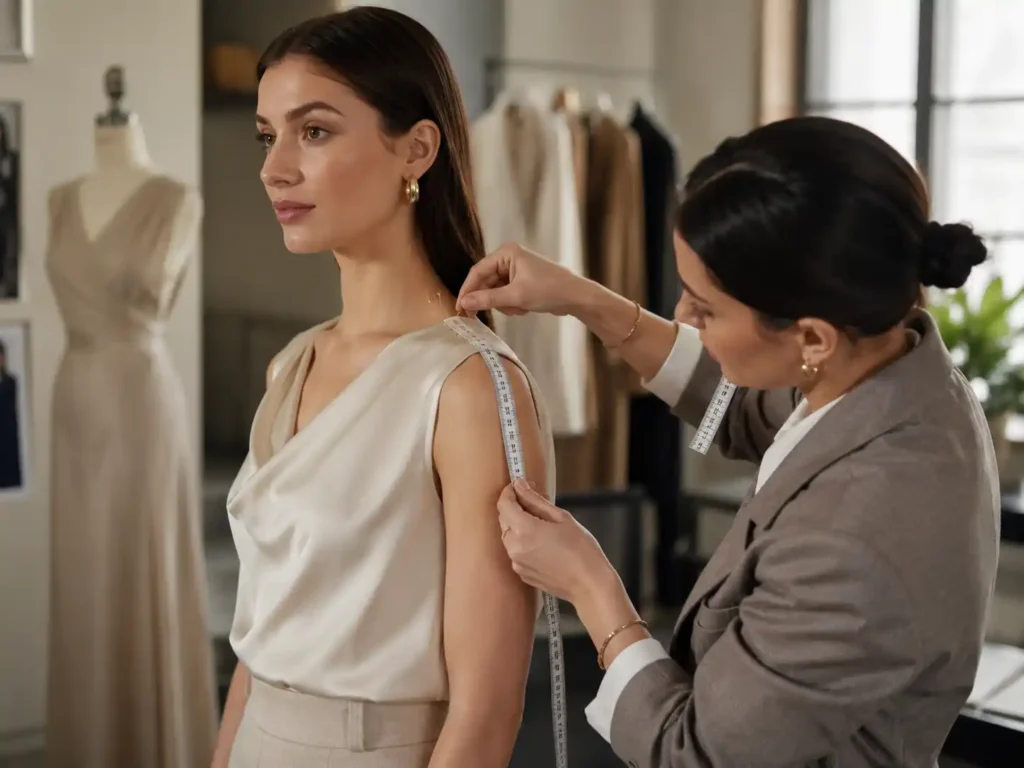
Shoulder and Strap

Hem and Slit
Controlling Drape Placement and Construction
Visual draping must be translated into sewing instructions that different operators can repeat. Pattern shape creates the fold potential; construction determines whether each garment follows the approved sample.
Gathering Ratio and Distribution
Gathering should be controlled by measurable ratios and defined start and end points rather than visual estimation alone. Uneven distribution can change the waistline, create excess bulk or move the strongest folds away from the approved reference.
Development may record:
- Original panel length
- Finished gathered length
- Gather concentration
- Seam position
- Direction of release
- Relationship with lining
- Reference photos
The production instruction should make the fold system understandable without relying only on a physical sample.
Drape Anchoring and Internal Support
Some draped sections need hidden support so the visible fabric can remain soft while the structure stays stable.
Depending on the style, support may come from seams, lining, stay tape, internal tacks, waist construction or other approved methods.
Control focuses on:
- Anchor position
- Stitch strength
- Visibility from outside
- Pulling around the anchor
- Comfort during wear
- Repeatability after pressing
Support should stabilize the design without making the garment look rigid.

Lining Interaction
Lining can either support a drape or interfere with it.
A lining that is too short, too tight or attached at the wrong position may pull the outer fabric and change the fold direction.
During sampling, outer fabric and lining are checked together for:
- Length relationship
- Stretch compatibility
- Seam connection
- Transparency control
- Movement allowance
- Hem behavior
Complex draped styles may require lining corrections even when the outer pattern remains unchanged.
Match the Fit Problem to the Right Correction
A visible defect can have several possible causes. Jinfeng reviews the sample, fit photos, fabric and pattern information before deciding whether correction belongs in the pattern, drape volume, construction or material selection.
| Visible Problem | Likely Causes | Typical Correction Direction |
|---|---|---|
| Drape feels too bulky | Excess spread, heavy fabric, dense gathering | Reduce volume, change distribution or reassess fabric |
| Cowl neckline looks flat | Limited bias behavior, insufficient volume | Review neckline pattern, grain direction and added volume |
| Cowl gapes outward | Excess neckline length, bust imbalance | Reshape neckline and review bust/front length |
| Waist drape falls too low | Anchor position, heavy folds, torso imbalance | Reposition origin and review waist balance |
| Side seam pulls forward | Front-back imbalance, hip tension, drape weight | Correct pattern balance and ease |
| Bust shows diagonal drag lines | Insufficient shaping or tension transfer | Review bust volume, front length and fold origin |
| Asymmetric hem drops | Bias growth or unequal fabric weight | Allow fabric relaxation and rebalance hem |
| Folds disappear during wear | Weak anchor, too much stretch, limited structure | Reinforce construction or reassess fabric |
| Drape differs by size | Uncontrolled grading of anchors and volume | Build size-specific grade rules |
| Bulk folds differ from sample | Cutting, gathering or sewing variation | Lock grain, ratios, reference points and QC checks |
From First Sample to Approved Draped Fit
First Sample
The first sample verifies the design direction, pattern proportion, fabric behavior, drape volume and construction feasibility. It is not treated as the final production standard.
Regular dress structures may often require around 10–15 days for initial sample development once materials and technical details are ready. More complex draped, corset, asymmetric or special-fabric styles can require around 15–25 days depending on sourcing and construction.
Fit Review
Fit photos, measurements, mannequin views, wearer comments and comparison with the reference design are reviewed.
Attention may include:
- Neckline depth
- Bust shaping
- Waist level
- Hip ease
- Drape origin
- Side seam
- Length
- Slit position
- Movement
Revised Sample
Pattern, fabric, trims or construction are updated according to confirmed comments.
Medium-complexity styles may require one or two revised samples, while complex structures can require additional review.
Photo-Ready Review
For ecommerce and occasionwear programs, a photo-ready sample can be used when silhouette, fold placement and visual proportion must be checked specifically for campaign photography.
PP Sample
The PP sample confirms the final pattern, measurements, fabric, trims, construction, labels, packing and relevant QC standards before bulk production.
Major design or material changes after PP approval require renewed evaluation of cost, timing and production risk.
Golden Sample
The Golden sample serves as a reference for production, QC, repeat orders and comparison when future questions arise about the approved appearance.
Keeping Draping Consistent Across Sizes
A drape that looks balanced in the development size may change after grading. Larger or smaller body proportions alter the distance between bust, waist, hip, shoulder and drape anchors, so fold systems need controlled grading rules rather than simple proportional enlargement.

Bust and Front-Length Grading
Bust width is only one part of the grade. Front-body length and bust projection influence where upper-body folds begin and how necklines sit.
For cowl, twist-front or asymmetric bust draping, grading should preserve:
- Neckline opening
- Bust coverage
- Drape depth
- Fold direction
- Front-waist relationship

Waist and Hip Relationships
Side draping often crosses both waist and hip zones. If waist and hip grades change without considering the drape anchor, folds may become tighter in larger sizes or excessively loose in smaller sizes.
Fit review considers:
- Waist position
- High-hip level
- Full-hip ease
- Side-seam position
- Anchor placement
- Added drape volume
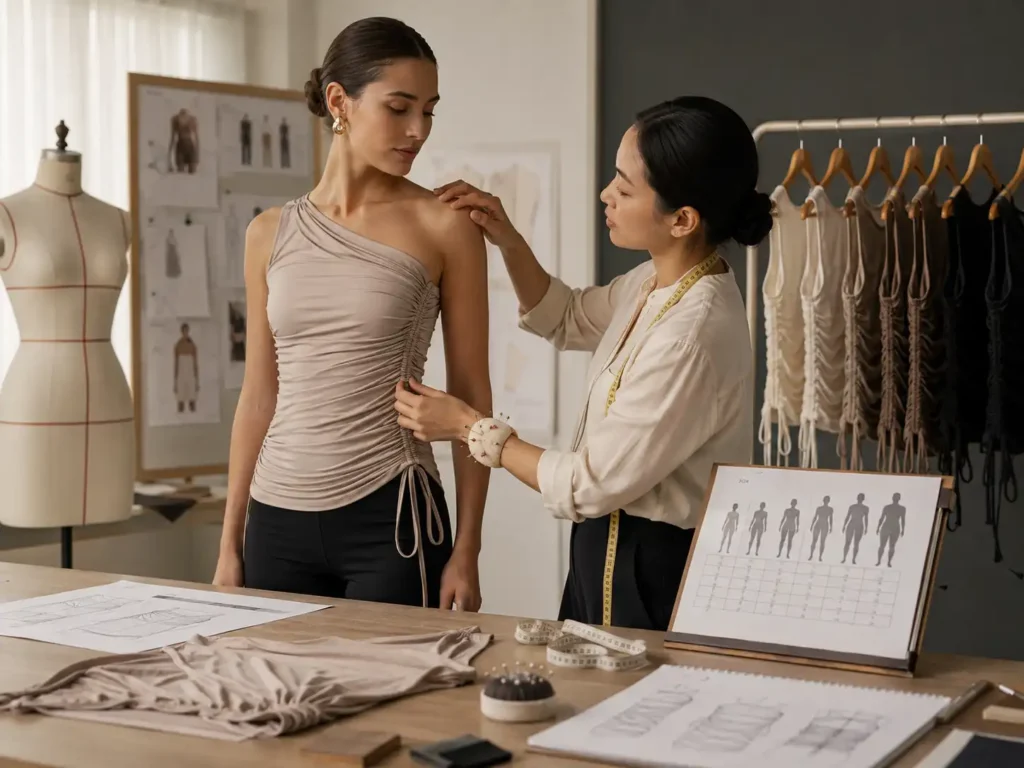
Size-Specific Drape Volume
Some styles can use the same proportional fold system across the size range.
Others benefit from controlled changes in gather amount, pleat depth or anchor distance.
The goal is visual consistency rather than mathematically identical fabric volume.
Moving Approved Fit Into Bulk Production
Final Pattern
Grade Rules
Fabric Reference
Trim Approval
Sewing Standard
QC Reference
Bulk Control for Draped Dress Production
Once a draped style reaches production, small variations in cutting direction, gathering, seam tension or pressing can create visible differences. Bulk control therefore focuses on the points most capable of changing the silhouette.

Fabric Batch Review

Grain Direction Control
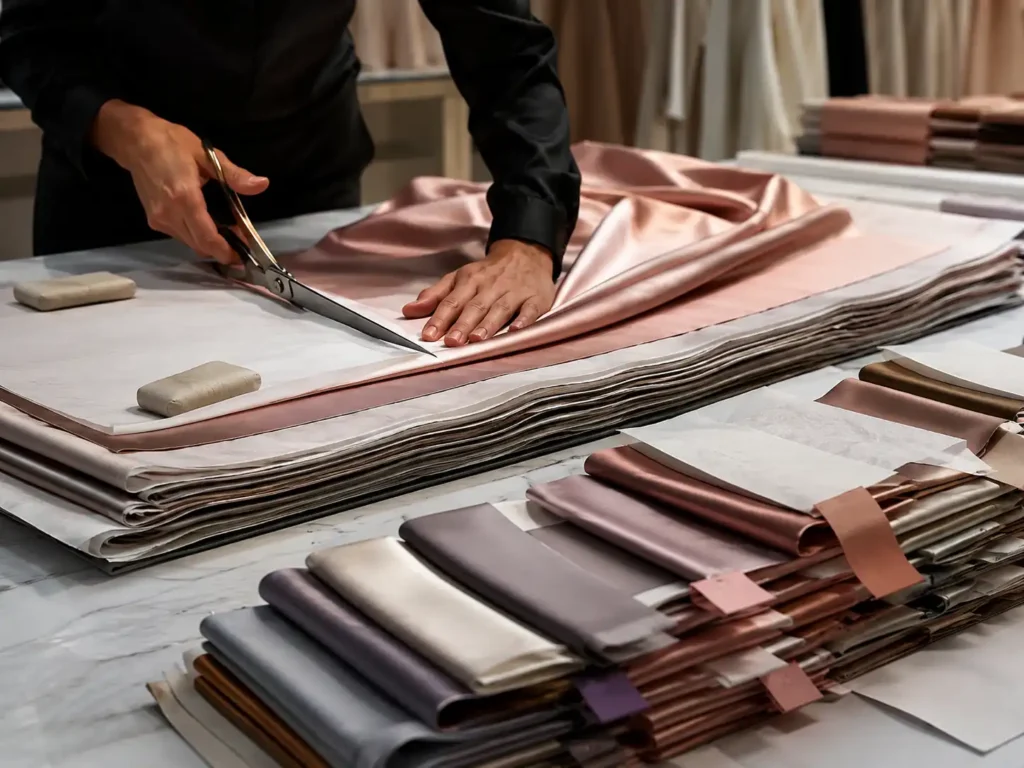
Cutting Accuracy

Drape Sewing Sequence
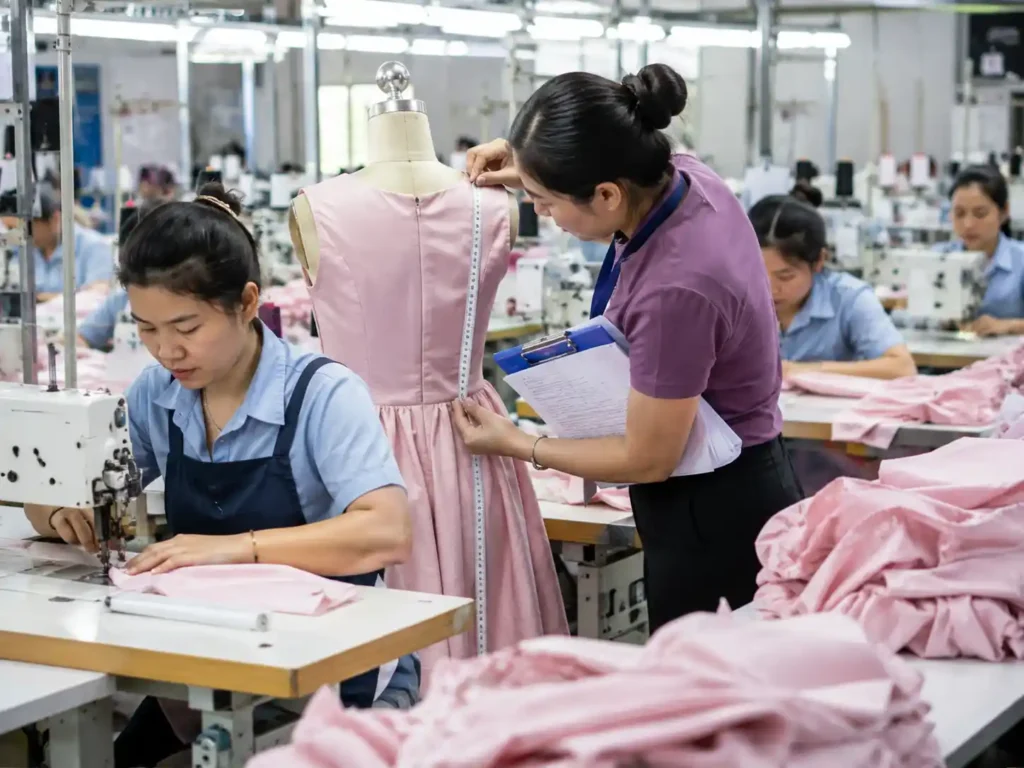
In-Line Fit Checks

Measurement Control
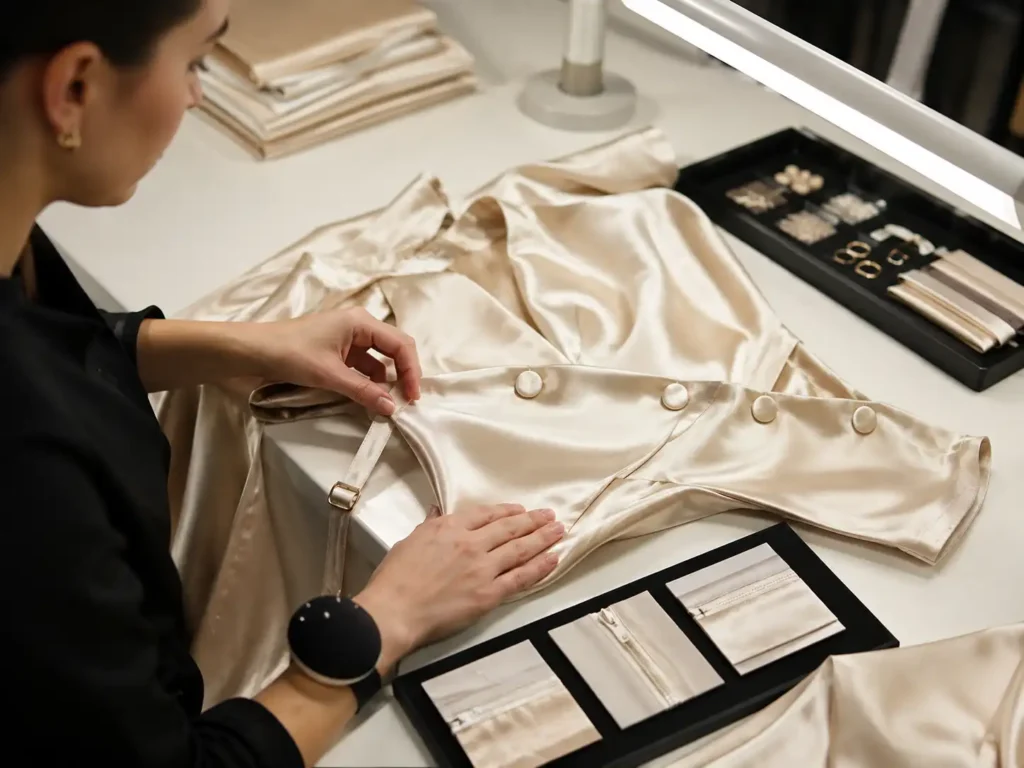
Finishing and Pressing
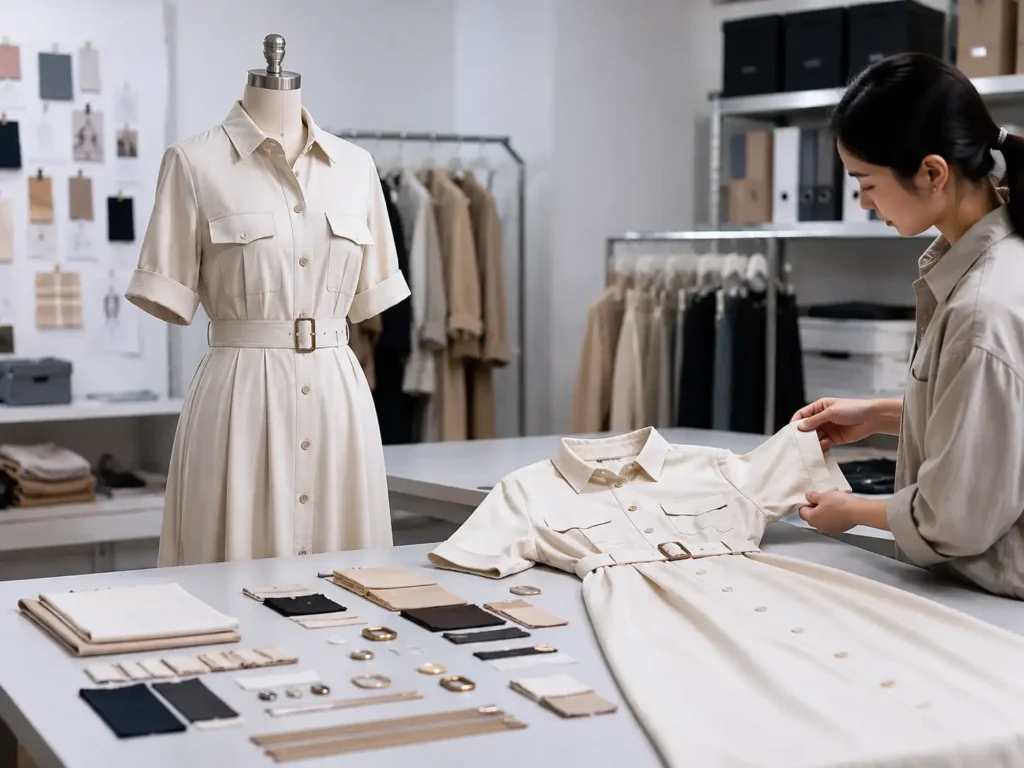
Approved Sample Comparison
Draped Dress Quality Control Points
Incoming Fabric Check
Cutting Direction
Sewing Construction
Drape Placement
Fit Measurements
Finished Appearance
Pressing Quality
Packing Protection
MOQ, Cost and Fit Feasibility
MOQ Planning
Main Cost Drivers
Draped styles may use additional fabric and pattern work compared with simpler silhouettes. Major cost factors can include fabric consumption, bias cutting, lining, gathering, pleating, complex seams, internal support, trims, sample revisions, sewing time, QC and packing requirements.
Cost Optimization
Draped Dress Fit Frequently Asked Questions
Excess bulk may come from too much added pattern volume, heavy fabric, dense gathering or poor distribution of folds. Jinfeng reviews the pattern spread, fabric weight, gathering ratio, fold direction and anchor positions before recommending a correction. Reducing the side seam alone may change the fit without improving the drape.
Yes. Development can begin from an existing sample together with fit photos, measurements, reference images or a tech pack. The sample is reviewed for pattern balance, fabric behavior, construction, drape placement and fit before a revision plan is prepared.
Yes. Heavier fabrics can pull folds lower or create more bulk, while very light fabrics may collapse or move too freely. Fabric weight, stretch, recovery, surface and grain behavior should be considered together with the pattern before sample approval.
Possible causes include insufficient fabric volume, unsuitable grain direction, excessive neckline opening, bust imbalance or fabric that is too stiff. The correction depends on the sample and may involve neckline reshaping, bias adjustment, added volume or fit correction.
Consistency requires controlled grading of measurements, drape anchors, fold volume and proportional points. Complex fitted or asymmetric styles may benefit from size-set review before full production.
A complete tech pack provides the clearest development basis, but projects can also begin from reference images, sketches, original samples, size charts or line sheets. More complete information helps reduce assumptions during pattern development and quotation.
Yes. Reference-image development can begin after reviewing silhouette, fabric direction, neckline, length, lining, closure, fit preference, size range and quantity plan. Protected designs should only be developed when the brand has the appropriate rights or authorization.
Regular dresses may often require around 10–15 days once materials and technical details are ready. Complex draped, corset, asymmetric or special-material styles can take around 15–25 days. Fabric sourcing, revisions and special trims may extend the schedule.
Standard MOQ starts from 200 pcs per style/color. Fabric suppliers, dyeing, printing, trims or customized packaging may have separate minimum requirements depending on the project.
Yes. Jinfeng Apparel supports NDA-based cooperation and protects client tech packs, samples, patterns, trims, private-label information, packaging files and unpublished design information throughout development and production.

Send Your Draped Dress for Fit Review
A useful fit review starts with enough information to understand the intended silhouette and the problem appearing in the current sample.
Share available technical files, reference images or sample photos and Jinfeng can review whether the main risk is connected to fabric behavior, pattern balance, drape placement, measurements or construction.
For a faster project assessment, include:
- Tech pack or reference images
- Existing sample photos
- Front, back and side fit photos
- Marked fit comments
- Size chart and target size range
- Fabric composition, swatch or preferred material
- Target quantity by style and color
- Color plan
- Private-label requirements
- Packing requirements
- Target launch or delivery window