 Skip to content
Decorative Trim Sourcing
Apparel-focused trim sourcing for global womenswear brands developing dresses, sets and fashion collections from sample approval through bulk production.
- Lace trims, rhinestone trims, bead chains, sequins, tapes and selected decorative hardware are matched to garment fabric, structure, wearing occasion and target cost.
- 2 sample rooms and 20+ sample machinists support trim-on-garment application, revision and pre-production confirmation.
- Garment MOQ starts from 200 pcs per style/color; special trims may carry separate supplier MOQ and development requirements.
- Approved trim specifications can be recorded with BOM, sample versions, sewing instructions and QC checkpoints for bulk and repeat orders.
Decorative Trim Sourcing Backed by Garment Production
Since 2008
6 Owned Factories
10+ Production Partners
2 Sample Rooms
20+ Sample Machinists
15+ QC Inspectors
Built for Womenswear Teams Managing Real Production Programs
Global Womenswear Brands
Occasionwear Labels
Product Development Teams
Sourcing Offices
Premium Ecommerce Brands
Designer and Private Label Programs
Decorative Trims We Source for Custom Womenswear
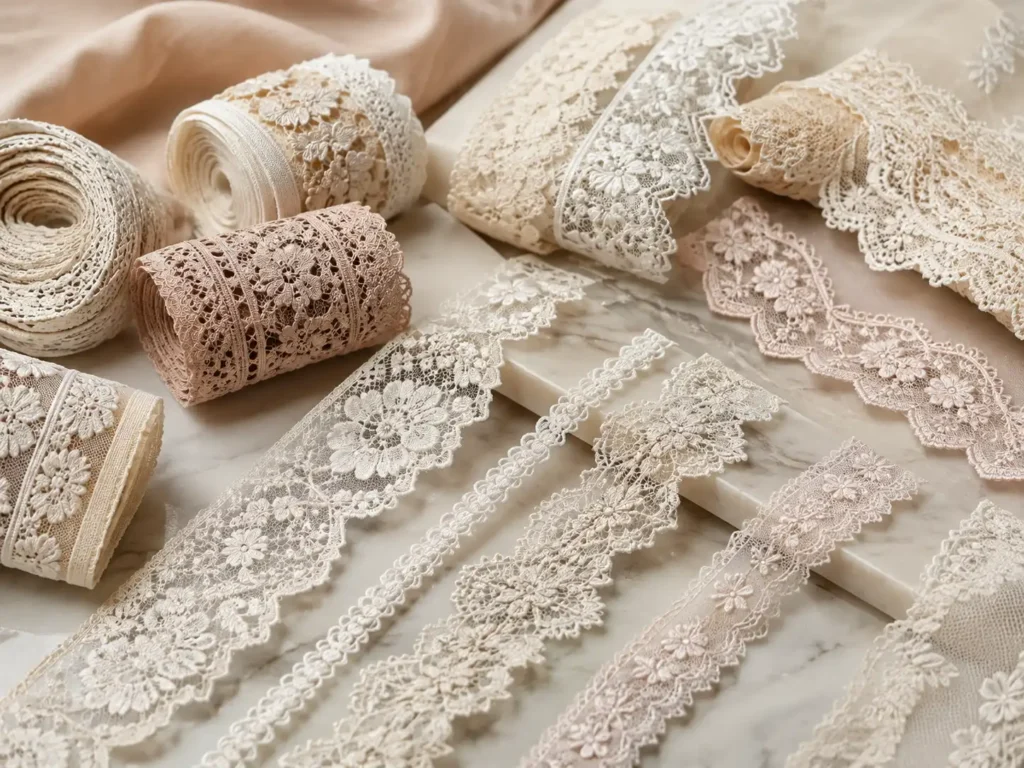
Lace Trims

Rhinestone Trims

Bead Chains

Sequin Details

Decorative Tapes

Bow Details

Decorative Hardware
Mixed Embellishments
Match Decorative Trims to Garment Applications
A trim should be selected according to the garment, base fabric and expected wear. The matrix below shows the development questions normally considered before a decorative detail moves from sourcing into sample approval and bulk production.
| Decorative Trim | Typical Womenswear Use | Common Fabric Direction | Main Development Risk | Bulk QC Focus |
|---|---|---|---|---|
| Lace trim | Occasion, wedding guest, resort, romantic dresses | Satin, chiffon, mesh, crepe | Pattern scale, edge, lining, joining | Placement, symmetry, damage |
| Rhinestone trim | Party, birthday, evening, holiday styles | Mesh, satin, stretch fabrics | Weight, stretch interaction, placement | Stone loss, attachment, position |
| Bead chain | Evening, party, statement details | Satin, mesh, soft woven fabrics | Weight, pull, skin contact | Chain security, spacing, alignment |
| Sequin detail | Holiday, club, party, evening styles | Mesh, sequin fabric, satin, knit | Shedding, scratch, edge handling | Missing sequins, edge finish, damage |
| Decorative tape | Neckline, strap, waist, seam or hem detail | Woven, knit, mesh, satin | Width, thickness, stretch mismatch | Line consistency, seam bulk, color |
| Bow detail | Mini, party, celebration, tops and sets | Satin, organza, woven fabrics | Proportion, stiffness, packing | Shape, symmetry, attachment |
| Decorative hardware | Corset, strap, statement, denim-inspired looks | Woven, denim, satin, structured fabrics | Weight, scratching, reinforcement | Finish, function, secure setting |
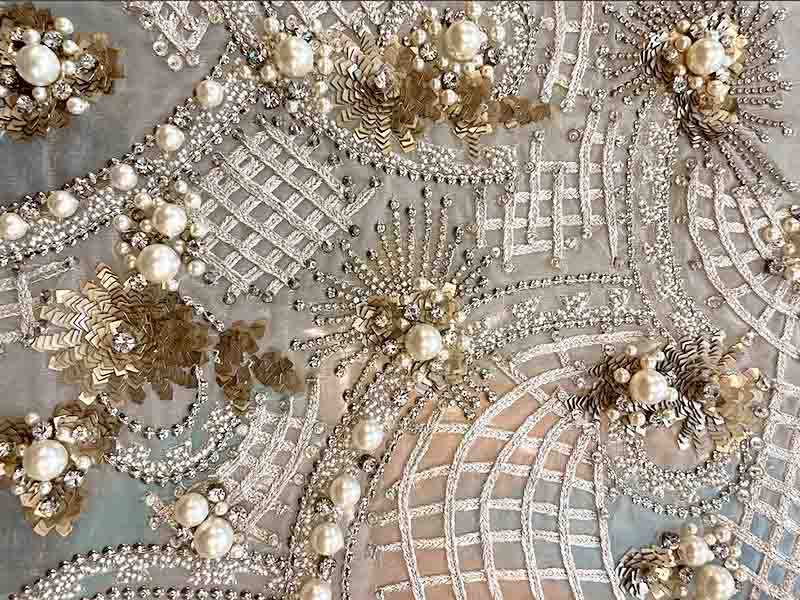
| Mixed embellishment | Occasion, evening, fashion-forward capsules | Mixed fabrics by style | Combined weight and process complexity | Every approved position and attachment |
Match Trims to Fabrics Before Sampling
Decorative trims change how a garment behaves. Weight, stretch, transparency, shine and surface friction all interact with the base fabric, so trim sourcing is reviewed together with fabric direction before the style is treated as production-ready.

Rhinestones on Mesh and Stretch Fabrics
Mesh and power mesh can deliver the exposed, body-contouring look often used in party, birthday and evening fashion, but the same openness and stretch that create the look also make rhinestone placement more sensitive. A heavy rhinestone strip may pull the mesh downward, change local stretch or create distortion around a neckline, waist panel or cut-out. A rigid decorative base may also fight the recovery of the garment when the body moves.
Jinfeng Apparel reviews where the rhinestone detail sits in relation to seams, darts, cut-outs, cups, boning, elastic and stretch direction. The sample stage is used to check whether the decorative area remains flat, whether the garment still recovers after movement and whether the stone setting or supporting base causes scratching. If local reinforcement, backing or lining is needed, the construction is adjusted before approval rather than left for the sewing line to interpret.
Color and visual brightness are also checked against the actual garment fabric. Black mesh, nude mesh, metallic mesh and colored power mesh can make the same rhinestone trim look very different under studio lighting. Placement must therefore be judged on the complete garment, not only on a trim card. Once approved, the position, specification and construction requirement can be recorded in the BOM, trim record, sewing instruction and QC checkpoints for bulk reference.

Lace Trims on Satin and Chiffon
Lace trim is visually flexible, but it behaves differently on satin and chiffon. Satin has a smooth, light-reflective surface that can show puckering, tension marks, needle damage and uneven pressing.
Chiffon is lighter and more fluid, so a dense lace trim can pull the edge, disturb drape or make a soft hem look heavy. Matching the lace therefore involves more than choosing a similar color or floral pattern.
For satin dresses, Jinfeng Apparel reviews lace width, edge construction, thickness, color relationship and how the trim will be joined without disturbing the satin surface. Seam allowance, lining and pressing method matter because the trim can create a visible ridge or change the way light moves across the garment. On chiffon, the main questions are weight balance, transparency, edge stability and whether the lace should float visually or be supported by lining or a more stable internal construction.
Pattern direction also matters. A decorative lace border may need symmetrical placement at the neckline, sleeve, slit or hem, while a floral motif may require controlled joining so the repeat does not look broken from one side to the other. Sample review confirms the visual position before the bulk sewing instruction is finalized. For repeat orders, lace specification and approved placement can be retained so a future batch does not restart from memory.

Bead Chains on Soft Draping Fabrics
Bead chains create movement, but movement adds load. On satin, chiffon, rayon, viscose or other soft draping fabrics, the main risk is not simply whether the chain looks attractive. A decorative chain can pull a lightweight panel, distort a neckline, make a strap twist or change the balance of a fitted dress when the wearer walks. Longer hanging sections can also strike the body or nearby embellishments, creating noise, abrasion or discomfort.
Jinfeng Apparel reviews bead size, chain length, weight, spacing and attachment points together with the pattern and fabric. A concentrated attachment point may require reinforcement; several attachment points may change the intended fluid movement. The sample also shows whether the chain sits at the correct height on different body positions and whether it remains visually balanced from the front, side and back.
Color and finish are checked against both the base fabric and other trims. Silver, gold, gunmetal, clear, pearl or colored effects may read differently under warm or cool lighting. If a style combines bead chains with rhinestones, hardware or sequins, the complete decorative story is reviewed together so the garment does not look visually fragmented. Bulk QC then follows the approved attachment positions, spacing and appearance instead of relying on operator judgment.

Sequins and Details Near Skin
Sequins and sharp decorative edges can create a strong visual effect while introducing comfort and durability risks. Sequin details placed close to underarms, necklines, side seams, waistlines or inner thighs can scratch the wearer if the edge is not protected. Dense decorative sections can also increase stiffness, reduce stretch or make a fitted garment feel very different from the same pattern in a plain fabric.
Jinfeng Apparel reviews sequin direction, edge treatment, lining coverage and seam interaction during sampling. On exposed fashion pieces, the question is often how much of the visual surface can remain visible while still protecting the body at high-contact areas. If trim crosses a seam, the sewing method must avoid bulky ridges, loose edges or broken decorative elements. The approved solution is then translated into construction instructions and QC checkpoints.
Packing also enters the decision earlier than many teams expect. Rhinestones, sequins and bead details can press against satin, mesh or other embellished sections during folding and transport. A garment that looks correct at final inspection can arrive with surface marks if decorative areas are allowed to rub against each other. Packing method, folding direction and protective arrangement are therefore considered together with the final trim placement for visually sensitive styles.
Select Decorative Trims Beyond Surface Appearance
A strong decorative detail must satisfy design, construction and sourcing conditions at the same time. Jinfeng Apparel reviews trim options through three connected filters so an attractive sample does not become an unstable bulk-production decision.
Visual Direction and Garment Balance
The first filter is visual. A decorative trim must support the silhouette rather than compete with it. Width, scale, shine, color, pattern repeat and placement are reviewed against the garment length, neckline, waist position, sleeve treatment, cut-out, slit or other focal point. A large rhinestone trim may overpower a narrow mini dress panel, while a delicate lace edge may disappear on a heavily textured fabric. Proportion matters as much as material choice.
Color matching also needs context. A trim does not always need to be an exact same-color match; some collections deliberately use contrast, metallic finishes or tonal variation. The decision should still be controlled. Satin reflects light differently from mesh or lace, so a decorative element that appears perfectly matched under one light source may look darker or brighter on the finished garment. Jinfeng Apparel reviews color together with the fabric swatch, garment sample and intended visual direction rather than approving decorative materials as isolated components.
Placement is the final part of the visual filter. Neckline borders, hip details, hem trims and asymmetric embellishments can change perceived body proportion. The sample is used to review whether the detail supports the intended waistline, leg length, bust coverage and overall photography effect. Approved positions should be measurable and repeatable. “Place rhinestones here” is not enough for bulk production; the style needs a defined reference that can be followed by sewing and QC teams.
Construction, Comfort and Durability
The second filter is physical behavior. Decorative trims add weight, stiffness, thickness and attachment points. On fitted dresses, those changes can affect stretch recovery, seam stability and movement. On soft dresses, added weight may pull a neckline or distort a hem. On sheer fabrics, attachment methods and backing may become visible. A decorative trim therefore has to be judged as part of the garment engineering rather than a final cosmetic add-on.
Jinfeng Apparel checks trim thickness, base structure, likely attachment method, skin-contact areas, reinforcement needs and interaction with lining. Lace placement may require pattern alignment and clean joins. Rhinestones and bead chains need secure attachment and controlled weight. Sequin edges may need protection. Decorative hardware needs enough support so the surrounding fabric does not tear or collapse. Every change in construction can also affect sewing time, cost and sample requirements.
Durability is reviewed according to the garment and expected use. Party and celebration pieces may have high movement, frequent sitting and strong contact between embellishment and skin. Travel-focused resort pieces may face folding and compression. Ecommerce styles must often arrive photo-ready after transport. The appropriate control point is therefore not one universal test; it is a style-specific combination of sample review, production instructions, in-line checks, finished-garment inspection and packing protection.
MOQ, Cost and Repeatability
The third filter is sourcing reality. A beautiful trim is not a usable trim if supplier MOQ is incompatible with the garment program, the selected color cannot be reproduced, the material becomes unavailable after the first sample or the lead time pushes the style outside its launch window. Jinfeng Apparel reviews supplier conditions together with garment quantity, color count, style count and production schedule before final approval.
Garment MOQ starts from 200 pcs per style/color, while special trims can carry independent supplier requirements. Custom colors, special lace, rhinestone trims, bead chains, custom hardware and other developed items may need higher quantities, extra cost or additional development time. Those conditions should be identified while the product team still has room to choose another trim, consolidate colors or adjust the design.
Repeatability is equally important for established brands. Approved trim information can be retained with the Golden sample, BOM, trim record, color record, sewing instruction and QC checklist. Before a repeat order, availability is checked again because suppliers, batches and finishes may change. If the original trim is no longer available, the replacement should be reviewed against the approved garment and not selected only because it looks similar in a catalog image.
Start With Project Review, Not Blind Sourcing
Project Review
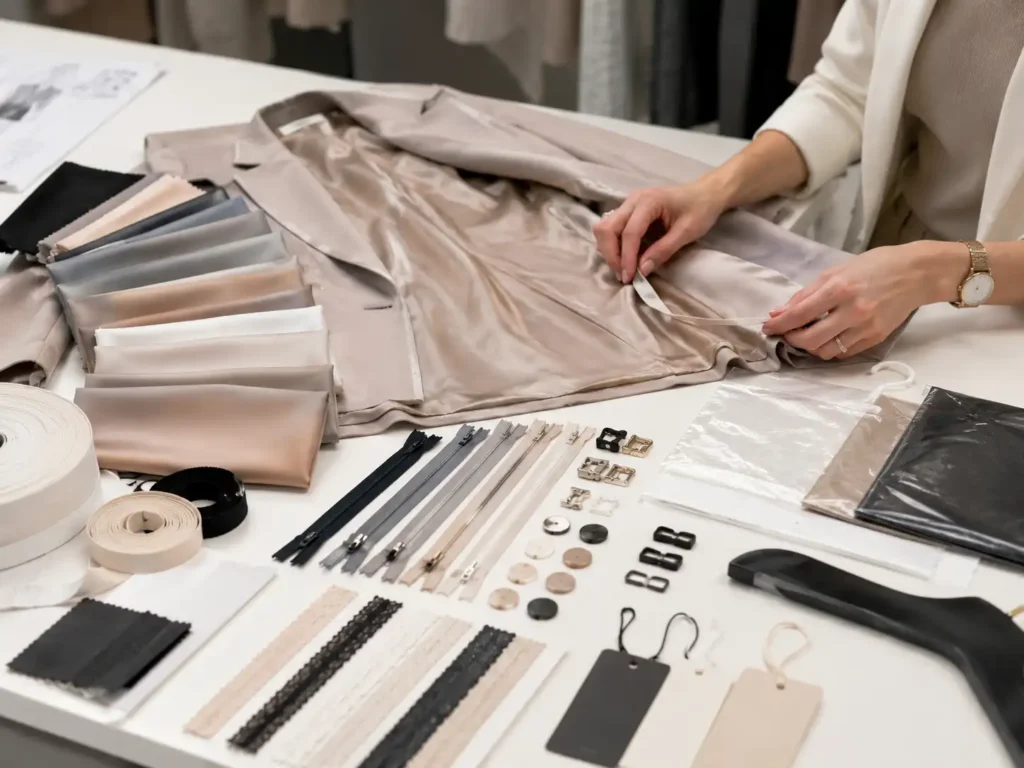
Send a tech pack, reference image, original sample photos, fabric swatch, trim reference, color direction, target quantity and launch requirement when available.
Jinfeng Apparel reviews the garment category, base fabric, placement area, trim function, visual target and likely construction impact.
The review also checks whether the requested trim is a standard sourcing item, a special development, or a detail that may require an alternative approach before sampling begins.
- Garment silhouette and fabric direction
- Decorative area and approximate size
- Style/color quantity and garment MOQ fit
- Private-label or packaging requirements
- Known cost or launch constraints
Feasibility Advice
After the initial review, the team identifies the main development risks rather than automatically saying yes.
A rhinestone strip on stretch mesh may need reinforcement; dense lace may change chiffon drape; a heavy bead chain may pull a soft neckline; custom hardware may introduce a separate supplier MOQ.
Feasibility feedback can therefore include trim direction, alternative material, construction adjustments, sourcing limitations, cost impact and the points that need physical validation in the first sample.
- Fabric and trim compatibility
- Supplier availability and special MOQ
- Attachment and comfort risks
- Color or finish development needs
- Sample-stage checks before approval
Sourcing and Sampling Plan
- Source or develop suitable options
- Apply selected trim to the garment sample
- Review fit, appearance, comfort and attachment
- Record approved trim and sewing requirements
- Move toward PP and Golden sample standards
From Trim Reference to Bulk-Ready Approval

Requirement Review

Trim Direction and Options

Color and Specification Check

Sample Application
The selected trim is applied to the garment sample so the team can evaluate more than a loose swatch. Placement, symmetry, fabric pull, stretch behavior, weight, skin contact, seam interaction, lining coverage and overall visual balance are checked on the actual style. A detail that looks strong on a table may sit too low on the body, make a neckline collapse or feel uncomfortable when the garment moves. Required changes are captured in the revision process. If trim specification, placement or construction changes materially, a revised sample can be made before the style advances toward PP approval.

Approval and Production Records

Bulk Sourcing and QC
Develop Custom or Alternative Trim Directions
Special decorative details often fail for commercial reasons before they fail technically. Custom color, width, hardware, density or finish may raise supplier MOQ, while an original reference can become unavailable. Jinfeng Apparel manages both development and substitution routes around the garment target.
Custom Color, Size and Finish
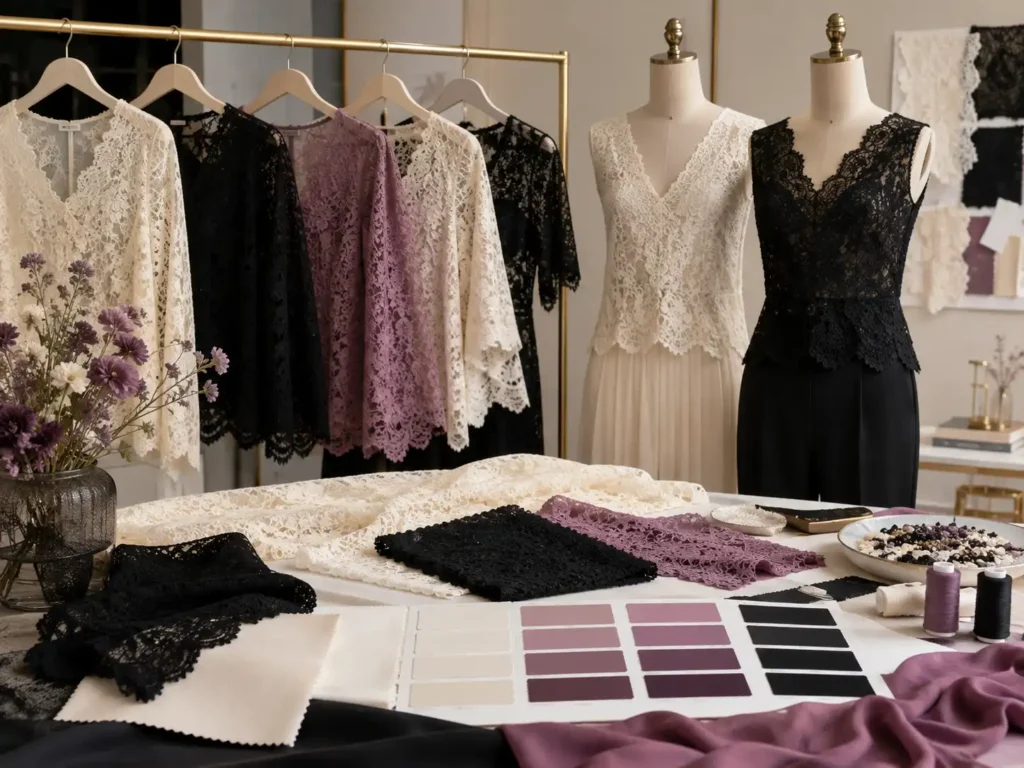
Custom development is most useful when the decorative detail contributes directly to brand recognition or the visual focus of the garment. A specific rhinestone color, unusual lace edge, metal finish, button design, decorative tape width or other controlled specification may justify development when the order program supports it. The first question, however, is whether the requested custom element is compatible with the garment quantity, base fabric and schedule.
Jinfeng Apparel reviews the requested effect together with supplier conditions. Special trims may have independent MOQ, sampling cost or preparation requirements that differ from the 200 pcs/style/color garment baseline. Custom hardware and developed trims can also affect the first-sample route because the final decorative item may not be available immediately. In some cases, a development sample or closest available trim can be used to prove garment construction first, followed by final trim confirmation before PP approval.
Color development is checked against the actual garment fabric whenever possible. A tonal trim on matte crepe will not read the same way on glossy satin, and a metallic finish may need to coordinate with zippers, chains or other hardware already present in the style. Final approval therefore combines visual matching, supplier feasibility and garment execution rather than treating a custom trim as a standalone accessory order.

Replace an Unavailable or High-Risk Trim
An original reference is not always the best production choice.
The referenced item may be discontinued, available only in an unsuitable color, tied to a supplier MOQ that is far above the garment program, or too slow for the required launch.
A close visual replacement can be a better decision if it preserves the design effect while reducing sourcing risk.
Jinfeng Apparel compares alternatives using the features that actually matter: width, scale, pattern, color, shine, weight, stretch, thickness, attachment method and how the trim looks on the garment. Substitution is not approved from a catalog image alone when the change could alter drape, fit, comfort or the focal point of the design. The replacement should be shown in a sample or controlled development reference before bulk use. When the change affects weight, stretch or surface behavior, the garment is reviewed again for drape, fit and comfort rather than accepting a visual match alone.
Alternative sourcing also needs an explicit record. Once a replacement is approved, the BOM, trim record, sewing instruction and QC reference should use the new specification. Keeping both the original request and the final approved trim clear prevents purchasing or production teams from returning to an obsolete reference during bulk or repeat orders.

Control Cost Without Weakening the Look
Decorative trims can drive cost through material price, supplier MOQ, wastage, density, handwork, sewing time, reinforcement and packing.
Cost control should therefore begin with the visual objective: what part of the detail creates the brand-level appearance, and what part can be simplified without making the garment look cheaper?
Jinfeng Apparel can review trim replacement, construction simplification, placement adjustment, color consolidation and other sourcing choices together with the style. A narrower lace, more controlled rhinestone density, different bead construction or alternative decorative hardware may reduce cost if the garment still keeps its intended balance. The correct solution depends on the design; there is no universal “cheapest trim” rule.
Cost changes are also connected to labor. A trim that is inexpensive per meter may still create high sewing time if placement is complex or every unit requires manual alignment. Conversely, a slightly more expensive material may reduce rework when it is easier to attach consistently. The sourcing decision should therefore consider complete garment cost, sample risk and bulk repeatability rather than only the unit price of the decorative component. A controlled alternative can also reduce future sourcing risk when the original item has unstable availability or excessive supplier requirements. The decision remains tied to the approved garment appearance.
Approve Decorative Trims Through Garment Sampling
Decorative trims are not fully approved until they work on the garment. Sampling checks the visual idea, the attachment method, the effect on fit and movement, and the information needed to reproduce the same result in bulk.
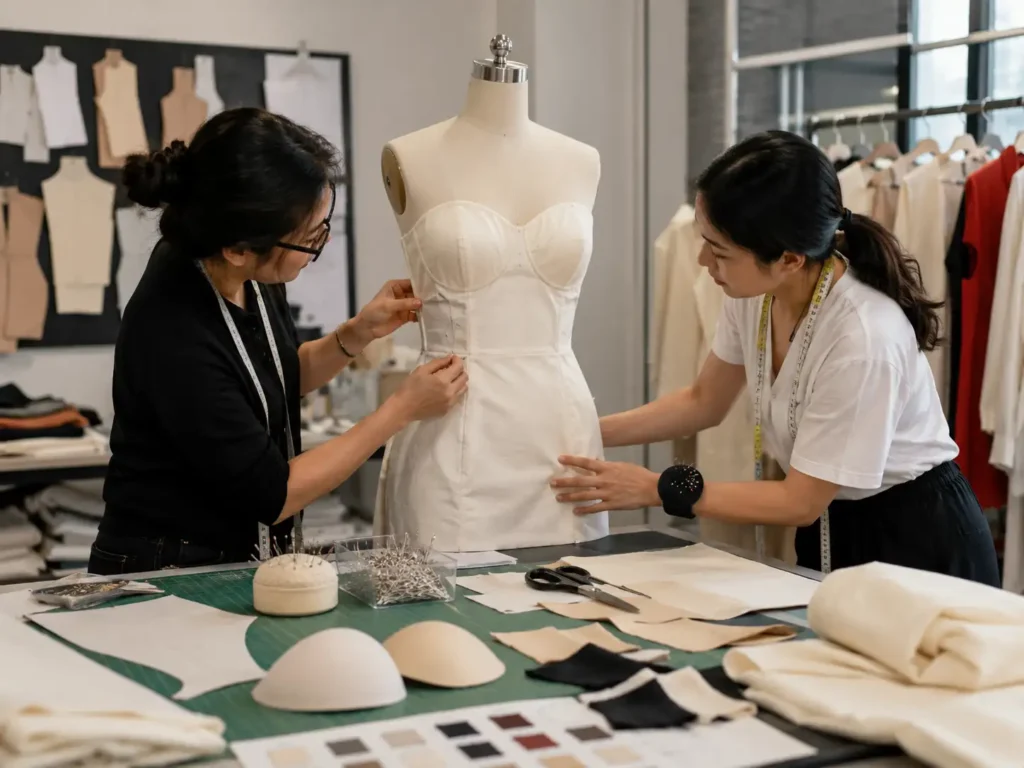
First Sample: Prove the Direction
The first sample is used to turn a reference into a physical garment and expose problems that are difficult to see in drawings.
For decorative trims, the team checks whether the sourced material has the right scale, color, width, shine, weight and position.
The sample also shows whether the detail changes the drape of satin or chiffon, interferes with mesh stretch, pulls a neckline, creates an uneven hem or makes a fitted silhouette feel heavier than intended.
Placement is reviewed against body proportion and the design focal point.
A rhinestone line at the waist, lace edge at the bust, bead chain at the hip or bow detail at the neckline can change how the garment reads from the front, side and back.
If the decorative detail is intended for campaign photography, the sample must also hold its shape and reflect light in a controlled way rather than looking strong only as a loose trim swatch.
The first sample is not treated as the final bulk standard. Trim, fabric, fit, workmanship and cost feedback can still require revision. Jinfeng Apparel records the issue and identifies whether the next action is a trim change, placement adjustment, construction change, fabric alternative or revised sample.

Revised Sample: Convert Feedback Into Records
When a decorative detail is not right, feedback is classified rather than handled as a vague request to “improve the trim.”
The problem may be color, specification, placement, weight, attachment, skin contact, design accuracy, cost or interaction with the garment fabric. The cause is then reviewed so the next sample solves the actual issue instead of creating a different one.
A revised lace placement may need updated joining instructions. A rhinestone strip may need a different width or support. A bead chain may need shorter drop length or stronger attachment points. A sequin edge may need lining or a cleaner finish near the skin. If the trim change affects the garment silhouette or balance, the pattern and sample are reviewed together rather than changing only the decorative item.
Bulk-relevant revisions are transferred into updated records such as the BOM, trim record, sewing instruction, QC checkpoint and approved sample version. Keeping the change in formal project files avoids a common production failure: the development team understands the change, but the purchasing or sewing team follows an earlier reference during bulk. When a decorative change affects cost, MOQ or preparation time, those commercial effects are reviewed before the revised direction is sealed.

PP and Golden Sample: Seal the Bulk Standard
The PP sample stage begins only after the main fit, fabric, color, trim, construction, packaging, cost, MOQ and production conditions are confirmed. Decorative trim at the PP stage should represent the intended bulk specification as closely as the project allows. The focus moves from open-ended design exploration to verifying the standard that production teams must follow.
Jinfeng Apparel checks the approved trim against placement, attachment, symmetry, garment balance, lining, comfort and finishing. Any material effect on packing is also confirmed. If rhinestones, beads, sequins or dimensional details can mark nearby surfaces, folding and protective arrangements need to be clear before the production order is packed.
A Golden sample can then serve as the physical reference for bulk and repeat-order comparison. Together with the production pattern, size chart, BOM, fabric record, trim record, sewing instruction and QC checklist, it gives sourcing, sewing and inspection teams a shared standard. Sampling time and bulk timing are confirmed by project after trim availability, special development, garment complexity and production schedule are reviewed. The Golden sample and accompanying records then provide a common reference for later production checks, repeat orders and any controlled replacement discussion. Trim availability is still rechecked before every new bulk release. Any change is documented clearly.
Build Decorative Details Into Garment Workmanship
A sourced trim only becomes a finished fashion detail after sewing, reinforcement, lining and finishing are controlled. Jinfeng Apparel reviews decorative workmanship as part of garment construction so appearance, comfort and production repeatability stay aligned.
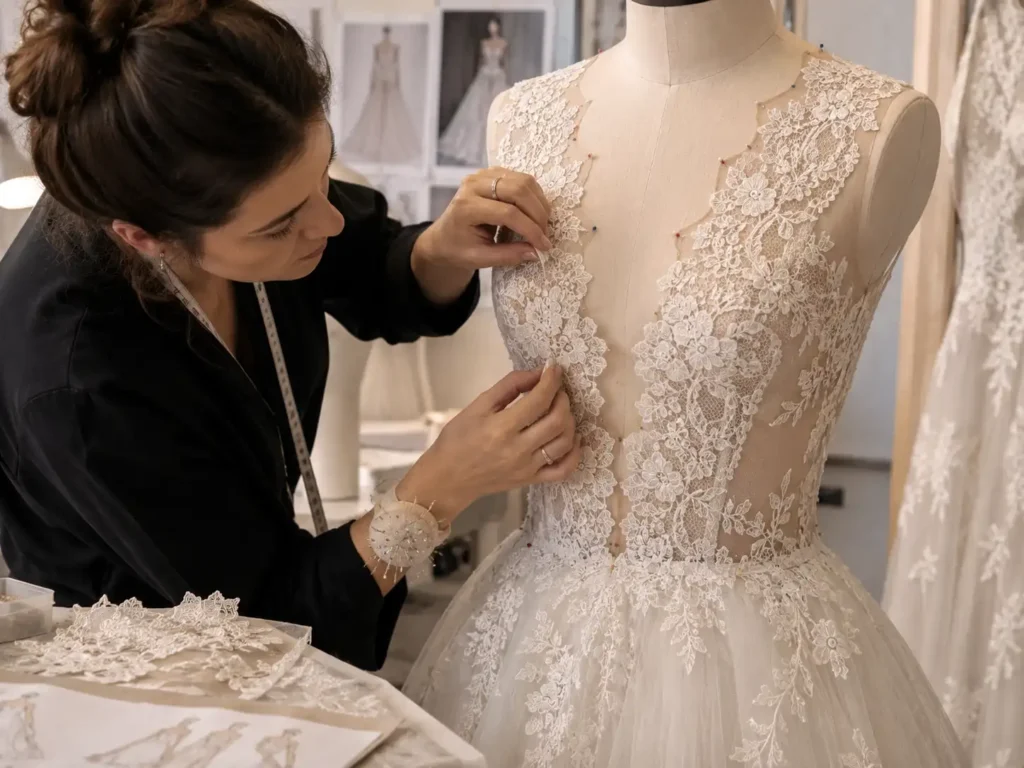
Lace Placement and Joining
Lace can look premium or poorly executed depending on placement.
A floral edge that is one centimeter too high at the neckline can change bust coverage; a mismatched repeat at a center seam can make an expensive lace look careless; a heavy join can create a visible ridge under satin or other smooth fabrics.
Jinfeng Apparel therefore treats lace placement as a measured construction task rather than decorative “freehand” sewing.
During sampling, lace width, motif direction, edge shape and joining points are reviewed with the pattern. Symmetrical styles may require mirrored placement, while asymmetric styles still need a defined reference so every unit follows the approved design. Lining color and transparency are checked where lace sits over mesh, chiffon or sheer panels. When lace meets a zipper, slit, armhole or neckline, the construction must keep both the decorative edge and garment function clean.
Approved changes are written into sewing instructions and QC checkpoints. Production teams need to know where the lace begins and ends, how the repeat is handled, whether edges overlap or join, and how the area is pressed. The goal is not simply “lace attached securely”; the final garment should preserve the pattern balance and visual line seen in the approved sample.

Rhinestone and Bead Attachment
Rhinestones and bead chains concentrate weight in small areas, so attachment cannot be judged only by front-view appearance. The base fabric, reinforcement, seam position and expected movement all influence durability. On mesh or stretch fabrics, a rigid decorative section can reduce recovery. On satin, poor handling can create pulls or visible pressure marks. On soft woven fabrics, a heavy bead chain can distort the panel around its attachment points.
Jinfeng Apparel checks attachment position, spacing, local support and whether the decorative element contacts the skin. A bead chain hanging from the neckline may need different support from a short chain attached to a stable waistband. Rhinestone trim crossing a seam may need a controlled break or transition rather than forcing the embellishment through a bulky seam allowance. The appropriate method is selected by garment construction and confirmed in the sample.
Bulk workmanship then follows the approved reference. QC looks for loose attachment, missing elements, incorrect spacing, asymmetry and visible fabric damage. If a style requires special handling during pressing or packing, those instructions are connected to the decorative area so later finishing operations do not undo the work completed during sewing. For multi-size production, placement references also need to remain visually balanced as the garment dimensions change.

Sequin Edge and Skin Protection
Sequins create a specific workmanship challenge because the visible surface and the garment edge often need different treatment. Sequins near the underarm, neckline, side seam or hem can scratch the wearer if the raw decorative edge remains exposed. Sewing across sequins can also create broken pieces, uneven seam thickness or hard points that are uncomfortable inside a fitted dress.
Jinfeng Apparel reviews where sequin coverage should stop before a seam and whether lining, binding or another finish is needed around high-contact areas. On mesh-based sequin materials, the base fabric can be delicate, so excessive pulling or repeated stitching may cause holes. The trim or sequin direction is also important when the surface has a clear orientation or light reflection.
Sample approval checks both appearance and touch. A garment can look correct in photographs but still fail in real wear if the decorative edge is abrasive. Approved protection methods are recorded for production and QC. Finished garments are checked for loose or missing sequins, exposed sharp areas, damaged mesh and inconsistent decorative coverage according to the style requirement. The team also checks whether the protected edge remains clean after pressing and whether the lining stays hidden from the intended exterior view.

Symmetry, Reinforcement and Finishing
Decorative details often sit on areas where small differences are easy to see: bust cups, shoulder straps, waist seams, hip panels, slits and necklines. Symmetry therefore needs a repeatable reference. Jinfeng Apparel links trim placement to garment construction so the sewing team can align details with seams, pattern points or defined measurements rather than relying on visual guesswork.
Reinforcement is added only where the garment requires it. Too little support can lead to sagging or tearing; too much can make a soft dress stiff and bulky. The same balance applies to pressing. Satin may show pressure, mesh may distort, sequins may be sensitive to heat, and dimensional details can flatten if handled like a basic garment. Finishing instructions must respect both the base fabric and the decoration.
Packing completes the workmanship chain. Rhinestones, beads, sequins and bows can press against another garment surface during folding. For visually sensitive styles, folding direction and protection are reviewed before shipment. Decorative workmanship is therefore controlled from the first attachment point through final packing, not only at the sewing machine. The approved sample, sewing instruction and QC reference keep finishing teams aligned with the same visual standard used during development. Measurable placement points reduce operator interpretation.
Control Decorative Trim Quality in Bulk Production
Bulk trim QC focuses on the approved detail in the finished garment, not a generic inspection checklist. Color, specification, position, attachment, fabric interaction and packing condition are reviewed at the stages where each risk can still be corrected.
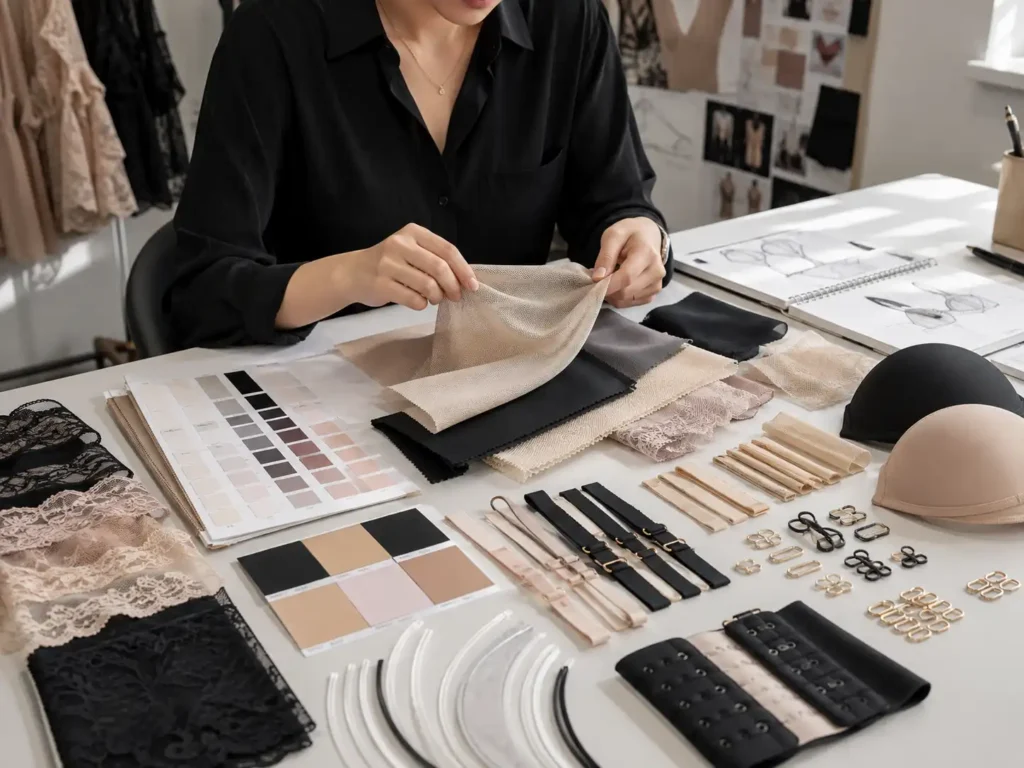
Incoming Trim and Material Check
Before decorative materials move into production, the receiving and merchandising teams confirm that the incoming trim corresponds to the approved project direction.
Depending on the item, checks can include trim type, color, visible finish, size or width, quantity, obvious damage and consistency with the approved sample or record. Lace, rhinestones, bead chains, sequins and hardware can also arrive with supplier-batch differences that are easier to address before sewing begins.
The base fabric is checked in parallel because trim appearance depends on fabric color, surface and behavior. Satin color difference, mesh snags, lace damage or sequin loss can alter the final decorative effect even when the trim itself is correct. When a style combines several materials, the production team needs the correct approved combination by style and color rather than a general instruction that all decorative pieces are interchangeable.
If a material change is necessary, the replacement should be reviewed before unrestricted bulk use. Production should not silently substitute a similar-looking trim because the original item is unavailable. The change can affect garment balance, cost, attachment and later repeat orders. Any approved substitution should be identified clearly so old and new material references are not mixed across styles or production batches.

In-Line Placement and Attachment Control
Decorative problems are cheaper to correct during sewing than after thousands of garments are complete. In-line inspection therefore focuses on whether trim is being placed and attached according to the approved sample and instructions. Key points can include position, alignment, symmetry, spacing, lace matching, rhinestone or bead security, sequin edge treatment, seam interaction and visible damage to the base fabric.
For multi-style programs, QC requirements differ by garment. A bodycon mesh dress may prioritize stretch and local distortion around rhinestones, while a satin occasion dress may prioritize clean lace placement and surface protection. A sequin mini may need special attention at underarms and side seams. Jinfeng Apparel avoids applying one identical decorative-trim checklist to every product category because the failure modes are not the same.
In-line findings can also reveal whether the approved method is difficult to repeat at production speed. When a detail creates unexpected bulk variation, the issue is escalated to merchandising and production teams so the instruction can be clarified before the variance spreads across the order. Corrective action may involve clearer placement references, reinforcement, sewing sequence or operator guidance according to the style. The corrected method is communicated before later production sections continue, helping prevent the same defect from spreading across sizes, colors or subsequent batches.

Finished Garment Appearance and Wearability
Finished-garment QC checks the decorative detail in the context of the complete style. The inspector can review measurements, appearance, pressing, color difference, stains, holes, loose threads, zipper function and other garment points together with the relevant embellishment. Decorative focus includes missing elements, loose attachment, incorrect position, uneven left-right balance, damaged trim, scratching risk and whether the decoration distorts the fabric.
Wearability matters especially for fitted, low-cut, backless, party and evening styles. Rhinestones or sequins around high-contact areas should not create an avoidable sharp edge. Heavy bead details should not pull the garment out of shape. Decorative hardware should remain secure and should not damage nearby fabric. Where movement or fit is central to the style, the approved sample remains the visual and construction reference rather than a flat measurement alone.
AQL or client-appointed inspection can be supported according to project requirements, but AQL is a sampling method, not a blanket quality guarantee. Product-specific risk points still need to be built into production and final QC. Decorative checkpoints are therefore tied to the approved garment standard instead of relying only on a final statistical inspection. Measurements and appearance are reviewed together when the embellishment can pull, stiffen or visually distort the garment.

Packing Protection and Traceability
Decorative garments can pass sewing and final inspection, then suffer damage during packing if surfaces rub, compress or tangle. Rhinestones can mark satin, bead chains can catch mesh, sequins can abrade neighboring garments and dimensional bows can flatten. Packing QC therefore checks folding method, polybag presentation, size sticker, hangtag, barcode, carton mark and relevant protective handling for the style.
For private-label and ecommerce programs, packing consistency is also part of the brand presentation. A garment with premium decorative work should not arrive with distorted embellishment or incorrect SKU information. Jinfeng Apparel’s finishing and packing team supports approved packing instructions and shipment preparation, while client-specific warehouse or barcode requirements are followed according to the project.
Relevant trim, QC and packing records can be retained after shipment. Those records support later review when the same style is reordered, a new color is added or an original trim must be replaced. Shipment feedback can also be added to the record when packing or decorative handling needs refinement in the next batch. For fragile styles, the team can review whether folding pressure, rubbing or carton compression affected the approved appearance and update packing instructions for future production. Protective handling is treated as part of the approved standard.
Plan MOQ, Cost and Lead Time Before Approval
Decorative trims can introduce supplier requirements separate from the garment order. Jinfeng Apparel reviews garment quantity, special trim MOQ, development work, labor and availability together so the approved detail remains commercially workable for bulk production.
| Sourcing Factor | Confirmed Planning Reference | Cost / Timing Effect | What Needs Review |
|---|---|---|---|
| Garment order | MOQ starts from 200 pcs per style/color | Sets the base production quantity | Style, color, fabric, construction, schedule |
| Special lace trim | Supplier MOQ may be based on meters and stock status | Custom pattern/color can add cost and time | Width, motif, color, available stock |
| Rhinestone / bead chain | MOQ follows the trim supplier | Density and placement affect material use and labor | Specification, color, attachment, wastage |
| Special-color zipper | Common supplier reference can start around 300-500 pcs | Custom color can extend preparation | Length, color, puller, stock availability |
| Custom buttons | Common supplier reference can start around 500-1,000 pcs | Mold/material/finish can add development cost | Size, material, finish, logo or shape |
| Custom hardware | Common supplier reference can start around 500-1,000 pcs | Special finish or tooling can add cost and time | Shape, finish, function, reinforcement |
| Multi-color program | Each garment color needs its own trim coordination | More variants increase purchasing complexity | Color consolidation, shared trims, schedule |
| Complex placement | No separate MOQ rule; labor depends on construction | More hand placement or alignment raises sewing time | Density, symmetry, reinforcement, QC points |
Keep Decorative Trims Consistent Across Repeat Orders
Repeat business depends on more than saving a supplier name. Jinfeng Apparel retains garment and trim records so later production can be checked against the approved standard, while availability and supplier-batch changes are reviewed before a repeat order is released.

Build a Repeatable Trim Record
An approved decorative detail should leave a clear trail.
Jinfeng Apparel can retain records covering lace trim, rhinestone, bead chain, sequin trim, zippers, hardware, labels and packing items together with the style’s pattern, size chart, BOM, color record, sewing instruction, QC checklist and Golden sample. Those records help the team understand not only which trim was used, but how it was used on the garment.
For a lace dress, the record may need to preserve the approved lace specification and placement direction.
For a rhinestone or bead style, the production reference also needs the position and attachment standard. For a mixed-embellishment garment, keeping the complete approved combination prevents future sourcing teams from matching only one component while changing the overall look.
Repeat-order records reduce avoidable re-development, but they do not eliminate supplier risk.
A saved trim code can still become obsolete, a color batch can change and a material can move to a new MOQ. The stored record therefore acts as the comparison standard when availability is checked again. It also gives merchandising and QC teams a shared reference when a new supplier option is proposed. The record is especially valuable when several similar trims are used across one collection and must remain tied to the correct style and color.

Manage Supplier and Batch Changes
Before repeat production, Jinfeng Apparel reviews whether the original fabric, color, trim and packaging remain available.
Decorative trims can change between batches because the supplier adjusts a finish, a color lot differs, a lace pattern is discontinued or a hardware item moves to a different production run.
A repeat order should not assume that the same purchasing description automatically creates the same visual result.
When the original item is available, it is compared with the prior record and approved sample as needed. When it is unavailable, alternatives are assessed against the features that influence the garment: color, size, width, pattern, shine, weight, stretch, thickness and attachment. A replacement that looks close in a small swatch may still change the dress once sewn, especially on stretch mesh, satin or soft draping fabrics.
Material changes that affect the production standard can require new approval before bulk. Depending on the change, the team may update the trim record, BOM, sewing instruction or PP sample reference so production teams do not mix old and new specifications. A visually minor supplier change can still matter if attachment, weight, finish or packing behavior changes. When risk is meaningful, a small confirmation sample or renewed PP review can be used before the replacement enters full production.

Support Replenishment and Seasonal Continuity
Jinfeng Apparel supports same-style repeat orders, new-color repeats, new-fabric versions and seasonal replenishment according to material availability and production schedule. MOQ still follows the per-style/per-color principle, while new colors or changed trims must be reviewed as new sourcing variables rather than automatically copied from the previous order.
For established fashion programs, the benefit of retained records is speed of decision-making. The team can start with the previous Golden sample, fabric record, trim record, QC notes and packing requirement instead of rebuilding the style from memory. If after-shipment feedback shows a decorative area needs improvement, the issue can be incorporated into the next production review rather than repeated.
Consistency does not mean pretending that every batch will be identical without verification. It means maintaining a clear approved reference, checking the new supply against it and documenting any controlled change before production. That discipline is what allows a decorative idea to survive beyond the first successful sample. For seasonal programs, the same records also help new colors or related styles begin from a proven development base. New-color repeats still require color and trim availability confirmation, while changed fabrics or structures are reviewed as new development variables rather than copied automatically. The prior sample remains the comparison reference.
Integrate Trim Sourcing With Full Womenswear Production

Pattern and Structure

Fabric Direction
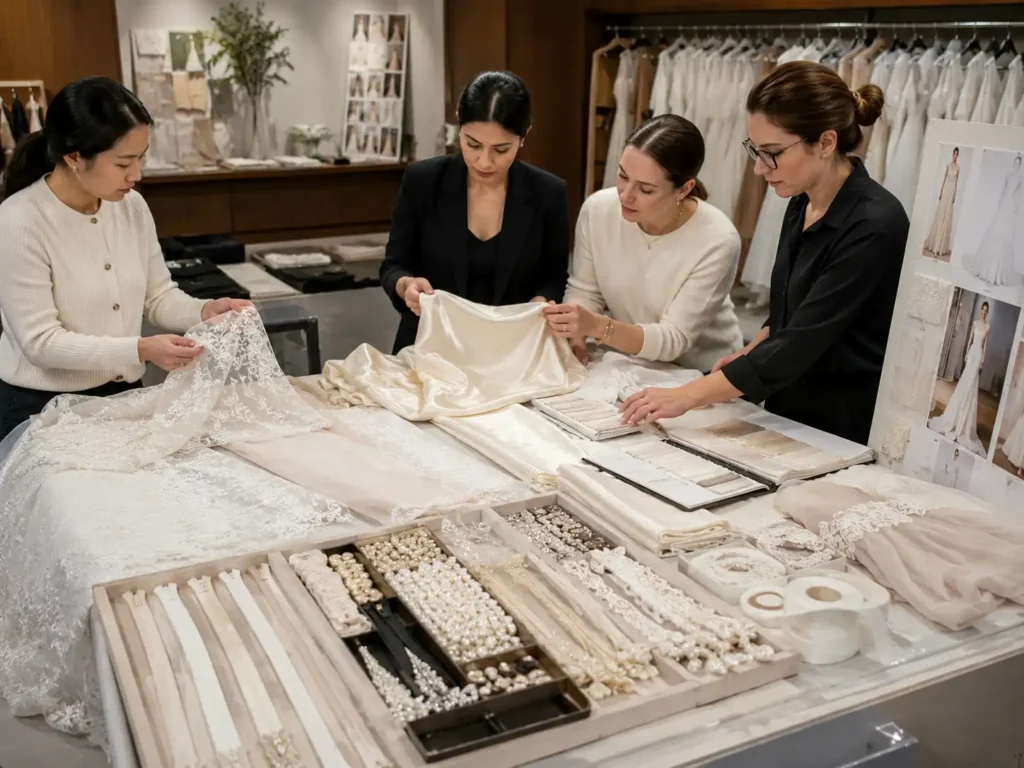
Trim Approval

Sample Development

Bulk Production

Finishing and Shipment
Support Brand Quality and Compliance Requirements
Documentation by Project
Inspection and Testing Support
Certificate Scope Matters
Multi-Style Trim Control for a 28,000-Piece Program
Decorative trim sourcing becomes more demanding when one order contains many fabrics, sample versions and private-label requirements. An anonymous US private-label program shows how trim tracking fits into a larger women’s fashion production system rather than operating as a separate accessory purchase.

18 Styles, Around 28,000 Pieces
An anonymous US large private-label client worked with Jinfeng Apparel on an 18-style womenswear program totaling around 28,000 pieces.
The collection covered satin, mesh, jersey, lace and crepe dresses, so material behavior and development priorities varied significantly from style to style.
Satin pieces required attention to surface appearance and color consistency; mesh and lace styles introduced transparency, placement and construction questions; jersey and crepe styles followed different stretch and drape requirements.
The challenge was not one unusual trim. The challenge was controlling many approved materials and sample versions across a single program without allowing style information to become mixed. Jinfeng Apparel managed the project timeline with fabric and trim tracking by style, sample-version control and coordinated private-label requirements. That structure is particularly important when decorative details change between samples because an outdated trim reference can easily return during purchasing or production if records are not clear.
The program also included hangtags, barcodes, polybags and carton marks, so product-level trim and garment decisions had to remain aligned with SKU and packing information. For large programs, decorative trim sourcing therefore sits inside a broader chain of style identification, sample approval, bulk production and retail-ready packing. A strong decorative finish has little commercial value if the wrong version, label or SKU reaches the final carton.

Control From Development Through Phased Shipment
Jinfeng Apparel used project scheduling, fabric and trim records, sample versions, packing standards and inspection coordination to manage the program through phased shipment. The approach illustrates the main advantage of sourcing decorative trims through a garment manufacturer: the trim is connected to the complete production record and can be checked against the style as development moves forward.
For multi-style collections, every approved detail needs a clear home. Lace direction, selected trim, zipper specification, label artwork, size information and packing references should remain tied to the correct style and color. When one style is revised, the revision should not silently change another style that uses a similar fabric or decorative item. Merchandising and order-follow-up teams help keep those links visible across sourcing and production.
The same record discipline supports later repeat orders. Patterns, fabric information, trims, sample versions, packing requirements and QC feedback can be retained for review when a successful SKU returns. Material availability is still rechecked before a new order, but the team starts from a documented standard rather than rebuilding the style from an old photo or memory.
For brands running 10-30 styles and tens of thousands of garments in one program, decorative trim sourcing needs the same project control as fit, fabric and packing. The result is not simply “a trim was found”; the approved detail remains connected to the garment until the order is inspected, packed and shipped.
Decorative Trim Sourcing Frequently Asked Questions
Jinfeng Apparel supports women’s fashion projects using lace trims, rhinestone trims, bead chains, sequins, decorative tapes, selected buttons, hooks, strap hardware and other approved garment accessories. The exact sourcing route depends on the garment fabric, construction, color, target effect, quantity and supplier availability. Trim sourcing is connected to sample development and bulk production rather than offered as a standalone retail trim catalog.
Yes. Reference photos, tech packs, original sample photos, trim cards or physical references can be used for initial evaluation. The team compares visual features such as scale, width, color, texture, shine, pattern and placement, then reviews whether a similar or custom route is commercially workable. A final production decision normally requires confirmation of the actual trim, garment fabric, quantity and sample application.
Color matching can be reviewed using Pantone references, fabric swatches, approved samples or supplier color options. Exact feasibility depends on the trim material and supplier process. Satin, mesh, lace, metallic surfaces and rhinestones reflect light differently, so color is judged in the context of the garment whenever possible. Special colors can introduce separate MOQ and development requirements.
Custom trim directions can be reviewed by project, including special colors, widths, finishes, hardware details and other controlled specifications supported by the relevant supplier. Custom development is not automatically available at the garment MOQ because special trim suppliers may require higher quantities, tooling, sampling or additional preparation. Feasibility is confirmed before the detail is approved for the garment program.
Yes. Garment MOQ starts from 200 pcs per style/color, while special trims can have independent supplier MOQ. Special lace may be controlled by meter quantity or stock status; rhinestone and bead items follow supplier requirements; custom buttons or hardware commonly require higher quantities. Final MOQ is confirmed after the exact trim, color, specification and garment order are reviewed.
The selected trim is reviewed on the garment sample for color, scale, position, weight, attachment, comfort and effect on the base fabric. Significant changes can move through a revised sample. PP and Golden sample stages are used after fit, fabric, trim, construction, packing, cost, MOQ and timing are confirmed. Approved details are then transferred into production records and QC references.
Control begins during sampling, where placement, weight, reinforcement, fabric pull and skin contact are reviewed. Approved attachment positions and workmanship requirements are transferred into sewing instructions and QC checkpoints. During bulk production, in-line and finished-garment inspection can check loose elements, missing details, incorrect spacing, asymmetry, visible fabric damage and the final appearance according to the approved style.
Availability is rechecked before bulk or repeat orders. If the original trim is no longer available, Jinfeng Apparel can compare alternatives by color, width, scale, pattern, shine, weight, stretch, thickness and attachment behavior. A replacement that materially changes the garment should be approved before production, and the new specification is updated in the relevant BOM, trim record and production instructions.
Cost can be reviewed through trim replacement, density adjustment, construction simplification, placement changes, color consolidation and other options that preserve the intended visual level. The best route depends on the garment. A lower trim unit price is not always the lowest garment cost if the material increases handwork, wastage, reinforcement or rework during bulk production.
Jinfeng Apparel can retain the Golden sample, BOM, fabric record, color record, trim record, sewing instruction, QC checklist and packing information. Before a repeat order, material and trim availability are checked again. If the same supply remains available, it is compared with the prior standard as needed; if it changes, the replacement is reviewed and documented before bulk production.

Send Your Decorative Trim Project for Review
Send the garment direction together with the decorative detail you want to source, replace or improve. Jinfeng Apparel can review the style as a complete women’s fashion project, including fabric compatibility, trim specification, supplier availability, sample application, garment MOQ, special trim MOQ, construction impact, bulk QC and repeat-order considerations.
A complete tech pack is helpful but not required for the first review when a clear reference image, existing sample photo or line sheet is available.
For a faster assessment, include:
- Product type and number of styles
- Tech pack, sketch, line sheet or reference images
- Decorative trim reference or close-up image
- Fabric direction or fabric swatch
- Color or Pantone reference when available
- Quantity per style/color and size range
- Target launch or delivery requirement
- Target cost information when available
- Private-label, barcode or packing requirements
- Any existing sample or bulk-production problem


