 Skip to content

Cut-Out Dress Development
From cut-out placement and pattern engineering to sample revision, grading and stable bulk production for established fashion brands.
Cut-out dresses create visual impact by removing fabric exactly where structure still has to work. Jinfeng Apparel develops cut-out styles from reference images, sketches, original samples, line sheets and tech packs, then connects fabric behavior, pattern placement, body coverage, edge finishing, support, fit correction and production controls before bulk release.
- 8 core cut-out placement families reviewed: waist, side, bust, back, under-bust, hip, shoulder and hardware-connected openings.
- Complex dress first-sample reference: typically 15-25 days, subject to structure, fabric availability and trim development.
- 2 sample rooms support structured product development and revision work.
- 7+ senior pattern makers handle fit, placement and pattern correction.
- 20+ sample machinists support complex sample construction and revision.
- Basic MOQ: 200 pcs per style / color; special fabrics, trims and packaging may have separate minimums.
Development Capacity Behind Complex Cut-Out Programs
6 Owned Fashion Factories
10+ Long-Term Production Partners
18+ Sewing Lines
6+ Flexible Lines
15+ QC Inspectors
12+ Merchandisers
Why Cut-Out Dresses Fail Before They Reach Bulk
Opening Gapes Away
Exposure Changes on Body
Stretch Enlarges Openings
Edges Roll or Wave
Grading Loses Proportion
Sample and Bulk Drift
Cut-Out Dress Styles We Develop for Fashion Collections

Waist Cut-Out

Side Cut-Out
Side cut-outs are strongly affected by bust-to-waist and waist-to-hip transitions. If the opening is too deep, the side seam may lose control; if it is too high or low, the silhouette can look unbalanced. Pattern work focuses on anchor points, side seam tension, underarm coverage, waist shaping and the relationship between front and back panels.
For fitted dresses, stretch direction and recovery have to support the opening without pulling the garment off grain. Fit samples are reviewed from front, side and back rather than only on a flat table.

Bust Cut-Out
Bust openings require a closer balance between visual impact and support. The surrounding neckline, straps, cups, lining, under-bust seam and closure system all influence how securely the dress sits.
An opening can appear small on a technical drawing but become larger under body tension. Development may require internal support, reinforced edges, power mesh, lining or cup structure depending on the silhouette. Sample fitting checks exposure, cup position, neckline stability and movement before the style proceeds to grading.

Back Cut-Out

Under-Bust Cut-Out
Under-bust cut-outs create a strong partywear and occasionwear look but sit in a high-risk zone for exposure and support.The distance between bust seam, opening edge and waistline needs to be controlled carefully. Depending on the design, the upper section may require cups, lining, power mesh, boning or strap tension to remain stable. The lower edge also needs enough structure to avoid rolling or stretching downward. Fitting reviews the design while standing, sitting and moving so the opening does not become larger than intended.

Hip Cut-Out

Shoulder Cut-Out
Shoulder cut-outs may appear structurally simple, yet they influence neckline balance, sleeve or armhole position, strap tension and garment hang.
The opening edge needs to sit flat without pulling the neckline toward one side. Woven dresses may use shaped facings or lining, while stretch styles may depend on recovery and clean binding. Development also considers how the opening changes when the arms move and whether the garment remains symmetrical after sewing and pressing.

Ring-Connected Cut-Out
Metal rings and other connectors create a focal point while concentrating force in a small area. The fabric around the connector must resist distortion, tearing and local stretching.
Development checks hardware size, weight, surface finish, attachment method, reinforcement, seam allowance and the direction of pull. Sample testing focuses on how the ring sits on body, whether it twists or drags the fabric and whether reinforcement remains visually clean. Bulk QC then verifies hardware security and left-right consistency.
Design Exposure Where the Dress Can Still Stay Stable
Cut-out design works best when visual exposure and garment support are planned together. Jinfeng Apparel reviews the body area around every opening before pattern development, asking three questions: where the design should expose skin, where the garment must carry tension, and where coverage needs to remain stable during normal movement. The answer changes by silhouette, fabric, neckline, closure and target market.
Waist and Side Openings Need Stable Anchor Points
A waist opening is not an isolated shape. The surrounding front panel, back panel, side seam and waist curve create a tension network that determines whether the opening stays flat. If both ends of the cut-out terminate in weak or highly stretched areas, the opening can gape or twist even when the sewing is clean. Pattern development therefore maps the start and end points against bust, natural waist, high hip and side seam position.
For a fitted jersey or ponte style, the grain and stretch direction must help the garment recover around the opening. The pattern may need a slightly different contour than a woven version because negative ease changes local tension. In structured crepe or stretch satin, seam placement, facing or lining may provide more stability. The goal is not maximum tightness; excessive tension can enlarge the opening, create drag lines and pull the side seam forward.
Sample fitting checks front, side and back views together. A visually slim waist cut-out should not become a large gap while sitting, and a side opening should not expose undergarments after walking. Comments are translated into pattern changes rather than corrected only by sewing pressure or pressing. Once approved, opening coordinates and edge construction are recorded for production handover.
Bust and Under-Bust Openings Require Support Planning
Bust-area cut-outs are closer to functional lingerie engineering than a simple decorative hole. Neckline depth, strap position, cup shape, under-bust seam, lining coverage and closure placement all affect whether the upper garment remains secure. A sketch can show the intended negative space, but only a fitted sample reveals how body volume changes the opening.
Development starts by identifying which sections carry the load. A halter neckline may direct tension toward the neck; a strapless structure may need internal support; a corset-inspired bodice may use cups, boning or power mesh; a soft jersey style may rely more on fabric recovery and carefully placed elastic. The opening edge itself should not become the only structural element. When the edge is forced to carry too much load, it can curl, stretch or become uncomfortable.
Fitting reviews bust coverage from several angles, not only the front. Under-bust exposure is checked while raising the arms and sitting because vertical movement can change the opening noticeably. When needed, Jinfeng Apparel can revise lining placement, support layers, seam location or opening depth before the style moves to PP approval.
Back and Shoulder Openings Depend on Garment Balance
Open-back and shoulder cut-outs often fail because attention stays on the visible opening while front balance and strap tension are ignored. A low back can reduce the anchoring area of the bodice. If the neckline, shoulder or side seam does not compensate, the front may shift, the armhole may gape, or the dress may rotate during movement.
Pattern review considers back height, strap angle, shoulder width, side seam balance and closure location as one system. Tie-back, lace-up, elastic and zipper constructions each distribute force differently. Lightweight woven fabrics may require internal facing or lining to keep the opening edge clean, while stretch styles need controlled recovery so the opening returns after movement.
The sample is checked from the side and back for strap pull, neckline movement and edge lift. For styles intended for party, resort or event use, comfort matters as much as the photograph. A dress that only looks correct when the wearer stands still is not production-ready.
Hardware-Connected Openings Need Local Reinforcement
Rings, chains, sliders and other hardware can make a cut-out design commercially distinctive, but they also concentrate load. A connector linking two panels may receive repeated pulling while dressing, walking, sitting and washing. Thin stretch fabric around an unreinforced connector can elongate quickly, while heavy hardware can cause twisting or sagging.
Development begins with hardware dimensions, weight and attachment geometry. The team reviews whether reinforcement can be hidden inside the seam, whether an additional layer is needed, and whether the connector should float or remain fixed. The surrounding seam allowance must be sufficient for secure construction without creating visible bulk.
During sampling, the connector is checked for orientation, comfort and fabric distortion. If the hardware pulls one side more strongly, pattern balance or attachment position is adjusted. Bulk instructions identify reinforcement, stitch method and orientation so the approved appearance can be repeated across the order rather than left to individual sewing judgment.
Choose Fabric by Cut-Out Behavior, Not Appearance Alone
Fabric selection changes the size, stability and comfort of a cut-out once the dress is worn. Jinfeng Apparel evaluates stretch, recovery, drape, transparency, edge behavior, support requirements and bulk sewing risk before recommending a direction. A fabric that looks attractive in a swatch may behave very differently around an opening under body tension.
| Fabric Direction | Best Cut-Out Uses | Stretch / Recovery | Support Need | Main Risk | Development Focus |
| Jersey | Bodycon, waist, side, back cut-outs | Medium to high, quality dependent | Low to medium | Opening growth, edge roll, twisting | Stretch direction, negative ease, recovery, edge method |
| Rib Knit | Fitted mini and midi styles | High in crosswise direction | Medium | Rib distortion, uneven opening shape | Rib alignment, recovery, local stabilization |
| Ponte | Structured bodycon and clean geometric cut-outs | Medium, generally stable | Low to medium | Bulk at thick edges | Pattern contour, seam bulk, edge finish |
| Stretch Satin | Party and occasion cut-outs | Low to medium | Medium | Seam tension, zipper ripple, snagging | Grain, recovery, lining, edge flatness |
| Stretch Mesh | Sheer cut-outs and layered openings | High, lightweight | Medium | Transparency shift, holes, edge stretch | Layer count, recovery, coverage, stitch method |
| Power Mesh | Internal support, illusion panels, bust/waist stabilization | High with stronger recovery | Structural support layer | Excess compression or visible support line | Tension balance, comfort, hidden reinforcement |
| Structured Crepe | Woven cut-out midi, occasion and tailored silhouettes | Low | Medium to high | Gaping, rigid edge, limited movement | Shaping seams, facing, lining, closure placement |
Control Stretch, Recovery and Tension Around Every Opening
Stretch fabrics are useful for cut-out dresses because they follow the body, but they also magnify structural mistakes. Development has to separate three different properties: how far the fabric stretches, how strongly it returns, and how tension travels through the garment around the missing section. Reliable fit comes from balancing all three rather than simply choosing a fabric with more spandex.
Stretch Direction Must Match the Body and Opening
Most fitted dresses rely on greater crosswise stretch around bust, waist and hip. A cut-out changes the continuity of the fabric, so the same stretch direction can create different tension above, below and beside the opening. If pattern pieces are cut off grain or if a mesh panel stretches in a different direction from the main fabric, the opening may skew after sewing.
Development reviews grainline, stretch direction and panel orientation before the first sample.
Rib knits also need visual rib alignment; stretch satin needs careful handling because stretch may be limited and recovery varies; mesh can distort easily during cutting and sewing. The goal is a predictable tension path, not maximum elasticity.
Recovery Determines Whether the Shape Returns
Two fabrics can stretch to a similar distance while recovering very differently. Weak recovery leaves openings larger after sitting or repeated wear. Strong recovery can support a fitted silhouette but may also create excessive pressure if the pattern uses too much negative ease.
Sample review therefore looks at how the opening behaves after the dress has been worn and moved, not only immediately after dressing.
Waist and side cut-outs should return close to the intended shape without edge waviness. Mesh and power mesh are compared for transparency and recovery as well as hand feel. If recovery is insufficient, changing only the seam method will not solve the problem; fabric direction or pattern shape may need revision.
Local Tension Should Not Pull the Dress Off Balance
The highest tension often appears at the ends of an opening. Those points can behave like anchors, concentrating force into a narrow seam area. Poor placement may create diagonal drag lines, move the side seam, lift the hem or pull the neckline. Hardware-connected cut-outs increase the effect because the connector introduces a fixed point.
Pattern adjustment can redistribute tension by changing opening depth, panel shape, seam location or support layers. Elastic or power mesh may be used when suitable, but reinforcement should not create a hard edge that changes comfort.
Fitting comments are recorded by location so revisions can be transferred to the final pattern rather than handled as informal sewing corrections.
Bulk Control Must Preserve the Same Material Behavior
Approved stretch behavior depends on the production fabric, not only the design. Bulk material needs confirmation for color, hand feel, stretch, recovery, transparency and other project-specific requirements before cutting. If a substitute fabric is introduced after sample approval, pattern and construction may need to be reassessed because the opening can react differently.
Production instructions should also define seam method, elastic application where used, edge handling and pressing limits. In-line inspection checks for distortion before the garment reaches final finishing. For repeat orders, fabric references and approved construction records are retained, while new fabric batches or new colors are still rechecked when their behavior may differ.
Pattern Engineering Turns Negative Space Into Wearable Structure
A cut-out is created by removing part of the garment, but the remaining pattern has to carry all the original functions: hold the bust, define the waist, follow the hip, keep seams balanced and maintain coverage. Jinfeng Apparel treats opening placement as part of the pattern architecture, not an artwork element added after the base dress is finished.
Map the Opening Against Real Body Landmarks
Development begins by locating the cut-out relative to bust line, under-bust, natural waist, high hip, full hip, armhole, neckline and side seam. A reference image can communicate the visual intention, but exact placement has to be translated into measurable pattern points. The opening may need to move slightly from the sketch so it sits on the intended area when the garment is worn.
For asymmetrical designs, left and right pieces require separate control rather than mirroring assumptions. For deep side cut-outs, front and back coverage must be considered together. For bust or under-bust openings, the relationship with cups, straps, neckline and closure is reviewed before the first sample. These decisions create a measurable development standard that can later be graded and inspected.
Balance Bust, Waist and Hip Tension
Fitted cut-out dresses often combine negative ease with areas of reduced fabric coverage. Bust, waist and hip measurements therefore cannot be adjusted independently without checking how tension moves through the opening. If the waist is made tighter without recalculating the side cut-out, the opening may stretch larger. If the hip is too tight, the garment can ride upward and change the vertical position of the opening.
Pattern makers review circumference, vertical body length, side-seam shape and panel proportions together. Fit samples are checked for drag lines, seam rotation, neckline movement and hem balance. The objective is not a universally tight dress; the objective is controlled tension that produces the intended silhouette while remaining wearable.
Keep Seams and Panels Working Around the Opening
Cut-outs frequently intersect style lines such as princess seams, waist seams, side panels, ruching, mesh inserts or corset panels. Every intersection affects sewing order and structural stability. A cut-out ending too close to a seam can create bulky or weak construction, while an opening placed through a highly curved section may require a different edge method.
During pattern development, seam allowance, notches, reinforcement points and sewing access are considered before the style is released to the sample machinist. Complex styles may be divided into controlled operations so edge finishing, lining attachment and hardware placement can be completed cleanly. Manufacturing feasibility is therefore considered while the pattern is still being revised, rather than after aesthetic approval.
Convert Fit Comments Into Pattern Data
Jinfeng Apparel records the exact area affected, updates the pattern, reviews measurements and keeps revision status aligned with sample comments.
Fabric changes, trim changes and construction changes are also recorded because each can affect fit.
Before PP approval, critical revisions should be reflected in the updated tech pack, size chart, BOM, sewing instructions and QC checklist where relevant.
A production-ready standard depends on written and measurable information, not memory from a fitting conversation.
Edge Finishing and Hidden Support Define the Final Quality

Clean Binding

Shaped Facing
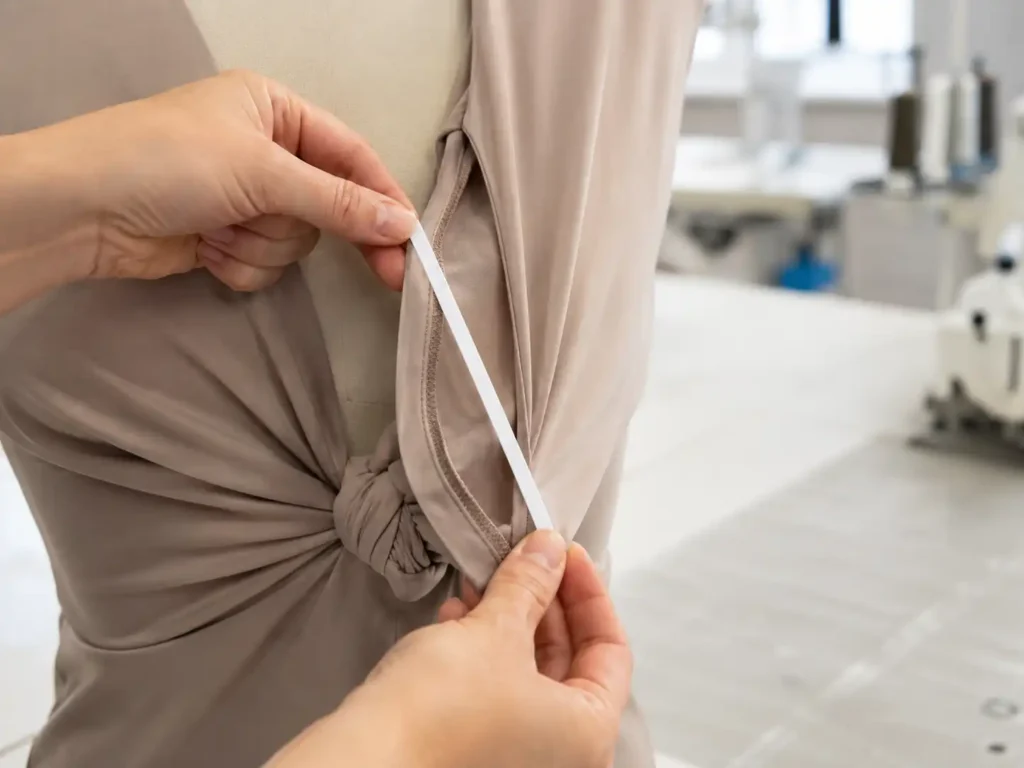
Elastic Stabilization
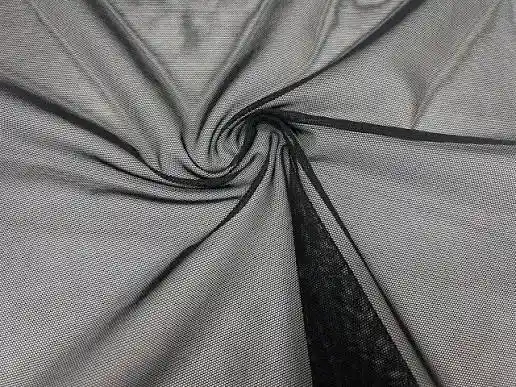
Power Mesh Support

Lining Coverage

Hardware Reinforcement
Grade Cut-Out Dresses Without Losing the Original Proportion
Size grading is one of the most overlooked risks in cut-out development. Body measurements increase across sizes, but the visible opening does not always need to increase by the same amount or move at the same rate. Jinfeng Apparel reviews the cut-out as an independent design feature within the graded garment so exposure, anchor position and silhouette remain controlled.

The Opening Does Not Have to Scale Linearly
A simple proportional enlargement can make a waist or under-bust cut-out visually dominant in larger sizes. It can also move an opening toward a higher-risk body area. Pattern grading therefore separates body growth from design growth. The dress still needs additional bust, waist and hip room, but the opening dimensions may follow a different rule depending on placement and intended exposure.
No universal percentage works across all styles. A narrow geometric waist cut-out, a wide side opening and a small keyhole shape each require different judgment. The base size establishes design intent, while graded sizes are reviewed for coverage and proportion before bulk. For high-risk placements, selected size-set samples or additional fit review may be appropriate.

Anchor Points Must Stay in the Correct Body Zone
The ends of an opening are more important than its total width. If grading moves an anchor point too far toward the bust, underarm or hip curve, local tension and exposure can change. Jinfeng Apparel maps critical points to garment measurements and body landmarks so the cut-out remains in the intended zone.
Side cut-outs also depend on front-to-back balance. An anchor that moves correctly on the front but not on the back can rotate the opening. Ring-connected designs need hardware position to remain consistent with both pattern growth and seam strength.
These points are included in pattern and measurement review rather than left to visual inspection alone.

Coverage Must Be Reviewed Across the Size Set
Brand size charts reflect different body proportions, and fitted styles may behave differently across the size range. Bust and under-bust cut-outs require particular attention because additional circumference and vertical length can change where the opening sits. Hip cut-outs also need careful review because sitting movement increases pressure in the area.
Coverage decisions are therefore evaluated against the brand’s own size chart and intended market. If the base-size design uses a narrow margin of coverage, larger sizes may need a structural adjustment rather than simple grading. The goal is to preserve the design identity while avoiding uncontrolled exposure.

Grading Data Must Transfer Into QC
Grading is only useful if production and QC can verify the result. Critical opening dimensions, positions and related garment measurements should be identified in the final size chart or QC reference where relevant. Cutting and sewing teams then work from the approved graded pattern rather than adjusting placement by eye.
Final inspection can compare opening dimensions and symmetry against approved specifications, while on-body or mannequin review may be used for selected projects where flat measurement cannot show the complete effect. Repeat orders retain pattern and grading records, but any fabric or design change that affects stretch or coverage still needs reassessment.
Review the Dress in Motion, Not Only on a Hanger
Standing Balance
Walking Response
Sitting Stability
Arm Movement
Side and Back View
Hardware Stress
Build the Sample Sequence Around Risk, Not Routine
Project Review
Reference images, sketches, original samples, tech packs or line sheets are reviewed for construction, fabric direction, opening location, trim needs, MOQ fit and obvious production risks.
Missing information is identified before pattern work starts so the sample does not become an expensive guessing exercise.
First Sample
Fit and Structure Review
The sample is reviewed for opening position, bust-waist-hip balance, edge stability, lining coverage, strap or closure function, movement and overall silhouette.
Comments are organized by measurable location and construction issue so the next pattern revision can be traced.
Revised Sample
PP Sample
Golden Sample and Handover
Sample Revision Is Where a Cut-Out Design Becomes Production-Ready
Strong product development is not measured by pretending the first sample is perfect. Complex cut-out styles often reveal issues only after fabric, body shape and movement interact. Jinfeng Apparel uses revision rounds to convert visual comments into pattern, construction and measurement changes that can be documented and transferred into bulk production.

Correct Opening Size and Position With Pattern Changes
Common comments include an opening that feels too large, sits too low, exposes the wrong area or fails to create the intended slimming effect. Rather than masking the issue with extra tension during sewing, pattern makers adjust the opening coordinates, surrounding panel shape or anchor points. The revision is then reviewed against bust, waist, hip and vertical body measurements.
Asymmetrical openings are checked separately because one side may require a unique pattern. For side cut-outs, front and back balance are reviewed together. For bust and under-bust openings, coverage changes may require neckline, strap or support adjustments. The objective is a controlled pattern solution that can be repeated, not a one-off sample correction.

Fix Edge Roll, Gaping and Support Problems at the Source
If an edge rolls or waves, the cause may be fabric recovery, seam tension, binding length, facing shape, elastic tension, lining attachment or pressing. Development identifies the cause before changing the method. Adding more elastic to a weak-recovery fabric can create a smaller opening but introduce puckering or discomfort, so the entire construction has to be considered.
When the upper body feels unstable, the opening may not be the only issue. Strap position, cup structure, power mesh, boning, neckline and closure can all influence support.
Revision work therefore focuses on the garment system around the cut-out rather than treating every problem as an edge-finishing issue.

Reassess the Pattern When Fabric or Trims Change
A fabric change during sampling is not a cosmetic substitution. Different stretch, recovery, thickness, transparency and drape can alter opening size, seam tension and support. A switch from jersey to stretch satin, for example, may require less negative ease and a different edge method. A change from soft mesh to power mesh may improve support but change transparency and comfort.
Hardware changes also matter. A larger ring or heavier connector changes the force at the attachment point and may require stronger reinforcement. Jinfeng Apparel reviews fabric and trim substitutions for visual effect, construction feasibility, cost, MOQ and potential schedule impact before the revised sample is approved.

Keep a Revision Record Before Moving to PP
Every approved change should move into updated production information. Jinfeng Apparel records pattern changes, measurement changes, fabric replacements, trim adjustments, sewing-method changes, client comments and approval status. These records reduce confusion after several sample rounds and support a cleaner transfer into PP and bulk.
The development goal is a production-ready standard: final pattern, confirmed material direction, defined construction, measurable fit points and clear QC focus. Once PP is approved, changes should be controlled through formal review because late adjustments can affect purchasing, production efficiency and bulk consistency.
Dedicated Sample and Pattern Teams Support Complex Development
7+ Senior Pattern Makers
Pattern makers review body proportion, opening placement, bust-waist-hip balance, neckline, strap position, side seam, lining, hem balance and size grading.
Their role is to convert design comments into pattern data that can be used again in PP and bulk, not simply to create a first sample that resembles a photograph.
20+ Sample Machinists
Sample machinists handle complex garment construction including stretch materials, mesh, lining, cups, boning, special edge finishing and hardware-connected details where required.
Sample sewing also reveals construction difficulties early, allowing operation order and workmanship details to be refined before bulk allocation.
2 Sample Rooms With Project Follow-Up
Transfer Every Approved Detail From Sample to Bulk Production
The most expensive development failure occurs when a strong sample is approved but the same standard is not reproduced in bulk. Jinfeng Apparel treats sample-to-bulk transfer as a controlled handover. Pattern, materials, measurements, construction, labels, packing and quality points are locked through project records so production teams do not rebuild the style from memory.

Freeze the Final Pattern and Size Information
Once fit and opening placement are approved, the final pattern becomes the basis for grading and cutting. Critical measurements are aligned with the size chart, and opening dimensions or positions are included where required for control. Pattern notches, seam allowances, reinforcement points and asymmetric pieces are reviewed before bulk cutting.
Any late style change has to be evaluated for pattern, cost and schedule impact. A small change to opening depth can alter facing, lining, binding, hardware position or size grading, so post-approval revisions should not be treated as casual sewing adjustments.

Confirm Fabric, Trims and Construction References
Bulk teams need more than a style number. Fabric reference, color, stretch direction, lining, elastic, hardware, zipper, labels and other trims are confirmed through BOM and supporting records.
For cut-out styles, edge method and support layers are especially important because a material substitution can change fit or recovery.
Sewing instructions define operation order, attachment method, reinforcement and finishing details. Approved sample photos or controlled internal references can support the technical documents, while client design protection rules are maintained for unpublished styles and branded materials.

Build Cut-Out Risks Into the QC Checklist
QC focus should be established before production begins. Opening location, dimensions, symmetry, edge flatness, stretch recovery, bust or waist coverage, hardware security and related garment measurements are identified according to the style. In-line inspection can then catch drift before a large quantity is completed.
Flat measurement alone may not explain the full result, so mannequin or on-body review can be added by project for high-risk styles. The objective is to prevent final inspection from becoming the first time anyone notices a placement or movement problem.

Lock PP Decisions Before Production Release
PP approval confirms the production direction for fabric, color, trims, measurements, construction, labels and packing. Jinfeng Apparel uses PP as a control point rather than a ceremonial sample. If a major change is requested afterward, the team reviews whether materials need to be reordered, patterns reissued, samples remade or production schedules adjusted.
A disciplined PP lock protects both the brand and the factory from avoidable variation. It also gives production and QC a clear standard for bulk comparison and creates a better record for repeat orders.
Control Cut-Out Details Throughout Bulk Production

Material Verification

Cutting Position Control
Accurate cut-out placement begins in cutting. Grain direction, pattern orientation, asymmetric pieces, notches and reinforcement zones need to match the approved pattern.
Stretch materials are handled with attention to distortion so panels do not change shape before sewing.

Sewing Sequence Control
Edge finishing, lining, support layers and hardware may need a defined operation sequence.
Sewing instructions reduce individual interpretation and help keep openings consistent across operators. Complex operations can be concentrated with suitable production teams where required.

Symmetry and Tension Checks
In-line checks focus on left-right balance, edge flatness, local puckering, opening distortion and seam movement.
Stretch styles are reviewed before pressing can temporarily hide tension problems. Hardware orientation and attachment security are also checked during production.

Measurement and Garment Review

Finishing and Packing Review
Cut-Out Dress QC Checks Before Shipment
Cut-out dress inspection combines normal garment quality control with opening-specific checks. The QC plan should identify measurable points as early as PP approval so cutting, sewing and final inspection work from the same standard. High-risk styles may also use mannequin or on-body review when flat inspection cannot show coverage or movement behavior adequately.
| QC Checkpoint | What Is Checked | Common Failure Signs | Control Stage |
|---|---|---|---|
| Opening location | Position against approved pattern and garment landmarks | Too high, too low, shifted toward side or bust | Cutting / In-line / Final |
| Opening dimensions | Width, depth and key reference points where specified | Opening larger or smaller than approved | In-line / Final |
| Left-right symmetry | Mirrored position and shape where design is symmetrical | One side deeper, higher or more curved | Sewing / Final |
| Edge flatness | Binding, facing, elastic or seam edge appearance | Rolling, waving, puckering, edge lift | Sewing / Pressing / Final |
| Stretch recovery | Opening returns after normal extension | Permanent growth, loose edge, distortion | Sample / In-line / Final |
| Bust coverage | Neckline and opening remain within approved coverage | Gaping, excessive exposure, support shift | Sample / Final as required |
| Waist / hip effect | Opening stays balanced through body contour | Drag lines, opening growth, garment riding up | Sample / Final as required |
| Lining position | Lining remains hidden and stable around opening | Lining exposed, shifting, uneven coverage | Sewing / Final |
| Hardware security | Ring, chain or connector attachment and orientation | Twisting, loose attachment, fabric tearing | Sewing / Final |
| Overall wearing balance | Garment hangs and moves as approved | Side seam rotation, neckline shift, hem imbalance | Sample / Mannequin or fit review as required |
Plan MOQ, Cost and Schedule Around Construction Complexity
MOQ and Order Structure
Cost Drivers
Development and Delivery Planning
Anonymous Cut-Out Collection Development Case
The following program model uses an anonymized order profile aligned with current brand-order ranges shared for Jinfeng Apparel: multi-style fashion programs commonly contain 10-30 styles with total brand orders in the 20,000-80,000 piece range. The purpose is to show how a complex cut-out program can be managed from development risk to bulk control without exposing client identity, unpublished designs or commercial details.
Program Scope - 18 Styles, 46,800 Pieces
A US-focused party and occasionwear program was structured around 18 styles with a total order quantity of 46,800 pieces. The range combined cut-out bodycon dresses, mesh-panel styles, stretch-satin occasion dresses and related fitted silhouettes. Multiple colors and a brand-defined size range increased the importance of grading, material grouping, sample priority and packing accuracy.
The development team did not treat all 18 styles as one technical category. Styles were grouped by stretch behavior, support requirements and edge construction. High-risk cut-out styles entered pattern and fit review first, while styles using familiar constructions moved in parallel. The program plan separated sample priority from bulk priority so photo and launch needs could be considered without releasing unapproved construction into production.
First-Sample Findings - Placement, Recovery and Coverage
Early samples identified several issues typical of complex cut-out programs: one side-waist opening sat lower than the intended visual line; a stretch-mesh opening expanded after wear because recovery was weaker than expected; an under-bust design needed more stable upper-body support; and a ring-connected style showed local fabric pull around the hardware.
Corrections were made through pattern placement, support layers, material selection and local reinforcement rather than cosmetic sewing changes. The waist opening was repositioned against the waist and high-hip relationship. Mesh direction was reassessed. The under-bust style received revised support planning. Hardware attachment was reinforced and retested for orientation and local distortion.
Revision and PP - Turning Comments Into Production Data
Revised samples focused on opening size, anchor position, edge behavior, bust coverage, side seam balance and movement. The program used the normal reference of 7-15 days for revised samples where materials and change scope allowed, while complex changes were confirmed individually. Once styles reached PP, final fabric, color, trims, measurements, construction, label and packing requirements were locked.
Revision comments were converted into updated pattern data, size information, BOM records, sewing instructions and QC checkpoints. The cut-out styles received specific inspection points for opening position, symmetry, edge flatness, stretch recovery and hardware security. That documentation reduced the risk of sample-room knowledge being lost when production moved to bulk teams.
Bulk Execution - Protecting the Approved Look Across Styles
Production allocation considered fabric family and construction complexity rather than distributing the program only by available capacity. Stretch and mesh styles required close attention to material behavior and seam tension, while structured styles required clean edge finishing, lining control and pressing. In-line QC checked the high-risk points early so corrections could be made before final inspection.
Packing requirements were aligned with the brand’s SKU structure, labels, barcodes, polybags and carton marks. Shipment planning could be adjusted around launch needs, including split shipment if selected styles required earlier movement. No fixed on-time or defect-rate claim is used; the program logic focuses on traceable development records, PP control and production-stage inspection rather than unverifiable percentages.
Program Value - One Development System Across a Multi-Style Drop
The strongest outcome of a multi-style program is not one successful sample. It is a repeatable development method across different constructions. Grouping styles by fabric and risk allowed pattern, sample, production and QC teams to prioritize the most sensitive cut-out issues while maintaining the commercial rhythm of the larger collection.
Approved patterns, fabric references, trim details, packing instructions, QC notes and Golden Sample records can support future repeat orders, new colors and related style extensions. When a new fabric batch or material direction changes stretch, transparency or recovery, the style is reassessed rather than assuming the previous result will transfer automatically.

Extend a Strong Cut-Out Style Into a Repeatable Collection
New Color Development
Length Variations
New Fabric Direction
Hardware and Detail Variants
Repeat-Order Records
Multi-Style Launch Planning
Cut-Out Dress Development Frequently Asked Questions

Start Your Cut-Out Dress Development With Clear Project Inputs
- Style reference, tech pack, sketch or original sample information.
- Preferred fabric direction or target hand feel, stretch and transparency.
- Quantity by style and color; basic MOQ is 200 pcs per style / color.
- Brand size chart and required size range.
- Cut-out placement, coverage or support requirements that must not change.
- Hardware, lining, labels, hangtags, barcode, SKU and packing requirements where applicable.
- Target sample need, photo or sales milestone, and intended bulk delivery window.
- Destination and preferred shipment method when logistics planning is required.


