Skip to content

What Are the Biggest Satin Dress Trends for 2027?

Your trusted Women’s Apparel Manufacturer from China
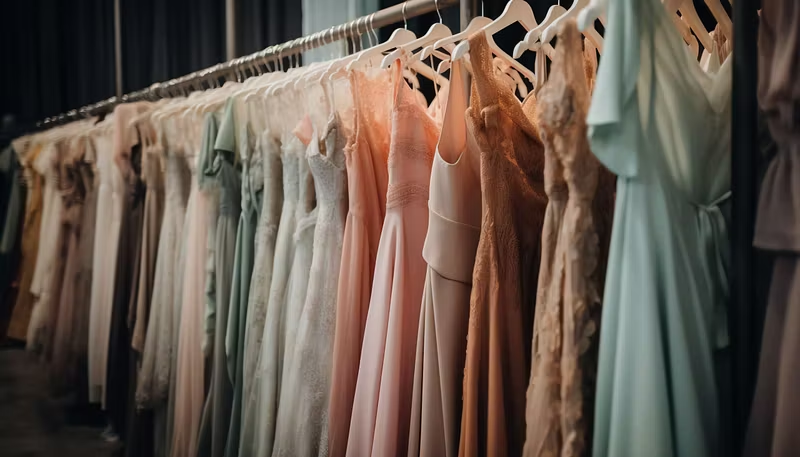
Satin is entering 2027 with more personality than the simple slip dresses that defined many earlier seasons. The fabric still delivers the fluid movement, soft shine, and dressed-up feeling people expect, but early Resort 2027 and Spring 2027 signals point toward more considered construction. Bias cutting, draped hips, shaped waists, corset-inspired bodices, asymmetric lines, open backs, lace, and sheer contrasts are giving satin dresses stronger identities while preserving the elegance that makes the fabric so useful for occasionwear.
The biggest satin dress trends for 2027 are fluid bias-cut silhouettes, sculpted waists, controlled draping, corset-inspired bodices, lace-trimmed slips, asymmetric necklines, elongated maxis, and a broader color palette. Rather than one dominant dress shape, 2027 is developing around the contrast between softness and structure, with satin used for wedding guest, bridesmaid, party, evening, destination, and celebration dressing.
Because the full 2027 fashion calendar is still unfolding, these trends should be read as a directional forecast based on the clearest signals visible by August 2026 rather than as a finished rulebook for the entire year. Dior Resort 2027 has already shown asymmetric bias-cut satin forms, Hermès used vivid satin with gathers and piped construction, and Alberta Ferretti emphasized languid bias gowns and ruching. The more interesting question now is which of these runway ideas can become dresses people genuinely want to wear, photograph, reorder, and keep in their wardrobes.
What Is Changing in Satin Dresses for 2027?
Satin dresses are becoming more dimensional in 2027. Minimal slips remain relevant, but the category is expanding through bias cuts, draped waists, asymmetric construction, corset-inspired structure, lace, and transparent details. The strongest direction is not heavier decoration; it is using fabric manipulation and fit to make satin feel more contemporary while preserving its familiar softness, movement, and occasion-ready appeal.
Are Slip Dresses Still Relevant?
The satin slip dress remains highly relevant because it solves several wardrobe needs without feeling tied to one narrow occasion. A good slip can move from a wedding dinner to a holiday evening, formal event, resort restaurant, or party simply through styling. What is changing is the amount of design intelligence around that familiar base. Longer bias-cut bodies, lace-edged necklines, irregular hems, asymmetric seams, deeper backs, softer halters, and localized draping are moving the category beyond a direct replay of 1990s minimalism.
Early 2027 collections support that evolution. Dior Resort 2027 included asymmetric bias-cut satin pieces caught around the hip, while the wider Resort 2027 season is revisiting fluid 1920s and 1930s references, ruching, elongated dresses, and romantic construction. The important point for commercial collections is that the slip does not need to be discarded to look new. Updating one proportion, neckline, back, trim, or drape can provide more lasting value than covering a familiar dress with several unrelated seasonal details.
Is Sculpted Corsetry Returning?
Corset influence is clearly becoming more relevant, although the most wearable versions are moving away from the idea that a corset dress must feel extremely rigid or restrictive. Curved bodice seams, shaped bust panels, internal boning, subtle basque waists, built-in cups, anti-slip support, and stronger waist definition can give satin the controlled architecture that completely fluid dresses sometimes lack. This contrast between a sculpted upper body and a softer skirt is particularly effective for party, cocktail, evening, and wedding-related styles.
Satin also makes corset construction unforgiving. Its smooth surface can expose rippling boning channels, inaccurate cup placement, excessive upper-bust tension, zipper distortion, and waist seams that are even slightly off balance. In an anonymous UK designer-label program involving six corset, structured mini, and strapless styles totaling around 4,800 pieces, development moved through first, fit, revised, PP, and Golden samples to address cup shape, boning position, bust coverage, anti-slip control, and waist shaping. Those are practical reasons why successful corsetry depends on fit engineering, not simply adding boning to a fitted dress.
Are Draped Shapes Getting Stronger?
Draping is one of the most convincing 2027 directions because it uses satin’s natural behavior instead of fighting it. Alberta Ferretti Resort 2027 used bias-cut gowns, spiraling seams, and soft ruching to create decoration through construction, while Hermès manipulated satin with gathers and piped seams. These approaches make a monochrome dress visually richer because every fold turns toward or away from light, creating highlights and shadows without depending on print or heavy embellishment.
The placement of the drape matters more than the quantity of fabric. Ruching around the waist can soften tension and make a close-fitting dress more forgiving. Hip draping can introduce asymmetry or visually reshape proportion. Bust draping can provide coverage while keeping the overall appearance fluid. Excess fabric, however, can add bulk, shift during wear, or become difficult to reproduce consistently across sizes. The strongest commercial versions are likely to be the ones where gathering ratios, anchor points, seams, and pattern shapes clearly define how the drape is supposed to fall.
Do Sheer and Lace Details Matter?
Lace and transparency matter because they give the eye a break from satin’s uninterrupted reflective surface. Spring 2027 Copenhagen collections have already highlighted gauzy layers, softly sheer dressing, lace, and renewed waist emphasis, while Spring 2027 bridal collections show lace, asymmetry, halter shapes, soft draping, and muted colors gaining importance. Together, these signals suggest a more romantic but still modern way of using satin rather than a return to heavily decorated formal dresses.
The most effective combinations usually rely on controlled contrast. Matte lace can make smooth satin look richer, a sheer back can reduce the visual weight of a maxi, and a narrow lace edge can update a simple slip without changing its core silhouette. Construction needs equal attention because fabrics may behave very differently. Rigid lace attached to fluid satin can distort a neckline, while stretch mesh combined with non-stretch satin can create uneven seam tension. For 2027, the opportunity is not simply to use more lace or transparency; it is to make the relationship between materials look intentional.
2027 Satin Direction | Commercial Role | Suitable Categories | Development Watchpoint |
Bias-cut slip | Core fashion style | Midi, maxi, bridesmaid, evening | Grain distortion and hem balance |
Controlled draping | High-potential update | Midi, maxi, party, wedding guest | Gathering consistency and bulk |
Corset structure | Statement commercial style | Mini, midi, party, evening | Cup fit, boning, upper-bust tension |
Lace-trim satin | Accessible trend update | Slip, wedding guest, occasion | Lace tension and edge quality |
Sheer contrast | Directional detail | Party, evening, bridal-related | Transparency, seam tension, lining |
Extreme sculptural volume | Editorial statement | Evening and limited capsules | Size consistency, labor, packing |

Which Satin Dress Silhouettes Will Lead 2027?
The leading 2027 satin silhouettes are likely to sit between fluidity and controlled fit: corseted or draped minis, sophisticated midis, bias-cut slips, and elongated column maxis. No single hem length is replacing the others. Instead, mini, midi, and maxi dresses are becoming more purpose-specific, giving collections different options for parties, weddings, evening events, destination dressing, and formal occasions.
Which Mini Shapes Are Rising?
Satin minis are becoming more intentional around the upper body. Strapless constructions, shaped cups, asymmetric shoulders, halters, curved waist seams, low backs, and concentrated hip draping give a short dress enough visual identity without requiring embroidery or large amounts of decoration. This works particularly well for party, birthday, homecoming, celebration, and after-party categories, where a clearly recognizable neckline or silhouette often has more visual impact in digital imagery than subtle surface details.
The short length also reduces the margin for fit error. A difference of only a few centimeters in hip ease, back length, or hem position can affect coverage considerably when the wearer sits or walks. Non-stretch satin needs enough pattern ease to prevent the skirt from riding upward, while stretch satin can improve movement but should not be used as a substitute for accurate shaping. A good mini needs to be judged while moving, not only while standing in a showroom pose, because the strongest photograph means little if the dress becomes uncomfortable during an actual evening.
Which Midi Shapes Feel New?
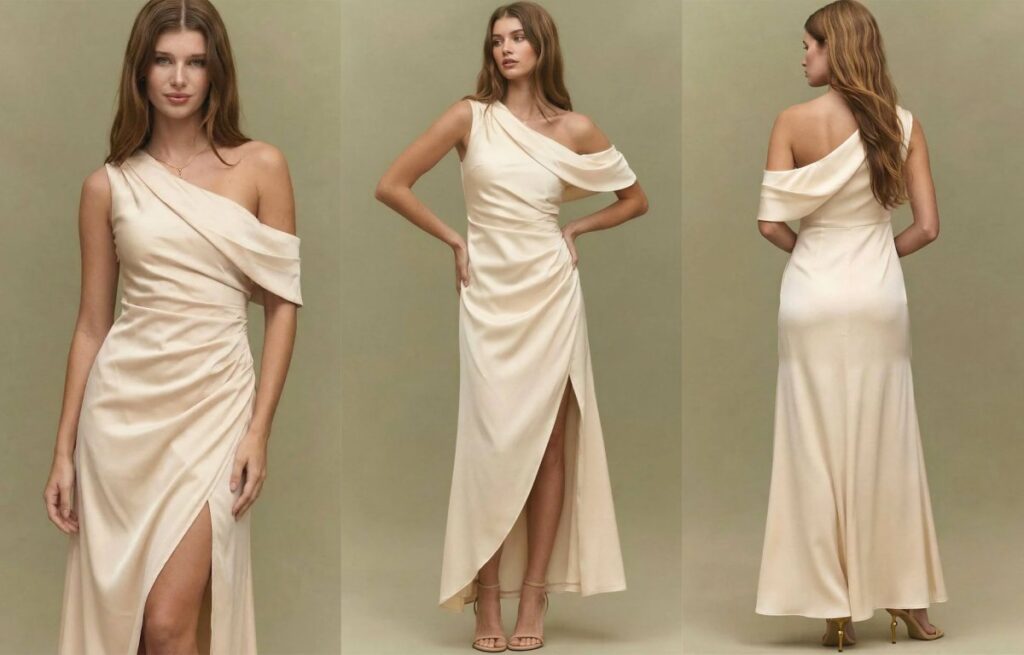
The satin midi is especially well positioned for 2027 because it can absorb stronger fashion ideas without becoming overly theatrical. One-shoulder designs, asymmetric cowls, fitted columns, draped hips, corseted bodices, bias skirts, and controlled slits all work naturally at this length. The result can move between wedding guest, cocktail, dinner, formal, and premium occasion categories, giving the same basic dress architecture more potential uses than an extremely short or highly formal floor-length style.
Midi development depends heavily on proportion. A hem ending at an awkward point on the calf can make an otherwise elegant silhouette feel visually heavy, while an incorrectly positioned slit can compromise comfort or sitting coverage. In an anonymous UK premium ecommerce project involving ten lace, satin, and wedding-guest styles and about 12,000 pieces, satin drape, midi length proportion, lining color, and photo-sample appearance were treated as separate development issues before bulk production. The example shows how a seemingly simple length decision can influence both visual balance and the way the product performs in photography.
Which Maxi Shapes Will Grow?
The stronger satin maxis for 2027 are becoming cleaner and more elongated rather than automatically fuller. Bias-cut slips, narrow columns, long halter dresses, low backs, asymmetric draping, and concentrated movement around the hip or hem can create evening presence without the weight of a traditional full-skirted gown. Alberta Ferretti’s Resort 2027 collection reinforces this direction through languid, figure-lengthening bias gowns where movement comes from cutting and seam construction rather than sheer volume.
Long satin dresses also make technical errors more visible. Grain distortion near the hip can continue down the dress and create a visibly twisted side seam near the ankle. Bias sections may lengthen after hanging, which can affect final hem balance. Lightweight satin can cling unexpectedly, while satin that is too heavy may remove the fluidity the design needs. For that reason, a maxi should be allowed to relax before final hemming and should be evaluated while walking, sitting, and turning. The lower body needs freedom without pulling the neckline, waist, or straps out of position.
How Are Necklines and Backs Changing?
Necklines and backs are becoming some of the most efficient places to differentiate satin dresses. Halters, asymmetric shoulders, softly draped cowls, curved strapless necklines, open backs, low scoops, and cross-back straps can transform a relatively simple skirt into a visibly different product. Spring 2027 bridal collections are already highlighting halter necklines and dramatic open backs, while broader 2027 directions continue to favor asymmetry and fluid movement.
These design choices also change how tension moves through the garment. Removing fabric from the back can make the front neckline harder to stabilize. A low cowl needs enough volume to fall naturally without exposing too much. Strapless dresses must stay secure without excessive compression around the upper bust. Professional pattern development therefore treats bust, upper bust, under-bust, waist, hip, neckline depth, strap length, back coverage, slit height, and lining length as interconnected measurements. Jinfeng Apparel’s documented pattern system uses these control points when developing production-ready dresses rather than evaluating the neckline as an isolated decorative feature.
Which Satin Dress Colors Will Define 2027?
The 2027 satin palette is becoming broader instead of revolving around one dominant shade. Early collections point toward vivid blues and pinks, unconventional greens, soft pastels, yellow, and other expressive colors alongside dependable black, navy, champagne, and muted neutrals. Because satin reflects light so strongly, finish, fabric direction, lighting, and dye consistency can influence the final appearance almost as much as the original color selection.
Is Luminous Blue a Key Shade?
Blue is one of the more interesting emerging color families because satin gives it unusual depth. Copenhagen Spring 2027 has already highlighted vivid blues among the stronger color signals, while the reflective quality of satin allows a single cobalt, sapphire, or turquoise fabric to move from bright highlight to deep shadow as the wearer turns. Hermès Resort 2027 also used vivid satin and bright turquoise within a collection built around freer, more fluid silhouettes.
Different blues can serve very different commercial purposes. Pale icy or powder blue can work naturally for bridesmaid, wedding guest, and softer formal dressing. Cobalt and electric blue have more immediate party and social-media impact. Navy remains useful when customers want a formal alternative to black. The main caution is color approval. Satin shades should be judged on the actual fabric and preferably as a garment, because a digital reference cannot show how sheen changes the perceived shade across folds, seams, and different lighting environments.
Are Reds and Pinks Still Strong?
Reds and pinks remain important because they communicate different moods even when both sit at the more expressive end of the palette. Strong red works naturally for evening, date-night, celebration, and holiday dressing, while pink can move from pale romantic occasionwear to vivid partywear. Copenhagen Spring 2027 is already showing intense pink among the brighter colors cutting through neutral Scandinavian palettes, indicating that saturated feminine color has not disappeared with the return of softer dressing.
Satin magnifies both the opportunity and the risk. A rich red gains dimensionality because folds naturally produce deeper shadows, but an excessively glossy surface can also make the fabric look flatter under flash photography. Pale blush brings different challenges because light-colored satin more readily shows seam allowances, underwear lines, and differences between lined and unlined areas. A useful collection can therefore give each color a job: red for impact, raspberry or magenta for fashion-led partywear, blush for weddings, and dusty rose for quieter formal dressing.
Which Greens and Earth Tones Matter?
Green is becoming more directional precisely because the emerging shades are moving beyond conventional emerald. Spring 2027 Copenhagen coverage has highlighted chartreuse and moss alongside vivid blue and pink, suggesting that unusual greens can provide the unexpected color note in an otherwise wearable collection. Satin is particularly effective with these shades because highlights can make muted green feel richer, while shadows prevent brighter green from appearing completely flat.
Earthier shades can complement that direction even when they are not treated as headline runway colors. Moss, olive, chocolate, espresso, clay, and reddish brown offer brands alternatives to black and navy while remaining relatively easy to understand in occasionwear. Matte or lower-luster satin can be particularly attractive in these colors because it creates depth without excessive shine. Directional greens may be better suited to controlled capsules or campaign pieces, while deeper brown-based shades can play a steadier commercial role. Fashion impact and unit potential should not automatically be treated as the same decision.
Do Classic Satin Colors Still Sell?
Classic colors remain important because people buy occasion dresses for practical events, not simply because a new seasonal palette has appeared. Black continues to work across party, evening, formal, and cocktail dressing. Navy gives customers a slightly softer alternative for formal occasions, while champagne, ivory, blush, and related neutrals remain closely connected to bridesmaid and wedding-related wardrobes. Burgundy also provides depth for cooler-season occasion collections without depending on a short-lived color story.
Established colors can actually make directional silhouettes easier to adopt. A heavily draped asymmetric midi may feel less intimidating in black, while a straightforward slip can carry a more experimental blue or green because the silhouette is already familiar. A resilient color strategy therefore combines continuity and novelty rather than forcing every style into the newest runway shade. The precise balance should follow actual sales history, season, region, and occasion category instead of relying on a universal forecast.
Color Direction | Best Satin Effect | Strong Applications | Development Consideration |
Cobalt / vivid blue | High visual depth | Party, evening, destination | Strong lighting variation |
Ice / soft blue | Delicate reflective finish | Bridesmaid, wedding guest | Transparency and lining color |
Red / raspberry | High-impact shine | Party, cocktail, celebration | Surface quality is highly visible |
Blush / soft pink | Romantic, light-reflective | Wedding and formal | Show-through and seam visibility |
Moss / olive | Richer in matte satin | Occasion and autumn capsules | Shade may shift under warm light |
Chartreuse | Directional and high visibility | Fashion capsule and campaign | More selective commercial appeal |
Black / navy | Reliable depth | Evening, formal, party | Pressing marks remain visible |
Champagne | Soft luxury effect | Bridesmaid and occasion | Dye-lot and lining consistency |
Which Occasions Will Drive Satin Dress Demand?
Wedding guest dressing, bridesmaid collections, parties, evening events, celebrations, and destination occasions should remain the strongest environments for satin dresses in 2027. The material is unusually flexible: changing its weight, finish, lining, and construction can turn the same fabric family into a fluid bridesmaid maxi, fitted party mini, elegant cocktail midi, or low-back evening dress without losing its recognizable occasionwear character.
Are Wedding Guest Dresses Still Key?
Wedding guest dressing remains one of satin’s natural strengths because the fabric looks more polished than ordinary daywear without automatically requiring the formality or expense of heavily embellished eveningwear. A satin midi can work for a city wedding, a bias maxi can serve a more formal evening reception, and a halter or one-shoulder dress can fit destination and summer ceremonies. This breadth gives satin a useful position in a market where the dress code varies considerably between venues, seasons, and cultures.
The category also places unusually high pressure on fit and appearance because wedding clothing is photographed repeatedly in daylight, indoor lighting, professional photography, and phone images. Satin drape, zipper flatness, lining tone, hem balance, and color consistency can become much more noticeable than on textured fabric. A style therefore needs to do more than look beautiful in one studio photograph. It should remain clean while sitting through dinner, moving on a dance floor, and being viewed from several angles over the course of a long event.
Which Satin Dresses Suit Bridesmaids?
Bridesmaid satin is increasingly compatible with coordinated variety rather than one identical silhouette for every person. A brand can use the same satin and color family across a cowl-neck slip, one-shoulder midi, halter maxi, sleeved option, or structured bodice, allowing a wedding party to look cohesive while giving different body shapes more appropriate fit choices. This approach can also help the collection feel more wearable after the wedding itself.
Producing several silhouettes in one color requires more discipline than the finished group photograph suggests. Satin has a medium-to-high risk of apparent color difference because dye-lot variation, surface direction, and lighting can magnify small changes. Lightweight pale satin may also require carefully matched lining because the layer underneath can affect how the outer fabric reads. The company’s satin technical reference specifically identifies batch variation, luster direction, and lighting as contributors to perceived shade differences.
How Are Party and Evening Styles Changing?
Party satin is becoming more structured while evening satin is becoming more fluid, and those two directions can comfortably exist in the same collection. Party minis and midis are gaining stronger bust shaping, asymmetric necklines, defined waists, concentrated ruching, and dramatic slits. Evening dresses are moving toward elongated bias cuts, narrow columns, low backs, and folds that create movement without the weight or complexity of traditional full-volume gowns.
Resort 2027 provides useful evidence for both approaches. Alberta Ferretti built glamour through bias cutting, seams, and ruching rather than relying solely on embroidery, while Hermès used vivid satin in gathered cocktail-oriented dresses. That matters commercially because a well-designed seam, drape, or waist can create substantial visual value without adding decoration across every surface. Construction still requires skill, but it can sometimes be more repeatable than hundreds of individually positioned embellishments and may keep the finished product cleaner and more modern.
Are Resort and Second-Look Dresses Growing?
The lines between resort dressing, bridal events, and general occasionwear are becoming increasingly flexible. A modern wedding weekend can include a welcome dinner, rehearsal event, ceremony, reception, and after-party, while resort customers often want dresses that work beyond a single holiday setting. Spring 2027 bridal fashion reflects this broader wardrobe mentality, with halters, draping, lace, asymmetry, and softer colors providing options beyond the traditional ceremonial gown.
Satin fits naturally into this behavior because it can feel special without becoming excessively formal. A short ivory halter can work as an after-party dress, while a fluid maxi can suit a destination welcome dinner and later become a vacation evening piece. Versatility should not make the design anonymous, however. Neckline, back treatment, drape, proportion, or fabric finish still needs to give the wearer a reason to choose one satin dress over dozens of similar options. The best crossover styles solve several occasions without looking as though they were designed for none of them.
How Does Satin Shape Fit and Appearance?
Satin influences much more than shine. Fabric weight affects drape, stretch affects body fit, surface luster makes construction more visible, and pale shades can increase transparency and lining requirements. Common dress satins can range roughly from 80 to 220 gsm, so simply specifying “satin” is not enough. Weight, weave, finish, elasticity, opacity, and silhouette all need to be considered together.
Which Satin Weights Suit Each Silhouette?
Lightweight satin is naturally useful for slips, bias dresses, and summer maxis because it moves easily around the body. That same fluidity can become a weakness when the fabric is too transparent, wrinkles easily, or reveals every seam allowance. Midweight satin is often more adaptable for wedding guest, cocktail, and party dresses because it offers better coverage while retaining movement. Heavier satin supports structured bodices and evening silhouettes but can remove the softness that makes a fluid design attractive if the weight is pushed too far.
Jinfeng Apparel’s satin development reference places commonly used dress satins within an approximate 80–220 gsm range and includes lightweight satin, thicker satin, matte satin, stretch satin, crepe satin, and silk-like satin among typical options. These numbers are useful for early development but should not be mistaken for absolute rules. Two fabrics with the same gsm can drape differently because yarn, weave density, finishing, and stretch vary. A garment sample remains a better predictor of performance than a specification number viewed on its own.
Approx. Weight | Typical Behavior | Suitable Satin Dresses | Main Risk to Review |
80–110 gsm | Very light and fluid | Slip, summer mini, bias dress | Transparency and wrinkles |
110–140 gsm | Fluid with more coverage | Bias midi, bridesmaid, maxi | Seam visibility and cling |
140–180 gsm | Balanced drape and body | Cocktail, party, wedding guest | Puckering and zipper shape |
180–220 gsm | More structured | Corset, formal midi, evening | Bulk and reduced fluidity |
Stretch satin | Depends on base fabric | Fitted, bodycon, party | Recovery and shine distortion |
How Do Shine and Drape Change Color?
Satin rarely presents one flat color because the surface constantly changes its relationship to light. A fold facing a light source can appear dramatically brighter than the same fabric immediately beside it, while a shadowed section may look several shades deeper. This is one reason satin produces strong fashion photography: a single-color garment can have considerable visual dimension before any print, embroidery, or embellishment is added.
The same property creates production risks. Panels cut in opposing directions can appear to be different colors even if they came from the same roll, and pressing can alter the surface enough to create reflective patches. Satin production guidance therefore treats shade consistency, luster direction, stains, pressing marks, and cutting direction as distinct quality points. A color should ideally be reviewed on fabric hanging vertically, folded into natural drape, and viewed under more than one light source before final approval.
Does Stretch Satin Improve Fitted Styles?
Stretch satin can improve comfort in fitted dresses by providing more movement around the bust, waist, and hip, especially in body-conscious party styles and softer corset-inspired shapes. It can also make sitting and walking more comfortable than a rigid woven satin when the silhouette sits close to the body. The advantage is most useful when the pattern is already well balanced and the stretch supports movement rather than carrying the entire burden of fit.
A common mistake is reducing garment measurements too aggressively simply because the fabric stretches. Excess negative ease can increase shine across the bust or hip, create horizontal drag lines, pull side seams forward, distort necklines, and cause short dresses to ride upward during movement. Recovery deserves equal attention. A fabric that stretches easily but does not recover can become loose after several hours of wear. The safest principle is straightforward: stretch should support an accurate pattern, not compensate for a weak one.
When Do Satin Dresses Need Lining?
Not every satin dress needs full lining, but lightweight fabrics, pale colors, fitted silhouettes, and formal styles are more likely to benefit from it. Lining can reduce transparency, hide seam allowances, improve comfort, control static, support the bodice, and help the outer satin move more smoothly over the body. Satin development specifications commonly identify light colors and thinner constructions as areas where lining needs to be reviewed carefully.
Poor lining can create just as many problems as having none. A rigid lining can restrict a bias skirt, a lining that is too short may leave a visible horizontal edge through the outer fabric, and an unsuitable color can change the perceived shade of pale satin. Partial lining is often a better solution when different areas need different support. A bodice may need fuller construction while the skirt needs only strategic coverage. The correct decision follows the garment’s opacity, movement, fit, and intended occasion rather than a blanket rule that every satin dress must be fully lined.
How Can Brands Develop 2027 Satin Dresses?
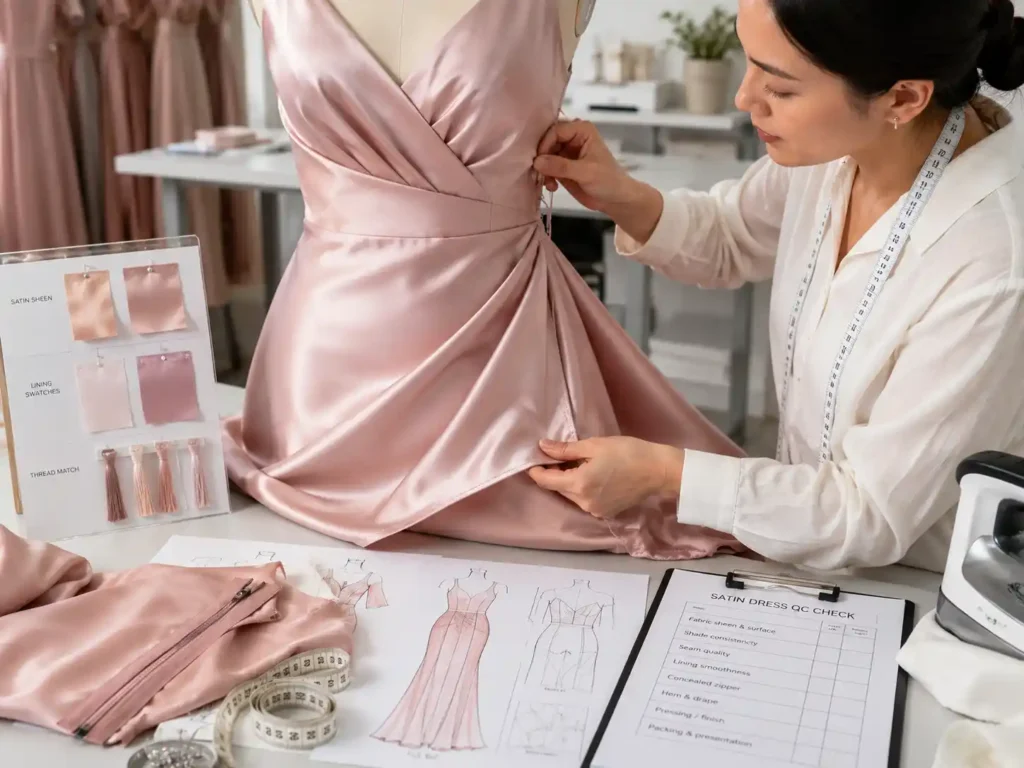
Successful 2027 satin development begins by separating visual inspiration from production approval. A promising style still needs to pass through fabric selection, color review, pattern development, sampling, fit correction, construction testing, and bulk-risk assessment. Satin makes small mistakes unusually visible, so decisions made before production—particularly around grain direction, fit, lining, zipper behavior, draping, and color—often matter more than corrections attempted later.
Which Trends Are Commercially Scalable?
The most scalable trends create a clear visual difference without making every garment unpredictable. Bias cutting, asymmetric necklines, targeted draping, lace edging, controlled ruching, and well-engineered corsetry can all produce a recognizable 2027 look while remaining possible to define through patterns, construction instructions, and measurable quality standards. Alberta Ferretti’s Resort 2027 collection provides a useful example because technical seams and ruching were used to create decoration and impact without depending entirely on costly hand embroidery.
More complex does not automatically mean more valuable. Extreme sculptural volume, elaborate freehand draping, or heavy embellishment can make excellent campaign pieces but may create additional grading, labor, inspection, packing, and consistency challenges. The question is not whether a difficult style should ever be produced. It is whether the expected selling role justifies the additional complexity. A strong assortment can include both statement products and repeatable styles, but it should be clear which garments are intended to generate imagery and which ones need to support meaningful volume and future reorders.
How Should Brands Test New Colors?
Color development should move from digital inspiration to physical fabric as early as possible. A screen image is useful for communicating direction, but satin reflects too much light for a monitor to be treated as the final color standard. Physical swatches or lab dips should be reviewed under different lighting, beside the intended lining and trims, and eventually on the finished sample. When several dresses share one color, fabric batches and cutting directions should also be considered together.
This becomes particularly important for champagne, blush, ice blue, vivid cobalt, red, and other colors where small changes in reflection are highly visible. The documented satin material profile classifies color-difference risk as medium to high and specifically notes that luster direction, batch differences, and lighting can magnify variation. Instead of asking only whether a fabric matches a digital color reference, product teams should ask whether the finished garment consistently creates the color impression the collection intends to sell.
How Do Samples Validate Fit and Construction?
Sampling turns visual ideas into measurable garments. A first sample confirms whether the basic structure works, while fit and revised samples identify issues in proportion, comfort, drape, and construction. A PP sample establishes a production reference, and a Golden sample can provide a clear benchmark for measurements, workmanship, and appearance. The sequence is particularly useful for satin because several issues may interact: changing bust tension can affect drape, altering the waist can change hip folds, and modifying lining can influence how the outer layer falls.
For satin dresses, useful sample checks include neckline stability, bust coverage, waist position, hip ease, strap length, back tension, zipper flatness, slit height, lining movement, surface tension, and hem balance. Jinfeng Apparel’s documented development system includes seven-plus senior pattern makers, two sample rooms, and more than twenty sample machinists working across these types of fit and construction control points. For brands developing a multi-style 2027 collection, reviewing these details before bulk production can prevent a visually promising trend from becoming a repeat quality problem.
How Are Satin Risks Controlled in Bulk?
Satin needs disciplined handling because relatively small defects remain highly visible after the garment is finished. A snag catches light, seam puckering creates a shadow line, a distorted zipper changes the back silhouette, and an ironing mark can become more noticeable in photography than the stitch that caused it. Common bulk controls therefore focus on color and batch consistency, luster direction, surface snags, sewing marks, zipper shape, lining exposure, stains, pressing impressions, and packing creases.
Handling before final inspection is just as important. Cutting tables, sewing areas, finishing stations, hangers, trims, and packaging materials can all damage a delicate surface if sharp or rough contact is not controlled. In one anonymous US occasionwear program involving twelve satin mini and midi styles and approximately 20,000 pieces, production attention centered on color consistency, zipper flatness, lining comfort, and stability across multiple colors. Professional satin manufacturing is therefore not about claiming the fabric will never wrinkle or snag; it is about recognizing those characteristics and managing them before they become widespread production defects.

Which Satin Dress Trends Have Lasting Potential?
The satin trends most likely to remain relevant beyond 2027 are those rooted in proportion, movement, and construction: bias-cut slips, controlled draping, defined waists, refined corsetry, and elongated occasion silhouettes. More extreme transparency, sculptural volume, or highly directional color can still create excitement, but these elements are easier to refresh around a durable core than to rely on as the foundation of an entire long-term collection.
Are Minimal Satin Dresses Still Commercial?
Minimal satin remains commercially useful because a clean dress can serve several occasions without looking dependent on one narrow trend cycle. A bias slip in black can become eveningwear, the same architecture in pale blue can work for a wedding, and another version in champagne can move toward bridesmaid or destination dressing. The versatility explains why minimal slip and column shapes keep returning even as fashion moves through periods of heavier decoration.
Simplicity raises the standard of execution because there is nowhere to hide. An overly low neckline, twisted side seam, uneven hem, poor zipper, or excessive hip tension immediately becomes part of the design when no print or trim distracts from it. This is also why bias cutting remains important in early 2027 collections. Dior and Alberta Ferretti are using bias construction to generate movement and sensuality from relatively clean dress forms rather than treating the technique as a purely nostalgic 1990s reference. Minimal satin is not the absence of design; it is design that depends on proportion being correct.
Will Corset Satin Dresses Keep Growing?
Corset-inspired satin has strong potential because it combines visible shape with the occasion-ready quality of the fabric. The structured upper body creates an immediate focal point in photography, while a softer satin skirt can prevent the finished dress from appearing overly rigid. The concept also has enough range to suit different brands, from obvious boned bustiers and lace-up backs to quieter internal support, curved seams, built-in cups, or subtle basque waistlines.
Long-term growth will depend on comfort and fit rather than appearance alone. Customers are less likely to repeat a style category if they associate it with slipping necklines, poorly positioned cups, excessive compression, or uncomfortable boning. The anonymous 4,800-piece structured-dress program referenced earlier is useful because several rounds of sampling were needed to resolve cup shape, boning location, anti-slip control, bust coverage, and waist shaping before production. That level of development is what separates corsetry as a sustainable product category from corsetry used only as a visual trend label.
Do Draped Satin Dresses Have Staying Power?
Draping has stronger staying power than many decorative trends because it changes both appearance and function. Waist ruching can soften a fitted section, hip draping can change proportion, shoulder gathers can add coverage, and a controlled cowl can create movement around the neckline. The technique can therefore evolve across mini, midi, and maxi lengths without requiring the collection to repeat the same exact silhouette every season.
The early 2027 evidence is also unusually consistent. Dior uses satin asymmetrically around the hip, Hermès uses gathers and piped seams, and Alberta Ferretti relies on bias construction and ruching to generate glamour. The lasting versions will be those that can be technically defined. When a drape is controlled by pattern shape, gathering ratios, seam positions, and anchor points, it can be graded and reproduced. If the look depends entirely on one sample maker arranging folds by hand, consistent future production becomes much more difficult.
Which Trends Should Brands Watch Next?
The next stage of satin dressing is likely to develop through combinations rather than one completely new silhouette. Smooth satin beside matte lace, opaque fabric against transparent mesh, soft skirts under more structured bodices, matte satin alongside higher-luster panels, and familiar dress shapes in less predictable color can all extend the category without making it unrecognizable. Spring 2027 Copenhagen already brings lace, sheer dressing, vivid colors, unconventional greens, and waist emphasis into the same broader fashion mood.
The most dependable directions currently appear to be bias slips, draped midis, elongated maxis, refined lace trim, defined waists, and more deliberate necklines. Corset satin, asymmetric construction, vivid blue, and unconventional green have promising growth potential, while extreme transparency and highly sculptural forms make more sense as selective experiments until broader market evidence develops. This distinction matters because trend planning is not about predicting every winner. It is about knowing which ideas deserve meaningful depth, which ones deserve a measured test, and which ones are mainly valuable for image-making.
Satin dress trends for 2027 ultimately point toward a more sophisticated relationship between softness and structure. The slip dress survives, but it is being refined with bias cutting, lace, asymmetry, and more intentional proportions. Party dresses are gaining stronger bust and waist construction, while evening silhouettes are becoming longer and more fluid. Color is expanding, yet familiar shades remain important because they give customers reliable options for real events rather than asking them to dress like a runway forecast.
For brands developing satin collections, the most useful question is therefore not simply which dress is trending. It is whether a trend suits the target occasion, works with the chosen satin, fits the intended customer, and can be reproduced consistently beyond a single sample. When silhouette, material, fit, and production logic reinforce one another, a 2027 trend has a much better chance of becoming a strong product that can be photographed convincingly, reordered confidently, and evolved into future seasons.
Frequently Asked Questions
Are Satin Dresses Still in Style for 2027?
Yes. Satin remains highly relevant for 2027, but the category is becoming more varied than the traditional minimalist slip dress. Bias-cut maxis, draped midis, structured minis, corset-inspired bodices, asymmetric necklines, lace trims, and open backs are giving the fabric new design directions. Early Resort 2027 collections from Dior, Hermès, and Alberta Ferretti reinforce satin’s continued importance through bias cutting, gathering, ruching, and fluid occasion silhouettes.
What Satin Dress Colors Will Be Popular in 2027?
The early 2027 palette suggests a mix of vivid and softer colors rather than one dominant shade. Vivid blue, pink, chartreuse, moss, pastel tones, yellow, and other expressive shades are appearing alongside established occasion colors such as black, navy, champagne, blush, and burgundy. Spring 2027 Copenhagen is already highlighting vivid blues, pinks, and unconventional greens. Satin’s reflective surface means the actual fabric finish and lighting should always be considered when choosing a color.
Which Satin Dress Silhouettes Are Trending for 2027?
Bias-cut slip dresses, draped midis, elongated column maxis, corset-inspired minis, halter dresses, asymmetric necklines, and low-back silhouettes are among the strongest early directions. Rather than one hem length dominating the year, each length serves a different purpose. Minis create party impact, midis work across wedding and cocktail occasions, while maxis emphasize movement and evening presence. Across these shapes, controlled draping and clearer waist definition are becoming especially important.
Are Satin Dresses Good for Wedding Guests?
Satin works particularly well for wedding guest dresses because it looks polished without requiring heavy embellishment. A draped midi can suit cocktail dress codes, while a bias maxi or one-shoulder gown can move toward more formal events. Fabric weight, color, lining, and silhouette should match the season and setting. Pale lightweight satin may require additional lining, while darker midweight satin often provides easier coverage and a cleaner appearance in photographs.
What Weight of Satin Is Best for Dresses?
There is no single ideal weight because the silhouette determines what the fabric needs to do. A practical development range for common dress satin is approximately 80–220 gsm. Lightweight 80–120 gsm qualities can work well for slips and fluid bias dresses, while roughly 140–180 gsm provides more body for cocktail and occasionwear. Heavier qualities approaching 180–220 gsm may suit structured evening or corset styles, although actual drape must still be tested on a sample.
Do Satin Dresses Need Lining?
Some satin dresses need lining, but not every style requires a full second layer. Lightweight, pale, fitted, or formal satin is more likely to need lining because transparency, seam visibility, and body coverage become more noticeable. The lining should complement the outer fabric rather than restrict it. A stiff lining can interfere with bias drape, while an incorrect shade may visibly change a pale satin color. Partial lining can sometimes provide better movement than fully lining the entire dress.
How Can Satin Dress Wrinkles and Snags Be Reduced?
Satin cannot honestly be described as completely wrinkle-proof or snag-proof, so prevention depends on fabric choice and careful handling. Smooth cutting and sewing surfaces, controlled grain direction, clean machine areas, appropriate pressing temperature, protective packing, and avoiding contact with sharp trims can all reduce risk. Satin QC should also check color variation, surface pulls, stains, zipper flatness, ironing marks, and packaging creases before shipment because small defects often become highly visible under light.
Share This Article :

Jerry Lee
Categories

Latest blogs
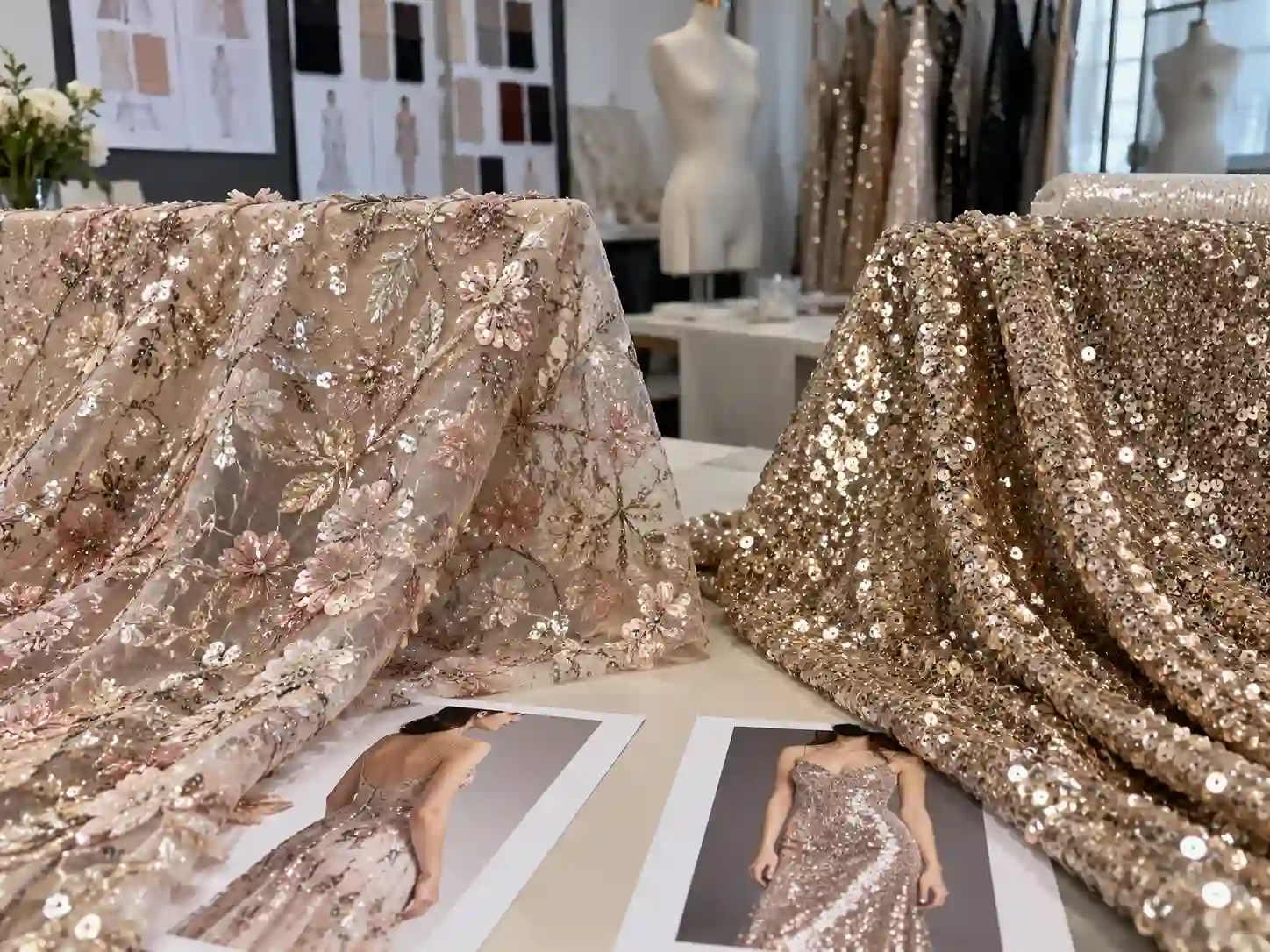

Table of Contents
Here, developing your OEM/ODM private label clothing collection is no longer a challenge—it’s an excellent opportunity to bring your creative vision to life.