...

Custom Partywear Manufacturing for Global Fashion Brands

Jinfeng Apparel develops premium partywear from design reference to production-ready collections, with fabric sourcing, pattern development, sample revision, PP approval, bulk production, QC and private-label packing managed as one connected program.

  • 10-30 style partywear collection programs supported through grouped development and production planning.
  • 2 sample rooms, 7+ senior pattern makers and 20+ sample machinists for fit-sensitive and complex styles.
  • 6 owned women’s fashion factories, 10+ long-term satellite production partners and 100,000+ pcs monthly capacity.
  • MOQ starts from 200 pcs per style/color, with fabric, trim, color and packaging requirements evaluated before production.
  • 6 accessory systems managed across closure, adjustment, support, decoration, branding and packaging
  • 2 sample rooms supporting accessory-to-garment development and fit review
  • 7+ senior pattern makers evaluating how trims affect dress structure and balance
  • 20+ sample machinists supporting first samples, revisions and PP samples
  • 15+ QC inspectors supporting incoming, inline, finished-garment and packing checks
  • Accessories can be controlled through BOM records and trim approval references before bulk production

Built for Established Partywear Programs

Partywear sourcing becomes difficult when a collection combines body-conscious silhouettes, sheer areas, reflective surfaces, corset structures, multiple colors and launch deadlines. Jinfeng Apparel is structured for brands that need product development and bulk execution to remain connected from the first pattern through final packing, rather than treating sampling, production and quality control as separate activities.

Global Fashion Brands

Seasonal partywear programs often contain hero dresses, commercial repeats and supporting separates that must share a consistent visual language. Jinfeng Apparel can work from tech packs, line sheets, reference photos, original samples or approved size charts, then coordinate fabric direction, pattern development, sample versions, PP standards and bulk production across multiple styles. Brand protection, repeat-order records and private-label requirements can remain connected to the same production files.

Partywear and Occasionwear Labels

Partywear and occasionwear labels usually need more than attractive silhouettes. Bust support, lining coverage, slit position, stretch recovery, hem balance, zipper flatness and surface protection can decide whether a style performs well after photography and during real wear. Development is organized around those garment-level risks so satin, mesh, lace, sequin, bodycon and corset styles receive different pattern, sewing and QC attention.

Premium Ecommerce Brands

Online fashion depends heavily on photo-ready samples, stable sizing and a bulk result that remains close to approved imagery. Jinfeng Apparel can connect sample appearance with measurement review, color and fabric confirmation, barcode and SKU requirements, individual packing and repeat-order records. The goal is to reduce the gap between a strong campaign sample and the garments arriving at fulfillment or retail warehouses.

Sourcing and Product Teams

Sourcing offices, product development teams and merchandising groups need clear files, review points and production status rather than vague progress promises. Jinfeng Apparel can track style information, fabric, trims, sample versions, PP approval, production updates, QC feedback, packing confirmation and shipment preparation. Multi-style programs can be grouped by fabric, construction and launch priority so critical styles do not disappear inside a large seasonal assortment.

Manufacturing Capacity Behind Partywear Collections

Production scale matters only when development, line allocation and QC remain controlled. Jinfeng Apparel combines owned factories, long-term production partners, sample development teams and dedicated quality staff to support multi-style fashion programs. Capacity is matched by product type, fabric complexity, construction and delivery window instead of sending every style through one production route.

Since 2008

Jinfeng Apparel has focused on custom women’s fashion manufacturing since 2008, with long-term experience across dresses, skirts, jumpsuits, matching sets and private-label womenswear. Partywear development benefits from experience in satin, mesh, lace, sequin, jersey, corset construction and other categories where visual appearance and fit sensitivity place more pressure on sampling and bulk control.

6 Owned Factories

Six owned women’s fashion factories provide a structured base for woven dresses, stretch styles, occasionwear, complex fabrics and repeat programs. Factory allocation is made according to silhouette, fabric handling, construction difficulty, expected sewing time and the required production window, helping avoid the common problem of forcing every style onto the same type of line.

10+ Production Partners

More than 10 long-term satellite production partners support capacity extension and product matching when seasonal programs contain several fabric or construction groups. Partner capacity is not treated as uncontrolled outsourcing. Project files, PP standards, production requirements and QC checkpoints need to remain aligned with Jinfeng Apparel’s merchandising and production management process.

100,000+ PCS Monthly

Regular monthly capacity exceeds 100,000 pieces across the production system. The figure is useful for multi-style and repeat programs, but production planning still depends on fabric arrival, approved PP samples, color count, size ratio, construction complexity, packaging requirements and line availability. Capacity planning therefore starts from a style breakdown rather than a headline quantity alone.

18+ Sewing Lines

More than 18 sewing lines support varied women’s fashion construction. Stretch bodycon garments, woven satin dresses, lined mesh styles and embellished partywear do not require identical sewing methods, so line selection is connected to fabric behavior and workmanship requirements. Complex garments can be assigned where operators have experience with the relevant seam, lining, zipper or embellishment conditions.

15+ QC Inspectors

A team of 15+ QC inspectors supports incoming material checks, cutting review, in-line sewing inspection, measurement checks, final garment review and packing inspection. Partywear QC is especially sensitive to surface defects, symmetry, transparency, stretch, zipper behavior, embellishment security and visible finishing because many defects become obvious under studio lighting or close-up ecommerce photography.

Partywear Styles We Develop and Produce

A commercial partywear collection needs more than one dress silhouette. Jinfeng Apparel can build programs across dresses, sets, skirts, jumpsuits and statement separates while adjusting fabric, fit, construction and finishing for each style group. Product selection is handled as a manufacturing decision: silhouette, wear occasion, fabric behavior, body coverage and embellishment level all influence the sample path and bulk standard.

Satin Mini Dresses

Satin mini dresses work well for cocktail, birthday, holiday and going-out collections because the surface delivers immediate visual value. Manufacturing risk is concentrated around shade consistency, shine direction, snagging, zipper flatness, pressing marks and packing creases. Pattern balance also matters because a short hem magnifies waist, hip and side-seam distortion. Stretch satin can be evaluated when the design needs closer body shaping or more movement.

Mesh Bodycon Dresses

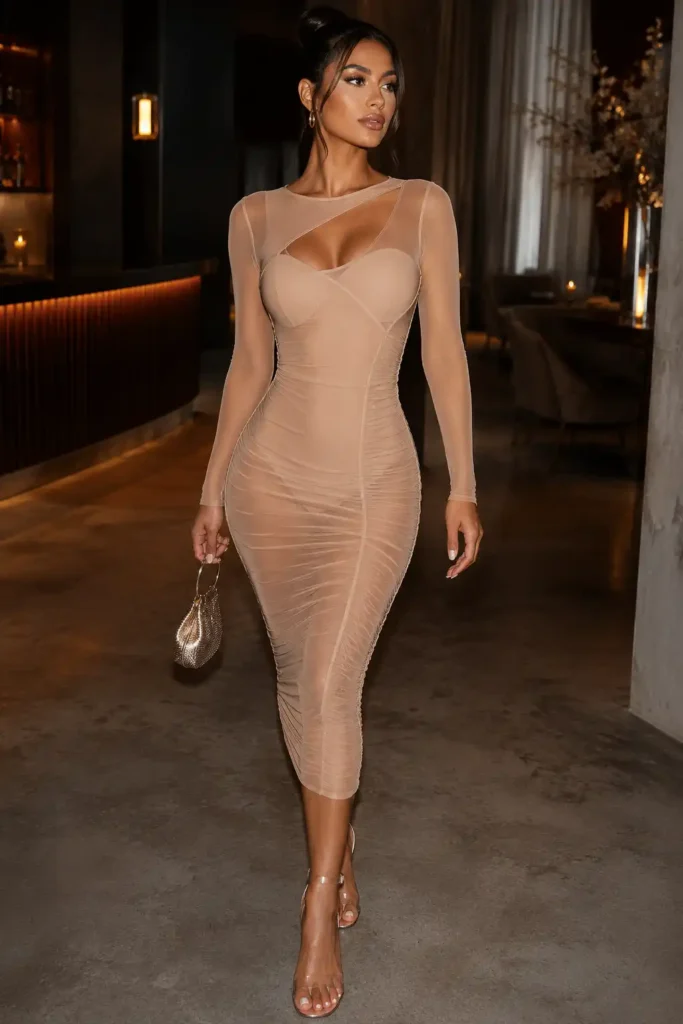
Mesh bodycon dresses combine transparency, stretch and body contour, making them highly sensitive to material selection and lining placement. Development should define whether the visual effect requires soft mesh, stretch mesh, power mesh or double layers, then check bust coverage, neckline stability, cut-out edges and recovery after wear. Bulk measurement control needs to reflect fabric elasticity rather than copying woven-dress tolerances without adjustment.

Sequin Party Dresses

Sequin dresses create strong visual impact for holiday, event and evening collections, but sewing risk is higher than surface appearance suggests. Sequin loss, skin scratching, broken needles, thick seam allowances, zipper interference and packing abrasion all need review. Soft lining, protected armholes and necklines, seam preparation and targeted final inspection help keep the garment wearable while preserving the intended reflective surface.

Corset Party Dresses

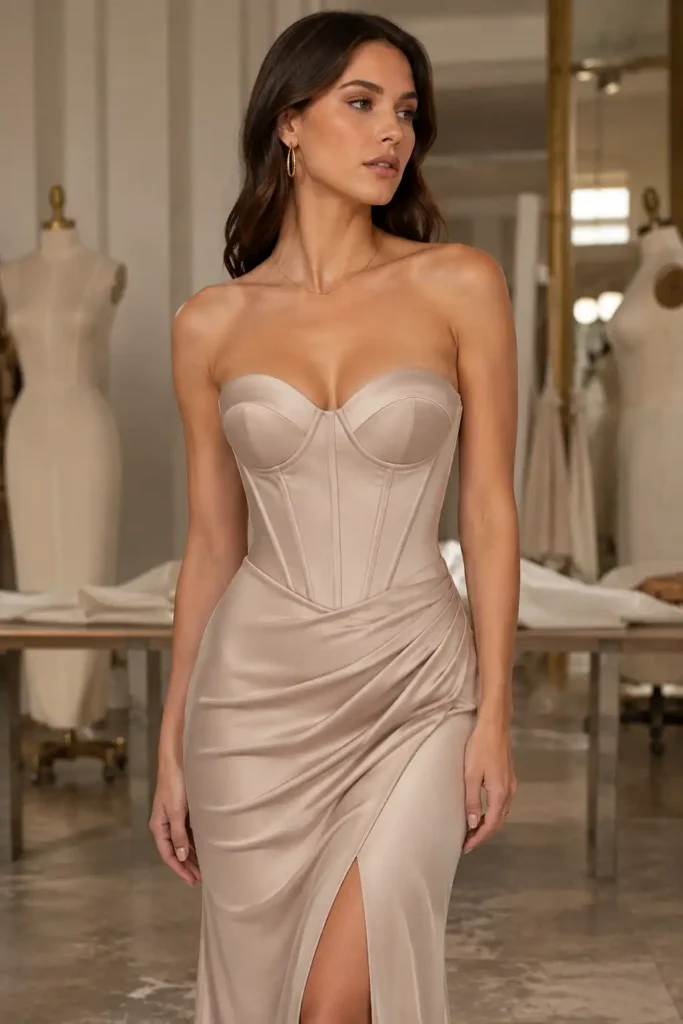
Corset party dresses require careful coordination between cup shape, boning, waist suppression, neckline, zipper, lining and sometimes anti-slip support. A visually strong bodice can still fail if the bust sits too high, the waist is over-tightened, boning twists or the neckline gaps. Jinfeng Apparel uses pattern development and sample fitting to balance structure, support and movement before the final PP standard is released for production.

Cut-Out Dresses

Cut-out dresses depend on proportion and placement more than decoration alone. A small change in opening position can affect bust coverage, waist appearance, bra visibility and movement security. Sample development therefore reviews cut-out location, edge finishing, elastic or binding support, lining termination and the relationship between front, side and back openings. Fit approval needs to happen on the intended fabric because stretch can change the visible opening after wear.

Ruched Dresses

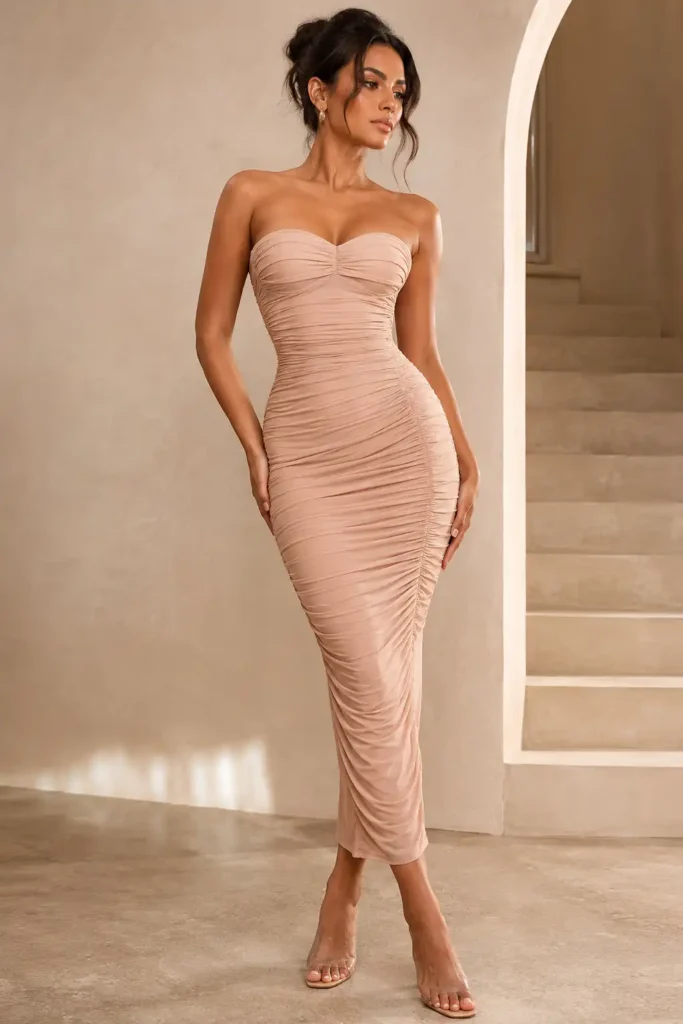
Ruching is valuable for bodycon and party silhouettes because it adds texture and visual shaping, yet inconsistent ruching quickly makes bulk garments look uneven. Production control covers ruching direction, gathering amount, placement marks, left-right symmetry, elastic tension and seam alignment. Sample approval should establish the intended visual density before operators begin bulk sewing, especially when ruching crosses side seams, center seams or curved body areas.

Halter and Backless Dresses

Halter and backless partywear places more responsibility on neckline geometry, strap length, bust stability and low-back balance. The pattern needs to hold the garment in position without creating excessive neck pressure or armhole gaping. Depending on styling, internal cups, elastic, anti-slip tape or hidden support can be evaluated. Back depth and side coverage should be checked during fitting rather than approved only from flat measurements.

Strapless Party Dresses

Strapless styles need secure upper-body support while maintaining a clean neckline. Boning placement, cup structure, elastic, anti-slip tape, zipper construction and lining all influence stability. A sample may look correct on a mannequin yet shift during movement, so fit review should check bust contact, top-edge grip, waist anchoring and side-seam balance. Bulk QC then verifies that support components and measurements remain consistent across the size range.

Lace Party Dresses

Lace introduces motif placement, edge finishing, transparency and lining-color decisions that can significantly change perceived quality. For fitted party dresses, lace stretch and recovery also affect pattern behavior. Development should establish whether motifs need matching across seams, whether scalloped edges remain visible, where lining stops, and how closures interact with the lace. Bulk cutting and sewing need protection against broken motifs, distortion and inconsistent placement.

Party Jumpsuits

Party jumpsuits extend a collection beyond dresses while retaining a strong occasion-led look. Fit is more complex because bust, waist, hip, rise, crotch length, inseam and total body length work together. A flattering upper body can still create movement problems if the rise is wrong. Pattern development and fit samples should validate sitting, walking and torso movement before grading, especially for fitted or cut-out jumpsuit constructions.

Matching Party Sets

Matching sets allow brands to create coordinated looks with more merchandising flexibility. Crop tops, corset tops, mini skirts, midi skirts and fitted bottoms can share fabrics, colors or embellishments while requiring separate fit standards. Production planning should track matching dye lots, trim colors, SKU combinations and packaging instructions so the top and bottom remain visually consistent when sold together or styled across the same collection.

Statement Tops and Skirts

Statement tops and skirts can strengthen a partywear assortment without repeating dress silhouettes. Satin cowl tops, mesh tops, corset tops, sequin skirts and ruched mini skirts can share development resources with core dress styles. Fabric grouping, trim grouping and color planning help reduce unnecessary variation while maintaining collection identity. Fit and closure details are still reviewed individually because a shared fabric does not create identical construction risk.

Plan Partywear as a Complete Collection

Partywear works best when styles are developed as an assortment rather than isolated garments. A strong program can combine visually dominant hero pieces with commercial shapes, coordinated separates and repeatable fabric groups. Jinfeng Apparel can organize development around collection architecture so fabric sourcing, pattern workload, sample priorities and production allocation stay connected to the launch plan.

Build a Clear Style Hierarchy

Hero styles usually carry the strongest visual identity: sequin minis, corset dresses, dramatic cut-outs or statement mesh constructions. Commercial styles may use simpler bodycon, satin or ruched shapes that are easier to repeat across colors. Supporting sets, skirts or tops can extend the same design language. Grouping styles by role helps merchandising teams decide which pieces need early photo-ready samples, which fabrics deserve earlier booking and which products should be protected for replenishment.

Group Fabrics Before Sampling

A collection with twelve to twenty styles can become unnecessarily complex when every style uses a different base fabric, lining and trim combination. Fabric grouping creates clearer sourcing and approval. One stretch satin may serve several body-conscious silhouettes; one approved mesh may appear in dresses and tops; one lining family can support multiple colors. Fewer uncontrolled material variations can improve shade management, sample comparison, bulk purchasing and repeat-order consistency without making the assortment visually repetitive.

Plan Color Stories with Production in Mind

Partywear often uses black, red, metallic, jewel tones, seasonal brights and special finishes. Color planning should consider fabric availability, dye-lot risk, lining match, zipper color, thread, hardware and SKU complexity. Each color still requires its own quantity and material review. For multi-style collections, an early color map helps identify where the same shade can be shared across compatible materials and where unique colors need longer development or separate sourcing.

Connect Launch Dates to Sample Priority

Not every style needs to move at the same speed. Campaign hero pieces, influencer looks, pre-sale images and high-volume commercial styles may need earlier sample approval than secondary assortment pieces. Jinfeng Apparel can separate sample priority by launch date, fabric readiness, construction complexity and photography needs. The approach reduces congestion in sample development and gives key styles a clearer route from first sample to photo-ready sample and PP approval.

Fabrics for Visual Impact and Bulk Stability

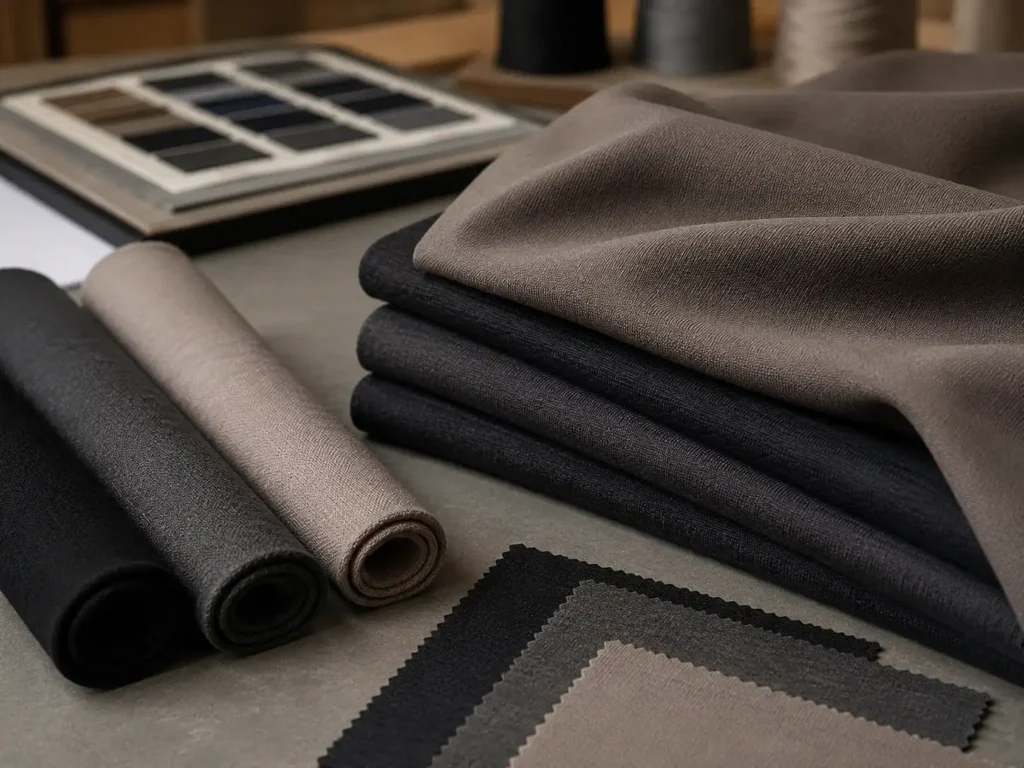
Partywear fabrics are selected for shine, transparency, stretch, texture or movement, yet the same properties also create production risk. Jinfeng Apparel evaluates fabric handfeel, weight, width, stretch direction, recovery, drape, transparency, color, surface durability, lining needs and supplier MOQ before the material is treated as production-ready. Fabric choice is tied to silhouette and brand-level appearance rather than selected from a generic swatch list.

Satin and Stretch Satin

Satin provides clean shine and fluid drape for mini, midi, corset and cocktail silhouettes. Production planning needs to control shine direction, snagging, shade difference, seam tension, pressing and packaging pressure. Stretch satin adds closer fit and movement, but recovery and stretch direction become part of pattern development. Bust, waist and hip measurements need review on the actual material so the garment does not become loose, twisted or overly restrictive after repeated wear.

Stretch Mesh

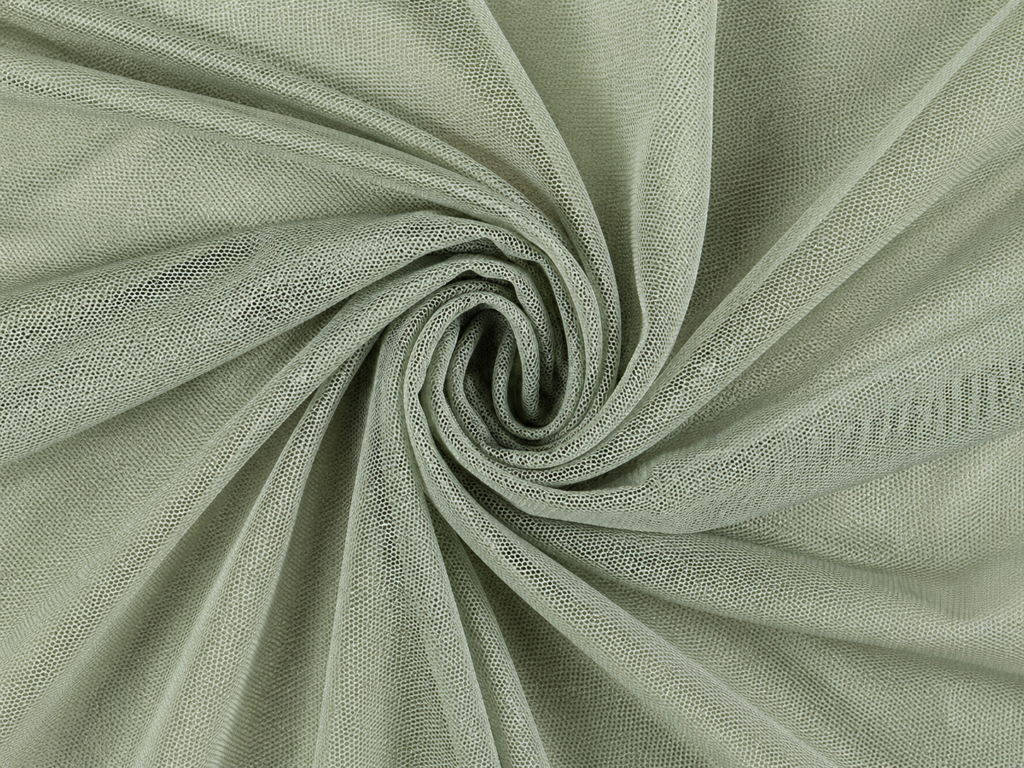
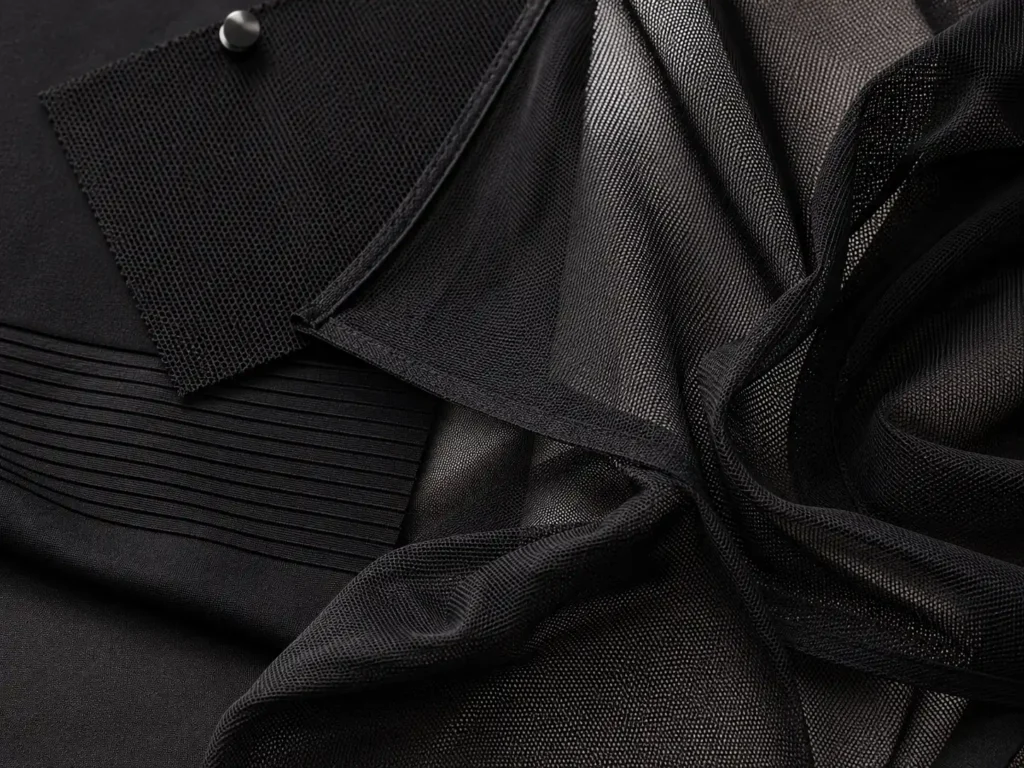
Stretch mesh supports sheer panels, layered bodycon dresses, cut-outs and fitted sleeves. Transparency can change dramatically with color, stretch percentage, double layering and lining placement. Development should check the garment on body, not only against a table. Edge finishing, seam allowance, recovery and hole risk need special attention. A mesh that looks soft in a swatch can become too transparent or unstable once stretched over the bust or hip.

Power Mesh

Power mesh adds stronger recovery and can support shaping, inner structure or fitted visual lines. It is useful in bodycon, corset-inspired pieces and strategic internal panels where soft mesh may not provide enough control. The material can also feel firmer against skin, so comfort and seam construction should be tested. Pattern ease needs adjustment because stronger recovery can change measurements, neckline tension and the way cut-outs sit on the body.

Sequin Fabric

Sequin fabric creates high visual impact but requires review beyond color and sparkle. The base may be mesh or knit, sequin density can change handfeel, and cutting can expose loose elements at seam edges. Bulk production checks include sequin security, seam thickness, needle risk, lining, zipper function and anti-scratch treatment around armholes and necklines. Packing should reduce abrasion between garments and prevent decorative surfaces from catching each other.

Lace

Lace can create refined partywear or high-contrast lingerie-inspired styling depending on motif, scale, stretch and lining. Key decisions include motif placement, seam matching, scalloped-edge use, transparency, lining color and edge finishing. For fitted garments, lace stretch must be tested because recovery varies widely. Cutting plans may need extra attention when motifs must align or when visible edges are intentionally integrated into the design.

Velvet

Velvet gives partywear depth and a premium surface, especially for winter and holiday collections. Direction matters because nap changes the way light reflects across panels. Pressure during pressing and packing can create visible marks, while seam handling can shift pile direction. Pattern and cutting teams need consistent nap orientation, and finished garments require careful hanging, pressing and packing so the surface does not arrive flattened or uneven.

Chiffon, Organza and Tulle

Lightweight transparent materials work well for layered skirts, sleeves, overlays and dimensional partywear. Chiffon needs transparency, seam slippage and hem balance review; organza adds structure but can crease or feel sharp at edges; tulle creates volume but requires layer and edge control. Lining length, seam finish and layer count should be confirmed in samples so the intended lightness does not become a bulk-production stability problem.

Jersey and Ponte

Jersey and ponte support fitted partywear where comfort, recovery and repeatable shape are important. Stretch direction, GSM, recovery and seam behavior should match the silhouette. Lighter jersey may need lining or double layers to control transparency, while ponte can provide more structure for bodycon forms. Pattern ease and measurement tolerances are built around the selected stretch behavior, not transferred directly from woven dress standards.

Fit Engineering for Close-to-Body Partywear

Partywear fit cannot be reduced to a size chart alone. Bodycon, corset, strapless, halter, low-back and cut-out styles place different pressure on bust shaping, waist position, hip contour, neckline stability and garment length. Jinfeng Apparel uses pattern development, fit samples, measurement review and revised patterns to turn visual concepts into repeatable production shapes for US, UK, EU and AU markets.

Bust, Waist and Hip Balance

Close-to-body partywear needs a controlled relationship between bust, waist and hip rather than three independent measurements. Stretch fabrics require calculated negative ease or controlled compression, while woven satin or structured corset styles need shaping through darts, seams, cups or internal support. During fit review, the team checks whether the waist sits at the intended level, side seams remain vertical, the bust has enough volume and the hip does not pull the skirt upward. A visually narrow waist means little if the garment twists or creates drag lines in motion. Pattern revisions are recorded before grading so bulk sizes follow an approved shape rather than manually corrected samples.

Neckline, Strap and Armhole Control

Halter, one-shoulder, low-back, deep-V and thin-strap partywear can expose fit errors around the upper body quickly. Strap length changes neckline depth; neckline shape affects bust containment; armhole depth influences side-bust exposure; low backs change tension around the waist and shoulder. Jinfeng Apparel reviews those points together during sampling. Adjustable hardware, elastic, anti-slip tape, cups or internal support can be considered when the design requires additional stability. Final approval should reflect how the garment behaves during standing, walking and basic movement, not only how it looks in a static front photo.

Cut-Out, Slit and Coverage Proportion

Cut-out position, slit height and lining coverage are part of fit engineering because they define both appearance and wearability. A side cut-out that moves several centimeters can expose more bust or waist than intended; a high slit can open excessively during walking; a lining ending at the wrong level can show through mesh or lace. Sample fitting should confirm opening position, edge stability, undergarment visibility and movement. For stretchy designs, openings are checked while the fabric is under realistic tension. Measurements and construction notes are then transferred to the PP sample and QC checklist.
Dress Length and Size Grading

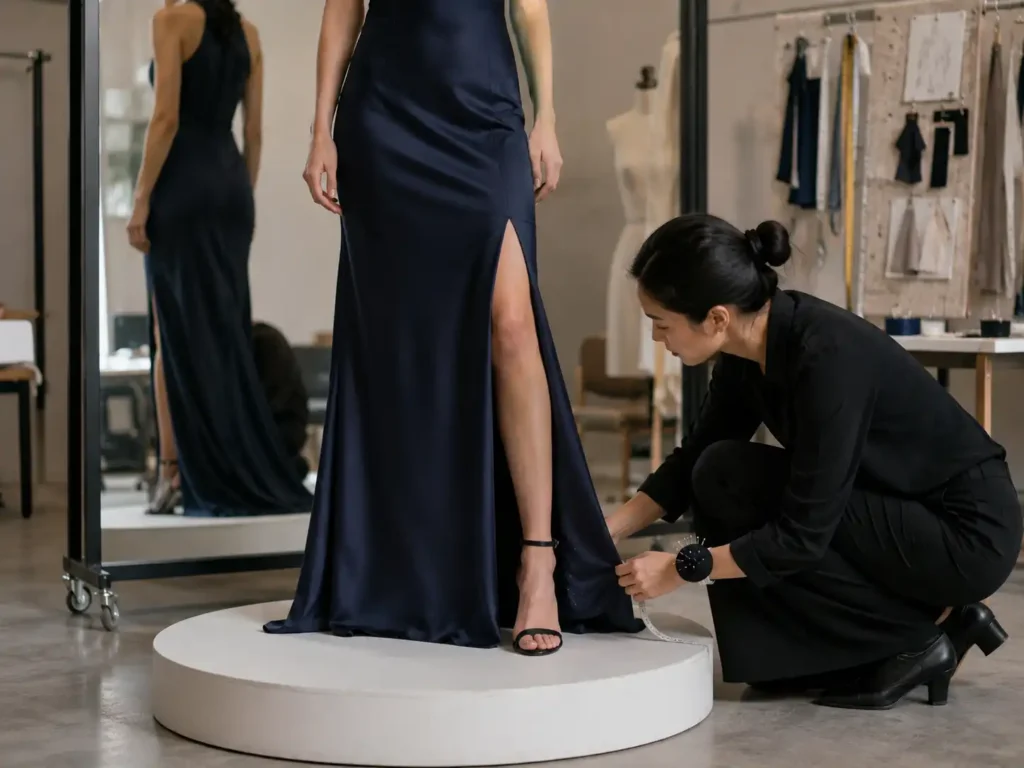
Mini lengths are especially sensitive to hip circumference, stretch and body movement, while midi and maxi styles depend on hem balance and proportion across sizes. Grading cannot simply enlarge every measurement by the same amount. Bust, waist, hip, strap, neckline, armhole, slit and total length need style-specific grade rules. Jinfeng Apparel supports alpha sizing from XS-XL, extended ranges according to brand standards, plus-size development and petite or tall adjustments by project. Final grade rules should be confirmed against the target market’s established size logic before bulk cutting begins.

Construction, Trims and Embellishment Control
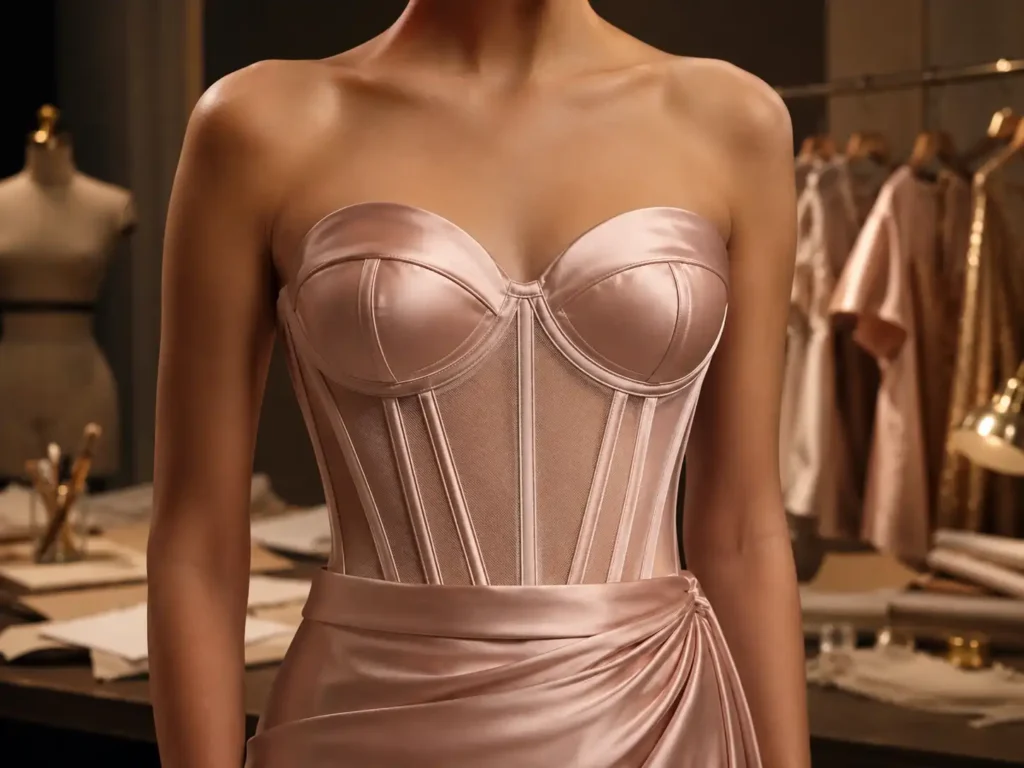
Partywear quality often depends on details hidden beneath the first visual impression. Cups, boning, lining, anti-slip tape, zippers, strap hardware, chains, rhinestones and decorative trims can improve support and perceived value, but poor specification creates discomfort, distortion or bulk inconsistency. Jinfeng Apparel confirms trim function, color, weight, placement and production feasibility during sample development.

Cups, Boning and Internal Support

Corset, strapless and structured partywear may use bra cups, boning, power mesh, elastic or internal lining to hold the garment in position. Cup volume and placement must match the pattern; boning needs sufficient support without twisting; internal seams should not create visible ridges through outer fabrics. Sampling checks comfort, bust position, waist structure and movement before the support package becomes part of the PP sample standard.

Zippers and Closures

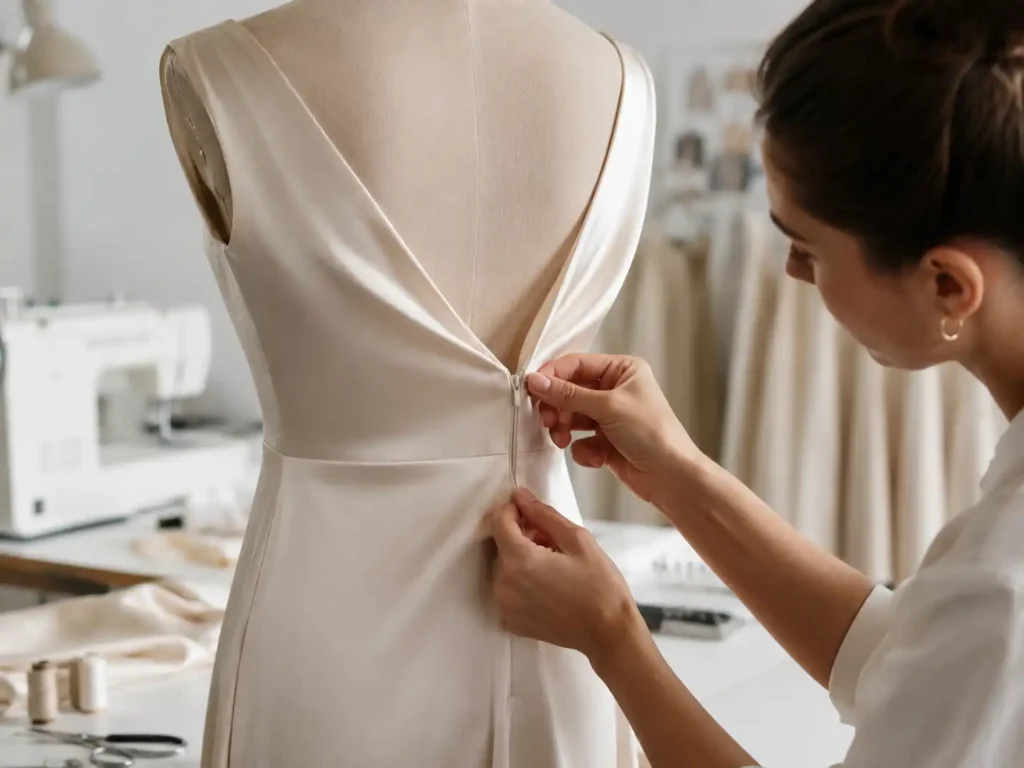
Invisible zippers are common in satin, bodycon and occasion-led partywear, but zipper bulging can immediately reduce garment quality. Zipper length, tape weight, seam tension, fabric stretch and lining construction all affect flatness. Hooks, buttons or snaps may be added where the design requires extra security. Bulk inspection should check opening function, seam alignment and surface distortion rather than treating the zipper as a basic accessory.

Ruching, Pleats and Draped Details

Ruching, pleats and draped panels create shape and visual movement, yet inconsistency becomes obvious when garments are displayed together. Production files should establish placement lines, gathering amounts, pleat spacing, stitch points and symmetry requirements. Marking methods and sewing order help operators reproduce the approved sample. QC can then compare left-right balance and drape direction instead of relying on a subjective impression at final inspection.

Rhinestones, Chains and Hardware

Decorative hardware adds visual impact but introduces weight, strength and skin-contact considerations. Rhinestones need secure attachment; chains should not distort light fabrics; strap sliders and rings need matching finish and appropriate strength; decorative metal can affect packing and garment weight. Jinfeng Apparel evaluates trim placement and attachment during sampling, then records approved components in the BOM so bulk substitutions do not change the intended appearance.

Sequin Edge Protection

Sequin surfaces can scratch skin around armholes, necklines and side seams. Cutting may leave hard or loose elements inside seam allowances, while heavy sequin layers can make closures bulky. Production preparation can include clearing sequins from seam zones, adding soft lining, adjusting seam construction and protecting exposed edges. Final inspection focuses on sequin loss, scratching points, zipper function and surface damage before packing.
Lining and Sheer Coverage

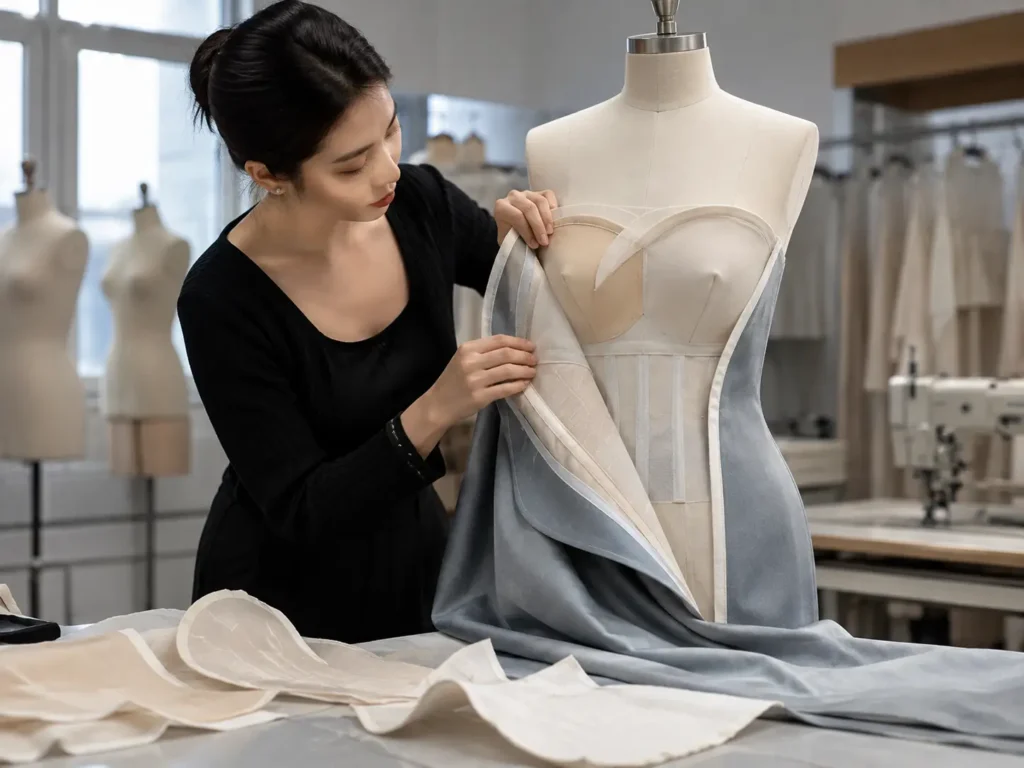
Lining is not merely an opacity layer. It influences handfeel, stretch, fit, comfort, garment weight and visible color. Mesh, lace, chiffon and sequin styles often require specific lining lengths or partial coverage so the intended sheer effect remains controlled. Lining color should be checked against outer fabric under studio and normal lighting. Bulk production then needs consistent lining placement so the approved visual balance remains stable across sizes.

Sampling Built Around Fit and Camera Readiness

Sampling is where high-risk partywear becomes measurable. Jinfeng Apparel operates 2 sample rooms with 7+ senior pattern makers and 20+ sample machinists, supporting first samples, fit samples, revised samples, photo-ready samples, salesman samples, PP samples and Golden samples. Timing is planned by style complexity, fabric and trim readiness, revision rounds, launch date and approval speed rather than promised as one fixed number for every garment.

Start with a Structured Review

Development can begin from a tech pack, reference image, original sample, sketch, line sheet, size chart, fabric swatch or trim card. Before sewing, the team reviews silhouette, construction, fabric behavior, lining, closure, support, target size logic and known production risks.

For a mesh cut-out dress, transparency and edge stability may be the first concern; for a sequin mini, seam thickness and skin protection may lead the review; for a corset style, cup, boning and waist structure require earlier decisions. The initial review helps prevent a sample from failing for reasons that could have been identified before pattern cutting.

First Sample and Fit Sample Have Different Jobs

A first sample validates structure, fabric direction and overall visual proportion. A fit sample goes deeper into bust, waist, hip, neckline, strap, armhole, slit and length behavior. For partywear, photography alone is not enough because a garment can look attractive from one angle while shifting, gaping or pulling during wear. Internal measurements, on-body observations and photo or video feedback are combined with brand comments. When revisions are needed, changes are transferred into updated patterns, measurement charts, fabric or trim records and sewing instructions instead of remaining only in chat messages.

Photo-Ready Samples Need Commercial Discipline

Photo-ready samples are built for campaign, ecommerce or sales presentation needs, but they should remain connected to production reality. A highly polished photo sample that uses unavailable fabric, hand-applied details or temporary fit corrections can create problems when the design moves to bulk. Jinfeng Apparel reviews whether photo-ready finishing can be repeated, whether the approved material is available for bulk and whether styling adjustments need to become actual pattern or construction changes. The purpose is to keep the visual promise close to a manufacturable standard.

PP Approval Locks the Production Standard

PP sample approval confirms the final pattern, fabric, color, trims, measurements, construction, labels, packing and QC requirements before bulk production. Major changes after PP approval can affect cost, material booking, lead time and production risk, so new requests require re-evaluation rather than informal line-side changes.

Golden sample sealing can preserve a physical reference for bulk comparison and repeat orders. For multi-style programs, PP status is tracked style by style so one unfinished approval does not blur the production readiness of the rest of the collection.

Size Development for US, UK, EU and AU Markets

Partywear sizing should follow the brand’s established fit logic and target market rather than a generic factory chart. Jinfeng Apparel can work with US, UK, EU and AU sizing, alpha size ranges from XS-XL, extended size ranges, plus-size standards and petite or tall adjustments according to the supplied specification. Pattern grading is connected to garment type, fabric stretch and body coverage.

XS-XL Core Ranges

Alpha sizing from XS to XL can be developed around the brand’s base size and grade rules. Bodycon, corset and stretch styles need more controlled bust-waist-hip progression because fabric recovery and support structures can change the fit between sizes. The same grade increment is not automatically applied to every measurement point.

Extended Size Development

Extended size programs are reviewed according to the supplied measurement standard and garment construction. Cup volume, armhole shape, strap length, waist placement, hip ease, support and dress length may require separate evaluation as sizes increase. Outer appearance should remain aligned with the original design while internal structure and comfort are adapted to the size range.

Petite Adjustments

Petite development can involve more than shortening the hem. Torso length, waist position, strap length, neckline depth, rise and slit position may need adjustment so the style sits correctly on a shorter frame. Party jumpsuits and low-back dresses are particularly sensitive because vertical balance influences both movement and coverage.

Tall Adjustments

Tall sizing can require additional torso, skirt or trouser length while preserving waist placement and design proportion. Extending only the final hem can distort slit height, ruching zones or seam placement. Jumpsuits need special attention to rise and inseam; fitted dresses need the waist and hip lines to stay aligned with the intended body position.

Plus-Size Fit Review

Plus-size partywear may require changes to bust support, cup shape, neckline stability, armhole coverage, boning, lining and stretch distribution. Jinfeng Apparel develops according to the brand’s size chart and fit expectation rather than assuming a universal plus-size block. Sample fitting and measurement review are used before grade rules are locked.

Measurement Records for Bulk

Approved measurement points, tolerance requirements and grade rules should be reflected in the PP sample and production files. QC can then check bust, waist, hip, length, strap, neckline, armhole, slit, rise or inseam according to garment type. Measurement records also support repeat orders when the same block returns in a new color or fabric.

Multi-Style Sampling and Collection Management

A 10-30 style partywear program needs a development system, not thirty unrelated email threads. Jinfeng Apparel can group styles by fabric, construction, pattern complexity, trim family and launch priority, then track sample version and approval status for each style. The purpose is to keep high-risk pieces visible while simpler commercial styles continue moving toward production.

Fabric and Construction Groups

Styles using stretch satin, mesh, sequin or corset structures can be grouped so sourcing, sample review and risk control become more efficient. Shared materials still require individual fit and construction approval, but grouping reduces duplicated communication and helps identify which fabrics or trims may affect several styles at once.

Sample Priority and Revision Tracking

Hero SKU, campaign pieces and complex silhouettes can receive earlier sample priority when their approval influences photography or material booking. Revision logs record fit, fabric, construction, trim, color, cost and lead-time impacts. Formal records reduce the risk of an old sample comment reappearing after a newer version has already been approved.

Style-by-Style PP Status

Each style moves to bulk only after its PP requirements are ready. A collection may have some styles approved while others remain in revision, so the project should show a clear status rather than one vague “collection approved” message. Style-level readiness supports more accurate material booking, factory allocation and production scheduling.

Production and Delivery Phasing

Large assortments can be planned by style group, fabric group or delivery phase when project conditions require it. Merchandising teams can identify launch-critical styles, warehouse windows and replenishment priorities. Jinfeng Apparel’s production management then aligns material arrival, line allocation, QC and packing milestones with the confirmed production plan.

From PP Approval to Bulk Production

Bulk production begins only after the production standard is clear. Jinfeng Apparel connects PP approval with material confirmation, production files, factory allocation, cutting, sewing, in-line inspection, finishing, packing and shipment preparation. Partywear is allocated according to fabric and construction requirements so complex mesh, lace, sequin, corset or stretch styles receive appropriate production handling.

PP Sample Lock

Final pattern, fabric, color, trims, measurements, construction, labels, packing and QC points are confirmed before bulk preparation. Major design or material changes after approval require cost, lead-time and risk review.

Material Arrival

Bulk fabric, lining, zippers, cups, boning, labels, hangtags and packing materials are tracked before line scheduling. Missing or unapproved materials can delay cutting and create uncontrolled substitutions.

Production File Release

Production files connect style number, color, size, quantity, pattern version, PP sample version, fabric, trims, sewing instructions, labels, packing and quality requirements. Changes affecting bulk need to enter formal files.

Cutting Control

Fabric direction, stretch direction, motif placement, nap, print placement and size bundling are reviewed according to material type. Satin shine direction, lace motifs and velvet nap require different cutting discipline.

Sewing and Assembly

Lines are matched to product category and construction difficulty. Operators follow approved seam, lining, zipper, support, ruching, slit and embellishment methods rather than recreating details from visual memory.

In-Line Inspection

In-line checks identify seam, symmetry, zipper, neckline, armhole, ruching, slit, lining and measurement issues while production is still active. Early correction prevents the same defect from spreading across a full quantity.

Finishing and Pressing

Partywear finishing needs fabric-specific handling. Satin should avoid shine damage and hard creases; velvet needs nap protection; sequin requires surface care; mesh and lace need clean threads and stable edges.

Packing and Release

Final garments move through appearance, measurement and packing checks before shipment preparation. SKU, barcode, labels, polybags, carton marks and packing lists are checked against the approved program requirements.

Complex Fabric Production Needs Separate Controls
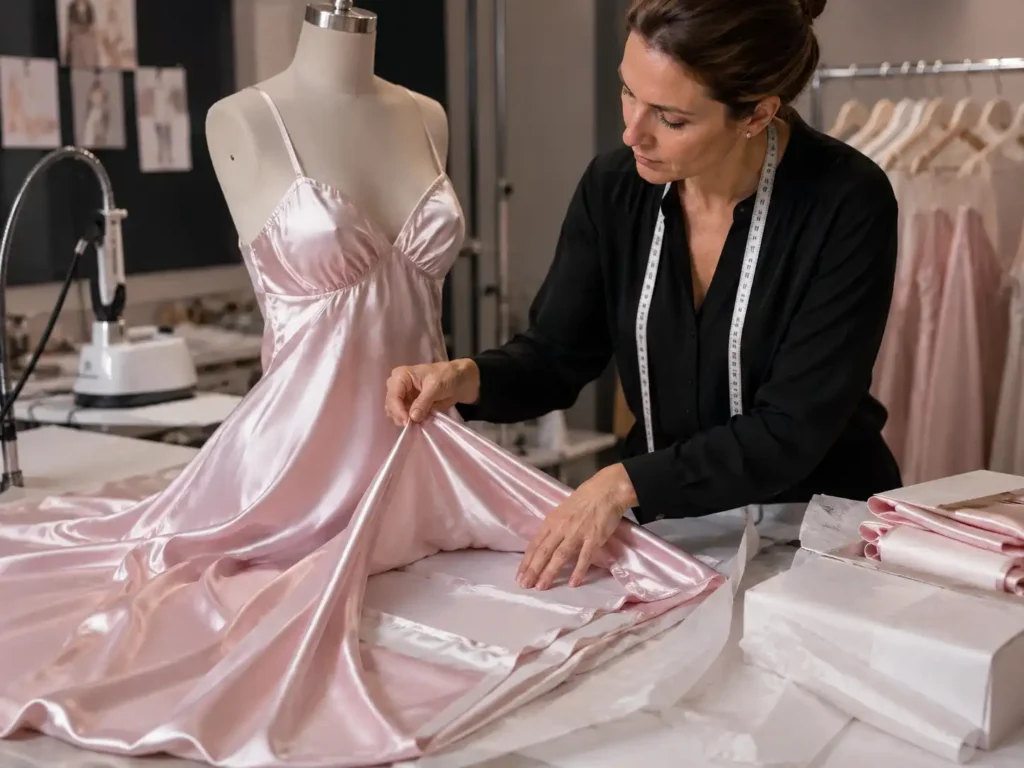
Partywear materials behave differently under cutting, sewing, pressing and packing. Applying one standard workflow to every fabric can create defects even when the sample looked acceptable. Jinfeng Apparel separates key controls by material so workmanship standards reflect the physical behavior of the garment rather than a generic sewing checklist.

Satin Surface Handling

Satin can show needle marks, snagging, shade variation, seam tension and pressing damage under strong light. Panels should follow approved shine direction, and surface handling needs to minimize friction. Zipper installation and pressing deserve separate checks because small distortion is highly visible on smooth fabric.

Mesh Stability

Mesh can tear, stretch, distort or become more transparent under tension. Cutting and sewing should protect edges and maintain the correct stretch direction. Necklines, armholes and cut-outs may require elastic, binding or lining support. QC should evaluate both flat appearance and on-body behavior.

Lace Placement

Lace production may require motif matching, scalloped-edge planning and careful cutting around visible floral or geometric structures. Seam joining can break the visual flow if motif position changes between pieces. Lining color and edge treatment should remain aligned with the approved sample across bulk sizes.
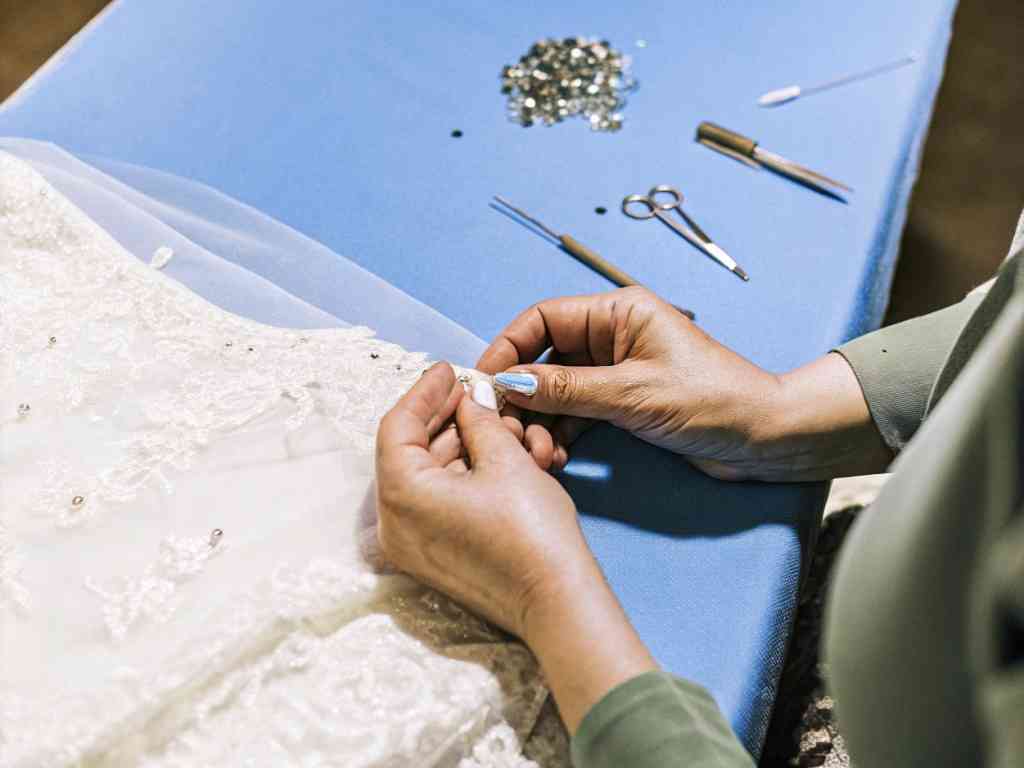
Hands sewing beads onto lace bridal fabric on blue table.

Sequin Sewing

Sequin fabrics create needle and seam-thickness risk. Sequin elements around seam allowances may need controlled removal or repositioning, while lining protects skin and covers internal construction. QC should check loose sequins, exposed hard edges, zipper function and damage caused during finishing or packing.

Velvet Nap Direction

Velvet must maintain a consistent nap direction because reversed panels reflect light differently. Pressing pressure and packing can flatten the surface. Cutting plans, sewing handling and final pressing should protect the pile so finished garments do not show panel-to-panel shade differences caused by direction rather than dyeing.

Sheer Layer Balance

Chiffon, organza and tulle require control of transparency, layer count, hem balance and seam finish. Layered skirts can become uneven if materials relax differently after cutting. Sampling should confirm the intended volume and coverage before the production team locks layer lengths and finishing methods.

Partywear QC from Fabric to Packing

Quality control starts before cutting and continues through packing. Jinfeng Apparel uses incoming material QC, cutting checks, in-line inspection, measurement review, final garment inspection, pressing review and packing QC. Partywear checks focus on visible and functional risks that can affect campaign appearance, fit consistency, comfort and warehouse readiness.

Fabric QC

Color, handfeel, weight, width, surface defects, holes, snagging, stretch, recovery and shrinkage risk are reviewed according to the selected fabric. Satin, mesh, lace and sequin each receive material-specific attention before cutting begins.

Trim QC

Zippers, cups, boning, elastic, strap hardware, rhinestones, chains, labels and other trims are checked against the approved specification. Wrong color, weak attachment or unsuitable weight can change both appearance and fit.

Cutting QC

Cut panels are reviewed for fabric direction, stretch direction, lace motif position, velvet nap, print placement, size bundling and visible defects. Problems found after full sewing are more expensive to correct.

In-Line Sewing QC

Line inspection covers stitch quality, seam allowance, zipper position, neckline, armhole, straps, ruching, cut-outs, slits, left-right symmetry and lining placement. Rework is addressed while production remains active.

Measurement QC

Critical points are checked against the approved size chart and PP standard. Bodycon styles focus on bust, waist and hip; halter and low-back styles add strap and neckline; jumpsuits add rise and inseam; mini dresses need controlled total length.

Garment Appearance QC

Finished garments are checked for stains, holes, snagging, wrinkles, loose threads, asymmetry, zipper bulging, exposed lining, decorative damage and pressing quality. Reflective or smooth fabrics receive extra visual review under appropriate lighting.

Packing QC

Woven labels, size labels, care labels, hangtags, barcode stickers, SKU labels, polybags, carton marks and packing ratios are checked before cartons are released. Sequin and satin garments may need additional surface protection.

Pre-Shipment Review

AQL inspection or client-appointed inspection can be coordinated by project. Shipping files, carton data and packing information are checked according to the confirmed order requirements before handover to the nominated logistics route.

Partywear Risk Control by Product Type

High-impact partywear can fail for very different reasons even when every style sits inside the same collection. The matrix below connects the most common product risk with the sample validation, bulk-production control and packing concern most likely to affect commercial quality.

Product / MaterialMain RiskSample ValidationBulk ControlPacking Concern
Satin mini dressSnagging, shade difference, zipper bulgingShine direction, waist-hip fit, zipper flatnessSurface handling, pressing, color consistencyCrease and pressure marks
Mesh bodyconTransparency, recovery, neckline distortionOn-body transparency, lining length, bust coverageStretch direction, edge stability, measurementSnag and hole protection
Sequin dressSequin loss, skin scratching, thick seamsLining comfort, edge protection, zipper functionSequin security, seam preparation, in-line QCAbrasion between garments
Corset dressCup position, boning twist, neckline gapBust support, waist structure, movementComponent placement, measurement consistencyProtect structured bodice
Cut-out dressOpening shift, coverage riskCut-out proportion, edge support, movementPlacement marks, elastic/binding controlPrevent edge distortion
Ruched bodyconUneven gathering, side-seam distortionRuching density, symmetry, hip fitPlacement marks, elastic tensionAvoid compression marks

Private Label and Retail-Ready Partywear

Private label execution extends beyond sewing a brand label into the neckline. Partywear programs often need a complete identity and warehouse-recognition system covering labels, hangtags, barcode stickers, SKU labels, individual polybags, carton marks and packing documents. Packaging methods can also change according to fabric surface and embellishment risk.

Woven and Size Labels

Woven labels and size labels are confirmed for artwork, placement, dimensions and attachment method. Delicate satin, mesh or lace styles may require placement choices that avoid visible stitching or discomfort. Size information needs to remain consistent with the approved grade and packing breakdown.

Care and Fiber Information

Care labels can include fiber composition, care instructions, country-of-origin information and other required brand data according to the confirmed market and compliance guidance. Final wording and legal suitability remain subject to the brand’s destination-market requirements and professional compliance confirmation.

Hangtags and Brand Details

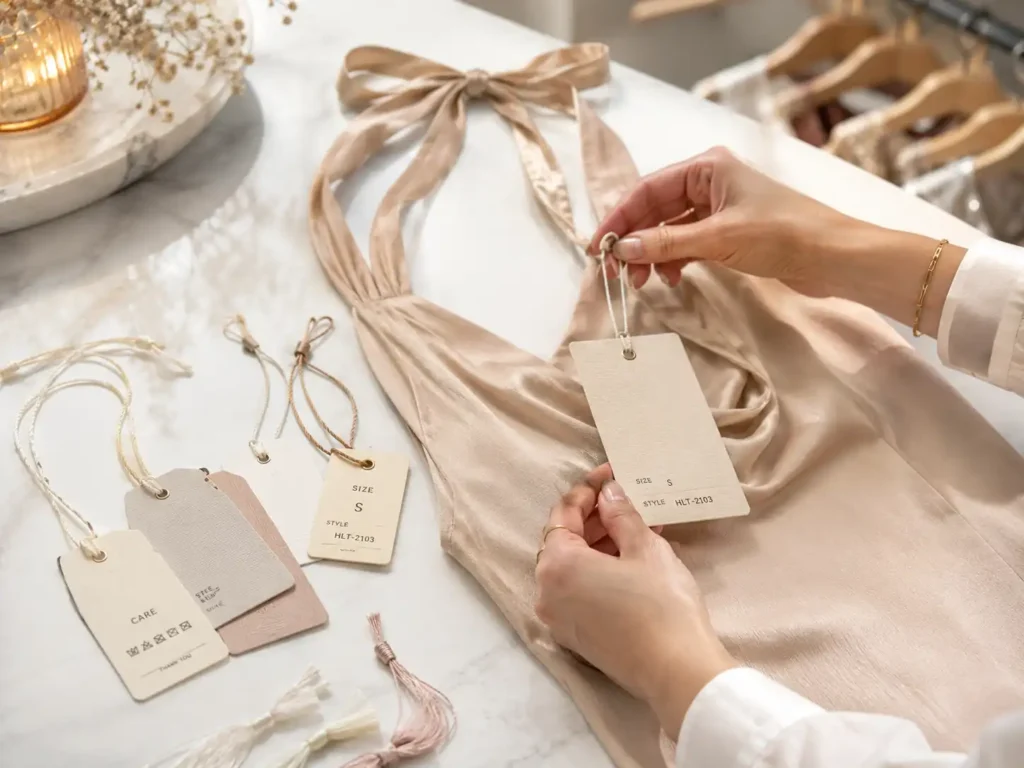
Hangtags, string attachments, stickers and branded packaging elements should be reviewed before bulk packing. Attachment position matters on sheer, embellished or delicate garments because aggressive tagging can damage fabric or leave visible holes. Artwork version control reduces mismatched branding across a multi-style order.

Barcode and SKU Control

Barcode stickers and SKU labels help connect style, color and size to warehouse receiving. Multi-style partywear programs need accurate mapping between garment, polybag, carton and packing list. The same black dress may exist in several fabrics or silhouettes, so style-level SKU control is essential for fulfillment accuracy.

Protective Polybag Packing

Standard polybags can be adjusted according to garment and brand requirements. Satin may need careful folding to reduce hard creases; sequin styles can require additional protection against abrasion; structured corset bodices may need packing that prevents crushing. Packing approval should happen before bulk completion rather than being decided after finishing.

Carton Marks and Shipping Documents

Carton marks, carton breakdown, packing lists and warehouse labels are checked against the shipping plan. Jinfeng Apparel can coordinate commercial invoice, packing list and other export documentation by project while working with client-nominated or evaluated logistics routes.

MOQ, Cost and Timeline Planning

Commercial partywear planning works best when quantity, material, construction and launch timing are reviewed together. Jinfeng Apparel’s standard MOQ starts from 200 pcs per style/color. Special fabrics, custom dyeing, printing, lace, sequin materials, trims or packaging may carry separate supplier MOQ. Sample and production timing are built around confirmed milestones rather than one fixed promise for every style.

Planning ItemJinfeng ReferenceWhat Changes the Final Plan
MOQ200 pcs per style/colorFabric availability, custom color, trims, construction, packaging, production schedule
Size developmentUS / UK / EU / AU; XS-XL plus extended ranges by projectBrand size chart, stretch, corset support, petite/tall, plus-size rules
Sample stagesFirst, Fit, Revised, Photo, Salesman, PP, GoldenStyle complexity, fabric/trim readiness, revision rounds, approval speed
Production capacity100,000+ pcs regular monthly capacityStyle count, material arrival, line allocation, QC requirements, packaging
Timeline controlMilestone-based project scheduleFabric approval, trim approval, pattern, samples, PP, cutting, sewing, QC, packing, shipment
LogisticsExpress, air, sea; trade terms evaluated by projectDestination, delivery window, warehouse rules, shipment size, freight plan

NDA, Testing and Compliance Support

Established fashion programs often involve unreleased designs, proprietary fit information, private packaging and destination-market requirements. Jinfeng Apparel supports NDA-based cooperation and can coordinate certification or testing needs by project. Certification scope, fabric batch, assigned factory, color, MOQ, testing standard and current documents must be checked before any compliance statement is treated as final.

Design and File Protection

Tech packs, patterns, samples, trim details, labels, packaging files, unpublished designs and order information can be handled under NDA-based cooperation. Public case communication remains anonymized unless written authorization is provided. Development files are used for project review, sampling, bulk production, QC, packing and repeat-order management rather than public promotion.

Fabric Certification Review

OEKO-TEX, GOTS, organic, recycled and GRS-related fabric resources can be reviewed through the supply network by project. Availability depends on supplier, material, color, MOQ, batch and certificate scope. A fabric reference should not be presented as certified until the relevant documentation has been checked for the intended order.

Third-Party Testing

Testing can be coordinated through SGS, Intertek, BV, ITS or a client-appointed laboratory by project. Test selection depends on destination market, garment category, material, brand requirements and applicable standards. Testing cost and timing are evaluated separately when required.

Audit and Documentation Coordination

Quality management references, social-compliance audit documents, care-label information, fiber content support and export documentation can be coordinated according to the assigned factory and project scope. Final regulatory decisions should be confirmed by the brand or a qualified compliance professional for the destination market.

Partywear Programs for Established Fashion Brands

Anonymous program summaries show how Jinfeng Apparel approaches multi-style partywear without exposing brand names, unreleased designs, logos, tech packs or commercial data. The examples below use the current order profile shared for established brand cooperation, where seasonal programs commonly contain 10-30 styles and total quantities fall within approximately 20,000-80,000 pieces.

US Holiday Partywear Program - 18 Styles / 48,000 PCS

An established US partywear brand developed an 18-style holiday program combining sequin mini dresses, stretch-satin bodycon dresses, corset styles, matching skirt sets and statement tops, with a total order of approximately 48,000 pieces. Development was split into sequin, satin and structured-bodice groups so material sourcing and sample risk could be handled separately. Early samples focused on sequin scratching, zipper flatness, mini length, cup position, boning stability and bodycon recovery. Photo-ready samples were prioritized for campaign styles, while commercial silhouettes moved through revised samples toward PP approval.

Before bulk production, fabric, lining, zippers, cups, boning, labels, barcodes and packing requirements were locked by style. Production planning separated high-embellishment garments from cleaner satin and stretch styles, allowing in-line QC to focus on the defects most likely to spread within each group. Final QC emphasized sequin loss, skin-contact areas, zipper function, bust-waist-hip measurements, pressing and SKU packing. Brand identity and unreleased style information remained protected throughout development and bulk execution.

European Eventwear Program - 14 Styles / 32,000 PCS

A European eventwear brand developed a 14-style partywear collection of mesh bodycon dresses, ruched minis, cut-out dresses, lace-panel styles and party jumpsuits, totaling approximately 32,000 pieces.

The main development challenge was keeping sheer effects visually strong while maintaining bust coverage, neckline stability and consistent on-body proportion across the size range. Stretch mesh, power mesh and jersey lining options were compared according to transparency, recovery and handfeel before final material direction was approved.

Pattern revisions concentrated on neckline, armhole, cut-out position, side-seam balance, lining length, jumpsuit rise and mini-dress length. Sample comments were transferred into revised patterns, measurement charts and construction notes before PP approval. During bulk production, cutting and in-line QC monitored stretch direction, edge finishing, ruching symmetry, lining placement and measurements. Packing followed style, color and size SKU requirements so the collection could move into warehouse handling without mixing visually similar black and neutral styles.

Repeat Orders and Seasonal Partywear Continuity

Partywear programs gain efficiency when approved development information survives beyond one shipment. Jinfeng Apparel can retain pattern, measurement, BOM, fabric, color, trim, workmanship, packing, QC and Golden sample references for repeat orders. New colors, fabric changes or construction updates are still reviewed because material behavior can change the fit and production standard.

Repeat the Approved Style

A repeat order can begin from approved patterns, measurements, BOM, workmanship, packing and Golden sample references. Material batch, color, trim availability and current production conditions are rechecked before the style returns to bulk. The goal is to reduce redevelopment without assuming every new order is identical.

Extend into New Colors

New colors require more than changing a color name. Lab dip or approved swatch, lining, zipper, thread, trim finish, SKU data and bulk color should remain aligned. Satin and other reflective fabrics may show shade differences more strongly, so color approval stays connected to bulk material checks.

Rework the Same Shape in New Fabric

A strong silhouette can be extended into a new material, but stretch, weight, drape, transparency, shrinkage and lining needs must be re-evaluated. A pattern approved in stretch satin may not behave correctly in woven satin; soft mesh and power mesh can produce different body tension. Fabric substitution therefore goes through fit and construction review.

Plan Seasonal Replenishment

Bestseller replenishment and seasonal repeats can be planned around style priority, material availability, production capacity, warehouse windows and freight strategy. Order records help reduce communication gaps, while new launch conditions still need confirmation. Partywear teams can move from one collection into new colors, extensions and replenishment with a clearer technical base.

Custom Partywear Frequently Asked Questions

Yes. Jinfeng Apparel supports dresses, skirts, jumpsuits, matching sets and statement separates across satin, mesh, lace, sequin, jersey and other fashion materials. Multi-style programs can be grouped by fabric, construction, sample priority and production plan so development remains organized from first sample through PP approval and bulk production.

The standard MOQ starts from 200 pcs per style/color. MOQ is calculated by style and color rather than the total quantity across unrelated styles. Special fabrics, custom dyeing, printing, lace, sequin materials, trims or packaging may have separate supplier MOQ and should be reviewed before sampling or quotation is finalized.

Common directions include satin, stretch satin, mesh, power mesh, lace, sequin fabric, velvet, chiffon, organza, tulle, jersey and ponte. Fabric selection is based on silhouette, handfeel, stretch, recovery, transparency, drape, color, lining needs, MOQ, cost and bulk-production risk rather than appearance alone.

Mesh transparency is evaluated through mesh type, color, stretch, layer count and lining placement. Soft mesh, stretch mesh and power mesh can create very different coverage. Sample fitting checks bust and body areas under realistic tension, then lining length, edge finishing and construction are confirmed before PP approval.

Sampling reviews sequin density, base fabric, seam allowance, lining and skin-contact areas. Production can include seam-zone preparation, soft lining and protected neckline or armhole construction when required. Bulk QC checks loose sequins, exposed hard edges, zipper interference and surface damage, while packing methods help reduce abrasion between garments.

Yes. Corset and bodycon styles can be developed through pattern review, cups, boning, stretch direction, recovery, bust-waist-hip balance, neckline, zipper and lining control. Fit samples help validate support and movement before grade rules and the final PP standard are released for bulk production.

Jinfeng Apparel supports first samples, fit samples, revised samples, photo-ready samples, salesman samples, PP samples and Golden samples. The required sequence depends on style complexity, material readiness, fit comments, campaign needs and production risk. Sample timing is planned around the confirmed project schedule rather than one fixed lead time for every style.

Yes. Jinfeng Apparel can support woven labels, size labels, care labels, hangtags, barcode stickers, SKU labels, polybags, carton marks, packing lists and warehouse-related packing requirements by project. Satin, sequin and structured garments can also receive fabric-specific packing review.

QC covers incoming materials, trims, cutting, in-line sewing, measurements, final garment appearance, pressing and packing. Partywear-specific checks may include transparency, stretch recovery, sequin loss, zipper flatness, bust coverage, ruching symmetry, lining exposure, support components, surface damage and SKU packing accuracy.

Yes. Pattern files, measurement records, BOM, fabric references, colors, trims, workmanship, packing requirements, QC points and Golden sample references can support repeat orders. New colors, materials or construction changes are reviewed again because they may affect fit, cost, MOQ, production and delivery planning.

Start Your Custom Partywear Program

Jinfeng Apparel can review a complete partywear program from early development through sampling, PP approval, bulk production, QC, private-label packing and shipment preparation.

The most useful first discussion includes enough product and commercial information to evaluate fabric direction, pattern complexity, sample requirements, MOQ, cost drivers, production planning and the launch window without relying on vague estimates.

Please share the available project information:

  • Product types or line sheet
  • Reference images, sketches or tech packs
  • Target quantity by style and color
  • Size chart or target market sizing
  • Preferred fabrics, colors and trims
  • Construction details such as corset, mesh, cut-out, ruching or embellishment
  • Private-label, barcode and packaging requirements
  • Target launch or warehouse delivery window
  • Quality, inspection or testing requirements
  • Shipping destination and nominated forwarder details when available

Tell Us About Your Dress Project

Share your product details, estimated quantity and development requirements. Our team will review your project and provide practical OEM/ODM production feedback.

Premium Women’s Apparel Production for Fashion Brands

From dress sample development to bulk production, JF Apparel supports fashion brands with confidential OEM/ODM manufacturing, reliable quality control and scalable production support.

START YOUR DRESS PROJECT

Ready to Develop Your Next Dress Collection?

Share your design concept, product requirements or sourcing plans with our team. We’ll review your project and provide practical feedback on development, materials, MOQ and production.

7-10 Days

Sample Development

200 PCS

Starting MOQ

Fast Response

Professional Follow-Up