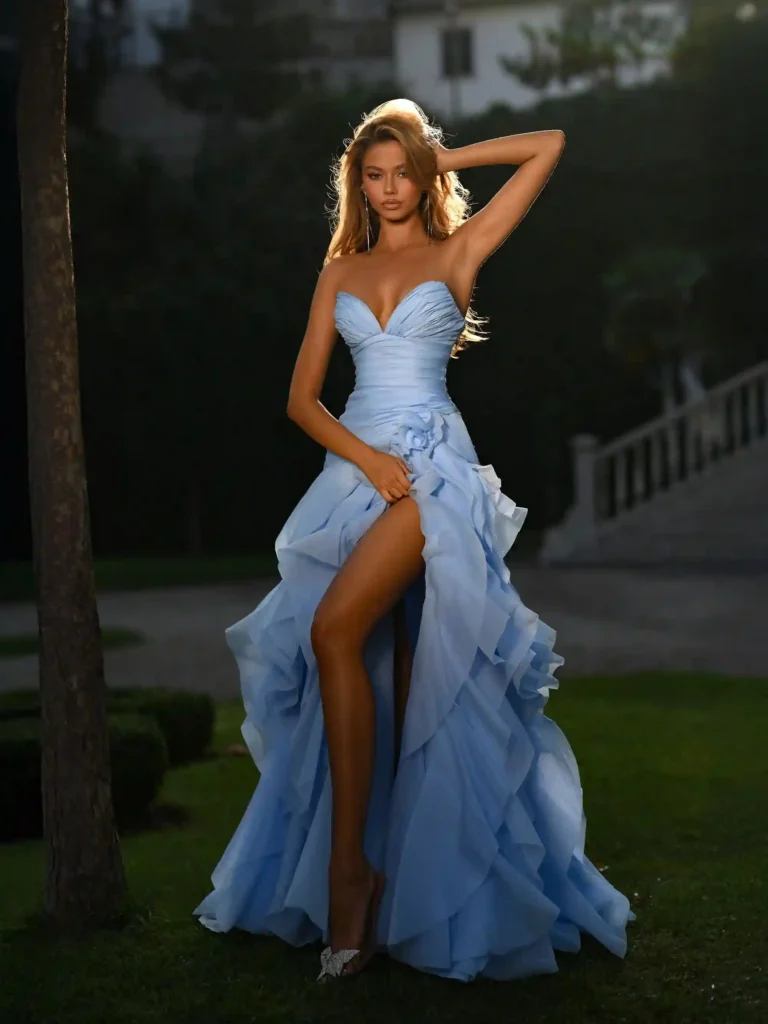
Custom Party Dresses
Custom party dress development for established fashion brands that need strong silhouettes, controlled fit, reliable sampling and repeatable bulk production.
Jinfeng Apparel develops party dresses from tech packs, reference garments and design concepts, combining fabric sourcing, pattern development, fit review, sampling, production control, quality inspection and private-label finishing. Partywear projects are evaluated by silhouette, fabric behavior, internal structure, decoration, size range and order plan before production is arranged.
- 2 sample rooms for dress development and revision
- 7+ senior pattern makers for fit and structure control
- 20+ sample machinists for development and pre-production work
- MOQ starts from 200 pcs per style/color
Party Dress Manufacturing Built for Brand Programs
6 Owned Factories
10+ Production Partners
100,000+ Monthly Capacity
18+ Sewing Lines
15+ QC Inspectors
12+ Merchandisers
Built for Established Womenswear and Partywear Brands
Global Womenswear Brands
Multi-Channel Fashion Retailers
Mid-to-Large DTC Labels
Sourcing Offices
Mature Designer Labels
Seasonal Partywear Programs
Custom Party Dress Styles We Develop
Partywear performance depends on more than hem length. Each silhouette changes the balance between support, stretch, drape, transparency, closure, lining and movement. Development begins by identifying the construction logic behind the visual effect.

Satin Party Dresses

Sequin Party Dresses

Mesh Party Dresses
Mesh can create transparency, contour and layered depth, but the fabric may stretch differently in length and width and can distort around seams.
+The development team needs to define mesh type, lining coverage, seam reinforcement, edge finish and recovery expectations before fitting. A close bodycon silhouette using power mesh behaves very differently from a soft sheer overlay, even when both designs appear visually light.

Bodycon Party Dresses

Corset Party Dresses

Ruched Party Dresses

Cut-Out Party Dresses

Halter Party Dresses

Strapless Party Dresses

Backless Party Dresses

Asymmetrical Party Dresses

Cocktail Party Dresses
Fabrics That Change Party Dress Performance

Stretch Satin
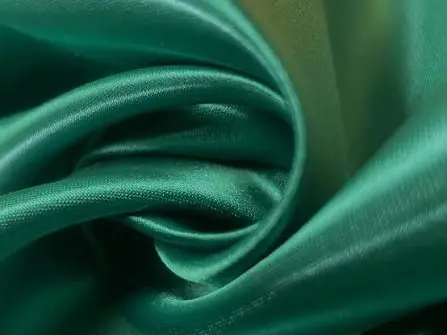
Non-Stretch Satin

Power Mesh

Soft Mesh and Tulle

Lace

Sequin Fabric

Velvet
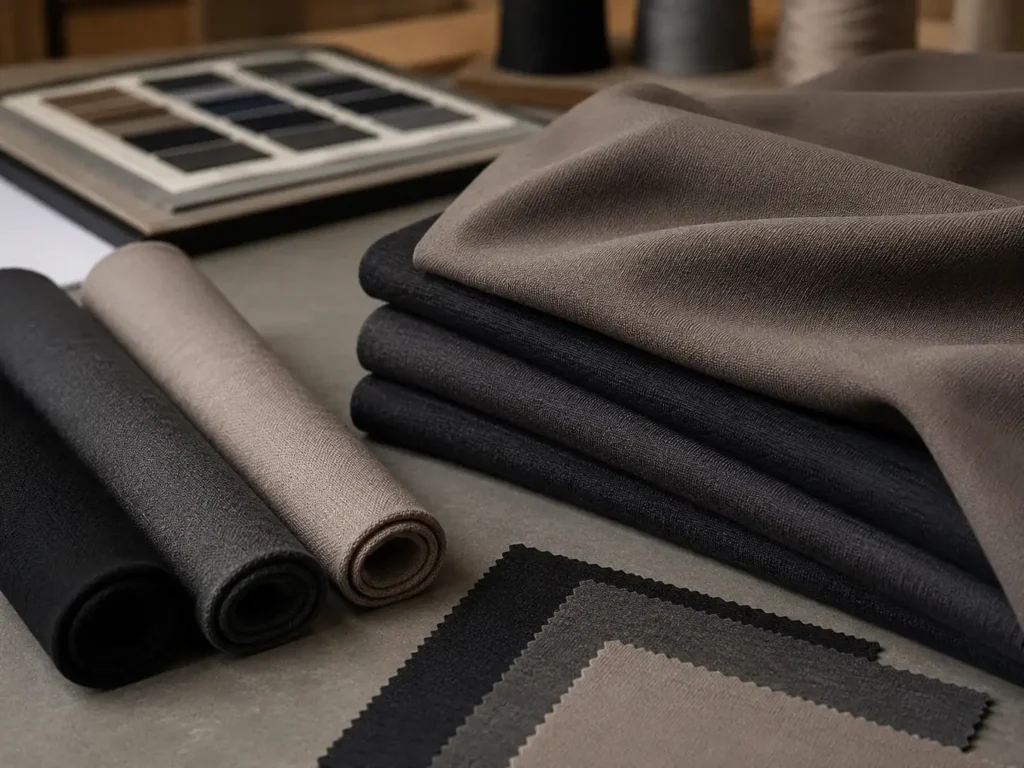
Jersey and Ponte
Design Details Engineered Before Bulk Production
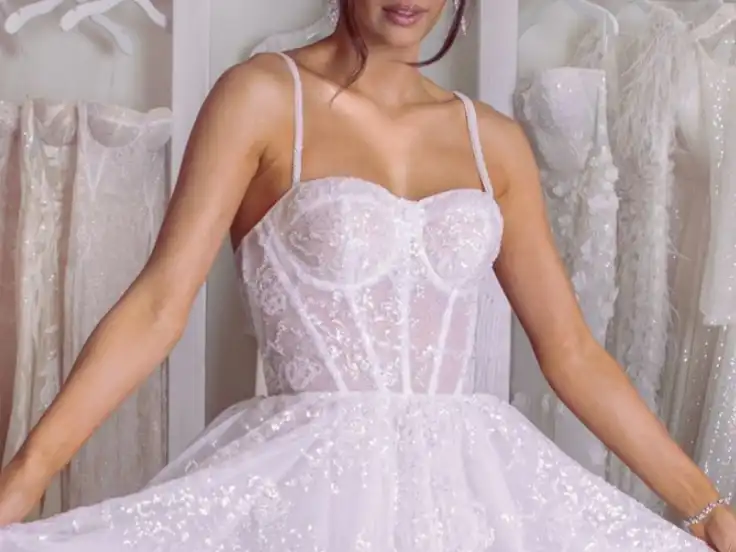
Corset and Boning
Corset construction should define where support begins and ends, how the bodice follows the torso and how boning interacts with seams, cups and closures.
Boning that is too long can distort the top edge; too short can fail to support the intended silhouette.
The sample is checked for bust position, waist level, body length, seam balance and comfort before the internal structure is frozen for bulk.

Built-In Cups
Cup size, spacing, angle and attachment method influence both appearance and comfort.
A cup cannot simply be inserted into any bodice without considering neckline depth, bust seam shape and lining.
During development, cup position is reviewed on the intended sample size, then grading rules are considered for the size range. The goal is a clean exterior line without visible cup edges, distortion or unnecessary bulk around the bust.
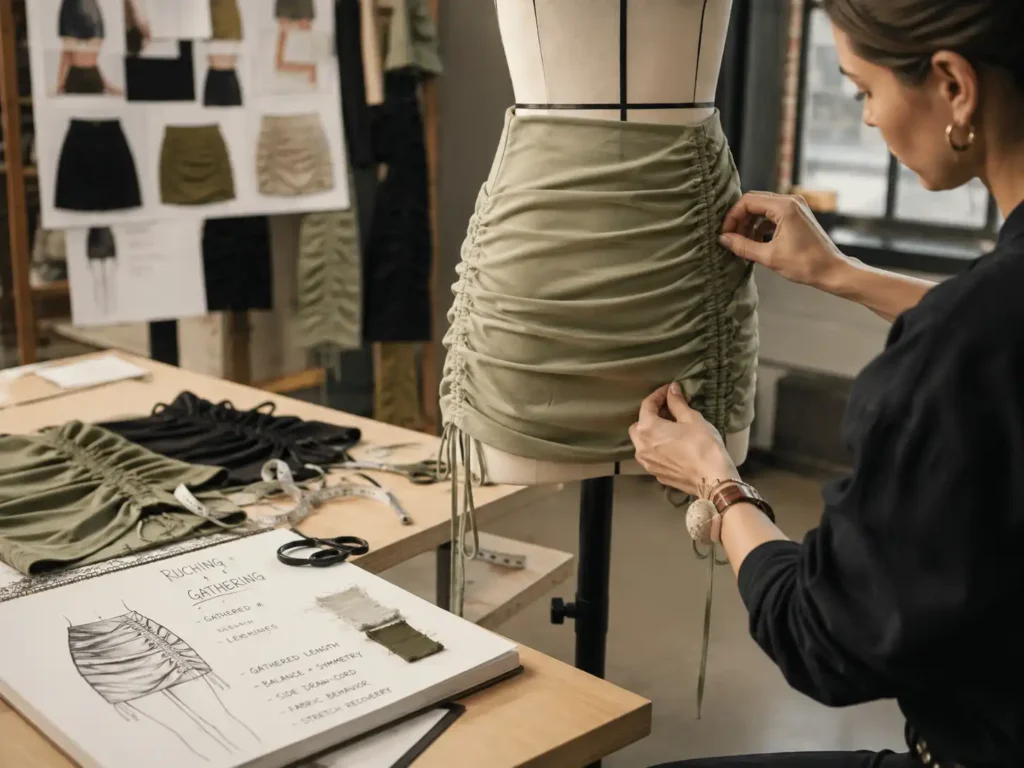
Ruching and Gathering
Ruching needs measurable control points.
The development team can specify panel length before gathering, finished gathered length, anchor locations and the direction of folds. Those references make it easier for bulk operators to reproduce the approved look. The same approach is useful for side ruching, center-front gathers, drawstring effects and gathered mesh overlays where visual inconsistency can otherwise become obvious across hundreds of garments.

Draping and Twist Details
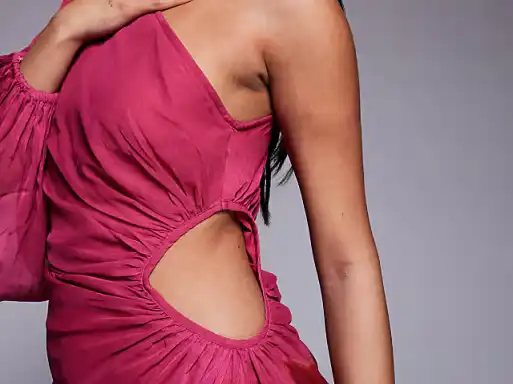
Cut-Out Placement
Cut-outs are evaluated relative to body landmarks and surrounding seams. The opening needs to remain positioned after stretch, movement and grading.
Depending on the design, edges may require binding, elastic support, lining, facing or clean turning. During sample fitting, the team checks opening width, exposure, edge tension and whether the surrounding garment stays smooth. Approved measurement points then provide a clearer standard for bulk inspection.

Asymmetrical Necklines
Diagonal, one-shoulder and irregular necklines can create uneven pull across the bodice.
Pattern development should balance shoulder tension, armhole shape and waist position while preserving the intended asymmetry. Stabilization may be required in satin or soft knits.
The approved sample should define the neckline angle and high/low points with measurements, making bulk comparison more reliable than a visual photo alone.
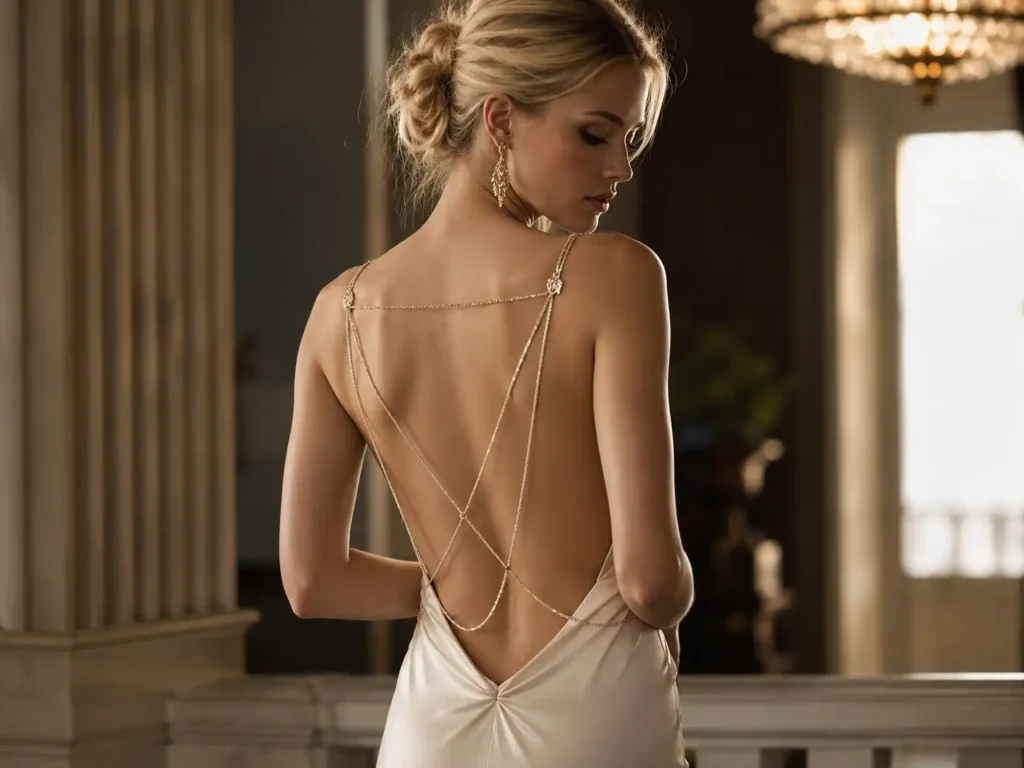
Open-Back Structures
Deep backs, cross straps and low closures need planned support so the front of the dress does not collapse.
Strap width, strap stretch, attachment points and side seam position are reviewed as one system. For very low backs, the lining and zipper strategy may need adjustment so no internal edge becomes visible.
A movement fitting is useful because open-back garments can change position more noticeably during walking and sitting.

Sequins, Beads and Rhinestones
Pattern and Fit Control for Party Silhouettes
A party dress can match a reference image and still fail commercially if the neckline moves, the waist sits incorrectly or the body proportion changes across sizes. Pattern work translates visual intent into measurable garment geometry before bulk cutting begins.
Shape Starts With the Base Pattern
The first pattern is built or adjusted around the intended silhouette, fabric and measurement standard. A stretch bodycon dress is not developed from the same ease logic as a non-stretch satin cocktail dress. Likewise, a corset bodice, bias-inspired slip, cut-out mini and ruched mesh style distribute tension in different places.
Key checkpoints include bust point, front and back body length, waist level, hip position, neckline depth, armhole shape, strap length, zipper length and hem balance. For structured styles, the relationship between outer shell, lining, cups and boning is reviewed together. For draped or ruched styles, the pattern must also contain enough controlled excess to form the intended surface without changing the fit underneath.
Fit comments are converted into pattern actions rather than vague instructions. Instead of “make the waist tighter,” the team records where shaping changes, how much is removed, whether the side seam must remain vertical and whether the change affects the lining or decorative panel. A clear revision path protects the silhouette when the next sample is made.
Stretch, Support and Movement Are Tested Together
Stretch percentage alone does not explain garment behavior. Recovery, fabric weight, direction of stretch and the presence of lining or decoration can change how the dress sits after several minutes of wear. A mesh panel may stretch more than the satin beside it; a sequin backing may restrict a base fabric; a deep neckline may need stabilization even when the main body is elastic.
Fit review therefore looks at standing position, walking, sitting and basic upper-body movement where relevant. Strapless, halter, backless and cut-out designs receive particular attention because their support points are reduced or redistributed.
The aim is not to remove all movement from the garment, but to prevent the design from shifting away from the approved line.
Where elastic, clear tape, lining, cups, boning or interfacing are used, their position and tension are part of the fit record. Those hidden details often decide whether the approved look survives repeated production.
Size Grading Protects the Visual Proportion
Bulk orders can be produced in multiple sizes according to the client’s size chart and size ratio. Grading is not treated as simply enlarging every dimension equally. Party dresses with cut-outs, cups, corset seams, deep necklines or short hems need design-aware grading so the visual proportion remains intentional.
A cut-out may need a controlled change rather than the full body grade. Strap length may increase differently from bust width. Cup position and under-bust length need to remain aligned. For bodycon styles, garment stretch and negative ease must continue to work across the range rather than becoming too tight in larger sizes or too loose in smaller sizes.
The approved measurement chart, grading rules and sample comments become references for bulk inspection. When a program includes several sizes, size-set or pre-production verification can be arranged by project before the full quantity is released.

Sampling That Resolves Risk Before Cutting Bulk
Sampling is a development sequence, not a race to produce one attractive prototype. The number of revisions and the schedule depend on fabric availability, trim readiness, pattern complexity, decoration and the level of fit work required by the style.
First Sample, Fit Review and Revision
A first sample establishes the initial relationship between design, pattern, material and construction. It is used to evaluate silhouette, proportion, neckline, waist, bust, hip, length, drape, transparency, lining, closure and major decorative details. A first sample is not automatically the final production standard.
Comments are then organized into measurable revisions. Fit changes, material substitutions, construction corrections and visual adjustments should be separated so each action can be checked in the next sample.
Depending on the project, a revised sample or fit sample may be required before photo, salesman or pre-production stages.
Sample charges are handled separately because development involves pattern work, material preparation, trims, sewing, measurement checks and communication. When an approved style moves into a qualified bulk order that meets the required MOQ, sample fees may be credited against the bulk order by project.
PP and Golden References Lock the Bulk Standard
Before bulk production, the objective changes from exploration to control. A PP sample is used to confirm the version intended for production, including approved fabric, trims, measurements, construction and finishing details as required by the project. Once the style is sealed, changes need to be controlled because late adjustments can affect cutting, material consumption, sewing sequence and delivery.
A Golden sample or other approved reference can be retained as a physical benchmark for workmanship, measurement and appearance. The exact sample sequence varies by program; not every style requires every sample type. What matters is that production begins from a clearly approved technical version rather than a mixture of old comments and reference images.
For complex party dresses, the sealed reference may also specify decoration placement, internal support, lining coverage, zipper details, stitch appearance, pressing standard and packing method.
Sample Timing Is Quoted by Construction, Not by Slogan
A simple jersey mini and a corset sequin dress should not be given the same development promise. Sample timing is therefore quoted after the fabric, trims and construction have been reviewed. Special lace, custom-dyed materials, imported fabrics, exclusive prints, unusual trims or hand-applied decoration can change the schedule before sewing even begins.
The most useful schedule is one linked to development milestones: material confirmation, pattern completion, first sample, comments, revision, PP approval and bulk release. Merchandising follow-up keeps comments and approvals visible so time is not lost to version confusion.
For launch-sensitive programs, the team can review which elements are fixed, which are still open and whether material alternatives can reduce risk without weakening the intended appearance. Delivery timing is then planned around the approved development path rather than presented as a universal fixed number.

Workmanship Details Behind a Clean Party Dress
Seam Control
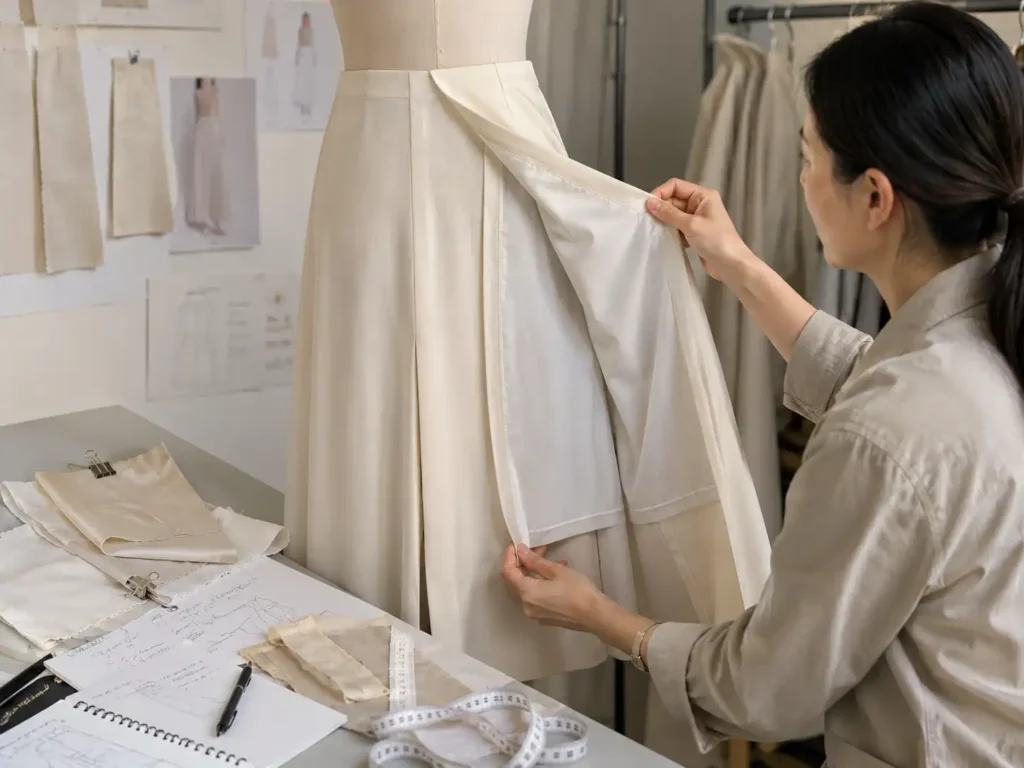
Lining Construction
Lining controls opacity, comfort, structure and how the outer layer moves over the body. Full lining, partial lining and shaped bodice lining serve different purposes.
On mesh or lace designs, lining coverage also becomes part of the visual design.
The lining should support the garment without pulling the shell, showing at openings or creating extra bulk around necklines, cut-outs and hems.
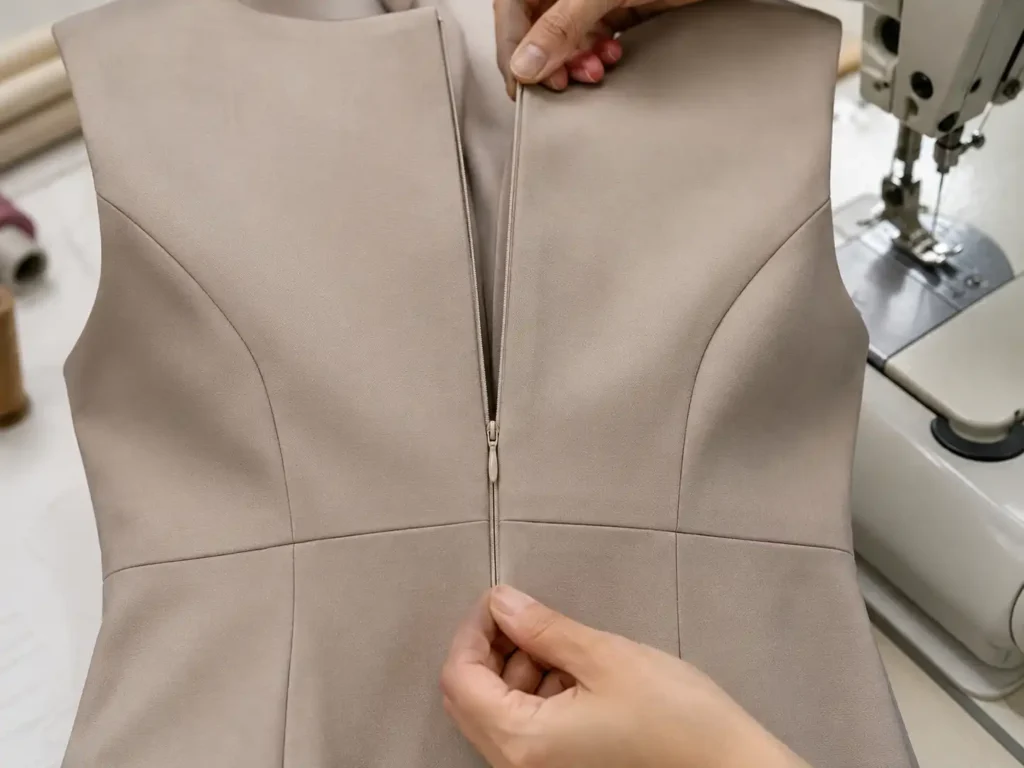
Zipper Installation
Invisible and other zipper constructions need to remain smooth without changing the waist or hip line. Satin and stretch fabrics can ripple beside the zipper if tension is not controlled. On sequin styles, decoration near the zipper may require preparation so teeth move freely. The finished closure is checked for alignment, top edge finish and whether surrounding seams remain balanced when worn.

Neckline Stabilization
Deep V, strapless, one-shoulder, halter and asymmetrical necklines may need selective stabilization so they stay close to the body.
The support method depends on fabric and design: lining, tape, elastic, facing or internal structure may be used by project. The objective is to hold the approved line without creating visible stiffness or an uncomfortable edge.

Corset Internals
Boning, cups, lining and shaped seams must work as one internal system. The exterior should remain clean while the inside supports the bust and waist.
Ends of boning need protected finishing, cup edges should not print through and the lining must remain comfortable against the body.
Each internal choice is checked against the approved sample rather than hidden from QC because it is not visible externally.

Ruching Execution
Bulk ruching needs clear start and end points and a repeatable amount of fullness.
Operators should not create the effect by eye alone when the design depends on a consistent visual density. Marking, elastic length, gather ratio or seam references can be used according to construction. Finished garments are compared for distribution, symmetry where required and whether the gathering changes the intended measurement.

Embellishment Finishing
Sequins, beads and rhinestones need clean boundaries around seams, closures and skin-contact areas.
Loose decoration, sharp edges or excessive bulk can turn a visually strong garment into a quality problem. Inspection focuses on attachment, missing areas, exposed backing, comfort and placement. Protective packing can also be used when embellished surfaces may rub against one another during transit.

Pressing and Final Appearance
Party Dress Construction and Risk Control Matrix
Different party dress combinations fail in different ways. The control plan should follow the material and construction risk instead of applying the same inspection focus to every style.
| Style / Material | Fit Focus | Main Bulk Risk | Control Point |
| Stretch satin ruched mini | Bust, waist, hip, gather position | Puckering, shine marks, uneven ruching | Stretch/recovery approval, gather reference, seam and pressing checks |
| Mesh corset bodycon | Cup, under-bust, waist, mesh tension | Mesh distortion, cup shift, boning imbalance | Pattern/fit approval, support placement, mesh recovery and size checks |
| Sequin mini dress | Body balance, zipper line, lining | Sequin loss, scratching, bulky seams | Seam preparation, lining coverage, decoration inspection, protected packing |
| Strapless fitted dress | Top-edge security, bust, waist | Garment slipping, neckline gaping | Internal support, movement fitting, top-edge measurement and reference |
| Cut-out midi dress | Opening position, waist and hip | Cut-out shift, edge stretch, grading distortion | Measured cut-out points, edge stabilization, design-aware grading |
| Lace party dress | Bust, waist, motif position | Motif mismatch, lining exposure, edge inconsistency | Placement plan, lining map, seam matching and final visual review |
| Velvet cocktail dress | Body balance, seam lay | Nap mismatch, crushed surface, shade difference | Cutting direction, surface handling, controlled pressing and shade review |
Keeping Approved Samples Consistent in Bulk
A strong sample has commercial value only when its fit, construction and appearance can be reproduced across the production quantity. Bulk control starts before cutting by locking the technical version, approved materials and workmanship references.
Approved References Control What Production Follows
The bulk team needs one current version of the truth. Approved patterns, measurement charts, fabric and trim references, construction details, color standards, decoration positions and packing requirements are organized before production. Old sample comments should not remain active after the final version is released.
For party dresses, the reference set may also include neckline angle, cut-out position, gather distribution, cup placement, boning length, lining coverage, zipper finish and pressing appearance. These details are difficult to judge from a tech pack line alone, so a sealed sample or clear approved visual reference adds control.
Material consistency is also checked before large-scale cutting. Shade, stretch, surface condition and fabric behavior can affect fit and appearance even when the style pattern has not changed. Special attention is given to satin shade and surface, velvet nap, mesh recovery, sequin backing and lace motif where relevant.
Inline Control Finds Drift Before It Spreads
Production quality should not wait until the finished quantity is packed. Incoming material inspection, cutting checks, sewing QC and inline inspection provide earlier opportunities to identify issues such as measurement drift, seam distortion, wrong component use, inconsistent ruching or decoration errors.
Jinfeng Apparel has 15+ QC inspectors within the broader production system. Their work is organized across material, cutting, sewing, garment, pressing and packing stages according to project requirements. Complex styles may need more focused checkpoints because the risk is concentrated in specific operations rather than evenly distributed across the garment.
When a problem is found, the useful question is not only whether one garment can be repaired.The team also checks whether the cause comes from pattern, material, operation method, operator interpretation or production setup so the issue does not continue across the remaining quantity.
Final Inspection Confirms Product and Packing Together
Finished garments are reviewed for measurements, workmanship, appearance and packing according to the approved project standard. AQL inspection or third-party inspection can be coordinated when required by the order, client process or shipment plan.
For party dresses, final appearance checks may include neckline shape, seam lay, hem balance, surface marks, decoration security, lining position, zipper operation and garment cleanliness. Packing checks are also relevant because sequins, rhinestones, velvet or easily creased satin may need different protection from a basic jersey dress.
Repeat-order records retain patterns, measurements, fabric and trim details, packaging requirements, QC notes and previous revisions. Those records reduce the risk of reinterpreting an established style when the next order is placed.

Private Label Details Ready for Retail Operations
Main Brand Labels
Care and Fiber Labels
Hangtags
Barcode Stickers
Polybags and Protection
Carton and Shipping Marks
Multi-Style Party Collections Managed as One Program
Partywear collections often combine several silhouettes and materials in one launch. The program needs one commercial calendar but not one identical production method. Jinfeng organizes styles by development and manufacturing risk so the collection can move together without forcing every dress through the same path.
Group Styles by Construction Family
A collection can be divided into practical production families such as stretch bodycon, satin drape, mesh/corset, sequin/embellished and lighter cocktail styles.
Grouping helps identify which patterns, sample skills, sewing operations and QC focus each style requires.
When several styles share a fabric base, trim, zipper, cup or lining, material planning can also be coordinated. When they do not share a construction logic, separating them reduces the risk of using a convenient method that weakens the intended appearance. One collection can therefore remain visually coherent while the internal production route differs by style.
Merchandising tracks comments, approvals and open points by style so a delayed complex dress does not create confusion about styles that are already technically ready.
Allocate Development and Bulk by Actual Complexity
Six owned factories, 10+ long-term satellite production partners, 18+ sewing lines and 6+ flexible production lines provide different options for allocating work by product type and schedule. Allocation is not simply based on which line is empty. A structured corset-sequin dress may require a different sewing and QC setup from a jersey ruched mini.
Production planning considers approved material timing, sewing content, order quantity, size breakdown, finishing, packing and target shipment arrangement. Where a large program is divided into production or delivery batches, the objective is to maintain the same approved technical reference across every batch.
This structure is especially useful when new developments and repeat styles are running in the same season.
Keep Repeat Orders Technically Connected
Repeat orders become more efficient when the original technical information is retained. Jinfeng keeps pattern, measurement, fabric, trim, workmanship, packing, QC and client revision records for repeat-order reference.
A repeat in the same style and color can therefore begin from an established base, while a new color, new fabric or structural change is reviewed as a fresh variable rather than silently treated as identical.
MOQ still follows the per-style/per-color rule, and final arrangements depend on material availability and production schedule.
For brands operating continuous partywear drops, this record system supports a more controlled path from first development to repeat and seasonal extension.

Production Capacity With Flexible Style Allocation
6 Owned Factories
10+ Satellite Partners
18+ Sewing Lines
6+ Flexible Lines
30+ Finishing Staff
100,000+ Pieces Monthly
MOQ and Order Structure for Custom Party Dresses
200 Pieces, One Style
Two Colors
Multiple Styles
Special Fabrics
Complex Construction
Repeat Orders
What Drives Custom Party Dress Cost
Fabric and Lining
Pattern and Sampling
Trims and Decoration
Sewing Time
QC and Finishing
Quantity and Logistics
Anonymous Partywear Program From Development to Bulk
A representative multi-style program shows why partywear needs style-specific development rather than one production formula. The figures below reflect a realistic order structure within Jinfeng’s established brand-program range while keeping the client identity and unpublished design information confidential.
Program Structure: 18 Styles, 42,600 Pieces
The program contained 18 party dress styles with a combined quantity of approximately 42,600 pieces. The range included seven satin and stretch-satin styles, five mesh or bodycon constructions, four sequin or embellished styles and two velvet/cocktail styles. Individual styles were produced in multiple sizes according to the approved size charts and size ratios.
Instead of treating the order as one large dress quantity, development was divided by construction family. Satin styles were reviewed for drape, seam appearance and pressing; mesh/bodycon styles for stretch, recovery and lining; structured styles for bust and waist control; embellished styles for seam handling, comfort and packing protection.
The program was planned around per-style approvals so styles that were technically ready could move forward without losing control of more complex developments.
Development Focus: Fit, Materials and Repeatable Details
The most revision-sensitive styles were the structured and cut-out designs. Fit comments focused on bust position, waist level, neckline security, strap length, cut-out placement and body length. Ruching and asymmetrical details were converted into measurable references so bulk sewing would not depend on visual interpretation alone.
Material approval was handled alongside fit. Stretch satin was checked for recovery and surface condition; mesh for transparency and recovery; sequin fabrics for backing behavior and skin-contact risk. Lining coverage and internal support were confirmed before the relevant styles were released for PP review.
Approved patterns, measurement charts, construction notes, material references and sealed samples became the working production standard for each style.
Bulk Control: Four Production Families, One Quality Standard
The 18 styles were organized into four production families according to fabric and construction. Production allocation considered sewing content, material readiness and inspection needs rather than assigning every style to one line. Inline checks focused on the high-risk operation for each family: ruching distribution, mesh tension, corset support, sequin handling, zipper appearance or pressing.
Final garment review covered measurements, workmanship, appearance and packing against the approved references. Embellished styles received protective packing attention, while satin and velvet styles were checked for surface condition and pressing marks before packing.
The value of the program was not the 42,600-piece total by itself. The stronger result was maintaining one controlled development-to-bulk method across 18 visually different styles while keeping each construction family under the right technical standard.

Quality, Testing and Brand Protection Support
Material and Cutting QC
Sewing and Inline QC
AQL and Final Inspection
Third-Party Testing
Responsible Sourcing Support
NDA and Design Protection
From Tech Pack to Finished Party Dress Delivery
Feasibility and Quote
Fabric and Trims
Pattern and Sample
Approval and PP
Bulk and QC
Packing and Delivery
Custom Party Dresses Frequently Asked Questions
Start Your Custom Party Dress Program
Send the information that helps us evaluate your party dress program accurately. A clear starting package allows the development team to review fabric behavior, fit structure, decoration, order quantity and production risk before quotation and sampling. Tech packs are preferred when available, but organized reference images, target measurements and material direction can also be used to begin a feasibility review.
Please include as much of the following as available:
- Tech pack, sketch, reference garment or clear product images
- Target quantity by style and color
- Size chart and planned size ratio
- Fabric direction, composition, stretch or visual reference
- Color standards or Pantone references where applicable
- Corset, cup, boning, mesh, lace, sequin, rhinestone or other special details
- Main label, care label, hangtag, barcode and packing requirements
- Testing, inspection or market-specific documentation requirements
- Target launch or delivery window
- Any existing approved sample or previous production issue we should review
Once the core information is clear, we can organize feasibility, material, pattern, sampling, cost and production discussions around the actual program rather than a generic dress quotation.