Skip to content

Custom Occasion Dresses
Occasionwear development and manufacturing for fashion brands building wedding guest, cocktail, evening, formal, graduation and celebration collections.
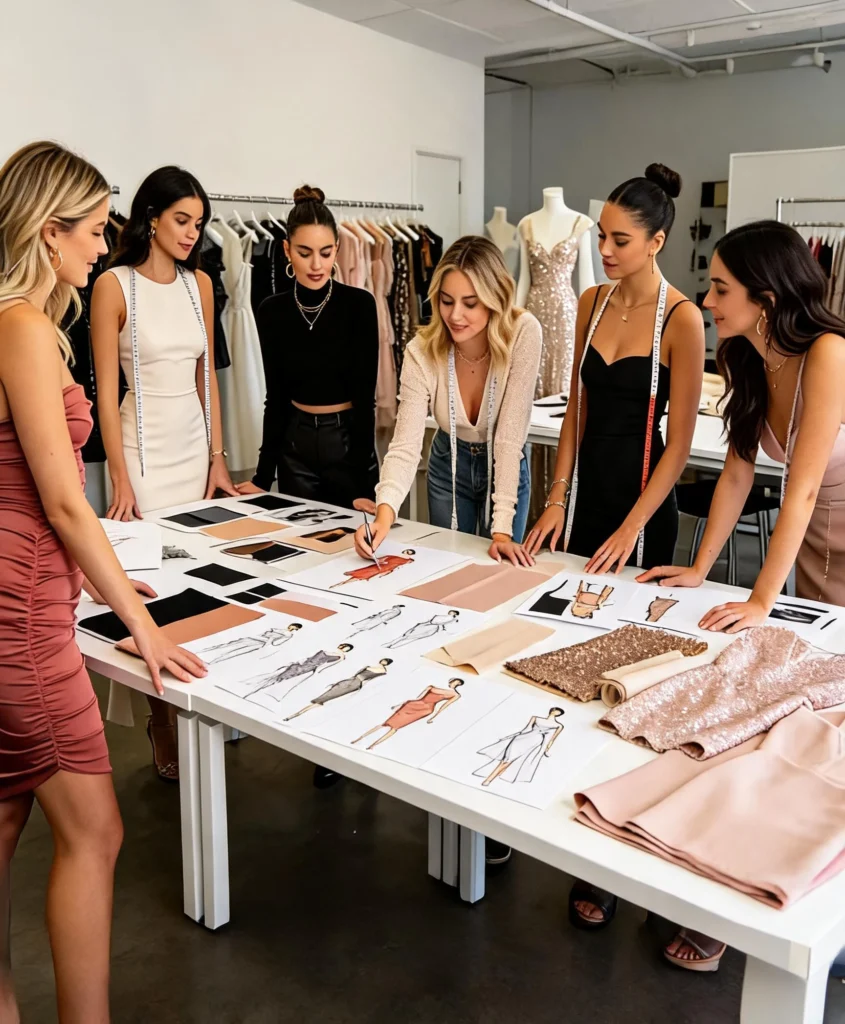
Jinfeng Apparel develops custom occasion dresses from reference images, samples, sketches and tech packs through fabric selection, pattern development, sampling, fit correction, PP approval, bulk production, QC and private-label delivery.
- 7+ senior pattern makerssupport fit-sensitive occasionwear development.
- 2 sample rooms and 20+ sample machinistshandle first samples, revisions, photo samples and PP samples.
- Dedicated occasionwear production resourcessupport satin, chiffon, lace, mesh, sequin, velvet, corset and structured dress programs.
- Multi-style bulk programscan be organized across colors, size ratios, trims, labels, packaging and shipment schedules.
Occasionwear Manufacturing Capacity Built for Brand Programs
7+ Pattern Makers
2 Sample Rooms
20+ Sample Machinists
15+ QC Inspectors
6 Owned Factories
100,000+ Pcs Monthly
Made for Fashion Brands, Not One-Off Tailoring
Best Fit For
Production Model
Occasion Dress Programs Across Major Selling Moments

Wedding Guest

Cocktail

Evening & Formal

Graduation & Homecoming

Party & Celebration

Holiday & Event
Occasion Dress Silhouettes Developed for Commercial Collections
A successful occasionwear line normally mixes several silhouettes instead of repeating one dress shape. Each silhouette creates a different relationship between fabric, support, body proportion, movement and production tolerance.

Mini Occasion Dress

Midi Occasion Dress

Maxi Occasion Dress

Floor-Length Dress

Slip Dress

One-Shoulder Dress

Strapless Dress

Halter Dress

Corset Dress

Bodycon Dress

Ruched Dress

A-Line Dress
Fabric Direction Determines the Final Occasionwear Result
Fabric selection influences far more than appearance. Weight, width, stretch, recovery, drape, transparency, surface shine, shrinkage, lining and MOQ can change the pattern, construction method, price and bulk-production risk of the same design.

Satin and Stretch Satin
Satin is one of the most important occasionwear fabrics because its smooth surface, fluid drape and light reflection create immediate visual value. The same surface also reveals problems quickly. Shade variation can appear stronger under directional shine, needle marks are more visible, an uneven invisible zipper can create rippling, and careless handling can cause snagging or pressing marks.
Development starts by choosing the appropriate satin direction rather than treating every satin as interchangeable. Weight affects whether the garment falls close to the body or holds a structured shape. Stretch satin changes fit calculations around bust, waist and hip. Matte satin can suit wedding guest or cocktail programs where a softer finish is preferred, while brighter surfaces may suit party or evening collections.
Bulk approval should consider fabric batch, surface direction, lining compatibility, seam appearance and packing. Dark colors, ivory tones and high-shine colors deserve specific visual review because the fabric can appear different under studio lighting and normal indoor light.

Chiffon and Crepe
Chiffon works well for layered skirts, soft sleeves, wedding guest dresses, flowing maxi styles and selected graduation designs. Transparency is the first control point, but it is not the only one. Lining length, seam finish, shrinkage behavior, hem method and fabric direction all affect the final garment. Long chiffon skirts also magnify uneven cutting or hem balance.
Crepe provides a different type of occasionwear value. It can create refined drape with less surface shine and often works well for cocktail, formal and semi-formal silhouettes.
The right crepe can support a clean midi, one-shoulder dress or structured column shape without looking overly rigid.
When replacing one fabric with another, Jinfeng Apparel rechecks weight, hand feel, stretch, recovery, drape, transparency, shrinkage, cost, MOQ and lead-time impact. A fabric substitution may also require pattern or lining changes rather than a simple material swap.

Lace, Mesh, Tulle and Organza
Lace is controlled through motif placement, seam joining, edge treatment, hole inspection, lining color and transparency. A beautiful lace can lose its premium appearance when motifs break unpredictably across center-front seams, waist joins or neckline edges. Pattern placement therefore needs to consider both garment shape and the lace repeat.
Mesh creates another set of risks. Stretch, recovery, transparency, neckline stability and susceptibility to holes must be considered before cutting. Power mesh may provide support; soft mesh may create layering and transparency. The two should not be treated as equivalent.
Tulle and organza are commonly used when volume, transparency or a sculpted silhouette is required. Layer count, stiffness and edge finishing affect the final result. Organza can create shape but may become too rigid around seams, while soft tulle can collapse if the design expects architectural volume.

Sequin, Velvet and Statement Fabrics
Sequin fabrics bring strong event and holiday appeal but increase production complexity.
Cutting can damage sequins or create sharp edges, sewing can increase needle breakage, loose pieces can shed, and unprotected surfaces may scratch skin. Lining and edge treatment therefore matter as much as the decorative face.
Velvet requires attention to pile direction, crushing, pressing and color appearance. Panels cut in different directions can look like different shades even from the same fabric lot. Packing pressure can also leave visible marks.
Metallic and rhinestone-based materials create similar trade-offs between visual impact and production stability. Trim weight, attachment strength, lining, movement and packing protection should be reviewed during sample development before the style is approved for a large program.
Color Control Matters More on Occasion Dresses
Occasionwear relies heavily on color, shine and photography. A color that looks correct on a flat swatch can change when moved onto satin, velvet, lace or layered chiffon, so bulk color management needs physical standards and fabric-specific review.
From Color Reference to Approval
Color development can begin with a Pantone reference, physical swatch, approved garment or other clear standard. Lab dips and fabric swatches help evaluate whether the selected material produces the expected hue. Light reflection is especially important on satin, velvet and metallic surfaces because the perceived shade can change with direction and lighting.
Natural light and indoor-light comparisons can help identify obvious shifts before the material is released. Matching lining, zipper thread, trims and outer fabric also matters on occasion dresses because slight differences become visible around slits, necklines, side seams and transparent areas.
Dye Lots and Bulk Color
Bulk fabric should be tracked by batch and dye lot.
Color variation between lots may become noticeable when garments from different lots appear together in stores, ecommerce photography or wedding-related programs where color consistency is commercially important.
Bulk color approval therefore needs to happen before large cutting volumes proceed.
When a custom color cannot meet the visual target, alternatives can include another stock shade, a revised lab dip or custom dyeing subject to fabric MOQ and schedule.
Multi-Color Collections
A collection with several colors introduces operational risk beyond shade approval.
Fabric batches, lining colors, labels, SKU stickers, barcodes, packing and carton identification must stay separated by color and size.
The production record should clearly connect style number, approved shade, fabric lot, lining, trim color, size ratio and packing instruction.
This prevents a strong color story from becoming a warehouse problem at the end of production.
Fit and Structure Are Built Before Bulk Production
Occasion dresses often combine exposed necklines, fitted waists, long hems, structured bust areas and movement-sensitive fabrics. Fit is therefore reviewed as a system of connected measurements and support points rather than a single bust-waist-hip check.
Bust, Neckline and Coverage
Bust fit begins with the relationship between pattern shape, fabric stretch, cup structure, neckline depth and armhole. A low neckline can look correct while standing still yet open during movement. A fitted satin bodice can also appear tight even when measurements match because the fabric offers limited recovery.
Pattern review checks bust width, upper bust, neckline, armhole, side coverage, back coverage and strap position according to the design. Fit comments are converted into measurable pattern changes instead of being handled only through sewing adjustments.
Waist and Hip Balance
Waist position strongly affects the visual proportion of midi, maxi and fitted occasion dresses. A waistline only slightly too high or low can make a garment look different from the reference, particularly when combined with ruching, corset seaming or a long skirt.
Hip ease depends on silhouette and fabric. Bodycon styles need controlled stretch and recovery; woven fitted dresses need enough movement without losing the intended line.
Side seams should remain balanced rather than twisting toward the front or back.
Strapless and Corset Support
Strapless and corset dresses require internal structure to work with the outer pattern. Bra cups, boning, anti-slip tape, lining, waist shaping and back closure all influence stability.
Boning should provide support without creating uncomfortable pressure or visible distortion. Cup shape should match the intended bust silhouette rather than being selected only by nominal size.
Anti-slip tape can help, but it cannot compensate for an incorrect upper-bust pattern.
Halter, One-Shoulder and Backless
Halter designs transfer tension toward the neck and upper back. Excessive tension causes discomfort; insufficient tension can reduce bust stability. One-shoulder dresses create asymmetric pulling that may distort neckline and armhole positions if the pattern is not balanced.
Backless dresses require careful side coverage and front stability because conventional bra support may not be available. Structure may rely on cups, internal lining, tape, seam positioning or other design-specific solutions.
Length, Slit and Movement
Mini length needs wearing safety. Midi length needs proportion. Maxi and floor-length designs need hem balance and movement.
Slits should be checked against the garment’s actual waist and hip position because the same numerical slit measurement can appear much higher on one silhouette than another.
Long dresses also require walking and movement review to identify hem drag, twisting or excessive restriction before production.

Sampling Turns a Dress Concept into a Production Standard
Sampling is where fabric, fit, structure and workmanship meet for the first time. The goal is not simply to create a visually attractive garment; each approved sample should reduce uncertainty before hundreds or thousands of pieces enter production.
Development Inputs
A project can begin from a tech pack, physical sample, reference image, sketch or line sheet. More complete information allows faster technical assessment, but every input still needs production review.
The development team examines silhouette, fabric direction, lining, trims, closure, neckline, support, size chart and visual details before pattern and sewing work begin. Reference images are interpreted rather than copied blindly because photography can hide internal construction and fit issues.
First Sample
The first sample tests the initial relationship between pattern, fabric and construction. It is the stage where major proportion, neckline, waist, hip, length and support issues should become visible.
Regular dress samples typically require around 10–15 days, while more complex corset, sequin, lace or mesh styles commonly require around 15–25 days, subject to fabric sourcing, trim development and construction difficulty.
Fit and Revision
Fit comments should identify exact changes: neckline depth, bust width, waist position, hip ease, strap length, armhole, slit height, back coverage, hem length or internal support.
Pattern changes, measurement changes, fabric substitutions, trim changes and sewing-method changes are recorded before a revised sample is produced. When a fabric changes significantly in stretch, weight or drape, the previous pattern may need another review.
Photo and Sales Samples
Photo-ready or salesman samples can be required when launch photography, wholesale selling or internal range review happens before the full production cycle.
A photo sample focuses strongly on appearance, fit and visual accuracy, but it should not bypass production approval.
If materials or construction details differ from intended bulk specifications, the differences need to be clearly recorded before PP approval.
PP and Golden References
The PP sample confirms the final combination of pattern, material, trim, construction and measurements intended for production. Once approved, the production team works from confirmed technical records rather than verbal memory.
Golden samples or other approved production references can then support bulk inspection and future repeat orders. Pattern files, measurement records, fabric references, trim details and packing requirements are retained for controlled reuse.

Construction Details That Define Occasionwear Quality

Built-In Cups

Boning
Boning can stabilize corset and strapless structures, but excessive stiffness creates discomfort and visible pressure points.
Boning length, position, casing and interaction with lining must be reviewed against the garment shape so support does not distort the outer fabric.

Anti-Slip Tape
Anti-slip tape can improve strapless stability when used with a correctly fitted upper bust.
Placement, width and skin comfort need evaluation during fitting.
Tape alone cannot solve a bodice pattern that is too loose or poorly balanced.

Invisible Zippers
Satin, crepe and fitted woven dresses make zipper quality highly visible.
Seam tension, zipper length, reinforcement and pressing affect whether the zipper lies flat or creates a wave along the center back or side seam.

Lace Placement

Ruching and Draping

Slits and Hem Finishing

Lining and Skin Comfort
Multi-Style Occasionwear Collections Need Structured Management
Style Grouping
Fabric Grouping
Sample Priority
Revision Records
Production Allocation
SKU and Packing Control
PP Approval Locks the Standard Before Cutting Bulk
Final Pattern
Bulk Fabric
Trims and Support
Measurements
Branding and Packing
Production and QC Notes

Bulk Production Matches the Dress to the Right Resources
Occasionwear production requires different resources according to silhouette and material. Jinfeng Apparel allocates styles by fabric, structure, embellishment, order quantity, production schedule and QC risk rather than sending every dress through an identical line.
Woven Occasion Dresses
- Mini, midi, maxi, slip, chiffon, satin and printed woven dresses require control over pattern ease, waistline, hem balance, seam stability, lining length, zipper flatness, cutting direction and batch measurements.
- Fabric direction is especially important for satin and directional surfaces. Long dresses need extra attention to hem leveling and hanging behavior because small cutting or seam differences become visible over greater length.
Formal and Structured Dresses
- Evening, formal, cocktail, wedding guest, bridesmaid, floor-length and corset styles can involve bust support, internal lining, boning, cups, slits, lace placement or embellishment.
- Jinfeng Apparel assigns formal and occasionwear orders to production resources suited to woven, satin, lace, mesh and embellished garments. Complex programs involve development, sample and QC teams before and during bulk production.
Multi-Fabric and Multi-Batch Orders
- A collection can include satin, lace, mesh, crepe and sequin styles under one launch program. Such orders require separate material tracking, sample approval, factory allocation and QC references while sharing a coordinated production schedule.
- The broader production system includes 6 owned women’s fashion factories, more than 10 long-term satellite partners, 18+ sewing lines and 6+ flexible production lines, supporting multi-style, multi-color, multi-size and multi-batch orders. Capacity is planned around actual garment complexity rather than treated as an unlimited figure for every style.
Occasionwear QC Targets Product-Specific Failure Points
Quality control runs from incoming materials through packing, but inspection points change by product. Satin shade, lace placement, strapless support and sequin comfort require different checks, so generic finished-garment inspection is not enough.
Occasionwear Risk | Main Control Point | Bulk Check |
Satin shade variation | Fabric batch, dye lot, shine direction | Compare approved bulk color and lots |
Satin snagging | Material handling and surface inspection | Check panels before and after sewing |
Zipper waviness | Seam tension, zipper method, pressing | Inspect zipper flatness on finished dress |
Chiffon transparency | Outer fabric and lining combination | Confirm coverage under normal light |
Lace mismatch | Motif and seam placement | Compare key placement points |
Mesh holes | Material handling and seam stress | Inspect neckline, seams and high-tension areas |
Strapless slipping | Upper bust, cups, boning, anti-slip | Fit and measurement review |
Corset instability | Cup, boning and waist structure | Compare against approved structure |
Sequin scratching | Edge cleaning, lining and backing | Check skin-contact areas |
Sequin shedding | Cutting and attachment | Inspect embellishment security |
Maxi hem imbalance | Pattern, sewing and pressing | Finished-length and hang check |
Multi-color SKU error | Label, barcode and packing control | Carton and packing verification |
Private Label Packing Completes the Commercial Product
Main Labels
Size and Care Labels
Hangtags
Barcodes and SKU Labels
Polybags and Folding
Cartons and Marks
Launch Planning Connects Sampling, Production and Delivery
Work Backward From Launch
Choose Shipment by Priority
Work With Existing Logistics
Jinfeng Apparel can coordinate with client-nominated forwarders and provide cargo details, packing lists, commercial invoices, carton marks, carton measurements and shipment information.
EXW, FOB, CIF, DAP and DDP options can be reviewed by project. DDP availability depends on destination, product, shipment value, HS code, warehouse requirements and the selected forwarder route.
MOQ and Cost Follow the Actual Dress Specification
Jinfeng Apparel’s MOQ starts from 200 pieces per style/color. Final production feasibility and price depend on material, color development, structure, trims, size range, packaging, production schedule and supplier minimums.
| Cost or MOQ Driver | What Changes | Occasionwear Example |
|---|---|---|
| Fabric availability | MOQ and material lead time | Stock satin vs custom-dyed satin |
| Fabric weight and width | Consumption and cost | Wide crepe vs narrow lace |
| Custom color | Dyeing MOQ and timing | Seasonal satin color |
| Lace | Supplier MOQ and placement labor | Motif-matched wedding guest midi |
| Sequin fabric | Material, cutting and sewing cost | Holiday mini dress |
| Lining | Consumption and construction | Chiffon, lace or sequin dress |
| Corset structure | Cups, boning and labor | Strapless corset dress |
| Ruching / draping | Sewing time and consumption | Asymmetric ruched midi |
| Hand decoration | Labor and handling | Rhinestone or bead detail |
| Color quantity | Production and fabric complexity | One style in five colors |
| Size range | Grading and size-ratio planning | Multi-size retail order |
| Private label | Separate packaging supplier MOQ | Woven label, hangtag, printed polybag |
| Schedule | Production and freight planning | Fixed holiday launch |
| Shipment method | Freight cost | Air priority units + sea bulk |
An Occasionwear Program Built Around Satin Consistency
An anonymized U.S. occasionwear program provides a useful example of the issues that matter when several commercial dress styles move from development into bulk production.

Program Profile
The program covered 12 satin mini and midi dress styles totaling around 20,000 pieces.
Rather than one repeated silhouette, the order required a coordinated group of occasionwear styles intended to sit together commercially.
Satin gave the collection the required visual finish but also created several production risks that would be less obvious in a matte or more forgiving fabric.

Main Production Risks
Four control points were especially important for the collection:
- Satin color consistencyacross production quantities and multiple colors.
- Invisible zipper flatnessso the surface remained smooth rather than rippling around the closure.
- Lining comfortso the internal garment supported the outer appearance without creating excessive bulk or irritation.
- Multi-color bulk stabilityacross style, shade and production records.

Control Logic for Similar Programs
A program with these characteristics needs approved fabric references, color records, pattern versions, zipper standards, lining specifications and SKU-level identification before bulk production progresses.
Color should be reviewed by physical reference and fabric batch. Zipper construction should be checked during sample and sewing stages rather than waiting until final inspection. Lining length, color and hand feel should remain consistent with the approved garment.
For multi-color orders, fabric lot, lining, labels, size ratio and packing instructions should remain linked to each style/color combination.

What the Case Demonstrates
The value of the project lies less in the total piece count than in the ability to keep 12 related styles commercially coherent while controlling fabric-specific risk.
That operating model is relevant to occasionwear labels developing wedding guest, cocktail, graduation, party or evening capsules where several designs share one launch date but differ in silhouette, fabric treatment and construction.
Client identity, original tech packs, unpublished designs, labels and private packing details remain confidential unless disclosure has been authorized.
Repeat Orders Use Records Without Ignoring New Variables
Records We Keep
What Can Move Faster
What Must Be Rechecked
Why Occasionwear Brands Work With Jinfeng Apparel
Occasion-Specific Development
Fabric and Color Control
Fit Before Scale
Multi-Style Management
Product-Specific QC
Retail-Ready Delivery
Custom Occasion Dresses Frequently Asked Questions

Start Your Custom Occasion Dress Program
A productive project review begins with enough information to assess the garment rather than guessing from a single product name. Jinfeng Apparel can review an individual hero style or a complete occasionwear range and identify the main fabric, fit, structure, MOQ, sampling and bulk-production requirements before development begins.
For multi-style programs, sharing the collection together also makes it easier to identify common fabrics, shared trims, sample priorities, color groups and production planning opportunities.
Please prepare as much of the following information as available:
- Reference images, sketches, physical sample or tech pack
- Planned number of styles
- Target quantity per style and color
- Preferred fabric or required hand feel
- Color plan or physical color standards
- Size chart and proposed size ratio
- Required cups, boning, lining, trims or embellishments
- Private-label and barcode requirements
- Packaging or warehouse instructions
- Target sample, photography or launch date
- Destination market and preferred shipment arrangement
The team can then review development feasibility, likely sample route, material risks, MOQ conditions and the information needed for a meaningful quotation.