 Skip to content
Custom Mini Dress Manufacturer for Fashion Brands
From bodycon and corset minis to satin, mesh, ruched and sequin styles, Jinfeng Apparel develops mini dresses around fit, construction, fabric behavior and repeatable bulk standards for established fashion labels.
- 2 sample rooms, 7+ senior pattern makers and 20+ sample machinists support development, fitting and revision.
- MOQ starts from 200 pcs per style/color, with project evaluation for fabrics, trims and special construction.
- 6 owned women’s fashion factories, 10+ long-term satellite production partners and 100,000+ pcs monthly capacity support multi-style collections and repeat production.
- 15+ QC inspectors cover incoming materials, cutting, sewing, finished garments and packing.
- Mini dress development focuses on front and back length, bust-waist-hip balance, lining coverage, zipper flatness, stretch recovery and movement safety.
Mini Dress Manufacturing for Established Fashion Brands
Fashion Brands
Premium Ecommerce Brands
Partywear Brands
Occasionwear Labels
Sourcing Offices
Multi-Style Programs
What Strong Mini Dress Production Needs to Control
Accurate Fit
Fabric Behavior
Sample Discipline
Bulk Consistency
Brand Presentation
Repeat Production
Custom Mini Dress Styles We Develop
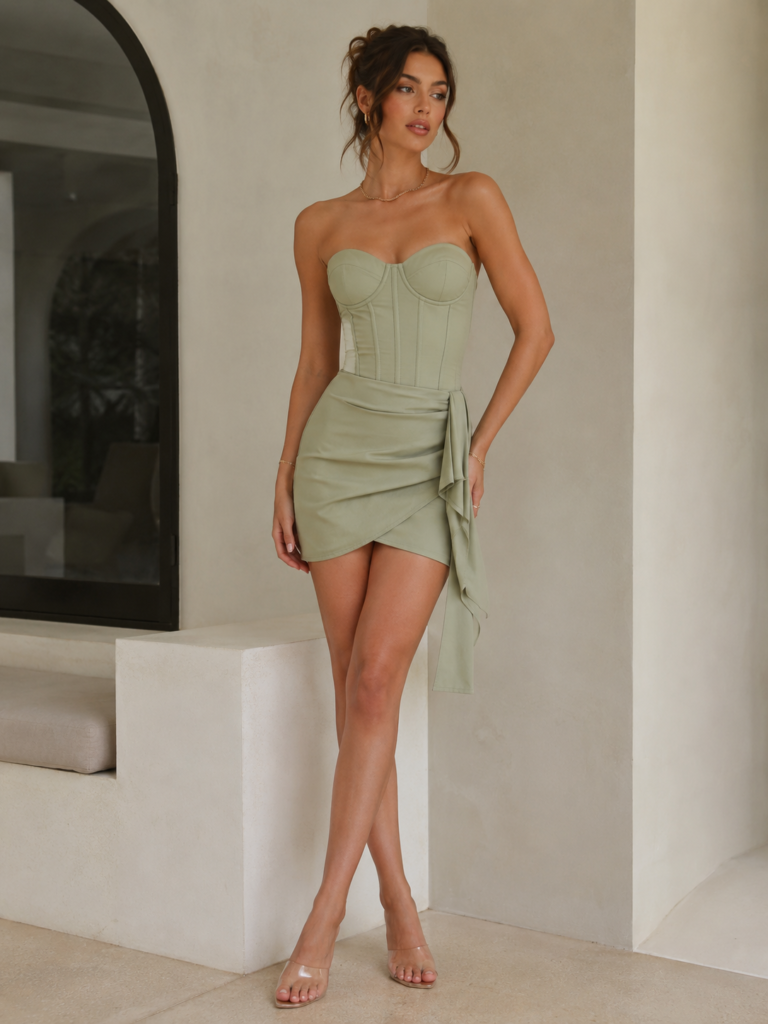
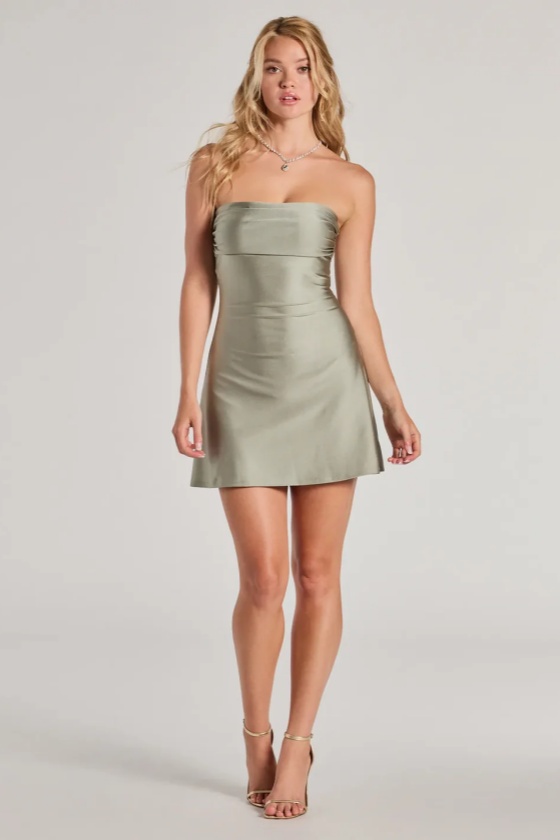
A commercial mini dress collection can combine very different constructions under the same length category. Jinfeng Apparel develops silhouettes according to fabric behavior, body proportion, support needs, exposure level, movement and production repeatability rather than treating every mini dress as the same base pattern.

Bodycon Mini Dress

Corset Mini Dress

Ruched Mini Dress
Cut-Out Mini Dress

Satin Mini Dress

Mesh Mini Dress

Sequin Mini Dress

Halter Mini Dress

Strapless Mini Dress
A-Line Mini Dress

Blazer Mini Dress

Graduation Mini Dress
Mini Dresses for Different Fashion Selling Moments

Party & Clubwear

Going-Out Collections

Birthday & Celebration

Graduation & Homecoming

Cocktail & Occasion

Holiday Drops
Fabric Choices for Reliable Mini Dress Production
Fabric selection controls far more than color and hand feel. Drape, stretch, recovery, transparency, surface sensitivity and thickness affect pattern shape, lining, zipper choice, sewing method and bulk QC. A fabric should be chosen for the intended silhouette and wearing behavior.
| Fabric Direction | Best Mini Dress Applications | Development Focus | Main Bulk Risks |
|---|---|---|---|
| Stretch Mesh | Ruched, bodycon, cut-out | Stretch, transparency, recovery, edge stability | Holes, neckline distortion, inconsistent stretch |
| Power Mesh | Fitted and layered minis | Support, recovery, compression, lining placement | Excess tension, shade difference, comfort |
| Stretch Jersey | Bodycon, halter, draped | Negative ease, recovery, seam stretch | Ride-up, size instability, twisting |
| Ponte | Structured bodycon | Shape retention, thickness, seam bulk | Heavy seams, pressing marks |
| Satin | Slip, corset, occasion mini | Drape, shine direction, zipper, lining | Snags, shade variation, zipper bulging |
| Stretch Satin | Fitted satin mini | Recovery, waist-hip fit, surface handling | Stress lines, shine variation |
| Lace | Occasion, corset, A-line | Motif placement, lining, edge finish | Mismatched motifs, fraying, seam bulk |
| Sequin Fabric | Party and holiday mini | Base fabric, sequin direction, lining | Sequin loss, scratching, bulky seams |
| Velvet | Holiday and occasion mini | Nap direction, pressing, pile protection | Shade appearance, crushing, marks |
| Stretch Woven | Corset and structured mini | Waist shaping, zipper stress, recovery | Seam strain, lining tension |
Fit Engineering Behind a Commercial Mini Dress
Mini length magnifies proportion errors. A waistline positioned slightly too low, an unstable neckline or insufficient back length can change both appearance and wearing security. Jinfeng Apparel develops production-ready patterns around the brand’s size chart, target market, fit preference, final material behavior and intended silhouette.
Bust, Waist and Hip Must Work Together
A mini dress cannot be fitted one body area at a time. Bust shaping changes front length; waist suppression changes how the dress settles on the torso; hip ease influences side-seam position and hem movement. Fitted styles therefore need the entire body balance reviewed together.
For close bodycon shapes, fabric stretch and recovery are considered alongside garment measurements. A pattern developed in a stable ponte cannot simply be reused for a softer jersey or elastic mesh without adjustment. A style can measure correctly on a flat table and still behave incorrectly when worn if fabric extension has not been considered.
Corset and strapless minis add another layer. Bust cups, neckline height, back position and waist tension need enough stability to hold the garment in place. Excessive tightness is not a substitute for internal support. The structure should secure the garment while keeping breathing and movement possible.
Mini length is checked from both front and back. A prominent hip can lift the back hem higher than the front, especially in fitted shapes. Balance therefore needs to be reviewed on-body instead of assigning one flat finished length and assuming the dress will hang evenly.
Mini Length Is a Functional Measurement
Length is a visual design decision, but it is also a wearing measurement. Bodycon, A-line, corset and wrap minis behave differently during walking and sitting, so the sample needs to be assessed in movement rather than only photographed from the front.
Front length, back length and side-seam balance should be checked together. A garment can look correct from the front while becoming too short across the back. Stretch styles may also climb upward as the wearer moves, particularly when recovery, hip tension or lining friction is poorly balanced.
Lining adds another measurement relationship. The lining must remain covered by the shell without becoming so short that it pulls the garment upward. For sheer mesh, lace or light satin, lining length also influences the intended exposure and visual proportion.
For styles with slits, cut-outs or curved hems, the effective coverage can differ from the nominal garment length.
The safest approach is to define the relevant construction measurements directly in the size chart and sample comments rather than rely on a generic “mini length” description.
Grading Must Preserve the Design
A good base-size sample does not automatically guarantee a good multi-size order. Grading affects neckline position, bust coverage, waist placement, hip width, strap length, armhole depth and finished length. Strong grading keeps the original visual proportion while providing enough room for real size differences.
Jinfeng Apparel works from the provided size chart instead of automatically applying one universal grading rule. Base size, grade rule and measurement tolerance are confirmed before bulk production, and changes made during sample fitting should be reflected in the updated pattern and size specification.
For stretch mini dresses, grading also needs to consider fabric extension. Adding width mechanically without considering recovery may create looser larger sizes that no longer hold the intended bodycon silhouette. Conversely, overly aggressive negative ease can create discomfort and ride-up.
Before production, the final size range should connect to the approved fabric, final pattern version, seam allowances, construction method and QC tolerance. These references help production and inspection teams judge garments against the same standard.

Construction Details That Change Mini Dress Performance
Many trend-driven mini dresses gain their identity from technical details rather than basic silhouette. Corsetry, ruching, cut-outs, straps, linings, zippers and reinforced edges can improve the garment when engineered correctly—or create immediate bulk problems when treated as decoration only.
Support Details Need a Defined Job
Boning, cups, gripper elastic and stabilizing tapes should solve a specific fit requirement. Adding more support components does not automatically improve a dress. Their position, stiffness and connection to the shell and lining determine whether the garment holds its shape naturally.
Corset minis commonly require cup placement, boning channels, waist shaping, top-edge control and zipper tension to be reviewed as one structure. If the shell fabric is too light, boning can become visible. If the construction is too rigid, the waist may look clean while the wearer loses comfort.
Strapless minis can use internal support to reduce dependence on extreme tightness. Depending on the structure, a stable lining, boning or gripper may help maintain the neckline. The sample should be tested through movement so the top edge remains secure without excessive compression.
Halter and backless styles create different stress points. Neck straps carry load, side-body coverage becomes more important and back edges need enough stability to stay flat. Reinforcement should be placed where tension occurs rather than added indiscriminately.
Ruching and Cut-Outs Require Repeatable Control
Ruching looks organic, but bulk production cannot rely entirely on individual sewing judgment. The position, gathered section length, distribution and finished measurement need enough definition for multiple operators to create a similar appearance.
Asymmetric ruching is particularly sensitive. A small difference in gathering density can alter waist placement or make one side of the hem appear longer. Sample comments should therefore identify anchor points and finished proportions rather than simply state “more ruching.”
Cut-outs introduce both visual and structural risks. The edge can curl, stretch or open too far when the pattern, reinforcement or elastic tension is incorrect. Bust, side-waist and back cut-outs should also be assessed for movement because body position changes exposure.
Mesh or jersey cut-out styles may need elasticized or stabilized edges, while woven cut-outs often need facings or clean lining construction. The right method depends on the fabric and intended appearance.
Zippers, Linings and Seams Affect Perceived Quality
Invisible zipper flatness is especially visible on satin, fitted woven and corset minis. Excess tension around the waist or hip can cause zipper bulging even when the zipper itself is correctly installed. Pattern shape, seam allowance, interfacing and zipper specification all need to work together.
Linings need enough ease to follow the shell without hanging below the hem or pulling against the outer fabric. Stretch shells generally require compatible lining behavior. A rigid lining inside a stretch bodycon dress can remove the comfort and recovery the outer fabric was chosen to provide.
Seam construction must also fit the material. Mesh, stretch jersey, sequins, lace and satin do not respond to the same needle, seam tension or finishing method. High-stress areas such as zipper ends, strap joins, slit tops and cut-out corners require extra attention.
Clean construction is not only an inside-garment concern. Seam bulk, lining tension and reinforcement can change the outside silhouette, especially on short fitted garments where every contour is visible.

Mini Dress Risks We Address Before Bulk Production
Hem Ride-Up
Back Coverage
Neckline Gaping
Zipper Bulging
Lining Exposure
Mesh Transparency
Mesh selection should define which areas are intended to remain sheer and which require coverage.
Stretching can increase transparency, so fabric should be evaluated at the extension expected on the body rather than only in a relaxed swatch.
Sequin Discomfort
Sequins around armholes, side seams, necklines and hem edges may scratch the wearer.
Seam preparation, lining and edge finishing need enough protection while preserving the intended surface effect.
Size Drift
From Tech Pack to Production-Ready Mini Dress Sample
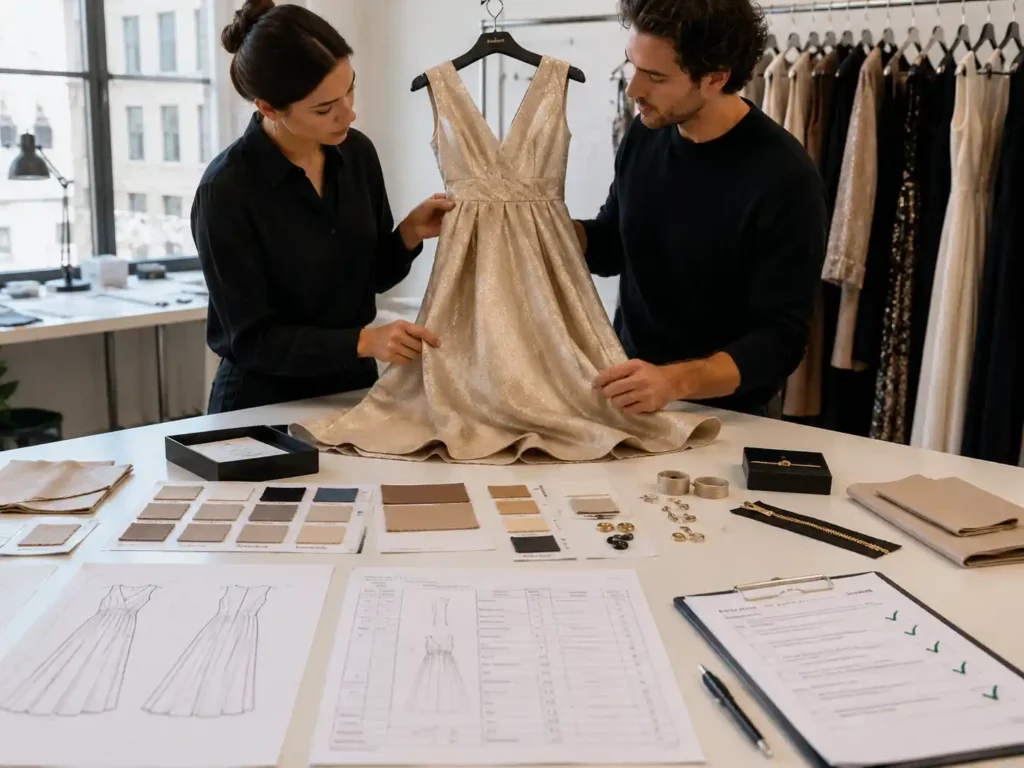
Sample development turns a fashion concept into a garment that can be measured, revised and eventually reproduced. Jinfeng Apparel accepts development inputs including tech packs, sketches, line sheets, reference images, size charts and original samples where the brand has legal development rights.
We Start With Style and Material Review
The first step is not cutting fabric. Style structure, target fit, fabric direction, trims, lining, size range, quantity plan, target market and launch timing need to be understood before a useful first sample can be made.
A corset satin mini may require shell satin, lining, cup, boning, zipper and support details. A ruched mesh mini may require stretch mesh, jersey lining, elastic components and specific gathering ratios. Treating both simply as “mini dresses” would miss most of the development work.
Fabric availability also influences timing. A commercially available fabric can move faster than a custom-dyed, printed, certified or specially developed material. Trims such as specialty lace, sequin materials or customized accessories may introduce separate sourcing time.
Pattern development follows the intended silhouette and size information. The team reviews bust, waist, hip, length, neckline, straps, armhole, back coverage, lining and construction before the garment is sewn.
Sample Timing Depends on Complexity
A useful sample schedule should reflect how difficult the garment actually is.
Reference development ranges used by Jinfeng Apparel are:
- Simple first sample:approximately 7–10 days
- Regular dress first sample:approximately 10–15 days
- Medium-complexity dress, set or jumpsuit:approximately 12–18 days
- Corset, strapless, lace, mesh or sequin complex styles:commonly 15–25 days
- Revised sample:commonly 7–15 days, depending on the changes
- PP sample:commonly 7–15 days once final materials are available
Custom fabrics, custom printing, specialized trims or material certification requirements may extend the schedule.
The point of using ranges is accuracy. A simple jersey mini and a heavily constructed corset sequin mini should not be promised the same development time. The sample schedule is confirmed after the actual style, fabric and trim requirements are reviewed.
The Sample Must Create Production Information
The sample process should produce more than a physical garment.
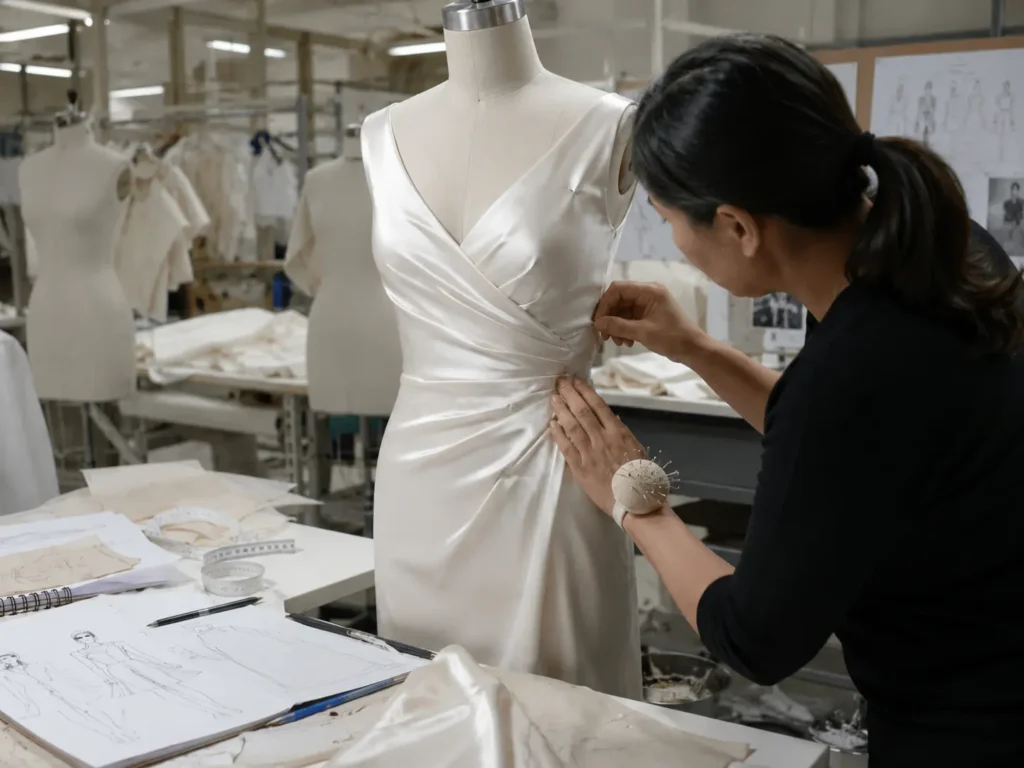
Fit comments need to become updated pattern information. Construction changes need to enter sewing instructions. Fabric changes need to enter material records. Measurement revisions need to update the size chart and tolerances.
Useful development records may include:
- Updated tech pack
- Revised pattern
- Updated size chart
- Measurement tolerance
- BOM information
- Fabric and trim records
- Sewing instructions
- QC points
- Packaging requirements
Once the style moves toward bulk production, these records help reduce dependence on memory or informal chat history. Production teams can work from approved references rather than interpreting old sample comments individually.
Fit Revision, PP Approval and Golden Sample Control

First Sample

Fit Review
Revised Sample

PP Sample
Golden Sample

Approval Records
MOQ Planning for Multi-Style Mini Dress Collections
Per Style
Per Color
Fabric MOQ
Trim MOQ
Size Ratio
Collection Planning
Bulk Production Built Around Approved Mini Dress Standards
Bulk manufacturing starts after the development stage has created clear references. Jinfeng Apparel uses a multi-factory womenswear production structure to support fashion programs that contain several styles, fabrics, colors, size ranges and delivery priorities.
Production Is Matched to Product Type
Jinfeng Apparel operates 6 owned women’s fashion factories and works with 10+ long-term satellite production partners, supported by 18+ sewing lines and 6+ flexible production lines. Regular monthly capacity is 100,000+ pieces.
The purpose of the network is not to move orders randomly between factories. Styles need to be assigned according to product structure and production needs.
Knit and stretch garments, woven dresses, occasionwear and complex-material styles can require different production strengths and line planning.
Multi-style projects also need synchronized material readiness. One missing custom trim should not automatically stop every unrelated style in the collection.
Fabric, trim, sample and PP approval status can be tracked separately so ready styles can progress according to the agreed production plan.
Bulk Preparation Happens Before Sewing
Before production starts, key project information should already be locked.
Typical pre-production references include:
- Approved PP sample
- Approved Golden Sample where used
- Final shell fabric and lining
- Final trim specifications
- Final color references
- Size chart and grade rule
- Measurement tolerance
- BOM
- Production order
- Sewing instructions
- Label and packing requirements
- QC checklist
Production Progress Is Managed by Stage
Bulk production moves through material receipt, cutting, sewing, in-line checks, finishing, garment inspection and packing. Each stage can reveal a different kind of issue.
Fabric problems should be found before large-scale cutting where possible. Cutting accuracy matters for length and stripe, print or directional materials. Sewing checks focus on construction and measurements while garments are still moving through production. Finished-garment inspection checks appearance, fit-related measurements and workmanship. Packing QC verifies labels, SKU information and carton requirements.
Jinfeng Apparel also has 12+ merchandisers and order follow-up specialists supporting project communication and 30+ finishing and packing workers for finishing and packing operations.
Bulk production timing is confirmed after PP approval, materials, quantity, size/color breakdown, packing requirements and QC plan are finalized. Complex fabrics and special trims can materially change the schedule, so production dates are set against the actual project rather than one universal promise.

Keeping Bulk Production Close to the Approved Sample
One of the most expensive garment problems appears when the approved sample looks right but production does not. Strong bulk consistency comes from controlling materials, pattern versions, construction, measurements and visual references together.
Lock Materials Before Cutting
Fabric batch, weight, stretch, shade, hand feel, lining and key trims need to remain aligned with the approved standard.
Satin shade changes, mesh stretch variation or a different lining can alter the finished garment even if the pattern remains unchanged.
Color matching also extends beyond the shell. Lining, zipper tape, sewing thread and visible trims should sit within the intended color direction. For transparent fabrics, lining shade can change the appearance of the entire garment.
Where material variation is commercially unavoidable, the impact should be reviewed before production rather than discovered after thousands of pieces are completed.
Lock Pattern and Construction Versions
Bulk teams need one approved pattern version and one set of current instructions. Sample corrections left only in messages or handwritten notes can easily disappear when production starts.
Jinfeng Apparel converts relevant sample feedback into updated patterns, size charts, measurement tolerances, BOM records, fabric records, trim records, sewing instructions and QC checklists.
Mini dress details needing especially clear documentation include length, neckline, straps, bust shape, hip fit, cut-out dimensions, ruching placement, lining length and zipper position. Small inconsistencies in these areas can change the visual balance of a short garment quickly.
Inspect While Production Can Still Be Corrected
Final inspection should not be the first moment a production problem is discovered.
Incoming material checks can identify shade, damage or specification problems before cutting. Cutting checks can identify pattern or directional-fabric issues. In-line sewing inspection can identify construction problems while garments are still being assembled.
Finished garments are then compared with approved references for appearance, measurements, workmanship and key mini-dress risk points. Packing checks protect against a different class of problem: wrong size labels, incorrect barcodes, mixed SKUs or carton information.
The goal is not an unrealistic claim that every garment will be physically identical. The goal is a controlled production process built around an approved standard and defined tolerances.

Mini Dress Quality Control Before Shipment
Mini dress QC should reflect the product rather than rely on a generic garment checklist. Length, body fit, neckline security, lining, stretch behavior and high-visibility details such as zippers and ruching need targeted inspection alongside standard workmanship and packing checks.
| QC Point | What We Check | Typical Risk |
|---|---|---|
| Shell Fabric | Shade, defects, hand feel, stretch, direction | Batch difference, marks, wrong stretch |
| Cutting | Pattern version, direction, matching, length | Wrong grain, uneven panels |
| Bust | Measurement, cup position, coverage | Gaping, flattening, exposure |
| Waist | Measurement, seam position, shaping | Loose waist, excessive tension |
| Hip | Measurement and fit balance | Ride-up, twisting, stress |
| Mini Length | Front, back and side balance | Uneven hem, poor coverage |
| Neckline | Shape, stability, symmetry | Gaping, rolling, stretching |
| Straps | Length, position, reinforcement | Uneven fit, weak attachment |
| Zipper | Position, operation, flatness | Bulging, waves, stuck zipper |
| Lining | Length, coverage, attachment | Visible lining, pulling |
| Ruching / Cut-Out | Placement and symmetry | Irregular gathering, exposure |
| Sequin / Lace | Attachment, edge finish, placement | Shedding, scratching, mismatch |
| Finished Measurements | Size chart and tolerance | Size instability |
| Labels & Barcode | Style, size, SKU and placement | Warehouse or retail errors |
| Packing | Polybag, fold, assortment, carton marks | Wrong SKU, packing damage |
What Changes the Cost of a Custom Mini Dress
Shell Fabric
Lining
Internal Structure
Surface Work
Ruching and Draping
Ruching adds fabric consumption and sewing operations.
Complex drape construction can require more cutting control and sample development than a simple flat panel.
Size and Color Range
A broad size range increases grading and SKU complexity.
Multiple colors can require separate fabric batches, trims, labels and production planning, particularly where each color has modest volume.
Private Label Packing
Custom labels, hangtags, barcode stickers, polybags,
SKU packing, carton marks and warehouse-specific instructions are included in the costing review when required.
Delivery Requirements
Private Label Packing and Export-Ready Dress Programs
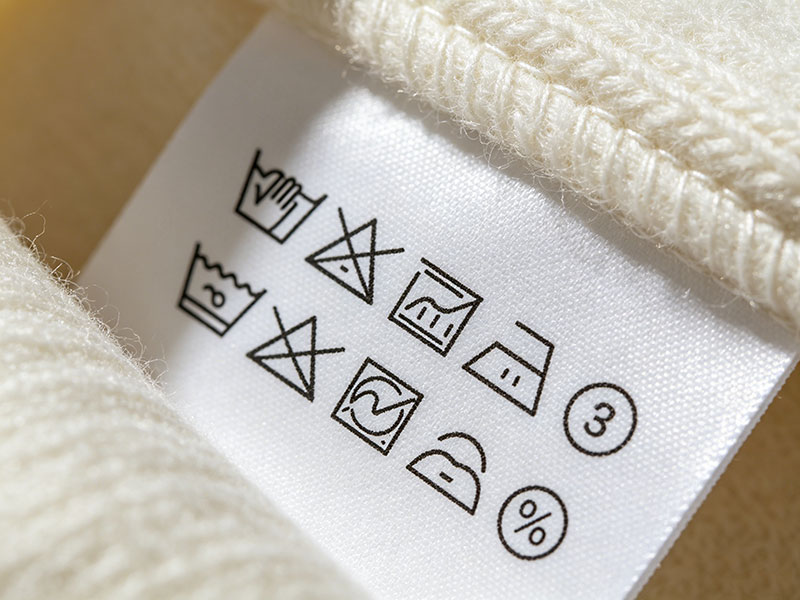
Garment Labels

Hangtags

Barcode & SKU

Individual Packing

Carton Control

Shipping Coordination
A 20,000-Piece Satin Mini Dress Program
A mini dress factory should be judged by how development decisions translate into production, not only by sample-room presentation. One documented Jinfeng Apparel program shows how material, fit, zipper, lining and bulk standards were managed across a multi-style occasionwear order.
12 Styles for a US Occasionwear Brand
An anonymous US occasionwear brand worked with Jinfeng Apparel on a 12-style satin mini and midi dress program totaling around 20,000 pieces.
The range included matte satin and stretch satin with light lining, while construction details included ruched waists, invisible zippers, lining, slits and adjustable straps.
The main production risks were not unusual factory problems; they were exactly the issues satin programs regularly expose at scale: shade consistency across colors, invisible zipper flatness, lining comfort and keeping several production colors close to the approved standards.
The order size also meant development decisions could not remain informal. Pattern shape, material specifications, color references and sample approvals had to become usable production references before bulk work progressed.
Fit and Material Decisions Came Before Bulk
The project required confirmation of satin weight, surface direction, lining color and zipper specification. Waist and hip patterns were revised to improve the fitted silhouette and reduce tension around the invisible zipper.
Satin makes small construction problems highly visible. A zipper can be technically installed correctly but still bulge when the waist-hip pattern puts excessive load on the center-back or side seam. Fit correction therefore worked together with zipper selection and sewing control.
Lining comfort was also reviewed because the shell appearance alone does not determine whether the finished dress feels suitable for occasionwear. Lining color, weight and relationship with the satin affect both comfort and exterior drape.
The style moved through First Sample → Revised Sample → PP Sample → Golden Sample before the bulk standard was finalized.
Bulk Control Focused on Visible Risk Points
Once PP approval was completed, bulk inspection placed additional attention on zipper flatness, satin shade consistency and pressing.
Directional surfaces require disciplined handling because garments cut or pressed differently can appear to have color variation even when the fabric specification is nominally the same. Multi-color orders also need lining, zipper and thread combinations to remain aligned by SKU.
The approved Golden Sample supported visual comparison during production, while fit and material records created stronger references for later repeat work.
The program was completed according to the project schedule, and the brand later added repeat colors. The value of the repeat was not simply another PO; the established pattern, material and construction records made future development easier to control.

Frequently Asked Questions About Custom Mini Dresses
Start Your Custom Mini Dress Development
A useful quotation starts with enough information to understand the garment rather than a single reference image and a request for one price. Send the available development files and commercial requirements, and Jinfeng Apparel can review style structure, fabric direction, fit requirements, MOQ suitability, sample development needs, private-label details and the main production risks before the project moves forward.
For a more accurate review, include as much of the following information as available:
- Product type: bodycon, corset, satin, mesh, ruched, sequin, A-line or another mini dress direction
- Tech pack or reference files: tech pack, sketch, line sheet, reference image or original sample information
- Size information: base size, size range, size chart and fit preference
- Order plan: quantity per style/color and expected color breakdown
- Fabric direction: preferred shell, lining, stretch level, weight or existing fabric reference
- Construction details: cups, boning, ruching, cut-outs, zippers, straps, lace, sequins or special trims
- Private label: woven label, care label, size label, hangtag and barcode requirements
- Packing: individual packing, SKU labels, carton marks and warehouse instructions
- Launch schedule: target sample approval, bulk requirement and planned market launch
- Shipping destination: country, warehouse or nominated forwarder information


