 Skip to content
Custom Midi Dresses Manufacturer for Fashion Brands
Develop production-ready midi dresses with controlled proportions, fabric behavior, construction details, fit, finishing and repeat-order consistency.
Jinfeng Apparel develops custom midi dress collections for established fashion brands, sourcing teams, retailers and mid-to-large womenswear businesses. Projects can begin from a tech pack, reference garment, sketch, line sheet or approved design direction, then move through material review, pattern development, sampling, revisions, PP approval, bulk manufacturing, product-specific QC and retail-ready packing.
- 7+ senior pattern makers working on dress proportion, waist placement, hip shaping, slit position and finished length.
- 2 sample rooms and 20+ sample machinists supporting first samples, fit revisions, PP samples and Golden Sample control.
- 200 pcs per style/color standard production MOQ for custom development.
- 15+ QC inspectors supporting material, cutting, sewing, garment, packing and final inspection controls.
- 100,000+ pcs regular monthly capacity across a dress-focused production network.
Manufacturing Capacity Behind Your Midi Dress Program
Since 2008
6 Owned Factories
18+ Sewing Lines
2 Sample Rooms
7+ Pattern Makers
15+ QC Inspectors
Built for Established Womenswear Programs

Fashion Brands

Occasionwear Labels

Premium Ecommerce

Retail Programs

Sourcing Teams

Product Developers
What Custom Midi Dress Manufacturing Can Include
“Custom” can involve silhouette, proportion, fabric, construction, sizing, branding and production standards. Each decision changes how a midi dress must be patterned, sampled, sewn, inspected and packed.
| Custom Area | Typical Development Options | Manufacturing Focus |
|---|---|---|
| Silhouette | A-line, bodycon, slip, corset, fit-and-flare, column | Balance, waist placement, hip shaping, movement |
| Length | Below-knee, tea-length, mid-calf direction | Finished length, lining length, hem balance |
| Fabric | Satin, chiffon, lace, mesh, jersey, crepe, rayon, linen blends | Drape, stretch, transparency, shrinkage, surface risk |
| Neckline | Square, V-neck, sweetheart, halter, strapless, one-shoulder | Coverage, support, symmetry, edge stability |
| Construction | Ruching, draping, slit, boning, cups, cut-outs, layered panels | Sewing sequence, support, bulk consistency |
| Size Program | Multi-size brand grading | Bust-waist-hip balance, length grading, measurement QC |
| Branding | Main label, size label, care label, hangtag, barcode | Placement, accuracy, privacy, packing control |
| Packaging | Polybag, folding, size sticker, carton ratio, carton mark | SKU accuracy, presentation, warehouse intake |
Custom Midi Dress Styles We Develop

A-Line Midi Dresses

Bodycon Midi Dresses
Bodycon midi dresses depend on fabric stretch and recovery as much as the pattern itself. A style can match static measurements and still fail in wear if the fabric grows at the hip, twists at the side seam or loses recovery after movement.
Development therefore reviews bust, waist, high hip, full hip, finished length, slit location, side-seam alignment and recovery behavior. Jersey, rib knit, ponte, stretch mesh and spandex blends each require different ease decisions.
Bulk control should monitor fabric lot behavior, measurement stability, seam stretch, hem waviness and wash-related deformation where testing is required.

Satin Slip Midi Dresses
Satin slip midi dresses look simple but expose small production errors quickly. Bias direction, seam puckering, zipper bulging, uneven hems, pressure marks and inconsistent pressing become visible under light. Fabric direction and panel cutting must be controlled from the start.
Neckline shape, bust coverage, strap length and back drop need stable proportions, while the hem must be assessed after the garment relaxes because fluid fabrics can shift during handling.
Packing also matters. Excess compression can create strong fold marks that damage the presentation expected from a premium satin program.

Corset Midi Dresses
Corset midi dresses combine fashion appearance with structural engineering. Cup shape, boning position, neckline support, waist compression, zipper tension and lining construction have to work together. Development should distinguish decorative corset styling from true structured support.
Cups may need repositioning after fitting, boning channels must remain balanced, and the waist seam needs enough strength without creating visible thickness. Occasion and party programs often add satin, lace, mesh, ruching or slit details, increasing the importance of sample revisions before the production standard is sealed.
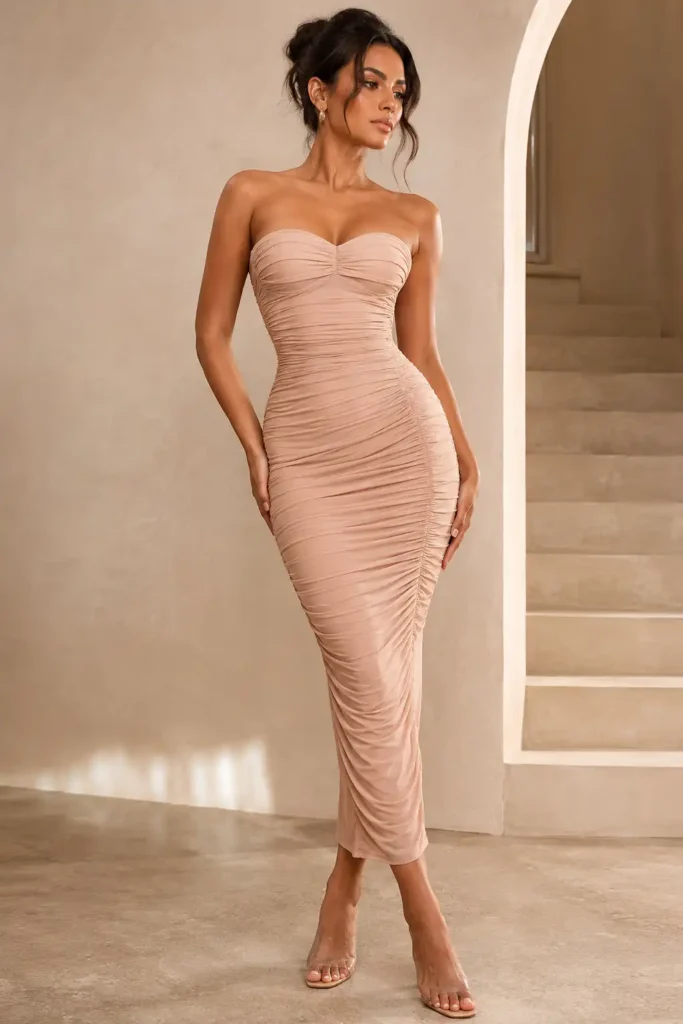
Ruched Midi Dresses

Halter and Strapless Midi Dresses

Lace and Mesh Midi Dresses

Printed Resort Midi Dresses
Printed resort midi dresses rely on drape, movement and visual placement. Rayon, viscose, chiffon and linen-blend materials may require attention to shrinkage, transparency, print direction and seam alignment. Placement becomes more important with directional florals, borders or engineered motifs. Long panels can magnify cutting errors, while lightweight fabrics can shift during sewing. Development should also consider travel use, sitting comfort, walking ease and how the garment recovers after folding in retail packaging.
Midi Dresses Across Commercial Occasions

Wedding Guest Midi

Cocktail Midi

Party Midi

Office-to-Evening Midi

Date Night Midi

Resort Midi
Fabrics Change How a Midi Dress Performs
Fabric selection determines more than hand feel. Drape, stretch, opacity, recovery, surface sensitivity, shrinkage and pressing response affect pattern decisions, sewing methods, sample revisions, QC checkpoints and final cost.
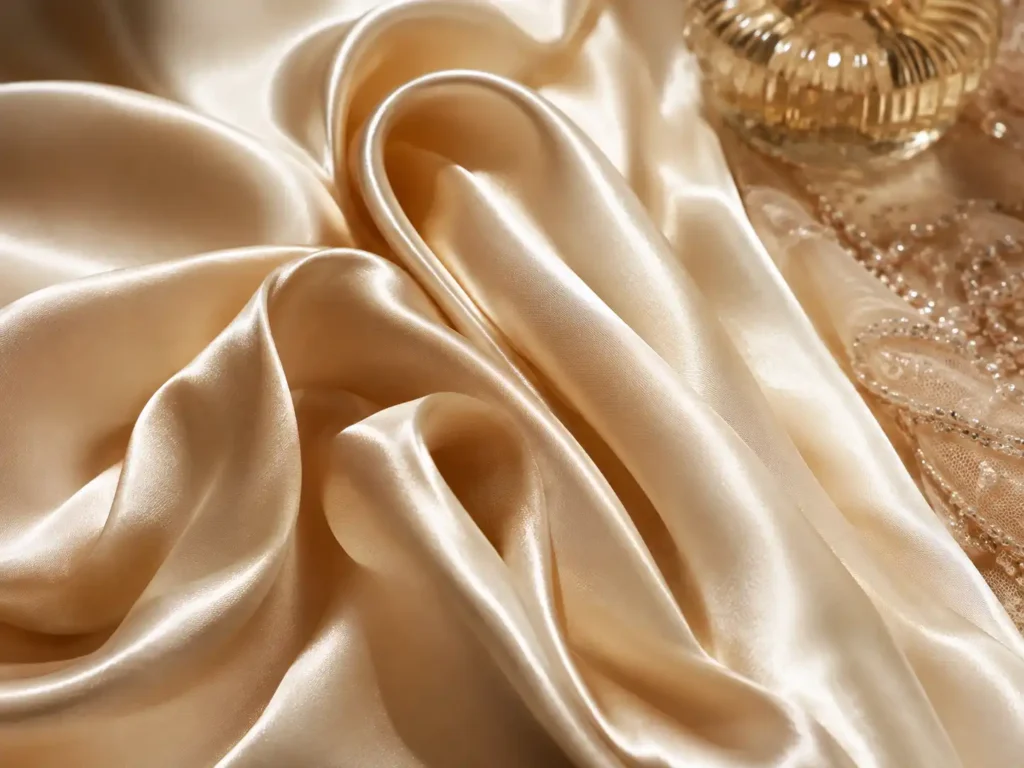
Satin: Control Shine, Drape and Surface Marks
Satin creates a strong premium appearance but exposes handling and construction problems immediately. Fabric direction affects reflected light, so cutting panels in inconsistent directions can create visible shade differences even when every panel comes from the same color lot.
Development focus: A fitted satin midi may need enough ease to avoid horizontal pulling while still preserving a clean line. Bias or semi-bias designs require particular attention because panels can grow differently after cutting and sewing.
Sewing focus: Fine needle selection, seam handling and controlled feed help reduce puckering. Invisible zippers need enough support to stay flat instead of creating a wave along the center-back or side seam.
Finishing focus: Excessive heat or pressure can leave shine or pressing marks. Garments should be checked under appropriate lighting because surface defects are often more visible at an angle.
Packing focus: Folding pressure can produce deep creases. Packing construction should match the fabric and final presentation expected by the brand.
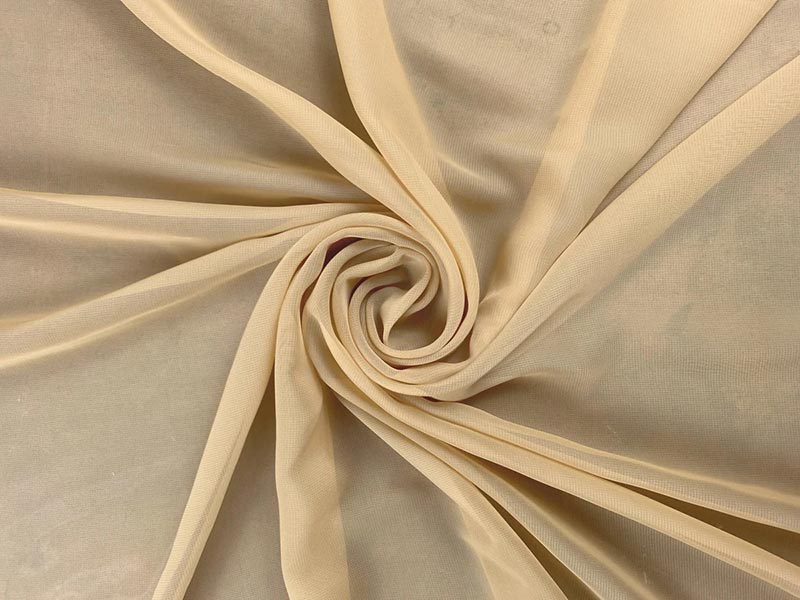
Chiffon: Manage Transparency and Panel Movement
Chiffon is lightweight and fluid, making it suitable for wedding guest, resort and layered occasion dresses.
The same qualities make it sensitive during cutting and sewing.
Transparency: Lining coverage needs to match the intended design. A short lining beneath a longer chiffon skirt changes the visual product and should be approved during sampling rather than improvised in production.
Cutting: Lightweight panels can move during spreading and cutting. Grain direction, print direction and panel matching require controlled preparation.
Construction: Seams, hems and gathered details should remain light enough to avoid creating heavy ridges through a transparent layer.
Final inspection: Hem balance is particularly important because unevenness becomes obvious when the outer chiffon layer moves around the legs.
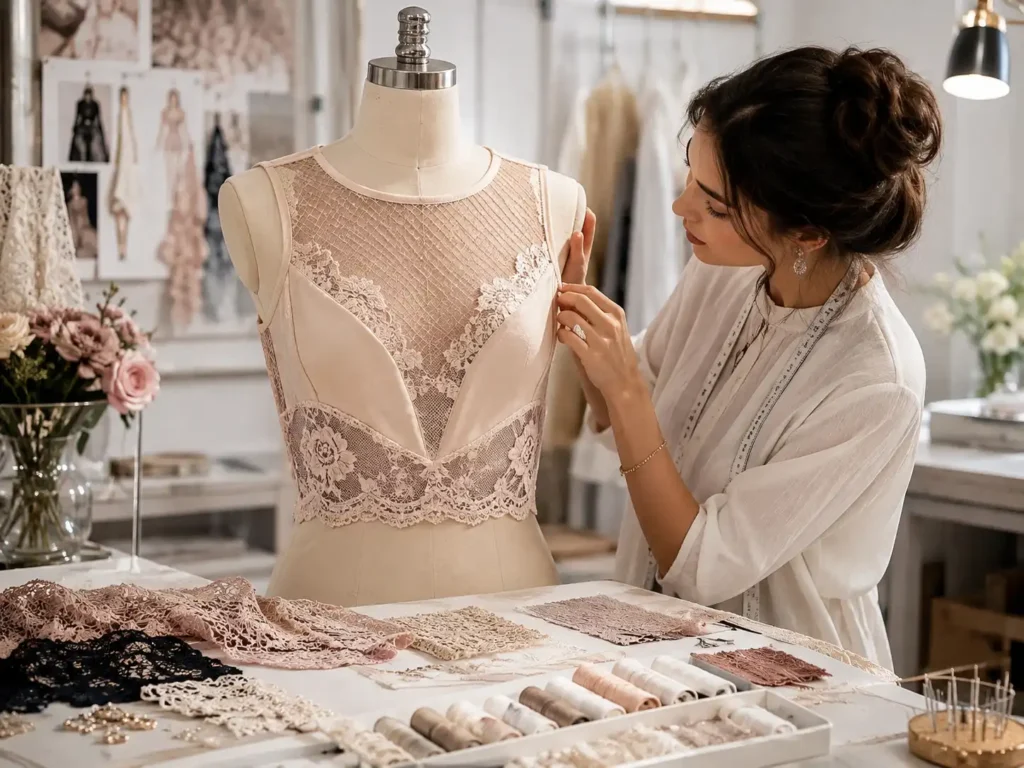
Lace and Mesh: Treat Transparency as Construction
Lace and mesh should never be treated as ordinary woven fabrics with a lining added later.
Motif placement, stretch behavior, edge finish and visibility of internal seams need to be decided before the pattern is finalized.
Lace: Pattern pieces may need to respect motif direction. Visible joins should be planned, particularly around the bodice, waist seam and sleeve edges. Surface holes or damaged motifs must be controlled during handling.
Mesh: Stretch mesh requires recovery analysis, especially in bodycon or cut-out styles. Necklines and armholes can lengthen if reinforcement is insufficient.
Lining: Color, stretch and opacity of the lining influence both appearance and comfort. A rigid lining under stretch mesh can restrict movement and alter the intended fit.
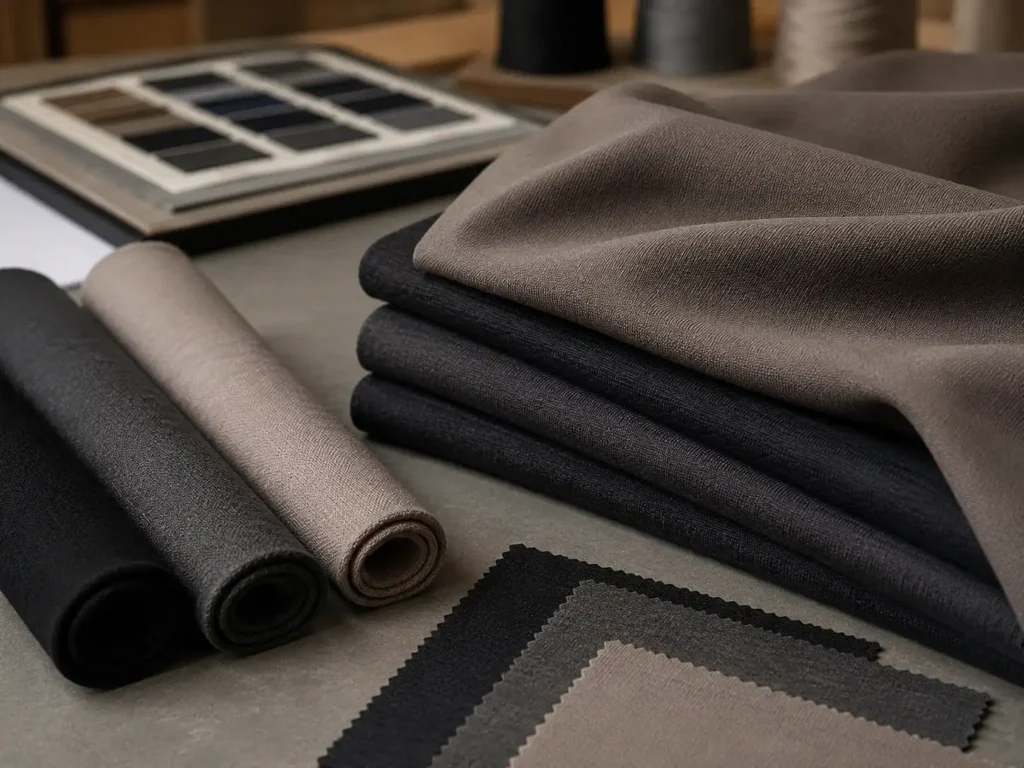
Jersey and Ponte: Balance Fit with Recovery
Stretch fabrics are frequently used for fitted midi dresses because they allow body shaping without heavy internal structure. Stretch percentage alone is not enough to approve a material.
Recovery: Fabric should return toward its original dimension after being stretched. Weak recovery can create bagging at the hip, seat or knee area.
Pattern ease: A jersey style and a ponte style may require different negative or positive ease even when their finished measurements look similar on paper.
Side seams: Unequal stretch or cutting direction can cause twisting.
Hem finish: Incorrect tension may create waviness along the hem, especially on lightweight jersey.
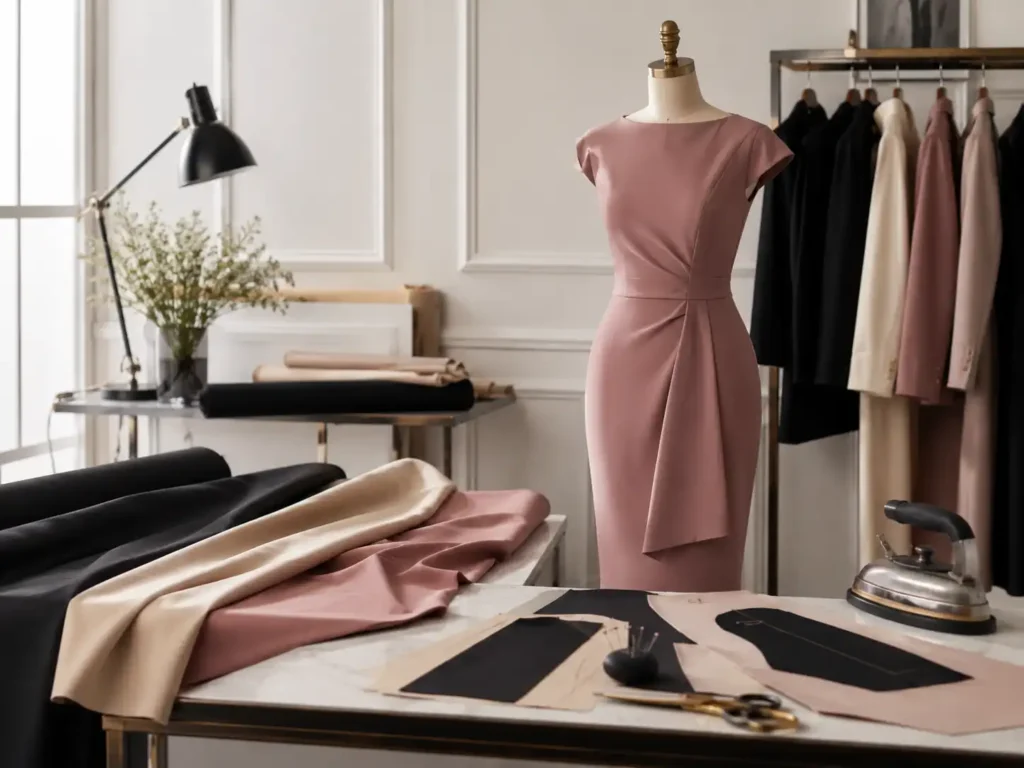
Crepe and Suiting: Build Cleaner Structure
Crepe and suiting fabrics are suitable for A-line, column, tailored and office-oriented midi dresses. They provide more structure than chiffon or satin but still vary in weight, drape and surface texture.
Pattern development: Dart position, waist shaping and panel seams need enough precision to maintain a clean silhouette.
Pressing: Structured fabrics require controlled pressing at seams, facings and hems so the garment looks sharp without obvious seam impressions.
Movement: A narrow silhouette may need a back or side slit to support walking comfort.
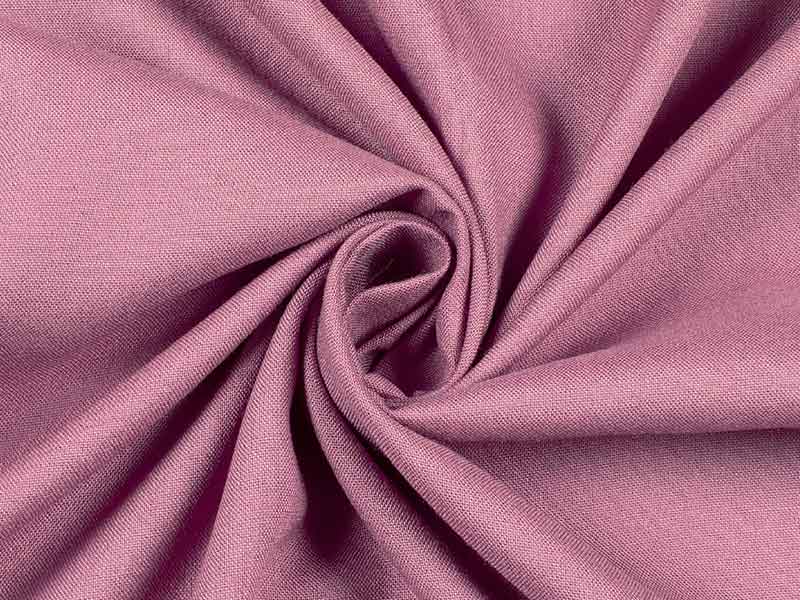
Rayon, Viscose and Linen Blends: Plan for Shrinkage and Drape
Resort and warm-weather midi dresses commonly use rayon, viscose and linen blends because of their fluid hand and breathable appearance.
Shrinkage: Material behavior should be reviewed before final measurements are locked. A change in fabric source or finish can alter shrinkage and require fresh confirmation.
Wrinkling: Linen-rich blends naturally crease, so garment design and packing expectations should match the material rather than promise a wrinkle-free result.
Drape: A heavier viscose can pull the waist or neckline differently from a light rayon quality even when the fiber name looks similar.
Midi Fit Depends on Proportion, Not Length Alone
A successful midi dress is defined by the relationship between bodice, waist, hip, slit, lining and hem. Finished length is only one measurement. Pattern balance determines whether the dress looks intentional across sizes and remains comfortable in movement.
Bust, Waist and Hip Must Work Together
A midi silhouette often places greater visual emphasis on the torso because the skirt terminates around the lower leg instead of disappearing into a floor-length hem. Poor waist positioning therefore becomes obvious.
Pattern review can include:
- Bust and upper-bust relationship.
- Under-bust position for structured bodices.
- Natural, raised or lowered waist placement.
- High-hip and full-hip shaping.
- Front-to-back balance.
- Side-seam position.
A bodycon style may require controlled negative ease based on fabric recovery, while a woven column dress needs sufficient wearing ease. Copying identical ease values between fabrics can produce very different results.
Hem and Slit Position Affect the Whole Silhouette
“Midi” can describe several finished-length directions. Below-knee, tea-length and mid-calf garments can create very different proportions on the same body.
During development, Jinfeng can review:
- Front finished length.
- Back finished length.
- Lining length.
- Slit height.
- Walking opening.
- Hem sweep.
- High-low balance where used.
- Fabric drop after hanging.
A slit should be evaluated in both standing and movement. Excessive slit height can expose more than intended, while a low slit can restrict walking on a narrow skirt.
Grading Must Preserve the Approved Shape
A well-fitted base size does not automatically guarantee a consistent size run. Grading changes bust, waist, hip, length and other dimensions at the same time.
For multi-size production, the approved grade rule should preserve:
- Neckline coverage.
- Waist placement.
- Hip balance.
- Strap position.
- Slit proportion.
- Hem level.
- Overall silhouette.
A production order can be divided across an agreed size ratio such as XS–XL or another brand-defined size set, provided the ratio is commercially workable. Measurement QC then follows the confirmed specification rather than visual judgment alone.

Design Details Need Production-Level Engineering
Ruching, draping, corsetry, straps, cut-outs and special necklines give midi dresses visual identity, but every detail changes pattern construction, sewing sequence, reinforcement, fitting and inspection. Development should convert a visual concept into measurable production instructions.
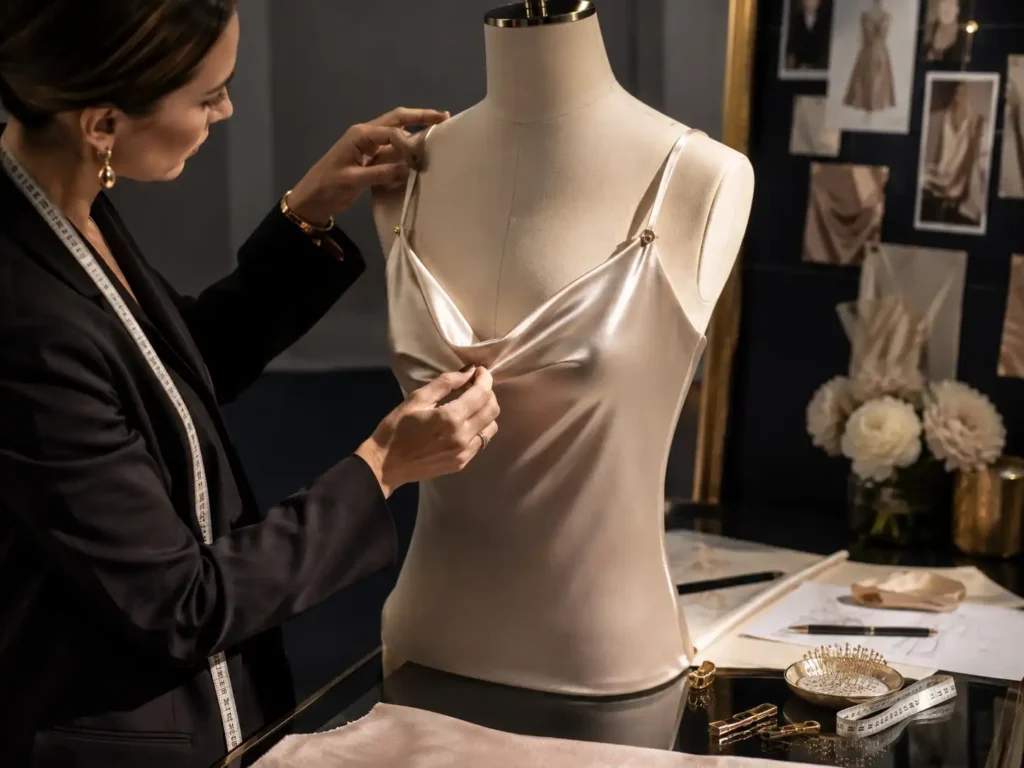
Necklines and Straps
Square, sweetheart, halter, deep-V, strapless and one-shoulder necklines create different support requirements.
A neckline can look correct on a flat garment and still fail during wear. Pattern review therefore considers upper-bust circumference, neckline depth, strap length, shoulder position and the weight of the skirt below the bodice.
Strapless styles may require internal support such as cups, boning or anti-slip solutions depending on the design. Halter straps need stable attachment points so neckline shape does not change under tension.

Ruching and Draping
Ruching must be translated into measurable gathering ratios and defined anchoring points. Without controlled instructions, one garment can look tightly gathered while another looks almost flat.
Draped panels require clear grain direction, attachment points and seam relationships. Satin and soft jersey drape differently, so approved visual effects should be confirmed in the actual fabric direction rather than transferred mechanically from another material.
bodices. Fit consistency and surface finishing matter because many styles are photographed under strong indoor lighting.

Corsetry and Internal Support
Corset-inspired midi dresses can include molded cups, soft cups, boning, underwire, power mesh, lining or reinforced seam structures.
Support and comfort need to be balanced. Boning that is too rigid can restrict movement, while insufficient support can allow a strapless bodice to drop during wear.
Internal construction should be defined in the sample and recorded for production.
Changes to cups, boning or lining after PP approval can affect both fit and sewing sequence.

Slits, Cut-Outs and Open Backs
Exposure details need stable edges and predictable placement across sizes.
A thigh slit should follow confirmed height and seam reinforcement. Cut-outs require enough structural control to prevent edge stretching. Open-back styles need the remaining bodice structure to hold the garment securely rather than shifting support onto one narrow strap or closure.
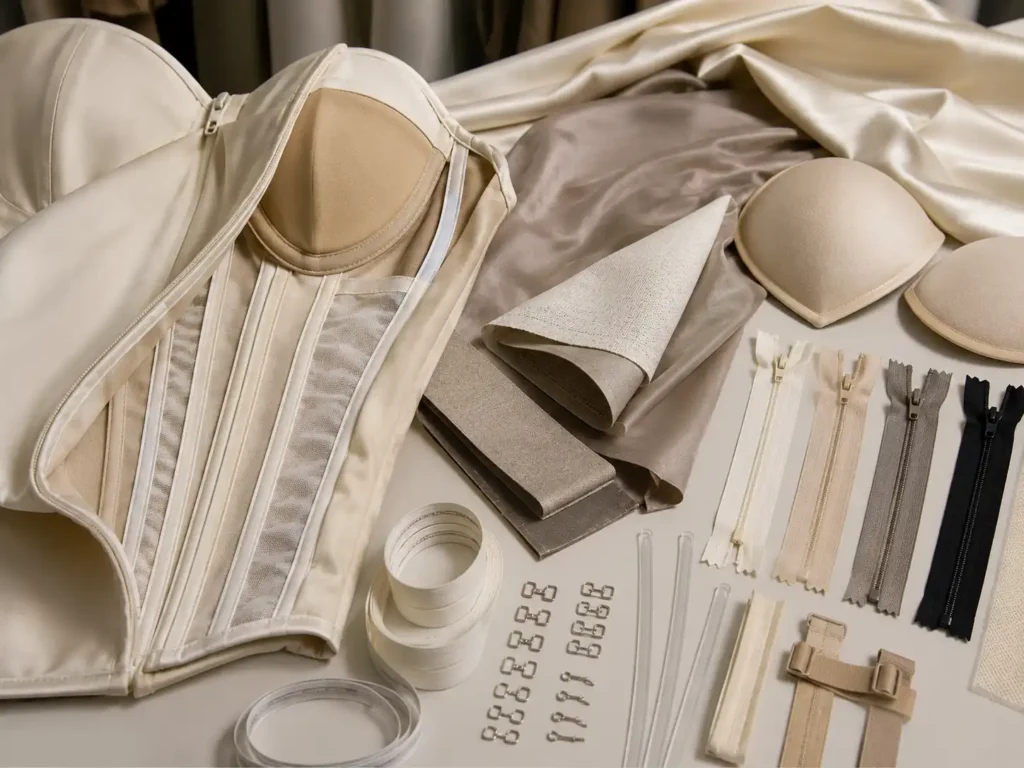
Linings and Zippers
Lining is not an afterthought. Stretch, opacity, color, hand feel and length all affect the finished garment.
Invisible zippers need a stable opening and clean waist-seam matching.
Heavy seam intersections can create zipper bulging, particularly on lined satin or corseted styles.

Embellishment and Surface Work
Sequin, bead, rhinestone or decorative trim can raise visual impact but also introduce surface abrasion, weight, needle breakage and packing risk.
Placement, reinforcement and lining should be reviewed during development.
Bulk inspection should include attachment security and skin-contact areas rather than relying on appearance alone.
From Design Reference to Approved Midi Sample
Sampling is where fabric, pattern, fit and construction assumptions become a physical garment. A professional sample process should identify problems early enough to correct them before fabric is committed to bulk production.

Project Review Before Pattern Cutting
Development can begin from a tech pack, reference garment, reference image, sketch, line sheet or fabric swatch.
Before pattern work, the team reviews:
- Intended silhouette and occasion.
- Fabric direction and availability.
- Required stretch or support.
- Lining and opacity.
- Construction difficulty.
- Special trims.
- Size specification.
- Branding requirements.
- Expected quantity per style/color.
- Target launch or delivery requirement.

First Sample Timing by Complexity
Sample timing depends on design complexity and material readiness.
- Simple first sample:commonly around 7–10 days.
- Ordinary midi dress:commonly around 10–15 days.
- Medium-complex dress:commonly around 12–18 days.
- Corset, strapless, lace, mesh, sequin or complex occasion style:often around 15–25 days, depending on structure and material preparation.
- Revised sample:commonly around 7–15 days.
- PP sample:commonly around 7–15 days when final materials and trims are ready.
Custom fabrics, special dyeing, exclusive trims or certified materials can extend the schedule.

Fit Review and Revision
Sample review can cover:
- Bust and neckline.
- Waist position.
- Hip fit.
- Finished length.
- Strap length.
- Armhole coverage.
- Slit height.
- Lining position.
- Zipper behavior.
- Ruching or drape.
- Fabric hand feel.
- Surface appearance.
Comments should be converted into controlled revisions. Important changes belong in the pattern, size chart, BOM, construction instruction or QC checklist rather than remaining only in messages.

PP and Golden Sample Control
he first sample is not automatically the bulk standard.
Before bulk production, final decisions may include:
- Approved fabric.
- Approved color.
- Approved trims.
- Final measurement specification.
- Final construction.
- Final labels.
- Final packaging.
- PP sample approval.
- Golden Sample sealing where required.
Once these standards are approved, production can be controlled against a defined reference instead of personal interpretation on the sewing floor.
Protecting the Approved Look in Bulk Production
The most expensive quality problem often appears when an excellent sample cannot be reproduced consistently in bulk. Jinfeng links sample approval with production files, material confirmation and inspection checkpoints before the first production pieces move through the line.
Production Starts from Confirmed Standards
Bulk preparation can include confirmation of:
- PP sample.
- Main fabric.
- Size chart.
- Production instruction.
- Sewing instruction.
- QC checkpoints.
Fabric replacement after approval should not be treated as a harmless purchasing change. Different stretch, drape, shrinkage or thickness can alter fit and may require renewed review.
Cutting Controls the Foundation
Before sewing, material inspection and cutting preparation help prevent problems from being multiplied across hundreds or thousands of garments.
Cutting control can include:
- Fabric lot and shade review.
- Surface defect inspection.
- Direction of stretch.
- Grain direction.
- Print direction.
- Pattern version.
- Size bundling.
- Matching requirements.
- Panel identification.
For satin, lace, printed fabrics and stretch materials, incorrect cutting decisions can create defects that sewing cannot correct later.
Sewing Must Follow the Approved Construction
Sewing control goes beyond stitch appearance.
Important midi checkpoints may include:
- Waist-seam alignment.
- Side-seam balance.
- Ruching amount.
- Slit reinforcement.
- Strapattachment.
- Neckline stability.
- Lining attachment.
- Zipper flatness.
- Lace placement.
- Corset support.
- Hem construction.
Early line pieces should be reviewed before large quantities accumulate so corrections happen while the production process remains adjustable.
Finishing Must Preserve Fabric Appearance
Pressing requirements differ by material. Satin can develop shine marks; mesh can distort under heat; rayon can stretch while hanging; structured crepe may need seam shaping.
Garments should therefore be finished according to fabric response rather than one universal pressing method.

Midi Dress Quality Control by Production Stage
Quality control follows the approved product, material and construction rather than relying on one final inspection. The matrix below shows the main controls used to detect issues before they reach packed inventory.
| QC Stage | Typical Midi Dress Checks |
| Incoming Materials | Color/shade, width, hand feel, defects, transparency, stretch, shrinkage or testing needs |
| Cutting QC | Pattern version, grain/stretch direction, print direction, panel matching, size bundling |
| Sewing QC | Stitching, seam allowance, symmetry, zipper, straps, neckline, ruching, lining, slit construction |
| In-Line Inspection | Early measurements, construction consistency, repeated workmanship defects, correction feedback |
| Garment Inspection | Bust, waist, hip, length, slit, appearance, fit indicators, stains, holes, loose threads, closures |
| Pressing Review | Surface shine, seam impressions, puckering, distortion, hem presentation |
| Packing QC | Main label, size label, care label, hangtag, barcode, polybag, folding, carton ratio, carton mark |
| Final Inspection | Final garment review, AQL inspection where required, client inspection support and shipping readiness |
MOQ and Cost Planning for Custom Midi Dresses
Commercial planning works best when quantity, fabric, color and construction are discussed together. A simple crepe A-line dress and a lined corset midi with lace, boning and specialty trims should not be expected to carry the same cost structure.
Standard Production MOQ
Jinfeng Apparel’s standard custom production MOQ is:
200 pcs per style/color.
MOQ is calculated by style and color rather than by the total number of garments across an entire collection.
Examples:
- One style in black, 200 pcs: can be evaluated under the standard structure.
- One style in black 200 pcs and white 200 pcs: two color production units, 400 pcs total.
- One style in black 100 pcs and white 100 pcs: the combined 200 pcs does not normally satisfy the standard per-color MOQ.
- Several styles totaling 200 pcs: the combined quantity does not replace the per-style/color structure.
Special fabrics, custom dyeing, printing, trims, labels, hangtags or printed packaging can carry separate supplier MOQs.
What Changes the Unit Cost
Quotation can be influenced by:
- Main fabric consumption and price.
- Lining.
- Zippers, cups, boning and other trims.
- Ruching, draping or panel complexity.
- Lace or mesh matching.
- Embellishment.
- Pattern development.
- Sewing time.
- Pressing requirements.
- QC intensity.
- Material wastage.
- Branding and packaging.
- Testing requirements.
- Freight arrangements.
Private Label and Retail-Ready Packing

Main Labels

Size Labels

Care Labels

Hangtags and Barcodes
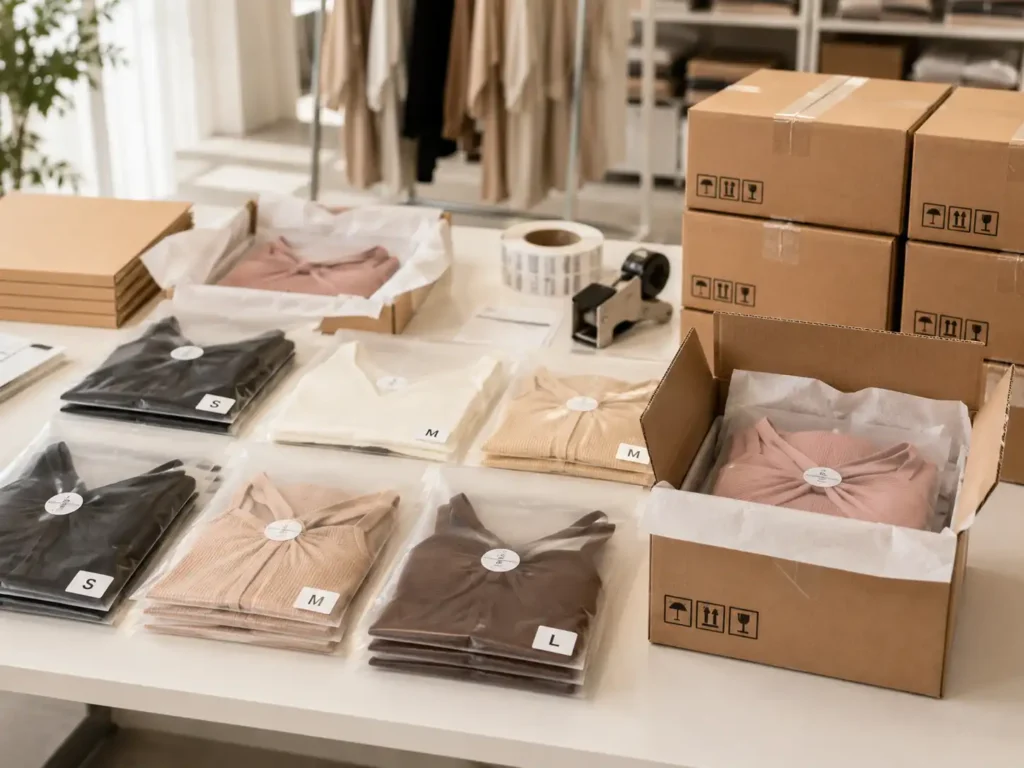
Polybags and Size Stickers

Cartons and Shipping Marks
Compliance Support and Design Protection

Testing and Compliance Support
Jinfeng Apparel can support third-party testing and documentation review according to the garment, fabric, destination market and project requirement.
Support may include fabric or garment testing coordination, AQL inspection, client inspection cooperation and document review.
Third-party laboratories such as SGS, Intertek or Bureau Veritas may be used where specified by the project.
Certified fabric resources may also be reviewed when required, but certificate scope, supplier, material batch, color availability, MOQ, documentation and lead time must be confirmed for the specific sourcing program.
Certification should never be assumed to apply universally to every fabric or finished garment.

NDA and Product File Protection
Brand development materials can contain commercially sensitive information long before a style reaches the market.
Jinfeng supports confidentiality around:
- Tech packs.
- Pattems.
- Original samples.
- Sample photographs.
- Brand labels.
- Hangtag artwork.
- Barcodes.
- Packaging artwork.
- Carton marks.
- Unreleased product details..
Anonymous Multi-Style Midi and Dress Program
A large dress program tests more than sewing quality. Fabric coordination, sample versions, SKU control, packaging and inspection must remain aligned across many styles moving at different speeds.

Project Profile
An established U.S. private-label womenswear program involved approximately 18 styles and 28,000 garments across a broader dress-led collection.
Product directions included satin, mesh, jersey, lace and crepe styles, with midi and occasionwear constructions requiring different fit, handling and finishing standards.
The project reflected a common commercial pattern among established fashion partners: approximately 10–30 styles within one buying program, with total order quantities commonly reaching 20,000–80,000 pieces depending on season,
SKU strategy and confirmed production plan.

Main Manufacturing Risks
Multi-style development:
Different silhouettes reached approval at different times. Treating the collection as one single sample schedule would have delayed styles already ready for production.
Fabric variation:
Satin, mesh, lace, jersey and crepe required different inspection, cutting, sewing and pressing controls.
Sample version control:
Fit revisions and construction updates had to be connected with the correct pattern and specification instead of relying on verbal memory.
SKU and packing control:
Labels, barcodes, polybags, size identification and carton marks had to correspond with each style/color/size combination.

Project Management Approach
Jinfeng coordinated:
- Style-by-style development tracking.
- Fabric and trim confirmation.
- Pattern and sample version records.
- Final specification review.
- Private-label information.
- Barcode and packing instructions.
- Production progress.
- QC checkpoints.
- Inspection coordination.
- Shipment preparation.

Why the Case Matters
Large programs rarely fail because a factory cannot sew one acceptable sample. Risk appears when dozens of styles, materials, size ratios and packing details must move through development and bulk production without losing control.
A scalable dress supplier needs enough structure to preserve the individual requirements of each style while still managing the collection as one commercial delivery program.
Repeat Orders Without Rebuilding Every Detail
A strong-selling midi dress often moves from first production into replenishment, new colors, updated fabrics or related seasonal styles. Repeat manufacturing is more reliable when the technical record from the original program remains available.
Pattern Records
Approved patterns and revision history preserve key decisions around bust, waist, hip, length, neckline, straps and slit position.
Material Records
Fabric, lining, trims and color references help identify what must be reconfirmed when a repeat order is placed. A new fabric lot or replacement fabric should still be reviewed because identical descriptions do not guarantee identical behavior.
Golden Sample Records
Where a Golden Sample is used, it provides a physical reference for appearance, construction and finishing alongside technical files.
Packing and QC Records
Previous labels, barcode formats, folding methods, carton requirements and inspection feedback can be referenced during repeat planning, while new order details are reconfirmed.
Project Management Through Export Delivery
A multi-style midi program requires visible ownership from initial review through shipment. Jinfeng combines merchandising follow-up, production coordination, QC and packing confirmation so key decisions do not disappear between development and delivery.

Development and Production Tracking
Project management can cover:
- Requirement confirmation.
- Style list and development status.
- Fabric and trim tracking.
- Sample comments.
- Revised sample status.
- PP approval.
- Production file confirmation.
- Bulk progress.
- QC feedback.
- Packing confirmation.
- Shipment preparation.
Jinfeng currently has 12+ merchandisers and order follow-up specialists supporting communication and coordination across development and production.

Export and Forwarder Coordination
Brands with an established logistics system can nominate their own forwarder.
Jinfeng can support coordination with:
- Forwarder contact.
- Booking instructions.
- Warehouse delivery.
- Packing list.
- Commercial invoice.
- Carton measurements.
- Carton weights.
- Carton marks.
- Cargo information.
- Shipment photographs.
- Required shipment documents.
Custom Midi Dresses Frequently Asked Questions

Send Your Custom Midi Dress Project
Jinfeng Apparel works with established fashion brands, sourcing teams, retailers and mid-to-large womenswear businesses that need structured product development followed by commercial bulk production. A useful first review begins with enough information to understand the style, fabric direction, quantity, fit expectations and intended delivery plan.
For a faster and more accurate assessment, include:
- Style reference: tech pack, sketch, reference image, original sample or line sheet.
- Order quantity: planned units for each style and color.
- Fabric direction: preferred fabric, swatch, composition or target hand feel.
- Color plan: confirmed or proposed colorways.
- Size range: brand size specification and expected size ratio.
- Construction: lining, cups, boning, ruching, slit, embroidery, embellishment or special trims.
- Private label: main label, care label, hangtag, barcode and packaging requirements.
- Timing: target approval, launch or delivery requirement.
- Quality requirements: testing, inspection, measurement or packing standards where already defined.


