 Skip to content
Custom Maxi Skirts
Brand-level maxi skirt development from fabric and pattern decisions through sampling, bulk production, quality control and private-label delivery.
- 7+ senior womenswear pattern makers control waist, hip, skirt length, slit position and hem balance before bulk production.
- 2 sample rooms and 20+ sample machinists support first samples, revised samples, fit review and PP sample approval.
- 15+ QC inspectors cover incoming materials, cutting, sewing, measurements, finished garments and packing.
- Production is organized for custom brand programs rather than ready-stock resale or one-piece personalization.
Built for Fashion Teams Developing Commercial Maxi Skirt Lines
Established Fashion Brands
Sourcing and Product Teams
Private Label Programs
Manufacturing Capacity Behind Custom Maxi Skirt Development
Core capacity is presented here only where it supports product development, sample control, bulk production and inspection. Final production allocation depends on fabric type, skirt construction, style mix, order quantity and schedule.
| Capability | Jinfeng Apparel Fact | Relevance to Maxi Skirts |
|---|---|---|
| Owned women’s fashion factories | 6 | Supports allocation by garment type, construction and production rhythm |
| Long-term satellite production partners | 10+ | Adds capacity flexibility for multi-style and multi-batch programs |
| Sewing lines | 18+ | Supports bulk production after PP and material approval |
| Flexible production lines | 6+ | Useful for multi-style seasonal collections and staggered production |
| Sample rooms | 2 | Supports structured sample development before bulk release |
| Pattern and sample team | 7+ pattern makers / 20+ sample machinists | Controls waist, hip, length, slit, lining and hem balance |
| QC inspectors | 15+ | Covers material, cutting, sewing, measurement, garment and packing checks |
| Regular monthly capacity | 100,000+ pcs | Capacity is allocated by style complexity, fabric and production schedule |
Custom Maxi Skirt Styles Developed for Commercial Collections

A-Line Maxi Skirt

Pleated Maxi Skirt

Wrap Maxi Skirt

Tiered Maxi Skirt

Slit Maxi Skirt

High-Waist Maxi Skirt
High-waist maxi skirts are built around waist placement and proportion. Raising the waistband changes the visual leg line, hip transition and total drop to the floor or ankle. Structured waistbands need enough support to remain flat without cutting into the body, while elasticized versions need suitable recovery and controlled circumference. Pattern review focuses on high-waist position, waist-to-hip shaping, side seam, zipper or elastic treatment and grading across sizes. Production checks should verify waistband height, waist measurement, hip ease, finished length and whether the upper section stays smooth after pressing.

Low-Waist Maxi Skirt

Flowy Resort Maxi
Maxi Skirts Planned Around Collection and Sales Direction

Resort and Vacation

Occasion Collections

Premium Ecommerce

Fashion Retail

Matching Set Programs

Seasonal Drops
Fabric Direction Built Around Drape, Coverage and Bulk Stability
Fabric choice determines how a maxi skirt falls, moves, photographs, presses and survives bulk production. Jinfeng Apparel reviews fabric direction together with silhouette, lining, waistband, sweep, target price and production risk before the approved material becomes a bulk standard.

Lightweight Flowing Fabrics for Movement-Driven Maxi Skirts
Chiffon, rayon and viscose are common directions for fluid maxi skirts, but each material needs a different approach to cutting, lining and hem control. Chiffon creates light movement and layered volume, yet transparency, fabric slipping, snagging and fine hem work need attention. Rayon and viscose can provide softer drape and a more substantial hand, but shrinkage, wrinkle behavior and dimensional stability should be reviewed according to the selected construction and supplier batch.
A flowy silhouette also magnifies small production differences. Wide panels or a large sweep can expose grain problems, uneven seams or inconsistent length once the garment hangs. Pattern development should therefore confirm front and back drop, side seam balance, hem allowance and lining relationship using the intended fabric rather than an unrelated substitute. If the development fabric changes in weight or composition, the pattern and sample may need another review before bulk approval.
For printed resort styles, cutting direction and print placement need additional attention. The same floral or geometric print can look noticeably different if panels are rotated or if directional motifs do not align with the approved sample. Bulk fabric approval should cover color, hand feel, drape, transparency and print appearance before cutting begins. Packing should then protect the lightweight surface from deep fold lines while keeping labels and SKU identification clear.

Satin and Crepe for Polished Long-Skirt Silhouettes
Satin gives maxi skirts a high-impact surface, but shine direction, snagging, shade variation, seam tension, zipper flatness and pressing marks can quickly make a finished garment look lower in quality. Fabric direction must be controlled during cutting so panels reflect light consistently. A shaped waistband or fitted upper hip also needs stable construction because surface distortion is highly visible on satin. Lining may be required for comfort, opacity or seam coverage depending on color and fabric weight.
Crepe provides a different balance. It can support fluid A-line or occasion silhouettes with less obvious shine, but hand feel, stretch, grain behavior and pressing response vary widely between qualities. Sampling should evaluate how the material recovers after sitting or folding, whether the hem remains level, and whether seam allowances create ridges through the face fabric. A fabric substitution made only on price can change the drape and therefore the proportion of the entire skirt.
Before bulk production, approved satin or crepe references should be tied to color, supplier batch, hand feel, fabric width, weight where recorded, and the approved sample. Long skirts use considerable fabric, so width and cutting efficiency materially affect costing. Pressing and packing instructions should also be locked before shipment so finished skirts arrive with controlled crease marks rather than being forced into a generic fold method.

Linen and Natural-Look Directions for Resort Collections
Linen and linen blends bring texture, breathability and a relaxed appearance to resort and summer maxi skirts, but natural-look fabrics require disciplined expectation setting. Wrinkling is part of the material character, while excessive shrinkage, twisting or inconsistent hand feel are production risks that need separate control. Development should assess fabric composition, wash behavior where relevant, drape, opacity and whether the skirt needs partial or full lining to reach the intended brand standard.
A very full tiered silhouette in a heavier linen can become bulky at gathered seams and uncomfortable at the waist. A lighter blend may reduce weight but can increase transparency or lose the structured look expected from the reference image. Pattern and construction therefore need to be developed together with the actual fabric direction. Waistbands, seam finishes and hem width should suit the material thickness rather than use the same method across all woven fabrics.
For travel-oriented collections, packing recovery matters. The garment may leave the factory correctly pressed but develop deep fold marks during long transit if the packing method ignores fabric behavior. Folding method, polybag dimensions, tissue or other project-specific protection, and carton pressure can be evaluated with the garment structure. The goal is not to promise wrinkle-free linen, but to prevent avoidable compression damage and keep the arrival condition within the expected character of the fabric.

Stretch and Structured Fabrics for Controlled Fit
Jersey, ponte and selected stretch woven fabrics can support maxi skirts that sit closer to the body through the waist and hip before opening into a longer hem. Stretch introduces a different set of controls: direction, recovery, seam tension, waistband stability and measurement after handling. A skirt that fits correctly in one development fabric may become loose, tight or wavy if a replacement fabric has different stretch percentage or recovery even when the color and visual texture appear similar.
Pattern development should define where negative or positive ease is intended, how the waistband is stabilized, and whether the side seams remain straight after wear. Hem finish also matters because some knits can wave or grow when sewn or pressed incorrectly. For low-waist or body-skimming maxi shapes, hip measurement and side-seam stability should be checked on the approved sample and again during bulk inspection rather than relying on flat measurements alone.
If a fabric changes during sampling, Jinfeng Apparel reviews weight, stretch, recovery, drape, transparency, cost, MOQ and lead-time impact before deciding whether the existing pattern remains suitable. The revised material may require an updated sample, especially where the skirt relies on controlled hip fit or a clean long line. Written approval keeps the bulk standard connected to the material actually purchased.
Waist, Hip and Length Engineering for Reliable Maxi Fit
Maxi skirt fit is built from measurable relationships rather than a single waist circumference. Waist position, hip ease, front and back length, sweep, slit and grading must stay balanced across the size range and chosen fabric.

Waist Placement and Waistband Construction
The waistband establishes where the entire skirt begins, so a small error changes both proportion and finished length. High-waist, natural-waist and low-waist designs require different body references and different waist-to-hip shaping. Structured waistbands need enough support to remain flat, while elastic or partly elastic systems must recover consistently without creating bulky gathering. Closure type also changes the pattern: invisible zippers, side zippers, back zippers, buttons, ties and internal elastic all affect seam location and dressing ease.
During development, Jinfeng Apparel checks waist measurement against the size chart and reviews how the waistband sits on the body rather than only measuring the garment flat. If a fitted waistband rolls, gaps or pulls, the issue may come from pattern shape, interfacing, fabric stretch, seam bulk or zipper insertion. Corrective action should be recorded before revised sampling so bulk production does not repeat an unstable solution.
For grading, waistband increase cannot be treated separately from the upper hip and side seam. The final size range should preserve the intended rise and visual proportion instead of allowing larger sizes to sit noticeably lower or smaller sizes to ride upward. Bulk QC should confirm waistband height, waist measurement, closure function and top-edge appearance against approved specifications.

Hip Ease and Side-Seam Balance
Hip fit determines whether a maxi skirt falls cleanly or twists, pulls and lifts during movement. A flowy A-line skirt still needs sufficient upper-hip ease before the silhouette opens, while fitted satin or stretch styles may intentionally sit closer to the body. Woven fabric, stretch fabric and bias-oriented construction behave differently, so the same numeric ease does not produce the same visual result across materials.
Pattern review should check hip circumference, side-seam position, front-to-back distribution and how fullness begins below the hip.
If the front rises, the back drops or the side seam rotates, the issue may come from body distribution, grain, insufficient ease or unequal pattern lengths. Sample fitting should capture front, side and back views and record any changes to hip line, side seam or hem before the next version is made.
Across graded sizes, proportional changes should keep the skirt balanced rather than simply adding equal width everywhere. Bulk measurement control then checks waist, hip and key vertical lengths together. A skirt can technically pass waist measurement yet still hang incorrectly if side seams, front drop or back drop are out of balance.
For fitted or semi-fitted styles, the team should also compare how the side seam falls through the upper hip because rotation is often the earliest visual sign of distribution problems.

Full Length, Front-Back Drop and Hem Sweep
Maxi length is one of the most visible quality points because the hem sits close to the floor, ankle or lower calf depending on design intent. Finished length must be connected to waistband position and the approved measurement method. Front length and back length may need separate control, especially in fuller silhouettes where body shape, fabric drape or pattern distribution can cause one section to fall lower after hanging.
Hem sweep changes both appearance and production difficulty. A wider sweep creates more movement and requires more fabric, but it also increases the amount of edge that must remain level. Lightweight woven fabrics may relax after cutting or sewing; long bias sections can drop differently from straight-grain sections. Sample evaluation should therefore consider hanging behavior before final hem approval rather than trimming only from an early flat measurement.
Bulk production should use a defined measurement reference for skirt length, front and back balance and hem finish. Pressing can also change the way the lower section settles. QC should check the garment after finishing in the same condition used for approval, reducing the risk of uneven hems appearing only after the skirt reaches the brand’s studio or warehouse. The approved hanging and measurement condition should be documented so repeated checks are performed in a comparable way across production lots.

Slit Position, Movement and Size Grading
Slits change movement, exposure and structural stress. A side slit, front slit or back slit should be placed in relation to waist position, hip line and finished length rather than treated as a decoration added after the pattern is complete. The opening needs reinforcement at the top, clean seam allowance treatment and sufficient stability so repeated walking does not pull the seam apart or distort the surrounding fabric.
Sample fitting should assess slit height while standing and moving. A safe and visually balanced result also depends on lining length and whether the lining is split, shortened or constructed behind the opening.
In fitted silhouettes, hip tension can force a slit to open higher than its measured start point, so flat measurement alone is not enough. Any adjustment must return to the pattern and measurement chart.
Size grading needs special attention because simply moving the slit by a fixed increment can change the proportion across sizes. Jinfeng Apparel can record slit placement, finished opening height and related measurements as part of the production standard. Bulk QC then checks both dimension and reinforcement before packing.
Final review should also confirm that the slit opens cleanly without pulling the adjacent seam, exposing unintended lining or creating a different visual height after pressing.
Long-Skirt Risks Controlled Before Bulk Production Begins

Uneven Hem Development
- Confirm skirt length from an agreed measurement point.
- Compare front and back drop after the garment hangs.
- Review side seam position before final hemming.
- Recheck hem level after pressing and finishing.
- Record approved hem method for bulk production.

Lining Exposure Risk
- Define full, partial or no lining during development.
- Check lining length while standing and walking.
- Review slit interaction and side-seam movement.
- Confirm color harmony between shell and lining.
- Lock lining pattern and material before PP approval.

Fabric Drop After Hanging
Some long woven fabrics continue to settle after cutting and sewing, especially where panels include bias sections or a large sweep. A skirt can appear level immediately after assembly and then develop a longer section after hanging. The effect changes with fabric weight, weave, panel shape and construction, so a generic fixed allowance does not solve every style. Sample review should therefore consider real garment behavior before the hem is treated as final.
- Evaluate actual development fabric, not only a substitute.
- Observe long panels after sewing and hanging.
- Correct pattern or hem only after the drop is understood.
- Reconfirm final length before production standard release.
- Keep fabric changes tied to a new fit and length review.

Transit and Crease Control
- Review fold points before bulk packing.
- Protect delicate surfaces from hardware or zippers.
- Keep pleat direction stable inside the polybag.
- Match carton loading to fabric and garment volume.
- Verify labels, SKU information and packing method together.
Construction Details That Decide Maxi Skirt Quality

Waistband Structure
- Check finished waistband height and circumference.
- Confirm interfacing or stabilization where required.
- Keep top edge flat after zipper insertion and pressing.
- Match elastic recovery to the approved fit.
- Record waistband construction in the sewing standard.

Zipper and Closure
- Check zipper flatness from top to hip.
- Confirm hook-and-eye or button position where used.
- Inspect stitch tension and seam symmetry.
- Verify the closure operates smoothly without catching lining.
- Keep closure specifications unchanged after PP approval.
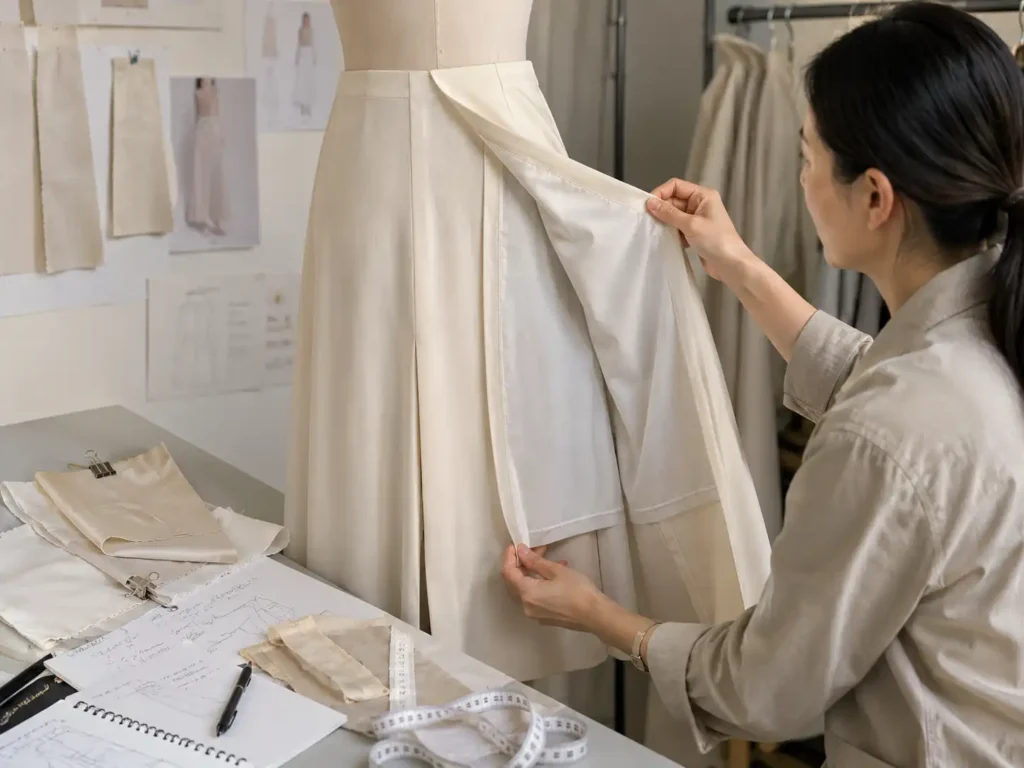
Lining Construction
- Confirm shell-to-lining length relationship.
- Check lining color under the approved outer fabric.
- Review attachment points and seam allowance finish.
- Test walking movement and slit interaction.
- Inspect lining for twisting before final packing.

Pleats, Gathers and Tiers
- Define pleat or gather direction on the approved pattern.
- Control spacing across left and right sides.
- Keep tier heights level around the garment.
- Review seam bulk before finalizing fabric weight.
- Recheck shape after pressing and packing recovery.

Slit Reinforcement
- Lock slit height in the measurement chart.
- Reinforce the top without adding visible bulk.
- Keep left-right seam allowance consistent.
- Check lining treatment around the opening.
- Inspect opening behavior during movement.

Hem Finish
- Select hem method by fabric behavior.
- Check stitch consistency around the full sweep.
- Keep front and back length balanced.
- Inspect pressing marks before packing.
- Confirm final hem appearance against the approved sample.
Sampling Turns a Maxi Skirt Concept Into Production Standards
Jinfeng Apparel treats sampling as product development rather than a decorative prototype step. Fit, fabric, construction, length, movement and private-label details are reviewed until the sample can support a controlled transition into PP approval and bulk production.

Development Starts From Clear Product Inputs
A reliable sample begins with enough information to understand the intended product. Jinfeng Apparel can work from a tech pack, reference image, original sample, sketch, line sheet, fabric swatch or a combination of those materials. The development review should identify silhouette, waist position, target length, hip shape, closure, slit, lining, pleats or tiers, expected fabric behavior, size chart and private-label needs before pattern work begins.
When information is incomplete, the team should separate confirmed requirements from assumptions. A reference photo may show a beautiful drape but not reveal fabric weight, lining construction or exact waist measurement. A tech pack may list dimensions but leave the fabric direction open. Those gaps are addressed through questions, fabric proposals and structure review rather than being hidden inside a first sample.
The development team can also consider target price, order quantity and launch timing because those factors affect fabric sourcing, trim selection and construction choices. A design that depends on a special fabric or custom trim may require a different sourcing path from a style using available materials. Clear inputs reduce unnecessary sample rounds and make later costing more accurate. For a multi-style collection, the same brief can also identify shared fabrics, common trims and repeated construction details, allowing development work to stay coordinated without assuming every skirt follows one identical pattern.

First Sample Checks Shape, Fabric and Construction Together
The first sample is not automatically the bulk standard. Its role is to make the design tangible so waist position, hip ease, full length, hem sweep, slit, lining and movement can be reviewed in the intended material direction. Jinfeng Apparel uses pattern development and sample sewing to expose issues that cannot be resolved from drawings alone, such as a waistband that gaps, a side seam that rotates or a fabric that collapses differently from the reference image.
For maxi skirts, the lower half needs as much attention as the waist. A long panel may settle after hanging, a tier can become too heavy, a pleat can add unwanted bulk, or a slit can open higher during walking than expected from a flat measurement. Those observations should be converted into measurable sample comments and pattern actions.
Fabric evaluation also remains active at the first-sample stage. If hand feel, drape, transparency, shine or wrinkle behavior does not meet the collection direction, the team can compare alternatives before bulk materials are committed. A fabric change can trigger pattern or lining changes, so approval should cover both appearance and production suitability. Sample photos, measurements and fitting comments should therefore be reviewed together; a visually attractive skirt is not ready for PP if the approved dimensions, lining relationship or hem balance remain unresolved.

Revisions Are Recorded, Not Left in Chat Threads
When a sample needs correction, Jinfeng Apparel first identifies the issue category: fit, fabric, workmanship, color, trim, design accuracy, measurement, detail proportion, private-label packing or cost alignment. For a maxi skirt, common revisions may include changing waist position, adding hip ease, correcting front-back balance, lowering or raising a slit, changing lining length, reducing tier volume or selecting a fabric with more suitable drape.
Each production-relevant change should update the documents connected to bulk production. Pattern changes become revised patterns; measurement changes become an updated size chart; fabric changes become a new approval record; trim changes become updated trim references; sewing changes become revised instructions. The same applies to label position, packing method and QC checkpoints when those items are affected.
A revised sample is then used when the change is substantial enough to require physical verification. The process keeps development traceable: the brand can see what changed, why it changed and whether cost or schedule is affected. That discipline is especially important when several skirt styles are developed in parallel within one collection. A version tracker can distinguish first, revised and PP status, helping merchandising, development and factory teams avoid approving different sample versions for the same style. Approved comments should be closed or carried forward explicitly before the next sample gate.

PP Approval Creates the Bulk Reference
Before bulk production, the project needs a clear pre-production standard. PP approval should confirm the final pattern, approved fabric and color, trims, measurements, construction, labels, hangtags, packaging and any special inspection points. Once those items are locked, late design changes need to be evaluated for material, cost and schedule impact instead of being introduced informally after cutting begins.
For maxi skirts, PP review should pay special attention to finished waist, hip, front and back length, slit position, lining length, hem method, sweep and pressing condition.
A long skirt can look acceptable from the front while still having uneven lower balance or internal lining problems, so multiple viewing angles and measurement checks are useful before release.
The approved PP sample, together with written files and QC references, becomes the basis for handover to production. Jinfeng Apparel also supports Golden sample sealing when required by the project. The purpose is to give pattern, sewing, QC and packing teams the same reference rather than relying on verbal instructions between departments.
If a late change is requested after PP approval, the impact on fabric purchasing, cutting, sewing method, labeling, cost and delivery should be reviewed before the change is accepted into production. The updated instruction then needs a new approval trail before execution.
PP Lock Connects the Approved Sample With Bulk Execution
Pattern and Measurement Lock
- Final pattern version confirmed.
- Waist, hip and length points defined.
- Grading and slit placement updated.
- Lining pattern aligned with shell construction.
- Measurement references added to QC records.
Fabric and Trim Lock
The bulk material standard should identify the approved fabric direction, color, hand feel and relevant supplier reference.
If the fabric has changed during sampling, the replacement must be connected to the final pattern and costing.
Trims such as zippers, elastic, buttons, hooks, labels and hangtags also need approved versions so production does not substitute visually similar but functionally different items without review.
- Fabric approval linked to the PP sample.
- Color and batch requirements documented.
- Zipper, elastic and other trims confirmed.
- Label and hangtag artwork versions locked.
- Material changes reviewed for cost and schedule impact.
Sewing, QC and Packing Handover
The production pack should translate the sample into repeatable instructions. Sewing method, seam treatment, pleat or gather direction, slit reinforcement, hem finish, label position and packing sequence need enough clarity for production and inspection teams to work from the same standard. QC checkpoints then connect measurements and appearance to the approved sample, while packing instructions protect the long silhouette during shipment.
- Sewing instructions updated from sample comments.
- QC checklist includes waist, hip, length, slit and hem.
- Label and SKU placement confirmed.
- Folding and polybag method documented.
- Final handover completed before bulk release.
MOQ and Quotation Depend on the Actual Maxi Skirt Program
Jinfeng Apparel calculates production feasibility and price from the real style, fabric, color, size, construction and packing plan. MOQ is applied by style and color, while special materials and trims may carry separate supplier requirements.
| Planning Item | Standard / Requirement | Effect on Feasibility or Price |
|---|---|---|
| Standard MOQ | Starts from 200 pcs per style/color | Each style and each color is evaluated separately |
| Fabric | Availability, width, weight, composition, special dye/print | Affects consumption, supplier MOQ, cutting and lead time |
| Construction | Lining, pleats, tiers, slits, waistband, zipper, hem | Changes pattern work, sewing time and inspection needs |
| Size range | Brand size chart and ratio | Affects grading, marker planning, measurement control and packing |
| Color plan | Quantity per color | Impacts material purchasing and color-batch management |
| Private label | Labels, hangtags, barcode, SKU, polybag, carton marks | May introduce separate supplier MOQ and artwork approval steps |
| Sample development | First / fit / revised / PP as required | Sample fees cover development, pattern work, materials and sewing |
| Delivery plan | Target date, shipment mode, split shipment if needed | Final schedule depends on approvals, materials, production and logistics |
Bulk Production Keeps Long-Skirt Standards Measurable and Traceable
Bulk production begins only after the project has a usable PP reference, confirmed materials and documented construction. Maxi skirts then move through cutting, sewing, inspection, finishing and packing with product-specific controls rather than a generic garment checklist.

Material Preparation and Cutting Control
Before cutting, bulk fabric needs to match the approved direction closely enough for color, hand feel, drape and relevant construction requirements.
Long skirts consume more fabric than short silhouettes, so width, panel layout, print direction and cutting efficiency affect both cost and consistency. Directional satin, printed woven fabrics, chiffon and other sensitive materials also need attention to grain and surface orientation before the marker is released.
Cutting teams should work from the final production pattern and approved size breakdown.
Panels for long skirts need stable identification because front, back, lining and tier pieces can be visually similar while having different grain or dimensions. For printed styles, directional motifs or placement expectations should be checked before full cutting rather than discovered during sewing.
Quality control at the cutting stage can review major panel dimensions, pair matching, fabric defects and direction. Catching a wrong panel orientation or incorrect lining length before sewing is far less costly than repairing finished garments. Any bulk fabric variation that materially changes drape or color should be escalated against the approved fabric reference before production continues. For long panels, even a small directional mistake can become highly visible across the full skirt length, so cutting approval carries direct visual and cost consequences.

Sewing Focuses on Waist, Seams, Volume and Closures
Sewing quality is built around the structural points that shape the skirt. Waistband assembly, zipper insertion, elastic treatment, side seams, tier joins, pleats, gathers and slit reinforcement all need repeatable methods. Long side seams make twisting easy to see, while a small waistband mismatch can affect the entire drop of the skirt. Operators therefore need approved sewing instructions rather than relying only on a sample hanging nearby.
For fluid woven fabrics, handling tension matters. Pulling one panel more than the other can create puckering or a spiral side seam. Satin can show needle marks or seam impressions; chiffon can shift; linen blends can become bulky at gathered seams; stretch fabrics can wave if feed and tension are not controlled. The production method should match the actual material and construction.
Inline inspection helps identify recurring problems before an entire order reaches finishing. If several garments show zipper ripple, uneven gathers or side-seam movement, production can review the cause while the line is active. Corrective action is more effective when the issue is tied to pattern, material or sewing method rather than being treated as a final inspection defect only. Line records can also identify whether a problem appears across one operation, one size or one fabric lot, making the response more focused before production volume increases.

Measurement and Hem Control Before Final Finishing
Maxi skirts need measurement checks during production because the lower length can change after handling, sewing and pressing.
Waist, hip, skirt length, slit and lining length should be measured using the defined project method. A garment that passes one measurement may still hang poorly if side seams or front-back balance are wrong, so visual inspection and dimension control need to work together.
Hem finishing should occur when the garment is stable enough to judge the lower line. For materials prone to dropping or relaxing, the production method may include a defined holding or hanging step according to the style and approved sample. The team should avoid assuming all long skirts can be hemmed immediately after assembly in the same way.
Finishing also checks loose threads, seam appearance, pleat shape, gathers, zipper flatness and overall drape. Pressing must suit the fabric: too much heat or pressure can shine satin, flatten pleats or leave marks on textured materials. Final measurements are then verified in the condition that closely represents the packed garment standard. When the style includes a large sweep, pleats or layered lining, inspectors should avoid forcing the garment flat in a way that hides real hanging imbalance or changes the measurement method used for approval.

Packing Prepares the Skirt for the Receiving Route
Packing is part of product execution because long garments are more exposed to folding, compression and label errors. The approved method should state folding direction, polybag arrangement, size and SKU identification, carton marks and any project-specific protection for delicate fabrics or trims. Retail-ready and ecommerce-ready programs may require different barcode or warehouse label formats, so packing instructions need to match the final route.
Carton loading should keep garments secure without creating unnecessary pressure on satin, pleats or structured waistbands. If a collection contains several colors and sizes, packing breakdown must match the approved allocation so receiving teams can identify each SKU correctly. Commercial invoice, packing list and carton information should also align with actual quantities.
For launch-sensitive programs, shipment may be coordinated by express, air, sea or a split arrangement depending on project needs. Logistics timing is not treated as a fixed promise because destination, season, customs and carrier schedules can change. Production readiness, inspection and packing confirmation should come before the final shipping plan is released. For split shipments, style-color-size allocation should be defined before cartons are closed so the urgent portion supports the launch plan without creating shortages in the remaining sea-freight quantity. Packing lists should follow the same allocation logic.
Maxi Skirt Quality Control Covers Six Critical Production Gates
Fabric Inspection
Bulk fabric is reviewed against the approved direction before large-scale cutting. Relevant checks can include visible defects, shade, surface condition, hand feel, print appearance and other project-specific factors such as shrinkage or stretch where applicable. For satin, surface snagging and shine direction matter; for chiffon, transparency and fabric damage need attention; for printed resort styles, color and directional motifs need confirmation.
Any meaningful change from the development fabric should be reviewed before it becomes a production assumption.
- Compare against approved fabric reference.
- Separate obvious shade or surface issues.
- Confirm print direction where relevant.
- Flag material changes that may affect pattern or lining.
- Keep bulk material approval connected to production records.
Cutting Inspection
- Verify production pattern version.
- Check left-right and front-back panel identification.
- Confirm grain and surface direction.
- Review printed panel orientation.
- Control lining length and tier dimensions at cutting stage.
- Verify long panels remain clearly identified by style and size.
Sewing Inspection
Inline sewing checks target construction points that influence fit and durability: waistband assembly, zipper flatness, elastic insertion, side-seam stability, pleat or gather consistency, slit reinforcement and hem preparation.
Early inspection can identify a repeated method problem before it spreads through a large quantity.
Workmanship is evaluated together with the intended appearance; an technically secure seam can still be unacceptable if it creates visible puckering on satin or distorts a fluid side line.
- Check seam tension and stitch consistency.
- Review zipper and waistband flatness.
- Confirm pleat, gather or tier symmetry.
- Inspect slit reinforcement and seam finish.
- Escalate repeated defects during production, not only at final QC.
Measurement Inspection
Measurement inspection uses the approved size chart and project tolerances rather than generic garment rules.
Waist, hip, skirt length, front-back balance, slit height and lining length are among the key points for maxi skirts. Different styles may add waistband height, tier depth or other construction-specific measurements.
Graded sizes should preserve proportion so larger or smaller sizes do not change the intended silhouette.
- Measure against approved size specifications.
- Check waist and hip together with vertical length.
- Review slit placement across sizes.
- Verify lining length where used.
- Record out-of-tolerance findings for correction and recheck.
Finishing Inspection
Finishing inspection evaluates the garment after loose threads are removed and pressing is complete.
Long skirts are particularly sensitive to hem balance, crease marks, pleat shape and fabric drape. Pressing must not introduce shine, flatten texture or distort the waistband.
The finished skirt should also be checked from multiple views because side-seam rotation or uneven hem can be hidden from a single front-facing inspection.
- Inspect full hem line and side seams.
- Check pressing marks and fabric surface.
- Review pleat or gather recovery.
- Confirm zipper, hook, button or tie function.
- Compare finished appearance with approved sample standard.
Packing Inspection
- Confirm label and hangtag versions.
- Scan or verify barcode information where required by project process.
- Check SKU and size identification.
- Review fold method and garment protection.
- Match carton quantities with packing documentation before shipment.
- Recheck folding and surface protection on sensitive long-skirt fabrics.
Private Label Packing Turns Finished Skirts Into Brand-Ready Stock
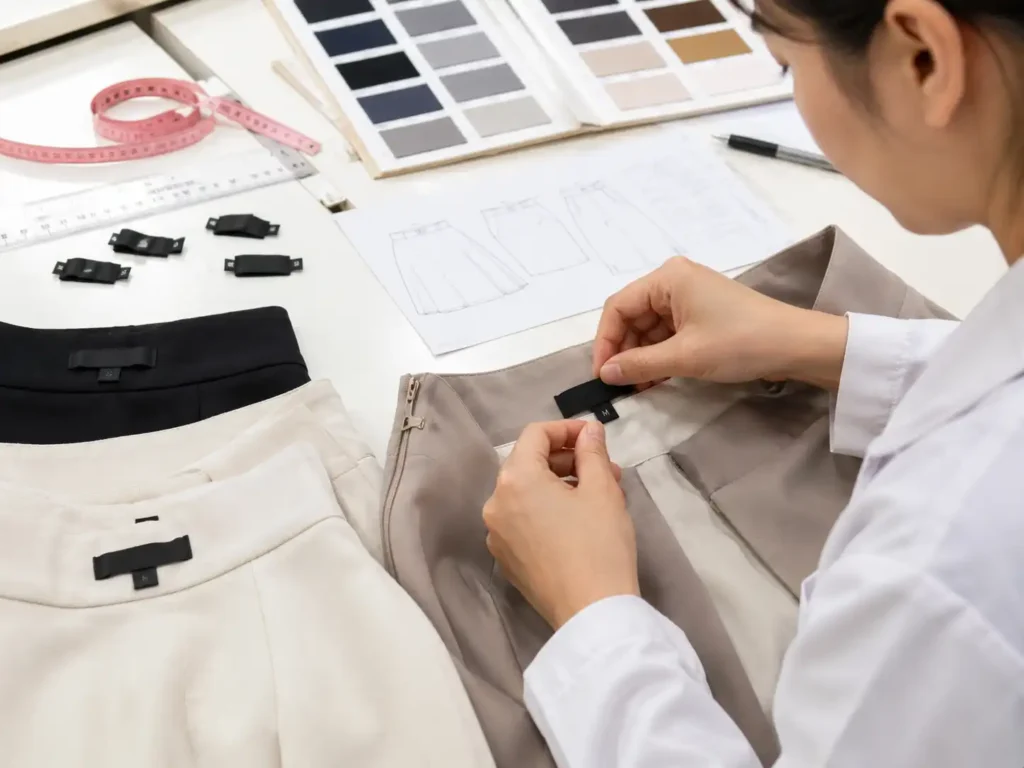
Woven and Size Labels

Care and Fiber Labels

Hangtags and Branding
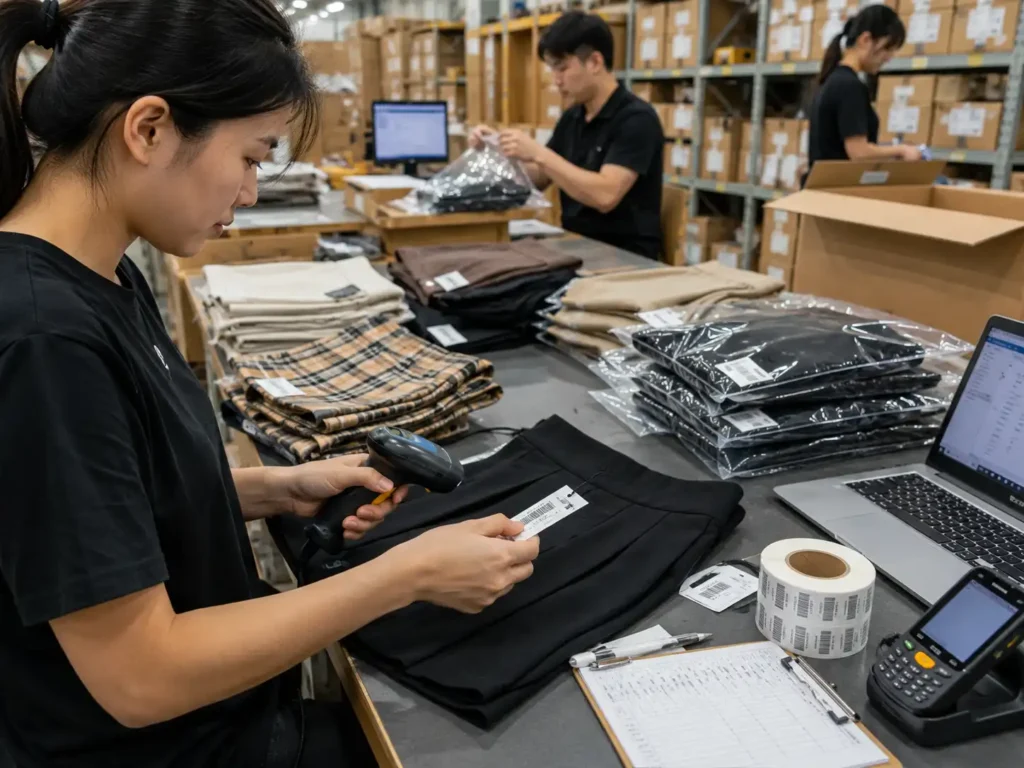
Barcode and SKU Labels

Polybag and Folding
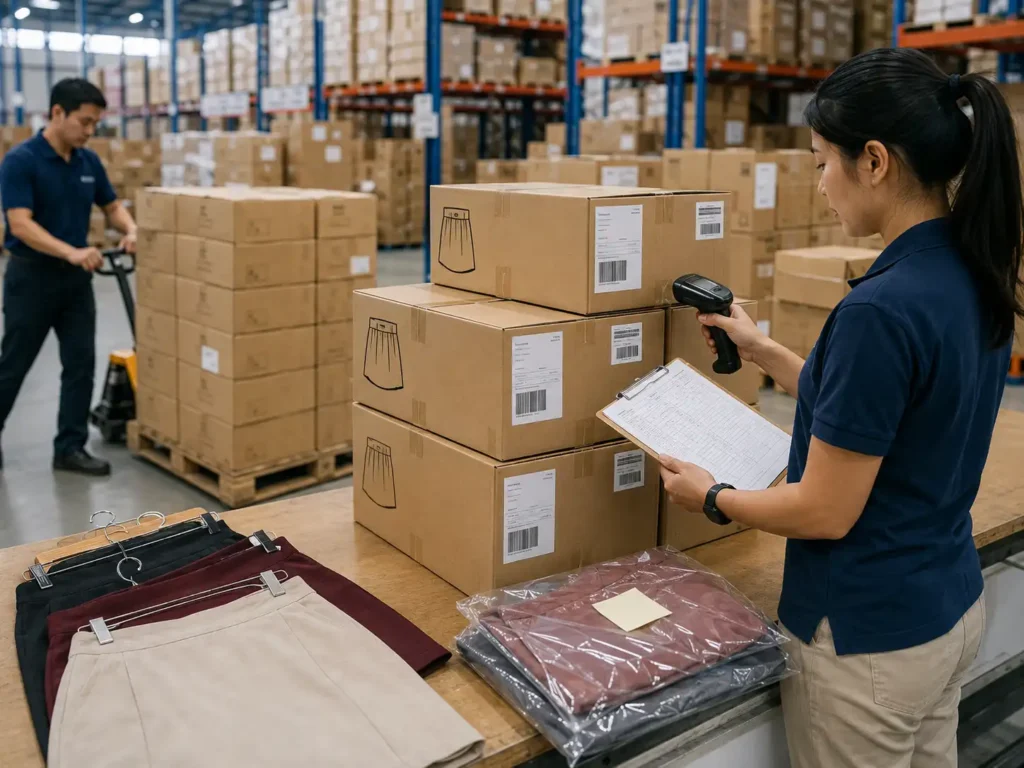
Carton and Warehouse Marks
Multi-Style Collections Can Move From Launch to Repeat Order

Same Pattern, New Color

Same Shape, New Fabric

Coordinated Top and Skirt

Repeat Orders and Replenishment
Multi-Style Skirt Program Built for a Seasonal Launch
A North American fashion label required a coordinated skirt program that could move from development through branded bulk delivery without losing fit, fabric character or SKU accuracy. Brand identity and proprietary artwork remain confidential.

Program Scope and Commercial Requirements
The project covered 18 skirt styles inside one seasonal program, with a combined order quantity of approximately 46,800 pieces. The assortment included long and midi silhouettes, pleated directions, slit details, clean A-line shapes and coordinated fashion tops for selected looks. Several styles shared fabric families or color directions, while others required distinct drape or construction. The brand needed development work to remain organized across multiple styles rather than treating each garment as a separate conversation.
Commercial planning started by separating confirmed elements from open decisions: style reference, target fabric direction, size range, quantity per style and color, launch timing, labels and packing. Styles with more complex pleats, longer hems or material substitutions were given additional development attention before PP release. Common trim and packing elements were consolidated where possible to reduce unnecessary variation across the program without flattening the design identity of each style.
The project structure also accounted for phased approvals. Some styles could move forward once fit and fabric were confirmed, while others remained in revision because hem balance, slit position or material behavior still needed work. Keeping individual style status visible helped prevent one unresolved skirt from blocking the progress of the wider seasonal order. The same structure also made it easier to separate development issues from material lead-time issues, so commercial decisions could be made by style rather than from one blended project status.

Sample Revisions Focused on Fit, Length and Fabric Behavior
The sample stage concentrated on waistband placement, hip ease, front-back balance, slit height, pleat volume, lining relationship and long-skirt movement. One fabric direction produced a softer drape than expected from the original reference, changing the visual sweep and causing the lower section to fall differently. Rather than forcing the first pattern into bulk, the construction and length were reviewed together with the fabric so the revised sample represented the material actually planned for production.
Several styles also required clarification between a visual reference and measurable specifications. A slit that appeared moderate in a standing photo opened more during walking, while a pleated style became too heavy around the waist when the original volume was translated into the selected fabric. Those findings were converted into revised patterns, updated measurements and adjusted construction notes before PP review.
Changes were documented by style so the brand could see which comments affected fit, fabric, sewing method, cost or schedule. Approved points then moved into final patterns, size charts, fabric references, trim records and QC checkpoints. The process reduced the risk of sample comments disappearing when development shifted from the sample room to the bulk production team. It also gave the brand a clearer record of which visual changes were accepted and which measurement or construction points became mandatory bulk references.

Bulk Control Matched the Product Risks of Each Style
Bulk production did not use one identical checklist across all 18 styles. Pleated skirts required pleat spacing, waist thickness and pressing checks; long woven skirts required front-back balance and hem-level control; slit styles required opening height and reinforcement checks; coordinated set pieces required color and fabric consistency. Shared private-label elements were inspected against approved artwork and SKU information across the entire order.
Inline inspection focused on repeated problems while production was active. Waistbands, zippers, side seams, pleats and long hems were reviewed before finishing so systematic issues could be corrected earlier. Measurement inspection used the approved size charts, with waist, hip, skirt length and style-specific points checked against the relevant specification rather than against a generic skirt tolerance sheet.
Finishing and packing were also style-sensitive. Pleated pieces were folded to preserve structure, long skirts were arranged to reduce severe crease concentration, and SKU labels were matched to color and size breakdowns. Final carton information reflected the assortment structure so receiving teams could identify the correct style, color and size without reopening mixed cartons unnecessarily. Packing records were kept aligned with the style-level production status, reducing the chance that approved and unapproved versions were mixed during final consolidation. Final quantity checks also followed the approved style-color-size breakdown before shipment release.

Resulting Production Record Supported Future Reorders
The completed program left behind more than finished garments. Jinfeng Apparel retained the approved pattern records, measurement files, fabric references, trim information, packing requirements and QC notes used during production. Those records created a working baseline for future color extensions, repeat orders and related skirt development rather than forcing the brand to reconstruct the same information from email history.
When a repeat program is considered, the original references still need to be checked against current fabric availability, dye lot, trim supply and revised commercial requirements. The value of the archive is speed and consistency of evaluation, not an assumption that every old material remains unchanged. A successful silhouette can therefore be extended while preserving the fit logic and construction decisions that were already validated.
The case also illustrates the operating model Jinfeng Apparel is designed for: multi-style womenswear programs with defined development inputs, structured sample revision, documented PP handover, product-specific QC, private-label packing and repeat-order planning. The order size remained within a normal brand-scale program rather than being treated as a one-off sample exercise. The retained records also created a more reliable starting point for future assortment planning because proven fit and construction decisions could be reviewed before new color, fabric or styling changes were introduced.
Brand Protection, Inspection and Compliance Support by Project
NDA and Design Protection
Inspection Coordination
Compliance Documentation
Prepare a Better Maxi Skirt Development Brief Before Sampling
Product Development Brief
Commercial and Delivery Brief
Custom Maxi Skirts Frequently Asked Questions
Yes. Jinfeng Apparel can start from reference images, tech packs, original samples, sketches or line sheets. Development reviews silhouette, waist position, hip fit, skirt length, slit, lining, fabric direction and construction before pattern making. Images alone may not define measurements, fabric weight or internal construction, so open points are confirmed during the development review rather than assumed as final bulk specifications.
Standard MOQ starts from 200 pieces per style/color. MOQ is calculated by style and color rather than by total order quantity. Special fabrics, custom dyeing, printing, trims, labels or packaging may have separate supplier MOQs. A mixed order totaling 200 pieces across several styles or colors does not normally meet the standard production structure.
Common directions include chiffon, rayon, viscose, satin, crepe, linen blends, jersey, ponte and selected stretch woven fabrics. Fabric choice depends on silhouette, drape, opacity, lining, target price, movement, wrinkle behavior and bulk stability. Jinfeng Apparel reviews the actual product direction before recommending or approving material because one fabric cannot suit every maxi skirt construction.
Length control starts with the approved measurement method and waistband position. Pattern development checks front length, back length, side-seam balance, slit position and hem sweep. Long fabrics can relax or drop differently after sewing, so sample and bulk review also considers garment hanging, pressing and final finishing rather than relying only on the original paper pattern dimensions.
Revisions are classified by fit, fabric, workmanship, color, trims, measurements, design accuracy, private-label details or cost alignment. Approved changes are transferred into revised patterns, size charts, fabric or trim records, sewing instructions and QC checkpoints. A revised sample is made when the change needs physical verification before PP approval and bulk release.
Yes. Jinfeng Apparel supports size grading based on the approved pattern and client size chart. Waist, hip, skirt length, slit placement and other style-specific points are reviewed so the silhouette remains proportional across sizes. Grading is not treated as simply enlarging every measurement equally, especially for high-waist, low-waist, fitted or slit maxi skirt designs.
Yes. Private-label support can include woven labels, size labels, care labels, hangtags, barcode stickers, SKU labels, polybags, carton marks and warehouse labels. Artwork, placement and packing requirements should be confirmed before bulk packing. Long-skirt folding and fabric protection can also be reviewed according to the selected material and receiving route.
Yes, third-party inspection can be coordinated according to project requirements. The inspection brief should identify the applicable size chart, workmanship expectations, packing rules, shipment quantities and any agreed AQL or client-specific standard. Jinfeng Apparel also performs internal material, cutting, sewing, measurement, finished garment and packing checks during production.
Delivery timing is confirmed after sample approval, material availability, trims, production schedule, packing requirements and shipment method are reviewed. Express, air freight, sea freight, client-appointed forwarders and split shipment can be evaluated by project. Transit time is not treated as a fixed guarantee because destination, season, customs and carrier schedules can change.
Yes. Jinfeng Apparel can retain pattern versions, size charts, fabric references, trim details, packing requirements and Golden sample records for repeat-order support. Before a reorder, fabric availability, color, trims, quantity, PP requirements and delivery plan are reconfirmed. If material or construction changes, the pattern and sample may need another review before bulk production.

Start Your Custom Maxi Skirt Development With Clear Production Inputs
Send the information already available for your maxi skirt program.
Jinfeng Apparel can review design feasibility, fabric direction, pattern and fit requirements, sample needs, MOQ structure, private-label details and bulk production planning from one project brief. Reference images are welcome, but a stronger review is possible when quantity, size range and target delivery information are included from the beginning.
Please include where available:
- Reference image, tech pack, sketch, original sample photos or line sheet
- Quantity per style and color
- Target fabric, hand feel, drape or fabric swatch reference
- Brand size chart and intended skirt length
- Waist position, slit, pleat, tier, lining or closure details
- Color list and any print or dye requirements
- Woven labels, care labels, hangtags, barcode, SKU and packing instructions
- Target launch or delivery window
- Third-party inspection, testing or market-specific documentation requirements


