Skip to content

Custom Labels, Hangtags and Barcode Development
Integrated brand identification and retail-ready labeling for custom womenswear programs, managed from approved artwork through packing and shipment.
Jinfeng Apparel connects brand files with garment production, finishing and warehouse preparation:
- 12+ merchandisers coordinate label artwork, care content, barcode lists, placement approvals and packing instructions across multi-style programs.
- 15+ QC inspectors review garment labels, hangtag application, SKU identification, packing details and final shipment presentation.
- 30+ finishing and packing workers handle trimming, pressing, hangtag attachment, barcode stickers, individual packing, carton marking and quantity checks.


Built for Fashion and Retail Programs
Fashion Brand Teams
Retail Operations
Retail teams need garments that can move from carton to warehouse and store without relabeling. Hangtags, price tickets, barcode stickers, size identifiers, polybag labels and carton marks must follow the purchase order and warehouse guide.
Jinfeng reviews the required identification points before packing, then checks style, color, size and quantity against the packing list. Clear instructions reduce avoidable receiving delays, manual sorting and incorrect store allocation after an international shipment reaches its destination.
Sourcing and QA
Brand Identification Options for Custom Womenswear

Woven Brand Labels
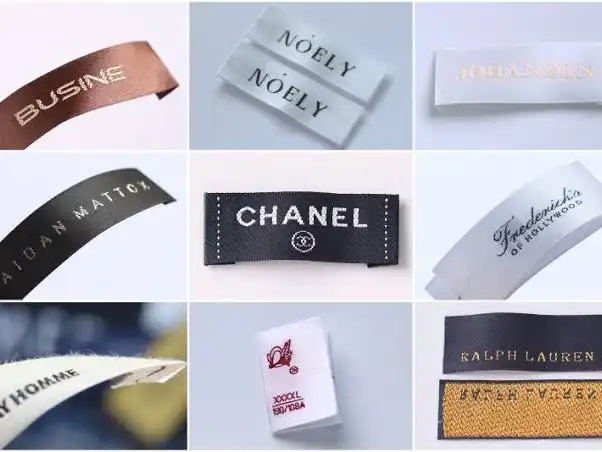
Woven labels create a permanent brand signature at the neckline, side seam, waistband or inner garment. Development covers label dimensions, yarn color, weave clarity, fold construction, edge softness and sewing position.
A satin slip dress may need a soft, narrow label that does not distort the neckline, while a structured set can support a firmer label.Placement and attachment are confirmed against the garment construction before bulk sewing and recorded for consistent repeat production.
Printed Garment Labels
Care and Content Labels
Size Identification
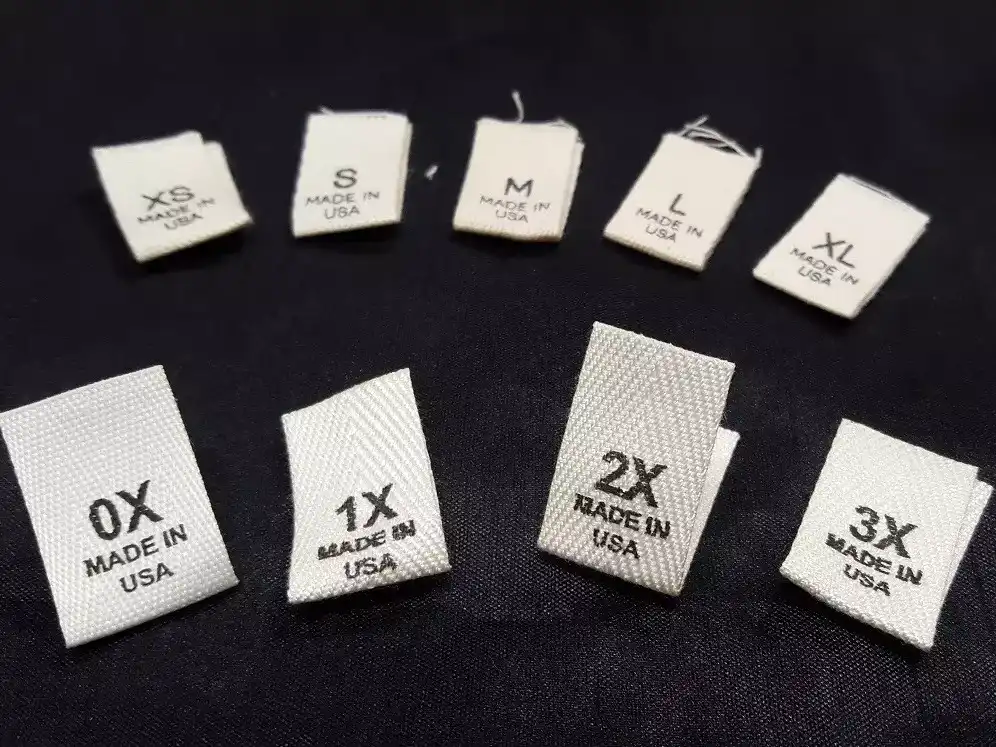
Size labels connect the approved grading system with the physical garment and packed SKU. Programs may use XS-XL, numeric sizing, or US, UK, EU and AU references. Jinfeng checks the sewn size label against the measurement specification, polybag sticker, barcode record and carton breakdown. Label location also changes by product: dresses may use the neckline or side seam, skirts commonly use the waistband, and sets require coordinated identification across both pieces.
Custom Hangtags
Barcode and SKU Labels
Files Required Before Label Development
Accurate development starts with controlled source information. The matrix below shows what the brand supplies, what Jinfeng reviews, and what must be approved before labels, hangtags and barcode materials move into bulk production.
| Brand Input | Jinfeng Review | Approval Output |
|---|---|---|
| Vector logo and label artwork | Dimensions, color references, fold type, material and sewing position | Label artwork, material sample or physical approval sample |
| Fiber and care information | Available fabric records, layout space, legibility and production format | Approved care label proof and confirmed wording |
| Size system and grading file | Garment size, sewn label, polybag sticker and carton breakdown alignment | Approved size identification plan |
| Hangtag artwork and finish brief | Paper, surface finish, hole position, string, sticker area and attachment point | Approved hangtag proof or sample |
| SKU and barcode list | Style, color, size, code format, quantity and application location | Controlled barcode application file |
| Packing and warehouse guide | Polybag labels, carton marks, PO references, packing ratio and receiving rules | Confirmed packing instruction |
Labels Designed Around Garment Construction

Woven Label Construction
A woven label is assessed as a garment component, not an isolated logo sample. Yarn density and color affect readability, while fold construction affects thickness and sewing stability.
End-fold, center-fold and straight-cut formats suit different locations and attachment methods. Narrow necklines, low backs and corset structures may leave little space for a conventional center-back label.
- Soft edges are favored for skin-contact positions.
- Fold and seam allowance must support consistent attachment.
- Label width cannot interfere with neckline binding, zipper or lining.
- Color and weave definition are reviewed against the approved brand reference.

Printed Label Performance
- Fine text needs sufficient contrast and print resolution.
- Label material should suit expected washing and skin contact.
- Folded edges must not create a hard point inside the garment.
- Wash performance can be tested when the program requires documented validation.

Size System Alignment
- Sewn labels follow the approved size breakdown.
- Sets require consistent identification for both components.
- Polybag and carton references must match packed garment size.
- Regional size conversions are used only after written brand approval.
- Revision control covers every approved size-system change.
Hangtags Developed for Brand and Retail Use
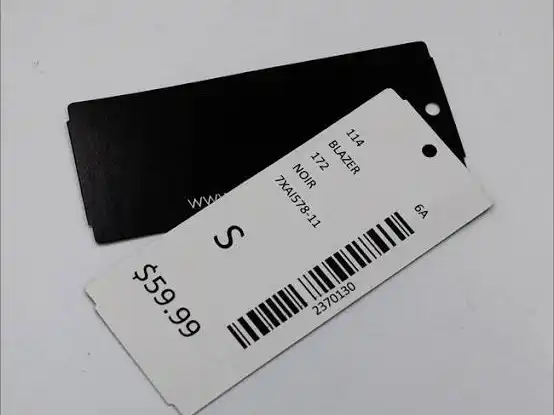
Hangtags must present the brand well, survive handling and carry the right commercial information. Development therefore joins graphic execution, material selection, variable data, attachment and packing rather than treating the tag as a decorative card.

Material, Print and Finish Decisions
Paper weight and surface character should support the garment’s position and price point. A matte uncoated board can suit a restrained contemporary collection, while coated stock, foil stamping or selective gloss may support occasionwear and campaign launches. Finish availability, color tolerance, rubbing risk, lead time and supplier minimums are reviewed before approval. Jinfeng coordinates artwork dimensions, bleed, logo scale, hole placement and any reserved area for barcode or price stickers. Printed proofs can establish layout, but a physical sample remains important when paper feel, foil quality, embossing depth or string color carries brand value.
Material selection also considers garment protection. Rough edges, metal eyelets and heavy accessories can mark satin, snag mesh or rub against embellishment during packing and transportation. Attachment method is chosen with the garment construction in mind. A side-seam loop may suit a delicate neckline, while a waistband or internal loop can protect low-back and strapless designs. Special paper, recycled content or certified stock is described only after supplier availability and supporting documents are confirmed. Color comparisons should use the approved brand reference under controlled viewing conditions, because screen proofs cannot establish paper texture, metallic reflection or exact printed color. Any premium finish also needs a production tolerance and handling review before final costing.
Variable Data and Attachment Control
A single visual tag may serve an entire collection, while barcode, price, size or market information changes by SKU. Variable elements therefore need a controlled data source and a clear application plan. Jinfeng receives the approved SKU list, identifies which fields are fixed and variable, and maps every version to the garment order. The tag sample confirms dimensions, hole position, string and attachment point; the data file confirms style, color, size, code and quantity. Both approvals are required before bulk use.
During finishing, hangtags are attached at the agreed garment position and kept facing the required direction. QC checks include tag version, print appearance, sticker placement, string security and consistency with the packed garment. Programs supplying several destinations may require different price tickets, languages or warehouse labels. Those differences are separated by purchase order or packing instruction so mixed versions do not enter the same carton. Unreleased brand artwork and variable data remain restricted to the assigned production and packing team. Final packing photos can document placement and presentation for an approved project without exposing another brand’s files. Repeat orders use archived specifications, but every new barcode list and price version still requires written confirmation.

Barcode Data Connected to Every Physical SKU
Brand-Issued Codes
UPC, EAN and other GTIN numbers are normally allocated by the brand through the appropriate GS1 process.Jinfeng works from the issued list and does not invent ownership numbers. Source files should identify each code beside the corresponding style, color and size. If duplicate, missing or unclear records appear during review, the merchandising team returns the file for correction before printing or application. The approved source remains the reference when physical stickers are checked during packing and shipment reconciliation.
- Required: code value and barcode format
- Required: style, color and size mapping
- Confirm: destination or retail program
Style Number Control
- Match: purchase order and tech pack
- Record: revision or regional suffix
- Lock: approved name before bulk use
Color and Size Mapping
- Confirm: commercial color name
- Confirm: physical size label
- Match: polybag and carton breakdown
Application Locations
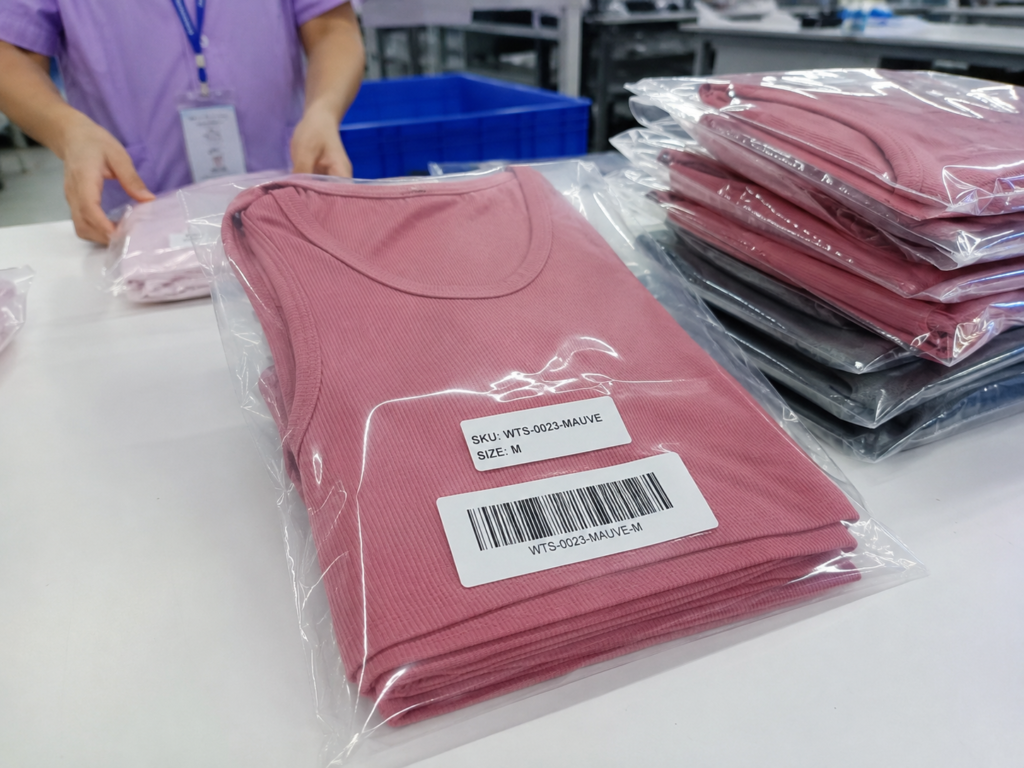
The same SKU may appear on more than one physical component, depending on warehouse rules.Common locations include a hangtag sticker, individual polybag label, inner pack identifier and outer carton label. Jinfeng follows the approved guide for orientation, distance from edges and visibility. Application points are never assumed from a previous order when a new retailer, 3PL warehouse or packaging format is introduced. Position samples are photographed or retained when placement tolerance affects scanning or presentation.
- Hangtag: retail scan and price presentation
- Polybag: unit identification and fulfillment
- Carton: receiving and inventory routing
List and Scan Checks
- Compare: printed numbers and source file
- Scan: according to agreed project requirements
- Separate: failed, unclear or mismatched labels
Packing List Alignment
Barcode records must remain consistent with carton contents and shipping documents.Jinfeng checks the style-color-size breakdown during packing, then carries the confirmed quantities into carton marks and the packing list. Mixed-size or mixed-color cartons require an explicit rule and clear external identification. Changes made after labels have been printed are reviewed for rework impact before shipment dates are reconfirmed. Final reconciliation records carton totals and any approved exceptions before release to the forwarder.
- Verify: packed quantity by SKU
- Match: carton number and carton mark
- Reconcile: final packing list before shipment
Label Placement Mapped by Garment Type

Dresses and Jumpsuits

Skirts, Sets and Tops

Packaging and Retail Points
External identification follows a different logic from sewn labels. Hangtags need a secure attachment point that does not damage delicate fabric, while polybag labels need a visible and scannable position.
Carton labels must align with packing and warehouse instructions. Jinfeng treats sewn labels, hangtags, polybags and cartons as linked identification layers, allowing QA teams to trace one SKU from finished garment to shipment and final carton reference during final reconciliation.
Care Labels Prepared for Target Markets
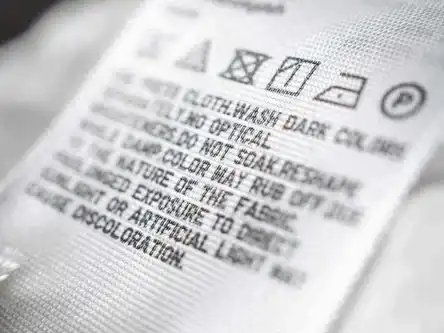
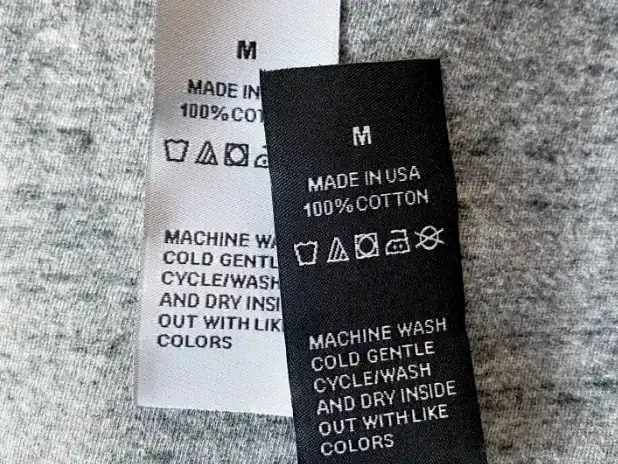
Care labels combine technical garment information with market-facing requirements. Jinfeng can organize production-ready layouts from approved fiber, care, origin and identification data while keeping final legal wording under brand or local compliance review.

Building the Care Label Content
Care information begins with the confirmed garment specification and available fabric records. Fiber composition may come from supplier declarations, purchase records or testing reports, while washing instructions should reflect fabric, trims, construction and finishing. A delicate satin dress with lining, a stretch bodycon style and an embellished evening dress may require different care directions even within one collection. Jinfeng can prepare layouts containing brand name, size, fiber composition, care instructions, country of origin, style number, batch reference, washing symbols, RN number when supplied and importer information when supplied.
Space and legibility are checked before printing. Long multilingual content may require a booklet label, multiple panels or a revised label size. Font size, contrast, fold lines and seam allowances must leave required information readable after sewing. Sustainability statements, organic claims or recycled-content wording are included only when the brand supplies adequate supporting evidence and approves the final wording. A production proof is returned for confirmation before bulk label manufacture.
Garment construction also influences the final format. A double-layer satin dress may allow a side-seam label between lining and shell, while a sheer mesh style may expose the same solution from the outside. Labels near zippers, boning, elastic channels or high-friction points require a location review. When several fiber combinations share one silhouette, each composition version receives its own controlled record rather than a handwritten production adjustment.
Confirming Responsibility Before Production
infeng supports projects intended for the United States, United Kingdom, European Union, Australia, Canada and other markets, but local rules vary by product, destination and selling channel. The brand or appointed compliance adviser remains responsible for confirming final fiber declarations, care language, country-of-origin treatment, importer details, RN information and required symbols. Jinfeng’s role is to organize the confirmed content into a producible label, coordinate the material, apply it at the approved position and check its presence during garment and packing inspection.
Changes made after care labels enter production can affect cost and schedule, particularly when several style and fiber combinations are involved. A controlled approval record therefore identifies the final file, revision date, material, dimensions, fold, position and applicable styles. PP approval should include the physical label whenever available. Bulk work follows the locked version, while obsolete files are removed from the active production package to reduce accidental reuse.
Inspection confirms both presence and relevance. A correctly sewn label still fails the requirement when it carries the wrong fiber composition or belongs to another market version. Packing teams therefore separate style and destination groups before final folding. Any discrepancy is escalated to merchandising and QA for documented disposition instead of being changed by production staff without written authorization.

Six Controlled Steps Before Retail-Ready Packing
Requirement Review
Artwork Review
Material Confirmation
Sample Approval
Data Lock
Application and QC
Labeling Built Around the Selling Channel

Ecommerce Fulfillment
Unit-level identification supports picking, shipping and returns. Common requirements include a sewn size label, hangtag, individual polybag, SKU or barcode sticker, color identifier and style number.
Placement must remain visible without obscuring required warnings or damaging presentation. Jinfeng connects the unit label with the packed garment and carton breakdown so fulfillment teams can identify stock without opening every bag. Return identifiers or marketplace labels can be added when an approved specification is supplied.

Specialty Retail

Warehouse and 3PL
Third-party warehouses often define barcode position, label dimensions, carton numbering, mixed-carton rules and electronic data references.
Jinfeng can work from an approved receiving manual and packing instruction, then prepare polybag labels, carton marks and packing lists accordingly. Requirements introduced after bulk packing may cause relabeling and schedule impact, so the guide should be supplied during development or before PP approval. Final carton data is reconciled before handover to the nominated forwarder.
Three Checks Prevent Costly Labeling Errors
Artwork and Material
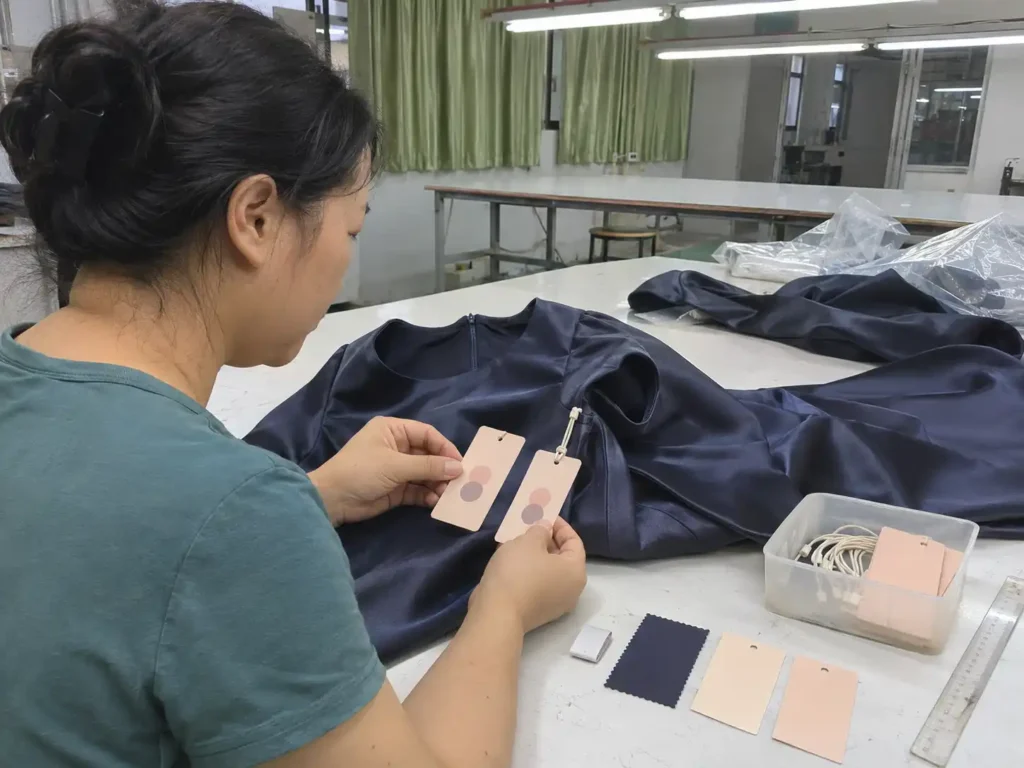
Artwork control covers the visible and physical specification. Teams compare logo shape, spelling, color reference, label dimensions, fold, paper finish, string, sticker area and approved revision. The physical item is also checked for suitability on the garment, including edge comfort, stiffness, fabric marking and attachment security. Deviations are isolated before they reach bulk packing. Approval samples and controlled references remain available to inspectors, preventing an attractive but unapproved variation from being accepted by visual judgment alone.
- File revision and approval date
- Material, dimensions and color
- Fold, hole, string and placement
- Legibility and visible print defects

SKU and Application
SKU control connects the printed identification with the actual garment. Inspectors compare style, color and size against the approved barcode list, physical size label and packing instruction.
Barcode stickers are checked for clarity, orientation and agreed position; scan checks are completed when included in the project standard. Mixed or unclear records are held for review rather than corrected by assumption. Any revised code file receives a new approval status, and previously printed stock is quarantined until its disposition has been confirmed.
- Style-color-size match
- Barcode number and printed text
- Hangtag or polybag position
- Failed or duplicate record isolation

Packing and Cartons
Packing control verifies the final commercial unit and shipment container. Garment label, hangtag, size sticker, barcode sticker, polybag and folding method are reviewed before carton packing. Carton number, style, color, size, quantity, PO reference, gross and net weight, and carton dimensions are then checked against the packing list and approved shipping mark. Random carton opening or pre-shipment inspection can be included according to the agreed quality plan and order risk. Released cartons remain separated from pending inspection stock.
- Unit pack completeness
- Size and color ratio
- Carton mark and quantity
- Packing list reconciliation
Teams Assigned to Data, Quality and Packing
12+ Merchandisers
15+ QC Inspectors
30+ Packing Workers
MOQ, Cost and Timing Factors
Garment production quantities and branded material minimums are not always the same. The following working ranges support early planning; final quotations depend on artwork, material, finish, SKU count, supplier availability and production schedule.
| Program Item | Working Basis | Main Cost or Timing Factors |
|---|---|---|
| Custom womenswear production | From 200 pieces per style/color | Fabric availability, construction, trims, color development, packing and schedule |
| Custom woven label | Commonly 500-1,000 pieces | Yarn colors, weave density, dimensions, fold and edge treatment |
| Custom care label | Commonly 500-1,000 pieces | Material, print content, number of panels, languages and style versions |
| Custom hangtag | Commonly 500-1,000 pieces | Paper, printing, foil, surface finish, hole, string and variable sticker area |
| Barcode sticker | Confirmed by SKU and quantity | Code format, record count, dimensions, stock, application point and scan requirement |
| Retail or warehouse labeling | Based on approved destination guide | Price tickets, security allowance, PO data, carton labels and receiving rules |
A 36,000-Piece Multi-Style Labeling Program
An anonymized program illustrates how brand identification and SKU control operate at production scale. The working order covered 18 womenswear styles, three colors per style, five sizes and 36,000 finished garments prepared for ecommerce and retail allocation.

Program Structure and Approval Plan
The 18-style collection included dresses, skirts, matching sets and tops. Three colors and five sizes created 270 style-color-size combinations. One core hangtag design carried the brand identity, while variable barcode stickers distinguished every SKU. Woven labels, care labels and size labels changed according to garment construction, fiber composition and size. Several open-back and sheer styles could not use the same neckline placement as lined dresses, so label positions were reviewed during sample development rather than left for bulk sewing.
The merchandising team created one controlled handoff covering the current artwork, care content, size system, barcode list, hangtag specification, label placement and packing guide. Physical hangtag and woven-label samples were reviewed before PP approval. Barcode records were checked for duplicate and missing combinations, then grouped by style and destination for packing. Obsolete draft files were removed from the active package. The schedule placed final label approval before bulk finishing, protecting the packing window from avoidable reprinting.
One label placement sheet covered the core product groups but allowed separate positions for low-back dresses, sheer tops, lined skirts and two-piece sets. Care labels were divided by fiber composition instead of forcing one generic version across the collection. The hangtag reserved a fixed area for variable stickers, keeping logo scale and brand color consistent while allowing SKU-level data to change. Every physical approval was photographed and linked to the applicable file revision before release.
Bulk Execution and Shipment Control
Production records linked each style with the applicable sewn labels, hangtag attachment point, barcode sticker and polybag identification. Finishing teams received separated quantities by style, color and size. QC checked label presence and placement during final garment inspection, followed by SKU and packing checks before carton closure. Mixed-size cartons were used only where the warehouse guide allowed them, with carton-level breakdowns matched to the packing list.
The completed order contained 36,000 individually identified garments across 270 SKU records. The case does not depend on an unsupported zero-error claim; the value lies in controlled approval, file separation, exception handling and reconciliation before shipment. A repeat program can reuse approved brand specifications, label positions and packing logic while still reviewing new fiber content, colors, size assortments and barcode data. Confidential artwork, codes and order details remain restricted to the assigned project team.
Final reconciliation compared packed quantities with the approved barcode list, carton sequence and shipment documents. Any short packing quantity or damaged identification material was handled as a recorded exception rather than hidden through an undocumented substitution. The retained records created a reliable starting point for later color additions and repeat production, while new commercial data remained subject to fresh approval.

Clear Ownership Protects Brand and Compliance Data
Data and Compliance Ownership
The brand supplies final logo files, approved care wording, commercial prices, SKU definitions and GS1-issued UPC, EAN or GTIN records. Jinfeng reviews format, completeness, production layout and physical application, then returns unclear entries for confirmation. RN numbers, importer details, fiber declarations and market-specific statements are never invented. Certified barcode grading, RFID encoding or security-tag integration is offered only when a documented project method and suitable specialist resource have been confirmed. Written approval closes each responsibility gap before printing, sewing or sticker application begins.
- Brand: owns and approves commercial and compliance data
- Jinfeng: coordinates production, application and order-level checking
- Local adviser: confirms market-specific legal wording when required
Confidentiality and Material Claims
Logo files, label artwork, hangtag designs, barcode lists, packaging files, prices and unreleased collection information are limited to the assigned development, production, QC and packing roles. NDA-based cooperation can be arranged. Public photos use unbranded or anonymized examples unless written authorization permits disclosure. Recycled paper, FSC-related paper or lower-plastic packaging options are described only after supplier availability, minimums, cost and supporting documentation have been checked for the selected material. Archived records support approved repeat production without turning confidential brand assets into public marketing material.
- Restricted use of brand artwork and SKU data
- Anonymized production and packing evidence
- Supplier-backed environmental statements only
Custom Labeling Frequently Asked Questions
Label, hangtag and barcode support is normally integrated with a custom womenswear development or bulk production program. Jinfeng is not positioned as a standalone retail label shop. Combining identification with garment production allows the team to verify placement, size, fiber content, SKU mapping and packing against the physical product.
Programs can include woven brand labels, printed labels, care labels, size labels, heat-transfer identification, custom hangtags, barcode stickers, polybag labels and carton marks. Availability, material, finish, minimums and timing are confirmed according to the garment order and selected supplier resource.
Provide vector logo artwork, label dimensions, color references, care and fiber content, size system, hangtag artwork, SKU and barcode list, garment tech packs, order quantities, target markets, packing instructions and any retailer or warehouse guide. Clear files allow accurate review before sampling.
The brand normally obtains and allocates GTIN data through the appropriate GS1 process. Jinfeng uses the approved values supplied for the order, connects them with style, color and size, and applies the resulting barcode labels according to the confirmed packing guide.
Common locations include hangtags, individual polybags, inner packs, warehouse labels and outer cartons. Position, dimensions, orientation and visibility follow the approved destination requirements. The same code may appear at several packaging levels when the warehouse guide requires it.
Digital proofs confirm layout and wording. Physical samples can confirm material, color, weave, paper feel, finish, folding, string and attachment. Sensitive garment positions should be reviewed on a development or PP sample before bulk application. Final approval records identify file revision, dimensions, material and applicable styles.
Jinfeng can organize the layout using approved fiber, care, size, origin and identification information. Final market wording remains the responsibility of the brand or appointed local compliance adviser. Production begins after the approved content and physical specification have been confirmed.
Yes. Garment production starts from 200 pieces per style/color, while common custom woven labels, care labels and hangtags may require 500-1,000 pieces. Barcode stickers are usually confirmed by SKU count and quantity. Special paper, finishes, strings and printed packaging can carry separate supplier minimums.
Jinfeng can work from an approved retailer or warehouse guide covering price tickets, barcode position, polybag labels, carton marks, PO references, size ratios, mixed cartons and packing lists. Requirements should be supplied before PP approval or bulk packing to avoid relabeling and schedule changes.
RFID encoding and specialized security systems are not presented as standard in-house capabilities. A project requiring RFID or retailer-appointed security tags must be evaluated separately, including the nominated system, data owner, specialist supplier, attachment position, testing method, cost and schedule.
Send Your Label and Barcode Program
Share the garment and identification files together so our team can review the complete production handoff. A useful submission includes the apparel category, style count, order quantity, target markets, launch date and required delivery channel, followed by the files controlling labels, hangtags, barcode application and packing. Jinfeng will assess material availability, supplier minimums, garment placement, approval sequence, SKU complexity and the timing required before bulk finishing.
Please include:
- Tech packs, line sheet or representative garment references
- Vector logo, label and hangtag artwork
- Approved fiber and care information
- Size system and order breakdown
- SKU, UPC, EAN or GTIN list supplied by the brand
- Polybag, carton and warehouse receiving instructions
- Required sample, PP and shipment dates
The review will identify missing decisions, items requiring physical samples and any material, compliance, cost or schedule boundary before production release.