Skip to content
Custom Fashion Manufacturer for Brand-Owned Collections
Turn brand-controlled concepts into cohesive womenswear collections built for sampling, bulk production, private labels, retail delivery and repeat programs.
Jinfeng Apparel supports global fashion brands with dresses, skirts, jumpsuits, matching sets and private-label womenswear developed around each collection plan. Fabric direction, pattern development, multi-style sampling, PP approval, production control, QC, packing and export coordination are managed as one connected program rather than isolated garment orders.
- 10-30 styles commonly managed within one collection program.
- 20,000-80,000 pieces commonly planned across a single brand order.
- 6 owned women’s fashion factories plus 10+ long-term production partners.
- 2 sample rooms, 7+ senior pattern makers and 20+ sample machinists support parallel development.
Manufacturing Resources for Multi-Style Collection Programs
Since 2008
Six Owned Factories
Ten Plus Partners
100,000+ Monthly Capacity
Two Sample Rooms
Fifteen Plus QC
What Brand-Owned Collection Manufacturing Really Means
Brand-Owned Custom Collection
- Product direction remains controlled by the brand.
- Fabric, fit, trims and construction can be developed by style.
- Final garments carry the brand’s approved labels and packing.
- Repeat production can use archived project records.
White Label or Stock
- The base product may be shared across several labels.
- Pattern and construction changes are often limited.
- Collection identity depends heavily on surface branding.
- Long-term fit continuity can be harder to maintain.
Built for Brands Owning Their Product Direction
Global Fashion Brands
Brand Groups
Premium Ecommerce Teams
Product Development Teams
Sourcing Offices
Retail-Owned Programs
Where Brand-Owned Collection Programs Commonly Break
Disconnected Assortment
Fabric Direction Changes
Inconsistent Fit Standards
Version Confusion
Sample-Bulk Gaps
Unprotected Design Data
From Collection Brief to Retail-Ready Production
Collection Brief
Structure Review
Fabric Direction
Pattern Development
Sample Development
PP Approval
Bulk and QC
Branded Delivery
Build a Commercially Coherent Womenswear Collection
A brand-owned assortment becomes stronger when product roles are planned across length, silhouette, occasion, fabric and construction. The matrix below helps connect creative direction with manufacturing control and sellable assortment logic.
| Collection Dimension | Examples | Manufacturing Focus | Commercial Role |
|---|---|---|---|
| Length | Mini, midi, maxi, floor length | Proportion, hem balance, slit height, lining length and graded garment length | Creates coverage for different occasions, seasons and price levels |
| Silhouette | Bodycon, A-line, corset, slip, skater, fit-and-flare | Bust-waist-hip balance, support, ease, seam placement and size grading | Builds recognizable fit identity without repeating one shape |
| Occasion | Party, occasion, graduation, wedding guest, resort, evening | Movement, coverage, photo appearance, comfort, fabric weight and launch timing | Connects products with clear wearing and marketing moments |
| Fabric | Satin, mesh, lace, chiffon, jersey, sequin, velvet | Drape, stretch, transparency, shrinkage, color risk, lining and surface protection | Creates texture, margin and visual variety across the assortment |
| Construction | Ruching, boning, pleating, cut-outs, lining, zippers, layered mesh | Repeatability, support, seam control, workmanship and inspection points | Separates hero products from supporting commercial styles |
| Product Mix | Dresses, skirts, tops, jumpsuits, matching sets | Shared fabrics, color coordination, size logic and packing rules | Improves outfit building, capsule planning and cross-category selling |
Custom Womenswear Categories for Brand-Owned Collections

Occasion Dresses

Party Dresses
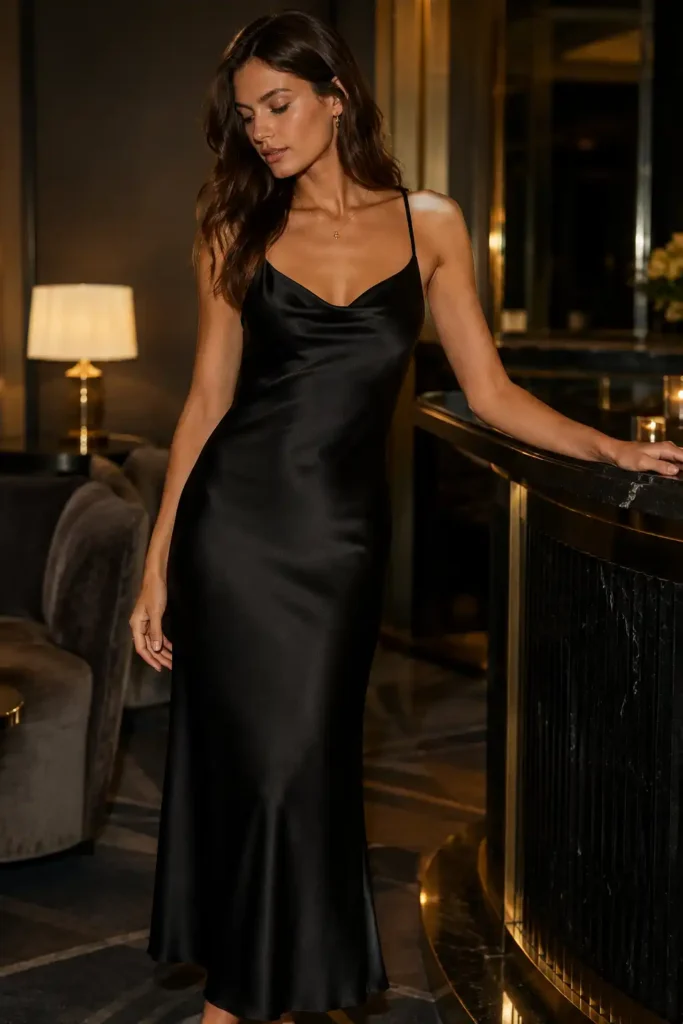
Satin Slip Styles

Mesh Lace Dresses

Corset Bodycon Styles

Jumpsuits Rompers

Matching Sets
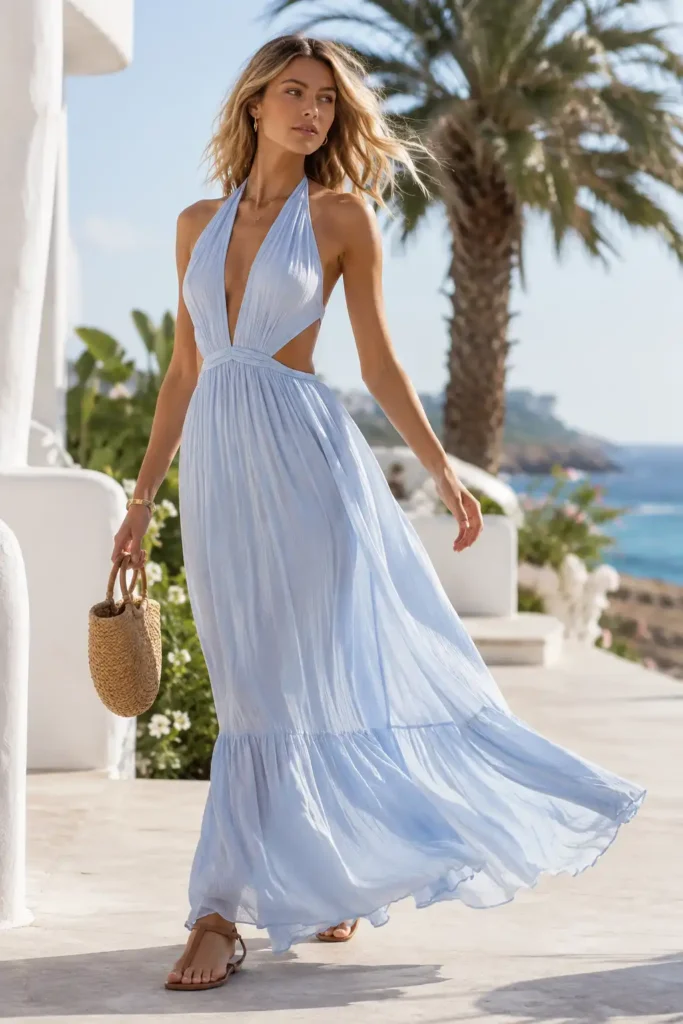
Resort Seasonal Styles
Development Paths for Different Design Readiness Levels
Tech Pack OEM
- Best for established product development teams.
- Supports accurate comparison between sample and approved specifications.
- Requires final updates after every approved revision.
Reference-Led ODM
- Best for teams needing stronger manufacturing input.
- Fabric and structure are selected together.
- Approved records are built during development.
Original Sample Review
- Best for supplier transfer or product improvement.
- Useful when existing production is inconsistent.
- Original samples should be legally owned or authorized.
Fabric and Trim Direction Protecting Collection Consistency
Material decisions control silhouette, fit, cost, MOQ, production risk and final brand appearance. Strong collection development treats fabric and trims as engineering inputs rather than late-stage decoration.
Group Materials Before Releasing Every Style
A 10-30 style collection becomes easier to manage when garments are grouped by material family before sample release. Shared satin, mesh, lace, jersey or crepe can connect several products visually while reducing uncontrolled color variation and repeated sourcing work. Material grouping does not mean forcing one fabric into every shape. A fabric may work well for a bias slip dress but fail in a structured corset, or perform strongly in a fitted skirt but collapse in a wide-leg jumpsuit. Each style still needs a suitability review.
- Drape: Determines whether a silhouette falls cleanly, clings, stands away from the body or creates unwanted volume.
- Weight and width: Influence opacity, cutting consumption, garment balance and cost per piece.
- Stretch and recovery: Affect bodycon fit, neckline stability, seam movement and size grading.
- Transparency and lining: Control coverage, comfort, color depth and bulk construction.
- Shrinkage and surface behavior: Influence pattern allowance, pressing, snagging, pilling and packing protection.
Control High-Risk Fashion Fabrics by Category
Satin needs attention to grain direction, color difference, snagging, seam puckering, water marks, pressing shine and creasing. Mesh requires control over transparency, layer count, stretch direction, edge recovery and lining color. Lace depends on motif scale, placement, symmetry, joining points and edge treatment.
Chiffon can shift during cutting, expose seam problems and require a carefully selected lining. Sequin fabric introduces weight, skin contact, loose pieces and surface abrasion. Jersey and stretch blends require recovery testing because a sample may fit well initially yet relax after wear or pressing.
- Compare shell and lining under the lighting conditions expected for photography and retail.
- Confirm fabric direction before pattern finalization for one-way shine, pile or motif.
- Review seam and hem methods on actual bulk fabric, not only on substitute sample yardage.
- Protect delicate surfaces during sewing, pressing, folding and carton packing.
Manage Trims as Structural Components
Zippers, cups, boning, elastic, underwire, strap sliders, hook-and-eye closures, buttons, lace trims, rhinestones and bead chains influence fit and repeatability.
A zipper length change can alter waist or hip entry. A different cup shape can move the neckline and bust point. Boning strength affects support, comfort and seam appearance. Heavy embellishment can distort mesh or stretch fabric. Trim approval therefore belongs inside the sample process, not after the silhouette has been approved.
- Lock trim supplier, color, size and attachment method before PP approval.
- Check metal finishes and decorative colors against the approved fabric under consistent lighting.
- Review skin contact, edge sharpness, weight and movement for party and occasion styles.
- Include labels and packing materials in the cost and MOQ review, especially for multi-color programs.
Balance Custom Materials with Commercial Timelines
Stock fabrics can support faster development and the standard MOQ starting point of 200 pieces per style/color when color and quantity are available. Custom dyeing, printing, weaving, lace, sequins or molded trims may increase minimums and lead time because upstream suppliers operate their own production thresholds. Material decisions should be linked to the launch calendar and total collection volume. A custom material can be commercially sensible when used across several styles or colors, while a highly specific trim used on one low-volume style may weaken cost and timing.
- Consolidate colors where one material can serve several coordinated products.
- Reserve custom materials for hero styles carrying enough volume or margin.
- Approve substitute options before urgent sourcing becomes necessary.
- Reconfirm color and hand feel when repeat orders use a new material batch.
Fit Pattern and Grading Control Across Styles
Brand fit is built through coordinated pattern decisions, not one universal size chart. Every style needs its own structure while remaining consistent with the brand’s expected proportions, coverage and wearing experience.
Define the Brand Fit Direction First
Development begins with the target market, intended body profile, base size, size range, garment ease and wearing occasion. A US occasion dress program may require different bust coverage and body length from a resort capsule or clubwear range. Brand fit direction should explain whether silhouettes are close, shaped, relaxed or layered, how much stretch is expected and where the garment should sit on the body. Without such direction, separate styles can pass individual fittings yet feel inconsistent when sold together.
- Set the base size and sample size before pattern work starts.
- Confirm whether measurements represent body dimensions or finished garments.
- Define key fit language such as fitted, body-skimming, structured or relaxed.
- Identify non-negotiable points including bust coverage, waist position, hip ease and garment length.
Control Style-Specific Measurement Points
A strapless corset dress may depend on upper bust, full bust, underbust, cup shape, waist, back width and grip. A bodycon dress needs bust-waist-hip balance, stretch recovery and hem stability. A maxi dress adds front and back length, sweep, slit height and lining length. Jumpsuits require torso length, rise, waist position, hip, thigh and inseam. Measurement lists should therefore reflect the actual construction rather than repeat a generic garment chart.
- Bust and neckline: Review coverage, stress points, cup position and movement.
- Waist and hip: Check seam position, ease, shaping and zipper behavior.
- Straps and armholes: Control support, bra coverage and pressure points.
- Length and slits: Confirm safety, movement, lining and graded proportions.
Review Fit Beyond a Static Mannequin
Standing appearance alone is not enough for design-led womenswear. Samples should be assessed through sitting, walking, arm movement and normal dressing. Backless, deep V, cut-out, one-shoulder and halter styles can shift during movement even when the front image looks correct. Mesh can stretch at seams, satin can pull across the hip, and corset edges can create pressure. Fit comments should identify the location, direction and amount of change required instead of using broad notes such as make tighter or improve shape.
- Photograph front, side, back and detail views during review.
- Mark the exact measurement or pattern area connected to each comment.
- Retest fit after fabric, cup, boning or zipper changes.
- Confirm the final sample before releasing bulk patterns.
Protect Proportions During Size Grading
A successful base-size sample does not guarantee correct extended sizes. Grading changes can distort neckline depth, cut-out shape, cup placement, strap position, slit height and garment length. Structured and revealing styles need additional attention because small shifts affect coverage and support. Each program should define its size range and priority sizes early. An anonymized ecommerce order may use XS-XL, while a retailer-owned program may require XS-2XL or a numeric US range. The grading plan must follow the chosen market and approved fit rather than a generic rule.
- Review critical points in the smallest and largest planned sizes.
- Check whether decorative placement changes with graded panels.
- Maintain visual proportion while allowing functional movement.
- Record approved measurement and grading updates for repeat production.
Multi-Style Sampling Without Losing Version Control
Style Grouping
Fabric Grouping
Sample Priorities
Revision Tracking
Approval Status
Golden Sample Control
Manage Collection Timing Around the Launch Calendar
Week 0 Project Launch
Weeks 1-2 Materials
Weeks 2-4 First Samples
Weeks 4-6 Revisions
Weeks 6-7 PP Approval
Weeks 7-14 Bulk
Final QC Packing
Transport Window
Flexible Factory Allocation for Multi-Style Bulk Production
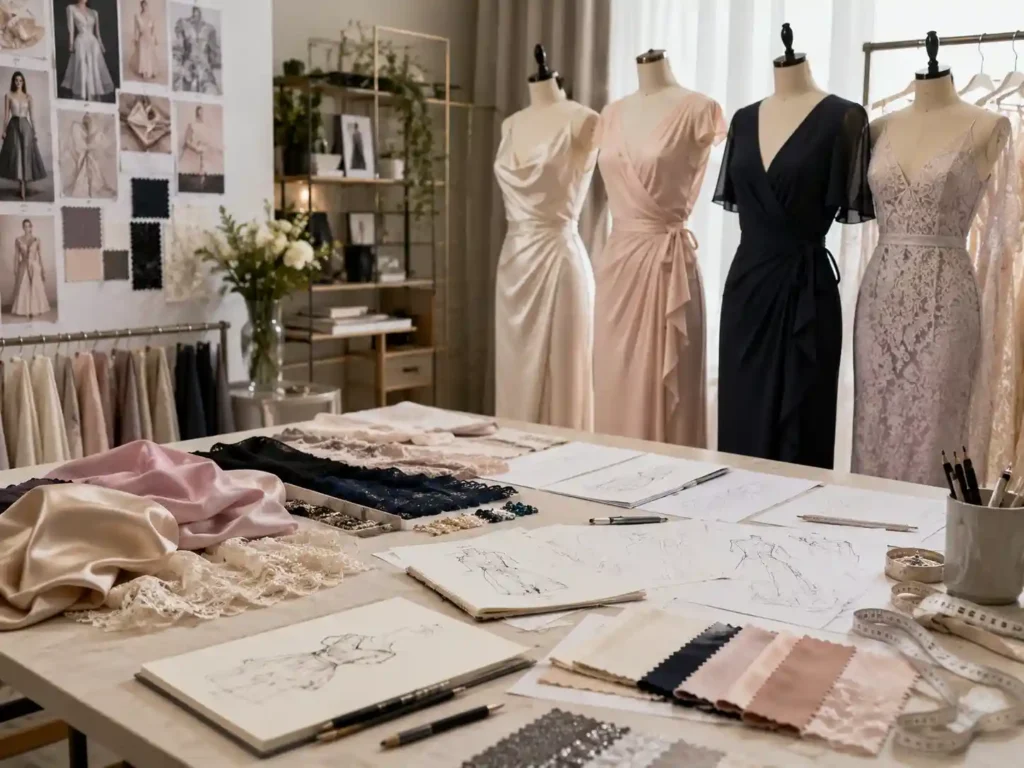
Woven Dress Programs

Stretch Fashion Programs

Structured Occasion Styles

Jumpsuits and Sets
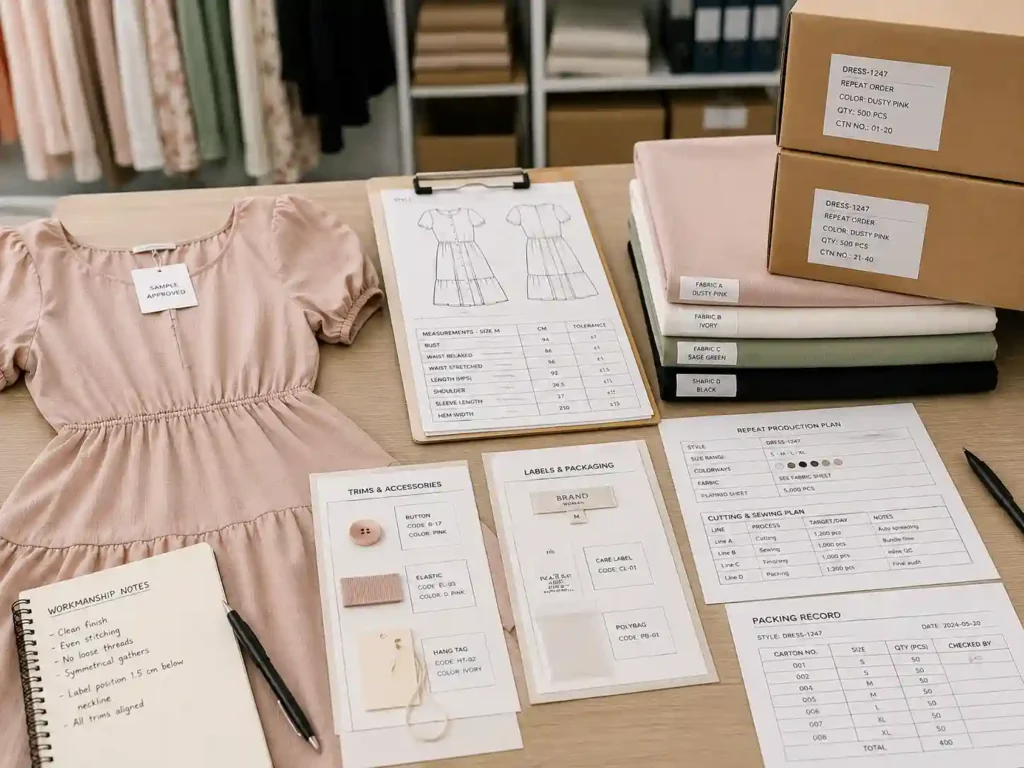
Repeat and Reorder Lines

Seasonal Capacity Planning
Collection-Level Quality Control from Fabric to Packing
Quality control changes by fabric, silhouette and construction. One generic checklist cannot cover satin snagging, mesh transparency, corset support, jumpsuit rise, barcode accuracy and carton marks with equal depth.
| QC Stage | Control Points | Evidence or Record | Collection Risk Controlled |
|---|---|---|---|
| Incoming Fabric | Color, width, defects, hand feel, stretch, shrinkage, transparency, surface condition | Fabric approval, batch notes, defect records | Wrong drape, color variation, shrinkage, snagging, unstable fit |
| Cutting | Grain direction, one-way shine, print or motif placement, size bundling, lining match | Cutting instructions and bundle control | Twisted garments, uneven shine, misplaced lace or mixed sizes |
| Sewing Stage | Seam method, zipper shape, lining, boning, cups, symmetry, ruching and decorative attachment | Inline inspection notes and workmanship reference | Sample-bulk differences, weak support, puckering, asymmetry |
| Measurement | Style-specific critical points from approved specification and PP sample | Measurement report by style and size plan | Unstable bust, waist, hip, length, rise or slit position |
| Finishing | Pressing, stains, loose threads, surface damage, hem balance and overall appearance | Finishing inspection and defect repair record | Shine marks, creasing, contamination, uneven hems |
| Final Inspection | Workmanship, appearance, quantity, approved details and client inspection requirements | Final QC report or appointed inspection record | Mixed standards across styles, unresolved defects, quantity errors |
| Packing | Brand labels, care labels, sizes, barcodes, SKU stickers, polybags, ratios, carton marks | Packing checklist, carton details and shipment files | Warehouse rejection, SKU errors, incorrect ratios or brand presentation |
AQL requirements, third-party inspection and project-specific tolerances can be coordinated according to the brand standard, receiving market and approved production arrangement. Material certificates and audit documents must be checked against the actual factory, supplier, color, batch, scope and validity period.
Private Label and Retail-Ready Delivery Under Your Brand

Woven Brand Labels
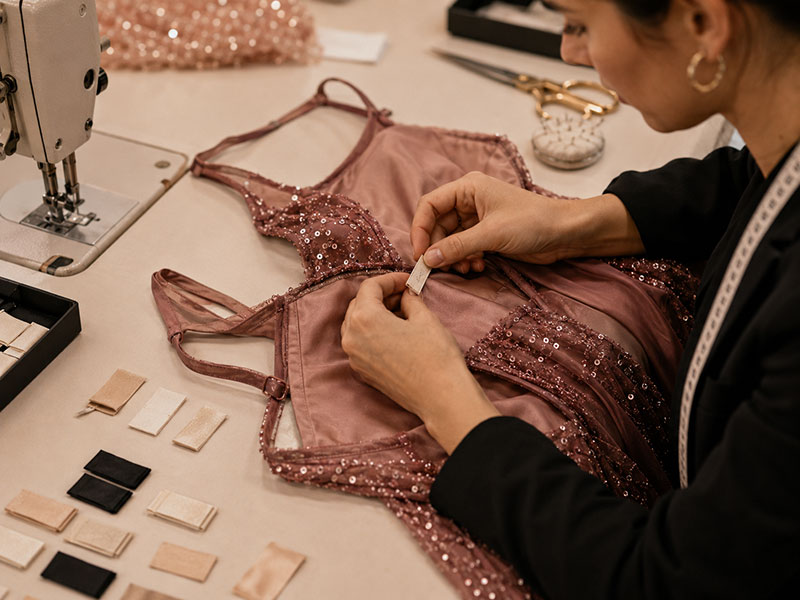
Size Care Labels
Hangtags Strings

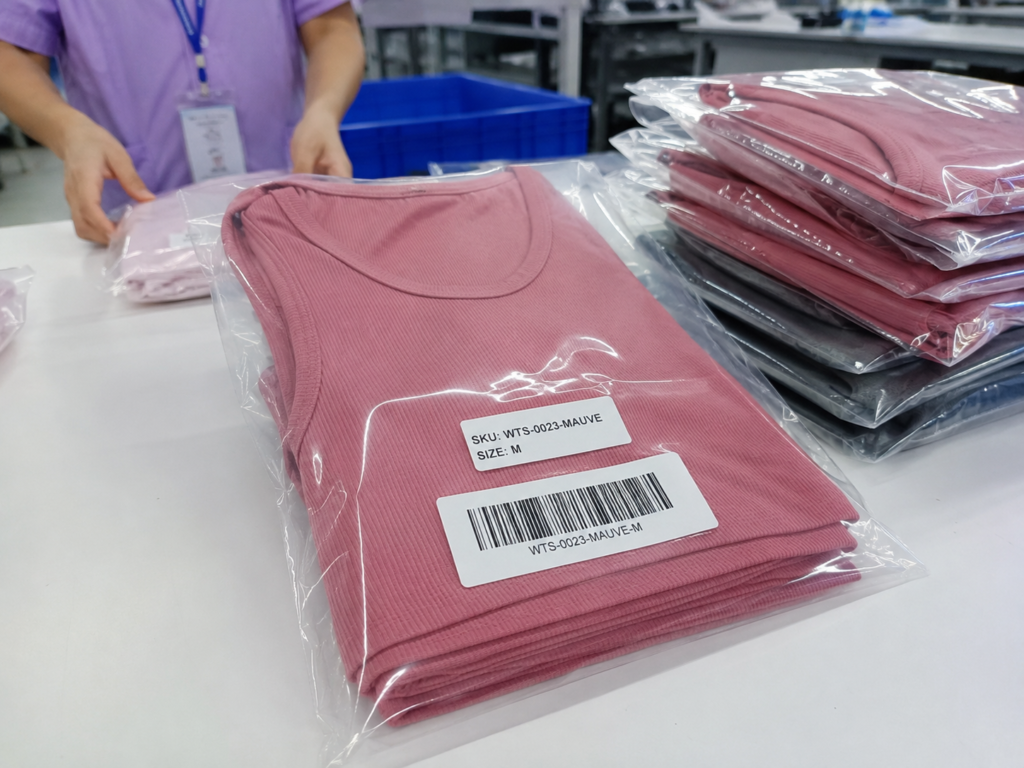
Barcode SKU Labels

Polybags Stickers
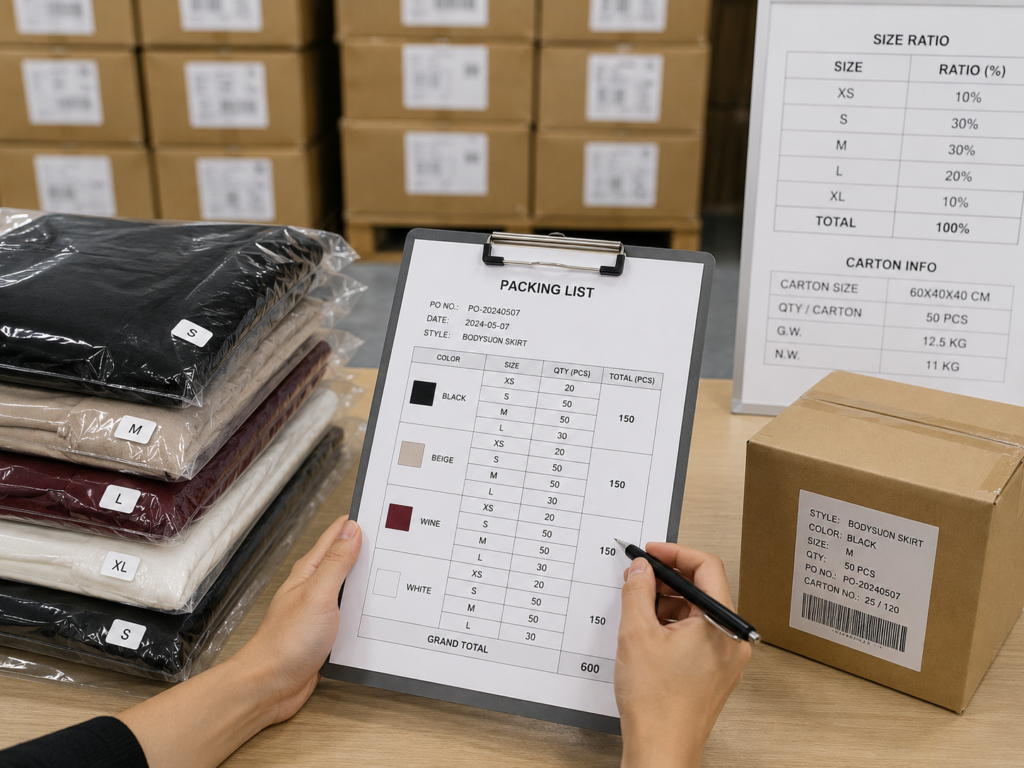
Size-Ratio Packing
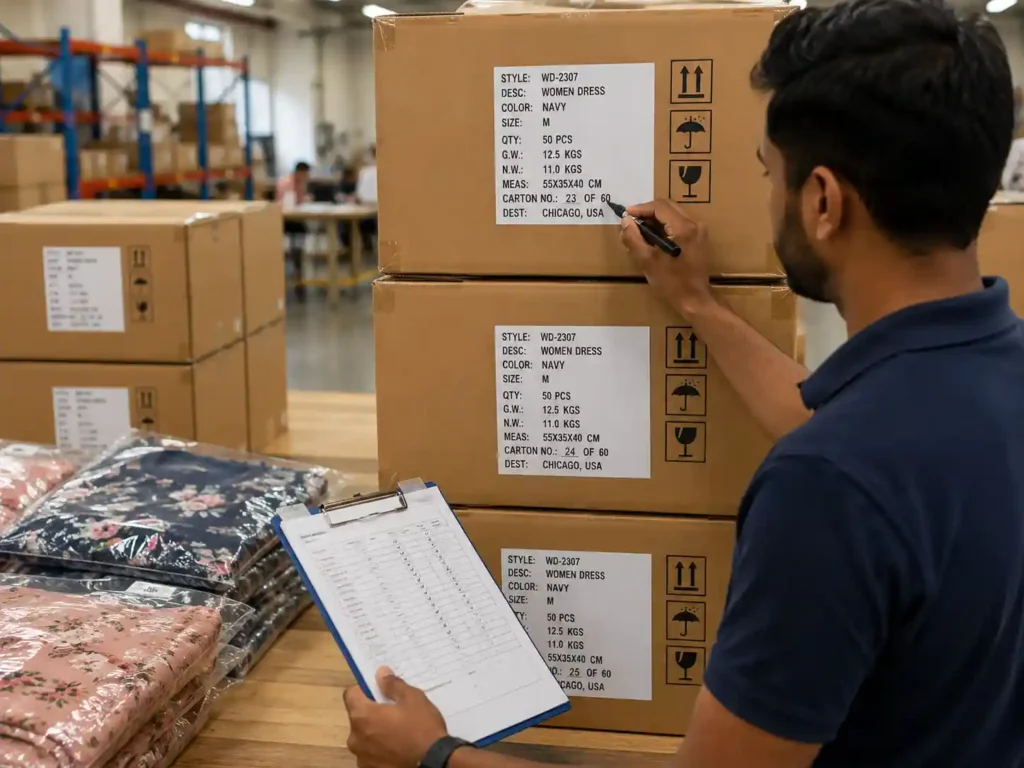
Carton Marks
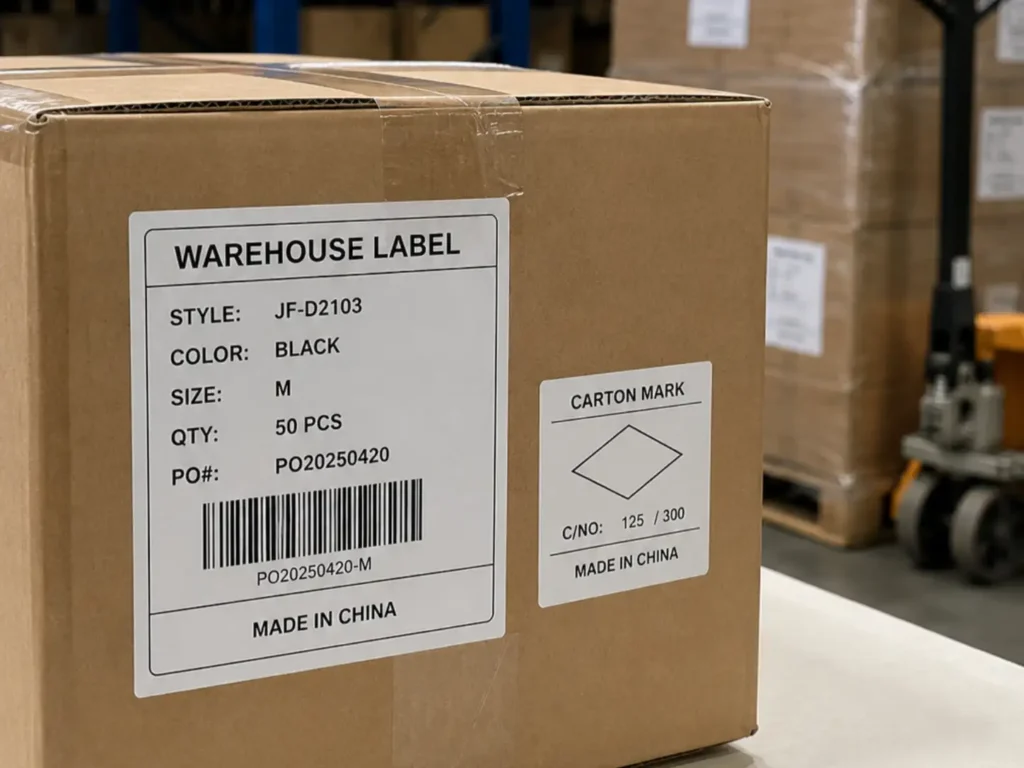
Warehouse Labels
Protect Unreleased Designs and Collection Information
Design File Protection
- Control access by project role.
- Separate files for different brand programs.
- Keep approved versions and revision histories.
Unreleased Collection Control
- No public display of unreleased designs.
- No disclosure of order quantity or pricing.
- Anonymous case structures can be used for capability proof.
Long-Term Record Security
- Archive approved records for repeat production.
- Reconfirm access when teams or suppliers change.
- Apply new approvals when materials or specifications change.
MOQ and Cost Planning for Commercial Collections
Per Style Color
Stock Fabric
Custom Dye Print
Special Trims
Color Consolidation
Size Ratio Planning
Construction Choices
Delivery Strategy
Compliance Inspection and Export Support by Project
Material Testing Support
Audit Inspection Coordination
Export Delivery Documents
Build Repeatable Collections and Seasonal Continuity
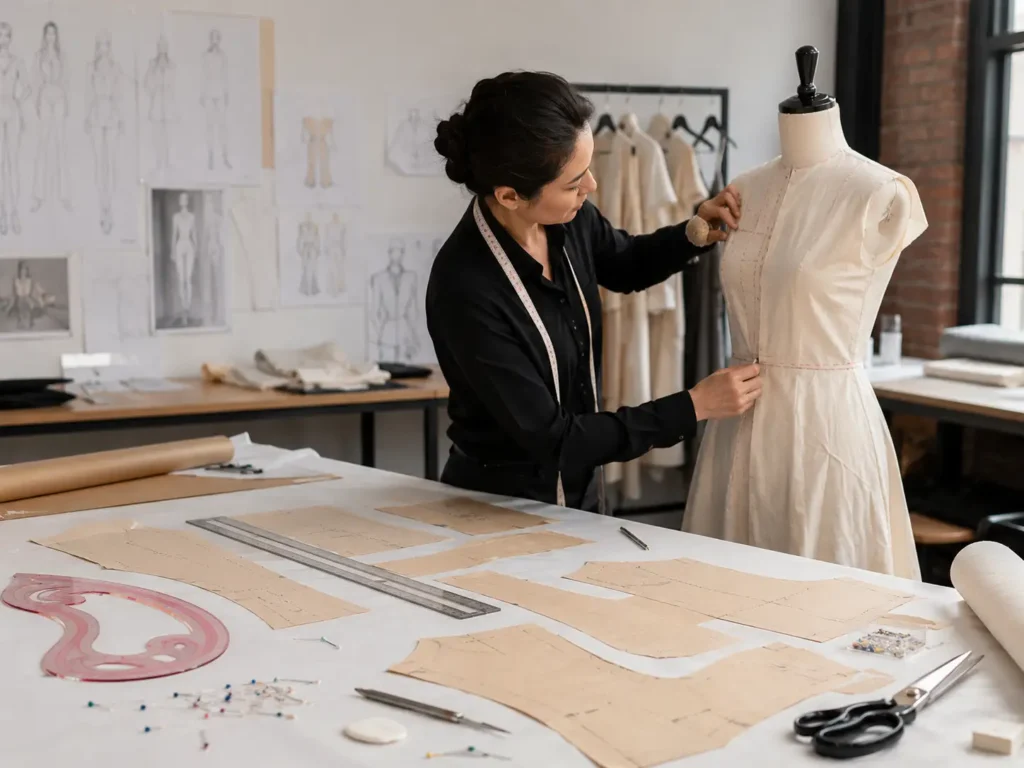
Pattern Records

Material Records
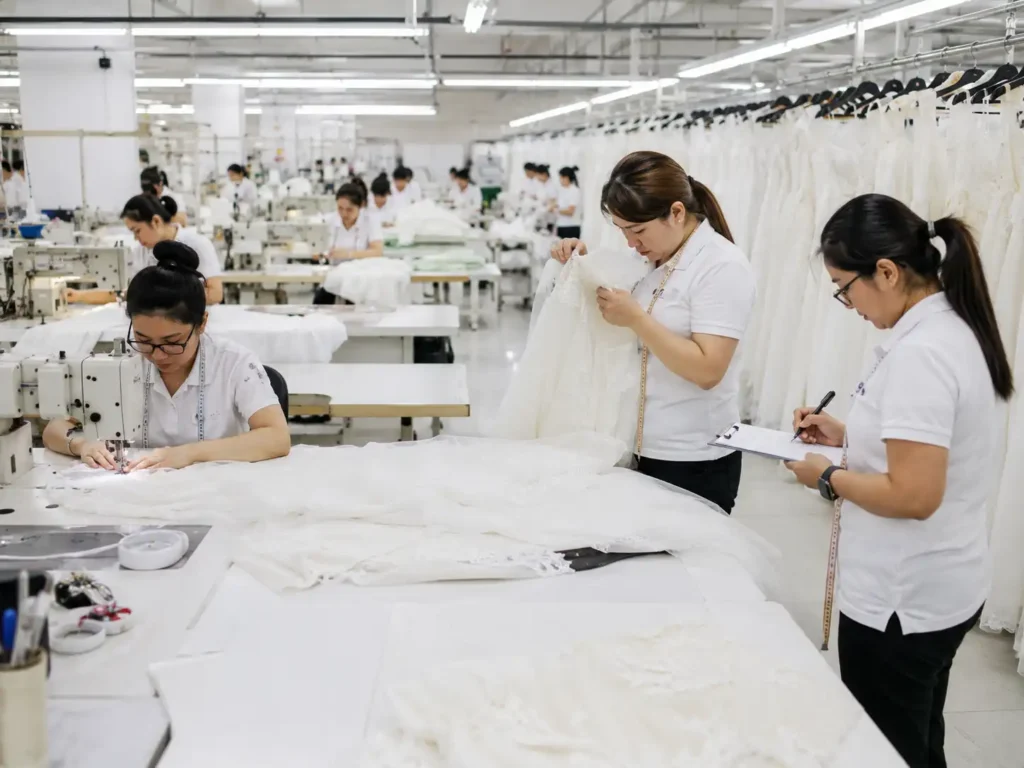
QC Production Files

Packing Shipment Files
How Complex Collection Orders Are Managed

US Occasion Collection
- Collection volume: 36,000 pieces.
- Style count: 18.
- Size range: US 2-14.
- Main control: mixed-fabric fit and sample-bulk consistency.

Monthly Ecommerce Drop
- Collection volume: 72,000 pieces.
- Style count: 26.
- Size range: XS-XL.
- Main control: sample priority and three launch capsules.

Retail-Owned Resort Line
- Collection volume: 24,000 pieces.
- Style count: 12.
- Size range: XS-2XL.
- Main control: print, set matching and retail-ready packing.
Frequently Asked Questions About Brand-Owned Collections

Send Your Collection Brief for Project Review
A line sheet, tech packs or reference images, planned quantity per style/color, fabric direction, color plan, size range, private-label requirements and target delivery date allow Jinfeng Apparel to review product feasibility, material risk, MOQ fit, sample priorities, production allocation and quotation readiness. Complete files are not required for an initial review, but clear commercial direction leads to more useful feedback. Kelly coordinates the first review and connects qualified programs with the appropriate development, merchandising and production teams. The standard MOQ starts from 200 pieces per style/color. Projects built around custom development, commercial bulk production, branded packing and repeat potential receive the strongest fit.
- Line sheet, style list or product assortment.
- Tech packs, reference images, sketches or original sample notes.
- Quantity by style/color and planned size range.
- Fabric, trim, color and construction direction.
- Brand labels, barcodes, packing and warehouse requirements.
- Launch date, target delivery date and destination market.