Custom Dress Solutions for Fabric Discontinuation
Keep an approved dress commercially viable when the original fabric is discontinued, unavailable, or no longer reliable for repeat production.
- – 12+ material variables can be reviewed against the original standard, including composition, weight, width, drape, stretch, recovery, opacity, shrinkage, surface, lining interaction, seam behavior, and bulk availability.
- – 3 technical outcomes guide development: retain the existing pattern, correct the pattern for the replacement fabric, or re-develop the garment standard when material behavior changes substantially.
- – 2 sample rooms, 7+ senior pattern makers, and 20+ sample machinists support fabric substitution, fit review, revised samples, PP approval, and production handover for material-sensitive dress programs.






When Fabric Discontinuation Becomes a Commercial Dress Risk
Bestseller Reorder
A proven dress can become difficult to replenish when the original satin, mesh, jersey, lace, chiffon, or lining is no longer available.
The risk is larger than losing one fabric code because product photography, fit feedback, retail pricing, SKU history, and replenishment plans were built around the approved garment.
- Replacing only by color or surface appearance can change drape, stretch, recovery, opacity, or shrinkage.
- A new fabric may alter bust, waist, hip, hem, zipper, lining, and movement behavior.
- Reorder timing should include material availability review before production capacity is reserved.
Approved Sample Before Bulk
- Re-check fabric specification and available bulk quantity.
- Decide whether the existing pattern remains valid.
- Confirm whether revised sample and PP approval are required.
- Update BOM, sewing instructions, QC checkpoints, and costing before bulk release.
Supplier Transfer or Carryover
- Identify garment properties that must remain stable.
- Separate essential performance requirements from negotiable fabric details.
- Review alternative sources and material behavior before fit approval.
- Preserve the approved replacement record for future repeat orders.
Development Resources for Material-Sensitive Dress Replacement Programs
Pattern and Fit Support
Jinfeng Apparel works with 7+ senior womenswear pattern makers who review how a replacement fabric changes garment balance rather than treating a fabric switch as a simple purchasing decision.Z
Their work can cover bust, waist, hip, neckline, armhole, strap position, dress length, slit height, lining length, and jumpsuit rise when relevant.
- Existing pattern files can be reviewed against the new material behavior.
- Stretch, recovery, drape, thickness, and shrinkage can trigger measurement or construction corrections.
- Final pattern and size-chart changes are recorded before PP approval.
Sampling Capacity
Two sample rooms and 20+ sample machinists support first samples, fit samples, revised samples, photo-ready samples, PP samples, and Golden samples for custom womenswear programs.
A material replacement can therefore be tested at garment level instead of being approved only from a fabric swatch.
- Sample sewing reveals seam, zipper, lining, ruching, support, and pressing problems that a flat swatch cannot show.
- Fit comments are transferred into updated pattern, size chart, BOM, sewing instruction, and QC records.
- Material-sensitive details can be verified before production teams receive the final standard.
Production and QC Continuity
- 15+ QC inspectors support incoming material, cutting, sewing, in-line, garment, pressing, and packing control.
- Multi-style, multi-fabric, multi-color, and multi-batch programs can be managed with separate production records.
- Replacement fabric approval becomes part of the bulk control standard instead of an informal sourcing note.
A Controlled Route From Discontinued Fabric to Bulk Production
Capture Original Standard
- Record material construction and visible finish.
- Record garment fit and internal construction.
- Note previous production issues or fit feedback.
Define Non-Negotiables
- Protect the selling characteristics first.
- Separate essential performance from acceptable variation.
- Confirm target quantity and launch timing.
Source Viable Candidates
- Existing stock may offer the fastest route.
- Another mill may provide a comparable construction.
- Custom dye or a new base fabric may require a different development path.
Compare Material Performance
Shortlisted fabrics are compared against the original standard for factors that affect the finished garment.
Composition alone is not enough. A blend with similar fiber percentages may behave very differently after cutting, sewing, pressing, wearing, or washing.
- Review weight, drape, stretch, recovery, opacity, shrinkage, and surface.
- Check lining and trim interaction.
- Identify potential pattern or cost changes early.
Revalidate the Dress
- Review bust, waist, hip, neckline, hem, and movement.
- Check zipper flatness, lining coverage, support, and seams.
- Update the production file when changes are approved.
Lock the New Standard
Bulk production should begin only after the new material and garment standard are aligned.Z
Final fabric reference, pattern, measurements, trims, sewing details, labels, packing, QC checkpoints, PP sample, and Golden sample are used to transfer the approved replacement into production.
- Confirm bulk fabric source and color.
- Lock the PP standard before purchase and cutting.
- Retain records for the next replenishment or seasonal carryover.
Build an Original Fabric Benchmark Before Sourcing Replacements
A reliable substitute starts with a clear benchmark. The goal is not to recreate a supplier’s fabric code; the goal is to understand which material properties create the approved dress appearance, fit, comfort, and production behavior.

Physical Specifications Define the Starting Point
Composition is useful, but replacement work should capture a wider physical profile. A polyester-spandex satin, for example, can differ significantly from another polyester-spandex satin when yarn, knit or weave construction, weight, finish, stretch direction, and heat response change. The benchmark should therefore document what can be measured or consistently observed from the original material.
Specification review:
– Fiber composition and construction are recorded where known, together with weight or GSM, usable width, thickness, stretch direction, and available supplier information.
– Stretch materials are reviewed for extension and recovery because a bodycon, fitted midi, or mesh dress may rely on controlled negative ease rather than only the size chart.
– Shrinkage risk matters when the approved dress has a precise mini length, maxi hem, waist position, or fitted bust. A replacement that changes after handling or washing can shift the entire fit standard.
– Width affects fabric consumption and marker efficiency. A substitute can look acceptable but increase garment cost if usable width falls materially.
The benchmark does not need to be a laboratory report for every project. It needs enough reliable information to prevent a replacement from being approved only because the color and surface look close under one light source.
For repeat programs, record the date and source of the benchmark as well. A swatch from an old garment, a cutting remnant, and a supplier card may not represent the same production lot. Clear provenance helps the development team decide which reference carries the most weight when candidates differ slightly.
Visual and Tactile Performance Protects the Selling Effect
Fashion dresses are sold by proportion, movement, surface, and photography as much as by fiber content. Material substitution should therefore record visual and tactile characteristics that influence how a style presents online, in a showroom, or on the body.
Performance review:
– Handfeel: softness, dry touch, smoothness, firmness, and skin contact matter for slip, bodycon, occasion, and resort products.
– Drape: a lighter or more fluid textile can lower a neckline, change a cowl, soften a waist seam, or make a maxi skirt collapse differently.
– Surface: matte versus glossy satin, mesh fineness, lace motif scale, jersey compactness, sequin direction, or crepe texture can alter the perceived product tier.
– Transparency: a small opacity difference may require a new lining color, lining length, double layer, or coverage plan.
– Wrinkle and pressing behavior: a substitute that marks easily can create different finishing and packing requirements even when the garment looks correct immediately after pressing.
Photography should be treated as a production reference, not the only standard. Camera lighting can hide transparency, exaggerate shine, or make two shades appear closer than they are in normal wear.
Side-by-side review should use the same lighting, garment orientation, and lining condition wherever possible. Satin shine, mesh transparency, and lace contrast can shift sharply between lighting conditions. Consistent comparison keeps approval focused on the selling effect rather than a favorable presentation of one candidate.


Garment Interaction Determines Whether the Substitute Really Works
The strongest benchmark records how the original fabric behaves after it becomes a dress. A swatch can pass a visual comparison while the garment fails at the zipper, bust, side seam, lining, or hem. Jinfeng Apparel therefore connects material review with the approved construction.
Garment-level questions:
– Does the fabric hold the intended bust and waist shape, or does it collapse around corset panels, darts, seams, or ruching?
– Does a bodycon fabric recover after extension, or does the dress grow at the hip and ride differently after wear?
– Does satin stay flat around an invisible zipper, or does a softer replacement create waves along the center back?
– Does mesh remain stable at the neckline and armhole after stretching, or does the edge distort?
– Does chiffon maintain the intended hem movement and lining relationship, or does a heavier substitute change the skirt balance?
– Does the selected lining move with the shell, or do different shrinkage and stretch behaviors create exposure or pulling?
A replacement becomes commercially useful only when the fabric and garment standard agree. The benchmark creates the evidence needed to make that decision before bulk fabric is committed.
A useful acceptance rule is to document both the visible result and the production consequence. If a candidate preserves the silhouette but requires a different zipper, extra lining, or slower sewing method, the material may still work, but costing and production planning must reflect those changes before approval.
Four Sourcing Routes When the Original Fabric Is Unavailable
Remaining Stock Search
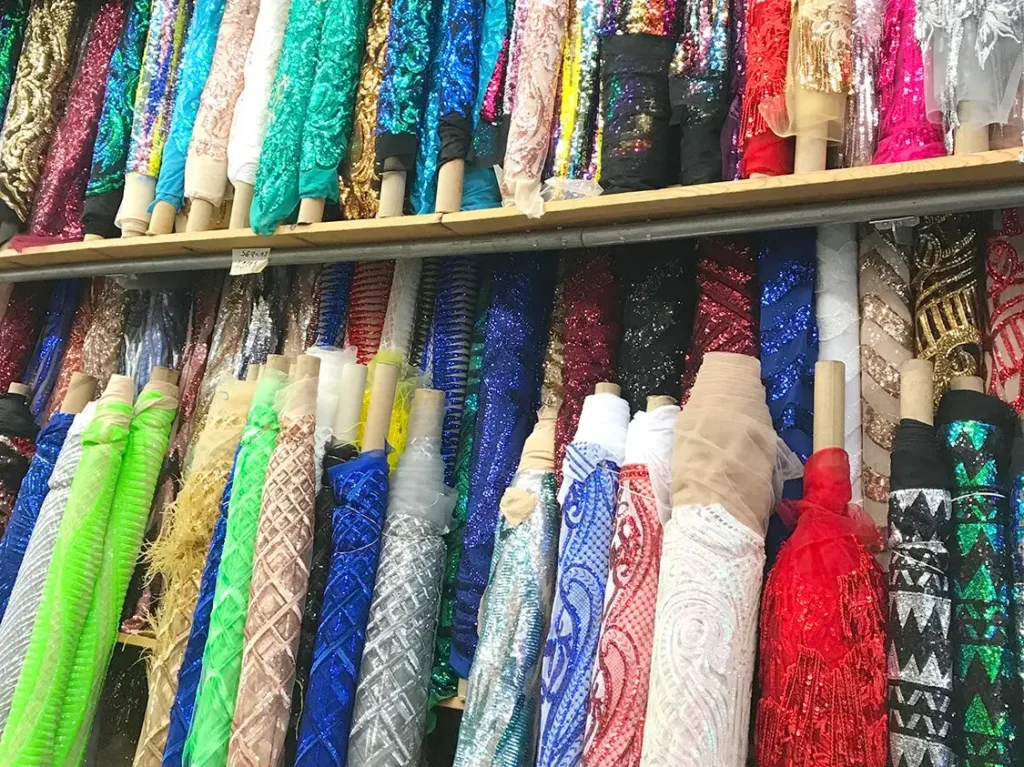
- Confirm usable quantity after defects and cutting allowance.
- Check whether stock comes from one dye lot or several lots.
- Review color, width, handfeel, shrinkage risk, and visible damage before reserving the material.
- Treat remaining stock as a short-term recovery route, not an automatic long-term continuity plan.
Same Mill Reproduction
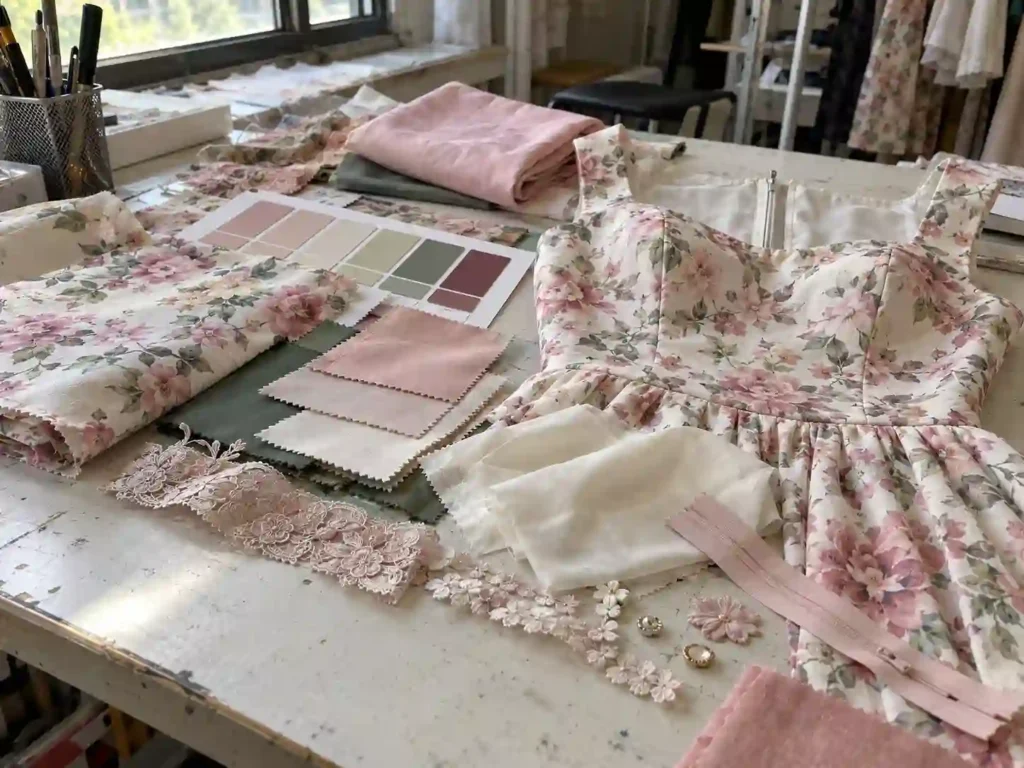
If the original mill or supplier can identify the old construction, reproduction may offer a closer route than starting from a new source.
Reproduction still requires review because yarn, dyeing, finishing chemicals, machinery settings, or minimum production quantity may have changed since the previous order.
- Ask whether the same base construction is still technically available.
- Confirm new MOQ, color process, price, and production lead time.
- Compare the new lot against the approved garment, not only against an old specification sheet.
- Revalidate fit or finish if performance differs.
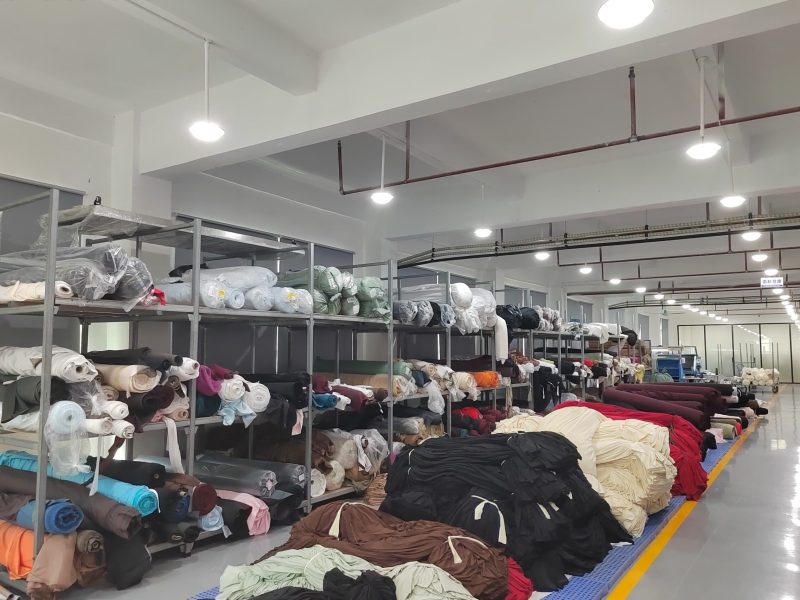
Alternative Mill Equivalent
- Compare measurable properties and garment behavior side by side.
- Check color route, supplier minimums, and repeat availability.
- Review whether the substitute requires pattern, lining, or trim changes.
- Approve a defined replacement standard before bulk purchase.
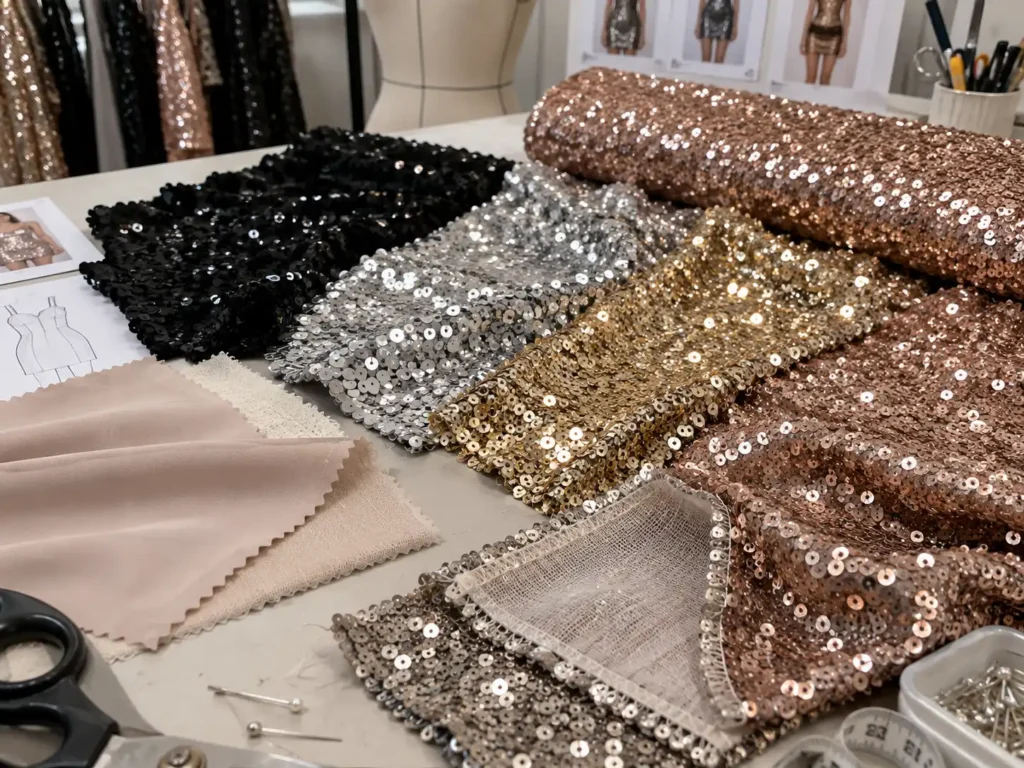
Commercial Substitute Development
- Rank appearance, fit, handfeel, cost, availability, and delivery priorities.
- Consider a different composition when performance remains acceptable.
- Adjust construction where needed rather than forcing the old pattern onto a materially different fabric.
- Treat major material changes as a controlled re-development project.
Replacement Fabric Comparison Before Dress Revalidation
A useful comparison records both textile properties and the expected garment consequence. The matrix below shows the evaluation logic Jinfeng Apparel can use when an approved fabric disappears and several replacement routes need to be narrowed before sampling.
| Evaluation Factor | Original Standard | Candidate A | Candidate B | Garment Decision |
|---|---|---|---|---|
| Composition | Record known fiber blend | Compare blend and construction | Compare blend and construction | Flag performance change, not fiber name alone |
| Weight / GSM | Approved reference | Measure or supplier data | Measure or supplier data | Check silhouette, support, and fabric consumption |
| Usable Width | Approved cutting width | Confirm usable width | Confirm usable width | Recalculate consumption when width changes |
| Handfeel | Approved tactile standard | Compare softness and firmness | Compare softness and firmness | Check skin contact and product positioning |
| Drape | Approved garment fall | Compare fluidity | Compare fluidity | Review neckline, skirt fall, ruching, and hem |
| Stretch Direction | Original stretch map | Compare warp/weft or course/wale stretch | Compare stretch direction | Verify pattern ease and cutting direction |
| Recovery | Original fitted behavior | Assess return after extension | Assess return after extension | Important for bodycon, jersey, mesh, and fitted styles |
| Transparency | Approved coverage | Compare under normal light | Compare under normal light | Review lining color, length, and layers |
| Shrinkage Risk | Previous standard if known | Review or test by project | Review or test by project | Protect finished measurements and hem balance |
| Surface / Shine | Approved visual effect | Compare texture and reflection | Compare texture and reflection | Check photography and brand-level appearance |
| Seam Behavior | Original sewing response | Sample seam and zipper areas | Sample seam and zipper areas | Review puckering, wave, slippage, and edge stability |
| Lining Interaction | Approved shell-lining balance | Compare stretch and drape | Compare stretch and drape | Prevent exposed lining, pulling, or differential movement |
| Color Route | Previous shade standard | Stock / lab dip / custom dye | Stock / lab dip / custom dye | Confirm shade approval and trim matching |
| Bulk Availability | Previous supply route | Confirm real order quantity | Confirm real order quantity | Reject swatch-only options that cannot support bulk |
| MOQ / Cost | Previous commercial baseline | Confirm supplier minimum and price | Confirm supplier minimum and price | Recalculate garment cost before approval |
| Lead-Time Effect | Existing launch plan | Confirm material timing | Confirm material timing | Decide whether sampling or shipment phasing is required |
Replacement Rules Change With the Dress Construction

Satin and Slip Dresses
- Compare weight, shine direction, snagging tendency, drape, and surface marks.
- Check invisible zipper flatness because softer satin can wave while firmer satin can resist the body curve.
- Reconfirm lining color and length when opacity changes.
- Review pressing and packing because a replacement may crease or polish differently.
- Recheck bias-cut or cowl areas when the fabric fall changes.

Bodycon and Jersey Dresses
Bodycon programs depend on stretch and recovery, not only dimensions.
A replacement jersey can match GSM yet produce a different fit if extension, recovery, compactness, or stretch direction changes.
The result may appear at the hip, waist, side seam, neckline, or dress length after wear.
- Compare stretch in both directions and how the fabric returns after extension.
- Review bust-waist-hip balance and negative ease.
- Check side-seam twisting, length riding, neckline shape, and wash stability risk.
- Confirm relaxing and cutting direction before bulk.
- Adjust measurements or pattern when the new fabric does not reproduce the approved tension.

Mesh and Layered Dresses
Mesh replacement affects visibility, stretch, recovery, edge stability, and lining coverage.
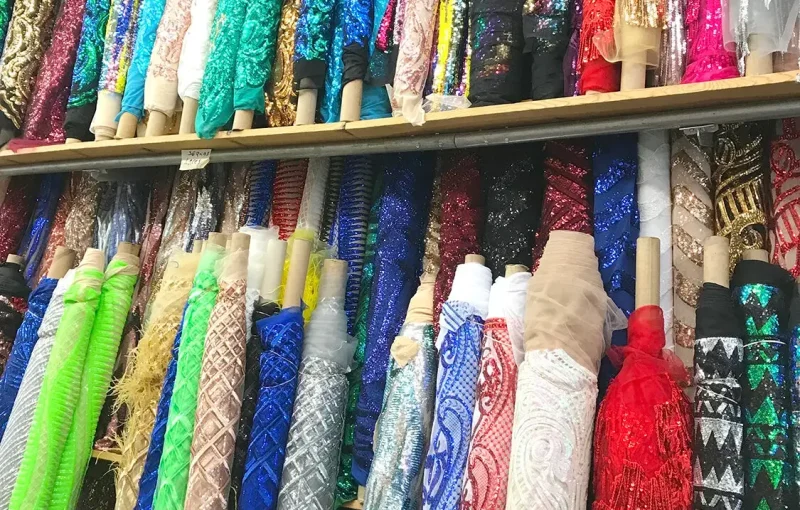
Power mesh, fine mesh, stretch mesh, and double-layer mesh can look related on a table but behave differently around the bust, neckline, armhole, side panel, and cut-out areas.
- Compare transparency before and after stretching.
- Check recovery and neckline distortion.
- Review hole, snag, and edge-finishing risk.
- Reconfirm lining placement and skin-tone compatibility where relevant.
- Evaluate printed mesh placement or double-layer alignment when the design uses controlled transparency.

Lace and Occasion Dresses
- Compare motif direction and usable placement area.
- Review left-right symmetry and seam positioning.
- Reconfirm lining color because a new ground net can shift the perceived shade.
- Check edge finishing, fraying, snagging, and damaged motifs.
- Recalculate consumption when motif matching increases cutting loss.

Chiffon and Maxi Dresses
- Compare drape and movement before approving color alone.
- Recheck lining and layer count.
- Review hem balance, slipping during cutting, and pressing response.
- Confirm shrinkage risk for rayon or viscose-based alternatives.
- Protect long-dress packing from new crease behavior.

Corset and Structured Dresses
- Review fabric stability around cup and boning channels.
- Check fusible or interlining compatibility when used.
- Reassess zipper behavior, bust coverage, and upper-bust stability.
- Confirm comfort after support components are installed.
- Treat large changes in stiffness or stretch as a construction review, not a simple fabric switch.
Decide Whether the Original Pattern Can Still Be Used
Keeping an existing pattern can save development time, but pattern reuse should follow material behavior rather than convenience. Jinfeng Apparel separates replacement decisions into three levels so the production standard stays clear before a new PP sample is approved.

Level One: Retain the Pattern After Validation
Pattern retention is most realistic when the replacement behaves very close to the approved fabric in the properties that control fit and construction. A similar composition does not automatically qualify; the new fabric should still be checked at garment level because small differences can become visible on fitted or minimal designs.
Typical conditions:
– Weight, thickness, drape, stretch direction, recovery, and shrinkage are close to the original standard.
– Opacity does not force a different lining structure.
– Seam, zipper, edge, and pressing behavior remain compatible with the existing construction.
– Garment measurements and fit stay within the approved target after sample sewing.
Even under Level One, a validation sample is valuable for material-sensitive styles such as satin slips, fitted jersey dresses, mesh dresses, and precise mini or maxi lengths. Pattern retention means the pattern remains technically suitable after review; it does not mean development can skip fabric approval, fit checking, or PP control.
Before marking the decision as Level One, compare the replacement sample against the approved measurements and the garment’s visual balance. For a fitted style, a small recovery difference can appear only after several minutes on the body. For satin or chiffon, the critical difference may appear at the hem, zipper, or neckline rather than in flat measurements. Any recurring deviation should move the project to Level Two rather than being accepted as normal production tolerance.
Level Two: Correct the Pattern or Construction
Moderate material differences often require targeted corrections rather than full redevelopment. A heavier fabric may alter drape and seam tension. Lower recovery can make a bodycon dress feel larger after wear. Increased transparency can require lining changes. Different shrinkage can move finished measurements even when the cut pattern is unchanged.
Possible corrections:
– Bust, waist, or hip ease may be adjusted to match the new stretch and recovery.
– Neckline, armhole, strap length, or upper-bust shape may be refined when a softer fabric collapses differently.
– Dress length or hem allowance may be adjusted for shrinkage or a different fall.
– Lining type, lining length, attachment points, or double-layer construction may change when opacity shifts.
– Seam allowance, zipper method, reinforcement, or pressing instructions may change when sewing behavior differs.
Every approved correction should move into the final pattern, size chart, BOM, sewing instructions, and QC checklist. Keeping changes only in messages creates avoidable bulk inconsistency.
Corrections should be narrow and traceable. The objective is to restore the approved silhouette without creating unnecessary redesign. Each adjustment should state why it was made, which measurement or construction point changed, and whether the change affects grading. A revised sample should then prove that the correction works with the actual replacement fabric. Once approved, the earlier pattern version should be archived so cutting cannot accidentally return to an obsolete standard during bulk production.


Level Three: Re-Develop the Garment Standard
A replacement should be treated as a new material development when the physical behavior differs enough to change the logic of the garment. Examples include moving from non-stretch woven to stretch fabric, light jersey to dense ponte, fluid satin to structured satin, fine stretch mesh to firm power mesh, or lightweight chiffon to a substantially heavier woven.
Re-development may require:
– New fit assumptions rather than minor measurement corrections.
– Different lining, reinforcement, support components, or seam construction.
– Revised grading when stretch and recovery alter size behavior across the range.
– New sample rounds before PP approval.
– Updated costing because consumption, sewing time, trims, or finishing may change.
The objective is not to preserve an old pattern at any cost. The objective is to preserve the approved commercial dress as closely as the new material allows, while creating a standard that production teams can reproduce reliably.
Level Three is also the right route when a substitute changes the product promise. If the original style sold as a fluid satin slip but the available replacement is noticeably firmer, forcing the old construction to continue may protect the line drawing while losing the fit and movement that made the SKU successful. A controlled re-development can retain recognizable design features while recalibrating ease, lining, support, seam method, and finishing around the new material. Commercial teams should approve the revised result before treating it as a true carryover.
Revalidate Fit and Sampling After a Material Change
Fabric replacement becomes a dress-development decision as soon as fit, coverage, movement, or construction can change. Revalidation should focus on the measurements and wearing behavior most exposed to the new material rather than repeating every development step without reason.

Recheck Upper-Body Fit and Coverage
Upper-body changes often appear first because necklines, armholes, straps, bust shaping, cups, and support components rely on fabric tension and stability. A softer or stretchier replacement can lower a neckline or widen an armhole; a firmer replacement can create pressure at the bust or underarm even when flat measurements match the old sample.
Review points:
– Bust, upper bust, under bust, neckline depth, armhole, and strap length for fitted or exposed styles.
– Strap angle and tension for slip, halter, backless, and one-shoulder dresses.
– Cup shape, boning position, anti-slip control, and upper-bust stability for corset or strapless construction.
– Lining coverage where a new shell fabric becomes more transparent.
– Visual fit on body or mannequin where flat measurements cannot explain support or exposure.
The goal is not tighter tolerance everywhere. The goal is to preserve the approved proportion and wearing security with the replacement material.
Fit review should compare the same sample size and the same measurement method used for the earlier approval whenever those records exist. For styles with exposed shoulders, deep necklines, cut-outs, or built-in support, note where the fabric carries load and where the lining or trim provides stability. A replacement that feels softer may require additional control even when circumference measurements are unchanged. Recording the reason for each correction makes later grading and bulk inspection far more reliable.
Recheck Waist, Hip, Length, and Movement
Lower-body fit can shift when stretch, recovery, drape, or shrinkage changes. A bodycon dress may grow at the hip, a mini may ride upward, a maxi may hang longer after pressing, and a slit can sit differently once the fabric weight changes.
Review points:
– Waist and hip ease against the approved size chart.
– Side-seam balance and twisting for jersey, rib knit, and stretch styles.
– Front and back length, hem balance, slit height, and lining length.
– Movement when sitting or walking, especially for tight skirts and long occasion dresses.
– Shrinkage risk where the replacement fabric has a different fiber base, finish, or supplier history.
Jinfeng Apparel can update pattern and measurement records when corrections are approved so the replacement standard becomes traceable across grading and bulk inspection.
Movement checks are especially useful for dresses sold through ecommerce because fit complaints often appear while walking, sitting, or wearing the garment for longer than a fitting session. Observe whether a replacement recovers after sitting, whether a slit opens differently, whether a maxi hem drops unevenly, and whether a fitted skirt creeps upward. When the observed behavior differs from the approved garment, revise the pattern or material choice before size grading is finalized. Record the final movement decision clearly.


Choose the Right Sample Stage
Not every fabric change needs the same number of sample rounds. The development path should follow risk. A close substitute may move through a focused revised sample and PP confirmation; a major change can require a new fit sample before production standards are locked.
Reference timing:
– Ordinary dress first samples are generally around 10-15 days when material and trims are available.
– Complex corset, strapless, lace, mesh, sequin, or evening styles are generally around 15-25 days depending on structure and material availability.
– Revised samples are commonly around 7-15 days, with complex changes confirmed by project.
Final timing also depends on fabric sourcing, custom dye, special trims, feedback speed, and courier time. Photo-ready samples should not be assumed to equal PP samples; the final PP sample must represent the material, construction, fit, labels, packing requirements, and bulk standard intended for production.
Sampling should also reflect how much of the original program is already committed. A style that has only completed first sample can absorb a material change more easily than a photographed, priced, and scheduled bestseller replenishment. For late-stage changes, record which marketing images, labels, colors, or packing instructions were created around the old material so the team can identify any mismatch before bulk. Clear sample-version naming is essential when both old-fabric and replacement-fabric samples remain in the sample room at the same time.
Control Replacement Fabric Risk Before Cutting Bulk Orders
A replacement fabric should enter bulk production with defined controls for the risks it creates. Jinfeng Apparel connects material approval with incoming inspection, cutting direction, sewing behavior, measurements, finishing, and product-specific checks instead of relying on a final visual inspection alone.

Incoming Material Checks Protect the Approved Replacement Standard
Bulk fabric can differ from the development swatch through dye lot, finish, width, stretch, handfeel, surface damage, or supplier batch. Incoming QC should therefore confirm whether the delivered material still matches the replacement standard that passed sampling.
Relevant checks can include:
– Color and shade against the approved reference, with batch separation where needed.
– Weight, handfeel, usable width, surface, and obvious defects.
– Stretch and recovery for jersey, bodycon, mesh, and fitted styles.
– Snagging, shine direction, or color difference for satin.
– Holes and deformation for mesh.
– Motif damage, edge issues, and placement suitability for lace.
– Sequin loss or abrasive areas for embellished fabrics.
– Shrinkage or colorfastness review by project according to material type, target market, and risk.
Not every laboratory test is automatically required for every order. Testing scope should follow the replacement material, brand standard, destination market, and identified production risk.
When bulk arrives, the inspection reference should be the approved replacement swatch or PP sample, not a generic supplier specification. For multi-roll or multi-lot deliveries, record lot identity and keep visible shade differences separated. If a defect rate, stretch difference, or handfeel change appears outside the approved range, stop the affected material from reaching cutting until the disposition is agreed. That discipline is more valuable than discovering a material shift after hundreds of garments have already been sewn.
Cutting and Sewing Controls Prevent Material Differences From Spreading
A substitute can create production errors even after the fabric itself is approved. Direction, stretch, surface reflection, motif placement, and sewing response must be carried into the cutting and sewing standard.
Production checks:
– Pattern version, fabric direction, stretch direction, color grouping, panel quantity, and size bundling at cutting.
– Print or motif position when the style uses placement or visible repeats.
– Stitch quality, seam allowance, symmetry, zipper flatness, strap length, ruching placement, lining attachment, slit height, cup, and boning during sewing.
– Extra handling protection for satin, mesh, lace, and sequin fabrics where snagging, holes, or surface damage can occur.
The replacement fabric should be identified clearly in production files so an old fabric reference or sample does not accidentally remain the operative standard.
Pilot production can be useful when the substitute creates a new sewing risk. A limited first run allows the team to confirm needle choice, seam tension, zipper handling, edge finishing, pressing temperature, and operator method before the full quantity is released. The point is not to create an extra ceremonial step; it is to expose repeatable production problems while correction remains inexpensive. Any approved change from the pilot should be added to the sewing instruction and in-line checklist before the remaining quantity continues.


Garment and Packing Review Protects the Final Selling Result
Final garment review should compare the finished dress with the approved replacement PP or Golden sample. Measurement control alone cannot catch a change in drape, coverage, surface, or finishing, while appearance-only inspection can miss size drift.
Garment review can cover measurements, color difference, fit effect, zipper function, straps, lining, seams, pressing, stains, holes, loose threads, labels, and product-specific risk points. Packing review then protects the finished surface through correct folding, polybag selection, hangtags, barcodes, size stickers, carton marks, and packing ratios.
For satin, chiffon, lace, mesh, sequin, and long dresses, packing deserves attention because a new fabric can respond differently to folding pressure, abrasion, or creasing. A replacement project is complete only when the material survives the same production and delivery chain expected from the approved garment.
Comparison should include several pieces across sizes or production periods when the order structure makes that relevant. One perfect garment does not prove that the replacement fabric behaves consistently across bulk. Look for recurring movement in hem length, seam waviness, shade, stretch recovery, lining exposure, or pressing marks. Packing trials can also show whether the substitute develops folds or abrasion that were not present in the earlier fabric. Correct folding, tissue, protective layers, or carton pressure before shipment when the new material requires it.
Understand MOQ, Cost, and Timing Before Approving a Substitute
Replacement decisions have commercial consequences. Jinfeng Apparel evaluates material availability, supplier minimums, sampling, pattern changes, lining, trims, production timing, and logistics before a substitute is treated as a viable bulk solution.
| Replacement Route | MOQ Effect | Cost Effect | Development Effect | Timing Consideration |
|---|---|---|---|---|
| Remaining original stock | Depends on usable stock quantity | Often closest to previous material cost, subject to remaining-stock pricing | Usually lower if performance matches | Fast only when enough approved stock exists and shade is acceptable |
| Comparable stock fabric | Jinfeng MOQ starts from 200 pcs per style/color, while fabric supplier minimums still apply | Recalculate fabric consumption and garment cost | May require focused sample validation | Availability must be confirmed for real bulk quantity |
| Custom-dyed replacement | Mill dye minimum may exceed garment MOQ | Adds dyeing, lab dip, testing, or minimum-quantity effects | Color approval and garment review may be required | Dyeing and shade approval extend material preparation |
| Alternative mill equivalent | Depends on new supplier terms | New fabric price, width, wastage, and logistics can change cost | Compare garment behavior before PP | Mill qualification and sampling add time before bulk commitment |
| New lining or internal material | Separate supplier minimum may apply | Adds material and sewing impact | Recheck opacity, movement, and attachment | Must be confirmed before final PP |
| Pattern or construction correction | Garment MOQ remains project-based | Pattern, sampling, sewing, or trim changes can affect unit price | Revised sample or fit sample may be needed | Sample approval must finish before bulk release |
| Major material re-development | Supplier and garment minimums both require review | Full cost must be recalculated | Treat as new material development on an existing style base | Complex styles may need 15-25 days for sample development before PP, depending on material availability |
| Launch-sensitive recovery | Quantity remains tied to style/color and material availability | Air freight or split shipment can increase logistics cost | Development priorities may be staged by SKU | Air + sea split shipment can be evaluated by project when part of the order must move earlier |
Transfer the Approved Replacement Safely Into Bulk Production
The material problem is not solved when a swatch is selected. Production teams need a locked standard showing exactly which fabric, pattern, construction, measurements, trims, labels, and QC points now replace the former program.
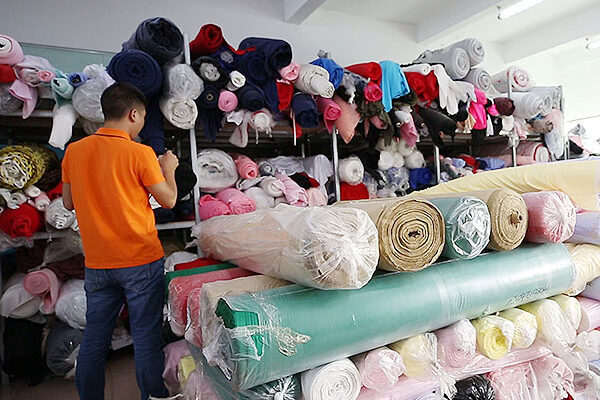
Lock PP Material, Pattern, and Construction Before Purchase
PP approval should represent the intended bulk garment, especially when the original material has disappeared. The replacement fabric, final color, lining, trims, measurements, sewing method, labels, and packing requirements should be aligned before bulk purchase and cutting. Major structural changes after PP approval create avoidable cost, timing, and consistency risk.
Production handover should contain:
– Approved replacement fabric reference and bulk source.
– Final pattern version and size chart.
– BOM covering shell, lining, zipper, cups, boning, elastic, lace trim, decorative components, and labels where applicable.
– Sewing instructions for seams, zipper, ruching, slit, lining attachment, support structures, and finishing.
– QC checklist focused on the replacement fabric’s known risks.
– PP sample and Golden sample for comparison.
A clear handover prevents an old sample, old fabric code, or obsolete construction note from remaining in circulation after the material change.
The PP lock should also identify who approved each critical element and which reference has priority if files conflict. For example, a revised measurement chart should supersede an older tech pack measurement, and the approved replacement swatch should supersede the discontinued fabric card. Clear revision dates and version names reduce the chance that merchandising, pattern, cutting, and QC teams work from different standards. Material purchase quantities should be calculated only after the final width, consumption, wastage allowance, and required color split are confirmed.
Control Bulk by the New Standard, Not the Old Memory
Incoming material QC verifies that bulk fabric matches the approved replacement. Cutting teams confirm direction, stretch, shade grouping, panel quantity, and pattern version. Sewing and in-line inspection then watch the areas most likely to change because of the new material. Final garment review compares measurements and appearance against the new approved standard.
Bulk control also needs traceability:
– Keep fabric batch and color records.
– Separate dye lots when shade differences are visible.
– Record pattern and measurement versions used in production.
– Retain QC notes when new material behavior appears during sewing or finishing.
– Confirm packing methods when the replacement creases, snags, or abrades differently from the previous fabric.
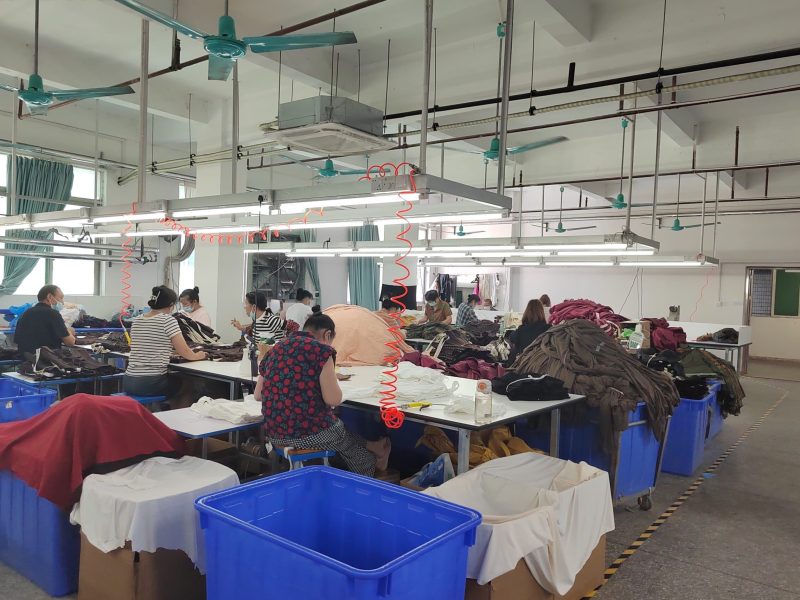
Jinfeng Apparel’s production process moves through PP sample approval, material and trim confirmation, production-order review, fabric inspection, relaxing when relevant, cutting, in-line inspection, garment inspection, pressing, packing, AQL or client inspection support by project, and shipment preparation. Replacement work becomes dependable when every stage uses the same newly approved reference.
During production, any recurring difference should be evaluated against the new standard immediately rather than explained away because the style was produced before. A replacement material can create new seam, pressing, or measurement behavior that the old production team has never seen. In-line inspection provides the earliest point to correct operator method or pattern handling before the issue spreads. When a change is approved during bulk, the QC record should state the reason and final acceptance so the same question is not reopened during final inspection or the next repeat order.
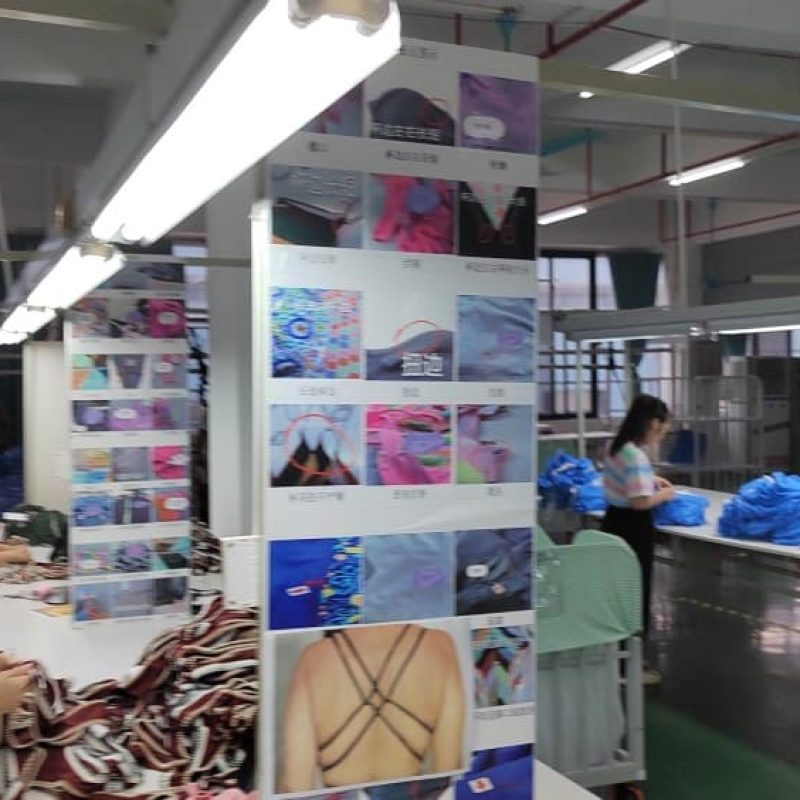
Preserve Replacement Records for Faster, Safer Repeat Orders
A successful substitute should become a permanent part of the style record. Repeat orders move more efficiently when the new fabric, pattern, fit, trims, QC notes, and packing standards can be recovered without rebuilding the project from memory.
Create a Complete Replacement Record
Jinfeng Apparel can retain the production records that define the approved replacement program. The purpose is not to assume future availability; it is to preserve the technical and commercial decisions already made so the next reorder starts from a known standard.
Records can include:
– Final bulk production pattern and size chart.
– Approved replacement fabric reference, composition, weight, color, supplier information, and available batch notes.
– BOM and trim records including zipper type, zipper length, zipper color, buttons, hooks, strap adjusters, elastic, cups, boning, anti-slip tape, lace trim, rhinestones, bead chains, or sequin trims where relevant.
– Sewing instructions and product-specific QC checklist.
– Label, hangtag, barcode, polybag, carton, and packing instructions.
– Golden sample, historical QC notes, and after-shipment feedback.
When a future repeat begins, the team can check what has changed rather than rediscovering what was previously approved.
Keep the material decision itself, not only the final fabric code. Record why the selected candidate was approved, which alternatives were rejected, and which garment points were adjusted because of the change. That context becomes valuable months later when a new merchandiser, developer, or factory line reviews the style. A fabric reference without the decision history can lead a future team to assume the replacement was identical to the original, while the actual production standard may depend on a revised lining, pattern, seam method, or pressing instruction.

Reconfirm Supply Before Every Replenishment
Historical records improve speed, but they do not guarantee that the replacement fabric will remain unchanged or available forever. Each repeat order should confirm material availability, color, batch, trims, packing materials, production schedule, and any new fit feedback before the order is released.
Repeat-order review can cover:
– Whether the approved replacement is still in stock or reproducible.
– Whether the supplier has changed construction, finish, price, MOQ, or lead time.
– Whether a new dye lot requires shade review.
– Whether the brand has received size, comfort, or quality feedback from the previous delivery.
– Whether a new color or same-pattern new fabric program needs a revised sample or PP confirmation.
Jinfeng Apparel supports same-style repeat, same-style new color, same-style new fabric, bestseller replenishment, seasonal replenishment, and multi-batch production. The record system turns a one-time material recovery into a repeatable operating standard without pretending that material supply never changes.
For important replenishment styles, perform the material check before committing the final launch or warehouse date. If the approved replacement is no longer available, the saved benchmark allows sourcing to compare new candidates without rebuilding the style from zero. If it remains available, confirm that the mill has not changed weight, finish, construction, or color process under the same commercial name. A consistent supplier name or article number is useful, but the garment standard remains the final reference when the product result matters most.
Reduce Future Disruption Around Important Dress Fabrics
Review Availability Before Reorder
- Reconfirm shell, lining, and critical trims together.
- Compare supplier terms with the previous order record.
- Reserve material only after real bulk quantity and shade requirements are known.
- Build material confirmation into the launch-calendar review.
Keep an Approved Alternative Path
- Retain comparison swatches and assessment notes.
- Record which fit or pattern changes each candidate requires.
- Keep the alternative commercially realistic for quantity, cost, and color.
- Revalidate if supplier construction or batch changes before use.
Treat Material Continuity as Product Management
- Connect replacement decisions to the final garment standard.
- Record commercial impact before approval.
- Update PP and Golden sample references after changes.
- Carry new material information into future seasonal or annual development plans.
Material-Sensitive Dress Programs With Traceable Production Controls
US Occasionwear Program
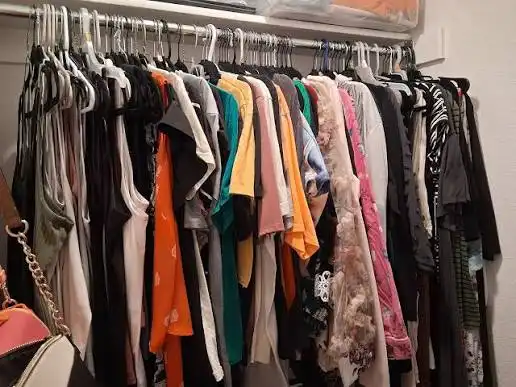
An anonymous US occasionwear brand worked with Jinfeng Apparel on a 12-style satin mini and midi dress program of around 20,000 pieces.
The production focus included satin shade consistency, drape, invisible zipper flatness, lining comfort, and stable appearance across several colors. The project moved through sample review and PP control before bulk production, with fabric behavior treated as part of the garment standard rather than a purchasing detail.
- Satin batch and color consistency were monitored before cutting.
- Zipper and lining interaction were reviewed because small material changes can become visible on smooth fitted surfaces.
- PP sample and bulk QC created a reference for production consistency.
- The program demonstrates the controls required when an approved satin standard must be protected across volume.
US Multi-Fabric Private Label Program
- Fabric and trim tracking were managed by style rather than merged into one generic material list.
- Sample versions and production records were separated across different fabric families.
- Hangtags, barcodes, polybags, carton marks, and packing requirements were controlled alongside garment QC.
- Phased shipment supported a larger program with multiple styles, colors, sizes, and material behaviors.
Protect Original Samples and Unreleased Dress Development Files
Protected Development Material
- Tech packs, line sheets, patterns, size charts, samples, and fabric references can be handled as project files.
- Unreleased colorways and seasonal plans remain part of the private development record.
- Anonymous manufacturing examples can be used publicly without exposing brand identity or proprietary design information.
Files That Improve Replacement Accuracy
A replacement review can start with limited information, but stronger evidence reduces unnecessary sampling and material guesswork.
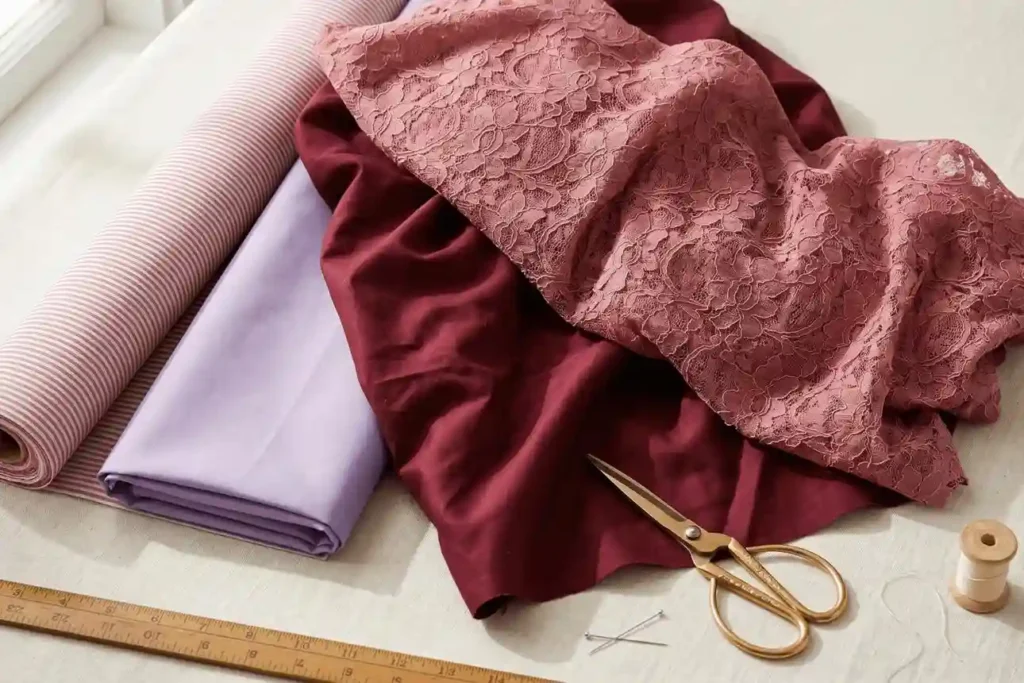
A physical swatch or garment is valuable because handfeel, stretch, surface, opacity, seam behavior, and lining interaction are difficult to reconstruct from photographs alone. Useful inputs include original garment, approved sample, fabric swatch, fabric specification, tech pack, size chart, BOM, previous color reference, supplier information if available, fit comments, target quantity, target price, and intended delivery window.
Jinfeng Apparel can then separate what is known, what requires verification, and what needs new development before a replacement route is recommended. Send Files Securely. Request NDA Review
Prepare the Right Information for a Fabric Replacement Review
A complete review pack shortens the distance between “fabric unavailable” and an actionable replacement plan. The checklist below helps product and sourcing teams organize the original standard, commercial limits, and approval priorities before sending material for evaluation.
Define the Commercial Limits and Replacement Priorities
A technically close substitute can still fail the program if MOQ, price, color route, or delivery timing does not work. Product teams should rank what matters most before several candidates are compared.
Commercial inputs:
– Intended bulk quantity and number of colors.
– Size range and size ratio if already planned.
– Target garment cost or acceptable cost movement.
– Target PP approval and required delivery window.
– Repeat-order forecast if the style is expected to replenish.
– Destination market when testing, labeling, or certified-material requirements apply.
Replacement priorities:
– Closest visual appearance.
– Closest handfeel and drape.
– Closest fit and stretch behavior.
– Long-term supply continuity.
– Fastest commercially viable availability.
– Target cost alignment.
– Certified or documented material route where required.
A ranked priority list helps Jinfeng Apparel avoid presenting a “perfect-looking” fabric that cannot support the order, or a low-cost option that changes the garment result too far from the approved style.
Also identify who has authority to accept trade-offs. Product development may prioritize fit and handfeel, merchandising may protect launch timing, and sourcing may need a cost ceiling or repeatable mill route. A substitute can be technically acceptable but commercially unsuitable, or commercially attractive but too different from the approved product.
Start With the Existing Dress and Material Evidence
Provide the strongest available references rather than waiting for a perfect technical file.
An original garment or swatch can reveal information that a supplier description misses, while a tech pack or BOM helps connect the material to construction and fit.
Existing product information:
– Style number or internal reference.
– Product category such as satin slip, bodycon, mesh, lace, chiffon maxi, corset, evening, or occasion dress.
– Approved sample, Golden sample, original garment, or clear front/back/detail photos.
– Current size chart and any known fit comments from previous production.
Original fabric information:
– Physical swatch where available.
– Composition, weight/GSM, usable width, stretch direction, finish, color, print, or supplier code where known.
– Lining specification and major trims that interact with the shell.
– Previous shrinkage, color, snagging, recovery, transparency, or sewing concerns.
Incomplete information is acceptable at the start. The review should clearly mark assumptions and verification needs instead of filling missing data with guesses.
Where several references conflict, identify the production truth before replacement sourcing starts.
A tech pack may show an early fabric specification while the approved sample uses a later substitution; an old supplier card may not match the final bulk garment; a fit sample may carry temporary lining.
Mark each reference as approved, historical, or informational.
That simple classification prevents sourcing teams from matching the wrong textile and gives pattern makers a clear garment standard when checking how a candidate affects fit, drape, or construction.
Fabric Discontinuation Frequently Asked Questions
Send Your Discontinued Fabric Project for Technical Review
If an approved dress fabric has become unavailable, send the strongest references already in hand. Jinfeng Apparel can review the original material standard, garment construction, fit requirements, replacement priorities, target quantity, and commercial timing before recommending the next development step. A useful project pack may include an original dress or swatch, tech pack, size chart, BOM, fabric specification, previous sample photos, lining and trim information, target cost, intended colors, size range, and required delivery window. For repeat or carryover styles, previous QC notes and fit feedback are also valuable. NDA-based cooperation is available for protected designs and unreleased collections.
Please include:
- – Original dress, approved sample, or clear garment photos
- – Original fabric swatch or known specification
- – Tech pack, size chart, BOM, or pattern information if available
- – Intended order quantity, colors, and size range
- – Target cost and required delivery window
- – Replacement priority: appearance, handfeel, fit, availability, cost, or long-term continuity
- – Previous fit, quality, or production feedback that should not be repeated