 Skip to content
Custom Dress Accessories for Fashion Brands
From functional closures to decorative trims and private-label details, Jinfeng Apparel integrates dress accessories into the complete garment development process rather than treating them as isolated components. Our team reviews trim specifications together with fabric, pattern, fit, construction, target cost and production requirements before approved components move into bulk production.
- 6 accessory systems managed across closure, adjustment, support, decoration, branding and packaging
- 2 sample rooms supporting accessory-to-garment development and fit review
- 7+ senior pattern makers evaluating how trims affect dress structure and balance
- 20+ sample machinists supporting first samples, revisions and PP samples
- 15+ QC inspectors supporting incoming, inline, finished-garment and packing checks
- Accessories can be controlled through BOM records and trim approval references before bulk production
What Custom Dress Accessories Mean in Garment Manufacturing
Closure Components
Adjustment Components
Support Components
Decorative Trims
Branding Accessories
Packaging Accessories
Built for Established Fashion and Sourcing Teams
Global Fashion Brands
Sourcing Teams
Product Development Teams
Private Label Programs
Six Dress Accessory Systems We Integrate

Closures

Adjustment

Support
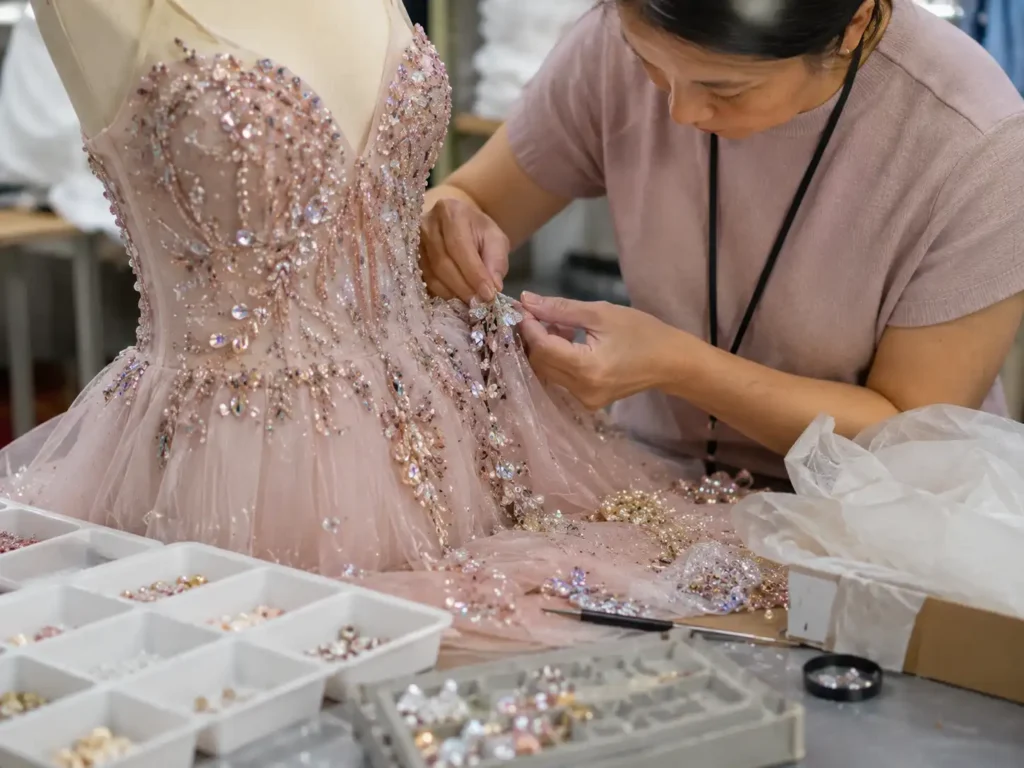
Decoration

Branding
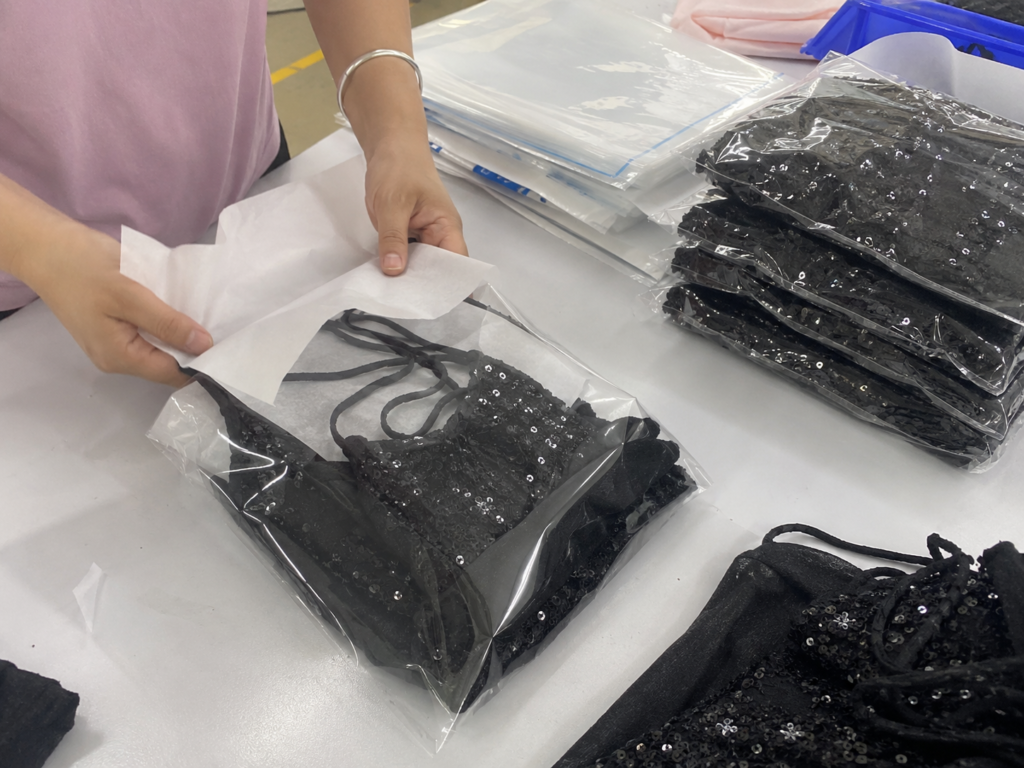
Packaging
Match Dress Accessories to the Garment Structure
Accessory selection becomes more reliable when the starting point is the dress itself. Fabric weight, stretch, neckline, internal support, closure position and wearing scenario determine whether an accessory improves the garment or creates a new production risk.
| Dress Type | Typical Accessory Direction | Main Manufacturing Controls |
|---|---|---|
| Satin Slip Dress | Invisible zipper, strap sliders, lining, fine hooks | Color matching, low bulk, zipper flatness, strap adjustment |
| Corset Dress | Boning, bra cups, hook and eye, zipper | Bust support, boning position, closure security, comfort |
| Mesh Dress | Elastic, lightweight zipper, lining, soft trims | Transparency, edge stability, trim weight, seam distortion |
| Bodycon Dress | Zipper, elastic, sliders, support components | Stretch compatibility, recovery, seam flatness, tension |
| Party Dress | Rhinestones, chains, zipper, decorative trims | Attachment strength, weight, skin contact, packing protection |
| Strapless Dress | Boning, bra cups, elastic, anti-slip support | Bust stability, neckline security, wearing comfort |
| Shirt Dress | Buttons, interlining, waist components | Button spacing, pull strength, placket stability |
| Lace Detail Dress | Lace trims, zipper, lining, hooks | Motif alignment, color, softness, seam placement |
| Structured Dress | Zipper, hooks, interlining, support trims | Shape retention, seam balance, closure tension |
| Resort Dress | Elastic, sliders, buttons, lightweight trims | Comfort, wash stability, soft handfeel, movement |
How We Match Trims to Fabric and Construction
A visually attractive accessory can still be wrong for a dress. Jinfeng evaluates trims through garment compatibility, wearing performance and production feasibility. The aim is not to use the most decorative component available; the aim is to select an option that supports the desired design while remaining stable through sampling and bulk production.

Fabric Weight and Surface
Light mesh, chiffon and soft satin react differently to heavy metal hardware. A chain or large slider can pull lightweight fabric downward, distort a seam or create an unwanted pressure point.
Satin also exposes zipper bulging and seam tension more clearly than many textured fabrics, so closure weight and sewing flatness matter.
For mesh and lace, trim edges must be checked against open structures and delicate yarns. A decorative component that works on compact woven fabric may catch, stretch or tear a more open material. Color matching also needs to be evaluated under the actual shell and lining combination rather than from digital color references alone.

Structure and Support
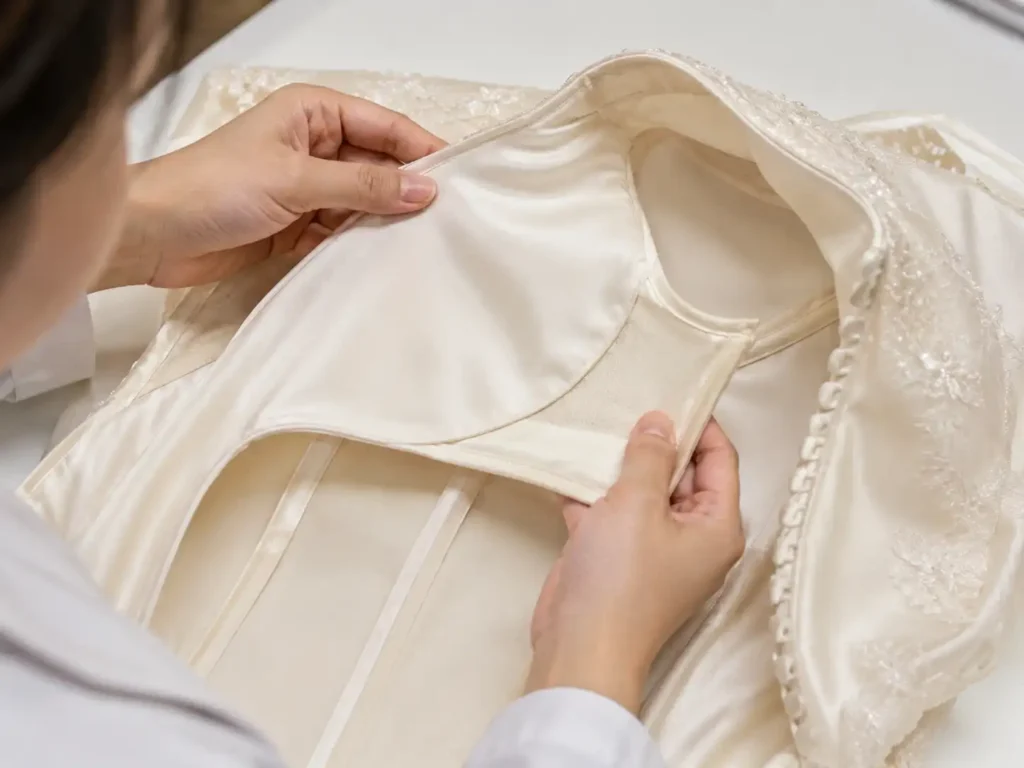
Corset-inspired dresses require coordinated decisions across bra cup shape, boning length, zipper construction, hook-and-eye positioning and lining. Increasing boning stiffness without adjusting the pattern can change comfort or bust shape, while replacing a cup may shift neckline appearance even when the external fabric remains unchanged.
Support components are therefore reviewed during sample development. Pattern makers and sample machinists evaluate how the trim behaves once sewn into the garment, not only as an individual component. Jinfeng operates 2 sample rooms supported by 7+ senior pattern makers and 20+ sample machinists for development and revision work.
Wearing Safety and Comfort
Rhinestone straps, metal chains, hooks and decorative hardware may contact the body directly.
Weight, sharp edges, plating surface and attachment position are assessed before approval. Strap components need enough strength to perform their function without becoming unnecessarily heavy or uncomfortable.
For fitted and bodycon styles, elastic and sliders also need suitable tension. Too little recovery can make an area loose after wear, while excessive tension can distort fabric, change measurements or make a garment difficult to put on.

Commercial and Production Fit
A custom puller, special plating, exclusive lace trim or custom-color zipper may improve design differentiation but can create an independent accessory MOQ, additional development work or longer material preparation. Standard components can sometimes achieve nearly the same visual result with lower supply risk.
Our team compares required appearance, garment value, planned volume and production schedule before recommending a direction. Mature programs often combine selected custom details with proven standard components rather than customizing every item in the BOM.
Closure Systems for Clean and Reliable Dresses

Invisible Zippers

Metal Zippers
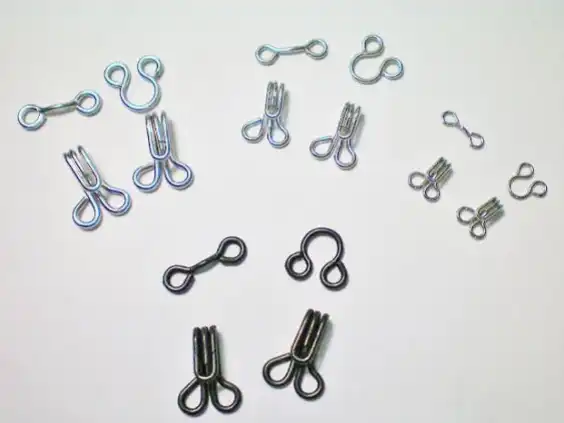
Hook and Eye Closures

Buttons
Support and Adjustment Components for Better Fit

Strap Sliders

Elastic
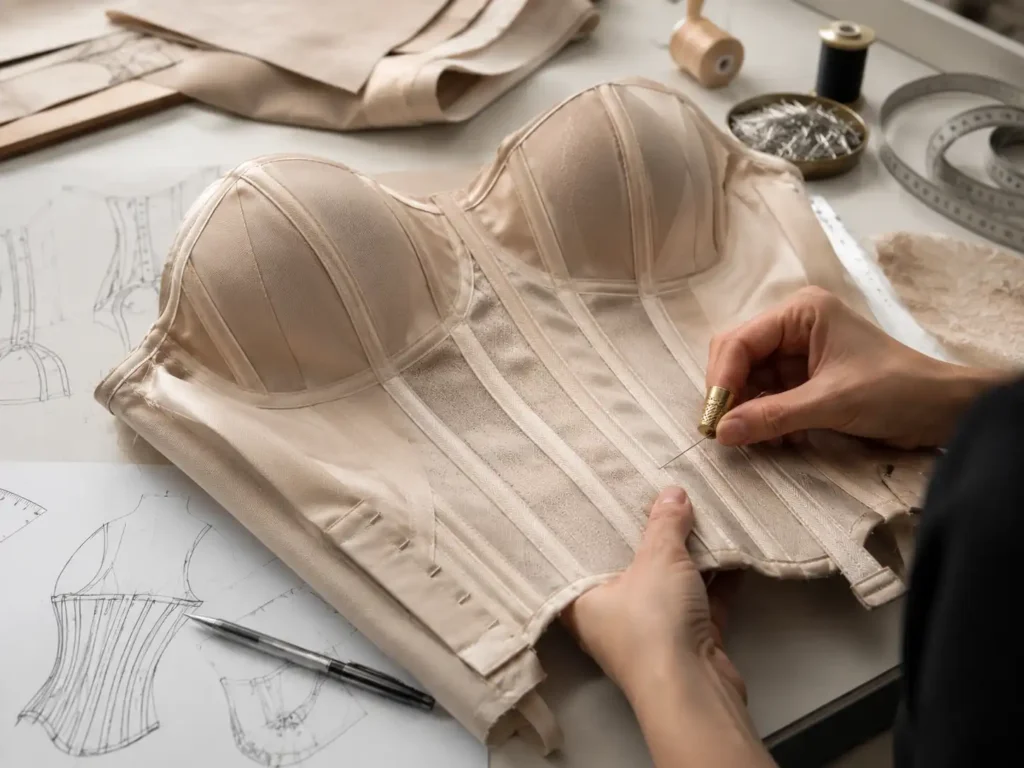
Boning
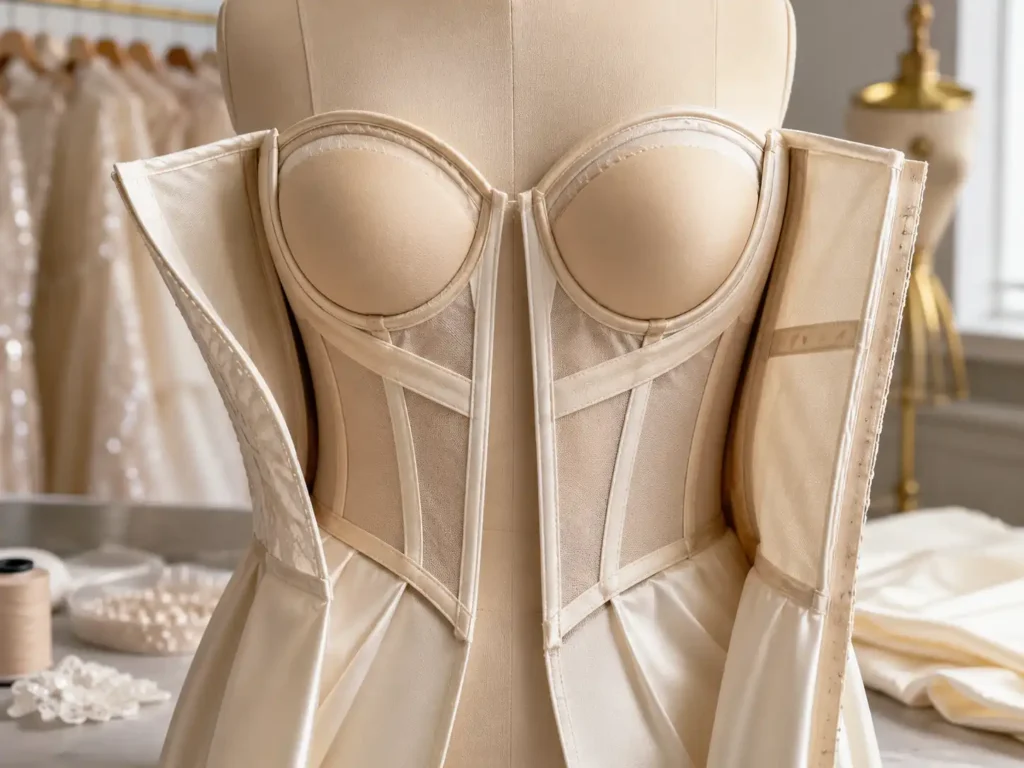
Bra Cups
Decorative Trims for Party and Occasion Dresses
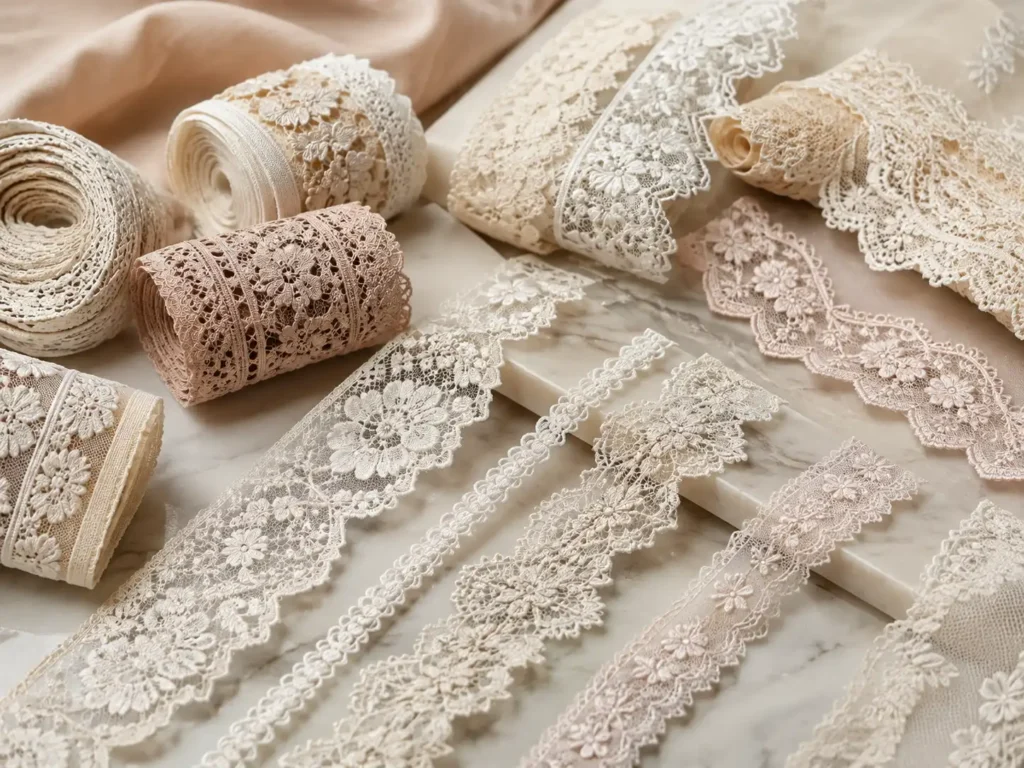
Lace Trims

Rhinestone Details

Chains and Metal Details

Sequin and Appliqué Details
Private Labels and Retail-Ready Brand Accessories
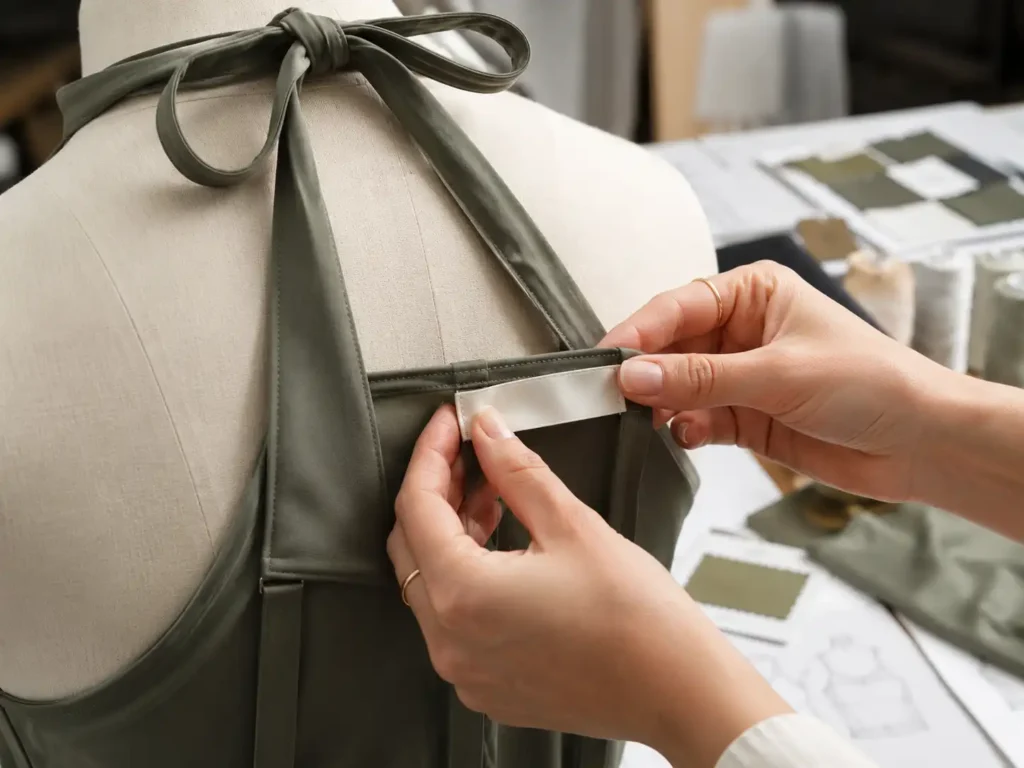
Woven Labels

Care Labels
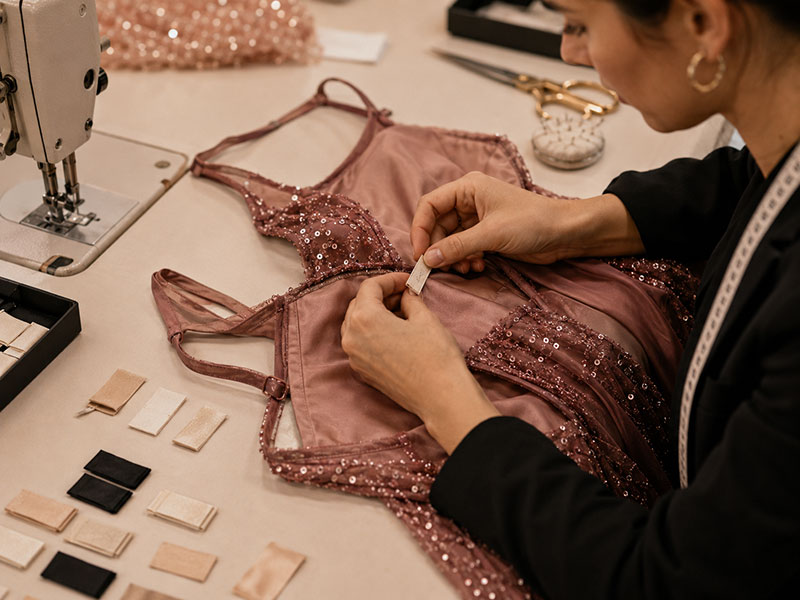
Size Labels

Hangtags
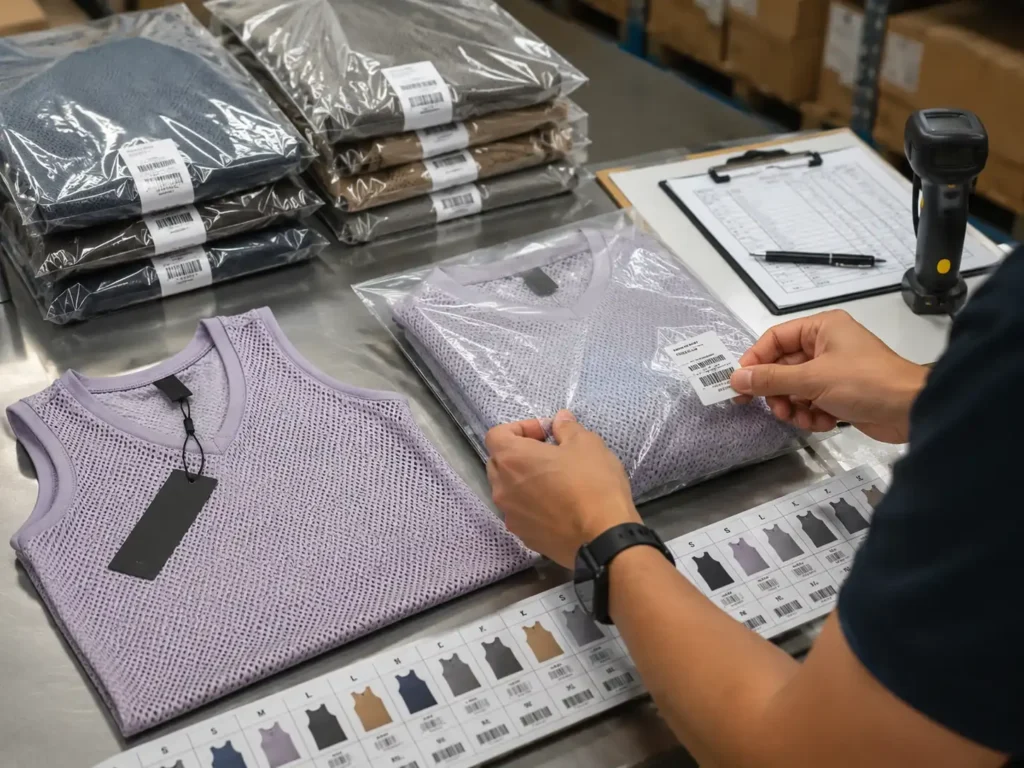
Barcode and SKU Labels

Branded Packaging
Customization Options Across Dress Accessories
Color Matching
Dimensions
Material
Surface Finish
Logo and Artwork
Placement
From Tech Pack and BOM to Approved Trims
Professional dress development becomes more efficient when accessory information is structured from the beginning. Jinfeng can work from a tech pack, BOM, reference sample, line sheet, sketch or accessory reference, then connect trim requirements with the garment construction before sampling starts.

BOM Review
A useful BOM identifies more than the accessory name. Depending on the product, accessory lines may include item description, color, dimension, finish, placement, source reference and required quantity per garment.
For a corset dress, the BOM may cover zipper, hook and eye, bra cup, boning, elastic, woven label, care label, hangtag and polybag. For a slip dress, the list may be much simpler but still requires accurate strap slider, zipper and lining references. A structured BOM also supports more accurate quotation because shell fabric, lining and trims are reviewed together.

Specification Review
Our development team checks whether accessory instructions are complete and whether the proposed component works with the garment. A reference may call for a heavy chain on a fine mesh dress, for example, or a zipper length may conflict with the pattern opening.
Potential conflicts are raised before sample making whenever possible.
Early review reduces the chance of developing a sample around a component that later needs to be replaced.

Sample Integration
Approved or proposed trims are integrated into the first sample so fit and appearance can be assessed as a complete garment. Support components such as cups and boning require particular attention because their performance depends on pattern and lining.
Decorative trims are also reviewed on the actual dress. Weight distribution, attachment and movement cannot be judged reliably from a loose trim sample alone.
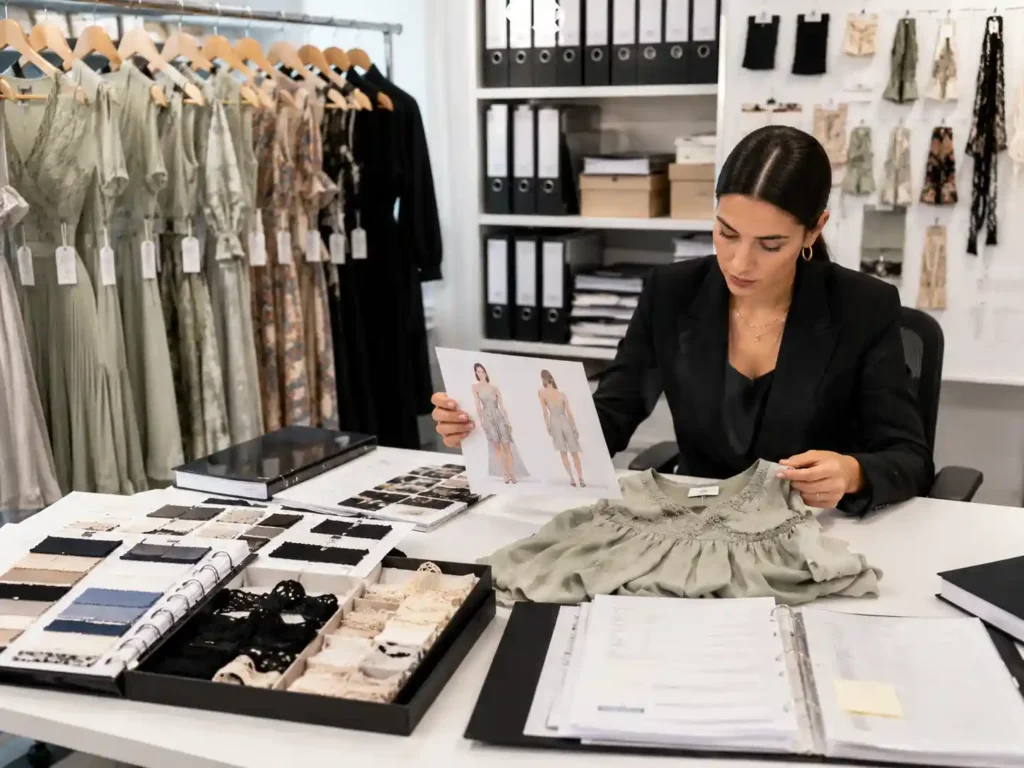
Revision Record
When an accessory changes, the revised specification should be reflected in the BOM or approval record.
Verbal changes and isolated chat messages are not enough for complex multi-style programs because bulk teams need a clear final reference.
Accessory Sourcing Built Around the Dress
Jinfeng coordinates accessory sourcing as part of garment manufacturing. The objective is to find components that meet the approved specification and work in production, rather than claiming that every zipper, button, hook or rhinestone is manufactured in-house.
Specification Comes First
Sourcing begins with the product requirement: garment type, accessory function, material, color, dimensions, finish, quantity and target use. Clear information reduces unnecessary sampling and makes supplier comparison more meaningful.
A technically suitable standard component can be a better production choice than a fully custom part when the visual difference is minor and repeatability is more important.
Supplier Options Are Evaluated by Risk
Accessory sources can be compared around appearance, compatibility, consistency, order requirements and production timing. Components used in structural areas receive more attention than purely decorative additions because a failure can affect fit or garment safety.
For complex dresses, accessory approval often requires reviewing the component inside the sample rather than relying on a loose swatch or catalog photo.
Custom and Standard Components Can Coexist
A collection may use standard invisible zippers while developing a custom hangtag, signature rhinestone detail or branded hardware. Such a mixed strategy can concentrate customization where it creates visible brand value while keeping technical components more stable.
The combination is decided style by style rather than through a single rule applied across an entire collection.
Accessory Records Support Reorders
Approved specifications can support future production when the same dress returns for repeat orders.
New colors, replacement suppliers or revised materials still require review because accessory appearance and availability can change between production periods.
Accessory Changes During Dress Sampling
Changing an accessory during sampling is sometimes necessary, but the effect can extend far beyond the trim itself. Jinfeng treats accessory revisions as controlled development changes so the garment, BOM, quotation and bulk specification remain aligned.

Zipper Changes
Changing zipper length can alter the opening, seam construction or wearing ease. A new tape color may improve appearance while a heavier zipper can affect drape on soft fabrics.
After replacement, zipper flatness and opening performance should be reviewed again on the garment.
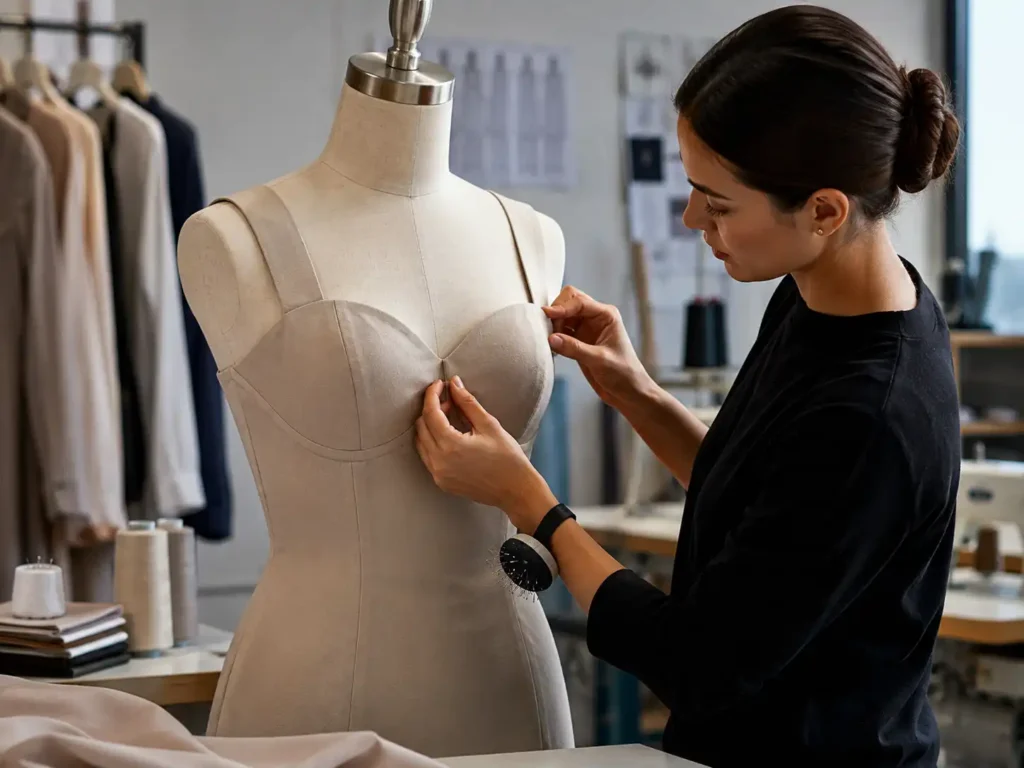
Bra Cup and Boning Changes
Cup shape directly affects bust profile and neckline position. Boning length or stiffness influences support, comfort and panel shape.
Changes in either component may require pattern or lining adjustments, especially on corset, strapless or structured dresses.

Lace and Rhinestone Changes
A new lace trim can alter edge stiffness, color balance and seam alignment. Rhinestone changes may affect weight, shine, skin contact or packing requirements.
Sample approval therefore includes the revised trim on the garment whenever the change materially affects appearance or function.

Label and Packaging Changes
Artwork revisions can alter material size, print area or sourcing requirements. Changing the polybag, hangtag or barcode system can also affect packing instructions and cost.
Final brand and packing files should be locked before bulk material production.
Trim Approval Before Bulk Production
Accessory approval needs a reference that production teams can follow. Jinfeng can organize approved components around a trim card or BOM-based record so bulk purchasing, incoming checks and production instructions refer back to the same final specification. The accessory approval concept is particularly valuable for multi-style programs where several similar trims are being managed at once.
| Approval Item | What Should Be Locked | Bulk Control Focus |
|---|---|---|
| Zipper | Type, length, color, slider, position | Smoothness, shade, seam flatness |
| Button | Material, size, color, placement | Pull strength, spacing |
| Hook & Eye | Size, finish, placement | Closure security |
| Strap Slider | Material, width, finish | Adjustment and skin comfort |
| Elastic | Width, stretch, recovery | Tension and measurement |
| Bra Cup | Shape, size, thickness | Bust profile and position |
| Boning | Type, length, flexibility | Support and end finishing |
| Lace Trim | Width, motif, color, softness | Alignment and skin contact |
| Rhinestone | Type, size, weight, position | Attachment and scratching |
| Woven Label | Artwork, size, material, position | Content and placement |
| Hangtag | Artwork, size, attachment | Style information |
| Polybag | Size, print, stickers | SKU and packing accuracy |
| Carton Mark | Artwork and shipment data | Warehouse identification |
How Accessories Affect Cost and Production Planning
Accessory cost is not determined only by the number of pieces used per dress. Custom color, tooling, plating, branded artwork, minimum production quantities and packaging can change the economics of a style even when the garment silhouette stays the same.

Standard Versus Special Components
Standard zippers, buttons and elastic can often be sourced with fewer development steps. Special-color zippers, custom pullers, unusual metal finishes, exclusive lace trims and custom rhinestone constructions can require additional sampling or supplier commitments.
A dress using ten ordinary components may therefore be easier to source than another style using only three highly specialized trims.

Independent Accessory Minimums
Some trims have their own production minimums that differ from the garment production quantity. Custom woven labels, hangtags, printed polybags, metal hardware, special-color zippers and rhinestone chains are common examples.
Jinfeng’s documented garment MOQ begins from 200 pieces per style/color, while specially developed trims can require higher material commitments depending on the accessory supplier and specification.

Color and Style Complexity
A 20-style collection may contain many separate trim combinations. Reusing compatible components across selected styles can simplify purchasing, while every style using a different custom metal finish or zipper color increases material coordination.
The decision should protect design intent without creating avoidable supply complexity.
Quotation Lock
Bulk quotation is most reliable after fabric direction, trim references, color count, size ratio and packing method are sufficiently defined.
Significant accessory changes after quotation can require price revision because material cost and supplier requirements may change.
Material Arrival and Pre-Production Trim Control
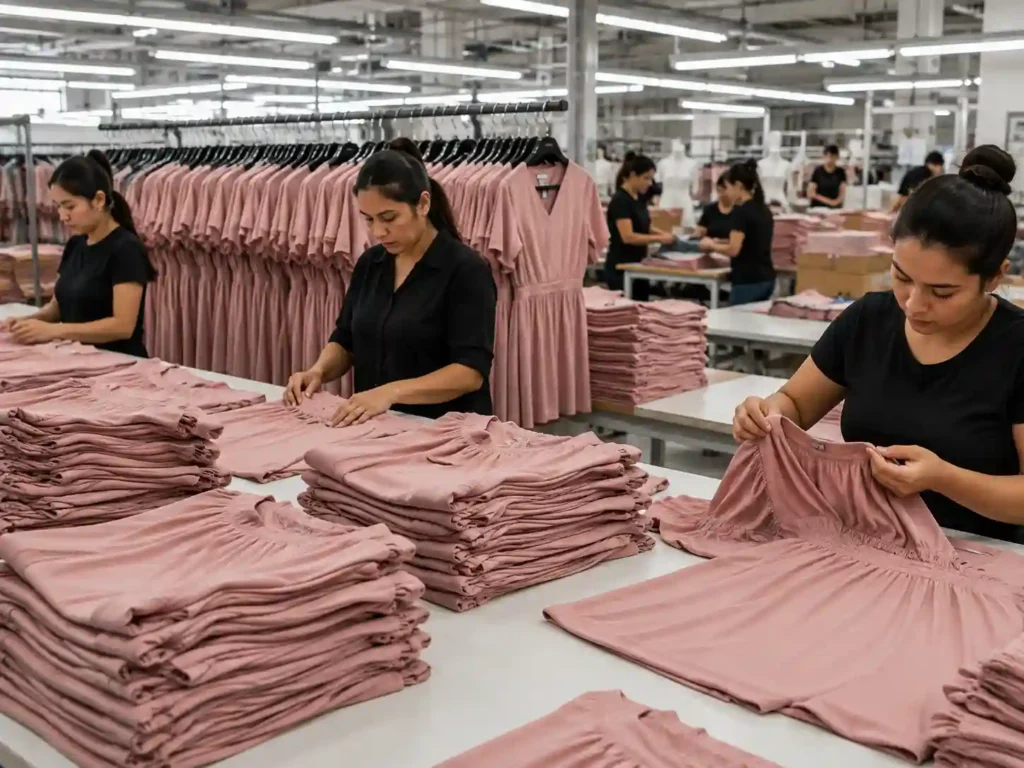
Approved accessories still need to arrive correctly before production. Missing or incorrect zippers, labels, hangtags, cups, boning or packing materials can hold a style even when the main fabric and production line are ready. Jinfeng connects accessory follow-up with production preparation to reduce such gaps.

Before Material Booking
Approved trim references are checked against the final product specification.
Quantity, color, style allocation and packing requirement need to be clear enough for purchasing.
For multi-style collections, shared and style-specific components should be separated in the material plan to reduce mix-ups.

Incoming Accessory Review
Incoming trims can be checked for quantity, visible specification and functional condition before they are released into production. Zippers require color and opening checks; cups need shape review; boning needs correct length and end condition; labels and hangtags need file matching.
Problems caught before sewing are easier to correct than problems discovered after hundreds of dresses have already been assembled.
PP and Bulk Lock
After PP approval, final pattern, fabric, trims, measurements, construction, labels and packing instructions form the production reference. Changes after lock should move through a controlled revision process because they can affect purchasing, cost and schedule.

Style-Level Allocation
Accessories are issued according to the correct style, color and size requirements. Clear internal references are especially important when several dresses use visually similar zippers, labels or decorative trims with different specifications.
Dress Accessory Quality Control from Incoming to Packing
Zipper QC
Button and Hook QC
Elastic and Slider QC
Cup and Boning QC
Decorative Trim QC
Label and Packing QC
From Approved Trims to Repeatable Bulk Dress Programs
The strongest accessory process is one that survives the transition from sample room to bulk production. Jinfeng moves approved trim information together with final pattern, size chart, sewing standards, labels, packing requirements and QC references so production teams do not recreate decisions from memory.

Representative Satin and Party Dress Program
A representative seasonal program involved 18 styles and approximately 42,600 garments across satin slip dresses, fitted mini dresses and embellished party silhouettes. Accessory complexity varied substantially: simple slip styles used fine invisible zippers and strap sliders, while party styles included rhinestone details, chains, hooks and private-label packing components.
The development team grouped accessories into shared and style-specific categories. Common invisible zipper specifications were standardized where fabric and construction allowed, while decorative trims remained style-specific. Sample-stage changes to rhinestone weight and strap hardware were updated before PP approval to prevent the old references from entering bulk purchasing.
Final production references connected the approved trims with style BOMs, garment samples and packing instructions. QC focused on zipper flatness, decorative attachment, strap adjustment, label accuracy and anti-scratch packing for embellished styles.
Representative Corset Dress Collection
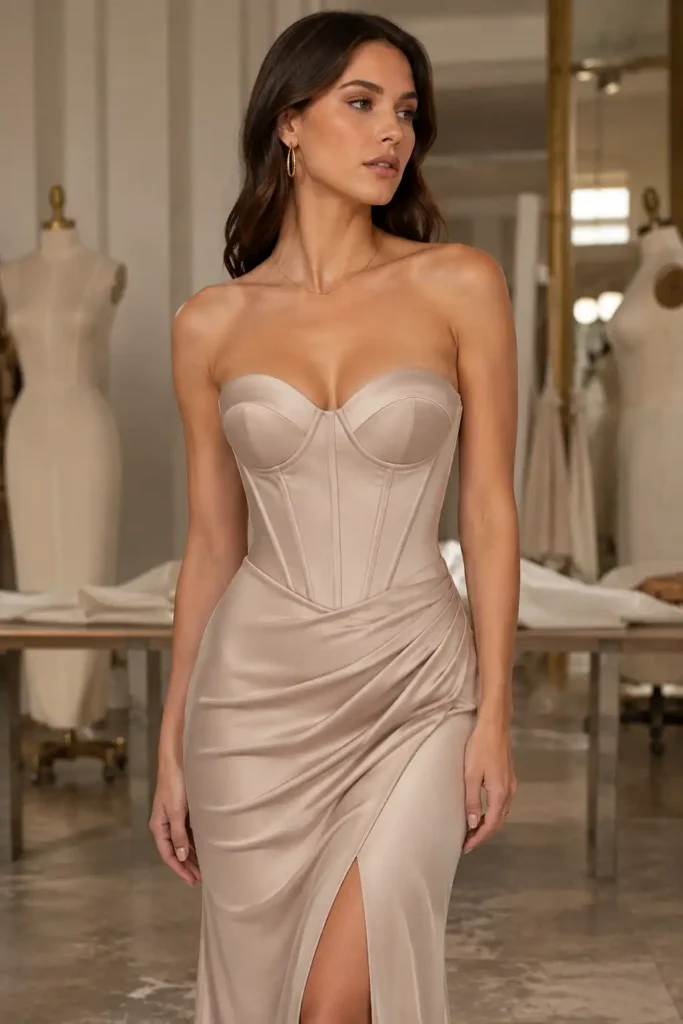
A second representative program covered 12 corset and structured dress styles with about 28,800 garments in the total order.
Each style used a different combination of bra cups, boning, zipper, hooks, lining and decorative details, making accessory control part of fit development rather than a simple purchasing task.
First samples exposed several interactions between accessory choice and garment structure.
Cup profiles were adjusted on selected styles, boning lengths were refined to improve comfort, and closure positions were confirmed after fit review. The changes were transferred into final specifications before PP approval.
Bulk control emphasized cup symmetry, boning position, zipper performance, hook security and lining coverage. The process reduced the risk of sample-room decisions being lost when styles entered production.

Representative Multi-Style Occasionwear Program
A larger occasionwear program included 26 styles and approximately 67,400 garments, combining satin, lace, mesh and embellished designs.
Accessory requirements included invisible zippers, hooks, lace trims, rhinestone details, labels, hangtags, barcodes and several packing formats.
The project required stronger style-level tracking because many components looked similar while carrying different colors, sizes or attachment locations.
Accessories were grouped by material type and linked to the correct style references before production release.
Production management then coordinated material arrival, sewing instructions, inline checks, final appearance review and packing verification. The approach was designed around consistency across many SKUs rather than treating each accessory purchase as an isolated task.
Custom Dress Accessories Frequently Asked Questions
Custom dress accessories include functional, structural, decorative and branding components used within a dress or its finished delivery. Typical examples include zippers, buttons, hooks, strap sliders, elastic, bra cups, boning, lace trims, rhinestones, labels, hangtags and packaging details.
Common accessories depend on the garment. Satin slip dresses often use invisible zippers and strap sliders, corset dresses may use cups, boning and hooks, while party dresses can use rhinestones, chains or decorative trims. Labels and packaging are also part of private-label production.
Zipper tape and visible components can be reviewed against the dress fabric. Exact results depend on supplier options and material availability. Satin and light-colored dresses normally require more careful color and seam-flatness evaluation because the closure is visually sensitive.
Jinfeng can coordinate sourcing according to the required size, material, finish, color, quantity and garment application. Highly customized hardware may involve tooling, supplier minimums or additional development, so specifications are reviewed before final commitment.
Sliders can be selected around strap width, material, finish and color. Custom options depend on supplier capability and planned quantity. Fit remains important because slider dimensions and strap tension influence adjustment range and neckline position.
Accessories can be locked through a BOM, approved physical reference, sample garment and trim approval record. Final specifications should identify key details such as color, size, finish and placement before bulk purchasing and production release.
Yes. Special-color zippers, custom hardware, rhinestone constructions, woven labels, hangtags and printed packaging may each carry separate supplier requirements. Accessory choices can therefore affect material commitment, unit cost and production planning.
Yes, but a change may affect fit, structure, appearance, quotation or sourcing. Cups, boning, zippers and heavy decorative trims can have a larger impact than a simple color change. Important revisions should be tested and recorded before PP approval.
Lace is reviewed for color, softness, motif alignment and attachment. Rhinestone components are checked around weight, attachment strength, sharp edges and visible consistency. Finished garments may require protective packing when decorative surfaces can scratch or snag.
Yes. Jinfeng can coordinate supplied woven-label artwork, care labels, size labels, hangtags, barcode stickers, polybags and carton marks together with garment production. Final regulatory content and brand files remain subject to brand confirmation.

Start Your Custom Dress Accessories Project
Send your dress development information and our team can review the accessory requirements together with fabric, fit, construction, sampling and bulk production.
Clear files allow a more accurate assessment of trim compatibility, sourcing complexity, quotation and production planning. Programs involving multiple styles are best reviewed as a complete collection so shared accessories, style-specific trims and private-label components can be organized before sampling moves too far.
For an efficient project review, please include:
- Dress reference image, sketch or line sheet
- Tech pack and BOM when available
- Planned styles and quantities
- Fabric direction or swatch reference
- Zipper, button, hook or hardware references
- Cup, boning, elastic or support requirements
- Lace, rhinestone or decorative trim references
- Size range and fit requirements
- Woven-label and care-label files
- Hangtag and barcode requirements
- Packaging instructions
- Target production and delivery window


