...

Custom Corset Top Manufacturer for Fashion Brands

JF Apparel manufactures custom corset tops for fashion brands, boutique retailers, wholesalers, and online apparel companies seeking structured silhouettes, reliable fit consistency, and scalable OEM production. From satin bustier tops and lace corsets to mesh, denim, and rhinestone styles, our team supports fabric sourcing, pattern development, sampling, bulk manufacturing, private label packaging, and global shipping. We help brands develop commercially wearable corset tops with balanced structure, comfort, visual impact, and repeat-order production stability.

  • Complete sampling, production, inspection, packaging, and shipping coordination
  • 7 pattern makers support structured corset fit and silhouette development
  • 5–10 day sampling supports rapid fashion collection launch schedules
  • Simple corset top production timelines are commonly controlled within 15–20 days
  • 3 experienced women’s fashion facilities support flexible corset manufacturing capacity

Market Opportunities in the Corset Top Industry & Key Challenges in Corset Top Production

Corset tops are no longer limited to niche shapewear or costume fashion. The category is expanding across women’s apparel, social commerce, occasionwear, and celebrity-driven styling markets. Demand growth is supported by body-contouring fashion trends, short-form video commerce, and increasing consumer preference for visually structured silhouettes. Corset tops require stronger technical control than ordinary fashion tops. Fit, structure, stretch, lining, closure strength, seam tension, and finishing must work together to reduce defects, returns, and inconsistent bulk results.

Corset and Body-Shaping Fashion Continues Expanding

Modern corset fashion benefits directly from the growing global shapewear and body-contouring apparel market. According to market reporting cited by the New York Post, the global corset and shapewear-related market is projected to reach approximately USD 3.8 billion by 2031. Corset-inspired garments are increasingly moving from traditional underwear categories into mainstream women’s fashion, including bustier tops, structured dresses, and fitted outerwear collections. This shift creates long-term opportunities for brands developing corset tops with stronger fashion positioning rather than purely functional shapewear.

Social Commerce Strongly Supports Corset Top Sales

Corset tops perform especially well in visual social-commerce environments because body contouring, lace-up structures, satin shine, and fitted silhouettes generate strong video engagement. Business Insider reported that TikTok Shop became one of the fastest-growing brands in the United States in 2025, while TikTok itself generated over USD 100 million in US Black Friday sales within a single day. Additional consumer research cited by Adweek and Morning Consult found that approximately 49% of TikTok users purchased products after seeing them promoted on the platform. Fashion products with strong visual styling, including corset tops, benefit heavily from this behavior pattern.

Celebrity and Runway Trends Keep Corsets Mainstream

Corset fashion continues receiving strong exposure from celebrities, runway collections, and luxury fashion media. ELLE reported that celebrities including Margot Robbie, Hailey Bieber, and Kendall Jenner have helped drive corsets back into mainstream fashion styling, positioning corsets as one of the defining silhouettes of current women’s fashion trends. Vogue also noted that modern corsets have evolved from restrictive historical garments into fashion-focused pieces associated with confidence, styling versatility, and self-expression. Continued visibility across red carpets, TikTok, Instagram, and fashion editorials keeps corset tops commercially relevant across premium, boutique, and fast-fashion markets.
12

Key Challenges in Corset Top Production

Corset tops require stronger technical control than ordinary fashion tops. Fit, structure, stretch, lining, closure strength, seam tension, and finishing must work together to reduce defects, returns, and inconsistent bulk results.

Pattern Engineering and Body Shaping
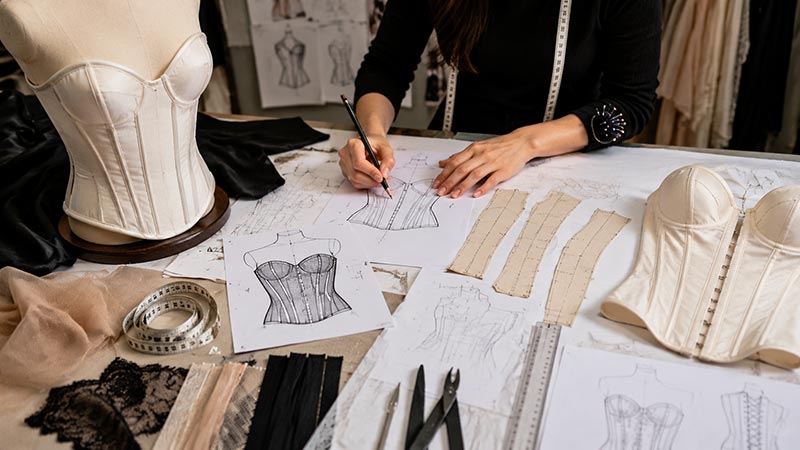
Corset tops require more advanced pattern engineering than ordinary women’s tops because the garment must shape the bust, waist, side body, and neckline at the same time. Poor panel balance can easily cause twisting, gaping, pressure marks, or unstable compression during wear. JF Apparel reviews sketches, tech packs, body measurements, and reference samples before development, then adjusts cup shape, waist curve, seam positioning, and panel structure through multiple fitting corrections to improve silhouette consistency and commercial wearability.

Lining Structure and Wearing Comfort

Lining plays an important role in corset top structure, comfort, opacity, and overall body feel. Incorrect lining selection can make the garment stiff, transparent, heavy, or uncomfortable around sensitive body areas. JF Apparel evaluates lining compatibility according to fabric weight, stretch level, garment structure, and intended wearing experience. Depending on the style direction, we may use soft knit lining, mesh lining, satin lining, powernet support, or partial lining solutions to balance support, breathability, and comfort.

Stretch Direction and Recovery Control

Stretch fabrics behave differently depending on fabric composition, cutting direction, and recovery performance. In corset tops, incorrect stretch control may affect bust support, waist shaping, comfort, and long-term garment stability. JF Apparel reviews fabric stretch ratio, elasticity direction, recovery behavior, and opacity before cutting. During production, we apply different construction methods for stretch satin, mesh, powernet, jersey, velvet, and denim fabrics to improve shape retention and reduce distortion during repeated wear.

Boning Stability and Structural Balance

Boning helps corset tops maintain shape and visual structure, especially in bustier styles, longline corsets, and lace-up designs. However, incorrect boning placement may create twisting, bulging, discomfort, or unstable shaping during movement. JF Apparel reviews boning length, channel width, seam relation, placement balance, and body movement during sample development. We adjust reinforcement methods according to fabric behavior and silhouette requirements to improve both structural stability and long-term wearing comfort.

Boning-Stability-and-Structural-Balance

Closure Reinforcement and Tension Resistance

Corset tops often place heavy tension on zippers, hooks, eyelets, lace-up panels, and back closures during wear. Weak closure construction may lead to seam damage, pulling issues, or customer complaints after repeated use. JF Apparel reinforces closure areas through stitch adjustment, panel support, seam balancing, and pull-strength review during development and production stages. Different closure systems are evaluated according to garment structure, fabric thickness, and target customer usage.

Cut-Out Stability and Edge Construction

Cut-out corset tops create stronger visual impact but also increase manufacturing complexity because exposed edges may stretch, curl, distort, or tear if not stabilized correctly. JF Apparel controls edge construction through reinforced binding methods, lining support, balanced stitch density, and stress-point reinforcement around openings. During sample correction, we also review body movement and fabric recovery to improve long-term shape stability while maintaining the intended silhouette and visual effect.

Manufacturing Support for Fashion Brands

JF Apparel works with fashion companies that need more than simple garment production. Our corset top manufacturing service supports structured silhouettes, fit-sensitive development, private label programs, seasonal launches, and scalable bulk production for brands focused on women’s fashion growth.

Established Women’s Fashion Brands

Established women’s fashion brands often need corset tops that match existing dress, bodysuit, skirt, or eveningwear collections. These brands usually focus on consistent fit, stable quality, trend execution, and reliable production timelines across seasonal launches. JF Apparel supports these requirements through structured sample development, fabric sourcing coordination, quality control management, and scalable manufacturing capacity for repeat production and long-term collection planning.

Boutique Retail Chains

Boutique retailers require corset tops that combine strong visual appeal with stable commercial performance. Their collections often focus on seasonal colors, trend-driven silhouettes, and fast inventory turnover. JF Apparel supports boutique programs with flexible MOQ options, multiple fabric directions, private label packaging, and controlled production timelines. This allows retailers to test styles efficiently while preparing for future replenishment and collection expansion.

Online Fashion and DTC Brands

Online fashion brands need corset tops that perform well across product photography, video marketing, influencer campaigns, and customer reviews. Structure, comfort, fit consistency, and visual impact all influence online conversion and return rates. JF Apparel helps DTC brands develop commercially wearable corset tops through careful fabric selection, fit correction, seam control, lining coordination, and stable bulk manufacturing processes.

Partywear and Festival Fashion Labels

Partywear and festival collections often require corset tops with stronger visual identity, including satin finishes, mesh panels, rhinestones, lace overlays, denim construction, or lace-up details. These products must balance appearance with wearability and production stability. JF Apparel supports this category through structured development, reinforcement control, decoration management, and bulk production planning suitable for fast-moving fashion collections.

Wholesalers and Private Label Companies

Wholesalers and private label fashion companies usually need corset tops that can be reordered, recolored, relabeled, and adapted across different markets or retail channels. JF Apparel supports these programs with organized production workflows, custom branding solutions, barcode systems, packaging coordination, and scalable manufacturing support. This helps simplify inventory planning while maintaining stable quality across repeat production runs.

Niche Women’s Wear Designer Brands

Niche women’s wear designer brands often focus on unique silhouettes, elevated materials, limited capsule collections, or highly recognizable visual identity. Corset tops for these collections usually require closer attention to fit shaping, fabric behavior, surface detailing, and overall garment structure. JF Apparel supports designer-focused development through flexible communication, sample refinement, fabric coordination, and controlled production suitable for lower-volume but higher-value fashion programs.

Corset Top Styles We Manufacture

Corset tops can serve many commercial directions, from elevated eveningwear to TikTok-ready fashion drops. JF Apparel helps brands develop structured, decorative, stretch, woven, denim, satin, mesh, lace, and private label corset top collections.

Satin Corset Tops

Designed for elevated eveningwear, boutique collections, birthday edits, bridal party capsules, and premium social fashion drops. Satin corset tops require careful control of surface smoothness, seam pressure, lining balance, and pressing marks because shiny fabrics reveal small production issues easily. These styles are commonly developed in 120–220gsm satin or stretch satin, depending on the required drape and structure. The commercial value is strong because satin photographs well, supports higher perceived value, and works across black, ivory, champagne, red, pink, and metallic seasonal colors.
  • Manufacturing Focus: Surface control, seam smoothness, lining balance, boning placement
  • Commonly used for: Eveningwear, partywear, boutique drops, bridal edits

Lace Corset Tops

Lace corset tops are suitable for romantic fashion collections, lingerie-inspired outerwear, date-night capsules, festival edits, and boutique occasionwear. Development must control lace placement, motif symmetry, lining opacity, edge finishing, and skin comfort. Many brands choose 80–180gsm lace overlays with mesh, satin, or powernet lining depending on transparency and price band. The key risk is bulk inconsistency: lace cutting, seam alignment, and motif positioning can vary if production markers are not planned carefully. Proper development helps the style look delicate without feeling weak or unstable.
  • Manufacturing Focus: Lace placement, lining opacity, motif matching, edge finishing
  • Commonly used for: Romantic fashion, lingerie-inspired tops, occasionwear

Denim Corset Tops

Denim corset tops are ideal for streetwear, western-inspired edits, Y2K collections, festival outfits, and matching denim sets. These styles need stronger structure, accurate panel shaping, stable topstitching, and controlled wash shrinkage. Typical denim weights range from 8–12 oz, while stretch denim may include 1–3% spandex for comfort. The main production risks are uneven wash effect, panel distortion, zipper waviness, and tight seam tension. A well-developed denim corset top gives brands a strong visual item with good repeat order potential across washes and colors.
  • Manufacturing Focus: Wash shrinkage, topstitch tension, panel shaping, zipper stability
  • Commonly used for: Streetwear, festival fashion, denim sets, Y2K drops

Mesh Corset Tops

Mesh corset tops are used for nightlife fashion, festivalwear, sheer layering, clubwear, and statement capsules. They often require lining, double-layer construction, or strategic paneling to balance transparency with wearability. Mesh weights usually range from 60–160gsm, with stretch ratios commonly between 20–60% depending on fiber and knit structure. The key risk is distortion during cutting and sewing, especially around bust curves, side seams, and closure areas. JF Apparel controls mesh corset tops through stretch direction planning, reinforcement, lining compatibility, and careful seam tension management.
  • Manufacturing Focus: Stretch direction, opacity zones, seam tension, reinforcement points
  • Commonly used for: Nightlife fashion, festivalwear, sheer styling, clubwear

Bustier Corset Tops

Bustier corset tops are suitable for brands that want a stronger feminine silhouette with cup shaping, neckline structure, and waist definition. These styles are often used in premium tops, dress collections, lingerie-inspired fashion, and occasionwear. Development requires more precise pattern engineering than a simple crop top because the bust curve, underbust line, side seam, strap position, and closure must work together. The main commercial value is fit differentiation: when the bustier shape is correct, the product feels more premium and supports stronger customer loyalty.
  • Manufacturing Focus: Cup shaping, underbust balance, strap position, neckline stability
  • Commonly used for: Premium tops, occasionwear, lingerie-inspired fashion

Lace-Up Corset Tops

Lace-up corset tops are strong for brands targeting adjustable fit, visual impact, and social media styling. They can be developed with back lacing, front lacing, side lacing, or decorative lacing depending on the collection direction. The production focus is not only the lacing itself but also eyelet strength, panel reinforcement, cord quality, seam pressure, and fit range. If reinforcement is weak, the eyelets may pull out during wear. Proper construction makes the style more adjustable, more dramatic in photos, and more suitable for multiple body types.
  • Manufacturing Focus: Eyelet strength, panel reinforcement, lacing balance, fit adjustment
  • Commonly used for: Clubwear, festival drops, adjustable fashion tops

Rhinestone Corset Tops

Rhinestone corset tops are used for statement partywear, performance fashion, celebrity-inspired collections, holiday drops, and high-impact social media campaigns. These styles need careful planning because decoration can affect fabric stretch, hand feel, weight, washing behavior, and packaging protection. Rhinestone placement must avoid high-friction zones where stones may fall off more easily. Commercially, rhinestone corset tops can support higher price points and strong photography value, but bulk production requires testing for adhesion, rubbing, packing pressure, and final inspection.
  • Manufacturing Focus: Stone adhesion, stretch impact, friction zones, packing protection
  • Commonly used for: Partywear, holiday drops, stagewear, statement fashion

Floral Appliqué Corset Tops

Floral appliqué corset tops are suitable for boutique fashion, resort edits, bridal-inspired collections, spring drops, and romantic occasionwear. These styles usually require layered construction, accurate placement, hand-feel control, and careful packing to avoid crushed decoration. The development complexity is medium to high because appliqué affects fabric thickness, sewing sequence, pressing, and comfort. Brands use these styles to create strong visual differentiation, especially when competing in saturated online fashion categories where simple silhouettes no longer stand out.
  • Manufacturing Focus: Appliqué placement, thickness control, comfort lining, packing method
  • Commonly used for: Resort fashion, bridal edits, boutique collections

Longline Corset Tops

Longline corset tops extend below the natural waist and work well for elegant fashion capsules, matching skirt sets, structured evening looks, and premium DTC collections. These styles need stronger vertical balance because the garment must shape the bust, waist, and lower torso without riding up or twisting. Fabric choice, boning length, hem shape, and closure construction are critical. Longline styles can create higher perceived value than shorter corset tops, but they require careful size grading to avoid fit complaints across different body shapes.
  • Manufacturing Focus: Torso balance, boning length, hem stability, size grading
  • Commonly used for: Matching sets, eveningwear, premium fashion lines

Cup Types Used in Corset Tops

Cup construction affects bust shaping, support performance, silhouette balance, and overall wearing comfort. Different corset top categories require different cup structures depending on neckline depth, body fit, target market, and fashion direction.

Push-Up Cup

Push-up cups are commonly used in partywear, clubwear, and social fashion collections where stronger cleavage and lifted shaping are required. This structure usually combines thicker lower support, reinforced underbust shaping, and tighter side control to create a more defined upper body silhouette. Push-up corset tops often work best with satin, stretch fabrics, and fitted silhouettes designed for visual impact and photography performance.

Soft Cup

Soft cup structures focus more on comfort and natural body shaping compared with heavily structured corsets. This cup type is commonly used in mesh corset tops, lace corsets, and daily fashion styles where flexibility and wearable comfort are more important than aggressive shaping. Soft cups usually rely on fabric tension, lining support, and seam shaping rather than rigid internal support systems.

Molded Cup

Molded cups provide smoother contour shaping and stronger bust definition for fitted corset tops and bustier constructions. These cups are commonly used in premium women’s fashion, eveningwear, satin corsets, and structured silhouettes that require stable shaping across multiple sizes. Molded cup structures also help improve photography appearance and reduce uneven bust shaping during wear.

Demi Cup

Demi cups cover approximately half of the bust area and are commonly used in more revealing corset top designs. This structure creates stronger upper bust exposure and a more elevated fashion silhouette often seen in luxury eveningwear, fashion editorials, and bridal-inspired collections. Demi cup corsets require careful neckline tension control to reduce slipping or unstable support during movement.

Full Cup

Full cup structures provide stronger bust coverage and higher support stability compared with smaller cup constructions. These cups are often used in plus size corsets, shaping corsets, and support-focused designs where comfort and structure must remain balanced during extended wear. Full cup corset tops also help improve bust containment and reduce movement instability for larger cup sizes.

Balconette Cup

Balconette cups create a horizontal neckline shape with upward bust support and a more lifted upper body silhouette. This structure is widely used in vintage-inspired corsets, palace-style fashion, bridalwear, and elegant evening collections. Balconette corset tops require careful control of cup angle, neckline fit, and underbust support to maintain stable shaping without excessive pressure.

Corset Top Size Systems

Corset top sizing is more complex than ordinary women’s apparel because bust shaping, waist compression, torso length, and body contour must work together across different body types. JF Apparel develops corset tops according to European and American sizing systems to improve fit stability, support balance, and commercial wearability across multiple fashion markets.

Size SystemCommon SizesMain CharacteristicsCommon Applications
Alpha Size SystemXS / S / M / L / XL / XXLSimplified sizing structure with easier inventory management and faster production planningFast fashion corsets, stretch corset tops, social commerce collections
US Numeric Size System0 / 2 / 4 / 6 / 8 / 10 / 12 / 14More precise body grading with stronger fit consistency across structured garmentsBoutique brands, DTC fashion, premium corset collections
EU Numeric Size System34 / 36 / 38 / 40 / 42 / 44 / 46European body proportion grading commonly used for fitted women’s fashion programsEuropean fashion brands, structured corsets, occasionwear
Bra Size Corset System32A / 32B / 34C / 36D / 38DDCombines bust cup sizing with body measurement for more accurate support engineeringBustier corsets, shaping corsets, premium structured tops
Dual Size SystemXS/S / M/L / XL/XXLFlexible multi-size grading designed to improve fit adaptability and inventory efficiencyLace-up corsets, stretch corset tops, adjustable fashion styles
Plus Size System1X / 2X / 3X / 4XExpanded body grading with reinforced support structure and adjusted pressure balancePlus size corsets, support-focused fashion collections
Petite Size SystemPetite XS / Petite S / Petite MShorter torso grading designed for smaller body proportions and reduced garment lengthCropped corsets, petite fashion collections
Tall Size SystemTall S / Tall M / Tall LExtended torso length and adjusted vertical proportions for taller body shapesLongline corsets, taller body fit collections

Fabrics for Custom Corset Tops

Fabric selection decides structure, comfort, opacity, price band, and production risk. JF Apparel helps brands choose corset top fabrics based on silhouette, target customer, season, selling channel, and bulk stability.
5. Satin Fabrics

Stretch Satin

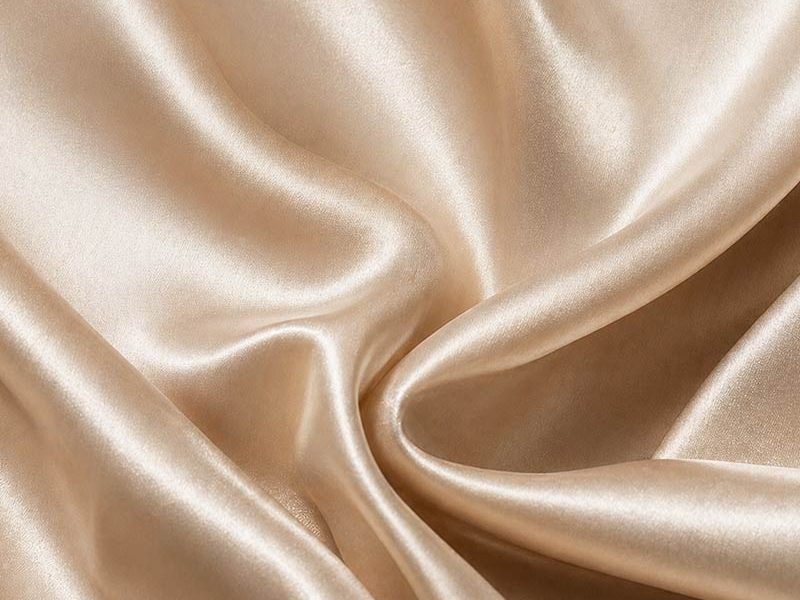
Stretch satin gives corset tops a smooth, polished surface with a premium eveningwear look. It works well for partywear, bridal-inspired capsules, boutique tops, and holiday collections.The main control points are seam puckering, pressing marks, shine direction, and lining compatibility. When handled correctly, stretch satin supports elegant product photography, strong color depth, and higher perceived retail value.

Typical GSM: 120–220gsm

Stretch Ratio: 5–15%

Production Risk: Medium

Best for: Eveningwear, partywear, boutique fashion
Power Mesh

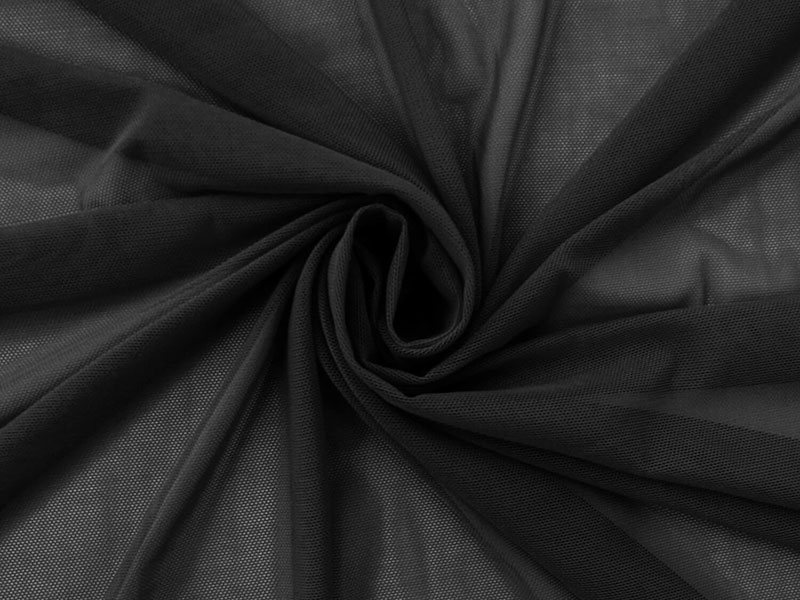
Power mesh is useful when brands need stretch, support, transparency control, or lingerie-inspired construction. It is often used as a main fabric, lining layer, side panel, or shaping support inside corset tops.  The key production issue is stretch direction control. If mesh is cut incorrectly, the bust and waist fit can become unstable. Proper application improves comfort, recovery, and wearability.

Typical GSM: 120–250gsm

Stretch Ratio: 30–70%

Production Risk: Medium to High

Best for: Lingerie-inspired tops, shaping panels, stretch corsets
Lace Fabric

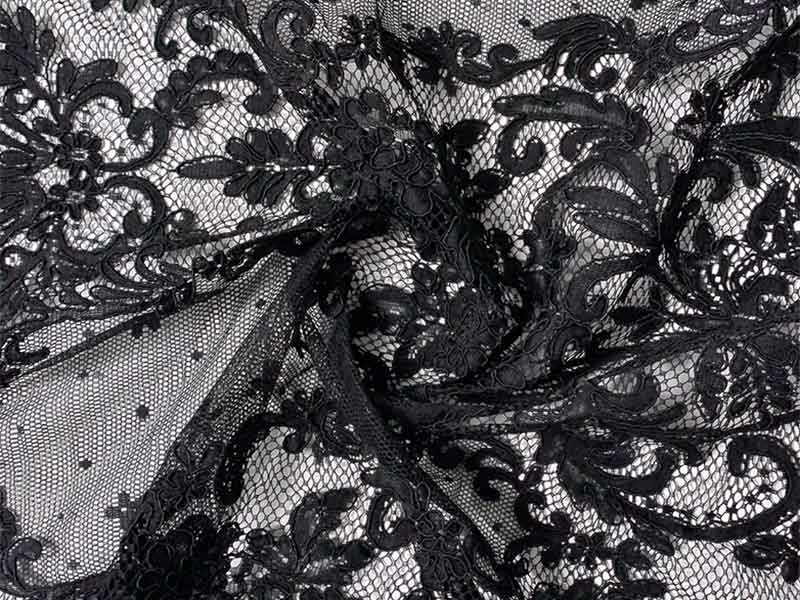
Lace adds femininity, texture, and higher visual value to corset tops. It is suitable for romantic collections, boutique drops, lingerie-inspired fashion, and occasionwear.  The main production risks are motif misalignment, fraying, uneven transparency, and scratchy hand feel. Many lace corset tops need soft lining to improve comfort and reduce skin irritation while keeping the visual effect.

Typical GSM: 80–180gsm

Stretch Ratio: 0–40%

Production Risk: Medium

Best for: Romantic fashion, occasionwear, lingerie-inspired tops
Stretch Denim

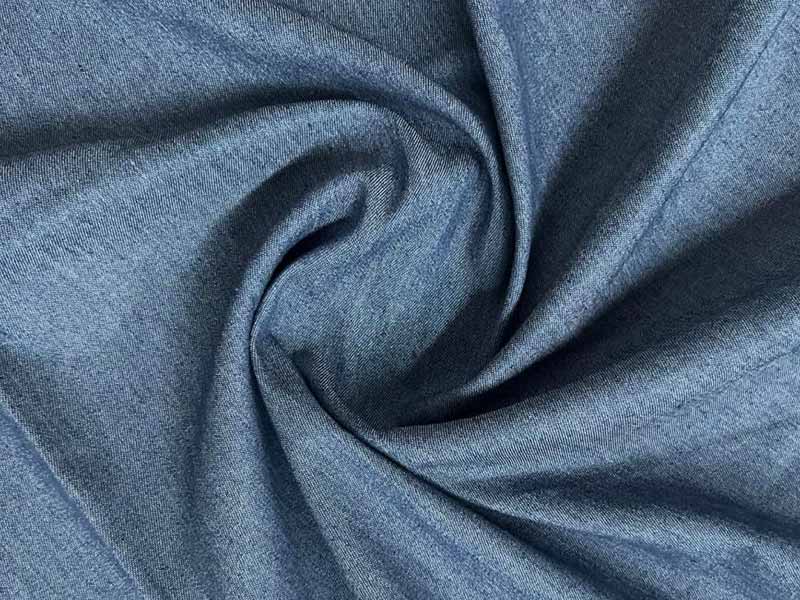
Stretch denim gives corset tops a stronger streetwear and casual fashion character. It is suitable for Y2K drops, festival looks, matching denim sets, and western-inspired collections.The main control points include wash shrinkage, color consistency, seam thickness, topstitch accuracy, and zipper stability. Stretch denim can support repeatable commercial programs when wash standards are clearly approved before bulk production.

Typical Weight: 8–12 oz

Stretch Ratio: 5–20%

Production Risk: Medium

Best for: Streetwear, denim sets, festival fashion
8. Velvet Stretch Fabric

Velvet Stretch

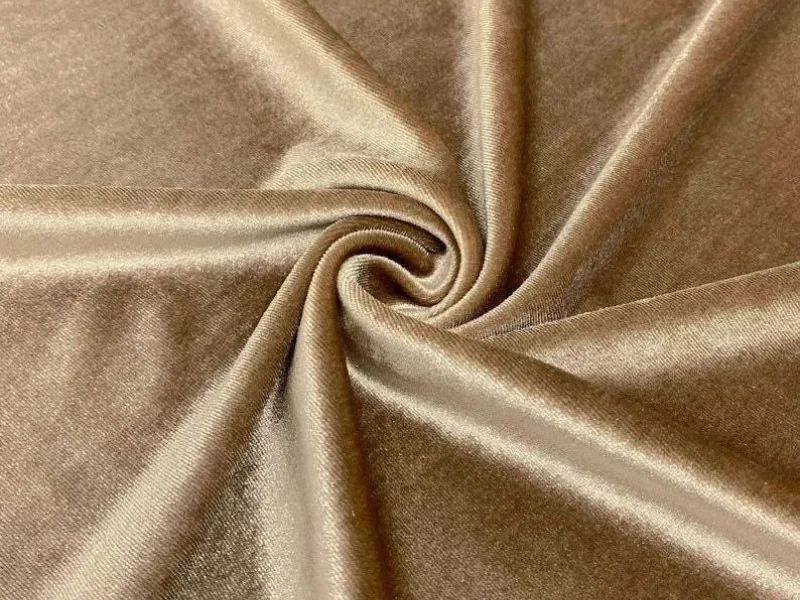
Velvet stretch creates a rich surface, soft hand feel, and strong seasonal appeal for autumn, winter, holiday, and evening collections. Typical weight ranges from 220–320gsm, with 10–30% stretch depending on knit base. Production must control pile direction, shade variation, pressure marks, and seam thickness. Velvet corset tops can look premium in photography, but they require careful cutting and packing because the surface can show crushing, shine marks, or nap inconsistency.

Typical GSM: 220–320gsm

Stretch Ratio: 10–30%

Production Risk: Medium to High

Best for: Holiday drops, eveningwear, premium boutique tops

Faux Leather

Faux leather corset tops are used for edgy fashion, clubwear, moto-inspired collections, and statement styling. Typical thickness ranges from 0.6–1.2mm, depending on backing and surface finish. The main production risks are needle marks, seam bulk, poor breathability, peeling, cracking, and uncomfortable inner touch. Many faux leather corset tops benefit from soft lining and carefully selected closures. When controlled well, faux leather gives strong visual identity and higher perceived fashion value.

Typical Thickness: 0.6–1.2mm

Stretch Ratio: 0–15%

Production Risk: High

Best for: Clubwear, edgy fashion, statement tops

Spandex / Elastane Stretch Fabric

Spandex and elastane stretch fabrics are widely used in corset tops that require close body fit, flexibility, and improved comfort during movement. These fabrics are commonly applied in body-hugging silhouettes, shaping panels, clubwear, active-inspired fashion, and stretch corset constructions.The main production focus is controlling stretch direction, recovery balance, seam stability, and long-term shape retention after repeated wear and washing.

Typical GSM: 180–320gsm

Stretch Ratio: 20–60%

Recovery Performance: High

Production Risk: Medium

Best for: Bodycon corset tops, shaping styles, stretch fashion collections

Brocade Fabric

Brocade fabric is suitable for premium corset tops with stronger structure, decorative texture, and elevated visual styling. It is often used for luxury-inspired collections, bridal fashion, eveningwear, historical fashion influence, and statement capsule releases.The main production risks include seam bulk, reduced flexibility, surface snagging, and distortion around curved corset panels. Proper lining and reinforcement selection help improve comfort and structural stability during wear.

Typical GSM: 180–350gsm

Stretch Ratio: 0–8%

Surface Effect: Textured woven pattern with dimensional appearance

Production Risk: Medium to High

Best for: Bridal corset tops, luxury eveningwear, structured fashion pieces

Surface Techniques for Corset Tops

Brands that produce belted tops typically want the style to stand out strongly in photography and differentiate it from basic tops. Fabric technology must enhance visual value without compromising elasticity, comfort, construction, washability, or mass production stability.

Rhinestone and Hotfix Application

Rhinestone and hotfix details can turn a corset top into a strong partywear, performance, or holiday product. The commercial value is clear: stronger product photography, higher perceived price, and better social media impact. The development risk is also high. Decoration can reduce fabric stretch, create friction against the body, increase garment weight, and raise the chance of stone loss during wear or packing. For bulk production, JF Apparel focuses on placement mapping, adhesion testing, friction-zone review, and packing protection. High-stress areas such as bust seams, side seams, and lace-up panels need extra review before production approval.

Embroidery and Lace Overlay

Embroidery and lace overlay are suitable for romantic, bridal-inspired, boutique, and premium corset top collections. They add surface depth and brand identity without relying only on print or color. The main technical issue is balance: embroidery and lace can make fabric thicker, stiffer, or less elastic, which may affect bust comfort and waist shaping. JF Apparel reviews overlay placement, motif direction, seam allowance, lining choice, and skin contact points during sample development. When handled correctly, embroidery and lace can raise product value while keeping the garment wearable and production-friendly.

Digital Print and Placement Print

Digital print and placement print work well for seasonal drops, resort capsules, festival tops, and brand-specific artwork. For corset tops, print placement is more complex than flat garments because curved panels, princess seams, darts, and closures can interrupt artwork. Poor print planning can cause broken graphics, mismatched panels, or uneven color after sewing. JF Apparel controls print development through artwork scale review, panel mapping, strike-off approval, and shade checking. Placement print is best used when the design team wants a signature style that competitors cannot easily copy.

Pleating, Ruching, and Gathered Effects

Pleating, ruching, and gathered effects help corset tops create texture, body shaping, and visual softness. These techniques are useful for bust shaping, side waist detail, asymmetric fashion tops, and eveningwear. The main risk is bulk inconsistency: if tension is not controlled, one side may appear fuller, shorter, or twisted. Ruching can also affect stretch recovery and measurement stability. JF Apparel manages these styles through sewing sequence planning, balance checking, sample correction, and measurement control before bulk production. Proper execution helps brands create a flattering product without sacrificing consistency.

Corset Top Sampling and Development

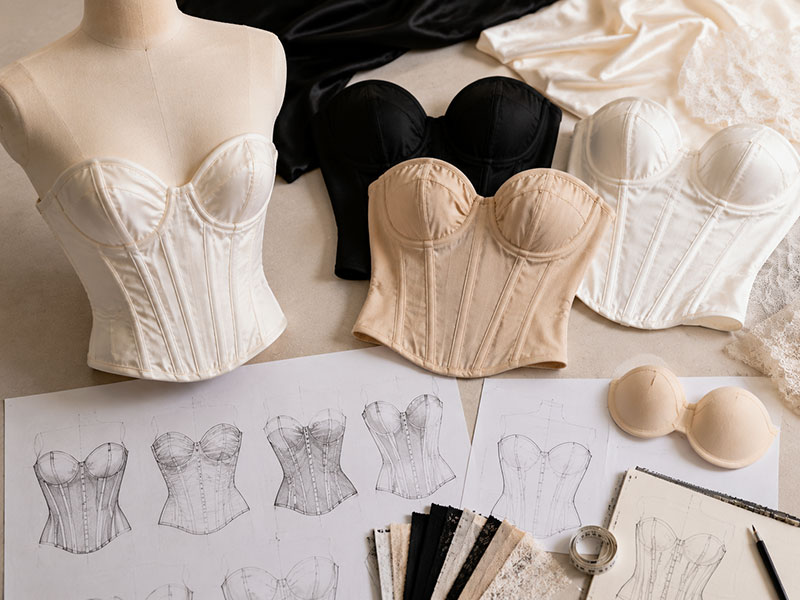
Corset top development requires more technical review than ordinary women’s tops because fit, support, structure, stretch recovery, and visual shaping must work together. JF Apparel supports structured sample development from concept review to production-ready approval.
9e7f88f2f1c58f933b187b546e1c6e26e224b57b13818d9-8g89UY

Design Review and Development Planning

The sampling process usually begins with tech packs, sketches, reference garments, inspiration images, fabric direction, or sizing requirements. For corset tops, our team reviews neckline structure, bust shaping, waist definition, closure type, panel layout, lining method, fabric stretch, and target silhouette before sample development starts. This early planning stage helps reduce unnecessary sample revisions later in the process, especially for longline corsets, bustier tops, lace-up styles, and structured eveningwear pieces.
布料仓库-6

Fabric and Trim Coordination

Corset tops rely heavily on the relationship between fabric and structure. Before sample cutting, JF Apparel reviews the selected fabric, lining, boning, zipper, eyelets, mesh panels, elastic, lace, rhinestones, or decorative trims to ensure compatibility. Some fabrics may look visually strong but fail during wear because they stretch incorrectly, recover poorly, or create discomfort around the bust and waist. During development, we help brands balance appearance, comfort, support, opacity, and production stability based on the intended market and selling channel.
3.Sample Construction and Fit Correction

Sample Construction and Fit Correction
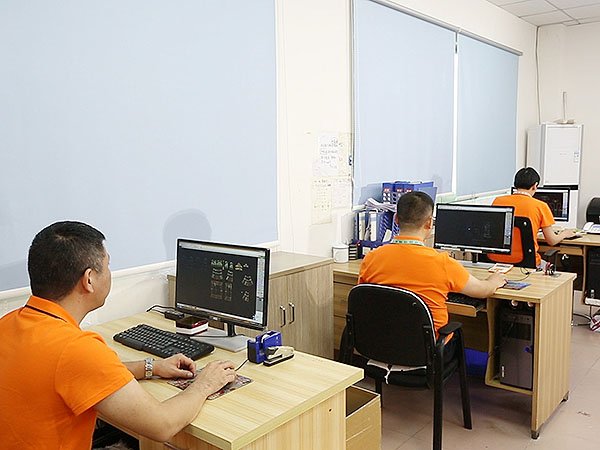
Corset top samples require careful assembly because small changes can affect the entire silhouette. After the first prototype is completed, fit corrections may involve bust curve adjustment, waist compression balance, seam tension correction, neckline reshaping, closure repositioning, strap modification, or lining updates. JF Apparel supports multiple sample revisions when necessary because structured garments often need refinement before bulk approval. Our goal is not only to create a visually attractive sample but to build a repeatable production standard.
jinfengapparel

Sample Development Basic Support

JF Apparel supports corset top development through two sample development rooms, seven experienced pattern makers, twenty sample sewing specialists, and three sourcing coordinators supporting fabrics and trims. Standard corset top samples are commonly completed within 5–7 days, while more structured or detail-heavy styles usually require around 7–10 days. Our development team can work from reference images, sample garments, sketches, or tech packs, while also adjusting pattern balance according to actual fabric behavior instead of copying silhouettes mechanically. For fitted and body-shaping corset styles

Private Label Solutions for Corset Top Brands

Strong private label presentation helps corset tops achieve better visual positioning, stronger retail perception, and more recognizable brand identity. JF Apparel supports customized branding solutions suitable for boutique collections, DTC fashion labels, wholesalers, and premium women’s wear programs.

Custom Main Labels and Brand Identity

Corset tops often sit close to the body, so label comfort and visual presentation both matter. JF Apparel supports woven labels, satin labels, printed labels, and heat transfer labels according to fabric type and garment structure. Label placement is reviewed carefully to reduce irritation while maintaining a clean and premium appearance suitable for structured women’s fashion products.

Size Labels and Care Label Solutions

Clear size labels and care labels help improve customer experience while reducing confusion and post-sale issues. JF Apparel supports custom size systems, multilingual care labels, fabric composition labels, washing instructions, and compliance information according to different international markets. Softer label materials can also be used for close-fitting corset top constructions.

Hangtags and Retail Packaging Presentation

Corset tops rely heavily on presentation value, especially for boutique retail, social commerce, and premium fashion collections. JF Apparel supports customized hangtags, barcode stickers, logo printing, foil stamping, and retail-ready packaging solutions. Different packaging structures can be arranged according to the intended selling channel, visual positioning, and transportation requirements.

Protective Packing and Carton Coordination

Structured corset tops require more careful packing than ordinary garments because boning, satin surfaces, lace overlays, and decorative trims may become distorted during shipping. JF Apparel supports customized folding methods, polybags, tissue protection, carton marking, hanger packing, and shipment coordination to help maintain garment appearance and improve receiving efficiency after delivery.

OEM & ODM Corset Top Production Process

A structured production process helps reduce sampling delays, communication confusion, and bulk manufacturing mistakes. JF Apparel organizes corset top development through a clear OEM and ODM workflow designed for fashion brands, wholesalers, retailers, and private label programs.

Step 1 — Share Product Requirements

The process begins with design sketches, tech packs, reference garments, inspiration images, fabric direction, target pricing, or size requirements. Brands may already have complete development packages or only early concepts. JF Apparel reviews the information and discusses feasibility, construction complexity, suitable fabric direction, and manufacturing recommendations before sampling begins.

Step 2 — Product Evaluation and Quotation

After reviewing the product requirements, we evaluate fabric type, garment structure, trims, printing or decoration methods, sampling complexity, estimated MOQ, and production timeline. Corset tops often involve more construction details than ordinary tops, so quotation planning also considers support structure, lining methods, boning systems, and closure construction.

Step 3 — Fabric and Trim Selection

Once development direction is confirmed, fabric sourcing and trim coordination begin. This may include satin, lace, mesh, denim, velvet, faux leather, powernet, boning materials, zippers, eyelets, elastics, or decorative accessories. JF Apparel helps brands balance target appearance, comfort, production stability, and cost structure during this stage.

Step 4 — Pattern Making and Sample Development

Pattern making begins after technical details are confirmed. Corset tops require accurate panel engineering, bust shaping, waist contour balance, and closure positioning. During sample construction, we review fit behavior, stretch recovery, seam tension, lining structure, and silhouette consistency before moving to correction stages.

Step 5 — Sample Review and Revisions

After the first sample is completed, brands review fit, shape, material appearance, branding details, measurements, and overall styling. Structured garments often require adjustment before approval. JF Apparel supports fit correction, panel modification, trim replacement, or fabric refinement according to customer feedback.

Step 6 — Sample Approval and Production Preparation

Once the final sample is approved, production planning begins. We confirm size charts, approved fabric, trims, logo placement, packaging methods, labeling details, and production schedules before cutting. For corset tops, this stage is critical because even small technical changes can affect bulk consistency.

Step 7 — Bulk Production

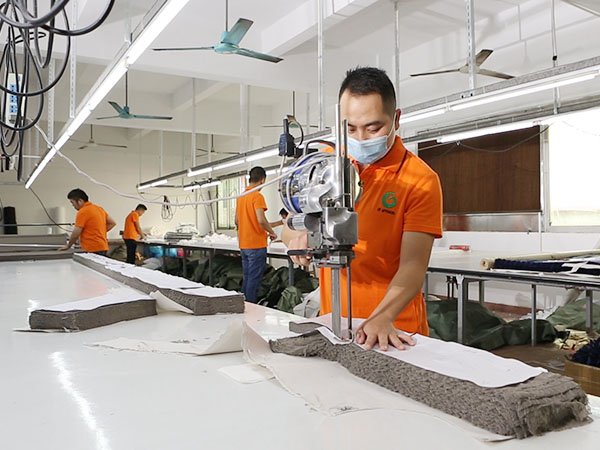
Bulk production includes fabric inspection, cutting, sewing, reinforcement, structure assembly, pressing, finishing, inline inspection, and packaging. JF Apparel monitors critical areas such as bust shaping, seam balance, closure strength, stretch recovery, decoration stability, and overall appearance during manufacturing.

Step 8 — Quality Inspection and Packing

Before shipment, corset tops go through measurement checks, appearance inspection, sewing review, packaging confirmation, and carton organization. Structured garments receive additional attention around closure areas, lining integrity, panel alignment, and decorative details. Packing methods are adjusted according to product structure and shipping requirements.

Step 9 — Shipping and Reorder Support

After inspection approval, goods are prepared for shipment by air, sea, express, or customer-designated forwarders. JF Apparel supports shipping coordination, carton labeling, packing list preparation, and export documentation. For brands planning repeat programs, we also help organize fabric records, approved samples, and production references for future replenishment orders.

Quality Control for Structured Corset Tops

Corset tops require tighter quality management than ordinary women’s tops because fit, structure, tension, decoration, and comfort all influence commercial performance. JF Apparel applies quality control throughout development, production, inspection, and packing stages.

Fabric and Material Inspection

Quality control begins before cutting starts. Satin, lace, mesh, velvet, denim, faux leather, and stretch fabrics all behave differently under tension, pressing, washing, and body movement. JF Apparel checks fabric weight, stretch ratio, color consistency, shrinkage behavior, opacity, and surface condition before production. For structured corset tops, we also review lining compatibility, boning flexibility, zipper quality, eyelet strength, and decorative material stability before approval for use.

Inline Production Inspection

During bulk production, inline inspection helps identify issues before they spread across the order. Corset tops often involve curved seams, reinforced panels, structured bust shaping, and tension-sensitive construction, so production monitoring is especially important. JF Apparel reviews seam tension, stitch consistency, panel symmetry, zipper alignment, closure reinforcement, and shape balance during sewing. Decorative styles such as rhinestone corset tops, appliqué corsets, or lace overlay styles also receive additional visual checks during production.

Measurement and Fit Consistency

Measurement consistency directly affects return rates, especially for online fashion brands and structured garments. Corset tops must maintain stable bust shape, waist control, torso length, and neckline positioning across all sizes. JF Apparel checks measurement tolerance during production and before shipment according to approved size charts and technical standards. For styles with stretch fabric or shaping panels, we also review recovery behavior and garment balance after handling.

Final Inspection Before Shipment

Before shipment, finished corset tops go through final inspection covering garment appearance, structure, labeling, packaging, carton marking, and overall order consistency. Special attention is given to decoration security, seam quality, pressing marks, color matching, closure functionality, and overall silhouette presentation. Structured garments are also checked after packing preparation to reduce the risk of distortion, crushing, or surface damage during transportation.

Packaging and Shipment Protection

Corset tops can lose shape during transport if folding, pressure, or packaging methods are not handled correctly. JF Apparel adjusts packing methods based on fabric type, garment structure, decoration level, and shipping method. Structured satin, rhinestone, lace, velvet, and longline corset tops may require protective inserts, tissue layers, hanger packing, or reduced carton pressure to maintain presentation quality after delivery.
jinfengapparel

Structural Design Logic Behind Corset Tops

The commercial performance of a corset top is heavily influenced by structural design details. Strong visual styling alone is not enough for long-term product success. Waist contour balance, bust engineering, boning placement, closure systems, and wearing comfort all affect customer satisfaction, return rates, and repeat purchase potential.
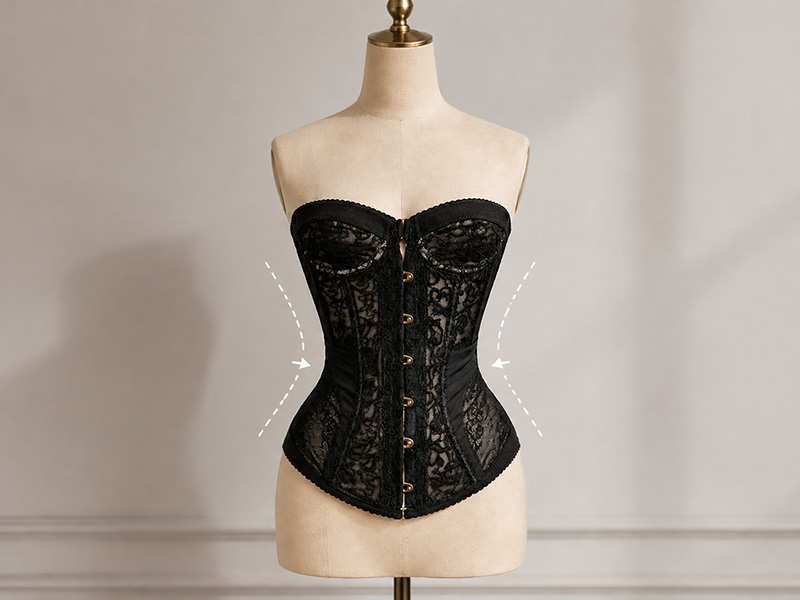
Waist Curve and Waistline Positioning
Waist contour design directly affects body proportion, shaping effect, and wearing comfort. For most European and American fashion markets, corset tops usually require a stronger waist-to-hip contrast while still maintaining natural movement flexibility. JF Apparel controls side waist curvature carefully to avoid excessive compression or uncomfortable digging around the waistline. Higher waistline positioning is often used to create longer leg proportions and improve the overall silhouette visually, especially for cropped corset tops and longline structured styles.

Bust Shape and Cup Structure Design

Different corset top categories require different bust structures depending on styling direction and target customers. Some designs focus on gathered shaping and lifted cleavage, while others use softer, flatter cup structures for relaxed fashion silhouettes. JF Apparel develops cup construction according to bust support level, neckline depth, fabric stretch, and intended body fit. During development, additional bust allowance and movement space are reviewed carefully to improve comfort while maintaining stable shaping performance.

Boning Placement and Side Structure Stability

Boning structure plays a major role in maintaining vertical shape and preventing distortion during wear. Fish bones and flexible support bones must be distributed evenly across front, side, and back panels to maintain balanced shaping. JF Apparel reviews symmetry, tension distribution, and body movement compatibility during development to reduce rolling edges, panel twisting, and unstable shaping. Proper boning placement also improves silhouette consistency across different body sizes and long-term wear conditions.

Adjustable Lace-Up Back Construction

Lace-up back construction remains one of the most common structures in international corset fashion because it provides flexible adjustment across multiple body shapes and sizes. JF Apparel develops lace-up systems with balanced eyelet spacing, reinforced tension zones, and controlled back panel stability to improve adjustment performance during wear. Different lace-up structures may also influence the visual style direction, ranging from romantic fashion and festivalwear to structured vintage-inspired silhouettes.

Invisible Zipper Construction

Invisible zipper structures are commonly used in cleaner and more modern corset top designs where customers prefer easier dressing and a simplified silhouette appearance. Compared with lace-up systems, invisible zippers support faster wearability and a smoother back structure for daily styling collections. JF Apparel reviews zipper tension, seam stability, lining reinforcement, and fabric compatibility carefully because curved corset panels place higher pressure on closure construction during movement and repeated use.

Front Busk and Hook Closure Design

Front busk closures and hook fastening systems are often used in vintage-inspired, corset-style, and palace-influenced fashion collections. This structure combines decorative visual impact with practical functionality while strengthening the garment’s structured appearance. JF Apparel evaluates closure spacing, reinforcement balance, front panel tension, and pressure distribution during development to reduce gaping, pulling, or uneven shaping around the center front area during actual wear.

Real Production Cases From Fashion Brands

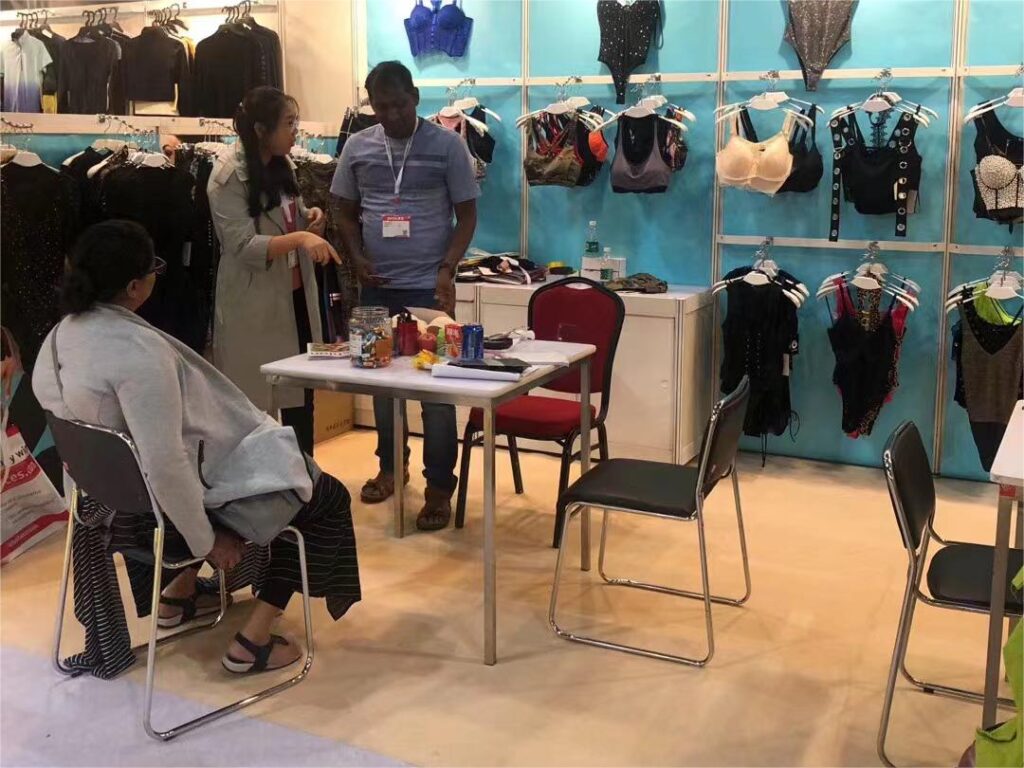
Case 1 — US DTC Fashion Brand (Satin Lace-Up Corset Tops)

Project Overview

  • Product: Satin lace-up corset tops
  • Initial order: 300 pcs
  • Lead time: 25 days
  • Follow-up orders: 4,000+ pcs within 5 months

Challenge

The brand needed corset tops that looked premium in TikTok and Instagram campaigns while maintaining stable fit, comfortable bust support, and repeatable sizing consistency across multiple colors and production runs.

Solution

JF Apparel adjusted panel shaping, reinforced lace-up tension zones, improved satin recovery performance, and optimized lining balance to reduce seam puckering and improve bust structure stability during wear and photography.

Result

  • Improved fit consistency across size ranges
  • Better visual performance in social media campaigns
  • Reduced customer complaints related to structure issues
  • Stable repeat orders for matching collection expansion
jinfengapparel

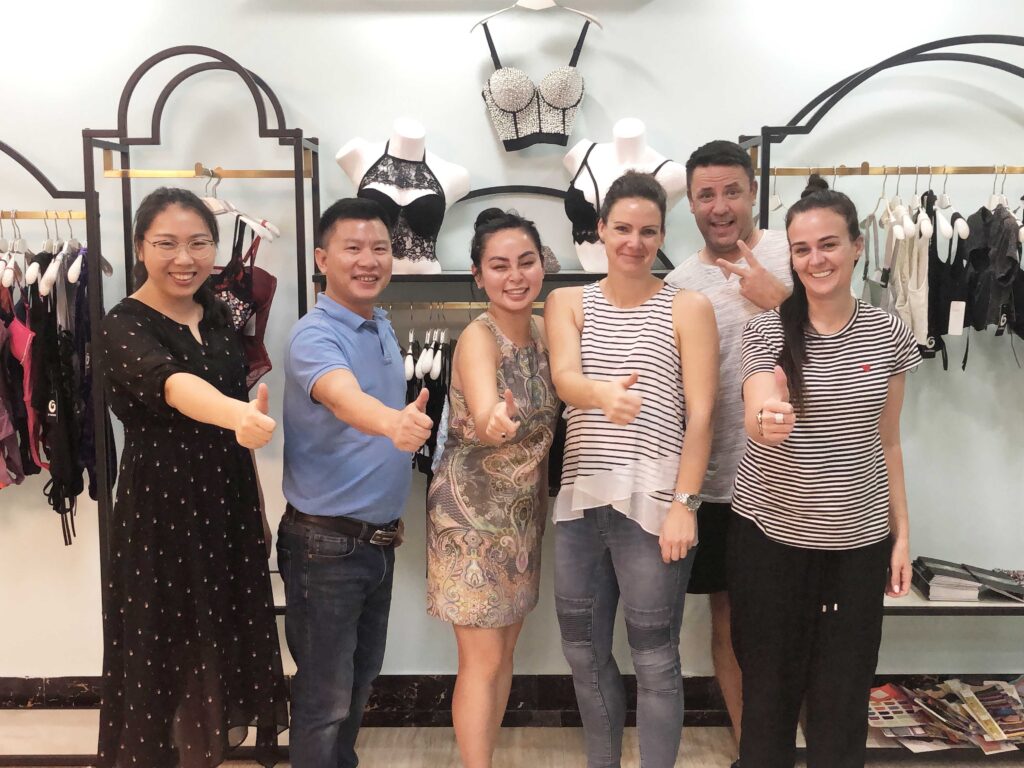
Case 2 — European Boutique Fashion Retailer (Lace Bustier Corset Tops)

Project Overview

  • Product: Lace and mesh bustier corset tops
  • Initial order: 500 pcs
  • Lead time: 30 days
  • Follow-up orders: 2,500+ pcs within 4 months

Challenge

The retailer required corset tops with soft wearing comfort, stable bust shaping, and premium boutique presentation. Previous suppliers created styles that looked attractive visually but caused discomfort after long wear and arrived with packaging distortion.

Solution

JF Apparel upgraded lining softness, optimized lace placement symmetry, reinforced bust support structure, and improved packaging protection methods to reduce wrinkles, pressure marks, and shape instability during transportation.

Result

  • Improved boutique presentation quality
  • Better customer fitting feedback in retail stores
  • Reduced packaging-related garment deformation
  • Increased seasonal reorder opportunities
jinfengapparel

Case 3 — Australian Festivalwear Brand (Rhinestone Mesh Corset Tops)

Project Overview

  • Product: Rhinestone mesh corset tops
  • Initial order: 200 pcs per style
  • Lead time: 20–25 days
  • Follow-up orders: 3,000+ pcs during festival season

Challenge

The collection required visually aggressive corset tops with rhinestone decoration strong enough for movement, performance wear, and international shipping without excessive stone fallout or mesh distortion.

Solution

JF Apparel reinforced zipper tension areas, adjusted rhinestone placement away from high-friction zones, stabilized mesh stretch direction, and upgraded packing protection for air shipment durability.

Result

  • Reduced rhinestone loss during customer wear
  • Improved structure stability during movement
  • Strong social media and influencer campaign performance
  • Successful repeat production during seasonal festival launches
jinfengapparel

Why Fashion Brands Choose JF Apparel

Corset tops require more than standard garment production. Fit shaping, structural balance, fabric behavior, and bulk consistency all affect long-term commercial performance. JF Apparel supports custom corset top manufacturing through women’s fashion expertise, structured development capability, scalable production support, and integrated supply chain coordination.

Product Development and Technical Support

Corset tops often involve more complex development than ordinary women’s tops because fit, panel balance, bust shaping, and fabric behavior must work together. JF Apparel can work from tech packs, sketches, reference garments, or concept images while also helping brands adjust structure according to actual fabric performance. Our team supports pattern refinement, silhouette correction, support structure adjustment, and material compatibility review for different corset top categories including satin, lace, mesh, denim, velvet, and stretch constructions.

Fast Sampling and Development Efficiency

For fashion brands managing seasonal launches and fast-moving collections, sampling speed directly affects launch timing and product testing opportunities. JF Apparel supports corset top development through two sample development rooms, seven experienced pattern makers, and twenty sample sewing specialists. Standard corset top samples are commonly completed within 5–7 days, while more complex structured styles usually require around 7–10 days depending on construction and material requirements.

Scalable Production Across Multiple Factories

Stable bulk production becomes especially important for corset tops because structure-sensitive garments require consistent shaping, seam control, and quality management during manufacturing. JF Apparel owns multiple women’s apparel manufacturing plants, supporting both small-batch and large-scale production projects. With eighteen production lines and monthly capacity reaching approximately 300,000 pieces, we support stable delivery for repeat orders, seasonal launches, and expanding fashion collections.

Extensive Women’s Fashion Manufacturing Experience

JF Apparel focuses on women’s fashion manufacturing across dresses, tops, bodysuits, skirts, jumpsuits, corset tops, and structured apparel categories. This experience helps us understand how fashion silhouettes, body shaping, fabric texture, and trend direction influence product development and commercial performance. For corset tops, our team pays close attention to bust support, waist contour balance, closure structure, lining compatibility, and overall wearability suitable for modern European and American fashion markets.

Full-Service Supply Chain Support

JF Apparel supports custom corset top production through a complete supply chain workflow covering design development, fabric and trim sourcing, sample making, bulk production, packaging coordination, quality control, and shipment support. This integrated process helps brands reduce communication complexity while improving production organization and delivery efficiency. From early sampling stages to repeat bulk orders, we help fashion brands manage corset top development more smoothly across multiple production cycles.
jinfengapparel

Accessories and Hardware Used in Corset Tops

Corset top structure depends heavily on internal support materials, closure systems, and reinforcement accessories. Different hardware combinations directly affect shaping strength, comfort, durability, wearing experience, and target market positioning. JF Apparel selects corset accessories according to garment structure, silhouette direction, fabric behavior, and intended fashion category.

Accessory TypeStructure & SpecificationMain FunctionCommon Applications
Plastic Boning (Plastic Boning / Polyester Boning)Material: PP / PE flexible plastic boning Width: 6mm / 8mm / 10mm Shapes: Flat bone / Semi-round boneSupports waist shaping, prevents rolling edges and waist collapse while maintaining lighter comfort and lower production costFast fashion corset tops, stretch corsets, Amazon and social commerce collections
Spiral Steel Boning (Steel Boning / Spiral Steel Bone)Material: Galvanized spiral steel boning Usually wrapped for skin protection in export productionProvides strong shaping support, waist contour control, and long-term structure stability without easy deformationLuxury corsets, eveningwear, structured bustiers, premium shaping collections
Elastic Boning (Elastic Bone)Flexible soft support structure with lower rigidity Common in lightweight constructionsPrevents edge rolling while improving wearing comfort and flexibilityMesh corsets, lace corset tops, soft shaping daily fashion styles
Invisible Zipper (Invisible Zipper)Common lengths: 25cm / 30cm / 35cm Colors matched to main fabricCreates cleaner appearance with easier wearability and smooth back structureSatin corsets, velvet corsets, minimalist fitted corset tops
Nylon Zipper (Nylon Closed-End Zipper)Stronger pulling resistance compared with invisible zipper structuresImproves durability for thicker fabrics and tighter shaping constructionsDenim corsets, PU corsets, plus-size corset tops
Metal Zipper (Metal Zipper)Heavier structure with stronger decorative appearanceCombines closure functionality with vintage-inspired visual stylingPalace-style corsets, retro corset tops, statement fashion collections
Round Metal Eyelets (Round Metal Eyelet)Materials: Nickel-plated iron / Brass Common inner diameters: 4mm / 5mm / 6mmSupports repeated lace-up tension while stabilizing back structure during wearLace-up corsets, festivalwear, structured bustier styles
Fabric Eyelets (Fabric Eyelet)Soft non-metal eyelet construction with lower durabilityCreates softer visual appearance with lighter tension supportSoft fashion corsets, lightweight domestic market styles
Corset Lace-Up Strings (Corset Lace Up String)Materials: Polyester cotton tape / Elastic tape / Ribbed tape Width: 8mm / 10mmAllows adjustable waist shaping and flexible fit across multiple body sizesLace-up corset tops, adjustable bustier designs
Hook and Eye Closures (Hook and Eye)Available in single-row and double-row structures with different thickness gradesSupports fast dressing while maintaining close-fitting front structureVintage corsets, lingerie-inspired corset tops, front closure designs
Snap Buttons (Snap Button)Metal snap closure with decorative and functional combinationAdds stronger streetwear styling while improving closure conveniencePU corsets, street fashion corset tops, edgy fashion collections

Frequently Asked Questions About Corset Top Manufacturing

Our standard MOQ is usually around 200–500 pcs per design depending on fabric type, structure complexity, and decoration requirements. Some simpler styles may support lower quantities during development stages.

Yes. Many brands begin with inspiration images, sketches, or sample references. Our team reviews the design direction, structure feasibility, fabric requirements, and development complexity before sample production.

Yes. We support private label services including main labels, care labels, size labels, hangtags, barcode stickers, polybags, and customized packaging solutions.

Yes. We help source fabrics and trims including satin, lace, mesh, denim, velvet, faux leather, boning materials, eyelets, zippers, elastics, rhinestones, and decorative accessories.

Yes. We manufacture structured corset tops including bustier styles, lace-up corsets, longline corsets, boned corsets, and lingerie-inspired structured tops.

Sample timing depends on fabric sourcing, structure complexity, and revision requirements. Structured corset tops usually require more development review than ordinary tops.

Yes. We support rhinestone, hotfix, appliqué, embroidery, lace overlay, and decorative corset top production with additional review for durability and bulk consistency.

We review size charts, stretch behavior, panel balance, bust shaping, seam tension, and closure positioning during sample development and production inspection.

Yes. Many clients begin with test quantities and later expand into repeat orders, additional colors, matching sets, or seasonal collection programs.

Yes. We produce lace-up corset tops with reinforced eyelets, lining support, and controlled panel construction for improved durability and fit adjustment.

We support clients in the United States, Europe, Australia, and other international fashion markets through OEM and ODM garment manufacturing services.

Yes. We support customized packaging including polybags, tissue paper, carton marks, barcode systems, folding methods, and hanger packing according to brand requirements.

Yes. Finished corset tops go through quality inspection covering measurements, appearance, construction, decoration stability, labeling, and packaging before shipment.

Yes. Many brands expand corset top programs into matching skirts, dresses, bodysuits, jackets, or coordinated capsule collections during repeat development.

Start Your Corset Top Collection With JF Apparel

From concept development to scalable production, JF Apparel helps fashion brands manufacture custom corset tops with stronger structure control, flexible production support, and reliable communication for long-term fashion growth.

How to Begin

  1. Share your corset top idea, tech pack, or reference images
  2. Receive quotation and development feasibility feedback
  3. Confirm fabric direction, trims, and sampling details

Information That Helps Speed Up Quotation

  • Estimated order quantity
  • Logo and packaging requirements
  • Target market and selling channel
  • Expected launch timing

Submit Your Production Inquiry

Please share your product details, estimated quantity, target market, timeline, and development requirements. Our project team will review your inquiry and provide a tailored OEM/ODM production solution.

Women’s Apparel Production for Established Fashion Brands

From sample development to bulk production, JF Apparel supports fashion brands with confidential OEM/ODM manufacturing, stable quality control, and scalable production.