Skip to content
Custom Color Collection Development for Women’s Fashion Brands
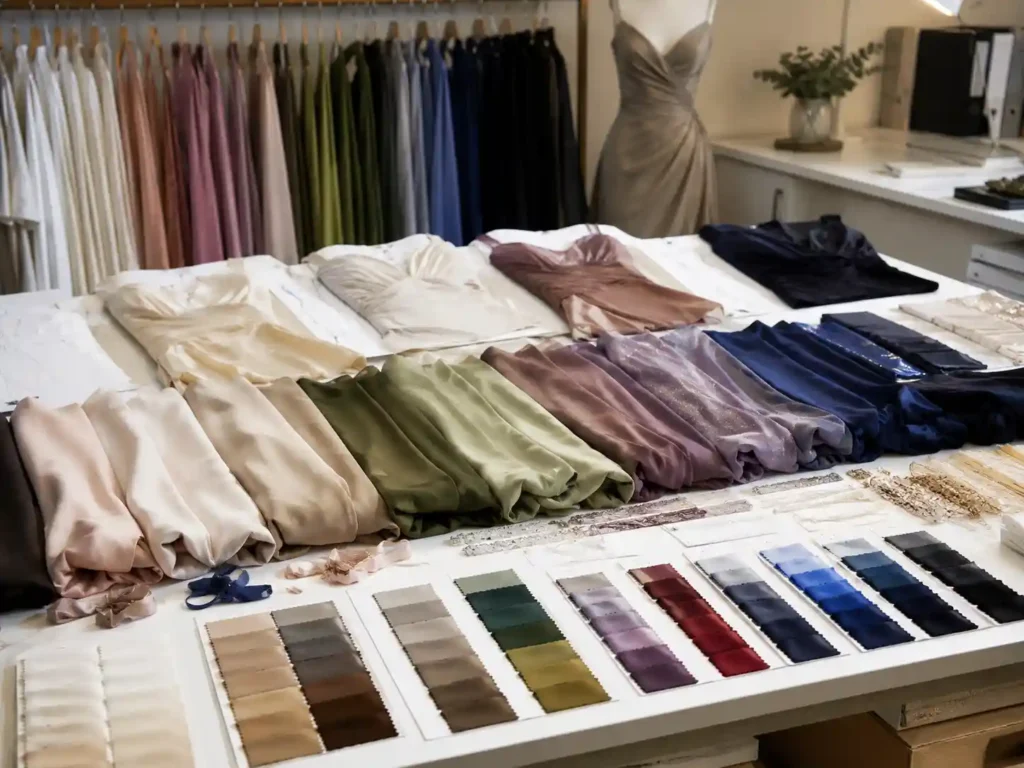
Build a color collection that can move from a line sheet into real garments without losing the intended tone, fabric character or commercial structure. Jinfeng Apparel supports premium women’s fashion programs from color direction and fabric selection through Pantone references, lab dips, sample revisions, PP approval, bulk production, shade control, private-label packing and repeat-order records. The work is centered on dresses, skirts, jumpsuits, matching sets and fashion separates across satin, chiffon, lace, mesh, jersey, ponte, crepe and other womenswear fabrics.
- Brand collection programs commonly cover 10-30 styles.
- Typical brand order programs range from 20,000-80,000 pieces in total.
- MOQ starts from 200 pcs per style/color, subject to fabric, color development, trims and production requirements.
- 2 sample rooms support parallel development and revision work.
- 6+ flexible production lines support multi-style collection planning.
- 15+ QC inspectors support material, garment and packing control.
Turn a Color Direction Into a Production-Ready Collection
Color Direction
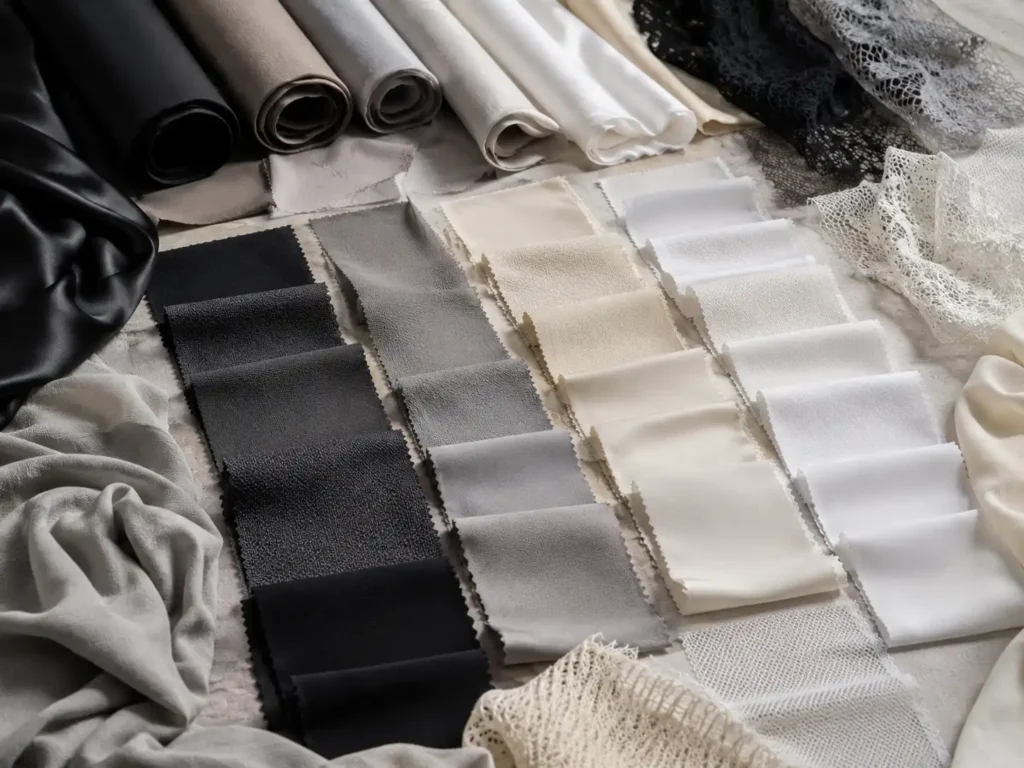
Material Translation

Production Control
Built for Teams Managing Seasonal Womenswear Collections
Merchandising Teams
Product Development Teams
Sourcing Teams
Fashion Brand Teams
Occasionwear Teams
Private-Label Teams
Development Capacity for Multi-Color Womenswear Programs
6 Owned Factories
10+ Satellite Partners
2 Sample Rooms
7+ Pattern Makers
12+ Merchandisers
15+ QC Inspectors
Map Color Roles Across Dresses, Sets and Separates

Mini and Party Dresses
- Suitable roles: hero colors, party shades, limited seasonal drops.
- Key checks: lining coverage, zipper match, mesh layer, sequin or trim tone.

Midi and Cocktail Dresses
- Suitable roles: core shades, premium seasonal colors, occasion capsules.
- Key checks: satin shine, lace ground, lining tone, zipper and hook color.

Maxi and Evening Dresses
- Suitable roles: collection signature shades, occasion colors, campaign colors.
- Key checks: fabric batch, layered transparency, lining length, pressing direction.

Matching Sets
- Suitable roles: core commercial colors, resort palettes, coordinated drops.
- Key checks: same fabric batch where required, paired SKU logic, trim consistency.

Jumpsuits and Bodysuits
- Suitable roles: fashion neutrals, strong seasonal solids, capsule colors.
- Key checks: stretch recovery, seam appearance, hardware, lining and closure color.

Skirts and Fashion Separates
- Suitable roles: collection extension, mix-and-match colors, repeatable commercial shades.
- Key checks: shared fabric feasibility, waistband or elastic, zipper, hem and packing SKU.
Translate One Color Across Different Fashion Fabrics
A Pantone reference provides a target, not a guarantee that unrelated fabrics will look identical. Fiber content, weave or knit construction, surface shine, transparency, pile, stretch and lining all influence perceived color. Jinfeng evaluates color together with fabric behavior before the garment is approved.

Satin, Stretch Satin and High-Shine Surfaces
Satin is one of the clearest examples of color changing with material structure. A lab dip can be technically close to the target while the finished satin appears lighter, deeper or more metallic because light reflects from the surface. Cutting direction can also change the perceived shade when panels face different ways. Stretch satin adds another variable because surface tension can alter shine and color appearance on the body.
Color approval for satin should therefore include more than a single swatch viewed under one condition. Jinfeng reviews Pantone or physical references when supplied, lab dips where custom dyeing is required, fabric swatches, surface shine, batch information and lining color. For garment development, neckline, gathers, ruching and bias areas can create different angles of reflection, so the finished sample remains an important confirmation point.
For multi-style satin collections, a shared fabric platform can improve visual coordination across mini, midi, maxi, skirt and cami styles. However, later dye lots or replacement fabric batches still need comparison with the approved standard. Packing and pressing also matter because heavy creasing or inconsistent shine direction can make an otherwise acceptable color appear uneven in retail photography.
Chiffon, Mesh, Lace and Layered Transparency
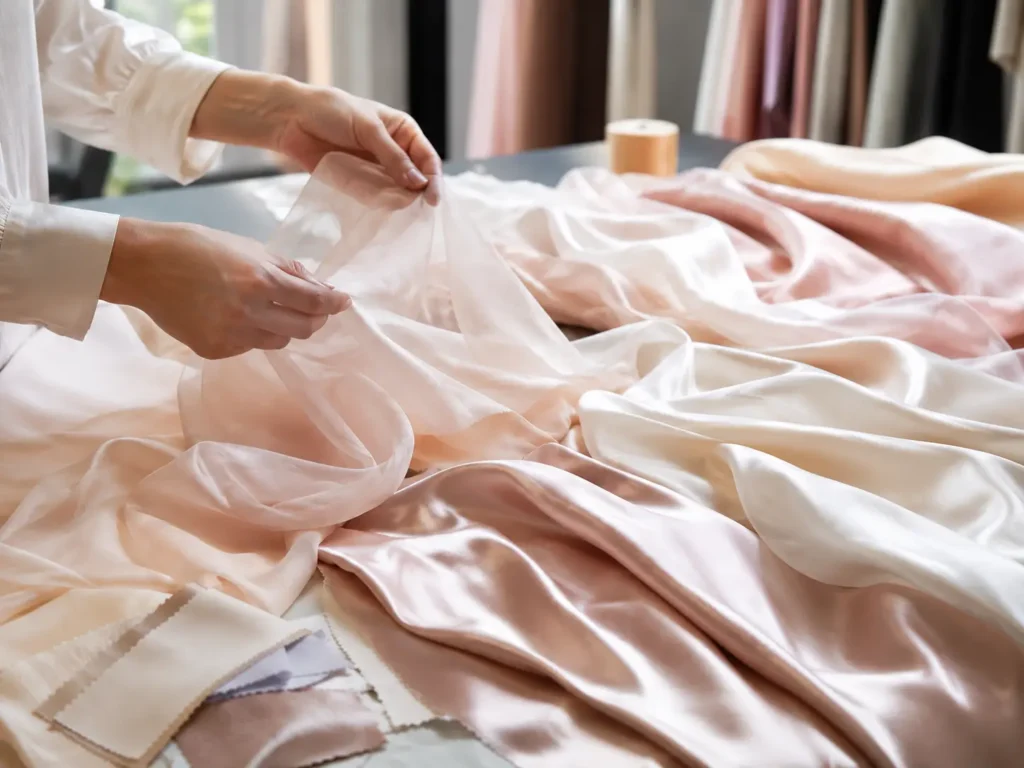
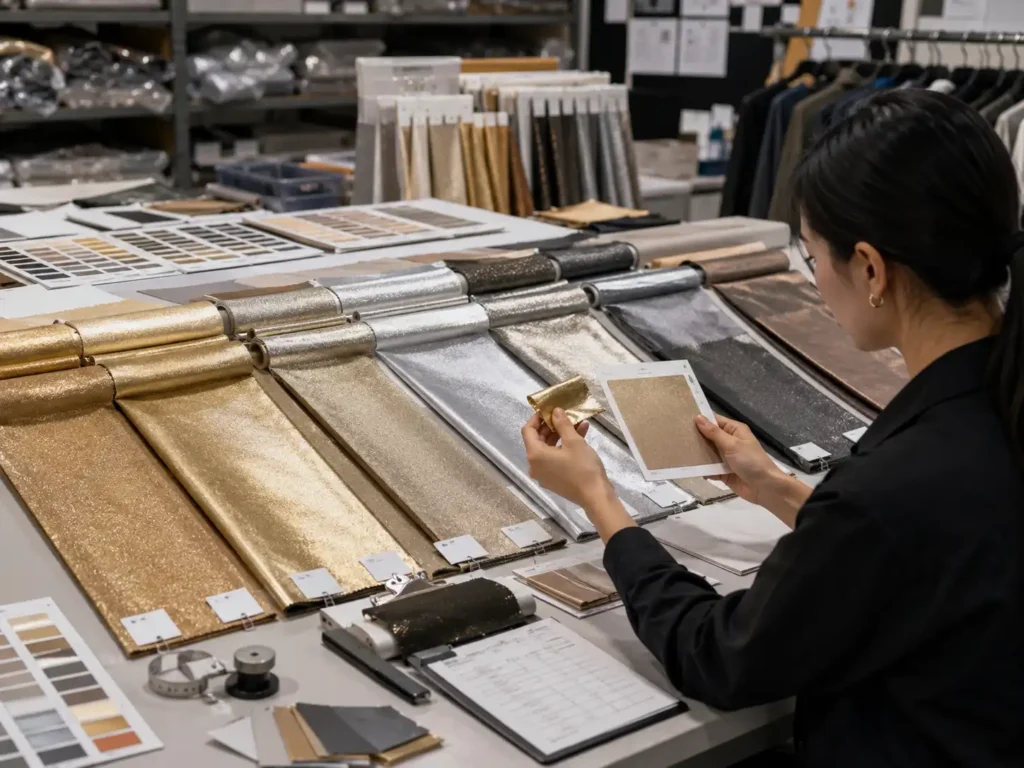
Sheer and open-structure fabrics create color through layers. Chiffon over lining may look deeper than chiffon alone. Mesh can change against skin tone, nude lining or a contrasting base. Lace combines thread, motif density, open areas and ground fabric, so a color name does not fully describe the final visual result. Tulle and organza introduce similar transparency and light-reflection effects.
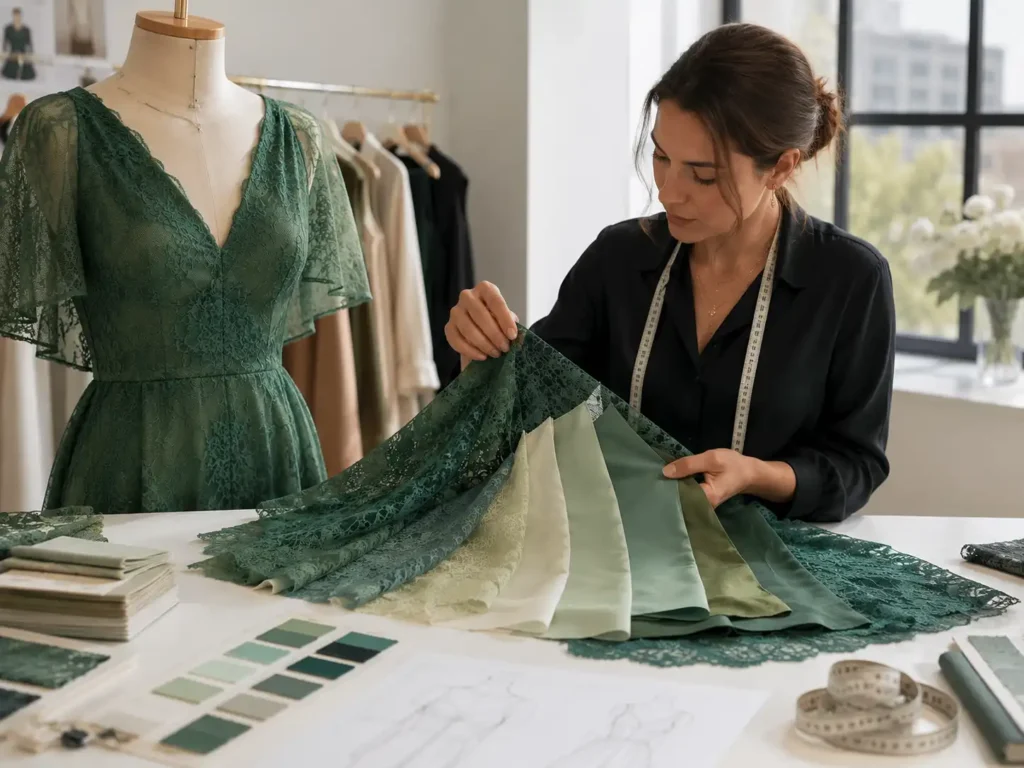
Jinfeng evaluates main fabric and lining together when the final garment depends on layered color. A pale chiffon dress can become warmer, cooler or more saturated depending on the lining beneath it. Mesh panels may need tone coordination with body fabric while still meeting the intended transparency. Lace trim and lace body fabric may require separate sourcing if motif, hand feel and color depth differ.
For occasionwear collections, grouped photography makes mismatches easier to see. Color decisions therefore need to consider not only individual garments but also how dresses appear beside each other. Lab dip approval, fabric batch review and garment sampling help build a coordinated result without claiming that fundamentally different substrates can be made visually identical in every light.
Jersey, Ponte, Crepe and Structured Fabrics
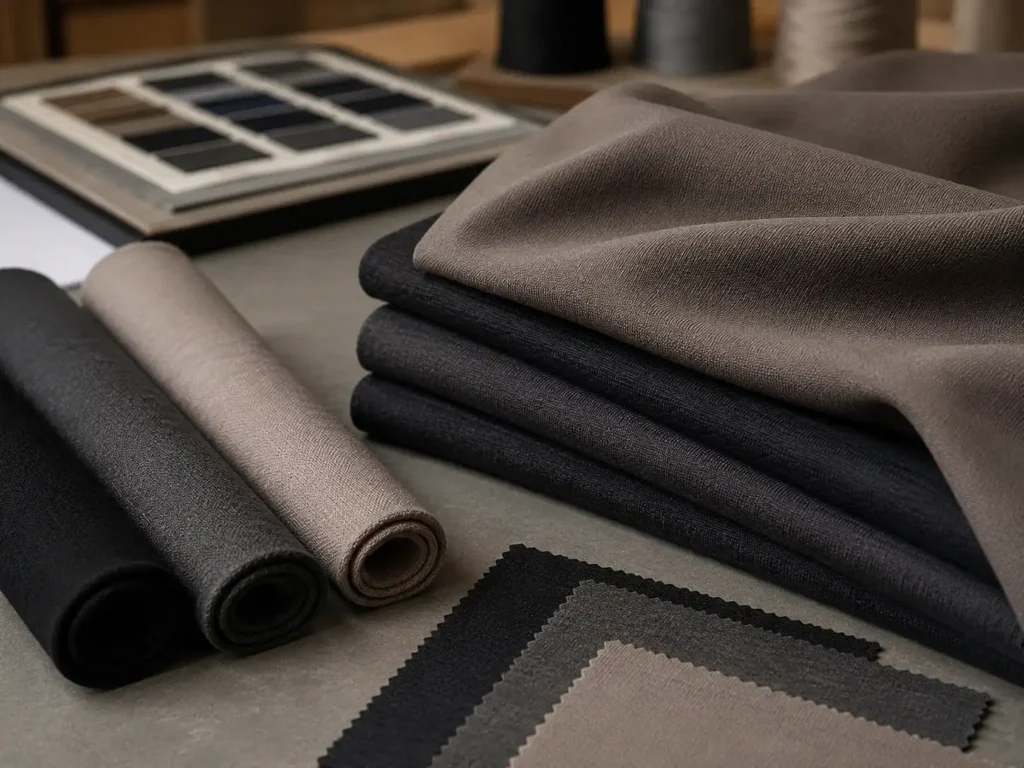
Stretch jersey, rib, ponte and other knits can shift visually when stretched. Dark colors may appear slightly lighter over body tension, while lighter shades can expose differences in thickness or opacity. Ponte provides more structure and coverage, making it useful for bodycon and office-oriented silhouettes, but weight and fiber blend still affect color depth and recovery.
Crepe and suiting fabrics create a more matte appearance than satin, often making the same named shade look quieter or deeper. These surfaces can be useful when a collection needs coordinated colors across different price or occasion tiers without requiring every garment to share the same fabric. The visual relationship should be reviewed intentionally rather than judged from Pantone numbers alone.
Jinfeng compares fabric composition, weight, hand feel, stretch, drape, transparency, lining requirement and color risk during sourcing and sample review. If a selected fabric cannot deliver the expected color or commercial structure, alternative fabrics can be compared before bulk approval, with MOQ, cost and development impact made visible to the brand team.
Choose Stock Colors or Custom-Dyed Fabric With Clear Trade-Offs
Stock colors can simplify early development when an available shade fits the collection. Custom dyeing gives stronger control over brand or seasonal color targets but introduces lab dips, dye-mill minimums, additional confirmation and higher shade-management requirements.
| Development Route | Best Fit | Color Control | MOQ Impact | Development Work | Main Risks to Review |
|---|---|---|---|---|---|
| Available stock color | Fast entry into sampling and selected production programs | Based on supplier’s existing shade and current batch | More likely to support the standard 200 pcs per style/color starting point, subject to stock and supplier conditions | Fabric swatch approval, batch check, garment sample | Stock availability, batch change, future reorder availability |
| Custom-dyed fabric | Brand color, seasonal palette, coordinated occasion or collection programs | Pantone or physical color standard can guide development | Usually higher; dye mill and fabric supplier minimums apply | Fabric selection, MOQ review, lab dip, approval, bulk dyeing, incoming inspection | Lab dip rounds, dye-lot variation, lead-time impact, repeat-order shade differences |
| Shared color across several fabrics | Collection-level color story using satin, chiffon, mesh, lace or knit | Visual coordination rather than assumed identical appearance | Depends on each fabric and dyeing source | Separate swatches or lab dips by material where required | Fiber response, shine, transparency, lining and different dye lots |
| Existing color extended to new styles | Commercial color repeated across more SKUs | Existing approved records provide a reference | Calculated per style/color and material requirement | Pattern and fabric feasibility review, sample or color confirmation as needed | New fabric behavior, trim mismatch, quantity fragmentation |
| Bestseller developed in a new color | Repeat style with a fresh seasonal shade | Existing pattern/BOM reduces structural uncertainty | New color still follows per-color material requirements | New Pantone or standard, lab dip if dyed, updated labels/SKU, bulk approval | Treating a new color as a simple copy without rechecking fabric, trims and packing |
Control Pantone, Lab Dips and Bulk Color Approval
Custom color becomes reliable only when each approval point has a clear reference. Jinfeng links the supplied color standard with the selected fabric, lab dip process, garment sample and bulk material inspection so production does not rely on color names or screen images alone.
Start With a Defined Color Standard
A color request can arrive as a Pantone number, physical swatch, approved garment, line-sheet reference or other brand standard. The strongest starting point is a reference that the product and sourcing teams can consistently approve. Screen captures and digital images are useful for direction but can vary across monitors, cameras and lighting, so physical approval remains important for critical colors.
Jinfeng first confirms the fabric type because a color target cannot be evaluated independently from the substrate. Satin, chiffon, mesh, lace, jersey and crepe can require different suppliers or dyeing processes. Fabric MOQ, color-development MOQ, consumption and order schedule are reviewed before a custom color is promised. If an available fabric color is close enough for the intended collection, the brand can compare the faster stock route with a custom-dyed route before committing to added development.
Color instructions should also include the intended role in the collection. A core shade planned for several styles and repeat orders deserves stronger record control than a low-volume accent color used on one SKU. That context helps prioritize lab dips, fabric reservations and sample sequence.
Approve the Lab Dip on the Real Fabric Direction
For custom-dyed fabrics, Jinfeng’s documented process follows a clear sequence: the brand provides a Pantone or color standard, Jinfeng confirms the fabric type, the fabric supplier evaluates MOQ, a lab dip is developed, the color is approved, bulk dyeing is arranged, incoming fabric is inspected, and approved material moves into cutting.
Lab dip review should consider hue, depth and the surface behavior of the actual fabric. Satin needs shine-direction awareness. Chiffon and mesh need transparency and lining context. Stretch fabric may look different under tension. Lace may need comparison of motif and ground. When the first lab dip misses the intended direction, another round may be required before bulk dyeing. Color development is therefore quoted and scheduled by project rather than with one universal timing promise.
Approved lab dips or swatches should be linked to the correct style, fabric and color name. Multi-color programs become risky when informal names such as “wine,” “champagne” or “sage” are used without a controlled reference. Jinfeng’s development records can include Pantone number when supplied, approved swatch, lining color and trim color so later teams work from the same basis.
Recheck Bulk Fabric Before Cutting
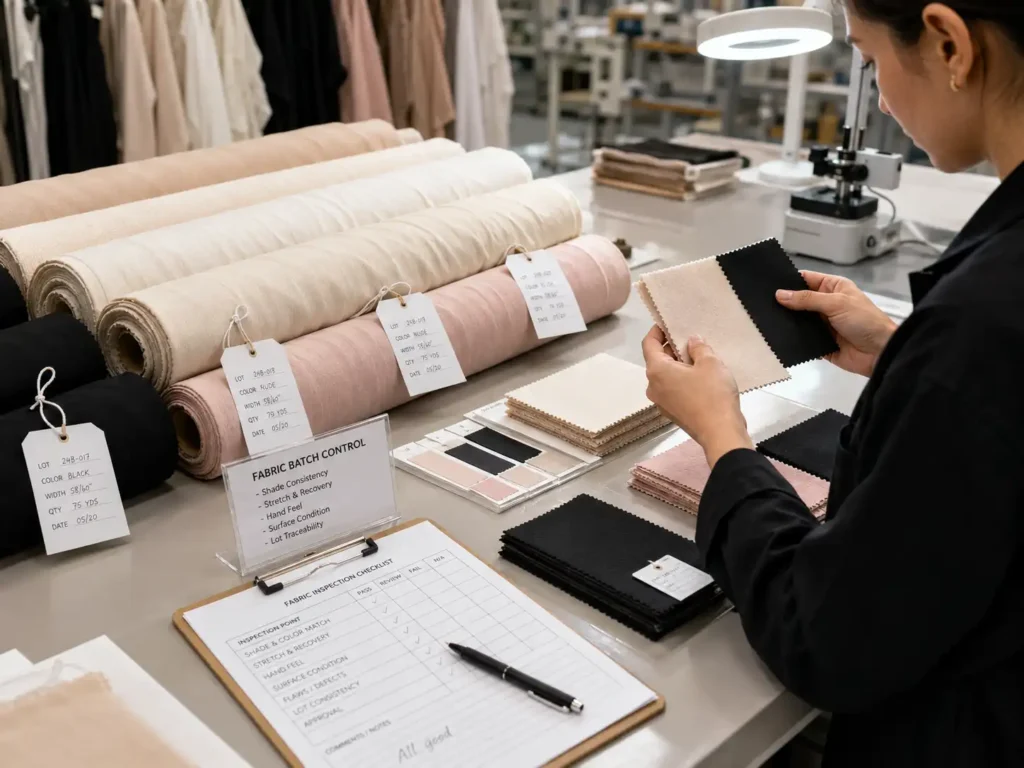
Lab dip approval does not remove the need for bulk-material control. Bulk dyeing occurs at a larger scale, and dye lots or fabric batches can vary. Before bulk material enters production, incoming QC compares fabric color against the approved lab dip, swatch, PP sample or physical standard as applicable. Weight, hand feel, width, shrinkage and other project-specific quality points are checked because material changes can also alter garment appearance.
Where a shade band or batch separation is relevant, production planning should keep visible differences from being mixed carelessly within the same garment or coordinated set. Lining, zipper, thread and other visible trims are checked against the approved color direction. Finished garment review then provides another opportunity to identify unacceptable mismatch before packing.
For repeat orders, earlier color records provide a reference but do not justify automatic approval of a new dye lot. A later fabric batch or supplier change still requires comparison and, when necessary, new approval. Controlled records make repeat development faster without pretending that textile color can remain identical forever without verification.
Identify Color Risks Before They Reach Bulk Production
Dye Lot Variation
Surface Shine
Transparency Layers
Fabric Structure
Trim Mismatch
Lighting Conditions
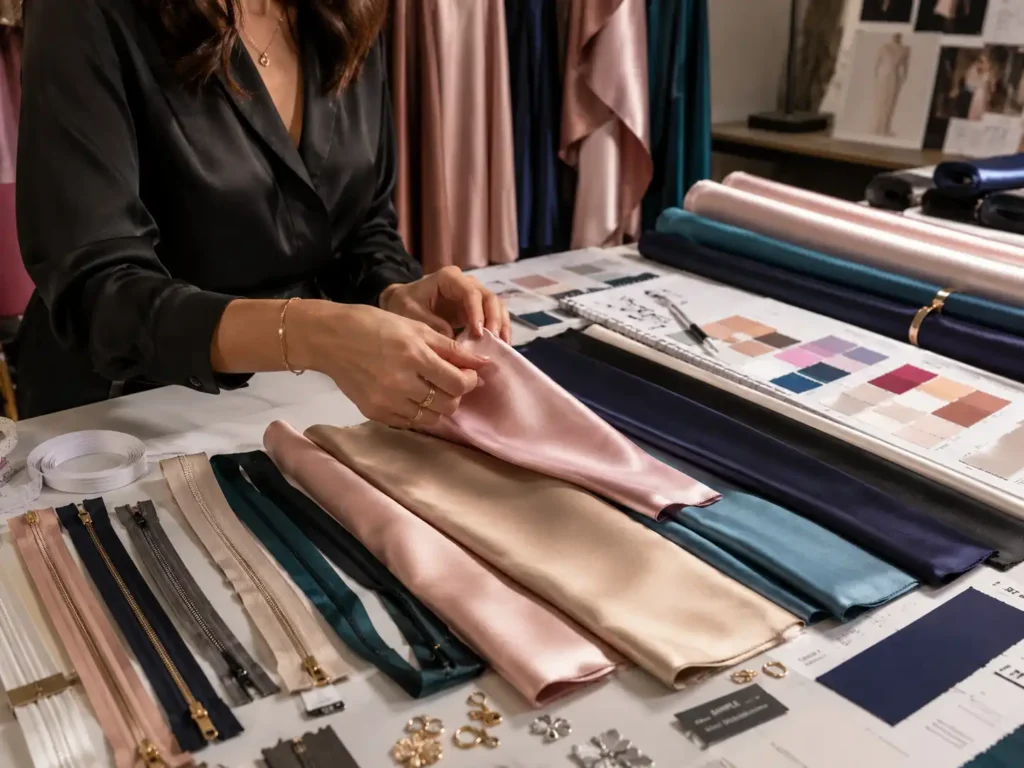
Match Lining, Thread, Zippers and Fashion Trims
Lining Color
Sewing Thread
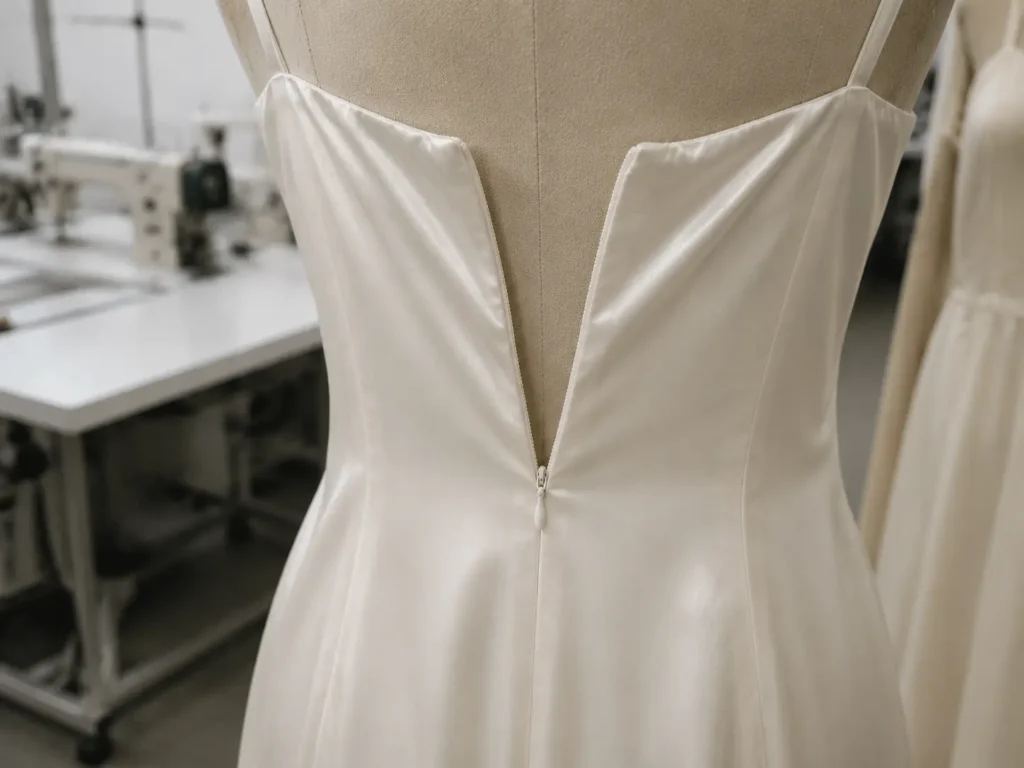
Zippers and Closures

Lace and Elastic Trim

Buttons and Hardware
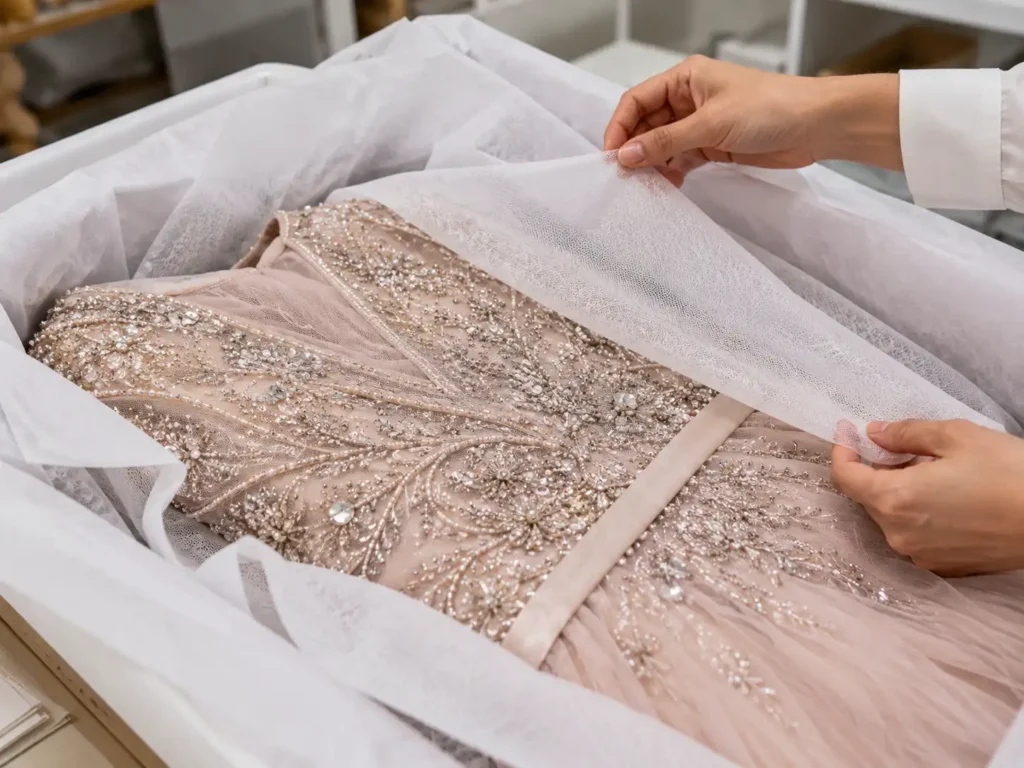
Embellishment Color
Use Clear Color Checkpoints Through Sampling and PP Approval
Fabric Swatch Review

First Sample

Fit and Revised Samples

Photo-Ready Sample

PP Sample

Bulk Color Approval
Manage Multi-Style Color Collections Without Version Confusion
A 10-30 style collection can quickly become difficult to control when several fabrics, colors, sizes, samples and production groups overlap. Jinfeng uses style grouping, fabric grouping, sample priorities, revision records and production instructions to keep approved decisions connected to the correct SKU.

Group Styles by Shared Development Logic
Multi-style projects become easier to control when the line sheet is divided into meaningful development groups. Styles using the same satin platform can share fabric information while still carrying separate pattern, size and construction records. Chiffon, mesh, jersey or crepe groups can be managed in the same way. A matching set may need an additional pairing rule because the top and bottom must remain visually coordinated.
Color planning is then layered over the style groups. Not every color needs to run through every group. A hero shade may belong only to party dresses, while a core neutral spans dresses, skirts and sets. The matrix shows where one lab dip can support several styles using the same material and where another fabric requires an independent color approval.
Jinfeng’s 12+ merchandisers and order-follow-up specialists support the communication needed to keep style numbers, fabric records, revisions and production instructions aligned. The role is especially important after a fitting or material change, when one approved decision must not accidentally overwrite unrelated styles.
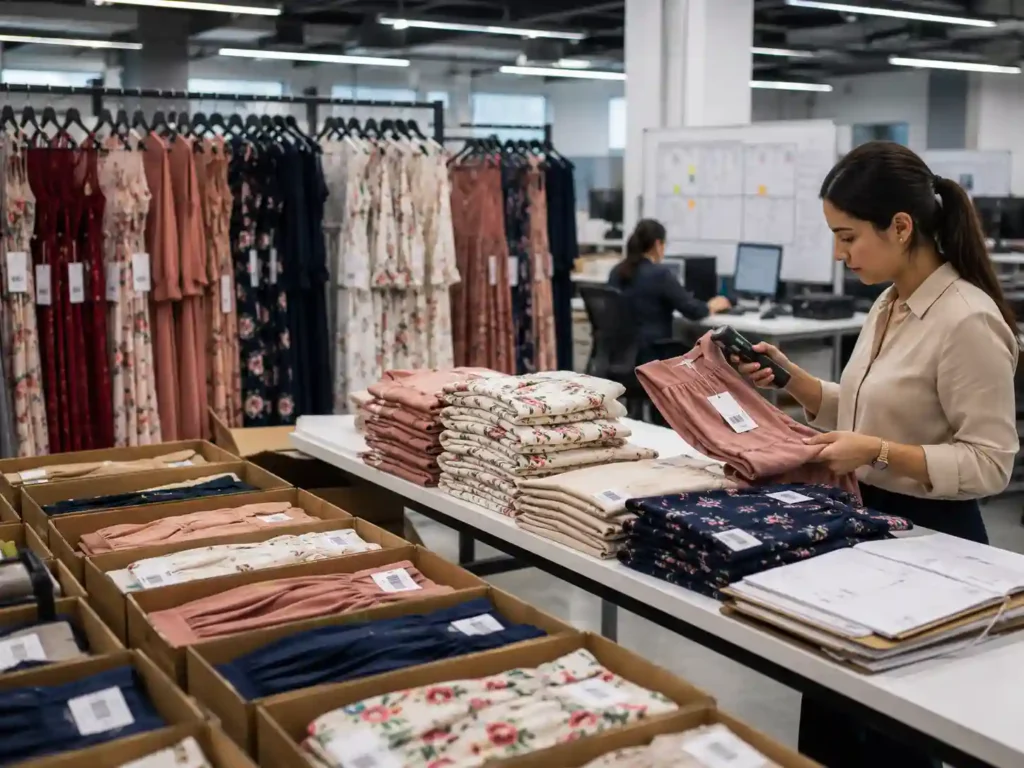
Control Revisions Before Bulk Instructions Are Released
Sample revisions create version risk. A neckline change may alter lining exposure; a fabric substitution may change color depth; a zipper change may create a new trim-matching requirement. Jinfeng can record the issue, cause, correction, cost or timing impact and whether a new sample is needed. Updated patterns, size charts, BOMs, fabric records, trim records, sewing instructions and QC checkpoints can then follow the approved version.
PP approval acts as a release gate before bulk production. Style, color, size ratio, quantity, material, construction, label and packing information should be synchronized before the order moves fully into production. A color program becomes unreliable when one team works from the latest lab dip while another team still has an earlier trim or lining reference.
For large brand programs, production can be allocated across owned factories and coordinated long-term satellite partners according to style and schedule. Allocation does not remove the need for common approval records. The same color name has to point back to the correct material and reference regardless of where a style is produced.
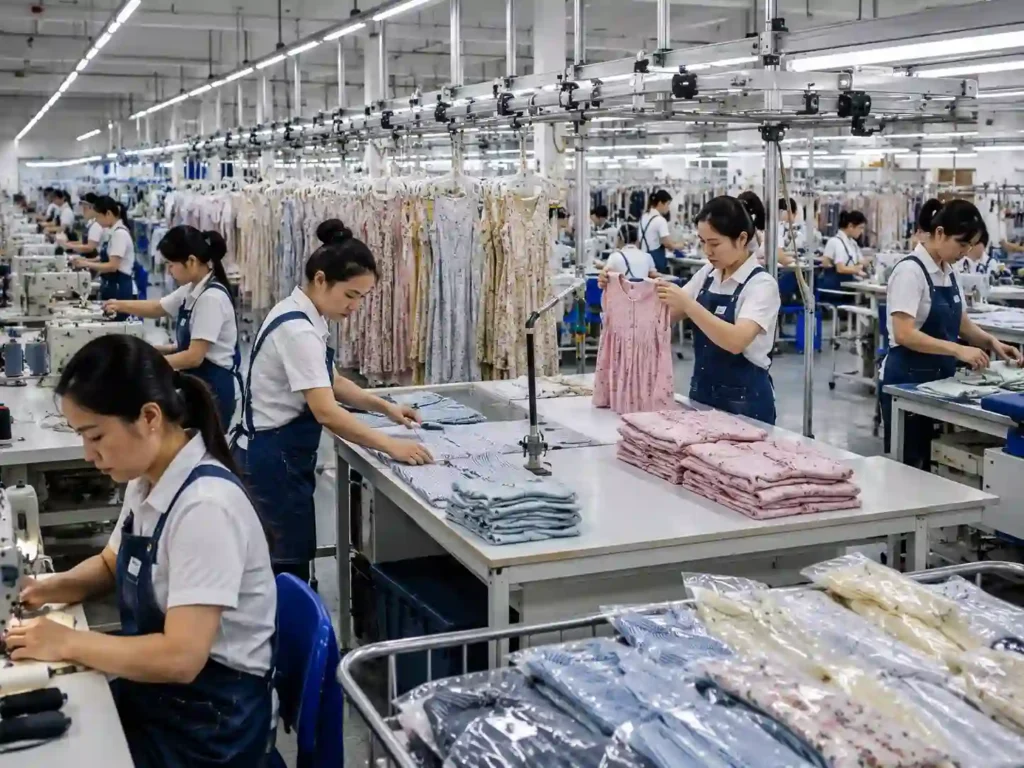
Connect Production, Packing and Delivery Records
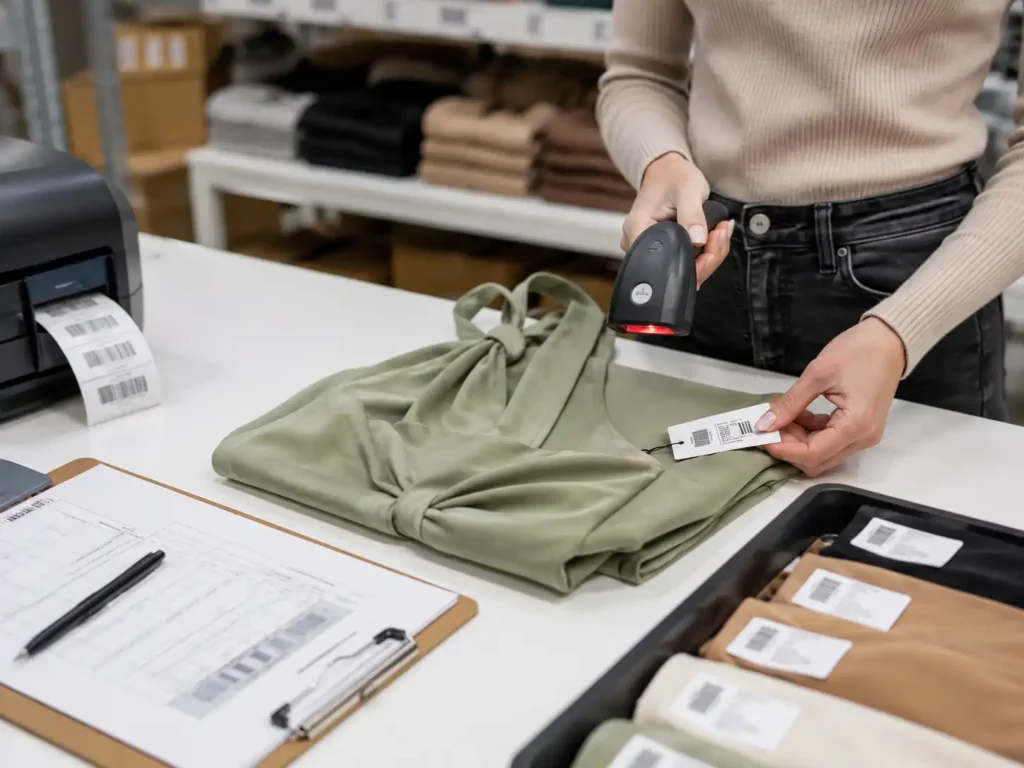
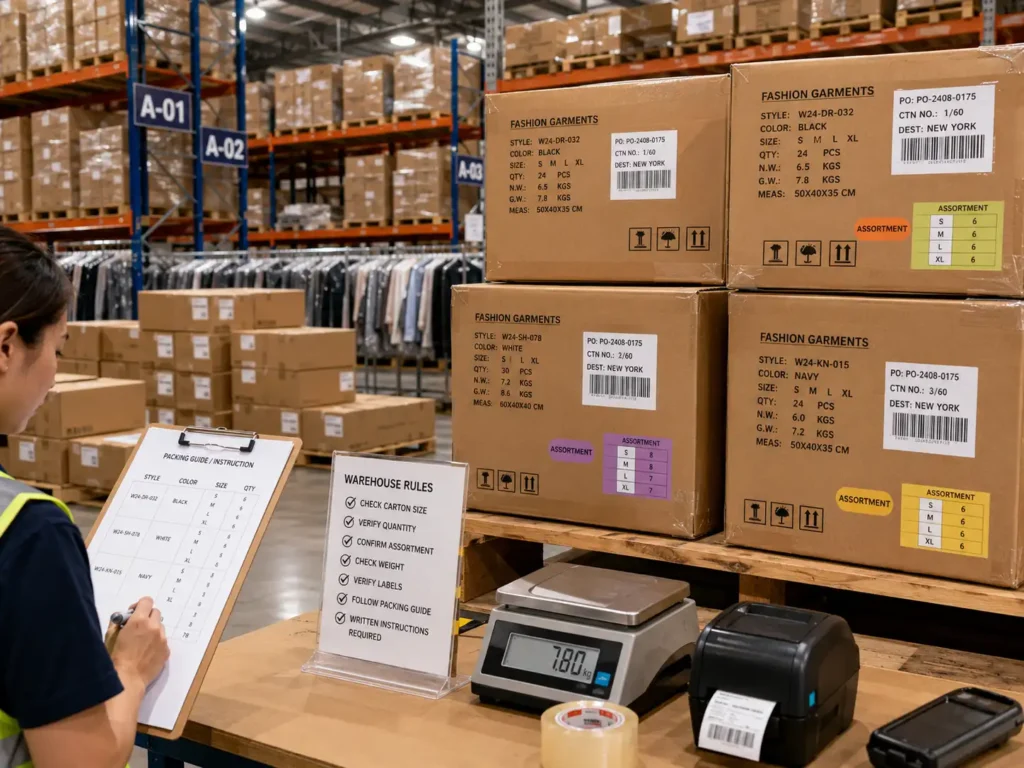
Color control continues after sewing. Multi-color orders need clear bundling, garment identification, barcode data, SKU labels, color stickers, packing ratios and carton marks. The production order should state style number, color, size, quantity and packing requirements so final goods can be checked against the commercial assortment.
Jinfeng’s QC and packing process reviews garment color differences together with measurements, appearance, pressing, label position and packing accuracy. Finished units then move into color-size breakdowns rather than becoming anonymous pieces in a mixed order. The structure is especially useful for ecommerce and retail programs where an incorrect color label or carton mark can create warehouse receiving errors even when the garment itself is correct.
Historical records also support later decisions. When a brand repeats a bestseller, adds a new color or extends an existing palette into another product category, earlier patterns, BOMs, fabric and color records provide a controlled starting point. New material or dye-lot differences are still rechecked before approval.
Plan Color MOQ and Cost Before Sampling Expands
Color count affects much more than fabric price. Each additional shade can create separate fabric purchasing, dyeing minimums, lab dips, cutting groups, trim matching, labels, SKU records and packing work. Early planning helps keep the palette commercially strong without fragmenting quantities beyond workable production conditions.
| Planning Item | Jinfeng Working Basis | What Can Increase MOQ or Cost | Recommended Brand Decision |
|---|---|---|---|
| Standard garment MOQ | Starts from 200 pcs per style/color | Fabric availability, construction, trims, packaging, schedule | Plan quantity by style and by color, not by total collection only |
| Stock fabric color | Often easier to develop at the standard starting MOQ | Limited stock, batch quantity, future availability | Use when the existing shade fits the collection and reorder risk is acceptable |
| Custom-dyed fabric | Supplier/dye-mill minimum applies and can exceed standard garment MOQ | Fabric type, minimum dyeing meters, lab dips, loss, bulk dyeing | Reserve for core, hero or brand-critical shades with enough volume |
| Multiple colors on one style | Each color carries its own material and production management | Separate fabric purchase, cutting, labels, SKU and QC | Concentrate volume in commercially meaningful colors rather than splitting too thin |
| Special trims or hardware | Independent supplier MOQ may apply | Custom zipper, buttons, plated hardware, lace trim, embellishment, packaging | Confirm trim direction before final color and quantity split |
| Color testing | Project-specific | Colorfastness, shrinkage, third-party testing, market requirement | Identify testing scope before bulk material is ordered |
| Repeat order color | Earlier records provide a reference, not automatic shade identity | New dye lot, new supplier batch, changed fabric or trim | Compare new bulk material with retained approved references before production |
Understand the Main Cost Drivers Behind Color Programs
Fabric Procurement
Lab Dip Development
Dyeing and Material Loss
Color-Specific Trims
Separated Production Handling
Testing and Reorder Records
Hold Approved Color Through Bulk Production and QC
Bulk consistency depends on disciplined material control, production identification and finished-garment review. Jinfeng’s QC system starts with incoming fabric and continues through cutting, sewing, garment inspection, pressing and packing so color is checked in context rather than only at the lab-dip stage.
Inspect Bulk Fabric Before Cutting Starts
Incoming material QC is the first production checkpoint. Fabric color is compared with the approved lab dip, swatch, PP sample or other agreed physical reference. Inspectors also review weight, hand feel, effective width, shrinkage information and project-specific colorfastness requirements because a material change can influence both fit and appearance.
Color review may include fabric batch, dye lot, surface shine and visible defects. Satin requires attention to color difference and direction; mesh can suffer snags or unstable transparency; lace may show damaged motifs or ground variation; sequin material may have loss or surface inconsistency. If the incoming material does not match the approved direction, cutting should not become the method for discovering the problem.
When multiple batches are accepted for one order, production instructions should prevent uncontrolled mixing where visual differences would be obvious. Matching sets, paired panels and large solid-color garments deserve particular care. Batch awareness is also useful when later quality feedback needs to be traced back to a material source.
Keep Color Identification Through Cutting and Sewing
Cutting QC checks the approved pattern version, panel direction, size bundling, fabric direction and stretch direction. On reflective or directional materials, correct panel orientation supports both color appearance and garment quality. Bundling by style, size and color reduces the risk of pieces entering the wrong production group.
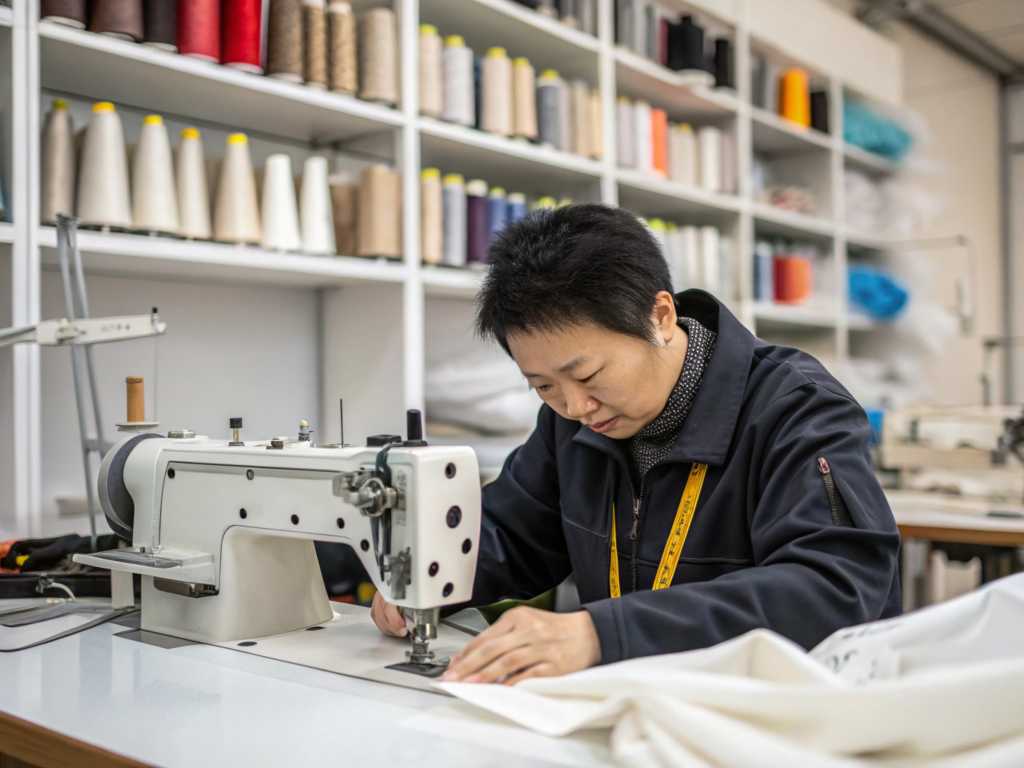
Sewing QC reviews seam quality, symmetry, zipper flatness, strap length, lining attachment, ruching placement, lace matching and other construction points. Color-related details remain visible: wrong thread, zipper tape, lining or trim can turn into a defect even if sewing is technically sound. In-line checks allow these issues to be corrected before entire production lots move forward.
Pressing is another important visual stage for satin, crepe and occasionwear. Poor pressing can create shine differences, creases or distorted surfaces that make a color appear inconsistent. Garments should be assessed as finished products under appropriate viewing conditions rather than relying only on loose fabric comparisons.
Finish With Garment and Packing Checks
Garment inspection reviews measurements, appearance, fit effect, pressing, color difference, stains, holes, loose threads, zipper function, button strength, label position and care-label content. Color is therefore evaluated alongside the factors that determine whether the final piece looks retail-ready.
Packing QC checks hangtags, barcodes, size stickers, polybags, folding, carton marks and packing ratios. Multi-color orders require accurate color identification so the correct garment enters the correct SKU and carton structure. A shade that is manufactured correctly but mislabeled can still create a commercial failure at warehouse or ecommerce level.
Client inspection and AQL inspection can be supported according to project requirements. Where third-party testing is required, the scope should be confirmed in advance rather than implied as universal for every order. Production records and approved references provide the basis for resolving discrepancies before shipment.

Keep Multi-Color SKU and Packing Data Aligned

Color Stickers
Barcode Labels
SKU Labels

Size Identification
Carton Marks

Packing Lists
Extend Bestsellers Into New Colors Without Losing Control
A successful garment often returns as a repeat order, replenishment program or new color extension. Existing development records reduce repeated work, but new fabric batches and colors still need controlled confirmation. Jinfeng uses retained pattern, BOM, fabric, color, trim and QC information as the starting point for repeat development.
Reuse the Stable Parts of the Original Style
When a bestseller returns, the approved pattern, size chart, construction, BOM and Golden Sample can provide a controlled baseline. The production team does not need to rediscover the garment from the beginning. Stable components make it easier to focus attention on what has changed, such as a new color, new fabric source, changed trim or revised size requirement.
For a same-style new-color program, color records can include the new Pantone reference, lab dip, approved swatch, bulk shade, lining color, zipper color, thread color, label data and SKU information. A new color is not treated as a simple visual swap because the material supplier, dye lot and visible trims may all create new approval work.
The approach supports faster decision-making without promising a fixed repeat-order lead time for every style. Timing still depends on fabric availability, custom-dye requirements, trim supply, production schedule and the extent of any product changes.
Compare New Dye Lots With Retained Approved References
Repeat color consistency is one of the hardest textile promises to make responsibly. A later dye lot can move slightly because raw material, process conditions or supplier batch changes. Jinfeng can retain earlier approved swatches and bulk color records so new material has a physical reference for comparison.
If the same named color is produced on a different fabric, visual coordination must be reviewed again. A carry-over chocolate shade on crepe will not behave like the same shade on satin. If the original fabric becomes unavailable and a substitute is proposed, weight, hand feel, stretch, drape, transparency, shrinkage, lining and pattern effect need renewed evaluation.
Where differences are meaningful, the brand should approve the new direction before production rather than discover the change during replenishment. Historical records provide speed through clarity, not through skipping approval.
Build a Color Extension System Around Commercial Results
Repeat orders create useful collection intelligence. A color that performs well across several styles may become a future core shade. A hero color may be extended from a dress into a skirt or matching set. A seasonal shade may remain limited to one drop. The manufacturing records can support these decisions by showing which fabric, trim and construction combinations were already proven.
Jinfeng can retain line sheets, fabric grouping, color story, sample priorities, bulk schedule and delivery-window records for seasonal programs. These files make later extension work easier to organize across merchandising, product development and production teams. The same system also supports partial changes such as a new color on an existing pattern or a proven color applied to a new silhouette.
Long-term consistency depends on disciplined comparison at every new material event. The objective is a repeatable development system that protects brand continuity while still allowing fresh color launches.
Representative Multi-Color Collection Program for a Fashion Brand
A representative Jinfeng brand program can involve 10-30 styles and a total order between 20,000 and 80,000 pieces. The example below uses a realistic collection structure to show how color, fabric, style and production decisions can be organized without exposing brand identity.

Program Structure: 18 Styles and 42,000 Pieces
The collection was structured around 18 women’s fashion styles with a total program quantity of 42,000 pieces. The assortment included mini dresses, midi dresses, maxi dresses, matching sets, skirts and one jumpsuit direction. Six color families were used across the range, but not every style carried every color. Higher-volume core shades were allocated across several commercial silhouettes, while stronger seasonal colors were concentrated in selected campaign and occasion styles.
The fabric plan was divided into four primary groups: satin/stretch satin, chiffon, mesh-based constructions and crepe/structured woven. Each group received its own color-development logic because the same named shade could not be assumed to look identical across all four materials. Satin shades were reviewed for shine and panel direction, chiffon colors were evaluated with lining, mesh colors were reviewed for transparency and layer effect, and crepe shades provided a more matte commercial balance.
Quantity planning avoided splitting every style into all six colors. Style/color quantities remained above the applicable production minimums, while custom-dyed directions were concentrated where the collection needed the strongest color identity. The structure reduced unnecessary dyeing and SKU complexity while preserving a coherent seasonal palette.

Development Control: Color, Samples and Production Records
The development sequence began with a color list, line sheet and fabric direction. Styles were grouped by shared fabric platform before lab-dip and sample priorities were set. Core colors moved first so the brand could confirm the most commercially important fabric directions before lower-volume accent shades consumed additional development resources.
For custom-dyed materials, Pantone or physical references were linked to the correct fabric group and lab dip. Sample review then checked garment-level color effects, including satin shine, chiffon lining, mesh transparency, zipper tone, sewing thread and visible trims. Where a fabric or lining changed during revision, the color record was updated rather than allowing the original approval to remain attached to an outdated material.
Before production, PP records connected style, color, fabric, trims, measurements, construction and packing instructions. Production allocation followed style complexity and schedule while maintaining common approval references. Incoming fabric QC checked bulk material against the approved direction before cutting, and color identification continued through bundling, garment inspection and packing.

Commercial Result: A Collection Built for Reorder and Extension
The strongest value of the program was not the number of colors. It was the ability to separate decisions that could be reused from decisions that required new approval. Shared fabric records reduced duplicated development across related styles, while separate controls protected color-sensitive materials. SKU and packing data stayed aligned with the style/color breakdown, supporting retail and ecommerce receiving requirements.
After the initial production structure was approved, repeat-order records could retain pattern versions, BOMs, approved fabric details, color names, Pantone references where supplied, approved swatches, lining colors, trim colors, dye-lot information, Golden Samples and QC checkpoints. A later replenishment or new-color extension could therefore begin from a controlled commercial baseline rather than from memory.
The representative structure reflects the type of multi-style, multi-color planning Jinfeng is built to support: enough volume for meaningful color development, enough assortment complexity to require project management, and enough long-term potential to justify reliable records for future seasons.
Custom Color Collection Frequently Asked Questions

Send Your Color Collection for Development Review
A useful quotation starts with enough information to understand the collection as a system rather than as isolated garments.
Send Jinfeng Apparel the color direction together with the styles, fabrics and quantities you plan to develop. A line sheet, tech pack, reference image, original sample or sketch can all be used as the starting material.
For custom colors, include Pantone numbers or physical color references when available. If the palette is still being organized, identify the intended core colors, seasonal colors and hero shades so the development team can review which fabrics and styles can share a color direction and which need separate lab dips or approvals.
Production and development timing is confirmed after the style complexity, fabric route, color method, trim requirements and order structure are reviewed.
Please include:
- Style list or line sheet
- Tech packs, sketches or reference images
- Planned quantity by style and color
- Pantone numbers or physical color standards, when available
- Preferred fabrics or fabric performance requirements
- Size range and target market
- Lining, zipper, trim or embellishment direction
- Private-label and packaging requirements
- Required testing or inspection standard
- Target launch or delivery window