Chain Detail Dress Manufacturer
Custom chain strap, waist-chain, back-chain and rhinestone-chain dresses engineered for stable fit, secure attachment and repeatable bulk production.
- Chain-focused development: Chain weight, link size, plating color, attachment method and skin contact are reviewed before the first sample.
- Fit-led construction: Neckline, shoulder, bust, waist, hip, cut-out and back-opening proportions are checked together with chain tension and fabric stretch.
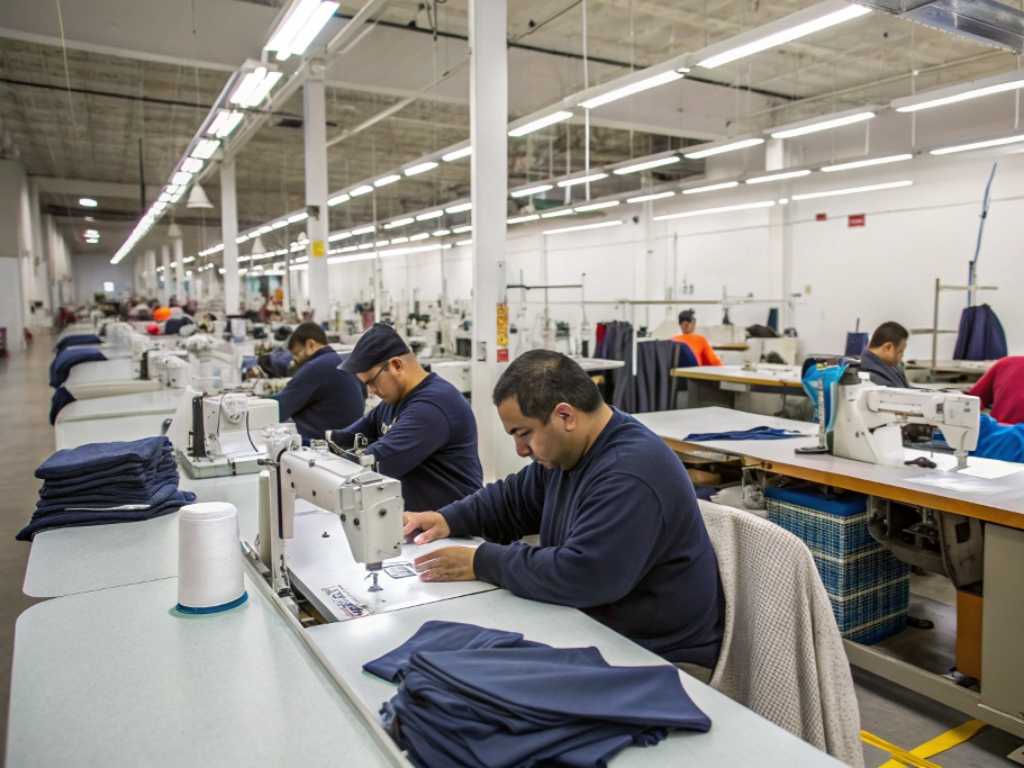
- Project-relevant capacity: 6 owned women’s fashion factories, 10+ long-term production partners, 2 sample rooms, 7+ senior pattern makers and 15+ QC inspectors support multi-style programs.
- Brand-scale order planning: MOQ starts from 200 pcs per style/color. Seasonal programs commonly contain 10–30 styles, with total brand orders planned across 20,000–80,000 pieces.
Built for Complex Dress Development and Brand-Scale Production
Since 2008
6 Owned Factories
10+ Production Partners
2 Sample Rooms
7+ Pattern Makers
15+ QC Inspectors
Who We Manufacture Chain Detail Dresses For
Partywear Brands
Occasionwear Labels
Sourcing Teams
Six Risks That Can Ruin a Chain Detail Dress
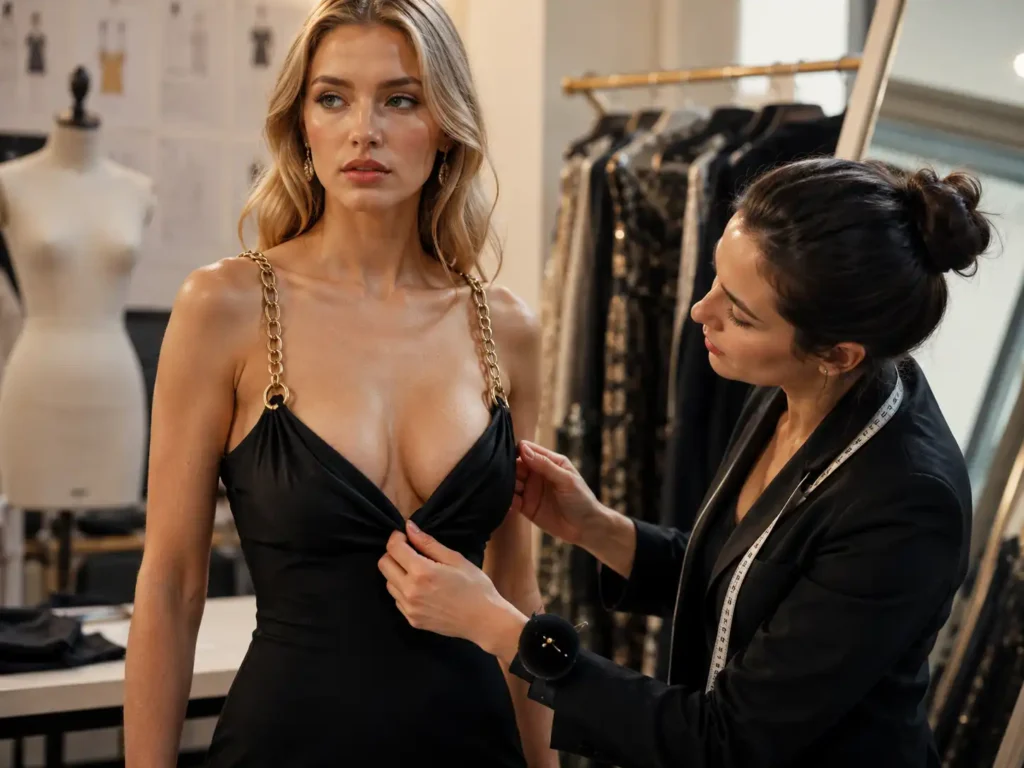
Neckline Pull-Down
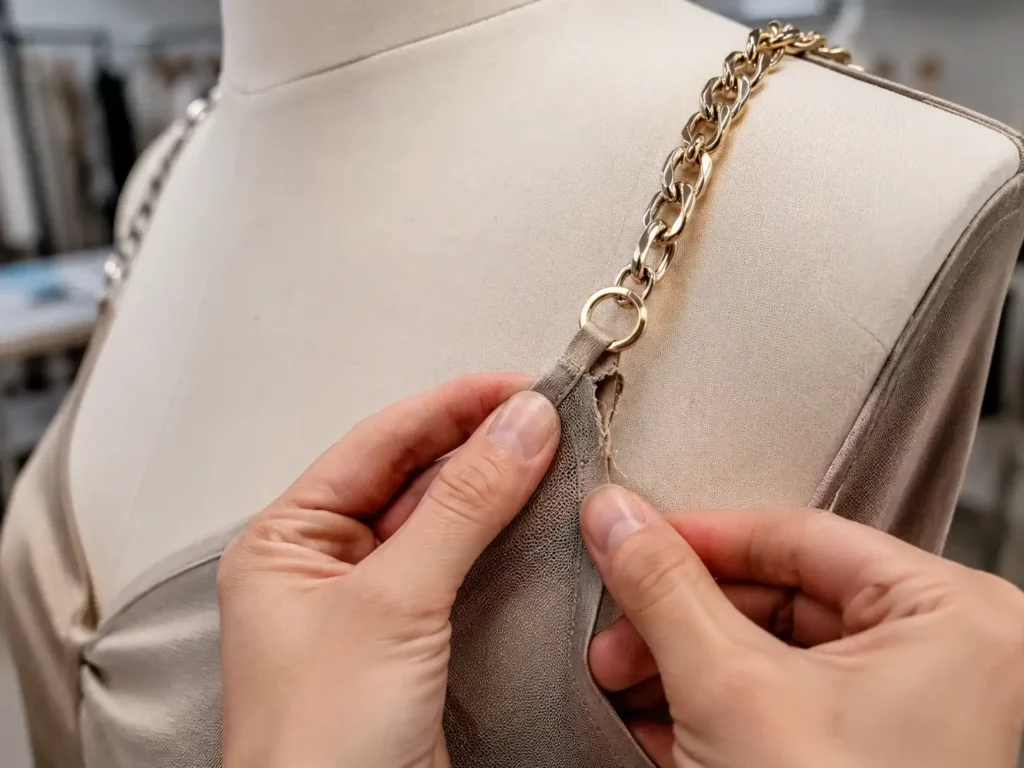
Attachment Point Failure
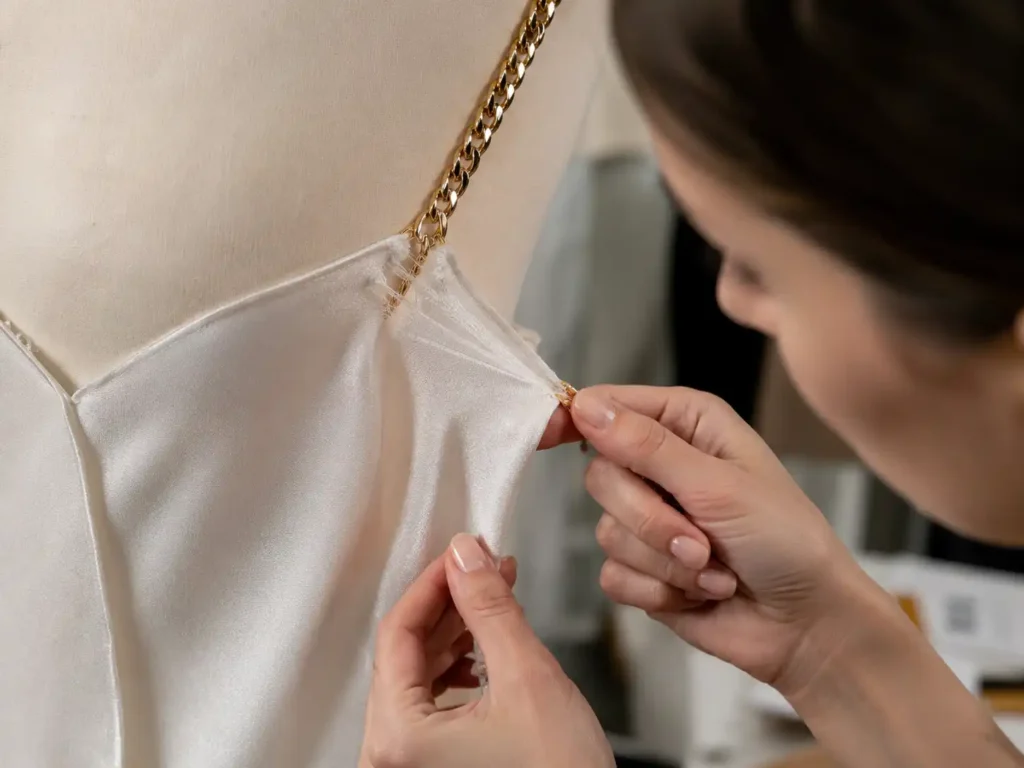
Fabric Snagging
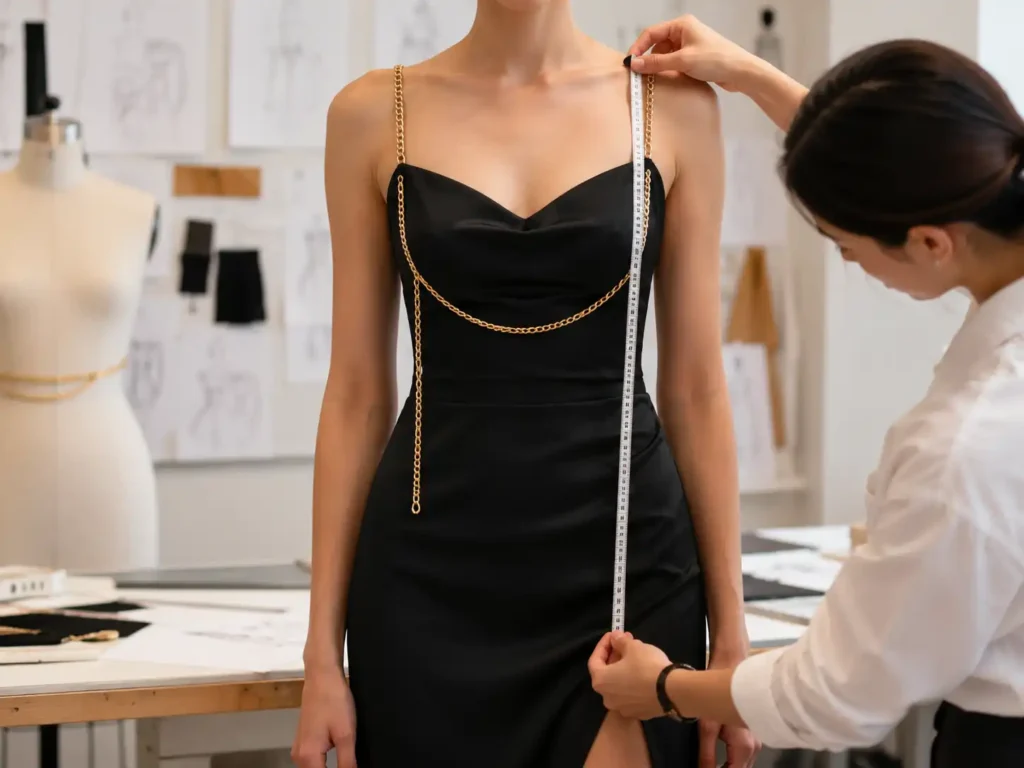
Uneven Chain Length

Skin Discomfort
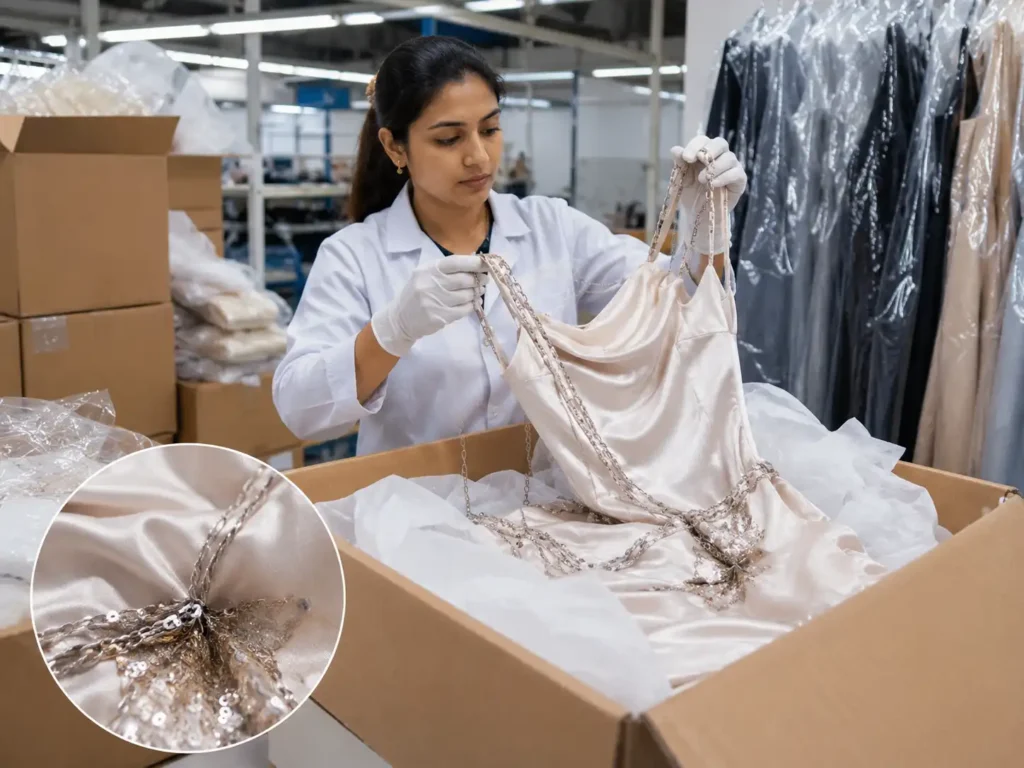
Packing Damage
Custom Chain Detail Dress Styles We Develop

Chain Strap Mini
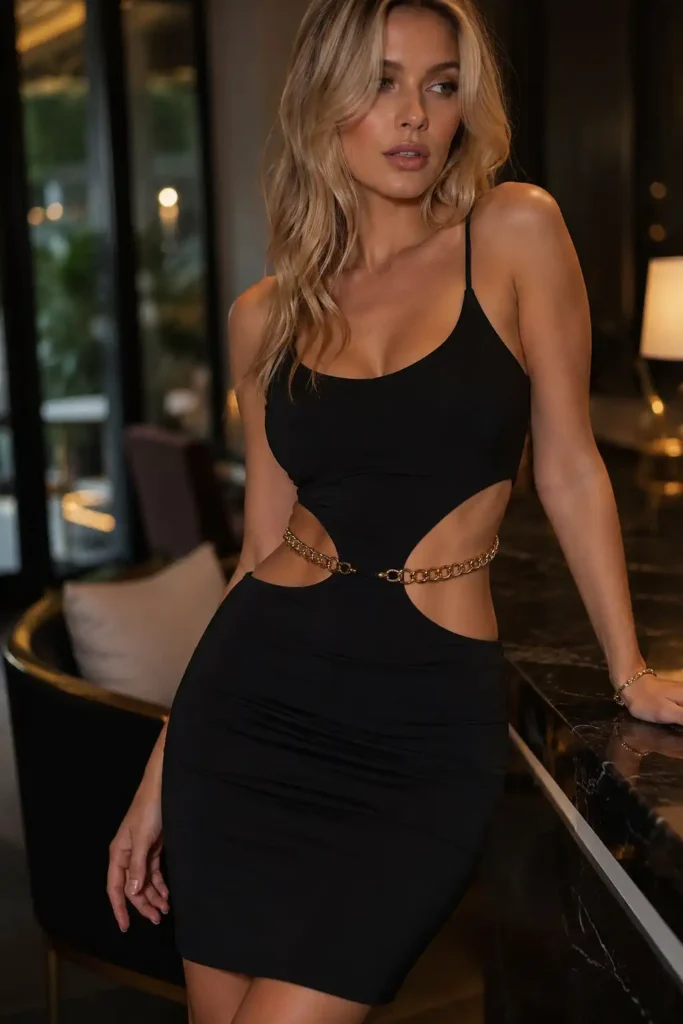
Waist Chain Bodycon
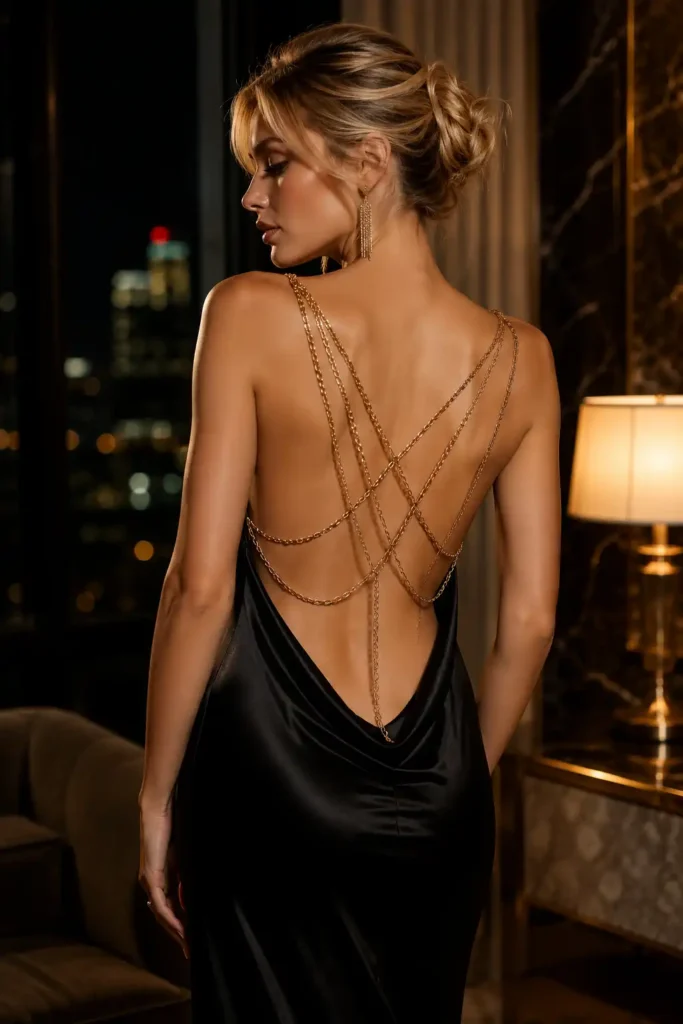
Open Back Chain

Chain Halter Dress

Chain Cut-Out Dress
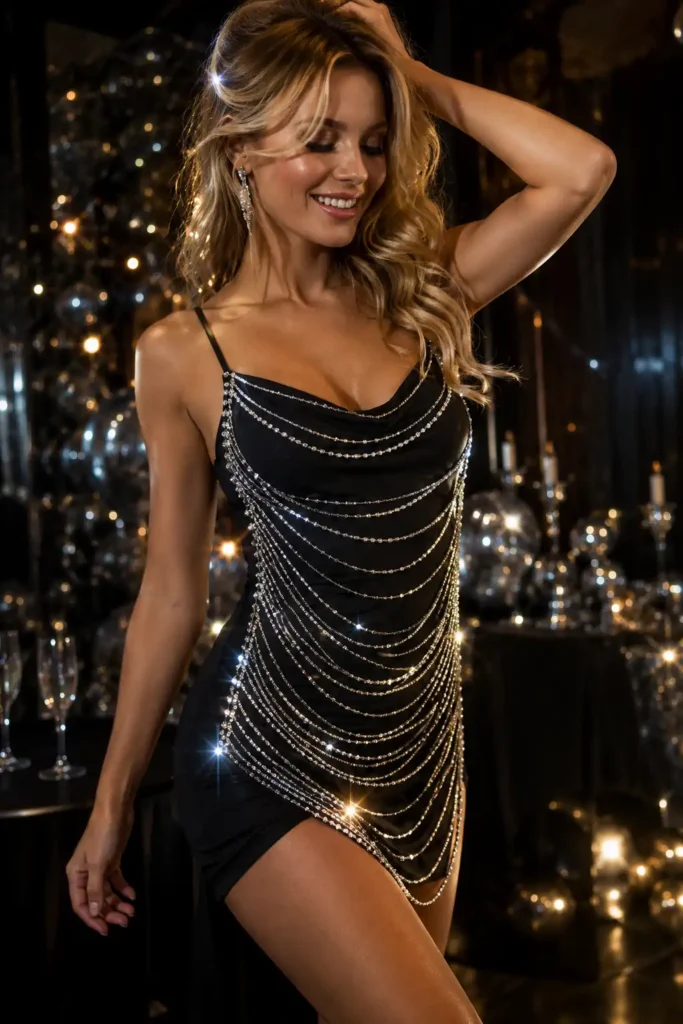
Rhinestone Chain Party

Chain Detail Maxi
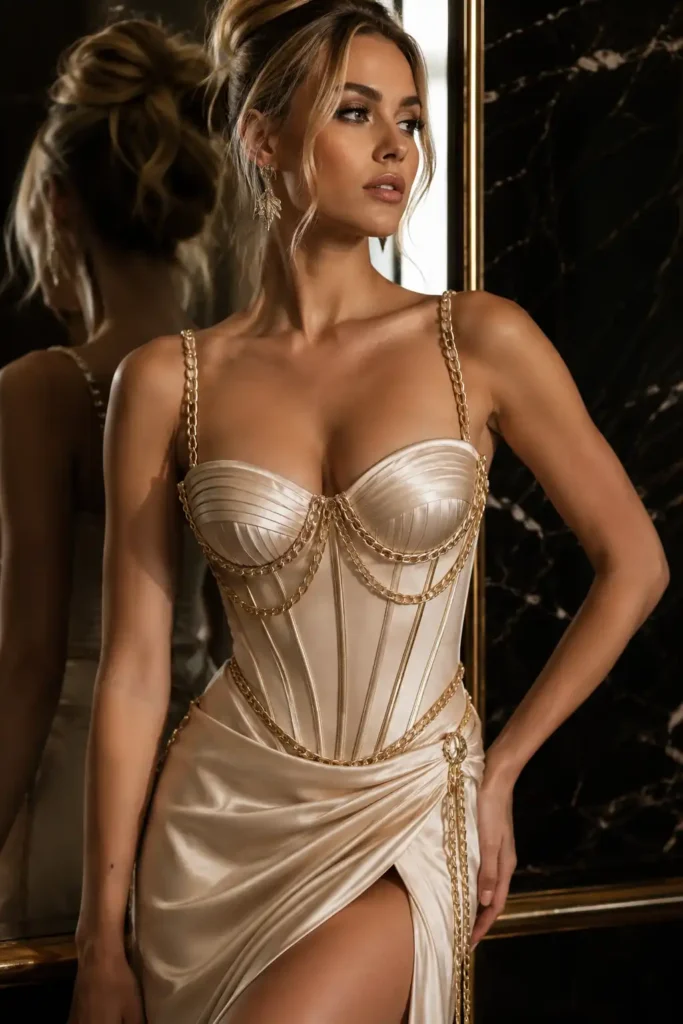
Chain Corset Dress
Where Chain Details Can Be Engineered Into Dresses

Shoulder Straps

Neckline Edge

Bust Connection

Waist Detail

Hip Drape

Side Cut-Out

Open Back

Skirt And Slit
Chain and Metal Trim Directions for Fashion Dresses

Fine Jewelry Chain

Medium Link Chain

Statement Link Chain

Rhinestone Chain

Bead Chain

Removable Chain
Fabric and Chain Compatibility by Dress Direction
The strongest result comes from matching chain weight and attachment method to fabric behavior. Fabric selection also changes lining, pattern, sewing, pressing, packing and bulk inspection requirements.
| Fabric Direction | Suitable Chain Use | Primary Risk | Development Control |
|---|---|---|---|
| Satin / Stretch Satin | Fine straps, neckline accents, waist chains | Snagging, pressure marks, shine variation | Smooth links, hidden reinforcement, protected pressing, separated packing |
| Stretch Mesh / Power Mesh | Cut-out links, bust or waist connections | Tearing, distortion, transparency | Reinforced edges, lining strategy, stretch-direction review, attachment sampling |
| Jersey / Rib Knit | Waist or shoulder details on fitted styles | Garment stretch pulls chain off-center | Recovery review, stabilized connection points, fit and movement testing |
| Ponte / Roma | Statement chains on structured bodycon styles | Bulk at attachment point, neckline drag | Balanced chain weight, clean facing, seam and edge reinforcement |
| Velvet | Neckline, shoulder or waist accents | Pile crushing, marking, color-direction effect | Low-pressure handling, controlled chain contact, protective packing |
| Lace | Fine chain over lined panels or cut-outs | Open structure tears or catches links | Base-layer reinforcement, motif-aware placement, edge protection |
| Sequin Fabric | Metallic chain for party and holiday styles | Metal-on-metal scratching, bulky seams | Defined trim clearance, seam planning, lining and separation layers |
| Crepe / Woven Suiting | Waist, neckline or structured cut-out details | Local puckering, stiffness mismatch | Compatible chain weight, interfacing, accurate attachment position |
Fabric Selection for Stable, Photo-Ready Chain Dresses
Fabric is not a background choice. Weight, stretch, recovery, transparency, surface sensitivity and drape determine how a chain sits, how the pattern must be shaped and how the finished dress survives packing and wear.

Satin Needs Surface Protection
Satin delivers a strong premium and eveningwear appearance, yet chain edges can snag yarns and create visible marks. High-shine satin also reveals uneven pressing, seam puckering and tension around attachment points. Development normally reviews shell weight, stretch direction, lining, chain contact zones and how the chain is secured without crushing the surface. During packing, metal parts should not move freely across the shell.

Mesh Needs Reinforced Boundaries
Mesh is common in party, cut-out and bodycon styles because it creates transparency and layering. Chain details can overload open structures if they are attached directly. Reinforcement may be placed inside a bound edge, lining panel, facing or concealed support layer. Transparency must remain consistent with the intended market, while the reinforcement should stay visually clean.
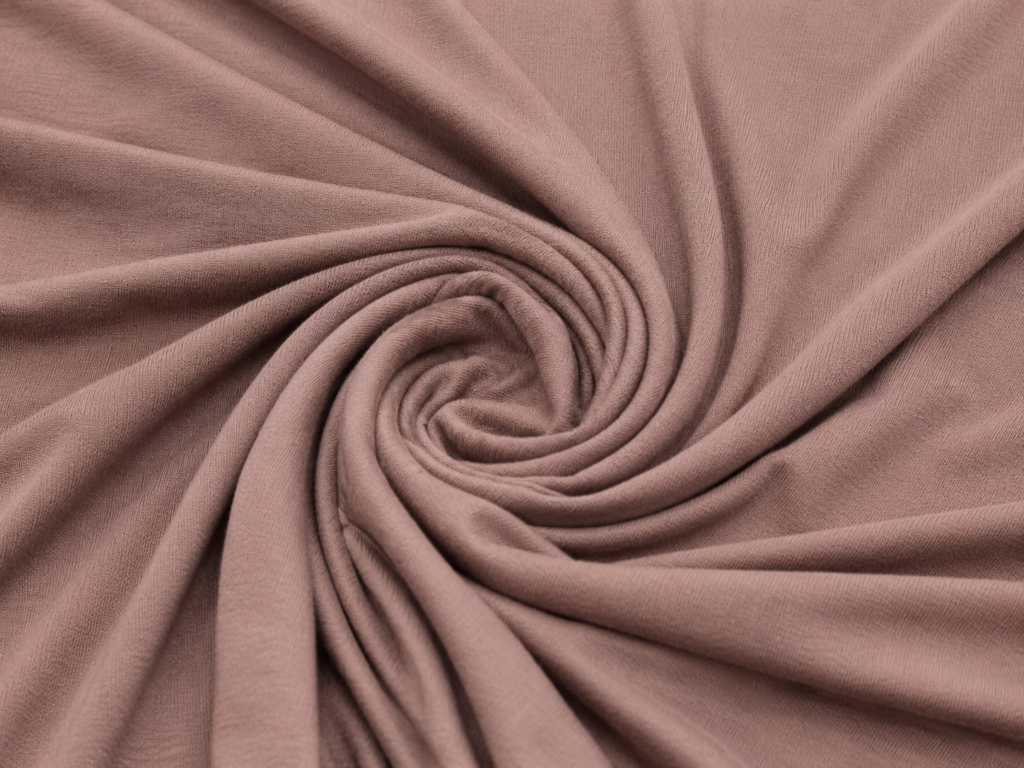
Jersey Needs Recovery Control
Stretch jersey and rib knit move with the body, but chain lengths do not stretch in the same way. Poor recovery can make a waist or hip chain sit unevenly after wear. Fabric stretch percentage, recovery, direction and garment ease are reviewed with bust, waist and hip measurements. Attachment points may require stabilized tape or a non-stretch internal section.

Ponte Supports Stronger Details
Ponte and Roma provide more structure than lightweight jersey, making them useful for fitted dresses with medium or statement chains. Excessive fabric thickness around a folded edge can still create bulky joins. Chain weight, facing, lining and seam allowance should be coordinated before the first sample.

Lace Requires Base-Layer Planning
Lace has open areas, motif direction and delicate edges. A chain attachment should connect to a stable base rather than an unsupported lace opening. Lining color, motif placement, seam joins and edge finishing affect how premium the result appears.

Sequin Needs Metal Separation
Sequin fabrics already contain hard surface elements. Adding chain details increases the risk of scratching, tangling and bulky seams. The sample process should define chain clearance from sequin clusters, lining coverage, seam treatment and packing separation.
Chain Sourcing, Finish Control and Bulk Repeatability
Chain development should move from a visual reference to a controlled specification. A photograph alone does not define material, unit weight, link size, plating, flexibility, connector shape or bulk availability.
Build a Chain Specification
A workable trim record includes chain type, link dimensions, overall length, unit weight, finish color, gloss level, connector type, clasp direction, attachment location and approved supplier reference. The record prevents later substitutions from changing the approved look.
Approve Color Under Garment Lighting
Gold, silver, gunmetal, black metal and antique finishes can look different under studio light, store lighting and daylight. Chain color should be reviewed beside the actual fabric and other hardware, including zipper pullers, buckles, rings or logo plates.
Separate Stock and Custom Directions
Stock chain options usually support faster sampling and easier repeat orders. Custom plating, unique links, logo parts or proprietary connectors may introduce separate supplier MOQ, tooling, color development and lead-time requirements. Feasibility is reviewed before price and launch timing are locked.
Control Batch Variation
Bulk trim checks compare visible color, link shape, flexibility, surface condition, connector compatibility and specified length against the approved sample. Mixed batches should not be combined without review when finish differences are visible.
Attachment Engineering for Secure Chain Detail Construction
The safest attachment method depends on chain weight, fabric strength, wearing movement, wash-care direction and whether the chain performs a structural or decorative role.
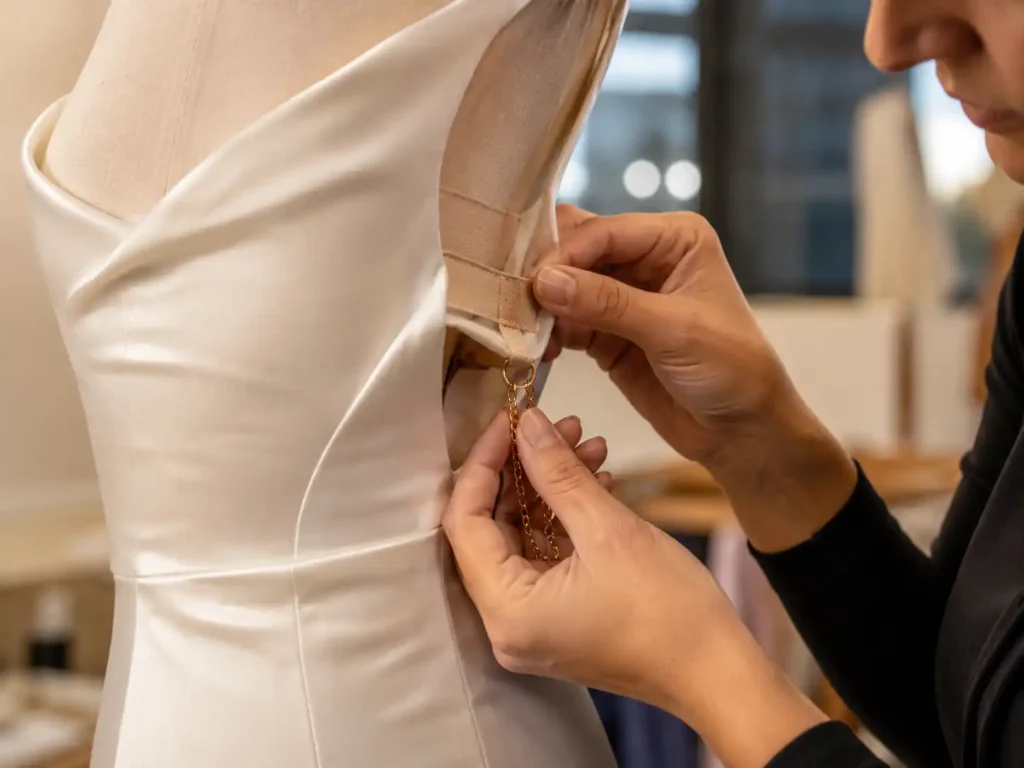
Hidden Loop Reinforcement
A concealed fabric, tape or reinforced loop can carry the load while keeping the visible join clean. The internal support is selected to match garment weight and should not create a visible lump on satin or fitted jersey.
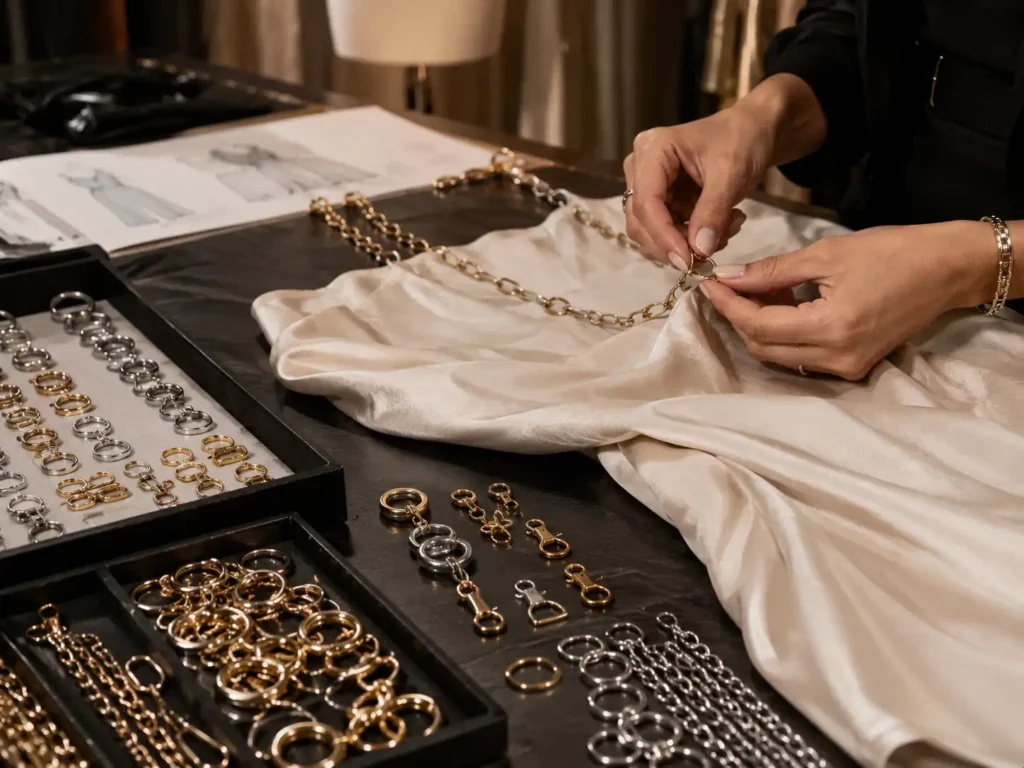
Ring and Connector Systems
Jump rings, D-rings, clasps or small hooks create a controlled interface between chain and garment. Ring closure, orientation and edge smoothness matter because an open or twisted connector can detach or catch the shell.
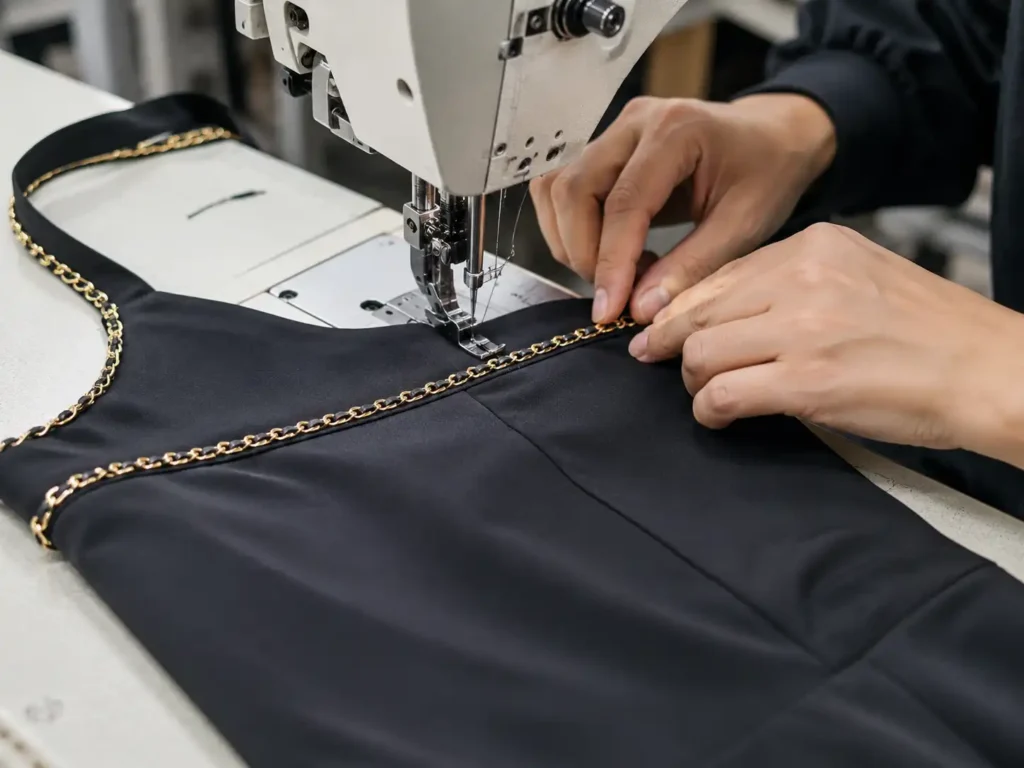
Direct Sewn Attachment
Direct sewing may suit lightweight decorative chain when the base fabric is stable and the chain geometry allows secure stitching. Stitch count, thread path and reinforcement are defined during sampling; direct sewing is not used automatically for every chain type.

Removable Construction
A removable chain can simplify care and allow styling variation. The receiving loops, clasps and access points must remain discreet, easy to operate and resistant to accidental release. Care labels and packing instructions should reflect the removable component.
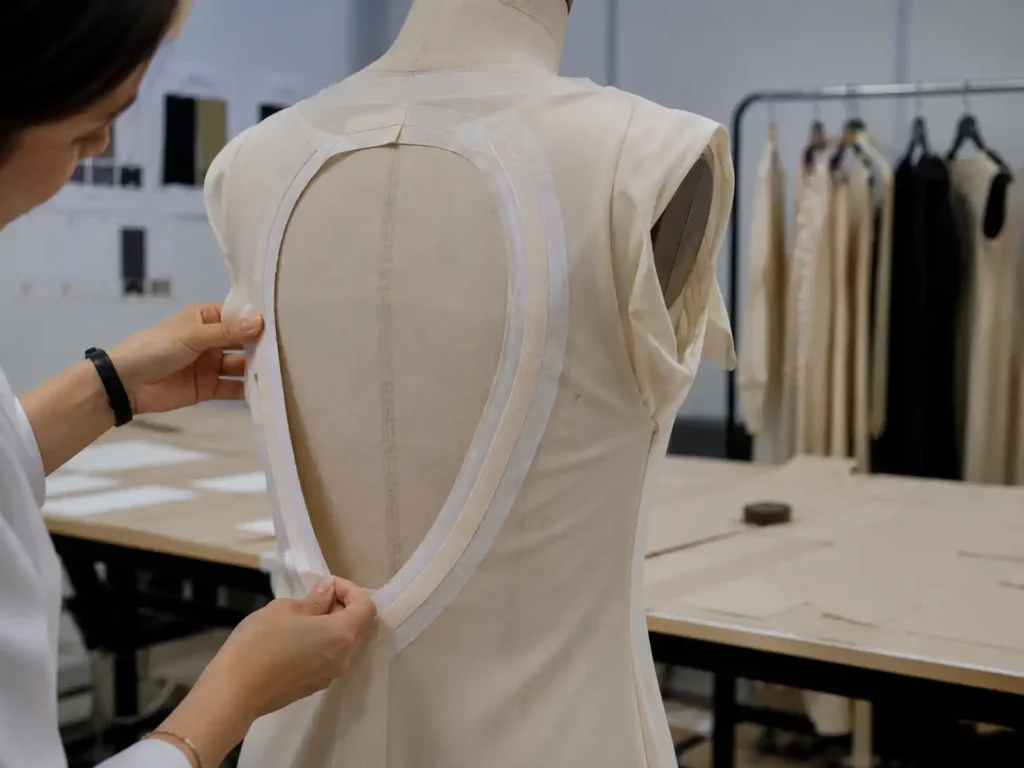
Edge and Panel Stabilization
Cut-out, neckline and open-back edges may need facing, binding, lining, interfacing or internal tape before chain attachment. Stabilization prevents local stretching and preserves the approved opening shape across sizes.

Load Path Review
A chain strap can carry part of the dress weight. A waist or side chain can pull across the torso. Pattern shape, lining and attachment should distribute force beyond a single stitch point. Fit review identifies whether the garment pulls forward, backward or sideways.
Wearability Checks for Metal Details Against the Body
Edge Smoothness
Weight Distribution
Skin Clearance
Movement Range
Dressing Access
Care Direction
A Structured Project Review Before Sampling Begins
Design Input
Commercial Input
Development Output
From Design Reference to Approved Chain Dress Sample

Design Review

Material Direction

Pattern Development

First Sample

Fit Revision

PP Sample
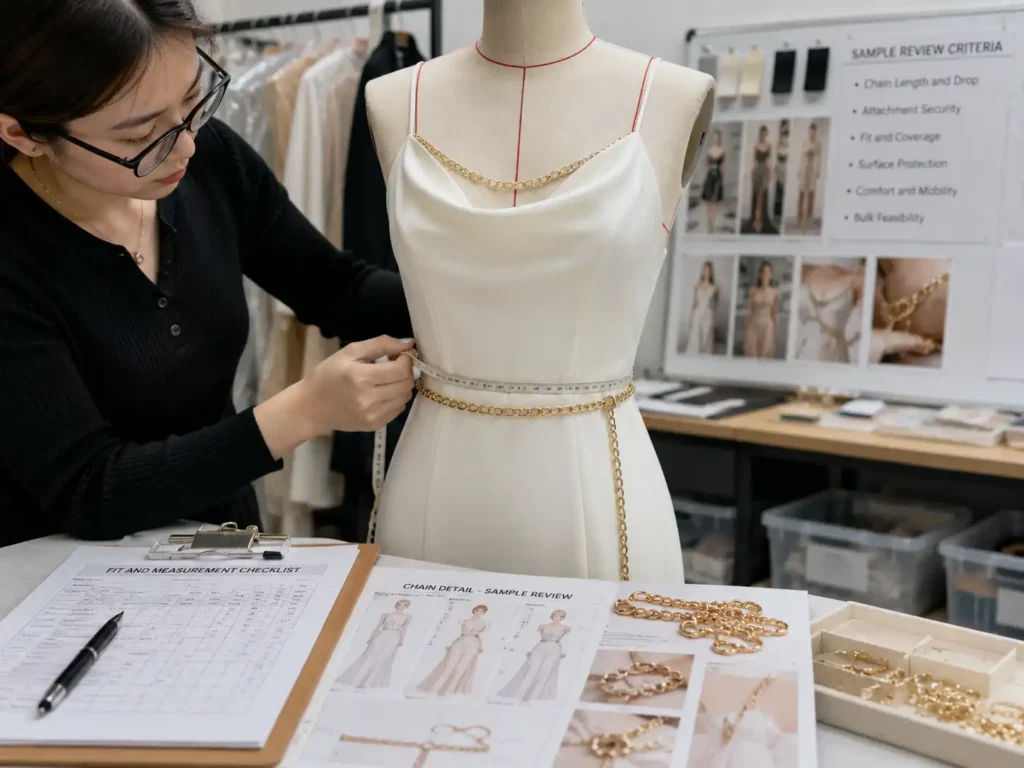
What We Validate on the Chain Dress Sample
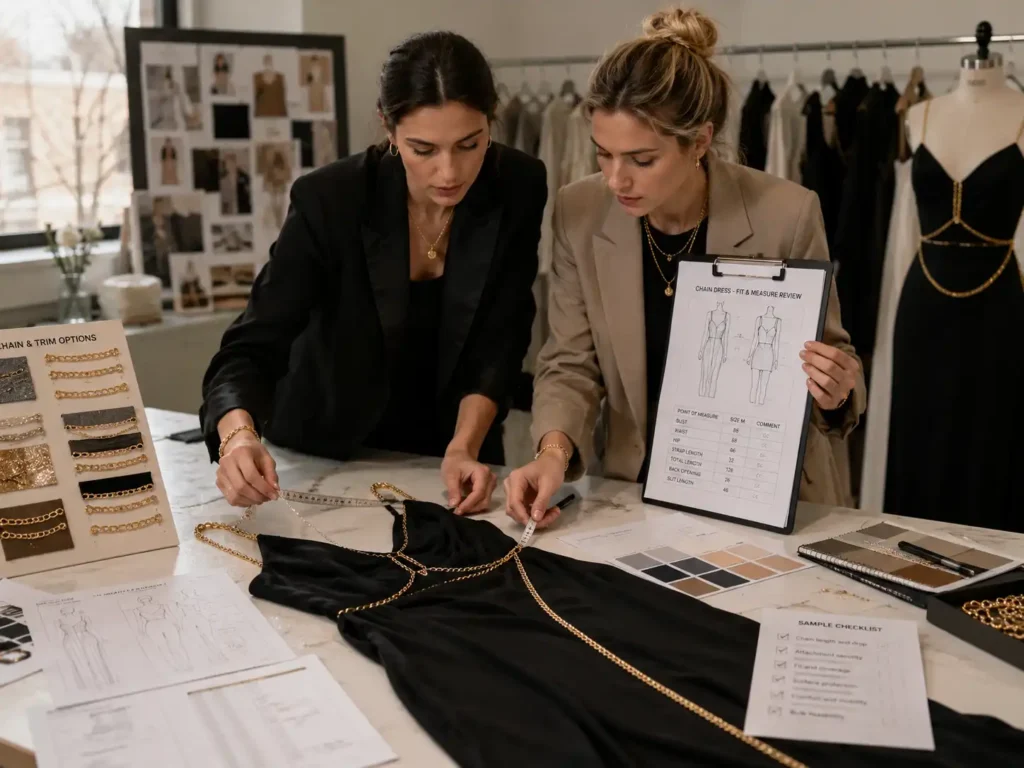
A sample is evaluated as a wearable production reference, not only as a visual prototype. Standard review covers garment measurements plus chain-specific dimensions and movement behavior.
- Chain Length and Drop: Overall length, drape depth, strap length and connector spacing are measured where they influence symmetry or fit. Chain dimensions are linked to size grading when needed.
- Attachment Security: Stitching, loops, rings, hooks and reinforcement are inspected for secure closure, correct orientation and clean appearance. The sample is moved and handled to reveal twisting or accidental release.
- Fit and Coverage: Bust, waist, hip, dress length, neckline depth, strap position, armhole, cut-out coverage, back opening and slit height are compared with the size chart and fit comments.
- Surface Protection: The team checks whether chain movement scratches, snags or marks the shell, lining, sequins or nearby trims during wearing, handling and folding.
- Comfort and Mobility: Neck, shoulder, underarm, side waist and back contact areas are reviewed during natural movement. The chain should not create pressure points or excessive restriction.
- Bulk Feasibility: The construction must be teachable, repeatable and inspectable. If an attachment relies on uncontrolled hand positioning, a measurement point, fixture or clearer work instruction may be required.
PP Sample and Golden Sample Lock the Bulk Standard
Bulk production should not begin from a photo approval alone. The approved physical reference and controlled records align pattern, materials, chain details, labels, measurements, workmanship and packing.
- Final Material Lock: Shell fabric, lining, chain, connectors, zipper, hooks, labels and packaging are confirmed by approved reference, color and supplier information.
- Final Pattern Lock: Pattern version, size chart and grade rules reflect all approved fit changes, including chain length or attachment spacing where sizing affects the detail.
- BOM and Workmanship: The bill of materials and sewing instruction identify every component, location, method and visible standard. Chain attachment is treated as a controlled operation rather than a finishing afterthought.
- QC Reference: Measurement points, chain position, symmetry, connector direction, surface protection, labeling and packing checks are transferred into the quality checklist.
- Packing Standard: The approved fold, protective tissue, chain securing method, polybag, barcode, carton ratio and carton marks are confirmed before packing materials are released.
Chain Detail Dress Bulk Production Workflow
PP Approval
Material Preparation
Fabric Relaxing
Cutting Control
Sewing Assembly
Chain Attachment
Inline Inspection
Final Finishing
Packing Release
Workmanship Details That Separate Premium Chain Dresses
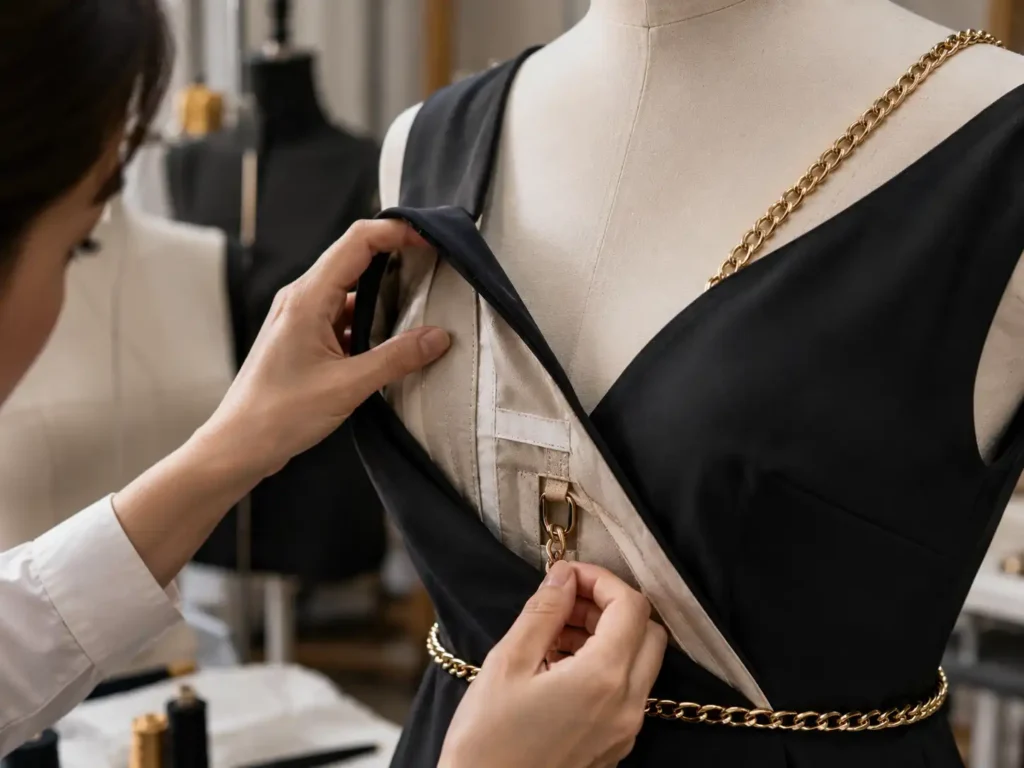
Reinforced Anchor Points
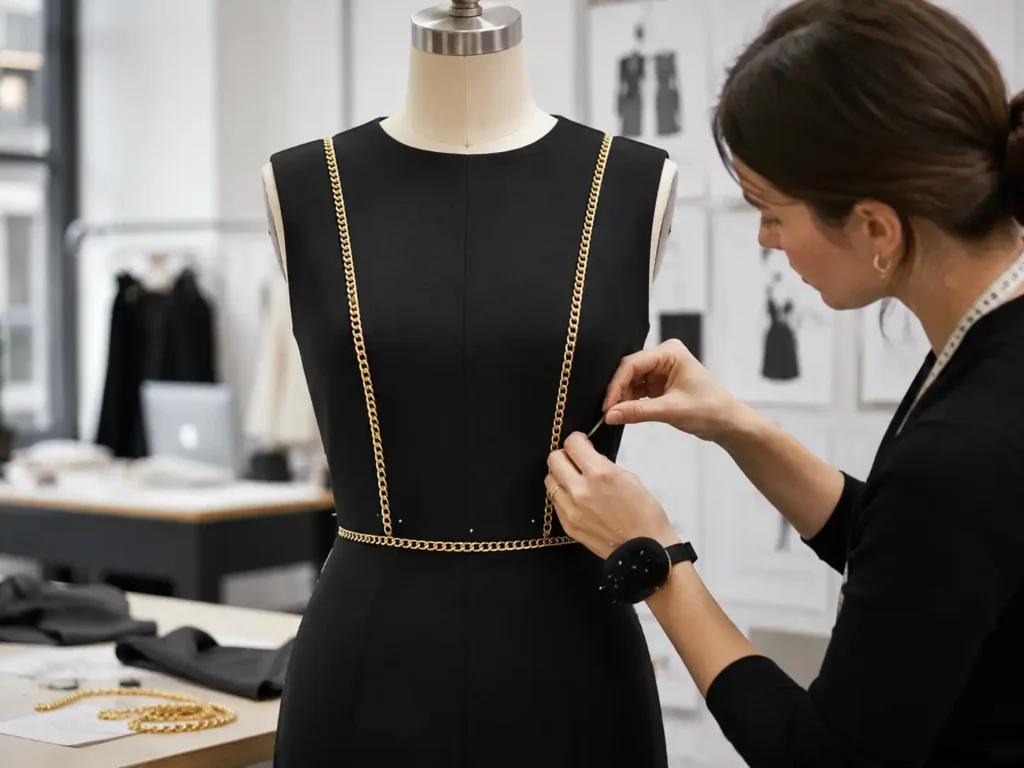
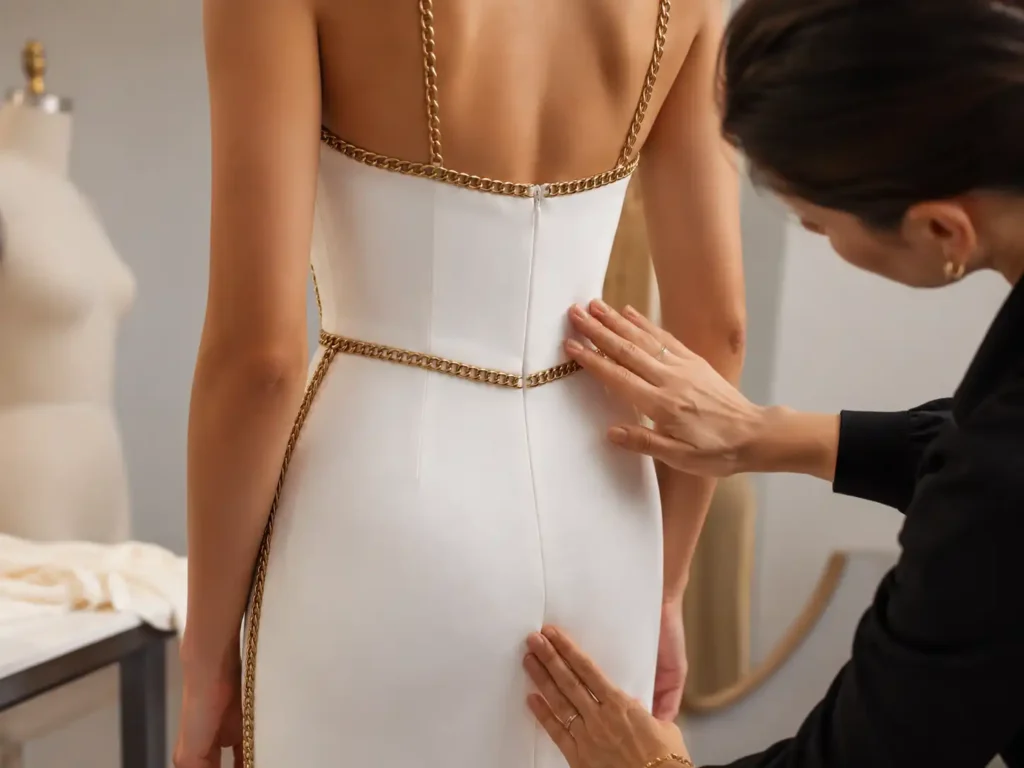
Consistent Chain Position
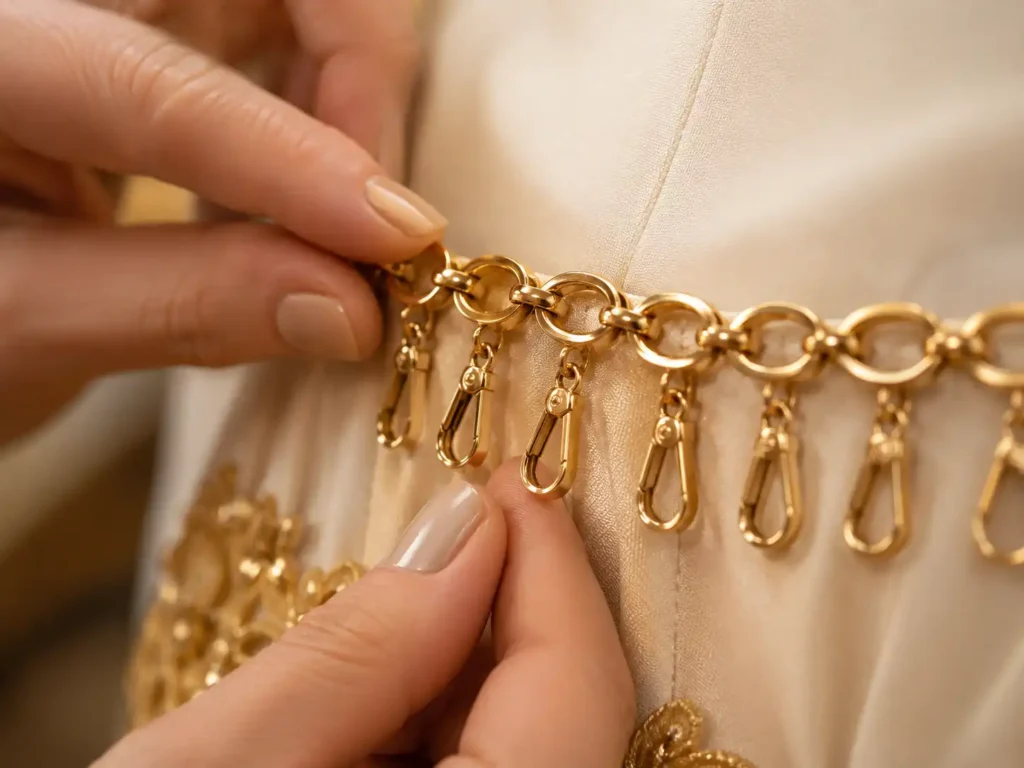
Clean Connector Direction
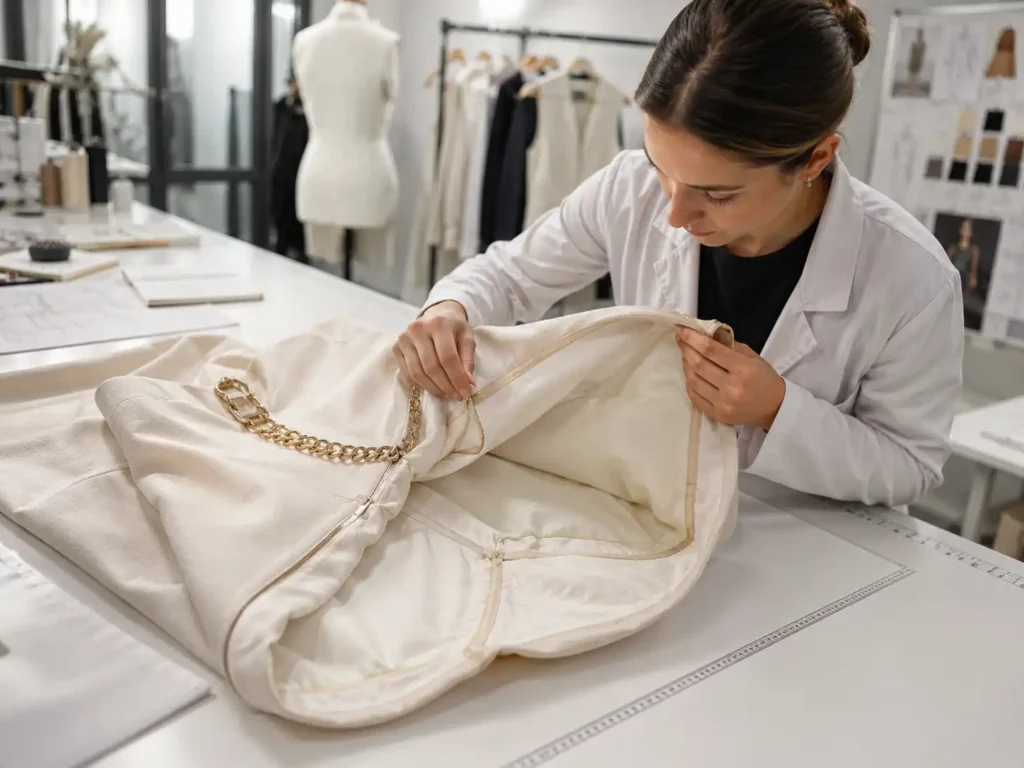
Protected Seam Allowances
Flat Zipper Integration
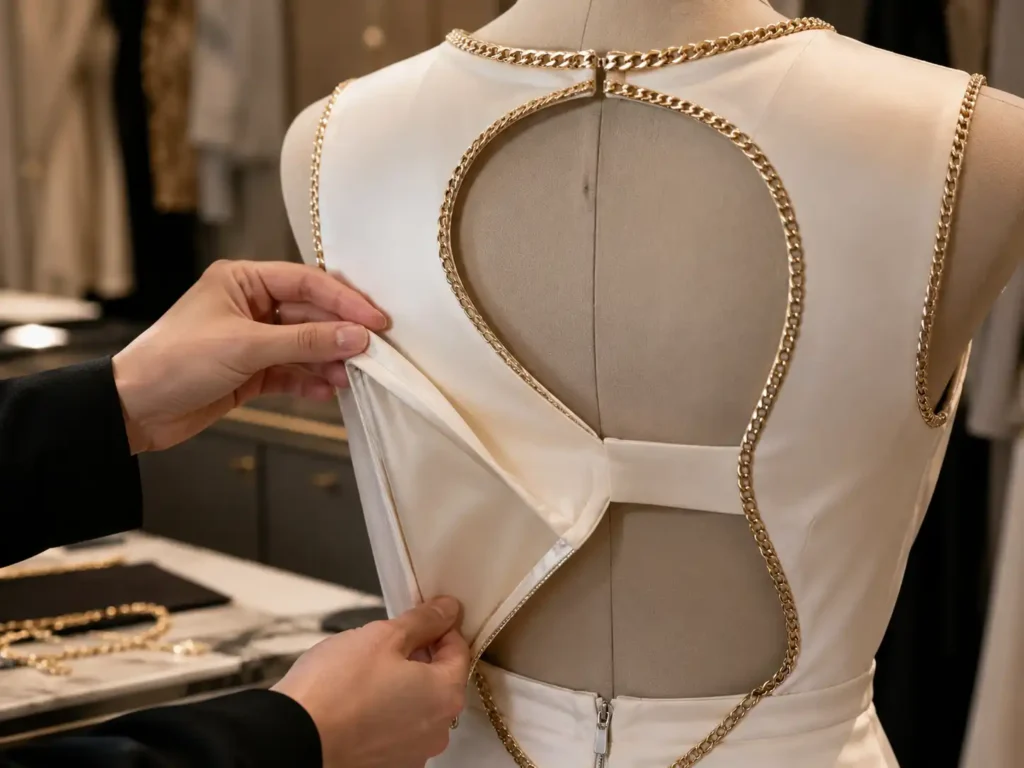
Balanced Lining Coverage
Quality Control Matrix for Chain Detail Dresses
| QC Stage | Checks | Common Risk | Control Record |
|---|---|---|---|
| Incoming Fabric | Color, batch, width, hand feel, stretch, surface defects | Shade variation, snagging, wrong stretch | Fabric inspection and batch record |
| Incoming Chain | Finish color, link shape, length, connectors, surface condition | Color mismatch, open rings, rough edges | Approved trim reference and receiving check |
| Cutting | Direction, shade grouping, cut-out shape, reinforcement pieces | Asymmetry, distorted openings, missing support | Cutting ticket and bundle control |
| Sewing | Seams, lining, zipper, facing, fit-critical measurements | Puckering, lining exposure, zipper bulging | Inline workmanship and measurement checks |
| Chain Attachment | Position, length, symmetry, connector direction, reinforcement | Uneven drop, detachment, twisting | Attachment specification and inline check |
| Final Garment | Measurements, fit points, surface condition, labels, appearance | Wrong size, scratches, missing labels | Final inspection against approved sample |
| Packing | Chain securing, tissue, folding, barcode, size ratio, carton mark | Transit damage, mixed size, packing error | Packing checklist and carton record |
MOQ Planning for Dresses With Custom Chain Details
Standard Chain Project
Custom Finish Project
Multi-Style Collection
What Determines a Chain Detail Dress Quotation
A reliable quotation is built from the garment structure and complete material plan. Chain detail can change pattern work, sample time, manual operations, inspection, wastage and packing requirements.
- Fabric and Lining
Cost changes with composition, weight, width, stretch, color, supplier MOQ, lining coverage and material wastage. Satin, lace, mesh, velvet and sequin fabrics carry different handling risks. - Chain and Connectors
Unit price depends on chain type, length per garment, link size, finish, plating, clasps, rings, supplier quantity and custom development. Heavy statement chains also affect freight weight and packing. - Pattern and Sampling
Chain straps, corset panels, cut-outs, asymmetric drapes and open-back structures need more pattern and fitting work than a basic silhouette. Sample cost reflects development work rather than bulk line efficiency. - Sewing and Hand Operations
Reinforcement, individual chain-length preparation, connector installation, hand attachment, symmetry checks and protection layers add operation time. - Quality and Packing
Additional chain checks, garment-surface review, tissue separation, chain immobilization and special folds may be needed to protect the approved finish. - Quantity and Delivery Plan
Order quantity, color count, size breakdown, delivery phases and shipment method affect material efficiency, production allocation, QC planning and landed cost.
Cost Optimization Without Weakening the Dress Concept
Optimize Chain Weight
Simplify Connection Logic
Use Coordinated Stock Options
Private Label Packing That Protects Metal Details
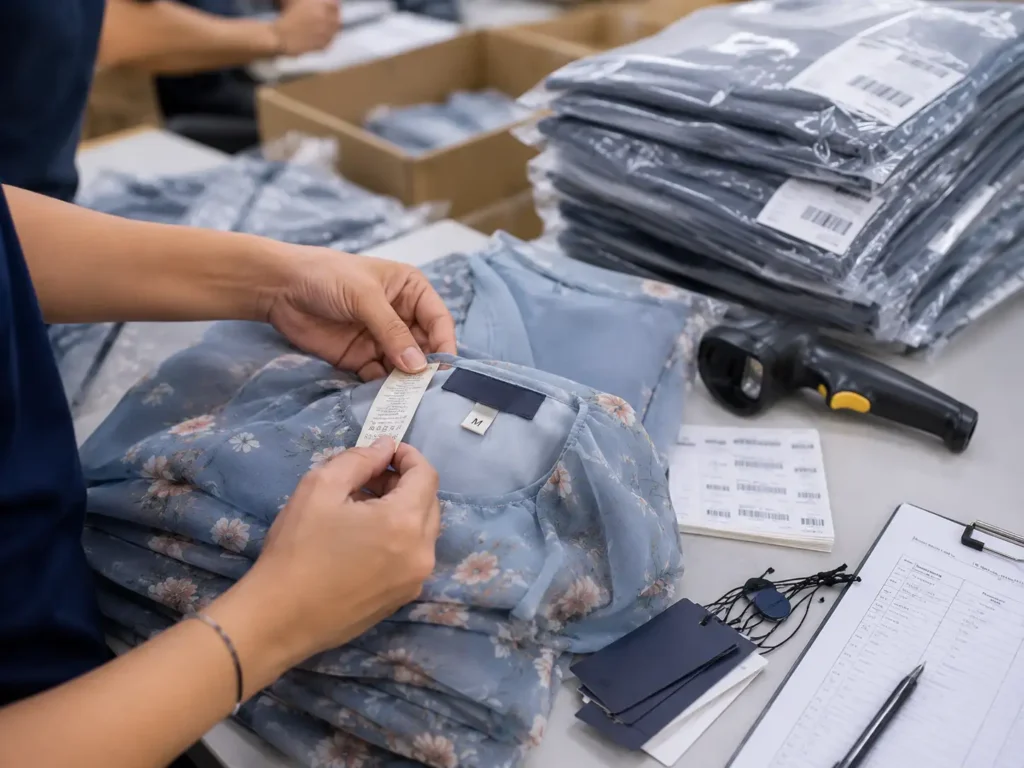
Brand Labels
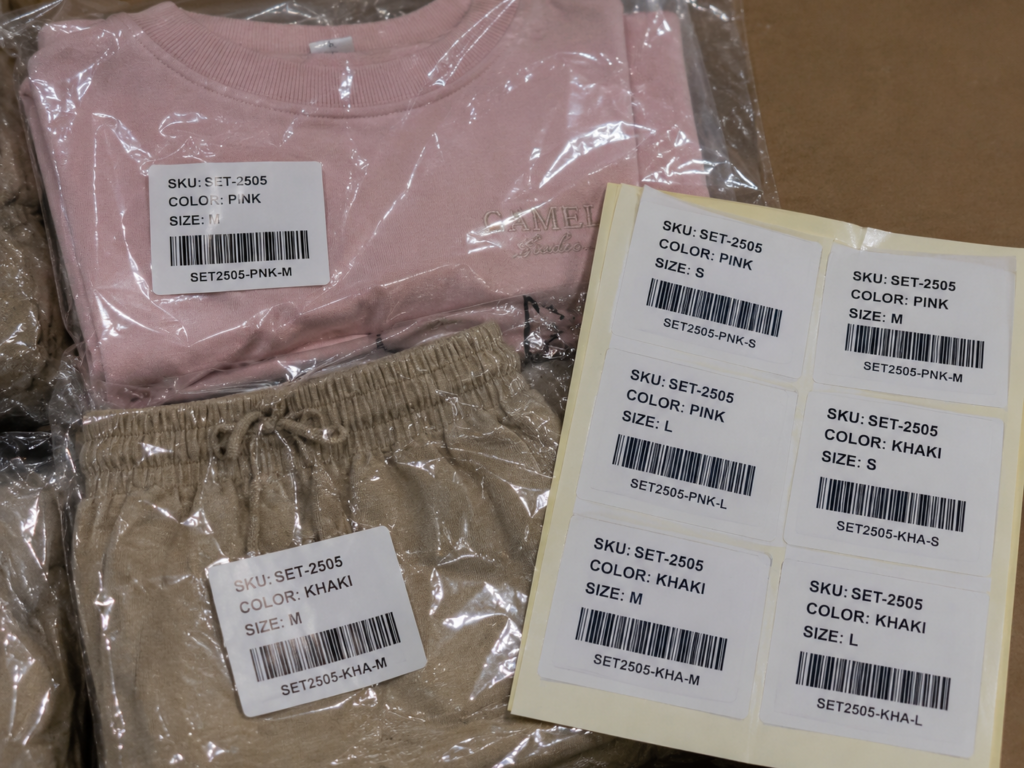
Hangtags and Barcodes
Chain Immobilization
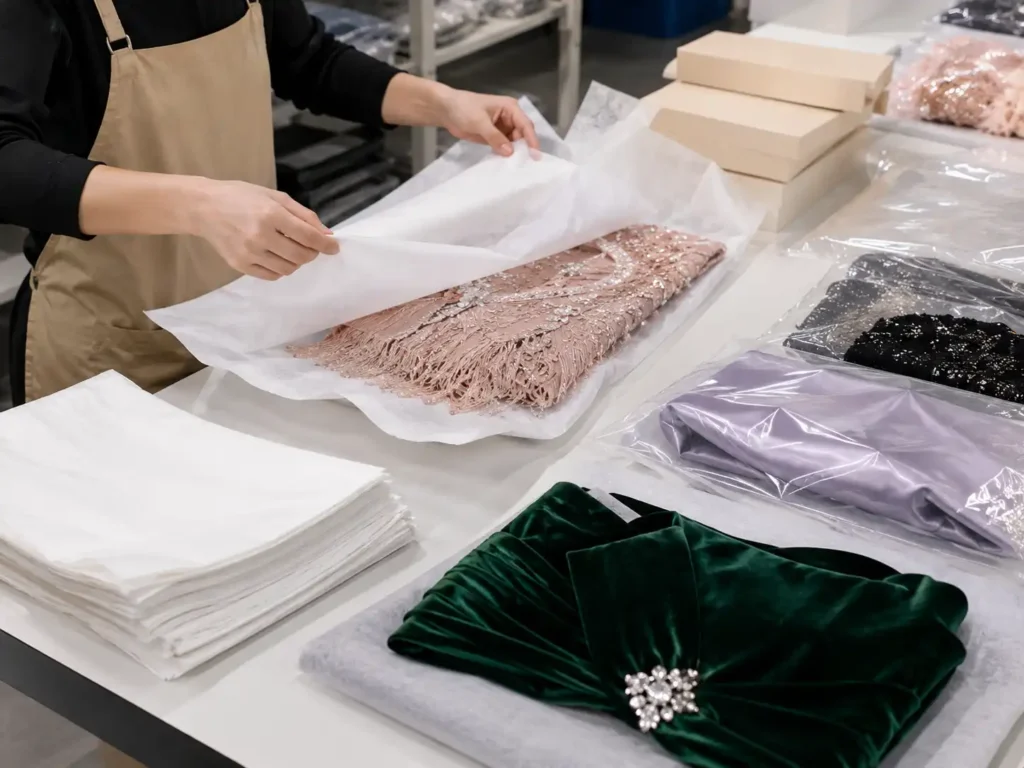
Surface Separation

Polybag Planning

Carton Control
A Coordinated Team Behind Every Complex Dress Program
Product Development
Pattern Team
Sample Team
Merchandising Team
Quality Team
Packing Support
Build Chain Details Into a Repeatable Collection System
Develop a Chain Family
Extend the Silhouette
Protect Repeat Orders
Chain Detail Dress Program Examples
US Partywear Capsule
UK Occasionwear Collection
Australian Eventwear Drop
Frequently Asked Questions About Chain Detail Dress Manufacturing
Development covers chain strap mini dresses, waist-chain bodycon dresses, open-back chain styles, chain halter dresses, chain-linked cut-outs, rhinestone-chain party dresses, chain-detail maxi dresses and chain-accent corset dresses. Feasibility depends on fabric, chain weight, attachment structure, fit, quantity and delivery plan.
Yes, when the design is engineered for load distribution. Chain weight, neckline stability, bust support, connector comfort, hidden reinforcement and strap length are reviewed during pattern and sample development. A decorative chain should not automatically be treated as a structural strap.
Chain edges and connectors are checked for snagging risk. Attachment points may use concealed support, facing, lining, tape or bound edges. Packing can include tissue, sleeves, separation layers or temporary securing so metal details do not move across delicate surfaces.
Available and custom finish directions can be reviewed by chain type, supplier, color, gloss, project quantity and lead time. The chain should be approved beside the actual fabric and nearby hardware because metal colors can look different under various lighting.
The team determines whether one length works across the size range or whether the chain needs grade rules. Chain length, attachment spacing and drop depth can be added to the size chart, BOM and QC checklist where they affect fit or symmetry.
Yes. Removable systems may use clasps, hooks, rings or concealed loops. The connection must remain discreet, comfortable and secure during wear. Care instructions and packing should reflect the removable component.
Garment MOQ starts from 200 pcs per style/color. Special chain, custom plating, proprietary connectors, labels or printed packaging may have separate supplier quantities. Final feasibility is confirmed after reviewing the design and material direction.
Chain detail dresses commonly fall within the complex dress range. Corset, strapless, lace, mesh or sequin styles often require about 15–25 days for a first sample. Projects needing custom materials or special trims may require 20–35 days or the supplier’s confirmed schedule. Revised and PP samples are planned by change scope and final material readiness.
A tech pack is ideal. Development can also begin from an original sample, sketch, line sheet or detailed front-and-back reference images. Please include quantity per style/color, size range, preferred fabric, chain direction, private labels and target delivery window.
Jinfeng Apparel supports NDA-based cooperation and protects tech packs, patterns, original samples, trims, private-label files, packaging, unpublished designs and order information. Public project content uses anonymized information unless written authorization is provided.

Start Your Chain Detail Dress Development
Send the available project information to Kelly for an initial manufacturing review. A complete submission helps the team assess chain function, fabric compatibility, pattern risk, sampling route, garment MOQ, separate trim requirements, private-label needs and delivery planning.
The strongest starting package includes a tech pack or clear front-and-back reference, quantity per style/color, size range, fabric direction, chain placement, preferred metal finish, target market, label and packing requirements, and proposed delivery window. When measurements or chain specifications are incomplete, the team can identify the missing decisions before formal sampling. Complex styles are reviewed before any production promise is made, so material, fit and construction risks are visible early rather than after bulk cutting.
- Reference images, sketch, original sample or tech pack
- Quantity per style/color and planned number of styles
- Size range and proposed size breakdown
- Fabric, lining, chain color and hardware direction
- Main label, care label, hangtag, barcode and packing needs
- Target sample date, launch window and delivery destination