Custom Apparel Production Partner for Premium Ecommerce Brands

  • Build commercially strong womenswear collections with a manufacturing team structured around product development, sample approval, multi-style production, retail-ready packing and repeat-order continuity.

    • Since 2008, focused on custom women’s fashion manufacturing for established international brands and large apparel programs.
    • 6 owned women’s fashion factories, 10+ long-term production partners and 100,000+ pieces of combined monthly capacity.
    • 2 sample rooms, 7+ senior pattern makers and 20+ sample machinists supporting collection development before bulk production.
    • Built for dresses, skirts, jumpsuits, matching sets, tops and private-label womenswear sold through premium online channels.

Manufacturing Scale Backed by Product Development Depth

Premium ecommerce programs need more than nominal capacity. Jinfeng Apparel combines owned production, long-term specialist partners, pattern and sample teams, merchandising control, quality inspection and packing coordination so product decisions remain connected from initial review through final shipment.

Since 2008

More than sixteen years of women’s fashion manufacturing experience supports stronger judgment around silhouette, fabric behavior, sample revision and bulk risk. The value is not age alone; it is the ability to recognize where satin, mesh, lace, sequin, stretch jersey and structured dresses usually fail before the problem reaches a production line.

Six Owned Factories

Six owned women’s fashion factories give Jinfeng Apparel a stable production base for dresses, skirts, jumpsuits, matching sets and related fashion pieces. Factory allocation follows product construction, fabric handling, workmanship level, launch priority and quality requirements rather than placing every style into the same operating environment.

Ten Plus Partners

More than ten long-term satellite production partners add specialist capacity when a collection contains different fabric groups, construction levels or delivery waves. Partner allocation is managed through approved samples, production instructions, measurement files, quality checkpoints and packing requirements so added capacity does not mean uncontrolled subcontracting.

Monthly Capacity

Combined monthly capacity exceeds 100,000 pieces across the wider production system. Capacity planning remains tied to style count, color count, size range, fabric arrival, trim readiness, sample approval and QC workload. Complex corset, lace, sequin or evening styles require different planning from straightforward jersey or woven fashion pieces.

Sample Infrastructure

Two sample rooms, 7+ senior pattern makers and 20+ sample machinists support first samples, fit samples, revisions, photo-ready samples, PP samples and golden references. A collection can be grouped by priority, fabric, construction and launch date rather than forcing all styles through one undifferentiated sample queue.

Quality Team

A team of 15+ QC inspectors supports material, cutting, sewing, measurement, finished-garment and packing checks. Quality standards are linked to approved samples, size charts, workmanship instructions, labeling files and packing rules, giving production teams a defined reference instead of relying on verbal expectations.

Built for Established Ecommerce Fashion Operations

Jinfeng Apparel is structured for brands with defined product direction, professional sampling requirements, seasonal launch plans and repeat-order potential. Different teams receive support around the decisions they own, from assortment planning and fit approval to vendor control, quality evidence and warehouse-ready packing.

Premium Ecommerce Brands

Online-first womenswear labels need garments that perform in photography, product videos, paid media and daily wear. Support covers fabric appearance, silhouette, size consistency, private labels, SKU accuracy, packing presentation and repeat-order records, helping the physical product remain aligned with the promise made on the product detail page.

DTC Womenswear Teams

Mature direct-to-consumer teams often manage frequent drops, fast-selling colors, content deadlines and changing reorder priorities. Jinfeng Apparel can group hero styles, core sellers and seasonal products, then coordinate sample status, PP approval, material readiness, bulk production, QC and split shipment decisions around the commercial calendar.

Product Development Teams

Product developers need clear answers on construction, fabric suitability, pattern correction and sample revisions. Jinfeng Apparel reviews reference images, tech packs, original samples, sketches, line sheets, size charts and BOM details, then translates approved changes into updated patterns, measurements, trims, workmanship instructions and production references.

Sourcing Teams

Sourcing managers evaluate capability, quotation logic, MOQ, capacity, quality systems, delivery risk and long-term continuity. Jinfeng Apparel provides a defined production model, MOQ from 200 pieces per style and color, structured sample approval, multi-factory allocation, QC checkpoints, private-label packing and support for client-appointed inspection or forwarding arrangements.

Merchandising Teams

Merchandising teams need more than a list of garments. They need a balanced assortment with strong visual styles, repeatable core products, workable color plans and realistic margin targets. Product discussions can cover style grouping, fabric sharing, price tiers, sample priority, seasonal timing, reorder potential and the operational cost of excessive color or size fragmentation.

QA and Operations

Quality and operations teams focus on risk before warehouse receiving. Jinfeng Apparel links fabric approval, measurement control, inline inspection, final garment review, SKU labeling, carton marks, packing lists and shipment documentation so quality, inventory and logistics information follow the same approved product records.

Ecommerce Production Risks Controlled Before They Escalate

A visually strong design can lose margin through poor fit, fabric mismatch, inconsistent bulk production, missed content deadlines or inaccurate packing. Jinfeng Apparel moves these risks into development, approval and production records where they can be measured, corrected and monitored.

Photo-to-Product Gap

A sample may look strong in a controlled studio yet fail in bulk because the approved fabric, lining, pressing method or construction was not fully locked. Jinfeng Apparel connects photo-ready approval with fabric references, trim cards, pattern versions, measurement files and PP comments so the garment sold online can be reproduced beyond one presentation sample.

Fit-Related Returns

Online shoppers cannot try a garment before purchase, making bust, waist, hip, length, neckline, strap and movement control commercially important. Pattern correction, fit samples, grade rules, measurement tolerances, cutting checks and finished-garment measurements reduce avoidable variation across sizes and production batches.

Fabric Appearance Drift

Satin shine, mesh transparency, lace placement, sequin density, velvet direction and jersey recovery can change how a style looks under lighting or after wear. Material review considers composition, weight, width, stretch, drape, transparency, dye lot, shrinkage, lining need and production handling before a fabric is treated as bulk-ready.

Missed Launch Windows

A launch date depends on more than sewing time. Fabric booking, trim development, sample revisions, PP approval, bulk allocation, inspection, packing and freight all compete for time. A backwards production schedule identifies key approval dates and separates photo-sample urgency from warehouse receiving deadlines.

SKU Packing Errors

Wrong color stickers, incorrect size labels, barcode mismatches or mixed carton ratios can disrupt inventory receiving even when garments are well made. SKU lists, label files, packing instructions, carton marks and packing checks are matched before shipment so warehouse teams receive the assortment they were expecting.

Reorder Inconsistency

A bestseller reorder can drift when the original pattern, fabric, trim, color, measurement or packing requirement is not retained. Jinfeng Apparel keeps production records and approved references, then rechecks material availability, dye lots, color plans, size ratios and delivery requirements before a repeat order is released.

A Production Partner Beyond Cut and Sew

A manufacturing relationship becomes valuable when development decisions survive the transition into bulk production. Jinfeng Apparel connects product assessment, material sourcing, pattern work, sampling, approval, factory allocation, QC, packing and repeat-order records through one managed womenswear workflow.

Feasibility Before Sampling

Reference images and tech packs are reviewed for silhouette, fabric direction, construction, trim requirements, size range, target quantity, packing expectations and launch timing. Potential conflicts are raised early: a low-stretch fabric for a tight bodycon shape, insufficient lining for a pale dress, unstable cut-outs, heavy sequin seams or a color plan that creates separate dyeing minimums.

Development advice may include an alternative fabric, adjusted seam placement, revised support structure, different trim specification or staged sample priority. The aim is not to redesign the brand’s concept. The aim is to preserve the intended look while making the garment wearable, repeatable and commercially manufacturable.

Approval Before Production

Bulk production begins after the approved specification is clear enough to guide multiple teams.
Depending on the style, the approval package can include final pattern, graded size chart, BOM, fabric and trim references, PP sample comments, workmanship notes, label placement, packing method and QC checkpoints.

Changes after PP approval are evaluated for cost, material, pattern and lead-time impact. A new fabric stretch, altered neckline, longer hem, different cup, added boning or revised packaging may require another sample or document update. Clear change control protects the launch schedule and prevents production teams from following outdated information.

Records for Continuity

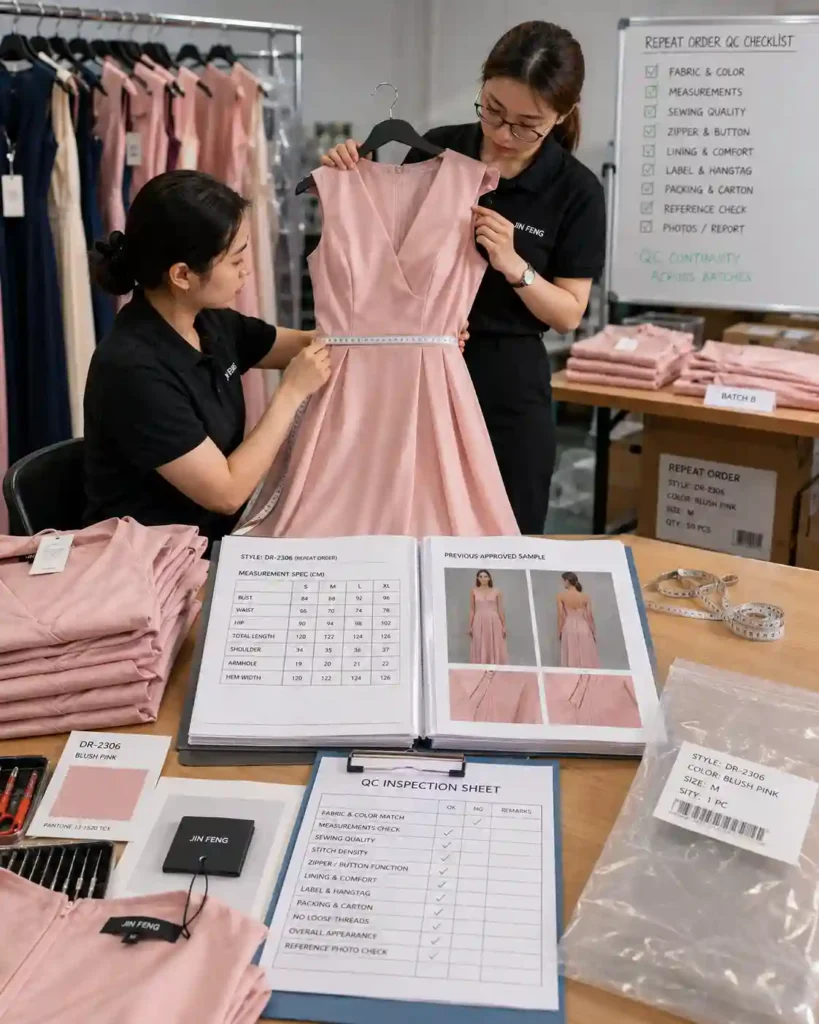
Patterns, measurements, fabric references, color records, trim details, workmanship instructions, packing rules and quality notes are retained for approved programs.
These records support color extensions, repeat orders, seasonal continuation and multi-batch delivery without relying on fragmented email history.

Records do not remove the need for review. Reorders still require confirmation of material availability, dye lot, price, quantity, color, packaging and delivery window.

Continuity comes from controlled reuse and documented differences, not from assuming every repeat order is identical.

Womenswear Categories Built for Online Merchandising

Jinfeng Apparel supports connected womenswear assortments rather than isolated garments. Each category is reviewed through selling occasion, visual impact, fabric behavior, fit sensitivity, production complexity, packing needs and reorder potential.

Dresses and Occasionwear

Mini, midi and maxi dresses can be developed across party, cocktail, evening, wedding guest, graduation, resort and date-night directions. Key controls include bust support, waist placement, hip ease, slit height, hem balance, lining coverage, fabric drape and movement. Satin, chiffon, mesh, lace, crepe, velvet and sequin styles require different cutting, sewing, pressing and packing methods.

Bodycon and Corset

Bodycon and corset-led styles depend on controlled stretch, recovery, cup position, boning placement, neckline stability and size grading. Development checks how the garment behaves while standing, sitting and moving. The sample stage is used to correct bust, waist and hip balance before the approved structure becomes a bulk-production reference.

Skirts and Bottoms

Mini, midi, maxi, pleated, ruched and slit skirts add cross-selling depth to ecommerce assortments. Waistband stability, zipper placement, hip fit, lining, pleat control, slit height and hem balance affect both product photography and daily wear. Matching fabric groups can also connect skirts with tops or jackets for coordinated collection stories.

Jumpsuits and Rompers

Jumpsuits require more than dress pattern logic. Torso length, waist position, rise, crotch depth, hip ease, leg shape, zipper access and movement must work together. Fit review includes sitting, walking and arm movement, while size grading must protect vertical proportions across the full range.

Matching Sets

Matching sets allow brands to sell pieces together or separately, increasing styling flexibility and average order value. Production control covers shade matching, shared fabric lots, top-to-bottom proportion, waistband and closure compatibility, coordinated labels, separate SKU identification and packing rules for set or individual sales.

Fashion Tops

Corset tops, crop tops, bodysuits, camisoles and statement tops can extend the same visual language used in a dress program. Development focuses on neckline coverage, strap position, cup and boning structure, body length, hem stability, closure access and compatibility with skirts or trousers within the assortment.

Building a Commercial Ecommerce Collection

A strong collection balances visual impact, repeatability, price structure and replenishment potential. Jinfeng Apparel can organize styles by commercial role so sample priority, fabric planning, MOQ, production allocation and launch timing follow the assortment strategy.

Collection RoleProduct DirectionManufacturing FocusCommercial Purpose
Hero StylesStrong silhouettes, statement fabrics, campaign-led piecesPhoto-ready samples, fit, support structure, visual detailsLaunch campaigns, paid media and brand differentiation
Core SellersProven dresses, skirts, tops and setsSize stability, repeatable construction, dependable materialsConsistent weekly sales and lower reorder friction
Seasonal StylesGraduation, resort, holiday, occasion and event productsCalendar planning, seasonal colors, material bookingCapture time-sensitive demand without late inventory
Color ExtensionsNew shades of approved silhouettesDye-lot control, trim matching, SKU and barcode accuracyExtend proven products and improve repeat revenue
Assortment BuildersCoordinated tops, skirts, jumpsuits and matching setsShared fabrics, proportion, price tiers, packing logicIncrease cross-selling and create a complete collection
Replenishment StylesBestsellers with stable product recordsPattern reuse, fabric recheck, priority productionFaster restock decisions and stronger continuity

Project Information Needed for an Accurate Review

Accurate development and costing depend on more than a reference photo. Eight inputs allow Jinfeng Apparel to assess construction, material direction, MOQ fit, sampling work, production risk, packing requirements and schedule before a formal program begins.

Design Reference

Provide a tech pack, original sample, sketch, line sheet or clear reference images showing front, back and important details. The development team uses these materials to identify silhouette, seams, closure, support structure, trim placement and areas where visual references leave construction decisions open.

Quantity Plan

Share planned units by style and color, including expected size range. MOQ starts from 200 pieces per style and color, while special fabrics, custom colors, trims and packaging may carry separate supplier minimums. A complete quantity plan also supports factory allocation and freight planning.

Fabric Direction

State preferred composition, weight, hand feel, stretch, shine, transparency, drape or benchmark fabric. Where the original material is unavailable or commercially unsuitable, Jinfeng Apparel can compare alternatives by appearance, performance, pattern impact, cost, MOQ and lead time.

Color Plan

List required colors, print directions and whether exact brand shades are needed. Color count affects dyeing minimums, trim matching, production separation, SKU labeling and inspection. Pale colors may also require additional lining, opacity review and cleaner packing controls.

Size Range

Provide the base size, size chart, fit model information and intended market. Bust, waist, hip, length and grade rules are reviewed against the product structure. Extended size ranges may need separate fit assessment where proportions cannot be solved by uniform grading alone.

Trim Requirements

Identify zippers, buttons, hooks, bra cups, boning, elastic, lace, rhinestones, sequins, labels and other visible or structural components. Trim specifications influence sample timing, supplier MOQ, comfort, durability, sewing method and bulk consistency.

Packing Standard

Share main label, size label, care label, hangtag, barcode, polybag, sticker, carton mark and warehouse label requirements. Early confirmation prevents late artwork changes and allows packing materials to arrive before finished garments create a bottleneck.

Launch Window

State photo-shoot date, online launch date, warehouse receiving date and delivery destination. These dates allow the project team to separate sample urgency from bulk delivery requirements and evaluate air, sea or split-shipment options where appropriate.

Fabric and Trim Direction for Premium Womenswear

Materials shape perceived value before workmanship is examined. Jinfeng Apparel evaluates fabric and trims through appearance, fit, comfort, production behavior, cost, MOQ and repeat-order stability, then connects material decisions to pattern and construction requirements.

Appearance Under Camera

Satin can show directional shine, pressure marks and shade differences under studio lighting. Mesh can appear more transparent in backlit imagery than in a sample room. Lace placement changes between cut panels, while sequins can create glare, uneven density or dark gaps at seams. Fabric approval therefore considers photography, close-up detail, movement and bulk handling rather than relying on a supplier swatch alone.

Color review may include swatches, color cards, lab dips or bulk approvals depending on the project. Lining, zipper tape, sewing thread and visible trims are matched to the approved outer fabric. For pale colors, opacity and stain risk receive additional attention because small defects become highly visible in ecommerce imagery.

Drape, Stretch and Recovery

A fabric’s composition does not fully predict garment behavior. Weight, width, knit density, stretch direction, recovery, drape and surface friction determine whether a silhouette hangs cleanly, fits closely or distorts after wear. Bodycon dresses require controlled recovery; bias-cut satin needs stable cutting and seam handling; wide skirts require sufficient drape without unwanted bulk.

Substituting a fabric can change the pattern. A firmer satin, softer jersey, heavier ponte or more elastic mesh may alter ease, neckline support, seam tension and finished length. Material alternatives are compared before approval so cost adjustments do not silently create fit or quality problems.

Lining and Internal Support

Lining is selected for coverage, comfort, movement, color compatibility and construction stability. White graduation dresses, mesh panels, lace bodices and sequin surfaces often need different lining strategies. Structured products may also use cups, boning, elastic, underwire, anti-slip tape or reinforcement at closures and strap points.

Internal components are not treated as invisible extras. Cup shape, boning position, elastic tension and lining stretch affect bust support, neckline security and wearer comfort. Sample review confirms whether the internal structure performs without creating ridges, asymmetry, pressure points or visible distortion.

Decorative and Branded Trims

Zippers, hooks, buttons, sliders, rhinestones, bead chains, lace trims and sequins are checked for appearance, function, safety, sewing compatibility and supplier consistency. Heavy decorative elements may require reinforcement; exposed metal can affect comfort; sequin seams need protection; custom trims may introduce new minimums and longer development time.

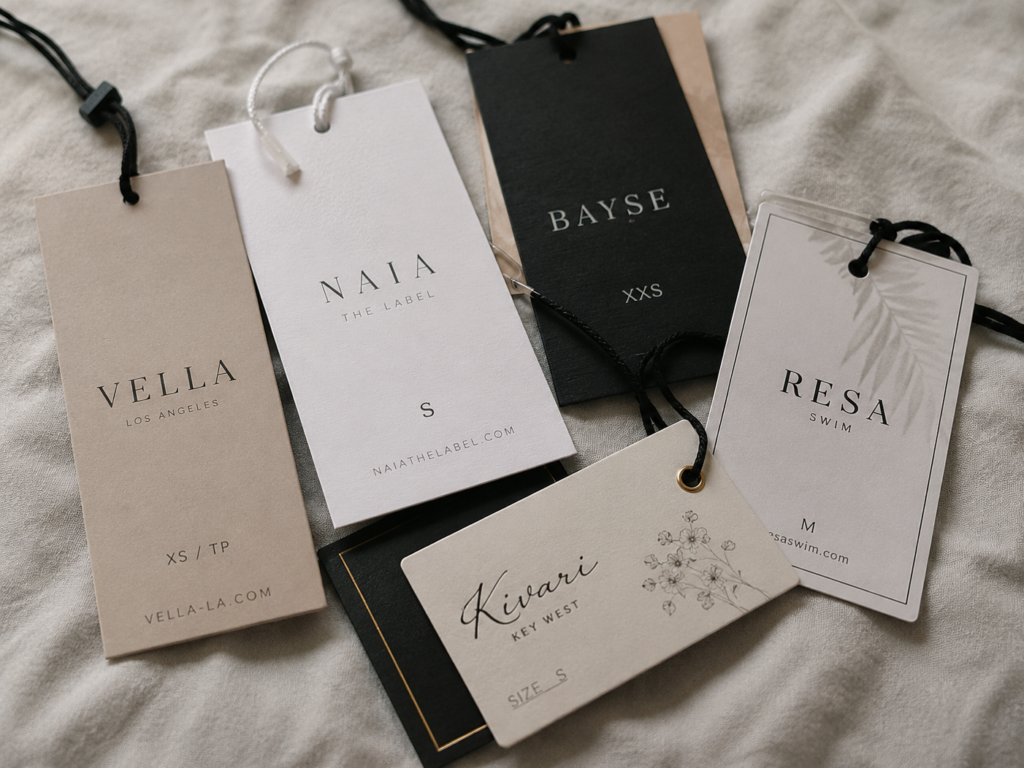
Brand trims include woven labels, printed care labels, size labels, hangtags, barcode stickers, polybags and carton marks. Artwork, dimensions, placement and material are approved before bulk packing. A premium product loses credibility when the garment is strong but labeling and presentation are inconsistent.

Fit Engineering Designed to Reduce Online Returns

Fit quality is a commercial control point for online fashion. Jinfeng Apparel uses pattern analysis, sample fitting, measurement review, grade rules and bulk checks to protect silhouette, comfort and size consistency across dresses, jumpsuits, skirts, tops and sets.

Bust and Neckline Control

Bust shaping is reviewed through upper bust, full bust, under-bust, cup position, neckline depth, armhole coverage and closure tension. Strapless, corset, halter, cut-out and deep-neck styles require additional support decisions. A garment can match flat measurements yet feel insecure when moving, so fit review includes posture and movement rather than static photos alone.

Sample feedback is translated into pattern actions: adjusting dart intake, side seams, cup placement, strap position, boning length, neckline shape or elastic tension. Approved changes are recorded in the pattern, size chart and PP comments before grading and bulk production.

Waist, Hip and Ease

Bodycon, low-waist, ruched and fitted silhouettes require controlled balance between stretch and garment measurements. Excess negative ease can create seam stress, transparency or size complaints; too much ease weakens the intended shape. Woven dresses need different hip and movement allowances from stretch jersey or power mesh.

Waist placement also changes visual proportion. High, natural and low-waist designs are checked against torso length, skirt volume and intended styling. For matching sets, top length and bottom rise are reviewed together so the outfit works as a coordinated look rather than two unrelated pieces.

Length and Movement

Mini length, slit height, maxi sweep, jumpsuit rise and trouser length influence wearability and return risk. The same numerical length can look different across body heights and silhouettes. Fit comments therefore identify the measuring point, intended coverage and movement requirement instead of using vague notes such as “make it longer.”

Jumpsuits receive special attention to torso length, crotch depth, waist position and sitting comfort. Skirts and dresses are reviewed for hem balance, side seam drop and lining length. Photo-ready proportions must remain wearable beyond a studio pose.

Size Grading and Bulk Control

Grade rules define how key points change between sizes. Bust, waist, hip, strap, neckline, armhole, garment length and rise may not increase at the same rate. Jinfeng Apparel can work from client grade rules or develop a structured size range for review, then use fit samples and measurement records to confirm the base before bulk grading.

During production, size stability is supported through pattern-version control, fabric relaxation where required, cutting checks, inline measurement, finished-garment measurement and comparison with the golden reference. Measurement tolerance is defined by product structure rather than applying one arbitrary tolerance to every point.

Sampling Stages That Create a Production Standard

Sampling is a controlled decision process, not a request for one perfect garment. Each stage answers a different question, and the approved information must move into patterns, measurements, materials, workmanship notes, labels and packing instructions before bulk production begins.

o.

Sample StageMain PurposeKey Review PointsProduction Output
First SampleValidate structure and initial material directionSilhouette, construction, fabric behavior, major proportionsFirst correction list and revised pattern direction
Fit SampleConfirm body fit and movementBust, waist, hip, neckline, straps, length, comfortUpdated measurements, fit notes and pattern changes
Revised SampleVerify agreed correctionsFit changes, fabric, trims, workmanship, visual balanceRevised sample record and approval status
Photo-Ready SampleSupport campaign and product contentCamera appearance, styling, finishing, movementApproved presentation reference and remaining bulk notes
PP SampleLock the bulk-production standardFinal fabric, color, trims, measurements, labels, packingProduction approval, BOM, workmanship and QC references
Golden SamplePreserve the comparison standardApproved appearance and constructionPhysical reference for production, QC and repeat orders

Jinfeng Apparel operates 2 sample rooms with 7+ senior pattern makers and 20+ sample machinists. Multi-style programs are prioritized by launch date, hero SKU, fabric readiness, construction complexity and photo-sample requirement. Important revisions are documented rather than left inside chat messages, reducing the risk of production following an obsolete sample or measurement file.

Sample cost and timing are assessed by style complexity, fabric availability, special trims and the number of required versions. Corset, sequin, lace, cut-out, structured jumpsuit and evening styles need more development work than straightforward garments. A formal schedule is confirmed after project review rather than promising one timing standard for every style.

Multi-Style Sampling Without Losing Version Control

Established ecommerce brands commonly develop 10 to 30 styles in one program. Jinfeng Apparel groups samples by material, pattern complexity, trim family and launch priority, then tracks each style through revision and PP approval instead of treating the collection as one unstructured queue.

Style Priority Groups

Hero campaign products, early photo samples, proven repeat silhouettes and lower-risk core styles are separated by priority. A visually important corset dress may start before a straightforward skirt, while a material-dependent sequin style may wait for trim confirmation. Priority reflects the launch plan, not whichever style was discussed most recently.
  • Launch date and photography need
  • Hero SKU status
  • Fabric and trim readiness
  • Pattern and construction complexity
  • Expected bulk quantity

Fabric Family Groups

Styles sharing satin, jersey, mesh, lace, crepe or sequin materials can be reviewed together for color, width, stretch, lining, cutting method and supplier minimums. Grouping improves material comparison and helps identify where one approved fabric can support several products without forcing unsuitable consistency across different silhouettes.
  • Shared fabric references
  • Lining and color matching
  • Dye-lot and shade control
  • Material MOQ planning
  • Pattern impact from stretch or drape

Revision Tracking

Each style carries its own sample version, fit comments, material approval, trim status, measurement update and next action. A change to neckline, skirt length, cup, boning, zipper, color or label is recorded against the correct style and version. Revision tracking prevents one approved comment from being applied to the wrong color or similar-looking garment.
  • Sample version and date
  • Issue category and action
  • Pattern and cost impact
  • Approval owner
  • Next sample or PP status

PP Readiness

A collection does not need every style to reach PP approval on the same day. Jinfeng Apparel can release approved style groups into production planning while later styles continue development, provided shared materials, packing and delivery logic remain controlled. Such staging protects key launch dates without bypassing PP approval.
  • Final pattern and measurements
  • Approved fabric and trims
  • Workmanship instructions
  • Label and packing files
  • Bulk quantity and schedule

Multi-SKU Production Controls for Complex Assortments

A 20,000 to 80,000-piece ecommerce order may contain dozens of style, color and size combinations. Jinfeng Apparel separates product records and physical goods by SKU while keeping shared collection rules visible across sourcing, production, QC, packing and shipment planning.

Style Separation

Every style is linked to its approved pattern, BOM, workmanship notes, sample version, quality checklist and packing instruction. Similar-looking garments are not managed under one generic production sheet because small differences in neckline, lining, zipper, length or trim can create large bulk errors.

Color Control

Color approvals, dye lots, lining, zipper tape, thread and visible trims are matched by style and color. Bulk materials are separated where shade differences could appear. Pale shades receive additional cleanliness and opacity attention, while dark satin, velvet and coated surfaces are checked for directional shine and pressure marks.

Size Identification

Cut bundles, sewing records, finished measurements, size labels and packing are managed by size. Grade rules and measurement tolerances remain linked to the approved pattern. Size ratios are confirmed before packing so an accurate total quantity does not hide an incorrect commercial size mix.

SKU and Barcode

SKU lists connect style, color, size, barcode, hangtag and polybag sticker. Artwork and data are checked before printing, then verified during packing. Barcode accuracy is treated as an inventory requirement, not only a graphic element, because a wrong code can disrupt warehouse receiving and ecommerce stock records.

Factory Allocation

Styles are allocated according to fabric handling, construction, workmanship, volume, delivery sequence and QC demand. Allocation decisions are made after sample and material review. Complex lace, corset or sequin products are not automatically placed beside straightforward woven or knit styles simply because they share a launch date.

Shipment Waves

Urgent hero styles, priority colors or early replenishment can be considered for a first shipment while the remaining assortment follows by air or sea. Shipment splitting is planned against carton ratios, warehouse receiving, freight cost and complete SKU visibility so speed does not create missing-size or mixed-carton problems.

Capacity Allocated by Product Complexity and Timing

Capacity is useful only when the right production resources are assigned to the right styles. Jinfeng Apparel combines 6 owned factories, 10+ long-term production partners, 18+ sewing lines and 6+ flexible lines within a wider monthly capacity of 100,000+ pieces.

Owned Factory Base

Owned factories provide the operational base for production planning, quality procedures, private-label packing and repeat-order continuity. Product assignment considers category, material, construction and required workmanship. The goal is not to fill whichever line is open; the goal is to place each style where execution risk can be managed.

Specialist Partners

Long-term partners support additional capacity and specialist product groups. Approved patterns, samples, BOMs, measurement charts, workmanship instructions, QC checklists and packing files remain the control language. Partner use is coordinated through the project system rather than passed on as an unmanaged external order.

Flexible Lines

Flexible lines support mixed programs, priority styles and selected replenishment needs where the style, material and quantity fit the schedule. Their value comes from controlled switching and documented standards. Complex garments still require adequate preparation, and flexibility does not replace sample approval or material readiness.

Material Booking

Production capacity cannot compensate for unavailable fabric or trims. Material booking follows approved specifications, color quantities, supplier MOQ and delivery timing. Custom dyeing, special lace, sequin fabric, molded components and branded packing need earlier confirmation than standard stock materials.

QC Workload

QC capacity is planned with style complexity and order size. A multi-style program with many colors, detailed trims and individual barcodes requires more checkpoints than a single straightforward product. Inspection windows are included in the production plan instead of treating quality review as an activity added after sewing is complete.

Seasonal Windows

Graduation, resort, holiday party, prom and event collections need earlier material and production decisions because missed demand cannot always be recovered with a late shipment. Jinfeng Apparel can prioritize key styles and evaluate split delivery, while approval delays and major design changes are reflected in the revised schedule.

Bulk Consistency Locked From PP Approval to Packing

Sample-to-bulk consistency is built through approved references, controlled files and inspection points. Jinfeng Apparel uses PP approval, golden samples, material records, production instructions, measurement standards and packing requirements to keep one strong sample from becoming an inconsistent production run.

  • Material and Cutting Control

    Bulk fabric is checked against the approved direction for color, surface, stretch, weight, width, transparency and visible defects. Relevant materials are relaxed or handled according to fabric behavior before cutting. Marker planning considers direction, print placement, lace motifs, nap, sequins, large hems and multi-layer construction.

    Cutting inspection verifies style, color, size, panel count and visible placement requirements before bundles enter sewing. Directional satin, velvet, lace, stripes, prints and sequins require more control than uniform basic fabrics. Early detection avoids repeating a cutting error across hundreds of pieces.

  • Sewing and Measurement Control

    Production teams work from the approved sample, pattern, BOM, operation notes and measurement files. Inline checks focus on seam quality, stitch type, tension, symmetry, trim placement, zipper function, lining, cup and boning position, ruching, lace joins and other style-specific risks.

    Measurements are checked at defined stages rather than only after finishing. Early measurement control can identify pattern, cutting or sewing drift while corrective action remains possible. Finished garments are compared with approved tolerances and the golden reference before packing.

  • Finishing and Packing Control

    Pressing methods are adapted to the material. Satin, velvet, sequins, coated fabrics, lace and mesh can be damaged by excessive heat, pressure or direct contact. Finishing review includes shape, surface, thread trimming, stains, closure function, lining, labels and presentation.

    Packing inspection verifies style, color, size, barcode, polybag sticker, hangtag, fold method, carton ratio and carton marks. Packing instructions are treated as a production standard because warehouse accuracy and unboxing presentation are part of the finished ecommerce product.

Workmanship Controls for High-Impact Womenswear Details

Premium womenswear often concentrates risk in small construction areas. Jinfeng Apparel reviews workmanship by the product’s visible and structural demands so seams, support, embellishment and finishing reinforce the design rather than merely holding the garment together.

Corset Structure

Corset and bustier styles require balanced cup position, boning placement, seam shaping, closure strength and neckline security. The structure is tested through fitting and movement, not only flat measurement. Internal channels, lining and seam allowance must remain comfortable while supporting the intended silhouette.
  • Cup alignment and symmetry
  • Boning length and endpoint protection
  • Waist shaping and closure tension
  • Lining coverage and seam comfort

Lace and Mesh

Lace and mesh need careful panel placement, edge control, seam reinforcement and lining decisions. Lace motifs may require matching or visual balance, while power mesh and fine mesh behave differently under stretch. Transparency is reviewed on-body and under lighting to avoid unexpected exposure in product photography.
  • Motif placement and joining
  • Mesh stretch and recovery
  • Edge rolling or fraying control
  • Lining and coverage confirmation

Sequin and Embellishment

Sequin surfaces can cause skipped stitches, broken needles, bulky seams, skin abrasion and damage during pressing or packing. Seam paths may require sequin removal or protective handling. Rhinestones, bead chains and other embellishments also need attachment-strength review and reinforcement where garment movement creates stress.
  • Sequin density near seams
  • Attachment strength
  • Lining and skin protection
  • Surface protection in packing

Ruching and Draping

Ruching, gathers and draped sections must remain balanced across sizes and production units. Uneven tension can distort side seams, change length or create inconsistent visual volume. Stitching, elastic control, panel notches and sample references help production teams reproduce the intended arrangement.
  • Gather ratio and placement
  • Left-right symmetry
  • Seam and length balance
  • Bulk visual consistency

Quality Controls Protecting Reviews, Returns and Margin

Quality control becomes commercially meaningful when each check connects to a possible return, complaint, warehouse issue or lost selling window. Jinfeng Apparel applies product-specific checks from materials through packing, supported by 15+ QC inspectors and approved production references.

Fit and Measurement

Incorrect bust, waist, hip, length, strap or rise measurements create immediate fit complaints and inconsistent reviews. Controls include pattern versions, size charts, grade rules, cutting measurements, inline checks, finished-garment measurement and golden-sample comparison. High-risk points are selected according to the garment rather than copied from a generic checklist.

Fabric and Comfort

Unexpected transparency, rough sequin edges, unstable stretch, shrinkage, dye transfer or uncomfortable internal support can turn a visually strong style into a return problem. Fabric, lining, elastic, cups, boning, zippers and trims are reviewed for the intended wear situation and product category.

Closure and Durability

Zippers, hooks, buttons, sliders, straps and seams are checked for function, placement and attachment. High-tension areas such as side zippers, corset backs, narrow straps, cut-outs and fitted hip seams receive added attention. A closure failure after one wear has a larger brand cost than the component itself.

Visual Finish

Uneven hems, twisted side seams, puckering, shade variation, poor pressing, loose threads, stains and asymmetrical details are highly visible in online reviews and return photos. Final inspection compares appearance with the approved reference and style-specific workmanship expectations.

Label Accuracy

Incorrect fiber content, care information, size labels, hangtags or barcodes can create compliance, warehouse and inventory problems. Label artwork and placement are confirmed before production, while packing inspection verifies the correct label set for each style, color and size.

Packing Accuracy

A correct garment in the wrong polybag or carton can still become unavailable for sale. Packing control checks SKU, barcode, color, size, fold method, quantity ratio, carton mark and packing-list consistency. Client-appointed AQL or third-party inspection can also be coordinated according to the project.

Ecommerce-Ready Private Label and Packing Systems

Private-label completion affects brand presentation, inventory accuracy and warehouse receiving. Jinfeng Apparel manages garment labels, product identification, individual packing, carton organization and shipment records as part of the manufacturing program rather than as an afterthought.

Brand Labels

Main labels, size labels and care labels are produced from approved artwork, dimensions, material and placement. Care information should match the actual fiber content and garment construction. Label attachment is reviewed for position, orientation, comfort and consistency across styles and sizes.

Hangtags and Tickets

Hangtags, price tickets, spare-button bags and brand cards can be attached according to the approved method. String, pin, loop and placement are selected to avoid fabric damage. Style, color, size and product information are checked against the final SKU list before packing begins.

Barcode and SKU

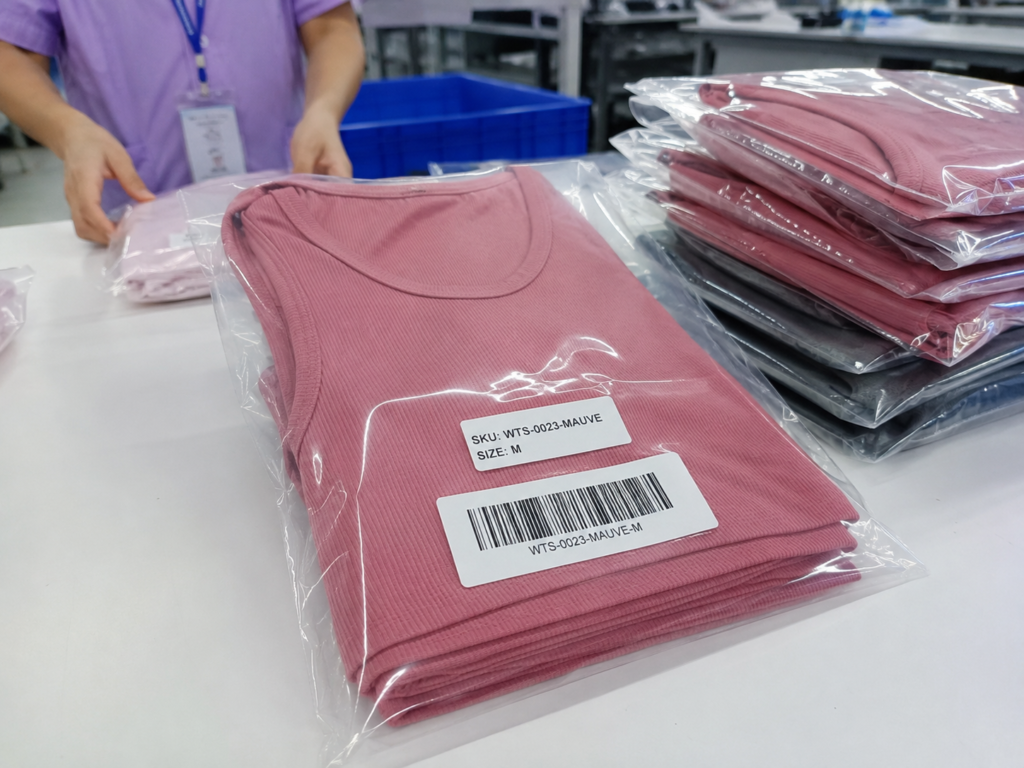
Barcode stickers and SKU labels connect the physical garment with ecommerce and warehouse systems. Files are organized by style, color and size, then checked during packing. Changes to barcode data or sticker placement are locked before mass printing to prevent expensive relabeling.

Individual Packing

Polybags, tissue, dust bags or other approved individual packing protect the garment and support presentation. Fold method, warning print, ventilation, sticker placement and garment protection are adapted to the product. Sequin, velvet, coated and structured styles may need additional surface or shape protection.
Carton Configuration
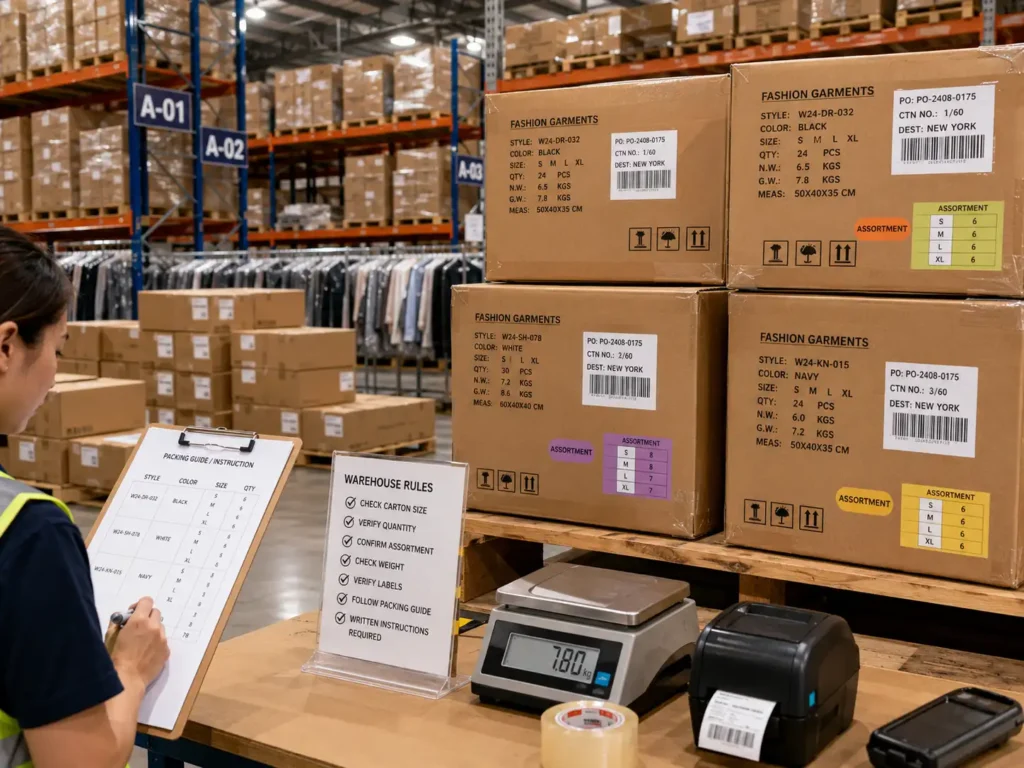
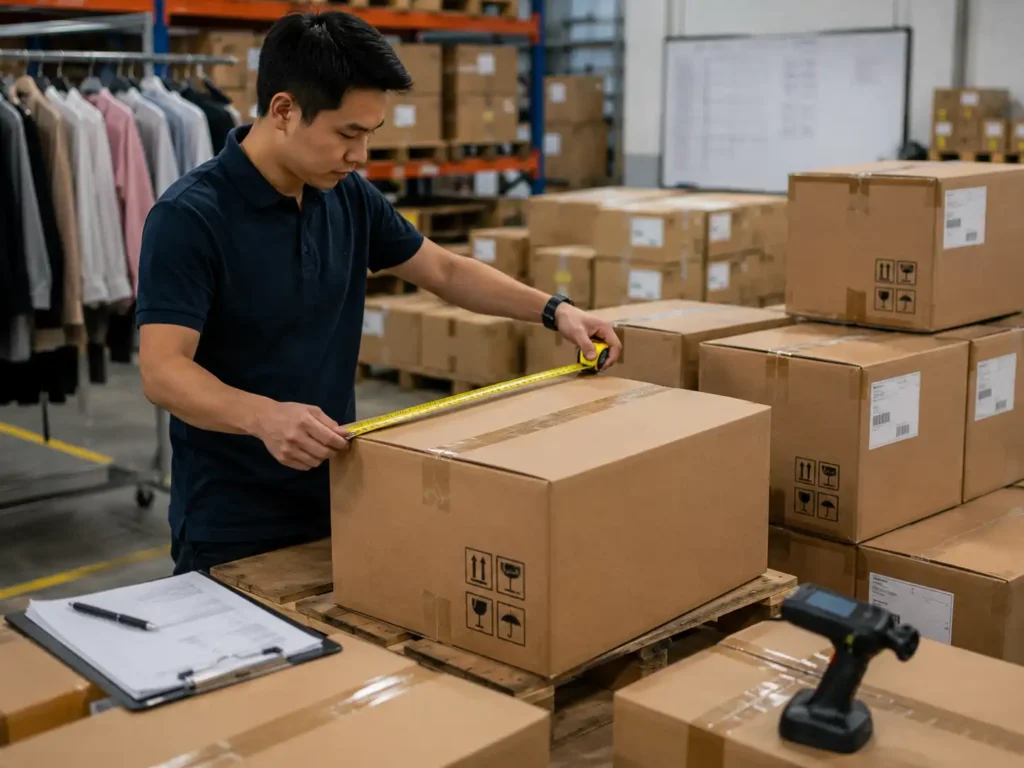
Cartons can follow solid-size, mixed-size or approved color-size ratios. Carton marks, style information, quantities, dimensions, net weight and gross weight are matched with the packing list. Accurate carton configuration helps the receiving team plan inventory intake and locate priority SKUs.

Warehouse Requirements

Jinfeng Apparel can work with warehouse labels, carton identifiers, client-appointed forwarders and shipment documentation. Requirements should be provided before packing materials are ordered. Late changes to carton ratios, barcode formats or warehouse labels can affect cost and the planned dispatch date.

Launch Calendar Planning From Sample to Warehouse

Delivery planning begins with the commercial date and works backwards through warehouse receiving, freight, packing, inspection, bulk production, PP approval, sample revision and material confirmation. Jinfeng Apparel separates each milestone so a delayed decision can be measured against the final launch risk.

Sample and Content Milestones

A photo-ready sample may be required well before bulk production. Hero styles can be prioritized according to campaign dates, while other products follow the collection sequence. Sample timing depends on construction, material availability, trim development and revision scope, so the confirmed plan is set after style review rather than using one promise for every garment.

For a multi-style collection, sample deadlines are organized by priority and readiness. A style waiting for custom lace or a molded component cannot follow the same schedule as a garment using approved stock fabric. The progress tracker identifies which styles are in pattern, sewing, revision, approval or PP preparation.

Bulk and Delivery Milestones

Bulk planning begins after PP approval, material confirmation, quantity and packing instructions are complete. The production window includes material arrival, cutting, sewing, inline checks, finishing, final inspection and packing. Significant design or packaging changes after approval require a revised schedule.

Freight can be evaluated through express, air, sea or an air-and-sea split. A priority shipment may carry hero styles, early colors or urgent sizes, while the main volume follows by sea. Final selection depends on destination, carton volume, warehouse receiving, cost and the client’s freight arrangements.

Information Needed to Protect Timing

Brands should provide the photo-shoot date, online launch date, warehouse receiving deadline, target market, delivery location and preferred trade term. Jinfeng Apparel can coordinate EXW, FOB, CIF, DAP and project-assessed DDP arrangements, or work with a client-appointed forwarder.

The schedule also depends on timely feedback, sample approval, material decisions, payment and final packing data. A transparent milestone plan provides a more reliable launch framework than an unsupported claim of the fastest possible production.

MOQ and Cost Planning for Commercial Collections

Jinfeng Apparel’s MOQ starts from 200 pieces per style and color. The final production structure depends on fabric availability, color development, trims, construction, size range, packing and schedule. Cost planning focuses on protecting brand-level appearance while removing unnecessary complexity.

MOQ per Style Color

One style in black at 200 pieces can be evaluated as a standard unit. One style split into black 100 pieces and ivory 100 pieces does not normally satisfy 200 pieces per color. A collection with many styles can still be developed, but every style and color must be planned against material and production requirements.

Fabric Minimums

Stock fabrics in available colors are more likely to support the standard production structure. Custom dyeing, custom weaving, special lace, sequin fabric, prints, certified materials and unusual widths may carry separate supplier minimums. Material selection should therefore be reviewed together with the color and quantity plan.

Construction Cost

Corset structure, cups, boning, double layers, lining, ruching, lace placement, sequins, hand embellishment, complex cut-outs, wide hems and special pressing increase labor, wastage or inspection work. Quotation is built from the approved construction rather than assigning one generic price to visually similar garments.

Size and Color Count

A wider size range increases pattern, grading, cutting, measurement and packing control. More colors can create separate material lots, trim matching, barcode files and lower efficiency within each run. Size ratios and color concentration can be adjusted where the sales plan supports a more efficient structure.

Packing and Delivery

Custom labels, hangtags, barcodes, individual polybags, tissue, dust bags, carton ratios, warehouse labels, testing and delivery terms contribute to landed cost. Packing should be designed early so the quotation includes the real brand requirement instead of adding major costs after PP approval.

Cost Optimization

Options can include comparable fabric alternatives, construction simplification, trim substitution, color consolidation, shared materials across styles, improved cutting layout, planned size ratios and split delivery. Each option is evaluated against appearance, fit, comfort, durability and brand positioning; cost reduction is not treated as permission to weaken the product.

Repeat Orders Built on Controlled Product Records

Bestseller replenishment depends on more than finding the old invoice. Jinfeng Apparel retains approved product records, then confirms new material, quantity, color, packaging and delivery conditions before releasing a repeat production order.

What We Retain

Approved pattern versions, grade rules, measurement charts, BOMs, fabric references, color records, trim details, workmanship instructions, label artwork, packing requirements, QC notes and golden samples form the reorder reference. These records reduce repeated explanation and help new production teams follow the established standard.

Retained files also support same-pattern color extensions, coordinated collection development and annual product planning. A proven silhouette can be extended into new colors or related products while keeping the original fit and construction logic visible.

What We Reconfirm

Fabric availability, dye lot, price, stretch, weight, width, shrinkage, trims, labels, barcodes, quantity, size ratio, packing and freight are reconfirmed for each repeat order. A new fabric or different stretch may require pattern review or a revised sample even when the silhouette is unchanged.

Urgent replenishment is assessed against material readiness and production capacity. Priority SKUs can be considered for staged production or split shipment, but the schedule remains tied to approved inputs and quality control rather than bypassing the process.

How Continuity Protects Growth

Consistent replenishment protects product ratings, size expectations and brand trust. It also gives merchandising teams more confidence when extending a proven style into seasonal colors, new lengths or coordinated sets.


Jinfeng Apparel supports long-term brand cooperation, seasonal collection development, repeat orders and multi-batch production through documented continuity.

Representative Ecommerce Collection Production Case

The following anonymized profile reflects Jinfeng Apparel’s current order structure for established ecommerce programs. Commercial details are adjusted to protect brand confidentiality while keeping the style count, volume, development challenges and production controls representative.

Collection Scope

A U.S. premium ecommerce womenswear label prepared an 18-style seasonal program totaling 42,600 pieces. The assortment included 9 dresses, 3 matching sets, 2 jumpsuits, 2 skirts and 2 corset-led tops. Colors ranged from black and ivory to four seasonal shades, with sizes XS to XL and selected hero styles extended to XXL.

The collection used satin, stretch crepe, power mesh, lace, jersey and sequin fabrics. Individual style quantities ranged from 1,200 to 4,800 pieces, while the strongest projected dress styles carried the deepest size and color plans. Brand labels, care labels, hangtags, barcodes, polybags and warehouse carton labels were included.

Development Challenge

Three commercial risks required early control. First, the ivory satin and mesh products needed better opacity without losing drape. Second, two corset dresses showed cup and boning imbalance during the first fit review. Third, the 18-style launch needed photo samples before all bulk colors and packing materials were ready.

Jinfeng Apparel grouped the program into four sample tracks: campaign hero dresses, corset and support-led styles, shared-fabric core products and lower-risk assortment pieces. Fabric and lining alternatives were compared for opacity, stretch and appearance. Pattern changes corrected cup position, neckline security, waist shaping and skirt balance before PP approval.

Production Control

Bulk production was divided by fabric and construction family rather than by product name alone. Satin and crepe products followed directional cutting and pressing controls; mesh and lace products used specific lining and edge checks; sequin styles received surface-protection and seam-handling instructions. Every style carried its own pattern version, BOM, measurement chart, QC checklist and packing record.

The order was planned in two delivery waves. The first shipment covered 11,400 pieces across campaign styles and priority colors for early warehouse receiving. The second shipment carried the remaining 31,200 pieces after full assortment inspection and packing. SKU, barcode and carton ratios were checked against the approved packing list before dispatch.

Commercial Outcome

The structured approach allowed campaign samples, production approval and warehouse delivery to follow one collection calendar without forcing every style into the same timeline.

Approved pattern, material, color, trim, packing and quality records were retained for potential replenishment and color extension.

The main value was not one headline speed claim. It was the ability to manage 18 styles, multiple fabric behaviors, 42,600 units, six color directions, an XS-XXL size structure and two shipment waves without losing version control between development, production, QC and packing.

Frequently Asked Questions for Premium Ecommerce Brands

Jinfeng Apparel specializes in premium custom womenswear, including dresses, skirts, jumpsuits, matching sets, fashion tops and private-label collections. Strong product areas include party, occasion, bodycon, corset, satin, mesh, lace, sequin, resort, evening and ecommerce-led fashion styles.
MOQ starts from 200 pieces per style and color. Fabric, custom colors, trims, packaging and construction can carry separate minimums. Quantity should be shared by style, color and size so the production structure, material requirements and quotation can be evaluated accurately.
Yes. Development can begin from reference images, sketches, original samples, line sheets or tech packs. Complete size, fabric, trim, quantity and packing information improves accuracy. Where information is incomplete, the team identifies open construction and material decisions before sampling.
Yes. Photo-ready samples can be planned for campaign or product content. Camera appearance, finishing, silhouette and movement are reviewed alongside production feasibility. Materials and construction should remain reproducible in bulk, so a presentation sample does not become disconnected from the product eventually delivered.
Fit control uses pattern versions, base-size review, size charts, grade rules, measurement tolerances, fit samples, cutting checks, inline measurement, finished-garment measurement and golden-sample comparison. Key points vary by style and may include bust, waist, hip, neckline, strap, length, rise and slit height.
Yes. Multi-style programs are grouped by launch priority, fabric family, pattern complexity, trim readiness and PP status. Every style retains separate pattern, BOM, measurement, sample, quality and packing records, while shared collection materials and delivery milestones remain centrally coordinated.
Consistency is managed through PP approval, golden samples, approved fabric and trim references, final patterns, graded measurements, workmanship instructions, QC checklists and packing files. Material, cutting, sewing, measurement, final garment and packing checks are connected to the approved product standard.
Yes. Jinfeng Apparel supports main labels, size labels, care labels, hangtags, barcodes, SKU stickers, individual polybags, carton marks and warehouse labels. Artwork, data, placement and carton ratios must be confirmed before packing materials and mass labeling proceed.
Yes. Sample, revision, PP, material, bulk, QC, packing and shipment milestones can be planned backwards from photo-shoot, launch and warehouse dates. Final timing depends on style complexity, material readiness, approval speed, packing requirements and freight method.
Yes. Jinfeng Apparel supports NDA-based cooperation and protects tech packs, patterns, samples, trims, labels, packing files and unpublished designs. Approved patterns, BOMs, material references, measurements, QC notes and packing records can be retained for repeat orders and seasonal continuation.

Start Your Premium Womenswear Production Project

Share the commercial information behind the collection, not only a single product image.

Kelly and the Jinfeng Apparel project team will review product category, construction, fabric direction, quantity, size range, private-label requirements and launch timing before confirming the most suitable sampling and quotation path. A complete brief makes it easier to identify material risks, clarify open design decisions, calculate cost accurately and build a realistic approval-to-delivery schedule.
Please prepare:

  • Tech pack, reference images, original sample photos, sketch or line sheet
  • Planned quantity by style and color
  • Fabric, lining and trim direction
  • Base size, size chart and intended size range
  • Main label, care label, hangtag, barcode and packing requirements
  • Photo-shoot, online launch and warehouse receiving dates
  • Delivery destination and preferred freight arrangement
  • Any NDA, inspection, testing or documentation requirements

Tell Us About Your Dress Project

Share your product details, estimated quantity and development requirements. Our team will review your project and provide practical OEM/ODM production feedback.

Premium Women’s Apparel Production for Fashion Brands

From dress sample development to bulk production, JF Apparel supports fashion brands with confidential OEM/ODM manufacturing, reliable quality control and scalable production support.

START YOUR DRESS PROJECT

Ready to Develop Your Next Dress Collection?

Share your design concept, product requirements or sourcing plans with our team. We’ll review your project and provide practical feedback on development, materials, MOQ and production.

7-10 Days

Sample Development

200 PCS

Starting MOQ

Fast Response

Professional Follow-Up