 Skip to content
Cross-Size Fit Consistency Solutions
Keep an approved fit balanced from the base size through the full production size range without losing proportion, coverage or design intent.
- 7+ senior womenswear pattern makerssupport fit-sensitive pattern development and correction.
- 2 dedicated sample roomssupport first samples, fit samples, revisions and pre-production confirmation.
- 20+ sample machinistshelp convert pattern changes into measurable garment results.
- Cross-size control connects grade rules, size charts, measurement tolerances, PP samples, Golden Samples and bulk QC.
- Critical areas include bust, waist, hip, shoulder, strap, armhole, neckline, garment length, slit height and crotch length.
- Multi-size production is managed from pattern version through cutting, sewing, measurement, size identification and packing.
Built for Brands Managing Multi-Size Womenswear Collections
Fashion Brand Teams
Product Development Teams
Technical and Fit Teams
Sourcing Offices
Premium Ecommerce Programs
Occasionwear Collections
What Cross-Size Fit Consistency Really Means
Preserve Fit Intent
Control Grade Relationships

Where Fit Commonly Breaks Across the Size Range
Waistline Drift
Bust Balance Changes
Armhole Exposure
Strap Position Moves
Hip Ease Becomes Uneven
Length and Slit Proportion Shift
From Approved Base Size to Controlled Size Range
Cross-size development works best when grading is treated as part of product engineering rather than a final pattern-room task. Jinfeng Apparel links approved fit, grade rules, critical measurement review, revisions and bulk measurement standards into one controlled development sequence.
Start with an Approved Fit Standard
The base size establishes more than chest, waist and hip measurements. It establishes how the garment is intended to sit on the body.
For a bodycon dress, the approved standard may depend on stretch, waist suppression, hip fit and side-seam position. For a halter dress, the relationship between neckline depth, underarm coverage, neck pressure and back position matters. A jumpsuit adds crotch length, waist placement, hip ease and movement allowance.
Before grading, the development team needs a stable reference. Depending on the project, the reference may be an approved sample, fit sample, revised sample, brand size chart, original garment or detailed tech pack.
The base fit should therefore answer several questions:
- Where should the waistline sit?
- How much bust and hip ease is intended?
- How open should the neckline and armhole feel?
- Where should straps begin and end?
- How much movement should the wearer have?
- Where should the hem and slit sit visually?
- Which measurements are critical to the silhouette?
- Which areas are construction-dependent rather than measurement-only?
Only after the fit direction is clear should grading become the next step.
Build Grade Rules Around the Garment
Grading controls how pattern points move between sizes.
The process needs to preserve garment relationships, not simply increase total circumference.
Bust, waist and hip usually receive considerable attention, but many womenswear failures occur elsewhere.
Shoulder width, armhole shape, neckline depth, strap placement, garment length and slit position can influence the finished appearance just as strongly.
For a corset dress, larger bust measurements may require review of support placement rather than only adding width. A slip dress may need strap and neckline review to keep coverage balanced. A maxi dress can require vertical proportion checks so length and slit placement remain coherent. A jumpsuit requires coordinated changes across torso length, waist, hip and crotch.
The final grade logic should match the approved brand size system where one is supplied. Jinfeng can work from client size charts and project requirements while using measurement review and sample feedback to identify areas requiring correction.
The goal is not to create mathematically neat increments. The goal is a size range that still wears like the same design.
Review Critical Points Before Production
Graded measurements need to be checked against garment structure and actual sample behavior.
A change in bust width may influence armhole shape. A change in shoulder or strap position can affect neckline coverage. Hip expansion may alter side-seam balance. Garment length changes may require slit or lining adjustments. Fabric stretch may allow less ease in one construction but create growth risk in another.
Jinfeng reviews fit-sensitive areas through pattern development, sample measurement, fit comments and revision records. When changes affect bulk production, the approved information is transferred into updated patterns, size charts, measurement tolerances, BOM records, sewing instructions and QC requirements.
Cross-size review is especially important before the PP stage because unresolved fit assumptions become much more expensive once cutting and bulk sewing begin.
A technically acceptable base sample therefore needs to become a documented multi-size production standard before production release.
Lock the Standard for Bulk Measurement
Cross-size control continues after pattern approval.
The final pattern version, approved size chart, grade rule, measurement tolerance and pre-production reference need to agree. Production teams then work from the same standard during cutting, sewing, garment measurement and final inspection.
Finished garment measurements can shift because of fabric relaxation, sewing tension, seam construction, pressing or material behavior. Fit-sensitive products therefore require measurement checkpoints rather than relying only on visual inspection.
Jinfeng uses PP sample confirmation, Golden Sample sealing, production instructions, measurement control and QC records to reduce the gap between approved samples and finished bulk garments.
The approved standard can also be retained for repeat orders so future production starts from documented pattern and measurement history rather than rebuilding the fit logic from memory.
Critical Measurements to Control Across Multiple Sizes
Not every measurement carries the same fit risk. The points below show where womenswear proportions often require coordinated review during grading, sampling and bulk inspection.
| Measurement Point | Typical Cross-Size Risk | Fit Control Focus | Validation Stage |
|---|---|---|---|
| Bust | Too tight, excess volume, distorted neckline | Circumference, bust position, upper/under-bust relationship | Fit sample + measurement review |
| Waist | Waistline shifts or loses shaping | Waist level, suppression, body proportion | Pattern correction |
| Hip | Restricted movement or excess looseness | Hip ease, side seam, lower-body silhouette | Fit sample + bulk measurement |
| Shoulder Width | Garment appears too broad or narrow | Shoulder balance, neckline relationship | Pattern review |
| Strap Length | Straps become loose, tight or misplaced | Strap length and attachment position | Fit sample |
| Armhole | Exposure, pulling or restricted movement | Armhole depth, width and bust relationship | Fit review |
| Neckline Depth | Coverage becomes inconsistent | Front depth, bust coverage, support | Fit sample + PP |
| Dress Length | Visual proportion changes | Front/back length, hem balance | Size review + bulk QC |
| Slit Height | Slit appears too high or low | Walking coverage and vertical proportion | Fit sample + measurement QC |
| Crotch Length | Jumpsuit feels tight or drops too low | Rise, torso balance and movement | Fit sample + PP |
Different Womenswear Structures Need Different Grade Logic
Bodycon Dresses
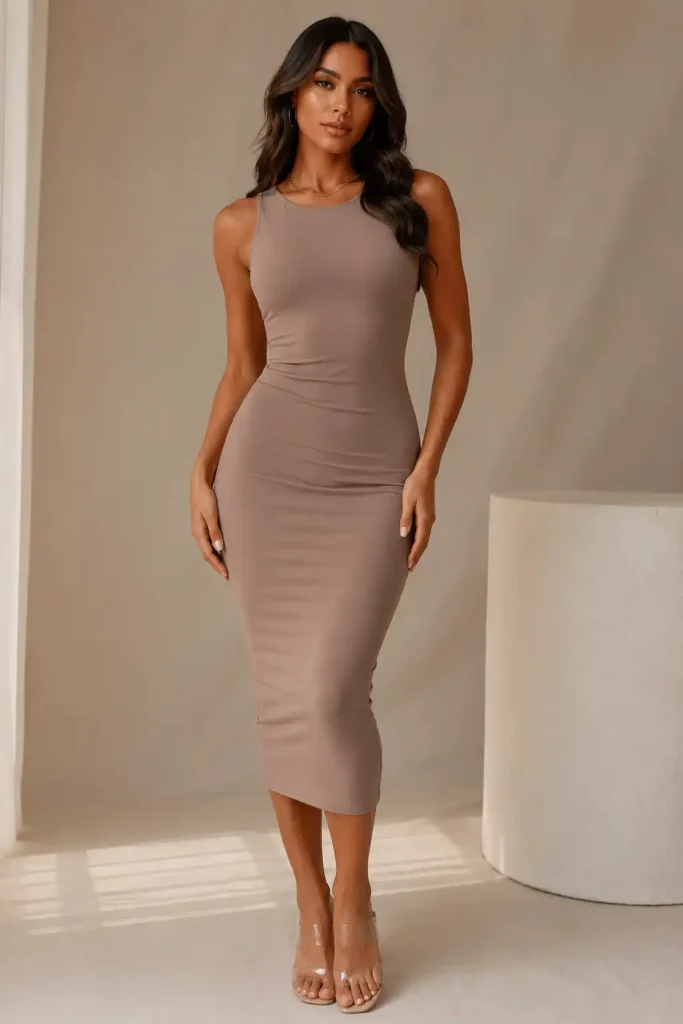
Bodycon fit depends on the relationship between pattern measurements and fabric stretch. Bust, waist and hip progression must work with recovery, negative ease, side-seam balance and finished garment measurement. A mathematically correct pattern can still feel inconsistent if one size stretches comfortably while another grows or pulls excessively. Cross-size review should therefore consider fabric stretch direction, recovery, hip fit, waist shaping and washed or relaxed measurements where relevant.

Corset Dresses
Corset structures need more than increased circumference.
Bust support, cup position, under-bust shape, boning placement, waist compression and neckline security all influence how the garment performs across sizes.
Larger sizes may require proportion and support review rather than simply enlarging the outer shell. Lining, padding, boning and closure construction also affect the finished fit.

Slip Dresses
Slip dresses expose small fit errors because construction is visually clean.
Strap length, bust coverage, neckline position, armhole shape, waist location, hip ease and fabric drape need to remain balanced.
Stretch satin and bias-like drape can further affect garment growth and finished length.
Fit evaluation therefore needs to connect fabric behavior with pattern dimensions.
Halter Dresses
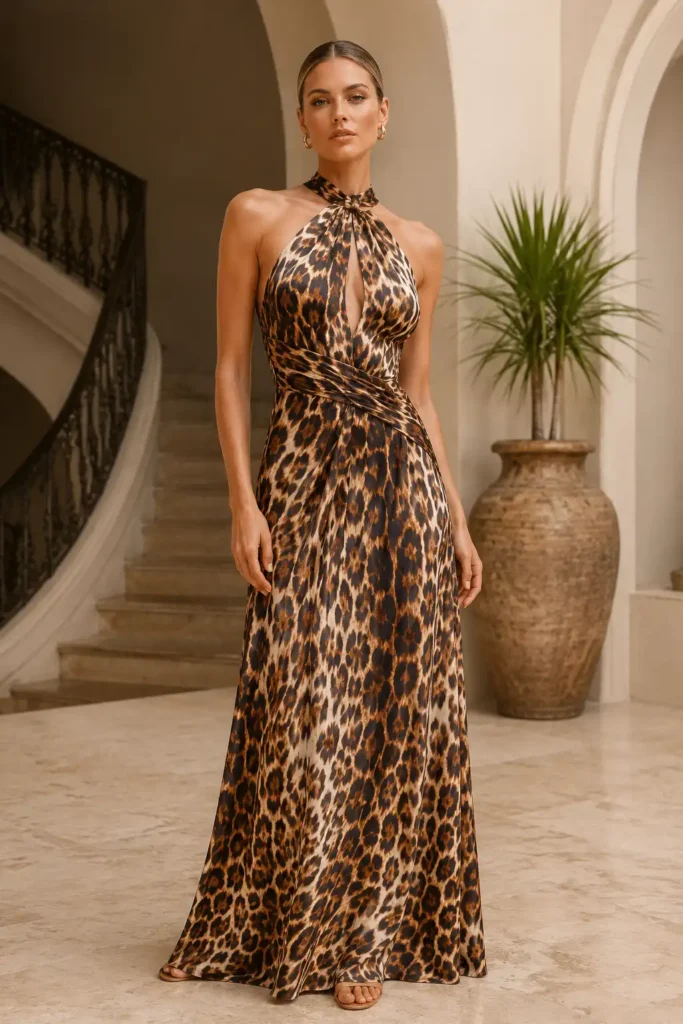
Halter grading changes the relationship between neck pressure, bust coverage, armhole exposure and open-back position.
Increasing body circumference without reviewing those points can create excess underarm opening or unstable bust coverage.
Fit comments should capture both visual appearance and comfort around the neck and upper torso.

Strapless Dresses
Strapless styles rely on bust fit, support structure, cup shape, boning and anti-slip construction. Cross-size progression must keep the garment secure without creating excessive compression. Larger and smaller bust ranges may require more careful support review because the same proportional increase does not automatically preserve stability.
Backless Dresses
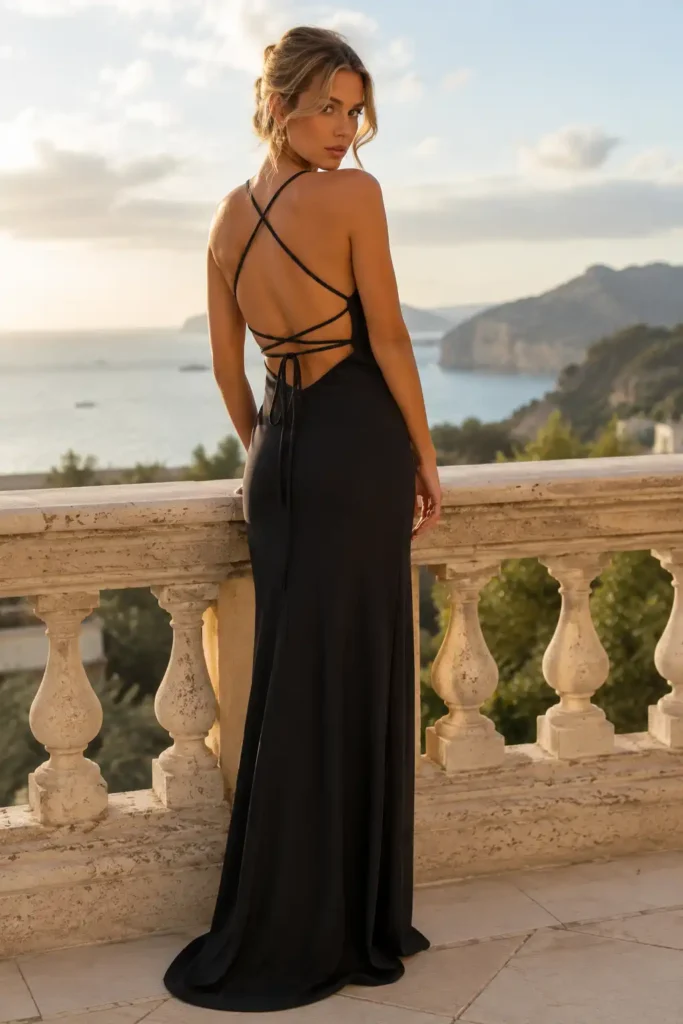
Backless styles shift more responsibility to straps, bust structure and the remaining support points. Back height, strap tension, bust stability, neckline position and underarm coverage must remain coordinated as sizes change. Small pattern changes can noticeably alter security and appearance because less fabric is available to stabilize the garment.
Maxi Dresses
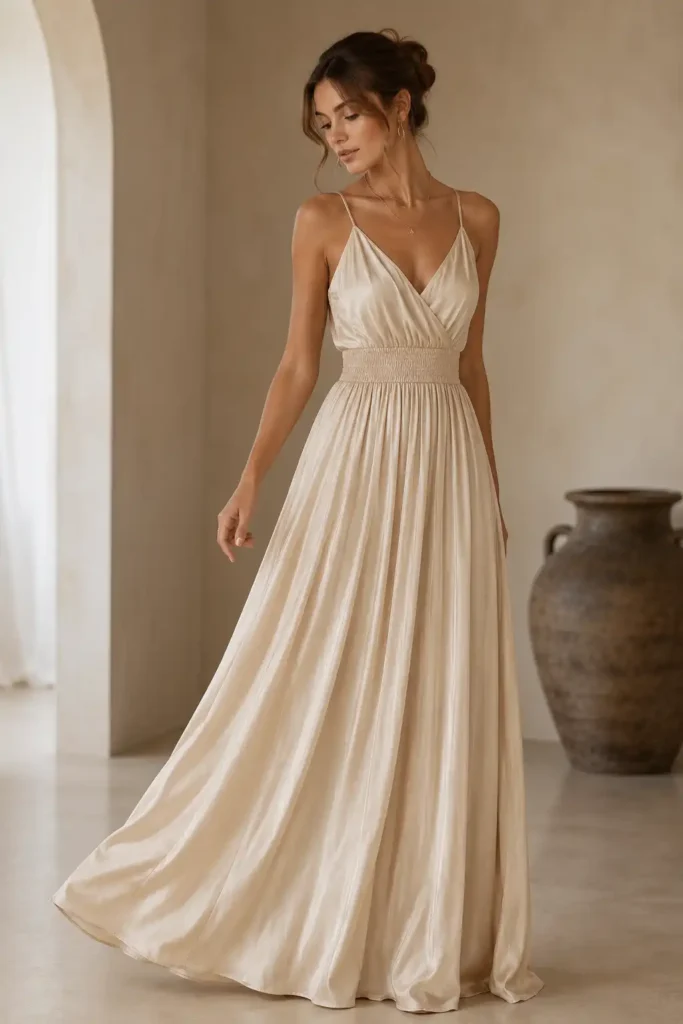
Maxi fit depends strongly on vertical proportion. Garment length, waistline, lining length, hem balance and slit position should be reviewed together. A size range that only increases circumference may still produce a poor result if the slit appears too high, the waist moves visually or the hem becomes inconsistent across the size run.

Jumpsuits
Jumpsuits combine upper-body and lower-body fit in one garment. Bust, waist, hip, torso length, crotch length and movement allowance must work together. Errors can appear as pulling through the rise, dropped crotch, restricted sitting, incorrect waist position or excess lower-body fabric. Cross-size validation is especially valuable before bulk production.
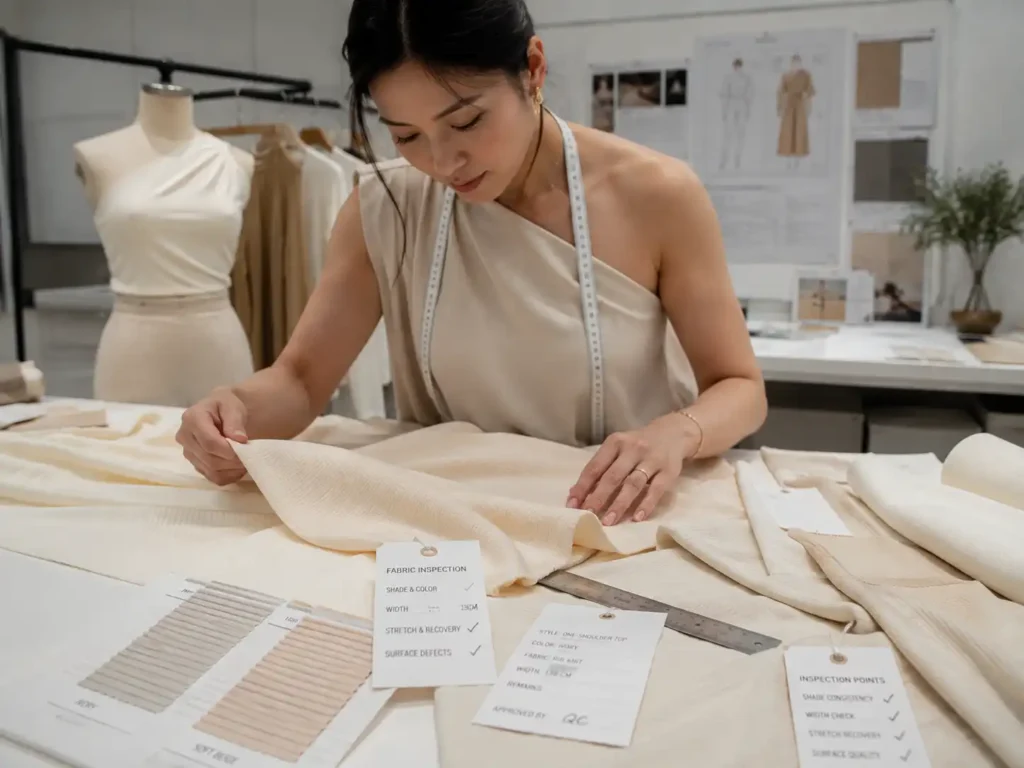
Fabric Behavior Can Change Cross-Size Fit Performance

Stretch Direction

Recovery
Fabric Growth

Shrinkage

Drape and Weight

Lining Interaction
Pattern Development Built Around Womenswear Fit Details
Jinfeng Apparel’s pattern capability is centered on womenswear structures where small proportional errors become visible quickly. The team includes 7+ senior pattern makers, supported by 2 sample rooms and 20+ sample machinists for development, fit review and revision.

Control More Than Bust, Waist and Hip
Bust, waist and hip measurements form the obvious starting point, but dress fit frequently fails because surrounding points are ignored.
Jinfeng pattern review can include upper bust, under bust, high or low waist position, shoulder width, strap length, armhole, neckline depth, front and back length, slit position, lining relationship and crotch length where relevant.
Those points are interpreted according to garment type.
A deep-V dress needs neckline and bust support to work together.
A strapless dress needs bust fit, cup structure and support.
A halter design needs neck comfort, bust stability and armhole coverage.
A jumpsuit requires torso and crotch balance in addition to standard body circumferences.
The goal is a pattern that supports the intended on-body result and can move through revision, grading and bulk production without losing critical construction information.

Convert Fit Comments into Measurable Corrections
Comments such as “too loose,” “waist looks low,” or “neckline opens too much” are not production instructions.
Pattern correction needs the exact location of the problem, the garment measurement, the on-body observation and the required design intent.
Jinfeng can review fit comments alongside garment measurements, front/side/back photos, client size charts and reference information. Adjustments can then be documented through revised patterns and updated measurements.
For cross-border development, clear fit feedback becomes especially important because the brand team and pattern team may not be standing in the same fitting room.
Useful feedback can include standing images, side views, back views, movement photos and close-ups of straps, neckline, armholes, waist position, hip area, slits or closures.
A correction becomes valuable only when it can be repeated in the next sample and later measured in production.

Create a Production-Ready Fit Standard
Pattern work should end in a production standard, not in an endless sequence of samples.
After fit, construction, fabric and measurements are accepted, approved changes need to appear in the documents used for production.
Depending on the project, the production package can include the final pattern version, updated size chart, measurement tolerance, fabric and trim records, BOM, sewing instructions, QC checklist and approved PP comments.
For multi-size programs, the grade rule and size range also become part of the control system.
Jinfeng uses PP sample approval and Golden Sample sealing to create a common reference between merchandising, production, QC and later repeat orders.
A production-ready standard reduces the risk of one team following an old measurement chart while another team works from a revised sample comment.
Fit Samples Turn Pattern Decisions Into Wearable Evidence
Sampling is where measurements, fabric and construction meet the body. Jinfeng treats fit samples and revisions as validation tools rather than decorative showroom pieces.
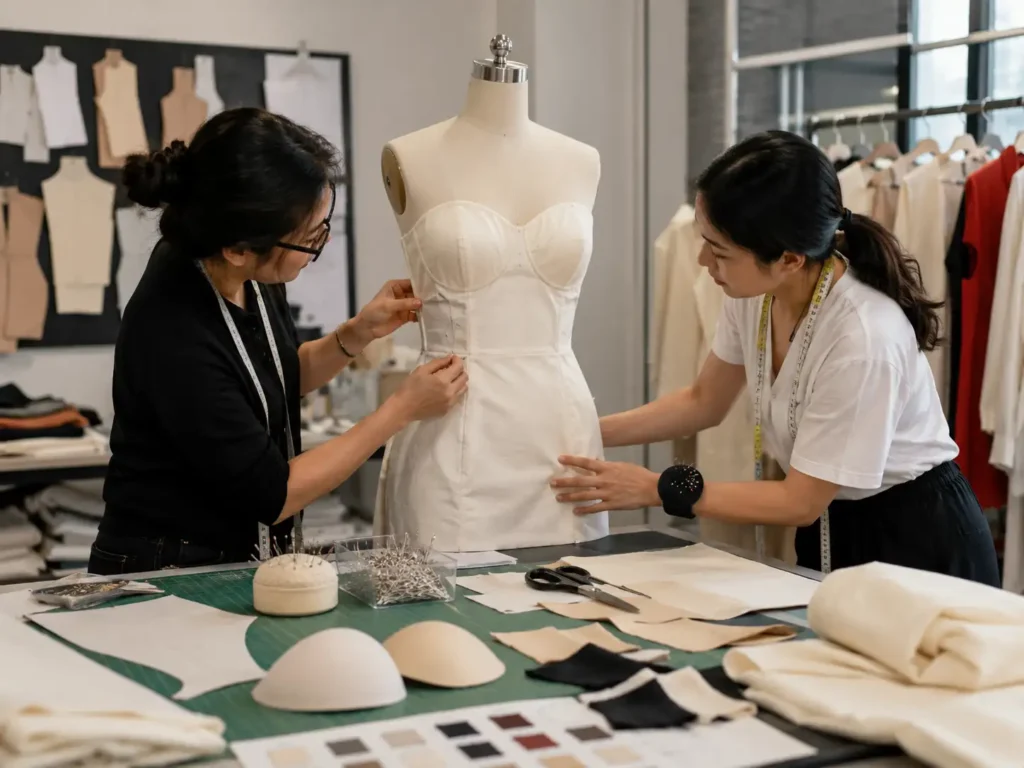
First Sample Establishes Direction
The first sample checks whether the proposed structure, fabric direction, pattern proportion and construction concept are workable.
For an ordinary dress, a first sample commonly requires around 10–15 days after the necessary development information and suitable materials are ready. Complex corset, strapless, lace, mesh or sequin structures may require around 15–25 days, depending on construction and material readiness.
The purpose is not to force immediate approval. It is to reveal what needs correction before the product moves deeper into development.
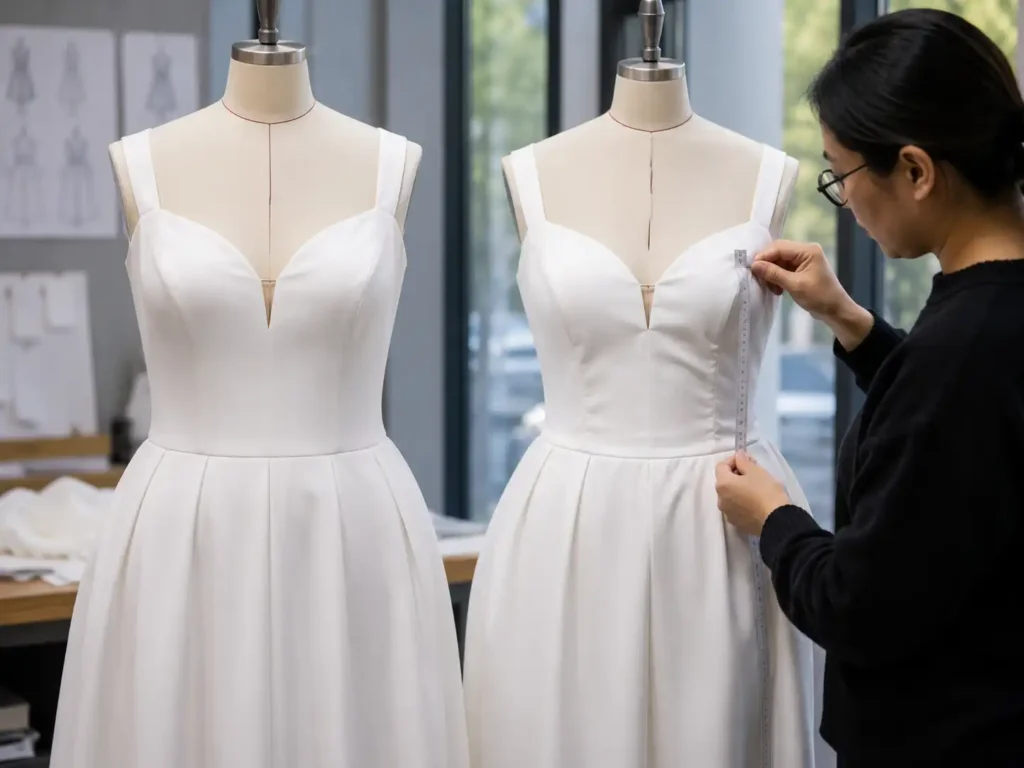
Fit Sample Tests the Body Relationship
Fit review checks more than whether a garment can be zipped.
The team can review bust position, waistline, hip shape, strap length, neckline, armhole, garment length, slit position, lining and movement.
A jumpsuit adds crotch and torso balance; a strapless design adds support and anti-slip behavior.
Measurements are checked against the relevant size chart, while fit comments explain where the visual or functional result differs from the intended standard.
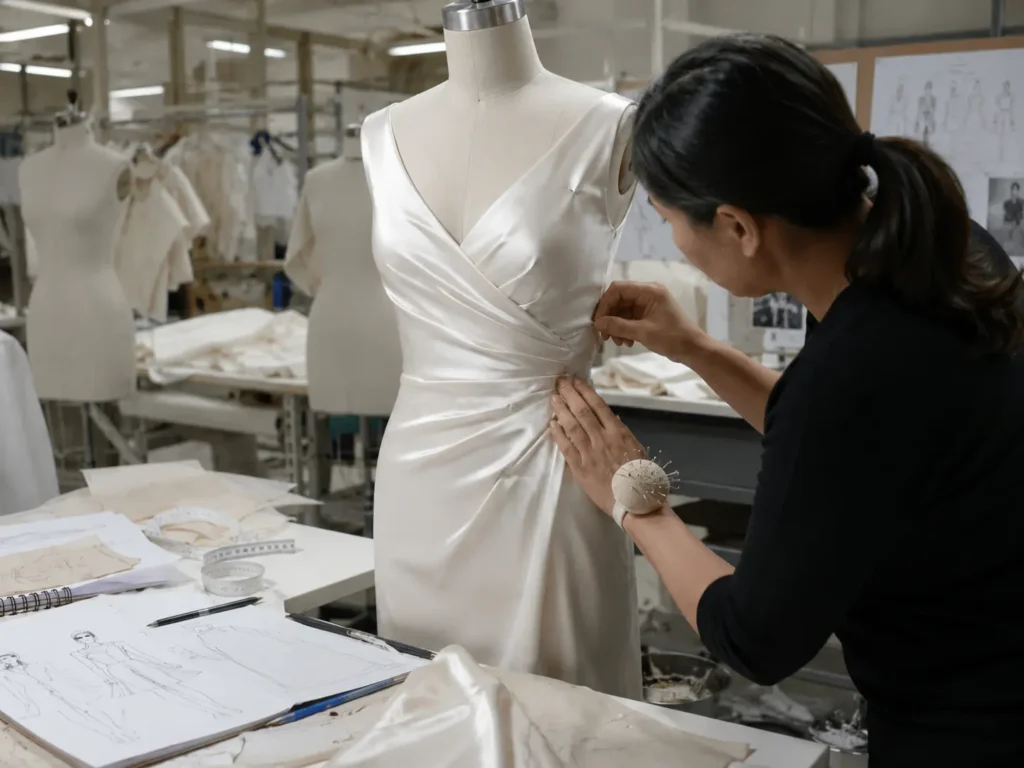
Revised Sample Confirms Corrections
Where fit, pattern, fabric or construction changes materially, a revised sample can be used to confirm the new direction.
Revised samples often require approximately 7–15 days, depending on complexity and material availability. Major fabric or structure replacement may require the project to be treated closer to a new development cycle.
The important point is traceability: the revised sample should reflect documented changes rather than informal instructions scattered across messages.
Outer Sizes Need More Than Simple Pattern Enlargement
The ends of a size range often expose problems that remain invisible near the base size. Larger, smaller, petite or tall proportions may need more careful evaluation of structure, coverage and vertical balance.
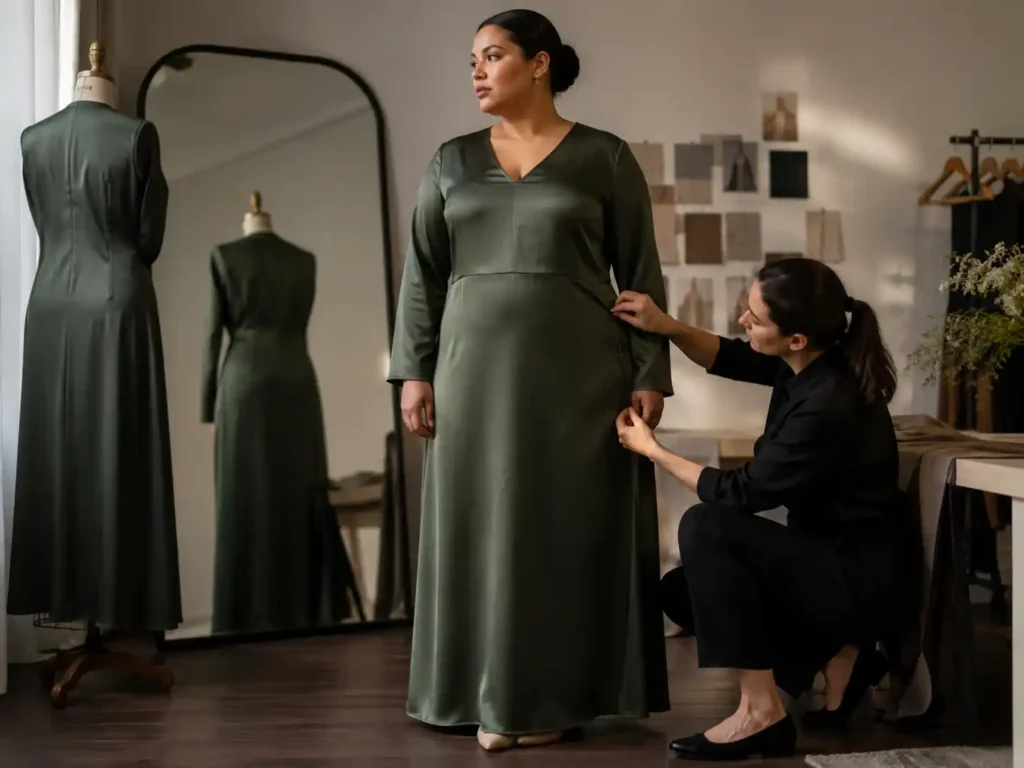
Larger Size Proportions
Larger sizes may require review of bust support, waist position, hip ease, strap width or placement, armhole coverage, lining coverage, slit safety and overall length balance.
The objective is not to redesign the garment unnecessarily. The objective is to preserve its intended appearance and function as body proportions change.

Smaller Size Proportions
Smaller sizes can become over-reduced when every point shrinks mechanically. Necklines may become too closed, straps may move incorrectly, armholes may tighten and design details can become visually crowded.
Critical design spacing should be checked against the intended silhouette.

Petite Proportions
Petite development is not only a shorter hem.
Waistline, strap length, armhole, neckline, slit height, torso length and jumpsuit rise can all influence whether the garment looks proportionally correct on a shorter frame.
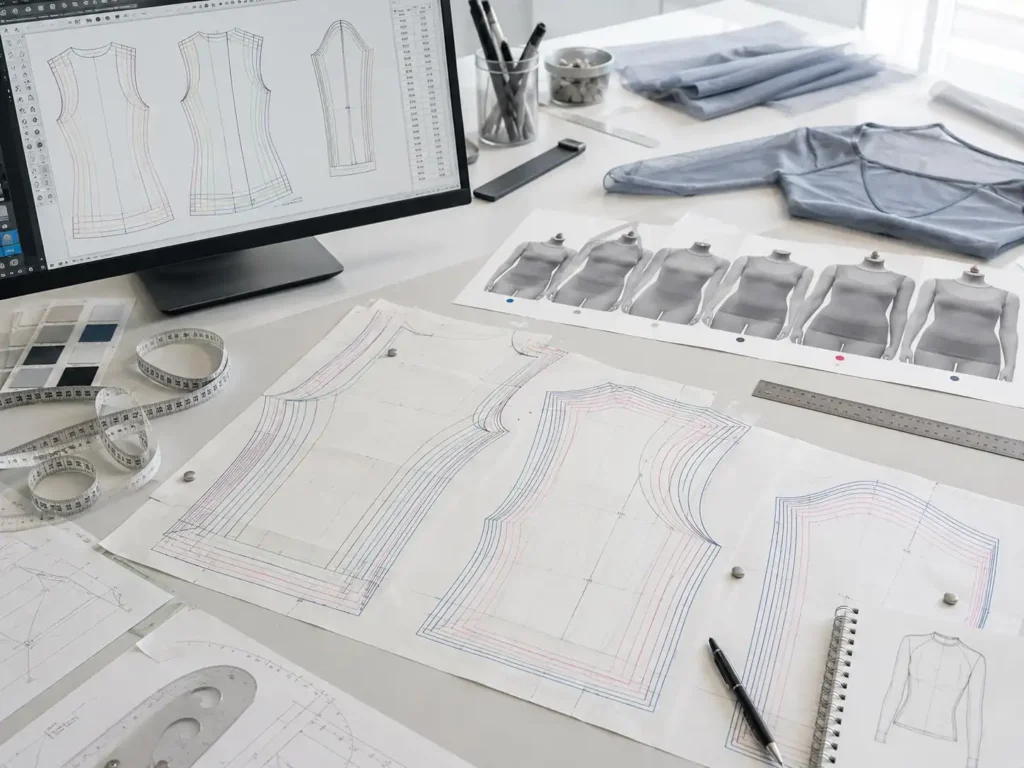
Tall Proportions
Tall fits can require coordinated vertical adjustments rather than simply adding garment length.
Waist placement, torso length, slit position, lining length, strap relationship and jumpsuit crotch length may need review depending on the brand’s size system.
Fit Feedback Must Become Production Data
Identify the Problem
Record the Cause
Correct the Pattern
Update Measurements
Update Production Files
Confirm the New Standard
Correct the Pattern Before Releasing Bulk Production
Moving an unresolved sample directly into production is one of the fastest ways to multiply a fit problem across thousands of garments. Final pattern correction creates the bridge between development feedback and multi-size production.
Fit Comments Become Final Pattern Actions
The correction stage brings together three types of evidence: the garment on body, the measured garment and the intended design standard.
A waistline that visually sits too low may require more than changing waist circumference. A loose armhole may involve armhole shape, bust position and side seam. A strapless dress that slips may involve bust fit, support construction and internal components. A jumpsuit that pulls may require torso and crotch review.
Jinfeng uses fit comments and measurements to identify the correction point, then updates the relevant pattern and project records.
Where the change affects more than the base size, grade implications should also be considered before the project is released.
Revised Patterns Need Revised Documents
A corrected physical sample does not automatically protect bulk production.
If the pattern changes but the size chart remains old, measurement QC can use the wrong target. If the construction changes but sewing instructions remain unchanged, production can recreate the original problem. If a lining dimension changes but the BOM or specification does not, shell and lining fit may diverge again.
For that reason, bulk-relevant corrections should flow into the production package.
Typical updates can include revised pattern version, size chart, tolerance, BOM, sewing instruction, fabric or trim record, PP comment and QC checklist.
Version control is especially important when several styles, colors and sizes are being developed together.
Release Bulk Only After the Fit Direction Is Locked
The PP stage should begin after the essential product direction is stable: garment structure, measurements, fabric, color, trims, workmanship and key fit decisions.
Changes made after pre-production approval can influence material consumption, cutting, sewing, costing, lead time and size consistency.
A controlled project therefore moves through first sample, required revisions and PP approval before bulk preparation. The Golden Sample then provides a physical reference for production and QC.
Locking the standard does not mean problems can never occur. It means teams know exactly which approved version they are expected to reproduce and measure.

PP and Golden Samples Lock Cross-Size Production Standards

PP Sample Approval
The PP sample is the final pre-production checkpoint after major development decisions are confirmed.
Fit-sensitive projects should review the approved fabric, color, trims, measurements, construction method and relevant private-label details before bulk release. For Cross-Size Fit projects, the final pattern version, size chart, grade rule and measurement standard must also align.
A PP sample should represent the production direction closely enough for merchandising, production and QC teams to work from the same standard.
Late changes to size specifications, fabric, construction or trims should be evaluated carefully because they can influence pattern behavior and production timing.
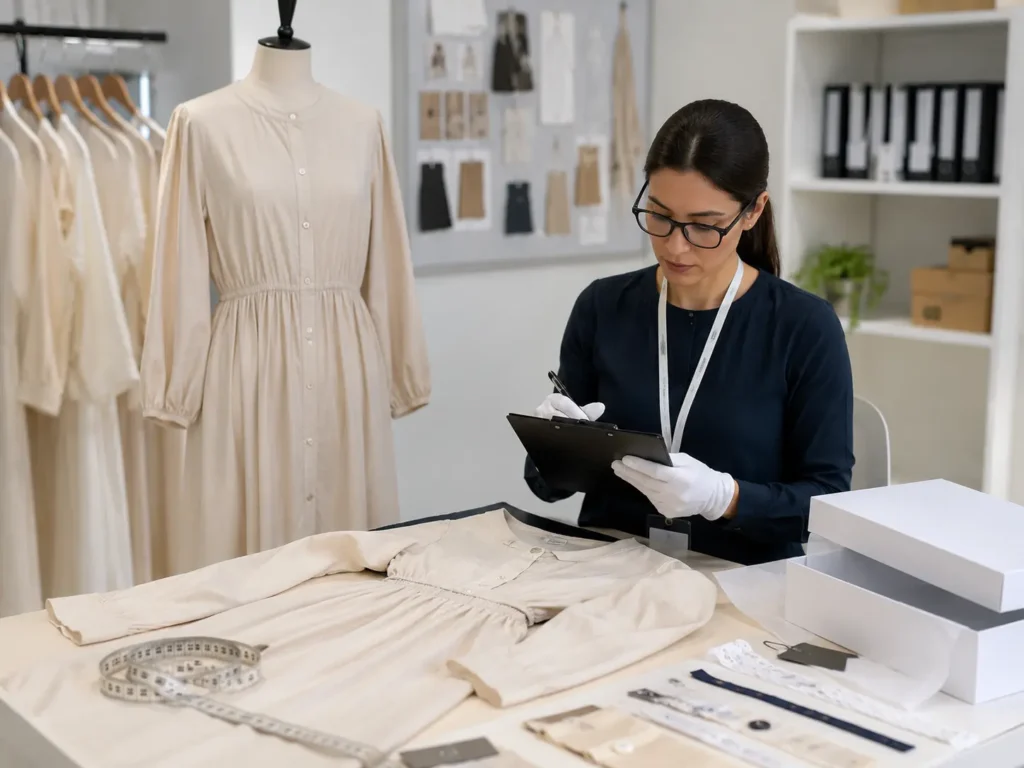
Golden Sample Reference
The Golden Sample becomes the physical comparison standard for bulk production, QC and future repeat orders.
Production teams can compare garment construction, measurement points, trim placement and overall appearance against the sealed reference. QC teams gain a physical benchmark alongside the size chart and tolerance requirements.
For repeat orders, retained pattern files, measurement records, material references and Golden Sample information reduce the need to reconstruct the original development logic.
A new fabric batch, new color or structural change still requires review, but the historical reference provides a stronger starting point.
Multi-Size Production Requires Control Beyond the Pattern Room

Pattern Version Control
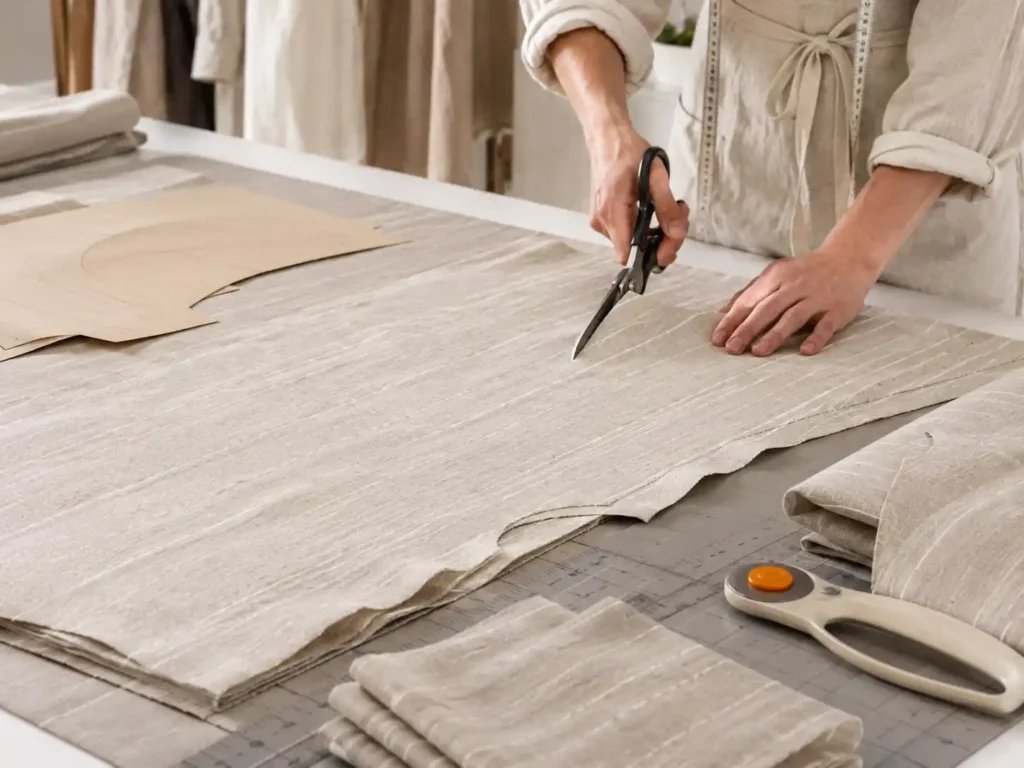
Cutting by Size

Bundling by Size

In-Line Measurement Checks

Size Label Accuracy
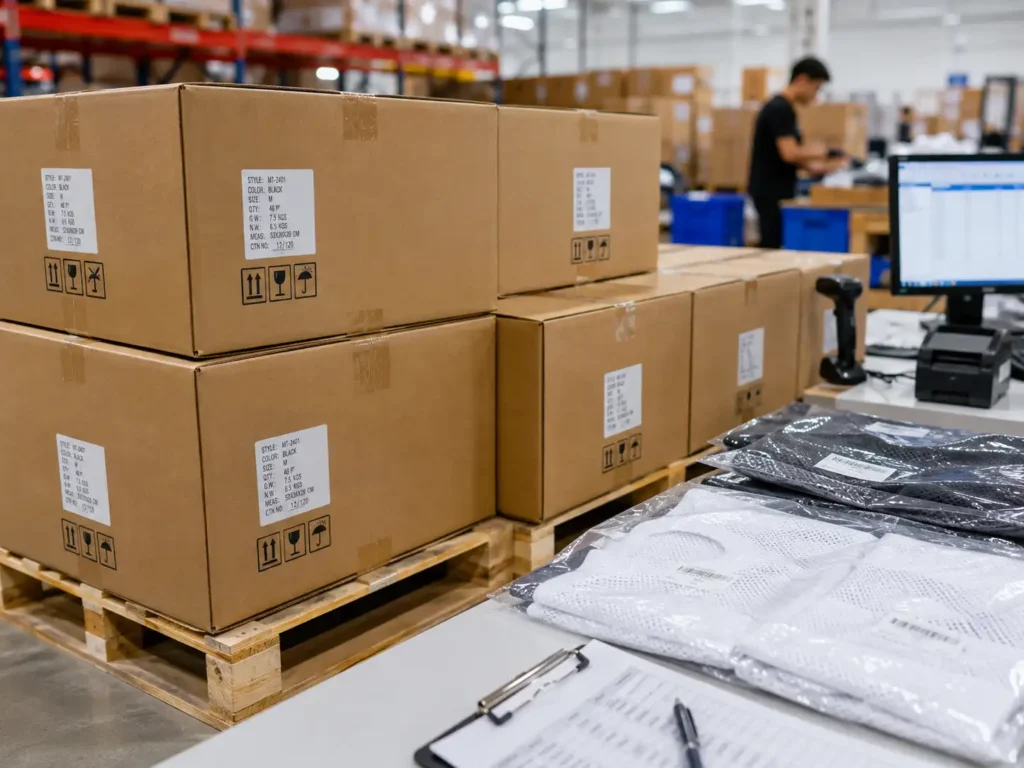
Carton and SKU Control
Measurement QC Protects Fit-Sensitive Womenswear in Bulk
Finished measurements provide one of the strongest links between approved fit and bulk production. Jinfeng uses garment measurement together with visual and construction checks rather than relying on appearance alone.

Measure the Points That Matter to the Style
Not every garment needs the same priority measurements.
A bodycon dress requires close attention to bust, waist and hip. A maxi dress needs garment length and hem balance. A halter style needs strap and neckline control. Strapless structures require bust and support-area review. Jumpsuits require waist, hip, torso and crotch control.
The inspection plan should therefore follow product risk rather than a generic checklist.

Compare Against Approved Standards
Finished garments can be compared against the approved size chart, measurement tolerance, PP sample information and Golden Sample reference.
Measurement tolerance should be defined according to the project and client standard rather than marketed as “zero tolerance.” Sewing, fabric characteristics and garment construction all influence achievable manufacturing tolerance.
Where a brand has an established quality manual, measurement method or inspection requirement, the information can be reviewed before production.
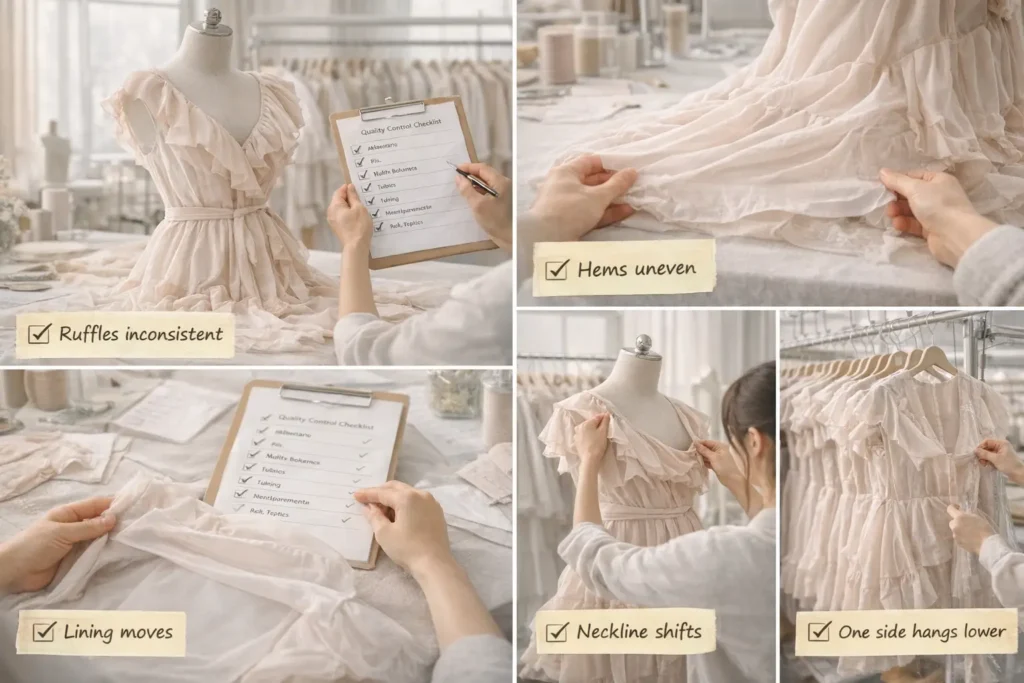
Correct Problems Before They Spread
Measurement issues discovered during production should trigger feedback to the relevant production team.
Possible causes may include inaccurate cutting, seam allowance variation, sewing tension, incorrect component matching, fabric growth or pressing. The correction should be followed by rechecking rather than only recording the problem.
For fit-sensitive products, in-line inspection is valuable because a repeated measurement error becomes expensive once thousands of garments are already completed.

Keep Measurement History for Reorders
Repeat production should not depend on memory.
Pattern files, measurement records, approved tolerances, fabric references, trim records, QC history and Golden Sample information can be retained as the technical baseline for later runs.
A repeat order using a new fabric lot, new color or altered construction still needs review, but historical records make deviations easier to identify.
Long-term fit consistency comes from controlled records as much as from the original pattern.
Cross-Size Fit Risks Vary by Garment Type
The matrix below shows how different womenswear categories create different cross-size priorities. It is intended as a development and QC guide rather than a universal grading formula.
| Product Type | Common Cross-Size Risk | Critical Areas | Main Validation Focus |
|---|---|---|---|
| Bodycon Dress | Uneven compression or looseness | Bust, waist, hip, side seam | Stretch + recovery + garment measurement |
| Corset Dress | Support changes by size | Bust, cup, under-bust, waist | Fit sample + support structure |
| Strapless Dress | Slipping or excessive pressure | Bust, upper edge, boning | Fit security + PP review |
| Slip Dress | Coverage or drape changes | Strap, neckline, armhole, hip | Fit sample + fabric behavior |
| Halter Dress | Neck pressure or underarm exposure | Neckline, bust, armhole | Movement + coverage |
| Backless Dress | Reduced support stability | Back height, straps, bust | On-body security |
| Maxi Dress | Uneven visual length | Waist, length, slit, lining | Vertical proportion |
| Mesh Dress | Stretch and lining conflict | Bust, waist, hip, lining | Shell/lining interaction |
| Satin Dress | Drape alters visual proportion | Bust, waist, hip, length | Pattern + fabric drape |
| Jumpsuit | Rise or torso imbalance | Bust, waist, hip, crotch | Standing, sitting and movement |
Move From Fit Development Into Commercial Production
Order and Size Planning
Costing Without Weakening Fit
Private Label and Size Identification
Production and Delivery Planning
Cross-Size Fit Projects From Collection Development
Brand confidentiality remains protected. The examples below use anonymized project structures and commercially representative order volumes to show how cross-size fit control can move from development into bulk and repeat-order preparation.

Occasionwear Collection — 18 Styles / 36,400 Pieces
A multi-style occasionwear program covered fitted mini and midi dresses using satin, stretch satin and lined constructions across a defined multi-size range.
The main fit risks were not isolated to one measurement. Several styles needed coordinated review of bust shaping, waist position, hip ease, shoulder straps, neckline coverage and garment length. Stretch satin styles also required fabric behavior to be considered alongside the approved body measurements.
Development began from style information, size requirements and target silhouettes. Fit samples were measured and reviewed against the intended proportions. Comments affecting production were translated into revised pattern information and updated measurements rather than left as informal fitting notes.
For styles requiring correction, revised samples were used before the PP stage. The production package then aligned final pattern information, grade rules, size charts, measurement tolerances and construction requirements.
PP samples established the pre-production direction. Golden Sample references supported bulk comparison, while measurement QC focused on the fit-sensitive points most relevant to each silhouette.
Multi-size production was separated by style, color and size through cutting, bundling, sewing, inspection and packing.
The result was not based on claiming every garment would measure identically. The objective was a controlled production system where fit decisions made during development remained measurable throughout bulk production.

Multi-Style Dress Program — 24 Styles / 58,600 Pieces
A larger fashion collection combined bodycon, slip, halter, mesh and maxi dresses, creating different cross-size risks inside one order.
Bodycon styles required stretch and recovery to be evaluated with bust-waist-hip measurements. Slip dresses required strap and neckline review. Halter designs needed armhole and bust coverage control. Mesh dresses required shell and lining behavior to work together. Maxi dresses required length, slit and lining proportion review.
Rather than applying a single QC rule across all 24 styles, development and production controls were organized around product-specific risk points.
Sample comments were documented by style. Pattern and measurement changes were updated before PP approval. Approved production information was then separated by style, color, size, fabric, trims and packing requirement.
During bulk production, measurement checks followed the risk profile of each garment category. Size labels, polybag identification and carton breakdown were managed alongside finished garment measurements to reduce multi-size handling errors.
For future replenishment, pattern files, measurement history, material references, approved construction notes, QC information and Golden Sample records provide a stronger baseline than rebuilding the collection from first samples again.
The project structure reflects the operating reality of established fashion programs: several styles, several fit systems and one coordinated production standard.
Cross-Size Fit Frequently Asked Questions
No. An approved base size establishes the fit direction, but other sizes still depend on grade rules, body proportions, garment structure and fabric behavior. Critical points such as bust, waist, hip, armhole, strap, neckline and length need appropriate progression and review.
No. Grading moves multiple pattern points according to defined relationships. Certain areas may need additional review because circumference, vertical proportion, support and coverage do not always behave as simple linear increases.
Yes. Brand size charts, measurement methods, fit comments and grade requirements can be supplied for project review. The information should be clear enough to connect the required finished measurements with the intended garment fit.
Yes. Stretch direction, recovery, growth and finished garment behavior can change how a graded pattern wears. Bodycon, mesh, jersey, stretch satin and fitted jumpsuit projects especially benefit from fabric and pattern review together.
Bulk-relevant changes can be transferred into revised pattern information, updated size charts, measurement tolerances, BOM records, sewing instructions, QC checklists and PP comments according to the project.
PP approval follows confirmation of the essential production direction, including fit, measurements, fabric, color, trims, construction and relevant label or packing requirements. Major late changes may require reassessment.
The Golden Sample acts as a physical reference for production, QC and repeat-order comparison. It complements the approved pattern, size chart, measurements and production documents.
Critical measurements are compared with the approved size chart, tolerance and production standard. Fit-sensitive styles can receive focused measurement checks during production and final garment inspection.
Not automatically. Extended ranges may require review of support, waist placement, armhole coverage, straps, length, slit height, torso proportion or crotch length according to the garment and brand standard.
Yes, where the original pattern, size chart, measurement records, material references, construction records and Golden Sample information remain applicable. New fabrics, colors or structural changes should still be reviewed before repeat production.

Build a More Controlled Multi-Size Womenswear Program
Cross-size consistency starts before bulk production. The strongest projects arrive with a clear fit direction, workable size range and enough technical information for pattern, fabric and measurement risks to be reviewed before samples are locked.
Send Jinfeng Apparel the available project information and our team can review the garment structure, fit-sensitive areas, sampling direction and bulk production requirements.
Useful information includes:
- Product type or collection line sheet
- Tech pack or reference images
- Existing base-size sample, if available
- Size chart and measurement method
- Planned size range and size ratio
- Fabric preference or approved fabric reference
- Fit comments from previous samples
- Target order quantity by style/color
- Private-label and packing requirements
- Target launch date
- Shipping destination
- Existing QC or measurement tolerance requirements


