 Skip to content
Crop Top and Skirt Set Manufacturer
Coordinated womenswear development for brands that need stronger fit, fabric consistency, scalable production and retail-ready private-label delivery.
Jinfeng Apparel develops crop top and skirt sets as one coordinated product system. Pattern work, fabric selection, sample fitting, bulk production, quality checks and set packing are aligned from the first review, helping brands protect proportion, shade, size pairing and launch timing across both garments.
- Set-specific development: crop length, skirt waistline and visible midriff are reviewed together rather than approved as unrelated garments.
- Manufacturing scale: 6 owned womenswear factories, 10+ long-term production partners and 100,000+ pieces of monthly capacity support multi-style programs.
- Development resources: 2 sample rooms, 7+ senior pattern makers and 20+ sample machinists support first samples, revisions, PP sets and repeat-order references.
- Production boundary: MOQ starts from 200 pieces per style/color, with final requirements confirmed by fabric, construction, trims, color plan and packing.
- Quality support: 15+ QC inspectors coordinate material, measurement, appearance, pairing, label, barcode and final packing checks.
Manufacturing Facts Behind Coordinated Set Production
Since 2008
6 Owned Factories
10+ Production Partners
2 Sample Rooms
15+ QC Inspectors
100,000+ Pieces Monthly
Built for Brands Developing Coordinated Fashion Collections
Global Fashion Brands
Premium Ecommerce Brands
Product Development Teams
Sourcing Organizations
Private Label Programs
Regional Fashion Leaders
Where Crop Top and Skirt Sets Commonly Fail
Proportion Breaks
- Base-size control: lock the visual gap and waist position on the approved fit size.
- Grading review: confirm that larger and smaller sizes do not expose an unintended amount of skin.
- Movement review: check standing, sitting, walking and raised-arm positions before PP approval.
Materials Drift Apart
- Shade discipline: approve a usable shade range before cutting.
- Direction control: mark shine, nap, stripe and stretch directions clearly.
- Replacement review: recheck pattern, lining, cost and lead time whenever fabric changes.
Pairing Errors
- Quantity balance: track top and skirt output separately and compare set completion totals.
- Size matching: pair according to the approved size rule or mixed-size packing instruction.
- Pack verification: check label, barcode, color, size and garment count before sealing.
Crop Top and Skirt Sets We Manufacture

Corset Mini Set
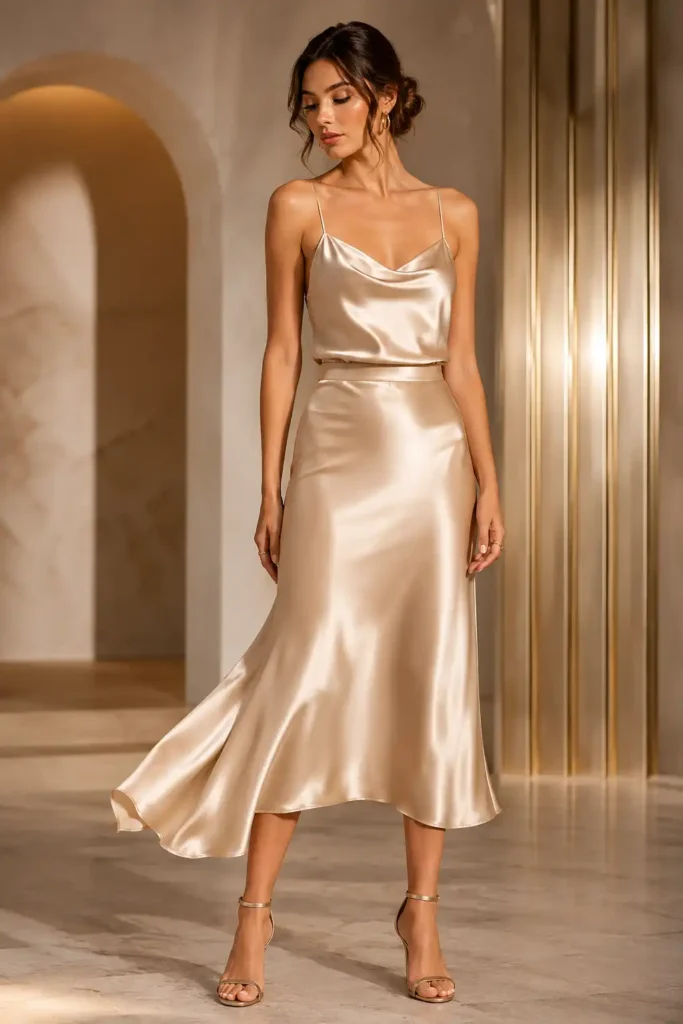
Satin Bias Set

Mesh Ruched Set

Halter Maxi Set

Rib Knit Bodycon

Linen Resort Set

Printed Flared Set

Sequin Party Set
Crop Top Development Beyond Basic Pattern Making
A fashion crop top concentrates fit risk into a small garment area. Bust shape, neckline, strap geometry, support and hem position must work with the skirt rather than being approved in isolation.

Bust Shape, Neckline and Coverage Control
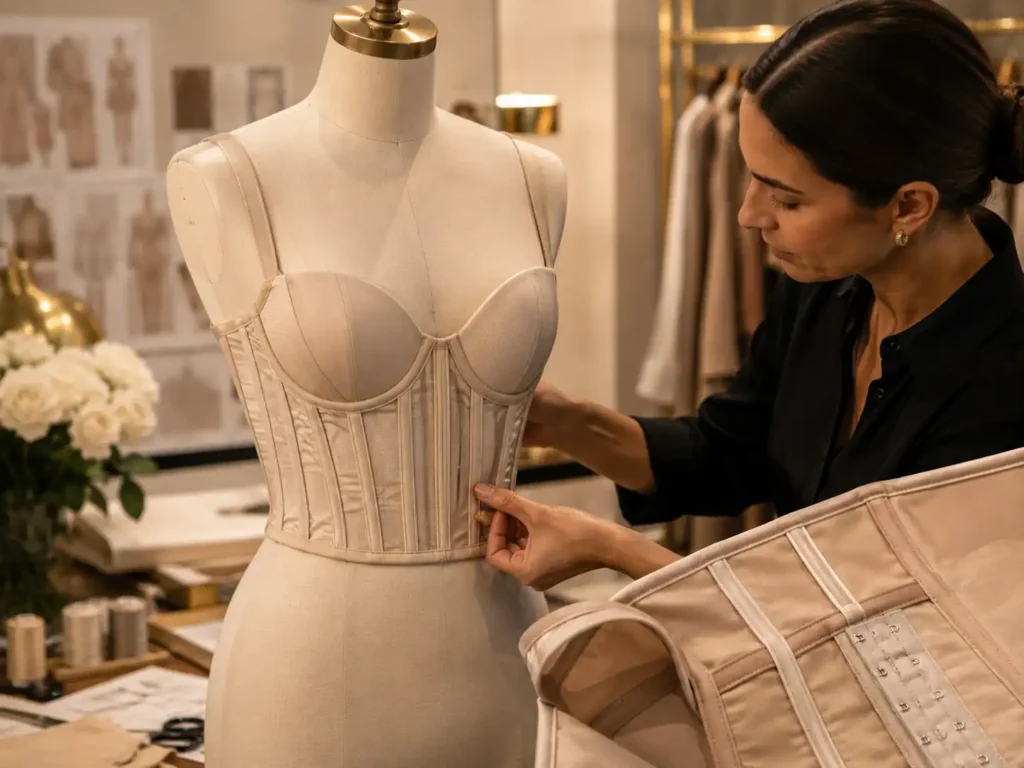
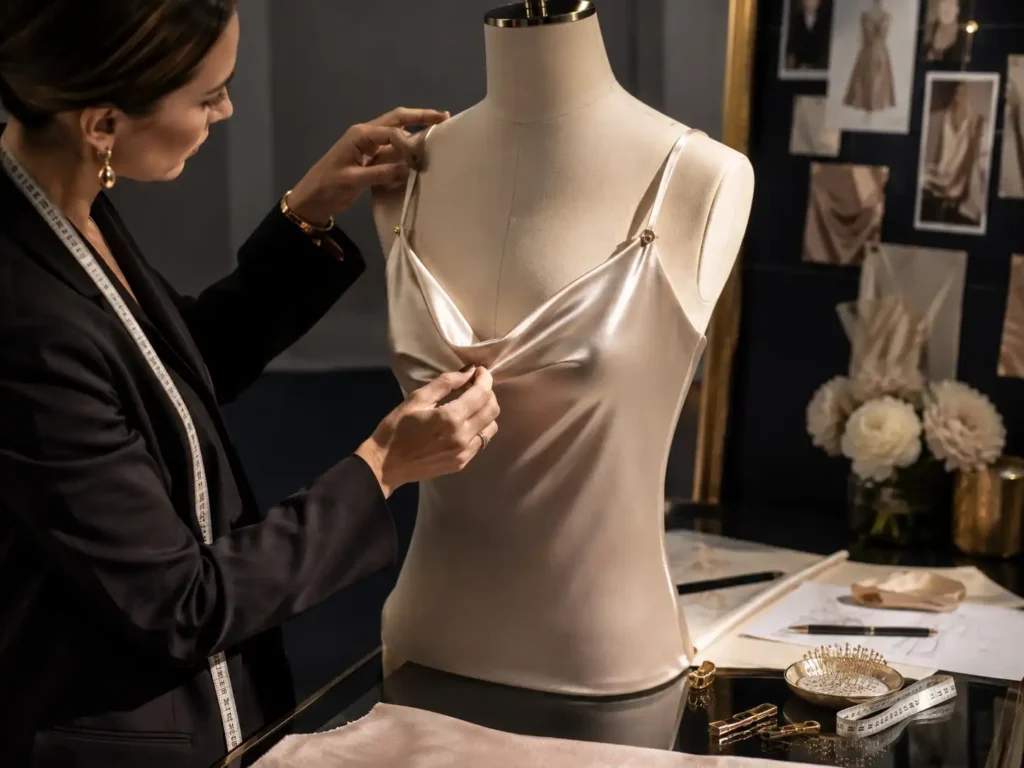
Crop top development begins with the intended wearing occasion and support level. A rib-knit top can rely on stretch and recovery, while a corset, satin cami, mesh halter or strapless top needs a different balance of pattern shaping, lining and internal support. Jinfeng compares the reference image, tech pack, target size chart and fabric behavior before the first pattern is finalized. Bust points, neckline depth, cup position, under-bust line, armhole coverage and back height are checked together because changing one area can alter tension elsewhere. For deep necklines or cut-out designs, the team reviews whether the approved visual can remain stable during movement and across grading. A top that looks secure on a mannequin can shift during walking, sitting or raised-arm positions, so fit comments should describe both appearance and movement. Brand fit requirements remain the controlling standard; the factory does not replace a confirmed size chart with a generic house block without approval.
Straps, Support and Closure Engineering
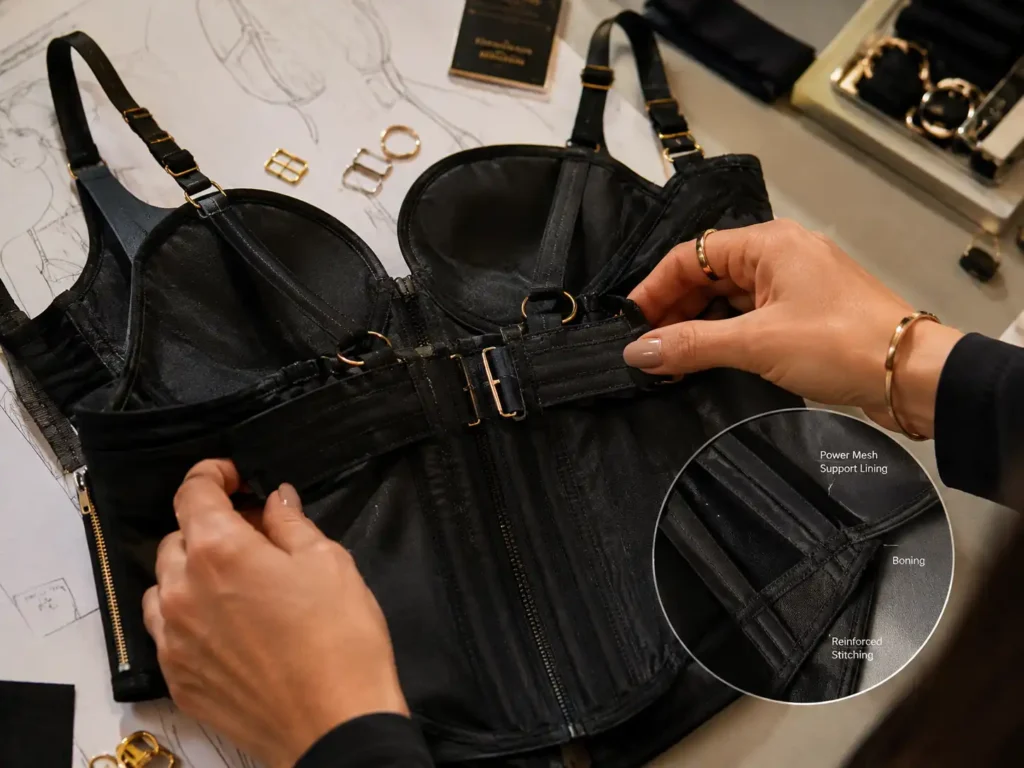
Straps are structural components, not decorative lines. Width, angle, placement, elasticity and adjustment range affect bust support and neckline position. Halter ties require neck comfort and stable knot length; narrow satin straps need reinforcement and controlled attachment; adjustable straps require approved sliders, rings and stitch positions. Corset and bustier tops may use cups, boning, elastic, hook-and-eye components or internal seams according to the design. Each support element is reviewed for visibility, comfort, strength, cost and bulk repeatability. Zippers, buttons, hooks and side openings are positioned so the garment can be worn without distorting the outer shape. When custom hardware or trims are required, development time can range from several days for conventional components to longer windows for special finishes, shapes or supplier-specific minimums. Trim readiness is therefore connected to the sample and launch calendar before final commitments are made.

Hem Position, Lining and Bulk Repeatability
The crop hem controls the relationship with the skirt. Jinfeng defines the finished length from a stable measurement point and reviews whether the hem should sit above, meet or overlap the skirt waistline. Elastic hems, clean-finished woven hems, facing, lining and shaped panels behave differently after pressing and wear. Thin satin may roll or ripple, rib knit can grow, mesh can expose seam allowances and structured tops can lift if the bust or waist shaping is incorrect. Sample review therefore checks the hem on body, not only on a flat table. Lining coverage is evaluated for opacity, support and comfort without changing the outer drape. Before PP approval, visible seam positions, lining edge, hem tension, closure function, label location and pressing appearance are confirmed. The same reference then guides cutting, sewing, inline inspection and final measurement so bulk pieces retain the approved proportion.
Skirt Structure Developed to Complete the Set
The skirt determines waist position, body balance and movement. Mini, midi and maxi silhouettes require different pattern, lining, closure, hem and inspection decisions even when paired with the same crop top.

Waist, Hip and Silhouette Control
Skirt development starts with the approved waist position: high, natural, mid or low. That decision controls the visible gap below the crop top and influences hip shaping, zipper length, waistband depth and body proportion. A bodycon mini needs accurate waist-to-hip shaping and fabric recovery, while an A-line or flared skirt depends on panel balance and controlled volume. Bias midi skirts require grain discipline and hanging evaluation; low-waist skirts need careful hip anchoring so the garment does not rotate or drop during wear. Jinfeng reviews waist, high hip, full hip, length and sweep measurements against the brand size chart. Waistband construction is selected according to fabric weight, stretch and desired appearance. Interfacing, elastic, facing or full lining may be added where support is needed, but each layer must remain compatible with the outer fabric so the waist does not become rigid, bulky or visibly uneven.

Length, Movement, Slits and Lining
Skirt length cannot be evaluated only from a flat measurement. Mini skirts require sitting and walking coverage; midi skirts need balanced drape around the body; maxi skirts must clear movement while maintaining an even hem. Slit height, overlap and lining opening are reviewed together because a high slit can expose more than the sketch suggests once the wearer moves. Pleats and ruching also change usable length and hip volume. Jinfeng checks movement on the sample, records approved slit points and confirms whether lining should be full, partial or absent. Transparent chiffon, mesh, lace and light-colored fabrics need coverage planning, while heavy satin or sequins may require a lighter lining to control weight. Hem method is chosen by fabric: narrow rolled hems, clean turns, blind hems, coverstitch, binding or faced finishes each produce a different look and production risk. Approval includes hem width, appearance, pressing and balance around the body.

Closures, Seams and Finishing Accuracy
Invisible zippers, exposed zippers, elastic waists, side ties, hooks and buttons must function without distorting the waist or hip line. An invisible zipper can create a ridge if seam tension, fabric support or waistband alignment is incorrect; a side zipper can affect the visual line when paired with a fitted crop top. Seam placement is also important for ruching, panel shaping, pockets and print direction. During sampling, Jinfeng records closure type, zipper length, hook position, seam allowance, topstitch requirement and finishing method. Bulk inspection checks opening function, waistband alignment, seam symmetry, label placement, measurement and pressing. For coordinated sets, the final skirt is reviewed beside the top in the same color and size. The pair must look intentional as one outfit while each garment remains wearable as a separate retail piece.
Coordinated Fit Across Top and Skirt
Set approval combines two patterns, two measurement systems and one final silhouette. Proportion must remain controlled through grading, movement, photography and bulk pairing.

Defining the Crop-to-Waist Relationship
The visible distance between top hem and skirt waistline is one of the most recognizable design features in a two-piece set. Jinfeng establishes the relationship on the approved base size using stable body and garment measurement points. A change of waistband depth, bust shaping or crop length can immediately alter the look, so top and skirt revisions are reviewed together. High-waisted skirts may meet or slightly overlap a crop top, while low-waist designs intentionally expose more midriff and require stronger hip security. Side and back views matter as much as the front because garments can separate unevenly when the waistline slopes or the top lifts. Photos, annotated measurements and fit comments are used to record the target appearance. The approved relationship is then included in the pattern and measurement revision history so a later change to one piece does not silently create a mismatch with the other.

Grading Two Garments as One Size System
A coordinated set usually follows one brand size chart, but the bust, waist and hip grading logic cannot be treated as identical. The crop top may need more change through bust and under-bust areas, while the skirt requires controlled waist and hip increments. Jinfeng grades both garments from approved patterns and checks whether the visual midriff, neckline, skirt position and overall length remain balanced in smaller and larger sizes. Extended size ranges may need additional fit confirmation rather than relying only on mathematical grading. Some brands sell one matching size for both pieces; others allow mixed-size top and skirt combinations. The packing, barcode and inventory system must follow the chosen commercial rule. When mixed-size selling is required, top and skirt SKUs are defined separately and packing instructions must clearly state whether pieces are shipped independently or paired according to a specified ratio.

Fit Review for Movement and Separate Styling
A strong set should work in two ways: as a complete outfit and as two saleable separates. Fit review therefore includes the full look as well as the individual behavior of each garment. The top is checked for bust stability, arm movement, neckline shift and hem lift. The skirt is checked for waist hold, sitting coverage, walking movement, slit exposure and rotation. Together, both pieces are reviewed for proportion and comfort during normal motion. Styling flexibility also affects merchandising value. A corset top may be paired with denim, while the skirt may work with a basic knit top; a resort crop can coordinate with trousers or shorts from the same fabric story. Jinfeng can retain shared color, fabric and trim references so approved set components can later support capsule extensions without losing the original brand direction.
Fabric Options for Different Set Directions
Fabric choice affects silhouette, support, transparency, recovery, sewing method, price and lead time. The ranges below are common development references rather than fixed purchasing specifications; final articles are approved by composition, weight, hand feel, stretch, color, MOQ and end use.
| Fabric Direction | Common Range | Best Set Types | Strength | Main Risk | Approval Focus |
|---|---|---|---|---|---|
| Rib Knit | 220-320 gsm | Bodycon and casual sets | Stretch, recovery, comfort | Growth, twisting, shade | Weight, stretch direction, recovery, shrinkage |
| Stretch Satin | 120-220 gsm | Party and fitted sets | Shine with controlled fit | Snagging, puckering, shade | Face direction, stretch, lining, pressing |
| Woven Satin | 90-180 gsm | Cami and bias sets | Fluid premium drape | Slip, shine marks, seam show | Grain, opacity, seam and hem method |
| Stretch Mesh | 70-150 gsm | Club and layered sets | Transparency and contour | Tearing, overexposure, recovery | Layer count, lining coverage, seam stress |
| Lace | 80-220 gsm | Occasion and party sets | Decorative surface and depth | Motif mismatch, edge damage | Placement, lining, border use, comfort |
| Crepe / Chiffon | 90-220 gsm | Resort and occasion sets | Drape and movement | Transparency, slippage, skew | Lining, grain, shrinkage, hem balance |
| Linen / Rayon | 130-230 gsm | Vacation and summer sets | Natural hand and breathability | Creasing, shrinkage, opacity | Finish, wash test, interfacing, lining |
| Denim / Twill | 6-10 oz typical | Structured casual sets | Shape, durability, strong seams | Bulk, wash variation, rub-off | Weight, wash, color transfer, waistband build |
| Sequin Base | Article-specific | Statement party sets | High visual impact | Loss, scratching, packing damage | Base stability, lining, seam clearing, protection |
Keeping Both Pieces Visually Consistent
Solid Color Lots
Print and Motif Placement
Shrinkage and Stretch Direction
Construction Details That Define Set Quality
Cups and Boning
Straps and Necklines

Waistbands and Elastic

Zippers and Closures
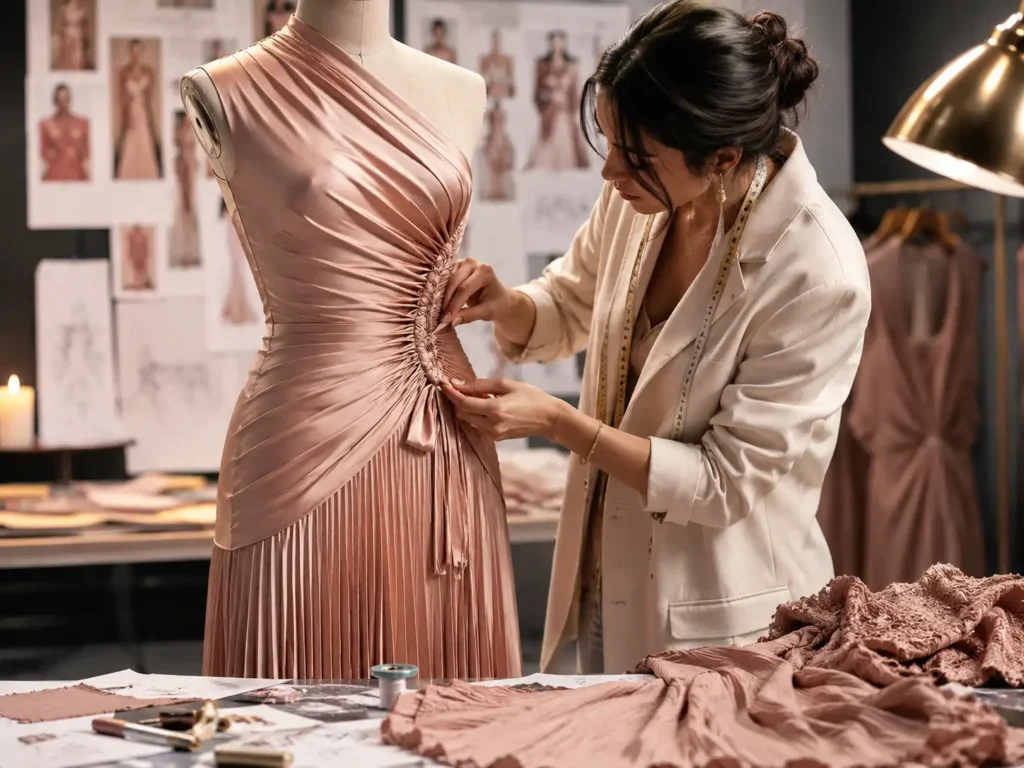
Ruching and Pleats
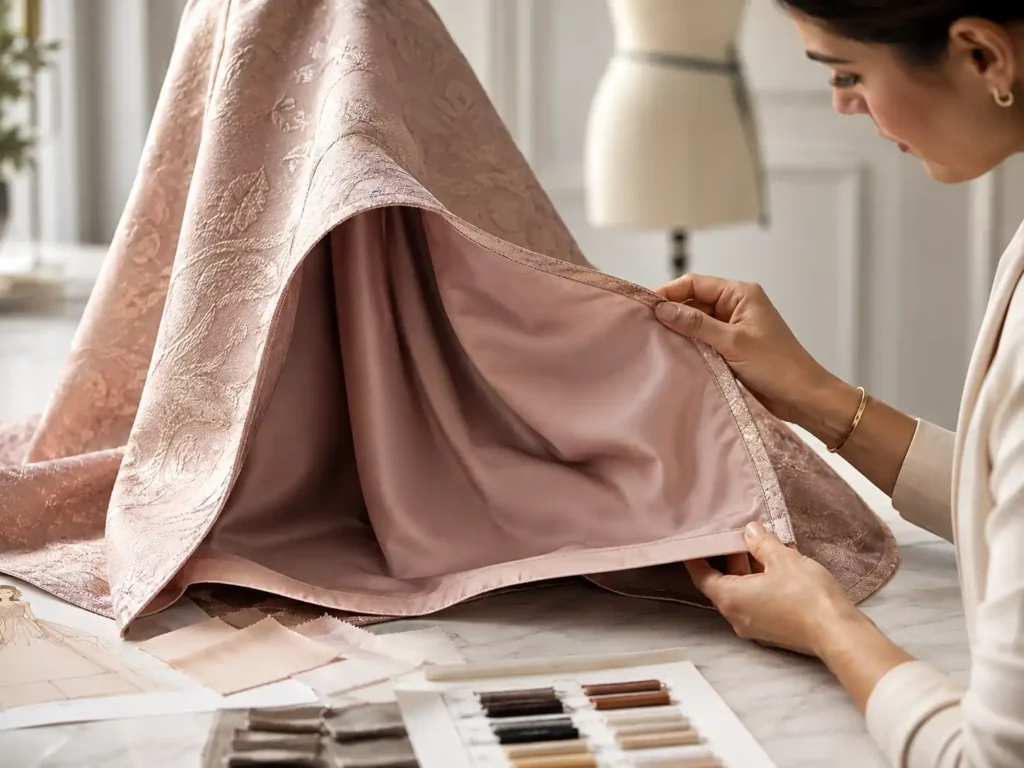
Lining and Hems
Sampling Both Pieces as One Product System
Sampling converts design direction into measurable production standards. Each version records fabric, pattern, construction, fit, trims, labels and packing decisions for both pieces.

Project Review and Development Schedule
Development starts with the reference image or tech pack, target quantity, size chart, fabric direction, color plan, trims, packaging and launch date. Jinfeng reviews whether the concept is suitable for available materials or requires custom development. A straightforward set using ready fabric and conventional construction may be planned for first-sample review in roughly 7-15 working days after material and specification confirmation. Corset structures, custom prints, specialty lace, sequins or custom trims require longer planning because material development can add several days or weeks. The project timeline is therefore issued after style complexity and material readiness are understood rather than promised from the inquiry date. Multi-style programs are grouped by fabric, pattern family, trim group and launch priority. Hero SKUs, photo samples and styles with long material lead times can be scheduled first so approval work supports the intended campaign calendar.

First Set, Fit Review and Revision Control
The first sample is evaluated as one complete set. The crop top is checked for bust, neckline, strap, armhole, support, closure and finished length. The skirt is checked for waist, hip, rise position, length, slit, lining, closure and hem balance. Both pieces are worn together to assess the visual gap, side and back proportion, movement and size relationship. Comments should be consolidated into one revision log so a change to the top or skirt is reviewed for its effect on the full outfit. Fabric changes are treated as development changes, not simple substitutions, because weight, stretch, opacity and shrinkage can alter pattern, lining, cost and schedule. Revised measurements and pattern notes are recorded before the next sample. Photo and video feedback can support faster review, while physical shipment remains useful for hand feel, fit and detailed approval.

PP Set, Golden Reference and Bulk Handover
The PP set locks the production standard before bulk cutting or sewing proceeds. Approval covers shell fabric, lining, color, trims, measurements, construction, stitch appearance, label placement, hangtags, barcodes, folding, polybags and carton information. The top and skirt are approved as a paired unit, including the intended size-matching rule. A golden reference can then guide production, QC and repeat orders. It provides a physical comparison for fabric appearance, dimensions, support structure, closure position, ruching, pleats, pressing and packing. Changes after PP approval are managed formally because late revisions can affect purchased materials, patterns, work instructions, price and delivery. Bulk teams receive the approved file set, PP reference and revision history so production is based on one controlled standard rather than scattered messages or earlier sample versions.
Coordinated Bulk Production Across Both Garments
Bulk planning must keep two garment flows synchronized. Factory assignment, material arrival, line scheduling, QC and packing are managed around the completed set rather than separate output totals.
Factory Matching by Fabric and Construction
Jinfeng Apparel assigns production according to product structure. Knit and stretch crop tops can be coordinated with the teams handling bodycon skirts and knit matching sets. Woven fashion tops and skirts can move through the factory focused on coordinated sets, while complex partywear may require support from teams familiar with satin, mesh, lace, sequins and structured garments. Sample development and high-requirement woven styles can be prepared through the sample-focused factory before approved work is transferred into stable bulk production. Factory matching considers fabric type, pattern difficulty, support structure, embellishment, order quantity, delivery priority and repeat potential. The goal is not to split an outfit without control; it is to place each style group where the required workmanship can be repeated, while one project plan keeps material, color, measurements, QC and set packing aligned.
Multi-Style Line Planning and Quantity Balance
Seasonal set programs often contain 10-30 styles, multiple colors and several size ratios. Production is grouped by shared fabric, trim, pattern family and construction method so approvals and materials can be managed efficiently. Top and skirt quantities are tracked separately because output can become unbalanced if one garment has a slower operation, additional lining or more complex finishing. The project team compares cut quantity, sewing output, finished quantity and packed-set quantity before shipment preparation. Color and size ratios are reviewed at style level, not only at total order level. When one collection includes corset, knit, satin and printed resort sets, each group may follow a different production path, but delivery milestones remain connected to the brand launch plan. Progress updates identify material readiness, production status, QC status and packing completion rather than giving only a general percentage.
Launch Calendar, Delivery and Split Shipment Planning
Bulk lead time is confirmed after PP approval, material availability, color quantities, size ratios, labels and packing files are locked. Ready fabric, conventional trims and approved repeat styles generally support a shorter calendar than new dye lots, exclusive prints, custom hardware, corset structures or sequin work. Multi-style programs often reserve staged delivery windows so approved hero looks can support campaign, wholesale or ecommerce dates while later groups complete final QC. Split shipment can be discussed when it improves launch control without creating disproportionate freight or documentation cost. Jinfeng coordinates packing lists, commercial invoices, carton marks and shipment information with the brand or nominated forwarder. The delivery plan includes production completion, inspection, packing and export preparation; international transit is planned separately according to destination and selected freight method.

Quality Control for Complete Two-Piece Sets
Quality inspection covers each garment and the finished pair. Approved measurements, appearance, construction, color, size matching and retail information remain connected through production and packing.
Material, Cutting and Early Production Checks
QC begins before sewing. Fabric is reviewed for article, color, visible defects, direction, print, stretch, hand feel and approved reference. Shade or print differences are controlled before panels from unrelated lots become mixed. Cutting instructions identify face, nap, shine, stripe, motif and stretch direction. Key top and skirt pattern points are checked against approved files, especially crop length, neckline, waistline, hip shape, slit and hem. During early production, construction is reviewed before the full quantity advances. Cups, boning, straps, zippers, waistbands, lining, ruching and pleats receive attention because errors become expensive after finishing. Comments are recorded with the style and version reference so production teams work from the latest approved information. Early checks protect both measurement and visual proportion, reducing the risk of discovering a set mismatch only at final inspection.
Inline Measurement and Appearance Control
Inline inspection compares selected garments with the approved PP set, measurement chart and construction standard. Crop tops are checked for bust, under-bust, neckline, armhole, strap, back, closure and finished length. Skirts are checked for waist, hip, length, sweep, slit, zipper, lining and hem. The complete outfit is assessed for visual gap, shade, print relationship and balance. Inspection frequency can follow the order risk, construction complexity and agreed quality plan. AQL-based final inspection can be coordinated with the brand standard or third-party requirement. Visible defects such as seam puckering, twisting, shine marks, uneven gathering, exposed lining, damaged embellishment and poor pressing are evaluated alongside measurement. Corrective action is handled before packing wherever possible, because paired-set errors become harder to isolate once labels, barcodes and polybags are applied.
Set Pairing, Packing and Final Shipment Review
Final set control confirms that one top and one skirt form the correct retail unit. Style, color, size, label, barcode and packing information must match the approved rule. Some brands use one shared set size; others require separate top and skirt sizes. The packing instruction must define the required combination clearly. Finished quantities are reconciled so no large surplus of one component hides a shortage of the other. Folding, protective tissue, hangtags, size stickers, barcode labels and polybags are checked against the packing sample. Sequins, satin and structured tops may need additional protection to reduce crushing, snagging or transfer marks. Carton quantities and marks are compared with packing lists before shipment release. QC feedback, inspection records and packing confirmation can be shared through photos, files and progress reports according to project requirements.

Private-Label Packing for Retail-Ready Sets

Main and Size Labels

Care Labels

Hangtags and Fastening

Barcode and SKU Rules

Polybag and Folding
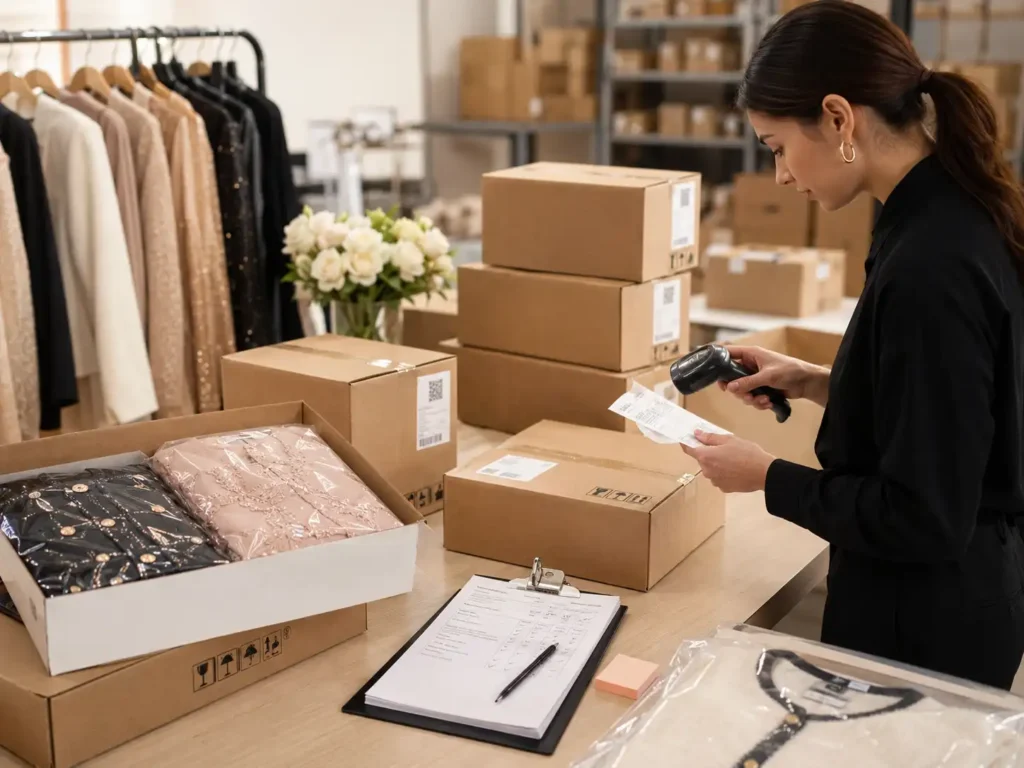
Cartons and Shipping Marks
MOQ, Cost and Lead-Time Planning
Jinfeng Apparel starts custom production from 200 pieces per style/color. MOQ is calculated by style and color rather than total collection quantity. Final cost and schedule depend on fabric, trims, construction, size ratio, packaging, testing and approval readiness.
| Planning Factor | What Must Be Confirmed | Cost / MOQ Effect | Schedule Effect |
|---|---|---|---|
| Style / Color Quantity | Quantity per style, per color and per size | Standard MOQ starts at 200 pcs per style/color; multiple colors do not combine into one 200-piece MOQ | Clear ratios allow production and material planning |
| Fabric Availability | Stock article, custom dye, exclusive print or special surface | Custom fabric and color may carry supplier MOQ and development cost | Material booking often becomes the critical path |
| Crop Top Structure | Cups, boning, lining, straps, closures and support | More components and operations increase sample and bulk cost | Special trims or support development may extend sampling |
| Skirt Structure | Length, panels, ruching, pleats, lining, slit and zipper | Fabric consumption and sewing time change by silhouette | Complex finishing requires more production and QC time |
| Color / Print Plan | Pantone references, print files, placement and number of colorways | More color groups reduce material and production efficiency | Lab dips, strike-offs or print approval add stages |
| Size Range | Brand chart, base size, grading and size ratio | Extended or mixed-size programs add pattern, fit and packing work | Additional fit approval may be required |
| Private Label Packing | Labels, hangtags, barcodes, polybags and carton marks | Suppliers may impose separate MOQ; custom packing adds cost | Late artwork delays finishing and shipment |
| Testing / Inspection | Market, material, test scope and third-party inspection | Testing and external inspection are quoted by project | Booking and report timing must enter the calendar |
| Launch and Delivery | PP approval date, requested delivery window and freight plan | Rush handling or split shipping can affect total landed cost | Realistic timing begins after approvals and materials are ready |
Build a Set Program Beyond One Style
Crop top and skirt development can become a repeatable collection system. Shared patterns, fabrics, trims and fit standards support more looks without making every SKU a completely separate project.
Turn Hero Sets into a 10-30 Style Assortment
A seasonal program can begin with several hero combinations and expand by neckline, skirt length, color and fabric. One approved corset block can support a mini, midi and high-slit skirt direction. A halter crop can share fabric with a maxi skirt, trouser or matching dress. A rib-knit bodycon set can extend into long-sleeve, sleeveless and different waist-height variations. Jinfeng groups the line by pattern family and material so development work remains organized. A 12-style capsule, for example, may use three top directions and four skirt directions while limiting the number of unique fabrics and trims. The approach creates visual variety while protecting fit logic, purchase volume and repeatability. Each new combination still receives style-specific review because fabric, neckline, hem and waist changes can alter the balance of the final outfit.
Share Materials and Trims Without Losing Design Identity
Collection efficiency improves when several styles use the same approved fabric family, color group, lining, zipper or label system. Shared purchasing can support better material planning and reduce unused remnants, but design identity should not become repetitive. Jinfeng can vary silhouette, panel shape, ruching, strap detail, slit, length and color placement while retaining a controlled material base. Custom prints may be applied across a crop top, skirt and dress capsule; satin can move from a cami set into an occasion dress; knit can support a fitted set and bodysuit. Material changes are documented because the same pattern cannot be assumed to work identically in every article. Weight, stretch, recovery, opacity and shrinkage are rechecked before a shared block is released into another fabric.
Support Reorders, Recolors and Multi-Batch Production
Long-term production becomes faster and more consistent when approved records are retained. Jinfeng can archive patterns, measurement files, fabric references, trim details, label positions, packing instructions and order history for future use. Repeat orders still require confirmation of fabric availability, dye lot, component supply, quantities and current delivery window. A new color can require shade approval; a new fabric can require pattern or lining review; a different size ratio changes production and packing planning. Multi-batch programs can be organized around launch waves, replenishment and seasonal color updates. The value of an archive is not blind duplication. It is a controlled starting point that helps teams compare the new order with the last approved standard, identify changes and restart production with fewer missing details.

Compliance Support and Design Protection
Material and Testing Support
Inspection and Quality Files
NDA and Design Protection
Crop Top and Skirt Set Development Cases
US Partywear Drop
- Styles: 18 coordinated looks
- Volume: 52,800 garments / 26,400 sets
- Key control: structured-versus-stretch proportion and black shade consistency
UK Occasion Collection
Program scope: 12 styles, 24,600 garments, equal to 12,300 sets, using satin, lace and crepe in three color families and UK sizes 6-18. The collection included cami crops, one-shoulder tops, bias midi skirts and lined lace minis. The main risk was surface and drape inconsistency across colorways. Fabric approvals recorded shine direction, opacity, lining and hem method. Larger sizes received additional review for neckline support, strap placement and the crop-to-waist gap. Production was grouped by fabric family so cutting and pressing standards remained consistent. Packing used one set barcode with component references in the internal assortment file. Final checks covered satin handling marks, lace placement, zipper alignment, skirt hang, size pairing and carton assortment. Archived PP references supported a later reorder in two additional colors.
- Styles: 12 occasion sets
- Volume: 24,600 garments / 12,300 sets
- Key control: shine direction, lining coverage and extended-size balance
Australian Resort Program
Program scope: 24 styles, 71,200 garments, equal to 35,600 sets, including six print stories, four solid colors and sizes AU 6-16. The range combined halter crops, shirred tops, linen-blend bralettes, tiered minis and printed maxi skirts. Print scale and fabric shrinkage created the greatest development risk. Styles were divided into engineered-print, random-print and solid-fabric groups. Strike-off or fabric approvals were linked to each style before cutting, while skirt lengths and top placement were checked against motif direction. The order used split shipment around wholesale and ecommerce launch windows. QC focused on print lot, panel direction, shirring recovery, waistband comfort, hem balance, paired quantities and retail packing. Shared print and trim records later supported a smaller capsule extension without rebuilding the full material library.
- Styles: 24 resort looks
- Volume: 71,200 garments / 35,600 sets
- Key control: six print stories, shrinkage and split-launch planning
Crop Top and Skirt Set Frequently Asked Questions

Start Your Crop Top and Skirt Set Project
Send Jinfeng Apparel the information already available, whether it is a complete tech pack, an original sample, a line sheet or a clear reference image. Kelly will organize an initial review covering product structure, fabric direction, pattern risk, MOQ fit, sample requirements, private-label needs and production timing.
A more complete brief allows the team to identify risks before materials are ordered and before the first sample enters development. Multi-style programs can also be reviewed by launch priority so hero looks, photo samples and long-lead materials are planned in the correct sequence. The first response should help both sides decide whether the project is ready for quotation, fabric selection or formal sampling rather than pushing an unclear style directly into production.
- Design files: reference images, tech packs, original samples, sketches or line sheets.
- Commercial plan: quantity per style/color, size range, target market and launch window.
- Material direction: preferred fabric, color, print, trims, lining and support requirements.
- Brand delivery: labels, hangtags, barcode files, folding, polybags, carton marks and inspection needs.
- Form fields: Name, Company, Email, Tel/WhatsApp, Target Quantity, Message and Upload Files.

