
Crepe Dress Manufacturer
Custom crepe dress development for fashion brands seeking controlled drape, clean fit, stable bulk quality and retail-ready private-label delivery.
- Crepe sourcing across polyester, viscose and spandex-blend constructions, commonly 120-250 gsm.
- Development for cocktail, office, formal, midi, wrap, column, pleated and occasionwear dresses.
- Pattern, sample and bulk controls built around waistline balance, zipper flatness, lining, pressing and hem level.
- MOQ starts from 200 pcs per style/color, subject to fabric, color, trims, construction and production schedule.
Crepe Dress Manufacturing Built for Serious Fashion Programs
Since 2008
Six Owned Factories
Ten Plus Partners
Two Sample Rooms
Pattern Team
Quality Team
A Manufacturing Fit for Established Fashion Brands
Best Fit For
Production Model
Custom Crepe Dresses Across Commercial Product Categories

Crepe Midi Dress

Crepe Maxi Dress

Crepe Mini Dress

Crepe Cocktail Dress

Crepe Office Dress

Crepe Wrap Dress

Crepe Bodycon Dress

Crepe Column Dress

Crepe Pleated Dress

Crepe One-Shoulder Dress

Crepe Formal Dress

Crepe Jumpsuit
Crepe Fabric Options by Weight, Stretch and End Use
Crepe is a surface and construction family rather than a single cloth. Weight, fiber content, yarn twist, stretch and finishing influence drape, opacity, hand feel, sewing behavior, cost and final garment shape.
| Crepe Option | Common Weight | Stretch | Best Uses | Main Controls |
|---|---|---|---|---|
| Lightweight Polyester Crepe | 120-150 gsm | None or slight | Wrap, soft midi, layered dress | Transparency, seam slippage, lining, hem movement |
| Midweight Polyester Crepe | 150-190 gsm | None or slight | Office, cocktail, column, A-line | Drape, zipper flatness, shade, pressing |
| Heavy Crepe | 190-250 gsm | None or slight | Structured midi, formal, sheath | Bulk at seams, needle selection, hem weight |
| Stretch Crepe | 180-250 gsm | Two-way or comfort stretch | Bodycon, fitted midi, jumpsuit | Recovery, seam stretch, size tolerance |
| Viscose Crepe | 120-190 gsm | Usually none | Fluid wrap, resort-formal, soft maxi | Shrinkage, skew, colorfastness, pressing |
| Spandex Blend Crepe | 170-240 gsm | Controlled stretch | Fitted office, cocktail, bodycon | Recovery, grin-through, zipper compatibility |
| Crepe de Chine Style | 70-120 gsm | None | Soft occasion, layered dress | Opacity, snagging, lining, delicate pressing |
| Crepe-Back Satin | 120-220 gsm | None or slight | Reversible design effects, occasionwear | Face direction, shine variation, snag control |
Crepe Selection Starts With Garment Performance
Fabric approval is based on how the cloth behaves in the intended silhouette, not only on color and touch. A beautiful swatch can still produce poor seams, unstable hems or an incorrect retail look after cutting and pressing.
Weight and Drape Must Match the Silhouette
Crepe commonly falls within 120-250 gsm, yet identical weights can perform differently because yarn twist, weave density, fiber blend and finish alter drape. A 140 gsm fluid crepe may suit a wrap or soft midi, while the same weight can become too transparent for an unlined sheath. A 220 gsm stretch crepe may support bodycon shaping but can create bulky waist seams when gathered or heavily layered.
Fabric review should cover:
- Hanging drape across front, back and bias directions.
- Surface texture under daylight, studio lighting and close photography.
- Opacity over skin-tone and dark underlayers.
- Stretch percentage and recovery after repeated extension.
- Edge fraying, seam slippage and needle-mark sensitivity.
- Pressing response at darts, waist seams, hems and zipper areas.
Jinfeng Apparel aligns fabric weight with silhouette, lining plan and construction before the first approved sample. The goal is a crepe dress with the intended vertical line, movement and surface quality after sewing, fitting, pressing and packing.
Hand Feel and Shade Need Bulk References
Crepe surface texture can hide minor wrinkles, yet hand feel and shade may shift between fabric lots. Matte finishes can appear darker in folded areas; textured surfaces can reflect light differently across grain direction. Bulk approval therefore needs more than a color name.
Control references may include:
- Approved lab dip or bulk shade cutting.
- Fabric swatch with composition, width and weight.
- Hand-feel approval for softness, dryness or compactness.
- Roll-to-roll shade grouping before cutting.
- Shrinkage and relaxation records when relevant.
- Face-side and grain-direction marking for production.
Light colors may require lining even when the fabric looks opaque on a table. Stretch qualities require recovery checks because poor recovery causes bagging at elbows, seat and waist. Viscose-rich crepe needs additional shrinkage and skew review. Polyester crepe usually offers more stable care performance but still needs shade, pressing and seam control.
Silhouette Engineering for Crepe Dress Collections

Sheath and Column

Wrap and Draped

A-Line and Fit-Flare

Bodycon and Fitted

Asymmetric Styles

Pleated and Gathered
Fit and Measurement Control Across Every Size
Crepe drape can hide minor construction flaws on a hanger while revealing them immediately on-body. Fit approval therefore combines visual balance, movement testing and recorded garment measurements before grading and bulk cutting.
Core Measurement Points
Crepe dress measurements are selected by silhouette rather than copied from a generic checklist. A fitted midi may need more control points than a loose wrap dress. Core measurements often include bust, waist, high hip, low hip, shoulder width, armhole, neckline depth, strap length, center-front length, center-back length, skirt length, slit height and hem sweep.
Fit review also checks:
- Shoulder and neckline balance from front, side and back.
- Waistline position while standing and sitting.
- Hip ease during walking, stair movement and seated posture.
- Zipper opening length and smooth closure.
- Lining movement against the outer shell.
- Hem level after fabric relaxation.
- Drag lines created by insufficient ease or incorrect grain direction.
All approved changes should move into the pattern, measurement chart and sample comment record. Visual comments alone are not enough for consistent grading.
Grading and Bulk Tolerance
Size grading protects the intended silhouette across the range. A bodycon style cannot simply gain equal circumference at every point; bust shaping, waist position, neckline, armhole and dress length may need separate grade rules. Wrap overlap and slit height also require size-aware review.
Bulk measurement control should include:
- Approved spec with point-of-measure definitions.
- Tolerance by measurement, not one universal number.
- First output review before full-line sewing.
- Inline measurement checks across sizes and colors.
- Corrective action when repeated drift appears.
- Final measurement review before packing.
Crepe can stretch or relax during handling, especially when cut on partial bias or combined with stretch fibers. Garments should rest before final hem levelling and measurement where construction requires it. Stable measurement records reduce returns, improve repeat orders and preserve the same fit language across future collections.
Design Details Engineered for Crepe Fabric Behavior

Deep V Necklines

One-Shoulder Lines

Ruched Panels

Pleated Waists

Side Slits

Cutout Shapes

Draped Cowls

Sculpted Sleeves
Linings, Zippers and Internal Structure for Clean Results
The outer crepe fabric carries the visual surface, while internal components determine opacity, comfort, support, closure quality and shape retention. Each component is selected as part of the garment system.
Lining Is Chosen by Opacity, Stretch and Movement
Lining is not automatically required for every crepe dress. Dark, compact and heavier crepe may work without full lining, while light colors, low weights and fitted silhouettes often need added coverage. The lining should support the outer fabric without changing drape or restricting movement.
Selection points include:
- Woven lining for non-stretch tailored dresses.
- Stretch lining for bodycon and comfort-stretch crepe.
- Partial lining for bodice support or skirt coverage.
- Power mesh for localized shaping in fitted styles.
- Skin-friendly finishes at neckline, armhole and slit areas.
- Correct lining length to prevent peeking or pulling.
The lining and shell must be tested together. A rigid lining under stretch crepe can distort fit; a very soft lining under structured crepe may fail to support the silhouette. Shade also matters because lining color can alter the visual depth of pale crepe.
Closures and Support Need Flat, Stable Integration
Invisible zippers are common in crepe dresses because they preserve a clean surface. Zipper tape, seam stabilization and pressing must prevent rippling. Heavy crepe may require stronger zipper support, while stretch crepe needs controlled stabilization so the opening does not become rigid against the body.
Internal components may include:
- Invisible, concealed or metal zippers according to style.
- Hook-and-eye reinforcement at top openings.
- Stay tape along neckline, shoulder or waist.
- Bra cups, underwire or boning for structured bodices.
- Elastic at shoulder, waist or internal support points.
- Clean facing, binding or understitching at edges.
Support components should remain discreet, comfortable and repeatable in bulk. A dress can look clean in front photography yet fail during wear when a zipper buckles, neckline rolls or internal support shifts. Development therefore includes closure operation, seated movement and repeated dressing tests.
Crepe Dress Sampling From Concept to Golden Sample
Project Review
Fabric Direction
First Sample
Fit Revision
PP Sample
Golden Sample
Sample Timelines Depend on Fabric and Construction Readiness

Standard Development Route

Complex Development Route

Revision Planning

Photo-Ready Samples
Bulk Production Managed Through Defined Control Stages
Material Approval
Fabric Relaxation
Marker Planning
Cutting Control
Sewing Setup
First Output Review
Inline Inspection
Finishing and Pressing
Final Packing Review
Crepe Workmanship Focused on Smooth Lines and Wearability
Workmanship is judged at the points where textured fabric meets fitted construction. Seams, edges, closures and hems must remain smooth after sewing, pressing, movement and packing.
Seam Quality and Surface Control
Crepe can conceal light wrinkles while exposing poor seam tension. Puckering along side seams, waist seams and center-back zippers creates broken lines that are highly visible on fitted or column silhouettes. Needle selection, stitch density, thread type and machine tension should be tested before bulk sewing.
Workmanship controls include:
- Consistent seam allowance and notch matching.
- Stabilization at shoulders, necklines and zipper openings.
- Balanced tension to prevent rope-like seams.
- Clean dart points without bubbles or dimples.
- Reinforced slit tops and stress points.
- Secure pleats, gathers and internal anchors.
- Smooth facing and lining joins without rolling edges.
Stretch crepe needs seams that move with the body while maintaining recovery. Non-stretch heavy crepe needs controlled bulk at intersections. Soft viscose crepe may require more handling care to prevent stretching during sewing.
Hem, Pressing and Final Shape
Crepe hems can become uneven because fabric relaxes after hanging, bias sections grow or lining pulls against the shell. Long dresses and asymmetric designs should be evaluated after the garment settles. Hem method is selected by weight, silhouette and visual requirement.
Common options include:
- Clean turned hem for structured crepe.
- Narrow hem for lighter crepe.
- Blind hem for formal or tailored looks.
- Faced hem where added weight or shape is needed.
- Lining-free hang allowance to prevent pulling.
Pressing uses controlled temperature, steam and pressure. Excess heat may flatten texture, create shine or leave seam impressions. Pressing tools and protective cloth can reduce marking. Final shape is reviewed on a hanger and dress form before packing, with special attention to waistline, zipper, slit and hem.
Quality Control Built Around Crepe-Specific Risks
Shade Consistency
Hand Feel
Fabric Defects
Measurement Accuracy
Seam Appearance
Zipper Flatness
Lining Balance
Pressing Quality
Packing Condition
Bulk Consistency Starts Before the Sewing Line
Reliable repetition comes from approved references, controlled material lots and documented methods. Final inspection alone cannot repair inconsistent fabric, incorrect cutting or unmanaged pattern changes.
Production Standards Are Locked Before Cutting
The production file should connect the approved PP sample, golden sample, graded patterns, measurement chart, fabric reference, trim card, label placement and packing instruction. Any unresolved comment creates ambiguity on the line.
Key controls include:
- Bulk fabric approval against shade and hand-feel references.
- Pattern version control after final fitting.
- Measurement chart with clear point-of-measure diagrams.
- Sewing instruction for high-risk seams and details.
- Approved zipper, lining, thread and support materials.
- First output approval before normal production volume.
Multi-style collections require style-level files rather than one broad instruction covering every dress. A wrap dress, fitted column and pleated midi can share the same crepe family while needing completely different sewing and measurement controls.
Repeat Orders Use Archived Product Records
Repeat orders should restart from approved records rather than memory. Jinfeng Apparel retains pattern, measurement, fabric, color, trim, workmanship, packing and historical order references for long-term brand cooperation.
Repeat-order review covers:
- Whether the original fabric remains available.
- Whether the new lot matches approved hand feel and shade.
- Any requested size, color or construction changes.
- Updated labeling, barcode or carton requirements.
- Delivery windows and production wave planning.
- Lessons recorded from earlier production.
A repeat order can move efficiently when the product standard is stable, but a fabric substitution or fit change may require new sampling. Clear version control protects consistency while allowing seasonal updates.
Crepe Dresses for High-Value Fashion Scenarios

Office Collections

Cocktail Collections

Wedding Guest

Formal Evening

Day-to-Evening

Premium Ecommerce
MOQ, Development and Production Planning Guide
Commercial planning depends on fabric availability, style complexity, color count, size breakdown, trims and launch timing. Early disclosure of quantity and delivery needs allows a more accurate production route.
| Planning Item | Working Reference | Main Variables |
|---|---|---|
| MOQ | From 200 pcs per style/color | Fabric MOQ, custom dyeing, trims, complexity, size-color split |
| Standard Sample | About 7-12 working days | Fabric available, complete tech pack, familiar construction |
| Complex Sample | About 12-20 working days | Structured bodice, custom pleating, special fabric, multiple trials |
| Bulk Production | Commonly about 25-45 days after approvals | Order volume, fabric readiness, style count, production schedule |
| Fabric Sourcing | About 3-10 working days for available options | Composition, weight, color, stock, replacement requirements |
| Custom Color | Added development time | Lab dip rounds, dye lot, fabric supplier MOQ |
| Size Range | Defined by project | Grading rules, fit model, measurement chart, tolerance |
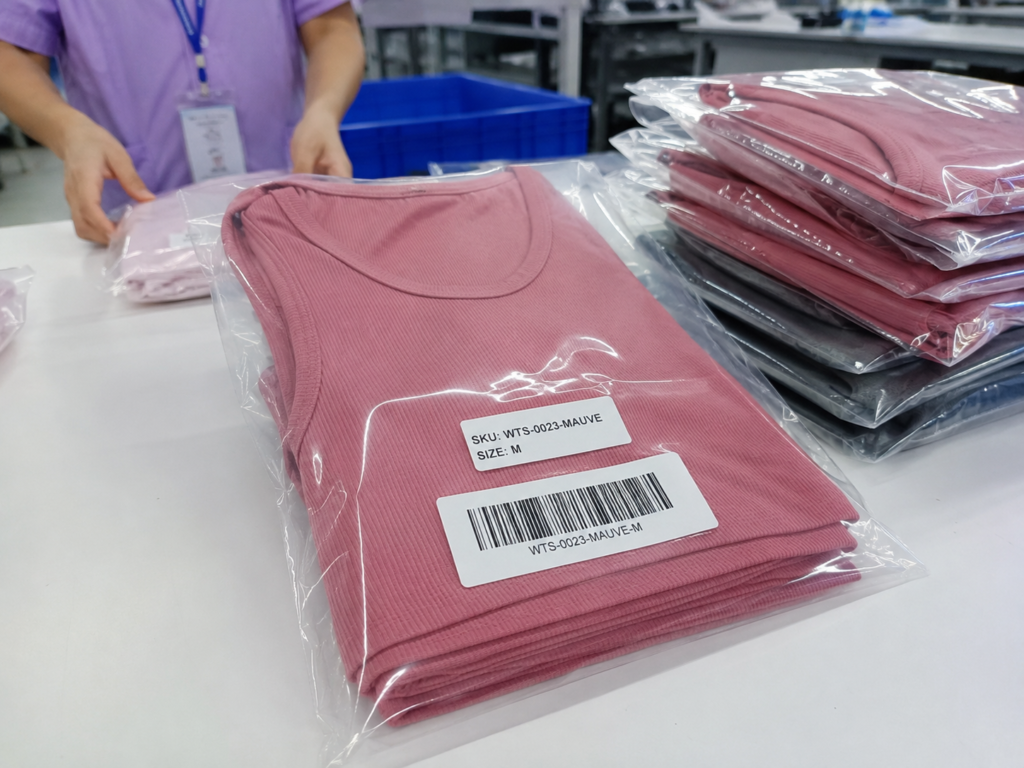
| Private Label Packing | Planned before bulk completion | Labels, hangtags, barcodes, polybags, cartons, warehouse rules |
Private-Label Finishing for Retail-Ready Crepe Dresses

Main Labels

Care Labels

Hangtags
Barcode Control

Folding and Polybags

Carton Planning
Collection Management for Multi-Style Crepe Dress Orders
Style-Level Tracking
Material Consolidation
Sample Status Control
Production Allocation
Delivery Waves
Record Retention
Anonymous Crepe Dress Projects With Measurable Scope
The following project profiles reflect the scale and operating structure used for established fashion programs. Brand identities and proprietary designs remain protected under confidentiality controls.

United States Premium Ecommerce Collection
Project scope: 18 crepe dress styles, 42,600 garments, five core colors, six sizes and three delivery waves.
The collection combined stretch-crepe bodycon midis, one-shoulder cocktail dresses, wrap dresses and long column styles. Early samples showed zipper rippling on fitted silhouettes and inconsistent hem drop on the longest styles. The development team separated the collection into two fabric groups rather than forcing one crepe across every style.
Key actions included:
- Upgrading fitted styles to a denser comfort-stretch crepe.
- Adding zipper-area stabilization and revising center-back seam allowance.
- Rebalancing lining stretch for bodycon dresses.
- Allowing long garments to settle before final hem levelling.
- Creating style-specific pressing and folding references.
Bulk production moved through three approved waves aligned with launch priorities. Measurement, zipper and hem checkpoints were added to first output and inline inspections. The final collection retained a unified matte crepe appearance while using different technical constructions behind the scenes.

United Kingdom Occasionwear Program
Project scope: 24 styles, 68,400 garments, four coordinated color families, sizes UK 6-18 and two seasonal shipment windows.
The program covered wedding guest midis, asymmetric cocktail dresses, pleated styles and formal maxis. The largest risk involved color variation across several crepe qualities and lining shades. A single color name was not enough because matte surfaces created different visual depth under studio and retail lighting.
Key actions included:
- Establishing approved shade references by fabric quality.
- Grouping fabric lots before cutting.
- Matching lining depth to pale and saturated colors.
- Recording pleat direction and finished length by style.
- Reviewing slit height and hem balance across the size range.
- Using lower-pressure carton loading for long formal styles.
Production files linked every style to its fabric and shade reference, pattern version, label set and packing method. Coordinated color presentation was maintained without ignoring the different behavior of each crepe construction.

Australian Office-to-Evening Collection
Project scope: 12 styles, 26,800 garments, three colors per style, sizes AU 6-16 and repeat-order preparation built into the original file set.
The range focused on wrap midis, tailored columns, shaped-sleeve dresses and crepe jumpsuits. Fit review identified waist placement and sitting comfort as major risks, particularly for office silhouettes intended for extended wear. The team adjusted front overlap, hip ease and jumpsuit torso length before PP approval.
Key actions included:
- Movement checks for sitting, walking and stair use.
- Separate grade rules for wrap overlap and slit height.
- Reinforced neckline and waist anchor points.
- Pressing trials to protect the natural crepe texture.
- Barcode and size assortment planning for retail delivery.
- Archived patterns, measurements and fabric references for replenishment.
The collection was released with a consistent refined surface, controlled coverage and fit logic suited to day-to-evening use. Repeat-order files were prepared alongside the first bulk order to shorten future review cycles.
Why Fashion Teams Choose Jinfeng Apparel
Dress Specialization
Fabric Knowledge
Pattern Development
Sample Capacity
Production Network
Project Continuity
Confidential Development and Long-Term Brand Cooperation
Design Protection
Controlled Case Sharing
Repeat and Seasonal Programs
Crepe Dress Manufacturing Frequently Asked Questions
Start Your Crepe Dress Manufacturing Project
Send your crepe dress direction to Kelly for an initial manufacturing review. A complete submission allows the team to assess fabric suitability, pattern complexity, sample route, MOQ, cost drivers, private-label requirements and production timing with fewer assumptions.
Please include:
- Reference images, sketches, original sample photos or tech pack.
- Target quantity by style and color.
- Preferred crepe composition, weight, stretch or hand feel.
- Color plan, size range and measurement chart.
- Lining, zipper, support, pleating or trim requirements.
- Main label, care label, hangtag, barcode and packing needs.
- Required sample date, launch date and delivery destination.


