Skip to content
Cowl Neck Dress Manufacturer
Custom cowl neck dress development built around controlled drape, balanced coverage, accurate fit and repeatable bulk production.
- Pattern-ld neckline control: cowl width, center-front drop, drape allowance, strap position and bust coverage are reviewed as one connected structure.
- Development capacity: 2 sample rooms, 7+ senior pattern makers and 20+ sample machinists support parallel style development and revision work.
- Sample planning: a standard dress first sample normally requires 10-15 days; medium-complex structures normally require 12-18 days after materials and specifications are confirmed.
- Production entry: MOQ starts from 200 pieces per style/color, with fabric, trims, color development, size range and packaging reviewed before quotation.
Development Capacity Behind Every Cowl Neck Dress
Since 2008
Two Sample Rooms
Seven Pattern Makers
Twenty Sample Machinists
Six Owned Factories
MOQ From 200 Pieces
Manufacturing Support for Established Fashion Programs
Global Fashion Brands
Premium Ecommerce Brands
Occasionwear Labels
Partywear Collections
Sourcing Offices
Private Label Programs
Production Risks Hidden Inside a Soft Neckline
Drape Looks Too Flat
Neckline Drops Too Low
Left and Right Folds Differ
Bias Panels Twist
Straps Shift the Fit
Bulk Differs From Sample
Built for Structured Collection Development
Collection Development Programs
- Clear design references or tech packs
- Planned color and size ranges
- Sample and PP approval process
- Bulk production quantities
- Private-label and packing requirements
- Launch calendar and delivery route
Ongoing Production Partnerships
- Seasonal collection development
- Multi-style production planning
- Repeat-order file retention
- Bestseller replenishment
- Multi-batch shipment support
- Cost and construction review
Information Needed for an Accurate Project Review
Reference Images
Tech Pack
Target Quantity
Fabric Direction
Color Plan
Size Range
Branding Details
Launch Date
From Design Reference to Packed Bulk Order
Project Review
Fabric Direction
Pattern Development
First Sample
Fit Revision
PP Approval
Bulk Production
Final Inspection
Packed Delivery
Custom Cowl Neck Dress Collection

Satin Mini Dress

Midi Slip Dress

Maxi Cowl Dress

Back Cowl Dress

Halter Cowl Dress

Bodycon Cowl Dress

Ruched Cowl Dress

Bias-Cut Cowl Dress

Bridesmaid Cowl Dress

Party Cowl Dress

Resort Cowl Dress

Evening Cowl Gown
Cowl Neck Dresses for Distinct Fashion Markets

Going-Out Collection

Partywear Collection

Occasionwear Collection

Bridesmaid Collection

Resort Collection

Evening Collection
Build a Complete Cowl Neck Dress Architecture
Neckline Direction
Dress Length
Silhouette Shape
Back Construction
Strap System
Feature Details
Control the Details That Shape the Neckline
Cowl Depth
Drape Volume
Neckline Width
Strap Position
Back Opening
Waist Shaping
Dress Length
Slit Height
Select Fabric by Drape, Fit and Market Position
| Fabric | Drape Profile | Stretch | Transparency | Lining Direction | Best Applications | Main Control Point |
|---|---|---|---|---|---|---|
| Polyester satin | Fluid to medium, clear surface shine | Low unless blended | Light colors may show through | Partial or full lining by color and weight | Party, occasion, bridesmaid, evening | Needle marks, shine direction, snagging, color lot |
| Stretch satin | Fluid with closer body fit | Low to medium | Varies by weight and shade | Stretch-compatible lining where needed | Bodycon, ruched, going-out | Recovery, seam puckering, waist-hip fit |
| Silk-like satin | Soft hand with premium visual depth | Usually low | Often needs review in pale shades | Lightweight lining or selective coverage | Premium ecommerce, occasion, slip dresses | Consistent hand feel, pressing, abrasion |
| Viscose or rayon | Soft, fluid and less glossy | Usually low | Lightweight qualities can be sheer | Breathable lining by style | Resort, relaxed midi and maxi | Shrinkage, diagonal growth, wrinkle behavior |
| Jersey | Fluid with continuous stretch | Medium to high | Depends on knit density | Stretch lining or double layer | Bodycon, casual party, travel styles | Recovery, neckline stretching, seam stability |
| Crepe | Controlled drape with lower shine | Low to medium | Often more opaque | Selective lining by garment structure | Occasion, office-to-evening, refined midi | Surface consistency, seam pressing, weight |
| Velvet | Rich, directional drape and depth | Low to medium | Usually opaque | Smooth lining improves wear | Winter party, evening, holiday | Nap direction, crushing, seam bulk |
| Chiffon or georgette | Light, floating and layered | Low | High transparency | Full or layered lining | Occasion overlays, resort, evening | Edge control, shifting during cutting, snagging |
Controlling Satin Cowl Neck Dress Quality
Satin is a natural fit for cowl neck styling, yet the same shine that creates visual impact also reveals cutting, sewing, pressing and packing errors. Strong control begins with fabric approval and continues through final folding.
Match Weight to the Intended Drape
Satin cannot be selected by composition alone. Weight, yarn structure, stretch, surface friction and finish determine how the cowl folds. A very lightweight satin can create fine, fluid folds but may expose seam allowance, lining edges or body contours. A heavier satin offers more coverage and shape but can pull the neckline lower and add bulk at the fold.
Jinfeng Apparel compares fabric against the intended silhouette. Mini slip styles often need enough body to avoid a sleepwear appearance. Bias-cut midi dresses need diagonal movement without excessive growth. Bodycon styles may require stretch and recovery, while evening gowns can use more weight if the strap and upper-body structure support it.
During sampling, the cowl is evaluated before and after edge finishing. Narrow hemming, binding, facing or a clean turned finish each changes the way the edge rolls. A test section may be sewn when the selected satin is sensitive. The goal is to keep the edge clean without making the neckline stiff.
- Record approved fabric composition, weight and width
- Compare drape under normal and studio lighting
- Check pale colors for transparency
- Confirm lining compatibility
- Reassess pattern when the fabric changes
Control Grain and Shine Direction
Satin reflects light differently along warp and weft directions. A panel cut in the wrong direction can appear like a different shade even when it comes from the same dye lot. The risk becomes more visible when the front cowl, skirt body and lining pieces are cut with inconsistent orientation.
Marker planning therefore needs clear directional rules. Grain arrows, nap direction and face-side identification are placed in the production pattern. Cut bundles remain separated by color, size and orientation. Sewing teams are instructed not to rotate replacement panels to save fabric because the finished garment may show a visible shine mismatch.
Bias-cut styles need extra care because diagonal placement changes both drape and reflection. The sample and bulk marker should use the same direction unless a deliberate mirrored effect is part of the design. Final inspection checks the dress under consistent lighting from the front, side and back.
- Mark directional grain on every visible panel
- Keep left and right components paired
- Avoid mixing panels from different dye lots
- Inspect replacement pieces before assembly
- Review shade under several viewing angles
Prevent Needle Marks and Seam Puckering
Fine satin can retain permanent needle holes, especially after seam removal. Rework must be minimized through accurate cutting, clear seam allowance and correct sewing settings. Needle size, point type, thread weight, stitch length and feeding pressure are selected during sample development rather than left for bulk trial and error.
Seam puckering can come from thread tension, fabric feeding imbalance, stitch density, pressing or incompatible lining. Long side seams on slip and bias-cut dresses show small distortions easily. Sewing tests help establish a stable method before production. Panels are handled without stretching, and seam pressing follows the fabric response rather than maximum heat.
Invisible zippers also require control. A zipper inserted with excess tension can create waves along the side seam. The zipper tape, seam stabilization and pressing method are tested on the approved fabric. Any repair area is examined for visible holes or shine changes before acceptance.
- Confirm needle and thread specification during sampling
- Avoid repeated unpicking on visible areas
- Balance feed and tension for long seams
- Test invisible zipper insertion
- Inspect seams under reflected light
Press and Pack Without Surface Damage
Satin finishing can be damaged by direct heat, pressure, dirty equipment, sharp folding or prolonged compression. Pressing should shape seams without flattening the natural cowl folds or leaving a hard iron outline. Protective cloths, appropriate temperature and limited pressure are selected according to the fabric.
Finished garments need a cooling period before packing. Warm fabric folded immediately can retain stronger creases. The cowl neckline should be arranged consistently so the fold is not crushed against hardware, zippers or hangtags. Tissue, protective sleeves or adjusted fold positions may be used for sensitive surfaces.
Carton pressure also matters. Overpacked cartons create deep lines that remain visible after arrival. Packing quantity, carton size and garment length are coordinated. For ecommerce programs, the polybag presentation should allow warehouse handling without forcing the garment into an undersized package.
- Use approved pressing temperature and protection
- Keep hangtags away from visible satin surfaces
- Fold along low-risk areas
- Control pieces per carton
- Inspect packed garments for compression marks
Lining and Coverage Engineering
Lining influences transparency, comfort, movement and neckline behavior. The lining plan should support the visible fabric without fighting its drape or appearing around open areas.
Choose Full, Partial or Double-Layer Coverage
A full lining can improve opacity, comfort and garment finish, especially for light colors and occasion dresses. A partial lining may cover the body while leaving the cowl panel free to drape. A self-fabric double layer can preserve a consistent appearance around open necklines but increases weight and consumption.
The choice depends on fabric transparency, dress length, silhouette and back construction. A full lining in a bias-cut dress must be compatible with diagonal movement or it may restrict the outer shell. A stable lining under stretch satin can create horizontal pulling. A very slippery lining can shift during wear and appear at the hem or slit.
Lining boundaries are defined in the pattern and production file. The sample checks whether the lining shows at the neckline, armhole, back opening or slit. Hem lengths are balanced so the lining remains concealed after hanging and movement.
Engineer Bust Coverage Without Flattening the Cowl
Coverage should be planned through pattern structure rather than solved only with a higher lining edge. If the lining rises too far, it can become visible inside the cowl and reduce the soft fold. If the neckline is lowered without support, the dress may open during movement.
Options include adjusting cowl width and drop, moving strap positions, shaping the front lining, adding a discreet internal stay, using a small securing point or integrating cups where the style allows.
Each option changes fit and appearance. The selected method is tested on the body in the intended base size and reviewed again during grading.
Photo references should show the approved neckline from front, side and movement angles. Measurement notes alone may not capture fold direction, so the PP file combines numbers with visual standards.
Keep Lining Stable During Wear
Lining attachment points need enough control to prevent twisting while allowing the outer shell to move. Side seams, zipper areas, waist joins, slits and hem points can be secured according to the construction.
Over-securing can create tension lines, while insufficient control allows the lining to rotate.
For mini and high-slit styles, movement tests check whether lining coverage remains consistent when sitting or walking. For maxi dresses, hanging and hem review confirm that the lining does not become longer than the shell.
Open-back garments need careful label placement so branding remains hidden and comfortable.
Bulk inspection checks lining color, measurement, seam finish, attachment points, exposure and cleanliness. The approved lining sample or swatch is retained with the trim record.
Straps, Closures and Supporting Trims

Adjustable Strap Hardware

Fixed Spaghetti Straps

Invisible Zippers

Hooks and Eyes

Internal Stay Tape

Cups and Support
Pattern Engineering Behind a Balanced Cowl Neckline
The neckline, bust, armhole, straps and back cannot be developed as separate parts. Pattern engineering controls where the folds begin, how far the neckline drops and whether the dress remains stable during movement.
Set Neckline Width and Center-Front Drop
Neckline width determines the distance across which the cowl fabric can fall. A narrow width concentrates folds near the center, while a wider width spreads volume toward the shoulders or straps. Center-front drop determines coverage and visual depth, but the two measurements interact. Increasing drop without adjusting width may create one long central fold rather than a soft series of folds.
The development process begins with a clear visual reference and measurable landmarks. The pattern maker defines the shoulder or strap points, neckline endpoints, center-front drop and intended fold direction. The sample is placed on the body, not only a dress form, because bust shape and posture change the way the cowl opens.
Changes are recorded by pattern version. A request such as “make the neckline slightly higher” is converted into a controlled action: reduce the center-front drop, reposition the neckline endpoint, revise the shoulder balance or adjust lining support. The revised sample confirms whether the cowl still looks intentional after the coverage change.
- Define reference points before sample cutting
- Measure neckline drop from an agreed position
- Record width and endpoint locations
- Compare front and side views
- Lock the final shape in the PP pattern
Calculate Drape Allowance for the Fabric
Drape allowance is not a universal formula. Fabric weight, stretch, width, surface friction and grain direction determine how much extra area is required. A light satin may form several narrow folds with modest allowance, while a firm crepe may need more area to create a visible cowl. Too much allowance can look bulky, shift unpredictably or add unnecessary fabric consumption.
Pattern development may use slash-and-spread, pivoting or a dedicated cowl panel depending on the dress construction. The method is selected according to seam placement and visual direction. A separate cowl panel can offer more control but introduces a seam; an integrated front panel creates a cleaner look but may increase fabric usage and cutting complexity.
The sample review checks the neckline in a relaxed state and during movement. Folds should return to an acceptable position after the wearer sits or turns. Edge finishing is tested because a facing, lining, binding or narrow hem changes stiffness. Final allowance is approved only after the actual fabric and finish are assessed together.
- Match allowance to approved fabric
- Test edge finish before pattern lock
- Avoid copying drape volume across fabrics
- Review consumption before quotation confirmation
- Retain approved pattern and fold reference
Balance Bust, Armhole and Shoulder Position
Bust coverage is influenced by more than the neckline opening. Bust point location, front length, armhole shape, shoulder slope and strap position can pull the cowl inward, outward, upward or downward. A style that looks balanced in the base size may expose the armhole or flatten the neckline after simple grading.
The pattern maker checks how the upper front hangs from the shoulder or strap points. If the armhole is loose, reducing only the side seam may distort the bust. If the cowl drops too low, shortening the strap may raise the full garment and change waist or hem position. Adjustments are distributed through the pattern according to the real cause.
Fit comments use measurable descriptions. “Too open at side bust” identifies the armhole and coverage issue; “cowl too deep at center front” identifies a different correction. Photos are paired with measurement notes so the revision team can see the exact area. The final grading plan defines how neckline, armhole and strap measurements change across sizes.
- Review bust point and front length
- Check armhole exposure from side view
- Test strap placement on the body
- Grade coverage rather than only circumference
- Verify extended sizes separately where required
Stabilize Without Making the Neckline Rigid
A cowl neckline must move, yet selected edges and stress points need control. Stabilization may include stay tape, lightweight interfacing, lining support, clean facing, under-stitching or reinforced strap attachments. The method should prevent stretching and rolling without making the fold look stiff.
Bias or stretch edges can grow during sewing. Stay tape may be applied to a measured length, but excessive tension creates rippling. Interfacing must match the fabric weight and should remain invisible through the face. Lining can support coverage, although a high lining edge may appear inside the cowl.
Sample testing determines the minimum effective support. The team checks the neckline after hanging, repeated dressing and movement. Construction instructions specify tape type, placement, finished length, seam allowance and pressing method. Bulk QC then checks edge shape and symmetry against the approved sample.
- Use the lightest effective support
- Test visibility through the outer fabric
- Control tape tension
- Reinforce strap attachment points
- Include stabilization in the sewing standard
Fit and Size Grading Across the Collection
| Measurement Point | Development Purpose | Grading Consideration | Production Check |
|---|---|---|---|
| Bust | Controls body fit and front coverage | Circumference and cup-volume change may affect cowl opening | Measure flat and review worn sample |
| Waist | Defines slip, bodycon or shaped silhouette | Ease depends on fabric stretch and market fit | Check level, circumference and drag lines |
| Hip | Controls movement and side-seam balance | Larger sizes may need revised ease or slit planning | Measure at approved point and test walking |
| Front neck drop | Sets neckline depth | Should not scale mechanically with bust | Measure from agreed shoulder or strap reference |
| Neckline width | Controls fold spread and shoulder opening | Endpoints may need controlled grade rules | Compare symmetry and fold reference |
| Strap length | Sets neckline height and armhole balance | Fixed and adjustable straps need size-specific range | Measure finished length and hardware position |
| Armhole | Controls side coverage and comfort | Larger bust sizes may need reshaping, not only enlargement | Review side view and movement |
| Front length | Maintains waist and hem position | Bust volume can affect worn length | Measure flat and confirm on fit model |
| Back length | Controls open-back level and hem balance | Strap and back depth influence grade | Check from agreed reference point |
| Slit height | Balances movement and coverage | Maintain proportional appearance without overexposure | Measure from hem or approved seam point |
| Garment length | Defines mini, midi or maxi position | Height market and size range may require separate rules | Measure after approved hanging process |
| Lining length | Prevents exposure at hem and slit | Must follow shell growth and movement | Compare after hanging and pressing |
Designed to Look Controlled in Motion

Standing Balance

Walking Movement

Sitting Coverage

Reaching Stability

Turning Recovery

Dancing and Events
Tech Pack Review Before Pattern Cutting
Product and Measurement Review
- The development team checks front and back sketches, detail drawings, measurement charts, grade rules and fit notes. For a cowl neck dress, the file should identify neckline drop, width, strap position, back depth, lining boundary, slit position and intended silhouette. Measurement points must use clear references so sample and bulk teams measure the same way.
- Any conflict is flagged. A deep front cowl combined with a very high lining edge may not produce the intended appearance. A low open back may reduce support for the front neckline. A fitted non-stretch body may need a closure even when the sketch shows none. Questions are listed before pattern development rather than solved by guesswork.
Fabric, Trim and Construction Review
- The BOM is checked for shell fabric, lining, zipper, strap hardware, hooks, cups, tape, labels and packing. Fabric specifications should include composition, weight, width, stretch, hand feel, color and any approved supplier reference. Trim colors and finishes are matched to the garment direction.
- Construction notes define seam finish, neckline edge, strap method, lining attachment, zipper insertion, slit finish and hem. The team considers whether the proposed method is suitable for the fabric and production quantity. Alternative methods are explained when the original instruction may create stiffness, visible marks or inconsistent bulk results.
Branding and Packing Review
- Main label, size label, care label, hangtag, barcode, polybag and carton requirements are reviewed before quotation is finalized. Open-back or thin-strap styles need discreet label placement. Care content must match the confirmed material composition and destination requirements supplied by the brand.
- Artwork files, label dimensions, folding method, SKU sticker position and carton marks are recorded. Material MOQ and lead time for labels or printed packing can differ from garment MOQ, so the packing route should be decided early enough to avoid finished goods waiting for branding materials.
Cowl Neck Dress Sample Development
Style Feasibility Review
Fabric and Trim Confirmation
First Pattern
First Sample
Internal Sample Check
Fit and Comment Review
Revised Sample
PP Sample
Lock the Approved Standard Before Bulk Production
Standards Locked at PP Approval
- Final pattern and revision number
- Approved measurements and tolerances
- Fabric and lining references
- Trim card and hardware finish
- Sewing and finishing method
- Label and packaging placement
- QC checklist and visual reference
- Carton and SKU instructions
Changes After PP Approval
- Record the requested change in writing
- Identify cost and timing impact
- Confirm whether pattern updates are needed
- Decide whether a revised PP sample is required
- Update production and QC files
- Release bulk work only after approval
Turning the Approved Sample Into Production Standards
Sample-to-bulk transfer prevents information loss when the style moves from development staff to production, quality and packing teams. Every approved detail becomes a controlled document or reference.
Transfer the Final Pattern and Size Rules
The production package identifies the final pattern revision, shell and lining patterns, size grading, notches, grain direction, strap points, slit location, hem shape and trim placement. Outdated pattern files are removed from active use. Printed or digital references carry the same style number and revision code.
The size chart includes measurement points, approved values and brand tolerances. Cowl depth, neckline width, strap length and garment length receive clear measurement methods. Measurement teams are trained to place the garment in the same position before checking. Bias styles may require measurement after an approved resting or hanging stage.
Pattern and measurement files are reviewed with production management before cutting. Any inconsistency between the PP sample and written data is resolved before the marker is released.
Transfer Materials and Construction
The BOM lists shell fabric, lining, zipper, strap hardware, tape, thread, labels and packing materials. Fabric records include composition, weight, width, stretch, approved color, supplier reference and dye lot where applicable. Trim cards show physical samples or approved photos and specifications.
Construction instructions cover neckline finish, stabilization, strap attachment, lining connection, zipper insertion, seam finish, slit reinforcement, hem and pressing. Sensitive operations are highlighted for the sewing line. A pilot or pre-production review may be used to confirm difficult steps before full output.
Material changes are not accepted informally. Substitutions are compared with the approved reference and documented for approval when they affect appearance, fit or care.
Transfer Visual and Quality References
The approved PP or Golden sample remains available to production and QC. Detail photos show neckline fold, strap position, back shape, lining boundary, zipper, slit, label placement and fold method. Visual references help control features that cannot be described by one measurement.
The QC checklist identifies fabric defects, color difference, grain direction, neckline symmetry, cowl depth, strap length, bust coverage, garment measurements, seam quality, lining exposure, zipper flatness, stains, pressing marks and packing condition.
Inspection findings are recorded by style and production stage. Repeated defects are reported early so corrective action can be applied before final inspection.
Transfer Branding and Packing Instructions
Packing files identify main label, size label, care label, hangtag, barcode, polybag, SKU sticker, folding method, carton quantity and carton marks. Open-back styles receive label placement instructions that keep branding hidden and comfortable.
The approved fold is tested on the garment. Satin cowls, hardware and zippers should not be compressed against visible surfaces. Carton quantity is selected to reduce crushing. Warehouse labels and barcode data are checked against the order breakdown.
Packing staff use the same style, color and size information as production records. Final carton reconciliation confirms quantities and reduces SKU or labeling errors before shipment.
Bulk Production Built Around the Approved Sample
- Review Bulk Workflow
- Plan Production
Fabric Inspection
Fabric Preparation
Marker and Cutting
Sewing Setup
In-Line Inspection
Pressing Control
Measurement Review
Final Garment Inspection
Packing and Cartons
Construction Details That Protect the Final Look

Clean Neckline Finish

Secure Strap Attachment

Flat Invisible Zipper

Stable Lining Connection

Balanced Side Seams

Reinforced Slit Finish

Refined Hem Finish

Controlled Final Pressing
Cowl Neck Dress Quality Control
Quality control is built into material intake, cutting, sewing, measurement, finishing and packing. The aim is to keep the approved sample visible in every production decision.
Material and Cutting Control
Incoming inspection compares bulk shell fabric, lining and trims with approved references. Checks cover composition records, weight, width, stretch, hand feel, color, surface defects and shade variation. Satin is reviewed for snagging, crease lines and directional shine. Hardware, zippers and labels are checked for color and specification.
Cutting control verifies grain direction, face side, marker orientation, notches and bundle identification. Bias panels receive special attention because orientation affects both drape and shine. Left and right components stay paired. Defective areas are removed before panels enter sewing.
- Approved fabric and lining reference
- Dye-lot or shade separation
- Directional marker control
- Accurate notches and drill points
- Bundle labels by style, color and size
Sewing and In-Line Control
In-line inspection begins early enough to correct recurring problems. Inspectors review cowl depth, neckline symmetry, strap attachment, armhole coverage, zipper flatness, side-seam position, lining connection and measurements. The first completed garments provide a production benchmark before the line reaches full output.
Sensitive satin operations are checked under reflected light for puckering and needle marks. Stretch styles are checked for recovery and seam waviness. Bias styles are reviewed for twisting. Findings are communicated to production management with clear corrective action rather than held until final inspection.
- First-piece approval by style and color
- Measurement checks at key operations
- Cowl and strap symmetry review
- Seam, zipper and lining inspection
- Repeated-defect tracking and correction
Finished Garment and Measurement Control
Finished garments are laid or hung according to the approved method before measurement. The team checks bust, waist, hip, cowl drop, neckline width, strap length, garment length, slit height and lining length against the brand chart and tolerance.
Visual inspection covers fabric defects, stains, loose threads, seam quality, neckline balance, strap hardware, zipper operation, lining exposure, hem level and pressing. Movement-sensitive styles may receive additional hanging or wearing checks. Inspection records are organized by style, color and size.
- Approved measurement chart and tolerance
- Front, side and back visual review
- Hanging balance for bias and maxi styles
- Functional check for straps and zippers
- Cleanliness and pressing review
Packing and Shipment Control
Packing QC confirms main labels, size labels, care labels, hangtags, barcodes, polybags, SKU stickers and carton marks. The garment is folded according to the approved method, with sensitive satin surfaces protected from hardware and sharp paper edges. Carton loading avoids excessive compression.
Packed quantities are reconciled against the order breakdown. Random cartons are checked for style, color, size and packaging accuracy. Export documents and packing lists are prepared from the confirmed carton data. Brand or third-party inspection can be coordinated according to agreed requirements.
- Correct style, color, size and barcode
- Approved fold and protection
- Carton quantity and assortment check
- Carton mark verification
- Final packing list reconciliation
Private Label and Retail-Ready Delivery
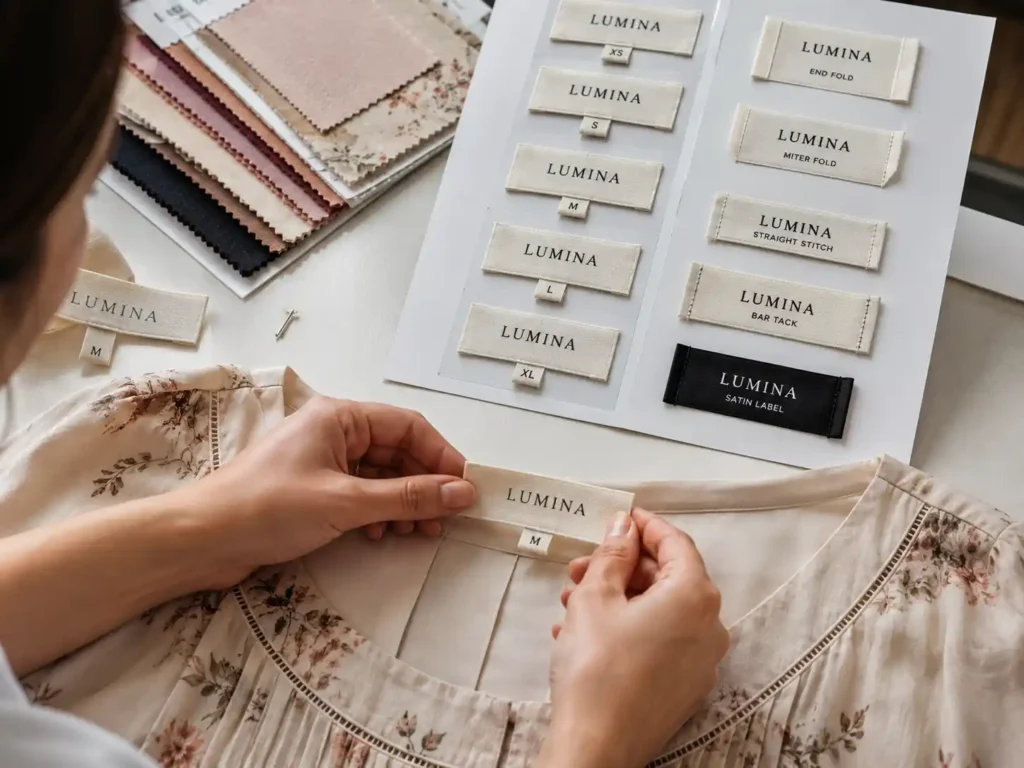
Main Labels
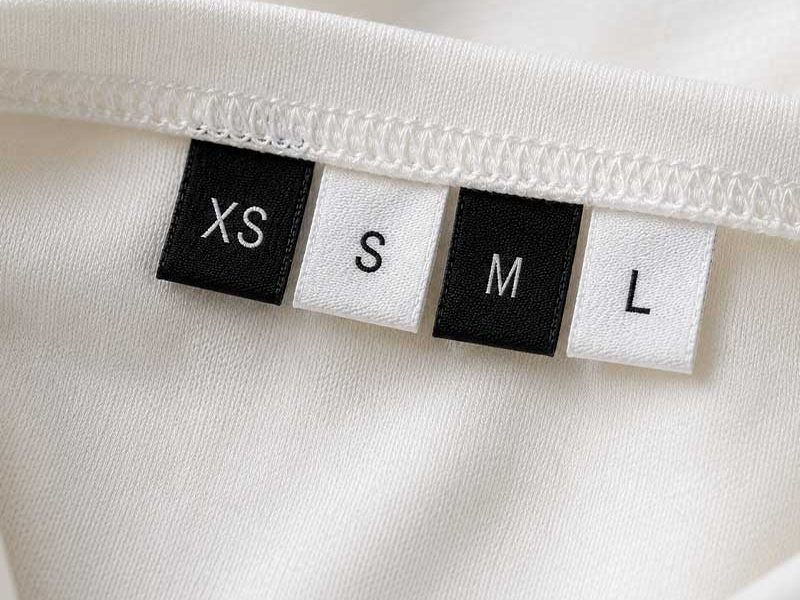
Size Labels

Care Labels

Hangtags
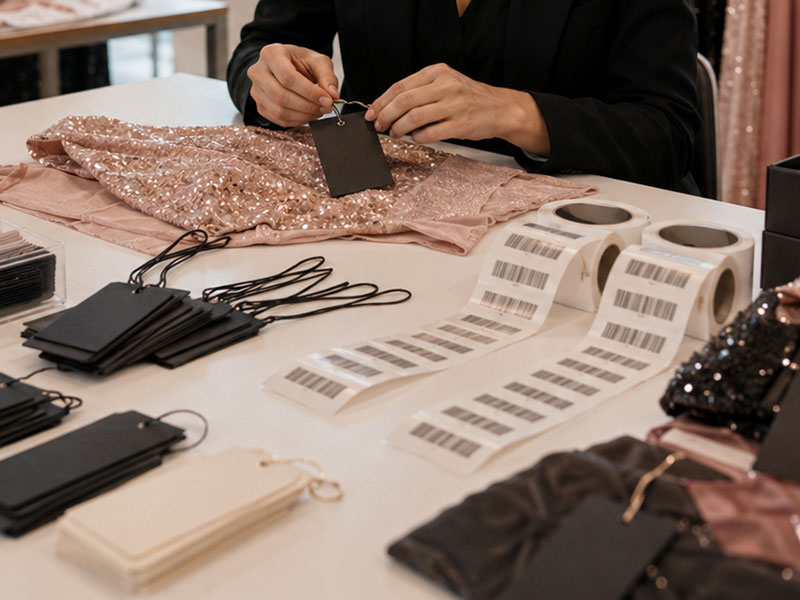
Barcode Stickers
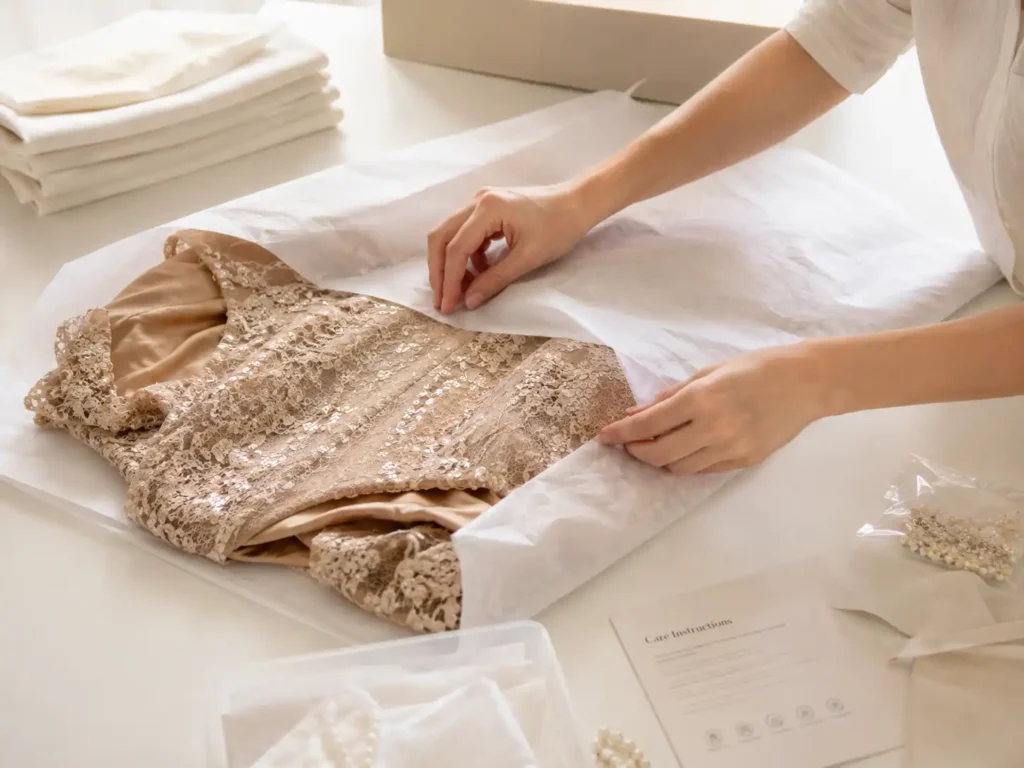
Protective Polybags

Carton Planning
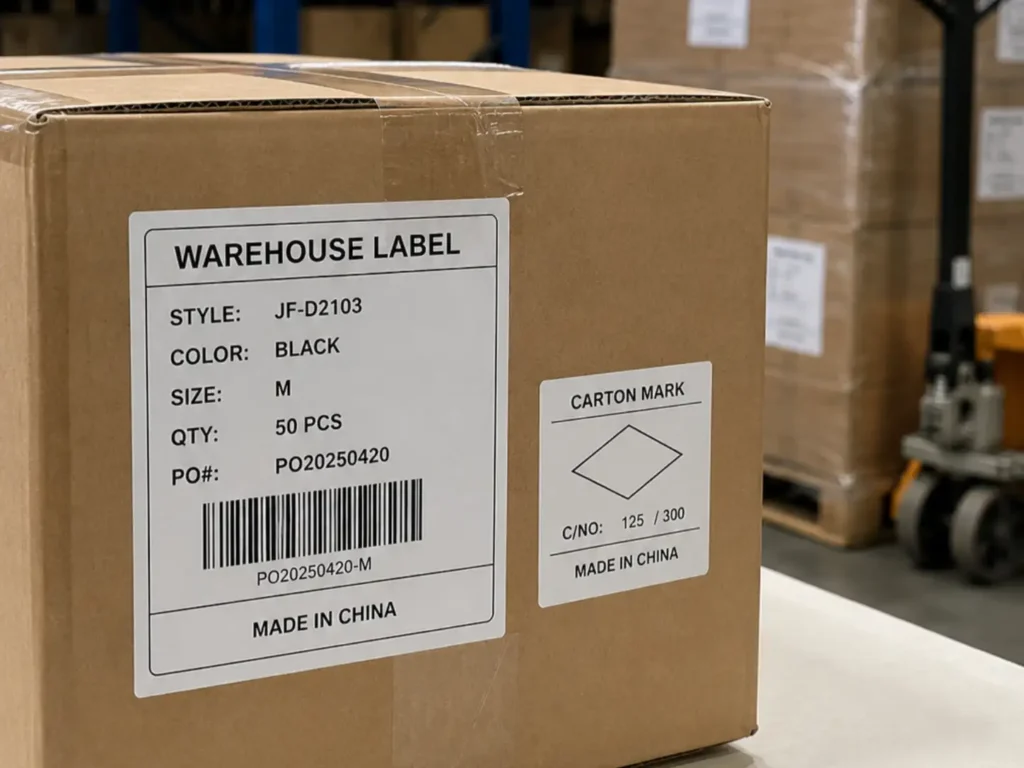
Warehouse Labels
Cowl Neck Dress Development Cases

United States Partywear Program
A United States partywear label planned an 18-style cowl neck capsule totaling 36,000 pieces. The range included satin mini dresses, ruched midi dresses and open-back maxi styles in black, wine, chocolate and silver. Quantities were split across XS-XL, with higher allocation in S, M and L.
The first development risk involved neckline inconsistency across fabrics. A regular satin created a broad soft drape, while stretch satin used for bodycon styles pulled the neckline inward and produced a flatter fold. Applying one cowl pattern to both materials would have created visible style inconsistency.
Jinfeng Apparel separated the patterns by fabric behavior. The stretch satin version received revised neckline allowance, adjusted strap position and a stretch-compatible lining. The regular satin version retained a freer upper front and used controlled stabilization only at selected edges. Mini styles were checked during sitting and reaching, while maxi styles were hung before final hem confirmation.
The sample program included 18 first samples, targeted revised samples for the highest-risk styles and PP samples in confirmed bulk materials. Production files recorded cowl drop, neckline width, strap range, lining boundary, zipper method and fold reference. Early in-line inspection focused on neckline symmetry, satin needle marks and strap attachment.
Bulk production was organized by fabric family and color. The final packing route separated delicate silver satin from darker colors and used protective tissue at high-friction areas. The program moved into two shipment batches aligned with the brand’s launch sequence.
Result: the capsule maintained a consistent neckline identity across slip, bodycon and ruched silhouettes while allowing fabric-specific pattern differences. Retained patterns and color records created a clearer base for later replenishment and seasonal color extensions.

Australian Occasionwear Program
An Australian occasionwear label developed 12 cowl neck midi and maxi styles totaling 24,800 pieces. The range focused on weddings, formal events and summer occasions, using soft satin and crepe in six coordinated colors. The brand required sizes 6-18, full or partial lining and several slit variations.
The main challenge was maintaining bust coverage and color consistency across a broad size range. The original reference samples had a deep front cowl that looked balanced in the base size but opened too widely in larger sizes. Pale champagne and sage colors also required stronger opacity control than navy and berry.
Jinfeng Apparel created a grading plan in which neckline depth, width, strap length and armhole shape were controlled separately from bust circumference. Fuller sizes received targeted coverage review rather than mechanical enlargement. Pale colors used revised lining shades and adjusted lining boundaries to improve opacity without showing inside the cowl.
Lab-dip and bulk-fabric approvals were managed by color family. Satin was checked under consistent lighting for shade and shine direction. Crepe styles used a more controlled cowl allowance because the fabric produced fewer natural folds than satin. Slit height and lining opening were tested while walking and sitting.
PP samples locked fabric, lining, neckline, strap, zipper, measurements and folding. Bulk inspection emphasized front and side coverage, cowl symmetry, zipper flatness, hem level and lining exposure. Packing quantities were reduced for the longer satin styles to limit carton pressure.
Result: the collection achieved a consistent visual language across two fabric families while using different internal construction and grading rules. The structured size and color records also supported repeat planning for the next event season.

United Kingdom Ecommerce Program
A United Kingdom premium ecommerce label planned a 26-style slip and bias-cut collection totaling 67,600 pieces. The assortment included mini, midi and maxi dresses, plus several back-cowl and halter-cowl designs. Core colors were black, ivory, mocha and deep green, supported by limited seasonal shades.
The central risk was sample-to-bulk consistency in bias-cut satin. Early prototypes showed diagonal growth, side-seam rotation and uneven hems after hanging. Back-cowl styles also shifted during movement because the front and back support points were not balanced.
Jinfeng Apparel reviewed grain direction, panel orientation, seam balance and hanging sequence. Bias patterns were revised to account for high-growth areas. Production instructions defined fabric relaxation, directional cutting, balanced bundling, supported sewing and delayed hemming after an approved resting period. Back-cowl styles received revised shoulder and strap positioning plus discreet internal control where allowed by the design.
A photo-sample track and PP-sample track were managed separately. Photo samples prioritized campaign timing and appearance, while PP samples used confirmed bulk fabric, trims, labels and packing. The separation prevented campaign approval from being mistaken for bulk approval.
During production, early garments were hung and reviewed for seam position before full output continued. QC records tracked garment length, side-seam alignment, cowl shape, strap length and hem level. Packing tests compared fold positions and polybag sizes to reduce front-body creasing.
Result: the collection entered bulk with a defined bias-control route rather than relying on final pressing to hide distortion. The brand received organized style files for future repeats, color additions and best-seller replenishment.
Cowl Neck Dress Frequently Asked Questions
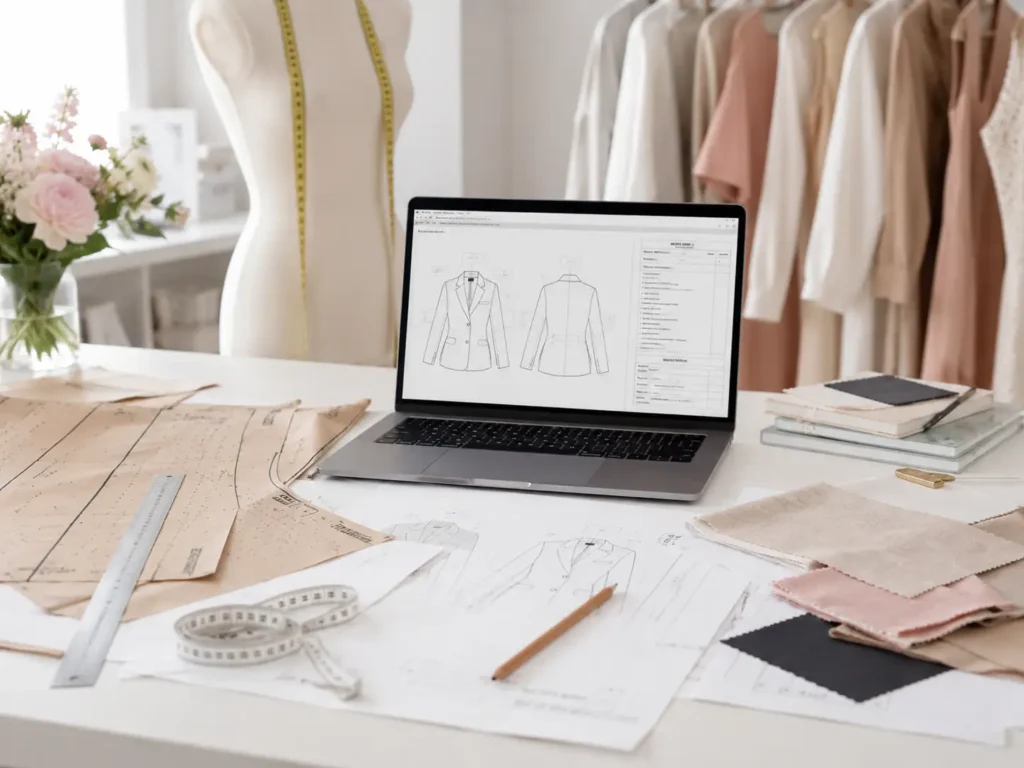
Start Your Cowl Neck Dress Project
A focused project brief allows Jinfeng Apparel to evaluate fabric behavior, neckline construction, pattern work, sample timing, MOQ, quotation and production planning with fewer assumptions. Send the available technical files or visual references, even when several decisions still need development support. Kelly will coordinate the initial review with the relevant product, sampling and production teams.
Please include:
- Front, back and detail sketches or reference images
- Tech pack and measurement chart, when available
- Target quantity by style and color
- Preferred fabric, hand feel, stretch and color direction
- Required size range and estimated size ratio
- Main labels, care labels, hangtags, barcodes and packaging needs
- Target sample date, launch date or warehouse date
- Destination market and preferred shipment terms