 Skip to content
Corset Dress Quality Control
Structured Fit, Support and Bulk Consistency for Fashion Brands
Corset dresses require more than a final visual inspection. Jinfeng Apparel controls structural risks from pattern development and sample fitting through material inspection, sewing, measurement, finishing and branded packing.
- 2 dedicated sample rooms for structured womenswear development
- 7+ senior pattern makers supporting fit correction and size grading
- 20+ sample machinists handling complex cups, panels and support layers
- 15+ QC inspectors covering materials, sewing, measurements and packing
- PP sample and Golden Sample controls before bulk production
- Dedicated checks for boning, cups, necklines, closures and waist shaping
Corset Dress Quality Control Built Around Brand-Level Requirements
Global Fashion Brands
Sourcing and Production Teams
Product Development Teams
Quality and Compliance Teams
Occasionwear and Partywear Programs
Multi-Style Seasonal Collections
What Does Corset Dress Quality Control Include?
Corset dress quality control verifies fit, cup position, boning alignment, waist shaping, seam strength, closure function, fabric condition, lining comfort, size grading and packing throughout development and bulk production. Effective control begins with technical review and approved samples rather than waiting until finished garments reach final inspection.
Quality Begins Before the First Sample
A corset dress can look attractive in a sketch while remaining unsuitable for stable production. The initial technical review should identify how the garment supports the bust, where the waist is shaped, how the upper edge stays in position and how pressure is distributed across the body. Fabric thickness, stretch direction, cup construction, boning type, lining and closure method all influence the pattern.
Development begins by confirming the design source, intended market, size range, target quantity, fabric direction, support level and wearing occasion. A structured satin corset dress requires a different internal build from a stretch mesh party dress. A strapless mini dress needs stronger security at the upper edge than a dress supported by shoulder straps.
Early review helps answer important questions:
- Is the front panel wide enough for the selected cup shape?
- Will the boning remain comfortable when the wearer sits?
- Does the back closure carry too much tension?
- Is the fabric stable enough to hold the intended shape?
- Will the lining control transparency without making the garment too heavy?
- Can the approved appearance be reproduced across every size?
Inspection Continues Through Bulk Production
Final inspection alone cannot repair a misplaced cup, an inaccurate panel curve or a distorted boning channel across thousands of garments.
Control must continue through material receipt, fabric relaxation, cutting, bundling, sewing, in-line inspection, measurement, finishing and packing.
During sewing, inspectors focus on operations that become difficult to correct later. These include attaching cups, stitching boning channels, joining princess seams, aligning waist seams, inserting zippers and securing hooks or eyelets. Early correction prevents the same defect from moving through an entire production line.
Finished garments are then reviewed against the approved PP sample or Golden Sample.
Measurements, visual symmetry, fabric condition, support, closures, lining, labels, pressing and packing are checked under the project’s agreed quality standard.
Quality Failures That Damage Corset Dress Collections
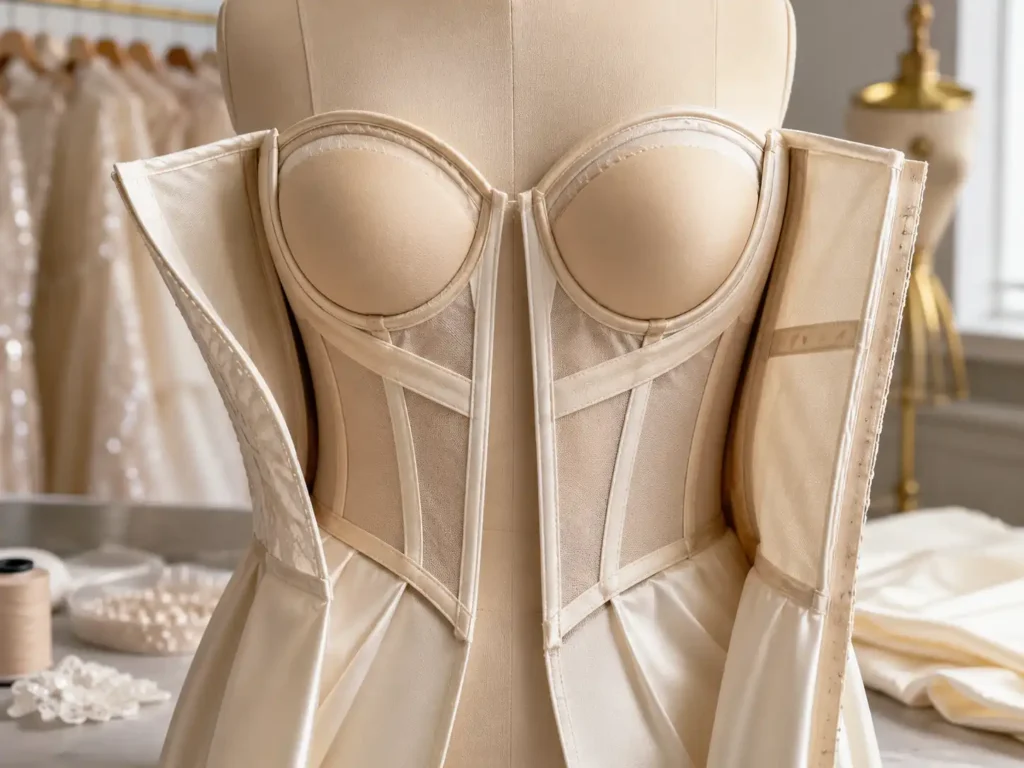
Bust Gaping or Flattening

Boning Pressure or Collapse
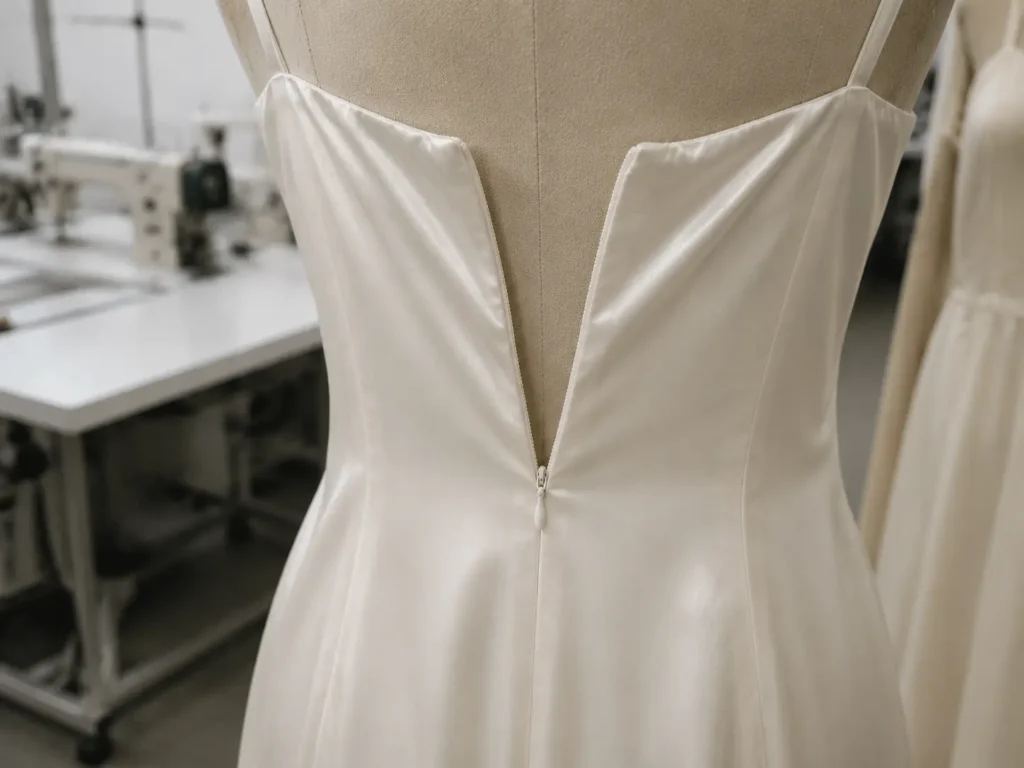
Zipper and Closure Failure

Bulk Size Inconsistency
A Six-Stage Corset Dress Quality Control System
Design and Tech Pack Review
Fabric and Trim Inspection
Pattern, Fit and Sample Approval
Cutting and Sewing Control
Final Measurement and Function Review
Packing and Shipment Review
Quality Controls for Different Corset Dress Styles

Strapless Corset Mini Dress

Satin Corset Dress

Mesh or Lace Corset Dress

Sequin Corset Party Dress

Lace-Up Back Corset Dress

Long Corset Evening Dress
Technical Files Required Before Corset Dress Production
Corset dress quality becomes easier to control when the approved design is converted into clear technical files. A reference image may communicate appearance, but it rarely defines the internal structure, measurements, material standards and inspection limits required for reliable bulk production.
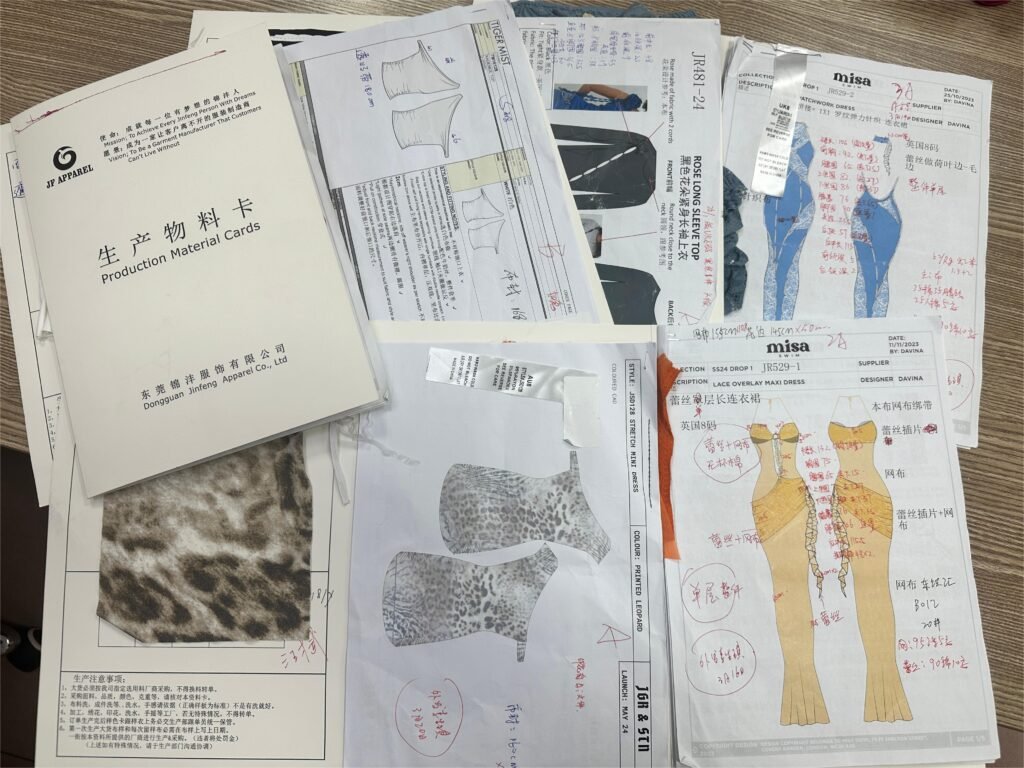
Tech Pack and Measurement Control
The tech pack should identify front, back and side construction, panel seams, neckline, straps, cups, boning, closures, lining and decorative details. A point-of-measure diagram should define where bust, underbust, waist, high hip, cup height, neckline depth, back width and dress length are measured.
Measurement tolerances should reflect the product structure. A small error at the cup position or upper edge can be more visible than the same numerical error at a loose skirt hem. Critical measurements therefore need tighter attention than non-structural dimensions.
Recommended development inputs include:
- Front, back and detail drawings
- Base-size measurement chart
- Point-of-measure diagrams
- Grade rules or approved size specifications
- Construction notes
- Seam and stitch requirements
- Label and packing instructions
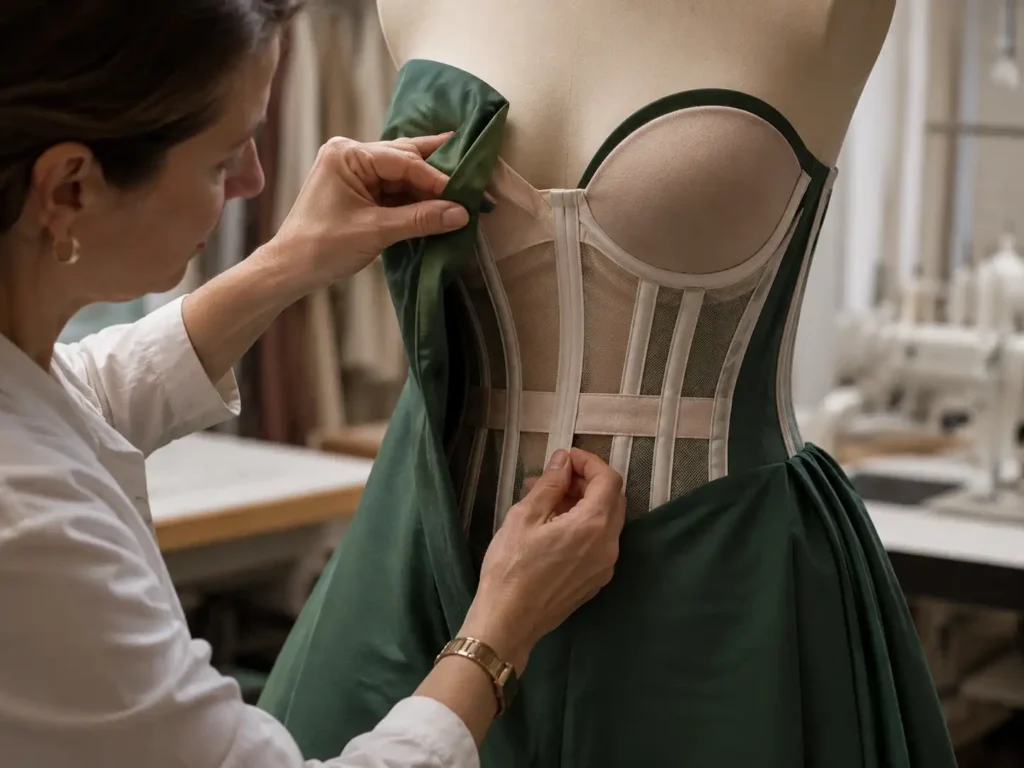
Boning, Cup and Support Specifications
A corset tech pack should define the internal support system rather than leaving it to interpretation. The boning map may identify the number of bones, their positions, material, width, length and channel construction. Cup specifications can include cup shape, thickness, density, fixed or removable construction, lining pocket and approved position.
Support documents should also address:
- Structured lining or power mesh
- Waist tape or waist stay
- Anti-slip elastic
- Underwire when required
- Hook-and-eye reinforcement
- Eyelet backing
- Zipper reinforcement
- Skin-contact protection
Changes to these components after fitting may affect the pattern, appearance, cost and production schedule. Final specifications should be locked before PP approval.

BOM, Trim Card and Sewing Instructions
A controlled bill of materials links each approved component to the production order.
The trim card can hold physical or visual references for fabric, lining, cups, boning, zippers, hooks, labels and packaging items.
Sewing instructions explain operations that need consistent execution, such as cup attachment, boning channel width, panel matching, top-edge stabilization and zipper reinforcement.
Files should use clear version control.
An outdated measurement chart or early trim approval can create bulk inconsistencies even when workmanship is otherwise acceptable.
Corset Dress Material and Component Inspection
Material inspection confirms whether each fabric, lining and support component matches the approved structure before cutting and assembly begin. Substitutions or batch differences can change fit, appearance, comfort and durability.
| Material or Component | Main Quality Risk | Incoming Inspection | Bulk Production Control |
|---|---|---|---|
| Satin | Shade variation, snagging, pressure marks | Check lot, surface, color and shine direction | Group fabric batches and control cutting direction |
| Stretch Satin | Recovery variation and unstable fit | Check stretch direction, recovery and weight | Relax fabric and monitor finished measurements |
| Mesh | Holes, distortion and transparency changes | Check surface, stretch and color | Protect cut panels and stabilize critical seams |
| Lace | Damage, motif variation and asymmetry | Check pattern direction and defects | Control placement across matching panels |
| Structured Lining | Excess weight or insufficient support | Check hand feel, stability and color | Confirm layer construction against PP sample |
| Bra Cups | Shape, density and size variation | Check cup profile, thickness and softness | Use position templates and size-specific checks |
| Boning | Incorrect stiffness, width or length | Check material and approved specification | Control placement, channel width and end protection |
| Zipper | Waving, jamming or insufficient strength | Check length, tape, slider and color | Reinforce installation and review under tension |
| Hooks and Eyelets | Weak attachment or surface damage | Check plating, size and finish | Verify placement, backing and attachment strength |
| Labels and Packing | Wrong artwork, size or barcode | Match approved files and samples | Separate by style, color, size and SKU |
Fit, Support and Critical Corset Dress Measurements
Fit is the most visible result of corset dress quality control. Pattern accuracy, cup shape, support components and fabric behavior must work together across the entire size range. Flat measurements are necessary, but they cannot replace structured fitting and movement review.

Bust and Cup Position
The full-bust measurement alone does not define a successful corset fit. Upper bust, underbust, cup height, cup width, center-front length and neckline shape influence how the garment supports and presents the body. A cup positioned too low can create gaping above the bust, while a cup positioned too high can cut into the neckline or compress the bust.
Fit review should check:
- Cup point alignment
- Cup height and width
- Upper-edge contact
- Center-front shape
- Side-bust containment
- Underarm coverage
- Lining and cup interaction
- Symmetry between left and right sides

Waist Shaping and Body Pressure
Corset dresses often create a defined waist, but shaping should remain wearable.
Excessive negative ease can pull the zipper, distort seams and increase pressure from boning. Insufficient shaping may cause the front panel to collapse or create excess fabric at the waist.
The sample should be reviewed while standing, sitting and moving.
Pressure distribution along the front, side and back panels should remain balanced.
Boning ends should not press into the ribs, waist or high hip. Larger sizes may need adjusted panel widths, support materials and boning placement rather than simple proportional enlargement.

Neckline, Back and Length Balance
Neckline depth and width affect both appearance and security.
Strapless styles need enough upper-edge stability to remain in position without excessive tightness. Back width and closure tension influence zipper flatness and bust support.
Mini styles also require careful length control to protect coverage while preserving the intended proportion.
Fit comments should be transferred into revised patterns, measurements and construction notes.
Approved corrections must appear in every later sample and production file.
From First Sample to Approved Golden Sample
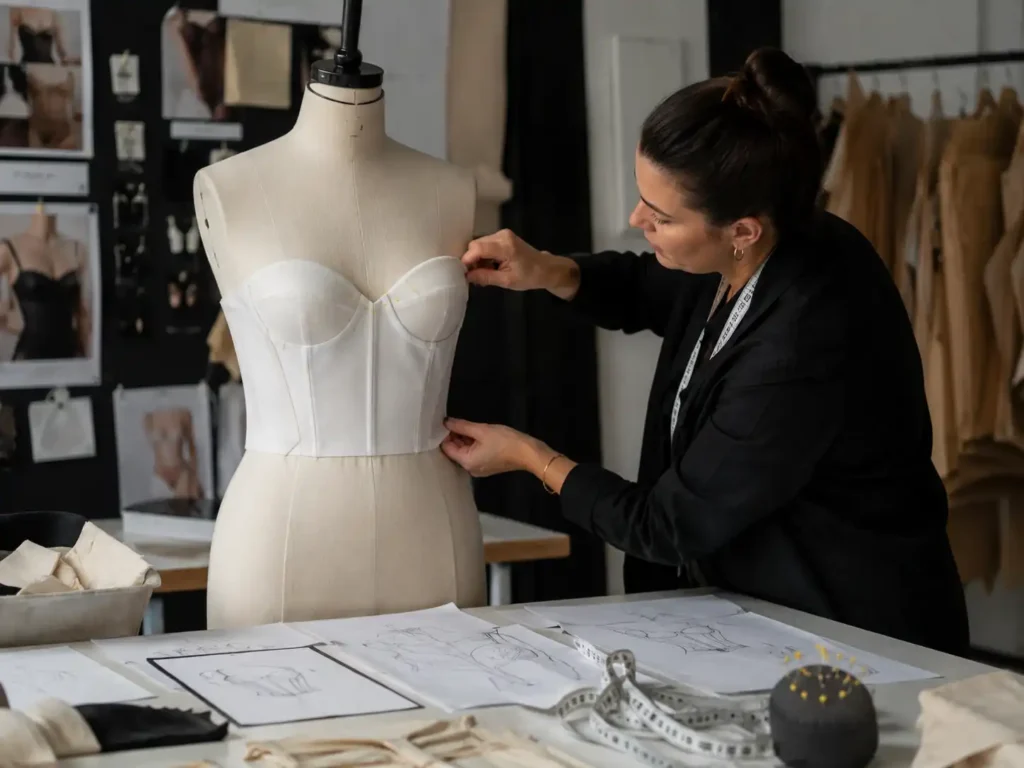
First Sample

Fit Sample

Revised Sample
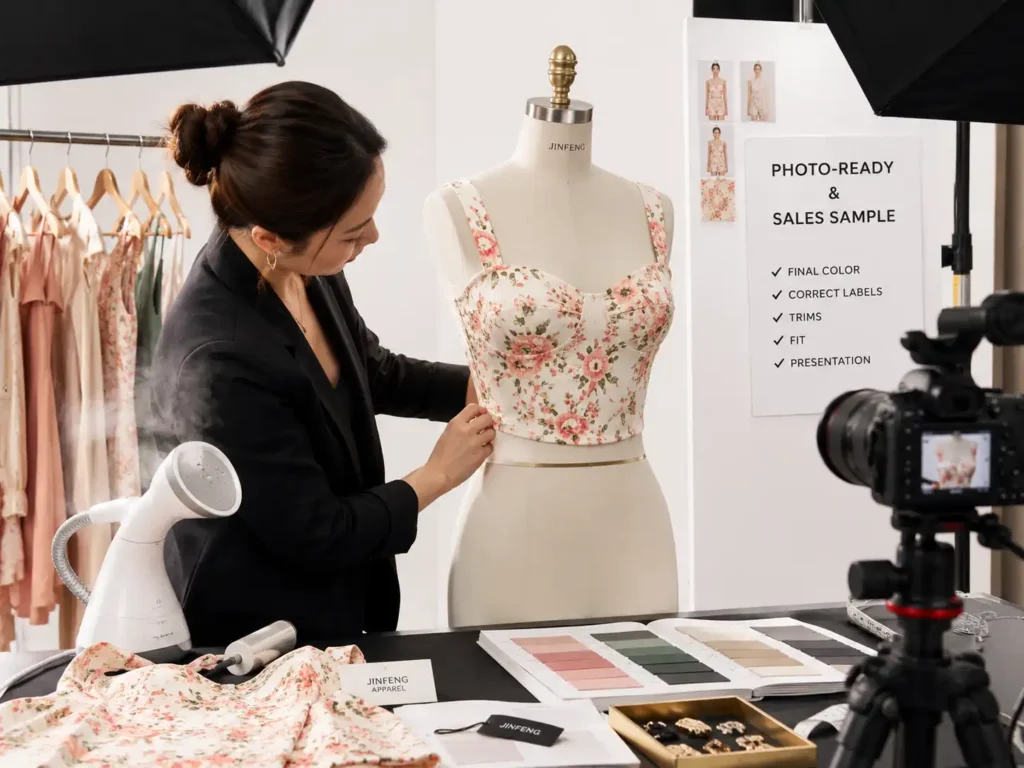
Photo-Ready Sample
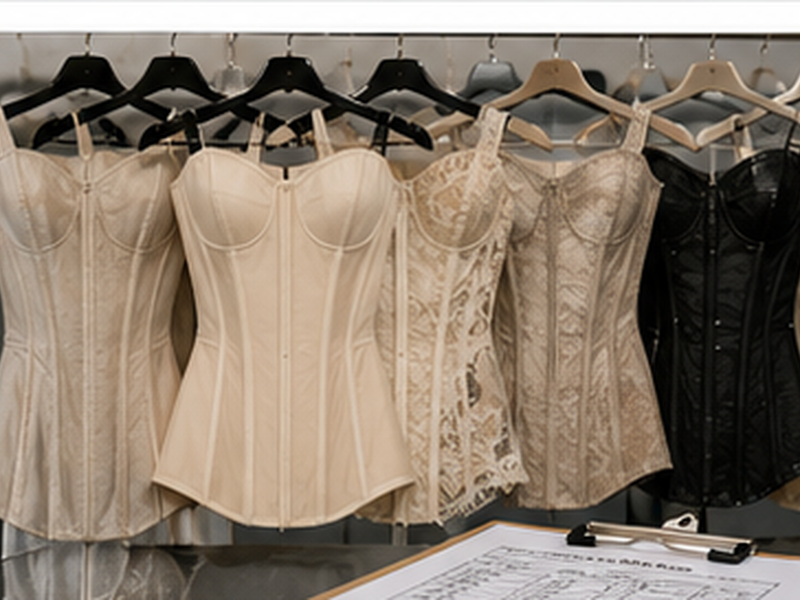
PP Sample

Golden Sample
Boning, Cups and Internal Support Construction
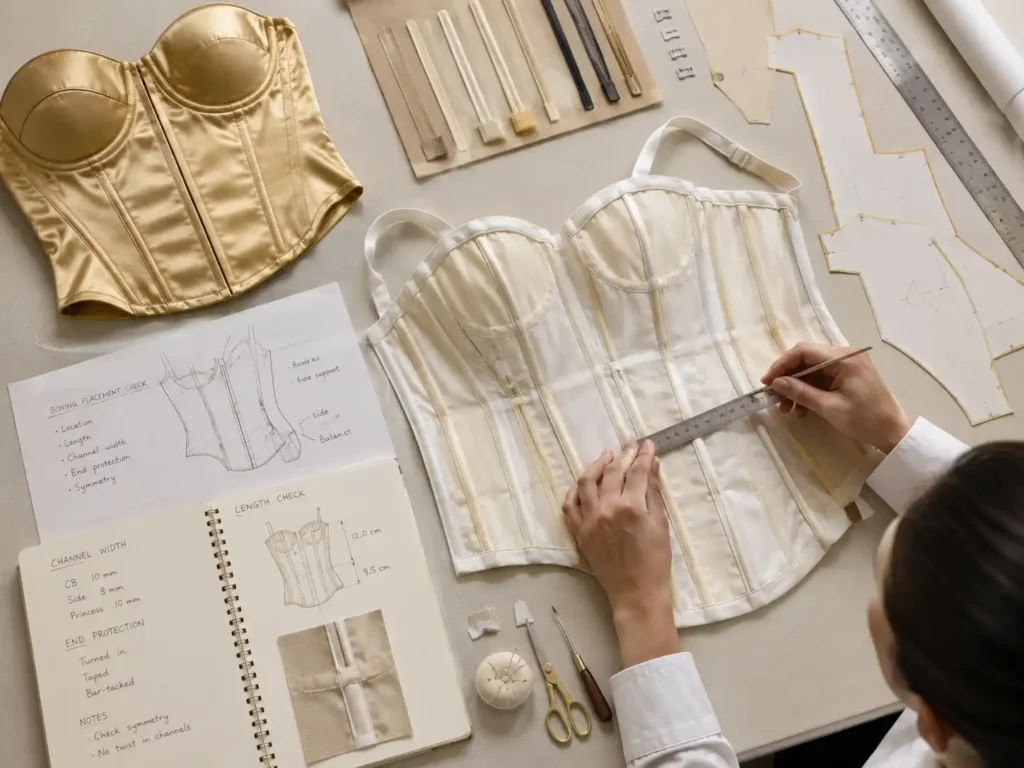
Boning Placement

Bra Cup Construction
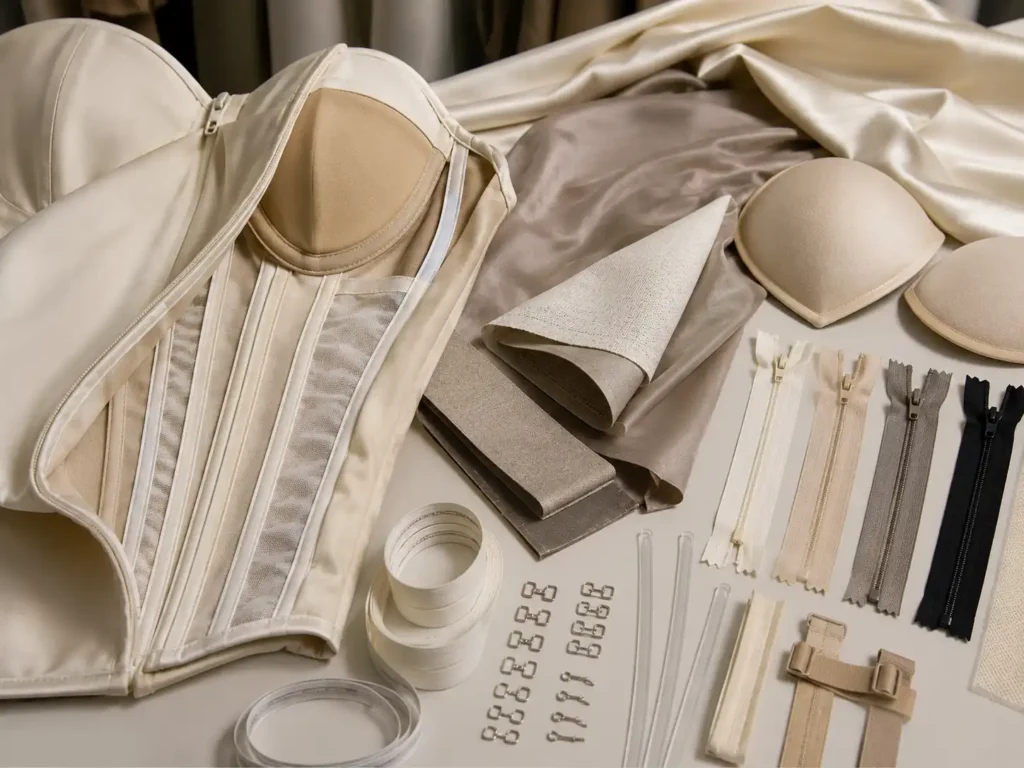
Structured Lining

Waist Stay

Anti-Slip Support
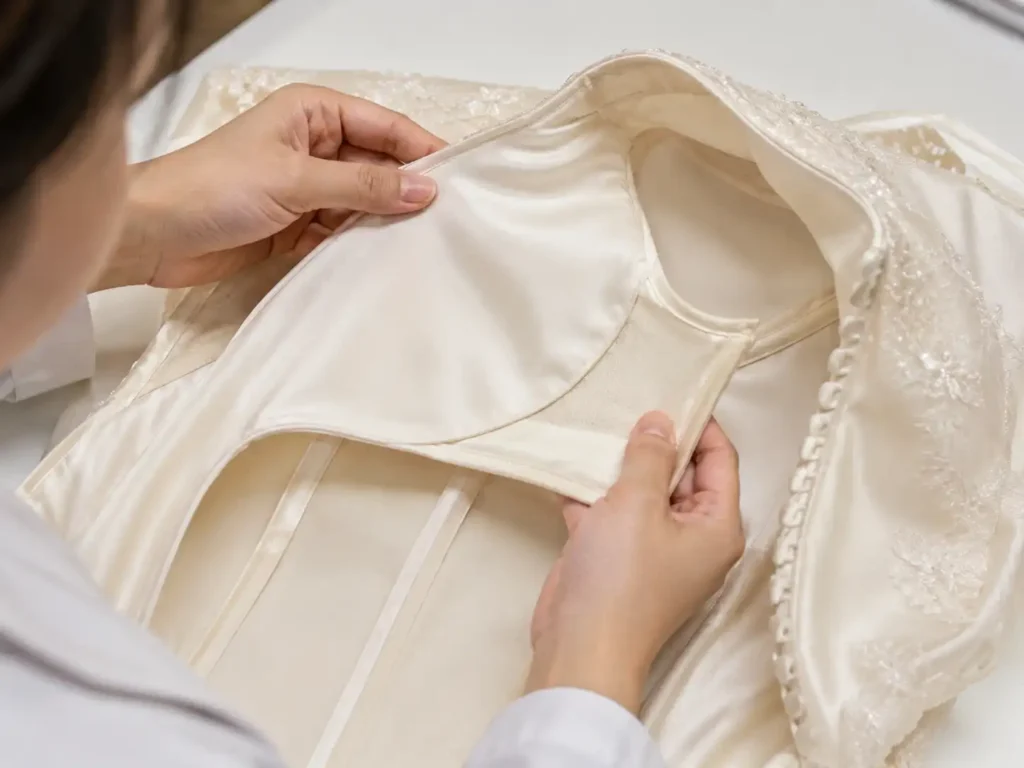
End Protection and Skin Comfort
Cutting Accuracy and Panel Symmetry Control
Corset dresses use shaped panels to build volume, support and waist definition. Cutting accuracy determines whether these panels join smoothly and remain symmetrical. Sewing cannot fully correct panels cut in the wrong direction, shade group or size.

Fabric Direction and Preparation
Satin, velvet, stretch fabrics, lace and mesh all require specific cutting controls. Satin shine direction should remain consistent to prevent panels from reflecting light differently. Stretch direction must match the approved pattern so fit and recovery remain stable. Fabric may need relaxation before cutting, particularly when stretch or roll tension can affect measurements.
Incoming material records and cutting instructions should identify:
- Fabric lot or shade group
- Face and reverse sides
- Grainline
- Stretch direction
- Nap or shine direction
- Defect marking
- Relaxation requirement
- Approved width and shrinkage information
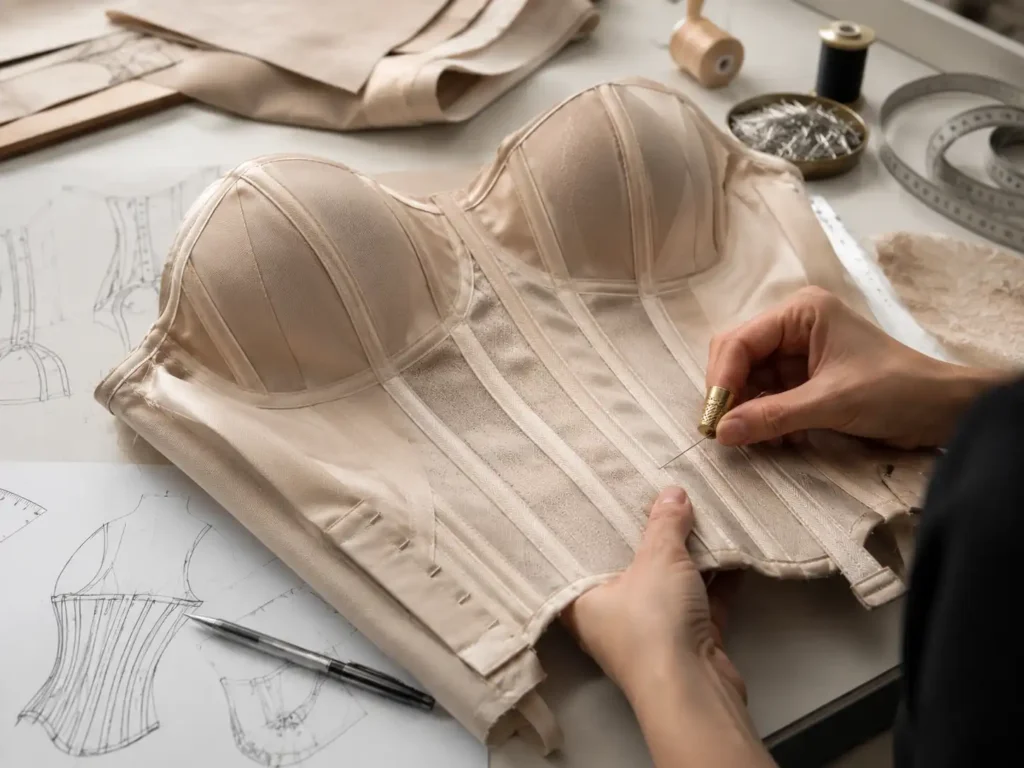
Panel, Cup and Boning Marks
Curved corset panels rely on accurate notches, seam allowances and component marks.
Cup position, boning channels, waist seam, center front, center back and closure points should be transferred consistently.
Missing or inaccurate marks create asymmetry and slow sewing-line decisions.
Cut panels can be checked against patterns before bundling.
Critical curved sections deserve closer review than large, loose skirt panels because a small error can change the bust or waist shape.
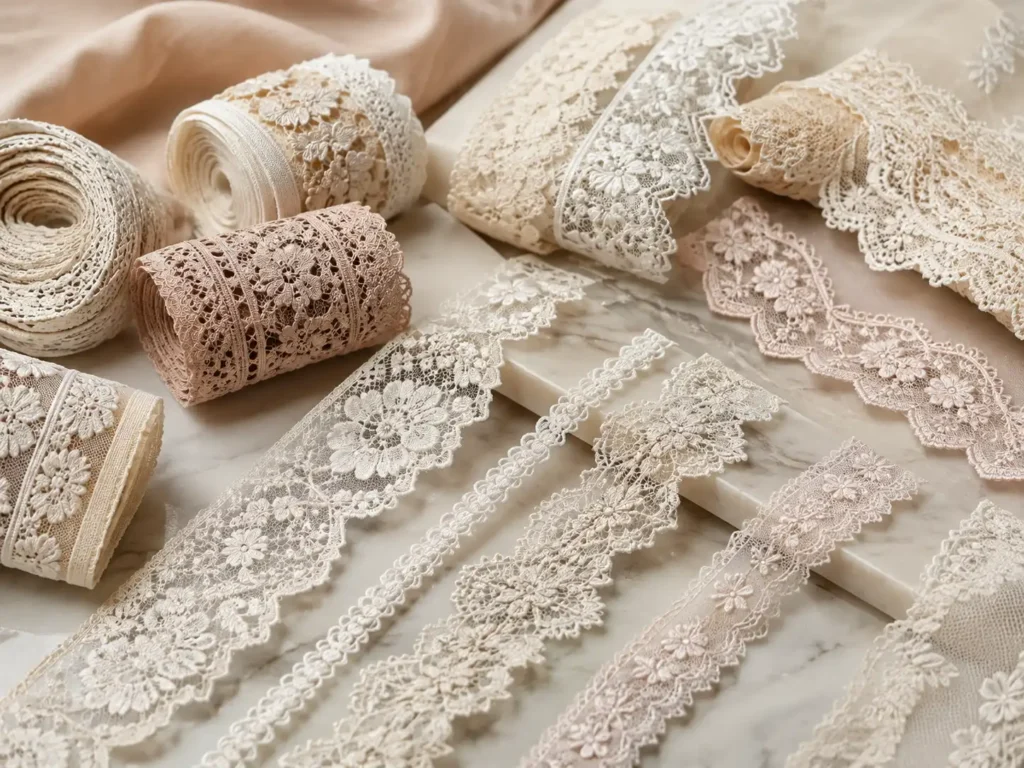
Lace, Mesh and Decorative Placement
Lace motifs may need centered, mirrored or strategically positioned cutting.
Mesh transparency zones should follow the approved coverage plan.
Embellished fabrics require enough allowance for seam preparation and local decoration repair.
Left and right panels should be visually balanced before sewing.
Bundles should remain separated by style, color and size.
Mixing visually similar panels from different sample versions or sizes can create difficult-to-detect bulk errors.
Sewing Workmanship and In-Line Inspection
In-line inspection focuses on structural operations while garments can still be corrected efficiently. Corset construction should be checked at planned sewing stages rather than only after the lining has covered internal components.
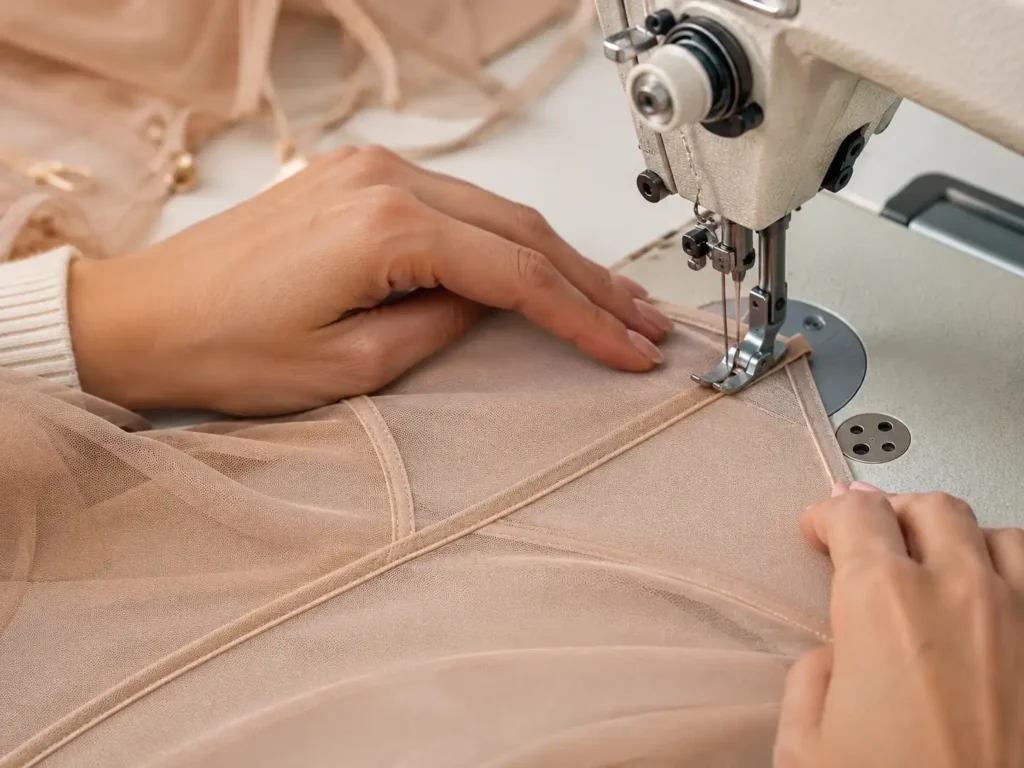
Corset Panel and Seam Control
Princess seams, curved panels and waist joins form the corset silhouette. Seam allowances should remain consistent, curves should feed smoothly and left-right panels should align. Uneven seam tension can create rippling or twist the body of the dress. Inspectors compare panel shape and seam position with the approved sample during assembly.
Checks may include:
- Curved seam smoothness
- Seam allowance consistency
- Waist seam alignment
- Left-right symmetry
- Topstitch position
- Stitch density
- Thread tension
- Surface puckering

Cup, Boning and Closure Operations
Cups should be attached at the correct height and angle.
Boning channels need consistent width, secure ends and accurate placement.
Zippers should remain flat when the garment is worn, not only when laid on a table.
Hooks, eyelets and lace-up components require suitable reinforcement.
Critical operations can be checked before lining closure, allowing internal construction to remain visible. Any approved corr
ection should be communicated to the full sewing group and recorded in the production instructions.

Lining, Edges and Internal Finish
Lining should support the structure without pulling the outer fabric.
Top edges, underarms and necklines need clean shaping and suitable stabilization.
Boning ends, cup edges, hooks and seam allowances should remain protected from direct skin contact.
Loose threads, raw edges or thick seam buildup can reduce comfort and create visible marks.
A completed garment should look controlled both inside and outside.
Premium appearance depends on clean internal construction, not only surface decoration.
Functional Tests for Corset Dress Security and Comfort
Standing and Sitting Review
Arm-Raising Movement Test
Repeated Zipper Function
Hook, Eyelet and Strap Pull Check
Strapless Slip Review
Skin-Contact Comfort Check
Size Grading and Bulk Fit Consistency
Corset dress grading must preserve the relationship between the body, cups, support lines, neckline and waist across every size. Circumference increases alone do not produce a stable graded fit.
| Quality Control Point | Approved Sample Standard | Common Grading Risk | Bulk Inspection Method |
|---|---|---|---|
| Cup Position | Cup point aligned with approved fit | Cup moves too high or low | Check position by size |
| Cup Shape | Approved width, height and projection | Larger sizes remain too shallow | Compare size-specific cups |
| Boning Length | Supports without pressure | Bones end at incorrect body points | Check length and placement |
| Upper Bust | Secure without cutting or gaping | Neckline becomes loose or restrictive | Measure and review worn shape |
| Waist Shaping | Defined but wearable | Larger sizes become over-compressed | Measure waist and review comfort |
| Back Width | Flat and stable closure | Zipper pulls or center back gaps | Inspect closure under tension |
| Neckline Depth | Approved coverage and proportion | Depth changes unevenly by size | Measure center-front depth |
| Dress Length | Approved commercial proportion | Grade increments create imbalance | Measure from fixed reference points |
| Lining Length | Hidden and comfortable | Lining becomes visible or restrictive | Compare lining to outer shell |
| Strap Position | Secure shoulder and bust support | Straps shift outward or inward | Measure attachment points |
Final Inspection, AQL and Packing Protection
Final inspection confirms whether finished garments match the approved product and packing standard. It should complete the earlier control stages rather than replace them.

Garment Inspection
Finished corset dresses are reviewed for measurements, shape, symmetry, fabric condition, cups, boning, seams, closures, lining, labels, pressing and overall appearance. Product-specific checks depend on fabric and construction. Satin styles need surface and pressing review; mesh and lace require hole and placement checks; sequin styles need missing-piece and abrasion inspection.
Garment checks may cover:
- Critical measurements and tolerances
- Cup position and shape
- Boning alignment
- Waist and neckline symmetry
- Zipper, hooks and eyelets
- Stitching and seam quality
- Fabric defects and color variation
- Lining coverage and internal finish
- Labels and care information
- Pressing and presentation
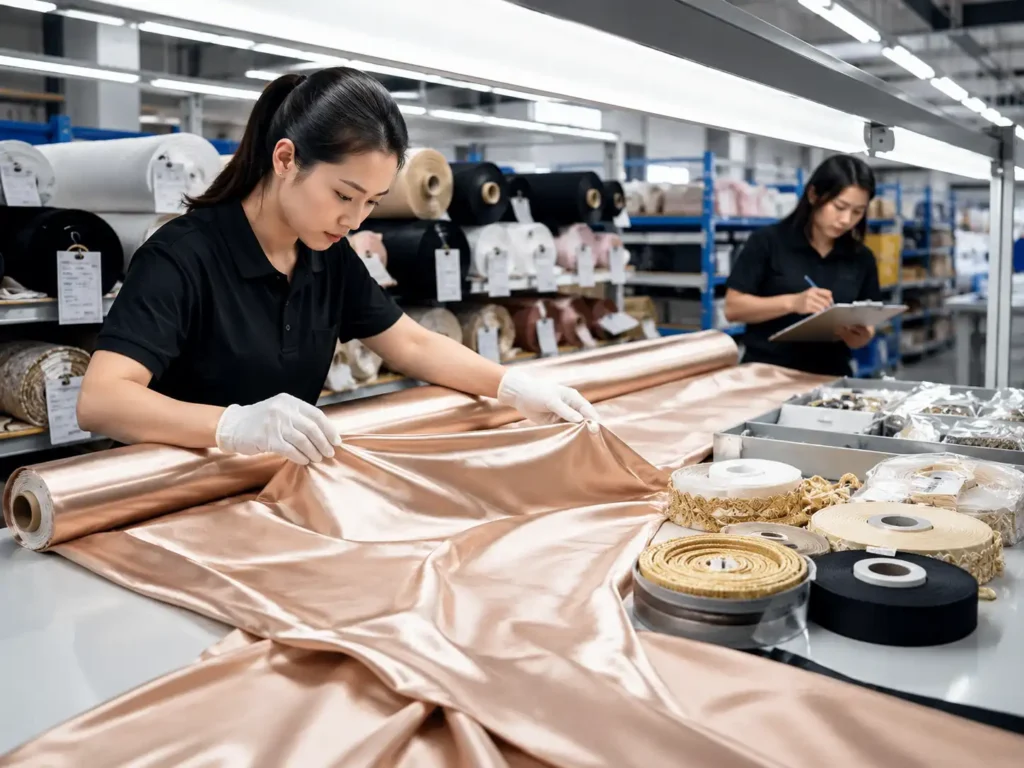
AQL and Client Inspection Support
AQL inspection can be arranged according to agreed client requirements.
Sampling level, defect categories and acceptance limits should be confirmed before inspection.
AQL is a statistical sampling method and should not be described as a complete inspection of every unit.
Client-appointed inspectors or third-party inspection companies can review finished goods according to project arrangements.
Inspection findings are classified, documented and followed by correction, reinspection or release decisions as required.

Corset-Specific Packing Protection
Folding pressure can deform cups, bend boning or create permanent marks on satin and velvet. Packing methods should consider garment structure rather than use the same fold for every dress.
Options may include cup support, protective tissue, reduced compression, hanger packing or controlled carton quantity.
Final packing review checks:
- Correct style, color and size
- Main labels, care labels and hangtags
- Size and color stickers
- Barcode and SKU accuracy
- Polybag and folding method
- Carton ratio and carton marks
- Gross and net weight records
- Packing list consistency
Corset Dress QC Checklist for Development and Production

Development and Sample Checklist
- Confirm reference image, sketch, tech pack or original sample
- Define target market and intended fit
- Confirm base size and size range
- Review bust, underbust, waist and high-hip measurements
- Create boning map and cup specification
- Confirm outer fabric, lining and support layers
- Review closure and reinforcement method
- Record first-sample comments
- Update pattern, size chart, BOM and sewing instructions
- Approve PP sample and Golden Sample
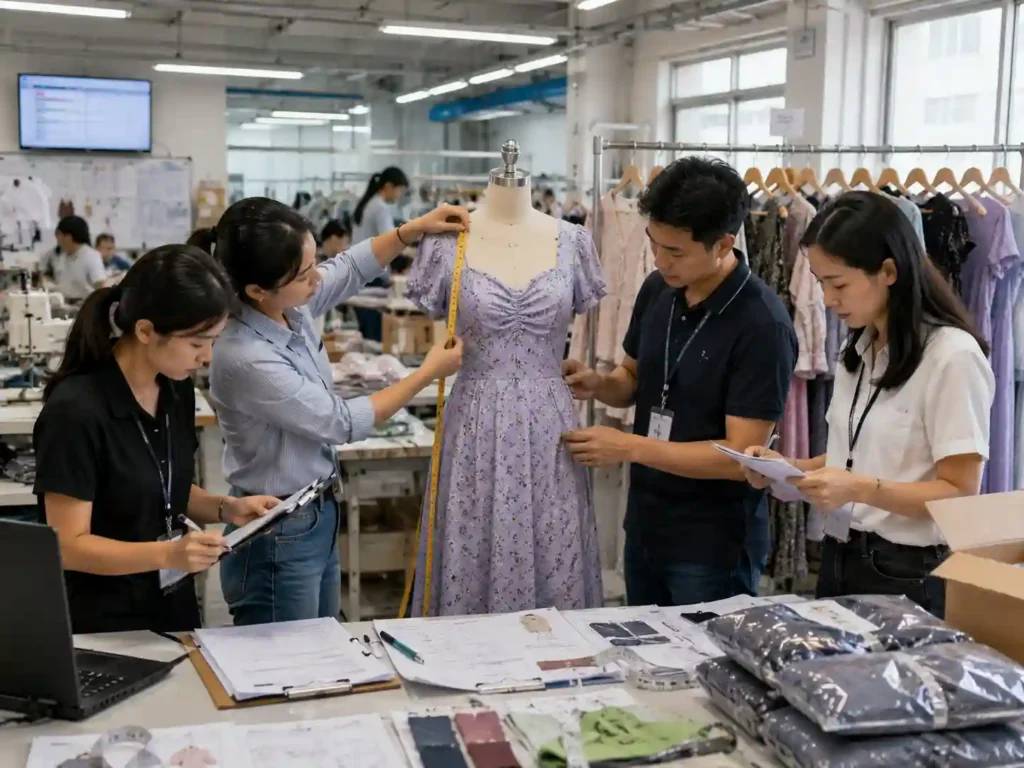
Production and In-Line Checklist
- Confirm bulk fabric and trim approvals
- Separate fabric by lot and shade
- Relax stretch materials when required
- Check cutting direction and critical panels
- Confirm cup and boning placement marks
- Inspect princess seams and waist joins
- Review zipper, hooks, eyelets and straps
- Check lining and skin-contact finishing
- Measure selected garments during production
- Record corrections before full-line continuation
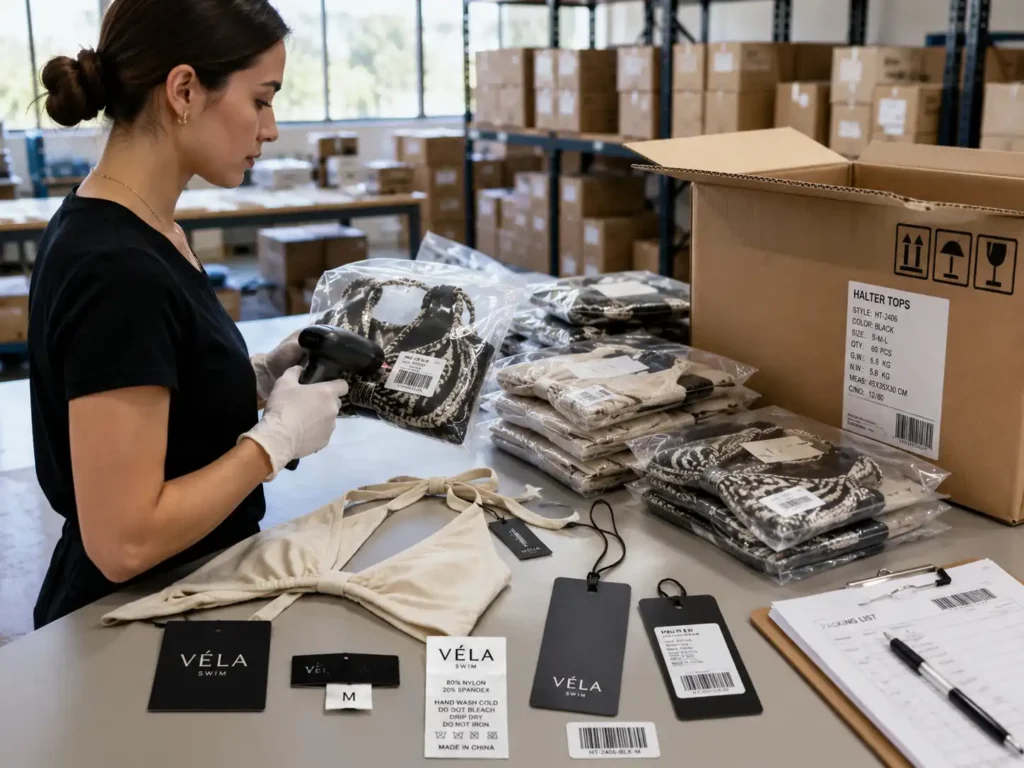
Final Inspection and Packing Checklist
- Confirm finished measurements by size
- Review cup shape and bust support
- Check boning alignment and end protection
- Test zipper and closure function
- Review symmetry, fabric surface and workmanship
- Confirm labels, hangtags and care information
- Check pressing and final appearance
- Protect cups and structured panels during folding
- Verify barcode, SKU and carton marks
- Release goods according to inspection requirements
Corset Dress Quality Control Frequently Asked Questions
Inspection covers pattern and fit, cups, boning, neckline, waist shaping, closures, fabrics, lining, sewing, measurements, functional performance, labels and packing. Controls begin during technical review and sampling, continue through cutting and sewing, and finish with garment and packing inspection.
Boning is checked against the approved pattern, boning map and sample. Inspectors review position, length, straightness, channel width, end protection and comfort. The placement should support the intended shape without pressing into the bust, underarm, ribs, waist or high hip.
Cup placement is reviewed through pattern marks, flat measurements and fitting. Cup height, width, projection, center position and relationship with the neckline are checked. Different garment sizes may require size-specific cups and adjusted positions rather than one cup specification across the range.
Fit review considers bust, underbust, waist, high hip, neckline, back, straps, cups, boning and dress length. The sample is observed from several angles and during movement. Standing, sitting and arm-raising can reveal slipping, pressure, gaping or restricted movement.
A Golden Sample is the sealed physical standard used for bulk production, quality inspection, repeat orders and quality discussions. It should match the approved pattern, measurements, materials, trims, workmanship, labels and packing instructions.
Zipper waves are controlled by matching zipper length and tape to the fabric, stabilizing the seam, balancing sewing tension, controlling stretch direction and reviewing the zipper while the garment is worn. Excessive waist tension or an unsuitable zipper can also create distortion.
Each size is reviewed for critical measurements and component placement. Cup position, boning length, neckline, waist shaping, back width, zipper length and dress length should remain proportionally balanced. Grade rules are confirmed before bulk cutting and monitored through production measurements.
AQL inspection can be arranged according to client requirements. Sampling level, defect classification and acceptance limits should be agreed before inspection. Client-appointed or third-party inspection arrangements can also be supported as part of the production schedule.
Useful information includes a tech pack or reference image, size chart, target quantity, fabric preference, color plan, cup and boning requirements, intended market, launch date, private-label requirements, packing instructions and any existing quality concerns.
Yes. NDA-based cooperation is supported for tech packs, patterns, samples, size charts, BOMs, labels, packaging files, unpublished designs and order information. Client materials are not published without authorization, and case information can be presented anonymously.

Review Your Corset Dress Quality Requirements
Share your style reference, tech pack or existing sample with Jinfeng Apparel for an initial project review.
Our team will assess the garment structure, fit risks, fabric direction, internal support, sample requirements, production controls and information needed for an accurate development plan.
For a more useful review, include:
- Reference images, sketches or tech pack
- Base-size and graded measurements
- Target order quantity by style and color
- Fabric, lining and color requirements
- Cup, boning and closure specifications
- Intended size range and destination market
- Private-label, barcode and packing files
- Desired launch or delivery window
- Existing sample or supplier quality concerns
- Required inspection, testing or audit documents


