Skip to content
Corset Dress Development
From corset concept to production-ready fit, internal structure, sampling and repeatable bulk execution for established fashion programs.
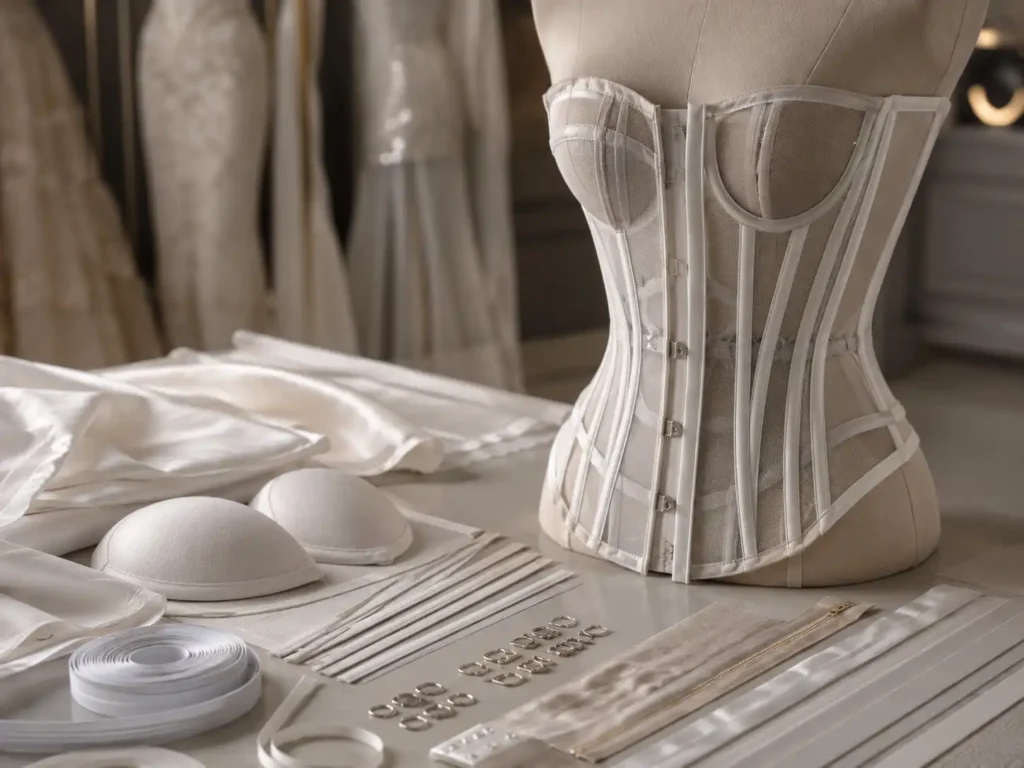
Jinfeng Apparel develops corset dresses as structured garments, not as ordinary dresses with a few bones added. Development starts by reviewing silhouette, bust support, waist shaping, outer fabric, internal layers, closure load and target size range before the pattern is locked for sampling.
- 2 sample rooms + 7+ senior pattern makersfor structured bodice, fit and pattern development.
- 20+ sample machinistssupporting first samples, fit corrections, revised samples and PP preparation.
- 15+ QC inspectorscovering material, sewing, measurement, finishing and packing checkpoints.
- 6 owned women’s fashion factories + 10+ long-term production partnersfor approved styles moving from development into coordinated bulk production.
Built for Structured Fashion Programs
Global Fashion Brands
Occasionwear Labels
Occasionwear corset dresses need cleaner bust shaping, stable necklines, controlled waist suppression, refined lining and careful finishing.
Satin, lace, mesh, velvet and embellished surfaces expose construction mistakes quickly.
Development therefore focuses on silhouette and support first, then on surface detail, pressing and packing so the approved look remains credible when the garment is photographed, worn and repeated in bulk.
Partywear Brands
Partywear often combines fitted silhouettes with stretch mesh, satin, cut-outs, boning, cups or statement trims.
A visually strong design can still fail if the neckline gaps, the zipper bows, the boning line collapses or the internal layer feels harsh against the body.
Jinfeng reviews those risks during sampling and converts corrections into repeatable construction instructions before bulk production.
Premium Ecommerce Programs
Sourcing Teams
Sourcing teams need more than a price quote. They need clear development inputs, material alternatives, sample status, approval records, production allocation and risk visibility.
Jinfeng works with tech packs, line sheets, reference garments, sketches and sample comments, while project information is coordinated through merchandising, pattern, sample, production, QC, finishing and logistics functions.
Product Development Teams
What Corset Dress Development Really Covers
Corset dress development connects design intent with a repeatable manufacturing standard. The goal is not simply to produce a visually similar first sample. A successful program converts the intended silhouette into a pattern, internal support system, material combination, fit standard and construction method that can be measured, approved and reproduced in bulk.
From Design Intent to Structure
A reference image may show a clean corseted waist, lifted bust and smooth neckline, but the image rarely explains how the garment achieves those effects. Development begins by separating visual goals from structural requirements. The team reviews neckline height, cup shape, bust point, underbust line, waist reduction, torso length, skirt connection and back closure. Internal decisions may include boning routes, cup type, interlining, support layers, lining, elastic support or closure reinforcement. The structure also has to suit the chosen fabric. A soft satin may need stronger internal stabilization than a compact woven; stretch mesh may need controlled support so it does not carry load that should be handled by the corset foundation. Getting those decisions right early reduces repeated pattern changes later.
From Pattern to Fit Standard
Pattern development converts structure into measurable shape. Corset dresses are sensitive to small shifts in bust point, cup volume, waist position, side seam balance and center-front length. A pattern may look correct on paper but create neckline gaping, cup compression, underarm exposure or back tension when worn. Fit review therefore uses garment measurements together with front, side and back fitting observations. Comments are translated into pattern corrections, not patched only at sewing stage. The approved pattern becomes the foundation for grading, PP sampling and measurement QC. Stable fit comes from controlling relationships among body points, not from chasing a single waist measurement.
From Approved Sample to Production Standard
An approved sample must be converted into information the production floor can repeat. Fabric, lining, cups, boning, zipper, hook-and-eye, seam method, channel width, label placement and measurement requirements need to be locked before scale-up. PP approval and a retained reference sample help production, QC and merchandising teams compare bulk garments against the same standard. When styles return for repeat orders, saved pattern files, measurement records, material references, trim details and packing requirements reduce unnecessary re-development, while new fabric batches, colors and production conditions are still rechecked before release.

Six Failure Points to Solve Early
Cup Shape Mismatch
Boning in the Wrong Place
Neckline Gaping
Waist Wrinkles and Distortion
Fabric and Structure Conflict
Sample-to-Bulk Drift
Corset Dress Styles We Develop

Strapless Corset Dress

Satin Corset Mini
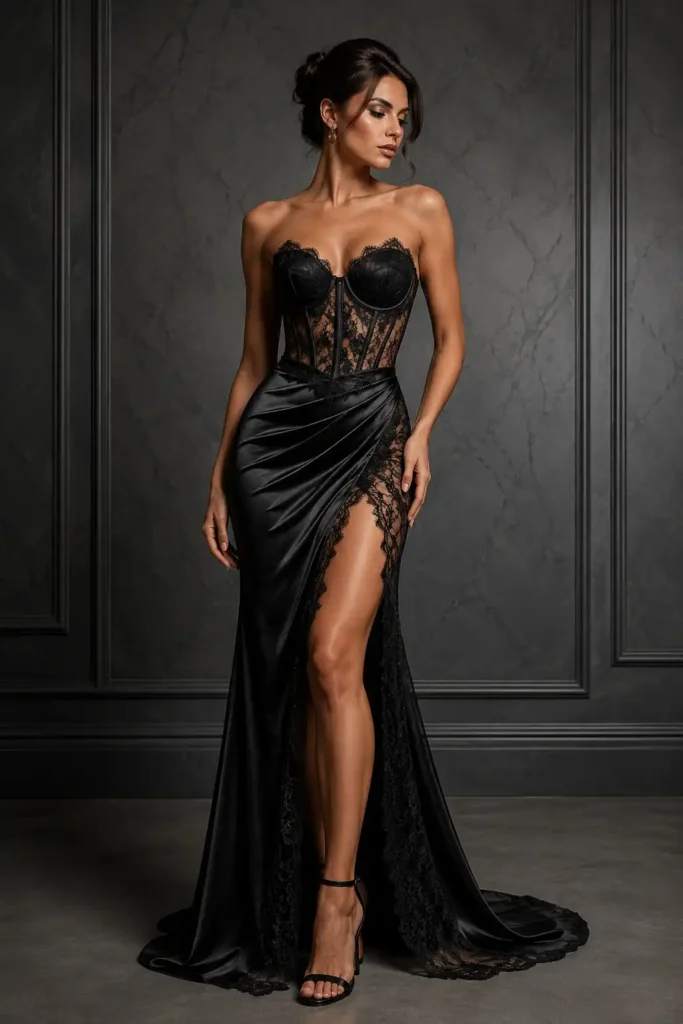
Mesh Corset Dress
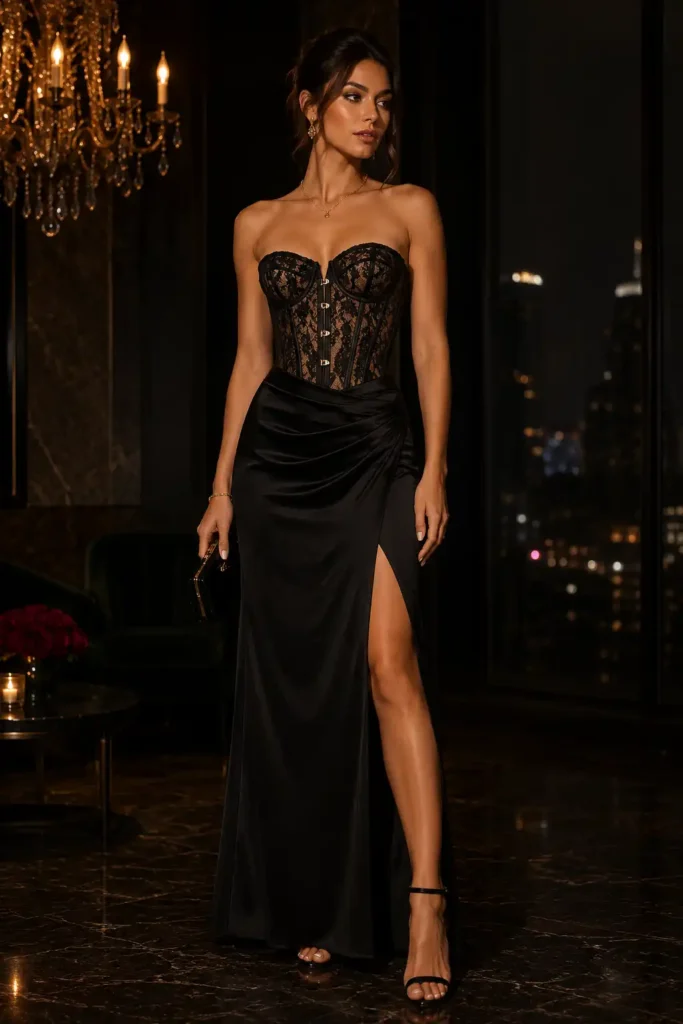
Lace Corset Dress
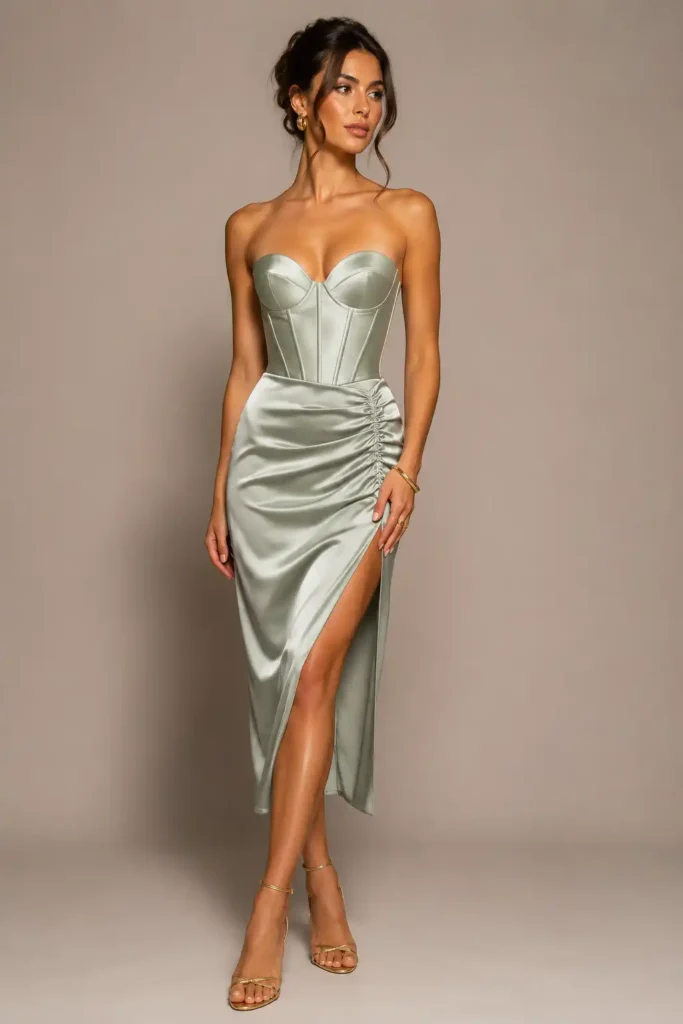
Bustier Dress

Corset Midi Dress

Occasion Corset Maxi

Backless or Cut-Out Corset
Fabric and Structural Layer Direction
A corset dress rarely succeeds through outer fabric selection alone. Surface fabric, support layer, lining and trims must be evaluated as one system. The matrix below shows common development directions; final material selection depends on handfeel, color, stretch, weight, availability, order quantity and target appearance.
| Design Direction | Outer Fabric | Internal Support Direction | Lining Direction | Main Development Control |
|---|---|---|---|---|
| Clean satin corset | Structured satin / duchess-like satin | Interlining + controlled boning | Smooth woven or soft lining | Prevent boning print-through, zipper bulging and pressing marks |
| Soft satin corset | Lightweight satin / stretch satin | Local reinforcement around cup, waist and closure | Lightweight lining or stretch lining | Keep softness while stabilizing neckline and waist |
| Mesh corset dress | Stretch mesh / power mesh / double mesh | Stable corset base under selected zones | Coverage lining where needed | Control transparency, recovery, seam tension and support distribution |
| Lace corset dress | Lace overlay or engineered lace | Support layer beneath key bodice sections | Color-matched lining | Motif placement, seam strength, edge finish and lining show-through |
| Velvet corset dress | Stretch or woven velvet | Stable support with careful seam planning | Smooth low-bulk lining | Nap direction, bulk at seams, pressure marks and zipper flatness |
| Crepe structured dress | Compact crepe / woven stretch crepe | Interlining or localized support | Woven or stretch lining | Waist shape, seam definition and recovery where stretch is used |
| Sequin corset dress | Sequin fabric / embellished overlay | Clean inner corset foundation | Soft protective lining | Decoration clearance at seams, skin comfort and packing protection |
| Sheer occasion corset | Tulle / organza / sheer woven overlay | Hidden structural base | Strategic lining and cup coverage | Transparency mapping, edge stability and visual cleanliness |
Engineering the Corset From the Inside Out
A corset dress is a connected support system. Boning, cups, lining, interlining and closure components influence one another, so decisions should be reviewed as a group before the PP sample is locked.

Boning Placement and Channel Control
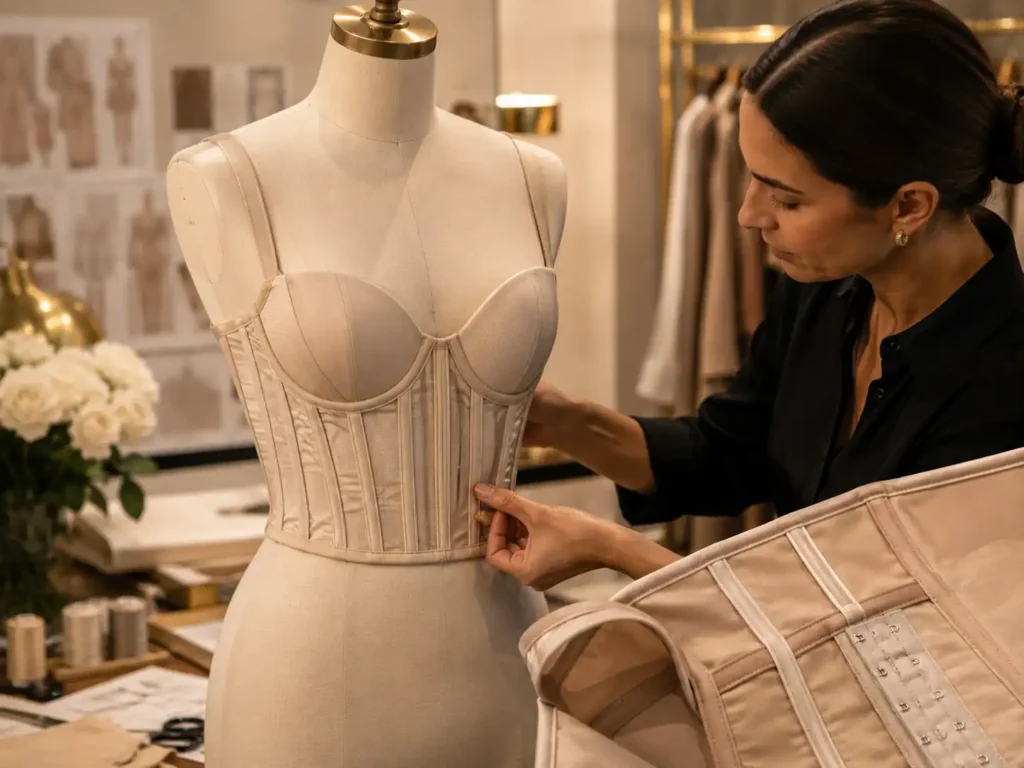
Boning provides vertical stability, waist shaping and anti-collapse support, but more boning does not automatically create a better garment. Placement should follow the design’s support lines and panel geometry. The development team checks whether each bone supports the bust, side body, waist or closure area and whether the channel sits cleanly inside the seam structure. Ends need protection so they do not push through fabric or create uncomfortable pressure points. Channel width, stitching consistency and boning length also affect surface appearance, especially under satin or other smooth fabrics. During sample review, any visible ridging, collapsing between bones or local pressure is treated as a structural issue rather than a finishing problem.
Bra Cups and Bust Position
Cup selection changes the entire upper bodice. Shape, thickness, softness, width and projection must match neckline, bust point and target support. A cup that looks correct when laid flat may sit too high, too low or too far apart on the body. Fit sampling checks cup position against the wearer’s bust line, underbust and neckline exposure. Fixed cups may require stable attachment and lining coverage; removable concepts need a secure pocket and controlled movement. Cup changes can also require pattern revisions around center front, princess seams, side panel and neckline. Jinfeng treats cup approval as part of fit development, not as an accessory decision made at the end.
Lining, Interlining and Support Layers
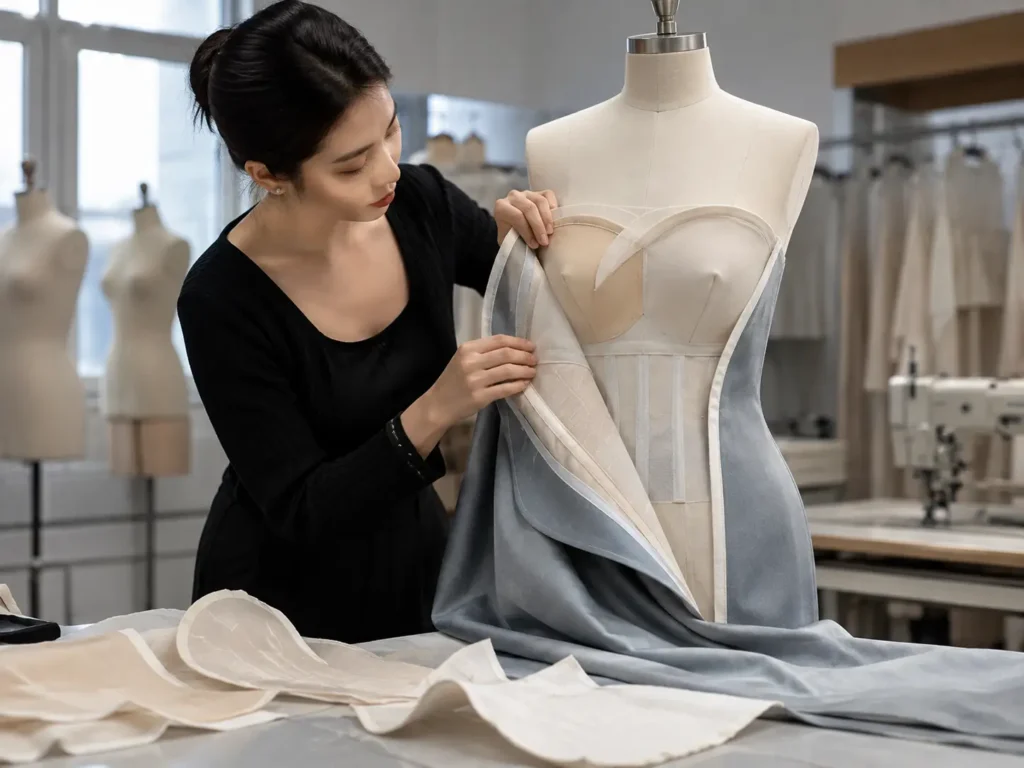
The inner build controls comfort and stability while staying visually quiet. Lining can prevent transparency, protect skin from channels and seams, and improve the finished appearance inside the dress. Interlining or local reinforcement may be used around necklines, waist areas, closure sections or cup structures where the outer fabric lacks enough stability. Too much support can make the bodice bulky and print through delicate surfaces; too little can cause wrinkling, collapse or stretching. Development compares outer fabric weight, stretch and surface sensitivity with the proposed internal layer before the sample is approved.
Zippers, Hook-and-Eye and Closure Load
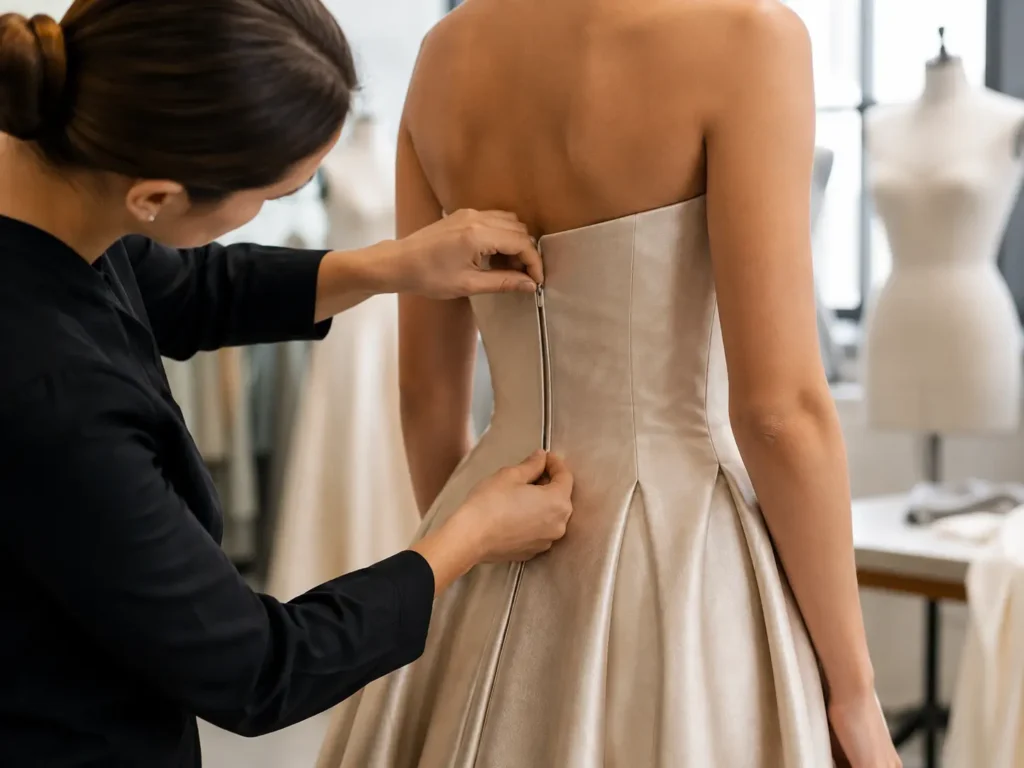
A corset dress can place significant tension on the closure. Invisible zippers need the right length, seam support and fabric thickness to stay flat. Hook-and-eye reinforcement at the top can reduce stress on a zipper in suitable designs. Lace-up backs, exposed zippers or other closures change how tension is distributed across the bodice and may alter back height or fit. Sample review checks smooth opening, top-edge security, zipper bulging, seam distortion and wearer comfort. Closure details are then locked with the trim specification before bulk production.
Pattern and Fit Development
Corset fit depends on relationships among bust, underbust, waist, torso length, neckline and back tension. Jinfeng’s pattern and sample workflow uses those relationships to turn visual references into measurable construction standards.

Bust Point, Cup Volume and Underbust
The bust area is often where a corset design succeeds or fails. Bust point controls where the garment visually centers the cup, while cup volume determines projection and coverage. Underbust shape helps define support and the transition into the waist. If one element moves without the others, the neckline may gape, the cup may compress or the center front may stand away from the body. Pattern correction reviews front width, cup seam shape, underbust curve, side support and center-front height together. Fitting photos and garment measurements provide stronger evidence than subjective comments such as “the chest looks slightly wrong.”
Waist Shaping and Torso Length
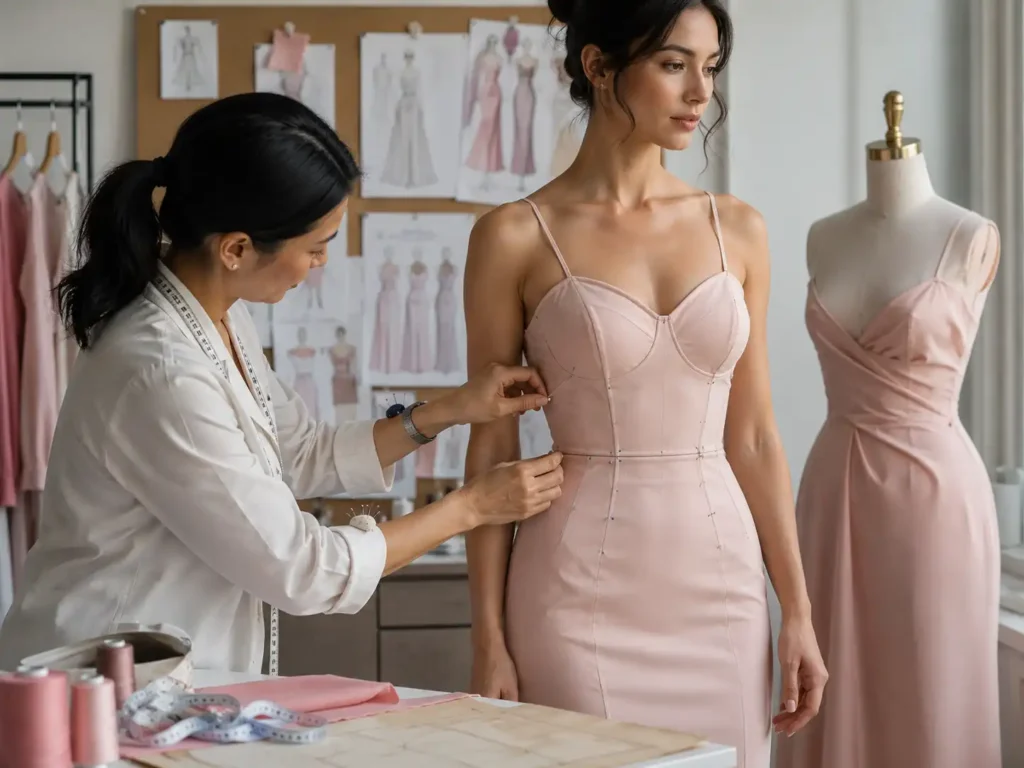
Strong waist definition comes from panel geometry and body proportion, not aggressive measurement reduction alone. A torso that is too short can force the waist seam upward and push the cup out of position. A torso that is too long can create vertical collapse, drag lines or discomfort when sitting. Development checks shoulder-to-bust and bust-to-waist relationships where relevant, then reviews front, side and back balance. Panel curves, boning lines and waist ease are adjusted together so the garment looks shaped while remaining wearable for the intended market.

Neckline, Back Height and Movement Security
Low, strapless, off-shoulder and backless corset designs remove support from areas used by more conventional dresses. Neckline shape, back height and closure tension therefore become critical. A neckline may need reshaping rather than simple tightening. A low back may require more side stabilization or a different boning path. During fitting, the wearer should be checked from front, side and back and through controlled movement such as raising the arms or sitting. The goal is secure coverage without turning the garment into a rigid shell.
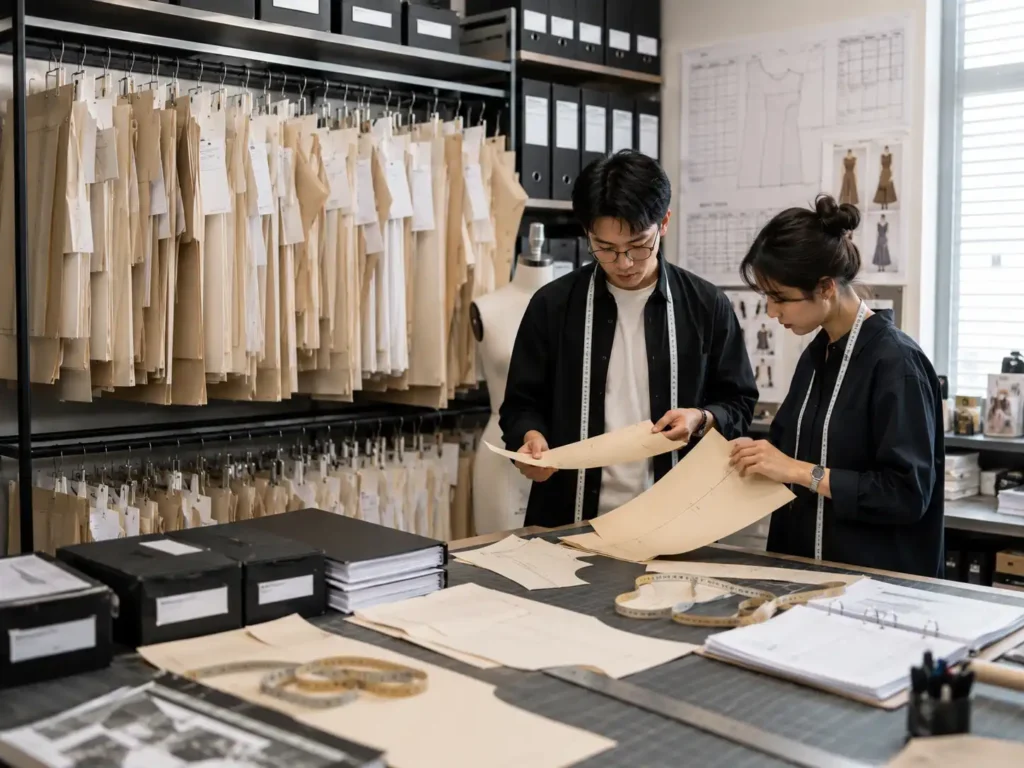
Turning Fit Comments Into Pattern Corrections
Fit feedback only becomes useful when it is converted into measurable action. Jinfeng reviews marked fitting photos, measurement differences and written comments, then separates pattern changes from sewing, material or trim changes. A neckline issue may require a pattern curve adjustment; zipper bulging may involve seam balance, support or closure selection; cup position may involve both pattern and trim. Revised points are recorded before a new sample or PP sample is made. The final pattern, measurement file and approval sample must tell the same story before bulk production begins.
Size Grading Without Losing Corset Support
Bust and Cup Position
Waist and Panel Shaping
Neckline and Underarm Coverage
Straps, Back Height and Closure
Dress Length and Waist Position
Measurement QC in Bulk
Start With the Development Files You Already Have
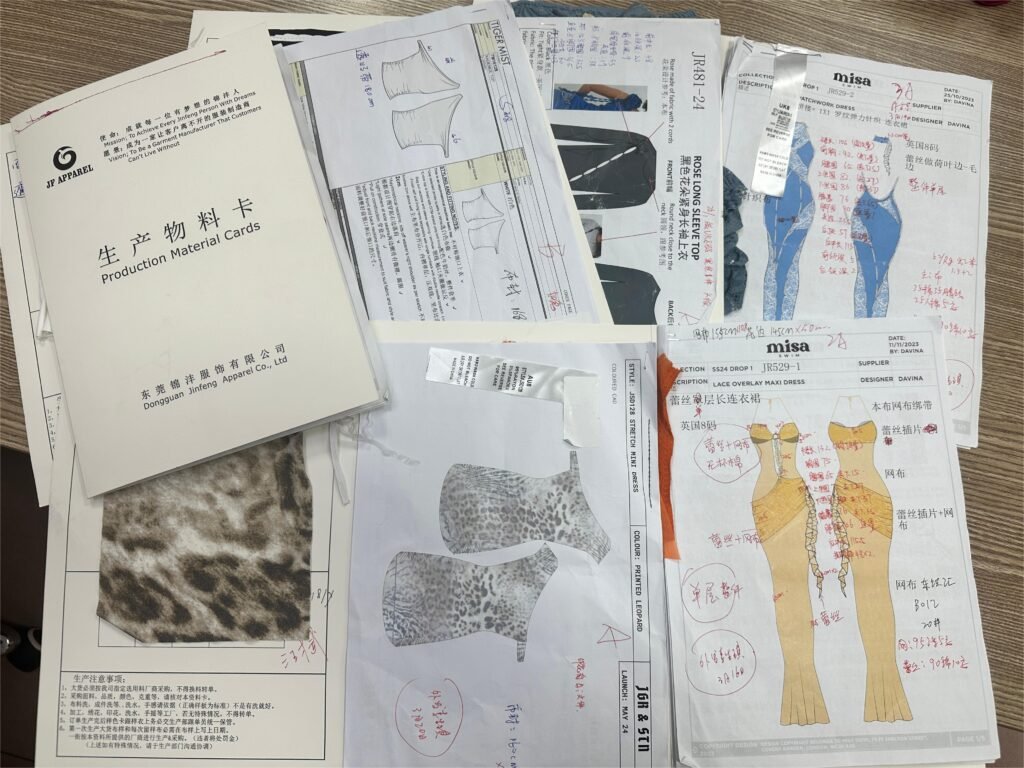
Tech Pack Development
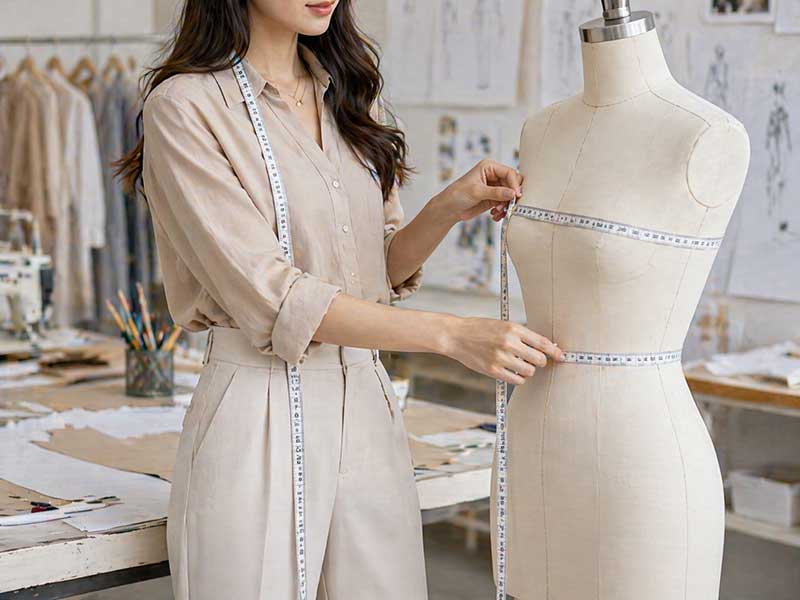
Reference Image Development
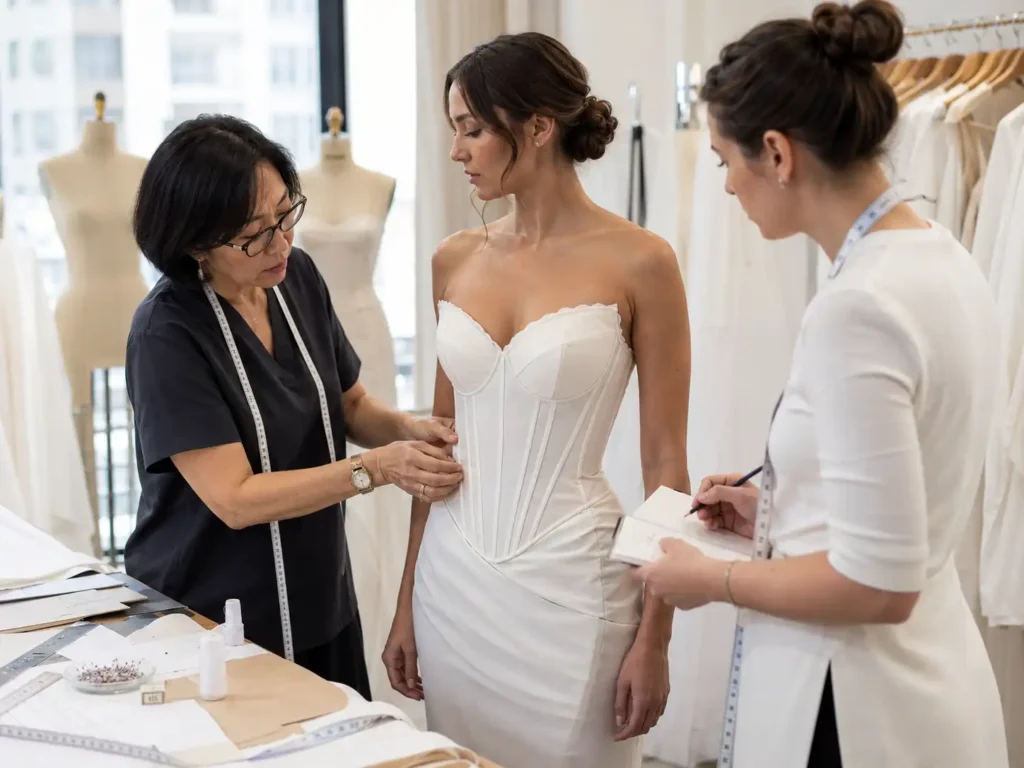
Original Sample Review
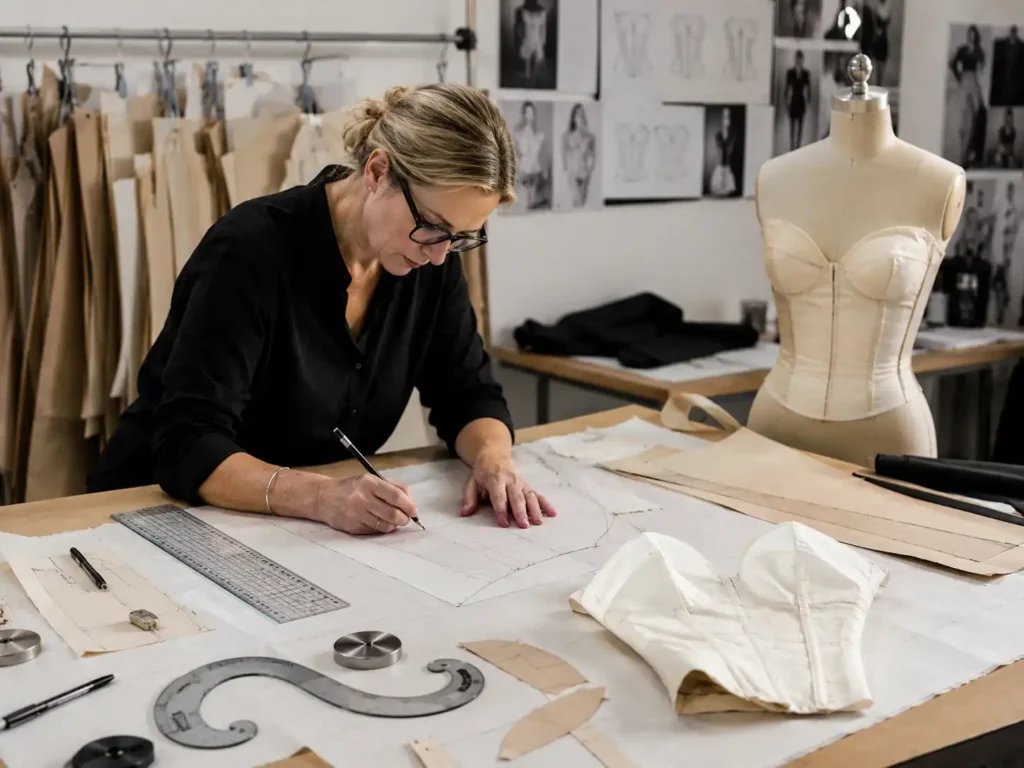
Sketch or Line Sheet Development

Feasibility Review Before Sampling
Strong development starts by identifying what can be produced consistently, what needs adjustment and what should be tested in sample form. Jinfeng does not treat every visual request as automatically ready for production.
- Structure Feasibility
The first review asks whether the proposed corset geometry can provide the intended support and coverage. Neckline depth, cup area, waist shaping, back height, cut-outs, slit or skirt connection are evaluated together. Very low backs or deep cut-outs may remove support points needed by the original design, so alternative stabilization may be suggested before pattern development. - Material Compatibility
Outer fabric, lining and structural layers are reviewed for thickness, stretch, recovery, transparency, drape and surface sensitivity. A delicate satin may show internal seams; stretch mesh may distort under tension; a bulky lace can create uneven seam thickness. Material direction is adjusted before the pattern is finalized where possible. - Trim and Construction Risk
Cups, boning, zippers, hook-and-eye, elastic, lace trim or decorative components can introduce separate availability, MOQ and lead-time requirements. Jinfeng checks whether the selected trims are compatible with the fabric and construction and whether an alternative would preserve the visual effect with better production stability. - Commercial Production Readiness
Feasibility also includes order structure. Quantity per style and color, size range, target market, private-label needs and launch timing affect material sourcing, sample priorities, production allocation and packing. Jinfeng’s standard MOQ starts from 200 pieces per style/color, while special fabrics, custom colors, special trims or packaging may require higher material-specific minimums.
From First Sample to Approved Corset Fit
Sampling is where the design becomes measurable. Complex corset styles are normally planned with room for structured review and revision rather than assuming one sample will answer every fit, material and construction question. Actual rounds and timing are confirmed after style complexity, material readiness and trim requirements are reviewed.

First Sample
The first sample tests whether the proposed structure works in real fabric. Key checks include neckline, bust shape, cup position, waistline, torso length, fabric behavior, lining, zipper and boning direction. A first sample is not treated as a failure when it reveals issues; identifying those issues is part of converting a concept into a production-ready garment.
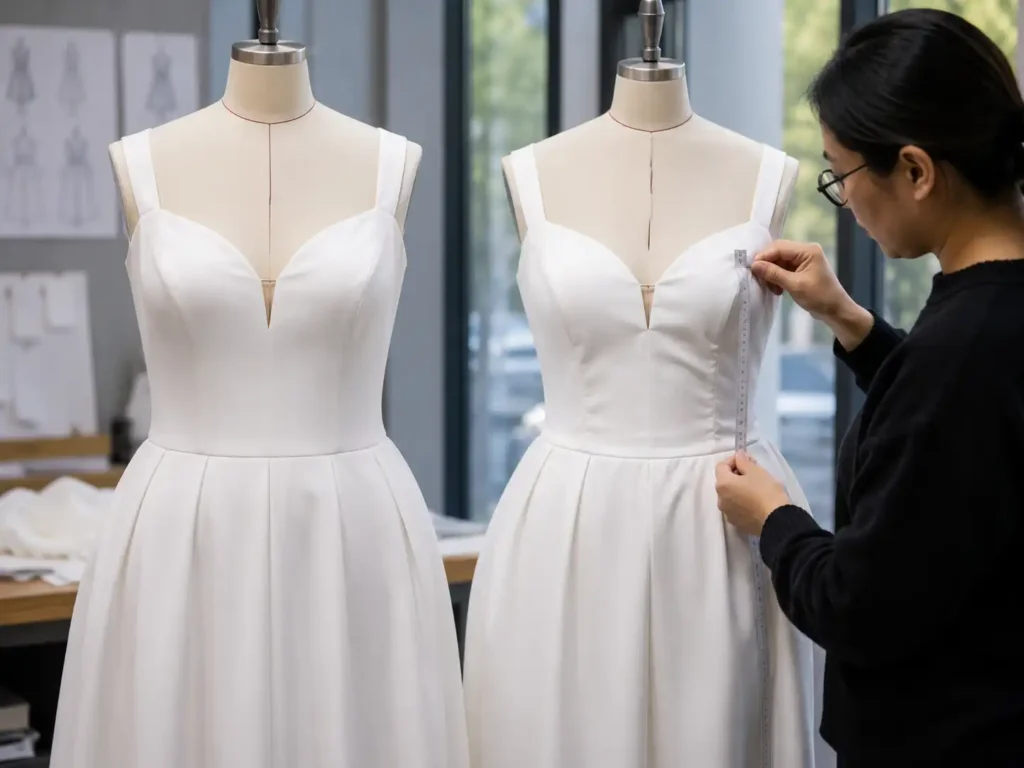
Fit Sample
Fit sampling focuses on the garment on the body. Front, side and back observations are combined with measurements. The team looks for cup compression or gaping, neckline movement, waist wrinkles, underarm exposure, side seam balance, back tension and comfort. Fitting photos and measured differences provide clearer correction instructions than general comments.

Revised Sample
Revised samples confirm whether pattern, material, trim or construction changes solved the identified problems. Changes are separated by category so a fit correction does not get confused with a sewing or fabric issue. Major structure changes, new fabrics or changed trims may require another full sample rather than a small local adjustment.

PP Sample
The PP sample is the pre-production lock point. Fabric, color, cups, boning, zipper, construction, measurements, labels and packing direction are confirmed before bulk release. For structured dress programs, the PP sample becomes a working reference for merchandising, production and QC. Changes after PP approval need controlled review because they can affect price, production instructions and delivery planning.
Corset-Specific Quality Control

Material and Trim Check

Cutting and Pattern Control
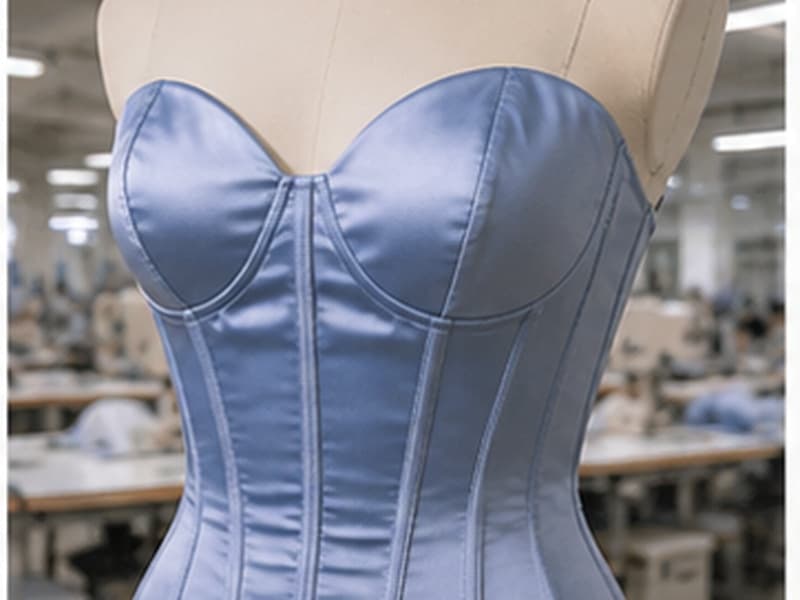
Bodice Assembly Check
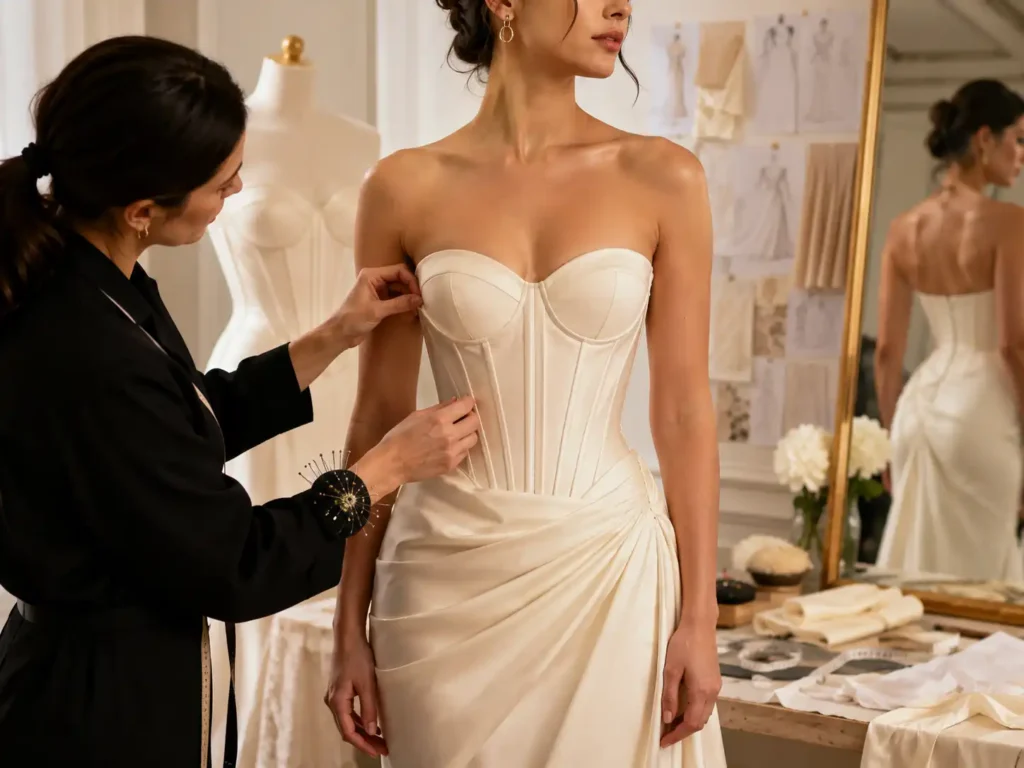
Symmetry and Fit-Related Detail

Measurement and Final Garment Inspection
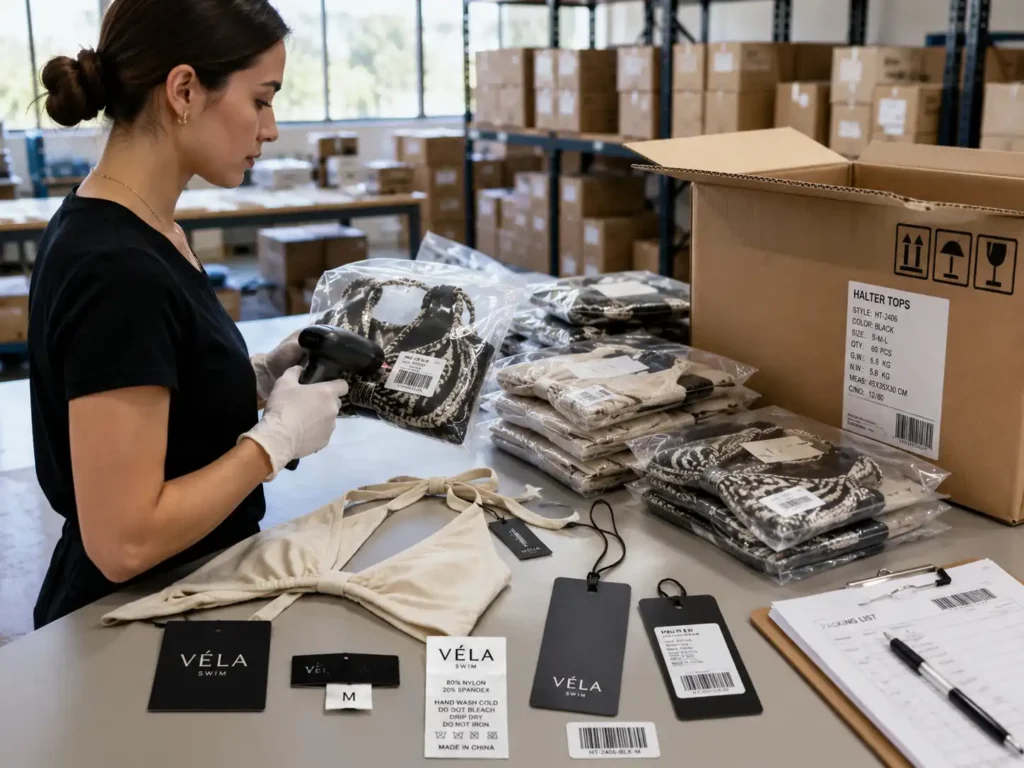
Packing Protection
Managing Multi-Style Corset Collections
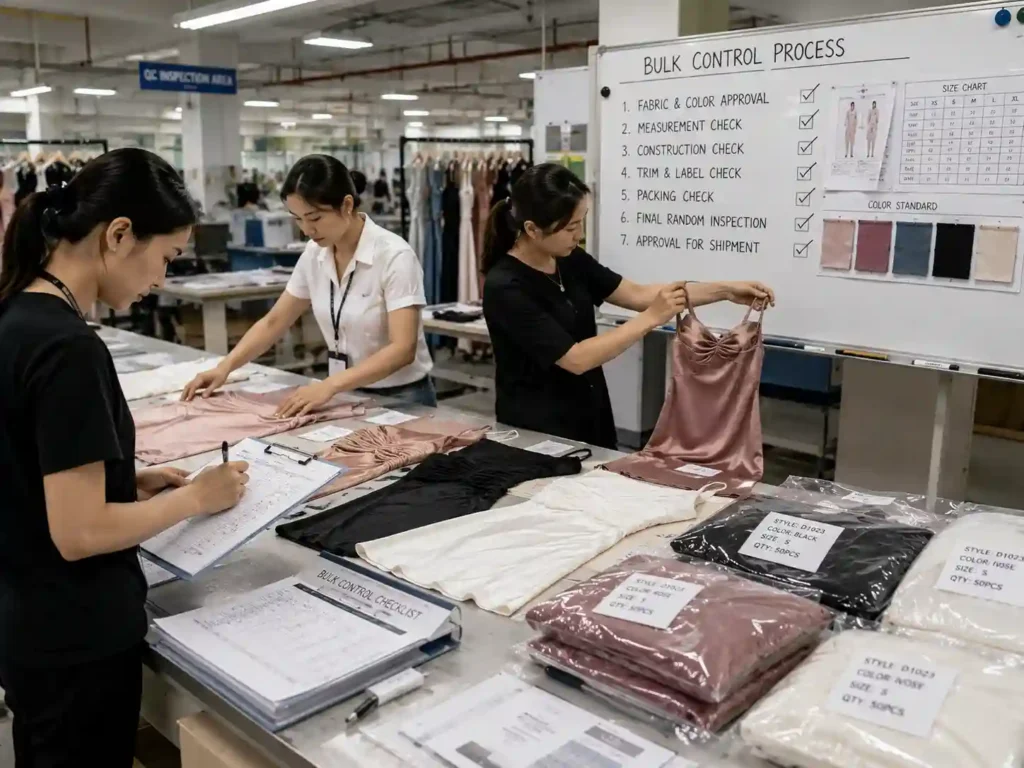
Group by Construction Risk

Track Approvals by Style

Coordinate Production Capacity
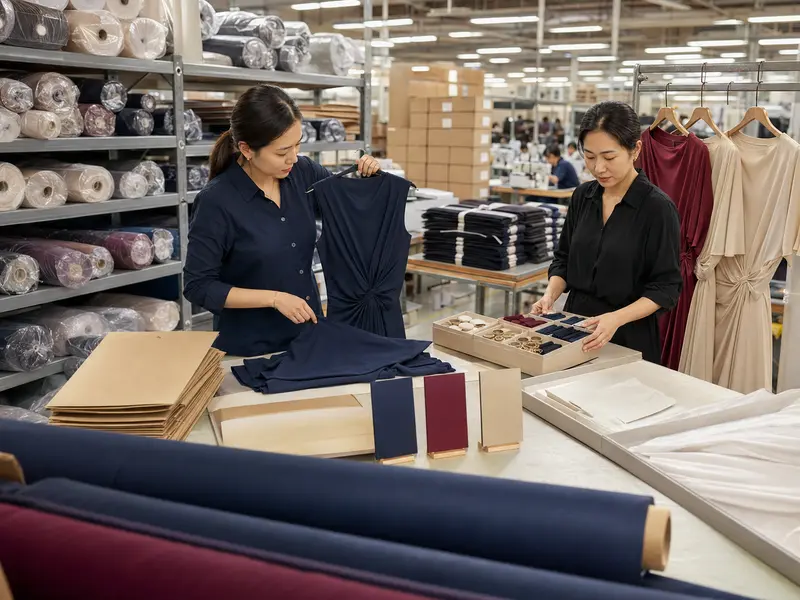
Prepare for Repeat Orders
How to Evaluate a Corset Development Partner
A strong supplier evaluation should focus on the ability to convert a design into a repeatable garment standard. Price matters, but structure, pattern, sample control and bulk execution determine whether the approved concept survives production.
| Evaluation Area | What an Established Fashion Program Should Confirm | Jinfeng Apparel Approach |
|---|---|---|
| Corset structure | Understanding of cups, boning, lining, support layers and closure load | Structure reviewed before pattern lock and during fitting |
| Pattern development | Ability to convert design input into production patterns | 7+ senior pattern makers; tech pack, reference, sample and sketch routes supported |
| Sampling depth | Clear first sample, fit correction and PP process | 2 sample rooms and 20+ sample machinists |
| Fit correction | Comments translated into measurable pattern changes | Fitting photos, measurements and revision records used together |
| Size grading | Grade rules preserve support and proportion | Critical bust, waist, neckline, strap/back and length points are reviewed |
| PP control | Materials, measurements and construction locked before bulk | PP sample used as production and QC reference |
| Bulk consistency | Early issues contained before full scale | Incoming, in-line, measurement, final and packing controls |
| Project capacity | Ability to support multi-style seasonal programs | 6 owned factories, 10+ partners, 18+ sewing lines, 6+ flexible lines |
| Confidentiality | Protection for unreleased designs and technical files | NDA-based cooperation and restricted use of project materials supported |
| Repeat orders | Ability to retain production references | Pattern, measurement, material, trim and packing records can be retained for repeat programs |
Representative Corset Collection Development Case
A representative anonymized order profile below reflects the scale and structure of current Jinfeng brand programs while protecting brand identity, unreleased designs and commercial details.

Project Profile
The program covered 18 corset-led dress styles with a planned total of approximately 46,800 pieces across mini, midi and occasion silhouettes. The range used satin, stretch mesh, lace overlays and structured woven fabrics, with sizes running from XS to XL and several color stories developed for different launch groups. Development was divided into style families so shared corset principles could be managed consistently without assuming every style used the same pattern or support system.

Development Challenge
The collection mixed strapless, low-back, mesh-panel and satin styles. Several visual references relied on a narrow waist and clean bust line but did not fully define cup shape, boning route, support layer or back construction. The development team first separated the styles by structural risk. Satin styles were reviewed for print-through and zipper flatness; mesh styles for transparency and recovery; lace styles for motif placement and lining; low-back styles for support loss and movement security.
Sampling and Correction
Most styles required more than one review stage before PP approval. Fit comments concentrated on bust-point position, neckline security, waist balance, side seam alignment and back tension. Fitting photos and garment measurements were converted into pattern revisions rather than local sewing fixes. Cup and boning details were adjusted where the approved silhouette could not be achieved through pattern correction alone. Material changes were rechecked because a new stretch or thickness could alter the fit even when the pattern remained similar.
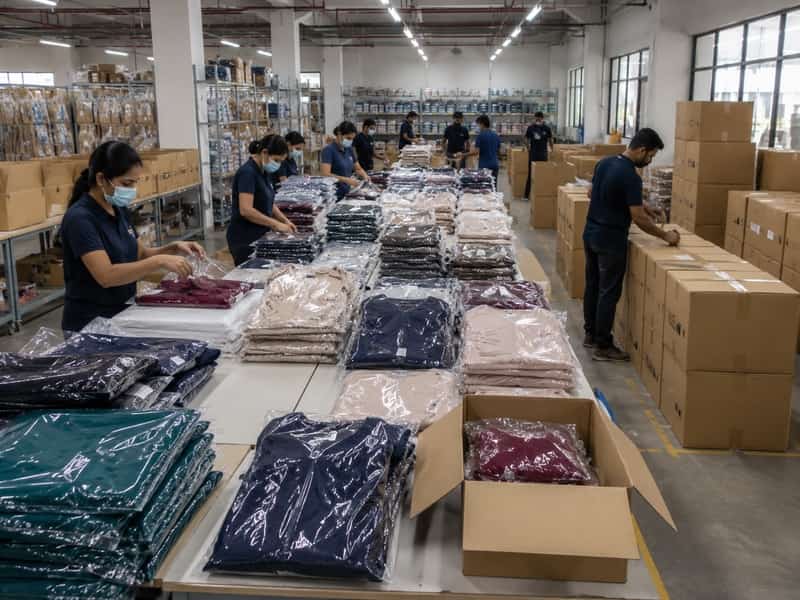
Bulk Preparation
After PP approval, the collection was grouped for production according to material and construction complexity. Final pattern, size chart, trim references, PP standard and packing instructions were aligned by style. Early production checks focused on cup position, boning channel, neckline, zipper, measurements and symmetry before the larger quantities advanced.
Different production batches were coordinated without treating the 18 styles as one identical garment program.
Corset Dress Development Frequently Asked Questions

Start Your Corset Dress Development With Jinfeng
A strong corset program begins with enough information to judge structure, fit and production feasibility before unnecessary sampling costs are created. Jinfeng Apparel supports established fashion brands, sourcing teams and product development departments from concept review and pattern development through fit correction, PP approval, bulk production, QC, private-label packing and export coordination.
For a useful first review, send the information already available. A complete tech pack is welcome, but a clear reference, line sheet or original sample can also start the discussion when the remaining technical details still need development.
Please include where possible:
- Style image, sketch, tech pack or original sample photos
- Planned quantity per style and color
- Target size range and size chart, if available
- Preferred outer fabric and lining direction
- Cup, boning, closure or support requirements already defined
- Color plan and trim direction
- Private-label, hangtag, barcode and packing requirements
- Target market and intended launch window
- Delivery destination or nominated forwarder information when relevant