Skip to content
Compliance Support for Dress Orders
Market-ready dress production begins before fabric is cut. Jinfeng Apparel connects compliance requirements with material approval, sampling, production control, labeling, inspection, packing and shipment documentation for established fashion brands and structured apparel programs.
- 15+ QC inspectors covering material, in-line, final and packing checks
- 12+ merchandisers coordinating requirements, approvals and order records
- 6 owned womenswear factories supported by 10+ long-term production partners
- 100,000+ pieces of coordinated monthly womenswear capacity, subject to style complexity and scheduling
- Third-party testing and audit-document support reviewed by project, facility, material and destination market
- Dress-focused control for satin, lace, mesh, sequin, bodycon, corset, occasionwear and private-label programs
Compliance Support Connected to Dress Production
Compliance cannot sit in a separate folder after development is complete. Requirements need to influence fabric selection, trim approval, care instructions, test planning, PP confirmation, production checks and packing release from the beginning of the order.
Order-Level Execution
Jinfeng Apparel reviews the destination market, dress category, material structure, decoration, label information, inspection standard and required documents as one connected order. A requirement is useful only when it is translated into an approval item, production instruction or inspection checkpoint. The team therefore links compliance notes to the tech pack, fabric approval, trim record, BOM, PP sample, sewing instruction, QC checklist and packing requirement rather than treating compliance as a logo or certificate display.
Clear Responsibility Boundaries
Jinfeng Apparel supports document collection, test coordination, label execution, factory-information review, inspection preparation and production records. Final legal interpretation, applicable regulation selection, product claims and market-entry responsibility remain with the brand, importer or appointed compliance professional. Clear responsibility avoids two common problems: a factory making unsupported legal promises and a brand assuming that one certificate automatically covers every fabric, color, facility and production batch.
Dress-Specific Knowledge
General apparel compliance language is not enough for complex dresses. Satin requires control of snagging, shade and care performance. Mesh and lace require component review, transparency and damage checks. Sequin garments require attachment, skin-contact and packing controls. Corset and strapless dresses add cups, boning, anti-slip materials and structural components. Compliance support becomes more reliable when the team understands how each material and construction behaves in sampling and bulk production.
A Structured Team for Controlled Dress Orders
15+ QC Inspectors
12+ Merchandisers
7+ Pattern Makers
20+ Sample Machinists
30+ Packing Staff
Multi-Factory Coordination
What Dress Compliance Support Can Cover
Market Requirement Review
Material Documentation
Testing Coordination
Factory Audit Support
Label Information
Quality and AQL
Packing Requirements
Shipment Records
Market Requirements Begin With the Destination
One dress cannot be released under a single universal compliance statement. Jinfeng Apparel starts by identifying the sales market, product category, material structure, brand manual and responsible importer before creating the order checklist.
| Destination Market | Common Dress-Order Review | Brand Inputs Needed | Jinfeng Support Boundary |
|---|---|---|---|
| United States | General wearing-apparel flammability review; fiber-content and country-of-origin labeling; manufacturer or marketer identity; permanent care instructions with a reasonable basis. | Product category, fabric composition, importer or RN information, care basis, testing matrix, retailer manual and label artwork. | Coordinate material records, testing, label execution, PP approval, QC and shipment files. Final applicability and legal approval remain with the brand or importer. |
| European Union | Fiber-composition labeling under Regulation (EU) No 1007/2011; component labeling where applicable; official-language requirements; animal-origin disclosure where relevant. | Countries of sale, approved fiber names, component composition, language list, RSL or chemical requirements and sustainability-claim evidence. | Support supplier documents, label files, testing coordination and order records by fabric, color, supplier and batch. |
| United Kingdom | Fiber-content labeling and responsibility checks, plus brand, retailer, care, chemical and importer requirements applicable to the intended route to market. | UK market manual, label text, importer details, care information, test plan and warehouse instructions. | Prepare and control approved labels, material information, inspection checkpoints and packing records. |
| Canada | Dealer identity and fiber-information requirements under Canadian textile labeling rules, together with brand, language, care and importer instructions. | Company or CA identification details, fiber breakdown, label-language instructions, testing expectations and packaging files. | Coordinate label development, material records, QC and shipment documentation; final Canadian approval remains with the responsible dealer or importer. |
| Australia and Other Markets | Product, fiber, care, chemical, importer, retailer and warehouse requirements vary by destination and sales channel. | Destination, importer instructions, compliance manual, test matrix, label requirements and appointed laboratory or inspection company. | Build the order checklist around the submitted requirements and flag unsupported assumptions before production approval. |
Build a Complete Compliance Brief Before Sampling
Destination and Channel
Product Classification
Tech Pack or Sample
Material Information
Testing Matrix
RSL and Claims
Label and Packing Files
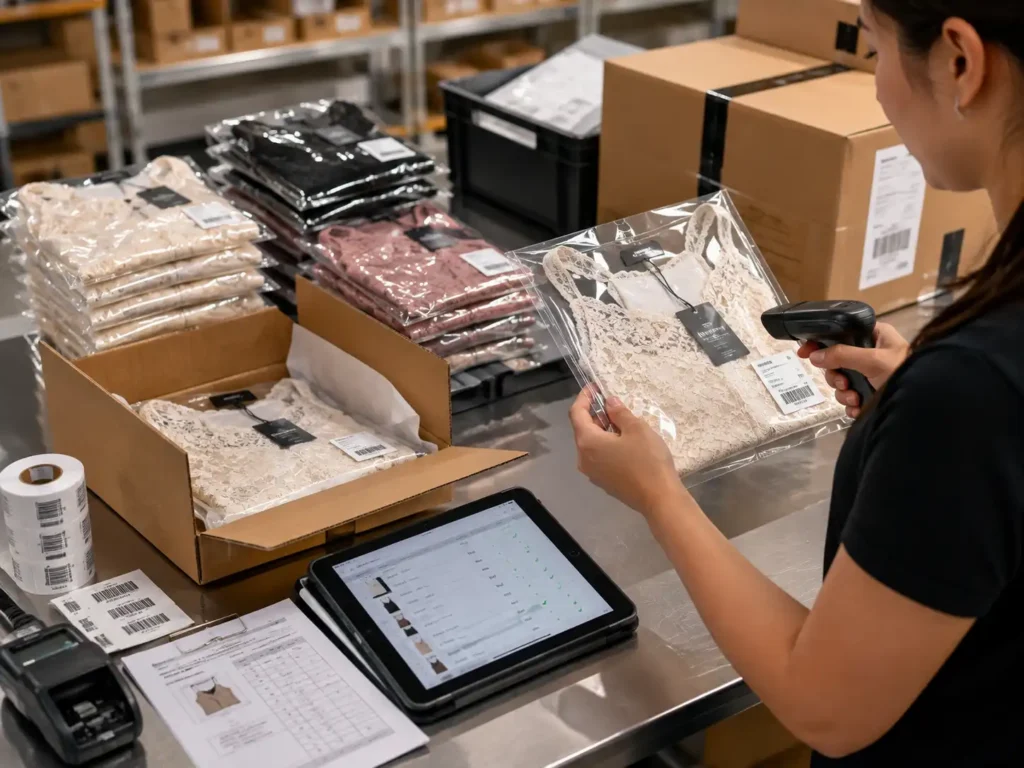
From Requirement Review to Shipment Release
A controlled order uses a sequence of approvals. Every stage produces a record that can be checked before the project moves forward, reducing late changes and unclear responsibility.
Requirement Review and Risk Map
The project team reviews destination, product category, materials, trims, claims, test plan, labels, audit requirements, inspection standard and packing rules. Open items are recorded rather than assumed. High-risk points may include custom-dyed satin, mixed-component lace, sequin attachment, skin-contact trims, unsupported care wording, incomplete fiber breakdown or a test date scheduled after bulk completion.
Material and Supplier Approval
Fabric and trim options are reviewed for composition, weight, hand feel, stretch, recovery, transparency, finish, color, MOQ, lead time and available documents. Certified or recycled options are checked against supplier name, certificate scope, validity, material, color and batch. A swatch, lab dip or sample approval does not automatically approve every later production lot.
Sample Development and Test Planning
The first sample verifies construction and material behavior. Revised samples address fit, workmanship and component changes. Testing samples are selected according to the agreed matrix. Where a material or construction change can affect performance, the testing plan is reviewed again rather than assuming the original report remains applicable.
PP Sample and File Lock
Before bulk production, the team confirms the PP sample, size chart, pattern version, fabric, lining, trims, label text, label placement, packing method, production order, sewing instruction and QC checklist. The Golden sample becomes the visual and construction reference for production, inspection and repeat orders.
Bulk Control and Inspection
Incoming materials, cutting, sewing, measurements, garment appearance, pressing, labels, packing and carton data are checked against approved references. Client quality manuals, tolerance charts, defect classifications and AQL instructions can be incorporated into the inspection plan. Third-party inspection access and timing are reserved before packing completion.
Release and Record Package
Shipment release follows completion of the agreed inspection, packing verification and document review. Available test reports, inspection files, packing lists, commercial documents, carton measurements and shipment photos are organized for the brand, importer or nominated forwarder. Unresolved deviations are reported before release rather than hidden inside the shipment.
Material Documentation Before the First Dress Sample
Material decisions influence labeling, testing, care performance, MOQ, cost and bulk consistency. Jinfeng Apparel reviews the main fabric, lining, support materials, decorative components and packaging materials as a connected system.
Composition Must Match the Approved Material
Fiber statements should be based on reliable supplier information and, where required, laboratory confirmation. A dress may contain a satin shell, stretch lining, mesh panel, lace trim and elastic support, each with a different composition. The team records which components require separate information and which structural materials are outside the intended consumer-facing claim. Supplier invoices, specification sheets and test reports should identify the material actually selected for production.
Fabric Performance Changes the Compliance Plan
Weight, weave or knit structure, coating, finish, stretch, brushing, print and surface decoration can influence flammability, dimensional stability, colorfastness, care instructions and inspection risk. A lightweight brushed fabric, heavily embellished mesh or coated textile may need a different review from a conventional woven dress fabric. Jinfeng flags material behavior before bulk purchasing so the brand can decide whether to test, replace or redesign the material.
Linings and Structural Components Need Control
Linings affect opacity, comfort, static, shrinkage and care performance. Corset dresses can include cups, boning, anti-slip tape, elastic, hook-and-eye components and reinforcement layers. Sequin, rhinestone and chain details add attachment and skin-contact considerations. Each approved component receives a clear specification, color reference, placement requirement and QC checkpoint so a substitute is not introduced without review.
Certified Material Claims Are Scope-Specific
OEKO-TEX, GOTS, organic cotton, recycled and GRS-related options can be sourced or coordinated according to availability. Documentation must be checked by supplier, material, certificate scope, validity, color, batch and order quantity. A mill certificate does not prove every downstream claim, and a certificate for one fabric cannot be reused for a different construction. Custom colors, certified materials and special finishes may introduce separate supplier MOQs and longer lead times.
Fabric Changes Trigger Re-Approval
A replacement selected to improve cost, availability or production stability may change composition, drape, stretch, shrinkage, transparency, care behavior and test performance. Jinfeng compares the original and proposed material, identifies affected pattern or lining decisions, updates the cost and timeline, and requests a new approval. Production does not proceed on a verbal statement that two fabrics are ‘similar.’
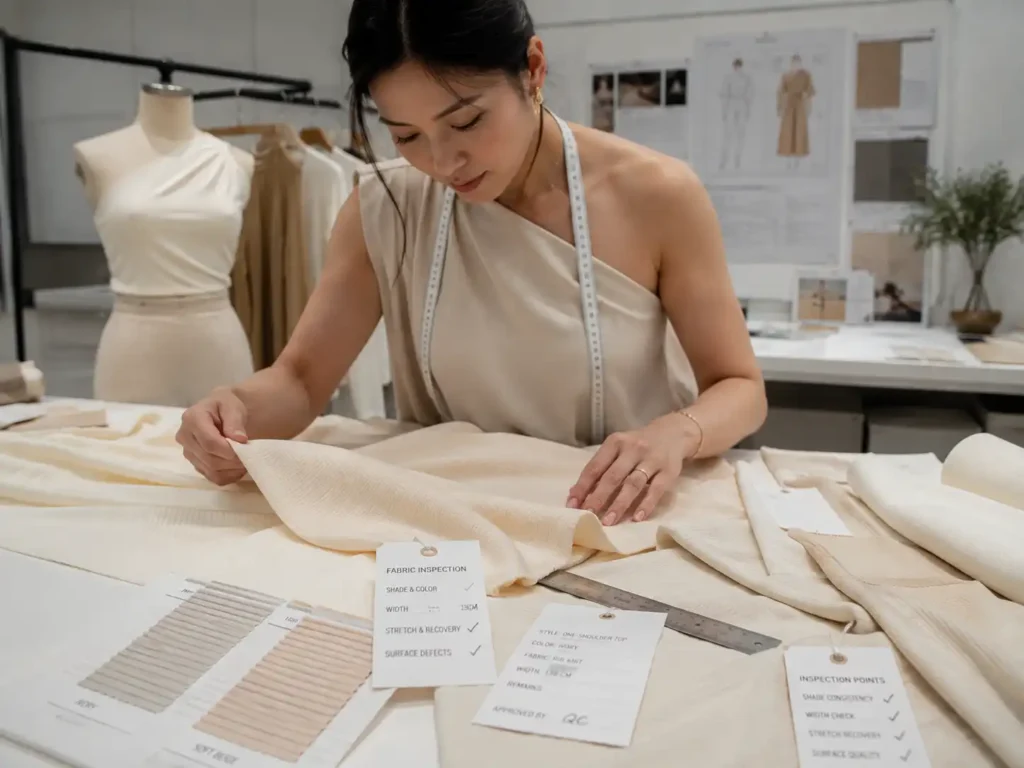
Third-Party Testing Coordinated Around the Order
Jinfeng Apparel can coordinate test preparation and laboratory submission according to the product, destination and brand matrix. Testing scope, pass criteria and final acceptance remain subject to the responsible brand, importer or appointed laboratory.

Flammability Review

Fiber Composition

Colorfastness

Dimensional Stability

Chemical and RSL

Attachment and Performance
Factory Audit and Social Compliance Documentation
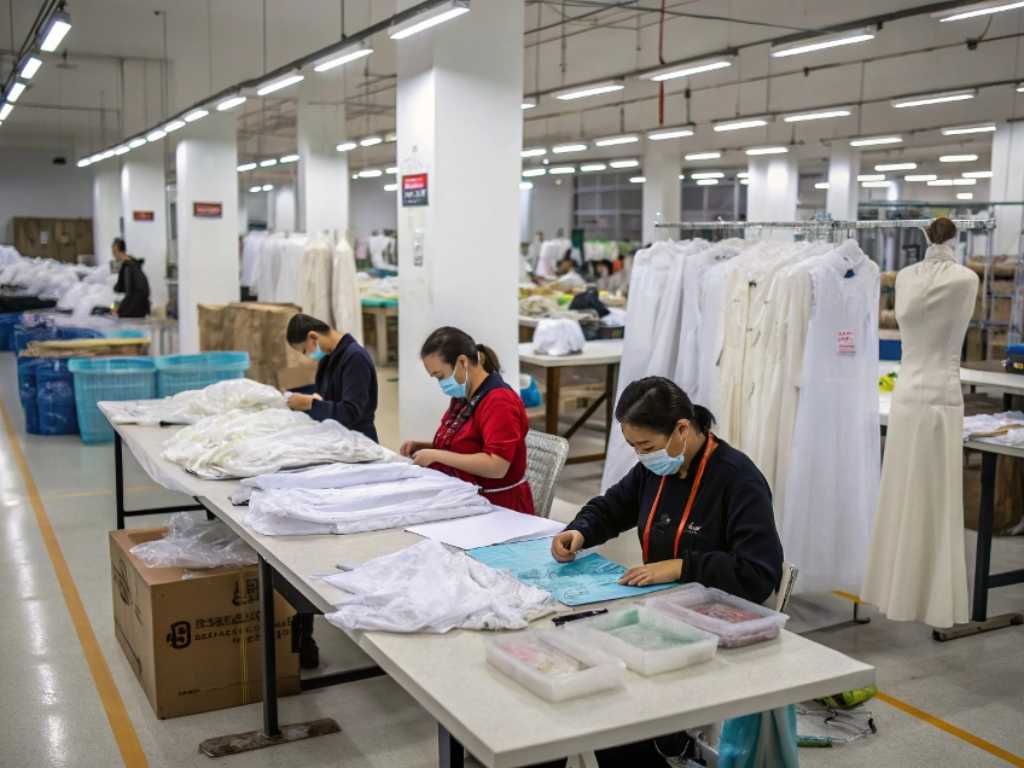
Facility Identification
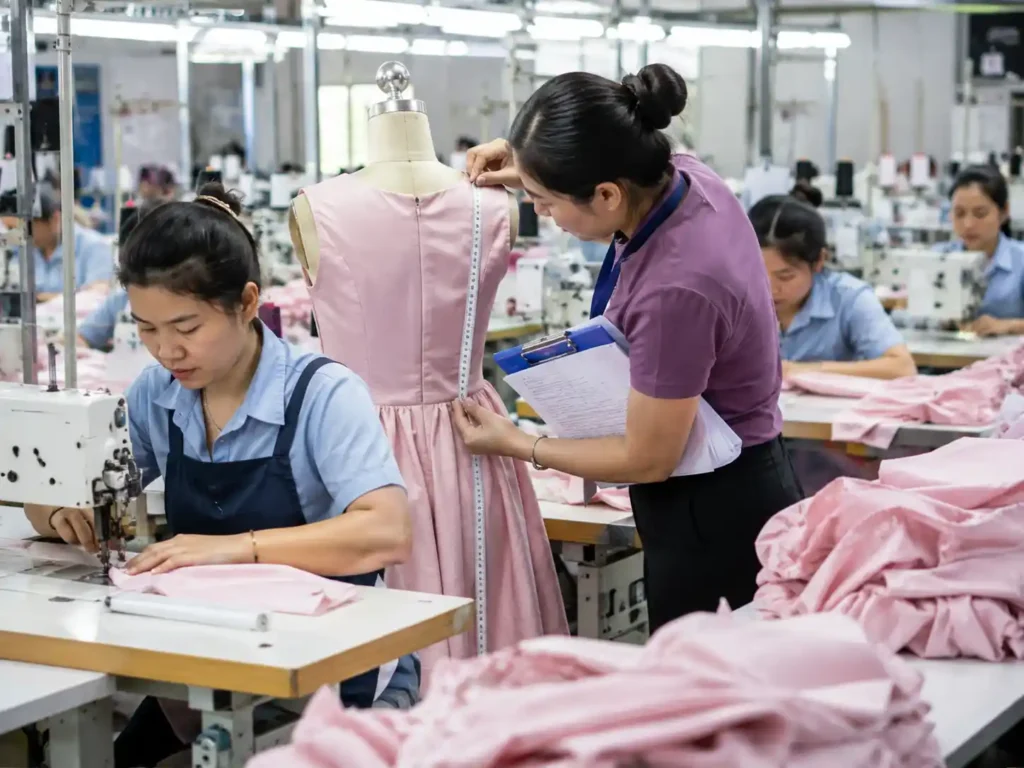
Audit-Related Records

Client or Third-Party Audit

Corrective Action Follow-Up
Dress-Specific Compliance and Quality Risk Matrix
Complexity changes by style. A satin slip dress, sequin mini dress and corset gown cannot share one generic checklist. Jinfeng builds control points around the actual material, structure and retail presentation of each style.
| Dress Program | Material or Construction Risk | Documentation or Testing Focus | Bulk Control Focus |
|---|---|---|---|
| Satin Dresses | Snagging, shade variation, shine, pressing marks, color migration and care sensitivity | Composition, colorfastness, care basis, supplier batch and approved shade | Fabric inspection, cutting direction, clean handling, zipper flatness, pressing and protective packing |
| Mesh Dresses | Transparency, tearing, stretch variation, edge damage and lining mismatch | Shell and lining composition, chemical requirements, stretch or performance tests where specified | Relaxing, cutting direction, seam reinforcement, hole inspection, lining coverage and measurement |
| Lace Dresses | Multiple components, motif placement, fraying, shade mismatch and delicate edges | Component composition, supplier article, color, RSL and care review | Lace matching, edge finish, seam strength, lining relationship and packing protection |
| Sequin Dresses | Sequin loss, scratching, broken needles, sharp edges, weight and packing damage | Base-fabric information, decoration material, attachment test where required and care method | Needle control, attachment inspection, skin-contact review, lining, weight support and anti-crush packing |
| Corset and Strapless Dresses | Cups, boning, anti-slip tape, hook-and-eye parts, pressure points and structural failure | Trim specifications, component records, restricted substances where required and care review | Cup and boning placement, pull and attachment checks, bust coverage, symmetry and PP standard |
| Bodycon and Stretch Dresses | Poor recovery, twisting, shrinkage, measurement instability and riding up | Composition, stretch and recovery, dimensional stability and care basis | Fabric relaxing, grain and stretch direction, pattern version, bust-waist-hip measurements and wash-risk control |
| Printed and Custom-Dyed Dresses | Color variation, bleeding, print misplacement, shrinkage and claim mismatch | Colorfastness, print chemistry or RSL where required, lab dip and strike-off approval | Batch control, print direction, placement, shade grouping, cutting and packing separation |
| Multi-Style Occasionwear | Mixed fabrics, trims, colors, lengths, care methods and SKU errors across the collection | Style-by-style BOM, component records, test matrix, labels and approval status | Golden samples, inspection plan, barcode control, packing ratio and shipment-document reconciliation |
Labels and Care Information Built Into Development
Labels are not a final packing accessory. Fiber, care, origin, responsible company, size, brand and barcode information should be reviewed while materials and construction are still being approved.
Fiber Information Follows the Product
The label must reflect the approved shell, lining and relevant textile components, using the terminology and percentages required for the destination market.
Supplier descriptions are checked against the selected article and, where necessary, laboratory analysis.
If the product uses multiple major components, the brand compliance team determines whether separate component disclosure is required.
Care Instructions Need a Reasonable Basis
Care wording should match the fiber, dye, finish, lining, decoration and construction. A sequin dress, structured corset dress and unlined jersey dress cannot receive the same care instruction by convenience. The first sample, material performance, wash or dry-clean information and laboratory results can support the selected wording. For U.S. sales, care labels fall under FTC 16 CFR Part 423 and must remain available to the wearer through the useful life of the garment.
Origin and Responsible Identity Must Be Supplied
Jinfeng can place approved country-of-origin and company or RN information into the label artwork.
The responsible brand or importer supplies the legal identity information and confirms the final wording.
Jinfeng does not invent importer details or substitute factory contact information when a different responsible entity is required.
Artwork and Placement Are Approved Before Bulk
Main labels, size labels, care labels and hangtags move through artwork review, material and color confirmation, sample label, placement review and PP approval. Font size, legibility, fold, seam allowance, attachment method and skin comfort are checked before bulk application. Any wording change after labels are produced can affect cost and schedule.
Barcode and SKU Control Continue Into Packing
Barcode lists, style numbers, color codes, size codes and retail prices are matched to the purchase order and packing ratio. Packing QC checks garment, label, hangtag, barcode, polybag and carton mark as one SKU set. The process reduces warehouse rejection caused by a correct garment packed under the wrong identity.

Production Control Protecting Approved Standards
Compliance support becomes credible only when approvals remain visible on the factory floor. Jinfeng converts brand standards into production documents, inspection points and release conditions.
Incoming Material Inspection
The team checks article, color, hand feel, weight, width, visible defects, shade variation, stretch, surface damage, print direction and available batch information against the approved material. Lace, mesh, satin and sequin fabrics receive product-specific handling instructions. A shipment of fabric that looks similar but does not match the approved record is held for review.
Cutting and Pattern Control
Approved pattern versions, size charts, grain direction, stretch direction, print placement, nap direction, shade grouping and cut quantities are confirmed before cutting.
Stretch materials may require relaxing. Multi-component dresses require controlled bundling so shell, lining, cups, lace panels and trims remain matched by style, color and size.
In-Line Sewing Checks
Inspection focuses on measurements, seam construction, stitch condition, zipper flatness, lining exposure, strap length, cup and boning placement, lace matching, sequin attachment, ruching symmetry and workmanship points defined in the sewing instruction.
Problems are corrected during production rather than collected at the final inspection stage.
Final Garment and Pressing Review
Finished garments are checked against the PP and Golden samples for silhouette, color, size, appearance, surface condition, symmetry, hem balance, closure function, trim security and pressing quality. Satin, velvet, pleated, sequin and long occasion dresses receive handling and packing review because poor finishing can damage an otherwise compliant product.
Packing and AQL Release
Labels, hangtags, barcodes, polybags, assortments, carton marks, carton counts and warehouse instructions are checked before shipment. AQL or client inspection can be arranged according to the submitted standard. Critical, major and minor defects are classified under the agreed plan, and shipment release follows the approved inspection outcome or documented brand decision.

Traceability Across Styles, Colors, and Production Batches
Style and PO Records
Material and Batch Records
Pattern and Sample Versions
Label and Packaging Versions
Inspection Evidence
Repeat-Order Control
How Compliance Requirements Affect Cost and Timing
Laboratory Testing
Certified Materials
Custom Colors and Prints
Custom Labels and Packing
Woven labels, care labels, hangtags, printed polybags and retail cartons have supplier development time and minimum quantities.
Late text revisions can require reprinting.
Factory Audit and Inspection

Documents Available Before Shipment
Requirement Records
Material Records
Development Records
Testing and Audit Files
QC and Packing Files
Shipment Documents
Frequently Asked Questions About Dress Compliance
Support can include requirement review, material documentation, third-party testing coordination, facility-document review, label execution, QC planning, AQL or client inspection support, packing control, traceability and shipment records. Scope is confirmed by product, destination, facility, material and brand instruction.
Yes. Jinfeng can coordinate manufacturing controls related to U.S. dress programs, including material records, testing preparation, fiber and care label execution, country-of-origin information, QC, packing and shipment files. The brand or importer remains responsible for confirming the final applicable requirements.
No. Audit and certificate status can vary by legal entity, production facility, supplier, material and validity period. Jinfeng reviews the actual production unit and available current records rather than applying one document to every factory.
Yes. Jinfeng can coordinate sample preparation and submission with SGS, Intertek, Bureau Veritas, ITS or another appointed laboratory. Test methods, pass criteria, fees, sample quantities and report approval must be confirmed before submission.
No. Certified-material availability depends on the supplier, fabric, color, MOQ, certificate scope, validity and production batch. Jinfeng can source or coordinate suitable options and provide available documents for review by project.
Submit the testing matrix before fabric and trim approval whenever possible. Early planning helps select the correct material, reserve test samples and protect the PP and bulk schedule. Late requirements may cause replacement, retesting or shipment delay.
Yes. Jinfeng can convert approved tolerances, defect classifications, AQL levels, label rules, barcode files, packing ratios, polybag instructions and carton requirements into production and inspection checkpoints.
Testing alone may not change garment MOQ, but certified fabrics, custom colors, special trims, labels and printed packaging can carry separate supplier minimums. The standard garment starting point is reviewed together with material and packaging requirements.
The team reviews the failing item and determines whether the response requires material replacement, trim replacement, construction change, revised care wording, additional evidence or retesting. Cost and timeline effects are reported before the next approval.
The responsible brand, importer or appointed compliance professional confirms applicable law, test scope, product claims and final market approval. Jinfeng provides manufacturing, documentation and coordination support based on the submitted requirements.

Review Your Dress Compliance Requirements
Send the available project files before fabric, labels and production dates are locked. Jinfeng Apparel will review the manufacturing scope, identify missing approvals and organize the next steps for sampling, testing, factory documentation, QC, packing and shipment records.
A useful submission does not need to be perfect, but it should show the intended product, destination and decision owners so the team can separate confirmed requirements from open questions.
- Destination country or countries and sales channel
- Dress category, style count, target quantity and size range
- Tech pack, reference sample, line sheet or construction images
- Main fabric, lining, trim and decoration information
- Compliance manual, testing matrix, RSL or retailer standard
- Nominated laboratory, audit company or inspection company
- Fiber, care, origin, brand label, barcode and packaging files
- Photo-sample date, PP deadline, bulk target and delivery window