Skip to content
Complex Fabric Product Development
Turn behavior-sensitive fabrics into production-ready womenswear through fabric review, pattern engineering, sampling, construction control, and bulk-ready standards for brand collections.
- Fabric-first development for satin, mesh, lace, sequin, velvet, organza, tulle, chiffon, and stretch constructions used in fashion-led womenswear.
- 2 sample rooms, 7+ senior pattern makers, and 20+ sample machinists convert material behavior into fit, lining, support, seam, and construction decisions.
- Complex corset, lace, mesh, sequin, and evening samples are generally planned around 15-25 days, subject to fabric, trim, color, and revision requirements.
- 15+ QC inspectors carry fabric-specific controls from incoming materials through cutting, sewing, garment inspection, pressing, and packing.
Complex Fabric Development Starts After Fabric Selection
Fabric Creation
Garment Product Development
Built for Teams Managing Fashion-Led Fabric Risk
Fashion Brand Teams
Product Developers
Sourcing Teams
Merchandising Teams
Designer Labels
Private Label Programs
Where Complex Fabric Development Most Often Breaks Down
Material-related failures rarely come from one isolated defect. Problems appear when fabric behavior, pattern geometry, support, seam construction, trims, pressing, and production methods are treated as separate decisions rather than one connected garment system across sampling and bulk production.
When Fabric Changes the Fit
Stretch, recovery, drape, weight, bias behavior, friction, and surface structure directly change the way a garment fits. A bodycon dress developed in ponte cannot simply move to stretch mesh with the same ease and seam behavior. A satin slip dress can pull differently when cut on bias, especially around the bust, hip, side seam, and hem. Lace can have limited stretch in one direction and open areas in another, creating uneven tension around curved seams. Velvet adds thickness and pile direction, while layered tulle changes volume and weight as layers increase.
Fit risk is reviewed around garment-specific control points rather than generic size labels. Bust, upper bust, under bust, waist, high waist, low waist, hip, strap length, armhole depth, neckline depth, slit height, dress length, lining length, and jumpsuit crotch length may all need adjustment after the fabric is confirmed. The first pattern is therefore a technical starting point, not a promise that every material will behave like the reference image.
A stable result comes from pairing material behavior with pattern decisions. Stretch direction must match the intended body movement. Recovery must be strong enough to hold the silhouette after wear. Heavy embellishment may need additional support. Transparent mesh may need strategic lining rather than full lining. A fluid woven may require balance checks after hanging. Fit decisions are recorded through pattern revisions, measurement updates, and sample review so the approved proportions can move into grading and bulk QC.
When Surface and Layers Create Problems
Many fashion fabrics fail because the surface or layered construction is damaged during cutting, sewing, pressing, or packing. Satin can snag, polish, crease, or show zipper distortion. Velvet can develop pressure marks and visible pile-direction differences. Sequins can break needles, thicken seam allowances, scratch skin, or fall away around cut edges. Lace may lose motif alignment across panels or show a poor lining color through open areas. Organza and tulle can reveal internal seam construction that would stay hidden in an opaque fabric.
Layering decisions are part of development, not a finishing detail. A lining that is too heavy can kill the drape of chiffon or satin. A lining that is too light may fail to control transparency or provide enough comfort under sequin fabric. Power mesh can add support without the bulk of woven lining, but stretch compatibility has to be checked. Corset structures may need cups, boning, elastic, tape, or grip components working together with the outer fabric rather than forcing the outer fabric to carry all structural load.
Construction trials are used to find the combination that gives the right appearance without creating unnecessary thickness, stiffness, irritation, or instability. Seam type, stitch density, edge finish, zipper method, lining attachment, trim placement, pressing temperature, and folding method can all change according to the fabric family. The goal is not to make every fabric follow one standard operation; the goal is to define a repeatable operation for the approved material and style.
When a Good Sample Fails in Bulk
A single sample can be made carefully by an experienced sample machinist, yet bulk production introduces fabric lots, multiple cutters, production operators, size grading, color groups, inspection points, and packing volume. Sample-to-bulk inconsistency appears when the approved garment is not translated into controlled production references. Common examples include stretch direction changing during cutting, lace motifs shifting between sizes, satin panels being cut with inconsistent face direction, zipper flatness changing between lines, lining lengths drifting, sequin handling changing from operator to operator, or pressing flattening surface texture.
Bulk readiness therefore requires more than a signed sample. Final pattern, size chart, grade rules, fabric reference, trim card, BOM, sewing instructions, placement standards, PP sample, Golden sample, QC checklist, label positions, and packing method should agree before production release. Any material-sensitive point that matters visually or functionally needs a measurable or observable standard.
Jinfeng Apparel uses incoming material inspection, cutting checks, sewing checks, garment measurement, pressing review, packing inspection, AQL support, and client inspection coordination according to project requirements. Fabric-specific checks include satin color direction and snagging, mesh holes and transparency, lace placement, sequin loss and skin contact, stretch recovery, and pressing effects. Development is successful only when the approved result can be reproduced across sizes, colors, and the planned production quantity.
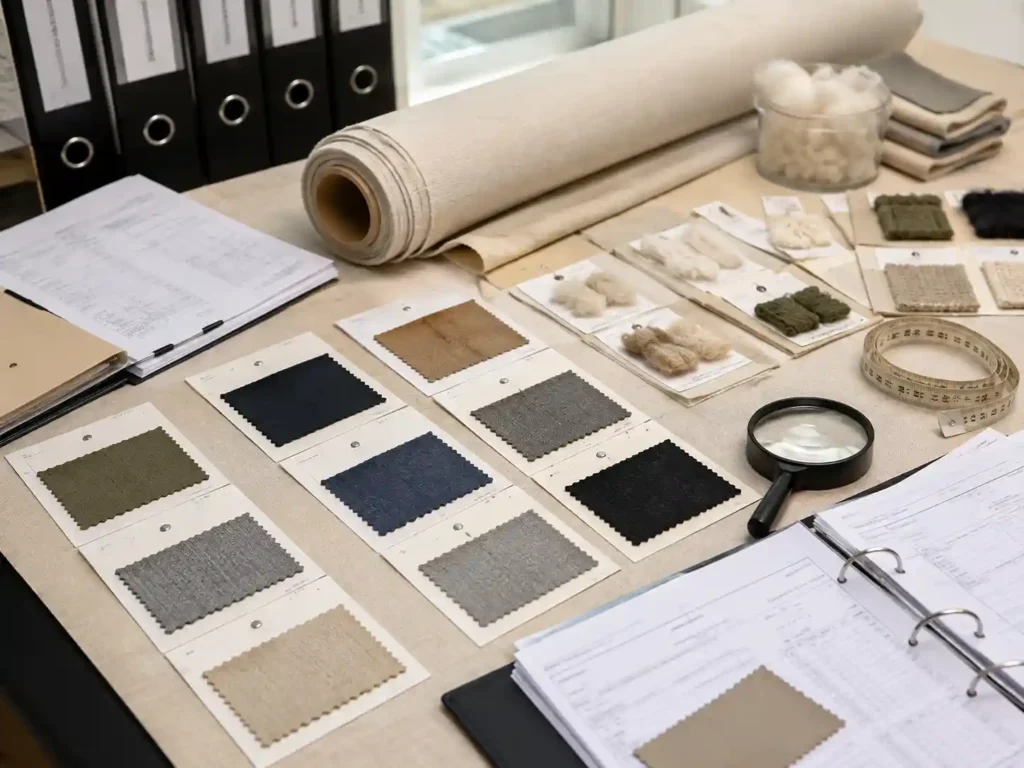
Complex Fabrics We Develop Into Fashion Products

Satin and Stretch Satin
- Best suited to slip, cocktail, occasion, party, wedding guest, and fitted dresses.
- Sample checks focus on drape, side seams, zipper flatness, neckline stability, lining, hem balance, and surface marks.
- Bulk controls include lot comparison, fabric direction, cutting protection, pressing review, and anti-snag packing.
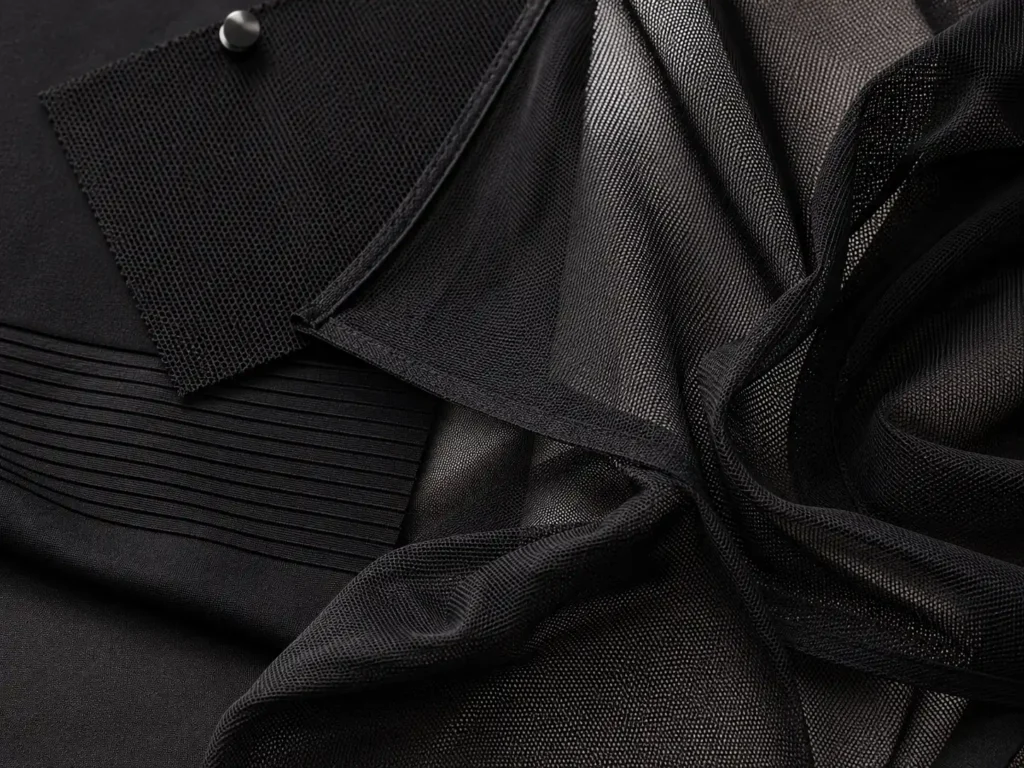
Mesh and Power Mesh
- Best suited to bodycon, party, club, cut-out, panelled, and layered styles.
- Sample checks focus on bust coverage, neckline recovery, armhole stability, cut-out shape, lining placement, and seam visibility.
- Bulk controls include snag inspection, stretch direction, hole damage, seam tension, measurement stability, and layer consistency.
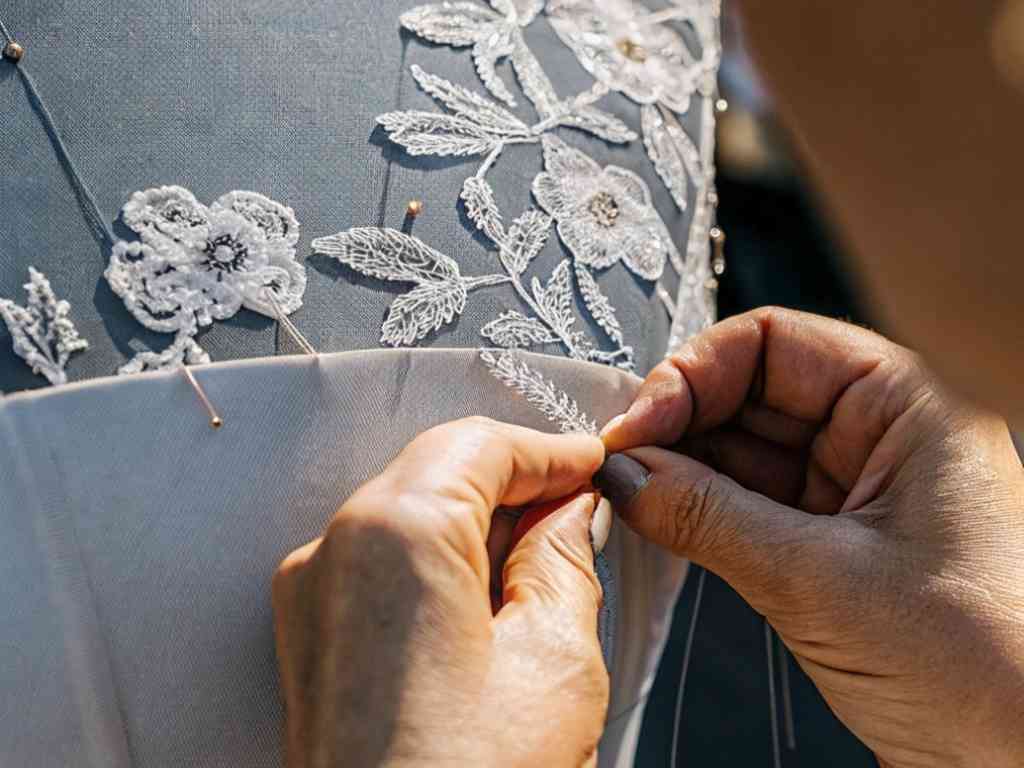
Lace and Applique
- Best suited to wedding guest, cocktail, evening, occasion, corset, and detail-led dresses.
- Sample checks focus on motif balance, symmetry, neckline and hem edges, lining shade, seam visibility, and stretch compatibility.
- Bulk controls include damage inspection, placement references, paired-panel checks, lining consistency, edge finishing, and careful pressing.
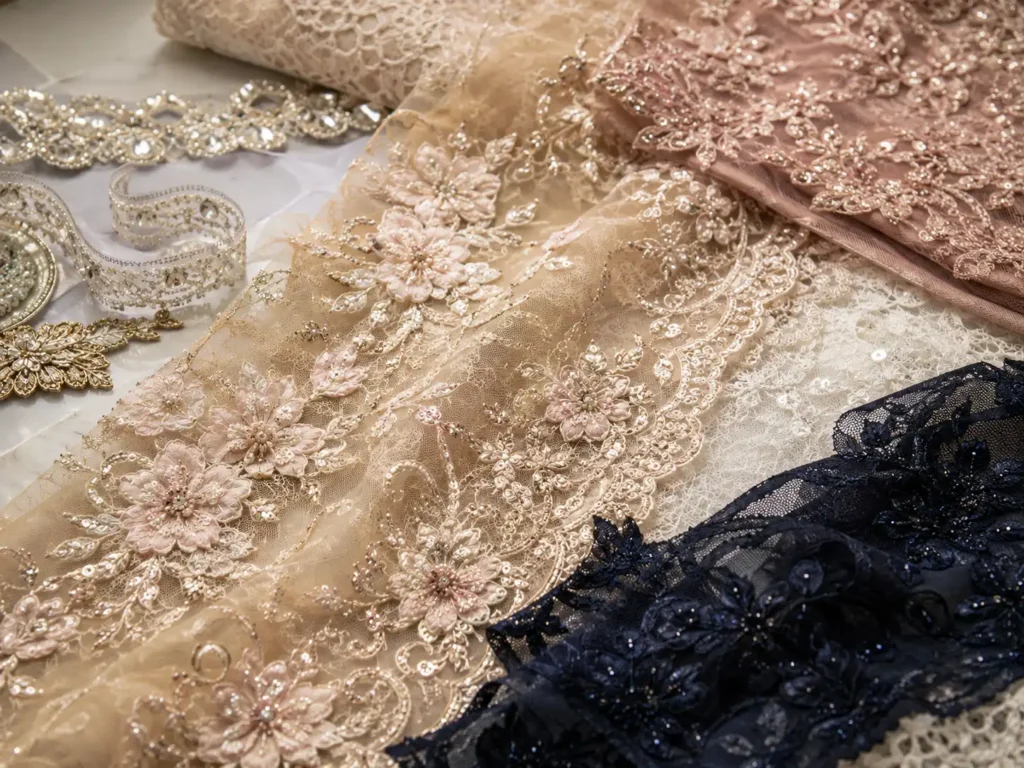
Sequin and Embellished Fabric
- Best suited to party, holiday, festival, evening, mini dress, skirt set, and statement styles.
- Sample checks focus on seam thickness, skin comfort, lining coverage, zipper area, decoration security, and garment weight distribution.
- Bulk controls include sequin-loss inspection, needle-risk handling, anti-scratch finishing, protected folding, and packing separation.
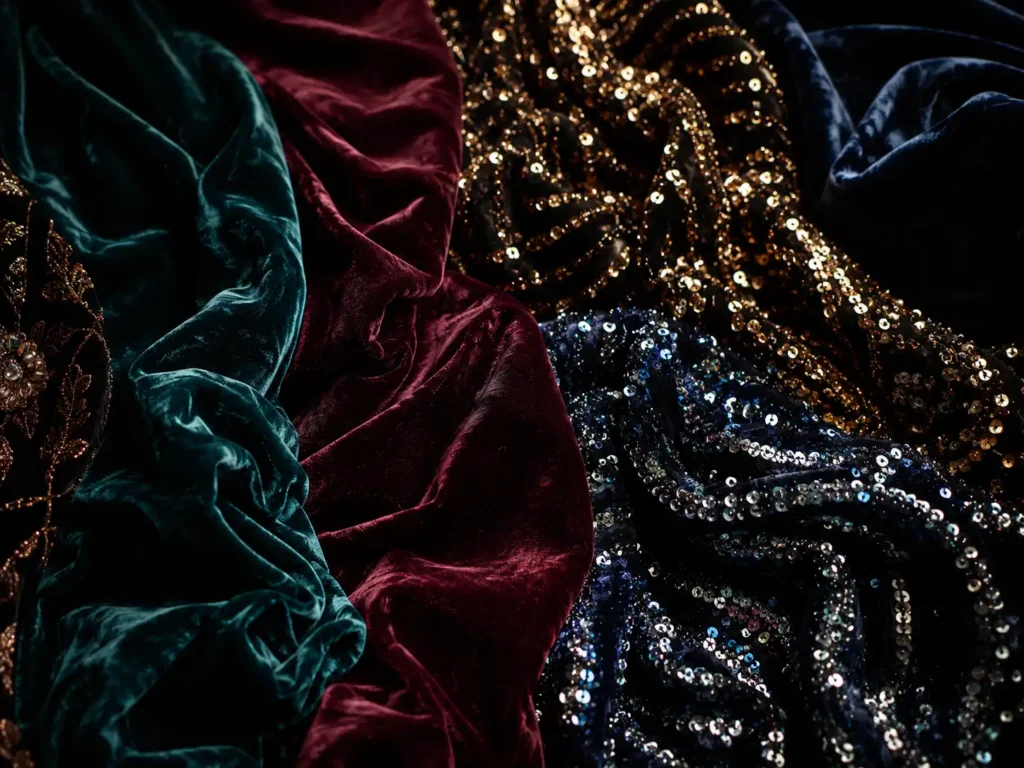
Velvet and Pile Fabrics
- Best suited to evening, party, winter occasion, fitted, corset, and formal styles.
- Sample checks focus on pile direction, seam thickness, pressing response, zipper flatness, drape, lining, and garment balance.
- Bulk controls include one-way cutting rules, surface protection, pressure-mark inspection, controlled pressing, and protective packing.

Organza and Tulle
- Best suited to occasion, graduation, evening, corset, layered skirt, and statement-detail styles.
- Sample checks focus on volume, layer count, transparency, edge finish, support, lining, hem behavior, and symmetry.
- Bulk controls include layer counting, panel matching, seam cleanliness, edge consistency, pressing care, and folding protection.
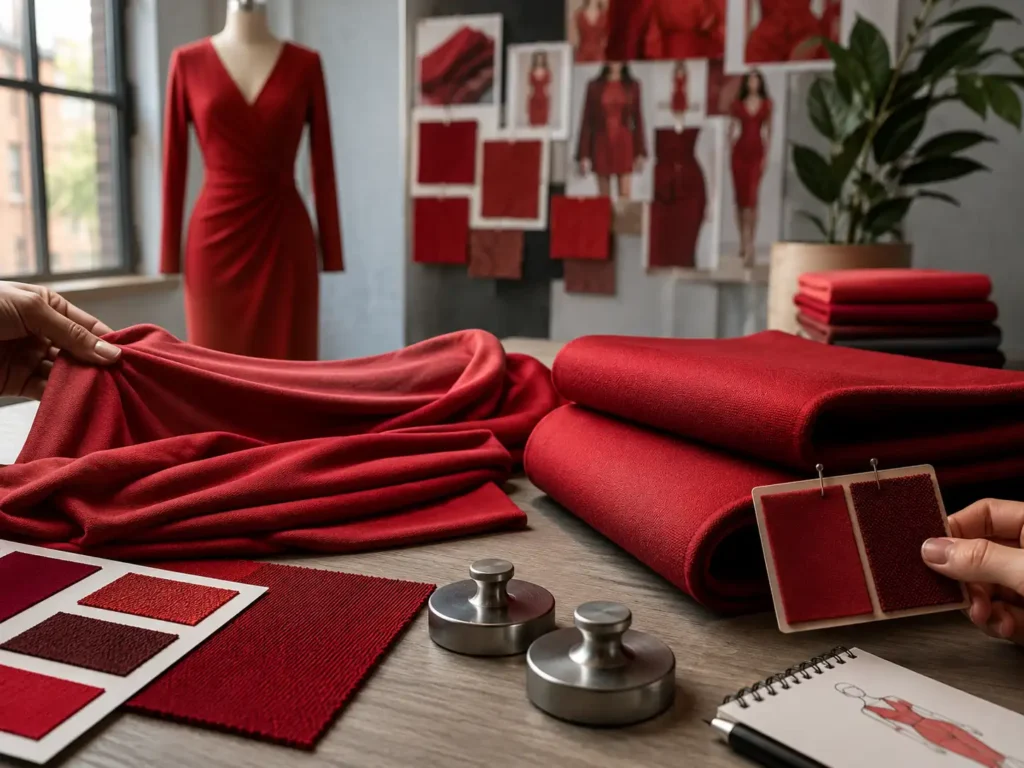
Jersey and Ponte
- Best suited to bodycon, fitted midi, club, day-to-night, jumpsuit, and matching-set styles.
- Sample checks focus on bust-waist-hip fit, side-seam balance, neckline recovery, hem wave, stretch comfort, and length movement.
- Bulk controls include stretch direction, measurement checks, recovery comparison, twisting inspection, seam tension, and shrinkage review.

Chiffon and Fluid Wovens
- Best suited to resort, vacation, bridesmaid, wedding guest, maxi, ruffle, and flowing styles.
- Sample checks focus on transparency, lining length, hem balance, drape, shrinkage, print direction, and neckline stability.
- Bulk controls include layered cutting, panel direction, shrinkage review, hem inspection, pressing, and anti-crease packing.
Match Fabric Behavior to the Right Product Structure
Material suitability depends on how a fabric behaves inside a specific garment. The same fabric can work well in one silhouette and fail in another. Development decisions should connect product application, primary risk, construction focus, and the sample evidence required before bulk approval.
| Fabric Family | Suitable Product Applications | Main Development Risk | Pattern / Construction Focus | Sample Validation |
|---|---|---|---|---|
| Satin / Stretch Satin | Slip, cocktail, party, wedding guest, fitted midi | Snagging, shine direction, zipper bulging, drape | Grain, lining, seam control, zipper method | Drape, zipper flatness, pressing, hem balance |
| Mesh / Power Mesh | Bodycon, cut-out, club, layered party styles | Transparency, recovery, holes, neckline stretch | Coverage, negative ease, lining, edge stability | On-body fit, transparency, neckline recovery |
| Lace | Occasion, cocktail, corset, wedding guest | Motif shift, damage, uneven placement | Panel planning, symmetry, lining, edge finish | Placement approval, lining color, balance |
| Sequin | Party, holiday, festival, evening, statement sets | Sequin loss, seam bulk, skin scratch | Seam clearing, lining, support, zipper area | Comfort, decoration security, garment weight |
| Velvet | Evening, formal, winter party, structured styles | Pile direction, pressure marks, thickness | One-way cutting, seam bulk, pressing method | Light direction, surface marks, zipper, drape |
| Organza / Tulle | Layered skirts, corset overlays, sleeves, graduation | Layer variation, transparency, edge distortion | Layer count, support, clean seams, hem method | Volume, symmetry, opacity, edge finish |
| Jersey / Ponte | Bodycon, fitted midi, jumpsuit, matching sets | Recovery, twisting, measurement growth | Stretch direction, ease, neckline, seam tension | BWH fit, recovery, side seam, length stability |
| Chiffon / Fluid Wovens | Resort, maxi, bridesmaid, ruffle, printed styles | Slippage, transparency, shrinkage, hem imbalance | Layered cutting, lining, direction, hanging | Drape, shrinkage, print direction, hem balance |
Fabric Choice Changes the Entire Garment Architecture
Changing material without rechecking structure is one of the fastest ways to lose design accuracy. Weight, stretch, recovery, drape, transparency, friction, thickness, and surface direction can change pattern balance, support, seam behavior, lining needs, finishing methods, and final garment proportions.
Silhouette Must Follow Material Behavior
A silhouette is not created by pattern alone. Fabric weight and drape determine whether a skirt falls close to the body, holds volume, collapses, flares, or twists. Stretch changes how much ease is needed around the bust, waist, hip, and seat. Recovery determines whether a fitted style returns to its intended shape after movement. Bias behavior changes the length and side-seam balance of satin or other fluid wovens. Layered tulle and organza create volume through layer count and stiffness rather than through the outer pattern alone.
Development starts by comparing the design objective with the selected material. A close-fitting reference image made in compact stretch fabric cannot be reproduced reliably in a loose, low-recovery knit without changing pattern ease or internal support. A fluid satin maxi may need different waist stabilization and hem handling from a crepe version of the same drawing. A lace bodice may require backing or a supporting base because open motifs do not carry tension evenly across the body.
Pattern decisions are therefore tied to the approved fabric. Waistline placement, bust shaping, panel seams, strap width, neckline depth, sleeve volume, slit height, hem sweep, and lining dimensions are reviewed after material behavior is known. The aim is to keep the design language while removing structural contradictions between the sketch and the fabric. Once the sample shows the intended silhouette on body, the corrected pattern becomes the basis for grading, PP confirmation, and production measurement control.
Support and Coverage Need Separate Engineering
Transparent, stretch, delicate, or embellished fabrics often cannot provide all functions on their own. A fashion outer layer may deliver visual effect while lining, power mesh, cups, boning, elastic, tape, or a stable facing provides support, coverage, or recovery. Treating those layers as afterthoughts usually creates bulk, discomfort, or a visible mismatch between the design and the technical solution.
Mesh illustrates the problem clearly. Soft stretch mesh can provide a sheer appearance but may not hold a strapless neckline or structured bust. Power mesh can add control in selected zones, yet using it everywhere may make a garment feel heavy. Lace can require backing behind stress points while remaining open in decorative areas. Sequin fabric often needs a soft anti-scratch lining, but the lining must not change the intended drape or make the garment overly warm. Satin corset styles may need cups and boning carrying the load instead of relying on the satin face.
Development therefore defines which layer performs which job. Coverage zones, support zones, stretch zones, decorative zones, and comfort zones can be separated inside one garment. Sample fitting checks whether the technical solution is visible, bulky, restrictive, or unstable. The approved layer map is then recorded in construction instructions and BOM references so bulk production follows the same internal logic rather than improvising support from line to line.
Closures, Seams, and Finishing Must Be Reconsidered
A zipper, hem, seam, or pressing method that works on one fabric may fail on another. Invisible zippers can wave or bulge on lightweight satin if seam support and tension are wrong. Dense sequin areas may need decoration cleared from seam allowances before assembly. Velvet requires controlled handling so pile is not trapped or flattened. Mesh edges may stretch under ordinary stitching and need stabilization. Chiffon hems can twist or ripple if feeding, stitch density, and handling are not balanced.
Construction planning therefore reviews the complete operation sequence: cutting direction, seam allowance, stabilization, zipper preparation, lining attachment, trim order, edge finish, pressing stage, and final packing. Surface-sensitive fabrics need fewer unnecessary handling steps. Transparent fabrics require clean internal finishing because seams remain visible. Heavy embellishment may need reinforcement at straps or waist points. Bias-cut pieces may need time to relax before hem leveling.
The sample room is the right place to test those choices because corrections are still economical before bulk. Once a construction method is approved, the method should be clear enough for production operators and QC staff to recognize the required result. That includes visible standards such as flat zipper installation, matched lace placement, controlled mesh tension, even layer count, protected sequin seams, and clean pressing without gloss or pressure marks.

Review Fabric Risk Before the First Pattern Is Cut
A fabric swatch can reveal important production risks before sewing begins. Development review combines appearance with measurable and observable behavior so material substitutions, custom colors, lining choices, pattern decisions, sample expectations, and bulk feasibility are discussed before unnecessary revisions occur.
Hand Feel, Weight, Drape, and Direction
Hand feel gives an early indication of comfort and perceived quality, but development also needs to understand how weight and drape affect the silhouette.
A heavier satin may support a fitted cocktail dress while a lighter satin may collapse or show seam marks. A soft rayon can create excellent resort movement but may need shrinkage review and careful hem control.
Velvet and brushed surfaces require a consistent face and pile direction because light reflection changes with orientation.
Fabric direction is checked before pattern placement. Stretch fabrics need their primary stretch aligned with movement and fit requirements. Satin may need all major panels oriented consistently to avoid shade differences caused by reflection. Printed wovens need print direction and repeat considered before cutting. Lace motifs can influence center front, neckline, hem, or panel placement. Directional rules are then transferred to cutting instructions rather than left as sample-room knowledge.
Drape is reviewed against the intended style rather than judged as good or bad. A structured corset, bodycon mini, flowing maxi, layered tulle skirt, and tailored jumpsuit all need different fabric behavior. If the supplied material fights the silhouette, an alternative with a closer weight, hand, stretch, or drape can be compared before time is spent forcing the wrong fabric through repeated samples.
Stretch, Recovery, Transparency, and Shrinkage
Stretch percentage alone does not define fit. Recovery matters because a fabric can stretch easily but fail to return, causing necklines, waistlines, knees, or bodycon silhouettes to grow during wear. Direction also matters; two-way and four-way stretch change the movement available across the body and length. Jersey, ponte, power mesh, stretch satin, and elastic lace therefore need fit review based on how the finished garment will be worn, not only on a supplier label.
Transparency needs to be evaluated under the actual garment construction. A single layer of mesh may be intentionally sheer, while the bust, hip, or brief area needs controlled coverage. White graduation fabrics may look opaque on the table and become transparent under lighting or stretch. Chiffon and lace require lining color and length decisions. Layer count can increase coverage but also change weight, drape, heat, and cost.
Shrinkage and dimensional stability influence both fit and production. Rayon, viscose, jersey, and some lightweight wovens can change after handling, pressing, or care processes. Where relevant, the fabric route should allow shrinkage review before final pattern dimensions are locked. A change in material batch, finish, or supplier may justify a renewed check rather than assuming the previous result still applies.
Surface Durability, Color, and Bulk Availability
Complex surfaces create handling risks that may not appear during initial fabric selection. Satin can snag against rough tables, zippers, jewelry, or packing materials. Sequins can loosen around cut edges and seam allowances. Lace may arrive with holes or damaged motifs. Mesh can snag or distort. Velvet can show pressure marks. Metallic or coated surfaces may crack or change under heat. Development planning therefore includes protection methods as part of the production route.
Color also behaves differently across fabric families. Satin and velvet reflect light strongly, so direction and lot consistency can make the same nominal color look different. Lace and mesh often require lining color to be reviewed together with the outer layer. Custom-dyed or printed materials may carry supplier minimums and longer material lead times, while stock colors may allow faster development. Certified, recycled, special lace, sequin, or custom fabrics can have separate supplier conditions.
Availability is reviewed before approval because a beautiful sample made from a small swatch is not useful if the same material cannot be secured for the planned order. The development team checks fabric source, color route, MOQ, lead-time exposure, and suitable alternatives before the project reaches PP stage. When a substitution is needed, hand feel, weight, stretch, drape, transparency, surface, and color response are compared rather than choosing only by composition name.

Pattern and Fit Engineering for Behavior-Sensitive Fabrics
Complex fabrics change the body-to-garment relationship. Fit development therefore connects material behavior with bust, waist, hip, neckline, strap, armhole, slit, hem, lining, support, movement, and size grading decisions rather than relying on a standard size chart alone.

Bust, Neckline, and Strap Control
Bust fit becomes more difficult when the fabric is highly stretchable, slippery, transparent, stiff, heavily embellished, or unable to support its own shape. Strapless, corset, deep-V, halter, one-shoulder, and cut-out styles need separate review of upper bust, under bust, neckline tension, cup position, strap length, armhole coverage, and internal support. Satin can slip or pull across the bust. Mesh can stretch at the neckline. Lace may place open motifs over sensitive areas. Sequins can add weight that pulls downward on straps or necklines.
Pattern work may adjust bust shaping, cup seam position, neckline depth, strap width, under-bust contour, side seam, or panel proportions according to the approved fabric. Support can be moved into cups, boning, elastic, power mesh, tape, or lining instead of asking a decorative outer fabric to perform a structural job it cannot handle. The sample is then reviewed from front, side, and back because an attractive front view can still hide underarm exposure, strap instability, or poor side-bust control.
For bulk production, the approved bust and neckline result needs more than a visual reference. Final pattern, measurement points, strap length, cup placement, trim specification, and construction notes provide repeatable checkpoints. Where design sensitivity is high, the Golden sample gives production and QC a physical reference for how much coverage, tension, and shaping are acceptable.

Waist, Hip, and Bodycon Recovery
Bodycon and fitted styles depend on the relationship between pattern ease and fabric recovery. Too little ease can overstretch mesh, distort prints, open lace motifs, strain zippers, or make seams wave. Too much ease can remove the intended fitted appearance. Ponte, jersey, stretch satin, power mesh, elastic lace, and mixed stretch constructions all compress and recover differently, even when supplier descriptions appear similar.
Development checks waist placement, high or low waist position, hip contour, side seam balance, hem movement, and how the fabric responds after repeated stretching. A dress can measure correctly on the table and still climb upward during wear if recovery and length distribution are wrong. Side seams can twist when stretch direction or grain is inconsistent. Cut-outs can grow or collapse when the surrounding fabric carries too much tension.
The fit sample is used to balance silhouette and comfort before grading. Changes are transferred into the pattern and size chart rather than left as verbal notes. Bulk measurement control then focuses on the areas most sensitive to material behavior, especially bust, waist, hip, dress length, strap, neckline, and key openings. A change of fabric during reorder or new-color development may require another comparison if stretch or recovery differs from the recorded reference.
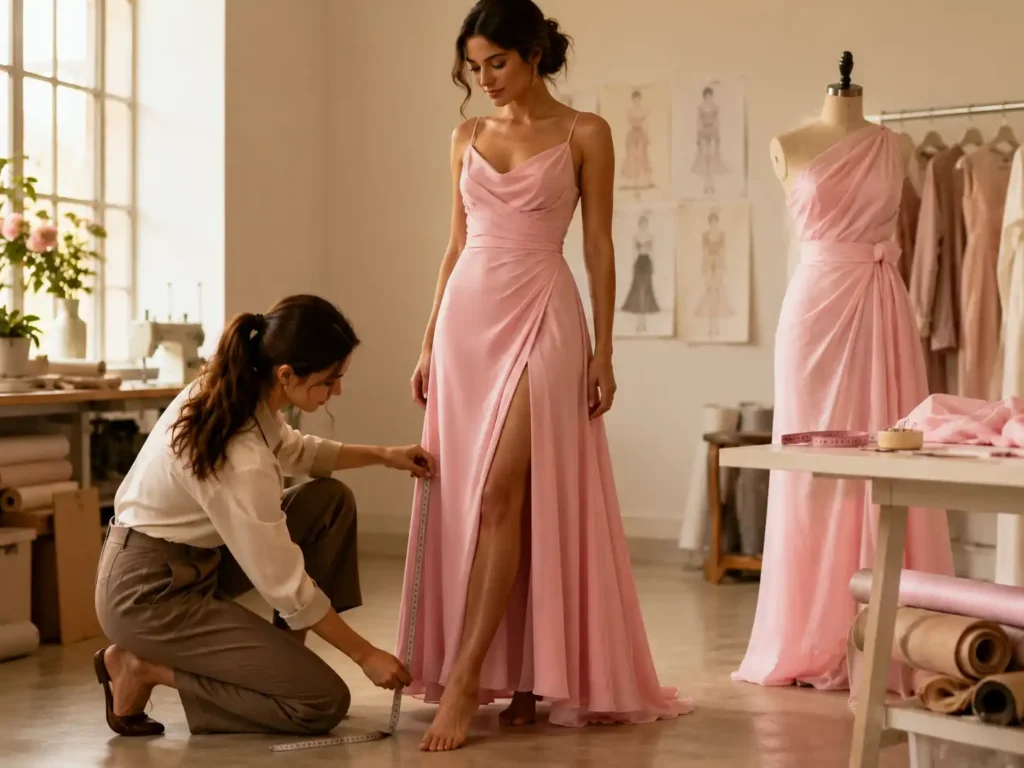
Length, Drape, Slit, and Hem Balance
Fluid and layered fabrics make vertical balance especially important. Satin, chiffon, rayon, viscose, organza, and tulle can drop, stretch on bias, or shift after hanging. Long skirts and maxi dresses may appear level immediately after sewing and become uneven after the fabric relaxes. Layered skirts can also change hem position when different materials carry different weights. Slits add another risk because fabric movement can increase exposure beyond the intended design.
Pattern development checks front length, back length, side balance, waistline, hem sweep, slit height, lining length, and the relationship between outer and inner layers. Bias-cut satin may need handling time before the final hem is judged. Chiffon or rayon can require shrinkage awareness. Tulle layers need consistent count and alignment. A heavy sequin skirt may require waist stabilization so weight does not pull the garment lower during wear.
Sample review uses movement and body position, not only a static mannequin. The team checks whether the slit opens safely, whether lining remains covered, whether the hem stays balanced, and whether the garment keeps its intended proportion in walking and standing positions. Approved lengths then become measurement and QC references for bulk rather than relying on subjective trimming at the finishing stage.

Jumpsuit Rise and Multi-Zone Fit
Jumpsuits combine upper-body fit, waist placement, hip ease, and crotch length in one garment. Complex fabrics amplify the difficulty because stretch, recovery, drape, and thickness can change how those zones interact. A stretch jumpsuit may feel comfortable in the bust but pull at the rise; a fluid woven may hang well through the leg but collapse around a poorly positioned waist; velvet or sequin panels can add bulk exactly where movement is needed.
Development reviews front rise, back rise, waistline, torso length, hip ease, neckline, armhole, zipper, and leg balance together. Stretch styles need enough movement without excessive growth. Woven styles need controlled ease for sitting and walking. Lining or internal support should not restrict the rise. If a jumpsuit uses contrast mesh, lace, satin, or embellished panels, seam placement and stretch compatibility between materials become part of the fit problem.
Fit feedback is converted into pattern corrections and measurement updates before PP approval. Complex multi-zone garments are poor candidates for shortcut sampling because one local adjustment can move another area. A raised waist may affect rise; a tighter hip can increase pull at the zipper; a heavier bodice can change shoulder tension. Keeping the whole garment system visible during revision reduces repeated corrections later in production.
Lining, Support, and Trims Must Work Together

Lining and Coverage
- Review outer and lining stretch compatibility.
- Match lining shade to transparency and design intent.
- Confirm lining length at slits, hems, and cut-outs.
- Check heat, comfort, and movement before PP approval.

Zippers and Closures
- Confirm zipper type and length with the final pattern.
- Stabilize delicate or stretch seam areas when required.
- Check closure bulk against lining and seam allowance.
- Record the approved method for production sewing.

Cups and Boning
- Review cup placement against bust seam and neckline.
- Balance shaping with comfort and movement.
- Keep boning ends protected from skin contact.
- Confirm support before grading and bulk release.
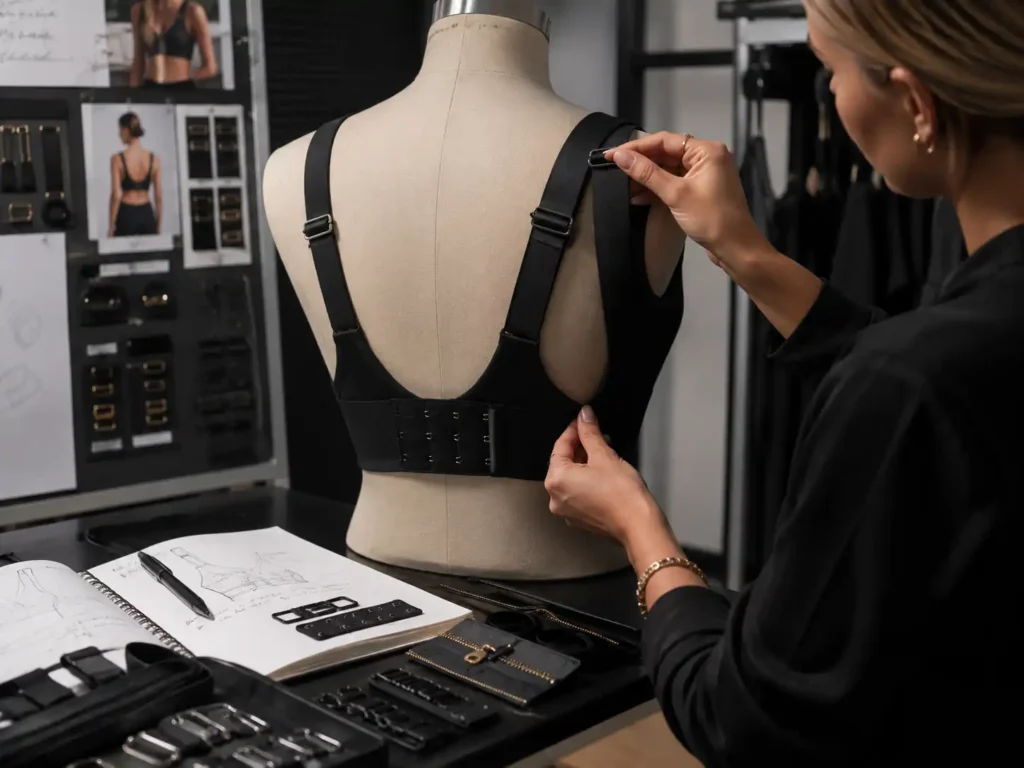
Elastic and Straps
- Match elastic recovery to the surrounding fabric.
- Confirm strap length and slider position.
- Reinforce attachment points on delicate materials.
- Include strap and elastic checks in bulk QC.

Decorative Trims
- Confirm trim weight and attachment security.
- Use placement references for size consistency.
- Protect skin-contact and abrasion areas.
- Check decoration after pressing and packing trials.
Labels and Packing Contact
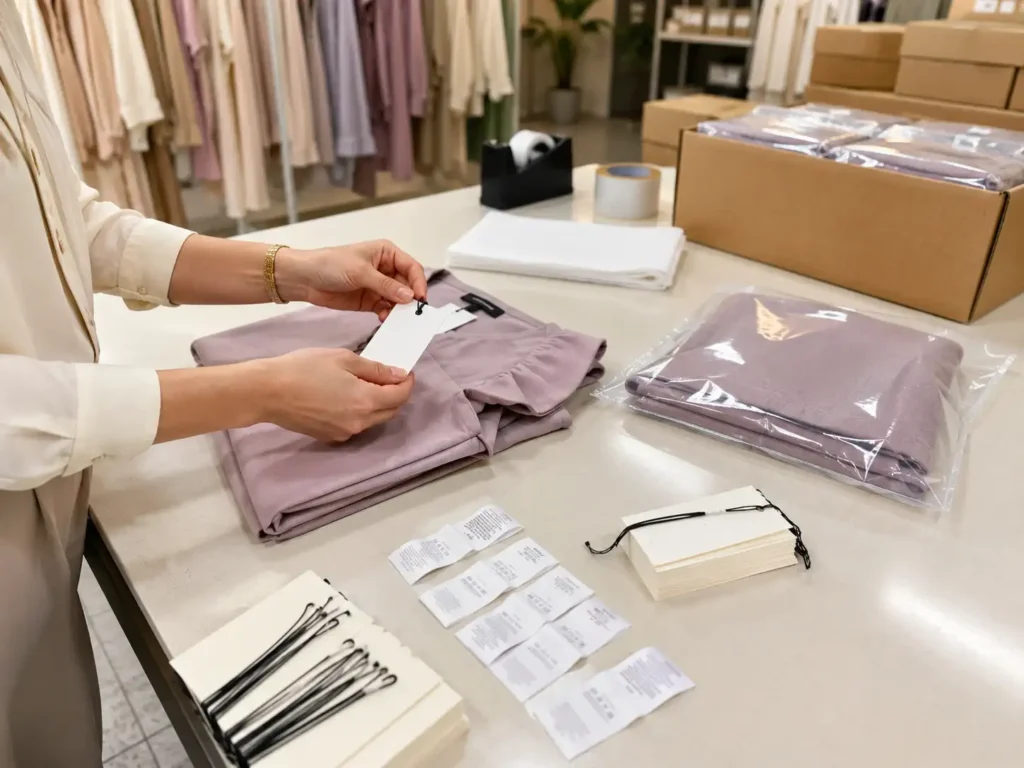
- Position labels to avoid visible show-through.
- Keep tag attachments away from snag-sensitive areas.
- Define folding for embellished or pile fabrics.
- Confirm carton pressure and garment protection requirements.
Workmanship Standards Change With Each Fabric Family
Sewing a difficult fabric well requires specific handling rules, not one universal workmanship checklist. Construction control is developed around surface protection, seam behavior, layer stability, edge finish, pressing, and the points where a material is most likely to fail.
Delicate and Transparent Construction
Mesh, chiffon, organza, tulle, and open lace expose seam decisions that opaque fabrics can hide. Uneven seam allowances, bulky overlocking, twisted edges, trapped layers, or mismatched thread can become visible from the outside. Stretch mesh introduces another problem: stitch tension can distort the edge or reduce recovery. Chiffon and organza can slip during feeding, while tulle layers can shift if they are not controlled in cutting and sewing.
Workmanship planning starts with the visual requirement. A transparent panel may need a narrow clean seam, binding, enclosed construction, or a strategically placed lining edge. Mesh necklines may need stabilization without creating a heavy rim. Lace edges can use motif or scallop placement where the design allows it. Tulle layers require consistent order and attachment so volume stays symmetrical. Chiffon hems need controlled feeding and even width to avoid waves.
Sample-room trials establish the operation before bulk. Stitch density, thread, seam allowance, binding, lining attachment, zipper support, and pressing method are reviewed on the actual fabric rather than a substitute. Once approved, the construction sequence is documented so production operators do not solve the same problem differently on each line. QC then checks visible seam cleanliness, edge stability, layer count, transparency zones, and dimensional consistency against the approved sample.
Surface-Sensitive and Embellished Construction
Satin, velvet, sequin, metallic, and embellished fabrics need protection before the first stitch. Satin can snag on rough surfaces and show needle or pressing marks. Velvet pile can be crushed by clamps, heavy stacking, or high pressure. Sequins may need removal from seam allowances so stitching stays flat and needles do not repeatedly strike hard decorations. Rhinestones or bead chains can create local weight that changes how a panel feeds through sewing.
Construction control reduces unnecessary handling. Cutting tables, bundles, transfer containers, and pressing surfaces should be kept suitable for the fabric. Panel direction is marked clearly for satin and velvet. Sequin seam allowances are prepared consistently. Reinforcement may be added where heavy decoration meets straps, waist seams, or zippers. Pressing is tested because heat and pressure can permanently change shine, pile, coatings, or trim adhesive.
The final appearance is checked after sewing and pressing, not only before finishing. Zippers should lie flat, seams should not show hard ridges, embellishment should remain secure, and the fabric face should remain clean. Packing protection is part of workmanship because a perfect garment can still arrive damaged if sequin surfaces rub together or velvet is compressed under tight folds. Approved folding and protection methods are therefore recorded before shipment packing begins.
Stretch and Structured Construction
Stretch knits, power mesh, stretch satin, corset structures, and mixed-material fitted garments combine movement with control. Seam stretch has to match the fabric so stitching does not pop or restrict wear. Necklines and armholes need recovery. Bodycon side seams need to stay straight. Corset panels require precise seam alignment because boning, cups, lining, and outer fabric must share the same geometry. Mixed stretch and non-stretch sections need transition points that do not create pulling or puckering.
Sample development tests how construction reacts under movement. A garment can look clean on a mannequin and still fail when worn if the neckline grows, the waist rolls, the hip seam twists, the zipper ripples, or the lining restricts stretch. Elastic tension, seam type, reinforcement, and support are therefore adjusted together with pattern fit. In a corset style, changing boning position may require a pattern correction; in a mesh bodycon style, changing lining coverage may alter stretch and measurements.
Production standards should identify the fabric direction, stretch direction, seam method, support components, key measurements, and visual checkpoints that matter most. QC focuses on recovery, side-seam balance, neckline shape, cup and boning placement, zipper flatness, and body measurements rather than treating the garment as a basic knit. The objective is a fitted result that remains stable across the planned size range and production quantity.

Sampling Turns Fabric Risk Into Visible Evidence
Physical sampling shows what flat fabric analysis cannot. Complex materials reveal their real behavior through cutting, sewing, lining, body movement, pressing, and finishing. Each sample stage should answer a defined technical question before the style moves closer to bulk production.
First Sample as a Technical Test
The first sample is not expected to be the final bulk standard. Its main role is to put the design, selected fabric, pattern, lining, trims, and construction into one physical garment so problems can be seen and measured. For a satin dress, the first sample may expose drape, zipper, seam, or bust issues. A mesh style can reveal transparency and neckline instability. Lace may show placement problems. Sequin fabric may make seams too thick or the garment heavier than expected. A corset can expose cup, boning, or support issues.
Jinfeng Apparel can begin from a tech pack, reference image, original sample, sketch, or line sheet, but development becomes more accurate when fabric direction, quantity plan, size range, target market, and key design details are clear. The sample team reviews structure before sewing and flags areas where a reference image conflicts with the material or construction. Sample timing is set by the real workload. A standard dress first sample is commonly planned around 10-15 days, while corset, lace, mesh, sequin, evening, or similarly complex styles are often planned around 15-25 days. Special fabrics, custom colors, trims, and feedback cycles can extend the schedule.
The first sample should create a clear revision list rather than a vague approval or rejection. Fit, fabric, color, lining, trim, workmanship, on-body appearance, measurement, cost, and production feasibility are reviewed separately so each issue can be corrected at the right level. A fabric problem should not be disguised as a pattern problem, and a support problem should not be solved by simply tightening measurements.
Fit and Revised Samples
A fit sample verifies whether the garment works on the body. Complex fabrics make fit review essential because stretch, recovery, drape, weight, transparency, and layer interaction can change the intended proportions. Front, side, and back views are checked together with bust, waist, hip, strap, armhole, neckline, slit, hem, lining, and movement. For jumpsuits, torso length and crotch rise are also reviewed. A style that photographs well in one angle can still fail wearability if those control points are ignored.
Revision work is documented rather than handled as informal comments. Pattern changes, measurement updates, fabric substitutions, lining changes, trim changes, construction adjustments, color notes, cost impact, and timing impact are recorded. Revised samples are commonly planned around 7-15 days, depending on the amount of change and material availability. A major pattern change, new fabric, new support structure, or substantial construction revision usually deserves another physical sample instead of moving directly toward production.
The revised sample is valuable because it shows whether the correction solved the original problem without creating a new one. Raising a neckline can change strap angle. Tightening the waist can alter zipper behavior. Adding lining can change stretch. Changing mesh to power mesh can improve support but reduce softness. Development therefore reviews the garment as a system after each material or structural change. The approved revision becomes the reference for the next stage rather than allowing multiple versions to circulate without control.
PP and Golden Sample Standards
PP sample approval is the point where development decisions are converted into a production standard. Final fabric, color, trims, pattern, measurements, construction, labels, and packing requirements should be sufficiently settled before bulk release. PP samples are commonly planned around 7-15 days when final materials are available, but timing remains project-specific. A photo-ready or salesman sample may serve a different commercial purpose and should not automatically be treated as the PP production standard.
For complex fabrics, PP review should focus on the details most likely to drift in bulk: satin direction and zipper flatness, mesh transparency and recovery, lace placement, sequin security and comfort, velvet pile direction, layer count in organza or tulle, stretch measurements, lining length, and pressing quality. Final pattern, size chart, BOM, fabric and trim references, sewing instruction, QC checklist, label placement, and packing method are aligned with the approved garment.
A Golden sample can then act as the physical reference for production, QC, repeat orders, and dispute resolution. It is especially useful when appearance depends on fabric handling rather than measurements alone. The objective is not to collect more samples; it is to leave development with one controlled standard that production can follow. Once that standard is locked, later changes should be handled through formal review because even a small fabric, trim, or construction change can affect cost, timing, and bulk consistency.

What We Correct After the First Sample
Fabric Issue
- Compare weight, hand, stretch, drape, opacity, and price level.
- Check whether lining or support can solve the problem without changing the outer fabric.
- Review supplier MOQ and lead-time implications before replacement.
- Re-sample when the new fabric changes fit or construction behavior.
- Record the approved replacement as the new bulk reference rather than leaving both materials active.
Fit Issue
- Separate pattern error from fabric stretch or recovery error.
- Review front, side, and back balance on body.
- Update pattern and measurement references together.
- Recheck neighboring areas after a major fit correction.
- Confirm the corrected version with updated photos and measurements before PP approval.
Construction Issue
- Change seam or edge method when the fabric distorts.
- Reduce bulk around sequins, velvet, or layered areas.
- Stabilize mesh, satin, or delicate zipper zones where needed.
- Record the approved operation in sewing instructions.
- Check pressing and packing effects when surface or layer behavior changes after sewing.
Trim Issue
Trims can affect comfort, fit, weight, durability, and appearance. Zippers may be too heavy, cups may sit at the wrong height, boning may feel too stiff, elastic may gather the edge, or decorative trims may pull the fabric out of shape. Replacement is reviewed against the garment rather than treated as a separate purchasing decision.
- Confirm size, weight, finish, and attachment method.
- Check skin contact and abrasion risk.
- Reassess support or pattern if the trim changes structure.
- Update BOM and trim references after approval.
- Recheck fit or balance whenever the replacement changes weight, stiffness, or tension.
Visual Issue
A sample can be technically wearable yet miss the intended fashion effect. Satin may look too glossy, lace placement may feel unbalanced, tulle volume may be weak, a cut-out may expose too much, or a bodycon silhouette may lose the reference proportion. Visual feedback is translated into measurable or buildable corrections wherever possible.
- Compare proportion, fabric effect, placement, and drape with the reference.
- Use front, side, back, and detail photos for review.
- Separate photo-sample styling from PP production standards.
- Lock approved placement and proportion references before bulk.
- Keep marketing styling notes separate from production construction and measurement standards.
Cost Issue
- Compare material alternatives with similar behavior.
- Simplify hidden construction before visible design details.
- Review layer count, trim use, and operation time.
- Confirm the revised appearance and production method through sampling.
- Document any cost-saving change that affects fabric, trim, construction, or QC requirements.
- Reconfirm the target appearance before the revised option becomes the approved production route.
Lock Critical Variables Before Bulk Production Begins
Fabric and Color Lock
Pattern and Measurement
Construction Standard
Trim and Placement
Label and Packing
Change Control
Transfer Approved Samples Into Repeatable Bulk Standards
A good PP sample only protects the order when its decisions are transferred into production documents and physical references. Sample-to-bulk handover connects final pattern, materials, construction, measurements, QC, labels, packing, line instructions, and version control before cutting begins on complex styles.
Create One Controlled Production Reference
The first task after approval is version control. Final pattern, size chart, grade rules, BOM, fabric reference, trim reference, sewing instruction, placement information, label files, packing instruction, PP sample, and Golden sample should point to the same approved specification. When several sample versions exist, outdated patterns or measurement sheets must not remain active on the production route.
Complex fabric styles need more detail because appearance can depend on handling. A satin order may need face direction and pressing notes. Mesh may need stretch direction and transparency zones. Lace needs placement references. Sequin fabric may require seam-clearing and skin-contact instructions. Velvet needs pile direction and pressure protection.
Tulle or organza requires layer count and order. Those details become part of the handover rather than staying in the memory of the sample machinist.
The merchandising and production teams use the controlled set to brief the selected factory and sewing line.
Material arrival, cutting, line setup, inline checks, finishing, packing, and shipment preparation can then be scheduled around an agreed standard. Any mismatch discovered before cutting is corrected in documents first, reducing the chance that the production floor receives conflicting instructions. For multi-style programs, style codes and version references are kept visible so patterns, trims, labels, and packing standards cannot be mixed between similar-looking garments.
Translate Visual Approval Into QC Checkpoints
Many complex-fabric standards are visual as well as dimensional. “Good drape,” “balanced lace,” or “clean satin” are not useful QC instructions unless the critical elements are identified. The handover converts approval into checkable points: zipper flatness, seam symmetry, strap length, neckline recovery, lace motif position, sequin security, lining coverage, layer count, pile direction, hem balance, pressing marks, and packing protection.
Measurements are linked with those visual checks. Bust, waist, hip, length, strap, slit, neckline, lining, and other critical points are measured according to the style. Fabric-specific tolerance discussions can be added where material behavior makes certain dimensions more sensitive. The Golden sample gives QC a physical standard for appearance and construction, while the size chart and checklist provide measurable references.
Incoming material QC, cutting QC, sewing QC, in-line inspection, garment inspection, pressing review, packing QC, AQL support, and client inspection requirements are then connected to the same standard. The purpose is to find drift early. A lace placement problem should be stopped at cutting or sewing, not discovered after packing. A stretch-direction error should be found before hundreds of bodycon panels are assembled. Inspection photos, measurement records, and issue notes can also be retained for project follow-up when a defect trend needs production correction before the next line output continues.
Protect the Standard Across Sizes and Batches
Bulk consistency becomes harder when an order includes many sizes, colors, fabric lots, or phased shipments. The approved style has to survive grading and material variation. Lace motifs may shift after grading, stretch behavior may differ by lot, satin shades may reflect differently, and repeated sequin fabric can vary in surface density. Those changes require comparison against approved records instead of assuming the style remains identical because the article number is unchanged.
Production teams keep pattern, fabric, trim, measurement, QC, and packing references available for repeat orders. New colors, replacement fabrics, or later batches are reviewed against the original standard. If the same pattern is reused with a different fabric, stretch, drape, thickness, transparency, or support may justify a new fit or PP check. Repeatability comes from controlled records plus renewed material review, not from skipping development steps.
For multi-style brand programs, project management becomes equally important. Style status, sample version, material status, PP approval, label status, production allocation, QC status, and shipment readiness are tracked separately so one complex style does not block the entire collection. The result is a development process designed for commercial collections rather than isolated prototypes. When replenishment follows, the team can compare the new fabric lot, color, measurements, and workmanship directly with retained references instead of rebuilding acceptance standards from the beginning.

Allocate Production by Fabric and Construction Risk
Woven Dress Lines
Stretch Knit Lines
Occasionwear Handling
Fabric-Based Allocation
Multi-Style Programs
Production Scheduling
QC Focus Changes With the Fabric Failure Mode
Satin QC
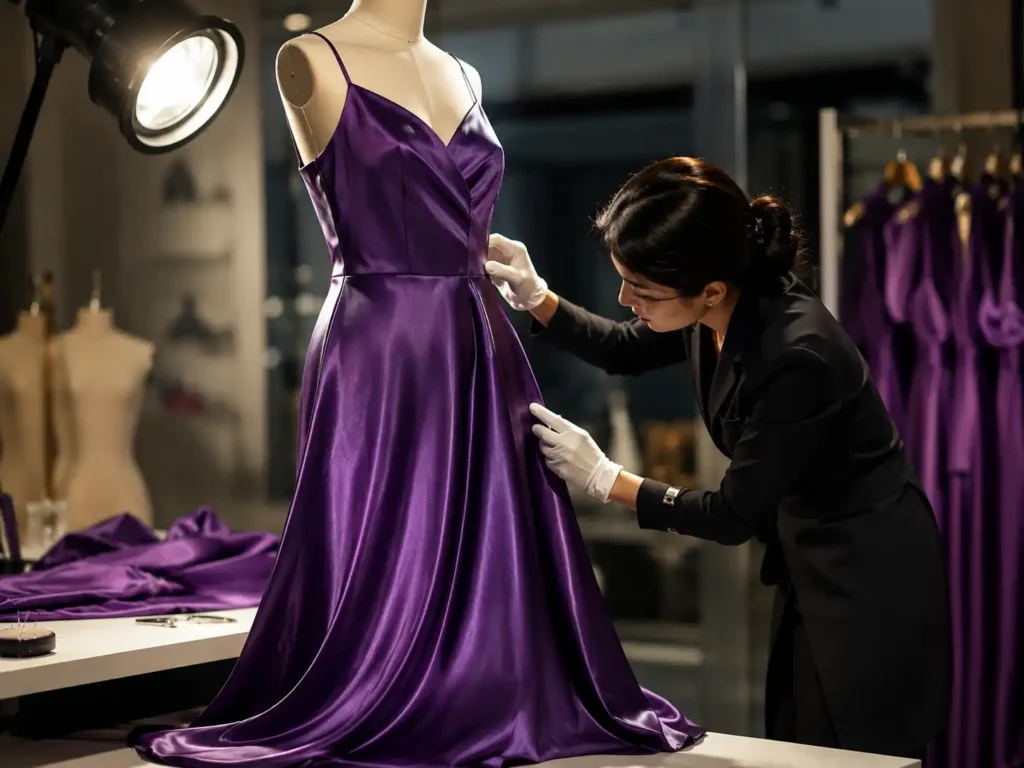
- Incoming: color, surface, weight, defects, and lot comparison.
- Cutting: consistent face direction and protected handling.
- Sewing: seam quality, zipper flatness, strap and neckline balance.
- Final: pressing, snagging, hem balance, and protective packing.
- Trend control: compare repeated defects against the approved surface and zipper standard before packing continues.
Mesh QC
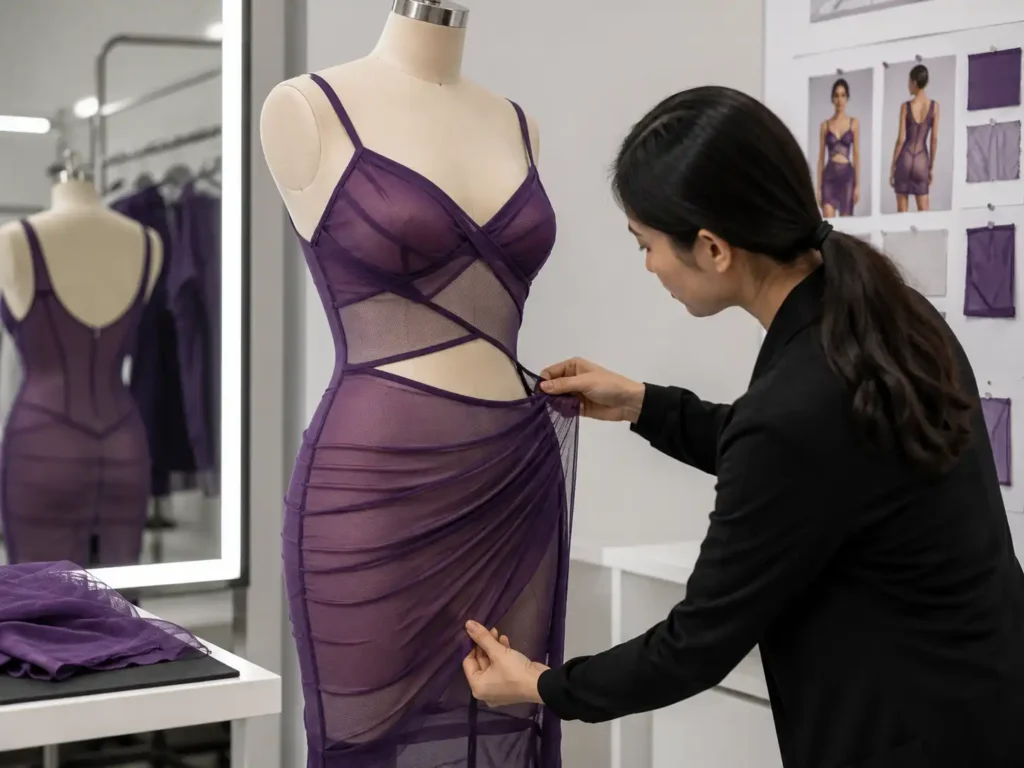
- Incoming: holes, snags, stretch, recovery, color, and hand feel.
- Cutting: stretch direction and layer identification.
- Sewing: edge stability, seam tension, lining, and neckline recovery.
- Final: transparency zones, measurements, cut-outs, and surface damage.
- Trend control: recheck recovery and neckline shape when repeated stretching appears during in-line handling.
Lace QC
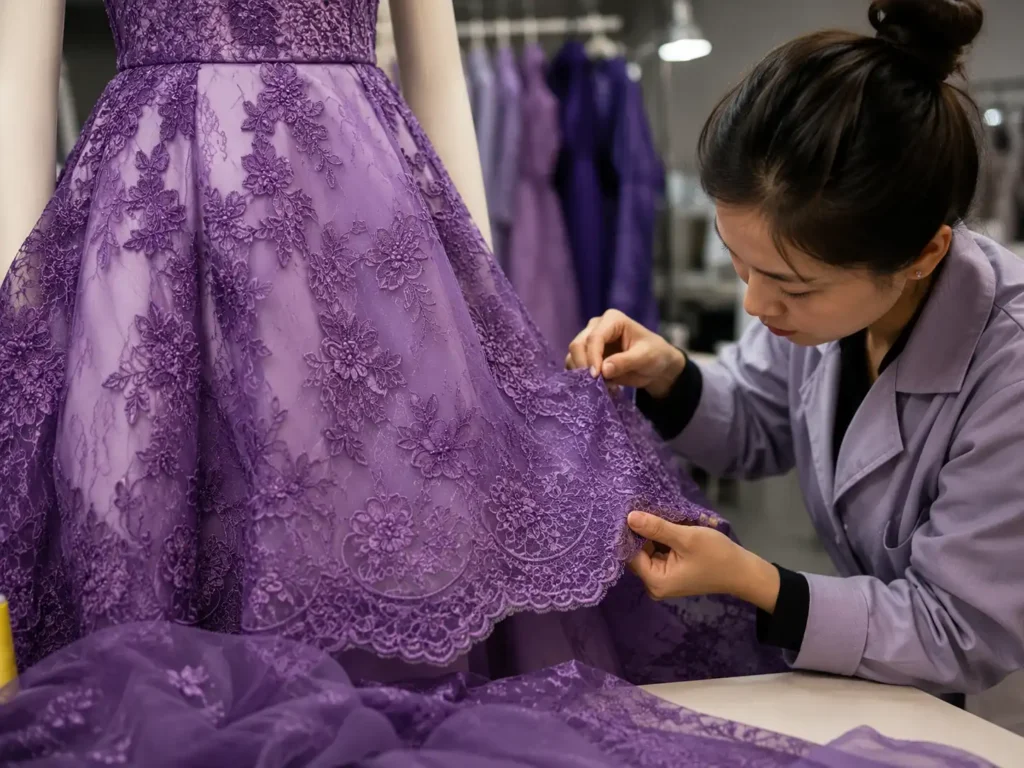
- Incoming: motif condition, damage, shade, and width.
- Cutting: placement, paired panels, symmetry, and direction.
- Sewing: joins, lining, seam cleanliness, and edge finish.
- Final: motif balance, measurements, pressing, and packing protection.
- Trend control: stop placement drift early when paired panels or graded sizes move away from the approved reference.

Sequin QC
- Incoming: surface density, loose pieces, base fabric, and damage.
- Cutting: edge loss and seam-zone preparation.
- Sewing: seam thickness, zipper area, comfort, and decoration security.
- Final: missing sequins, skin scratch, pressing, folding, and protection.
- Trend control: isolate repeated seam-zone loss or sharp edges before the same operation continues across the line.

Velvet QC
- Incoming: pile, shade, surface marks, and width.
- Cutting: one-way direction and panel consistency.
- Sewing: seam bulk, zipper flatness, and surface protection.
- Final: pressure marks, pressing, light-direction consistency, and packing.
- Trend control: compare panel direction under consistent lighting before mixed-direction garments reach final finishing.

Stretch Knit QC
- Incoming: stretch, recovery, hand, weight, and dimensional risk.
- Cutting: grain and stretch direction.
- Sewing: seam elasticity, neckline, side seams, and tension.
- Final: key measurements, twisting, recovery, hem, and fit effect.
- Trend control: monitor measurement growth and side-seam movement when the same fabric lot runs through extended production.

Organza and Tulle QC
- Incoming: holes, stiffness, shade, and surface cleanliness.
- Cutting: layer identification, direction, and panel count.
- Sewing: layer order, clean seams, edge finish, and symmetry.
- Final: volume, transparency, hem balance, folding, and protection.
- Trend control: verify layer count and symmetry whenever bundles are restarted or moved between sewing operations.
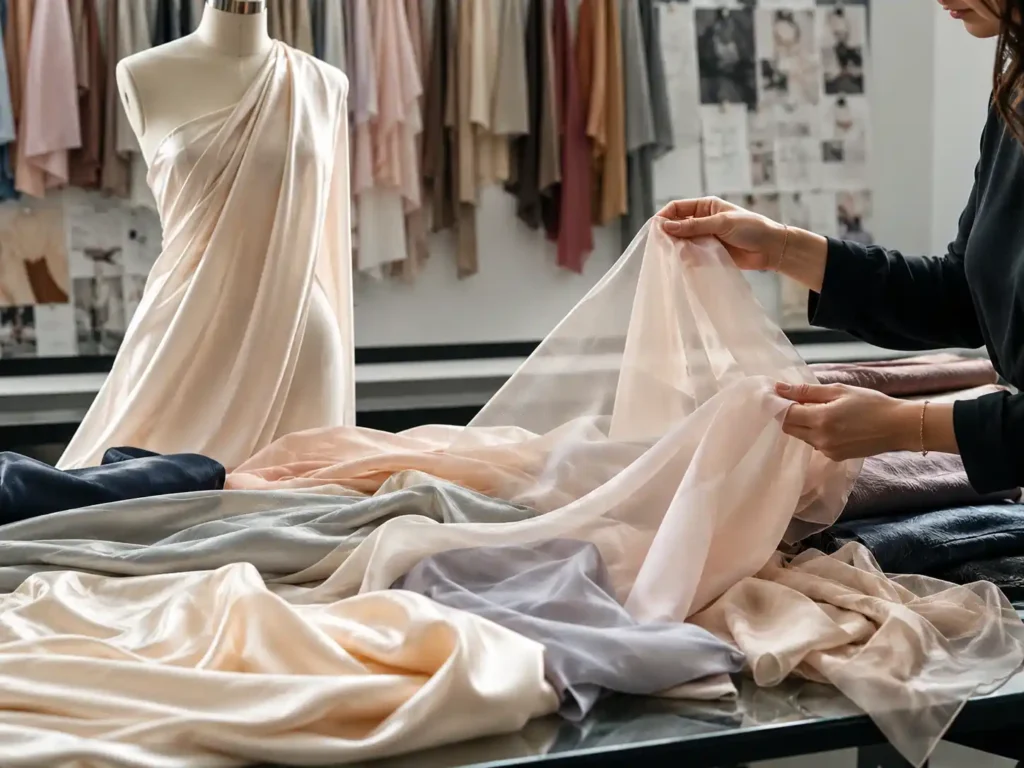
Chiffon and Fluid-Woven QC
- Incoming: shade, defects, hand, weight, and shrinkage risk.
- Cutting: direction, print placement, layered control, and size bundles.
- Sewing: seam cleanliness, lining, zipper, and gathering consistency.
- Final: hem balance, transparency, pressing, wrinkles, and packing.
- Trend control: compare long-dress hems after hanging time when fluid fabric relaxation can change finished length.
Cost, MOQ, and Timing Depend on Development Variables
Complex fabric projects are quoted from the actual style structure, material route, trims, sampling work, production operations, QC, packing, and quantity plan. Garment MOQ starts from 200 pcs per style/color, while special fabrics can carry separate supplier minimums or longer material lead times.
| Development Variable | Main Cost Impact | MOQ Impact | Timing Impact |
|---|---|---|---|
| Stock fabric | Material price, wastage, available width | Often compatible with garment MOQ | Faster material confirmation when stock is available |
| Custom dye / custom color | Lab work, dyeing, color control | Supplier dye-lot minimum may apply | Color approval and dyeing add time |
| Custom print | Artwork, screens/digital work, testing, wastage | Printer minimum may apply | Strike-off and bulk printing add steps |
| Lace / specialty lace | Fabric price, motif wastage, placement labor | Supplier or color minimum may be higher | Sourcing and placement approval can extend development |
| Sequin / embellished fabric | Fabric price, wastage, sewing time, protection | Supplier minimum may apply | Slower cutting, sewing, QC, and packing |
| Lining / support layers | Additional material and sewing operations | Usually linked to garment quantity | Extra sourcing and sample validation may be required |
| Special trims | Cups, boning, zippers, elastic, rhinestones, hardware | Trim supplier minimum may apply | Custom finish or tooling can add lead time |
| Complex pattern / fit | Pattern hours, sample revisions, fitting work | Garment MOQ unchanged | More sample rounds may be needed |
| Testing / certification | Lab testing and document requirements | Certified fabric minimums may apply | Testing and supplier documentation add time |
| Protective packing | Extra materials, handling, carton volume | Packaging supplier minimum may apply | Packing setup and approval add steps |
Multi-Fabric Development for a Large Private-Label Program
An anonymous US large private-label program shows how complex fabric development works when several materials, styles, labels, and delivery requirements move together. The order covered 18 styles and about 28,000 pieces across satin, mesh, jersey, lace, and crepe dresses.

Project Brief and Development Risk
The program combined 18 womenswear styles with different fabric behaviors rather than repeating one construction across the range. Satin styles required surface direction, zipper, lining, and pressing control. Mesh and jersey styles needed stretch, recovery, transparency, and body measurements managed carefully. Lace introduced placement and lining-color decisions. Crepe styles carried drape, seam, and pressing requirements. The collection also needed private-label presentation, barcode and SKU accuracy, inspection coordination, and phased shipment preparation.
The main risk was not one difficult garment. It was keeping several development routes under one collection calendar without allowing sample versions, materials, labels, or production instructions to cross over. A fabric substitution on one style could affect cost and sample timing. A label update could affect multiple styles. A late fit correction could move the PP schedule. Different materials also required different QC checkpoints, which meant one universal checklist would not protect the whole program.
Project control therefore began with style-level tracking. Each style carried its own fabric and trim status, sample version, measurement information, PP approval, label requirement, packing data, and production readiness. Shared private-label elements were controlled separately so brand presentation remained consistent even when the garment constructions differed. The result was a program structure able to manage complexity without treating every development issue as a last-minute exception.

Development Actions and Production Handover
Fabric and trim records were maintained by style. Sample versions were tracked so pattern, measurements, materials, and construction changes followed the correct garment. Satin styles received attention to fabric direction, zipper flatness, lining, and pressing. Mesh and jersey styles were reviewed for stretch behavior, coverage, neckline stability, and bust-waist-hip measurements. Lace styles used placement and lining references. Where a material or construction change affected fit, revised sampling was used before PP approval.
Once styles were approved, production handover aligned final pattern, size chart, BOM, fabric reference, trim information, sewing notes, labels, barcodes, polybags, carton marks, and QC requirements. Complex fabrics were allocated according to the relevant production route instead of forcing the full program through one line. The merchandising team coordinated material arrival, sample status, PP approvals, production scheduling, QC, packing, inspection support, and phased shipment preparation across the collection.
QC was style-specific inside the shared program. Satin surface and zipper standards, mesh transparency and stretch, lace placement, jersey measurements, label positions, barcode data, and packing requirements were checked against approved references. Treating fabric risk, garment risk, and retail-readiness as connected controls reduced the chance that a technically good garment would still fail because of labeling, packing, or shipment documentation.
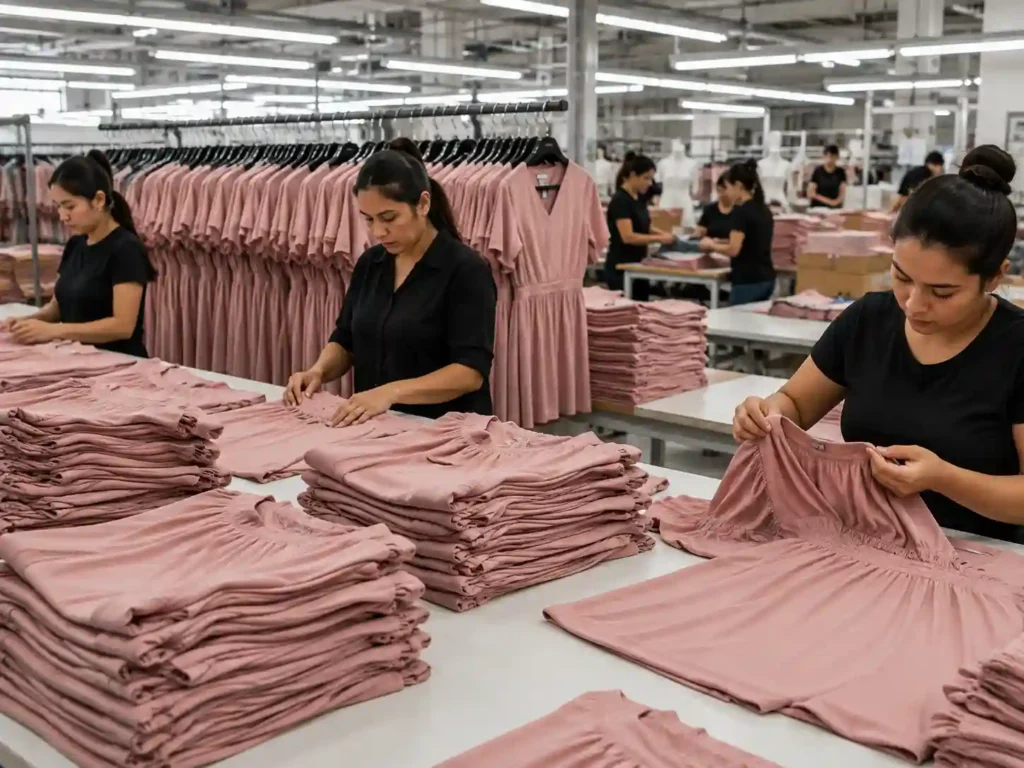
Bulk Result and Repeatability
The program moved through bulk production with the different fabric groups managed against their approved sample and QC references. About 28,000 pieces were coordinated across 18 styles, giving the production team enough scale to require disciplined style separation while still maintaining one brand-level packing and shipment framework. Inspection support and phased shipment preparation were handled as part of the order rather than as unrelated logistics tasks after production.
The more important result was the record set left after shipment. Pattern versions, fabric references, trim records, measurement files, packing requirements, barcode and label standards, QC notes, and approved samples provided a base for follow-up colors, repeats, or related developments. If a future order changes fabric, the old pattern is not assumed to be automatically correct; the new material is compared against the recorded stretch, drape, weight, transparency, and construction behavior before reuse.
For established brands, repeatability is often more valuable than a one-time successful sample. A complex-fabric program should become easier to manage after the first season because the development decisions are documented. New styles can borrow proven construction logic, repeat orders can start from controlled references, and sourcing teams can see which materials required additional MOQ, lead time, or QC attention. That accumulated technical record is what turns development work into a long-term manufacturing asset.
Keep Development Records Ready for Repeat Orders
Pattern Records
Fabric Records
Trim and Construction
Sample Versioning
Golden Sample and QC
NDA and Brand Protection
Frequently Asked Questions About Complex Fabric Product Development
Yes. Jinfeng Apparel develops fashion womenswear using satin, stretch satin, mesh, power mesh, lace, sequin fabric, velvet, organza, tulle, chiffon, jersey, ponte, rayon, viscose, and other fashion materials. Development includes fabric review, pattern work, lining and trim decisions, sampling, fit correction, PP approval, bulk production control, and fabric-specific QC. Material availability and special supplier requirements are confirmed by project.
Mesh, lace, sequin, velvet, organza, tulle, stretch fabrics, corset constructions, and very fluid satin or chiffon styles usually benefit from more physical validation because appearance changes with stretch, transparency, layers, surface handling, support, drape, and pressing. Complex corset, lace, mesh, sequin, and evening samples are commonly planned around 15-25 days, subject to material availability and revision scope.
Yes. A material change can alter stretch, recovery, thickness, drape, bias behavior, transparency, support, and seam response. Those differences can move bust, waist, hip, neckline, strap, slit, hem, lining, or rise proportions. A close substitute may only need limited confirmation, while a major change from stable woven to stretch mesh, or from light satin to heavy embellished fabric, can require pattern correction and another sample.
Transparency is reviewed together with stretch, lining, body coverage, color, seam visibility, and the intended design. The team can compare soft mesh, power mesh, double layers, selective lining, full lining, or supporting base fabrics. Sample fitting checks bust, hip, neckline, cut-out, armhole, and movement before PP approval. Bulk QC then checks layer placement, damage, recovery, measurements, and approved coverage zones.
Sequin development reviews base fabric, decoration density, seam allowances, zipper zones, garment weight, lining, and skin-contact areas. Decorations may need controlled clearing from seam zones, while lining or backing protects comfort. Sewing QC checks loose pieces, seam thickness, decoration security, and sharp areas. Final inspection includes missing sequins, comfort, pressing, folding, and anti-abrasion packing protection.
Lace placement is planned together with the pattern and grading route. Motif direction, center positions, symmetry, scallops, seam locations, and lining are reviewed in samples. Placement references are then transferred into cutting and sewing instructions. Larger or smaller sizes may need controlled adjustment rather than forcing the exact same motif position where garment proportions change. QC compares paired panels, symmetry, edges, and approved visual balance.
PP approval normally confirms final fabric, color, trims, pattern, measurements, construction, lining, support components, placement, labels, packing, and key QC standards. Complex fabrics may also need fabric direction, stretch direction, layer count, motif placement, pressing, surface protection, or special folding recorded. Late changes after PP approval are reviewed for cost, timing, material, sample, and production impact before release.
The approved style is transferred through final pattern, size chart, grade rules, BOM, fabric reference, trim reference, sewing instruction, placement standards, PP or Golden sample, QC checklist, label positions, and packing instructions. Production allocation then follows the fabric and construction risk. Incoming material, cutting, sewing, garment, pressing, and packing checks are tied back to the approved references to reduce sample-to-bulk drift.
Garment MOQ starts from 200 pcs per style/color. Special fabrics can carry separate supplier minimums. Custom-dyed colors, custom prints, certified materials, specialty lace, sequin fabric, recycled or organic options, special trims, and custom packaging may require higher minimums depending on the supplier and project. MOQ is reviewed together with fabric availability, color plan, quantity, construction, and production schedule.
Yes. Jinfeng Apparel works with multi-style womenswear programs and can separate fabric, sample, pattern, trim, production, QC, label, and packing records by style. Current brand programs commonly involve 10-30 styles, so project tracking is important when satin, mesh, jersey, lace, crepe, sequin, or structured styles move in parallel. Production allocation and shipment planning are confirmed according to the final style mix and approvals.

Send Your Fabric and Style for Development Review
Complex fabric projects move faster when the first review includes enough information to judge material behavior, garment structure, sampling work, MOQ, and production risk. Send a tech pack, reference image, original sample information, or fabric direction together with the planned quantity and launch requirements. Our team will review whether the selected material suits the intended silhouette, where pattern or support adjustments may be needed, which details require physical sample validation, and what must be confirmed before PP approval.
For projects using mesh, lace, sequin, velvet, organza, tulle, stretch constructions, fluid satin, or mixed materials, early review can prevent repeated revisions caused by transparency, recovery, drape, surface damage, lining, trim, or construction conflicts.
Please include as much of the following as available:
- Tech pack, sketch, reference image, or original sample details
- Fabric swatch, fabric photo, composition, or preferred material direction
- Planned quantity by style and color
- Size range and target market
- Key fit, transparency, support, or construction requirements
- Private-label, barcode, packing, or inspection requirements
- Target sample date and intended bulk launch window